Star Citizen Monthly Report: October 2019
Transmission Undefined Monthly ReportsContent
This time next month, CitizenCon 2949 will be but a fond memory. As you can imagine, most teams touched on the event one way or another in October, be it preparing presentations or putting the final touches to tech being demonstrated. To avoid spoilers and undermining the hard work put into the event, this month’s report is a little light on juicy details. However, we’ll get back to normal next month!
AI
We kick off October’s report with the AI Character Combat Team, who spent time iterating on NPC aiming. They simplified the ability to control if and when they want the lower body turning while aiming at a target and improved the way aim-tracking works. This makes it easier to determine when the movement should blend slowly or snap quickly. They also fixed a look-target synchronization bug that was causing general issues.
On the behaviors side, they improved cover selection during combat by introducing new ways to weight cover locations based on target direction. NPCs can now choose between using a weapon’s predefined fire mode or actively selecting auto, burst, or single shot. They added more wild lines and flavor to the behaviors too, such as NPCs taunting a target before they start investigating.
Ship AI moved the first pass of their new 3D pathfinding functionality into the main game-development branch. This approach is based on a non-canonical A* implementation that uses the signed distance field (SDF) to incrementally compute a path in a 3D environment. Progress is currently being made on the first version of 3D ORCA implementation and is getting close to a first working version.
A new way for the designers to request that a ship follow a ‘spline’ (a tunnel that guides a ship’s movement rather than a prescriptive track) was exposed. At runtime, the calculation automatically adjusts the tunnel size based on the environment and the information reported by the SDF. They also added new nodes to monitor target distance and the vehicle’s relative state and make decisions according to the reported values.
Social AI optimized the ‘usable search’ function and are now able to cache the location of usables on the navmesh. This means they don’t have to constantly recalculate the time an object is static in one location. They also continued the unification of operator and generic seats so that behaviors can utilize them regardless of height.
Implementation of generic vendors continued, which employs usables that can ‘provide’ or ‘accept’ specific object types. This allows designers to create many different object types. For example, drinks bartenders can offer to patrons. They’re currently progressing on the patrol functionality that defines paths for AI to follow. This path will carry information on which types of logic to activate while hitting the different path nodes.
Regarding core services, the team now have navmesh support on planetary locations and are moving towards a more dynamic creation of navigation data on planet surfaces. They’re also working on different bug fixes and optimizations, including multithreading the AI audio component to enable them to process audio events quicker on the servers.
Animation
In October, the team developed melee and stealth takedown animations, effort movement sets, and reaction animations for NPCs that aren’t holding stocked weapons. They also worked on animations for a new mission type and “stuff” for CitizenCon.
Art (Environment)
Last month, the Frankfurt-based team focused on microTech, with multiple biomes and assets finalized and distributed across the surface. TESTING
“Progress is going really well and we look forward to sharing microTech’s full visual range in the near future.”
Environment Art Team
Time was also spent on quality support and bug fixing for Alpha 3.7.
Art (Ships)
Ship Art spent the month finalizing a few important ships for upcoming patch releases. Tune in to the CitizenCon stream on November the 23rd for a firsthand look and what they’ve been up to.
Art (Weapons)
Weapon Art’s main focus last month was the Behring P6-LR ballistic sniper rifle. The weapon went through iteration early on in the month to ensure the visuals match the desired gameplay. It is currently heading into the final art stage. They also fixed a few issues with the combat knife and Animus missile launcher.
For ship weapons, Esperia’s latest ballistic and laser cannons are well into production. These two new weapons will be closed out over the next couple of weeks.
Audio
Audio worked closely with their upstream departments on something very cool for CitizenCon. They also supported various upcoming actor features, including close combat and the player character responding to temperature.
A big push was made on the in-progress procedural Rest Stops, with Audio providing ambiance and spot SFX. Two major upcoming ships received thruster, ambiance, spot SFX, and weapon audio. Quantum travel was revamped across all ships to better support shorter jumps too.
Lastly, Audio added their final touches to the Apocalypse Arms Animus missile launcher and Behring P6-LR sniper rifle, supporting all fire modes, reloads, and animations.
Backend Services
Last month, the team spent much of their time working towards Alpha 3.7 and 3.7.1, including isolating and resolving various backend issues. Several optimizations to backend persistence were also deployed to ensure all players can get into and enjoy the game.
Characters
October saw the Character Art Team successfully release the RSI Mantis suit. They also helped a beloved spectrum star prepare for a return to the limelight and worked on various things for CitizenCon and beyond.
Community
The month began with the unveiling of the RSI Mantis, which the team supported by publishing a Q&A to answer the community’s most-voted-on questions about the new ship and quantum enforcement gameplay. They also ran a Mantis-themed commercial contest, this time asking the community to carry on from the tense cliffhanger of the official ad. Head to Spectrum to find out what they came up with.
October saw the finale of the Ship Showdown, an event that tasked players with voting for their favorite ships. In an unexpected finish, the Drake Caterpillar was crowned the overall champion. Is a winner’s title everything the ship will receive? Find out later this month…
The team also kicked off two spooky contests for Halloween. The citizens that carved the best Star Citizen-themed pumpkin and captured the spookiest subterranean terrors took home shipshape prizes. To support the caves contest, October’s subscriber flair pays homage to one of the ‘verses most infamous horror franchises, Parasite.
To celebrate the release of the Alpha 3.7, a free-fly let everyone try out five of the most versatile ships in the ‘verse. And as a token of appreciation, a Kruger P-52 Merlin was handed out to everyone who referred a new backer during the event.
Last but not least, the CitizenCon 2949 schedule was released. With it came the first annual Star Citizen cosplay contest that will reward the hard work that goes into your incredible cosplays with in-game goodies and prizes!
“Less than a month away, we’re sure this is going to be an epic event and we can’t wait to see you at CitizenCon 2949!”
Community Team
Design
Alongside some incredibly exciting but equally secret “things”, Design are prototyping features for next year’s releases.
“We’re looking forward to finally showing everyone what we’ve been working on over the past few months and look forward to talking with you later this month at CitizenCon.”
Design Team
Engineering
Engineering spent time in October supporting the physics proxy refactor stream integration, working on soft-body physics simulation for both character and cloth, and adding physics-level support to planetary wind.
For the renderer, they continued to work on the new graphics pipeline and render interface (Gen12). This included adding: an improved render pass handling and pipeline state setup, support for compute, a pipeline teardown, improved DXC compatibility for shaders, a simplified resource layout setup, improved support for pooled render targets and resolution changes, support for reflected shader constant arrays, and porting DOF to the render pass system. The global render state removal also began.
Planet-side, they refactored and extended multi-cascade support for terrain height maps so dependent effects can better incorporate it for their own purposes (such as terrain shadows), and worked on cascade debug visualization to allow artists to efficiently tweak important height map properties. Regarding planet terrain shadows, they added a simple code interface and shared shader code for the application on the client side, provided support for temporal anti-aliasing, and completed the initial code and logic support for multi cascades. Work on planetary ground fog continued too. This involved the initial release of SOCS, adjusting code to cope with very large objects, making exception handler improvements, and adding API to asynchronously create a core dump without affecting the calling process. This will be mainly used to take snapshots of the DGS process state in case of non-fatal errors for efficient debugging without interrupting its service and affecting clients (previously, it was forced to crash).
For Animation, the team created a new dual quaternion skinning/elastic blend wrap deformer for CPU+GPU skinning. They also completed tangent reconstruction – a pixel perfect version for software and compute skinning (both protos and original skins).
Features (Gameplay)
The US-based Gameplay Team had a busy October delivering tasks for Alpha 3.8. One important task received an expected completion date of early 2020 and is sure to make for an engaging experience when it goes live.
Efforts were also focused on Server-Side Object Container Streaming, which is a major engineering overhaul that will eventually result in the dramatic improvement of in-game performance. The team is currently addressing several quality-of-life fixes that players have been requesting for a while.
Features (Vehicles)
In the US, the team’s primary focus was wrapping up quantum enforcement for the RSI Mantis. They also completed their work on the ongoing physics proxy refactor. Various bugs for Alpha 3.7 and 3.7.1 were squashed too, including game crashes and vehicle-related issues.
The EU-based Vehicle Team helped the content teams set up annunciator panels for ships, which included adapting the process for different models and brands. They also finished the latest restricted area implementation. Players can expect new UI messaging and guide tunnels to help them approach spaceports when it goes live. They’re currently experimenting with improvements to atmospheric flight.
Graphics
Last month saw the graphics and engine teams further developed the new planetary terrain shadow system. This will eventually allow shadows over greater distances with large scale softness (penumbra) at less cost than the current system. Development of planet surface shading continued and is nearing completion, with improvements to the accuracy of surface normals at every scale and the addition of a separate layer of textures for cliffs.
The last major task of October was designing the ‘biome accumulation’ system, which is the basis for a variety of effects such as snow, frost, dirt, mud, and dust. The system itself will require a combined effort from the art, graphics, and code teams over the coming weeks and months.
Level Design
October saw Level Design finalize the caves of Alpha 3.7, which are the first natural design environments built using the procedural tool. The team consider them a great proof of concept and welcome addition to the tool itself. With more content being tied into procedural generation, the speed in which they create new content will increase going forward .
They also continued to work on microTech and New Babbage. The frozen planet type provided challenges but also opened up many exciting opportunities and possibilities. They also spent time planning out locations they’re working on in 2020.
Lighting
Last month, the Lighting Team moved off Caves and Alpha 3.7 to the new Rest Stop interiors. With so many new rooms and multiple versions of each, the challenge is to ensure visual consistency between each location, that lighting blends nicely between rooms, and that pathways are clear to the player. The lighting of New Babbage is also underway, with the team currently making a pass on the main city and spaceport exteriors.
Narrative
This past month the Narrative team wrote several scripts and recorded VO for upcoming game releases, including some tannoy announcements for New Babbage. They met with Live Design to coordinate and create text for new missions being worked on for 3.8. and beyond. They named and wrote descriptions for several items ranging from mining gear, terrifying helmets, to new armor and more. The team also generated ideas for possible additional harvestables to be added in the future with a focus on microTech’s cold climate. Additionally, the Narrative team spent some time working on a couple of upcoming events. The specifics of CitizenCon can’t be discussed yet, but since so much of the event takes place in-lore, Narrative provided vital backstory, scripts and more to help support the events and the content that will be shown. The team will also have several members attending CitizenCon and they look forward to sharing their presentations with everyone. Finally, October saw the release of another Jump Point subscriber magazine that featured an interview with a G-Loc bartender. Spectrum featured a special Empire Report highlighting a recent crime spree in Terra and brand new episode of Far From Home where Old Jegger spends some time out of his comfort zone.
Props
At the start of the month, the Props teams continued with the ‘hi-tech’ props for New Babbage. This involved focusing on the landing zone’s infrastructure, consoles, information signs, counter sets, and wall dressing. Work on interactive props for the same environment began too.
Props worked alongside several other teams to create physicalized cloth assets. The development of large-size ship items continued and will be completed shortly, giving the PU its first proper large quantum and jump drives.
QA
Planet Tech v4 was enabled in game-dev and with it came a lot of QA testing. QA regularly test each star system, with individual planets being tested daily to stay on top of any new issues that may crop up as a result of changes. They’re also working closely with Environment Art to debug issues and determine which ones need to be investigated by Engineering. The latter half of the month saw them testing and verifying new changes to moons and planets using locally exported object containers. The next step is to perform a QA test request for each location once Design have completed their re-drop of all surface-side locations.
Frankfurt gained an embedded QA tester to support the Tools Team. Their focus will be on all new and current tools coming down the pipeline and will include some Lumberyard Editor testing.
Support for the Level Design Team ramped up, with further requests to test AI placement and bug fixes across various landing zones. They also worked to ensure new issues aren’t introduced from the dev teams’ fixes and to provide feedback on usable placements in existing and upcoming landing zones.
System Design
Last month, the Frankfurt designers spent time training the UK designers on how to build ship behaviors, as they will be taking over the bulk of the work in the future.
Regarding combat AI, they built and adjusted behaviors for shotgun and pistol AI. This involved setting up timings and distances, making sure they reflect what a soldier equipped with these weapons would do in real life.
The team are also working on a large, overarching feature that deals with quantum fuel mining and refining. As part of this, they’ve had to tackle several smaller features, such as introducing new mining lasers with different properties and consumables that can alter the mining process. A related but as-yet-undetermined feature is how to deal with dangerous and volatile cargo. To kick it off, the team are building a management interface to allow players to monitor the status of their cargo in situ. They also began designing the station refining UI which will allow players to take refining jobs, choose which elements they want to refine from their mixed materials, and how they want to refine it.
Tech Animation
The Tech Animation Team refined the Visio-to-Mannequin pipeline to make it easier to import state machines straight to Mannequin, which will save a lot of time. They also worked with the props and usable teams on several new and old usables, implementing new animations and providing animation-ready templates in Maya for quicker authoring. A socket addition to the pipeline was also created to give animators the possibility of swapping props around between different attach points on the character rig. They also investigated and fixed several small bugs in weapons content, usables, cinematics, gameplay animations, props, and design.
Tech Art
Tech Art started a refactor of the engine code base for the DNA system pipeline (DNA v2) and the facial runtime rig logic system. Both systems have gone through phases of heavy R&D and subsequent tech-hardening, so a refactor that will lead to greater modularity and versatility is the next logical step. The methodology and code behind the existing facial runtime rig logic for human heads will be generalized so that it can be applied not only to the face rigs of other alien species, but also to their bodies. It will even work with the arbitrary rigs that drive creatures and other animated entities that will eventually populate planets and the wider universe in general. This will allow the team to dynamically and procedurally create unique-looking variants from a limited-size pool of manually authored assets.
Turbulent
The unified deployment of all services developed and maintained by Turbulent was also completed. This project suppressed the intermediary steps (both human and technical) needed to deploy services and will enable smoother future deployments. Streamlining service deployment also improves overall reliability and enables the easier creation of multiple independent and isolated QA environments, benefitting both DevOps and QA.
The Feature Team focused on polishing VoIP/FoIP and started a new project aiming to review and evaluate architectural setup to optimize scalability.
For the RSI website, Turbulent supported the release of the RSI Mantis, Alpha 3.7, the Ship Showdown, and the CitizenCon microsite update. Regarding merchandise, they also integrated two warehouses – one for US orders and a second for international orders.
User Interface (UI)
One of the team’s tasks last month was creating the interior screens of New Babbage, which involved defining a UI style that fits the microTech brand. They also kicked off animated adverts for microTech products. Another area of focus was the new ‘actor status’ display. This is a new way to display a player character’s health and will eventually form part of the updated visor. As usual, they worked on new features for the custom UI system, including an animation system that’ll make it easier to move away from the legacy flash UI, and one to add text decals to ships.
VFX
Aside from bug fixing and polishing for the Alpha 3.7 patches, VFX worked heavily on planet effect improvements, specifically on the engineering side. This included particle scattering queries, height-based wind calculations, a new half-resolution option for particles, and the ability to spawn volumetric fog as part of near-effect LODs.
The VFX artists started on mining improvements, including VFX for different beam types and modifiers to the existing beams. They also refined the upcoming Rest Stop interior effects, weapons, and ships. The VFX tech artists continued to improve the workflow for gas clouds and the low-poly building generator tool. WE’LL SEE YOU NEXT MONTH…
Nächsten Monat um diese Zeit wird die CitizenCon 2949 nur eine schöne Erinnerung sein. Wie Sie sich vorstellen können, haben die meisten Teams die Veranstaltung im Oktober auf die eine oder andere Weise berührt, sei es bei der Vorbereitung von Präsentationen oder bei der Verfeinerung der zu demonstrierenden Technologie. Um Spoiler zu vermeiden und die harte Arbeit, die in die Veranstaltung gesteckt wurde, zu untergraben, ist der Bericht dieses Monats ein wenig auf saftige Details reduziert. Aber nächsten Monat werden wir wieder zur Normalität zurückkehren!
KI
Wir beginnen den Bericht vom Oktober mit dem AI Character Combat Team, das Zeit damit verbrachte, über das Ziel des NSCs zu sprechen. Sie vereinfachten die Fähigkeit zu kontrollieren, ob und wann sie wollen, dass sich der Unterkörper dreht, während er auf ein Ziel zielt, und verbesserten die Art und Weise, wie das Zielverfolgen funktioniert. Dadurch ist es einfacher zu bestimmen, wann die Bewegung langsam überblenden oder schnell abbrechen soll. Sie beheben auch einen Look-Target-Synchronisationsfehler, der allgemeine Probleme verursacht.
Auf der Verhaltensseite verbesserten sie die Deckungsauswahl im Kampf, indem sie neue Möglichkeiten zur Gewichtung der Deckungspositionen basierend auf der Zielrichtung einführten. NSCs können nun wählen, ob sie den vordefinierten Feuermodus einer Waffe verwenden oder aktiv Auto, Burst oder Einzelschuss wählen möchten. Sie fügten den Verhaltensweisen auch mehr wilde Linien und Geschmacksrichtungen hinzu, wie z.B. NSCs, die ein Ziel verspotten, bevor sie mit der Untersuchung beginnen.
Ship AI hat den ersten Durchgang seiner neuen 3D-Pfadfindungsfunktionalität in den Hauptgeschäftsbereich der Spieleentwicklung verschoben. Dieser Ansatz basiert auf einer nicht-kanonischen A*-Implementierung, die das signed distance field (SDF) verwendet, um einen Pfad in einer 3D-Umgebung schrittweise zu berechnen. Derzeit werden Fortschritte bei der ersten Version der 3D ORCA-Implementierung erzielt und nähern sich einer ersten funktionierenden Version.
Eine neue Möglichkeit für die Konstrukteure, ein Schiff einer "Spline" folgen zu lassen (ein Tunnel, der eine Schiffsbewegung und nicht eine vorgeschriebene Spur führt), wurde freigelegt. Zur Laufzeit passt die Berechnung die Tunnelgröße automatisch an die Umgebung und die vom SDF gemeldeten Informationen an. Sie haben auch neue Knoten hinzugefügt, um die Soll-Distanz und den relativen Zustand des Fahrzeugs zu überwachen und Entscheidungen anhand der gemeldeten Werte zu treffen.
Social AI hat die Funktion "Usable Search" optimiert und kann nun die Position von Usables auf dem Navmesh zwischenspeichern. Das bedeutet, dass sie nicht ständig die Zeit neu berechnen müssen, in der ein Objekt an einem Ort statisch ist. Sie setzten auch die Vereinheitlichung von Operator- und generischen Sitzen fort, so dass Verhaltensweisen sie unabhängig von der Höhe nutzen können.
Die Implementierung von generischen Anbietern wurde fortgesetzt, bei der Usables verwendet werden, die bestimmte Objekttypen "bereitstellen" oder "akzeptieren" können. Dies ermöglicht es Designern, viele verschiedene Objekttypen zu erstellen. Beispielsweise können Getränke-Barkeeper den Gästen anbieten. Sie arbeiten derzeit an der Patrouillenfunktionalität, die Wege für die KI definiert. Dieser Pfad enthält Informationen darüber, welche Arten von Logik beim Auftreffen auf die verschiedenen Pfadknoten aktiviert werden müssen.
Was die Kerndienstleistungen betrifft, so verfügt das Team nun über Navmesh-Unterstützung für Planetenstandorte und bewegt sich in Richtung einer dynamischeren Erstellung von Navigationsdaten auf Planetenoberflächen. Sie arbeiten auch an verschiedenen Bugfixes und Optimierungen, darunter das Multithreading der KI-Audiokomponente, damit sie Audioereignisse auf den Servern schneller verarbeiten können.
Animation
Im Oktober entwickelte das Team Nahkampf- und Tarnanimationen, Bewegungsabläufe und Reaktionsanimationen für NSCs, die keine Waffen im Lager haben. Sie arbeiteten auch an Animationen für einen neuen Missionstyp und an "Sachen" für CitizenCon.
Kunst (Umwelt)
Im vergangenen Monat konzentrierte sich das Frankfurter Team auf die Mikrotechnik, wobei mehrere Biome und Anlagen fertig gestellt und über die Oberfläche verteilt wurden.
"Die Fortschritte gehen wirklich gut voran und wir freuen uns darauf, in naher Zukunft das gesamte Sichtfeld der microTech zu teilen."
Umwelt Kunst Team
Außerdem wurde viel Zeit mit Qualitätsunterstützung und Fehlerbehebung für Alpha 3.7 verbracht.
Kunst (Schiffe)
Ship Art verbrachte den Monat damit, einige wichtige Schiffe für die kommenden Patch-Releases fertigzustellen. Schauen Sie sich den CitizenCon-Stream am 23. November an, um aus erster Hand zu erfahren, was sie vorhaben.
Kunst (Waffen)
Im vergangenen Monat lag der Schwerpunkt auf dem ballistischen Scharfschützengewehr Behring P6-LR. Die Waffe durchlief Anfang des Monats eine Iteration, um sicherzustellen, dass die Visuals dem gewünschten Gameplay entsprechen. Derzeit befindet sie sich auf dem Weg in die Endphase der Kunst. Sie haben auch ein paar Probleme mit dem Kampfmesser und dem Animus Raketenwerfer behoben.
Für Schiffswaffen sind die neuesten ballistischen und Laserkanonen von Esperia bereits in Produktion. Diese beiden neuen Waffen werden in den nächsten Wochen geschlossen.
Audio
Audio arbeitete eng mit den vorgelagerten Abteilungen zusammen, um etwas sehr Cooles für CitizenCon zu entwickeln. Sie unterstützten auch verschiedene kommende Darsteller-Features, darunter den Nahkampf und den auf die Temperatur reagierenden Spielercharakter.
Ein großer Fortschritt wurde bei den laufenden prozeduralen Rest Stops gemacht, wobei Audio für Atmosphäre und Spot SFX sorgt. Zwei große kommende Schiffe erhielten Thruster, Ambiance, Spot SFX und Waffen-Audio. Quantenreisen wurden auf allen Schiffen überarbeitet, um auch kürzere Sprünge besser zu unterstützen.
Schließlich gab Audio dem Apocalypse Arms Animus Raketenwerfer und dem Behring P6-LR Scharfschützengewehr den letzten Schliff und unterstützt alle Feuerarten, Nachladungen und Animationen.
Backend Services
Im vergangenen Monat verbrachte das Team einen Großteil seiner Zeit damit, auf Alpha 3.7 und 3.7.1 hinzuarbeiten, einschließlich der Isolierung und Lösung verschiedener Backend-Probleme. Mehrere Optimierungen zur Backend-Persistenz wurden ebenfalls implementiert, um sicherzustellen, dass alle Spieler in das Spiel einsteigen und es genießen können.
Charaktere
Im Oktober brachte das Character Art Team den RSI Mantis-Anzug erfolgreich auf den Markt. Sie halfen auch einem geliebten Spektrum-Stern bei der Vorbereitung auf die Rückkehr ins Rampenlicht und arbeiteten an verschiedenen Dingen für CitizenCon und darüber hinaus.
Community
Der Monat begann mit der Enthüllung des RSI Mantis, den das Team durch die Veröffentlichung eines Q&A zur Beantwortung der am häufigsten gestellten Fragen der Community zum neuen Schiff und zum Quantendurchsetzungsspiel unterstützte. Sie führten auch einen kommerziellen Wettbewerb zum Thema Mantis durch, diesmal mit der Bitte an die Community, von dem angespannten Cliffhanger der offiziellen Anzeige fortzufahren. Gehen Sie zu Spectrum, um herauszufinden, was sie sich ausgedacht haben.
Im Oktober fand das Finale des Ship Showdown statt, ein Ereignis, das die Spieler damit beauftragte, für ihre Lieblingsschiffe zu stimmen. In einem unerwarteten Finale wurde die Drake Caterpillar zum Gesamtsieger gekürt. Ist ein Siegtitel alles, was das Schiff erhält? Finde es Ende dieses Monats heraus.....
Das Team startete auch zwei gruselige Wettbewerbe zu Halloween. Die Bürger, die den besten Kürbis zum Thema Star Citizen geschnitzt und die gruseligsten unterirdischen Schrecken eingefangen haben, nahmen Preise in Form von Ships mit nach Hause. Um den Wettbewerb der Höhlen zu unterstützen, würdigt das Flair der Abonnenten im Oktober einen der berühmtesten Horror-Franchise, Parasite.
Um den Release der Alpha 3.7 zu feiern, ließ eine Freiwillige jeden fünf der vielseitigsten Schiffe im Vers ausprobieren. Und als Dankeschön wurde eine Krüger P-52 Merlin an alle verteilt, die während der Veranstaltung einen neuen Geldgeber empfohlen haben.
Last but not least wurde der Zeitplan der CitizenCon 2949 veröffentlicht. Mit ihm kam der erste jährliche Star Citizen Cosplay-Wettbewerb, der die harte Arbeit, die in Ihre unglaublichen Cosplays geht, mit Ingame-Goodies und Preisen belohnen wird!
"Weniger als einen Monat entfernt, sind wir sicher, dass dies ein episches Ereignis werden wird und wir können es kaum erwarten, Sie bei der CitizenCon 2949 zu sehen!"
Community-Team
Design
Neben einigen unglaublich aufregenden, aber ebenso geheimen "Dingen" sind Design Prototyping-Funktionen für die Veröffentlichungen im nächsten Jahr.
"Wir freuen uns darauf, allen endlich zu zeigen, woran wir in den letzten Monaten gearbeitet haben, und wir freuen uns auf das Gespräch mit Ihnen Ende dieses Monats auf der CitizenCon."
Design-Team
Ingenieurwesen
Engineering verbrachte im Oktober Zeit damit, die Integration des physikalischen Proxy-Refaktor-Streams zu unterstützen, an der Simulation der Weichkörperphysik für Charakter und Stoff zu arbeiten und dem Planetenwind Unterstützung auf Physikebene hinzuzufügen.
Für den Renderer arbeiteten sie weiter an der neuen Grafikpipeline und dem Renderinterface (Gen12). Dazu gehörten: ein verbessertes Renderpasshandling und die Einrichtung des Pipelinestatus, Unterstützung für die Berechnung, ein Pipeline-Teardown, verbesserte DXC-Kompatibilität für Shader, ein vereinfachtes Ressourcen-Layout, verbesserte Unterstützung für gepoolte Renderziele und Auflösungsänderungen, Unterstützung für reflektierte Shader-Konstanten-Arrays und die Portierung von DOF auf das Renderpasssystem. Die Entfernung des globalen Renderstatus begann ebenfalls.
Auf der Planetenseite haben sie die Multi-Cascade-Unterstützung für Geländehöhenkarten überarbeitet und erweitert, so dass abhängige Effekte sie besser für ihre eigenen Zwecke (z.B. Geländeschatten) integrieren können, und an der Visualisierung von Cascade Debug gearbeitet, um es Künstlern zu ermöglichen, wichtige Höhenkarteneigenschaften effizient zu optimieren. In Bezug auf Planeten-Terrain-Schatten fügten sie eine einfache Codeschnittstelle und gemeinsamen Shader-Code für die Anwendung auf der Clientseite hinzu, unterstützten zeitliches Anti-Aliasing und ergänzten die anfängliche Code- und Logikunterstützung für mehrere Kaskaden. Die Arbeiten am planetarischen Bodennebel wurden ebenfalls fortgesetzt. Dies beinhaltete die erste Version von SOCS, die Anpassung des Codes an sehr große Objekte, die Verbesserung des Exception-Handlers und das Hinzufügen einer API zur asynchronen Erstellung eines Core Dumps, ohne den aufrufenden Prozess zu beeinträchtigen. Dies wird hauptsächlich verwendet, um Momentaufnahmen des DGS-Prozesszustands im Falle von nicht schwerwiegenden Fehlern zu machen, um effizientes Debugging zu ermöglichen, ohne den Service zu unterbrechen und die Clients zu beeinträchtigen (vorher war es zum Absturz gezwungen).
Für die Animation erstellte das Team einen neuen Dual-Quaternion Skinning/elastische Mischung Wrap Deformer für CPU+GPU Skinning. Sie haben auch die Tangentenrekonstruktion abgeschlossen - eine pixelgenaue Version für Software und Compute Skinning (sowohl Protos als auch Originalskins).
Funktionen (Gameplay)
Das in den USA ansässige Gameplay-Team hatte im Oktober viel zu tun und lieferte Aufgaben für Alpha 3.8. Eine wichtige Aufgabe hat einen voraussichtlichen Fertigstellungstermin Anfang 2020 erhalten und wird sicher für ein ansprechendes Erlebnis sorgen, wenn sie in Betrieb geht.
Die Bemühungen konzentrierten sich auch auf das Server-Side Object Container Streaming, das eine umfassende technische Überarbeitung darstellt, die schließlich zu einer drastischen Verbesserung der Leistung im Spiel führen wird. Das Team befasst sich derzeit mit mehreren Maßnahmen zur Verbesserung der Lebensqualität, die von den Spielern seit einiger Zeit gefordert werden.
Merkmale (Fahrzeuge)
In den USA konzentrierte sich das Team vor allem darauf, die Quantendurchsetzung für den RSI Mantis abzuschließen. Sie haben auch ihre Arbeit an dem laufenden Physik-Proxy-Refaktor abgeschlossen. Verschiedene Fehler für Alpha 3.7 und 3.7.1 wurden ebenfalls beseitigt, darunter Spielabbrüche und fahrzeugbezogene Probleme.
Das in der EU ansässige Fahrzeugteam unterstützte die Content-Teams beim Aufbau von Meldepanels für Schiffe, darunter die Anpassung des Prozesses an verschiedene Modelle und Marken. Sie haben auch die neueste Implementierung des Sperrbereichs abgeschlossen. Die Spieler können von neuen UI-Messaging- und Führungstunneln erwarten, die ihnen helfen, sich den Raumhäfen zu nähern, wenn sie live gehen. Sie experimentieren derzeit mit der Verbesserung des atmosphärischen Flugverhaltens.
Grafiken
Im vergangenen Monat haben die Grafik- und Motorenteams das neue planetarische Geländeschattensystem weiterentwickelt. Dies wird schließlich Schatten über größere Entfernungen mit großer Weichheit (Halbschatten) zu geringeren Kosten als das aktuelle System ermöglichen. Die Entwicklung der Planetenoberflächenbeschattung wurde fortgesetzt und nähert sich dem Abschluss, mit Verbesserungen der Genauigkeit der Oberflächennormale in jeder Größenordnung und dem Hinzufügen einer separaten Schicht von Texturen für Klippen.
Die letzte große Aufgabe im Oktober war die Entwicklung des Systems "Biome Accumulation", das die Grundlage für eine Vielzahl von Effekten wie Schnee, Frost, Schmutz, Schlamm und Staub bildet. Das System selbst wird in den kommenden Wochen und Monaten einen gemeinsamen Aufwand von Kunst-, Grafik- und Code-Teams erfordern.
Leveldesign
Im Oktober hat Level Design die Höhlen von Alpha 3.7 fertiggestellt, die die ersten natürlichen Designumgebungen sind, die mit dem Verfahrenswerkzeug gebaut wurden. Das Team betrachtet sie als einen großartigen Proof of Concept und eine willkommene Ergänzung des Tools selbst. Da mehr Inhalte in die verfahrenstechnische Generierung eingebunden werden, wird die Geschwindigkeit, mit der sie neue Inhalte erstellen, in Zukunft zunehmen.
Sie arbeiteten auch weiter an MicroTech und New Babbage. Der gefrorene Planetentyp stellte Herausforderungen dar, eröffnete aber auch viele spannende Möglichkeiten und Möglichkeiten. Sie haben auch Zeit damit verbracht, die Standorte zu planen, an denen sie im Jahr 2020 arbeiten.
Beleuchtung
Letzten Monat zog das Beleuchtungsteam von Caves und Alpha 3.7 in die neuen Innenräume der Raststätte. Bei so vielen neuen Räumen und mehreren Versionen von jedem besteht die Herausforderung darin, die visuelle Konsistenz zwischen den einzelnen Standorten zu gewährleisten, dass sich die Beleuchtung gut in die Räume einfügt und dass die Wege für den Spieler frei sind. Auch die Beleuchtung von New Babbage ist im Gange, wobei das Team derzeit die Außenflächen der Hauptstädte und Weltraumhäfen durchquert.
Narrativ
Im vergangenen Monat schrieb das Narrative Team mehrere Skripte und nahm VO für kommende Spielversionen auf, darunter einige Tannoy-Ankündigungen für New Babbage. Sie trafen sich mit Live Design, um Texte für neue Missionen zu koordinieren und zu erstellen, an denen für den 3.8. und darüber hinaus gearbeitet wird. Sie benannten und schrieben Beschreibungen für verschiedene Gegenstände, die von Bergbauausrüstung, schrecklichen Helmen bis hin zu neuen Rüstungen und mehr reichen. Das Team entwickelte auch Ideen für mögliche zusätzliche Erntegüter, die in Zukunft hinzugefügt werden sollen, wobei der Schwerpunkt auf dem kalten Klima der Mikrotechnik lag. Darüber hinaus verbrachte das Narrative Team einige Zeit damit, an einer Reihe von bevorstehenden Veranstaltungen zu arbeiten. Die Besonderheiten von CitizenCon können noch nicht diskutiert werden, aber da so viel von der Veranstaltung in der Geschichte stattfindet, lieferte Narrative wichtige Hintergrundgeschichten, Skripte und mehr, um die Veranstaltungen und die Inhalte, die gezeigt werden, zu unterstützen. Das Team wird auch mehrere Mitglieder haben, die an der CitizenCon teilnehmen, und sie freuen sich darauf, ihre Präsentationen mit allen zu teilen. Im Oktober erschien schließlich ein weiteres Jump Point Abonnentenmagazin, das ein Interview mit einem G-Loc Barkeeper vorstellte. Spectrum präsentierte einen speziellen Empire-Report, der eine kürzlich stattgefundene Verbrechenswelle in Terra und eine brandneue Episode von Far From Home beleuchtete, in der Old Jegger einige Zeit außerhalb seiner Komfortzone verbringt.
Requisiten
Anfang des Monats setzten die Requisiten-Teams die "High-Tech"-Requisiten für New Babbage fort. Dabei ging es um die Infrastruktur der Landezone, Konsolen, Informationsschilder, Theken und Wandverkleidungen. Auch die Arbeit an interaktiven Requisiten für die gleiche Umgebung begann.
Requisiten arbeiteten mit mehreren anderen Teams zusammen, um physische Stoffressourcen zu erstellen. Die Entwicklung von großformatigen Schiffsteilen wurde fortgesetzt und wird in Kürze abgeschlossen sein, so dass der PU seine ersten richtigen großen Quanten- und Sprungantriebe erhält.
QA
Planet Tech v4 wurde im Game-Device aktiviert und mit ihm kamen viele QA-Tests. QA testet regelmäßig jedes Sternensystem, wobei einzelne Planeten täglich getestet werden, um über alle neuen Probleme informiert zu sein, die durch Veränderungen entstehen können. Sie arbeiten auch eng mit Environment Art zusammen, um Probleme zu beheben und festzustellen, welche von Engineering untersucht werden müssen. In der zweiten Monatshälfte wurden neue Änderungen an Monden und Planeten mit lokal exportierten Objektcontainern getestet und verifiziert. Der nächste Schritt besteht darin, eine QS-Testanforderung für jeden Standort durchzuführen, sobald das Design seinen Re-Drop aller oberflächenseitigen Standorte abgeschlossen hat.
Frankfurt erhielt einen integrierten QA-Tester zur Unterstützung des Tools-Teams. Ihr Fokus liegt auf allen neuen und aktuellen Tools, die in die Pipeline kommen, und wird einige Tests des Lumberyard Editor beinhalten.
Die Unterstützung für das Level Design Team wurde erhöht, mit weiteren Anfragen zum Testen der KI-Platzierung und Bugfixes in verschiedenen Landezonen. Sie arbeiteten auch daran, sicherzustellen, dass keine neuen Probleme aus den Korrekturen der Entwicklungsteams eingeführt werden und um Feedback über nutzbare Platzierungen in bestehenden und zukünftigen Landezonen zu geben.
Systemdesign
Im vergangenen Monat haben die Frankfurter Designer die britischen Designer darin geschult, wie man Schiffsverhalten baut, da sie in Zukunft den Großteil der Arbeit übernehmen werden.
Bezüglich der Kampf-KI bauten sie Verhaltensweisen für Schrotflinte und Pistole KI auf und passten diese an. Dazu gehörte die Einrichtung von Zeitplänen und Entfernungen, um sicherzustellen, dass sie das widerspiegeln, was ein mit diesen Waffen ausgestatteter Soldat im wirklichen Leben tun würde.
Das Team arbeitet auch an einem großen, übergreifenden Feature, das sich mit dem Abbau und der Veredelung von Quantenkraftstoffen befasst. In diesem Zusammenhang mussten sie mehrere kleinere Funktionen in Angriff nehmen, wie z.B. die Einführung neuer Mining-Laser mit unterschiedlichen Eigenschaften und Verbrauchsmaterialien, die den Mining-Prozess verändern können. Ein verwandtes, aber noch unbestimmtes Merkmal ist der Umgang mit gefährlicher und flüchtiger Ladung. Zum Auftakt baut das Team eine Managementschnittstelle auf, über die die Spieler den Status ihrer Ladung vor Ort überwachen können. Sie begannen auch mit dem Design der Station Refining UI, die es den Spielern ermöglicht, Raffinationsaufgaben zu übernehmen, zu wählen, welche Elemente sie aus ihren gemischten Materialien veredeln möchten und wie sie diese veredeln wollen.
Technische Animation
Das Tech Animation Team hat die Visio-to-Mannequin-Pipeline weiterentwickelt, um den Import von Zustandsmaschinen direkt nach Mannequin zu erleichtern, was viel Zeit spart. Sie arbeiteten auch mit den Requisiten und brauchbaren Teams an mehreren neuen und alten Usables, implementierten neue Animationen und stellten in Maya animationsreife Vorlagen für ein schnelleres Authoring zur Verfügung. Außerdem wurde ein Socket-Additiv für die Pipeline geschaffen, um Animateuren die Möglichkeit zu geben, Requisiten zwischen verschiedenen Befestigungspunkten auf dem Charaktergerät auszutauschen. Sie untersuchten und beheben auch mehrere kleine Fehler in Waffeninhalten, Gebrauchsgegenständen, Filmen, Gameplay-Animationen, Requisiten und Design.
Technische Kunst
Tech Art startete einen Refactor der Motorcodebasis für die DNA-System-Pipeline (DNA v2) und das Logiksystem des Gesichts-Laufzeit-Rigs. Beide Systeme haben Phasen intensiver Forschung und Entwicklung und anschließender Technologie-Härtung durchlaufen, so dass ein Refactor, der zu mehr Modularität und Vielseitigkeit führt, der nächste logische Schritt ist. Die Methodik und der Code hinter der bestehenden Logik der Gesichts-Laufzeit-Riggs für menschliche Köpfe werden verallgemeinert, so dass sie nicht nur auf die Gesichts-Rigs anderer fremder Arten, sondern auch auf deren Körper angewendet werden können. Es wird sogar mit den willkürlichen Rigs funktionieren, die Kreaturen und andere animierte Wesen antreiben, die schließlich Planeten und das weitere Universum im Allgemeinen bevölkern werden. Dies ermöglicht es dem Team, dynamisch und prozedural einzigartig aussehende Varianten aus einem begrenzten Pool von manuell erstellten Assets zu erstellen.
Turbulent
Auch die einheitliche Bereitstellung aller von Turbulent entwickelten und betreuten Services wurde abgeschlossen. Dieses Projekt unterdrückte die für die Bereitstellung von Diensten erforderlichen Zwischenschritte (sowohl personell als auch technisch) und wird eine reibungslosere zukünftige Bereitstellung ermöglichen. Die Optimierung der Servicebereitstellung verbessert auch die allgemeine Zuverlässigkeit und ermöglicht die einfachere Erstellung mehrerer unabhängiger und isolierter QA-Umgebungen, wovon sowohl DevOps als auch QA profitieren.
Das Feature-Team konzentrierte sich auf das Polieren von VoIP/FoIP und startete ein neues Projekt mit dem Ziel, die Architektur zu überprüfen und zu bewerten, um die Skalierbarkeit zu optimieren.
Für die RSI-Website unterstützte Turbulent die Veröffentlichung des RSI Mantis, Alpha 3.7, des Ship Showdown und des CitizenCon Microsite Updates. Im Bereich der Waren wurden auch zwei Lager integriert - eines für US-Aufträge und ein zweites für internationale Aufträge.
Benutzeroberfläche (UI)
Eine der Aufgaben des Teams im vergangenen Monat war die Erstellung der Innenwände von New Babbage, bei der es darum ging, einen UI-Stil zu definieren, der zur Marke microTech passt. Außerdem starteten sie animierte Anzeigen für microTech-Produkte. Ein weiterer Schwerpunkt lag auf der neuen Anzeige "Akteurstatus". Dies ist eine neue Methode, um die Gesundheit eines Spielercharakters anzuzeigen und wird schließlich Teil des aktualisierten Visiers sein. Wie üblich arbeiteten sie an neuen Funktionen für das benutzerdefinierte UI-System, darunter ein Animationssystem, das es einfacher macht, sich von der alten Flash-Benutzeroberfläche zu lösen und Textabbildungen auf Schiffen hinzuzufügen.
VFX
Abgesehen von der Fehlerbehebung und dem Polieren für die Alpha 3.7-Patches arbeitete VFX intensiv an der Verbesserung des Planeteneffekts, insbesondere auf der technischen Seite. Dazu gehörten Fragen zur Partikelstreuung, höhenbasierte Windberechnungen, eine neue Option zur Halbauflösung für Partikel und die Möglichkeit, volumetrischen Nebel als Teil von Near-Effect LODs zu erzeugen.
Die VFX-Künstler begannen mit Verbesserungen im Bergbau, einschließlich VFX für verschiedene Strahltypen und Modifikatoren für die vorhandenen Träger. Sie verfeinerten auch die bevorstehenden Innenausstattungen, Waffen und Schiffe der Raststätte. Die VFX-Techniker haben den Workflow für Gaswolken und das Low-Poly Building Generator Tool weiter verbessert. WIR SEHEN UNS NÄCHSTEN MONAT.....
This time next month, CitizenCon 2949 will be but a fond memory. As you can imagine, most teams touched on the event one way or another in October, be it preparing presentations or putting the final touches to tech being demonstrated. To avoid spoilers and undermining the hard work put into the event, this month’s report is a little light on juicy details. However, we’ll get back to normal next month!
AI
We kick off October’s report with the AI Character Combat Team, who spent time iterating on NPC aiming. They simplified the ability to control if and when they want the lower body turning while aiming at a target and improved the way aim-tracking works. This makes it easier to determine when the movement should blend slowly or snap quickly. They also fixed a look-target synchronization bug that was causing general issues.
On the behaviors side, they improved cover selection during combat by introducing new ways to weight cover locations based on target direction. NPCs can now choose between using a weapon’s predefined fire mode or actively selecting auto, burst, or single shot. They added more wild lines and flavor to the behaviors too, such as NPCs taunting a target before they start investigating.
Ship AI moved the first pass of their new 3D pathfinding functionality into the main game-development branch. This approach is based on a non-canonical A* implementation that uses the signed distance field (SDF) to incrementally compute a path in a 3D environment. Progress is currently being made on the first version of 3D ORCA implementation and is getting close to a first working version.
A new way for the designers to request that a ship follow a ‘spline’ (a tunnel that guides a ship’s movement rather than a prescriptive track) was exposed. At runtime, the calculation automatically adjusts the tunnel size based on the environment and the information reported by the SDF. They also added new nodes to monitor target distance and the vehicle’s relative state and make decisions according to the reported values.
Social AI optimized the ‘usable search’ function and are now able to cache the location of usables on the navmesh. This means they don’t have to constantly recalculate the time an object is static in one location. They also continued the unification of operator and generic seats so that behaviors can utilize them regardless of height.
Implementation of generic vendors continued, which employs usables that can ‘provide’ or ‘accept’ specific object types. This allows designers to create many different object types. For example, drinks bartenders can offer to patrons. They’re currently progressing on the patrol functionality that defines paths for AI to follow. This path will carry information on which types of logic to activate while hitting the different path nodes.
Regarding core services, the team now have navmesh support on planetary locations and are moving towards a more dynamic creation of navigation data on planet surfaces. They’re also working on different bug fixes and optimizations, including multithreading the AI audio component to enable them to process audio events quicker on the servers.
Animation
In October, the team developed melee and stealth takedown animations, effort movement sets, and reaction animations for NPCs that aren’t holding stocked weapons. They also worked on animations for a new mission type and “stuff” for CitizenCon.
Art (Environment)
Last month, the Frankfurt-based team focused on microTech, with multiple biomes and assets finalized and distributed across the surface. TESTING
“Progress is going really well and we look forward to sharing microTech’s full visual range in the near future.”
Environment Art Team
Time was also spent on quality support and bug fixing for Alpha 3.7.
Art (Ships)
Ship Art spent the month finalizing a few important ships for upcoming patch releases. Tune in to the CitizenCon stream on November the 23rd for a firsthand look and what they’ve been up to.
Art (Weapons)
Weapon Art’s main focus last month was the Behring P6-LR ballistic sniper rifle. The weapon went through iteration early on in the month to ensure the visuals match the desired gameplay. It is currently heading into the final art stage. They also fixed a few issues with the combat knife and Animus missile launcher.
For ship weapons, Esperia’s latest ballistic and laser cannons are well into production. These two new weapons will be closed out over the next couple of weeks.
Audio
Audio worked closely with their upstream departments on something very cool for CitizenCon. They also supported various upcoming actor features, including close combat and the player character responding to temperature.
A big push was made on the in-progress procedural Rest Stops, with Audio providing ambiance and spot SFX. Two major upcoming ships received thruster, ambiance, spot SFX, and weapon audio. Quantum travel was revamped across all ships to better support shorter jumps too.
Lastly, Audio added their final touches to the Apocalypse Arms Animus missile launcher and Behring P6-LR sniper rifle, supporting all fire modes, reloads, and animations.
Backend Services
Last month, the team spent much of their time working towards Alpha 3.7 and 3.7.1, including isolating and resolving various backend issues. Several optimizations to backend persistence were also deployed to ensure all players can get into and enjoy the game.
Characters
October saw the Character Art Team successfully release the RSI Mantis suit. They also helped a beloved spectrum star prepare for a return to the limelight and worked on various things for CitizenCon and beyond.
Community
The month began with the unveiling of the RSI Mantis, which the team supported by publishing a Q&A to answer the community’s most-voted-on questions about the new ship and quantum enforcement gameplay. They also ran a Mantis-themed commercial contest, this time asking the community to carry on from the tense cliffhanger of the official ad. Head to Spectrum to find out what they came up with.
October saw the finale of the Ship Showdown, an event that tasked players with voting for their favorite ships. In an unexpected finish, the Drake Caterpillar was crowned the overall champion. Is a winner’s title everything the ship will receive? Find out later this month…
The team also kicked off two spooky contests for Halloween. The citizens that carved the best Star Citizen-themed pumpkin and captured the spookiest subterranean terrors took home shipshape prizes. To support the caves contest, October’s subscriber flair pays homage to one of the ‘verses most infamous horror franchises, Parasite.
To celebrate the release of the Alpha 3.7, a free-fly let everyone try out five of the most versatile ships in the ‘verse. And as a token of appreciation, a Kruger P-52 Merlin was handed out to everyone who referred a new backer during the event.
Last but not least, the CitizenCon 2949 schedule was released. With it came the first annual Star Citizen cosplay contest that will reward the hard work that goes into your incredible cosplays with in-game goodies and prizes!
“Less than a month away, we’re sure this is going to be an epic event and we can’t wait to see you at CitizenCon 2949!”
Community Team
Design
Alongside some incredibly exciting but equally secret “things”, Design are prototyping features for next year’s releases.
“We’re looking forward to finally showing everyone what we’ve been working on over the past few months and look forward to talking with you later this month at CitizenCon.”
Design Team
Engineering
Engineering spent time in October supporting the physics proxy refactor stream integration, working on soft-body physics simulation for both character and cloth, and adding physics-level support to planetary wind.
For the renderer, they continued to work on the new graphics pipeline and render interface (Gen12). This included adding: an improved render pass handling and pipeline state setup, support for compute, a pipeline teardown, improved DXC compatibility for shaders, a simplified resource layout setup, improved support for pooled render targets and resolution changes, support for reflected shader constant arrays, and porting DOF to the render pass system. The global render state removal also began.
Planet-side, they refactored and extended multi-cascade support for terrain height maps so dependent effects can better incorporate it for their own purposes (such as terrain shadows), and worked on cascade debug visualization to allow artists to efficiently tweak important height map properties. Regarding planet terrain shadows, they added a simple code interface and shared shader code for the application on the client side, provided support for temporal anti-aliasing, and completed the initial code and logic support for multi cascades. Work on planetary ground fog continued too. This involved the initial release of SOCS, adjusting code to cope with very large objects, making exception handler improvements, and adding API to asynchronously create a core dump without affecting the calling process. This will be mainly used to take snapshots of the DGS process state in case of non-fatal errors for efficient debugging without interrupting its service and affecting clients (previously, it was forced to crash).
For Animation, the team created a new dual quaternion skinning/elastic blend wrap deformer for CPU+GPU skinning. They also completed tangent reconstruction – a pixel perfect version for software and compute skinning (both protos and original skins).
Features (Gameplay)
The US-based Gameplay Team had a busy October delivering tasks for Alpha 3.8. One important task received an expected completion date of early 2020 and is sure to make for an engaging experience when it goes live.
Efforts were also focused on Server-Side Object Container Streaming, which is a major engineering overhaul that will eventually result in the dramatic improvement of in-game performance. The team is currently addressing several quality-of-life fixes that players have been requesting for a while.
Features (Vehicles)
In the US, the team’s primary focus was wrapping up quantum enforcement for the RSI Mantis. They also completed their work on the ongoing physics proxy refactor. Various bugs for Alpha 3.7 and 3.7.1 were squashed too, including game crashes and vehicle-related issues.
The EU-based Vehicle Team helped the content teams set up annunciator panels for ships, which included adapting the process for different models and brands. They also finished the latest restricted area implementation. Players can expect new UI messaging and guide tunnels to help them approach spaceports when it goes live. They’re currently experimenting with improvements to atmospheric flight.
Graphics
Last month saw the graphics and engine teams further developed the new planetary terrain shadow system. This will eventually allow shadows over greater distances with large scale softness (penumbra) at less cost than the current system. Development of planet surface shading continued and is nearing completion, with improvements to the accuracy of surface normals at every scale and the addition of a separate layer of textures for cliffs.
The last major task of October was designing the ‘biome accumulation’ system, which is the basis for a variety of effects such as snow, frost, dirt, mud, and dust. The system itself will require a combined effort from the art, graphics, and code teams over the coming weeks and months.
Level Design
October saw Level Design finalize the caves of Alpha 3.7, which are the first natural design environments built using the procedural tool. The team consider them a great proof of concept and welcome addition to the tool itself. With more content being tied into procedural generation, the speed in which they create new content will increase going forward .
They also continued to work on microTech and New Babbage. The frozen planet type provided challenges but also opened up many exciting opportunities and possibilities. They also spent time planning out locations they’re working on in 2020.
Lighting
Last month, the Lighting Team moved off Caves and Alpha 3.7 to the new Rest Stop interiors. With so many new rooms and multiple versions of each, the challenge is to ensure visual consistency between each location, that lighting blends nicely between rooms, and that pathways are clear to the player. The lighting of New Babbage is also underway, with the team currently making a pass on the main city and spaceport exteriors.
Narrative
This past month the Narrative team wrote several scripts and recorded VO for upcoming game releases, including some tannoy announcements for New Babbage. They met with Live Design to coordinate and create text for new missions being worked on for 3.8. and beyond. They named and wrote descriptions for several items ranging from mining gear, terrifying helmets, to new armor and more. The team also generated ideas for possible additional harvestables to be added in the future with a focus on microTech’s cold climate. Additionally, the Narrative team spent some time working on a couple of upcoming events. The specifics of CitizenCon can’t be discussed yet, but since so much of the event takes place in-lore, Narrative provided vital backstory, scripts and more to help support the events and the content that will be shown. The team will also have several members attending CitizenCon and they look forward to sharing their presentations with everyone. Finally, October saw the release of another Jump Point subscriber magazine that featured an interview with a G-Loc bartender. Spectrum featured a special Empire Report highlighting a recent crime spree in Terra and brand new episode of Far From Home where Old Jegger spends some time out of his comfort zone.
Props
At the start of the month, the Props teams continued with the ‘hi-tech’ props for New Babbage. This involved focusing on the landing zone’s infrastructure, consoles, information signs, counter sets, and wall dressing. Work on interactive props for the same environment began too.
Props worked alongside several other teams to create physicalized cloth assets. The development of large-size ship items continued and will be completed shortly, giving the PU its first proper large quantum and jump drives.
QA
Planet Tech v4 was enabled in game-dev and with it came a lot of QA testing. QA regularly test each star system, with individual planets being tested daily to stay on top of any new issues that may crop up as a result of changes. They’re also working closely with Environment Art to debug issues and determine which ones need to be investigated by Engineering. The latter half of the month saw them testing and verifying new changes to moons and planets using locally exported object containers. The next step is to perform a QA test request for each location once Design have completed their re-drop of all surface-side locations.
Frankfurt gained an embedded QA tester to support the Tools Team. Their focus will be on all new and current tools coming down the pipeline and will include some Lumberyard Editor testing.
Support for the Level Design Team ramped up, with further requests to test AI placement and bug fixes across various landing zones. They also worked to ensure new issues aren’t introduced from the dev teams’ fixes and to provide feedback on usable placements in existing and upcoming landing zones.
System Design
Last month, the Frankfurt designers spent time training the UK designers on how to build ship behaviors, as they will be taking over the bulk of the work in the future.
Regarding combat AI, they built and adjusted behaviors for shotgun and pistol AI. This involved setting up timings and distances, making sure they reflect what a soldier equipped with these weapons would do in real life.
The team are also working on a large, overarching feature that deals with quantum fuel mining and refining. As part of this, they’ve had to tackle several smaller features, such as introducing new mining lasers with different properties and consumables that can alter the mining process. A related but as-yet-undetermined feature is how to deal with dangerous and volatile cargo. To kick it off, the team are building a management interface to allow players to monitor the status of their cargo in situ. They also began designing the station refining UI which will allow players to take refining jobs, choose which elements they want to refine from their mixed materials, and how they want to refine it.
Tech Animation
The Tech Animation Team refined the Visio-to-Mannequin pipeline to make it easier to import state machines straight to Mannequin, which will save a lot of time. They also worked with the props and usable teams on several new and old usables, implementing new animations and providing animation-ready templates in Maya for quicker authoring. A socket addition to the pipeline was also created to give animators the possibility of swapping props around between different attach points on the character rig. They also investigated and fixed several small bugs in weapons content, usables, cinematics, gameplay animations, props, and design.
Tech Art
Tech Art started a refactor of the engine code base for the DNA system pipeline (DNA v2) and the facial runtime rig logic system. Both systems have gone through phases of heavy R&D and subsequent tech-hardening, so a refactor that will lead to greater modularity and versatility is the next logical step. The methodology and code behind the existing facial runtime rig logic for human heads will be generalized so that it can be applied not only to the face rigs of other alien species, but also to their bodies. It will even work with the arbitrary rigs that drive creatures and other animated entities that will eventually populate planets and the wider universe in general. This will allow the team to dynamically and procedurally create unique-looking variants from a limited-size pool of manually authored assets.
Turbulent
The unified deployment of all services developed and maintained by Turbulent was also completed. This project suppressed the intermediary steps (both human and technical) needed to deploy services and will enable smoother future deployments. Streamlining service deployment also improves overall reliability and enables the easier creation of multiple independent and isolated QA environments, benefitting both DevOps and QA.
The Feature Team focused on polishing VoIP/FoIP and started a new project aiming to review and evaluate architectural setup to optimize scalability.
For the RSI website, Turbulent supported the release of the RSI Mantis, Alpha 3.7, the Ship Showdown, and the CitizenCon microsite update. Regarding merchandise, they also integrated two warehouses – one for US orders and a second for international orders.
User Interface (UI)
One of the team’s tasks last month was creating the interior screens of New Babbage, which involved defining a UI style that fits the microTech brand. They also kicked off animated adverts for microTech products. Another area of focus was the new ‘actor status’ display. This is a new way to display a player character’s health and will eventually form part of the updated visor. As usual, they worked on new features for the custom UI system, including an animation system that’ll make it easier to move away from the legacy flash UI, and one to add text decals to ships.
VFX
Aside from bug fixing and polishing for the Alpha 3.7 patches, VFX worked heavily on planet effect improvements, specifically on the engineering side. This included particle scattering queries, height-based wind calculations, a new half-resolution option for particles, and the ability to spawn volumetric fog as part of near-effect LODs.
The VFX artists started on mining improvements, including VFX for different beam types and modifiers to the existing beams. They also refined the upcoming Rest Stop interior effects, weapons, and ships. The VFX tech artists continued to improve the workflow for gas clouds and the low-poly building generator tool. WE’LL SEE YOU NEXT MONTH…
This time next month, CitizenCon 2949 will be but a fond memory. As you can imagine, most teams touched on the event one way or another in October, be it preparing presentations or putting the final touches to tech being demonstrated. To avoid spoilers and undermining the hard work put into the event, this month’s report is a little light on juicy details. However, we’ll get back to normal next month!
AI
We kick off October’s report with the AI Character Combat Team, who spent time iterating on NPC aiming. They simplified the ability to control if and when they want the lower body turning while aiming at a target and improved the way aim-tracking works. This makes it easier to determine when the movement should blend slowly or snap quickly. They also fixed a look-target synchronization bug that was causing general issues.
On the behaviors side, they improved cover selection during combat by introducing new ways to weight cover locations based on target direction. NPCs can now choose between using a weapon’s predefined fire mode or actively selecting auto, burst, or single shot. They added more wild lines and flavor to the behaviors too, such as NPCs taunting a target before they start investigating.
Ship AI moved the first pass of their new 3D pathfinding functionality into the main game-development branch. This approach is based on a non-canonical A* implementation that uses the signed distance field (SDF) to incrementally compute a path in a 3D environment. Progress is currently being made on the first version of 3D ORCA implementation and is getting close to a first working version.
A new way for the designers to request that a ship follow a ‘spline’ (a tunnel that guides a ship’s movement rather than a prescriptive track) was exposed. At runtime, the calculation automatically adjusts the tunnel size based on the environment and the information reported by the SDF. They also added new nodes to monitor target distance and the vehicle’s relative state and make decisions according to the reported values.
Social AI optimized the ‘usable search’ function and are now able to cache the location of usables on the navmesh. This means they don’t have to constantly recalculate the time an object is static in one location. They also continued the unification of operator and generic seats so that behaviors can utilize them regardless of height.
Implementation of generic vendors continued, which employs usables that can ‘provide’ or ‘accept’ specific object types. This allows designers to create many different object types. For example, drinks bartenders can offer to patrons. They’re currently progressing on the patrol functionality that defines paths for AI to follow. This path will carry information on which types of logic to activate while hitting the different path nodes.
Regarding core services, the team now have navmesh support on planetary locations and are moving towards a more dynamic creation of navigation data on planet surfaces. They’re also working on different bug fixes and optimizations, including multithreading the AI audio component to enable them to process audio events quicker on the servers.
Animation
In October, the team developed melee and stealth takedown animations, effort movement sets, and reaction animations for NPCs that aren’t holding stocked weapons. They also worked on animations for a new mission type and “stuff” for CitizenCon.
Art (Environment)
Last month, the Frankfurt-based team focused on microTech, with multiple biomes and assets finalized and distributed across the surface. TESTING
“Progress is going really well and we look forward to sharing microTech’s full visual range in the near future.”
Environment Art Team
Time was also spent on quality support and bug fixing for Alpha 3.7.
Art (Ships)
Ship Art spent the month finalizing a few important ships for upcoming patch releases. Tune in to the CitizenCon stream on November the 23rd for a firsthand look and what they’ve been up to.
Art (Weapons)
Weapon Art’s main focus last month was the Behring P6-LR ballistic sniper rifle. The weapon went through iteration early on in the month to ensure the visuals match the desired gameplay. It is currently heading into the final art stage. They also fixed a few issues with the combat knife and Animus missile launcher.
For ship weapons, Esperia’s latest ballistic and laser cannons are well into production. These two new weapons will be closed out over the next couple of weeks.
Audio
Audio worked closely with their upstream departments on something very cool for CitizenCon. They also supported various upcoming actor features, including close combat and the player character responding to temperature.
A big push was made on the in-progress procedural Rest Stops, with Audio providing ambiance and spot SFX. Two major upcoming ships received thruster, ambiance, spot SFX, and weapon audio. Quantum travel was revamped across all ships to better support shorter jumps too.
Lastly, Audio added their final touches to the Apocalypse Arms Animus missile launcher and Behring P6-LR sniper rifle, supporting all fire modes, reloads, and animations.
Backend Services
Last month, the team spent much of their time working towards Alpha 3.7 and 3.7.1, including isolating and resolving various backend issues. Several optimizations to backend persistence were also deployed to ensure all players can get into and enjoy the game.
Characters
October saw the Character Art Team successfully release the RSI Mantis suit. They also helped a beloved spectrum star prepare for a return to the limelight and worked on various things for CitizenCon and beyond.
Community
The month began with the unveiling of the RSI Mantis, which the team supported by publishing a Q&A to answer the community’s most-voted-on questions about the new ship and quantum enforcement gameplay. They also ran a Mantis-themed commercial contest, this time asking the community to carry on from the tense cliffhanger of the official ad. Head to Spectrum to find out what they came up with.
October saw the finale of the Ship Showdown, an event that tasked players with voting for their favorite ships. In an unexpected finish, the Drake Caterpillar was crowned the overall champion. Is a winner’s title everything the ship will receive? Find out later this month…
The team also kicked off two spooky contests for Halloween. The citizens that carved the best Star Citizen-themed pumpkin and captured the spookiest subterranean terrors took home shipshape prizes. To support the caves contest, October’s subscriber flair pays homage to one of the ‘verses most infamous horror franchises, Parasite.
To celebrate the release of the Alpha 3.7, a free-fly let everyone try out five of the most versatile ships in the ‘verse. And as a token of appreciation, a Kruger P-52 Merlin was handed out to everyone who referred a new backer during the event.
Last but not least, the CitizenCon 2949 schedule was released. With it came the first annual Star Citizen cosplay contest that will reward the hard work that goes into your incredible cosplays with in-game goodies and prizes!
“Less than a month away, we’re sure this is going to be an epic event and we can’t wait to see you at CitizenCon 2949!”
Community Team
Design
Alongside some incredibly exciting but equally secret “things”, Design are prototyping features for next year’s releases.
“We’re looking forward to finally showing everyone what we’ve been working on over the past few months and look forward to talking with you later this month at CitizenCon.”
Design Team
Engineering
Engineering spent time in October supporting the physics proxy refactor stream integration, working on soft-body physics simulation for both character and cloth, and adding physics-level support to planetary wind.
For the renderer, they continued to work on the new graphics pipeline and render interface (Gen12). This included adding: an improved render pass handling and pipeline state setup, support for compute, a pipeline teardown, improved DXC compatibility for shaders, a simplified resource layout setup, improved support for pooled render targets and resolution changes, support for reflected shader constant arrays, and porting DOF to the render pass system. The global render state removal also began.
Planet-side, they refactored and extended multi-cascade support for terrain height maps so dependent effects can better incorporate it for their own purposes (such as terrain shadows), and worked on cascade debug visualization to allow artists to efficiently tweak important height map properties. Regarding planet terrain shadows, they added a simple code interface and shared shader code for the application on the client side, provided support for temporal anti-aliasing, and completed the initial code and logic support for multi cascades. Work on planetary ground fog continued too. This involved the initial release of SOCS, adjusting code to cope with very large objects, making exception handler improvements, and adding API to asynchronously create a core dump without affecting the calling process. This will be mainly used to take snapshots of the DGS process state in case of non-fatal errors for efficient debugging without interrupting its service and affecting clients (previously, it was forced to crash).
For Animation, the team created a new dual quaternion skinning/elastic blend wrap deformer for CPU+GPU skinning. They also completed tangent reconstruction – a pixel perfect version for software and compute skinning (both protos and original skins).
Features (Gameplay)
The US-based Gameplay Team had a busy October delivering tasks for Alpha 3.8. One important task received an expected completion date of early 2020 and is sure to make for an engaging experience when it goes live.
Efforts were also focused on Server-Side Object Container Streaming, which is a major engineering overhaul that will eventually result in the dramatic improvement of in-game performance. The team is currently addressing several quality-of-life fixes that players have been requesting for a while.
Features (Vehicles)
In the US, the team’s primary focus was wrapping up quantum enforcement for the RSI Mantis. They also completed their work on the ongoing physics proxy refactor. Various bugs for Alpha 3.7 and 3.7.1 were squashed too, including game crashes and vehicle-related issues.
The EU-based Vehicle Team helped the content teams set up annunciator panels for ships, which included adapting the process for different models and brands. They also finished the latest restricted area implementation. Players can expect new UI messaging and guide tunnels to help them approach spaceports when it goes live. They’re currently experimenting with improvements to atmospheric flight.
Graphics
Last month saw the graphics and engine teams further developed the new planetary terrain shadow system. This will eventually allow shadows over greater distances with large scale softness (penumbra) at less cost than the current system. Development of planet surface shading continued and is nearing completion, with improvements to the accuracy of surface normals at every scale and the addition of a separate layer of textures for cliffs.
The last major task of October was designing the ‘biome accumulation’ system, which is the basis for a variety of effects such as snow, frost, dirt, mud, and dust. The system itself will require a combined effort from the art, graphics, and code teams over the coming weeks and months.
Level Design
October saw Level Design finalize the caves of Alpha 3.7, which are the first natural design environments built using the procedural tool. The team consider them a great proof of concept and welcome addition to the tool itself. With more content being tied into procedural generation, the speed in which they create new content will increase going forward .
They also continued to work on microTech and New Babbage. The frozen planet type provided challenges but also opened up many exciting opportunities and possibilities. They also spent time planning out locations they’re working on in 2020.
Lighting
Last month, the Lighting Team moved off Caves and Alpha 3.7 to the new Rest Stop interiors. With so many new rooms and multiple versions of each, the challenge is to ensure visual consistency between each location, that lighting blends nicely between rooms, and that pathways are clear to the player. The lighting of New Babbage is also underway, with the team currently making a pass on the main city and spaceport exteriors.
Narrative
This past month the Narrative team wrote several scripts and recorded VO for upcoming game releases, including some tannoy announcements for New Babbage. They met with Live Design to coordinate and create text for new missions being worked on for 3.8. and beyond. They named and wrote descriptions for several items ranging from mining gear, terrifying helmets, to new armor and more. The team also generated ideas for possible additional harvestables to be added in the future with a focus on microTech’s cold climate. Additionally, the Narrative team spent some time working on a couple of upcoming events. The specifics of CitizenCon can’t be discussed yet, but since so much of the event takes place in-lore, Narrative provided vital backstory, scripts and more to help support the events and the content that will be shown. The team will also have several members attending CitizenCon and they look forward to sharing their presentations with everyone. Finally, October saw the release of another Jump Point subscriber magazine that featured an interview with a G-Loc bartender. Spectrum featured a special Empire Report highlighting a recent crime spree in Terra and brand new episode of Far From Home where Old Jegger spends some time out of his comfort zone.
Props
At the start of the month, the Props teams continued with the ‘hi-tech’ props for New Babbage. This involved focusing on the landing zone’s infrastructure, consoles, information signs, counter sets, and wall dressing. Work on interactive props for the same environment began too.
Props worked alongside several other teams to create physicalized cloth assets. The development of large-size ship items continued and will be completed shortly, giving the PU its first proper large quantum and jump drives.
QA
Planet Tech v4 was enabled in game-dev and with it came a lot of QA testing. QA regularly test each star system, with individual planets being tested daily to stay on top of any new issues that may crop up as a result of changes. They’re also working closely with Environment Art to debug issues and determine which ones need to be investigated by Engineering. The latter half of the month saw them testing and verifying new changes to moons and planets using locally exported object containers. The next step is to perform a QA test request for each location once Design have completed their re-drop of all surface-side locations.
Frankfurt gained an embedded QA tester to support the Tools Team. Their focus will be on all new and current tools coming down the pipeline and will include some Lumberyard Editor testing.
Support for the Level Design Team ramped up, with further requests to test AI placement and bug fixes across various landing zones. They also worked to ensure new issues aren’t introduced from the dev teams’ fixes and to provide feedback on usable placements in existing and upcoming landing zones.
System Design
Last month, the Frankfurt designers spent time training the UK designers on how to build ship behaviors, as they will be taking over the bulk of the work in the future.
Regarding combat AI, they built and adjusted behaviors for shotgun and pistol AI. This involved setting up timings and distances, making sure they reflect what a soldier equipped with these weapons would do in real life.
The team are also working on a large, overarching feature that deals with quantum fuel mining and refining. As part of this, they’ve had to tackle several smaller features, such as introducing new mining lasers with different properties and consumables that can alter the mining process. A related but as-yet-undetermined feature is how to deal with dangerous and volatile cargo. To kick it off, the team are building a management interface to allow players to monitor the status of their cargo in situ. They also began designing the station refining UI which will allow players to take refining jobs, choose which elements they want to refine from their mixed materials, and how they want to refine it.
Tech Animation
The Tech Animation Team refined the Visio-to-Mannequin pipeline to make it easier to import state machines straight to Mannequin, which will save a lot of time. They also worked with the props and usable teams on several new and old usables, implementing new animations and providing animation-ready templates in Maya for quicker authoring. A socket addition to the pipeline was also created to give animators the possibility of swapping props around between different attach points on the character rig. They also investigated and fixed several small bugs in weapons content, usables, cinematics, gameplay animations, props, and design.
Tech Art
Tech Art started a refactor of the engine code base for the DNA system pipeline (DNA v2) and the facial runtime rig logic system. Both systems have gone through phases of heavy R&D and subsequent tech-hardening, so a refactor that will lead to greater modularity and versatility is the next logical step. The methodology and code behind the existing facial runtime rig logic for human heads will be generalized so that it can be applied not only to the face rigs of other alien species, but also to their bodies. It will even work with the arbitrary rigs that drive creatures and other animated entities that will eventually populate planets and the wider universe in general. This will allow the team to dynamically and procedurally create unique-looking variants from a limited-size pool of manually authored assets.
Turbulent
The unified deployment of all services developed and maintained by Turbulent was also completed. This project suppressed the intermediary steps (both human and technical) needed to deploy services and will enable smoother future deployments. Streamlining service deployment also improves overall reliability and enables the easier creation of multiple independent and isolated QA environments, benefitting both DevOps and QA.
The Feature Team focused on polishing VoIP/FoIP and started a new project aiming to review and evaluate architectural setup to optimize scalability.
For the RSI website, Turbulent supported the release of the RSI Mantis, Alpha 3.7, the Ship Showdown, and the CitizenCon microsite update. Regarding merchandise, they also integrated two warehouses – one for US orders and a second for international orders.
User Interface (UI)
One of the team’s tasks last month was creating the interior screens of New Babbage, which involved defining a UI style that fits the microTech brand. They also kicked off animated adverts for microTech products. Another area of focus was the new ‘actor status’ display. This is a new way to display a player character’s health and will eventually form part of the updated visor. As usual, they worked on new features for the custom UI system, including an animation system that’ll make it easier to move away from the legacy flash UI, and one to add text decals to ships.
VFX
Aside from bug fixing and polishing for the Alpha 3.7 patches, VFX worked heavily on planet effect improvements, specifically on the engineering side. This included particle scattering queries, height-based wind calculations, a new half-resolution option for particles, and the ability to spawn volumetric fog as part of near-effect LODs.
The VFX artists started on mining improvements, including VFX for different beam types and modifiers to the existing beams. They also refined the upcoming Rest Stop interior effects, weapons, and ships. The VFX tech artists continued to improve the workflow for gas clouds and the low-poly building generator tool. WE’LL SEE YOU NEXT MONTH…
Links
Images
32


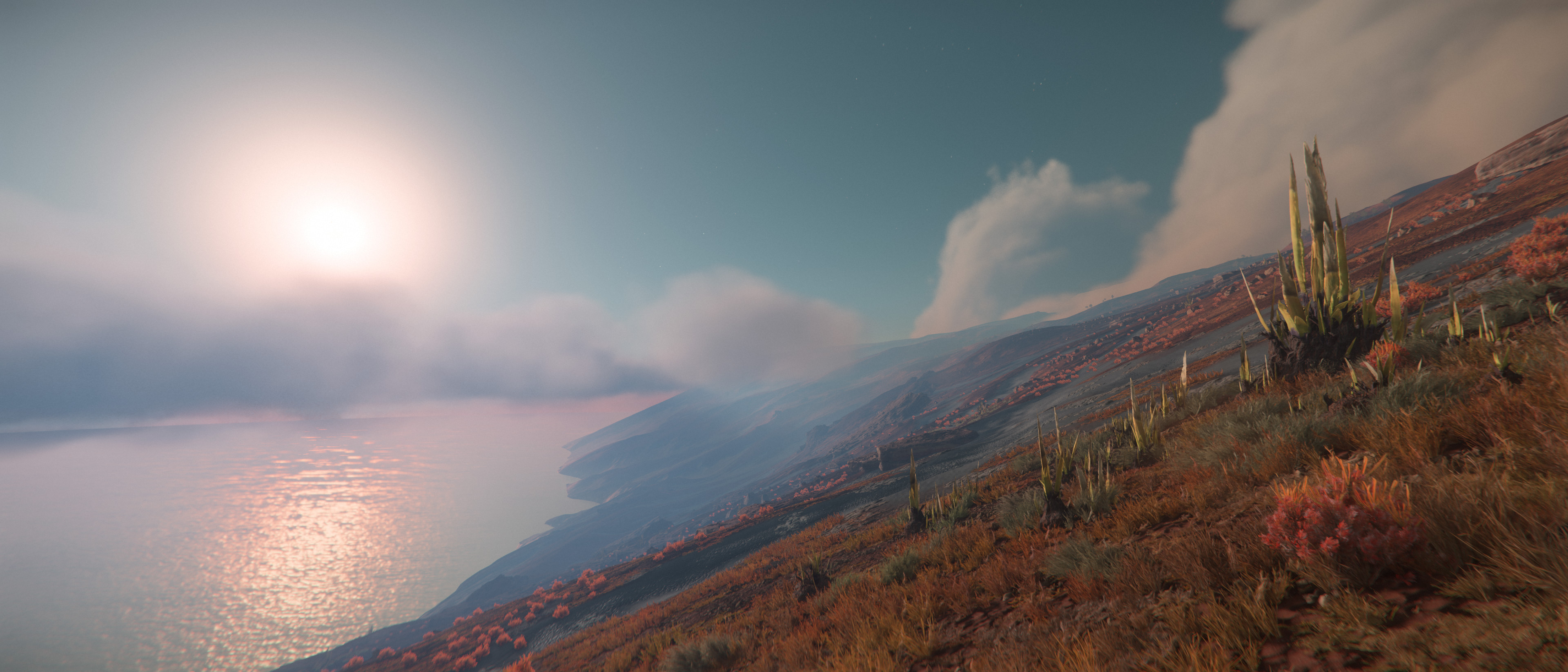
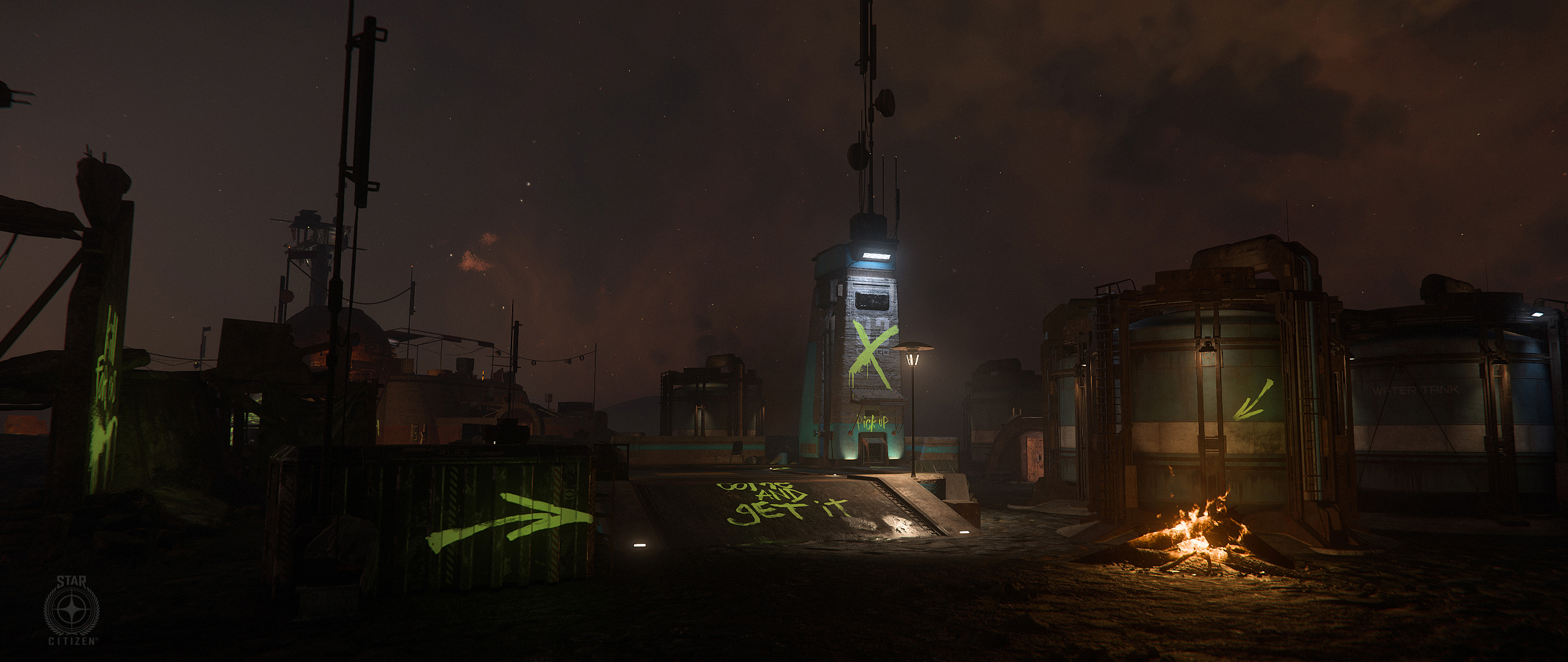
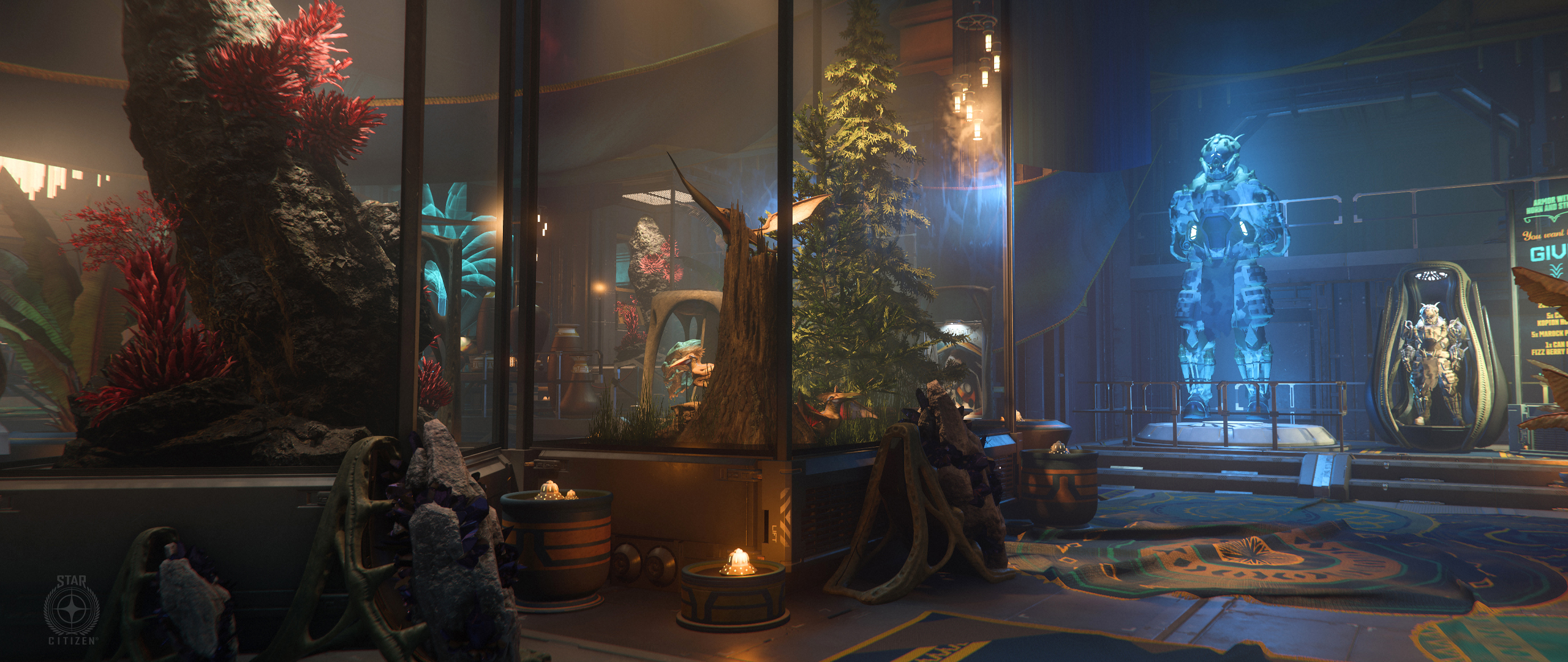
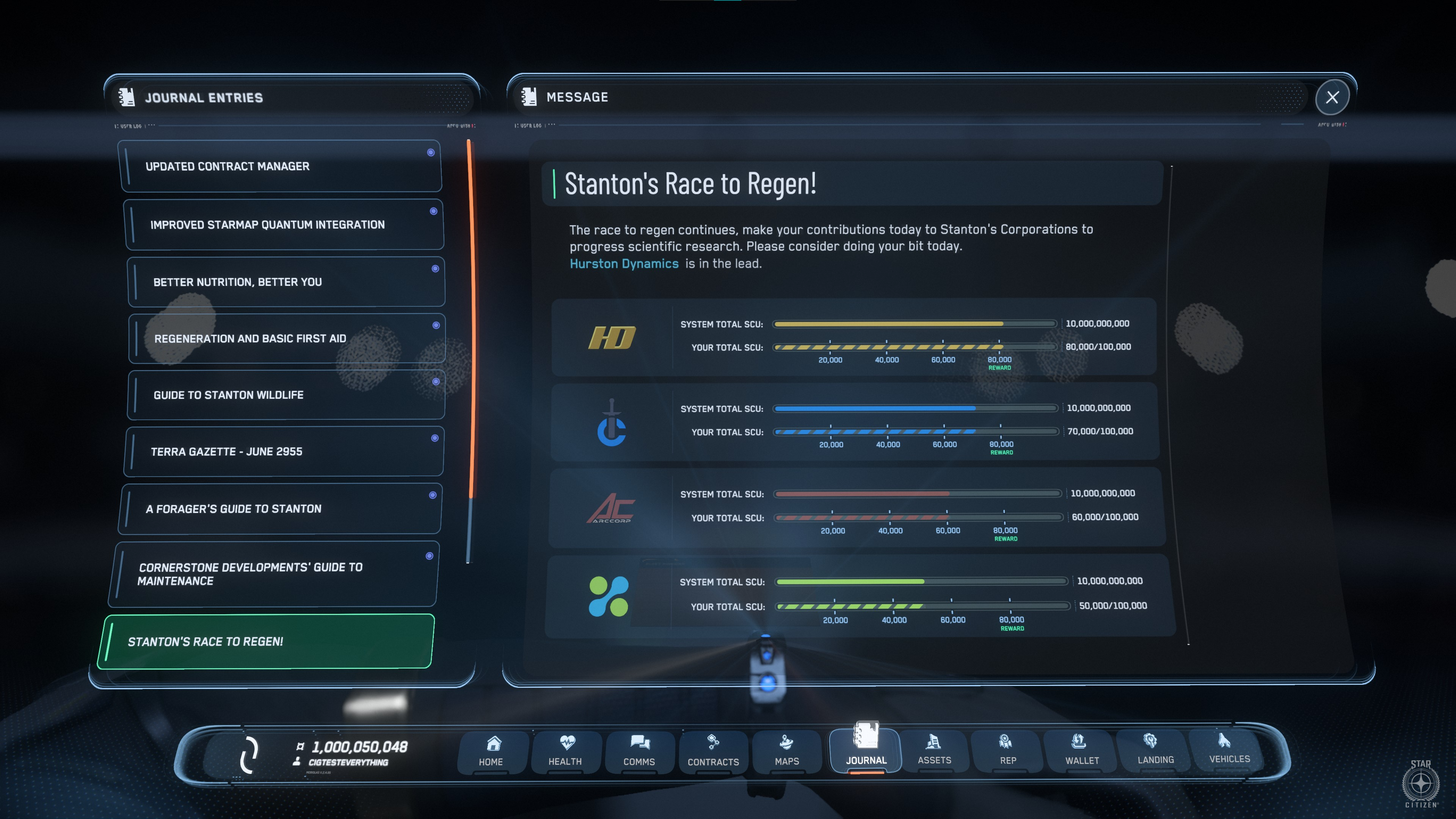
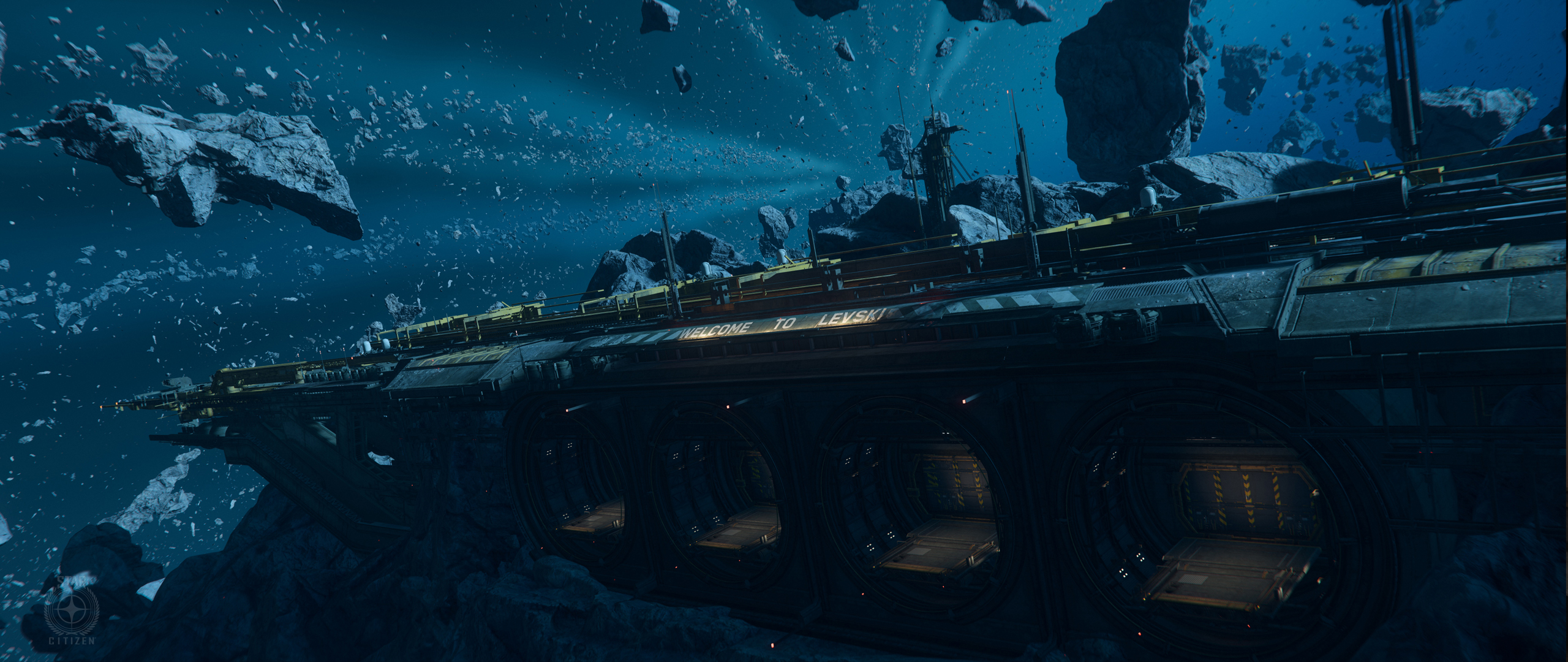
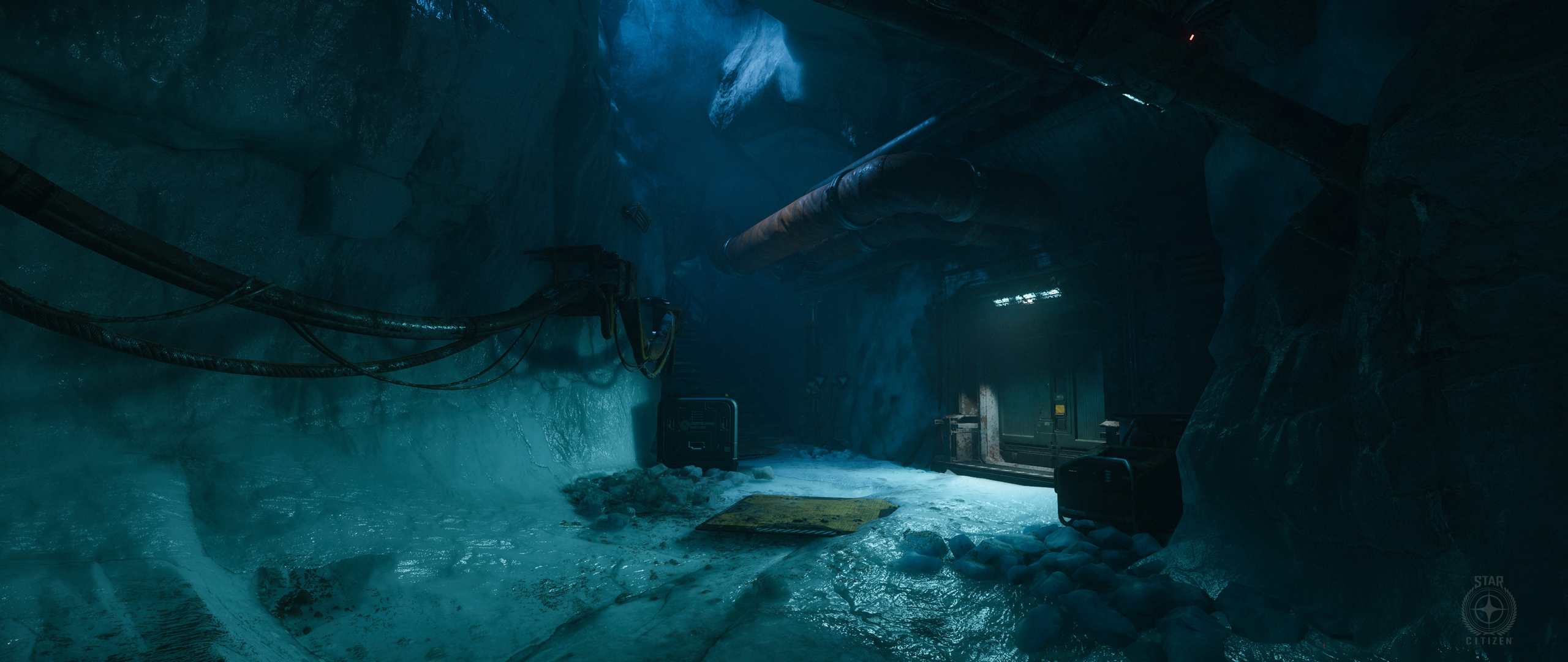
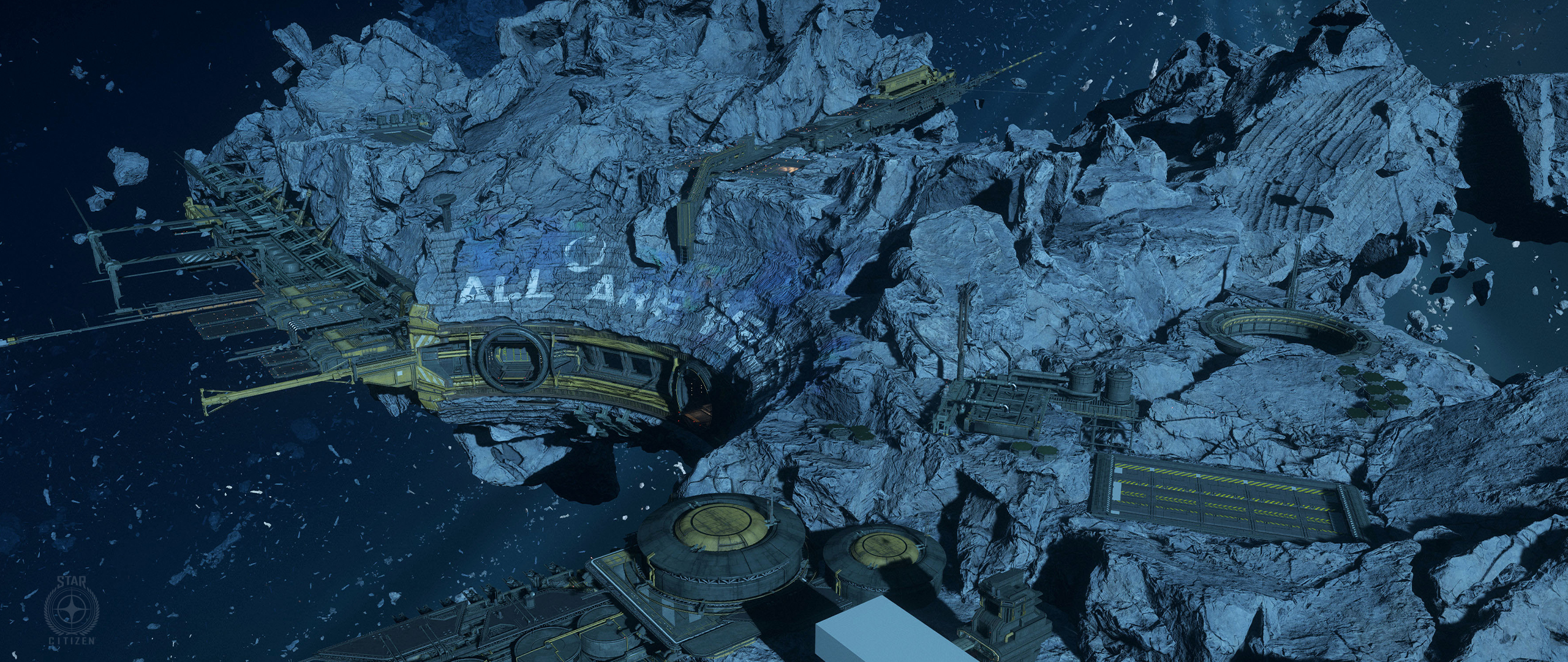
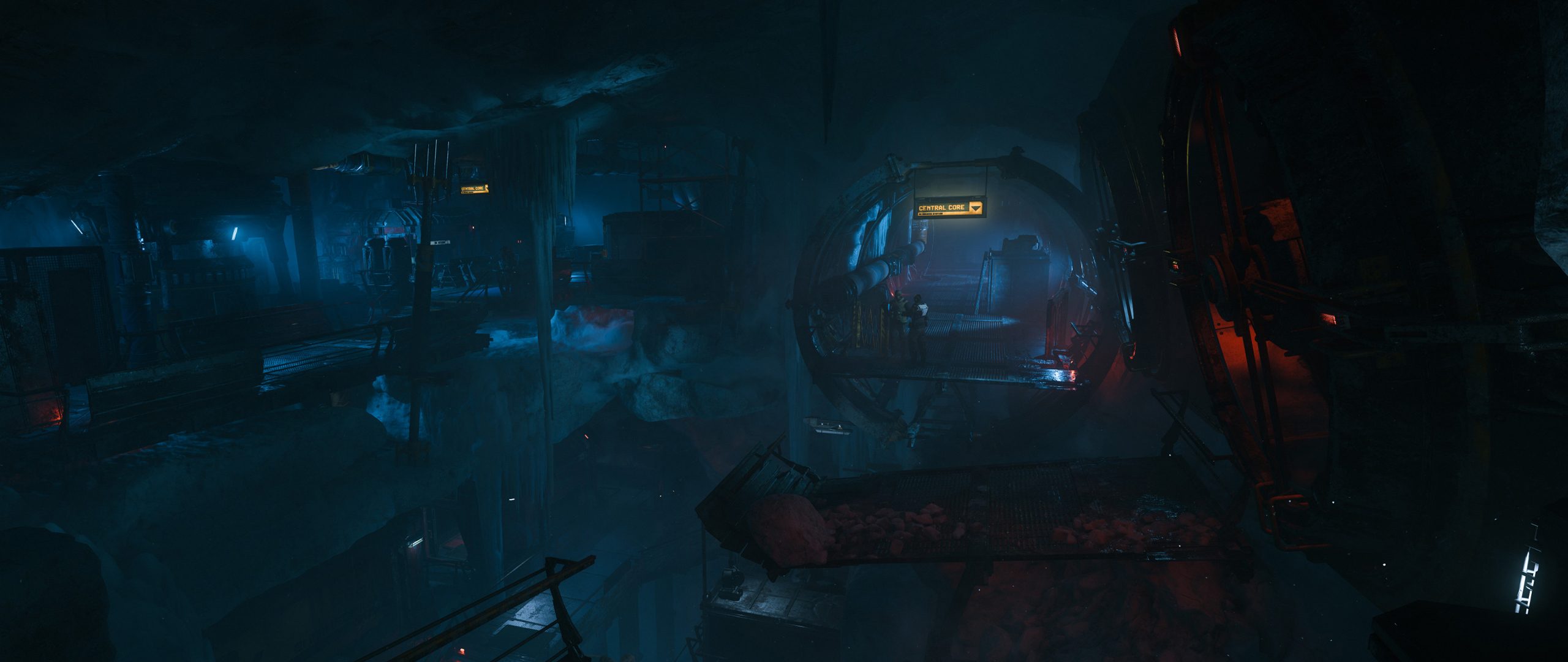
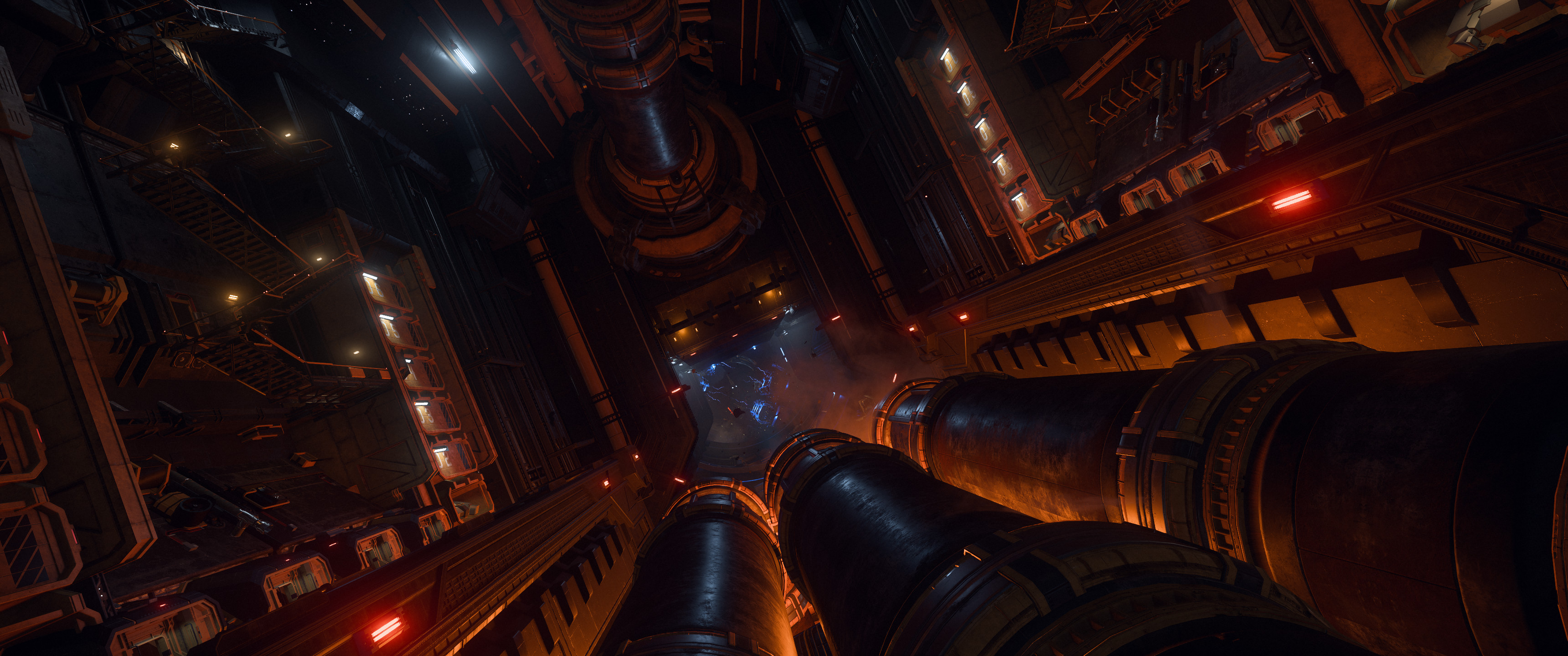
Metadata
- CIG ID
- 17341
- Channel
- Transmission
- Category
- Undefined
- Series
- Monthly Reports
- Comments
- 46
- Published
- 6 years ago (2019-11-06T00:00:00+00:00)