Star Citizen Monthly Report: September 2020
Transmission Undefined Monthly ReportsContent
The release of Alpha 3.11 is fast approaching, and with it comes a whole host of new features to Star Citizen. Many of these new additions received their final tweaks and polishes throughout September, which you can get a sneak peek of in this month’s report. It wasn’t all Alpha 3.11 either, with great progress made on some significant updates scheduled for this winter’s patch and beyond. Expect interesting info on refinery decks, upcoming events, new ships, and of course, the Pyro system.
AI (Character Combat)
Character Combat kick off the report with their ongoing work on accurate ammunition handling. As NPCs won’t have infinite ammo, they will need to account for resources and decide when to attempt to procure more. When complete, should NPCs not have an appropriate melee weapon, they may decide that surrender is the best option. The team prepared several animation options and embedding ‘surrender’ in various behaviors. They also added improved transitions when exiting and staying in cover under certain conditions. A handful of visual perception parameters and the debug draw were tweaked to allow the designers to better iterate on the values that the AI use to perceive and understand enemies from different distances (and whether the character is in the primary or secondary field-of-view).
AI (General)
Last month, the AI Team fixed more issues with characters standing on top of usables, a lot of which were related to the object-container failing to restore characters to the right state. The team would like to share insight into this issue and some of the stability improvements currently in development.
“The visual bug was always caused by NPCs being attached to usables that would stream out and then stream back in when a player approached the area. In one case, the internal event sent to the player state-machine to request the re-attachment would be lost and never processed. In the second case, the character would stream in after the usable and several other characters. Those characters would then execute their regular behaviors and could ‘steal’ the usable from the non-streamed character, causing the usable to fail to attach once they were eventually streamed back in. We want to share this with our community to give you an insight into the necessity of catching these specific situations and making the systems that AI rely on as strong as possible.” – The AI Team
The long-term plan is to make extensive use of services to populate the environment and simulate areas when players are not around. This means a lot of these issues will become irrelevant due to the systems being used in slightly different ways.
The team was also busy with Alpha 3.11 bug fixes and performance optimization.
AI (Ships)
September saw the Ship AI Team focus their attention on weapons, missile management, and a further pass on capital ship combat behavior. The latter involved making AI gunners aware of the damage composition of their available weapon groups. For example, if a gunner has a choice between energy- or physical-damage weapons, they will first attempt to lower their opponent’s shields using the energy weapon. Then, when the health status falls below a certain threshold (dictated by the gunner’s ‘fire discipline’ skill) they will switch to physical damage to deliver the killing blow.
They added more data to allow AI gunners to respect a cooldown before arming and launching missiles. They also ensured that, when several AI ships spawn at the same time, they don’t have the same cooldown time to prevent the target being subject to a barrage of missiles. A supplementary check was added to ensure that a ship recently hit by a missile won’t be targeted again for a set period of time (again, depending on the fire discipline of the shooter).
Another new feature being worked on is the ability for NPCs to intercept missiles. As a first step, torpedoes and missiles were added to AI perception so that they are seen as potential targets. They then changed missile hostility so all missiles that target AI ships are considered hostile; this ensures turret gunners only shoot down missiles that are a threat to friendlies. Manned turret priorities were also changed, so small and medium turrets prioritize shooting down incoming torpedoes while heavy turrets ignore them as they’re generally too large and slow to be effective. Weapon size is also a factor, with small turrets prioritizing smaller targets and heavy turrets more dangerous ones.
The team also worked on the ‘InSeatWeaponRange Tactical Target Query,’ which checks if a turret gunner or ship could potentially fire at a target, and added an optimal engage-range task that calculates the range ships should attempt to stay at when engaging a particular target. The first pass of the subsumption behaviour for capital ships was implemented too, which varies based on whether a ship has a front gun and the type of target.
Animation
The Animation Team spent the majority of the month on SQ42-related tasks, but worked on a number of comms calls for various pilots specifically for the PU.
Art (Environment)
Last month, the Modular Environment Team finalized their work on the new cargo decks coming in Alpha 3.11. They also began looking into the art requirements for ship-to-station docking, supported work for several upcoming events, and make progress on the refinery decks. They also experimented with gas clouds at Lagrange points and supported Design in implementing the new Rest Stop interiors.
The Landing Zone Team continued their ongoing development of Orison. The main critical path elements are now established, including shops, transit systems, and habs, with most moving from the whitebox to the greybox phase.
September saw the Organics Team continue production of the Pyro system, with focus on Pyro VI and the moons of Pyro V. Alongside this, they continued updating the Stanton system with the new planet brushes, which can be seen firsthand in Alpha 3.11. This is a prerequisite for the latest improvements to the organic shader and its biome accumulation feature, which is intended for release in Alpha 3.12.
The Environment Art Team continued production on all Pyro-related content. The moons in particular received most of the attention, being brought out of the whitebox stage and readied for feedback and polish. Pyro VI progressed well too, with the global look and various biomes of the planet defined.
The team are always reviewing the various aspects of their pipeline to see if quality can be increased or content optimized. This time, they decided to take a closer look at the ground textures that define the close-up surface of the planets and moons, replacing all existing materials with photogrammetry-based data. Similarly, a lot of geology assets were replaced with items that make use of the latest additions to the organics shader, such as more sophisticated blending and the displacement of texture detail. This brings both the ground and geology assets visually more in line with each other and improves overall quality.
Due to recent updates to the planet painting tools, the team made all of Stanton’s planets and moons fully compatible with the changes. However, this was less of a visual pass and more of a technical update.
Art (Ships)
In the US, the Art and System Design teams made great progress on the Crusader Mercury, which is rapidly approaching the final art phase. It’s expected to reach the release-prep stage in October.
Vehicle Tech Art completed their damage pass on the upcoming Origin 100 Series ships, which included solving an issue that prevented cosmetic items detaching with debris. The team also supported Engineering on the SDF shield, 3D VisAreas, and docking features.
In the UK, the Art Team continued to work on the Crusader Hercules. Last month saw the lift and hangar doors complete their final art pass and the habs make it to the art-complete stage.
The Esperia Talon is also close to art-complete; the final art pass was made (minus the landing gear) before it moved onto the damage setup and LODs.
The Aegis Gladius also received a little attention, with the team adding component access across the exterior.
Art (Weapons)
The Weapons Art Team spent a portion of the month training new prop artists in Maya and the workflow for creating new weapons and attachments. Work also began a new set that includes scopes, barrel, and under-barrel attachments. The Behring FS-9 LMG began its first art pass, while the Gemini A03 sniper rifle entered the final art phase too.
Audio
The Audio Team started the month cleaning up the music system by refactoring and organizing old files and optimizing code.
After that, they revisited some old space-derelict ambiances and supported the Green Zone removal (including the ability to destroy the turrets protecting the space stations!).
They began work on the physics props refactor and improved some of the older props used by the ‘object push/pull’ feature currently in development. Audio updates were also made for the UI-related features coming in Alpha 3.11, including the external inventory and front-end rework.
Code-wise, the team completed work to enable the playing of audio on GPU particles and further developed the tools used by the sound designers.
Backend Services
Last month, the Backend Server Team focused on deploying, testing, and tuning the meshed Loadout Service and Meshed Variable Service. They moved the flow of all variable and loadout data away from trafficking through the diffusion routers to a more optimal and direct path. This isolates the traffic between specific services, meaning it cannot disrupt the flow of other information that moves through diffusion. They also fixed a number of outstanding issues from Alpha 3.10, including memory leaks, network connectivity issues, and performance bugs.
Characters
In September, work continued on an armor set due for completion in Q4 2020 that the team refer to as “especially challenging to implement” due to changing geometry in the variants. Other tasks involved NPC clothing assets, mission-giver heads, and concepts for a utilitarian mining-focused armor.
“We are particularly excited to finally be adding more gameplay armors to the PU, as Design will now be delivering ‘armor design documents’ to us at regular intervals. Among others, we have started concepting a series of bounty hunting and tracking-focused armors. You can expect to see these in 2021.” -The Character Team
Finally, they supported various upcoming releases and events, including IAE 2950 and the release of the Crusader Mercury.
Community
Community’s September was dominated by Ship Showdown. Phase 1, which started at the end of August, tasked players with championing their favorite spacecraft or vehicle by submitting self-created ship art to the Community Hub or Twitter. We received hundreds of incredible submissions, with the ten most outstanding receiving a MISC Prospector.
The community’s top 16 then faced each other in Phase 2 head-to-head tournament, which was ultimately won by the Anvil Carrack. The final four ships will receive in-game liveries and in-game shirts that will be revealed at the IAE later this year. A two-week Free Fly accompanied the second phase, during which all top 16 ships were available to everyone for free.
The Team also celebrated Talk Like a Pirate Day with the Fly Like a Pirate Screenshot Contest, which asked the community to show off their most piratical activities throughout the ‘verse. Due to the inevitable cancellation of CitizenCon this year, the team kicked off the Cosplay Contest, with great prizes for the best submissions.
Community worked with several development teams to put together the Alpha 3.10 Postmortem, where senior devs shared their high-level thoughts on what went well, what didn’t, and what they learned for next time.
They also shared several posts regarding upcoming updates to the ‘verse, many of which can be found in Alpha 3.11: Law System Updates, Rest Stop Armistice Restrictions Updates, and Missiles and Countermeasures Improvements.
Engineering
Last month’s physics optimizations included improving the intersection routines for SDF baking and adding further culling to AABB tree traversal. The team added g-force calculation to all rigid entities and the ability to add the mass of rigids inside the grid host mass. They gave initial support to adaptive signed-distance-fields (SDF), added exterior shadow geometry (which enables boundary entities within the hosted zone in interior OCs), and now properly support all primitive physics types for interior grids. They also added external impulses to ‘pe_status_dynamics’ and created a grid without explicit geometry. Support was provided for multiple external accelerations too.
For the ongoing G12 renderer work, the team supported the optional execution of stages, added debug names to all constant buffers (and made it mandatory), and undertook custom material CB and layer-blend support. Legacy pipeline resets were removed from the begin/end render pass to the locations of the legacy-Gen12 switch, which currently saves up to 2000 API calls.
Engineering merged the deferred and deferred-display-mapped pipelines, implemented the TSAA stage, and promoted the following stages to ‘stable:’ Tonemapping, DepthOfField, MotionBlur, Optics, Colorgrading, OpticsExposure. They removed save/load resource-binding code on the begin/end render pass, saving around 500 API calls per-frame. Parameterized common depth functions were also added so that they don’t access global constants, as was depth down-sampling.
Work on the atmosphere, clouds, and unified raymarcher continued in earnest, which led to cloud data that now properly interacts with the atmospheric segment it injects into (via corrected luminance integration and transmittance evaluation). The team added support for the injection of (existing) spherical clouds into the unified atmospheric raymarcher, now using uniformly distributed sample locations when integrating over hemispheres. This significantly improves LUT integration results, removes several artifacts, and converges much quicker.
A new atmospheric multi-scatter LUT was added that supports infinite scattering orders, while the current multi-scatter LUT was rebalanced due to excessive brightness. The team also refined soft-edge computation for spherical clouds to reduce aliasing and improved the visible sun-disc evaluation when computing sunlight. This evaluation is fully integrated into the wider atmospheric lighting system and impacts direct and indirect lighting. An imbalance of computed brightness between regular and injection passes was completed; now clouds appear with consistent brightness in both regular atmosphere and via unified raymarching. The team provided support for separate Rayleigh and Mie inscatter LUTs in the current atmospheric code path too, which fixes several false color artifacts. The new LUT parameterization better supports high atmospheres and, among other things, fixes the very prominent halo around the silhouette of a planet’s dark side.
The team sped up and unified the optical depth pre-computations in the absorption layers of atmospheres. Among other things, this allows them to add an ozone layer to Earth-like planets, which will emphasize blue skies and enable correct shading during twilight. It also enables the physically plausible fine-tuning of atmospheres. They now also use solar irradiance throughout the evaluation of atmospheric lighting to give a much-improved evaluation of sun radiance for points outside of planetary atmospheres. This enables twilight casting, atmospheric scattering, and allows the sun’s angular radius to project objects onto a planet’s penumbra region.
General system work involved several fixes to ISPC integration (a special compiler that generates highly optimized SSE code for heavy duty jobs running on CPUs). The team implemented support for static stationary zone groups and concave geometries as vis areas and fixed the method they find vis areas and portals by name.
Features (Gameplay)
September was a busy month for the US Gameplay Features Team, who focused on fixing bugs, completing feature work, and preparing for future initiatives.
The beginning of the month saw them complete the final pass on the updated PU front-end screens. While the ultimate goal is to completely redefine the entry experience, these changes will refine the whole process and provide a smoother transition from the starting screens to gameplay. Some of the changes were showcased in a recent Inside Star Citizen.
The team began redesigning the mission manager app, with the current focus on converting the app from Flash to Building Blocks. Once complete, the team will focus on updating functionality and making changes to the overall design.
Alongside redesigns, the team continued to make progress on the new reputation system. Additional design work and functionality was added, with focus on individual player reputations.
Features (Vehicles)
A major focus for Vehicle Features last month was docking, including fixing various issues with the Kruger snubs and RSI Constellation. While they still have to deal with several issues, such as spawning the ships together correctly, great progress was made. For example, testers can now properly get in and out of the snub while it’s docked in the Constellation.
The first functioning version of station docking was also completed. Currently, testers request to dock, get assigned a docking port, and connect with it.
The team supported the ongoing mining UI refresh. Aspects of the ship flight HUD and mining UI all now work together seamlessly, and the UI utilizes the new building blocks technology.
Graphics
The Graphics Team split their time last month between work on the new Gen12 renderer, general features, and bug fixing. Gen12 tasks included converting the game’s post-effects manager, which handles all ‘miscellaneous’ effects such as blurred vision and blackouts. The Gen12 core infrastructure was further developed to be compatible with the configurable graphics pipelines and the constant shader buffers were further polished.
The remainder of the Graphics Team’s time was spent on the render-to-texture system, with the hookup to the texture-streaming system now complete. This means they can now run-time-generate as many textures as they like and automatically load-balance the memory with the rest of the textures in-game. The organic shader work was also completed. Currently, the team are working on iridescent effects for some upcoming ships and armor.
Level Design
The Modular Level Design Team worked through tasks for the cargo and refinery decks. They also focused on general space station interiors to ensure a more focused experience, with further iterations planned for the future.
The Landing Zone Level Design Team continued to work on Orison; all the core elements are now in place bar a couple of shop layouts they’re still iterating on.
Both teams completed the first version of new panels that, among other things, will be used to update the existing elevator buttons.
Lighting
Last month, the Lighting Team predominately supported the upcoming Alpha 3.11 patch release, which involved polishing and finalized their work on the cargo deck locations. They also began investigating alternate lighting states for existing Rest Stops. To start with, they completed a look-dev pass on a potential low-power state, with plans to flesh it out across the entire set of Rest Stop modular rooms in the future. They’re also planning to create a look for emergency lighting. These lighting states will eventually be integrated into gameplay systems, such as power, and provide the potential for more Rest Stop variations in general.
They also began supporting Orison, setting up a basic lighting pass for the whitebox layout. It’s important, even at these early stages, for the Lighting Team to identify potentially problematic spots where lighting performance will be poor. This enables fixes and layout changes to be made with minimal knock-on work for other departments.
Another pass was done on Lorville, this time adding simple animations to the security tower spotlights during the night-time lighting setup. This, alongside other short animations in the new cargo decks, provides a test case for adding more animated elements to locations to help bring them to life.
Narrative
Throughout September, the Narrative Team worked on environment documents for upcoming locations. This involves outlining the tone, history, and flavor of the area and detailing the potential stores and NPCs that might be encountered in anticipation of kickoff meetings with Art and Design. The team also worked closely with Design in the UK and Austin to look at the features currently in development and plan out potential mission content to help highlight them. From there, they started to breakdown characters and potential lines. As Narrative began scripting, the Design Team created placeholder assets to test the lines in-game to allow them to refine any lines or dialogue events before they record with an actor.
As with each month, another new batch of items needed to be named and described. Whether working with the Character Team on weapons, props, armor, and clothing or the Vehicle Team on ship components, everything that can be viewed in a store or the equipment manager needs a dedicated description.
The team also worked with QA to task-up the latest batch of Narrative bugs reported to the Issue Council.
On the Dispatch front, the upcoming Imperator election progressed. The team’s latest post featured the final debate between the last five candidates.
“You’ve seen their posters around the landing zones and heard their campaign ads, but make sure you read up on their latest positions before the polls go live this month. And don’t forget to cast your vote!” -The Narrative Team
Player Relations
The Player Relations Team spent the month working to expand service to seven days a week and growing the team in both Austin and Wilmslow, filling several positions that will reduce the ticket response time, regardless of day. They also worked alongside the Evocati to prepare for the release of Alpha 3.11.
Props
The Props Team spent part of September wrapping up support on the new cargo station assets. This includes the counter sets, shipping containers, and assets for the shop.
They were also kept busy supporting the new locomotion push/pull trolley system. When implemented, players will be able to manipulate trolleys and other ‘pushable’ objects. Templates were put in place, which means they can now update existing assets incrementally to work with this new feature.
QA
Last month, Quality Assurance continued to focus on test requests and participated in weekly playtests. The majority of features worked on were behind the scenes, so a significant number of existing assets had to be tested to ensure nothing had changed.
They also tested turret and ship AI accuracy, which involved looking into the existing placements and AI behaviors via Arena Commander. QA also continued to support the Engine Team, with September’s focus on getting to the bottom of several hard-to-reproduce crashes and memory leaks.
Locations-wise, the team continued to work through various transit-system issues. The Tools Team continued to support the ongoing work on core tools, including DataForge, StarWords, ExcelCore, and the sandbox editor.
Tech (Animation)
Alongside training new additions to team, Tech Animation supported Social AI in creating and technically implementing various assets throughout the PU. There was a concentrated drive to finish up the in-house facial rig and tool suite to enable the continued creation of new heads. This precedes the wider push to overhaul the entire head creation pipeline, with the view to future proofing it for the next few years.
The ongoing initiative to create new tools to help implement animations with a graphical user interface continued.
“The UI is looking great and we’re currently writing the technical implementation that will drive the link into our current animation toolset.” – The Tech Animation Team
Tech (Art)
Tech Art’s September priorities included supporting the aforementioned Kruger/Constellation docking, 3D VisAreas, testing the multi-grid SDF with Engineering, and wrapping up tasks on the Origin 100 Series.
An as-yet-unannounced ship was developed further, and a bug causing shader damage to not initialize on large ships until players are extremely close by is currently being looked at.
Tech (Vehicles)
Vehicle Tech spent the month improving the behavior and visuals of vehicle destruction, focusing on making the destruction of extremely large ships a satisfyingly explosive experience. They also prepared for upcoming improvements to radar, ping, and scanning, with the aim being to enrich the experience of discovering and gathering detailed information of entities while traveling on foot and in ships. Finally, vehicle-system-related bugs were addressed for Alpha 3.11.
Turbulent
Throughout September, the team focused on the Alpha 3.11 delivery by bug-fixing existing features and running several critical migrations. They also added features to Hex, including the ability to visualize ledger data (long-term persistence) and perform credit/debit actions. Several UI and UX improvements were also made to make the tool more user friendly.
Among other initiatives, the Web Platform Team supported the launch of Ship Showdown 2950.
User Interface (UI)
Last month, UI’s embedded artists worked through various features, such as the external inventory and missile UI. They also continued work on the refinery kiosk UI, pushing hard on stability and bug fixing.
Tech-wise, they made improvements to the Building Blocks system and supported the impending Alpha 3.11 release with bug fixing and other small elements of tech debt.
VFX
The VFX Team made further progress with fire hazards, further developing the code prototype and making networking and performance considerations.
The Art Team, working alongside the Code Team, created a ‘visual target’. A visual target doesn’t use code hooks, but is instead an opportunity for the artists to focus on getting their effects to look as good as possible. Then, when they’re happy with the quality, the Code and Art teams can work out how to integrate the visuals into the system.
Also this month, VFX for a new ballistic shotgun, grenade launcher, and Origin 100i.
Finally, bugs were fixed and polishing was done for the imminent Alpha 3.11 release.
WE’LL SEE YOU NEXT MONTH…
Die Veröffentlichung von Alpha 3.11 steht kurz bevor, und mit ihr kommt eine ganze Reihe neuer Features für Star Citizen. Viele dieser Neuerungen wurden im Laufe des Septembers überarbeitet und auf den letzten Schliff gebracht, wovon ihr im Bericht dieses Monats einen kleinen Einblick bekommen könnt. Es war auch nicht alles Alpha 3.11, mit großen Fortschritten bei einigen wichtigen Updates, die für den Patch dieses Winters und darüber hinaus geplant sind. Es erwarten euch interessante Infos zu den Raffineriedecks, kommenden Events, neuen Schiffen und natürlich dem Pyro-System.
KI (Charakter-Kampf)
Character Combat geben den Startschuss für den Bericht mit ihrer laufenden Arbeit an der präzisen Handhabung von Munition. Da die NSCs nicht unendlich viel Munition haben werden, müssen sie Rechenschaft über die Ressourcen ablegen und entscheiden, wann sie versuchen, mehr zu beschaffen. Sollten NSCs nach Abschluss des Kampfes keine geeignete Nahkampfwaffe haben, können sie entscheiden, dass die Kapitulation die beste Option ist. Das Team hat verschiedene Animationsoptionen und die Einbettung von 'Aufgeben' in verschiedene Verhaltensweisen vorbereitet. Außerdem haben sie verbesserte Übergänge beim Verlassen und beim Verbleiben in Deckung unter bestimmten Bedingungen hinzugefügt. Eine Handvoll visueller Wahrnehmungsparameter und das Debug-Draw wurden optimiert, um es den Designern zu ermöglichen, die Werte, die die KI verwendet, um Feinde aus verschiedenen Entfernungen wahrzunehmen und zu verstehen (und ob sich der Charakter im primären oder sekundären Sichtfeld befindet), besser zu iterieren.
KI (Allgemein)
Letzten Monat hat das KI-Team weitere Probleme mit Charakteren behoben, die auf benutzbaren Objekten standen. Viele davon hatten damit zu tun, dass der Objekt-Container die Charaktere nicht wieder in den richtigen Zustand versetzt hat. Das Team möchte euch gerne einen Einblick in dieses Problem und einige der Stabilitätsverbesserungen geben, die sich derzeit in der Entwicklung befinden.
"Der visuelle Fehler wurde immer dadurch verursacht, dass NSCs an Nutzbarkeiten angehängt waren, die aus- und wieder einströmten, wenn sich ein Spieler dem Gebiet näherte. In einem Fall ging das interne Ereignis, das an die State-Machine des Spielers gesendet wurde, um die Neuanbindung anzufordern, verloren und wurde nie verarbeitet. Im zweiten Fall würde der Charakter nach dem benutzbaren und mehreren anderen Charakteren hereinströmen. Diese Charaktere führten dann ihr normales Verhalten aus und konnten dem nicht gestreamten Charakter die Brauchbaren 'stehlen', was dazu führte, dass die Brauchbaren sich nicht mehr anhängen konnten, wenn sie schließlich wieder herein gestreamt wurden. Wir möchten dies mit unserer Community teilen, um euch einen Einblick in die Notwendigkeit zu geben, diese speziellen Situationen einzufangen und die Systeme, auf die die KI angewiesen ist, so stark wie möglich zu machen". - Das KI-Team
Der langfristige Plan ist es, die Dienste umfassend zu nutzen, um die Umgebung zu bevölkern und Gebiete zu simulieren, wenn Spieler nicht in der Nähe sind. Das bedeutet, dass viele dieser Themen aufgrund der leicht unterschiedlichen Nutzung der Systeme irrelevant werden.
Das Team war außerdem mit Alpha 3.11 Bugfixes und Leistungsoptimierung beschäftigt.
KI (Schiffe)
Im September konzentrierte sich das Schiffs-KI-Team auf Waffen, Raketenmanagement und einen weiteren Pass auf das Kampfverhalten von Großkampfschiffen. Letzteres beinhaltete die Sensibilisierung der KI-Schützen für die Schadenszusammensetzung ihrer verfügbaren Waffengruppen. Hat ein Bordschütze zum Beispiel die Wahl zwischen Energie- oder Körperschadens-Waffen, wird er zunächst versuchen, die Schilde seines Gegners mit der Energiewaffe zu senken. Wenn der Gesundheitszustand unter einen bestimmten Schwellenwert fällt (der von der Fertigkeit "Feuerdisziplin" des Schützen bestimmt wird), wechselt er zu physischem Schaden, um den tödlichen Schlag auszuführen.
Sie haben mehr Daten hinzugefügt, damit die KI-Schützen eine Abklingzeit respektieren können, bevor sie Raketen scharf machen und starten. Sie haben auch dafür gesorgt, dass, wenn mehrere KI-Schiffe gleichzeitig spawnen, sie nicht die gleiche Abklingzeit haben, um zu verhindern, dass das Ziel einem Raketenbeschuss ausgesetzt wird. Eine zusätzliche Überprüfung wurde hinzugefügt, um sicherzustellen, dass ein Schiff, das kürzlich von einer Rakete getroffen wurde, für eine bestimmte Zeitspanne nicht erneut angegriffen wird (wiederum abhängig von der Feuerdisziplin des Schützen).
Ein weiteres neues Feature, an dem gearbeitet wird, ist die Möglichkeit für NPCs, Raketen abzufangen. Als erster Schritt wurden Torpedos und Raketen zur KI-Wahrnehmung hinzugefügt, so dass sie als potenzielle Ziele gesehen werden. Dann wurde die Raketenfeindlichkeit geändert, so dass alle Raketen, die auf KI-Schiffe zielen, als feindlich angesehen werden; dies stellt sicher, dass Turmschütze nur Raketen abschießen, die eine Bedrohung für befreundete Schiffe darstellen. Die Prioritäten der bemannten Geschütztürme wurden ebenfalls geändert, so dass kleine und mittlere Geschütztürme den Abschuss ankommender Torpedos priorisieren, während schwere Geschütztürme sie ignorieren, da sie im Allgemeinen zu groß und langsam sind, um effektiv zu sein. Die Größe der Waffen ist ebenfalls ein Faktor, wobei kleine Geschütztürme kleineren Zielen und schwere Geschütztürme gefährlicheren Zielen den Vorrang geben.
Das Team hat auch an der 'InSeatWeaponRange Tactical Target Query' gearbeitet, die prüft, ob ein Turmschütze oder ein Schiff potenziell auf ein Ziel feuern könnte, und hat eine optimale Kampfentfernungsaufgabe hinzugefügt, die die Entfernung berechnet, die Schiffe versuchen sollten, bei einem bestimmten Ziel zu bleiben. Der erste Durchgang des Subsumtionsverhaltens für Großkampfschiffe wurde ebenfalls implementiert, welches davon abhängt, ob ein Schiff eine Frontkanone hat und welche Art von Ziel es hat.
Animation
Das Animation Team verbrachte die meiste Zeit des Monats mit SQ42-bezogenen Aufgaben, arbeitete aber an einer Reihe von Comms Calls für verschiedene Piloten speziell für die PU.
Kunst (Umwelt)
Letzten Monat hat das Modular Environment Team seine Arbeit an den neuen Frachtdecks, die in Alpha 3.11 kommen, abgeschlossen. Sie begannen auch damit, die künstlerischen Anforderungen für das Andocken von Schiff zu Station zu untersuchen, unterstützten die Arbeiten für mehrere kommende Veranstaltungen und machten Fortschritte auf den Raffineriedecks. Sie experimentierten auch mit Gaswolken an Lagrange-Punkten und unterstützten das Design bei der Implementierung der neuen Raststätten-Innenräume.
Das Landing Zone Team setzte die laufende Entwicklung von Orison fort. Die wichtigsten Elemente des kritischen Pfades sind nun etabliert, einschließlich Läden, Transitsysteme und Habs, wobei die meisten von der Whitebox- zur Greybox-Phase übergehen.
Im September setzte das Organik-Team die Produktion des Pyro-Systems fort, wobei der Schwerpunkt auf Pyro VI und den Monden von Pyro V lag. Parallel dazu setzten sie die Aktualisierung des Stanton-Systems mit den neuen Planetenbürsten fort, die man aus erster Hand in Alpha 3.11 sehen kann. Dies ist eine Voraussetzung für die neuesten Verbesserungen des organischen Shaders und seiner Biome-Akkumulationsfunktion, die für die Veröffentlichung in Alpha 3.12 vorgesehen ist.
Das Environment Art Team hat die Produktion aller Pyro-bezogenen Inhalte fortgesetzt. Vor allem die Monde erhielten die meiste Aufmerksamkeit, da sie aus der Whitebox-Bühne geholt und für Feedback und Feinschliff vorbereitet wurden. Auch Pyro VI machte gute Fortschritte, da der globale Look und verschiedene Biome des Planeten definiert wurden.
Das Team überprüft ständig die verschiedenen Aspekte ihrer Pipeline, um zu sehen, ob die Qualität erhöht oder der Inhalt optimiert werden kann. Diesmal haben sie beschlossen, sich die Bodentexturen, die die Oberfläche der Planeten und Monde im Nahbereich definieren, genauer anzuschauen und alle vorhandenen Materialien durch auf Photogrammetrie basierende Daten zu ersetzen. In ähnlicher Weise wurden viele geologische Assets durch Gegenstände ersetzt, die die neuesten Ergänzungen des organischen Shaders nutzen, wie z.B. eine ausgefeiltere Mischung und die Verschiebung von Texturdetails. Dies bringt sowohl den Boden als auch die geologischen Objekte visuell besser in Einklang und verbessert die Gesamtqualität.
Aufgrund der jüngsten Aktualisierungen der Planetenmalwerkzeuge hat das Team alle Planeten und Monde von Stanton vollständig kompatibel mit den Änderungen gemacht. Dabei handelte es sich jedoch weniger um einen visuellen Pass als vielmehr um ein technisches Update.
Kunst (Schiffe)
In den USA haben die Kunst- und Systemdesign-Teams große Fortschritte beim Kreuzritter Merkur gemacht, der sich rasch der letzten Kunstphase nähert. Es wird erwartet, dass er im Oktober die Vorbereitungsphase für die Veröffentlichung erreichen wird.
Vehicle Tech Art hat ihren Schadenspass auf den kommenden Schiffen der Origin 100er Serie abgeschlossen, bei dem unter anderem ein Problem gelöst wurde, das verhinderte, dass sich kosmetische Gegenstände mit Trümmern ablösen konnten. Das Team unterstützte außerdem die Technik am SDF-Schild, 3D-Visabereiche und Andockfunktionen.
In Großbritannien arbeitete das Art Team weiter an der Crusader Hercules. Letzten Monat haben der Fahrstuhl und die Hangartüren ihren letzten Kunstpass bestanden und die habs haben es bis zur Kunstvollendung geschafft.
Auch der Esperia-Talon steht kurz vor der Vollendung; der letzte Kunstpass wurde (ohne das Fahrwerk) durchgeführt, bevor er auf die Schadensaufstellung und die LODs übertragen wurde.
Auch der Aegis Gladius wurde ein wenig Aufmerksamkeit geschenkt, indem das Team den Zugang zu den Komponenten über die Außenseite hinzugefügt hat.
Kunst (Waffen)
Das Weapons Art Team verbrachte einen Teil des Monats damit, neue Requisitenkünstler in Maya und den Arbeitsablauf für die Erstellung neuer Waffen und Anhänge zu trainieren. Die Arbeit begann auch mit einem neuen Set, das Zielfernrohre, Lauf und Anhänge unter dem Lauf enthält. Das Behring FS-9 LMG begann seinen ersten Kunstpass, während das Gemini A03 Scharfschützengewehr ebenfalls in die letzte Kunstphase eintrat.
Audio
Das Audio Team begann den Monat damit, das Musiksystem aufzuräumen, indem es alte Dateien überarbeitete und organisierte und den Code optimierte.
Danach überprüften sie einige alte weltraumverlassene Atmosphären und unterstützten die Entfernung der Grünen Zone (einschließlich der Möglichkeit, die Türme, die die Raumstationen schützen, zu zerstören!)
Sie begannen mit der Arbeit am Refactor der physikalischen Requisiten und verbesserten einige der älteren Requisiten, die von der 'Objekt Push/Pull'-Funktion verwendet werden, die sich derzeit in der Entwicklung befindet. Es wurden auch Audio-Updates für die UI-bezogenen Features gemacht, die in Alpha 3.11 kommen werden, einschließlich des externen Inventars und der Überarbeitung des Frontends.
Codetechnisch hat das Team die Arbeit abgeschlossen, um das Abspielen von Audio auf GPU-Partikeln zu ermöglichen und die von den Sounddesignern verwendeten Tools weiter entwickelt.
Backend-Dienste
Letzten Monat konzentrierte sich das Backend-Server-Team darauf, den vermaschten Loadout-Service und den vermaschten Variablen-Service einzusetzen, zu testen und zu tunen. Sie haben den Fluss aller variablen und Loadout-Daten weg vom Trafficking durch die Diffusions-Router auf einen optimaleren und direkteren Weg gebracht. Dadurch wird der Verkehr zwischen bestimmten Diensten isoliert, was bedeutet, dass er den Fluss anderer Informationen, die sich durch die Diffusion bewegen, nicht unterbrechen kann. Außerdem haben sie eine Reihe offener Probleme von Alpha 3.10 behoben, darunter Speicherlecks, Netzwerkverbindungsprobleme und Performance-Bugs.
Charaktere
Im September wurde die Arbeit an einem Rüstungsset fortgesetzt, das im 4. Quartal 2020 fertiggestellt werden soll und das das Team aufgrund der sich ändernden Geometrie in den Varianten als "besonders herausfordernd in der Umsetzung" bezeichnet. Weitere Aufgaben betrafen NSC-Kleidungsgegenstände, Missionsgeberköpfe und Konzepte für eine utilitaristische, auf Bergbau ausgerichtete Rüstung.
"Wir freuen uns besonders, dass wir endlich mehr Gameplay-Rüstungen zum PU hinzufügen können, da Design uns nun in regelmäßigen Abständen 'Rüstungsdesign-Dokumente' zukommen lassen wird. Unter anderem haben wir damit begonnen, eine Reihe von Kopfgeldjagd- und Aufspür-Rüstungen zu konzipieren. Ihr könnt erwarten, diese im Jahr 2021 zu sehen". -Das Charakter-Team
Schließlich unterstützten sie verschiedene bevorstehende Veröffentlichungen und Veranstaltungen, darunter IAE 2950 und die Veröffentlichung des Crusader Mercury.
Gemeinschaft
Der September der Community stand ganz im Zeichen von Ship Showdown. In Phase 1, die Ende August begann, hatten die Spieler die Aufgabe, ihr Lieblingsraumschiff oder -fahrzeug zu verfechten, indem sie selbst erstellte Schiffskunst an den Community-Hub oder Twitter schicken. Wir erhielten hunderte von unglaublichen Einsendungen, wobei die zehn herausragendsten einen MISC-Prospector erhielten.
Die Top 16 der Community standen sich dann in einem Kopf-an-Kopf-Turnier der Phase 2 gegenüber, das letztendlich von der Anvil Carrack gewonnen wurde. Die letzten vier Schiffe erhalten In-Game-Livreen und In-Game-Shirts, die später in diesem Jahr auf der IAE enthüllt werden. Eine zweiwöchige Freifliege begleitete die zweite Phase, in der alle Top 16 Schiffe für alle kostenlos zur Verfügung standen.
Das Team feierte außerdem den "Talk Like a Pirate Day" mit dem Screenshot-Wettbewerb "Fly Like a Pirate", bei dem die Community während der gesamten 'Strophe' ihre piratenhaftesten Aktivitäten vorführen sollte. Aufgrund der unvermeidlichen Absage der CitizenCon in diesem Jahr, startete das Team den Cosplay-Wettbewerb, mit tollen Preisen für die besten Einsendungen.
Die Community arbeitete mit mehreren Entwicklerteams zusammen, um den Alpha 3.10 Postmortem zusammenzustellen, bei dem Senior Devs ihre hochrangigen Gedanken darüber austauschten, was gut gelaufen ist, was nicht, und was sie für das nächste Mal gelernt haben.
Außerdem teilten sie mehrere Beiträge über bevorstehende Updates des 'Verses, von denen viele in Alpha 3.11 zu finden sind: Updates des Rechtssystems, Updates der Waffenstillstandsbeschränkungen für den Ruhezustand und Verbesserungen der Raketen und Gegenmaßnahmen.
Technik
Die Physik-Optimierungen des letzten Monats beinhalteten die Verbesserung der Schnittpunkt-Routinen für das SDF-Backen und das Hinzufügen von weiterem Culling zur AABB-Baumdurchquerung. Das Team fügte eine G-Kraft-Berechnung für alle starren Entitäten hinzu und die Möglichkeit, die Masse der Rigids innerhalb der Grid-Host-Masse hinzuzufügen. Sie gaben anfänglich Unterstützung für adaptive signed-distance-fields (SDF), fügten äußere Schattengeometrie hinzu (was Boundary Entities innerhalb der gehosteten Zone in inneren OCs ermöglicht), und unterstützen nun alle primitiven Physiktypen für innere Grids korrekt. Sie haben auch externe Impulse zu 'pe_status_dynamics' hinzugefügt und ein Grid ohne explizite Geometrie erstellt. Es wurde auch Unterstützung für mehrere externe Beschleunigungen bereitgestellt.
Für die laufende Arbeit am G12-Renderer unterstützte das Team die optionale Ausführung von Stages, fügte Debug-Namen zu allen konstanten Puffern hinzu (und machte es zur Pflicht), und übernahm die Unterstützung für benutzerdefiniertes Material CB und Layer-Blend. Legacy-Pipeline-Rücksetzungen wurden aus dem Begin/End-Renderer-Pass an die Stellen des Legacy-Gen12-Switch entfernt, der derzeit bis zu 2000 API-Aufrufe speichert.
Das Engineering hat die verzögerten und verzögerten Display-mapped Pipelines zusammengeführt, die TSAA-Stufe implementiert und die folgenden Stufen zu 'stable' befördert: Tonemapping, DepthOfField, MotionBlur, Optics, Colorgrading, OpticsExposure. Sie entfernten den ressourcenbindenden Code zum Speichern/Laden beim Rendern am Anfang/Ende, wodurch etwa 500 API-Aufrufe pro Frame eingespart wurden. Außerdem wurden parametrisierte allgemeine Tiefenfunktionen hinzugefügt, so dass sie nicht auf globale Konstanten zugreifen, ebenso wie Tiefen-Down-Sampling.
Die Arbeit an der Atmosphäre, den Wolken und dem vereinheitlichten Raymarcher wurde ernsthaft fortgesetzt, was zu Wolkendaten führte, die nun korrekt mit dem Atmosphärensegment interagieren, in das sie injiziert werden (durch korrigierte Luminanzintegration und Transmissionsauswertung). Das Team fügte Unterstützung für die Injektion von (existierenden) sphärischen Wolken in den vereinheitlichten atmosphärischen Raymarcher hinzu, die nun gleichmäßig verteilte Probenorte bei der Integration über Hemisphären verwenden. Dies verbessert die Ergebnisse der LUT-Integration erheblich, entfernt mehrere Artefakte und konvergiert viel schneller.
Eine neue atmosphärische Multi-Scatter LUT wurde hinzugefügt, die unendliche Streuordnungen unterstützt, während die aktuelle Multi-Scatter LUT aufgrund übermäßiger Helligkeit neu ausbalanciert wurde. Das Team verfeinerte auch die Soft-Edge-Berechnung für sphärische Wolken, um Aliasing zu reduzieren und verbesserte die Auswertung der sichtbaren Sonnenscheibe bei der Berechnung des Sonnenlichts. Diese Auswertung ist vollständig in das breitere atmosphärische Beleuchtungssystem integriert und beeinflusst die direkte und indirekte Beleuchtung. Ein Ungleichgewicht der berechneten Helligkeit zwischen regulären und Injektionsdurchgängen wurde vervollständigt; jetzt erscheinen die Wolken mit konstanter Helligkeit sowohl in der regulären Atmosphäre als auch durch vereinheitlichtes Raymarching. Das Team hat auch Unterstützung für separate Rayleigh- und Mie-Inscatter-LUTs im aktuellen atmosphärischen Codepfad bereitgestellt, was mehrere Falschfarben-Artefakte behebt. Die neue LUT-Parametrisierung unterstützt hohe Atmosphären besser und behebt unter anderem den sehr markanten Halo um die Silhouette der dunklen Seite eines Planeten.
Das Team beschleunigte und vereinheitlichte die Vorberechnungen der optischen Tiefe in den Absorptionsschichten der Atmosphären. Dies erlaubt ihnen unter anderem, den erdähnlichen Planeten eine Ozonschicht hinzuzufügen, die den blauen Himmel hervorhebt und eine korrekte Schattierung während der Dämmerung ermöglicht. Es ermöglicht auch die physikalisch plausible Feinabstimmung der Atmosphären. Sie benutzen jetzt auch die Sonneneinstrahlung während der gesamten Auswertung der atmosphärischen Beleuchtung, um eine viel bessere Bewertung der Sonnenstrahlung für Punkte außerhalb der planetarischen Atmosphären zu erhalten. Dies ermöglicht den Dämmerungswurf, die atmosphärische Streuung und erlaubt den Winkelradius der Sonne, um Objekte auf die Halbschattenregion eines Planeten zu projizieren.
Allgemeine Systemarbeit beinhaltete mehrere Korrekturen an der ISPC-Integration (ein spezieller Compiler, der hochoptimierten SSE-Code für hochbelastete Jobs auf CPUs generiert). Das Team implementierte die Unterstützung für statische stationäre Zonengruppen und konkave Geometrien als Vis-Bereiche und korrigierte die Methode, mit der sie Vis-Bereiche und Portale anhand des Namens finden.
Eigenschaften (Gameplay)
Der September war ein arbeitsreicher Monat für das US Gameplay Features Team, das sich darauf konzentrierte, Bugs zu beheben, die Arbeit an den Features abzuschließen und sich auf zukünftige Initiativen vorzubereiten.
Anfang des Monats haben sie den letzten Durchgang an den aktualisierten PU-Front-End-Bildschirmen abgeschlossen. Während das ultimative Ziel darin besteht, das Einstiegserlebnis komplett neu zu definieren, werden diese Änderungen den gesamten Prozess verfeinern und für einen reibungsloseren Übergang von den Startbildschirmen zum Gameplay sorgen. Einige der Änderungen wurden kürzlich in einem Inside Star Citizen vorgestellt.
Das Team begann mit der Neugestaltung der Missionsmanager-App, wobei der Schwerpunkt derzeit auf der Konvertierung der App von Flash in Building Blocks liegt. Nach der Fertigstellung wird sich das Team darauf konzentrieren, die Funktionalität zu aktualisieren und Änderungen am Gesamtdesign vorzunehmen.
Neben der Neugestaltung hat das Team auch Fortschritte beim neuen Rufsystem gemacht. Es wurden zusätzliche Designarbeiten und Funktionen hinzugefügt, wobei der Fokus auf den Ruf einzelner Spieler liegt.
Features (Fahrzeuge)
Ein Hauptaugenmerk bei den Fahrzeugfeatures lag letzten Monat auf dem Andocken, einschließlich der Behebung verschiedener Probleme mit den Krüger-Snubs und der RSI Constellation. Auch wenn sie noch mit verschiedenen Problemen zu kämpfen haben, wie z.B. die Schiffe korrekt zusammen zu spawnen, wurden große Fortschritte gemacht. Zum Beispiel können die Tester nun richtig in den Snub ein- und aussteigen, während dieser in der Constellation angedockt ist.
Die erste funktionierende Version der Stationsankopplung wurde ebenfalls fertiggestellt. Momentan fordern die Tester das Andocken an, bekommen einen Docking-Port zugewiesen und verbinden sich mit diesem.
Das Team unterstützte den laufenden Refresh der Bergbau-UI. Aspekte des Schiffsflug-HUDs und der Bergbau-UI arbeiten nun alle nahtlos zusammen, und die UI nutzt die neue Bausteintechnologie.
Grafiken
Das Grafikteam hat letzten Monat seine Zeit zwischen der Arbeit am neuen Gen12-Renderer, allgemeinen Features und Fehlerbehebung aufgeteilt. Zu den Gen12-Aufgaben gehörte die Konvertierung des Post-Effekt-Managers des Spiels, der alle 'Verschiedenen' Effekte wie verschwommene Sicht und Blackouts handhabt. Die Gen12-Kerninfrastruktur wurde weiterentwickelt, um mit den konfigurierbaren Grafik-Pipelines kompatibel zu sein, und die konstanten Shader-Puffer wurden weiter aufpoliert.
Die restliche Zeit des Grafikteams wurde mit dem Render-to-Texture-System verbracht, wobei die Verbindung zum Textur-Streaming-System nun abgeschlossen ist. Das bedeutet, dass sie nun zur Laufzeit so viele Texturen generieren können, wie sie wollen, und den Speicher automatisch mit dem Rest der Texturen im Spiel ausbalancieren können. Die Arbeit an den organischen Shadern wurde ebenfalls abgeschlossen. Derzeit arbeitet das Team an irisierenden Effekten für einige kommende Schiffe und Rüstungen.
Level Entwurf
Das Modulare Leveldesign-Team arbeitete Aufgaben für die Fracht- und Raffineriedecks ab. Sie konzentrierten sich auch auf die allgemeinen Innenräume der Raumstation, um eine konzentriertere Erfahrung zu gewährleisten, wobei für die Zukunft weitere Iterationen geplant sind.
Das Leveldesign-Team für die Landezone arbeitete weiter an Orison; alle Kernelemente sind nun an Ort und Stelle, abgesehen von ein paar Ladenlayouts, an denen sie immer noch iterieren.
Beide Teams haben die erste Version der neuen Panels fertiggestellt, die unter anderem dazu dienen werden, die bestehenden Fahrstuhlknöpfe zu aktualisieren.
Beleuchtung
Letzten Monat unterstützte das Beleuchtungsteam hauptsächlich die bevorstehende Alpha 3.11 Patch-Veröffentlichung, die das Polieren und Abschließen der Arbeiten an den Standorten des Frachtdecks beinhaltete. Außerdem begannen sie damit, alternative Beleuchtungszustände für bestehende Rastplätze zu untersuchen. Zu Beginn schlossen sie einen Look-Dev-Pass für einen potentiellen Low-Power-Zustand ab, mit Plänen, ihn in Zukunft auf die gesamte Reihe der modularen Raststätten auszudehnen. Außerdem planen sie, einen Look für die Notbeleuchtung zu erstellen. Diese Beleuchtungszustände werden irgendwann in Spielsysteme integriert werden, wie z.B. Strom, und bieten das Potenzial für weitere Raststättenvariationen im Allgemeinen.
Sie begannen auch, Orison zu unterstützen, indem sie einen grundlegenden Beleuchtungspass für das Whitebox-Layout einrichteten. Es ist wichtig, dass das Beleuchtungsteam schon in diesem frühen Stadium potentiell problematische Stellen identifiziert, an denen die Lichtleistung schlecht sein wird. Auf diese Weise können Korrekturen und Layout-Änderungen mit minimaler Nacharbeit für andere Abteilungen vorgenommen werden.
Ein weiterer Durchgang wurde auf Lorville gemacht, dieses Mal wurden einfache Animationen zu den Scheinwerfern der Sicherheitstürme während der nächtlichen Beleuchtungseinrichtung hinzugefügt. Dies, zusammen mit anderen kurzen Animationen in den neuen Frachtdecks, stellt einen Testfall für das Hinzufügen von mehr animierten Elementen an Schauplätzen dar, um sie zum Leben zu erwecken.
Erzählung
Den ganzen September über arbeitete das Erzählteam an Umweltdokumenten für die kommenden Schauplätze. Dazu gehört es, den Ton, die Geschichte und den Geschmack der Gegend zu skizzieren und die potenziellen Läden und NSCs zu beschreiben, denen man in Erwartung der Kickoff-Meetings mit Art and Design begegnen könnte. Das Team hat außerdem eng mit Design in Großbritannien und Austin zusammengearbeitet, um sich die derzeit in Entwicklung befindlichen Features anzusehen und potenzielle Missionsinhalte zu planen, um sie hervorzuheben. Von da an begannen sie damit, Charaktere und mögliche Linien aufzuschlüsseln. Als Narrative mit dem Schreiben von Drehbüchern begann, erstellte das Design-Team Platzhalter, um die Zeilen im Spiel zu testen, damit sie alle Zeilen oder Dialogereignisse verfeinern konnten, bevor sie mit einem Schauspieler aufgenommen wurden.
Wie jeden Monat musste eine neue Gruppe von Gegenständen benannt und beschrieben werden. Egal, ob sie mit dem Charakter-Team an Waffen, Requisiten, Rüstungen und Kleidung arbeiten oder mit dem Fahrzeug-Team an Schiffskomponenten, alles, was in einem Laden oder beim Ausrüstungsmanager zu sehen ist, braucht eine eigene Beschreibung.
Das Team hat auch mit der QA zusammengearbeitet, um die letzten Fehler in der Erzählung, die dem Issue Council gemeldet wurden, zu beheben.
An der Dispatch-Front ging es mit der bevorstehenden Imperator-Wahl voran. Der letzte Beitrag des Teams enthielt die letzte Debatte zwischen den letzten fünf Kandidaten.
"Ihr habt ihre Plakate in den Landezonen gesehen und ihre Wahlwerbung gehört, aber lest euch unbedingt über ihre neuesten Positionen, bevor die Umfragen diesen Monat live gehen. Und vergiss nicht, deine Stimme abzugeben!" -Das Erzählteam
Spieler-Beziehungen
Das Spieler-Beziehungs-Team hat den Monat damit verbracht, den Service auf sieben Tage in der Woche auszuweiten und das Team in Austin und Wilmslow zu vergrößern, wobei mehrere Positionen besetzt wurden, die die Reaktionszeit auf Tickets reduzieren, unabhängig vom Tag. Sie arbeiteten auch an der Seite der Evocati, um die Veröffentlichung von Alpha 3.11 vorzubereiten.
Requisiten
Das Requisiten-Team verbrachte einen Teil des Septembers damit, die Unterstützung für die neuen Anlagen der Frachtstation einzupacken. Dazu gehören die Thekensets, die Versandbehälter und Gegenstände für den Laden.
Außerdem waren sie damit beschäftigt, das neue Push/Pull-Wagensystem für die Fortbewegung zu unterstützen. Wenn es implementiert ist, werden die Spieler in der Lage sein, Wagen und andere 'schiebbare' Gegenstände zu manipulieren. Es wurden Vorlagen erstellt, was bedeutet, dass sie nun vorhandene Gegenstände schrittweise aktualisieren können, um mit dieser neuen Funktion zu arbeiten.
QA
Letzten Monat konzentrierte sich die Qualitätssicherung weiterhin auf Testanfragen und nahm an wöchentlichen Spieltests teil. Die meisten der Features, an denen gearbeitet wurde, befanden sich hinter den Kulissen, so dass eine beträchtliche Anzahl bestehender Assets getestet werden musste, um sicherzustellen, dass sich nichts geändert hatte.
Sie testeten auch die Genauigkeit der KI von Geschütztürmen und Schiffen, wobei die bestehenden Platzierungen und das KI-Verhalten über den Arena-Commander untersucht wurden. QA unterstützte auch weiterhin das Engine Team, wobei der Schwerpunkt im September darauf lag, mehreren schwer zu reproduzierenden Abstürzen und Speicherlecks auf den Grund zu gehen.
Was die Standorte betrifft, so arbeitete das Team weiterhin an verschiedenen Transitsystemproblemen. Das Tools-Team unterstützte weiterhin die laufende Arbeit an den Kerntools, einschließlich DataForge, StarWords, ExcelCore und dem Sandbox-Editor.
Technik (Animation)
Neben der Schulung neuer Teammitglieder unterstützte Tech Animation Social AI bei der Erstellung und technischen Umsetzung verschiedener Assets in der gesamten PU. Es gab ein konzentriertes Bestreben, die hauseigene Gesichtsausrüstung und die Tool-Suite fertigzustellen, um die kontinuierliche Kreation neuer Köpfe zu ermöglichen. Dies geht dem umfassenderen Vorstoß voraus, die gesamte Pipeline für die Kreation von Köpfen zu überholen, um sie für die nächsten Jahre zukunftssicher zu machen.
Die laufende Initiative zur Schaffung neuer Werkzeuge, um Animationen mit einer grafischen Benutzeroberfläche zu implementieren, wurde fortgesetzt.
"Die UI sieht großartig aus und wir schreiben gerade an der technischen Umsetzung, die den Link in unser aktuelles Animations-Toolset bringen wird. - Das Tech-Animations-Team
Technik (Kunst)
Zu den Prioritäten von Tech Art im September gehörten die Unterstützung des bereits erwähnten Krüger/Constellation Docking, 3D VisAreas, das Testen der Multi-Grid SDF mit Engineering und das Abschließen der Aufgaben für die Origin 100 Serie.
Ein bisher unangekündigtes Schiff wurde weiterentwickelt und ein Bug, der dazu führt, dass Shaderschaden auf großen Schiffen erst dann initialisiert wird, wenn Spieler extrem nahe sind, wird derzeit untersucht.
Tech (Fahrzeuge)
Die Fahrzeugtechnik verbrachte den Monat damit, das Verhalten und die Optik der Fahrzeugzerstörung zu verbessern und konzentrierte sich darauf, die Zerstörung von extrem großen Schiffen zu einer befriedigend explosiven Erfahrung zu machen. Außerdem bereiteten sie sich auf kommende Verbesserungen an Radar, Ping und Scanning vor, mit dem Ziel, die Erfahrung des Entdeckens und Sammeln detaillierter Informationen von Wesen zu Fuß und in Schiffen zu bereichern. Schließlich wurden fahrzeugsystembezogene Bugs für Alpha 3.11 angesprochen.
Turbulentes
Während des ganzen Septembers konzentrierte sich das Team auf die Auslieferung von Alpha 3.11, indem es Fehler in den bestehenden Funktionen beseitigte und mehrere kritische Migrationen durchführte. Sie fügten außerdem Funktionen zu Verhexung hinzu, darunter die Möglichkeit, die Daten des Hauptbuchs zu visualisieren (langfristige Persistenz) und Kredit-/Lastschrift-Aktionen durchzuführen. Außerdem wurden mehrere UI- und UX-Verbesserungen vorgenommen, um das Tool benutzerfreundlicher zu machen.
Neben anderen Initiativen unterstützte das Web-Plattform-Team den Start von Ship Showdown 2950.
Benutzeroberfläche (UI)
Letzten Monat haben die eingebetteten UI-Künstler verschiedene Features durchgearbeitet, wie zum Beispiel das externe Inventar und die Raketen-UI. Sie setzten auch die Arbeit an der Raffinerie-Kiosk-UI fort und arbeiteten hart an der Stabilität und Fehlerbehebung.
In technischer Hinsicht verbesserten sie das Building Blocks System und unterstützten das bevorstehende Alpha 3.11 Release mit Bugfixes und anderen kleinen Tech-Schulden.
VFX
Das VFX-Team machte weitere Fortschritte bei den Feuergefahren, entwickelte den Code-Prototypen weiter und stellte Überlegungen zur Vernetzung und Leistung an.
Das Art Team, das mit dem Code Team zusammenarbeitete, erstellte ein 'visuelles Ziel'. Ein visuelles Ziel verwendet keine Code-Hooks, sondern ist stattdessen eine Gelegenheit für die Künstler, sich darauf zu konzentrieren, ihre Effekte so gut wie möglich aussehen zu lassen. Wenn sie dann mit der Qualität zufrieden sind, können das Code- und das Art-Team ausarbeiten, wie sie die Visuals in das System integrieren können.
Diesen Monat gibt es außerdem VFX für eine neue ballistische Schrotflinte, einen Granatwerfer und Origin 100i.
Endlich wurden Bugs behoben und an den Feinheiten für die bevorstehende Veröffentlichung von Alpha 3.11 gefeilt.
WIR SEHEN EUCH NÄCHSTEN MONAT...
The release of Alpha 3.11 is fast approaching, and with it comes a whole host of new features to Star Citizen. Many of these new additions received their final tweaks and polishes throughout September, which you can get a sneak peek of in this month’s report. It wasn’t all Alpha 3.11 either, with great progress made on some significant updates scheduled for this winter’s patch and beyond. Expect interesting info on refinery decks, upcoming events, new ships, and of course, the Pyro system.
AI (Character Combat)
Character Combat kick off the report with their ongoing work on accurate ammunition handling. As NPCs won’t have infinite ammo, they will need to account for resources and decide when to attempt to procure more. When complete, should NPCs not have an appropriate melee weapon, they may decide that surrender is the best option. The team prepared several animation options and embedding ‘surrender’ in various behaviors. They also added improved transitions when exiting and staying in cover under certain conditions. A handful of visual perception parameters and the debug draw were tweaked to allow the designers to better iterate on the values that the AI use to perceive and understand enemies from different distances (and whether the character is in the primary or secondary field-of-view).
AI (General)
Last month, the AI Team fixed more issues with characters standing on top of usables, a lot of which were related to the object-container failing to restore characters to the right state. The team would like to share insight into this issue and some of the stability improvements currently in development.
“The visual bug was always caused by NPCs being attached to usables that would stream out and then stream back in when a player approached the area. In one case, the internal event sent to the player state-machine to request the re-attachment would be lost and never processed. In the second case, the character would stream in after the usable and several other characters. Those characters would then execute their regular behaviors and could ‘steal’ the usable from the non-streamed character, causing the usable to fail to attach once they were eventually streamed back in. We want to share this with our community to give you an insight into the necessity of catching these specific situations and making the systems that AI rely on as strong as possible.” – The AI Team
The long-term plan is to make extensive use of services to populate the environment and simulate areas when players are not around. This means a lot of these issues will become irrelevant due to the systems being used in slightly different ways.
The team was also busy with Alpha 3.11 bug fixes and performance optimization.
AI (Ships)
September saw the Ship AI Team focus their attention on weapons, missile management, and a further pass on capital ship combat behavior. The latter involved making AI gunners aware of the damage composition of their available weapon groups. For example, if a gunner has a choice between energy- or physical-damage weapons, they will first attempt to lower their opponent’s shields using the energy weapon. Then, when the health status falls below a certain threshold (dictated by the gunner’s ‘fire discipline’ skill) they will switch to physical damage to deliver the killing blow.
They added more data to allow AI gunners to respect a cooldown before arming and launching missiles. They also ensured that, when several AI ships spawn at the same time, they don’t have the same cooldown time to prevent the target being subject to a barrage of missiles. A supplementary check was added to ensure that a ship recently hit by a missile won’t be targeted again for a set period of time (again, depending on the fire discipline of the shooter).
Another new feature being worked on is the ability for NPCs to intercept missiles. As a first step, torpedoes and missiles were added to AI perception so that they are seen as potential targets. They then changed missile hostility so all missiles that target AI ships are considered hostile; this ensures turret gunners only shoot down missiles that are a threat to friendlies. Manned turret priorities were also changed, so small and medium turrets prioritize shooting down incoming torpedoes while heavy turrets ignore them as they’re generally too large and slow to be effective. Weapon size is also a factor, with small turrets prioritizing smaller targets and heavy turrets more dangerous ones.
The team also worked on the ‘InSeatWeaponRange Tactical Target Query,’ which checks if a turret gunner or ship could potentially fire at a target, and added an optimal engage-range task that calculates the range ships should attempt to stay at when engaging a particular target. The first pass of the subsumption behaviour for capital ships was implemented too, which varies based on whether a ship has a front gun and the type of target.
Animation
The Animation Team spent the majority of the month on SQ42-related tasks, but worked on a number of comms calls for various pilots specifically for the PU.
Art (Environment)
Last month, the Modular Environment Team finalized their work on the new cargo decks coming in Alpha 3.11. They also began looking into the art requirements for ship-to-station docking, supported work for several upcoming events, and make progress on the refinery decks. They also experimented with gas clouds at Lagrange points and supported Design in implementing the new Rest Stop interiors.
The Landing Zone Team continued their ongoing development of Orison. The main critical path elements are now established, including shops, transit systems, and habs, with most moving from the whitebox to the greybox phase.
September saw the Organics Team continue production of the Pyro system, with focus on Pyro VI and the moons of Pyro V. Alongside this, they continued updating the Stanton system with the new planet brushes, which can be seen firsthand in Alpha 3.11. This is a prerequisite for the latest improvements to the organic shader and its biome accumulation feature, which is intended for release in Alpha 3.12.
The Environment Art Team continued production on all Pyro-related content. The moons in particular received most of the attention, being brought out of the whitebox stage and readied for feedback and polish. Pyro VI progressed well too, with the global look and various biomes of the planet defined.
The team are always reviewing the various aspects of their pipeline to see if quality can be increased or content optimized. This time, they decided to take a closer look at the ground textures that define the close-up surface of the planets and moons, replacing all existing materials with photogrammetry-based data. Similarly, a lot of geology assets were replaced with items that make use of the latest additions to the organics shader, such as more sophisticated blending and the displacement of texture detail. This brings both the ground and geology assets visually more in line with each other and improves overall quality.
Due to recent updates to the planet painting tools, the team made all of Stanton’s planets and moons fully compatible with the changes. However, this was less of a visual pass and more of a technical update.
Art (Ships)
In the US, the Art and System Design teams made great progress on the Crusader Mercury, which is rapidly approaching the final art phase. It’s expected to reach the release-prep stage in October.
Vehicle Tech Art completed their damage pass on the upcoming Origin 100 Series ships, which included solving an issue that prevented cosmetic items detaching with debris. The team also supported Engineering on the SDF shield, 3D VisAreas, and docking features.
In the UK, the Art Team continued to work on the Crusader Hercules. Last month saw the lift and hangar doors complete their final art pass and the habs make it to the art-complete stage.
The Esperia Talon is also close to art-complete; the final art pass was made (minus the landing gear) before it moved onto the damage setup and LODs.
The Aegis Gladius also received a little attention, with the team adding component access across the exterior.
Art (Weapons)
The Weapons Art Team spent a portion of the month training new prop artists in Maya and the workflow for creating new weapons and attachments. Work also began a new set that includes scopes, barrel, and under-barrel attachments. The Behring FS-9 LMG began its first art pass, while the Gemini A03 sniper rifle entered the final art phase too.
Audio
The Audio Team started the month cleaning up the music system by refactoring and organizing old files and optimizing code.
After that, they revisited some old space-derelict ambiances and supported the Green Zone removal (including the ability to destroy the turrets protecting the space stations!).
They began work on the physics props refactor and improved some of the older props used by the ‘object push/pull’ feature currently in development. Audio updates were also made for the UI-related features coming in Alpha 3.11, including the external inventory and front-end rework.
Code-wise, the team completed work to enable the playing of audio on GPU particles and further developed the tools used by the sound designers.
Backend Services
Last month, the Backend Server Team focused on deploying, testing, and tuning the meshed Loadout Service and Meshed Variable Service. They moved the flow of all variable and loadout data away from trafficking through the diffusion routers to a more optimal and direct path. This isolates the traffic between specific services, meaning it cannot disrupt the flow of other information that moves through diffusion. They also fixed a number of outstanding issues from Alpha 3.10, including memory leaks, network connectivity issues, and performance bugs.
Characters
In September, work continued on an armor set due for completion in Q4 2020 that the team refer to as “especially challenging to implement” due to changing geometry in the variants. Other tasks involved NPC clothing assets, mission-giver heads, and concepts for a utilitarian mining-focused armor.
“We are particularly excited to finally be adding more gameplay armors to the PU, as Design will now be delivering ‘armor design documents’ to us at regular intervals. Among others, we have started concepting a series of bounty hunting and tracking-focused armors. You can expect to see these in 2021.” -The Character Team
Finally, they supported various upcoming releases and events, including IAE 2950 and the release of the Crusader Mercury.
Community
Community’s September was dominated by Ship Showdown. Phase 1, which started at the end of August, tasked players with championing their favorite spacecraft or vehicle by submitting self-created ship art to the Community Hub or Twitter. We received hundreds of incredible submissions, with the ten most outstanding receiving a MISC Prospector.
The community’s top 16 then faced each other in Phase 2 head-to-head tournament, which was ultimately won by the Anvil Carrack. The final four ships will receive in-game liveries and in-game shirts that will be revealed at the IAE later this year. A two-week Free Fly accompanied the second phase, during which all top 16 ships were available to everyone for free.
The Team also celebrated Talk Like a Pirate Day with the Fly Like a Pirate Screenshot Contest, which asked the community to show off their most piratical activities throughout the ‘verse. Due to the inevitable cancellation of CitizenCon this year, the team kicked off the Cosplay Contest, with great prizes for the best submissions.
Community worked with several development teams to put together the Alpha 3.10 Postmortem, where senior devs shared their high-level thoughts on what went well, what didn’t, and what they learned for next time.
They also shared several posts regarding upcoming updates to the ‘verse, many of which can be found in Alpha 3.11: Law System Updates, Rest Stop Armistice Restrictions Updates, and Missiles and Countermeasures Improvements.
Engineering
Last month’s physics optimizations included improving the intersection routines for SDF baking and adding further culling to AABB tree traversal. The team added g-force calculation to all rigid entities and the ability to add the mass of rigids inside the grid host mass. They gave initial support to adaptive signed-distance-fields (SDF), added exterior shadow geometry (which enables boundary entities within the hosted zone in interior OCs), and now properly support all primitive physics types for interior grids. They also added external impulses to ‘pe_status_dynamics’ and created a grid without explicit geometry. Support was provided for multiple external accelerations too.
For the ongoing G12 renderer work, the team supported the optional execution of stages, added debug names to all constant buffers (and made it mandatory), and undertook custom material CB and layer-blend support. Legacy pipeline resets were removed from the begin/end render pass to the locations of the legacy-Gen12 switch, which currently saves up to 2000 API calls.
Engineering merged the deferred and deferred-display-mapped pipelines, implemented the TSAA stage, and promoted the following stages to ‘stable:’ Tonemapping, DepthOfField, MotionBlur, Optics, Colorgrading, OpticsExposure. They removed save/load resource-binding code on the begin/end render pass, saving around 500 API calls per-frame. Parameterized common depth functions were also added so that they don’t access global constants, as was depth down-sampling.
Work on the atmosphere, clouds, and unified raymarcher continued in earnest, which led to cloud data that now properly interacts with the atmospheric segment it injects into (via corrected luminance integration and transmittance evaluation). The team added support for the injection of (existing) spherical clouds into the unified atmospheric raymarcher, now using uniformly distributed sample locations when integrating over hemispheres. This significantly improves LUT integration results, removes several artifacts, and converges much quicker.
A new atmospheric multi-scatter LUT was added that supports infinite scattering orders, while the current multi-scatter LUT was rebalanced due to excessive brightness. The team also refined soft-edge computation for spherical clouds to reduce aliasing and improved the visible sun-disc evaluation when computing sunlight. This evaluation is fully integrated into the wider atmospheric lighting system and impacts direct and indirect lighting. An imbalance of computed brightness between regular and injection passes was completed; now clouds appear with consistent brightness in both regular atmosphere and via unified raymarching. The team provided support for separate Rayleigh and Mie inscatter LUTs in the current atmospheric code path too, which fixes several false color artifacts. The new LUT parameterization better supports high atmospheres and, among other things, fixes the very prominent halo around the silhouette of a planet’s dark side.
The team sped up and unified the optical depth pre-computations in the absorption layers of atmospheres. Among other things, this allows them to add an ozone layer to Earth-like planets, which will emphasize blue skies and enable correct shading during twilight. It also enables the physically plausible fine-tuning of atmospheres. They now also use solar irradiance throughout the evaluation of atmospheric lighting to give a much-improved evaluation of sun radiance for points outside of planetary atmospheres. This enables twilight casting, atmospheric scattering, and allows the sun’s angular radius to project objects onto a planet’s penumbra region.
General system work involved several fixes to ISPC integration (a special compiler that generates highly optimized SSE code for heavy duty jobs running on CPUs). The team implemented support for static stationary zone groups and concave geometries as vis areas and fixed the method they find vis areas and portals by name.
Features (Gameplay)
September was a busy month for the US Gameplay Features Team, who focused on fixing bugs, completing feature work, and preparing for future initiatives.
The beginning of the month saw them complete the final pass on the updated PU front-end screens. While the ultimate goal is to completely redefine the entry experience, these changes will refine the whole process and provide a smoother transition from the starting screens to gameplay. Some of the changes were showcased in a recent Inside Star Citizen.
The team began redesigning the mission manager app, with the current focus on converting the app from Flash to Building Blocks. Once complete, the team will focus on updating functionality and making changes to the overall design.
Alongside redesigns, the team continued to make progress on the new reputation system. Additional design work and functionality was added, with focus on individual player reputations.
Features (Vehicles)
A major focus for Vehicle Features last month was docking, including fixing various issues with the Kruger snubs and RSI Constellation. While they still have to deal with several issues, such as spawning the ships together correctly, great progress was made. For example, testers can now properly get in and out of the snub while it’s docked in the Constellation.
The first functioning version of station docking was also completed. Currently, testers request to dock, get assigned a docking port, and connect with it.
The team supported the ongoing mining UI refresh. Aspects of the ship flight HUD and mining UI all now work together seamlessly, and the UI utilizes the new building blocks technology.
Graphics
The Graphics Team split their time last month between work on the new Gen12 renderer, general features, and bug fixing. Gen12 tasks included converting the game’s post-effects manager, which handles all ‘miscellaneous’ effects such as blurred vision and blackouts. The Gen12 core infrastructure was further developed to be compatible with the configurable graphics pipelines and the constant shader buffers were further polished.
The remainder of the Graphics Team’s time was spent on the render-to-texture system, with the hookup to the texture-streaming system now complete. This means they can now run-time-generate as many textures as they like and automatically load-balance the memory with the rest of the textures in-game. The organic shader work was also completed. Currently, the team are working on iridescent effects for some upcoming ships and armor.
Level Design
The Modular Level Design Team worked through tasks for the cargo and refinery decks. They also focused on general space station interiors to ensure a more focused experience, with further iterations planned for the future.
The Landing Zone Level Design Team continued to work on Orison; all the core elements are now in place bar a couple of shop layouts they’re still iterating on.
Both teams completed the first version of new panels that, among other things, will be used to update the existing elevator buttons.
Lighting
Last month, the Lighting Team predominately supported the upcoming Alpha 3.11 patch release, which involved polishing and finalized their work on the cargo deck locations. They also began investigating alternate lighting states for existing Rest Stops. To start with, they completed a look-dev pass on a potential low-power state, with plans to flesh it out across the entire set of Rest Stop modular rooms in the future. They’re also planning to create a look for emergency lighting. These lighting states will eventually be integrated into gameplay systems, such as power, and provide the potential for more Rest Stop variations in general.
They also began supporting Orison, setting up a basic lighting pass for the whitebox layout. It’s important, even at these early stages, for the Lighting Team to identify potentially problematic spots where lighting performance will be poor. This enables fixes and layout changes to be made with minimal knock-on work for other departments.
Another pass was done on Lorville, this time adding simple animations to the security tower spotlights during the night-time lighting setup. This, alongside other short animations in the new cargo decks, provides a test case for adding more animated elements to locations to help bring them to life.
Narrative
Throughout September, the Narrative Team worked on environment documents for upcoming locations. This involves outlining the tone, history, and flavor of the area and detailing the potential stores and NPCs that might be encountered in anticipation of kickoff meetings with Art and Design. The team also worked closely with Design in the UK and Austin to look at the features currently in development and plan out potential mission content to help highlight them. From there, they started to breakdown characters and potential lines. As Narrative began scripting, the Design Team created placeholder assets to test the lines in-game to allow them to refine any lines or dialogue events before they record with an actor.
As with each month, another new batch of items needed to be named and described. Whether working with the Character Team on weapons, props, armor, and clothing or the Vehicle Team on ship components, everything that can be viewed in a store or the equipment manager needs a dedicated description.
The team also worked with QA to task-up the latest batch of Narrative bugs reported to the Issue Council.
On the Dispatch front, the upcoming Imperator election progressed. The team’s latest post featured the final debate between the last five candidates.
“You’ve seen their posters around the landing zones and heard their campaign ads, but make sure you read up on their latest positions before the polls go live this month. And don’t forget to cast your vote!” -The Narrative Team
Player Relations
The Player Relations Team spent the month working to expand service to seven days a week and growing the team in both Austin and Wilmslow, filling several positions that will reduce the ticket response time, regardless of day. They also worked alongside the Evocati to prepare for the release of Alpha 3.11.
Props
The Props Team spent part of September wrapping up support on the new cargo station assets. This includes the counter sets, shipping containers, and assets for the shop.
They were also kept busy supporting the new locomotion push/pull trolley system. When implemented, players will be able to manipulate trolleys and other ‘pushable’ objects. Templates were put in place, which means they can now update existing assets incrementally to work with this new feature.
QA
Last month, Quality Assurance continued to focus on test requests and participated in weekly playtests. The majority of features worked on were behind the scenes, so a significant number of existing assets had to be tested to ensure nothing had changed.
They also tested turret and ship AI accuracy, which involved looking into the existing placements and AI behaviors via Arena Commander. QA also continued to support the Engine Team, with September’s focus on getting to the bottom of several hard-to-reproduce crashes and memory leaks.
Locations-wise, the team continued to work through various transit-system issues. The Tools Team continued to support the ongoing work on core tools, including DataForge, StarWords, ExcelCore, and the sandbox editor.
Tech (Animation)
Alongside training new additions to team, Tech Animation supported Social AI in creating and technically implementing various assets throughout the PU. There was a concentrated drive to finish up the in-house facial rig and tool suite to enable the continued creation of new heads. This precedes the wider push to overhaul the entire head creation pipeline, with the view to future proofing it for the next few years.
The ongoing initiative to create new tools to help implement animations with a graphical user interface continued.
“The UI is looking great and we’re currently writing the technical implementation that will drive the link into our current animation toolset.” – The Tech Animation Team
Tech (Art)
Tech Art’s September priorities included supporting the aforementioned Kruger/Constellation docking, 3D VisAreas, testing the multi-grid SDF with Engineering, and wrapping up tasks on the Origin 100 Series.
An as-yet-unannounced ship was developed further, and a bug causing shader damage to not initialize on large ships until players are extremely close by is currently being looked at.
Tech (Vehicles)
Vehicle Tech spent the month improving the behavior and visuals of vehicle destruction, focusing on making the destruction of extremely large ships a satisfyingly explosive experience. They also prepared for upcoming improvements to radar, ping, and scanning, with the aim being to enrich the experience of discovering and gathering detailed information of entities while traveling on foot and in ships. Finally, vehicle-system-related bugs were addressed for Alpha 3.11.
Turbulent
Throughout September, the team focused on the Alpha 3.11 delivery by bug-fixing existing features and running several critical migrations. They also added features to Hex, including the ability to visualize ledger data (long-term persistence) and perform credit/debit actions. Several UI and UX improvements were also made to make the tool more user friendly.
Among other initiatives, the Web Platform Team supported the launch of Ship Showdown 2950.
User Interface (UI)
Last month, UI’s embedded artists worked through various features, such as the external inventory and missile UI. They also continued work on the refinery kiosk UI, pushing hard on stability and bug fixing.
Tech-wise, they made improvements to the Building Blocks system and supported the impending Alpha 3.11 release with bug fixing and other small elements of tech debt.
VFX
The VFX Team made further progress with fire hazards, further developing the code prototype and making networking and performance considerations.
The Art Team, working alongside the Code Team, created a ‘visual target’. A visual target doesn’t use code hooks, but is instead an opportunity for the artists to focus on getting their effects to look as good as possible. Then, when they’re happy with the quality, the Code and Art teams can work out how to integrate the visuals into the system.
Also this month, VFX for a new ballistic shotgun, grenade launcher, and Origin 100i.
Finally, bugs were fixed and polishing was done for the imminent Alpha 3.11 release.
WE’LL SEE YOU NEXT MONTH…
The release of Alpha 3.11 is fast approaching, and with it comes a whole host of new features to Star Citizen. Many of these new additions received their final tweaks and polishes throughout September, which you can get a sneak peek of in this month’s report. It wasn’t all Alpha 3.11 either, with great progress made on some significant updates scheduled for this winter’s patch and beyond. Expect interesting info on refinery decks, upcoming events, new ships, and of course, the Pyro system.
AI (Character Combat)
Character Combat kick off the report with their ongoing work on accurate ammunition handling. As NPCs won’t have infinite ammo, they will need to account for resources and decide when to attempt to procure more. When complete, should NPCs not have an appropriate melee weapon, they may decide that surrender is the best option. The team prepared several animation options and embedding ‘surrender’ in various behaviors. They also added improved transitions when exiting and staying in cover under certain conditions. A handful of visual perception parameters and the debug draw were tweaked to allow the designers to better iterate on the values that the AI use to perceive and understand enemies from different distances (and whether the character is in the primary or secondary field-of-view).
AI (General)
Last month, the AI Team fixed more issues with characters standing on top of usables, a lot of which were related to the object-container failing to restore characters to the right state. The team would like to share insight into this issue and some of the stability improvements currently in development.
“The visual bug was always caused by NPCs being attached to usables that would stream out and then stream back in when a player approached the area. In one case, the internal event sent to the player state-machine to request the re-attachment would be lost and never processed. In the second case, the character would stream in after the usable and several other characters. Those characters would then execute their regular behaviors and could ‘steal’ the usable from the non-streamed character, causing the usable to fail to attach once they were eventually streamed back in. We want to share this with our community to give you an insight into the necessity of catching these specific situations and making the systems that AI rely on as strong as possible.” – The AI Team
The long-term plan is to make extensive use of services to populate the environment and simulate areas when players are not around. This means a lot of these issues will become irrelevant due to the systems being used in slightly different ways.
The team was also busy with Alpha 3.11 bug fixes and performance optimization.
AI (Ships)
September saw the Ship AI Team focus their attention on weapons, missile management, and a further pass on capital ship combat behavior. The latter involved making AI gunners aware of the damage composition of their available weapon groups. For example, if a gunner has a choice between energy- or physical-damage weapons, they will first attempt to lower their opponent’s shields using the energy weapon. Then, when the health status falls below a certain threshold (dictated by the gunner’s ‘fire discipline’ skill) they will switch to physical damage to deliver the killing blow.
They added more data to allow AI gunners to respect a cooldown before arming and launching missiles. They also ensured that, when several AI ships spawn at the same time, they don’t have the same cooldown time to prevent the target being subject to a barrage of missiles. A supplementary check was added to ensure that a ship recently hit by a missile won’t be targeted again for a set period of time (again, depending on the fire discipline of the shooter).
Another new feature being worked on is the ability for NPCs to intercept missiles. As a first step, torpedoes and missiles were added to AI perception so that they are seen as potential targets. They then changed missile hostility so all missiles that target AI ships are considered hostile; this ensures turret gunners only shoot down missiles that are a threat to friendlies. Manned turret priorities were also changed, so small and medium turrets prioritize shooting down incoming torpedoes while heavy turrets ignore them as they’re generally too large and slow to be effective. Weapon size is also a factor, with small turrets prioritizing smaller targets and heavy turrets more dangerous ones.
The team also worked on the ‘InSeatWeaponRange Tactical Target Query,’ which checks if a turret gunner or ship could potentially fire at a target, and added an optimal engage-range task that calculates the range ships should attempt to stay at when engaging a particular target. The first pass of the subsumption behaviour for capital ships was implemented too, which varies based on whether a ship has a front gun and the type of target.
Animation
The Animation Team spent the majority of the month on SQ42-related tasks, but worked on a number of comms calls for various pilots specifically for the PU.
Art (Environment)
Last month, the Modular Environment Team finalized their work on the new cargo decks coming in Alpha 3.11. They also began looking into the art requirements for ship-to-station docking, supported work for several upcoming events, and make progress on the refinery decks. They also experimented with gas clouds at Lagrange points and supported Design in implementing the new Rest Stop interiors.
The Landing Zone Team continued their ongoing development of Orison. The main critical path elements are now established, including shops, transit systems, and habs, with most moving from the whitebox to the greybox phase.
September saw the Organics Team continue production of the Pyro system, with focus on Pyro VI and the moons of Pyro V. Alongside this, they continued updating the Stanton system with the new planet brushes, which can be seen firsthand in Alpha 3.11. This is a prerequisite for the latest improvements to the organic shader and its biome accumulation feature, which is intended for release in Alpha 3.12.
The Environment Art Team continued production on all Pyro-related content. The moons in particular received most of the attention, being brought out of the whitebox stage and readied for feedback and polish. Pyro VI progressed well too, with the global look and various biomes of the planet defined.
The team are always reviewing the various aspects of their pipeline to see if quality can be increased or content optimized. This time, they decided to take a closer look at the ground textures that define the close-up surface of the planets and moons, replacing all existing materials with photogrammetry-based data. Similarly, a lot of geology assets were replaced with items that make use of the latest additions to the organics shader, such as more sophisticated blending and the displacement of texture detail. This brings both the ground and geology assets visually more in line with each other and improves overall quality.
Due to recent updates to the planet painting tools, the team made all of Stanton’s planets and moons fully compatible with the changes. However, this was less of a visual pass and more of a technical update.
Art (Ships)
In the US, the Art and System Design teams made great progress on the Crusader Mercury, which is rapidly approaching the final art phase. It’s expected to reach the release-prep stage in October.
Vehicle Tech Art completed their damage pass on the upcoming Origin 100 Series ships, which included solving an issue that prevented cosmetic items detaching with debris. The team also supported Engineering on the SDF shield, 3D VisAreas, and docking features.
In the UK, the Art Team continued to work on the Crusader Hercules. Last month saw the lift and hangar doors complete their final art pass and the habs make it to the art-complete stage.
The Esperia Talon is also close to art-complete; the final art pass was made (minus the landing gear) before it moved onto the damage setup and LODs.
The Aegis Gladius also received a little attention, with the team adding component access across the exterior.
Art (Weapons)
The Weapons Art Team spent a portion of the month training new prop artists in Maya and the workflow for creating new weapons and attachments. Work also began a new set that includes scopes, barrel, and under-barrel attachments. The Behring FS-9 LMG began its first art pass, while the Gemini A03 sniper rifle entered the final art phase too.
Audio
The Audio Team started the month cleaning up the music system by refactoring and organizing old files and optimizing code.
After that, they revisited some old space-derelict ambiances and supported the Green Zone removal (including the ability to destroy the turrets protecting the space stations!).
They began work on the physics props refactor and improved some of the older props used by the ‘object push/pull’ feature currently in development. Audio updates were also made for the UI-related features coming in Alpha 3.11, including the external inventory and front-end rework.
Code-wise, the team completed work to enable the playing of audio on GPU particles and further developed the tools used by the sound designers.
Backend Services
Last month, the Backend Server Team focused on deploying, testing, and tuning the meshed Loadout Service and Meshed Variable Service. They moved the flow of all variable and loadout data away from trafficking through the diffusion routers to a more optimal and direct path. This isolates the traffic between specific services, meaning it cannot disrupt the flow of other information that moves through diffusion. They also fixed a number of outstanding issues from Alpha 3.10, including memory leaks, network connectivity issues, and performance bugs.
Characters
In September, work continued on an armor set due for completion in Q4 2020 that the team refer to as “especially challenging to implement” due to changing geometry in the variants. Other tasks involved NPC clothing assets, mission-giver heads, and concepts for a utilitarian mining-focused armor.
“We are particularly excited to finally be adding more gameplay armors to the PU, as Design will now be delivering ‘armor design documents’ to us at regular intervals. Among others, we have started concepting a series of bounty hunting and tracking-focused armors. You can expect to see these in 2021.” -The Character Team
Finally, they supported various upcoming releases and events, including IAE 2950 and the release of the Crusader Mercury.
Community
Community’s September was dominated by Ship Showdown. Phase 1, which started at the end of August, tasked players with championing their favorite spacecraft or vehicle by submitting self-created ship art to the Community Hub or Twitter. We received hundreds of incredible submissions, with the ten most outstanding receiving a MISC Prospector.
The community’s top 16 then faced each other in Phase 2 head-to-head tournament, which was ultimately won by the Anvil Carrack. The final four ships will receive in-game liveries and in-game shirts that will be revealed at the IAE later this year. A two-week Free Fly accompanied the second phase, during which all top 16 ships were available to everyone for free.
The Team also celebrated Talk Like a Pirate Day with the Fly Like a Pirate Screenshot Contest, which asked the community to show off their most piratical activities throughout the ‘verse. Due to the inevitable cancellation of CitizenCon this year, the team kicked off the Cosplay Contest, with great prizes for the best submissions.
Community worked with several development teams to put together the Alpha 3.10 Postmortem, where senior devs shared their high-level thoughts on what went well, what didn’t, and what they learned for next time.
They also shared several posts regarding upcoming updates to the ‘verse, many of which can be found in Alpha 3.11: Law System Updates, Rest Stop Armistice Restrictions Updates, and Missiles and Countermeasures Improvements.
Engineering
Last month’s physics optimizations included improving the intersection routines for SDF baking and adding further culling to AABB tree traversal. The team added g-force calculation to all rigid entities and the ability to add the mass of rigids inside the grid host mass. They gave initial support to adaptive signed-distance-fields (SDF), added exterior shadow geometry (which enables boundary entities within the hosted zone in interior OCs), and now properly support all primitive physics types for interior grids. They also added external impulses to ‘pe_status_dynamics’ and created a grid without explicit geometry. Support was provided for multiple external accelerations too.
For the ongoing G12 renderer work, the team supported the optional execution of stages, added debug names to all constant buffers (and made it mandatory), and undertook custom material CB and layer-blend support. Legacy pipeline resets were removed from the begin/end render pass to the locations of the legacy-Gen12 switch, which currently saves up to 2000 API calls.
Engineering merged the deferred and deferred-display-mapped pipelines, implemented the TSAA stage, and promoted the following stages to ‘stable:’ Tonemapping, DepthOfField, MotionBlur, Optics, Colorgrading, OpticsExposure. They removed save/load resource-binding code on the begin/end render pass, saving around 500 API calls per-frame. Parameterized common depth functions were also added so that they don’t access global constants, as was depth down-sampling.
Work on the atmosphere, clouds, and unified raymarcher continued in earnest, which led to cloud data that now properly interacts with the atmospheric segment it injects into (via corrected luminance integration and transmittance evaluation). The team added support for the injection of (existing) spherical clouds into the unified atmospheric raymarcher, now using uniformly distributed sample locations when integrating over hemispheres. This significantly improves LUT integration results, removes several artifacts, and converges much quicker.
A new atmospheric multi-scatter LUT was added that supports infinite scattering orders, while the current multi-scatter LUT was rebalanced due to excessive brightness. The team also refined soft-edge computation for spherical clouds to reduce aliasing and improved the visible sun-disc evaluation when computing sunlight. This evaluation is fully integrated into the wider atmospheric lighting system and impacts direct and indirect lighting. An imbalance of computed brightness between regular and injection passes was completed; now clouds appear with consistent brightness in both regular atmosphere and via unified raymarching. The team provided support for separate Rayleigh and Mie inscatter LUTs in the current atmospheric code path too, which fixes several false color artifacts. The new LUT parameterization better supports high atmospheres and, among other things, fixes the very prominent halo around the silhouette of a planet’s dark side.
The team sped up and unified the optical depth pre-computations in the absorption layers of atmospheres. Among other things, this allows them to add an ozone layer to Earth-like planets, which will emphasize blue skies and enable correct shading during twilight. It also enables the physically plausible fine-tuning of atmospheres. They now also use solar irradiance throughout the evaluation of atmospheric lighting to give a much-improved evaluation of sun radiance for points outside of planetary atmospheres. This enables twilight casting, atmospheric scattering, and allows the sun’s angular radius to project objects onto a planet’s penumbra region.
General system work involved several fixes to ISPC integration (a special compiler that generates highly optimized SSE code for heavy duty jobs running on CPUs). The team implemented support for static stationary zone groups and concave geometries as vis areas and fixed the method they find vis areas and portals by name.
Features (Gameplay)
September was a busy month for the US Gameplay Features Team, who focused on fixing bugs, completing feature work, and preparing for future initiatives.
The beginning of the month saw them complete the final pass on the updated PU front-end screens. While the ultimate goal is to completely redefine the entry experience, these changes will refine the whole process and provide a smoother transition from the starting screens to gameplay. Some of the changes were showcased in a recent Inside Star Citizen.
The team began redesigning the mission manager app, with the current focus on converting the app from Flash to Building Blocks. Once complete, the team will focus on updating functionality and making changes to the overall design.
Alongside redesigns, the team continued to make progress on the new reputation system. Additional design work and functionality was added, with focus on individual player reputations.
Features (Vehicles)
A major focus for Vehicle Features last month was docking, including fixing various issues with the Kruger snubs and RSI Constellation. While they still have to deal with several issues, such as spawning the ships together correctly, great progress was made. For example, testers can now properly get in and out of the snub while it’s docked in the Constellation.
The first functioning version of station docking was also completed. Currently, testers request to dock, get assigned a docking port, and connect with it.
The team supported the ongoing mining UI refresh. Aspects of the ship flight HUD and mining UI all now work together seamlessly, and the UI utilizes the new building blocks technology.
Graphics
The Graphics Team split their time last month between work on the new Gen12 renderer, general features, and bug fixing. Gen12 tasks included converting the game’s post-effects manager, which handles all ‘miscellaneous’ effects such as blurred vision and blackouts. The Gen12 core infrastructure was further developed to be compatible with the configurable graphics pipelines and the constant shader buffers were further polished.
The remainder of the Graphics Team’s time was spent on the render-to-texture system, with the hookup to the texture-streaming system now complete. This means they can now run-time-generate as many textures as they like and automatically load-balance the memory with the rest of the textures in-game. The organic shader work was also completed. Currently, the team are working on iridescent effects for some upcoming ships and armor.
Level Design
The Modular Level Design Team worked through tasks for the cargo and refinery decks. They also focused on general space station interiors to ensure a more focused experience, with further iterations planned for the future.
The Landing Zone Level Design Team continued to work on Orison; all the core elements are now in place bar a couple of shop layouts they’re still iterating on.
Both teams completed the first version of new panels that, among other things, will be used to update the existing elevator buttons.
Lighting
Last month, the Lighting Team predominately supported the upcoming Alpha 3.11 patch release, which involved polishing and finalized their work on the cargo deck locations. They also began investigating alternate lighting states for existing Rest Stops. To start with, they completed a look-dev pass on a potential low-power state, with plans to flesh it out across the entire set of Rest Stop modular rooms in the future. They’re also planning to create a look for emergency lighting. These lighting states will eventually be integrated into gameplay systems, such as power, and provide the potential for more Rest Stop variations in general.
They also began supporting Orison, setting up a basic lighting pass for the whitebox layout. It’s important, even at these early stages, for the Lighting Team to identify potentially problematic spots where lighting performance will be poor. This enables fixes and layout changes to be made with minimal knock-on work for other departments.
Another pass was done on Lorville, this time adding simple animations to the security tower spotlights during the night-time lighting setup. This, alongside other short animations in the new cargo decks, provides a test case for adding more animated elements to locations to help bring them to life.
Narrative
Throughout September, the Narrative Team worked on environment documents for upcoming locations. This involves outlining the tone, history, and flavor of the area and detailing the potential stores and NPCs that might be encountered in anticipation of kickoff meetings with Art and Design. The team also worked closely with Design in the UK and Austin to look at the features currently in development and plan out potential mission content to help highlight them. From there, they started to breakdown characters and potential lines. As Narrative began scripting, the Design Team created placeholder assets to test the lines in-game to allow them to refine any lines or dialogue events before they record with an actor.
As with each month, another new batch of items needed to be named and described. Whether working with the Character Team on weapons, props, armor, and clothing or the Vehicle Team on ship components, everything that can be viewed in a store or the equipment manager needs a dedicated description.
The team also worked with QA to task-up the latest batch of Narrative bugs reported to the Issue Council.
On the Dispatch front, the upcoming Imperator election progressed. The team’s latest post featured the final debate between the last five candidates.
“You’ve seen their posters around the landing zones and heard their campaign ads, but make sure you read up on their latest positions before the polls go live this month. And don’t forget to cast your vote!” -The Narrative Team
Player Relations
The Player Relations Team spent the month working to expand service to seven days a week and growing the team in both Austin and Wilmslow, filling several positions that will reduce the ticket response time, regardless of day. They also worked alongside the Evocati to prepare for the release of Alpha 3.11.
Props
The Props Team spent part of September wrapping up support on the new cargo station assets. This includes the counter sets, shipping containers, and assets for the shop.
They were also kept busy supporting the new locomotion push/pull trolley system. When implemented, players will be able to manipulate trolleys and other ‘pushable’ objects. Templates were put in place, which means they can now update existing assets incrementally to work with this new feature.
QA
Last month, Quality Assurance continued to focus on test requests and participated in weekly playtests. The majority of features worked on were behind the scenes, so a significant number of existing assets had to be tested to ensure nothing had changed.
They also tested turret and ship AI accuracy, which involved looking into the existing placements and AI behaviors via Arena Commander. QA also continued to support the Engine Team, with September’s focus on getting to the bottom of several hard-to-reproduce crashes and memory leaks.
Locations-wise, the team continued to work through various transit-system issues. The Tools Team continued to support the ongoing work on core tools, including DataForge, StarWords, ExcelCore, and the sandbox editor.
Tech (Animation)
Alongside training new additions to team, Tech Animation supported Social AI in creating and technically implementing various assets throughout the PU. There was a concentrated drive to finish up the in-house facial rig and tool suite to enable the continued creation of new heads. This precedes the wider push to overhaul the entire head creation pipeline, with the view to future proofing it for the next few years.
The ongoing initiative to create new tools to help implement animations with a graphical user interface continued.
“The UI is looking great and we’re currently writing the technical implementation that will drive the link into our current animation toolset.” – The Tech Animation Team
Tech (Art)
Tech Art’s September priorities included supporting the aforementioned Kruger/Constellation docking, 3D VisAreas, testing the multi-grid SDF with Engineering, and wrapping up tasks on the Origin 100 Series.
An as-yet-unannounced ship was developed further, and a bug causing shader damage to not initialize on large ships until players are extremely close by is currently being looked at.
Tech (Vehicles)
Vehicle Tech spent the month improving the behavior and visuals of vehicle destruction, focusing on making the destruction of extremely large ships a satisfyingly explosive experience. They also prepared for upcoming improvements to radar, ping, and scanning, with the aim being to enrich the experience of discovering and gathering detailed information of entities while traveling on foot and in ships. Finally, vehicle-system-related bugs were addressed for Alpha 3.11.
Turbulent
Throughout September, the team focused on the Alpha 3.11 delivery by bug-fixing existing features and running several critical migrations. They also added features to Hex, including the ability to visualize ledger data (long-term persistence) and perform credit/debit actions. Several UI and UX improvements were also made to make the tool more user friendly.
Among other initiatives, the Web Platform Team supported the launch of Ship Showdown 2950.
User Interface (UI)
Last month, UI’s embedded artists worked through various features, such as the external inventory and missile UI. They also continued work on the refinery kiosk UI, pushing hard on stability and bug fixing.
Tech-wise, they made improvements to the Building Blocks system and supported the impending Alpha 3.11 release with bug fixing and other small elements of tech debt.
VFX
The VFX Team made further progress with fire hazards, further developing the code prototype and making networking and performance considerations.
The Art Team, working alongside the Code Team, created a ‘visual target’. A visual target doesn’t use code hooks, but is instead an opportunity for the artists to focus on getting their effects to look as good as possible. Then, when they’re happy with the quality, the Code and Art teams can work out how to integrate the visuals into the system.
Also this month, VFX for a new ballistic shotgun, grenade launcher, and Origin 100i.
Finally, bugs were fixed and polishing was done for the imminent Alpha 3.11 release.
WE’LL SEE YOU NEXT MONTH…
Links
Images
24


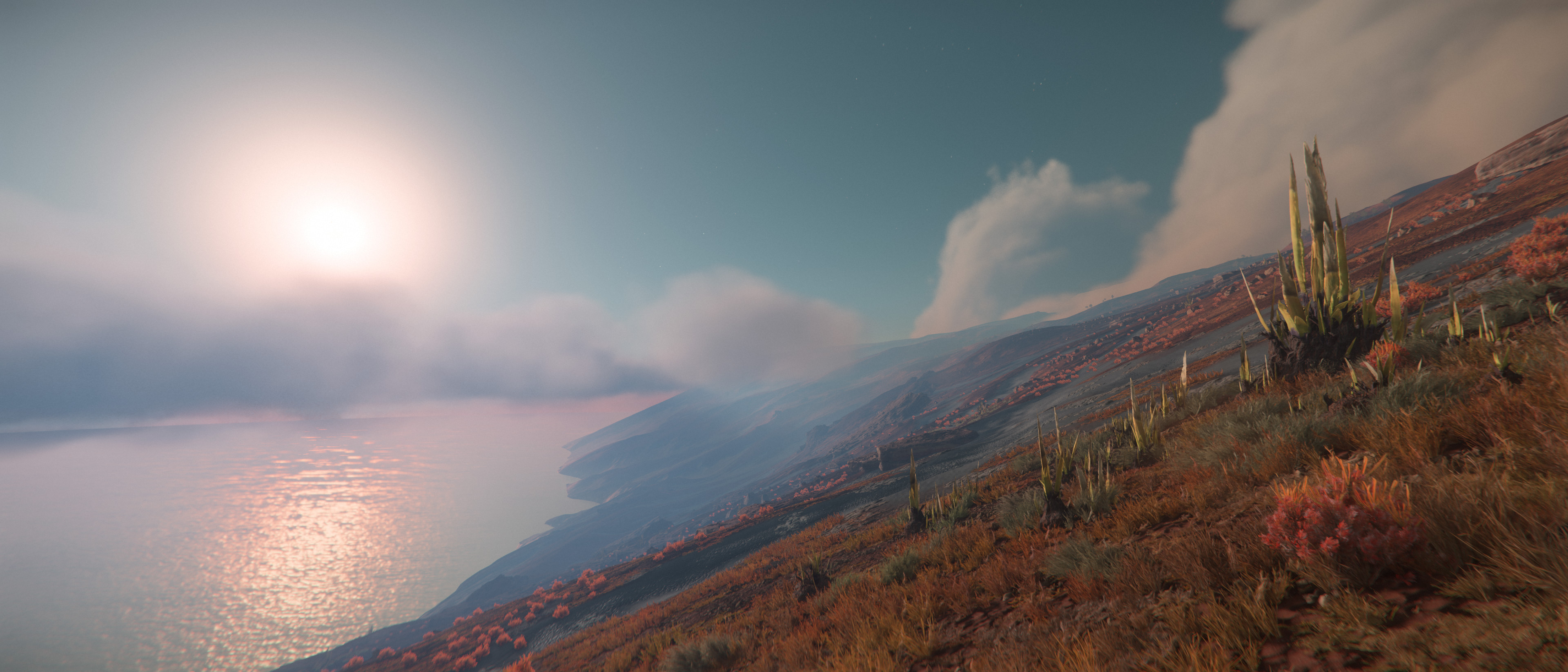
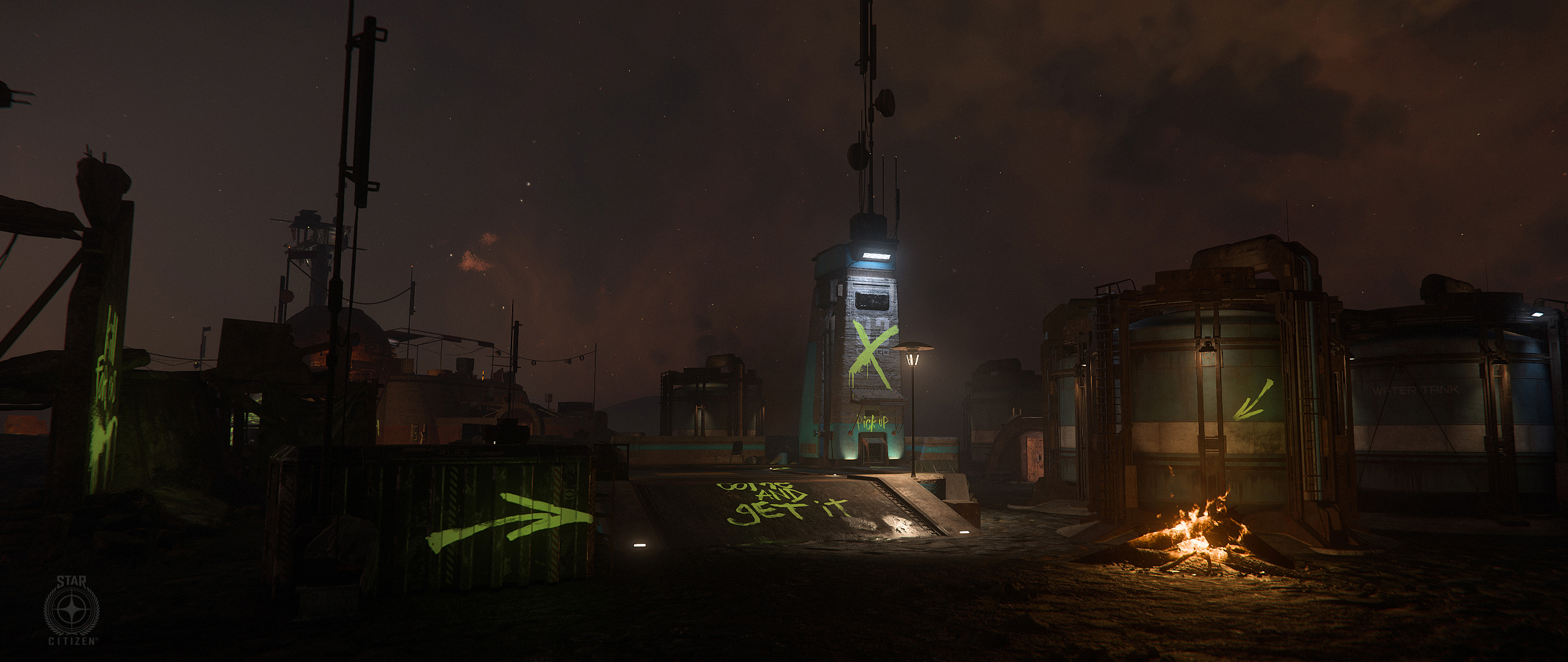
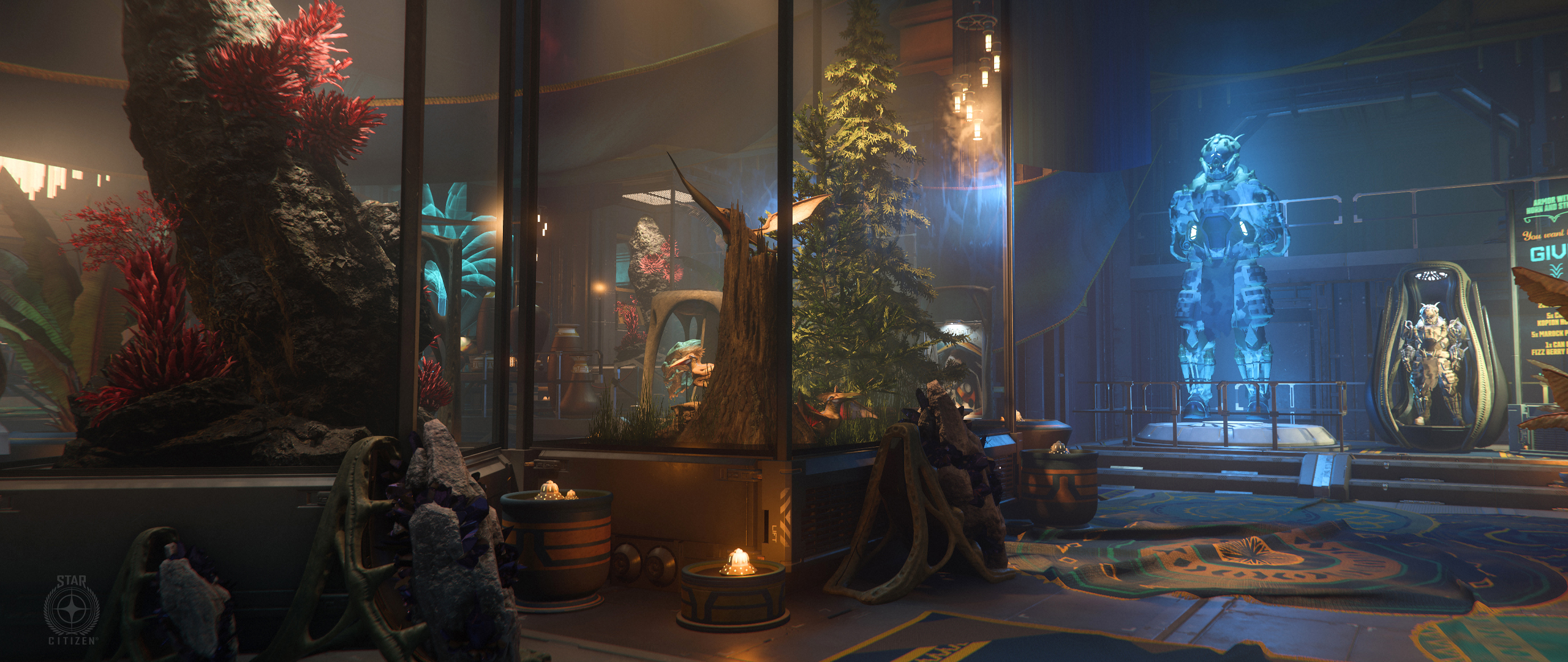
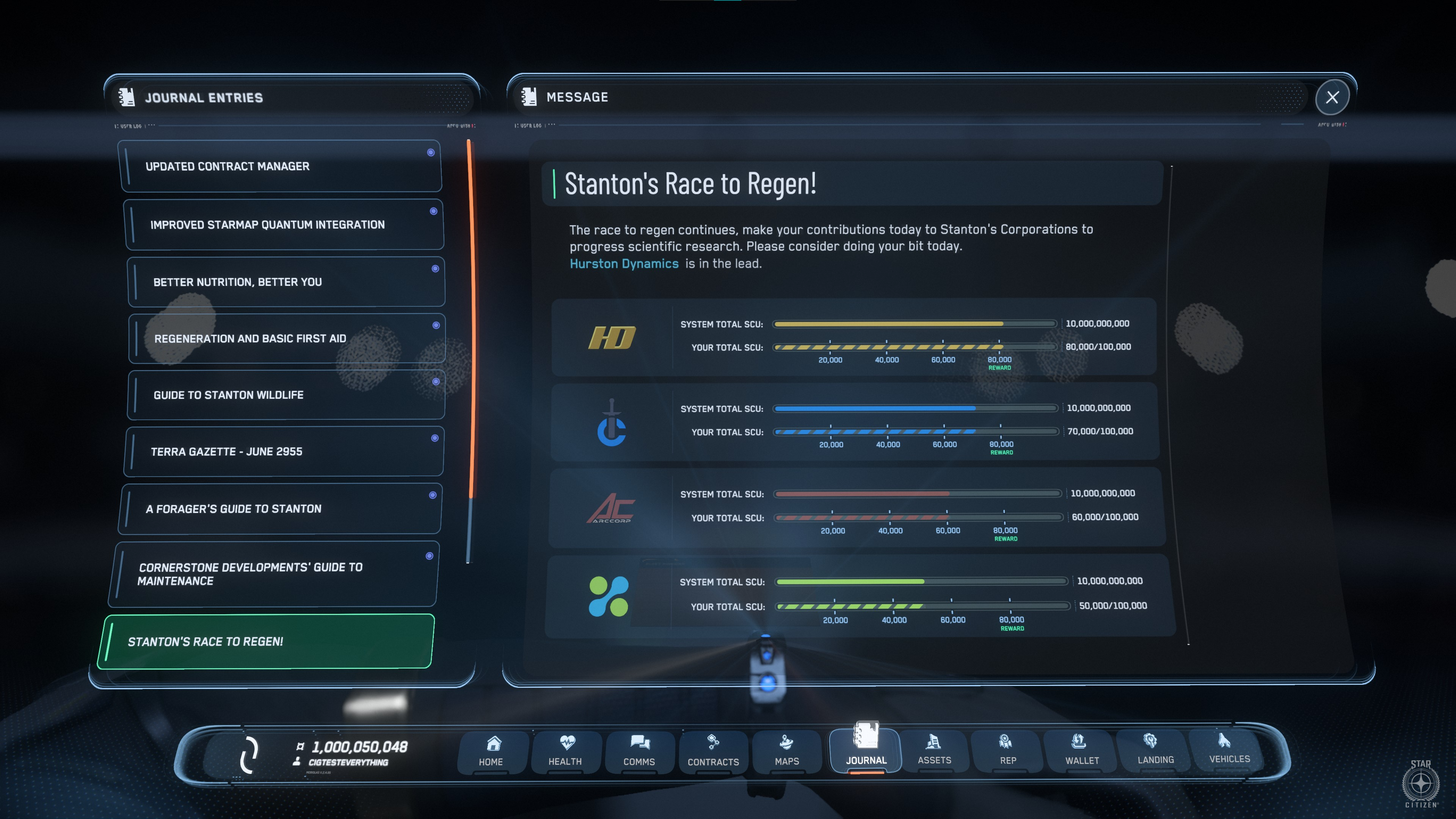
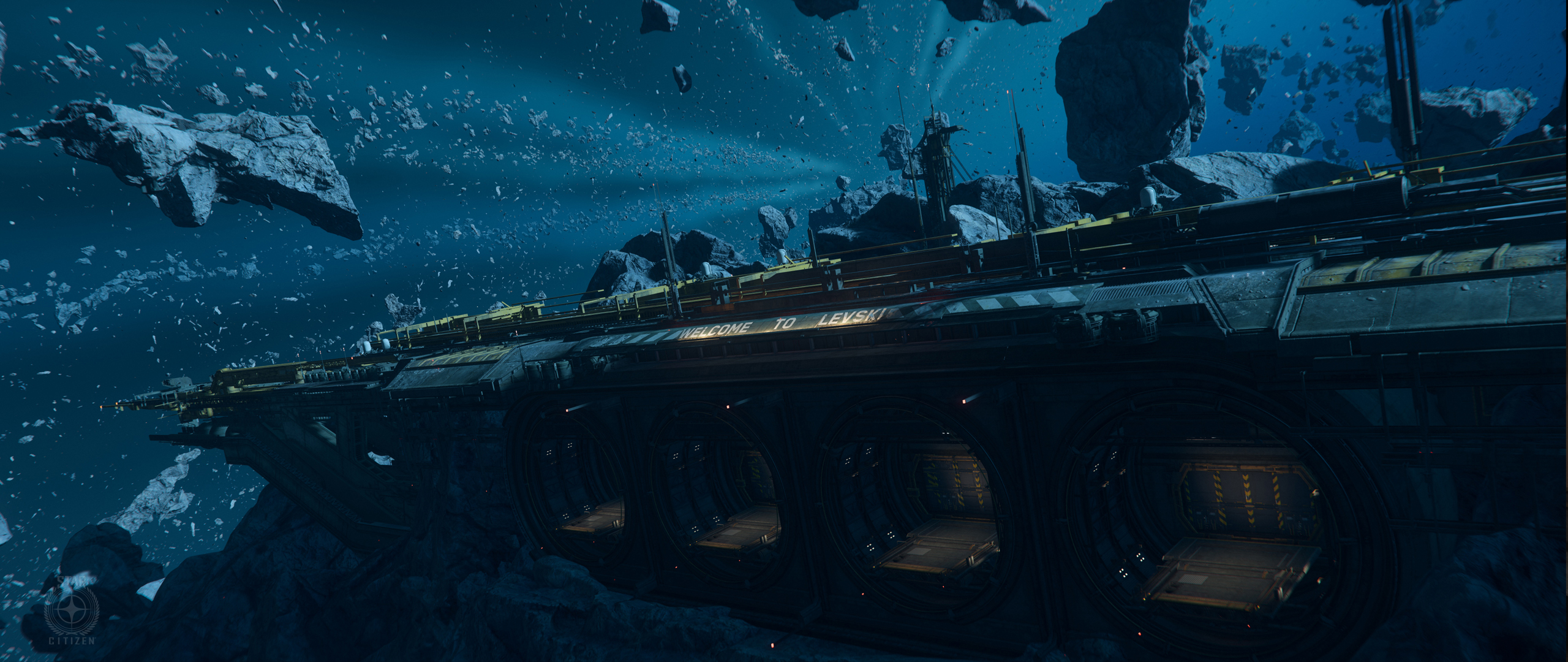
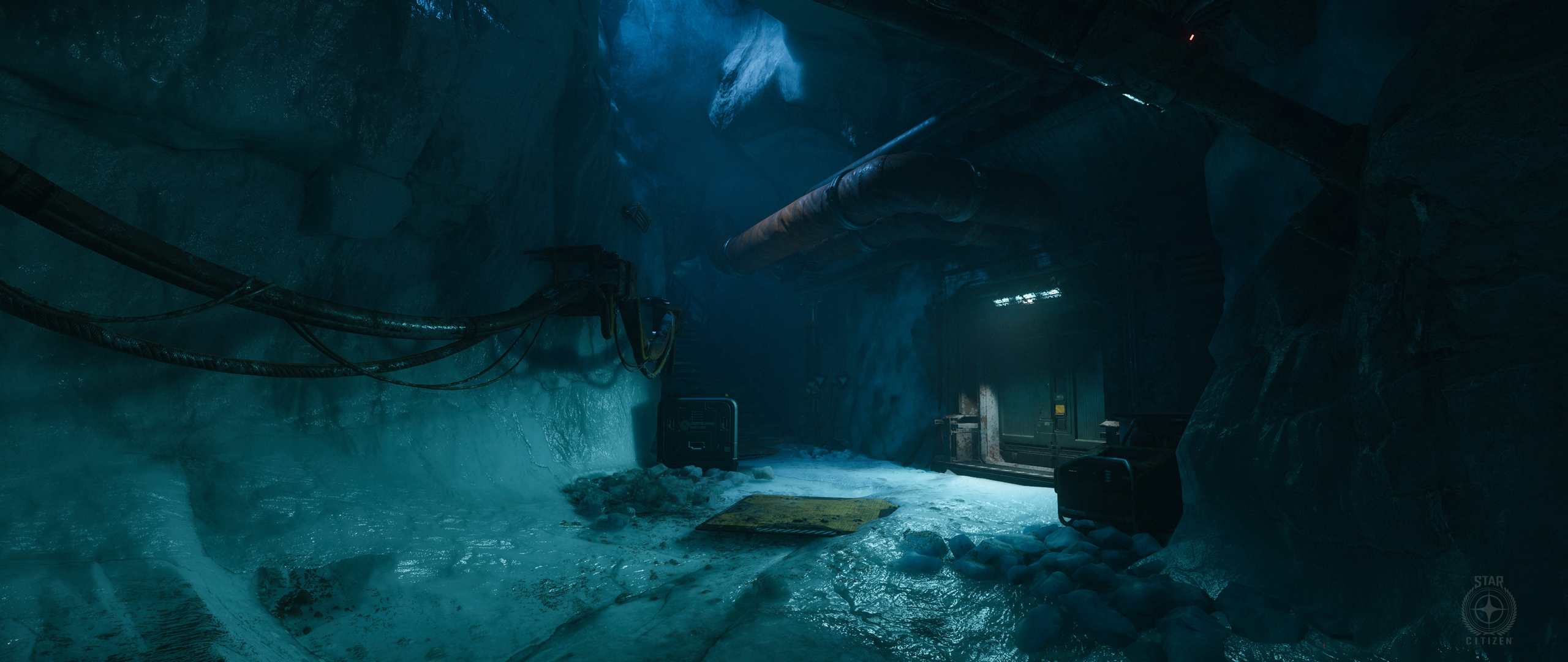
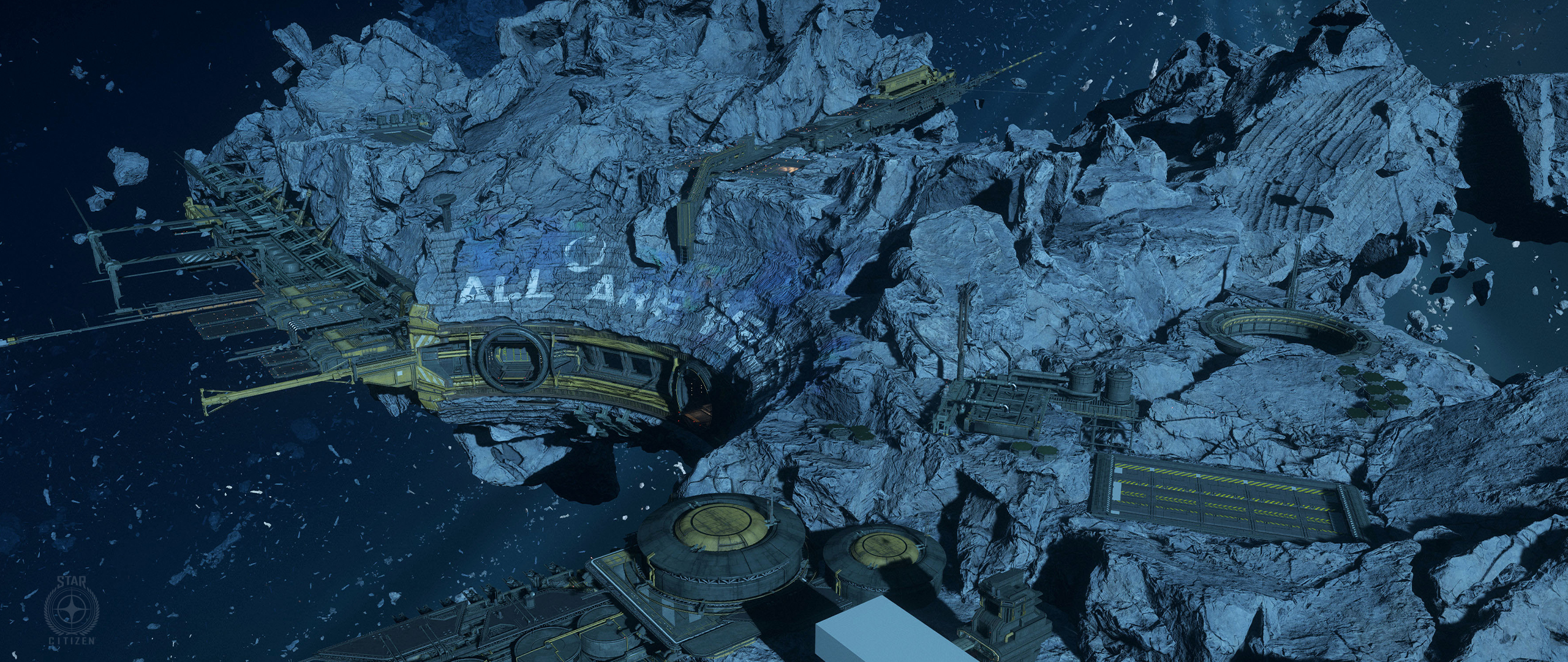
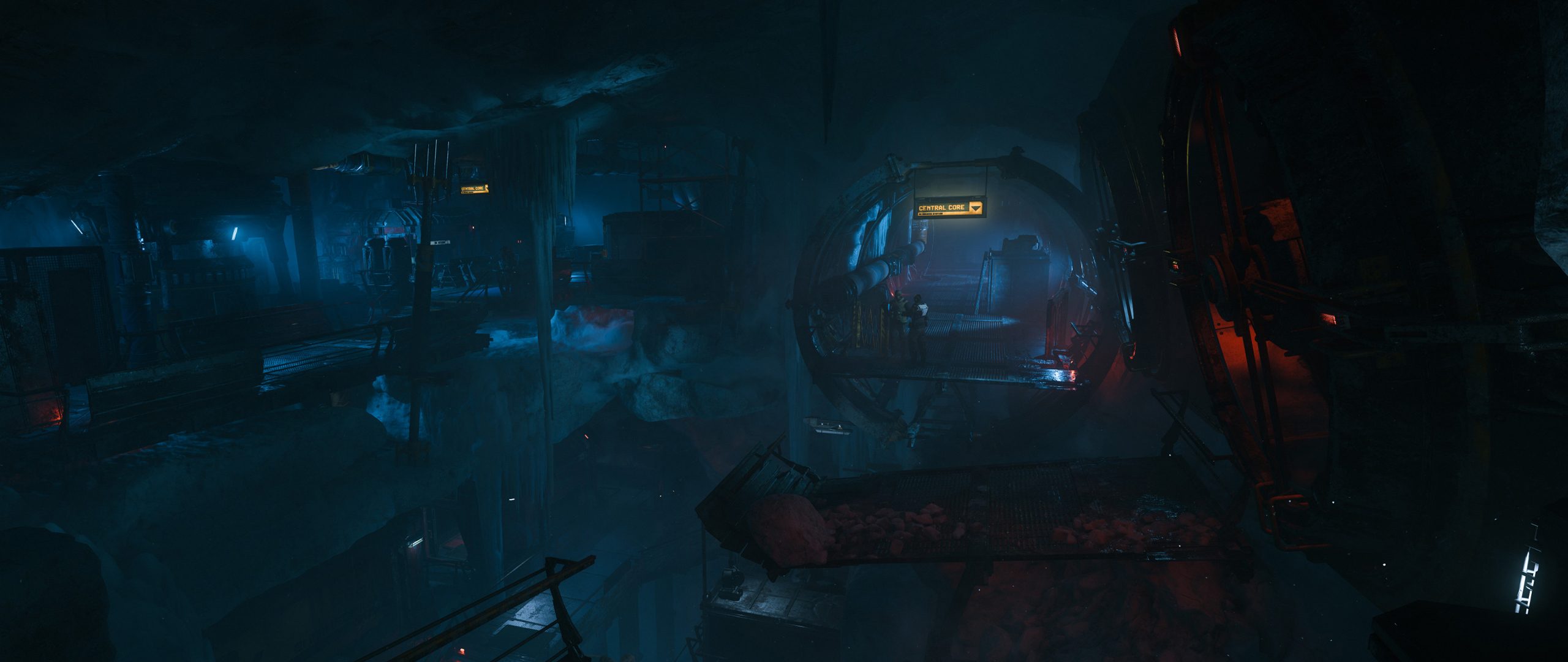
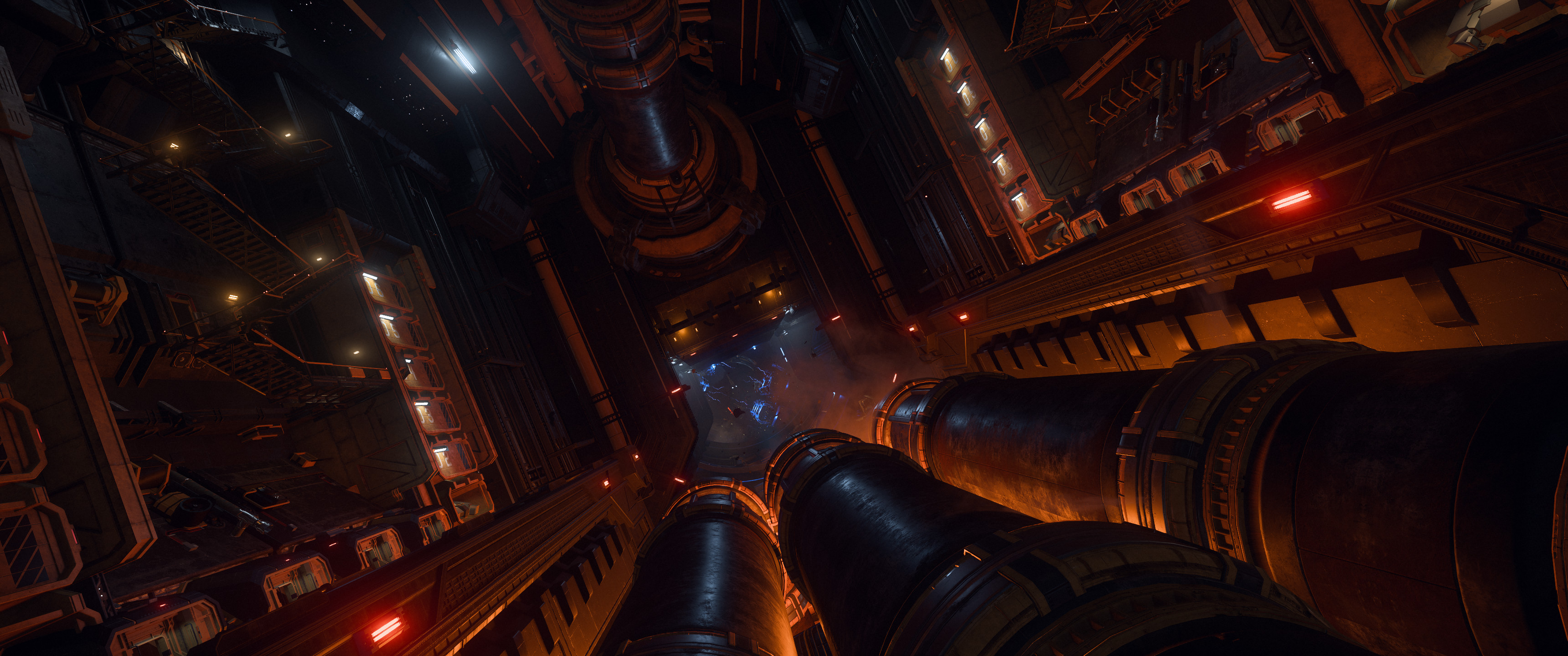
Metadata
- CIG ID
- 17813
- Channel
- Transmission
- Category
- Undefined
- Series
- Monthly Reports
- Comments
- 54
- Published
- 5 years ago (2020-10-07T00:00:00+00:00)