Star Citizen Monthly Report: March 2021
Transmission Undefined Monthly ReportsContent
With Alpha 3.13 on the horizon, this month’s report naturally deals with the final steps and polishing tasks completed just before the patch releases. However, work continued in earnest on content coming next quarter and beyond, so read on to for all the details on everything done throughout March.
AI (Content)
March’s report starts with the AI Content Team, who spent part of the month working on the engineer behavior, including improving the usable split of the Mannequin tags coming from the use channel and the objects it interacts with.
On-foot security, tourist, and tour guide activities were further developed too. The bed bunks behavior progressed, with the team working towards a better abstraction of bed shutter usage and investigating how to support bed sheets when characters are sleeping. Kick-offs to define the medic, illegal goods dealer, deck crew, and janitor behaviors were done too.
Specifically for the PU, AI Content completed the first pass on the hawker behavior and began modifying the kiosk setup to replace the old activities.
“Our goal is to quickly push through some of the content we can already exploit in Star Citizen based on the existing scenario and allow the players to experience a more interactive environment.” -The AI Content Team
AI (Features)
March saw AI Features complete the first pass on subcomponent targeting. This is now integrated into the main game-dev branch and will initially improve the behavior used when smaller vessels attack capital ships, allowing for more effective element targeting, complex attack patterns, and tactics.
The pilot security behavior was also restructured and extended. This is used, among other things, when security spaceships validate illegal content inside ships. Alongside creating a better structured and more scalable activity, it allows the security pilot to request the target surrender and handle different player behaviors. The pilot will also continue to request that the player surrenders during combat, allowing players to end the conflict and be arrested. They also worked to allow AI pilots to correctly dock at any supported location. This functionality is similar to landing, as it allows ships to navigate close to the collar and then perform a docking maneuver.
The eat and drink behavior was further developed, particularly ‘chowline’ usage. In addition to cleaning up the chowline, eating, and drinking animations, the team improved the drinking behavior to make taking a cup a separate action. Plus, the exit animations are now split between taking the tray and exiting the tables so that multiple actions can be performed from specific bounce poses.
The surrender and cowering behaviors used by both trained and untrained agents progressed. This is used in hostile scenarios when NPCs are unable to fight back, are overwhelmed, or don’t have the tools for combat and prioritize preserving their lives.
On the Subsumption-logic side, several new tasks were introduced, including: HasAnyTagInTagSelection: Evaluates whether an object has tags under specific parent tags
BroadcastInMyActionAreas: Propagates an event in the action areas the agent is contained
MergeMannequinTags: Takes two Mannequin tags variables and merges them into one
They also supported Alpha 3.13 with bug fixes and optimization, including issues causing slow NPC reactions and pilot security to complete flight activity too early.
AI (Tech)
Throughout March, AI Tech progressed with EVA, creating tech to allow characters to calculate 3D paths and systemically transition out of ships into space.
Last year, code was introduced to give a hierarchical structure to the Subsumption mastergraph, which allows the team to create a state machine that describes the mental state of an NPC and preserves it across multiple activities. For example, surviving in a zero-g environment requires an NPC to have specific knowledge and handle requests differently from when on foot or piloting a ship. The team are utilizing this functionality to allow a better structure for the mastergraph and handle all states with fewer transitions. This groundwork will ultimately provide a better systemic transition into and out of zero-g environments.
Improvements were also made to the navigation links that describe the external linking of navigation mesh triangles (essentially, two disconnected triangles connect and become traversable using animation, explicit locomotion linkage, etc.). In doing so, the NavigationLink component was simplified to allow the explicit instantiation of extensions that can use different types of data to create external links. They currently have support for the following scenarios: Explicit offsets that can be used to customize enter/exit locations for doors
Animation-driven traversal, such as an animation used to vault over an object or jump up and down
The AI Team began extending the melee system to improve the definition of combo attacks. The goal was to avoid using explicit Mannequin transitions between states to reduce complexity in the setup, since they know the exact flow allowed between melee attacks. To achieve this, they introduced an automatic way to calculate the Mannequin tag of the transitioning attack so that the structure is more straightforward. This also makes it easier to test chaining animations, ensuring poses perfectly match and that timing is easily adjusted.
For patrol tech, ‘hot reload’ was implemented. This means the Subsumption logic edits associated with a path are automatically reloaded in the editor, giving the designers immediate feedback on-screen that they can quickly iterate on. The logic will also be validated if data changes without the editor running. During level loading, the saved data attempts to match with the current updated logic too.
The team also spent time refactoring the usable code to better calculate usable-attached Mannequin tags related to items they want to manipulate. The code is now split to propagate the tags associated with the usable and the use channel, including the one coming from the tool. Once calculated, they’re merged and passed into the animation request to select the appropriate animation.
The unification of the usables and operator seats flow continued, which now only uses two blocks in the movement plan for the usable component. The actor state machine communicates the different states with the component, such as entering a seat or starting idle, which is then propagated and evaluated to understand when to consider the success for entering and exiting the usable.
For the communication system, AI Content fixed the automatic creation of group channels based on the target of dialogue. This allows them to control who is allowed to talk to a specific target to avoid overlapping when the ‘Group’ channel type is specified. They also improved the system allowing communication context to override silence on a specific channel. This gives designers more granular control over the pacing of voice lines used by AI to communicate readability of their actions.
Animation
March saw the Animation Team create sets for tourists and tour guides and make plans for creatures. On the facial side, a mo-cap shoot was done for an upcoming event and the pipeline was improved for the mo-cap select tool.
Art (Characters)
The Character Art Team progressed with refinery decks, assets for Orison, and NPC outfits for Alpha 3.14’s hospitals. A new mining-themed set for an upcoming patch is nearing completion, while armor for Alpha 3.15 moved through the pipeline. Research and development also began for armor props and interiors in support of the physicalized inventory. This involves refactoring old armor sets to add interiors and setting up the tech to allow armor sets to exist as standalone objects that can be carried by the player.
Art (Environment)
Alongside support for Alpha 3.13, the Modular Team moved the colonial outposts from whitebox to greybox, with gameplay considerations and functionality being added to the various modules. The new docking arms and lobbies were also finalized and will be live in an upcoming event.
The Landing Zone Team progressed with Orison, with the new cloud tech enabling stunning vistas above the Crusader gas cloud. Work on the platforms is nearing completion, with final polish currently being completed. The latest iteration of the exhibition halls was finished too.
The Organics Team finalized the new cave entrances, produced new flora for the Orison habitation platforms, and supported the gas cloud tech needed for Crusader.
Art (Ships)
In the UK, the Ship Team wrapped up the majority of the Crusader Hercules, with only the A2’s bomb release mechanism requiring further attention. An as-yet-unannounced ship continued through the final art phase, with only one interior area and an exterior polish and damage pass to go. March saw the Aegis Redeemer progress through the final art phase, with the exterior and manned turrets both nearing completion. The greybox phase was finished for the remote turrets and landing gear too.
More ships were converted to the hard-surface shader to make them ‘paint ready,’ and wear and tear was looked at to make it consistent across the ship line-up. The ‘gold-standard’ pass was completed for the Gladius, with the team moving onto the Sabre.
The US-based team continued to focus on the Tumbril Nova, specifically finishing the art alongside Design who worked on movement, treads, and the overall experience. They also worked alongside Vehicle Tech, Vehicle Experience, and QA to ensure the tank is up to standard before release. Progress was made on the Constellation Taurus and bugs were squashed for the vehicles coming in Alpha 3.13.
Art (Weapons)
March saw the Weapons Team progress with the S7 Behring ballistic Gatling gun before completing close-out work and polishing for the mounted-gun asset. The MultiTool salvage attachment and standalone tools went through the first-pass block out and were added to a development build for early testing. The UltiFlex Novia was iterated on, with the team improving the rigging setup and making sure it was working as intended for Animation.
Several other tasks were completed, including support for the Nova’s S5 cannon, bug fixing for Alpha 3.13, and updates to the MedPen and other devices for the upcoming medical gameplay.
Audio
Throughout March, the Audio Team worked on content and features for Alpha 3.13 alongside supporting some upcoming trailers.
On the ship side, they focused on the UI and practical SFX for ship-to-ship and ship-to-station docking. They also looked into improving ambience design across all derelict ships following work on the new derelict Freelancer variant.
The Actor Features Team created audio for the trolley push/pull mechanic and crafted Foley and SFX for the mounted turret gameplay.
“We have been very excited to be working on the Nova tank, designing and implementing SFX for vehicle movement, moving parts, turrets, and it’s notable cannon!” -The Audio Team
Community
The Community Team started the month with the Ship Naming Announcement, sharing the Ship Naming Guide article on the Knowledge Base to ensure players had all the information they needed.
For International Women’s Day on March 8, they shared employee spotlights on Star Citizen’s social channels and YouTube, and celebrated Stella Fortuna with the Temp Fate Video Contest. A Q&A was published for the recent Tumbril Cyclone MT, as was a Postmortem on the PU’s first dynamic event, XenoThreat.
The team also published a recap of the AMA with the Character Tech Team and detailed upcoming updates to the character customizer and Med Pens functionality and the new FPS Cave Missions. Alongside a variety of miscellaneous tasks, the team has been coordinating efforts on concepting the updated Community Hub which they are very excited about.
Engine
In March, Engineering added physics support for multiple solar systems. A new grid type (GT_SOLARSYSTEM) that replicates the configuration of the current root grid was added along with the ability to skip the inside/outside checks to allow multiple instances of such grids to overlap without entities randomly transitioning between them. To ease debugging (which can be difficult without a visual representation of what’s going on in the physical world), a simple debug raytracing framework was added to visualize the results of ray world intersection (RWI) checks. This has been hugely useful already and allowed the team to fix various bugs quickly. The team will also be using this to optimize RWI in general as it accurately uncovers performance issues otherwise hidden in the game’s RWI queries.
March also saw various code optimizations, including the physicalization of planets, ray-bound intersections, and using octrees for ray-occlusion tracing. Furthermore, the velocity limit for explosions and shockwaves was removed, interior grids can now be saved as CGFs to allow proper instancing, and support for kinematic parts (animated parts that get proper velocity estimates) was added. The Physics Team also spent time bug fixing and supporting Alpha 3.13.
Work on the G12 renderer continued, with internal resolution scaling and native resolution rendering being reworked. The render graph that controls the scheduling of render passes and associated resource management was merged into the main development branch. Alongside this, more existing features were ported to Gen12, such as emissive lights and object motion blur, and the shader parser was refactored in parts to allow for faster processing (especially for code dependency tracking).
Engineering made great progress with volumetric clouds last month, with tint support being added to allow more flexibility on the art side when coloring clouds for exotic planets. The multi-scatter solution also received various subtle improvements, including taking an atmosphere’s optical depth along shadow rays into account. Cloud shaping was further improved to provide a better sense of local volume, while support for shadow refinement was added to further contribute to cloud detail. Alongside these visual improvements, initial optimizations were implemented to speed up the raymarching process, and the implementation of an efficient empty space skipping scheme has begun.
On the core-engine side, more work was done on performance analysis and regression. The in-engine profiler received various improvements, including the ability to group samples captured by their respective function. The team also started to look into replacing their current UI solution for postmortem performance analysis based on captured performance telemetry data. Python scripts were written to run performance tests and write corresponding reports. Additionally, the threading logic was refactored to further improve performance and the job system now utilizes specific APIs introduced with Windows 8.1 and Windows 10 (Windows 7 still works but won’t benefit) to allow for much-improved waking of jobs and preventing contention in the fiber system thread. This is particularly noticeable on CPUs with a significant number of cores and will be rolled out in Alpha 3.13. The entity component update scheduler received a profiler and GUI as well as various optimizations.
Finally, C++17 language support was enabled and a performance issue with code generation in MSVC with regards to thread local storage initialization behavior was addressed.
Features (Characters & Weapons)
The Character Features Team reduced the update frequency of certain character components based on their distance from players. This was possible due to the changes made to the underlying update logic by the Engine Team earlier this year. A component can now be told to update every other frame (or every nth frame) and, when it does, it’s informed of how much time has elapsed since the last update. Early prototypes suggest using elapsed rather than frame time allows for a surprisingly early reduction in update frequency of the character state logic (as long as the character visual updates remain at a per-frame frequency). As with any optimization, this is currently being tested before implementation.
One key feature developed in March was the trolley push and pull mechanic, where players can grab movable props and push or pull them around. The Actor and Physics teams worked closely to iterate on the controls and feel of moving these larger props where the weight of the prop, weight of the cargo loaded onto it, and the surface they’re on affects handling and behavior. The input of the player generates acceleration requests on the prop and the player character attempts to keep up with the prop as it moves. If the input is greater than the actual resulting movement, the player character leans into the prop to show the extra effort required. The wheels are physically simulated as a constrained sphere, with a modeled wheel synchronizing with its sphere’s movement to procedurally rotate caster and tire.
Features (Gameplay)
The Gameplay Features Team spent March preparing features for Alpha 3.13, fixing critical bugs, and planning for future initiatives.
The US-based team continued to work on two new mobiGlas features: the reputation system app and asset manager. The engineers finalized the TDD for the asset manager and began to create the ‘provider’ that will manage a majority of the application logic. Meanwhile, Design completed polishing tasks and bug fixing for the reputation system app, now known as Delphi, which will be launching with Alpha 3.13.
In the US, the team continued to plan for the upcoming cargo refactor, with the goal of physicalizing cargo contained within the grid. This refactor is quite extensive as the cargo and commodity system is intertwined with several other areas. The team will also convert the commodity kiosk from Flash to Building Blocks and tie it into the asset manager. Progress was also made on the next dynamic event, which is now in the final stages of implementation. The engineers fixed any remaining bugs while the designers focused on audio integration and polishing tasks.
Features (Mission & Live Content)
Alongside content for upcoming events, the Features Team progressed with a new security system that allows them to identify when a player enters a location they don’t have permission to. This allows the AI to act accordingly without the need to give the player a CrimeStat.
They also began working on features for Q2 and beyond, including the new Starfarer and Caterpillar derelict used in Alpha 3.13’s timed delivery missions, and implemented FPS cave missions and new harvestables. Space combat mission locations were also quadrupled around Crusader and progress continued on the Pyro system.
Features (Vehicles)
March saw the Vehicle Features Team progress with docking. Merlin-to-Constellation docking is largely complete, with the team dealing with bugs and feedback from Evocati testing. The last step involved finalizing the physics of how the ships connect.
The team heavily refactored and partially rewrote the air traffic control system to account for the docking arms used in ship-to-station docking. Now, docking arms are fully integrated with station control and benefit from all the features of air traffic control, such as loitering around stations, spawning and despawning ships, and hailing for docking through the comms menu.
Changes were also made to align docking arms with the procedural universe tools, which are used to create bases and space stations. Work was also done to integrate docking with other gameplay systems, such as Personal Inner Thought, so players can initiate docking with the interaction wheel. Lastly for docking, a large number of edge cases were worked through to ensure it’s as polished as possible. For example, the Constellation quantum traveling while the Merlin was docking caused the Merlin to get stuck, and players exiting the Merlin while docked to a moving Constellation caused the player to fall into space.
Development of the thruster ground VFX mentioned in last month’s report continued. This has been improved and expanded on since then, with the team working on aerodynamic wake effects that cause dust to be kicked up when ships are flown close to the ground at high speed. Focus was on 3D rendering inside MFD screens to give the team more options in building the MFDs they want.
Finally, the missile guidance and control refactor made great progress, with missiles flying much more predictably in recent playtests.
Graphics & VFX Programming
The Graphics Team spent early March fixing bugs. For example, the Render To Texture (RTT) system didn’t have a fixed memory budget and was dependent on how it was used by the game. However, this could sometimes lead to out-of-memory issues, particularly when running at higher resolutions. Now, the memory reserve for the RTT system is linked to the screen resolution, because higher-resolution outputs require higher resolution intermediate textures. If the fixed budget is exceeded, they now dynamically down-res the RTTs until they fit, which ensures stability in extreme scenarios.
They also began planning for the transition to the Gen12 renderer to better understand when each milestone will be delivered to help determine the balance of staff working on the transition, features, and bugs.
The VFX Programming Team split time between bugs, fire, SDF shields, and particle lighting. The fire feature is a long-term task, with the current focus on fire spreading between rooms, light spawning, and repair. The first iteration of SDF shields was prepared for release. The upcoming update improves the glow effect and how the ‘shaping’ tech works, which is responsible for wrapping the impact effects around the curvature of the hull. Particle lighting is a new model that gives higher quality and more consistent and physically plausible results.
Lighting
Last month, the Lighting Team supported the upcoming docking feature, providing unique moods for the R&R space stations and more military-minded security docks. Work on the docking arm continued, including prototype animations for the lights as the arm extends and retracts.
They also supported Alpha 3.13 with bug fixing, optimizations to the non-commercial space station overlays, and new cave entrances. Support was also given to the UI Team for the new reputation interface on the mobiGlas.
Work also continued on hospitals for Orison and New Babbage, with the team working closely with Environment Art and Design on the lobbies, pharmacy shop, individual floors, and recovery rooms.
Narrative
Narrative’s March kicked off with a small motion-capture shoot, the first since the start of the pandemic, to pick up some characters for upcoming events. Members of the LA-based team worked remotely to provide direction and work with the animators, capture specialists, audio team, and actors who were on set in Manchester, UK.
They provided general support for Alpha 3.13, tackling mission fixes and adding names and descriptions for the various new items. They also worked with the mission teams on upcoming content, including future events, general missions, and a voice-over session for future locations too.
There were also several lore releases on the website, including the re-release of the Portfolio for armor manufacturer Caldera, the final installment of Sid & Cyrus, another installment of OP.Net, new Galactapedia entries, and the 100th issue of Jump Point. Members of the Narrative Team also appeared on Star Citizen Live for a Lore Builders episode where they built one of the outlaw factions in Pyro with help from the community.
Player Relations
March saw Player Relations hire additional staff to support the growing needs of the service and backer base. They also worked on ship naming and ran Evocati PTU tests each night for Alpha 3.13.
Props
March saw Props support several locations, including colonialism outposts, with some assets going to greybox. The greybox pass also began for hospitals, including the bed and gurney, which will be a big part of the gameplay experience.
They also worked closely with AI Content and AI Features to produce template geometry for new feature usables, such as the shop keeper and tourist, and fixed a large number of bugs.
QA
The UK team’s main focus was preparing Alpha 3.13 for release, which involved publishing several builds for Evocati testing and ensuring all player-reported issues were properly documented in JIRA. Testing continued for several upcoming features and events too.
In Frankfurt, QA continued to support the feature teams. For AI, they continued to perform sanity checks on the PU and test new locations. Dev requests increased as the team reproduced and investigated issues while providing feedback on the general state of AI.
Engineering focus shifted to server stress-testing and minimum PC spec testing to help improve the overall stability of the game. QA worked alongside the Tools Team in their continued testing of DataForge, StarWords, ExcelCore, and the sandbox editor. Work also began on a new tool that will allow QA to take a more proactive approach to testing.
Systemic Services & Tools
The Systemic Services and Tools Team pushed forward with various resources for their public presentation of Quantum. Service-wise, they put the finishing touches on the AI Info Service that ties directly into Quantum and various other services. Development into new services began in earnest, specifically on new NPC spawning and ATC service systems. General upgrades were also made to various tools and systems to allow for easier workflow for developers.
Tech Animation
Most of the Tech Animation Team spent last month iterating on the in-house facial pipeline. They’re aiming for a faster and more intuitive approach to FACS expression authoring for the complicated facial systems, part of which will incorporate the smooth skinning decomposition technology from last month’s R&D.
They maintained and triaged assets from several other departments to ensure the project structure, builds, and animation systems are kept in a stable state, and helped author and refine some head and body assets to enable the animation teams to work directly in Maya. Finally, assets that will be used as the basis in the development of various creatures were completed.
Turbulent
Turbulent Game Services continued working on server meshing, onboarding more team members along the way. They also delivered the first demo of a fleet management system currently deployed on internal development environments. The configuration service, responsible for distributing client configurations to game clients, was also finalized.
The team supported the upcoming Alpha 3.13 release, specifically adding new features to the reputation service, such as the ability to notify players when their reputation changes as well as view, lock, and unlock reputation and view reputation history. Test passes were also performed on services to validate them for the upcoming release.
This month, the Live Tools Team continued work on the crash handling pipeline, with fixes to Sentry and Jira linking, and created a monitor to watch the ‘elasticsearch’ stream for errors and them into Sentry. They also created software in support of tools developed by the Montreal-based Location Team and created code to allow the Hex gateway to talk to the diffusion game services.
UI
The UI Tech Team supported other teams’ user interface work on the reputation app, adding new functionality and fixing bugs as needed, and progressed with several small-but-vital features, including text formatting and tooltips, that will be used throughout future UI. They also further developed the underlying tech for the new map systems and ported some older UI to Building Blocks to help with futureproofing and performance.
The artists entered the pre-production phase for the upcoming medical UI, with visual target concepts signed off and functional prototypes ready for full production in April. The UI was also polished for radar and scanning gameplay (both in vehicles and on foot).
Vehicle Tech
Throughout March, the Vehicle Technical Team progressed with the update to the radar scanning system, focusing on ‘ping’ to make finding distant objects a more satisfying experience. UI and VFX elements are currently being implemented. Locomotion and tread movement for the Tumbril Nova was iterated on to ensure it feels appropriately “tanky” across all planetary bodies.
A project to ensure ship landing gear functions properly in all areas of the game is nearing completion. This involved properly syncing landing gear with the server to make sure they function properly in all non-flight scenarios. They also closed out several tasks for Alpha 3.13 to make the launch as smooth and engaging as possible.
VFX
During March, VFX finetuned and optimized the SDF shield impact effects before their release.
“This was a real team effort, with VFX programmers, artists, and QA all working together to bring this important feature work to fruition.” -The VFX Team
Effects were created for the Tumbril Nova, including its main weapon. This included prototyping a subtle shockwave effect that displaces loose surface matter on the ground and on the vehicle itself. While this prototype isn’t guaranteed to make it in time for the tank’s initial release, the groundwork will prove useful for a variety of other effects that utilize physicalized shockwaves. The Crusader Hercule’s effects were completed in March too.
A prototype for thruster wind volume effects was also worked on, which will allow vehicle thrusters to better interact with loose surface matter on planets and other locations to give thrusters a more powerful feel as they hover in locations with gravity.
WE’LL SEE YOU NEXT MONTH…
Mit der Alpha 3.13 am Horizont beschäftigt sich der Bericht dieses Monats natürlich mit den letzten Schritten und Polierarbeiten, die kurz vor der Veröffentlichung des Patches abgeschlossen wurden. Die Arbeit an den Inhalten, die im nächsten Quartal und darüber hinaus erscheinen werden, wurde jedoch fortgesetzt, also lest weiter, um alle Details über die Arbeiten im März zu erfahren.
KI (Inhalt)
Der März-Bericht beginnt mit dem KI-Content-Team, das einen Teil des Monats damit verbracht hat, am Verhalten des Ingenieurs zu arbeiten, einschließlich der Verbesserung der nutzbaren Aufteilung der Mannequin-Tags aus dem Nutzungskanal und der Objekte, mit denen sie interagiert.
Auch das Verhalten für Sicherheitspersonal, Touristen und Reiseleiter wurde weiter entwickelt. Das Verhalten der Bettkojen machte Fortschritte, wobei das Team an einer besseren Abstraktion der Nutzung von Bettläden arbeitete und untersuchte, wie man Bettlaken unterstützen kann, wenn Charaktere schlafen. Kick-offs zur Definition der Verhaltensweisen des Sanitäters, des Händlers für illegale Waren, der Deckcrew und des Hausmeisters wurden ebenfalls durchgeführt.
Speziell für die PU schloss AI Content den ersten Durchgang des Hawker-Verhaltens ab und begann, das Kiosk-Setup zu modifizieren, um die alten Aktivitäten zu ersetzen.
"Unser Ziel ist es, einige der Inhalte, die wir in Star Citizen bereits nutzen können, basierend auf dem bestehenden Szenario schnell durchzusetzen und den Spielern eine interaktivere Umgebung zu ermöglichen." -The AI Content Team
AI (Features)
Im März haben die AI Features den ersten Durchgang des Subcomponent Targeting abgeschlossen. Dies ist nun in den Hauptentwicklungszweig des Spiels integriert und wird zunächst das Verhalten bei Angriffen kleinerer Schiffe auf Großkampfschiffe verbessern, was ein effektiveres Zielen auf Elemente, komplexe Angriffsmuster und Taktiken ermöglicht.
Das Pilotensicherheitsverhalten wurde ebenfalls umstrukturiert und erweitert. Dieses wird unter anderem verwendet, wenn Sicherheitsraumschiffe illegale Inhalte im Inneren von Schiffen validieren. Neben der Schaffung einer besser strukturierten und besser skalierbaren Aktivität, erlaubt es dem Sicherheitspiloten, die Kapitulation des Ziels anzufordern und mit verschiedenen Spielerverhalten umzugehen. Der Pilot wird auch weiterhin den Spieler während des Kampfes auffordern, sich zu ergeben, was es Spielern ermöglicht, den Konflikt zu beenden und verhaftet zu werden. Es wurde auch daran gearbeitet, dass KI-Piloten an jedem unterstützten Ort korrekt andocken können. Diese Funktionalität ähnelt der Landung, da sie es Schiffen erlaubt, nahe an den Kragen zu navigieren und dann ein Andockmanöver durchzuführen.
Das Ess- und Trinkverhalten wurde weiterentwickelt, insbesondere die 'chowline'-Nutzung. Zusätzlich zur Bereinigung der Chowline-, Ess- und Trinkanimationen hat das Team das Trinkverhalten verbessert, um das Nehmen einer Tasse zu einer separaten Aktion zu machen. Außerdem sind die Exit-Animationen nun zwischen dem Nehmen des Tabletts und dem Verlassen der Tische aufgeteilt, sodass mehrere Aktionen aus bestimmten Bounce-Posen ausgeführt werden können.
Das Kapitulations- und Kauerverhalten, das sowohl von trainierten als auch von untrainierten Agenten verwendet wird, wurde weiterentwickelt. Dies wird in feindlichen Szenarien eingesetzt, wenn NSCs nicht in der Lage sind, sich zu wehren, überwältigt sind oder nicht über die Werkzeuge für einen Kampf verfügen und die Erhaltung ihres Lebens Priorität hat.
Auf der Seite der Subsumption-Logik wurden mehrere neue Aufgaben eingeführt, darunter:
HasAnyTagInTagSelection: Wertet aus, ob ein Objekt Tags unter bestimmten Eltern-Tags hat BroadcastInMyActionAreas: Propagiert ein Ereignis in den Aktionsbereichen, in denen der Agent enthalten ist MergeMannequinTags: Nimmt zwei Mannequin-Tag-Variablen und verschmilzt sie zu einer
Außerdem wurden in der Alpha 3.13 Fehler behoben und Optimierungen vorgenommen, darunter Probleme, die dazu führten, dass NPCs zu langsam reagierten und Piloten ihre Flugaktivitäten zu früh beendeten.
KI (Tech)
Den ganzen März über machte die KI-Tech Fortschritte mit EVA und entwickelte Tech, die es den Charakteren ermöglicht, 3D-Pfade zu berechnen und systematisch aus Schiffen in den Weltraum zu gelangen.
Letztes Jahr wurde Code eingeführt, um dem Subsumption-Mastergraphen eine hierarchische Struktur zu geben, die es dem Team erlaubt, einen Zustandsautomaten zu erstellen, der den mentalen Zustand eines NPCs beschreibt und diesen über mehrere Aktivitäten hinweg beibehält. Zum Beispiel erfordert das Überleben in einer Schwerelosigkeit, dass ein NSC über spezifisches Wissen verfügt und Anfragen anders behandelt, als wenn er zu Fuß unterwegs ist oder ein Schiff steuert. Das Team nutzt diese Funktionalität, um eine bessere Struktur für den Mastergraphen zu ermöglichen und alle Zustände mit weniger Übergängen zu behandeln. Diese Vorarbeit wird letztendlich einen besseren systemischen Übergang in und aus der Schwerelosigkeit ermöglichen.
Verbesserungen wurden auch an den Navigationslinks vorgenommen, die die externe Verknüpfung von Navigationsmesh-Dreiecken beschreiben (im Wesentlichen verbinden sich zwei unverbundene Dreiecke und werden durch Animation, explizite Lokomotionsverknüpfung etc. durchquerbar). Dabei wurde die NavigationLink Komponente vereinfacht, um die explizite Instanziierung von Erweiterungen zu ermöglichen, die verschiedene Datentypen zur Erstellung externer Links verwenden können. Sie unterstützen derzeit die folgenden Szenarien: Explizite Offsets, die verwendet werden können, um Ein- und Ausstiegspositionen für Türen anzupassen - Animationsgesteuertes Traversieren, wie z.B. eine Animation, die verwendet wird, um über ein Objekt zu springen oder auf und ab zu springen
Das KI-Team begann damit, das Nahkampfsystem zu erweitern, um die Definition von Kombo-Angriffen zu verbessern. Das Ziel war es, explizite Mannequin-Übergänge zwischen den Zuständen zu vermeiden, um die Komplexität im Setup zu reduzieren, da sie den genauen Ablauf kennen, der zwischen Nahkampfangriffen erlaubt ist. Um dies zu erreichen, führten sie einen automatischen Weg ein, um das Mannequin-Tag des übergehenden Angriffs zu berechnen, so dass der Aufbau übersichtlicher wird. Dies macht es auch einfacher, Verkettungsanimationen zu testen, um sicherzustellen, dass die Posen perfekt übereinstimmen und das Timing leicht angepasst werden kann.
Für Patrouillentech wurde 'hot reload' implementiert. Das bedeutet, dass die mit einem Pfad verbundenen Änderungen der Subsumptionslogik automatisch im Editor neu geladen werden, was den Designern sofortiges Feedback auf dem Bildschirm gibt, mit dem sie schnell iterieren können. Die Logik wird auch validiert, wenn sich Daten ändern, ohne dass der Editor läuft. Beim Laden des Levels versuchen die gespeicherten Daten auch mit der aktuell aktualisierten Logik übereinzustimmen.
Das Team hat auch Zeit damit verbracht, den nutzbaren Code zu refaktorisieren, um besser nutzbare Mannequin-Tags zu berechnen, die mit Gegenständen verbunden sind, die sie manipulieren wollen. Der Code ist nun aufgeteilt, um die Tags, die mit dem Usable- und dem Use-Channel verbunden sind, zu propagieren, einschließlich desjenigen, der vom Tool kommt. Sobald sie berechnet sind, werden sie zusammengeführt und an die Animationsanforderung übergeben, um die passende Animation auszuwählen.
Die Vereinheitlichung des Usables und des Operator Seats Flow wurde fortgesetzt, der nun nur noch zwei Blöcke im Bewegungsplan für die Usable Komponente verwendet. Die Actor State Machine kommuniziert die verschiedenen Zustände mit der Komponente, wie z.B. das Betreten eines Sitzes oder das Starten des Leerlaufs, was dann propagiert und ausgewertet wird, um zu verstehen, wann der Erfolg für das Betreten und Verlassen des Usables zu berücksichtigen ist.
Für das Kommunikationssystem hat AI Content die automatische Erstellung von Gruppenkanälen basierend auf dem Ziel des Dialogs festgelegt. Dies erlaubt ihnen zu kontrollieren, wer mit einem bestimmten Ziel sprechen darf, um Überschneidungen zu vermeiden, wenn der Kanaltyp 'Gruppe' angegeben ist. Außerdem wurde das System so verbessert, dass der Kommunikationskontext die Stille auf einem bestimmten Kanal außer Kraft setzen kann. Dies gibt den Designern eine feinere Kontrolle über das Tempo der Sprachzeilen, die von der KI verwendet werden, um die Lesbarkeit ihrer Aktionen zu kommunizieren.
Animation
Im März hat das Animationsteam Sets für Touristen und Tourguides erstellt und Pläne für Kreaturen gemacht. Auf der Gesichtsseite wurde ein Mo-Cap Shooting für ein bevorstehendes Event durchgeführt und die Pipeline für das Mo-Cap Select Tool verbessert.
Art (Charaktere)
Das Character Art Team machte Fortschritte mit Raffinerie-Decks, Assets für Orison und NPC-Outfits für die Krankenhäuser der Alpha 3.14. Ein neues Bergbau-Themenset für einen kommenden Patch steht kurz vor der Fertigstellung, während die Rüstungen für Alpha 3.15 in der Pipeline sind. Die Forschung und Entwicklung von Rüstungsrequisiten und Innenausstattungen zur Unterstützung des physischen Inventars hat ebenfalls begonnen. Dies beinhaltet die Überarbeitung alter Rüstungssets, um Innenausstattungen hinzuzufügen und die Entwicklung der Technologie, die es ermöglicht, dass Rüstungssets als eigenständige Objekte existieren, die vom Spieler getragen werden können.
Kunst (Umgebung)
Neben der Unterstützung der Alpha 3.13 hat das Modular Team die kolonialen Außenposten von Whitebox auf Greybox umgestellt, wobei Gameplay-Überlegungen und Funktionalität zu den verschiedenen Modulen hinzugefügt wurden. Die neuen Andockarme und Lobbys wurden ebenfalls fertiggestellt und werden in einem kommenden Event live gehen.
Das Landing Zone Team machte Fortschritte mit Orison, wobei die neue Wolkentechnologie atemberaubende Ausblicke über die Gaswolke der Crusader ermöglicht. Die Arbeiten an den Plattformen stehen kurz vor der Fertigstellung, der letzte Schliff wird gerade vorgenommen. Die letzte Iteration der Ausstellungshallen wurde ebenfalls fertiggestellt.
Das Organics Team finalisierte die neuen Höhleneingänge, produzierte neue Flora für die Orison Wohnplattformen und unterstützte die Gaswolkentechnologie, die für Crusader benötigt wird.
Kunst (Schiffe)
In Großbritannien hat das Schiffsteam den Großteil der Crusader Hercules fertiggestellt, nur der Bombenauslösemechanismus der A2 benötigt noch etwas Aufmerksamkeit. Ein noch unangekündigtes Schiff durchlief die finale Art-Phase, wobei nur noch ein Innenbereich und ein Außenbereich poliert und beschädigt werden müssen. Im März durchlief die Aegis Redeemer die finale Art-Phase, wobei sowohl das Äußere als auch die bemannten Geschütztürme kurz vor der Fertigstellung standen. Die Greybox-Phase wurde auch für die ferngesteuerten Geschütztürme und das Fahrwerk abgeschlossen.
Weitere Schiffe wurden auf den Hard-Surface-Shader umgestellt, um sie 'paint ready' zu machen, und die Abnutzung wurde betrachtet, um sie über die gesamte Schiffslinie hinweg konsistent zu machen. Der "Gold-Standard"-Pass wurde für die Gladius fertiggestellt, und das Team ging zur Sabre über.
Das in den USA ansässige Team konzentrierte sich weiterhin auf die Tumbril Nova, insbesondere auf die Fertigstellung der Kunst an der Seite von Design, das an der Bewegung, den Trittflächen und dem Gesamterlebnis arbeitete. Sie arbeiteten auch mit Vehicle Tech, Vehicle Experience und QA zusammen, um sicherzustellen, dass der Panzer vor der Veröffentlichung dem Standard entspricht. Es wurden Fortschritte beim Constellation Taurus gemacht und Bugs für die Fahrzeuge, die in Alpha 3.13 kommen, ausgemerzt.
Kunst (Waffen)
Im März machte das Waffenteam Fortschritte bei der S7 Behring ballistischen Gatlingkanone, bevor es die Abschlussarbeiten und den Feinschliff für das montierte Geschütz abschloss. Der MultiTool-Bergungsaufsatz und die Standalone-Werkzeuge durchliefen den ersten Blockout-Durchgang und wurden zu einem Entwicklungs-Build für frühe Tests hinzugefügt. Die UltiFlex Novia wurde iteriert, wobei das Team das Rigging-Setup verbesserte und sicherstellte, dass es wie vorgesehen für die Animation funktioniert.
Verschiedene andere Aufgaben wurden abgeschlossen, darunter die Unterstützung für die S5-Kanone der Nova, Fehlerbehebung für Alpha 3.13 und Updates für den MedPen und andere Geräte für das kommende medizinische Gameplay.
Audio
Den ganzen März über arbeitete das Audio Team an Inhalten und Features für Alpha 3.13 und unterstützte einige kommende Trailer.
Auf der Schiffsseite konzentrierten sie sich auf das UI und praktische SFX für das Andocken von Schiff zu Schiff und Schiff zu Station. Sie haben sich auch mit der Verbesserung des Ambientedesigns für alle verlassenen Schiffe beschäftigt, nachdem sie an der neuen verlassenen Freelancer-Variante gearbeitet haben.
Das Actor Features Team erstellte das Audio für die Push/Pull-Mechanik des Trolleys und erstellte Foley und SFX für das Gameplay des montierten Geschützturms.
"Wir haben uns sehr darauf gefreut, am Nova-Panzer zu arbeiten und SFX für Fahrzeugbewegungen, bewegliche Teile, Geschütztürme und seine bemerkenswerte Kanone zu entwerfen und zu implementieren!" -Das Audio Team
Community
Das Community-Team begann den Monat mit der Ankündigung der Schiffsbenennung und teilte den Artikel Schiffsbenennungsanleitung in der Wissensdatenbank, um sicherzustellen, dass die Spieler alle Informationen haben, die sie brauchen.
Für den Internationalen Frauentag am 8. März wurden Mitarbeiter-Spotlights auf den sozialen Kanälen von Star Citizen und YouTube geteilt und Stella Fortuna mit dem Temp Fate Video Contest gefeiert. Ein Q&A wurde für den jüngsten Tumbril Cyclone MT veröffentlicht, ebenso wie ein Postmortem über das erste dynamische Event der PU, XenoThreat.
Das Team veröffentlichte außerdem eine Zusammenfassung des AMAs mit dem Character Tech Team und informierte über bevorstehende Updates des Charakteranpassers und der Med Pens-Funktionalität sowie über die neuen FPS-Höhlenmissionen. Neben einer Vielzahl an verschiedenen Aufgaben hat das Team auch die Arbeiten an der Konzeption des aktualisierten Community Hubs koordiniert, auf den sie sehr gespannt sind.
Engine
Im März hat die Engine die Physikunterstützung für mehrere Sonnensysteme hinzugefügt. Ein neuer Gittertyp (GT_SOLARSYSTEM), der die Konfiguration des aktuellen Root-Gitters repliziert, wurde hinzugefügt, zusammen mit der Möglichkeit, die Inside/Outside Checks zu überspringen, um es mehreren Instanzen solcher Gitter zu ermöglichen, sich zu überlappen, ohne dass die Entitäten zufällig zwischen ihnen wechseln. Um die Fehlersuche zu vereinfachen (was ohne eine visuelle Darstellung dessen, was in der physischen Welt passiert, schwierig sein kann), wurde ein einfaches Debug-Raytracing-Framework hinzugefügt, um die Ergebnisse von Ray-World-Intersection (RWI)-Checks zu visualisieren. Dies war bereits sehr nützlich und ermöglichte es dem Team, verschiedene Bugs schnell zu beheben. Das Team wird dies auch nutzen, um RWI im Allgemeinen zu optimieren, da es genau die Performance-Probleme aufdeckt, die sonst in den RWI-Abfragen des Spiels versteckt sind.
Im März wurden außerdem verschiedene Code-Optimierungen vorgenommen, darunter die Physikalisierung von Planeten, ray-bound Intersections und die Verwendung von Octrees für das Ray-Occlusion-Tracing. Des Weiteren wurde das Geschwindigkeitslimit für Explosionen und Schockwellen entfernt, Innenraumgitter können nun als CGFs gespeichert werden, um eine korrekte Instanzierung zu ermöglichen, und Unterstützung für kinematische Teile (animierte Teile, die korrekte Geschwindigkeitsschätzungen erhalten) wurde hinzugefügt. Das Physics Team hat auch Zeit damit verbracht, Fehler zu beheben und Alpha 3.13 zu unterstützen.
Die Arbeit am G12 Renderer wurde fortgesetzt, wobei die interne Auflösungsskalierung und das Rendering mit nativer Auflösung überarbeitet wurden. Der Rendergraph, der das Scheduling von Renderpässen und das damit verbundene Ressourcenmanagement steuert, wurde in den Hauptentwicklungszweig überführt. Parallel dazu wurden weitere bestehende Features auf Gen12 portiert, wie z.B. emissive Lichter und Objektbewegungsunschärfe, und der Shader-Parser wurde in Teilen refaktorisiert, um eine schnellere Verarbeitung zu ermöglichen (insbesondere für die Verfolgung von Code-Abhängigkeiten).
Das Engineering hat im letzten Monat große Fortschritte bei den volumetrischen Wolken gemacht, wobei die Unterstützung für Tint hinzugefügt wurde, um mehr Flexibilität auf der Art-Seite beim Einfärben von Wolken für exotische Planeten zu ermöglichen. Die Multi-Scatter-Lösung erhielt auch verschiedene subtile Verbesserungen, darunter die Berücksichtigung der optischen Tiefe einer Atmosphäre entlang der Schattenstrahlen. Die Wolkenformung wurde weiter verbessert, um ein besseres Gefühl für das lokale Volumen zu vermitteln, während die Unterstützung für die Schattenverfeinerung hinzugefügt wurde, um weiter zu den Details der Wolken beizutragen. Neben diesen visuellen Verbesserungen wurden erste Optimierungen implementiert, um den Raymarching-Prozess zu beschleunigen, und die Implementierung eines effizienten Leerraum-Skipping-Schemas hat begonnen.
Auf der Seite der Core-Engine wurde mehr Arbeit an der Performance-Analyse und Regression geleistet. Der In-Engine-Profiler erhielt verschiedene Verbesserungen, darunter die Möglichkeit, die erfassten Samples nach ihrer jeweiligen Funktion zu gruppieren. Das Team hat auch damit begonnen, die aktuelle UI-Lösung für die Postmortem-Performance-Analyse basierend auf den erfassten Performance-Telemetriedaten zu ersetzen. Es wurden Python-Skripte geschrieben, um Leistungstests auszuführen und entsprechende Berichte zu erstellen. Zusätzlich wurde die Threading-Logik überarbeitet, um die Leistung weiter zu verbessern und das Jobsystem nutzt nun spezielle APIs, die mit Windows 8.1 und Windows 10 eingeführt wurden (Windows 7 funktioniert noch, profitiert aber nicht davon), um ein deutlich verbessertes Aufwachen der Jobs zu ermöglichen und um Konflikte im Thread des Fasersystems zu vermeiden. Dies macht sich besonders auf CPUs mit einer signifikanten Anzahl von Kernen bemerkbar und wird in Alpha 3.13 ausgerollt werden. Der Entity Component Update Scheduler erhielt einen Profiler und GUI sowie verschiedene Optimierungen.
Zu guter Letzt wurde die Sprachunterstützung für C++17 aktiviert und ein Performanceproblem bei der Codegenerierung in MSVC in Bezug auf das Verhalten bei der Initialisierung des lokalen Speichers von Threads behoben.
Features (Charaktere & Waffen)
Das Charakter-Features-Team hat die Aktualisierungshäufigkeit bestimmter Charakterkomponenten basierend auf ihrer Entfernung zu den Spielern reduziert. Dies wurde durch die Änderungen möglich, die das Engine-Team Anfang des Jahres an der zugrunde liegenden Aktualisierungslogik vorgenommen hat. Eine Komponente kann nun angewiesen werden, jedes zweite Bild (oder jedes n-te Bild) zu aktualisieren, und wenn sie dies tut, wird sie darüber informiert, wie viel Zeit seit der letzten Aktualisierung verstrichen ist. Frühe Prototypen deuten darauf hin, dass die Verwendung der verstrichenen Zeit anstelle der Frame-Zeit eine überraschend frühe Reduzierung der Aktualisierungshäufigkeit der Zustandslogik des Charakters ermöglicht (solange die visuellen Updates des Charakters bei einer Frequenz pro Frame bleiben). Wie bei jeder Optimierung, wird dies derzeit vor der Implementierung getestet.
Ein wichtiges Feature, das im März entwickelt wurde, war die Push-and-Pull-Mechanik des Trolleys, bei der die Spieler bewegliche Requisiten greifen und sie herumschieben oder ziehen können. Die Actor- und Physics-Teams haben eng zusammengearbeitet, um die Steuerung und das Gefühl beim Bewegen dieser größeren Requisiten zu verbessern, wobei das Gewicht der Requisite, das Gewicht der darauf geladenen Ladung und die Oberfläche, auf der sie sich befinden, das Handling und Verhalten beeinflussen. Die Eingaben des Spielers erzeugen Beschleunigungsanforderungen an die Requisite und der Spielercharakter versucht mit der Requisite Schritt zu halten, während sie sich bewegt. Wenn der Input größer ist als die tatsächliche Bewegung, lehnt sich der Spielercharakter in die Stütze, um die zusätzliche Anstrengung zu zeigen. Die Räder werden physisch als eine gebundene Kugel simuliert, wobei ein modelliertes Rad sich mit der Bewegung der Kugel synchronisiert, um Nachlauf und Reifen prozedural zu drehen.
Features (Gameplay)
Das Gameplay Features Team verbrachte den März damit, Features für die Alpha 3.13 vorzubereiten, kritische Bugs zu beheben und zukünftige Initiativen zu planen.
Das in den USA ansässige Team arbeitete weiter an zwei neuen mobiGlas-Features: der Reputation System App und dem Asset Manager. Die Ingenieure finalisierten den TDD für den Asset Manager und begannen mit der Erstellung des "Providers", der einen Großteil der Anwendungslogik verwalten wird. In der Zwischenzeit beendete das Design den Feinschliff und die Fehlerbehebung für die Reputationssystem-App, die nun als Delphi bekannt ist und mit Alpha 3.13 auf den Markt kommen wird.
In den USA hat das Team weiter an der Planung für den bevorstehenden Refactor der Fracht gearbeitet, mit dem Ziel, die im Grid enthaltene Fracht zu physisieren. Dieser Refactor ist ziemlich umfangreich, da das Fracht- und Warensystem mit mehreren anderen Bereichen verwoben ist. Das Team wird auch den Warenkiosk von Flash zu Building Blocks konvertieren und ihn mit dem Asset Manager verbinden. Fortschritte wurden auch beim nächsten dynamischen Event gemacht, das sich nun in der Endphase der Implementierung befindet. Die Ingenieure haben die letzten Bugs behoben, während sich die Designer auf die Audiointegration und den Feinschliff konzentriert haben.
Features (Mission & Live-Inhalte)
Neben den Inhalten für die kommenden Events arbeitete das Features-Team an einem neuen Sicherheitssystem, das es ermöglicht zu erkennen, wenn ein Spieler einen Ort betritt, für den er keine Erlaubnis hat. Dies ermöglicht es der KI, entsprechend zu handeln, ohne dem Spieler eine CrimeStat geben zu müssen.
Sie begannen auch mit der Arbeit an Features für Q2 und darüber hinaus, einschließlich der neuen Starfarer und Caterpillar Wracks, die in den zeitlich begrenzten Liefermissionen der Alpha 3.13 verwendet werden, und implementierten FPS-Höhlenmissionen und neue Harvestables. Außerdem wurden die Orte für Weltraumkampfmissionen rund um Crusader vervierfacht und der Fortschritt am Pyro-System fortgesetzt.
Features (Fahrzeuge)
Im März hat das Vehicle Features Team Fortschritte beim Andocken gemacht. Das Andocken von Merlin an die Konstellation ist größtenteils abgeschlossen, wobei sich das Team mit Bugs und dem Feedback der Evocati-Tests beschäftigt. Der letzte Schritt beinhaltete die Fertigstellung der Physik, wie sich die Schiffe verbinden.
Das Team hat das Luftverkehrskontrollsystem stark überarbeitet und teilweise neu geschrieben, um die Andockarme zu berücksichtigen, die beim Andocken von Schiff zu Station verwendet werden. Die Andockarme sind nun vollständig in die Stationskontrolle integriert und profitieren von allen Funktionen der Luftverkehrskontrolle, wie z.B. das Herumlungern in der Nähe von Stationen, das Spawnen und Despawnen von Schiffen und das Rufen zum Andocken über das Comms-Menü.
Es wurden auch Änderungen vorgenommen, um die Andockarme mit den prozeduralen Universumswerkzeugen abzustimmen, die zum Erstellen von Basen und Raumstationen verwendet werden. Es wurde auch daran gearbeitet, das Andocken mit anderen Gameplay-Systemen zu integrieren, wie z.B. Personal Inner Thought, so dass Spieler das Andocken mit dem Interaktionsrad initiieren können. Zuletzt wurden für das Andocken eine große Anzahl von Edge Cases bearbeitet, um sicherzustellen, dass es so poliert wie möglich ist. Zum Beispiel verursachte der Constellation-Quant, der sich bewegte, während der Merlin andockte, dass der Merlin stecken blieb, und Spieler, die den Merlin verließen, während er an eine sich bewegende Constellation angedockt war, verursachten, dass der Spieler ins All fiel.
Die Entwicklung der Thruster-Boden-VFX, die im Bericht des letzten Monats erwähnt wurde, wurde fortgesetzt. Dies wurde seitdem verbessert und erweitert, wobei das Team an aerodynamischen Wirbelschleppeneffekten arbeitete, die Staub aufwirbeln, wenn Schiffe mit hoher Geschwindigkeit in Bodennähe geflogen werden. Der Fokus lag auf dem 3D-Rendering innerhalb der MFD-Bildschirme, um dem Team mehr Möglichkeiten zu geben, die MFDs zu bauen, die sie wollen.
Schließlich machte der Refactor der Raketenführung und -steuerung große Fortschritte, wobei die Raketen in den letzten Playtests viel vorhersehbarer flogen.
Grafik & VFX Programmierung
Das Grafikteam hat Anfang März damit verbracht, Bugs zu beheben. Zum Beispiel hatte das Render To Texture (RTT) System kein festes Speicherbudget und war davon abhängig, wie es vom Spiel genutzt wurde. Dies konnte jedoch manchmal zu Out-of-Memory-Problemen führen, vor allem wenn man mit höheren Auflösungen spielte. Jetzt ist die Speicherreserve für das RTT-System an die Bildschirmauflösung gekoppelt, da höher aufgelöste Ausgaben höher aufgelöste Zwischentexturen benötigen. Wenn das feste Budget überschritten wird, werden die RTTs nun dynamisch heruntergerechnet, bis sie passen, was die Stabilität in extremen Szenarien gewährleistet.
Sie begannen auch mit der Planung für den Übergang zum Gen12 Renderer, um besser zu verstehen, wann jeder Meilenstein geliefert wird, um die Balance der Mitarbeiter zu bestimmen, die an dem Übergang, den Features und den Bugs arbeiten.
Das VFX Programming Team teilte die Zeit zwischen Bugs, Feuer, SDF Schilden und Partikelbeleuchtung auf. Das Feuer-Feature ist eine langfristige Aufgabe, wobei der aktuelle Fokus auf der Ausbreitung des Feuers zwischen Räumen, dem Licht-Spawning und der Reparatur liegt. Die erste Iteration der SDF-Schilde wurde für die Veröffentlichung vorbereitet. Das kommende Update verbessert den Glüheffekt und die Funktionsweise der 'Shaping'-Technologie, die dafür verantwortlich ist, die Aufpralleffekte um die Krümmung des Rumpfes zu wickeln. Die Partikelbeleuchtung ist ein neues Modell, das eine höhere Qualität und konsistentere und physikalisch plausible Ergebnisse liefert.
Beleuchtung
Im letzten Monat unterstützte das Lighting Team das kommende Docking Feature und sorgte für einzigartige Stimmungen für die R&R Raumstationen und die eher militärisch geprägten Sicherheitsdocks. Die Arbeit am Andockarm wurde fortgesetzt, einschließlich Prototyp-Animationen für die Lichter, wenn der Arm aus- und einfährt.
Sie unterstützten auch die Alpha 3.13 mit Bugfixing, Optimierungen an den nicht-kommerziellen Raumstations-Overlays und neuen Höhleneingängen. Unterstützung erhielt das UI-Team auch für das neue Ruf-Interface auf dem mobiGlas.
Die Arbeit an den Krankenhäusern für Orison und New Babbage wurde ebenfalls fortgesetzt, wobei das Team eng mit Environment Art und Design an den Lobbys, dem Apothekenladen, den einzelnen Etagen und den Aufwachräumen zusammenarbeitete.
Narrative
Narrative's March begann mit einem kleinen Motion-Capture-Dreh, dem ersten seit dem Beginn der Pandemie, um einige Charaktere für die kommenden Ereignisse aufzunehmen. Mitglieder des in LA ansässigen Teams arbeiteten aus der Ferne, um Anweisungen zu geben und mit den Animatoren, Capture-Spezialisten, dem Audio-Team und den Schauspielern zusammenzuarbeiten, die sich am Set in Manchester, Großbritannien, befanden.
Sie leisteten allgemeinen Support für die Alpha 3.13, indem sie sich um Missionskorrekturen kümmerten und Namen und Beschreibungen für die verschiedenen neuen Gegenstände hinzufügten. Außerdem arbeiteten sie mit den Missionsteams an kommenden Inhalten, einschließlich zukünftiger Events, allgemeiner Missionen und einer Voice-over-Session für zukünftige Orte.
Es gab auch mehrere Lore-Veröffentlichungen auf der Webseite, darunter die Wiederveröffentlichung des Portfolios für den Rüstungshersteller Caldera, die letzte Folge von Sid & Cyrus, eine weitere Folge von OP.Net, neue Galactapedia-Einträge und die 100. Ausgabe von Jump Point. Mitglieder des Narrative Teams traten auch bei Star Citizen Live für eine Lore Builders Episode auf, in der sie eine der Outlaw Fraktionen in Pyro mit Hilfe der Community aufbauten.
Spieler Beziehungen
Im März stellte das Player Relations Team zusätzliche Mitarbeiter ein, um die wachsenden Bedürfnisse des Service und der Backer-Basis zu unterstützen. Sie arbeiteten außerdem an der Namensgebung für Schiffe und führten jede Nacht Evocati PTU-Tests für Alpha 3.13 durch.
Requisiten
Im März unterstützten die Requisiten mehrere Standorte, einschließlich Kolonialismus-Außenposten, wobei einige Assets in die Greybox gingen. Der Greybox-Pass begann auch für Krankenhäuser, einschließlich des Bettes und der Trage, die einen großen Teil des Gameplay-Erlebnisses ausmachen werden.
Außerdem arbeiteten sie eng mit AI Content und AI Features zusammen, um die Template-Geometrie für neue Feature-Usables, wie den Ladenbesitzer und den Touristen, zu erstellen und eine große Anzahl von Bugs zu beheben.
QA
Das Hauptaugenmerk des britischen Teams lag auf der Vorbereitung der Alpha 3.13 für die Veröffentlichung, was die Veröffentlichung mehrerer Builds für Evocati-Tests und die Sicherstellung, dass alle von Spielern gemeldeten Probleme ordnungsgemäß in JIRA dokumentiert wurden, beinhaltete. Außerdem wurden die Tests für einige kommende Features und Events fortgesetzt.
In Frankfurt unterstützte die QA weiterhin die Feature-Teams. Für die KI führten sie weiterhin Sanity Checks für die PU durch und testeten neue Orte. Die Anfragen von Entwicklern nahmen zu, da das Team Probleme reproduzierte und untersuchte und gleichzeitig Feedback über den allgemeinen Zustand der KI gab.
Der Fokus der Entwickler verlagerte sich auf Server-Stresstests und Tests mit minimalen PC-Spezifikationen, um die allgemeine Stabilität des Spiels zu verbessern. Die QA arbeitete zusammen mit dem Tools-Team an den fortlaufenden Tests von DataForge, StarWords, ExcelCore und dem Sandbox-Editor. Außerdem wurde mit der Arbeit an einem neuen Tool begonnen, das der QA eine proaktivere Herangehensweise an das Testen ermöglichen wird.
Systemische Dienste & Tools
Das Systemic Services and Tools Team hat verschiedene Ressourcen für die öffentliche Präsentation von Quantum weiterentwickelt. Im Bereich der Dienste wurde der letzte Schliff am AI Info Service vorgenommen, der direkt mit Quantum und verschiedenen anderen Diensten verknüpft ist. Die Entwicklung neuer Dienste wurde ernsthaft vorangetrieben, insbesondere die Entwicklung neuer NPC-Spawning- und ATC-Service-Systeme. Es wurden auch allgemeine Upgrades an verschiedenen Tools und Systemen vorgenommen, um den Entwicklern einen einfacheren Arbeitsablauf zu ermöglichen.
Technische Animation
Der Großteil des Tech Animation Teams hat den letzten Monat damit verbracht, die hauseigene Gesichts-Pipeline zu überarbeiten. Das Ziel ist eine schnellere und intuitivere Herangehensweise an das FACS Mimik-Authoring für die komplizierten Gesichtssysteme, wobei ein Teil davon die Smooth Skinning Decomposition Technologie aus der F&E des letzten Monats beinhalten wird.
Sie pflegten und triagierten Assets aus mehreren anderen Abteilungen, um sicherzustellen, dass die Projektstruktur, Builds und Animationssysteme in einem stabilen Zustand gehalten werden, und halfen beim Authoring und der Verfeinerung einiger Kopf- und Körper-Assets, damit die Animationsteams direkt in Maya arbeiten können. Schließlich wurden Assets fertiggestellt, die als Grundlage für die Entwicklung verschiedener Kreaturen dienen werden.
Turbulent
Turbulent Game Services hat weiter am Server Meshing gearbeitet und dabei weitere Teammitglieder an Bord geholt. Sie lieferten auch die erste Demo eines Flottenmanagementsystems, das derzeit auf internen Entwicklungsumgebungen eingesetzt wird. Der Konfigurationsdienst, der für die Verteilung der Clientkonfigurationen an die Spielclients verantwortlich ist, wurde ebenfalls fertiggestellt.
Das Team unterstützte die bevorstehende Veröffentlichung der Alpha 3.13 und fügte insbesondere dem Rufdienst neue Funktionen hinzu, wie z.B. die Möglichkeit, Spieler zu benachrichtigen, wenn sich ihr Ruf ändert, sowie den Ruf anzusehen, zu sperren und zu entsperren und den Rufverlauf einzusehen. Außerdem wurden die Dienste getestet, um sie für die kommende Version zu validieren.
In diesem Monat hat das Live Tools Team die Arbeit an der Pipeline zur Behandlung von Abstürzen fortgesetzt, mit Korrekturen an Sentry und der Jira-Verknüpfung, und einen Monitor erstellt, der den 'elasticsearch'-Stream auf Fehler überwacht und diese in Sentry einspeist. Sie erstellten auch Software zur Unterstützung der Tools, die vom Location Team in Montreal entwickelt wurden und erstellten Code, damit das Hex-Gateway mit den Diffusion Game Services sprechen kann.
UI
Das UI Tech Team unterstützte die Arbeit anderer Teams an der Benutzeroberfläche der Reputations-App, indem sie neue Funktionen hinzufügten und Fehler behoben, wie es nötig war. Sie arbeiteten an mehreren kleinen, aber wichtigen Features, wie Textformatierung und Tooltips, die in der zukünftigen UI verwendet werden. Sie entwickelten auch die zugrundeliegende Technologie für die neuen Kartensysteme weiter und portierten einige ältere UI auf Building Blocks, um die Zukunftssicherheit und Performance zu verbessern.
Die Künstler traten in die Vorproduktionsphase für die kommende medizinische UI ein, mit visuellen Zielkonzepten, die abgesegnet wurden und funktionalen Prototypen, die im April in die volle Produktion gehen. Die UI wurde auch für das Radar- und Scan-Gameplay (sowohl in Fahrzeugen als auch zu Fuß) poliert.
Fahrzeugtechnik
Den ganzen März über hat das Vehicle Technical Team das Update des Radar-Scansystems vorangetrieben und sich dabei auf den "Ping" konzentriert, um das Auffinden von entfernten Objekten zu einem befriedigenderen Erlebnis zu machen. UI- und VFX-Elemente werden derzeit implementiert. Die Fortbewegung und die Laufflächenbewegung des Tumbril Nova wurden überarbeitet, um sicherzustellen, dass er sich auf allen Planeten angemessen "tanky" anfühlt.
Ein Projekt, das sicherstellt, dass das Schiffsfahrwerk in allen Bereichen des Spiels richtig funktioniert, steht kurz vor dem Abschluss. Dies beinhaltete die korrekte Synchronisation der Fahrwerke mit dem Server, um sicherzustellen, dass sie in allen Nicht-Flug-Szenarien richtig funktionieren. Außerdem wurden mehrere Aufgaben für die Alpha 3.13 abgeschlossen, um den Start so reibungslos und fesselnd wie möglich zu gestalten.
VFX
Im März hat VFX die SDF Schildaufprall-Effekte vor ihrer Veröffentlichung verfeinert und optimiert.
"Dies war eine echte Teamleistung, bei der VFX-Programmierer, Künstler und QA alle zusammenarbeiteten, um dieses wichtige Feature fertigzustellen." -The VFX Team
Es wurden Effekte für die Tumbril Nova erstellt, einschließlich ihrer Hauptwaffe. Dazu gehörte das Prototyping eines subtilen Schockwelleneffekts, der lose Oberflächenmaterie auf dem Boden und auf dem Fahrzeug selbst verdrängt. Dieser Prototyp wird es zwar nicht rechtzeitig zur Veröffentlichung des Panzers schaffen, aber die Vorarbeit wird sich als nützlich für eine Vielzahl anderer Effekte erweisen, die physikalische Schockwellen nutzen. Die Effekte des Crusader Hercule wurden ebenfalls im März fertiggestellt.
Außerdem wurde an einem Prototyp für Triebwerkswindvolumeneffekte gearbeitet, die es den Fahrzeugtriebwerken erlauben, besser mit loser Oberflächenmaterie auf Planeten und anderen Orten zu interagieren, um den Triebwerken ein stärkeres Gefühl zu geben, wenn sie an Orten mit Schwerkraft schweben.
WIR SEHEN UNS NÄCHSTEN MONAT...
With Alpha 3.13 on the horizon, this month’s report naturally deals with the final steps and polishing tasks completed just before the patch releases. However, work continued in earnest on content coming next quarter and beyond, so read on to for all the details on everything done throughout March.
AI (Content)
March’s report starts with the AI Content Team, who spent part of the month working on the engineer behavior, including improving the usable split of the Mannequin tags coming from the use channel and the objects it interacts with.
On-foot security, tourist, and tour guide activities were further developed too. The bed bunks behavior progressed, with the team working towards a better abstraction of bed shutter usage and investigating how to support bed sheets when characters are sleeping. Kick-offs to define the medic, illegal goods dealer, deck crew, and janitor behaviors were done too.
Specifically for the PU, AI Content completed the first pass on the hawker behavior and began modifying the kiosk setup to replace the old activities.
“Our goal is to quickly push through some of the content we can already exploit in Star Citizen based on the existing scenario and allow the players to experience a more interactive environment.” -The AI Content Team
AI (Features)
March saw AI Features complete the first pass on subcomponent targeting. This is now integrated into the main game-dev branch and will initially improve the behavior used when smaller vessels attack capital ships, allowing for more effective element targeting, complex attack patterns, and tactics.
The pilot security behavior was also restructured and extended. This is used, among other things, when security spaceships validate illegal content inside ships. Alongside creating a better structured and more scalable activity, it allows the security pilot to request the target surrender and handle different player behaviors. The pilot will also continue to request that the player surrenders during combat, allowing players to end the conflict and be arrested. They also worked to allow AI pilots to correctly dock at any supported location. This functionality is similar to landing, as it allows ships to navigate close to the collar and then perform a docking maneuver.
The eat and drink behavior was further developed, particularly ‘chowline’ usage. In addition to cleaning up the chowline, eating, and drinking animations, the team improved the drinking behavior to make taking a cup a separate action. Plus, the exit animations are now split between taking the tray and exiting the tables so that multiple actions can be performed from specific bounce poses.
The surrender and cowering behaviors used by both trained and untrained agents progressed. This is used in hostile scenarios when NPCs are unable to fight back, are overwhelmed, or don’t have the tools for combat and prioritize preserving their lives.
On the Subsumption-logic side, several new tasks were introduced, including: HasAnyTagInTagSelection: Evaluates whether an object has tags under specific parent tags
BroadcastInMyActionAreas: Propagates an event in the action areas the agent is contained
MergeMannequinTags: Takes two Mannequin tags variables and merges them into one
They also supported Alpha 3.13 with bug fixes and optimization, including issues causing slow NPC reactions and pilot security to complete flight activity too early.
AI (Tech)
Throughout March, AI Tech progressed with EVA, creating tech to allow characters to calculate 3D paths and systemically transition out of ships into space.
Last year, code was introduced to give a hierarchical structure to the Subsumption mastergraph, which allows the team to create a state machine that describes the mental state of an NPC and preserves it across multiple activities. For example, surviving in a zero-g environment requires an NPC to have specific knowledge and handle requests differently from when on foot or piloting a ship. The team are utilizing this functionality to allow a better structure for the mastergraph and handle all states with fewer transitions. This groundwork will ultimately provide a better systemic transition into and out of zero-g environments.
Improvements were also made to the navigation links that describe the external linking of navigation mesh triangles (essentially, two disconnected triangles connect and become traversable using animation, explicit locomotion linkage, etc.). In doing so, the NavigationLink component was simplified to allow the explicit instantiation of extensions that can use different types of data to create external links. They currently have support for the following scenarios: Explicit offsets that can be used to customize enter/exit locations for doors
Animation-driven traversal, such as an animation used to vault over an object or jump up and down
The AI Team began extending the melee system to improve the definition of combo attacks. The goal was to avoid using explicit Mannequin transitions between states to reduce complexity in the setup, since they know the exact flow allowed between melee attacks. To achieve this, they introduced an automatic way to calculate the Mannequin tag of the transitioning attack so that the structure is more straightforward. This also makes it easier to test chaining animations, ensuring poses perfectly match and that timing is easily adjusted.
For patrol tech, ‘hot reload’ was implemented. This means the Subsumption logic edits associated with a path are automatically reloaded in the editor, giving the designers immediate feedback on-screen that they can quickly iterate on. The logic will also be validated if data changes without the editor running. During level loading, the saved data attempts to match with the current updated logic too.
The team also spent time refactoring the usable code to better calculate usable-attached Mannequin tags related to items they want to manipulate. The code is now split to propagate the tags associated with the usable and the use channel, including the one coming from the tool. Once calculated, they’re merged and passed into the animation request to select the appropriate animation.
The unification of the usables and operator seats flow continued, which now only uses two blocks in the movement plan for the usable component. The actor state machine communicates the different states with the component, such as entering a seat or starting idle, which is then propagated and evaluated to understand when to consider the success for entering and exiting the usable.
For the communication system, AI Content fixed the automatic creation of group channels based on the target of dialogue. This allows them to control who is allowed to talk to a specific target to avoid overlapping when the ‘Group’ channel type is specified. They also improved the system allowing communication context to override silence on a specific channel. This gives designers more granular control over the pacing of voice lines used by AI to communicate readability of their actions.
Animation
March saw the Animation Team create sets for tourists and tour guides and make plans for creatures. On the facial side, a mo-cap shoot was done for an upcoming event and the pipeline was improved for the mo-cap select tool.
Art (Characters)
The Character Art Team progressed with refinery decks, assets for Orison, and NPC outfits for Alpha 3.14’s hospitals. A new mining-themed set for an upcoming patch is nearing completion, while armor for Alpha 3.15 moved through the pipeline. Research and development also began for armor props and interiors in support of the physicalized inventory. This involves refactoring old armor sets to add interiors and setting up the tech to allow armor sets to exist as standalone objects that can be carried by the player.
Art (Environment)
Alongside support for Alpha 3.13, the Modular Team moved the colonial outposts from whitebox to greybox, with gameplay considerations and functionality being added to the various modules. The new docking arms and lobbies were also finalized and will be live in an upcoming event.
The Landing Zone Team progressed with Orison, with the new cloud tech enabling stunning vistas above the Crusader gas cloud. Work on the platforms is nearing completion, with final polish currently being completed. The latest iteration of the exhibition halls was finished too.
The Organics Team finalized the new cave entrances, produced new flora for the Orison habitation platforms, and supported the gas cloud tech needed for Crusader.
Art (Ships)
In the UK, the Ship Team wrapped up the majority of the Crusader Hercules, with only the A2’s bomb release mechanism requiring further attention. An as-yet-unannounced ship continued through the final art phase, with only one interior area and an exterior polish and damage pass to go. March saw the Aegis Redeemer progress through the final art phase, with the exterior and manned turrets both nearing completion. The greybox phase was finished for the remote turrets and landing gear too.
More ships were converted to the hard-surface shader to make them ‘paint ready,’ and wear and tear was looked at to make it consistent across the ship line-up. The ‘gold-standard’ pass was completed for the Gladius, with the team moving onto the Sabre.
The US-based team continued to focus on the Tumbril Nova, specifically finishing the art alongside Design who worked on movement, treads, and the overall experience. They also worked alongside Vehicle Tech, Vehicle Experience, and QA to ensure the tank is up to standard before release. Progress was made on the Constellation Taurus and bugs were squashed for the vehicles coming in Alpha 3.13.
Art (Weapons)
March saw the Weapons Team progress with the S7 Behring ballistic Gatling gun before completing close-out work and polishing for the mounted-gun asset. The MultiTool salvage attachment and standalone tools went through the first-pass block out and were added to a development build for early testing. The UltiFlex Novia was iterated on, with the team improving the rigging setup and making sure it was working as intended for Animation.
Several other tasks were completed, including support for the Nova’s S5 cannon, bug fixing for Alpha 3.13, and updates to the MedPen and other devices for the upcoming medical gameplay.
Audio
Throughout March, the Audio Team worked on content and features for Alpha 3.13 alongside supporting some upcoming trailers.
On the ship side, they focused on the UI and practical SFX for ship-to-ship and ship-to-station docking. They also looked into improving ambience design across all derelict ships following work on the new derelict Freelancer variant.
The Actor Features Team created audio for the trolley push/pull mechanic and crafted Foley and SFX for the mounted turret gameplay.
“We have been very excited to be working on the Nova tank, designing and implementing SFX for vehicle movement, moving parts, turrets, and it’s notable cannon!” -The Audio Team
Community
The Community Team started the month with the Ship Naming Announcement, sharing the Ship Naming Guide article on the Knowledge Base to ensure players had all the information they needed.
For International Women’s Day on March 8, they shared employee spotlights on Star Citizen’s social channels and YouTube, and celebrated Stella Fortuna with the Temp Fate Video Contest. A Q&A was published for the recent Tumbril Cyclone MT, as was a Postmortem on the PU’s first dynamic event, XenoThreat.
The team also published a recap of the AMA with the Character Tech Team and detailed upcoming updates to the character customizer and Med Pens functionality and the new FPS Cave Missions. Alongside a variety of miscellaneous tasks, the team has been coordinating efforts on concepting the updated Community Hub which they are very excited about.
Engine
In March, Engineering added physics support for multiple solar systems. A new grid type (GT_SOLARSYSTEM) that replicates the configuration of the current root grid was added along with the ability to skip the inside/outside checks to allow multiple instances of such grids to overlap without entities randomly transitioning between them. To ease debugging (which can be difficult without a visual representation of what’s going on in the physical world), a simple debug raytracing framework was added to visualize the results of ray world intersection (RWI) checks. This has been hugely useful already and allowed the team to fix various bugs quickly. The team will also be using this to optimize RWI in general as it accurately uncovers performance issues otherwise hidden in the game’s RWI queries.
March also saw various code optimizations, including the physicalization of planets, ray-bound intersections, and using octrees for ray-occlusion tracing. Furthermore, the velocity limit for explosions and shockwaves was removed, interior grids can now be saved as CGFs to allow proper instancing, and support for kinematic parts (animated parts that get proper velocity estimates) was added. The Physics Team also spent time bug fixing and supporting Alpha 3.13.
Work on the G12 renderer continued, with internal resolution scaling and native resolution rendering being reworked. The render graph that controls the scheduling of render passes and associated resource management was merged into the main development branch. Alongside this, more existing features were ported to Gen12, such as emissive lights and object motion blur, and the shader parser was refactored in parts to allow for faster processing (especially for code dependency tracking).
Engineering made great progress with volumetric clouds last month, with tint support being added to allow more flexibility on the art side when coloring clouds for exotic planets. The multi-scatter solution also received various subtle improvements, including taking an atmosphere’s optical depth along shadow rays into account. Cloud shaping was further improved to provide a better sense of local volume, while support for shadow refinement was added to further contribute to cloud detail. Alongside these visual improvements, initial optimizations were implemented to speed up the raymarching process, and the implementation of an efficient empty space skipping scheme has begun.
On the core-engine side, more work was done on performance analysis and regression. The in-engine profiler received various improvements, including the ability to group samples captured by their respective function. The team also started to look into replacing their current UI solution for postmortem performance analysis based on captured performance telemetry data. Python scripts were written to run performance tests and write corresponding reports. Additionally, the threading logic was refactored to further improve performance and the job system now utilizes specific APIs introduced with Windows 8.1 and Windows 10 (Windows 7 still works but won’t benefit) to allow for much-improved waking of jobs and preventing contention in the fiber system thread. This is particularly noticeable on CPUs with a significant number of cores and will be rolled out in Alpha 3.13. The entity component update scheduler received a profiler and GUI as well as various optimizations.
Finally, C++17 language support was enabled and a performance issue with code generation in MSVC with regards to thread local storage initialization behavior was addressed.
Features (Characters & Weapons)
The Character Features Team reduced the update frequency of certain character components based on their distance from players. This was possible due to the changes made to the underlying update logic by the Engine Team earlier this year. A component can now be told to update every other frame (or every nth frame) and, when it does, it’s informed of how much time has elapsed since the last update. Early prototypes suggest using elapsed rather than frame time allows for a surprisingly early reduction in update frequency of the character state logic (as long as the character visual updates remain at a per-frame frequency). As with any optimization, this is currently being tested before implementation.
One key feature developed in March was the trolley push and pull mechanic, where players can grab movable props and push or pull them around. The Actor and Physics teams worked closely to iterate on the controls and feel of moving these larger props where the weight of the prop, weight of the cargo loaded onto it, and the surface they’re on affects handling and behavior. The input of the player generates acceleration requests on the prop and the player character attempts to keep up with the prop as it moves. If the input is greater than the actual resulting movement, the player character leans into the prop to show the extra effort required. The wheels are physically simulated as a constrained sphere, with a modeled wheel synchronizing with its sphere’s movement to procedurally rotate caster and tire.
Features (Gameplay)
The Gameplay Features Team spent March preparing features for Alpha 3.13, fixing critical bugs, and planning for future initiatives.
The US-based team continued to work on two new mobiGlas features: the reputation system app and asset manager. The engineers finalized the TDD for the asset manager and began to create the ‘provider’ that will manage a majority of the application logic. Meanwhile, Design completed polishing tasks and bug fixing for the reputation system app, now known as Delphi, which will be launching with Alpha 3.13.
In the US, the team continued to plan for the upcoming cargo refactor, with the goal of physicalizing cargo contained within the grid. This refactor is quite extensive as the cargo and commodity system is intertwined with several other areas. The team will also convert the commodity kiosk from Flash to Building Blocks and tie it into the asset manager. Progress was also made on the next dynamic event, which is now in the final stages of implementation. The engineers fixed any remaining bugs while the designers focused on audio integration and polishing tasks.
Features (Mission & Live Content)
Alongside content for upcoming events, the Features Team progressed with a new security system that allows them to identify when a player enters a location they don’t have permission to. This allows the AI to act accordingly without the need to give the player a CrimeStat.
They also began working on features for Q2 and beyond, including the new Starfarer and Caterpillar derelict used in Alpha 3.13’s timed delivery missions, and implemented FPS cave missions and new harvestables. Space combat mission locations were also quadrupled around Crusader and progress continued on the Pyro system.
Features (Vehicles)
March saw the Vehicle Features Team progress with docking. Merlin-to-Constellation docking is largely complete, with the team dealing with bugs and feedback from Evocati testing. The last step involved finalizing the physics of how the ships connect.
The team heavily refactored and partially rewrote the air traffic control system to account for the docking arms used in ship-to-station docking. Now, docking arms are fully integrated with station control and benefit from all the features of air traffic control, such as loitering around stations, spawning and despawning ships, and hailing for docking through the comms menu.
Changes were also made to align docking arms with the procedural universe tools, which are used to create bases and space stations. Work was also done to integrate docking with other gameplay systems, such as Personal Inner Thought, so players can initiate docking with the interaction wheel. Lastly for docking, a large number of edge cases were worked through to ensure it’s as polished as possible. For example, the Constellation quantum traveling while the Merlin was docking caused the Merlin to get stuck, and players exiting the Merlin while docked to a moving Constellation caused the player to fall into space.
Development of the thruster ground VFX mentioned in last month’s report continued. This has been improved and expanded on since then, with the team working on aerodynamic wake effects that cause dust to be kicked up when ships are flown close to the ground at high speed. Focus was on 3D rendering inside MFD screens to give the team more options in building the MFDs they want.
Finally, the missile guidance and control refactor made great progress, with missiles flying much more predictably in recent playtests.
Graphics & VFX Programming
The Graphics Team spent early March fixing bugs. For example, the Render To Texture (RTT) system didn’t have a fixed memory budget and was dependent on how it was used by the game. However, this could sometimes lead to out-of-memory issues, particularly when running at higher resolutions. Now, the memory reserve for the RTT system is linked to the screen resolution, because higher-resolution outputs require higher resolution intermediate textures. If the fixed budget is exceeded, they now dynamically down-res the RTTs until they fit, which ensures stability in extreme scenarios.
They also began planning for the transition to the Gen12 renderer to better understand when each milestone will be delivered to help determine the balance of staff working on the transition, features, and bugs.
The VFX Programming Team split time between bugs, fire, SDF shields, and particle lighting. The fire feature is a long-term task, with the current focus on fire spreading between rooms, light spawning, and repair. The first iteration of SDF shields was prepared for release. The upcoming update improves the glow effect and how the ‘shaping’ tech works, which is responsible for wrapping the impact effects around the curvature of the hull. Particle lighting is a new model that gives higher quality and more consistent and physically plausible results.
Lighting
Last month, the Lighting Team supported the upcoming docking feature, providing unique moods for the R&R space stations and more military-minded security docks. Work on the docking arm continued, including prototype animations for the lights as the arm extends and retracts.
They also supported Alpha 3.13 with bug fixing, optimizations to the non-commercial space station overlays, and new cave entrances. Support was also given to the UI Team for the new reputation interface on the mobiGlas.
Work also continued on hospitals for Orison and New Babbage, with the team working closely with Environment Art and Design on the lobbies, pharmacy shop, individual floors, and recovery rooms.
Narrative
Narrative’s March kicked off with a small motion-capture shoot, the first since the start of the pandemic, to pick up some characters for upcoming events. Members of the LA-based team worked remotely to provide direction and work with the animators, capture specialists, audio team, and actors who were on set in Manchester, UK.
They provided general support for Alpha 3.13, tackling mission fixes and adding names and descriptions for the various new items. They also worked with the mission teams on upcoming content, including future events, general missions, and a voice-over session for future locations too.
There were also several lore releases on the website, including the re-release of the Portfolio for armor manufacturer Caldera, the final installment of Sid & Cyrus, another installment of OP.Net, new Galactapedia entries, and the 100th issue of Jump Point. Members of the Narrative Team also appeared on Star Citizen Live for a Lore Builders episode where they built one of the outlaw factions in Pyro with help from the community.
Player Relations
March saw Player Relations hire additional staff to support the growing needs of the service and backer base. They also worked on ship naming and ran Evocati PTU tests each night for Alpha 3.13.
Props
March saw Props support several locations, including colonialism outposts, with some assets going to greybox. The greybox pass also began for hospitals, including the bed and gurney, which will be a big part of the gameplay experience.
They also worked closely with AI Content and AI Features to produce template geometry for new feature usables, such as the shop keeper and tourist, and fixed a large number of bugs.
QA
The UK team’s main focus was preparing Alpha 3.13 for release, which involved publishing several builds for Evocati testing and ensuring all player-reported issues were properly documented in JIRA. Testing continued for several upcoming features and events too.
In Frankfurt, QA continued to support the feature teams. For AI, they continued to perform sanity checks on the PU and test new locations. Dev requests increased as the team reproduced and investigated issues while providing feedback on the general state of AI.
Engineering focus shifted to server stress-testing and minimum PC spec testing to help improve the overall stability of the game. QA worked alongside the Tools Team in their continued testing of DataForge, StarWords, ExcelCore, and the sandbox editor. Work also began on a new tool that will allow QA to take a more proactive approach to testing.
Systemic Services & Tools
The Systemic Services and Tools Team pushed forward with various resources for their public presentation of Quantum. Service-wise, they put the finishing touches on the AI Info Service that ties directly into Quantum and various other services. Development into new services began in earnest, specifically on new NPC spawning and ATC service systems. General upgrades were also made to various tools and systems to allow for easier workflow for developers.
Tech Animation
Most of the Tech Animation Team spent last month iterating on the in-house facial pipeline. They’re aiming for a faster and more intuitive approach to FACS expression authoring for the complicated facial systems, part of which will incorporate the smooth skinning decomposition technology from last month’s R&D.
They maintained and triaged assets from several other departments to ensure the project structure, builds, and animation systems are kept in a stable state, and helped author and refine some head and body assets to enable the animation teams to work directly in Maya. Finally, assets that will be used as the basis in the development of various creatures were completed.
Turbulent
Turbulent Game Services continued working on server meshing, onboarding more team members along the way. They also delivered the first demo of a fleet management system currently deployed on internal development environments. The configuration service, responsible for distributing client configurations to game clients, was also finalized.
The team supported the upcoming Alpha 3.13 release, specifically adding new features to the reputation service, such as the ability to notify players when their reputation changes as well as view, lock, and unlock reputation and view reputation history. Test passes were also performed on services to validate them for the upcoming release.
This month, the Live Tools Team continued work on the crash handling pipeline, with fixes to Sentry and Jira linking, and created a monitor to watch the ‘elasticsearch’ stream for errors and them into Sentry. They also created software in support of tools developed by the Montreal-based Location Team and created code to allow the Hex gateway to talk to the diffusion game services.
UI
The UI Tech Team supported other teams’ user interface work on the reputation app, adding new functionality and fixing bugs as needed, and progressed with several small-but-vital features, including text formatting and tooltips, that will be used throughout future UI. They also further developed the underlying tech for the new map systems and ported some older UI to Building Blocks to help with futureproofing and performance.
The artists entered the pre-production phase for the upcoming medical UI, with visual target concepts signed off and functional prototypes ready for full production in April. The UI was also polished for radar and scanning gameplay (both in vehicles and on foot).
Vehicle Tech
Throughout March, the Vehicle Technical Team progressed with the update to the radar scanning system, focusing on ‘ping’ to make finding distant objects a more satisfying experience. UI and VFX elements are currently being implemented. Locomotion and tread movement for the Tumbril Nova was iterated on to ensure it feels appropriately “tanky” across all planetary bodies.
A project to ensure ship landing gear functions properly in all areas of the game is nearing completion. This involved properly syncing landing gear with the server to make sure they function properly in all non-flight scenarios. They also closed out several tasks for Alpha 3.13 to make the launch as smooth and engaging as possible.
VFX
During March, VFX finetuned and optimized the SDF shield impact effects before their release.
“This was a real team effort, with VFX programmers, artists, and QA all working together to bring this important feature work to fruition.” -The VFX Team
Effects were created for the Tumbril Nova, including its main weapon. This included prototyping a subtle shockwave effect that displaces loose surface matter on the ground and on the vehicle itself. While this prototype isn’t guaranteed to make it in time for the tank’s initial release, the groundwork will prove useful for a variety of other effects that utilize physicalized shockwaves. The Crusader Hercule’s effects were completed in March too.
A prototype for thruster wind volume effects was also worked on, which will allow vehicle thrusters to better interact with loose surface matter on planets and other locations to give thrusters a more powerful feel as they hover in locations with gravity.
WE’LL SEE YOU NEXT MONTH…
With Alpha 3.13 on the horizon, this month’s report naturally deals with the final steps and polishing tasks completed just before the patch releases. However, work continued in earnest on content coming next quarter and beyond, so read on to for all the details on everything done throughout March.
AI (Content)
March’s report starts with the AI Content Team, who spent part of the month working on the engineer behavior, including improving the usable split of the Mannequin tags coming from the use channel and the objects it interacts with.
On-foot security, tourist, and tour guide activities were further developed too. The bed bunks behavior progressed, with the team working towards a better abstraction of bed shutter usage and investigating how to support bed sheets when characters are sleeping. Kick-offs to define the medic, illegal goods dealer, deck crew, and janitor behaviors were done too.
Specifically for the PU, AI Content completed the first pass on the hawker behavior and began modifying the kiosk setup to replace the old activities.
“Our goal is to quickly push through some of the content we can already exploit in Star Citizen based on the existing scenario and allow the players to experience a more interactive environment.” -The AI Content Team
AI (Features)
March saw AI Features complete the first pass on subcomponent targeting. This is now integrated into the main game-dev branch and will initially improve the behavior used when smaller vessels attack capital ships, allowing for more effective element targeting, complex attack patterns, and tactics.
The pilot security behavior was also restructured and extended. This is used, among other things, when security spaceships validate illegal content inside ships. Alongside creating a better structured and more scalable activity, it allows the security pilot to request the target surrender and handle different player behaviors. The pilot will also continue to request that the player surrenders during combat, allowing players to end the conflict and be arrested. They also worked to allow AI pilots to correctly dock at any supported location. This functionality is similar to landing, as it allows ships to navigate close to the collar and then perform a docking maneuver.
The eat and drink behavior was further developed, particularly ‘chowline’ usage. In addition to cleaning up the chowline, eating, and drinking animations, the team improved the drinking behavior to make taking a cup a separate action. Plus, the exit animations are now split between taking the tray and exiting the tables so that multiple actions can be performed from specific bounce poses.
The surrender and cowering behaviors used by both trained and untrained agents progressed. This is used in hostile scenarios when NPCs are unable to fight back, are overwhelmed, or don’t have the tools for combat and prioritize preserving their lives.
On the Subsumption-logic side, several new tasks were introduced, including: HasAnyTagInTagSelection: Evaluates whether an object has tags under specific parent tags
BroadcastInMyActionAreas: Propagates an event in the action areas the agent is contained
MergeMannequinTags: Takes two Mannequin tags variables and merges them into one
They also supported Alpha 3.13 with bug fixes and optimization, including issues causing slow NPC reactions and pilot security to complete flight activity too early.
AI (Tech)
Throughout March, AI Tech progressed with EVA, creating tech to allow characters to calculate 3D paths and systemically transition out of ships into space.
Last year, code was introduced to give a hierarchical structure to the Subsumption mastergraph, which allows the team to create a state machine that describes the mental state of an NPC and preserves it across multiple activities. For example, surviving in a zero-g environment requires an NPC to have specific knowledge and handle requests differently from when on foot or piloting a ship. The team are utilizing this functionality to allow a better structure for the mastergraph and handle all states with fewer transitions. This groundwork will ultimately provide a better systemic transition into and out of zero-g environments.
Improvements were also made to the navigation links that describe the external linking of navigation mesh triangles (essentially, two disconnected triangles connect and become traversable using animation, explicit locomotion linkage, etc.). In doing so, the NavigationLink component was simplified to allow the explicit instantiation of extensions that can use different types of data to create external links. They currently have support for the following scenarios: Explicit offsets that can be used to customize enter/exit locations for doors
Animation-driven traversal, such as an animation used to vault over an object or jump up and down
The AI Team began extending the melee system to improve the definition of combo attacks. The goal was to avoid using explicit Mannequin transitions between states to reduce complexity in the setup, since they know the exact flow allowed between melee attacks. To achieve this, they introduced an automatic way to calculate the Mannequin tag of the transitioning attack so that the structure is more straightforward. This also makes it easier to test chaining animations, ensuring poses perfectly match and that timing is easily adjusted.
For patrol tech, ‘hot reload’ was implemented. This means the Subsumption logic edits associated with a path are automatically reloaded in the editor, giving the designers immediate feedback on-screen that they can quickly iterate on. The logic will also be validated if data changes without the editor running. During level loading, the saved data attempts to match with the current updated logic too.
The team also spent time refactoring the usable code to better calculate usable-attached Mannequin tags related to items they want to manipulate. The code is now split to propagate the tags associated with the usable and the use channel, including the one coming from the tool. Once calculated, they’re merged and passed into the animation request to select the appropriate animation.
The unification of the usables and operator seats flow continued, which now only uses two blocks in the movement plan for the usable component. The actor state machine communicates the different states with the component, such as entering a seat or starting idle, which is then propagated and evaluated to understand when to consider the success for entering and exiting the usable.
For the communication system, AI Content fixed the automatic creation of group channels based on the target of dialogue. This allows them to control who is allowed to talk to a specific target to avoid overlapping when the ‘Group’ channel type is specified. They also improved the system allowing communication context to override silence on a specific channel. This gives designers more granular control over the pacing of voice lines used by AI to communicate readability of their actions.
Animation
March saw the Animation Team create sets for tourists and tour guides and make plans for creatures. On the facial side, a mo-cap shoot was done for an upcoming event and the pipeline was improved for the mo-cap select tool.
Art (Characters)
The Character Art Team progressed with refinery decks, assets for Orison, and NPC outfits for Alpha 3.14’s hospitals. A new mining-themed set for an upcoming patch is nearing completion, while armor for Alpha 3.15 moved through the pipeline. Research and development also began for armor props and interiors in support of the physicalized inventory. This involves refactoring old armor sets to add interiors and setting up the tech to allow armor sets to exist as standalone objects that can be carried by the player.
Art (Environment)
Alongside support for Alpha 3.13, the Modular Team moved the colonial outposts from whitebox to greybox, with gameplay considerations and functionality being added to the various modules. The new docking arms and lobbies were also finalized and will be live in an upcoming event.
The Landing Zone Team progressed with Orison, with the new cloud tech enabling stunning vistas above the Crusader gas cloud. Work on the platforms is nearing completion, with final polish currently being completed. The latest iteration of the exhibition halls was finished too.
The Organics Team finalized the new cave entrances, produced new flora for the Orison habitation platforms, and supported the gas cloud tech needed for Crusader.
Art (Ships)
In the UK, the Ship Team wrapped up the majority of the Crusader Hercules, with only the A2’s bomb release mechanism requiring further attention. An as-yet-unannounced ship continued through the final art phase, with only one interior area and an exterior polish and damage pass to go. March saw the Aegis Redeemer progress through the final art phase, with the exterior and manned turrets both nearing completion. The greybox phase was finished for the remote turrets and landing gear too.
More ships were converted to the hard-surface shader to make them ‘paint ready,’ and wear and tear was looked at to make it consistent across the ship line-up. The ‘gold-standard’ pass was completed for the Gladius, with the team moving onto the Sabre.
The US-based team continued to focus on the Tumbril Nova, specifically finishing the art alongside Design who worked on movement, treads, and the overall experience. They also worked alongside Vehicle Tech, Vehicle Experience, and QA to ensure the tank is up to standard before release. Progress was made on the Constellation Taurus and bugs were squashed for the vehicles coming in Alpha 3.13.
Art (Weapons)
March saw the Weapons Team progress with the S7 Behring ballistic Gatling gun before completing close-out work and polishing for the mounted-gun asset. The MultiTool salvage attachment and standalone tools went through the first-pass block out and were added to a development build for early testing. The UltiFlex Novia was iterated on, with the team improving the rigging setup and making sure it was working as intended for Animation.
Several other tasks were completed, including support for the Nova’s S5 cannon, bug fixing for Alpha 3.13, and updates to the MedPen and other devices for the upcoming medical gameplay.
Audio
Throughout March, the Audio Team worked on content and features for Alpha 3.13 alongside supporting some upcoming trailers.
On the ship side, they focused on the UI and practical SFX for ship-to-ship and ship-to-station docking. They also looked into improving ambience design across all derelict ships following work on the new derelict Freelancer variant.
The Actor Features Team created audio for the trolley push/pull mechanic and crafted Foley and SFX for the mounted turret gameplay.
“We have been very excited to be working on the Nova tank, designing and implementing SFX for vehicle movement, moving parts, turrets, and it’s notable cannon!” -The Audio Team
Community
The Community Team started the month with the Ship Naming Announcement, sharing the Ship Naming Guide article on the Knowledge Base to ensure players had all the information they needed.
For International Women’s Day on March 8, they shared employee spotlights on Star Citizen’s social channels and YouTube, and celebrated Stella Fortuna with the Temp Fate Video Contest. A Q&A was published for the recent Tumbril Cyclone MT, as was a Postmortem on the PU’s first dynamic event, XenoThreat.
The team also published a recap of the AMA with the Character Tech Team and detailed upcoming updates to the character customizer and Med Pens functionality and the new FPS Cave Missions. Alongside a variety of miscellaneous tasks, the team has been coordinating efforts on concepting the updated Community Hub which they are very excited about.
Engine
In March, Engineering added physics support for multiple solar systems. A new grid type (GT_SOLARSYSTEM) that replicates the configuration of the current root grid was added along with the ability to skip the inside/outside checks to allow multiple instances of such grids to overlap without entities randomly transitioning between them. To ease debugging (which can be difficult without a visual representation of what’s going on in the physical world), a simple debug raytracing framework was added to visualize the results of ray world intersection (RWI) checks. This has been hugely useful already and allowed the team to fix various bugs quickly. The team will also be using this to optimize RWI in general as it accurately uncovers performance issues otherwise hidden in the game’s RWI queries.
March also saw various code optimizations, including the physicalization of planets, ray-bound intersections, and using octrees for ray-occlusion tracing. Furthermore, the velocity limit for explosions and shockwaves was removed, interior grids can now be saved as CGFs to allow proper instancing, and support for kinematic parts (animated parts that get proper velocity estimates) was added. The Physics Team also spent time bug fixing and supporting Alpha 3.13.
Work on the G12 renderer continued, with internal resolution scaling and native resolution rendering being reworked. The render graph that controls the scheduling of render passes and associated resource management was merged into the main development branch. Alongside this, more existing features were ported to Gen12, such as emissive lights and object motion blur, and the shader parser was refactored in parts to allow for faster processing (especially for code dependency tracking).
Engineering made great progress with volumetric clouds last month, with tint support being added to allow more flexibility on the art side when coloring clouds for exotic planets. The multi-scatter solution also received various subtle improvements, including taking an atmosphere’s optical depth along shadow rays into account. Cloud shaping was further improved to provide a better sense of local volume, while support for shadow refinement was added to further contribute to cloud detail. Alongside these visual improvements, initial optimizations were implemented to speed up the raymarching process, and the implementation of an efficient empty space skipping scheme has begun.
On the core-engine side, more work was done on performance analysis and regression. The in-engine profiler received various improvements, including the ability to group samples captured by their respective function. The team also started to look into replacing their current UI solution for postmortem performance analysis based on captured performance telemetry data. Python scripts were written to run performance tests and write corresponding reports. Additionally, the threading logic was refactored to further improve performance and the job system now utilizes specific APIs introduced with Windows 8.1 and Windows 10 (Windows 7 still works but won’t benefit) to allow for much-improved waking of jobs and preventing contention in the fiber system thread. This is particularly noticeable on CPUs with a significant number of cores and will be rolled out in Alpha 3.13. The entity component update scheduler received a profiler and GUI as well as various optimizations.
Finally, C++17 language support was enabled and a performance issue with code generation in MSVC with regards to thread local storage initialization behavior was addressed.
Features (Characters & Weapons)
The Character Features Team reduced the update frequency of certain character components based on their distance from players. This was possible due to the changes made to the underlying update logic by the Engine Team earlier this year. A component can now be told to update every other frame (or every nth frame) and, when it does, it’s informed of how much time has elapsed since the last update. Early prototypes suggest using elapsed rather than frame time allows for a surprisingly early reduction in update frequency of the character state logic (as long as the character visual updates remain at a per-frame frequency). As with any optimization, this is currently being tested before implementation.
One key feature developed in March was the trolley push and pull mechanic, where players can grab movable props and push or pull them around. The Actor and Physics teams worked closely to iterate on the controls and feel of moving these larger props where the weight of the prop, weight of the cargo loaded onto it, and the surface they’re on affects handling and behavior. The input of the player generates acceleration requests on the prop and the player character attempts to keep up with the prop as it moves. If the input is greater than the actual resulting movement, the player character leans into the prop to show the extra effort required. The wheels are physically simulated as a constrained sphere, with a modeled wheel synchronizing with its sphere’s movement to procedurally rotate caster and tire.
Features (Gameplay)
The Gameplay Features Team spent March preparing features for Alpha 3.13, fixing critical bugs, and planning for future initiatives.
The US-based team continued to work on two new mobiGlas features: the reputation system app and asset manager. The engineers finalized the TDD for the asset manager and began to create the ‘provider’ that will manage a majority of the application logic. Meanwhile, Design completed polishing tasks and bug fixing for the reputation system app, now known as Delphi, which will be launching with Alpha 3.13.
In the US, the team continued to plan for the upcoming cargo refactor, with the goal of physicalizing cargo contained within the grid. This refactor is quite extensive as the cargo and commodity system is intertwined with several other areas. The team will also convert the commodity kiosk from Flash to Building Blocks and tie it into the asset manager. Progress was also made on the next dynamic event, which is now in the final stages of implementation. The engineers fixed any remaining bugs while the designers focused on audio integration and polishing tasks.
Features (Mission & Live Content)
Alongside content for upcoming events, the Features Team progressed with a new security system that allows them to identify when a player enters a location they don’t have permission to. This allows the AI to act accordingly without the need to give the player a CrimeStat.
They also began working on features for Q2 and beyond, including the new Starfarer and Caterpillar derelict used in Alpha 3.13’s timed delivery missions, and implemented FPS cave missions and new harvestables. Space combat mission locations were also quadrupled around Crusader and progress continued on the Pyro system.
Features (Vehicles)
March saw the Vehicle Features Team progress with docking. Merlin-to-Constellation docking is largely complete, with the team dealing with bugs and feedback from Evocati testing. The last step involved finalizing the physics of how the ships connect.
The team heavily refactored and partially rewrote the air traffic control system to account for the docking arms used in ship-to-station docking. Now, docking arms are fully integrated with station control and benefit from all the features of air traffic control, such as loitering around stations, spawning and despawning ships, and hailing for docking through the comms menu.
Changes were also made to align docking arms with the procedural universe tools, which are used to create bases and space stations. Work was also done to integrate docking with other gameplay systems, such as Personal Inner Thought, so players can initiate docking with the interaction wheel. Lastly for docking, a large number of edge cases were worked through to ensure it’s as polished as possible. For example, the Constellation quantum traveling while the Merlin was docking caused the Merlin to get stuck, and players exiting the Merlin while docked to a moving Constellation caused the player to fall into space.
Development of the thruster ground VFX mentioned in last month’s report continued. This has been improved and expanded on since then, with the team working on aerodynamic wake effects that cause dust to be kicked up when ships are flown close to the ground at high speed. Focus was on 3D rendering inside MFD screens to give the team more options in building the MFDs they want.
Finally, the missile guidance and control refactor made great progress, with missiles flying much more predictably in recent playtests.
Graphics & VFX Programming
The Graphics Team spent early March fixing bugs. For example, the Render To Texture (RTT) system didn’t have a fixed memory budget and was dependent on how it was used by the game. However, this could sometimes lead to out-of-memory issues, particularly when running at higher resolutions. Now, the memory reserve for the RTT system is linked to the screen resolution, because higher-resolution outputs require higher resolution intermediate textures. If the fixed budget is exceeded, they now dynamically down-res the RTTs until they fit, which ensures stability in extreme scenarios.
They also began planning for the transition to the Gen12 renderer to better understand when each milestone will be delivered to help determine the balance of staff working on the transition, features, and bugs.
The VFX Programming Team split time between bugs, fire, SDF shields, and particle lighting. The fire feature is a long-term task, with the current focus on fire spreading between rooms, light spawning, and repair. The first iteration of SDF shields was prepared for release. The upcoming update improves the glow effect and how the ‘shaping’ tech works, which is responsible for wrapping the impact effects around the curvature of the hull. Particle lighting is a new model that gives higher quality and more consistent and physically plausible results.
Lighting
Last month, the Lighting Team supported the upcoming docking feature, providing unique moods for the R&R space stations and more military-minded security docks. Work on the docking arm continued, including prototype animations for the lights as the arm extends and retracts.
They also supported Alpha 3.13 with bug fixing, optimizations to the non-commercial space station overlays, and new cave entrances. Support was also given to the UI Team for the new reputation interface on the mobiGlas.
Work also continued on hospitals for Orison and New Babbage, with the team working closely with Environment Art and Design on the lobbies, pharmacy shop, individual floors, and recovery rooms.
Narrative
Narrative’s March kicked off with a small motion-capture shoot, the first since the start of the pandemic, to pick up some characters for upcoming events. Members of the LA-based team worked remotely to provide direction and work with the animators, capture specialists, audio team, and actors who were on set in Manchester, UK.
They provided general support for Alpha 3.13, tackling mission fixes and adding names and descriptions for the various new items. They also worked with the mission teams on upcoming content, including future events, general missions, and a voice-over session for future locations too.
There were also several lore releases on the website, including the re-release of the Portfolio for armor manufacturer Caldera, the final installment of Sid & Cyrus, another installment of OP.Net, new Galactapedia entries, and the 100th issue of Jump Point. Members of the Narrative Team also appeared on Star Citizen Live for a Lore Builders episode where they built one of the outlaw factions in Pyro with help from the community.
Player Relations
March saw Player Relations hire additional staff to support the growing needs of the service and backer base. They also worked on ship naming and ran Evocati PTU tests each night for Alpha 3.13.
Props
March saw Props support several locations, including colonialism outposts, with some assets going to greybox. The greybox pass also began for hospitals, including the bed and gurney, which will be a big part of the gameplay experience.
They also worked closely with AI Content and AI Features to produce template geometry for new feature usables, such as the shop keeper and tourist, and fixed a large number of bugs.
QA
The UK team’s main focus was preparing Alpha 3.13 for release, which involved publishing several builds for Evocati testing and ensuring all player-reported issues were properly documented in JIRA. Testing continued for several upcoming features and events too.
In Frankfurt, QA continued to support the feature teams. For AI, they continued to perform sanity checks on the PU and test new locations. Dev requests increased as the team reproduced and investigated issues while providing feedback on the general state of AI.
Engineering focus shifted to server stress-testing and minimum PC spec testing to help improve the overall stability of the game. QA worked alongside the Tools Team in their continued testing of DataForge, StarWords, ExcelCore, and the sandbox editor. Work also began on a new tool that will allow QA to take a more proactive approach to testing.
Systemic Services & Tools
The Systemic Services and Tools Team pushed forward with various resources for their public presentation of Quantum. Service-wise, they put the finishing touches on the AI Info Service that ties directly into Quantum and various other services. Development into new services began in earnest, specifically on new NPC spawning and ATC service systems. General upgrades were also made to various tools and systems to allow for easier workflow for developers.
Tech Animation
Most of the Tech Animation Team spent last month iterating on the in-house facial pipeline. They’re aiming for a faster and more intuitive approach to FACS expression authoring for the complicated facial systems, part of which will incorporate the smooth skinning decomposition technology from last month’s R&D.
They maintained and triaged assets from several other departments to ensure the project structure, builds, and animation systems are kept in a stable state, and helped author and refine some head and body assets to enable the animation teams to work directly in Maya. Finally, assets that will be used as the basis in the development of various creatures were completed.
Turbulent
Turbulent Game Services continued working on server meshing, onboarding more team members along the way. They also delivered the first demo of a fleet management system currently deployed on internal development environments. The configuration service, responsible for distributing client configurations to game clients, was also finalized.
The team supported the upcoming Alpha 3.13 release, specifically adding new features to the reputation service, such as the ability to notify players when their reputation changes as well as view, lock, and unlock reputation and view reputation history. Test passes were also performed on services to validate them for the upcoming release.
This month, the Live Tools Team continued work on the crash handling pipeline, with fixes to Sentry and Jira linking, and created a monitor to watch the ‘elasticsearch’ stream for errors and them into Sentry. They also created software in support of tools developed by the Montreal-based Location Team and created code to allow the Hex gateway to talk to the diffusion game services.
UI
The UI Tech Team supported other teams’ user interface work on the reputation app, adding new functionality and fixing bugs as needed, and progressed with several small-but-vital features, including text formatting and tooltips, that will be used throughout future UI. They also further developed the underlying tech for the new map systems and ported some older UI to Building Blocks to help with futureproofing and performance.
The artists entered the pre-production phase for the upcoming medical UI, with visual target concepts signed off and functional prototypes ready for full production in April. The UI was also polished for radar and scanning gameplay (both in vehicles and on foot).
Vehicle Tech
Throughout March, the Vehicle Technical Team progressed with the update to the radar scanning system, focusing on ‘ping’ to make finding distant objects a more satisfying experience. UI and VFX elements are currently being implemented. Locomotion and tread movement for the Tumbril Nova was iterated on to ensure it feels appropriately “tanky” across all planetary bodies.
A project to ensure ship landing gear functions properly in all areas of the game is nearing completion. This involved properly syncing landing gear with the server to make sure they function properly in all non-flight scenarios. They also closed out several tasks for Alpha 3.13 to make the launch as smooth and engaging as possible.
VFX
During March, VFX finetuned and optimized the SDF shield impact effects before their release.
“This was a real team effort, with VFX programmers, artists, and QA all working together to bring this important feature work to fruition.” -The VFX Team
Effects were created for the Tumbril Nova, including its main weapon. This included prototyping a subtle shockwave effect that displaces loose surface matter on the ground and on the vehicle itself. While this prototype isn’t guaranteed to make it in time for the tank’s initial release, the groundwork will prove useful for a variety of other effects that utilize physicalized shockwaves. The Crusader Hercule’s effects were completed in March too.
A prototype for thruster wind volume effects was also worked on, which will allow vehicle thrusters to better interact with loose surface matter on planets and other locations to give thrusters a more powerful feel as they hover in locations with gravity.
WE’LL SEE YOU NEXT MONTH…
Links
Images
33


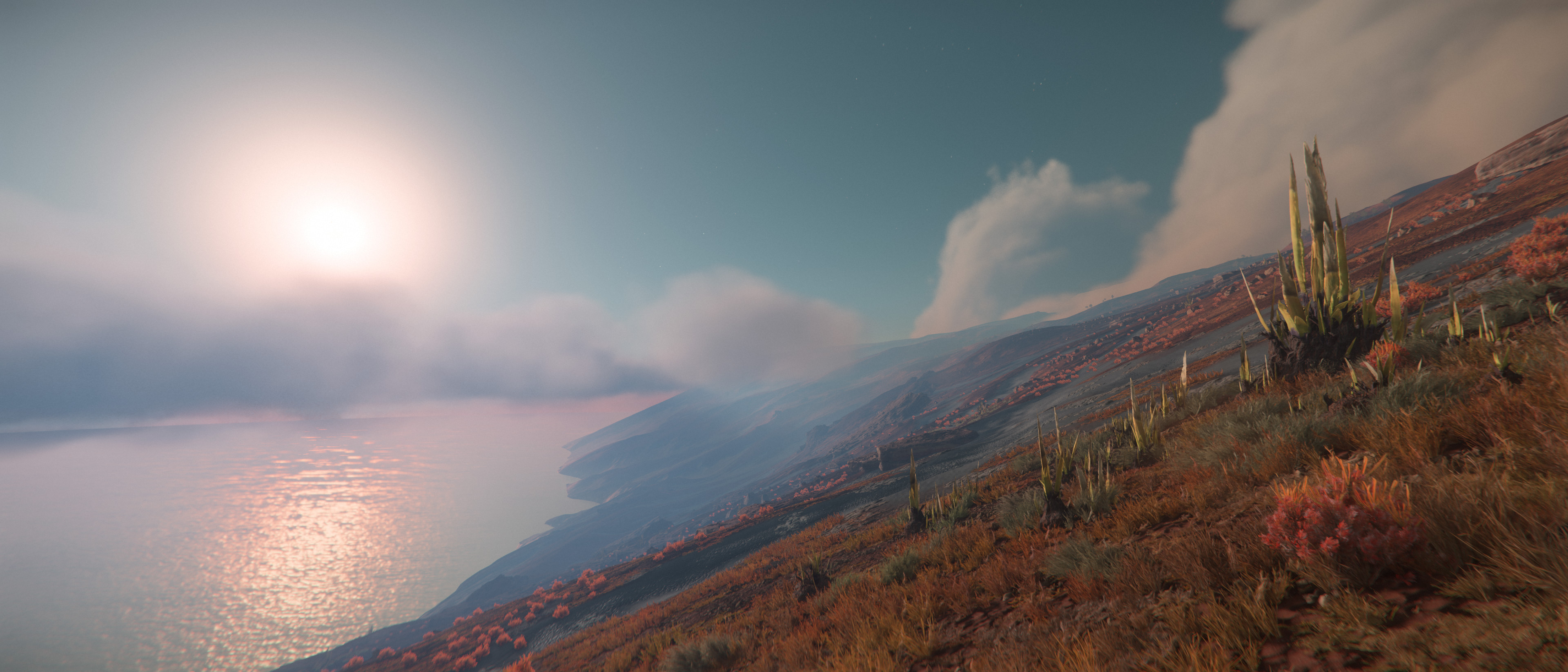
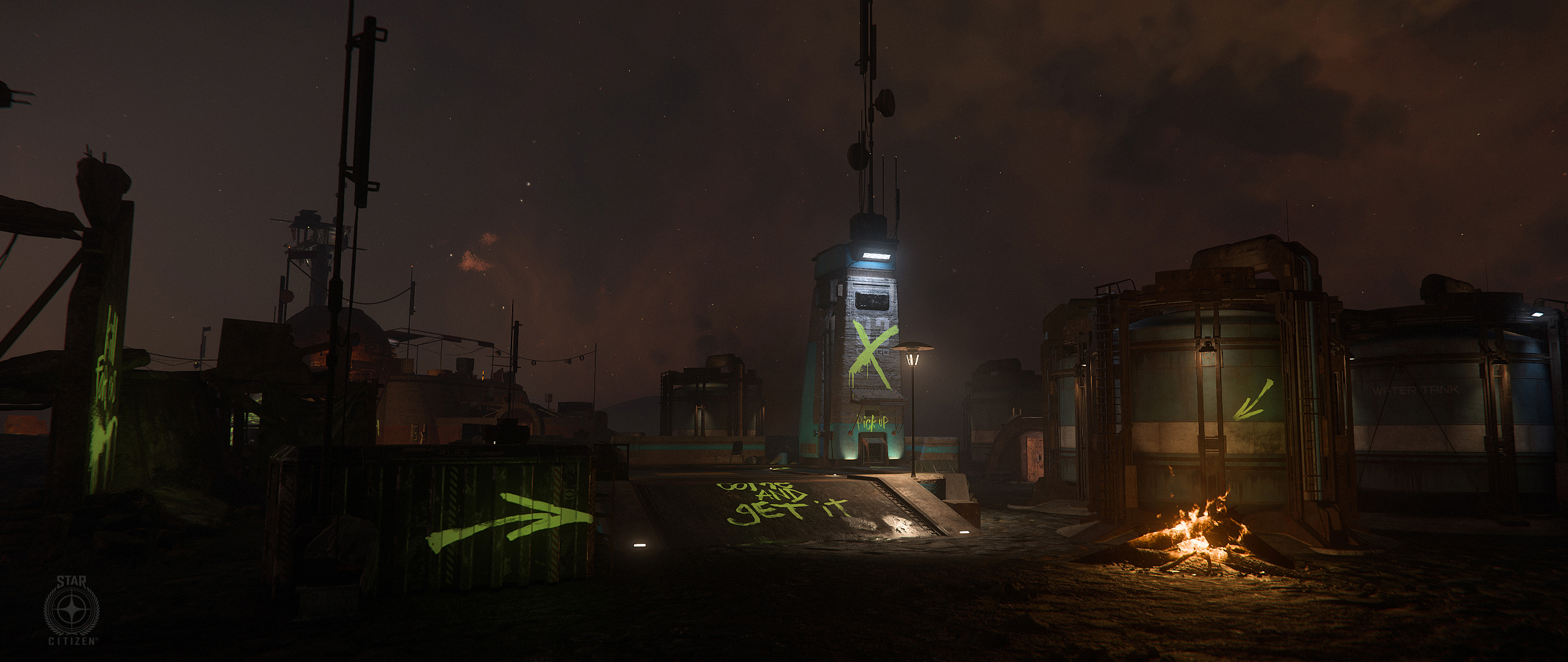
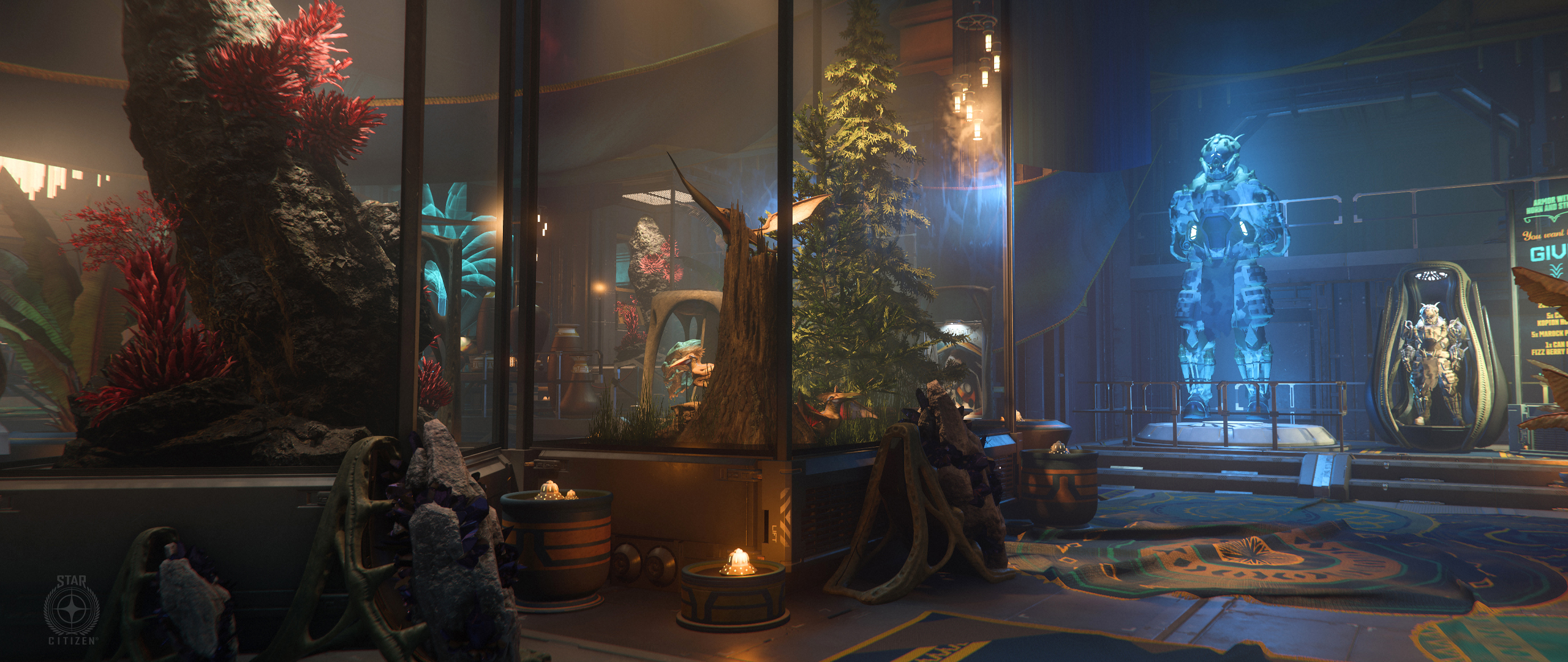
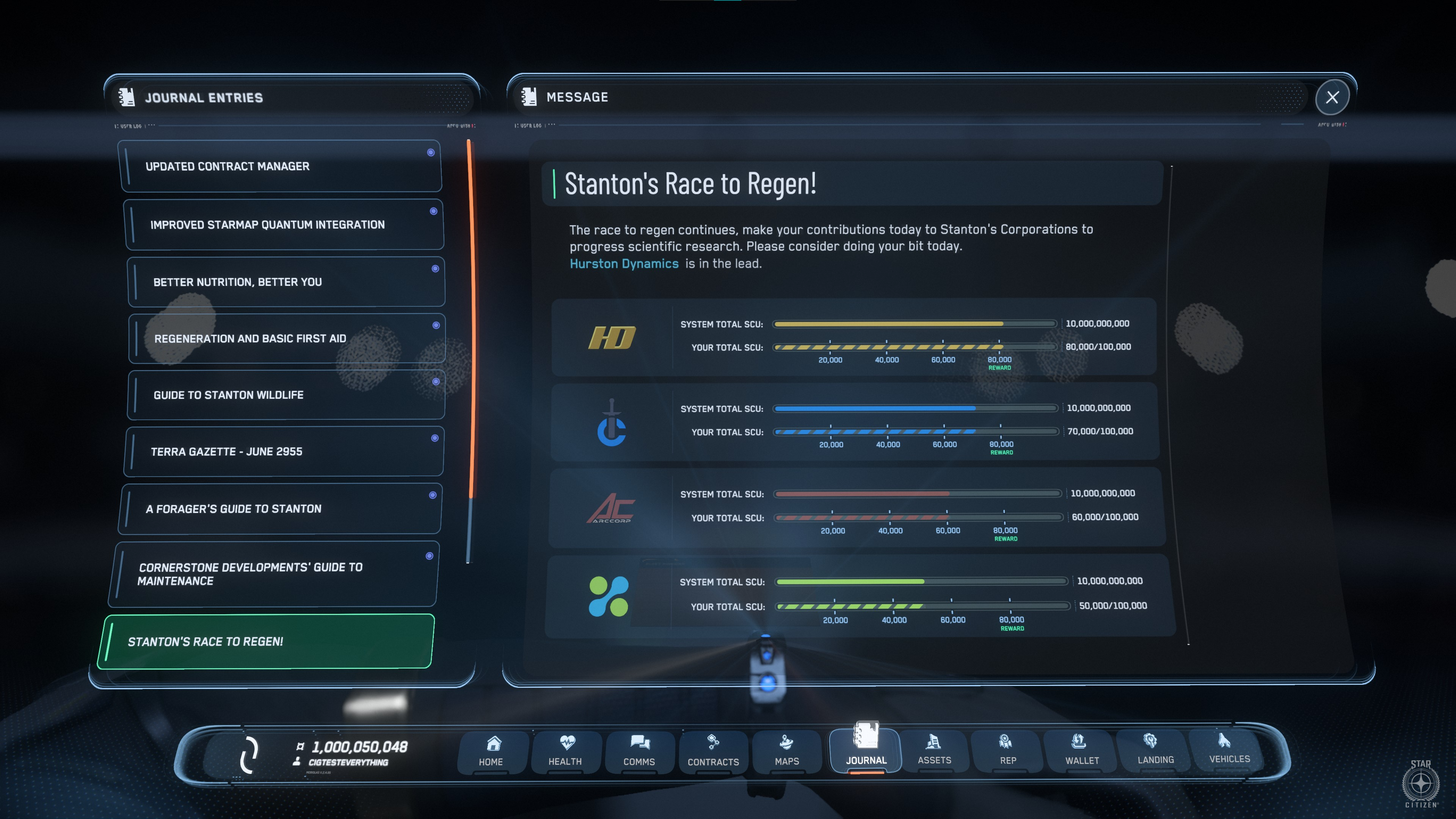
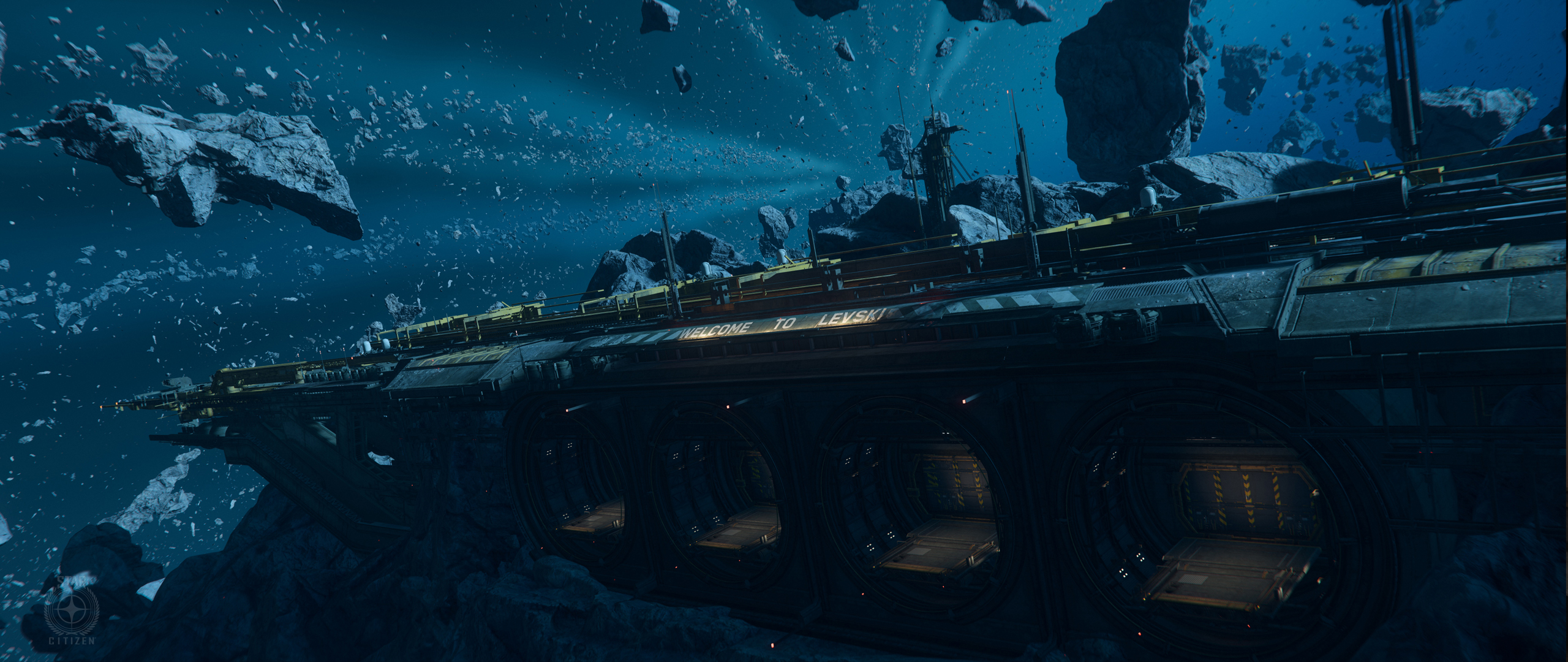
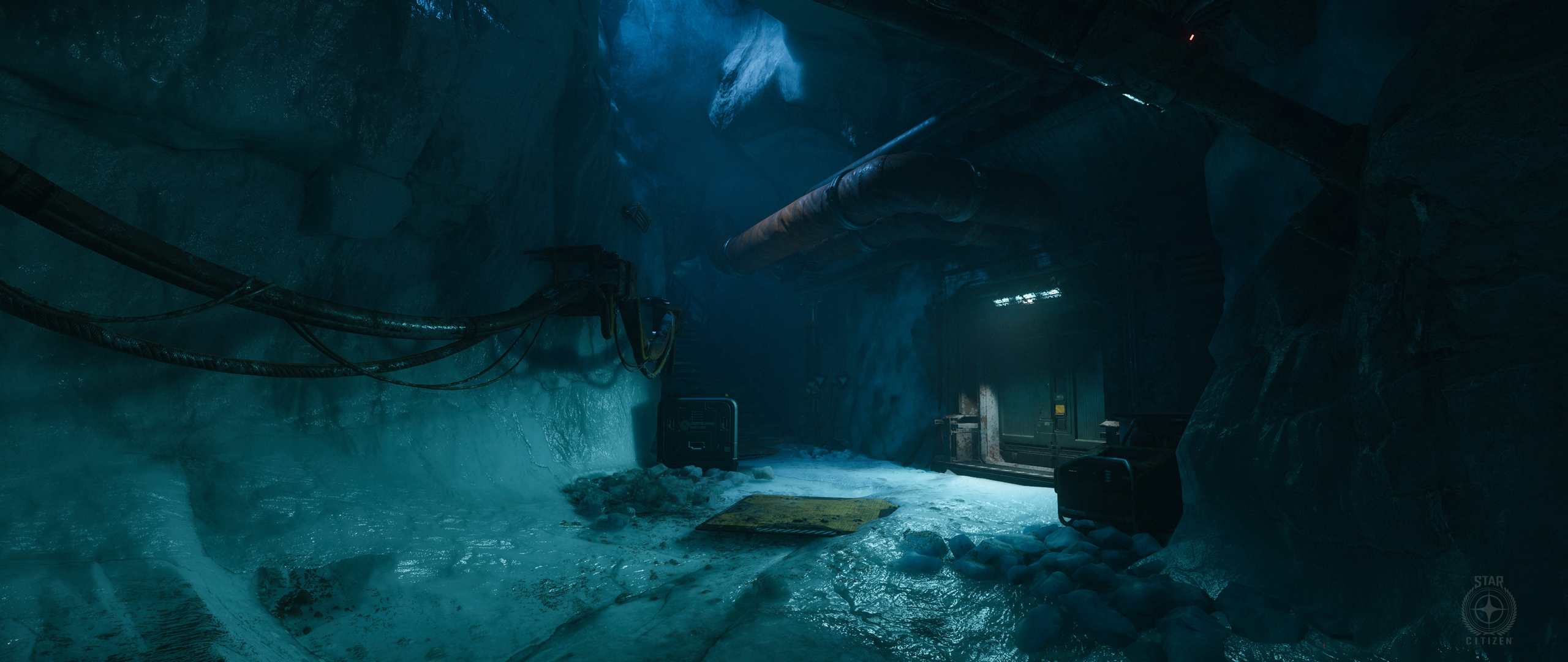
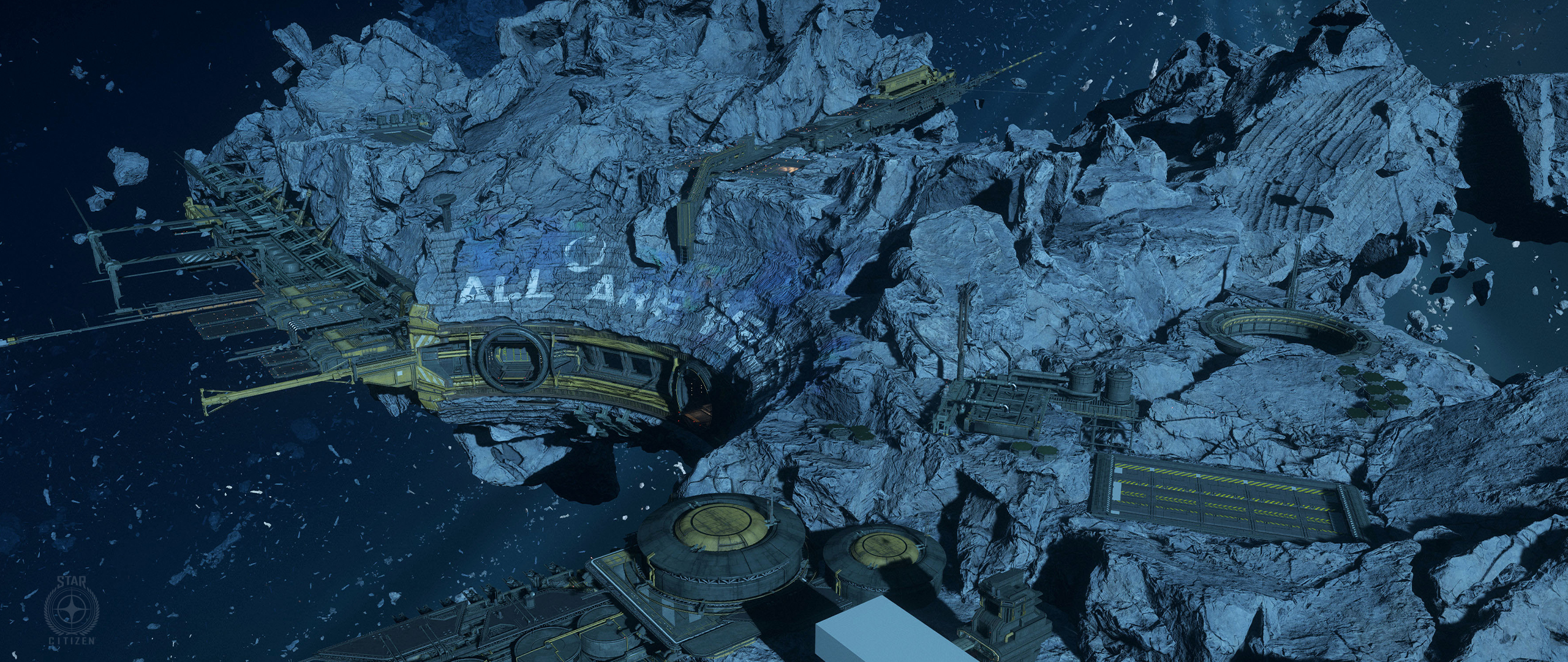
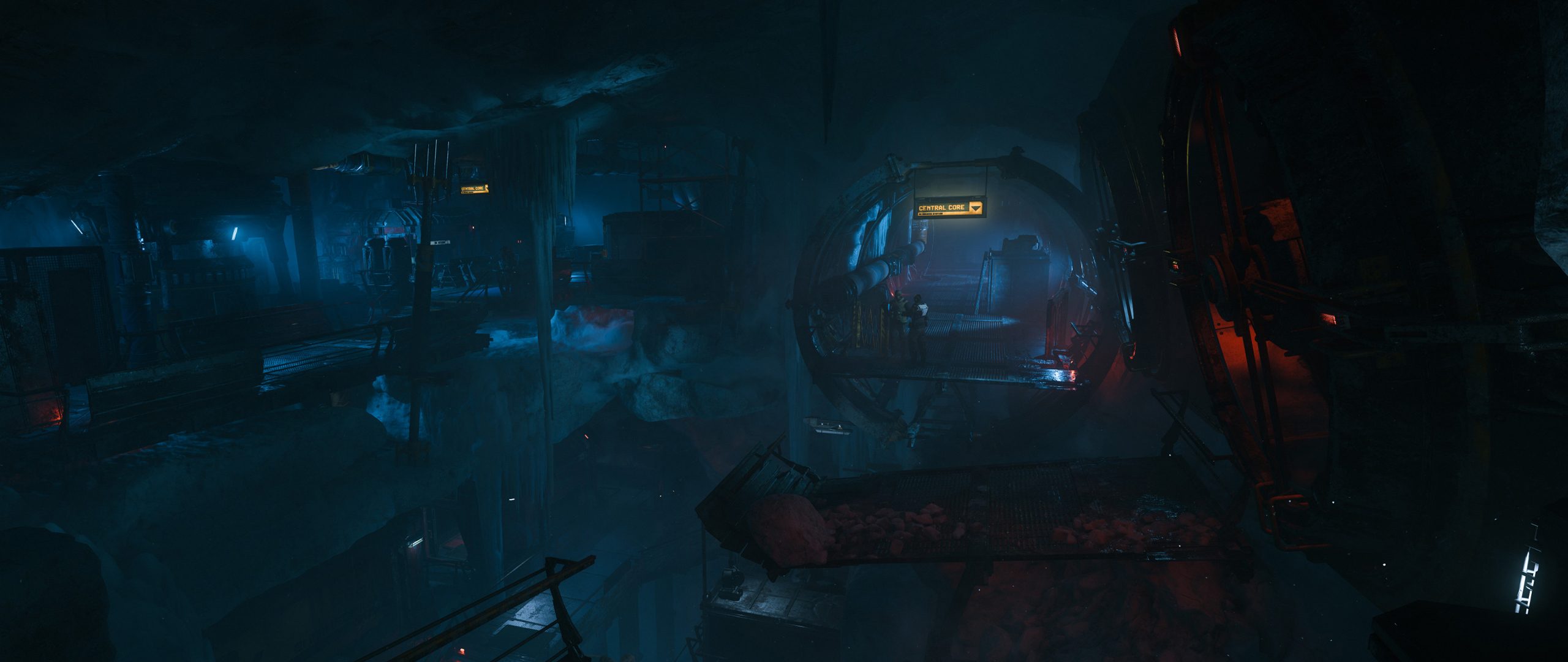
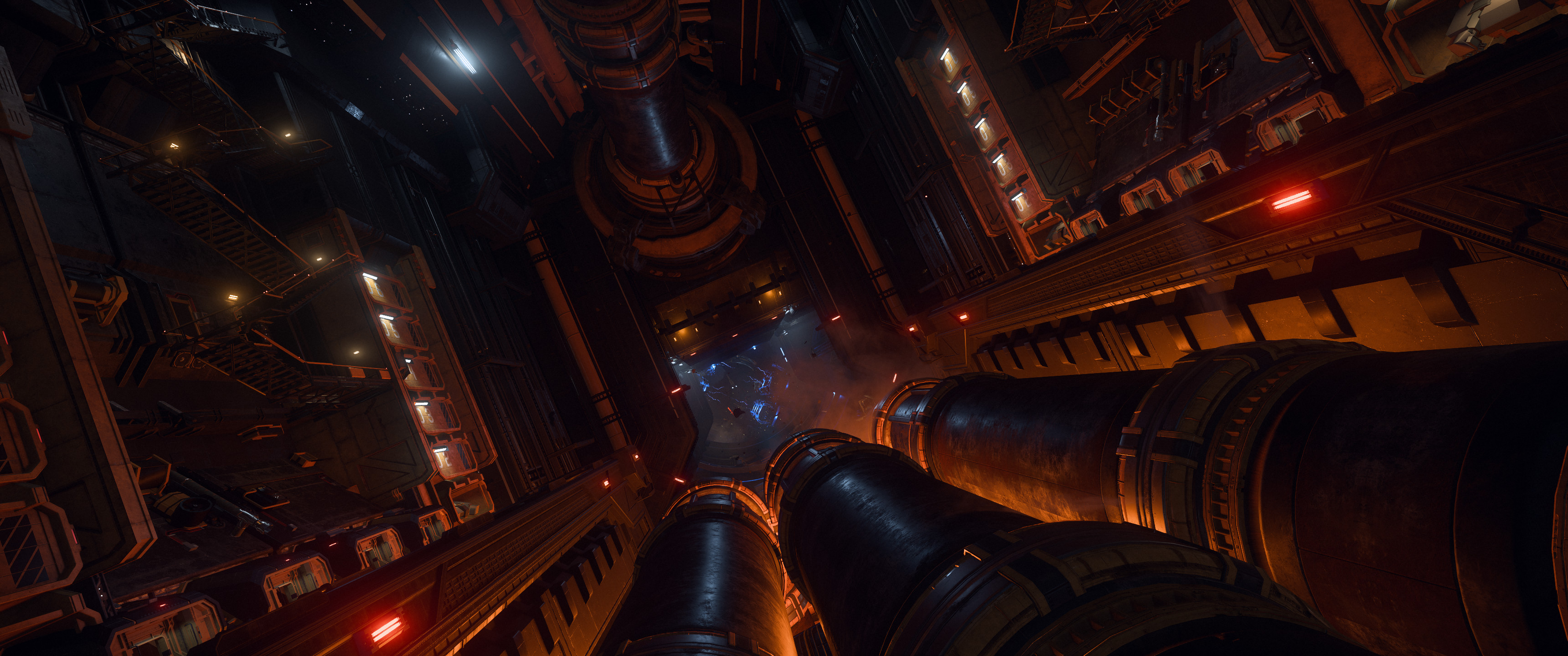
Metadata
- CIG ID
- 18076
- Channel
- Transmission
- Category
- Undefined
- Series
- Monthly Reports
- Comments
- 44
- Published
- 5 years ago (2021-04-07T00:00:00+00:00)