Squadron 42 Monthly Report: September 2021
Transmission Undefined Monthly ReportsContent
This is a cross-post of the report that was recently sent out via the monthly Squadron 42 newsletter. We’re publishing this a second time as a Comm-Link to make it easier for the community to reference back to. TO: SQUADRON 42 RECRUITS
SUBJ: DEVELOPMENT UPDATE 10:06:2021
REF: CIG UK, CIG DE, CIG LA, CIG TX
FAO Squadron 42 recruits.
Welcome to September’s Squadron 42 development report. Enclosed you’ll find details on the latest progress made across the campaign, including updates to vital backend services, AI behaviors, and cockpit communications.
Thank you for your continued support of Squadron 42.
Sincerely,
CIG COMMUNICATIONS
AI
The AI team spent part of the month rolling out the T0 engineer behavior to a key location, which is now fully functional with only a few minor remaining bugs. The workzone usable used by NPCs repairing things received a large refactor, making it easier for the designers to use within their locations. The team also created the ability to inspect, inspect with datapad, and inspect with welding tool at various angles to make it as useful as possible. September saw AI deliver the Aciedo usables using blockout animations, with motion-capture animations currently in the polishing stage. Search spot, railing lean, stare spot, and several others are now considered final and ready to be used throughout the level.
The hygiene behavior was updated and is now complete, with new animations added for the toilet and shower cubicle. This was rolled out, with bug fixing underway.
Work also began on a new gunner behavior. Currently, NPCs find and use ship turrets. The next step will allow them to rush to turrets if their ship is under attack.
Animation
The Story team continued to work through scenes, working closely with Level Design on implementation and revision. The Facial team created animations for various story scenes, making improvements as new heads came online. Vanduul combat continues too, with a focus on melee and searching.
Art (Characters)
September saw Character Art continue to up-res existing content, with the most commonly worn outfits scheduled for Q4. When done, the completion status of all characters will be around 85-90%. Skin textures and hair were also updated to bring all characters (hero and background) to a next-gen quality level.
Art (Environment)
Environment Art continued to work through all campaign locations while leaving enough flexibility to adjust for in-progress design and gameplay elements.
Engine
In September, the Physics team continued to optimize backend code, including for soft body implementation. Various parts of relevant collision detection routines were optimized algorithmically by improving their bounding volume representations and hierarchy. Soft body topology loading and building, baking code, and memory management were improved too. Additionally, terrain meshes are now flagged so that they can be exclusively raycast against along with allowing meshes to cluster with a single raycast. Moreover, kinematic parts are now used as valid moving ground colliders on actor entities.
For the renderer, work continued on the global draw packet cache. A mechanism was added to rebuild the cache when necessary. Its logic was also refined to prevent the unnecessary recreation of draw packets with identical arguments, which is important for brushes.
On a higher level, the Gen12 render interface is now used for stat OBJs and render proxies throughout the engine, which marks another step in the transition to the new render paradigm. The shader system saw several changes too – shader parser initialization was streamlined, and the user cache was moved to the ‘Window’s APPDATA folder’. This will be rolled out post Alpha 3.15 and should fix a long-standing issue for some users. There were also various changes to refactor and transition code to Gen12.
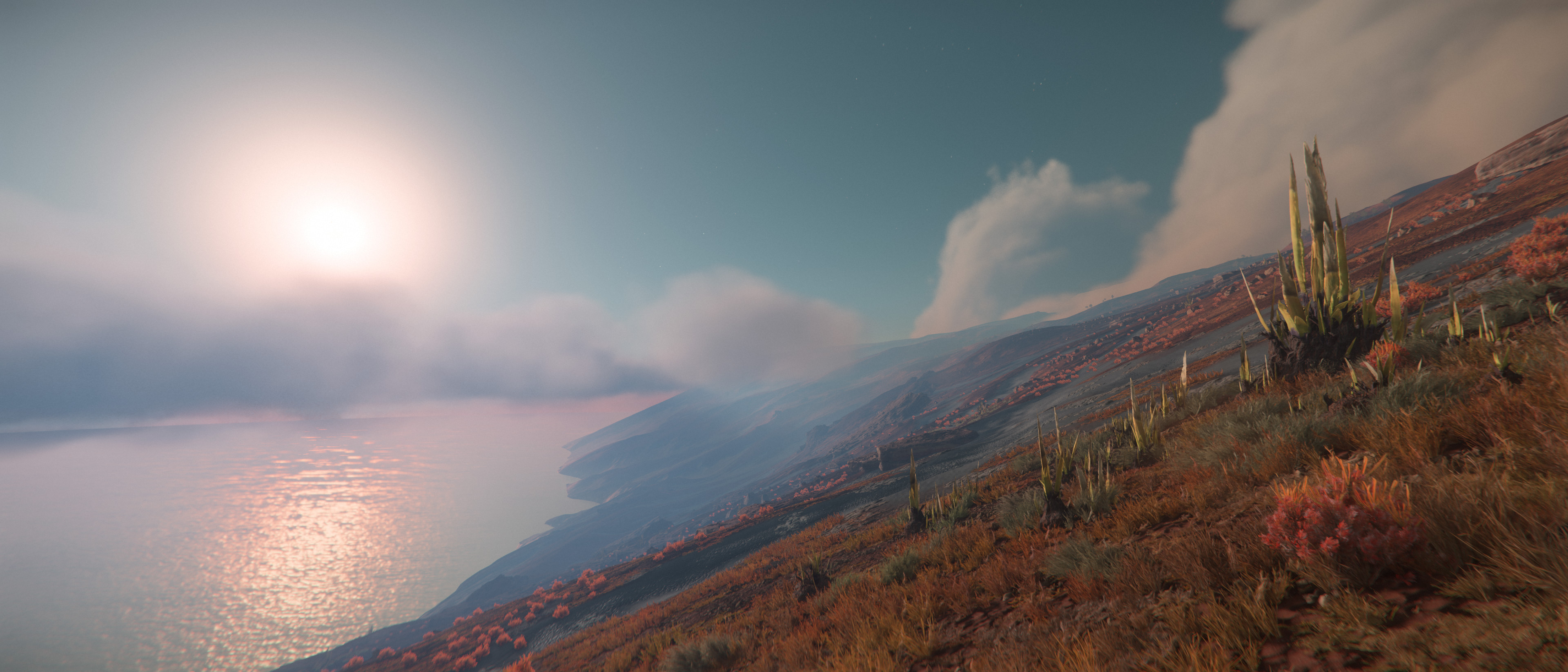
Regarding atmosphere and volumetric clouds, there have been various improvements to cloud shadows. The stepping code for local cloud shadows has been refined to be easier to control by artists as well as optimized so that it’s not evaluated unless necessary. Aside from self-shadowing, clouds now also cast their shadows onto the entire scene which has become important for proper scene integration as the team start to use them on planets as well. Additionally, work to improve the rendering of cloud edges has been completed, and parameters exposed to artists, to give them a more volumetric look. Research went into various topics: 1) a quick prototype for better rendering of rain clouds was implemented, 2) integration of cloud shadows into the atmosphere has been implemented (among other things will allow for light shafts from clouds), and 3) because of these shadows in the atmosphere a prototype for improved rendering of multi scattering in clouds and atmosphere was implemented. It acknowledges the presence of clouds in the atmosphere when it comes to indirect lighting and will help shading clouds (brighter, more natural white tones in shadows) as well as the ambiance of overcast skies on ground (less hazy and blueish – in case of earth like planets). These research items are still WIP and will hopefully mature enough to be shipped in the coming months with other improvements to rendering quality and performance.
On the core engine side, support for ‘APPDATA’ access was added to the P4K system. Aside from now storing the user shader cache folder there, the team plan to eventually move all temporary game-client files to this new location. The P4K file system was also improved to properly deal with Unicode paths.
Work on the performance regression system picked up again with numerous supporting changes, as it’s becoming important to daily progress and development stability.
The team also supported server meshing by decoupling code so that it can run as a standalone service. They started focusing more on optimization too, with certain game scenarios frequently analyzed, reported, and updated. This brought various improvements that will be rolled out post Alpha 3.15. For example, entity-component wakeup was improved by keeping components active for some time. Server Object Container Streaming code was heavily optimized, and memory allocation when using CigFunction (lambdas) was improved. There were various other amends too, such as moving runtime GPU buffer updates to background threads.
Features (Gameplay)
The SQ42 Feature team spent part of the month looking at TrackView performance and how it can best support the complexity of the cinematic sequences currently in production. Alongside several productive optimizations and fixes, sequence updates were broken into smaller individual jobs that can run through the batch-update system to make the most of modern multi-core processors. This was a great success, with some sequences seeing a six-fold improvement. They also moved the character customizer (that previously used the PU frontend) into the campaign’s levels. The UI is currently being converted to the Building Blocks system, so a major part of the work involved untangling it from the frontend so it can be added to any object container in the game. It’s now fully working, albeit with blockout UI. The team is currently assessing where they want to take it in both appearance and usability.
Gameplay Story
The Gameplay Story team started the month polishing utensil interaction in several mess hall scenes before achieving a technical breakthrough by getting NPCs to walk correctly while holding helmets under either arm. “Having managed to solve the helmet problem, we then did a rapid sweep through all our scenes with helmets to update them accordingly. It’s been great to see so many scenes take a leap forward and to see our characters holding and interacting with their headwear in a realistic way in-game.” – Gameplay Story
Alongside this, they overhauled the ‘Graves walk and talk’ in chapter five.
Work also began on an emergency handle setup involving prop animation, a particle effect, mesh swapping, and entity setup. This is a particularly complicated task but the setup is nearing completion and appears to be highly accurate. Soon, the team will be able to finalize the scene with all separate elements correctly working together.
Graphics & VFX Programming
The Graphics team made further performance improvements to the render profile as well as optimizations to post effects (depth of field and motion blur), terrain rendering, and fog to maintain the same performance at higher resolutions. Alongside this, they improved the water shader. These changes allow shading to be based on available tiled-lighting data rather than the nearest environment probe to create more consistent lighting in scenes involving water volumes. They also changed water volume lighting to take into account volumetrics, such as clouds and fog, avoiding previous issues where water volumes would ignore local fog volumes when shading.
They also progressed on the render-to-texture refactor by implementing region copy for static RTTOs to reuse the existing content instead of re-rendering it. This will ultimately increase performance and save on scene pass usage. They also re-wrote the RTT atlas packing algorithm to support the new region copy feature, making it more robust and easier to maintain.
Finally, Graphics looked into validation errors and collated captured Vulkan analytical information for future extensions.
Level Design
The Space/Dogfight team expanded some of the patrol spaces at the beginning of the game to better work with the new scanning implementation. They also added wildlines to cockpit comms, making them more contextual and granular. The ongoing AI work progressed too, with a specific focus on the Oldman behavior. Level Design further fleshed out the FPS play spaces with additional details, while Social Design Team continued the significant task of implementing all in-game scenes for review and sign-off.
Narrative
Narrative spent part of September supporting Art and Design on various levels, generating the dialogue and vignettes needed to help populate areas or clarify intended gameplay. They also created environmental storytelling docs to not only dig deeper into the history and character of a location but to also provide initial ideas for set dressing, such as appropriate signage and branding. While working on the placeholder dialogue mentioned in last month’s report, the team outlined some tech solutions to remove potential roadblocks in the pipeline. This will be helpful as more requests come in, allowing both Narrative and Design to quickly iterate on dialogue by hearing it in situ.
They also planned a potential performance capture shoot for later in the quarter, with the aim to pick up content originally scheduled before lockdown. This will include a mixture of PU needs and new SQ42 scenes.
QA
QA continued to work alongside Cinematics on new chapter content, with the wider team picking up testing until an embedded tester is brought in. The team also supported the ongoing Vanduul AI development and general AI function upgrades.
UI
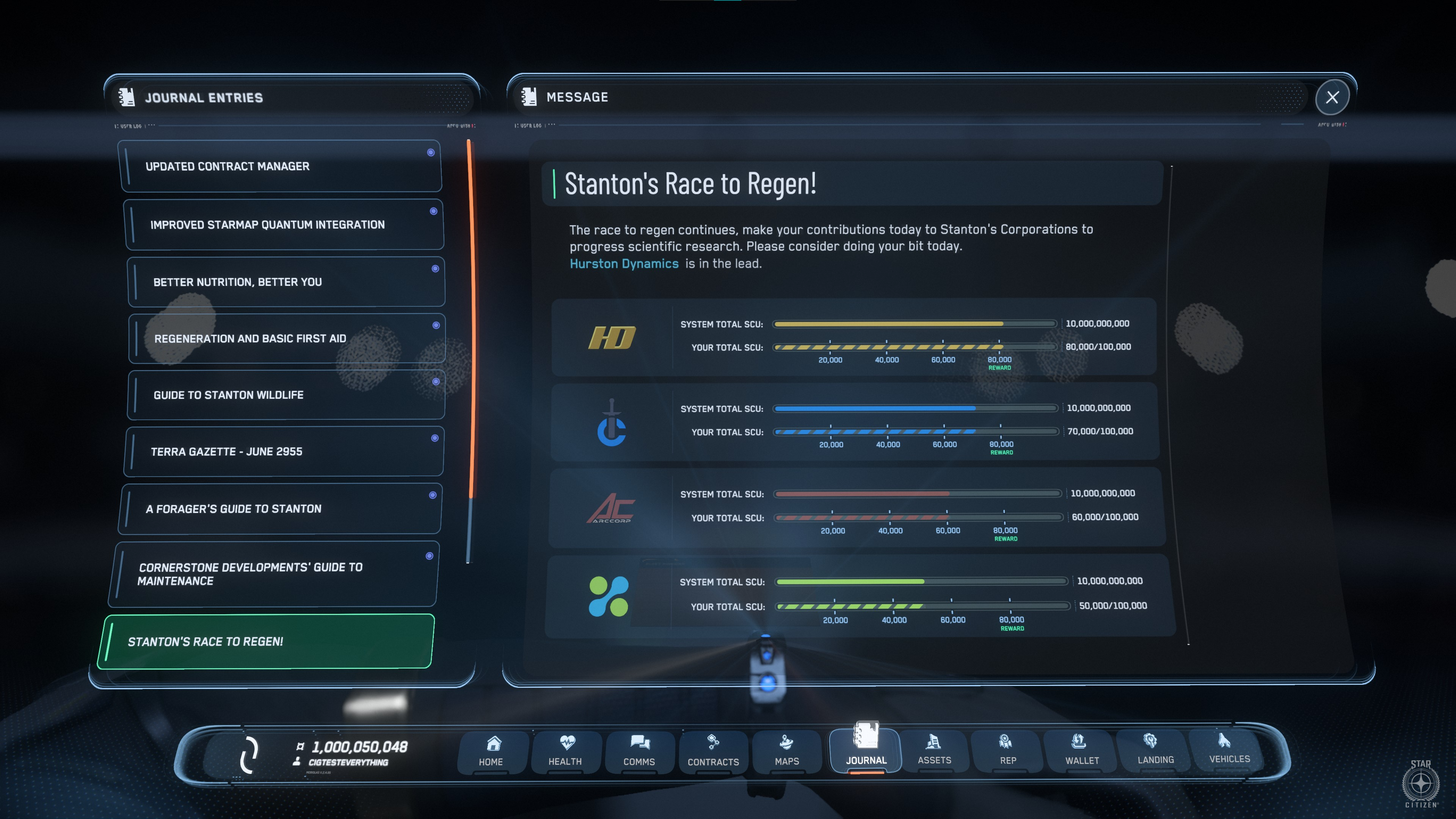
Last month, the UI team worked on the Aegis and RSI interface styles so that they can be used on various interactive screens. Progress was also made on the upcoming Starmap rework that will be used in both the PU and SQ42. Posters and signage were created to make an unrevealed area feel more lived-in and realistic too.
VFX
Finally for September’s report, VFX set up a mini strike team for an epic scene featuring a significant number of enemies. A new particle rig for distant vehicles was created, which allows Cinematics to easily animate a whole set of effects on low-poly (non-AI) vehicles. This was well received by the Cinematics Art team, who are looking forward to populating various locations with background action.
WE’LL SEE YOU NEXT MONTH…
Dies ist ein Querverweis auf den Bericht, der kürzlich über den monatlichen Newsletter von Squadron 42 verschickt wurde. Wir veröffentlichen ihn ein zweites Mal als Comm-Link, damit die Community leichter darauf zurückgreifen kann.
TO: SCHWADRON 42 REKRUTEN
SUBJ: ENTWICKLUNG UPDATE 10:06:2021
REF: CIG UK, CIG DE, CIG LA, CIG TX
FAO Geschwader 42 Rekruten.
Willkommen zum Entwicklungsbericht der Squadron 42 im September. Anbei findest du Details zu den neuesten Fortschritten in der Kampagne, einschließlich Updates für wichtige Backend-Dienste, KI-Verhalten und Cockpit-Kommunikation.
Vielen Dank für eure anhaltende Unterstützung von Squadron 42.
Mit freundlichen Grüßen,
CIG COMMUNICATIONS
AI
Das KI-Team hat einen Teil des Monats damit verbracht, das Verhalten des T0-Ingenieurs an einem wichtigen Ort auszurollen, der jetzt voll funktionsfähig ist und nur noch ein paar kleine Fehler aufweist. Die Arbeitszone, die von NSCs zum Reparieren von Gegenständen verwendet wird, wurde überarbeitet, damit die Designer sie leichter in ihren Orten verwenden können. Das Team hat außerdem die Möglichkeit geschaffen, mit dem Datenpad zu inspizieren und mit dem Schweißgerät in verschiedenen Winkeln zu inspizieren, um es so nützlich wie möglich zu machen. Im September lieferte die KI die Aciedo-Usables mithilfe von Blockout-Animationen, wobei die Motion-Capture-Animationen derzeit noch aufpoliert werden. Der Suchspot, die Geländerneigung, der Starspot und einige andere sind nun fertig und können im gesamten Level verwendet werden.
Das Hygieneverhalten wurde aktualisiert und ist nun vollständig, wobei neue Animationen für die Toilette und die Duschkabine hinzugefügt wurden. Dies wurde ausgerollt, und die Fehlerbehebung ist im Gange.
Außerdem wurde mit der Arbeit an einem neuen Schützenverhalten begonnen. Derzeit finden und benutzen NSCs Schiffstürme. Der nächste Schritt wird es ihnen ermöglichen, zu Geschütztürmen zu eilen, wenn ihr Schiff angegriffen wird.
Animation
Das Story-Team arbeitete weiter an den Szenen und arbeitete bei der Umsetzung und Überarbeitung eng mit dem Level Design zusammen. Das Facial-Team erstellte Animationen für verschiedene Story-Szenen und verbesserte sie, sobald neue Köpfe online waren. Auch der Kampf der Vanduul geht weiter, wobei der Schwerpunkt auf Nahkampf und Suche liegt.
Kunst (Charaktere)
Im September wurden die Charaktere weiter aufgefrischt, wobei die am häufigsten getragenen Outfits für das vierte Quartal geplant sind. Danach wird der Fertigstellungsgrad aller Charaktere bei 85-90% liegen. Auch die Hauttexturen und Haare wurden aktualisiert, um alle Charaktere (Held und Hintergrund) auf ein Next-Gen-Qualitätsniveau zu bringen.
Kunst (Umgebung)
Die Umgebungsgrafik wurde an allen Kampagnenstandorten fortgesetzt, wobei genügend Flexibilität für Anpassungen an laufende Design- und Gameplay-Elemente blieb.
Engine
Im September setzte das Physik-Team die Optimierung des Backend-Codes fort, unter anderem für die Implementierung von Soft Bodies. Verschiedene Teile der relevanten Kollisionserkennungsroutinen wurden algorithmisch optimiert, indem ihre Bounding-Volume-Darstellungen und die Hierarchie verbessert wurden. Auch das Laden und Erstellen der Softbody-Topologie, der Backcode und die Speicherverwaltung wurden verbessert. Außerdem werden Geländemeshes jetzt so gekennzeichnet, dass sie ausschließlich mit einem Raycast beschossen werden können und dass Meshes mit einem einzigen Raycast gebündelt werden können. Außerdem werden kinematische Teile jetzt als gültige bewegliche Bodenkollider für Actor-Entities verwendet.
Beim Renderer wurde die Arbeit am globalen Draw Packet Cache fortgesetzt. Es wurde ein Mechanismus hinzugefügt, um den Cache bei Bedarf neu zu erstellen. Die Logik wurde außerdem verfeinert, um zu verhindern, dass Zeichnungspakete mit identischen Argumenten unnötig neu erstellt werden, was für Pinsel wichtig ist.
Auf einer höheren Ebene wird die Gen12-Renderschnittstelle jetzt für stat OBJs und Render-Proxys in der gesamten Engine verwendet, was einen weiteren Schritt beim Übergang zum neuen Renderparadigma darstellt. Auch am Shader-System wurden einige Änderungen vorgenommen: Die Initialisierung des Shader-Parsers wurde vereinfacht und der Benutzer-Cache wurde in den APPDATA-Ordner des Fensters verschoben. Dies wird nach der Alpha 3.15 eingeführt und sollte ein langjähriges Problem für einige Nutzer/innen beheben. Außerdem wurden verschiedene Änderungen vorgenommen, um den Code zu refaktorisieren und auf Gen12 umzustellen.
Der Stepping-Code für lokale Wolkenschatten wurde verfeinert, damit er von den Künstlern leichter zu kontrollieren ist, und so optimiert, dass er nur bei Bedarf ausgewertet wird. Neben dem Eigenschatten werfen die Wolken nun auch ihren Schatten auf die gesamte Szene, was für die korrekte Szenenintegration wichtig ist, wenn das Team beginnt, sie auch auf Planeten zu verwenden. Außerdem wurde das Rendering der Wolkenkanten verbessert und den Künstlern wurden Parameter mitgeteilt, um ihnen ein volumetrischeres Aussehen zu verleihen.
Auf der Seite der Core-Engine wurde dem P4K-System die Unterstützung für den Zugriff auf APPDATA hinzugefügt. Das Team hat vor, nicht nur den Shader-Cache-Ordner dort zu speichern, sondern auch alle temporären Dateien des Spielclients dorthin zu verschieben. Das P4K-Dateisystem wurde außerdem verbessert, damit es mit Unicode-Pfaden richtig umgehen kann.
Die Arbeit am System zur Leistungsverbesserung wurde mit zahlreichen unterstützenden Änderungen wieder aufgenommen, da es für den täglichen Fortschritt und die Stabilität der Entwicklung immer wichtiger wird.
Das Team unterstützte auch das Server-Meshing, indem es den Code entkoppelte, damit er als eigenständiger Dienst laufen kann. Das Team konzentrierte sich auch mehr auf die Optimierung, indem es bestimmte Spielszenarien häufig analysierte, berichtete und aktualisierte. Dies brachte verschiedene Verbesserungen mit sich, die nach der Alpha 3.15 ausgerollt werden. Zum Beispiel wurde das Aufwecken von Entitätskomponenten verbessert, indem die Komponenten eine Zeit lang aktiv gehalten wurden. Der Server Object Container Streaming Code wurde stark optimiert und die Speicherzuweisung bei der Verwendung von CigFunction (Lambdas) wurde verbessert. Es gab auch verschiedene andere Änderungen, wie z. B. die Verlagerung von GPU-Pufferaktualisierungen zur Laufzeit in Hintergrundthreads.
Funktionen (Gameplay)
Das SQ42-Feature-Team hat einen Teil des Monats damit verbracht, die Leistung von TrackView zu untersuchen und herauszufinden, wie es die Komplexität der derzeit in Produktion befindlichen Filmsequenzen am besten unterstützen kann. Neben verschiedenen produktiven Optimierungen und Korrekturen wurden die Sequenzaktualisierungen in kleinere Einzeljobs aufgeteilt, die über das Batch-Update-System laufen können, um moderne Mehrkernprozessoren optimal zu nutzen. Das war ein großer Erfolg, denn einige Sequenzen wurden um das Sechsfache verbessert. Außerdem wurde die Charakteranpassung (die zuvor das PU-Frontend nutzte) in die Level der Kampagne verlegt. Die Benutzeroberfläche wird derzeit auf das Building Blocks-System umgestellt. Ein großer Teil der Arbeit bestand darin, sie vom Frontend zu lösen, damit sie zu jedem Objektcontainer im Spiel hinzugefügt werden kann. Es ist jetzt voll funktionsfähig, wenn auch mit Blockout-UI. Das Team prüft derzeit, wie es aussehen und wie es benutzerfreundlich sein soll.
Gameplay Story
Das Gameplay-Story-Team begann den Monat damit, die Interaktion mit den Utensilien in mehreren Messehallen-Szenen zu verbessern, bevor es einen technischen Durchbruch erzielte, indem es NSCs dazu brachte, korrekt zu gehen, während sie Helme unter einem Arm hielten. "Nachdem wir das Problem mit den Helmen gelöst hatten, haben wir schnell alle Szenen mit Helmen überprüft und entsprechend aktualisiert. Es war großartig zu sehen, wie viele Szenen einen Sprung nach vorne gemacht haben und wie unsere Charaktere ihre Kopfbedeckung im Spiel auf realistische Weise halten und mit ihr interagieren." - Gameplay Story
Außerdem wurde in Kapitel fünf der "Graves Walk and Talk" überarbeitet.
Außerdem wurde mit der Arbeit an einem Notgriff begonnen, der Requisitenanimation, einen Partikeleffekt, Mesh-Swapping und die Einrichtung von Entitäten umfasst. Dies ist eine besonders komplizierte Aufgabe, aber das Setup steht kurz vor der Fertigstellung und scheint sehr genau zu sein. Bald wird das Team in der Lage sein, die Szene fertigzustellen, sodass alle einzelnen Elemente korrekt zusammenarbeiten.
Grafik & VFX-Programmierung
Das Grafikteam hat weitere Leistungsverbesserungen am Renderprofil sowie Optimierungen an Post-Effekten (Tiefenschärfe und Bewegungsunschärfe), Terrain-Rendering und Nebel vorgenommen, um die gleiche Leistung bei höheren Auflösungen zu erhalten. Darüber hinaus wurde der Wassershader verbessert. Diese Änderungen ermöglichen es, dass die Schattierung auf den verfügbaren Kachelbeleuchtungsdaten und nicht auf der nächstgelegenen Umgebungssonde basiert, um eine konsistentere Beleuchtung in Szenen mit Wasservolumen zu schaffen. Außerdem wurde die Beleuchtung von Wasservolumina so geändert, dass volumetrische Faktoren wie Wolken und Nebel berücksichtigt werden, wodurch frühere Probleme vermieden wurden, bei denen Wasservolumina lokale Nebelvolumina beim Shading ignorierten.
Außerdem haben sie das Render-to-Texture-Refactoring vorangetrieben, indem sie Region Copy für statische RTTOs implementiert haben, um den vorhandenen Inhalt wiederzuverwenden, anstatt ihn neu zu rendern. Das erhöht die Leistung und spart den Verbrauch von Scene-Passes. Außerdem wurde der Algorithmus zum Packen des RTT-Atlas neu geschrieben, um die neue Funktion zum Kopieren von Regionen zu unterstützen, was ihn robuster und einfacher zu warten macht.
Schließlich untersuchte Graphics Validierungsfehler und sammelte die erfassten analytischen Vulkan-Informationen für zukünftige Erweiterungen.
Level Design
Das Space/Dogfight-Team hat einige der Patrouillenräume am Anfang des Spiels erweitert, damit sie besser mit der neuen Scan-Implementierung funktionieren. Außerdem haben sie die Cockpit-Kommunikation mit Wildlinien versehen, um sie kontextbezogener und detaillierter zu gestalten. Auch die Arbeit an der KI wurde fortgesetzt, wobei ein besonderer Schwerpunkt auf dem Verhalten der Oldman lag. Das Leveldesign fügte den FPS-Spielräumen weitere Details hinzu, während das Social Design Team die wichtige Aufgabe fortsetzte, alle Spielszenen zur Überprüfung und Freigabe zu implementieren.
Narrative
Narrative verbrachte einen Teil des Septembers damit, Art und Design auf verschiedenen Ebenen zu unterstützen, indem sie Dialoge und Vignetten erstellten, die für die Besiedlung von Gebieten oder die Erläuterung des geplanten Gameplays benötigt wurden. Sie erstellten auch Storytelling-Dokumente für die Umgebung, um nicht nur die Geschichte und den Charakter eines Ortes zu erforschen, sondern auch erste Ideen für die Gestaltung der Kulissen zu liefern, z. B. für eine angemessene Beschilderung und das Branding. Während der Arbeit an den im letzten Bericht erwähnten Platzhalterdialogen hat das Team einige technische Lösungen entwickelt, um mögliche Hindernisse in der Pipeline zu beseitigen. Dies wird hilfreich sein, wenn mehr Anfragen eingehen, denn so können Narrative und Design den Dialog schnell überarbeiten, indem sie ihn vor Ort anhören.
Außerdem wurde ein möglicher Dreh zur Leistungserfassung für später im Quartal geplant, mit dem Ziel, Inhalte aufzunehmen, die ursprünglich vor der Schließung geplant waren. Dies wird eine Mischung aus PU-Bedarf und neuen SQ42-Szenen beinhalten.
QA
Das QA-Team arbeitete weiterhin zusammen mit dem Cinematics-Team an neuen Kapitelinhalten, wobei das breitere Team die Tests übernahm, bis ein integrierter Tester eingestellt wurde. Das Team unterstützte auch die laufende Entwicklung der Vanduul-KI und allgemeine KI-Funktionsverbesserungen.
UI
Im letzten Monat hat das UI-Team an den Aegis- und RSI-Interface-Styles gearbeitet, damit sie auf verschiedenen interaktiven Bildschirmen verwendet werden können. Außerdem wurden Fortschritte bei der bevorstehenden Überarbeitung der Starmap gemacht, die sowohl in der PU als auch in der SQ42 verwendet werden wird. Außerdem wurden Plakate und Beschilderungen erstellt, um ein noch nicht enthülltes Gebiet lebendiger und realistischer zu gestalten.
VFX
Zum Abschluss des Septemberberichts hat VFX ein Mini-Strike-Team für eine epische Szene mit einer großen Anzahl von Feinden zusammengestellt. Es wurde ein neues Partikel-Rig für weit entfernte Fahrzeuge erstellt, mit dem Cinematics ganz einfach eine ganze Reihe von Effekten auf Low-Poly-Fahrzeugen (ohne KI) animieren kann. Dies wurde vom Cinematics Art Team gut aufgenommen, das sich darauf freut, verschiedene Schauplätze mit Hintergrundaktionen zu bevölkern.
WIR SEHEN UNS NÄCHSTEN MONAT...
This is a cross-post of the report that was recently sent out via the monthly Squadron 42 newsletter. We’re publishing this a second time as a Comm-Link to make it easier for the community to reference back to. TO: SQUADRON 42 RECRUITS
SUBJ: DEVELOPMENT UPDATE 10:06:2021
REF: CIG UK, CIG DE, CIG LA, CIG TX
FAO Squadron 42 recruits.
Welcome to September’s Squadron 42 development report. Enclosed you’ll find details on the latest progress made across the campaign, including updates to vital backend services, AI behaviors, and cockpit communications.
Thank you for your continued support of Squadron 42.
Sincerely,
CIG COMMUNICATIONS
AI
The AI team spent part of the month rolling out the T0 engineer behavior to a key location, which is now fully functional with only a few minor remaining bugs. The workzone usable used by NPCs repairing things received a large refactor, making it easier for the designers to use within their locations. The team also created the ability to inspect, inspect with datapad, and inspect with welding tool at various angles to make it as useful as possible. September saw AI deliver the Aciedo usables using blockout animations, with motion-capture animations currently in the polishing stage. Search spot, railing lean, stare spot, and several others are now considered final and ready to be used throughout the level.
The hygiene behavior was updated and is now complete, with new animations added for the toilet and shower cubicle. This was rolled out, with bug fixing underway.
Work also began on a new gunner behavior. Currently, NPCs find and use ship turrets. The next step will allow them to rush to turrets if their ship is under attack.
Animation
The Story team continued to work through scenes, working closely with Level Design on implementation and revision. The Facial team created animations for various story scenes, making improvements as new heads came online. Vanduul combat continues too, with a focus on melee and searching.
Art (Characters)
September saw Character Art continue to up-res existing content, with the most commonly worn outfits scheduled for Q4. When done, the completion status of all characters will be around 85-90%. Skin textures and hair were also updated to bring all characters (hero and background) to a next-gen quality level.
Art (Environment)
Environment Art continued to work through all campaign locations while leaving enough flexibility to adjust for in-progress design and gameplay elements.
Engine
In September, the Physics team continued to optimize backend code, including for soft body implementation. Various parts of relevant collision detection routines were optimized algorithmically by improving their bounding volume representations and hierarchy. Soft body topology loading and building, baking code, and memory management were improved too. Additionally, terrain meshes are now flagged so that they can be exclusively raycast against along with allowing meshes to cluster with a single raycast. Moreover, kinematic parts are now used as valid moving ground colliders on actor entities.
For the renderer, work continued on the global draw packet cache. A mechanism was added to rebuild the cache when necessary. Its logic was also refined to prevent the unnecessary recreation of draw packets with identical arguments, which is important for brushes.
On a higher level, the Gen12 render interface is now used for stat OBJs and render proxies throughout the engine, which marks another step in the transition to the new render paradigm. The shader system saw several changes too – shader parser initialization was streamlined, and the user cache was moved to the ‘Window’s APPDATA folder’. This will be rolled out post Alpha 3.15 and should fix a long-standing issue for some users. There were also various changes to refactor and transition code to Gen12.
Regarding atmosphere and volumetric clouds, there have been various improvements to cloud shadows. The stepping code for local cloud shadows has been refined to be easier to control by artists as well as optimized so that it’s not evaluated unless necessary. Aside from self-shadowing, clouds now also cast their shadows onto the entire scene which has become important for proper scene integration as the team start to use them on planets as well. Additionally, work to improve the rendering of cloud edges has been completed, and parameters exposed to artists, to give them a more volumetric look. Research went into various topics: 1) a quick prototype for better rendering of rain clouds was implemented, 2) integration of cloud shadows into the atmosphere has been implemented (among other things will allow for light shafts from clouds), and 3) because of these shadows in the atmosphere a prototype for improved rendering of multi scattering in clouds and atmosphere was implemented. It acknowledges the presence of clouds in the atmosphere when it comes to indirect lighting and will help shading clouds (brighter, more natural white tones in shadows) as well as the ambiance of overcast skies on ground (less hazy and blueish – in case of earth like planets). These research items are still WIP and will hopefully mature enough to be shipped in the coming months with other improvements to rendering quality and performance.
On the core engine side, support for ‘APPDATA’ access was added to the P4K system. Aside from now storing the user shader cache folder there, the team plan to eventually move all temporary game-client files to this new location. The P4K file system was also improved to properly deal with Unicode paths.
Work on the performance regression system picked up again with numerous supporting changes, as it’s becoming important to daily progress and development stability.
The team also supported server meshing by decoupling code so that it can run as a standalone service. They started focusing more on optimization too, with certain game scenarios frequently analyzed, reported, and updated. This brought various improvements that will be rolled out post Alpha 3.15. For example, entity-component wakeup was improved by keeping components active for some time. Server Object Container Streaming code was heavily optimized, and memory allocation when using CigFunction (lambdas) was improved. There were various other amends too, such as moving runtime GPU buffer updates to background threads.
Features (Gameplay)
The SQ42 Feature team spent part of the month looking at TrackView performance and how it can best support the complexity of the cinematic sequences currently in production. Alongside several productive optimizations and fixes, sequence updates were broken into smaller individual jobs that can run through the batch-update system to make the most of modern multi-core processors. This was a great success, with some sequences seeing a six-fold improvement. They also moved the character customizer (that previously used the PU frontend) into the campaign’s levels. The UI is currently being converted to the Building Blocks system, so a major part of the work involved untangling it from the frontend so it can be added to any object container in the game. It’s now fully working, albeit with blockout UI. The team is currently assessing where they want to take it in both appearance and usability.
Gameplay Story
The Gameplay Story team started the month polishing utensil interaction in several mess hall scenes before achieving a technical breakthrough by getting NPCs to walk correctly while holding helmets under either arm. “Having managed to solve the helmet problem, we then did a rapid sweep through all our scenes with helmets to update them accordingly. It’s been great to see so many scenes take a leap forward and to see our characters holding and interacting with their headwear in a realistic way in-game.” – Gameplay Story
Alongside this, they overhauled the ‘Graves walk and talk’ in chapter five.
Work also began on an emergency handle setup involving prop animation, a particle effect, mesh swapping, and entity setup. This is a particularly complicated task but the setup is nearing completion and appears to be highly accurate. Soon, the team will be able to finalize the scene with all separate elements correctly working together.
Graphics & VFX Programming
The Graphics team made further performance improvements to the render profile as well as optimizations to post effects (depth of field and motion blur), terrain rendering, and fog to maintain the same performance at higher resolutions. Alongside this, they improved the water shader. These changes allow shading to be based on available tiled-lighting data rather than the nearest environment probe to create more consistent lighting in scenes involving water volumes. They also changed water volume lighting to take into account volumetrics, such as clouds and fog, avoiding previous issues where water volumes would ignore local fog volumes when shading.
They also progressed on the render-to-texture refactor by implementing region copy for static RTTOs to reuse the existing content instead of re-rendering it. This will ultimately increase performance and save on scene pass usage. They also re-wrote the RTT atlas packing algorithm to support the new region copy feature, making it more robust and easier to maintain.
Finally, Graphics looked into validation errors and collated captured Vulkan analytical information for future extensions.
Level Design
The Space/Dogfight team expanded some of the patrol spaces at the beginning of the game to better work with the new scanning implementation. They also added wildlines to cockpit comms, making them more contextual and granular. The ongoing AI work progressed too, with a specific focus on the Oldman behavior. Level Design further fleshed out the FPS play spaces with additional details, while Social Design Team continued the significant task of implementing all in-game scenes for review and sign-off.
Narrative
Narrative spent part of September supporting Art and Design on various levels, generating the dialogue and vignettes needed to help populate areas or clarify intended gameplay. They also created environmental storytelling docs to not only dig deeper into the history and character of a location but to also provide initial ideas for set dressing, such as appropriate signage and branding. While working on the placeholder dialogue mentioned in last month’s report, the team outlined some tech solutions to remove potential roadblocks in the pipeline. This will be helpful as more requests come in, allowing both Narrative and Design to quickly iterate on dialogue by hearing it in situ.
They also planned a potential performance capture shoot for later in the quarter, with the aim to pick up content originally scheduled before lockdown. This will include a mixture of PU needs and new SQ42 scenes.
QA
QA continued to work alongside Cinematics on new chapter content, with the wider team picking up testing until an embedded tester is brought in. The team also supported the ongoing Vanduul AI development and general AI function upgrades.
UI
Last month, the UI team worked on the Aegis and RSI interface styles so that they can be used on various interactive screens. Progress was also made on the upcoming Starmap rework that will be used in both the PU and SQ42. Posters and signage were created to make an unrevealed area feel more lived-in and realistic too.
VFX
Finally for September’s report, VFX set up a mini strike team for an epic scene featuring a significant number of enemies. A new particle rig for distant vehicles was created, which allows Cinematics to easily animate a whole set of effects on low-poly (non-AI) vehicles. This was well received by the Cinematics Art team, who are looking forward to populating various locations with background action.
WE’LL SEE YOU NEXT MONTH…
This is a cross-post of the report that was recently sent out via the monthly Squadron 42 newsletter. We’re publishing this a second time as a Comm-Link to make it easier for the community to reference back to. TO: SQUADRON 42 RECRUITS
SUBJ: DEVELOPMENT UPDATE 10:06:2021
REF: CIG UK, CIG DE, CIG LA, CIG TX
FAO Squadron 42 recruits.
Welcome to September’s Squadron 42 development report. Enclosed you’ll find details on the latest progress made across the campaign, including updates to vital backend services, AI behaviors, and cockpit communications.
Thank you for your continued support of Squadron 42.
Sincerely,
CIG COMMUNICATIONS
AI
The AI team spent part of the month rolling out the T0 engineer behavior to a key location, which is now fully functional with only a few minor remaining bugs. The workzone usable used by NPCs repairing things received a large refactor, making it easier for the designers to use within their locations. The team also created the ability to inspect, inspect with datapad, and inspect with welding tool at various angles to make it as useful as possible. September saw AI deliver the Aciedo usables using blockout animations, with motion-capture animations currently in the polishing stage. Search spot, railing lean, stare spot, and several others are now considered final and ready to be used throughout the level.
The hygiene behavior was updated and is now complete, with new animations added for the toilet and shower cubicle. This was rolled out, with bug fixing underway.
Work also began on a new gunner behavior. Currently, NPCs find and use ship turrets. The next step will allow them to rush to turrets if their ship is under attack.
Animation
The Story team continued to work through scenes, working closely with Level Design on implementation and revision. The Facial team created animations for various story scenes, making improvements as new heads came online. Vanduul combat continues too, with a focus on melee and searching.
Art (Characters)
September saw Character Art continue to up-res existing content, with the most commonly worn outfits scheduled for Q4. When done, the completion status of all characters will be around 85-90%. Skin textures and hair were also updated to bring all characters (hero and background) to a next-gen quality level.
Art (Environment)
Environment Art continued to work through all campaign locations while leaving enough flexibility to adjust for in-progress design and gameplay elements.
Engine
In September, the Physics team continued to optimize backend code, including for soft body implementation. Various parts of relevant collision detection routines were optimized algorithmically by improving their bounding volume representations and hierarchy. Soft body topology loading and building, baking code, and memory management were improved too. Additionally, terrain meshes are now flagged so that they can be exclusively raycast against along with allowing meshes to cluster with a single raycast. Moreover, kinematic parts are now used as valid moving ground colliders on actor entities.
For the renderer, work continued on the global draw packet cache. A mechanism was added to rebuild the cache when necessary. Its logic was also refined to prevent the unnecessary recreation of draw packets with identical arguments, which is important for brushes.
On a higher level, the Gen12 render interface is now used for stat OBJs and render proxies throughout the engine, which marks another step in the transition to the new render paradigm. The shader system saw several changes too – shader parser initialization was streamlined, and the user cache was moved to the ‘Window’s APPDATA folder’. This will be rolled out post Alpha 3.15 and should fix a long-standing issue for some users. There were also various changes to refactor and transition code to Gen12.
Regarding atmosphere and volumetric clouds, there have been various improvements to cloud shadows. The stepping code for local cloud shadows has been refined to be easier to control by artists as well as optimized so that it’s not evaluated unless necessary. Aside from self-shadowing, clouds now also cast their shadows onto the entire scene which has become important for proper scene integration as the team start to use them on planets as well. Additionally, work to improve the rendering of cloud edges has been completed, and parameters exposed to artists, to give them a more volumetric look. Research went into various topics: 1) a quick prototype for better rendering of rain clouds was implemented, 2) integration of cloud shadows into the atmosphere has been implemented (among other things will allow for light shafts from clouds), and 3) because of these shadows in the atmosphere a prototype for improved rendering of multi scattering in clouds and atmosphere was implemented. It acknowledges the presence of clouds in the atmosphere when it comes to indirect lighting and will help shading clouds (brighter, more natural white tones in shadows) as well as the ambiance of overcast skies on ground (less hazy and blueish – in case of earth like planets). These research items are still WIP and will hopefully mature enough to be shipped in the coming months with other improvements to rendering quality and performance.
On the core engine side, support for ‘APPDATA’ access was added to the P4K system. Aside from now storing the user shader cache folder there, the team plan to eventually move all temporary game-client files to this new location. The P4K file system was also improved to properly deal with Unicode paths.
Work on the performance regression system picked up again with numerous supporting changes, as it’s becoming important to daily progress and development stability.
The team also supported server meshing by decoupling code so that it can run as a standalone service. They started focusing more on optimization too, with certain game scenarios frequently analyzed, reported, and updated. This brought various improvements that will be rolled out post Alpha 3.15. For example, entity-component wakeup was improved by keeping components active for some time. Server Object Container Streaming code was heavily optimized, and memory allocation when using CigFunction (lambdas) was improved. There were various other amends too, such as moving runtime GPU buffer updates to background threads.
Features (Gameplay)
The SQ42 Feature team spent part of the month looking at TrackView performance and how it can best support the complexity of the cinematic sequences currently in production. Alongside several productive optimizations and fixes, sequence updates were broken into smaller individual jobs that can run through the batch-update system to make the most of modern multi-core processors. This was a great success, with some sequences seeing a six-fold improvement. They also moved the character customizer (that previously used the PU frontend) into the campaign’s levels. The UI is currently being converted to the Building Blocks system, so a major part of the work involved untangling it from the frontend so it can be added to any object container in the game. It’s now fully working, albeit with blockout UI. The team is currently assessing where they want to take it in both appearance and usability.
Gameplay Story
The Gameplay Story team started the month polishing utensil interaction in several mess hall scenes before achieving a technical breakthrough by getting NPCs to walk correctly while holding helmets under either arm. “Having managed to solve the helmet problem, we then did a rapid sweep through all our scenes with helmets to update them accordingly. It’s been great to see so many scenes take a leap forward and to see our characters holding and interacting with their headwear in a realistic way in-game.” – Gameplay Story
Alongside this, they overhauled the ‘Graves walk and talk’ in chapter five.
Work also began on an emergency handle setup involving prop animation, a particle effect, mesh swapping, and entity setup. This is a particularly complicated task but the setup is nearing completion and appears to be highly accurate. Soon, the team will be able to finalize the scene with all separate elements correctly working together.
Graphics & VFX Programming
The Graphics team made further performance improvements to the render profile as well as optimizations to post effects (depth of field and motion blur), terrain rendering, and fog to maintain the same performance at higher resolutions. Alongside this, they improved the water shader. These changes allow shading to be based on available tiled-lighting data rather than the nearest environment probe to create more consistent lighting in scenes involving water volumes. They also changed water volume lighting to take into account volumetrics, such as clouds and fog, avoiding previous issues where water volumes would ignore local fog volumes when shading.
They also progressed on the render-to-texture refactor by implementing region copy for static RTTOs to reuse the existing content instead of re-rendering it. This will ultimately increase performance and save on scene pass usage. They also re-wrote the RTT atlas packing algorithm to support the new region copy feature, making it more robust and easier to maintain.
Finally, Graphics looked into validation errors and collated captured Vulkan analytical information for future extensions.
Level Design
The Space/Dogfight team expanded some of the patrol spaces at the beginning of the game to better work with the new scanning implementation. They also added wildlines to cockpit comms, making them more contextual and granular. The ongoing AI work progressed too, with a specific focus on the Oldman behavior. Level Design further fleshed out the FPS play spaces with additional details, while Social Design Team continued the significant task of implementing all in-game scenes for review and sign-off.
Narrative
Narrative spent part of September supporting Art and Design on various levels, generating the dialogue and vignettes needed to help populate areas or clarify intended gameplay. They also created environmental storytelling docs to not only dig deeper into the history and character of a location but to also provide initial ideas for set dressing, such as appropriate signage and branding. While working on the placeholder dialogue mentioned in last month’s report, the team outlined some tech solutions to remove potential roadblocks in the pipeline. This will be helpful as more requests come in, allowing both Narrative and Design to quickly iterate on dialogue by hearing it in situ.
They also planned a potential performance capture shoot for later in the quarter, with the aim to pick up content originally scheduled before lockdown. This will include a mixture of PU needs and new SQ42 scenes.
QA
QA continued to work alongside Cinematics on new chapter content, with the wider team picking up testing until an embedded tester is brought in. The team also supported the ongoing Vanduul AI development and general AI function upgrades.
UI
Last month, the UI team worked on the Aegis and RSI interface styles so that they can be used on various interactive screens. Progress was also made on the upcoming Starmap rework that will be used in both the PU and SQ42. Posters and signage were created to make an unrevealed area feel more lived-in and realistic too.
VFX
Finally for September’s report, VFX set up a mini strike team for an epic scene featuring a significant number of enemies. A new particle rig for distant vehicles was created, which allows Cinematics to easily animate a whole set of effects on low-poly (non-AI) vehicles. This was well received by the Cinematics Art team, who are looking forward to populating various locations with background action.
WE’LL SEE YOU NEXT MONTH…
Links
No links available.
Images
16


Metadata
- CIG ID
- 18356
- Channel
- Transmission
- Category
- Undefined
- Series
- Monthly Reports
- Comments
- 24
- Published
- 4 years ago (2021-10-13T00:00:00+00:00)