Whitley's Guide - Constellation Phoenix
Undefined Undefined News UpdateContent
This article originally appeared in Jump Point 6.10.
Constellation Phoenix
DEVELOPMENT HISTORY
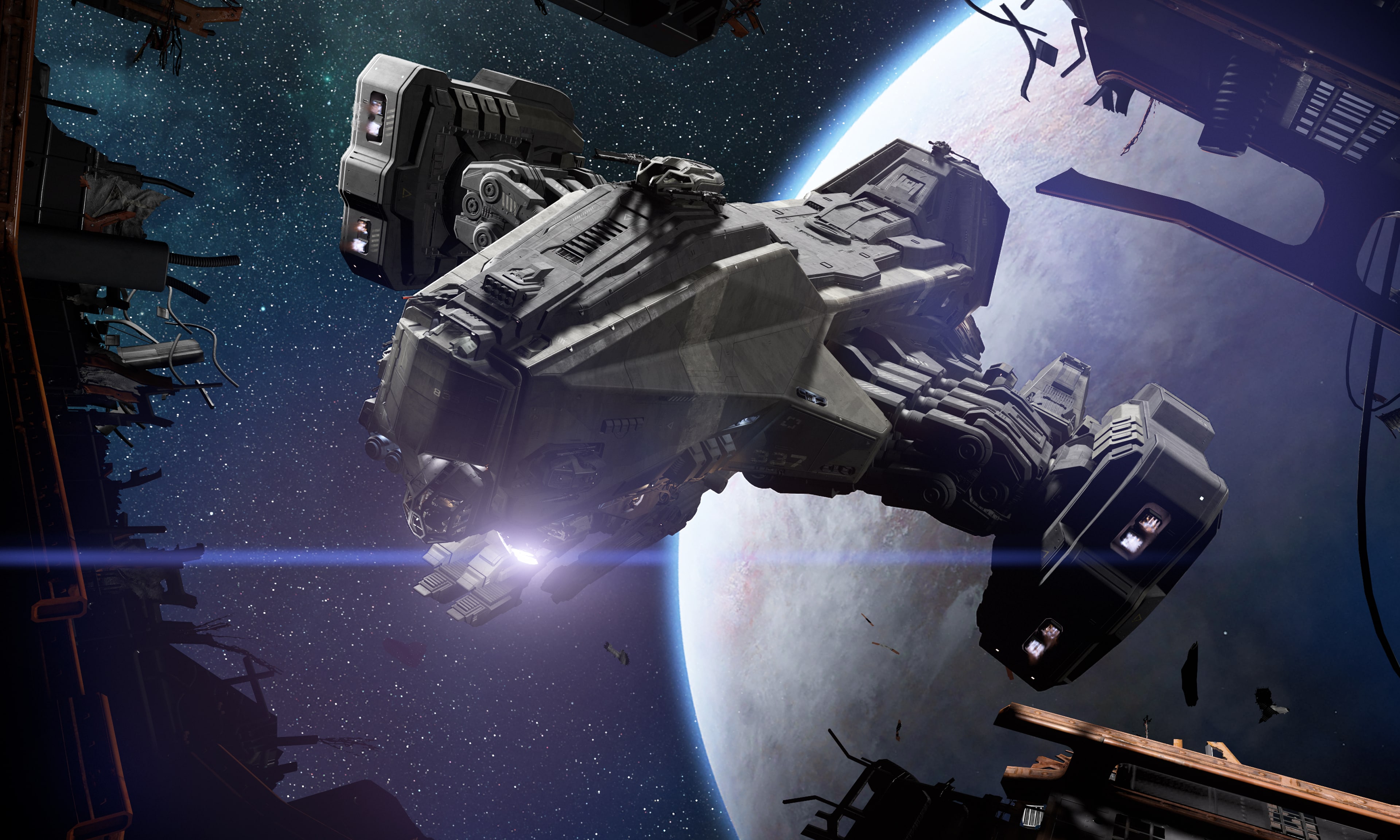
The Phoenix is a variant of the standard Constellation platform developed as Roberts Space Industries’ first luxury-market spacecraft. When the development of the Phoenix variant was first announced in 2935, it seemed to be an unusual direction for Roberts Space Industries, a company that had made its name offering affordable spacecraft “to the people”. The Phoenix’s origin story is appropriately unusual: the variant project began following the brief success of a Spectrum series called Spacecraft of the Elite. The series premiered in 2932 and showed off top tier luxury spacecraft owned by the rich and powerful, which spawned a ‘custom interior’ design trend for spacecraft. This led to the creation of numerous luxury brands dedicated to enhancing more common spacecraft designs. It also landed at exactly the time Roberts Space Industries’ Astro Development Team (ADT) was studying options for a fourth production variant of the time-tested Constellation.
The development team (led by longtime RSI designer Jules Parliegh), began by taking a stock 2934 model year Constellation Mark III chassis and outfitting it with new interior supports. The final prototype seems unrecognizable when compared to what would ultimately become the first Phoenix, but this test was focused solely on under-the-deck modifications that would go on to support the eventual overhaul. The major challenge at this point wasn’t so much the luxury styling as it was adapting and reworking the ship’s design to support a wider variety of changes. Incorporating the hot tub, later made famous by the variant’s marketing campaign, required a major revision of the stock plumbing and waste disposal systems. The makeshift prototype was also outfitted with improved shields and privacy systems in the expectation that a luxury spacecraft would likely need such protections to stand out in its much more specific role.
BUILDING PARTNERSHIPS
With a prototype in hand, Roberts Space Industries turned to another major challenge: how to redefine their workman-like multi-crew vehicle as a luxury object that would appeal to those who would traditionally choose an Origin design. Their solution was as much marketing as design. To make the Phoenix work, the ADT understood that they needed to partner with long-standing luxury brands instead of simply presenting their vision as the ultimate in high-class space travel. To that end, the company brought in a roster of household names known for producing the best of the best:
Designer Emil Quast, best known for his decadent design of Terra’s ‘Flowhaus’ public assembly building was brought in to design the Phoenix’s luxury interior. ADT designers had initially constructed their own concept plan featuring plush leather furniture and extreme soft lighting. Quast threw out the existing designs, refusing to even look beyond the first page of the plan and instead created the first iteration of the elegant cabin the Phoenix is known for today.
The Wintle Design Company, most familiar for offering high-end luxury craft goods, was given the task of equipping the master suite and the first version of the hot tub. Wintle spent 18 months researching the creation of what they called a ‘complete sleep system’ to replace the standard Constellation fixtures, aimed at adding every comfort possible to the typically utilitarian process of sleeping starside.
Kruger Intergalactic was brought back to create an updated version of the P-52 Merlin bundled with standard-model Constellations. Their team developed the high-performance P-72 Archimedes to replace the Merlin, although tooling delays caused initial production Phoenixes to ship with a Merlin instead. While the Merlin was purchased under license, RSI opted to buy exclusive rights to the Archimedes in order to prevent its use by other manufacturers.
Atuvo, creators of the Foodsparce System, provided a licensed reworking of their signature Atuvo state table and kitchen system. Atuvo’s engineers spent months refactoring their existing food technologies to fit into the small area allowed on the Phoenix due to a contractual obligation to make sure the resources available aboard the Phoenix were identical to those found in the finest kitchens. One partnership did not work out as intended: luxury vehicle builder Kremner Ltd. was charged with developing a replacement for the RSI Ursa Rover. Kremner Ltd. declared bankruptcy in the middle of the development process, forcing the team to scramble to find a replacement. RSI’s own vehicle team ultimately developed the Lynx Rover variant specifically for the Phoenix.
To make the first production prototype possible, RSI gathered all the involved licensees (over one hundred in total) at their development facility on Earth. Representatives from each company were incorporated into the ADT process for the remainder of the Phoenix’s development cycle, allowing them visibility over not just their area of the ship’s design, but to provide feedback on everything else being built. The prototype construction stage took roughly two years and concluded with space trials for a unique variant of the then-current Constellation Mark III. The Mark III Constellation had fewer hull changes for variants than the Mark IV, allowing more custom experimentation during the prototype phase.
The Phoenix development team was also given unprecedented access to the work of the much larger Constellation Mark IV team, with the expectation that the variant would premiere as part of the launch planned for 2942. Delays relating to the Mark IV rework moved the launch to 2944, giving the Phoenix team an opportunity to soft launch the design. Starting in 2941, Roberts Space Industries’ representatives were allowed to offer interested parties Mark III conversions that introduced the Phoenix concept. The Mark IIIs were upgraded to Phoenix status in the lab at Valatie using factory-fresh base Constellations. Only a handful of conversions were constructed, with most purchased by RSI’s trusted partner corporations for executive operations.
Production of the Phoenix variant of the Constellation Mark IV began in earnest in June 2944 alongside a media blitz intended to remind buyers of Roberts Space Industries’ prestigious history. The company produced advertisements featuring their original model Quantum Drive and sponsored multiple documentaries focusing on humankind’s early interstellar expansion. All production model Phoenixes are constructed to base specifications alongside the other model Constellations at RSI’s Albany plant and then ferried to a special facility at Luna for the installation of their interiors and other unique features.
The first Constellation Phoenix sold went to rock star Ellroy Cass. The ship was commissioned by the then-head of RSI Outreach, Thar Obson, and personally delivered to Cass. Orders for corporate executive fleets and private citizens seeking a luxury experience came in quickly, selling out the first year’s production allotment of Phoenixes in a matter of days.
A single ‘centennial’ Constellation Phoenix has been constructed in honor of a 2946 production milestone for the entire Constellation range. This unique Phoenix features a metallic gold livery and an interior exhaustingly detailed in 24 karat gold. This Phoenix was not offered for sale and the only example remains owned by Roberts Space Industries, who have occasionally used it for trade shows and other marketing pushes.
In 2948, Roberts Space Industries premiered a variant-of-a-variant, the Constellation Phoenix Emerald, as competition with Origin’s new model of 600 series spacecraft became more serious. The Emerald featured a ‘lucky’ green paint scheme and a variant interior cabin design. Emeralds were produced in extremely limited numbers and have not become part of the normal production process. Market analysts believe that Roberts Space Industries is happy with the positioning of the Phoenix despite increased competition from Origin and others. Less than one percent of Constellation fuselages become Phoenixes, and although the model generates between five and seven percent of the total profits for the line depending on year, it is expected that the company will continue to produce Phoenixes for the foreseeable future.
Constellation Phoenix
DEVELOPMENT HISTORY
The Phoenix is a variant of the standard Constellation platform developed as Roberts Space Industries’ first luxury-market spacecraft. When the development of the Phoenix variant was first announced in 2935, it seemed to be an unusual direction for Roberts Space Industries, a company that had made its name offering affordable spacecraft “to the people”. The Phoenix’s origin story is appropriately unusual: the variant project began following the brief success of a Spectrum series called Spacecraft of the Elite. The series premiered in 2932 and showed off top tier luxury spacecraft owned by the rich and powerful, which spawned a ‘custom interior’ design trend for spacecraft. This led to the creation of numerous luxury brands dedicated to enhancing more common spacecraft designs. It also landed at exactly the time Roberts Space Industries’ Astro Development Team (ADT) was studying options for a fourth production variant of the time-tested Constellation.
The development team (led by longtime RSI designer Jules Parliegh), began by taking a stock 2934 model year Constellation Mark III chassis and outfitting it with new interior supports. The final prototype seems unrecognizable when compared to what would ultimately become the first Phoenix, but this test was focused solely on under-the-deck modifications that would go on to support the eventual overhaul. The major challenge at this point wasn’t so much the luxury styling as it was adapting and reworking the ship’s design to support a wider variety of changes. Incorporating the hot tub, later made famous by the variant’s marketing campaign, required a major revision of the stock plumbing and waste disposal systems. The makeshift prototype was also outfitted with improved shields and privacy systems in the expectation that a luxury spacecraft would likely need such protections to stand out in its much more specific role.
BUILDING PARTNERSHIPS
With a prototype in hand, Roberts Space Industries turned to another major challenge: how to redefine their workman-like multi-crew vehicle as a luxury object that would appeal to those who would traditionally choose an Origin design. Their solution was as much marketing as design. To make the Phoenix work, the ADT understood that they needed to partner with long-standing luxury brands instead of simply presenting their vision as the ultimate in high-class space travel. To that end, the company brought in a roster of household names known for producing the best of the best:
Designer Emil Quast, best known for his decadent design of Terra’s ‘Flowhaus’ public assembly building was brought in to design the Phoenix’s luxury interior. ADT designers had initially constructed their own concept plan featuring plush leather furniture and extreme soft lighting. Quast threw out the existing designs, refusing to even look beyond the first page of the plan and instead created the first iteration of the elegant cabin the Phoenix is known for today.
The Wintle Design Company, most familiar for offering high-end luxury craft goods, was given the task of equipping the master suite and the first version of the hot tub. Wintle spent 18 months researching the creation of what they called a ‘complete sleep system’ to replace the standard Constellation fixtures, aimed at adding every comfort possible to the typically utilitarian process of sleeping starside.
Kruger Intergalactic was brought back to create an updated version of the P-52 Merlin bundled with standard-model Constellations. Their team developed the high-performance P-72 Archimedes to replace the Merlin, although tooling delays caused initial production Phoenixes to ship with a Merlin instead. While the Merlin was purchased under license, RSI opted to buy exclusive rights to the Archimedes in order to prevent its use by other manufacturers.
Atuvo, creators of the Foodsparce System, provided a licensed reworking of their signature Atuvo state table and kitchen system. Atuvo’s engineers spent months refactoring their existing food technologies to fit into the small area allowed on the Phoenix due to a contractual obligation to make sure the resources available aboard the Phoenix were identical to those found in the finest kitchens. One partnership did not work out as intended: luxury vehicle builder Kremner Ltd. was charged with developing a replacement for the RSI Ursa Rover. Kremner Ltd. declared bankruptcy in the middle of the development process, forcing the team to scramble to find a replacement. RSI’s own vehicle team ultimately developed the Lynx Rover variant specifically for the Phoenix.
To make the first production prototype possible, RSI gathered all the involved licensees (over one hundred in total) at their development facility on Earth. Representatives from each company were incorporated into the ADT process for the remainder of the Phoenix’s development cycle, allowing them visibility over not just their area of the ship’s design, but to provide feedback on everything else being built. The prototype construction stage took roughly two years and concluded with space trials for a unique variant of the then-current Constellation Mark III. The Mark III Constellation had fewer hull changes for variants than the Mark IV, allowing more custom experimentation during the prototype phase.
The Phoenix development team was also given unprecedented access to the work of the much larger Constellation Mark IV team, with the expectation that the variant would premiere as part of the launch planned for 2942. Delays relating to the Mark IV rework moved the launch to 2944, giving the Phoenix team an opportunity to soft launch the design. Starting in 2941, Roberts Space Industries’ representatives were allowed to offer interested parties Mark III conversions that introduced the Phoenix concept. The Mark IIIs were upgraded to Phoenix status in the lab at Valatie using factory-fresh base Constellations. Only a handful of conversions were constructed, with most purchased by RSI’s trusted partner corporations for executive operations.
Production of the Phoenix variant of the Constellation Mark IV began in earnest in June 2944 alongside a media blitz intended to remind buyers of Roberts Space Industries’ prestigious history. The company produced advertisements featuring their original model Quantum Drive and sponsored multiple documentaries focusing on humankind’s early interstellar expansion. All production model Phoenixes are constructed to base specifications alongside the other model Constellations at RSI’s Albany plant and then ferried to a special facility at Luna for the installation of their interiors and other unique features.
The first Constellation Phoenix sold went to rock star Ellroy Cass. The ship was commissioned by the then-head of RSI Outreach, Thar Obson, and personally delivered to Cass. Orders for corporate executive fleets and private citizens seeking a luxury experience came in quickly, selling out the first year’s production allotment of Phoenixes in a matter of days.
A single ‘centennial’ Constellation Phoenix has been constructed in honor of a 2946 production milestone for the entire Constellation range. This unique Phoenix features a metallic gold livery and an interior exhaustingly detailed in 24 karat gold. This Phoenix was not offered for sale and the only example remains owned by Roberts Space Industries, who have occasionally used it for trade shows and other marketing pushes.
In 2948, Roberts Space Industries premiered a variant-of-a-variant, the Constellation Phoenix Emerald, as competition with Origin’s new model of 600 series spacecraft became more serious. The Emerald featured a ‘lucky’ green paint scheme and a variant interior cabin design. Emeralds were produced in extremely limited numbers and have not become part of the normal production process. Market analysts believe that Roberts Space Industries is happy with the positioning of the Phoenix despite increased competition from Origin and others. Less than one percent of Constellation fuselages become Phoenixes, and although the model generates between five and seven percent of the total profits for the line depending on year, it is expected that the company will continue to produce Phoenixes for the foreseeable future.
Dieser Artikel erschien ursprünglich in Jump Point 6.10.
Konstellation Phoenix
ENTWICKLUNGSGESCHICHTE
Die Phoenix ist eine Variante der Standard-Constellation-Plattform, die als erstes Raumschiff von Roberts Space Industries für den Luxusmarkt entwickelt wurde. Als die Entwicklung der Phoenix-Variante im Jahr 2935 zum ersten Mal angekündigt wurde, schien dies eine ungewöhnliche Richtung für Roberts Space Industries zu sein, ein Unternehmen, das sich einen Namen damit gemacht hatte, erschwingliche Raumfahrzeuge "für das Volk" anzubieten. Die Entstehungsgeschichte des Phoenix ist dementsprechend ungewöhnlich: Das Variantenprojekt begann nach dem kurzen Erfolg einer Spectrum-Serie namens Spacecraft of the Elite. Die Serie wurde 2932 erstmals ausgestrahlt und zeigte luxuriöse Raumschiffe der Reichen und Mächtigen, was einen Trend zur individuellen Gestaltung von Raumschiffen auslöste. Dies führte zur Gründung zahlreicher Luxusmarken, die sich der Aufwertung gewöhnlicher Raumschiffdesigns widmeten. Außerdem landete sie genau zu dem Zeitpunkt, als das Astro Development Team (ADT) von Roberts Space Industries Optionen für eine vierte Produktionsvariante der bewährten Constellation prüfte.
Das Entwicklungsteam (unter der Leitung des langjährigen RSI-Konstrukteurs Jules Parliegh) begann damit, ein Constellation Mark III-Chassis aus dem Modelljahr 2934 zu nehmen und es mit neuen Innenausstattungen auszustatten. Der endgültige Prototyp ist nicht wiederzuerkennen, wenn man ihn mit dem ersten Phoenix vergleicht, aber dieser Test konzentrierte sich ausschließlich auf die Modifikationen unter dem Deck, die die spätere Überholung unterstützen sollten. Die größte Herausforderung zu diesem Zeitpunkt war nicht so sehr das luxuriöse Styling, sondern die Anpassung und Überarbeitung des Schiffsdesigns, um eine größere Anzahl von Änderungen zu ermöglichen. Der Einbau des Whirlpools, der später durch die Marketingkampagne der Variante berühmt wurde, erforderte eine umfassende Überarbeitung der vorhandenen Sanitär- und Abwassersysteme. Der behelfsmäßige Prototyp wurde außerdem mit verbesserten Schutzschilden und Sichtschutzsystemen ausgestattet, da man davon ausging, dass ein Luxusraumschiff solche Schutzvorrichtungen benötigen würde, um sich in seiner viel spezielleren Rolle abzuheben.
AUFBAU VON PARTNERSCHAFTEN
Mit dem Prototyp in der Hand wandte sich Roberts Space Industries einer weiteren großen Herausforderung zu: Wie konnte man das arbeiterähnliche Fahrzeug mit mehreren Besatzungsmitgliedern als Luxusobjekt neu definieren, das auch diejenigen anspricht, die sich traditionell für ein Origin-Design entscheiden würden? Ihre Lösung war sowohl Marketing als auch Design. Um den Phoenix zum Erfolg zu führen, verstand ADT, dass sie mit langjährigen Luxusmarken zusammenarbeiten mussten, anstatt ihre Vision einfach als das Nonplusultra der hochklassigen Raumfahrt zu präsentieren. Zu diesem Zweck holte das Unternehmen eine Reihe bekannter Namen ins Boot, die für die Herstellung der Besten der Besten bekannt sind:
Der Designer Emil Quast, der für sein dekadentes Design des öffentlichen Versammlungsgebäudes "Flowhaus" auf Terra bekannt ist, wurde mit der Gestaltung der luxuriösen Innenausstattung des Phoenix beauftragt. Die ADT-Designer hatten zunächst ein eigenes Konzept mit plüschigen Ledermöbeln und extrem weicher Beleuchtung entworfen. Quast verwarf die bestehenden Entwürfe und weigerte sich, über die erste Seite des Plans hinauszuschauen. Stattdessen schuf er die erste Version der eleganten Kabine, für die der Phoenix heute bekannt ist.
Das Unternehmen Wintle Design Company, das vor allem für seine hochwertigen Luxusprodukte bekannt ist, erhielt den Auftrag, die Master-Suite und die erste Version des Whirlpools auszustatten. Wintle verbrachte 18 Monate damit, ein so genanntes "komplettes Schlafsystem" zu entwickeln, das die Standardausstattung der Constellation ersetzen sollte, um den typisch utilitaristischen Prozess des Schlafens am Sternenhimmel um jeden erdenklichen Komfort zu erweitern.
Kruger Intergalactic wurde hinzugezogen, um eine aktualisierte Version des P52 Merlin in Verbindung mit den Standard-Constellations zu entwickeln. Ihr Team entwickelte den leistungsstarken P72 Archimedes, der den Merlin ersetzen sollte, obwohl Verzögerungen bei der Werkzeugherstellung dazu führten, dass die ersten Phoenixe mit einem Merlin ausgeliefert wurden. Während der Merlin in Lizenz gekauft wurde, entschied sich RSI, die Exklusivrechte für den Archimedes zu erwerben, um zu verhindern, dass er von anderen Herstellern verwendet wird.
Atuvo, der Erfinder des Foodsparce-Systems, stellte eine lizenzierte Überarbeitung seines charakteristischen Atuvo-Tischs und -Küchensystems zur Verfügung. Die Ingenieure von Atuvo verbrachten Monate damit, ihre bestehenden Lebensmitteltechnologien so umzugestalten, dass sie in den kleinen Raum auf der Phoenix passten, da sie vertraglich verpflichtet waren, dafür zu sorgen, dass die an Bord der Phoenix verfügbaren Ressourcen mit denen in den besten Küchen identisch waren. Eine Partnerschaft funktionierte nicht wie geplant: Der Hersteller von Luxusfahrzeugen Kremner Ltd. wurde damit beauftragt, einen Ersatz für den RSI Ursa Rover zu entwickeln. Mitten im Entwicklungsprozess meldete Kremner Ltd. Konkurs an und zwang das Team, nach einem Ersatz zu suchen. RSIs eigenes Fahrzeugteam entwickelte schließlich die Rover-Variante Lynx speziell für den Phoenix.
Um den ersten Prototyp für die Produktion zu entwickeln, versammelte RSI alle beteiligten Lizenznehmer (insgesamt über hundert) in seiner Entwicklungseinrichtung auf der Erde. Vertreter/innen jedes Unternehmens wurden für den Rest des Phoenix-Entwicklungszyklus in den ADT-Prozess eingebunden, so dass sie nicht nur Einblick in ihren Bereich der Schiffskonstruktion hatten, sondern auch Feedback zu allen anderen Bauteilen geben konnten. Die Bauphase des Prototyps dauerte etwa zwei Jahre und endete mit Weltraumtests für eine einzigartige Variante der damals aktuellen Constellation Mark III. Bei der Constellation Mark III gab es weniger Änderungen am Rumpf als bei der Mark IV, sodass in der Prototypenphase mehr individuelle Experimente möglich waren.
Das Phoenix-Entwicklungsteam erhielt außerdem einen noch nie dagewesenen Zugang zu den Arbeiten des viel größeren Constellation Mark IV-Teams, in der Erwartung, dass die Variante im Rahmen des für 2942 geplanten Starts Premiere haben würde. Durch Verzögerungen bei der Überarbeitung von Mark IV wurde der Start auf 2944 verschoben, was dem Phoenix-Team die Möglichkeit gab, das Design vorzustellen. Ab 2941 durften die Vertreter von Roberts Space Industries interessierten Parteien Mark III-Umbauten anbieten, mit denen das Phoenix-Konzept eingeführt wurde. Die Mark IIIs wurden im Labor in Valatie mit fabrikneuen Basis-Constellations auf den Phoenix-Status aufgerüstet. Es wurde nur eine Handvoll Umbauten gebaut, die meisten wurden von RSIs vertrauenswürdigen Partnerunternehmen für den Betrieb gekauft.
Die Produktion der Phoenix-Variante der Constellation Mark IV begann im Juni 2944 zusammen mit einer Medienkampagne, die die Käufer an die prestigeträchtige Geschichte von Roberts Space Industries erinnern sollte. Das Unternehmen produzierte Werbespots mit dem Originalmodell des Quantum Drive und sponserte mehrere Dokumentarfilme über die frühe interstellare Expansion der Menschheit. Alle Serienmodelle der Phoenixe werden zusammen mit den anderen Constellations-Modellen in der RSI-Fabrik in Albany nach den Basisspezifikationen gebaut und dann zu einer speziellen Einrichtung auf Luna transportiert, wo die Innenausstattung und andere einzigartige Merkmale eingebaut werden.
Die erste verkaufte Constellation Phoenix ging an den Rockstar Ellroy Cass. Das Schiff wurde vom damaligen Leiter von RSI Outreach, Thar Obson, in Auftrag gegeben und persönlich an Cass übergeben. Die Bestellungen für Unternehmensflotten und Privatpersonen, die ein luxuriöses Erlebnis suchten, gingen schnell ein, so dass das erste Produktionskontingent an Phoenixen innerhalb weniger Tage ausverkauft war.
Ein einziger "hundertjähriger" Constellation Phoenix wurde zu Ehren des Produktionsmeilensteins 2946 für die gesamte Constellation-Reihe gebaut. Dieser einzigartige Phoenix hat eine goldene Metallic-Lackierung und eine Innenausstattung, die mit 24 Karat Gold verziert ist. Dieser Phoenix wurde nicht zum Verkauf angeboten und ist das einzige Exemplar im Besitz von Roberts Space Industries, die ihn gelegentlich für Messen und andere Marketingaktionen nutzen.
Im Jahr 2948 stellte Roberts Space Industries eine weitere Variante vor, die Constellation Phoenix Emerald, als der Wettbewerb mit Origins neuem Modell der 600er Serie immer ernster wurde. Die Emerald hatte eine "glücksgrüne" Lackierung und ein anderes Kabinendesign. Die Smaragde wurden in extrem begrenzter Stückzahl produziert und sind nicht Teil des normalen Produktionsprozesses. Marktanalysten glauben, dass Roberts Space Industries mit der Positionierung des Phoenix trotz der verstärkten Konkurrenz durch Origin und andere zufrieden ist. Weniger als ein Prozent der Constellation-Rümpfe werden zu Phoenixes, und obwohl das Modell je nach Jahr zwischen fünf und sieben Prozent des Gesamtgewinns der Produktlinie erwirtschaftet, wird erwartet, dass das Unternehmen in absehbarer Zeit weiterhin Phoenixes produzieren wird.
Konstellation Phoenix
ENTWICKLUNGSGESCHICHTE
Die Phoenix ist eine Variante der Standard-Constellation-Plattform, die als erstes Raumschiff von Roberts Space Industries für den Luxusmarkt entwickelt wurde. Als die Entwicklung der Phoenix-Variante im Jahr 2935 zum ersten Mal angekündigt wurde, schien dies eine ungewöhnliche Richtung für Roberts Space Industries zu sein, ein Unternehmen, das sich einen Namen damit gemacht hatte, erschwingliche Raumfahrzeuge "für das Volk" anzubieten. Die Entstehungsgeschichte des Phoenix ist dementsprechend ungewöhnlich: Das Variantenprojekt begann nach dem kurzen Erfolg einer Spectrum-Serie namens Spacecraft of the Elite. Die Serie wurde 2932 erstmals ausgestrahlt und zeigte luxuriöse Raumschiffe der Reichen und Mächtigen, was einen Trend zur individuellen Gestaltung von Raumschiffen auslöste. Dies führte zur Gründung zahlreicher Luxusmarken, die sich der Aufwertung gewöhnlicher Raumschiffdesigns widmeten. Außerdem landete sie genau zu dem Zeitpunkt, als das Astro Development Team (ADT) von Roberts Space Industries Optionen für eine vierte Produktionsvariante der bewährten Constellation prüfte.
Das Entwicklungsteam (unter der Leitung des langjährigen RSI-Konstrukteurs Jules Parliegh) begann damit, ein Constellation Mark III-Chassis aus dem Modelljahr 2934 zu nehmen und es mit neuen Innenausstattungen auszustatten. Der endgültige Prototyp ist nicht wiederzuerkennen, wenn man ihn mit dem ersten Phoenix vergleicht, aber dieser Test konzentrierte sich ausschließlich auf die Modifikationen unter dem Deck, die die spätere Überholung unterstützen sollten. Die größte Herausforderung zu diesem Zeitpunkt war nicht so sehr das luxuriöse Styling, sondern die Anpassung und Überarbeitung des Schiffsdesigns, um eine größere Anzahl von Änderungen zu ermöglichen. Der Einbau des Whirlpools, der später durch die Marketingkampagne der Variante berühmt wurde, erforderte eine umfassende Überarbeitung der vorhandenen Sanitär- und Abwassersysteme. Der behelfsmäßige Prototyp wurde außerdem mit verbesserten Schutzschilden und Sichtschutzsystemen ausgestattet, da man davon ausging, dass ein Luxusraumschiff solche Schutzvorrichtungen benötigen würde, um sich in seiner viel spezielleren Rolle abzuheben.
AUFBAU VON PARTNERSCHAFTEN
Mit dem Prototyp in der Hand wandte sich Roberts Space Industries einer weiteren großen Herausforderung zu: Wie konnte man das arbeiterähnliche Fahrzeug mit mehreren Besatzungsmitgliedern als Luxusobjekt neu definieren, das auch diejenigen anspricht, die sich traditionell für ein Origin-Design entscheiden würden? Ihre Lösung war sowohl Marketing als auch Design. Um den Phoenix zum Erfolg zu führen, verstand ADT, dass sie mit langjährigen Luxusmarken zusammenarbeiten mussten, anstatt ihre Vision einfach als das Nonplusultra der hochklassigen Raumfahrt zu präsentieren. Zu diesem Zweck holte das Unternehmen eine Reihe bekannter Namen ins Boot, die für die Herstellung der Besten der Besten bekannt sind:
Der Designer Emil Quast, der für sein dekadentes Design des öffentlichen Versammlungsgebäudes "Flowhaus" auf Terra bekannt ist, wurde mit der Gestaltung der luxuriösen Innenausstattung des Phoenix beauftragt. Die ADT-Designer hatten zunächst ein eigenes Konzept mit plüschigen Ledermöbeln und extrem weicher Beleuchtung entworfen. Quast verwarf die bestehenden Entwürfe und weigerte sich, über die erste Seite des Plans hinauszuschauen. Stattdessen schuf er die erste Version der eleganten Kabine, für die der Phoenix heute bekannt ist.
Das Unternehmen Wintle Design Company, das vor allem für seine hochwertigen Luxusprodukte bekannt ist, erhielt den Auftrag, die Master-Suite und die erste Version des Whirlpools auszustatten. Wintle verbrachte 18 Monate damit, ein so genanntes "komplettes Schlafsystem" zu entwickeln, das die Standardausstattung der Constellation ersetzen sollte, um den typisch utilitaristischen Prozess des Schlafens am Sternenhimmel um jeden erdenklichen Komfort zu erweitern.
Kruger Intergalactic wurde hinzugezogen, um eine aktualisierte Version des P52 Merlin in Verbindung mit den Standard-Constellations zu entwickeln. Ihr Team entwickelte den leistungsstarken P72 Archimedes, der den Merlin ersetzen sollte, obwohl Verzögerungen bei der Werkzeugherstellung dazu führten, dass die ersten Phoenixe mit einem Merlin ausgeliefert wurden. Während der Merlin in Lizenz gekauft wurde, entschied sich RSI, die Exklusivrechte für den Archimedes zu erwerben, um zu verhindern, dass er von anderen Herstellern verwendet wird.
Atuvo, der Erfinder des Foodsparce-Systems, stellte eine lizenzierte Überarbeitung seines charakteristischen Atuvo-Tischs und -Küchensystems zur Verfügung. Die Ingenieure von Atuvo verbrachten Monate damit, ihre bestehenden Lebensmitteltechnologien so umzugestalten, dass sie in den kleinen Raum auf der Phoenix passten, da sie vertraglich verpflichtet waren, dafür zu sorgen, dass die an Bord der Phoenix verfügbaren Ressourcen mit denen in den besten Küchen identisch waren. Eine Partnerschaft funktionierte nicht wie geplant: Der Hersteller von Luxusfahrzeugen Kremner Ltd. wurde damit beauftragt, einen Ersatz für den RSI Ursa Rover zu entwickeln. Mitten im Entwicklungsprozess meldete Kremner Ltd. Konkurs an und zwang das Team, nach einem Ersatz zu suchen. RSIs eigenes Fahrzeugteam entwickelte schließlich die Rover-Variante Lynx speziell für den Phoenix.
Um den ersten Prototyp für die Produktion zu entwickeln, versammelte RSI alle beteiligten Lizenznehmer (insgesamt über hundert) in seiner Entwicklungseinrichtung auf der Erde. Vertreter/innen jedes Unternehmens wurden für den Rest des Phoenix-Entwicklungszyklus in den ADT-Prozess eingebunden, so dass sie nicht nur Einblick in ihren Bereich der Schiffskonstruktion hatten, sondern auch Feedback zu allen anderen Bauteilen geben konnten. Die Bauphase des Prototyps dauerte etwa zwei Jahre und endete mit Weltraumtests für eine einzigartige Variante der damals aktuellen Constellation Mark III. Bei der Constellation Mark III gab es weniger Änderungen am Rumpf als bei der Mark IV, sodass in der Prototypenphase mehr individuelle Experimente möglich waren.
Das Phoenix-Entwicklungsteam erhielt außerdem einen noch nie dagewesenen Zugang zu den Arbeiten des viel größeren Constellation Mark IV-Teams, in der Erwartung, dass die Variante im Rahmen des für 2942 geplanten Starts Premiere haben würde. Durch Verzögerungen bei der Überarbeitung von Mark IV wurde der Start auf 2944 verschoben, was dem Phoenix-Team die Möglichkeit gab, das Design vorzustellen. Ab 2941 durften die Vertreter von Roberts Space Industries interessierten Parteien Mark III-Umbauten anbieten, mit denen das Phoenix-Konzept eingeführt wurde. Die Mark IIIs wurden im Labor in Valatie mit fabrikneuen Basis-Constellations auf den Phoenix-Status aufgerüstet. Es wurde nur eine Handvoll Umbauten gebaut, die meisten wurden von RSIs vertrauenswürdigen Partnerunternehmen für den Betrieb gekauft.
Die Produktion der Phoenix-Variante der Constellation Mark IV begann im Juni 2944 zusammen mit einer Medienkampagne, die die Käufer an die prestigeträchtige Geschichte von Roberts Space Industries erinnern sollte. Das Unternehmen produzierte Werbespots mit dem Originalmodell des Quantum Drive und sponserte mehrere Dokumentarfilme über die frühe interstellare Expansion der Menschheit. Alle Serienmodelle der Phoenixe werden zusammen mit den anderen Constellations-Modellen in der RSI-Fabrik in Albany nach den Basisspezifikationen gebaut und dann zu einer speziellen Einrichtung auf Luna transportiert, wo die Innenausstattung und andere einzigartige Merkmale eingebaut werden.
Die erste verkaufte Constellation Phoenix ging an den Rockstar Ellroy Cass. Das Schiff wurde vom damaligen Leiter von RSI Outreach, Thar Obson, in Auftrag gegeben und persönlich an Cass übergeben. Die Bestellungen für Unternehmensflotten und Privatpersonen, die ein luxuriöses Erlebnis suchten, gingen schnell ein, so dass das erste Produktionskontingent an Phoenixen innerhalb weniger Tage ausverkauft war.
Ein einziger "hundertjähriger" Constellation Phoenix wurde zu Ehren des Produktionsmeilensteins 2946 für die gesamte Constellation-Reihe gebaut. Dieser einzigartige Phoenix hat eine goldene Metallic-Lackierung und eine Innenausstattung, die mit 24 Karat Gold verziert ist. Dieser Phoenix wurde nicht zum Verkauf angeboten und ist das einzige Exemplar im Besitz von Roberts Space Industries, die ihn gelegentlich für Messen und andere Marketingaktionen nutzen.
Im Jahr 2948 stellte Roberts Space Industries eine weitere Variante vor, die Constellation Phoenix Emerald, als der Wettbewerb mit Origins neuem Modell der 600er Serie immer ernster wurde. Die Emerald hatte eine "glücksgrüne" Lackierung und ein anderes Kabinendesign. Die Smaragde wurden in extrem begrenzter Stückzahl produziert und sind nicht Teil des normalen Produktionsprozesses. Marktanalysten glauben, dass Roberts Space Industries mit der Positionierung des Phoenix trotz der verstärkten Konkurrenz durch Origin und andere zufrieden ist. Weniger als ein Prozent der Constellation-Rümpfe werden zu Phoenixes, und obwohl das Modell je nach Jahr zwischen fünf und sieben Prozent des Gesamtgewinns der Produktlinie erwirtschaftet, wird erwartet, dass das Unternehmen in absehbarer Zeit weiterhin Phoenixes produzieren wird.
This article originally appeared in Jump Point 6.10.
Constellation Phoenix
DEVELOPMENT HISTORY
The Phoenix is a variant of the standard Constellation platform developed as Roberts Space Industries’ first luxury-market spacecraft. When the development of the Phoenix variant was first announced in 2935, it seemed to be an unusual direction for Roberts Space Industries, a company that had made its name offering affordable spacecraft “to the people”. The Phoenix’s origin story is appropriately unusual: the variant project began following the brief success of a Spectrum series called Spacecraft of the Elite. The series premiered in 2932 and showed off top tier luxury spacecraft owned by the rich and powerful, which spawned a ‘custom interior’ design trend for spacecraft. This led to the creation of numerous luxury brands dedicated to enhancing more common spacecraft designs. It also landed at exactly the time Roberts Space Industries’ Astro Development Team (ADT) was studying options for a fourth production variant of the time-tested Constellation.
The development team (led by longtime RSI designer Jules Parliegh), began by taking a stock 2934 model year Constellation Mark III chassis and outfitting it with new interior supports. The final prototype seems unrecognizable when compared to what would ultimately become the first Phoenix, but this test was focused solely on under-the-deck modifications that would go on to support the eventual overhaul. The major challenge at this point wasn’t so much the luxury styling as it was adapting and reworking the ship’s design to support a wider variety of changes. Incorporating the hot tub, later made famous by the variant’s marketing campaign, required a major revision of the stock plumbing and waste disposal systems. The makeshift prototype was also outfitted with improved shields and privacy systems in the expectation that a luxury spacecraft would likely need such protections to stand out in its much more specific role.
BUILDING PARTNERSHIPS
With a prototype in hand, Roberts Space Industries turned to another major challenge: how to redefine their workman-like multi-crew vehicle as a luxury object that would appeal to those who would traditionally choose an Origin design. Their solution was as much marketing as design. To make the Phoenix work, the ADT understood that they needed to partner with long-standing luxury brands instead of simply presenting their vision as the ultimate in high-class space travel. To that end, the company brought in a roster of household names known for producing the best of the best:
Designer Emil Quast, best known for his decadent design of Terra’s ‘Flowhaus’ public assembly building was brought in to design the Phoenix’s luxury interior. ADT designers had initially constructed their own concept plan featuring plush leather furniture and extreme soft lighting. Quast threw out the existing designs, refusing to even look beyond the first page of the plan and instead created the first iteration of the elegant cabin the Phoenix is known for today.
The Wintle Design Company, most familiar for offering high-end luxury craft goods, was given the task of equipping the master suite and the first version of the hot tub. Wintle spent 18 months researching the creation of what they called a ‘complete sleep system’ to replace the standard Constellation fixtures, aimed at adding every comfort possible to the typically utilitarian process of sleeping starside.
Kruger Intergalactic was brought back to create an updated version of the P-52 Merlin bundled with standard-model Constellations. Their team developed the high-performance P-72 Archimedes to replace the Merlin, although tooling delays caused initial production Phoenixes to ship with a Merlin instead. While the Merlin was purchased under license, RSI opted to buy exclusive rights to the Archimedes in order to prevent its use by other manufacturers.
Atuvo, creators of the Foodsparce System, provided a licensed reworking of their signature Atuvo state table and kitchen system. Atuvo’s engineers spent months refactoring their existing food technologies to fit into the small area allowed on the Phoenix due to a contractual obligation to make sure the resources available aboard the Phoenix were identical to those found in the finest kitchens. One partnership did not work out as intended: luxury vehicle builder Kremner Ltd. was charged with developing a replacement for the RSI Ursa Rover. Kremner Ltd. declared bankruptcy in the middle of the development process, forcing the team to scramble to find a replacement. RSI’s own vehicle team ultimately developed the Lynx Rover variant specifically for the Phoenix.
To make the first production prototype possible, RSI gathered all the involved licensees (over one hundred in total) at their development facility on Earth. Representatives from each company were incorporated into the ADT process for the remainder of the Phoenix’s development cycle, allowing them visibility over not just their area of the ship’s design, but to provide feedback on everything else being built. The prototype construction stage took roughly two years and concluded with space trials for a unique variant of the then-current Constellation Mark III. The Mark III Constellation had fewer hull changes for variants than the Mark IV, allowing more custom experimentation during the prototype phase.
The Phoenix development team was also given unprecedented access to the work of the much larger Constellation Mark IV team, with the expectation that the variant would premiere as part of the launch planned for 2942. Delays relating to the Mark IV rework moved the launch to 2944, giving the Phoenix team an opportunity to soft launch the design. Starting in 2941, Roberts Space Industries’ representatives were allowed to offer interested parties Mark III conversions that introduced the Phoenix concept. The Mark IIIs were upgraded to Phoenix status in the lab at Valatie using factory-fresh base Constellations. Only a handful of conversions were constructed, with most purchased by RSI’s trusted partner corporations for executive operations.
Production of the Phoenix variant of the Constellation Mark IV began in earnest in June 2944 alongside a media blitz intended to remind buyers of Roberts Space Industries’ prestigious history. The company produced advertisements featuring their original model Quantum Drive and sponsored multiple documentaries focusing on humankind’s early interstellar expansion. All production model Phoenixes are constructed to base specifications alongside the other model Constellations at RSI’s Albany plant and then ferried to a special facility at Luna for the installation of their interiors and other unique features.
The first Constellation Phoenix sold went to rock star Ellroy Cass. The ship was commissioned by the then-head of RSI Outreach, Thar Obson, and personally delivered to Cass. Orders for corporate executive fleets and private citizens seeking a luxury experience came in quickly, selling out the first year’s production allotment of Phoenixes in a matter of days.
A single ‘centennial’ Constellation Phoenix has been constructed in honor of a 2946 production milestone for the entire Constellation range. This unique Phoenix features a metallic gold livery and an interior exhaustingly detailed in 24 karat gold. This Phoenix was not offered for sale and the only example remains owned by Roberts Space Industries, who have occasionally used it for trade shows and other marketing pushes.
In 2948, Roberts Space Industries premiered a variant-of-a-variant, the Constellation Phoenix Emerald, as competition with Origin’s new model of 600 series spacecraft became more serious. The Emerald featured a ‘lucky’ green paint scheme and a variant interior cabin design. Emeralds were produced in extremely limited numbers and have not become part of the normal production process. Market analysts believe that Roberts Space Industries is happy with the positioning of the Phoenix despite increased competition from Origin and others. Less than one percent of Constellation fuselages become Phoenixes, and although the model generates between five and seven percent of the total profits for the line depending on year, it is expected that the company will continue to produce Phoenixes for the foreseeable future.
Constellation Phoenix
DEVELOPMENT HISTORY
The Phoenix is a variant of the standard Constellation platform developed as Roberts Space Industries’ first luxury-market spacecraft. When the development of the Phoenix variant was first announced in 2935, it seemed to be an unusual direction for Roberts Space Industries, a company that had made its name offering affordable spacecraft “to the people”. The Phoenix’s origin story is appropriately unusual: the variant project began following the brief success of a Spectrum series called Spacecraft of the Elite. The series premiered in 2932 and showed off top tier luxury spacecraft owned by the rich and powerful, which spawned a ‘custom interior’ design trend for spacecraft. This led to the creation of numerous luxury brands dedicated to enhancing more common spacecraft designs. It also landed at exactly the time Roberts Space Industries’ Astro Development Team (ADT) was studying options for a fourth production variant of the time-tested Constellation.
The development team (led by longtime RSI designer Jules Parliegh), began by taking a stock 2934 model year Constellation Mark III chassis and outfitting it with new interior supports. The final prototype seems unrecognizable when compared to what would ultimately become the first Phoenix, but this test was focused solely on under-the-deck modifications that would go on to support the eventual overhaul. The major challenge at this point wasn’t so much the luxury styling as it was adapting and reworking the ship’s design to support a wider variety of changes. Incorporating the hot tub, later made famous by the variant’s marketing campaign, required a major revision of the stock plumbing and waste disposal systems. The makeshift prototype was also outfitted with improved shields and privacy systems in the expectation that a luxury spacecraft would likely need such protections to stand out in its much more specific role.
BUILDING PARTNERSHIPS
With a prototype in hand, Roberts Space Industries turned to another major challenge: how to redefine their workman-like multi-crew vehicle as a luxury object that would appeal to those who would traditionally choose an Origin design. Their solution was as much marketing as design. To make the Phoenix work, the ADT understood that they needed to partner with long-standing luxury brands instead of simply presenting their vision as the ultimate in high-class space travel. To that end, the company brought in a roster of household names known for producing the best of the best:
Designer Emil Quast, best known for his decadent design of Terra’s ‘Flowhaus’ public assembly building was brought in to design the Phoenix’s luxury interior. ADT designers had initially constructed their own concept plan featuring plush leather furniture and extreme soft lighting. Quast threw out the existing designs, refusing to even look beyond the first page of the plan and instead created the first iteration of the elegant cabin the Phoenix is known for today.
The Wintle Design Company, most familiar for offering high-end luxury craft goods, was given the task of equipping the master suite and the first version of the hot tub. Wintle spent 18 months researching the creation of what they called a ‘complete sleep system’ to replace the standard Constellation fixtures, aimed at adding every comfort possible to the typically utilitarian process of sleeping starside.
Kruger Intergalactic was brought back to create an updated version of the P-52 Merlin bundled with standard-model Constellations. Their team developed the high-performance P-72 Archimedes to replace the Merlin, although tooling delays caused initial production Phoenixes to ship with a Merlin instead. While the Merlin was purchased under license, RSI opted to buy exclusive rights to the Archimedes in order to prevent its use by other manufacturers.
Atuvo, creators of the Foodsparce System, provided a licensed reworking of their signature Atuvo state table and kitchen system. Atuvo’s engineers spent months refactoring their existing food technologies to fit into the small area allowed on the Phoenix due to a contractual obligation to make sure the resources available aboard the Phoenix were identical to those found in the finest kitchens. One partnership did not work out as intended: luxury vehicle builder Kremner Ltd. was charged with developing a replacement for the RSI Ursa Rover. Kremner Ltd. declared bankruptcy in the middle of the development process, forcing the team to scramble to find a replacement. RSI’s own vehicle team ultimately developed the Lynx Rover variant specifically for the Phoenix.
To make the first production prototype possible, RSI gathered all the involved licensees (over one hundred in total) at their development facility on Earth. Representatives from each company were incorporated into the ADT process for the remainder of the Phoenix’s development cycle, allowing them visibility over not just their area of the ship’s design, but to provide feedback on everything else being built. The prototype construction stage took roughly two years and concluded with space trials for a unique variant of the then-current Constellation Mark III. The Mark III Constellation had fewer hull changes for variants than the Mark IV, allowing more custom experimentation during the prototype phase.
The Phoenix development team was also given unprecedented access to the work of the much larger Constellation Mark IV team, with the expectation that the variant would premiere as part of the launch planned for 2942. Delays relating to the Mark IV rework moved the launch to 2944, giving the Phoenix team an opportunity to soft launch the design. Starting in 2941, Roberts Space Industries’ representatives were allowed to offer interested parties Mark III conversions that introduced the Phoenix concept. The Mark IIIs were upgraded to Phoenix status in the lab at Valatie using factory-fresh base Constellations. Only a handful of conversions were constructed, with most purchased by RSI’s trusted partner corporations for executive operations.
Production of the Phoenix variant of the Constellation Mark IV began in earnest in June 2944 alongside a media blitz intended to remind buyers of Roberts Space Industries’ prestigious history. The company produced advertisements featuring their original model Quantum Drive and sponsored multiple documentaries focusing on humankind’s early interstellar expansion. All production model Phoenixes are constructed to base specifications alongside the other model Constellations at RSI’s Albany plant and then ferried to a special facility at Luna for the installation of their interiors and other unique features.
The first Constellation Phoenix sold went to rock star Ellroy Cass. The ship was commissioned by the then-head of RSI Outreach, Thar Obson, and personally delivered to Cass. Orders for corporate executive fleets and private citizens seeking a luxury experience came in quickly, selling out the first year’s production allotment of Phoenixes in a matter of days.
A single ‘centennial’ Constellation Phoenix has been constructed in honor of a 2946 production milestone for the entire Constellation range. This unique Phoenix features a metallic gold livery and an interior exhaustingly detailed in 24 karat gold. This Phoenix was not offered for sale and the only example remains owned by Roberts Space Industries, who have occasionally used it for trade shows and other marketing pushes.
In 2948, Roberts Space Industries premiered a variant-of-a-variant, the Constellation Phoenix Emerald, as competition with Origin’s new model of 600 series spacecraft became more serious. The Emerald featured a ‘lucky’ green paint scheme and a variant interior cabin design. Emeralds were produced in extremely limited numbers and have not become part of the normal production process. Market analysts believe that Roberts Space Industries is happy with the positioning of the Phoenix despite increased competition from Origin and others. Less than one percent of Constellation fuselages become Phoenixes, and although the model generates between five and seven percent of the total profits for the line depending on year, it is expected that the company will continue to produce Phoenixes for the foreseeable future.
Links
No links available.


Metadata
- CIG ID
- 19406
- Channel
- Undefined
- Category
- Undefined
- Series
- News Update
- Comments
- 25
- Published
- 2 years ago (2023-08-08T21:00:00+00:00)