Star Citizen Monthly Report: September 2023
Transmission Undefined NoneContent
PU Monthly Report
September 2023
It’s an exciting time in and out of the ‘verse, with the upcoming launch of Alpha 3.21 and the return of an in-person CitizenCon on October 21-22. Check out September’s PU Report for the final tweaks to content you'll be experiencing very soon and progress on features coming later in the year and beyond.
AI (Features)
In September, AI Features focused on the ongoing male-to-female animation retargeting, ensuring that Pyro’s female characters are up to the same standard as their male counterparts. Recent work included retargeting combat and social animations.
On the code side, the team worked on PU performance for the upcoming patch. They also solved issues involving NPCs not reacting to players pointing guns at them and fixed bugs with usable alignment slots not working as intended.
AI (Tech)
AI Tech continued developing various features throughout September, including boids and the Apollo tool, and began focusing on performance improvements and polishing existing features.
For boids, the base structure that allows the designers to define boid states (wandering, fleeing, idling, dead, etc.) and transition between them was implemented. These transitions contain rules, including when they should be selected, and animation data, such as birds taking off and landing. Iteration was also done on suitable physics properties for boid agents that need to be affected by gravity to walk on terrain. The team also added health components to agents so players can damage and potentially kill them.
For the Apollo Subsumption tool, the team completed an error-reporting panel that will provide detailed information on behavior issues. This will help the designers to catch problems sooner and solve them more easily. Various quality-of-life improvements requested by the designers were implemented too.
Performance improvements were also made, with the team looking closely at systems that impact performance on dedicated servers. For example, optimizations were made to how navigation islands compute after parts of the navigation mesh are regenerated. For navigation volume, code was cleaned up and ‘event dispatching’ was moved to ‘update job,’ which better distributes to multiple threads. The team are currently investigating and implementing optimizations to planetary navigation generation and pathfinding request processing.
A small update and new functionality were added to the collision avoidance system. Now, collision avoidance agents have support for skipping and ignoring lists, which is used when agents move together as a group.
For NPCs using trolleys, improvements were made to collision avoidance, and a new component was added to the trolley that will trigger the regeneration of navigation mesh when it stops moving.
Regarding flowgraph Subsumption nodes, the team can now generate nodes with dynamic input based on Subsumption’s event description. This will help the designers to write more complex behaviors for NPCs and missions.
The AI Tech team also supported the Alpha 3.20 release, CitizenCon, and the SQ42 Feature teams.
Animation
Last month, the Animation team worked toward ensuring all male animations are also available for the female character.
“You’ll see female characters doing more in an upcoming patch. Keep in mind that with this large volume, there will be considerable visual artifacts we need to sort out.” Animation Team
They also created the initial animations for a new creature.
Art (Characters)
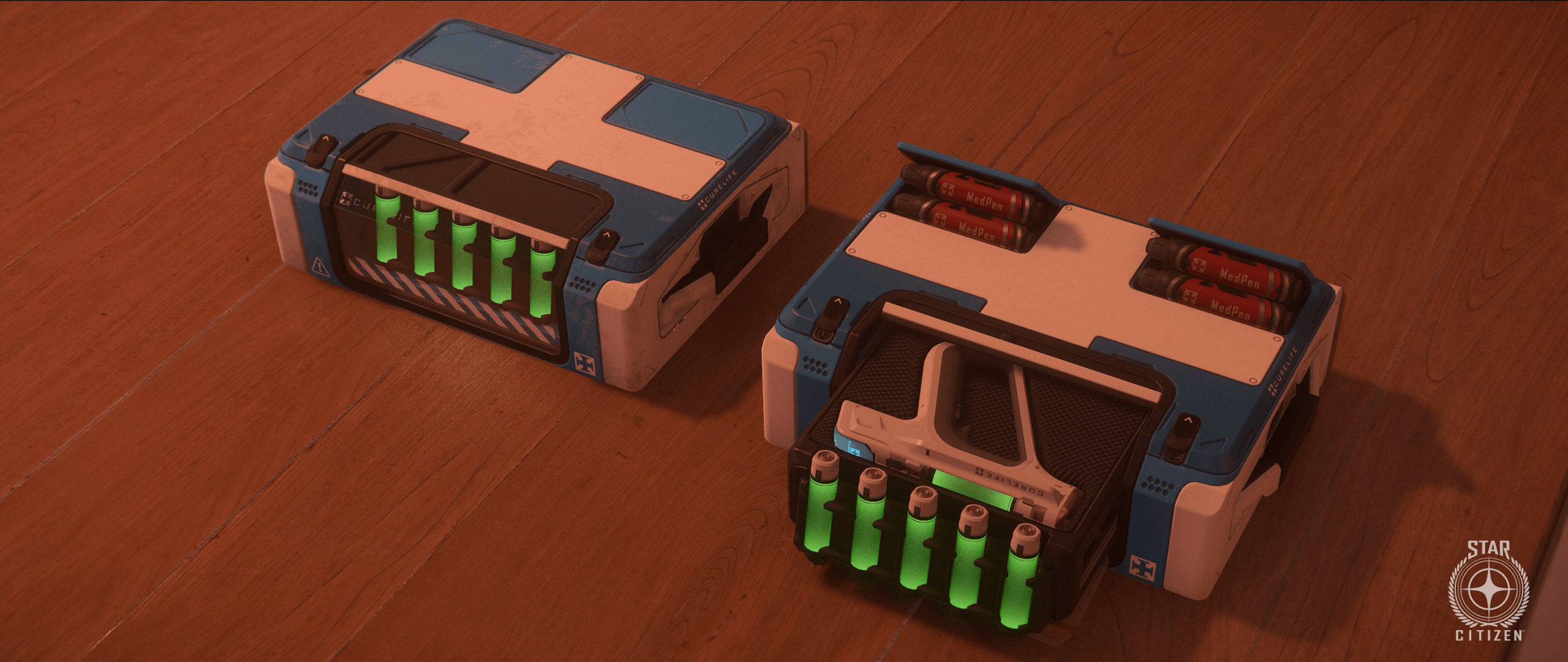
In September, the Character Art team finished the Headhunter outfit and progressed with the Dusters outfit. Alongside this, the Character Concept Art team explored ideas for fauna and medical backpacks and prepared handoff sheets for a racing suit.
Art (Ships)
In the US, a new vehicle variant was completed, with final bug-fixing and polish currently underway.
The whitebox for one of the new vehicles mentioned in the previous PU Report is nearing completion. Last month, the team solved some of the space issues, opting for smaller beds with a tighter layout. They also separated out the base model from the variants.
The Aopoa San'tok.yāi is almost content-complete, including cockpit animations that heavily lean into the alien language. The interior damage pass is also nearly done, including a new map generated specifically for Aopoa. Upcoming tasks include lighting polish before the LOD pass.
Finally, work continued on remote-tractor-beam gameplay, including how the hardpoint should be used to create the best player experience.
Audio
Last month, Audio focused on Pyro, ensuring all essential sound effects were implemented. They also finished tasks for several upcoming ships and are actively working on the new audio thruster and component system.
Alongside essential bug fixes, the Audio Code team refined the recently introduced resonance tech and continued developing the walla system.
Community
Last month, the Community team continued preparing for CitizenCon 2953. The biggest-ever celebration of all things Star Citizen takes place in Los Angeles, California, from October 21 to 22 - tickets and the Digital Goodies Pack are available now.
At the beginning of the month, the team supported the Ship Showdown 2953 Finals, including a Free Fly of the Final Four and the crowning of the Best in Show champion, the Drake Corsair.
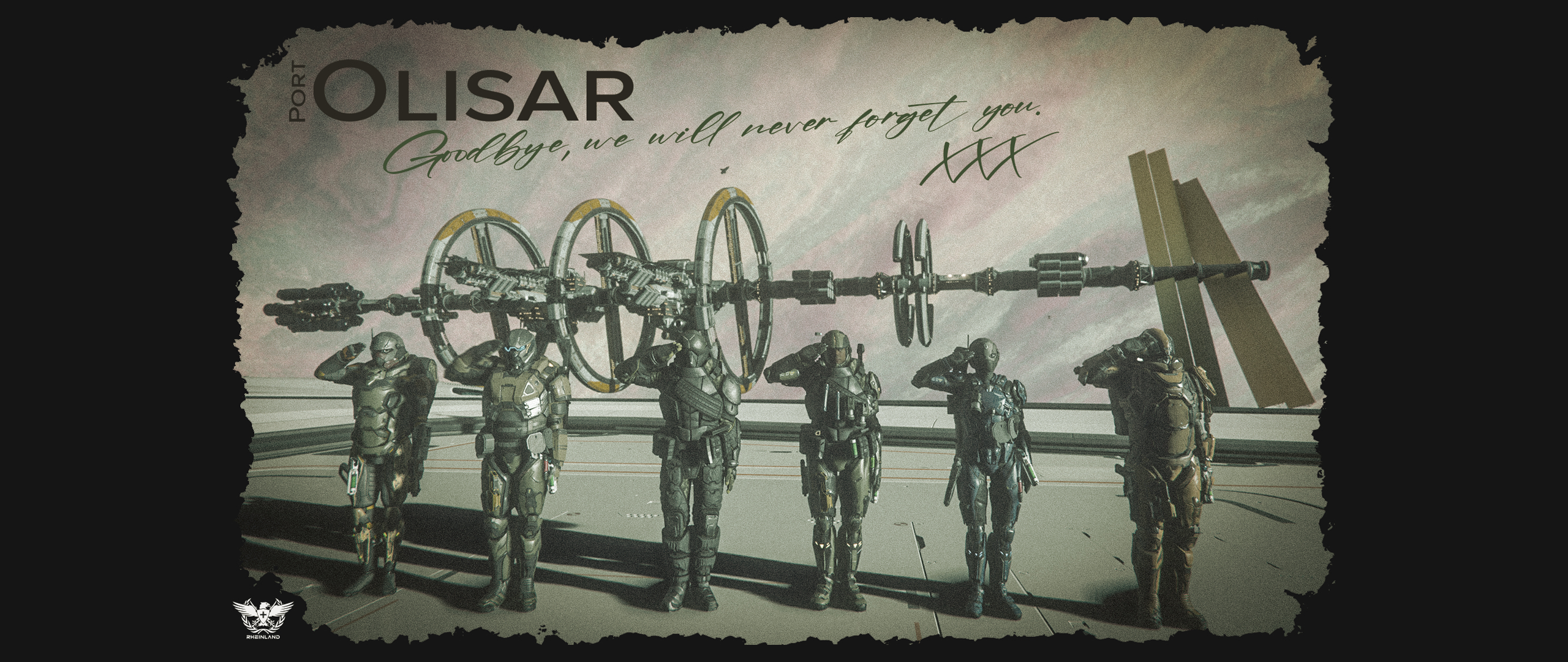
Before its replacement in Alpha 3.20, the team kicked off their farewell to Port Olisar, allowing players to gain a unique Spectrum badge. They also published two Patch Watch threads, Mission Featured! and Quality of Life, highlighting some of the improvements and features in the coming patch that aren’t on the Roadmap.
They then supported the community during Pirate Week, including hosting a Treasure Hunt Screenshot contest.
The team was also heavily involved in supporting the release of Alpha 3.20: Fully Loaded. Alongside the Player Experience team, Community tracked and directed player feedback on the latest features and discussed solutions to bugs and quality-of-life issues with the development teams.
They also published the MISC Hull C Q&A and updated the Mirai Fury Q&A with questions on the Fury LX. They also communicated the new features and updates in Alpha 3.20’s Arena Commander overhaul with a dedicated comm-link and the Experimental Modes schedule.
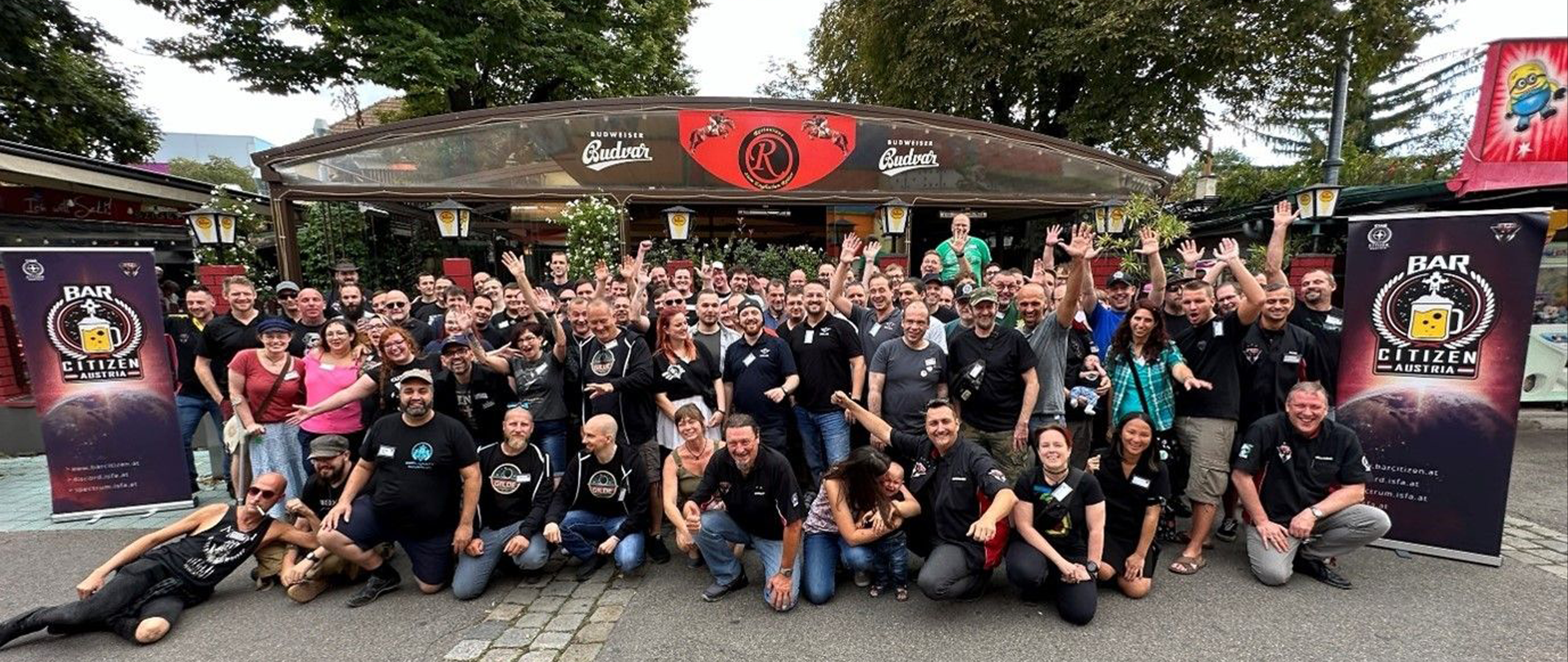
“In-person socializing was also not neglected as we brought developers and Banu Tholo code cards to a fantastic Bar Citizen event held inside a public amusement park in Vienna, Austria, as part of the Bar Citizen World Tour.” Community Team
Economy
The Economy team set up shops at three jump-point stations to provide the Hull C and other cargo ships with additional trade routes. They also worked on rebalancing commodity trading in Stanton and Pyro as part of a larger initiative to improve the gameplay experience for haulers and traders.
Economy then supported other teams, such as Character Art and Interactables, with pricing for new player equipment. Lastly, the tool that extracts live game data to help inform the profitability of various gameplay loops and assist in balancing was completed.
Engine
Throughout September, a large portion of the Core Engine, Physics, and Entity teams’ focus was on release support. This included optimizing code, looking into server-side memory consumption, and fixing memory leaks. These improvements will appear in public releases over the next few months. Additionally, the Core Tech teams supported the Hull C and its unique technical requirements.
Besides release work, the teams rolled out StarBuild, the custom code-build system, and updated Visual Studio to version 2022.
On the renderer, transitions toward the final version of Gen12 continued. This included enabling the RenderGraph, which can utilize the GPU better with less CPU cost. The team also removed several legacy GPU access APIs, including MapAndWriteDiscard, which won’t be supported by Gen12 due to low-level code complexity.
Furthermore, the streaming system received improvements.
“We no longer need to maintain a separate code path and instead update all our objects from within the rendering callback. This reduces code complexity, as we only need to maintain a single code path going forward, and reduces memory consumption as well.” Engine Team
The team then added more strict debug modes and high-level checks for the ECUS code to detect and report potential race conditions earlier. Also on the entity-system side, more strict checks were added to entity access functions to ensure they only happen on threads where it’s permitted.
For the Editor, time was spent enabling entity streaming code to allow the designers to work with the PU’s significant amount of content more easily. This was done last month as the team first had to get the foundation of streaming working. The editor also has more complexity than the pure game as objects can also be modified.
On the Physics side, the team is currently adding numerous improvements to the simulation, which will be revealed soon.
Finally, the Engine teams supported the Network team on Server Meshing and worked with the Location teams to make more efficient use of low-level engine resources.
Features (Characters & Weapons)
Alongside squashing a significant number of bugs for Alpha 3.20, many of the features worked on this year received a second pass to improve quality and feel. For example, the slide mechanic saw updated velocity curves with steeper initial acceleration alongside improved screen effects.
For the new prone motion set, work was done to stabilize the player character’s wrists in first-person view; some initial updates were made, though the team now has a longer-term plan to further improve the visuals.
Features (Gameplay)
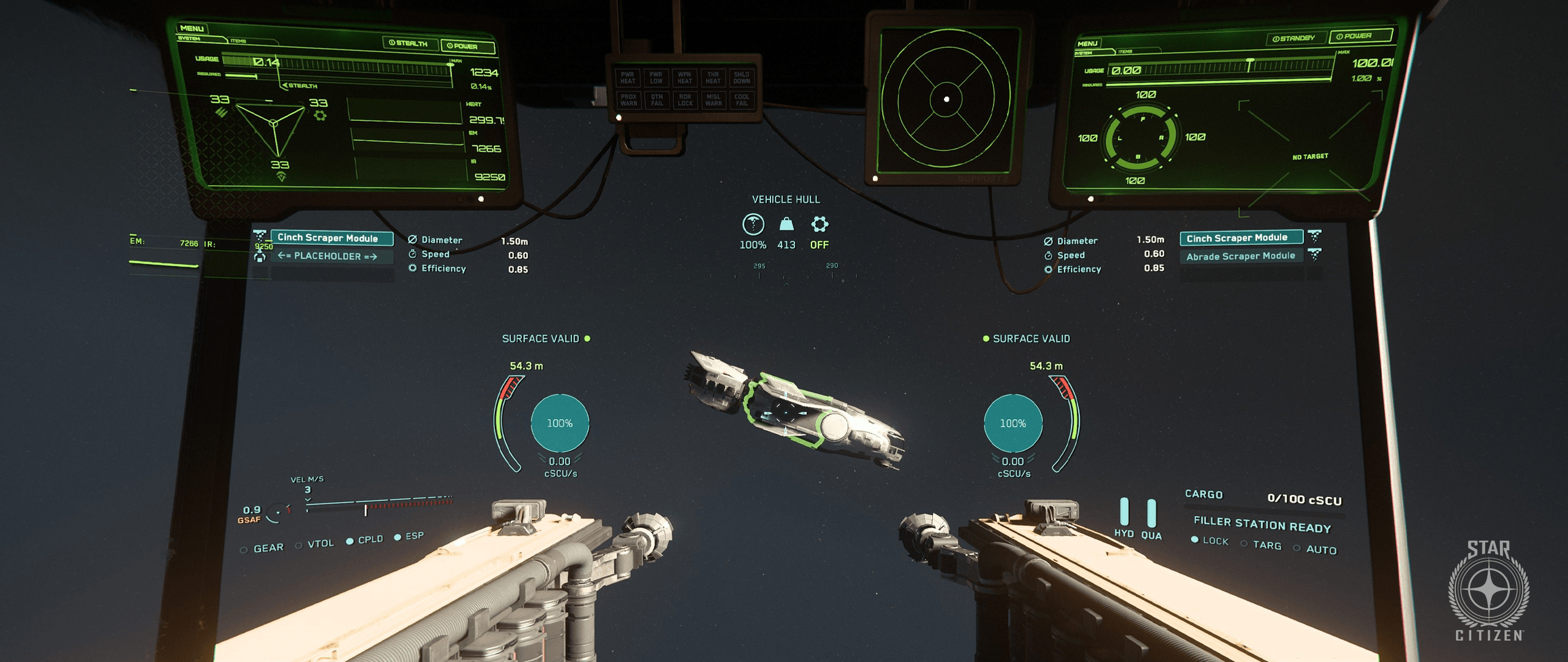
The EUPU team continued working toward the release of the ship tractor team, including an update to the general Salvage HUD to allow it to show tractor-beam information (this is still a work in progress).
Several important bug fixes were made for Alpha 3.20. This included fixing instability problems with server performance and adding a temporary fix to the speed of hull scraping.
The team also made significant progress on Structural Salvage (formerly Munching) and continued their ongoing work on the Resource Network.
Features (Mission)
Mission Features continued their work on modularizing the new-player experience. Last month, New Babbage saw its first working version, with the team currently focusing on polish.
Various mission content was also worked on, including the reactivation of the Crusader platform missions, which tentatively passed its go/no-go review. Blockade Runner also progressed through development following internal playtests and feedback.
The Steal Evidence mission passed go/no-go and has been activated for Alpha 3.21, while the design for a courier version of the Steal and Recover cargo mission moved into production.
Further polish was made on Data Heist, including internal playtests in preparation for its debut. Siege of Orison 1.1 entered the QATR phase, where it will be tested for stability and performance issues ahead of future activation.
The team also continued to look at and balance the cargo manifest system for Bounty and Salvage missions, and designs were pitched for long-term reputation goals. Ship Trespass has passed its gate review and is approaching a release-ready state.
Features (Vehicle)
In September, the Vehicle Gameplay team focused on bugfixing and quality-of-life support for Alpha 3.20. The flight balance, health, and stability of some ships were tweaked to improve overall balance too.
The team also provided feature support for the Resource Network, allowing items placed inside interior object containers to be connected to the network, such as doors and lights.
Graphics, VFX Programming & Planet Tech
In September, the Graphics team progressed with several in-development features. For example, the new water-simulation and rendering systems now have their fundamental building blocks complete and are currently being balanced to ensure they look good under the game’s huge variety of conditions.
The R&D on Global Illumination was merged into the main branch to see it working across various PU locations. However, a lot of work remains, including major aspects like moving zones, characters, and optimization.
Work also continued on several longer-term features, such as fire support for entities, a screen space occlusion effect for gas clouds to increase their lighting detail, and support for Maelstrom, the new physics destruction system.
In-Game Branding
Last month, the Branding team progressed with navigational signage for the exterior of the underground facilities.
They also created holograms and assembled navigational signage for an upcoming event.
Interactables
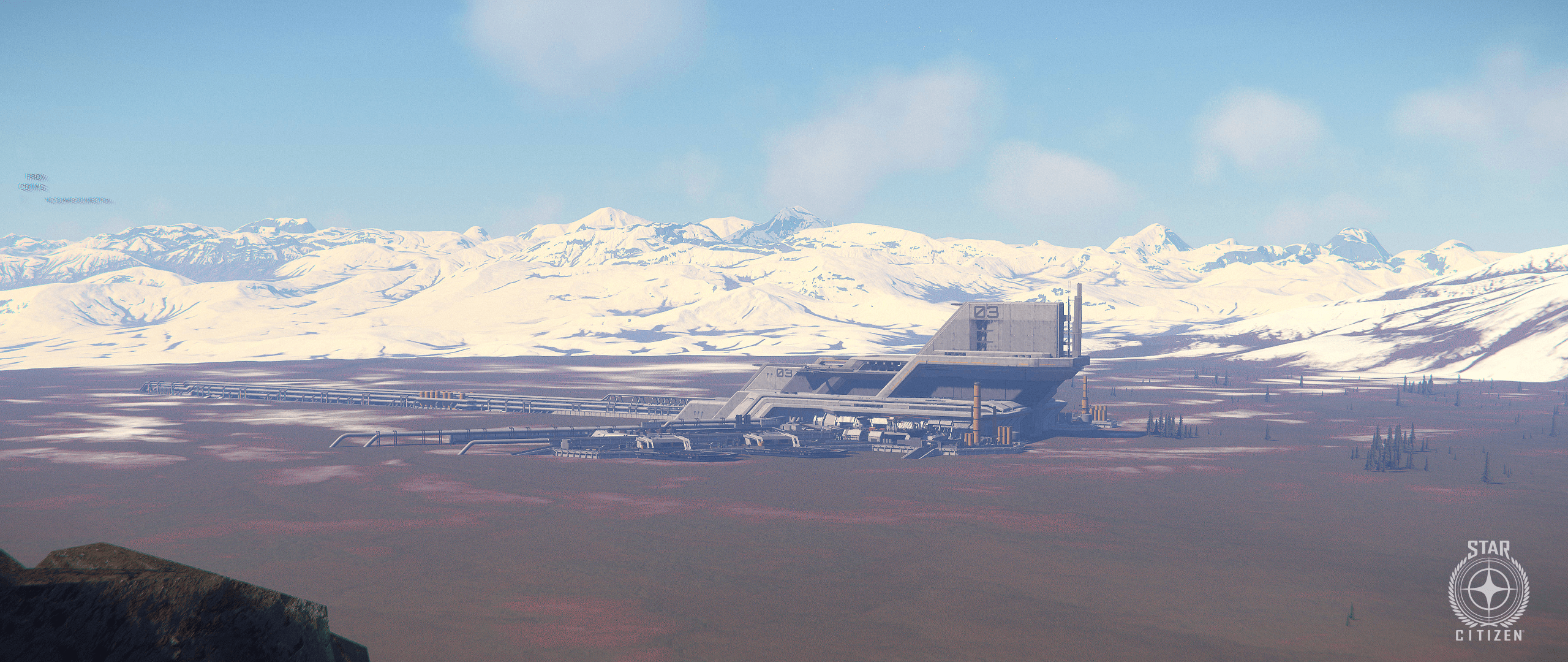
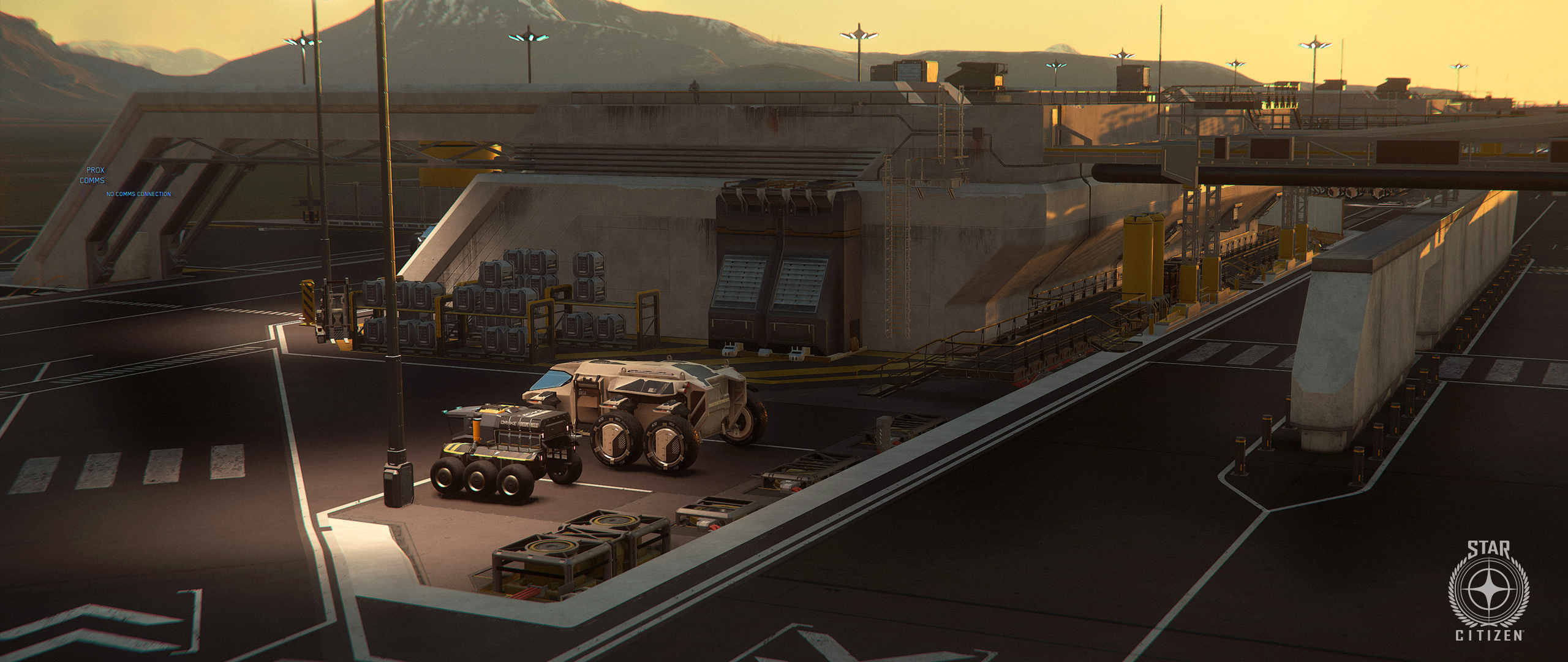
The Interactables team progressed with various upcoming content, including a variety of new style props, and supported the ongoing development of the new underground facilities.
Lighting
Lighting continued their work across multiple initiatives. They mainly focused on Pryo, though performance improvements were made across Stanton too.
Locations (EU)
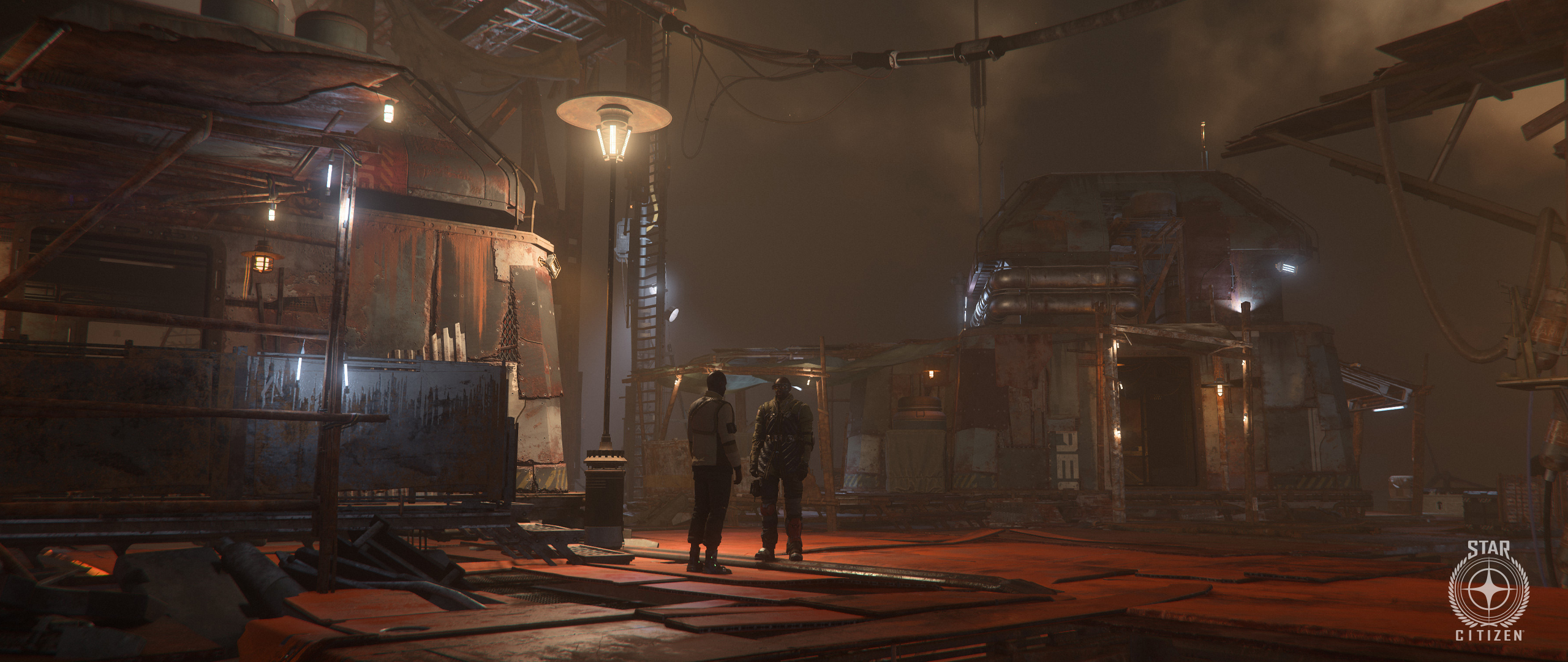
Last month, the Locations team continued developing a variety of new locations for Pyro. They also worked on several legacy locations in pursuit of maintaining the wider Stanton system, and supported the Mission Feature team on one of their upcoming initiatives.
The Sandbox and Organics teams progressed with several upcoming locations, including Pyro and the new underground facilities.
Narrative
The beginning of September saw the Narrative team closing out any remaining bugs for the release of Alpha 3.20. Looking ahead, the team completed work on another batch of missions for Pyro organizations and gangs.
Additionally, they continued working on several new missions for Stanton, including Blockade Runner and Data Heist. Scripts were also written for automated computer systems that will be used in missions and at new locations.
The Narrative Design team continued improving the lives of AI around both Stanton and Pyro with more naturalistic behavior patterns. Several discussions were held focusing on how they can better capture the feel of Pyro based on how its NPC population behaves at stations and outposts.
On the website, the team published a Whitley’s Guide to the San’tok.yāi, another thought-provoking batch of Loremakers: Community Questions, as well as a variety of Galactapedia entries. Subscribers can also read additional lore every two months in Jump Point magazine before it becomes available anywhere else.
Online Services
September saw the Online Services team working on the Seeding Service, a new star service for Server Meshing. This is a C++ gRPC service that reads data from the game files to seed global, graveyard, and shard databases by using the Entity Graph service.
A refactor of the Character Customizer began, with the goal being to replace the backend used by the current customizer to leverage both the entitlement and identity services to reduce the database load on login and persist DNA and customization across patches.
The team also continued to update Easy Anti-Cheat in an attempt to eliminate false positives as well as implement sanctions in the future.
Significant time was also spent on database research to resolve some of the recent deadlock issues and explore other potential database providers.
R&D
The R&D team worked on a variety of important updates to the game engine that will be shown to the community soon.
Tech Art/Animation
Tech Animation supported numerous teams across the project with a wide variety of animation tasks, including asset implementation and maintenance.
Great progress was made on creating and implementing creatures across the PU. As part of this, work was done on toolsets for rigging and physics proxy authoring and implementation.
Comms calls and dialogue were a major focus in September too, with the goal being to create content at speed.
“This has been hugely successful and collates many lengthy manual processes into a singular toolset with a great user interface.” Tech Art/Animation Team
Finally, they continued to provide additional faces for the game to source from, providing much more variation to NPC populations.
UI
Alongside debugging for Alpha 3.21 and future releases, UI supported Mission Features on the Blockade Runner screens and with final touch-ups for another ongoing mandate.
The team progressed with the Reputation app, adding new styles to the item shops. They’re currently doing final tests on Pyro’s airlock screens.
VFX
Last month, the VFX team progressed with a variety of Pyro locations. Several vehicles were worked on too, with one being completed.
They also focused on optimization and bug fixing for Alpha 3.20.
Image by
ImmortalisImage by
Immortalis
PU-Monatsbericht
September 2023
Es ist eine aufregende Zeit im und außerhalb des Verses, mit dem bevorstehenden Start der Alpha 3.21 und der Rückkehr der CitizenCon am 21. und 22. Oktober in Person. Im PU-Monatsbericht September erfährst du mehr über die letzten Änderungen an den Inhalten, die du schon bald erleben wirst, und über die Fortschritte bei den Funktionen, die im Laufe des Jahres und darüber hinaus kommen werden.
KI (Features)
Im September konzentrierten sich die KI-Features auf das laufende Retargeting von männlichen zu weiblichen Animationen, um sicherzustellen, dass die weiblichen Charaktere in Pyro den gleichen Standard haben wie ihre männlichen Gegenstücke. Zu den jüngsten Arbeiten gehörte das Retargeting von Kampf- und Sozialanimationen.
Auf der Code-Seite hat das Team an der PU-Leistung für den kommenden Patch gearbeitet. Außerdem wurden Probleme behoben, bei denen NSCs nicht auf Spieler/innen reagierten, die Waffen auf sie richteten, und Fehler behoben, bei denen nutzbare Ausrichtungsplätze nicht wie vorgesehen funktionierten.
KI (Tech)
Die KI-Abteilung entwickelte im September verschiedene Funktionen weiter, darunter Boids und das Apollo-Tool, und konzentrierte sich auf Leistungsverbesserungen und den Feinschliff bestehender Funktionen.
Für Boids wurde die Basisstruktur implementiert, die es den Designern ermöglicht, Boid-Zustände (wandernd, fliehend, träge, tot usw.) zu definieren und zwischen ihnen zu wechseln. Diese Übergänge enthalten Regeln, z. B. wann sie ausgewählt werden sollen, und Animationsdaten, wie z. B. startende und landende Vögel. Es wurde auch an geeigneten physikalischen Eigenschaften für Boid-Agenten gearbeitet, die von der Schwerkraft beeinflusst werden müssen, um auf dem Gelände zu laufen. Das Team fügte den Agenten auch Gesundheitskomponenten hinzu, damit die Spieler sie beschädigen und möglicherweise töten können.
Für das Apollo Subsumption Tool hat das Team eine Fehlermeldung erstellt, die detaillierte Informationen zu Verhaltensproblemen liefert. Das hilft den Designern, Probleme früher zu erkennen und leichter zu lösen. Auch verschiedene von den Designern gewünschte Verbesserungen der Lebensqualität wurden umgesetzt.
Auch die Leistung wurde verbessert, wobei das Team die Systeme, die die Leistung auf dedizierten Servern beeinflussen, genau unter die Lupe genommen hat. So wurde zum Beispiel optimiert, wie Navigationsinseln berechnet werden, nachdem Teile des Navigationsnetzes neu generiert wurden. Für das Navigationsvolumen wurde der Code bereinigt und das "Event Dispatching" wurde in den "Update Job" verlagert, der sich besser auf mehrere Threads verteilt. Das Team untersucht und implementiert derzeit Optimierungen für die Erzeugung der Planetennavigation und die Verarbeitung von Pfadfindungsanfragen.
Ein kleines Update und neue Funktionen wurden dem Kollisionsvermeidungssystem hinzugefügt. Die Agenten zur Kollisionsvermeidung unterstützen jetzt das Überspringen und Ignorieren von Listen, was genutzt wird, wenn sich Agenten gemeinsam als Gruppe bewegen.
Für NSCs, die Trolleys benutzen, wurde die Kollisionsvermeidung verbessert und eine neue Komponente zum Trolley hinzugefügt, die die Regeneration des Navigationsnetzes auslöst, wenn er sich nicht mehr bewegt.
Bei den Flowgraph Subsumption-Knoten kann das Team jetzt Knoten mit dynamischer Eingabe auf der Grundlage der Ereignisbeschreibung von Subsumption erzeugen. Das wird den Designern helfen, komplexere Verhaltensweisen für NSCs und Missionen zu schreiben.
Das AI Tech Team hat auch die Alpha 3.20, die CitizenCon und die SQ42 Feature Teams unterstützt.
Animation
Im letzten Monat hat das Animationsteam daran gearbeitet, dass alle männlichen Animationen auch für die weiblichen Charaktere verfügbar sind.
"In einem der nächsten Patches wirst du sehen, dass weibliche Charaktere mehr tun. Behalte im Hinterkopf, dass es bei diesem großen Umfang erhebliche visuelle Artefakte geben wird, die wir aussortieren müssen." Animationsteam
Sie haben auch die ersten Animationen für eine neue Kreatur erstellt.
Kunst (Charaktere)
Im September stellte das Character Art Team das Headhunter-Outfit fertig und arbeitete an dem Dusters-Outfit weiter. Außerdem erforschte das Character Concept Art Team Ideen für Fauna und medizinische Rucksäcke und erstellte Übergabebögen für einen Rennanzug.
Kunst (Schiffe)
In den USA wurde eine neue Fahrzeugvariante fertiggestellt, an der derzeit noch letzte Fehlerbehebungen und Feinschliff vorgenommen werden.
Die Whitebox für eines der neuen Fahrzeuge, die im letzten PU-Bericht erwähnt wurden, steht kurz vor der Fertigstellung. Letzten Monat hat das Team einige der Platzprobleme gelöst und sich für kleinere Betten mit einem engeren Layout entschieden. Außerdem haben sie das Basismodell von den Varianten getrennt.
Die Aopoa San'tok.yāi ist fast vollständig, einschließlich der Cockpit-Animationen, die sich stark an die Sprache der Aliens anlehnen. Der Schadenspass für den Innenraum ist ebenfalls fast fertig, einschließlich einer neuen Karte, die speziell für Aopoa erstellt wurde. Zu den bevorstehenden Aufgaben gehört die Aufpolierung der Beleuchtung vor dem LOD-Pass.
Schließlich wurde die Arbeit am Remote-Traktorstrahl-Gameplay fortgesetzt, einschließlich der Frage, wie der Hardpoint genutzt werden sollte, um das beste Spielerlebnis zu schaffen.
Audio
Im letzten Monat konzentrierte sich die Abteilung Audio auf Pyro und stellte sicher, dass alle wichtigen Soundeffekte implementiert wurden. Außerdem wurden Aufgaben für mehrere neue Schiffe abgeschlossen und es wird aktiv am neuen Audio-Thruster und Komponenten-System gearbeitet.
Neben wichtigen Fehlerkorrekturen hat das Audiocode-Team die kürzlich eingeführte Resonanztechnologie verfeinert und das Walla-System weiterentwickelt.
Community
Im letzten Monat hat das Community-Team die Vorbereitungen für die CitizenCon 2953 fortgesetzt. Die größte Feier rund um Star Citizen findet vom 21. bis 22. Oktober in Los Angeles, Kalifornien, statt - Tickets und das Digital Goodies Pack sind ab sofort erhältlich.
Zu Beginn des Monats unterstützte das Team das Finale des Ship Showdown 2953, einschließlich eines Free Flys der Final Four und der Krönung des Best in Show-Champions, der Drake Corsair.
Vor seiner Ablösung in Alpha 3.20 gab das Team den Startschuss für den Abschied von Port Olisar und ermöglichte den Spielern, ein einzigartiges Spektrum-Abzeichen zu erhalten. Außerdem wurden zwei Patch-Watch-Threads veröffentlicht, Mission Featured! und Quality of Life, in denen einige der Verbesserungen und Funktionen des kommenden Patches vorgestellt werden, die nicht auf der Roadmap stehen.
Außerdem unterstützten sie die Community während der Piratenwoche und veranstalteten einen Screenshot-Wettbewerb zur Schatzsuche.
Das Team war auch maßgeblich an der Veröffentlichung von Alpha 3.20: Fully Loaded beteiligt. Zusammen mit dem Team für Spielerfahrungen hat die Community das Feedback der Spieler zu den neuesten Funktionen verfolgt und mit den Entwicklungsteams Lösungen für Bugs und Qualitätsprobleme diskutiert.
Sie haben auch die MISC Hull C Q&A veröffentlicht und die Mirai Fury Q&A mit Fragen zur Fury LX aktualisiert. Außerdem informierten sie über die neuen Funktionen und Aktualisierungen in der Überarbeitung des Arena Commanders in Alpha 3.20 mit einem speziellen Comm-Link und dem Zeitplan für die Experimentellen Modi.
"Auch das persönliche Kennenlernen kam nicht zu kurz, denn wir brachten Entwickler und Banu Tholo Codekarten zu einem fantastischen Bar Citizen Event in einem öffentlichen Vergnügungspark in Wien, Österreich, als Teil der Bar Citizen World Tour." Community Team
Wirtschaft
Das Wirtschaftsteam hat an drei Sprungpunktstationen Läden eingerichtet, um der Hull C und anderen Frachtschiffen zusätzliche Handelsrouten zu bieten. Außerdem wurde der Handel mit Rohstoffen in Stanton und Pyro neu ausbalanciert, um das Spielerlebnis für Spediteure und Händler zu verbessern.
Economy unterstützte dann andere Teams, wie Character Art und Interactables, bei der Preisgestaltung für neue Spielerausrüstung. Schließlich wurde das Tool fertiggestellt, das Live-Daten aus dem Spiel extrahiert, um die Rentabilität verschiedener Spielabläufe zu ermitteln und das Balancing zu unterstützen.
Engine
Im September konzentrierte sich ein Großteil der Teams für die Core Engine, Physik und Entitäten auf die Unterstützung der Veröffentlichung. Dazu gehörten die Optimierung des Codes, die Untersuchung des serverseitigen Speicherverbrauchs und die Behebung von Speicherlecks. Diese Verbesserungen werden in den nächsten Monaten in öffentlichen Versionen erscheinen. Außerdem unterstützten die Core Tech-Teams das Hull C und seine besonderen technischen Anforderungen.
Neben der Release-Arbeit haben die Teams StarBuild, das benutzerdefinierte Code-Build-System, eingeführt und Visual Studio auf die Version 2022 aktualisiert.
Beim Renderer wurde der Übergang zur endgültigen Version von Gen12 fortgesetzt. Dazu gehörte die Aktivierung des RenderGraphs, der die GPU besser ausnutzen kann und weniger CPU-Kosten verursacht. Das Team entfernte außerdem mehrere veraltete GPU-Zugriffs-APIs, darunter MapAndWriteDiscard, die von Gen12 aufgrund der Komplexität des Low-Level-Codes nicht mehr unterstützt werden.
Außerdem wurde das Streaming-System verbessert.
"Wir müssen keinen separaten Codepfad mehr pflegen und aktualisieren stattdessen alle unsere Objekte innerhalb des Rendering-Callbacks. Das reduziert die Komplexität des Codes, da wir in Zukunft nur noch einen einzigen Codepfad pflegen müssen, und verringert auch den Speicherverbrauch." Engine-Team
Das Team fügte dann strengere Debug-Modi und High-Level-Checks für den ECUS-Code hinzu, um potenzielle Race Conditions früher zu erkennen und zu melden. Auch auf der Seite des Entity-Systems wurden strengere Prüfungen für Entity-Zugriffsfunktionen hinzugefügt, um sicherzustellen, dass sie nur in Threads ausgeführt werden, in denen dies erlaubt ist.
Für den Editor wurde Zeit darauf verwendet, den Code für das Streaming von Entitäten zu aktivieren, um den Designern die Arbeit mit der großen Menge an Inhalten in der PU zu erleichtern. Dies geschah im letzten Monat, da das Team zunächst die Grundlage für das Streaming schaffen musste. Der Editor ist auch komplexer als das reine Spiel, da Objekte auch verändert werden können.
Auf der Physikseite fügt das Team derzeit zahlreiche Verbesserungen an der Simulation hinzu, die bald enthüllt werden sollen.
Schließlich unterstützten die Engine-Teams das Netzwerk-Team beim Server-Meshing und arbeiteten mit den Location-Teams zusammen, um die Low-Level-Ressourcen der Engine effizienter zu nutzen.
Features (Charaktere & Waffen)
In der Alpha 3.20 wurden nicht nur zahlreiche Bugs ausgemerzt, sondern auch viele der Features, an denen in diesem Jahr gearbeitet wurde, einem zweiten Durchgang unterzogen, um die Qualität und das Spielgefühl zu verbessern. Zum Beispiel wurden die Geschwindigkeitskurven der Slide-Mechanik mit einer steileren Anfangsbeschleunigung und verbesserten Bildschirmeffekten aktualisiert.
Für das neue Bewegungsset "Bauchlage" wurde daran gearbeitet, die Handgelenke der Spielerfigur in der Ego-Perspektive zu stabilisieren; einige erste Aktualisierungen wurden vorgenommen, aber das Team hat jetzt einen längerfristigen Plan, um die Optik weiter zu verbessern.
Features (Gameplay)
Das EUPU-Team arbeitete weiter an der Veröffentlichung des Schiffstraktorenteams, einschließlich einer Aktualisierung des allgemeinen Bergungs-HUDs, damit es Informationen über den Traktorstrahl anzeigen kann (dies ist noch in Arbeit).
In der Alpha 3.20 wurden mehrere wichtige Fehler behoben. Dazu gehörten die Behebung von Instabilitätsproblemen bei der Serverleistung und eine vorübergehende Korrektur der Geschwindigkeit des Rumpfkratzens.
Das Team machte auch große Fortschritte bei der strukturellen Bergung (früher Munching) und setzte seine Arbeit am Ressourcennetzwerk fort.
Funktionen (Mission)
Das Team von Mission Features arbeitete weiter an der Modularisierung der neuen Spielerfahrung. Letzten Monat gab es die erste funktionierende Version von New Babbage, und das Team konzentriert sich derzeit auf den Feinschliff.
Außerdem wurde an verschiedenen Missionsinhalten gearbeitet, darunter die Reaktivierung der Missionen auf der Kreuzfahrerplattform, die vorläufig ihre Prüfung bestanden hat. Auch Blockade Runner wurde nach internen Spieltests und Feedback weiterentwickelt.
Die Mission "Steal Evidence" (Beweismaterial stehlen) hat die Go/No-Go-Prüfung bestanden und wurde für die Alpha 3.21 aktiviert, während der Entwurf für eine Kurierversion der Mission "Steal and Recover" (Fracht stehlen und bergen) in die Produktion ging.
An Data Heist wurde weiter gefeilt, einschließlich interner Spieltests als Vorbereitung auf das Debüt. Siege of Orison 1.1 ist in die QATR-Phase eingetreten, in der es auf Stabilität und Leistungsprobleme getestet wird, bevor es aktiviert wird.
Das Team hat außerdem das Frachtmanifestsystem für Kopfgeld- und Bergungsmissionen weiter geprüft und ausbalanciert und Entwürfe für langfristige Reputationsziele vorgelegt. Ship Trespass hat das Gate-Review bestanden und nähert sich der Veröffentlichungsreife.
Features (Fahrzeug)
Im September konzentrierte sich das Vehicle Gameplay Team auf Bugfixing und Quality-of-Life Support für Alpha 3.20. Außerdem wurden die Flugbalance, die Gesundheit und die Stabilität einiger Schiffe verbessert, um die Gesamtbalance zu verbessern.
Außerdem unterstützte das Team das Ressourcennetzwerk, sodass Gegenstände wie Türen und Lichter, die sich in Containern von Innenobjekten befinden, mit dem Netzwerk verbunden werden können.
Grafik, VFX-Programmierung und Planet Tech
Im September machte das Grafikteam Fortschritte bei mehreren in der Entwicklung befindlichen Funktionen. So sind zum Beispiel die grundlegenden Bausteine der neuen Wassersimulation und des Rendering-Systems fertiggestellt und werden derzeit ausbalanciert, um sicherzustellen, dass sie unter den verschiedensten Bedingungen im Spiel gut aussehen.
Die Forschungs- und Entwicklungsarbeiten an der globalen Beleuchtung wurden in den Hauptzweig integriert, damit sie an verschiedenen PU-Standorten funktioniert. Es bleibt jedoch noch viel zu tun, einschließlich wichtiger Aspekte wie bewegte Zonen, Charaktere und Optimierung.
Außerdem wurde die Arbeit an mehreren längerfristigen Funktionen fortgesetzt, z. B. an der Unterstützung von Feuer für Entitäten, einem Screen Space Occlusion-Effekt für Gaswolken, um deren Beleuchtungsdetails zu verbessern, und der Unterstützung von Maelstrom, dem neuen Physik-Zerstörungssystem.
Branding im Spiel
Im letzten Monat hat das Branding-Team die Beschilderung der unterirdischen Anlagen weiterentwickelt.
Außerdem erstellten sie Hologramme und montierten Navigationsschilder für ein bevorstehendes Event.
Interactables
Das Interactables-Team arbeitete an verschiedenen anstehenden Inhalten, darunter eine Reihe neuer Stilrequisiten, und unterstützte die laufende Entwicklung der neuen unterirdischen Anlagen.
Beleuchtung
Das Beleuchtungsteam setzte seine Arbeit an verschiedenen Initiativen fort. Sie konzentrierten sich hauptsächlich auf Pryo, aber auch in Stanton wurden Leistungsverbesserungen vorgenommen.
Standorte (EU)
Im vergangenen Monat hat das Locations-Team die Entwicklung einer Reihe neuer Standorte für Pyro fortgesetzt. Außerdem wurde an mehreren alten Standorten gearbeitet, um das gesamte Stanton-System zu erhalten, und das Mission Feature-Team wurde bei einer seiner kommenden Initiativen unterstützt.
Die Teams für Sandkasten und Organik arbeiteten an mehreren neuen Orten, darunter Pyro und die neuen unterirdischen Anlagen.
Narrative
Anfang September schloss das Narrative-Team alle verbleibenden Bugs für die Veröffentlichung von Alpha 3.20 ab. Mit Blick auf die Zukunft schloss das Team die Arbeit an einer weiteren Reihe von Missionen für Pyro-Organisationen und Gangs ab.
Außerdem arbeiteten sie an mehreren neuen Missionen für Stanton, darunter Blockade Runner und Data Heist. Außerdem wurden Skripte für automatisierte Computersysteme geschrieben, die in den Missionen und an neuen Orten zum Einsatz kommen werden.
Das Narrative Design Team hat das Leben der KI in Stanton und Pyro mit natürlicheren Verhaltensmustern verbessert. Es wurden mehrere Diskussionen darüber geführt, wie man das Gefühl von Pyro besser einfangen kann, indem man das Verhalten der NSCs auf den Stationen und Außenposten untersucht.
Auf der Website veröffentlichte das Team einen Whitley's Guide to the San'tok.yāi, einen weiteren Stapel Loremakers, der zum Nachdenken anregt: Community Questions sowie eine Reihe von Galactapedia-Einträgen. Abonnenten können außerdem alle zwei Monate zusätzliche Informationen im Jump Point Magazin lesen, bevor sie anderswo verfügbar sind.
Online-Dienste
Im September hat das Team der Online-Dienste am Seeding Service gearbeitet, einem neuen Star Service für das Server Meshing. Dabei handelt es sich um einen C++ gRPC-Dienst, der Daten aus den Spieldateien liest, um die globalen, Friedhofs- und Shard-Datenbanken mit Hilfe des Entity Graph-Dienstes zu füllen.
Der Charakteranpassungsdienst wurde überarbeitet. Ziel ist es, das Backend des aktuellen Anpassungsdienstes zu ersetzen und sowohl den Berechtigungs- als auch den Identitätsdienst zu nutzen, um die Datenbanklast bei der Anmeldung zu verringern und die DNA und die Anpassungen über Patches hinweg zu erhalten.
Das Team hat außerdem Easy Anti-Cheat weiter aktualisiert, um Fehlalarme zu vermeiden und in Zukunft Sanktionen zu verhängen.
Außerdem wurde viel Zeit in die Datenbankrecherche investiert, um einige der jüngsten Deadlock-Probleme zu beheben und andere potenzielle Datenbankanbieter zu untersuchen.
F&E
Das F&E-Team arbeitete an einer Reihe von wichtigen Aktualisierungen der Spiel-Engine, die der Community bald vorgestellt werden sollen.
Tech Art/Animation
Tech Animation unterstützte zahlreiche Teams im gesamten Projekt mit einer Vielzahl von Animationsaufgaben, einschließlich der Implementierung und Pflege von Assets.
Große Fortschritte wurden bei der Erstellung und Implementierung von Kreaturen in der PU gemacht. Dazu gehörte auch die Arbeit an Toolsets für das Rigging und die Erstellung und Implementierung von Physik-Proxys.
Ein weiterer Schwerpunkt im September waren Kommunikationsanrufe und Dialoge, mit dem Ziel, Inhalte schnell zu erstellen.
"Das war ein großer Erfolg, denn es fasst viele langwierige manuelle Prozesse in einem einzigen Toolset mit einer großartigen Benutzeroberfläche zusammen." Tech Art/Animation Team
Darüber hinaus wurden weitere Gesichter für das Spiel erstellt, um die NSC-Populationen abwechslungsreicher zu gestalten.
UI
Neben der Fehlersuche für Alpha 3.21 und zukünftige Versionen unterstützte das UI-Team die Missionsfunktionen auf den Blockade-Runner-Bildschirmen und nahm letzte Korrekturen für einen weiteren laufenden Auftrag vor.
Das Team hat die Reputations-App weiterentwickelt und neue Stile für die Item-Shops hinzugefügt. Zurzeit werden letzte Tests an Pyros Luftschleusen-Bildschirmen durchgeführt.
VFX
Im letzten Monat arbeitete das VFX-Team an einer Reihe von Pyro-Drehorten. Außerdem wurde an mehreren Fahrzeugen gearbeitet, von denen eines fertiggestellt wurde.
Außerdem konzentrierten sie sich auf die Optimierung und Fehlerbehebung für Alpha 3.20.
PU Monthly Report
September 2023
It’s an exciting time in and out of the ‘verse, with the upcoming launch of Alpha 3.21 and the return of an in-person CitizenCon on October 21-22. Check out September’s PU Report for the final tweaks to content you'll be experiencing very soon and progress on features coming later in the year and beyond.
AI (Features)
In September, AI Features focused on the ongoing male-to-female animation retargeting, ensuring that Pyro’s female characters are up to the same standard as their male counterparts. Recent work included retargeting combat and social animations.
On the code side, the team worked on PU performance for the upcoming patch. They also solved issues involving NPCs not reacting to players pointing guns at them and fixed bugs with usable alignment slots not working as intended.
AI (Tech)
AI Tech continued developing various features throughout September, including boids and the Apollo tool, and began focusing on performance improvements and polishing existing features.
For boids, the base structure that allows the designers to define boid states (wandering, fleeing, idling, dead, etc.) and transition between them was implemented. These transitions contain rules, including when they should be selected, and animation data, such as birds taking off and landing. Iteration was also done on suitable physics properties for boid agents that need to be affected by gravity to walk on terrain. The team also added health components to agents so players can damage and potentially kill them.
For the Apollo Subsumption tool, the team completed an error-reporting panel that will provide detailed information on behavior issues. This will help the designers to catch problems sooner and solve them more easily. Various quality-of-life improvements requested by the designers were implemented too.
Performance improvements were also made, with the team looking closely at systems that impact performance on dedicated servers. For example, optimizations were made to how navigation islands compute after parts of the navigation mesh are regenerated. For navigation volume, code was cleaned up and ‘event dispatching’ was moved to ‘update job,’ which better distributes to multiple threads. The team are currently investigating and implementing optimizations to planetary navigation generation and pathfinding request processing.
A small update and new functionality were added to the collision avoidance system. Now, collision avoidance agents have support for skipping and ignoring lists, which is used when agents move together as a group.
For NPCs using trolleys, improvements were made to collision avoidance, and a new component was added to the trolley that will trigger the regeneration of navigation mesh when it stops moving.
Regarding flowgraph Subsumption nodes, the team can now generate nodes with dynamic input based on Subsumption’s event description. This will help the designers to write more complex behaviors for NPCs and missions.
The AI Tech team also supported the Alpha 3.20 release, CitizenCon, and the SQ42 Feature teams.
Animation
Last month, the Animation team worked toward ensuring all male animations are also available for the female character.
“You’ll see female characters doing more in an upcoming patch. Keep in mind that with this large volume, there will be considerable visual artifacts we need to sort out.” Animation Team
They also created the initial animations for a new creature.
Art (Characters)
In September, the Character Art team finished the Headhunter outfit and progressed with the Dusters outfit. Alongside this, the Character Concept Art team explored ideas for fauna and medical backpacks and prepared handoff sheets for a racing suit.
Art (Ships)
In the US, a new vehicle variant was completed, with final bug-fixing and polish currently underway.
The whitebox for one of the new vehicles mentioned in the previous PU Report is nearing completion. Last month, the team solved some of the space issues, opting for smaller beds with a tighter layout. They also separated out the base model from the variants.
The Aopoa San'tok.yāi is almost content-complete, including cockpit animations that heavily lean into the alien language. The interior damage pass is also nearly done, including a new map generated specifically for Aopoa. Upcoming tasks include lighting polish before the LOD pass.
Finally, work continued on remote-tractor-beam gameplay, including how the hardpoint should be used to create the best player experience.
Audio
Last month, Audio focused on Pyro, ensuring all essential sound effects were implemented. They also finished tasks for several upcoming ships and are actively working on the new audio thruster and component system.
Alongside essential bug fixes, the Audio Code team refined the recently introduced resonance tech and continued developing the walla system.
Community
Last month, the Community team continued preparing for CitizenCon 2953. The biggest-ever celebration of all things Star Citizen takes place in Los Angeles, California, from October 21 to 22 - tickets and the Digital Goodies Pack are available now.
At the beginning of the month, the team supported the Ship Showdown 2953 Finals, including a Free Fly of the Final Four and the crowning of the Best in Show champion, the Drake Corsair.
Before its replacement in Alpha 3.20, the team kicked off their farewell to Port Olisar, allowing players to gain a unique Spectrum badge. They also published two Patch Watch threads, Mission Featured! and Quality of Life, highlighting some of the improvements and features in the coming patch that aren’t on the Roadmap.
They then supported the community during Pirate Week, including hosting a Treasure Hunt Screenshot contest.
The team was also heavily involved in supporting the release of Alpha 3.20: Fully Loaded. Alongside the Player Experience team, Community tracked and directed player feedback on the latest features and discussed solutions to bugs and quality-of-life issues with the development teams.
They also published the MISC Hull C Q&A and updated the Mirai Fury Q&A with questions on the Fury LX. They also communicated the new features and updates in Alpha 3.20’s Arena Commander overhaul with a dedicated comm-link and the Experimental Modes schedule.
“In-person socializing was also not neglected as we brought developers and Banu Tholo code cards to a fantastic Bar Citizen event held inside a public amusement park in Vienna, Austria, as part of the Bar Citizen World Tour.” Community Team
Economy
The Economy team set up shops at three jump-point stations to provide the Hull C and other cargo ships with additional trade routes. They also worked on rebalancing commodity trading in Stanton and Pyro as part of a larger initiative to improve the gameplay experience for haulers and traders.
Economy then supported other teams, such as Character Art and Interactables, with pricing for new player equipment. Lastly, the tool that extracts live game data to help inform the profitability of various gameplay loops and assist in balancing was completed.
Engine
Throughout September, a large portion of the Core Engine, Physics, and Entity teams’ focus was on release support. This included optimizing code, looking into server-side memory consumption, and fixing memory leaks. These improvements will appear in public releases over the next few months. Additionally, the Core Tech teams supported the Hull C and its unique technical requirements.
Besides release work, the teams rolled out StarBuild, the custom code-build system, and updated Visual Studio to version 2022.
On the renderer, transitions toward the final version of Gen12 continued. This included enabling the RenderGraph, which can utilize the GPU better with less CPU cost. The team also removed several legacy GPU access APIs, including MapAndWriteDiscard, which won’t be supported by Gen12 due to low-level code complexity.
Furthermore, the streaming system received improvements.
“We no longer need to maintain a separate code path and instead update all our objects from within the rendering callback. This reduces code complexity, as we only need to maintain a single code path going forward, and reduces memory consumption as well.” Engine Team
The team then added more strict debug modes and high-level checks for the ECUS code to detect and report potential race conditions earlier. Also on the entity-system side, more strict checks were added to entity access functions to ensure they only happen on threads where it’s permitted.
For the Editor, time was spent enabling entity streaming code to allow the designers to work with the PU’s significant amount of content more easily. This was done last month as the team first had to get the foundation of streaming working. The editor also has more complexity than the pure game as objects can also be modified.
On the Physics side, the team is currently adding numerous improvements to the simulation, which will be revealed soon.
Finally, the Engine teams supported the Network team on Server Meshing and worked with the Location teams to make more efficient use of low-level engine resources.
Features (Characters & Weapons)
Alongside squashing a significant number of bugs for Alpha 3.20, many of the features worked on this year received a second pass to improve quality and feel. For example, the slide mechanic saw updated velocity curves with steeper initial acceleration alongside improved screen effects.
For the new prone motion set, work was done to stabilize the player character’s wrists in first-person view; some initial updates were made, though the team now has a longer-term plan to further improve the visuals.
Features (Gameplay)
The EUPU team continued working toward the release of the ship tractor team, including an update to the general Salvage HUD to allow it to show tractor-beam information (this is still a work in progress).
Several important bug fixes were made for Alpha 3.20. This included fixing instability problems with server performance and adding a temporary fix to the speed of hull scraping.
The team also made significant progress on Structural Salvage (formerly Munching) and continued their ongoing work on the Resource Network.
Features (Mission)
Mission Features continued their work on modularizing the new-player experience. Last month, New Babbage saw its first working version, with the team currently focusing on polish.
Various mission content was also worked on, including the reactivation of the Crusader platform missions, which tentatively passed its go/no-go review. Blockade Runner also progressed through development following internal playtests and feedback.
The Steal Evidence mission passed go/no-go and has been activated for Alpha 3.21, while the design for a courier version of the Steal and Recover cargo mission moved into production.
Further polish was made on Data Heist, including internal playtests in preparation for its debut. Siege of Orison 1.1 entered the QATR phase, where it will be tested for stability and performance issues ahead of future activation.
The team also continued to look at and balance the cargo manifest system for Bounty and Salvage missions, and designs were pitched for long-term reputation goals. Ship Trespass has passed its gate review and is approaching a release-ready state.
Features (Vehicle)
In September, the Vehicle Gameplay team focused on bugfixing and quality-of-life support for Alpha 3.20. The flight balance, health, and stability of some ships were tweaked to improve overall balance too.
The team also provided feature support for the Resource Network, allowing items placed inside interior object containers to be connected to the network, such as doors and lights.
Graphics, VFX Programming & Planet Tech
In September, the Graphics team progressed with several in-development features. For example, the new water-simulation and rendering systems now have their fundamental building blocks complete and are currently being balanced to ensure they look good under the game’s huge variety of conditions.
The R&D on Global Illumination was merged into the main branch to see it working across various PU locations. However, a lot of work remains, including major aspects like moving zones, characters, and optimization.
Work also continued on several longer-term features, such as fire support for entities, a screen space occlusion effect for gas clouds to increase their lighting detail, and support for Maelstrom, the new physics destruction system.
In-Game Branding
Last month, the Branding team progressed with navigational signage for the exterior of the underground facilities.
They also created holograms and assembled navigational signage for an upcoming event.
Interactables
The Interactables team progressed with various upcoming content, including a variety of new style props, and supported the ongoing development of the new underground facilities.
Lighting
Lighting continued their work across multiple initiatives. They mainly focused on Pryo, though performance improvements were made across Stanton too.
Locations (EU)
Last month, the Locations team continued developing a variety of new locations for Pyro. They also worked on several legacy locations in pursuit of maintaining the wider Stanton system, and supported the Mission Feature team on one of their upcoming initiatives.
The Sandbox and Organics teams progressed with several upcoming locations, including Pyro and the new underground facilities.
Narrative
The beginning of September saw the Narrative team closing out any remaining bugs for the release of Alpha 3.20. Looking ahead, the team completed work on another batch of missions for Pyro organizations and gangs.
Additionally, they continued working on several new missions for Stanton, including Blockade Runner and Data Heist. Scripts were also written for automated computer systems that will be used in missions and at new locations.
The Narrative Design team continued improving the lives of AI around both Stanton and Pyro with more naturalistic behavior patterns. Several discussions were held focusing on how they can better capture the feel of Pyro based on how its NPC population behaves at stations and outposts.
On the website, the team published a Whitley’s Guide to the San’tok.yāi, another thought-provoking batch of Loremakers: Community Questions, as well as a variety of Galactapedia entries. Subscribers can also read additional lore every two months in Jump Point magazine before it becomes available anywhere else.
Online Services
September saw the Online Services team working on the Seeding Service, a new star service for Server Meshing. This is a C++ gRPC service that reads data from the game files to seed global, graveyard, and shard databases by using the Entity Graph service.
A refactor of the Character Customizer began, with the goal being to replace the backend used by the current customizer to leverage both the entitlement and identity services to reduce the database load on login and persist DNA and customization across patches.
The team also continued to update Easy Anti-Cheat in an attempt to eliminate false positives as well as implement sanctions in the future.
Significant time was also spent on database research to resolve some of the recent deadlock issues and explore other potential database providers.
R&D
The R&D team worked on a variety of important updates to the game engine that will be shown to the community soon.
Tech Art/Animation
Tech Animation supported numerous teams across the project with a wide variety of animation tasks, including asset implementation and maintenance.
Great progress was made on creating and implementing creatures across the PU. As part of this, work was done on toolsets for rigging and physics proxy authoring and implementation.
Comms calls and dialogue were a major focus in September too, with the goal being to create content at speed.
“This has been hugely successful and collates many lengthy manual processes into a singular toolset with a great user interface.” Tech Art/Animation Team
Finally, they continued to provide additional faces for the game to source from, providing much more variation to NPC populations.
UI
Alongside debugging for Alpha 3.21 and future releases, UI supported Mission Features on the Blockade Runner screens and with final touch-ups for another ongoing mandate.
The team progressed with the Reputation app, adding new styles to the item shops. They’re currently doing final tests on Pyro’s airlock screens.
VFX
Last month, the VFX team progressed with a variety of Pyro locations. Several vehicles were worked on too, with one being completed.
They also focused on optimization and bug fixing for Alpha 3.20.
Image by
ImmortalisImage by
Immortalis
PU Monthly Report
September 2023
It’s an exciting time in and out of the ‘verse, with the upcoming launch of Alpha 3.21 and the return of an in-person CitizenCon on October 21-22. Check out September’s PU Report for the final tweaks to content you'll be experiencing very soon and progress on features coming later in the year and beyond.
AI (Features)
In September, AI Features focused on the ongoing male-to-female animation retargeting, ensuring that Pyro’s female characters are up to the same standard as their male counterparts. Recent work included retargeting combat and social animations.
On the code side, the team worked on PU performance for the upcoming patch. They also solved issues involving NPCs not reacting to players pointing guns at them and fixed bugs with usable alignment slots not working as intended.
AI (Tech)
AI Tech continued developing various features throughout September, including boids and the Apollo tool, and began focusing on performance improvements and polishing existing features.
For boids, the base structure that allows the designers to define boid states (wandering, fleeing, idling, dead, etc.) and transition between them was implemented. These transitions contain rules, including when they should be selected, and animation data, such as birds taking off and landing. Iteration was also done on suitable physics properties for boid agents that need to be affected by gravity to walk on terrain. The team also added health components to agents so players can damage and potentially kill them.
For the Apollo Subsumption tool, the team completed an error-reporting panel that will provide detailed information on behavior issues. This will help the designers to catch problems sooner and solve them more easily. Various quality-of-life improvements requested by the designers were implemented too.
Performance improvements were also made, with the team looking closely at systems that impact performance on dedicated servers. For example, optimizations were made to how navigation islands compute after parts of the navigation mesh are regenerated. For navigation volume, code was cleaned up and ‘event dispatching’ was moved to ‘update job,’ which better distributes to multiple threads. The team are currently investigating and implementing optimizations to planetary navigation generation and pathfinding request processing.
A small update and new functionality were added to the collision avoidance system. Now, collision avoidance agents have support for skipping and ignoring lists, which is used when agents move together as a group.
For NPCs using trolleys, improvements were made to collision avoidance, and a new component was added to the trolley that will trigger the regeneration of navigation mesh when it stops moving.
Regarding flowgraph Subsumption nodes, the team can now generate nodes with dynamic input based on Subsumption’s event description. This will help the designers to write more complex behaviors for NPCs and missions.
The AI Tech team also supported the Alpha 3.20 release, CitizenCon, and the SQ42 Feature teams.
Animation
Last month, the Animation team worked toward ensuring all male animations are also available for the female character.
“You’ll see female characters doing more in an upcoming patch. Keep in mind that with this large volume, there will be considerable visual artifacts we need to sort out.” Animation Team
They also created the initial animations for a new creature.
Art (Characters)
In September, the Character Art team finished the Headhunter outfit and progressed with the Dusters outfit. Alongside this, the Character Concept Art team explored ideas for fauna and medical backpacks and prepared handoff sheets for a racing suit.
Art (Ships)
In the US, a new vehicle variant was completed, with final bug-fixing and polish currently underway.
The whitebox for one of the new vehicles mentioned in the previous PU Report is nearing completion. Last month, the team solved some of the space issues, opting for smaller beds with a tighter layout. They also separated out the base model from the variants.
The Aopoa San'tok.yāi is almost content-complete, including cockpit animations that heavily lean into the alien language. The interior damage pass is also nearly done, including a new map generated specifically for Aopoa. Upcoming tasks include lighting polish before the LOD pass.
Finally, work continued on remote-tractor-beam gameplay, including how the hardpoint should be used to create the best player experience.
Audio
Last month, Audio focused on Pyro, ensuring all essential sound effects were implemented. They also finished tasks for several upcoming ships and are actively working on the new audio thruster and component system.
Alongside essential bug fixes, the Audio Code team refined the recently introduced resonance tech and continued developing the walla system.
Community
Last month, the Community team continued preparing for CitizenCon 2953. The biggest-ever celebration of all things Star Citizen takes place in Los Angeles, California, from October 21 to 22 - tickets and the Digital Goodies Pack are available now.
At the beginning of the month, the team supported the Ship Showdown 2953 Finals, including a Free Fly of the Final Four and the crowning of the Best in Show champion, the Drake Corsair.
Before its replacement in Alpha 3.20, the team kicked off their farewell to Port Olisar, allowing players to gain a unique Spectrum badge. They also published two Patch Watch threads, Mission Featured! and Quality of Life, highlighting some of the improvements and features in the coming patch that aren’t on the Roadmap.
They then supported the community during Pirate Week, including hosting a Treasure Hunt Screenshot contest.
The team was also heavily involved in supporting the release of Alpha 3.20: Fully Loaded. Alongside the Player Experience team, Community tracked and directed player feedback on the latest features and discussed solutions to bugs and quality-of-life issues with the development teams.
They also published the MISC Hull C Q&A and updated the Mirai Fury Q&A with questions on the Fury LX. They also communicated the new features and updates in Alpha 3.20’s Arena Commander overhaul with a dedicated comm-link and the Experimental Modes schedule.
“In-person socializing was also not neglected as we brought developers and Banu Tholo code cards to a fantastic Bar Citizen event held inside a public amusement park in Vienna, Austria, as part of the Bar Citizen World Tour.” Community Team
Economy
The Economy team set up shops at three jump-point stations to provide the Hull C and other cargo ships with additional trade routes. They also worked on rebalancing commodity trading in Stanton and Pyro as part of a larger initiative to improve the gameplay experience for haulers and traders.
Economy then supported other teams, such as Character Art and Interactables, with pricing for new player equipment. Lastly, the tool that extracts live game data to help inform the profitability of various gameplay loops and assist in balancing was completed.
Engine
Throughout September, a large portion of the Core Engine, Physics, and Entity teams’ focus was on release support. This included optimizing code, looking into server-side memory consumption, and fixing memory leaks. These improvements will appear in public releases over the next few months. Additionally, the Core Tech teams supported the Hull C and its unique technical requirements.
Besides release work, the teams rolled out StarBuild, the custom code-build system, and updated Visual Studio to version 2022.
On the renderer, transitions toward the final version of Gen12 continued. This included enabling the RenderGraph, which can utilize the GPU better with less CPU cost. The team also removed several legacy GPU access APIs, including MapAndWriteDiscard, which won’t be supported by Gen12 due to low-level code complexity.
Furthermore, the streaming system received improvements.
“We no longer need to maintain a separate code path and instead update all our objects from within the rendering callback. This reduces code complexity, as we only need to maintain a single code path going forward, and reduces memory consumption as well.” Engine Team
The team then added more strict debug modes and high-level checks for the ECUS code to detect and report potential race conditions earlier. Also on the entity-system side, more strict checks were added to entity access functions to ensure they only happen on threads where it’s permitted.
For the Editor, time was spent enabling entity streaming code to allow the designers to work with the PU’s significant amount of content more easily. This was done last month as the team first had to get the foundation of streaming working. The editor also has more complexity than the pure game as objects can also be modified.
On the Physics side, the team is currently adding numerous improvements to the simulation, which will be revealed soon.
Finally, the Engine teams supported the Network team on Server Meshing and worked with the Location teams to make more efficient use of low-level engine resources.
Features (Characters & Weapons)
Alongside squashing a significant number of bugs for Alpha 3.20, many of the features worked on this year received a second pass to improve quality and feel. For example, the slide mechanic saw updated velocity curves with steeper initial acceleration alongside improved screen effects.
For the new prone motion set, work was done to stabilize the player character’s wrists in first-person view; some initial updates were made, though the team now has a longer-term plan to further improve the visuals.
Features (Gameplay)
The EUPU team continued working toward the release of the ship tractor team, including an update to the general Salvage HUD to allow it to show tractor-beam information (this is still a work in progress).
Several important bug fixes were made for Alpha 3.20. This included fixing instability problems with server performance and adding a temporary fix to the speed of hull scraping.
The team also made significant progress on Structural Salvage (formerly Munching) and continued their ongoing work on the Resource Network.
Features (Mission)
Mission Features continued their work on modularizing the new-player experience. Last month, New Babbage saw its first working version, with the team currently focusing on polish.
Various mission content was also worked on, including the reactivation of the Crusader platform missions, which tentatively passed its go/no-go review. Blockade Runner also progressed through development following internal playtests and feedback.
The Steal Evidence mission passed go/no-go and has been activated for Alpha 3.21, while the design for a courier version of the Steal and Recover cargo mission moved into production.
Further polish was made on Data Heist, including internal playtests in preparation for its debut. Siege of Orison 1.1 entered the QATR phase, where it will be tested for stability and performance issues ahead of future activation.
The team also continued to look at and balance the cargo manifest system for Bounty and Salvage missions, and designs were pitched for long-term reputation goals. Ship Trespass has passed its gate review and is approaching a release-ready state.
Features (Vehicle)
In September, the Vehicle Gameplay team focused on bugfixing and quality-of-life support for Alpha 3.20. The flight balance, health, and stability of some ships were tweaked to improve overall balance too.
The team also provided feature support for the Resource Network, allowing items placed inside interior object containers to be connected to the network, such as doors and lights.
Graphics, VFX Programming & Planet Tech
In September, the Graphics team progressed with several in-development features. For example, the new water-simulation and rendering systems now have their fundamental building blocks complete and are currently being balanced to ensure they look good under the game’s huge variety of conditions.
The R&D on Global Illumination was merged into the main branch to see it working across various PU locations. However, a lot of work remains, including major aspects like moving zones, characters, and optimization.
Work also continued on several longer-term features, such as fire support for entities, a screen space occlusion effect for gas clouds to increase their lighting detail, and support for Maelstrom, the new physics destruction system.
In-Game Branding
Last month, the Branding team progressed with navigational signage for the exterior of the underground facilities.
They also created holograms and assembled navigational signage for an upcoming event.
Interactables
The Interactables team progressed with various upcoming content, including a variety of new style props, and supported the ongoing development of the new underground facilities.
Lighting
Lighting continued their work across multiple initiatives. They mainly focused on Pryo, though performance improvements were made across Stanton too.
Locations (EU)
Last month, the Locations team continued developing a variety of new locations for Pyro. They also worked on several legacy locations in pursuit of maintaining the wider Stanton system, and supported the Mission Feature team on one of their upcoming initiatives.
The Sandbox and Organics teams progressed with several upcoming locations, including Pyro and the new underground facilities.
Narrative
The beginning of September saw the Narrative team closing out any remaining bugs for the release of Alpha 3.20. Looking ahead, the team completed work on another batch of missions for Pyro organizations and gangs.
Additionally, they continued working on several new missions for Stanton, including Blockade Runner and Data Heist. Scripts were also written for automated computer systems that will be used in missions and at new locations.
The Narrative Design team continued improving the lives of AI around both Stanton and Pyro with more naturalistic behavior patterns. Several discussions were held focusing on how they can better capture the feel of Pyro based on how its NPC population behaves at stations and outposts.
On the website, the team published a Whitley’s Guide to the San’tok.yāi, another thought-provoking batch of Loremakers: Community Questions, as well as a variety of Galactapedia entries. Subscribers can also read additional lore every two months in Jump Point magazine before it becomes available anywhere else.
Online Services
September saw the Online Services team working on the Seeding Service, a new star service for Server Meshing. This is a C++ gRPC service that reads data from the game files to seed global, graveyard, and shard databases by using the Entity Graph service.
A refactor of the Character Customizer began, with the goal being to replace the backend used by the current customizer to leverage both the entitlement and identity services to reduce the database load on login and persist DNA and customization across patches.
The team also continued to update Easy Anti-Cheat in an attempt to eliminate false positives as well as implement sanctions in the future.
Significant time was also spent on database research to resolve some of the recent deadlock issues and explore other potential database providers.
R&D
The R&D team worked on a variety of important updates to the game engine that will be shown to the community soon.
Tech Art/Animation
Tech Animation supported numerous teams across the project with a wide variety of animation tasks, including asset implementation and maintenance.
Great progress was made on creating and implementing creatures across the PU. As part of this, work was done on toolsets for rigging and physics proxy authoring and implementation.
Comms calls and dialogue were a major focus in September too, with the goal being to create content at speed.
“This has been hugely successful and collates many lengthy manual processes into a singular toolset with a great user interface.” Tech Art/Animation Team
Finally, they continued to provide additional faces for the game to source from, providing much more variation to NPC populations.
UI
Alongside debugging for Alpha 3.21 and future releases, UI supported Mission Features on the Blockade Runner screens and with final touch-ups for another ongoing mandate.
The team progressed with the Reputation app, adding new styles to the item shops. They’re currently doing final tests on Pyro’s airlock screens.
VFX
Last month, the VFX team progressed with a variety of Pyro locations. Several vehicles were worked on too, with one being completed.
They also focused on optimization and bug fixing for Alpha 3.20.
Image by
ImmortalisImage by
Immortalis
Links
No links available.
Images
9
Metadata
- CIG ID
- 19501
- Channel
- Transmission
- Category
- Undefined
- Series
- None
- Comments
- 0
- Published
- 4 months ago (2026-05-25T13:00:00+00:00)