Valakkar
PlantAnimalContent
# VALAKKAR
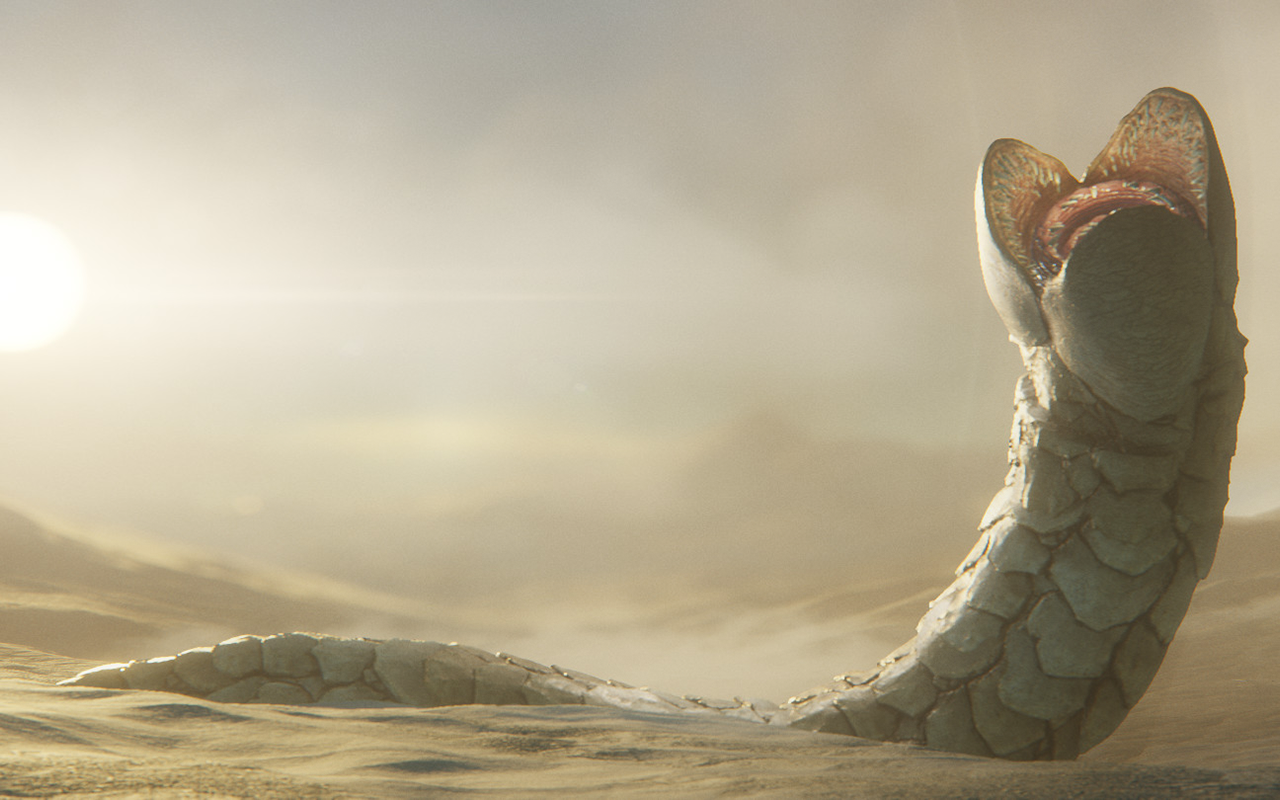
The valakkar is a colossal worm indigenous to the deserts of [Leir III](https://robertsspaceindustries.com/galactapedia/article/RkGeZXw9pp-leir-iii). The largest animal on the planet, in rare cases they can grow over 300 meters long. Valakkar are born from clutches of eggs that are laid in shallow nests in the desert. When the young emerge, they burrow into the sand, where they spend the majority of their lives. They move with the aid of overlapping plates that grip the ground and push them along without the need for limbs. As omnivores, they subsist on a mixed diet of vegetation, detritus, and meat, and have evolved to need very little water to survive. They are known to attack settlements, which makes the construction of permanent habitation on Leir III very difficult. Valakkar that are removed from their home world and introduced to new environments often become invasive.
# DESCRIPTION
The juvenile, adult, and apex stages of the valakkar differ from one another in multiple ways. Juveniles are earthy brown with semi-hard plates that are dotted with tooth-like protrusions, which help them push their way through the underground tunnels they make. Their beaks, not yet fully formed, are covered with a durable, jagged-edged shield that drops off when the juvenile approaches adulthood. Adults are sandy brown and have rough overlapping plates that are cracked in places due to everyday wear and tear, through which you can see the scales' reddish brown interior. Their mouths are ringed with three hard, curved, beak-like mandibles that are used to help the valakkar dig holes and grasp prey. Valakkars that have reached the apex stage are more than 150 meters long, and their plates are dark brown with ruddy scratches across their surfaces. Some apex valakkars that have lived an especially long time can reach over 300 meters in length. All stages of the valakkar have a throat thronged with rows of teeth that continually grow throughout the animal's life.
# BEHAVIOR AND ECOLOGY
After they hatch from their eggs, juveniles from the same clutch often travel together. Without the thick, tough plates they will develop as adults, juveniles are vulnerable to predation, especially on their original world Leir III. Juveniles in groups use strength in numbers to fend off potential threats or to take down prey below and above ground, which they are able to sense through vibrations in the earth. Adults also travel in groups for a time, but they tend to become more solitary as they age. Apex valakkars are fully solitary, and breed rarely.
When a valakkar is ready to breed, it leaves its childhood brood and travels hundreds of kilometers to seek out a suitable mate. Adults are fiercely protective of their nests, only leaving them alone when they must eat. If an apex finds an active nest in its territory it will often claim it for itself, allowing the adults that laid the nest to leave, recover their strength, and lay another clutch elsewhere. Most nests contain between two and ten eggs, but when their population is under threat valakkars lay larger clutches, sometimes up to twenty at a time.
# USE BY SENTIENTS
Valakkars are hunted for their fangs and pearls. The fangs are covered with enameloid, making them as hard as stone and very durable. Manufacturers and artisans use them to craft a wide variety of luxury items. The pearls, which form when a large piece of grit becomes embedded in a valakkar's hide, are valued for their beauty and for their use as an additive to ceramics, metals, and alloys.
# INVASIVE SPECIES
Although valakkars originally evolved to survive in a desert environment, they readily adapt to other biomes and have become invasive outside their homeworld. Locations that do not have large enough predators to hunt the juvenile and adult valakkars or eat their eggs are especially vulnerable to this. Due to this adaptability and their tendency to produce more eggs when their populations are low, valakkars are difficult to eradicate once they have established themselves. In the [Pyro system](https://robertsspaceindustries.com/galactapedia/article/0ODxJM917N-pyro-system), for example, their numbers remain high despite countless extermination efforts from corporations, animal control organizations, and local gangs, among others.
# IRRADIATED VALAKKAR
On [Pyro I](https://robertsspaceindustries.com/galactapedia/article/RMNjxnZp3n-pyro-i), the invasive valakkars have undergone notable mutations after decades of surviving in an area that is constantly bombarded by high-energy radiation. Large, tumor-like growths emerge from their hides as they age, protruding from between their protective plates. These soft spots have made them more vulnerable to attacks from standard weapons. They have also gained the ability to expel radioactive saliva from their throats, making them even more dangerous to approach than a standard valakkar. Their pearls have developed unusual properties that may be applicable to regen technology. Various universities, research institutes, and private corporations are monitoring this population as they continue to survive in spite of the otherwise deadly environment.
# VALAKKAR
Der Valakkar ist ein kolossaler Wurm, der in den Wüsten von [Leir III] (https://robertsspaceindustries.com/galactapedia/article/RkGeZXw9pp-leir-iii) heimisch ist. Er ist das größte Tier auf dem Planeten und kann in seltenen Fällen über 300 Meter lang werden. Valakkar werden aus Gelegen von Eiern geboren, die in flachen Nestern in der Wüste abgelegt werden. Wenn die Jungen schlüpfen, graben sie sich in den Sand ein, wo sie die meiste Zeit ihres Lebens verbringen. Sie bewegen sich mit Hilfe von sich überlappenden Platten, die den Boden festhalten und sie ohne Gliedmaßen vorantreiben. Als Allesfresser ernähren sie sich von einer Mischung aus Pflanzen, Abfällen und Fleisch und brauchen nur sehr wenig Wasser zum Überleben. Sie sind dafür bekannt, dass sie Siedlungen angreifen, was den Bau von dauerhaften Siedlungen auf Leir III sehr schwierig macht. Valakkar, die von ihrer Heimatwelt entfernt und in neue Umgebungen gebracht werden, werden oft invasiv.
# BESCHREIBUNG
Das Jugend-, das Erwachsenen- und das Apex-Stadium der Valakkar unterscheiden sich in vielerlei Hinsicht voneinander. Jungtiere sind erdbraun und haben halbharte Platten, die mit zahnähnlichen Fortsätzen versehen sind, die ihnen helfen, sich durch die unterirdischen Tunnel, die sie bauen, zu bewegen. Ihre Schnäbel, die noch nicht vollständig ausgebildet sind, sind mit einem haltbaren, gezackten Schild bedeckt, der abfällt, wenn die Jungtiere erwachsen werden. Erwachsene Tiere sind sandbraun und haben raue, sich überlappende Schuppen, die durch die tägliche Abnutzung stellenweise rissig sind und durch die man das rötlich-braune Innere der Schuppen sehen kann. Ihr Maul ist mit drei harten, gekrümmten, schnabelähnlichen Mandibeln versehen, die dem Valakkar helfen, Löcher zu graben und seine Beute zu greifen. Valakkars, die das Apex-Stadium erreicht haben, sind mehr als 150 Meter lang und ihre Platten sind dunkelbraun mit rötlichen Kratzern auf der Oberfläche. Einige Apex-Valakkars, die besonders lange gelebt haben, können über 300 Meter lang werden. Alle Stadien des Valakkars haben eine Kehle voller Zahnreihen, die im Laufe des Lebens immer weiter wachsen.
# VERHALTEN UND ÖKOLOGIE
Nachdem sie aus ihren Eiern geschlüpft sind, reisen die Jungtiere eines Geleges oft gemeinsam. Ohne die dicken, zähen Platten, die sie als Erwachsene entwickeln werden, sind Jungtiere anfällig für Raubtiere, vor allem auf ihrer ursprünglichen Welt Leir III. Jungtiere in Gruppen nutzen die Stärke der Gruppe, um potenzielle Bedrohungen abzuwehren oder um Beute unter und über der Erde zu erlegen, die sie durch Vibrationen in der Erde wahrnehmen können. Auch Erwachsene sind eine Zeit lang in Gruppen unterwegs, aber mit zunehmendem Alter werden sie eher Einzelgänger. Apex Valakkars sind Einzelgänger und pflanzen sich nur selten fort.
Wenn ein Valakkar bereit ist, sich fortzupflanzen, verlässt es seine Kinderbrut und reist Hunderte von Kilometern, um einen geeigneten Partner zu finden. Erwachsene Valakkars beschützen ihre Nester streng und verlassen sie nur, wenn sie fressen müssen. Wenn ein Apex ein aktives Nest in seinem Revier findet, beansprucht er es oft für sich, damit die Erwachsenen, die das Nest gelegt haben, es verlassen, sich erholen und anderswo ein neues Gelege legen können. Die meisten Nester enthalten zwischen zwei und zehn Eier, aber wenn ihre Population bedroht ist, legen Valakkars größere Gelege, manchmal bis zu zwanzig auf einmal.
# NUTZUNG DURCH DIE LEBEWESEN
Valakkars werden wegen ihrer Reißzähne und Perlen gejagt. Die Reißzähne sind mit Emaille überzogen, was sie so hart wie Stein und sehr haltbar macht. Hersteller und Kunsthandwerker verwenden sie, um eine Vielzahl von Luxusartikeln herzustellen. Die Perlen, die entstehen, wenn sich ein großes Stück Korn in das Fell eines Valakkars einbettet, werden wegen ihrer Schönheit und als Zusatz zu Keramik, Metallen und Legierungen geschätzt.
# INVASIVE ARTEN
Obwohl sich die Valakkars ursprünglich für das Überleben in der Wüste entwickelt haben, passen sie sich leicht an andere Biome an und sind außerhalb ihrer Heimatwelt zu einer invasiven Art geworden. Orte, an denen es nicht genügend Raubtiere gibt, die die jungen und erwachsenen Valakkars jagen oder ihre Eier fressen, sind besonders gefährdet. Aufgrund dieser Anpassungsfähigkeit und ihrer Tendenz, mehr Eier zu produzieren, wenn ihre Populationen niedrig sind, sind Valakkars schwer auszurotten, wenn sie sich erst einmal etabliert haben. Im [Pyro-System] (https://robertsspaceindustries.com/galactapedia/article/0ODxJM917N-pyro-system) zum Beispiel ist ihre Zahl trotz unzähliger Ausrottungsversuche von Unternehmen, Tierschutzorganisationen und lokalen Banden immer noch hoch.
# BESTRAHLTE VALAKKAR
Auf [Pyro I](https://robertsspaceindustries.com/galactapedia/article/RMNjxnZp3n-pyro-i) haben die invasiven Valakkars bemerkenswerte Mutationen erfahren, nachdem sie jahrzehntelang in einem Gebiet überlebt haben, das ständig von hochenergetischer Strahlung bombardiert wird. Mit zunehmendem Alter bilden sich große, tumorähnliche Wucherungen in ihrer Haut, die zwischen ihren Schutzplatten hervorragen. Diese weichen Stellen haben sie anfälliger für Angriffe mit Standardwaffen gemacht. Sie haben auch die Fähigkeit erlangt, radioaktiven Speichel aus ihrer Kehle auszustoßen, was sie noch gefährlicher macht, als einen normalen Valakkar. Ihre Perlen haben ungewöhnliche Eigenschaften entwickelt, die für die Regenerationstechnologie genutzt werden können. Verschiedene Universitäten, Forschungsinstitute und Privatunternehmen beobachten diese Population, die trotz der sonst tödlichen Umgebung überlebt.
# VALAKKAR
The valakkar is a colossal worm indigenous to the deserts of [Leir III](https://robertsspaceindustries.com/galactapedia/article/RkGeZXw9pp-leir-iii). The largest animal on the planet, in rare cases they can grow over 300 meters long. Valakkar are born from clutches of eggs that are laid in shallow nests in the desert. When the young emerge, they burrow into the sand, where they spend the majority of their lives. They move with the aid of overlapping plates that grip the ground and push them along without the need for limbs. As omnivores, they subsist on a mixed diet of vegetation, detritus, and meat, and have evolved to need very little water to survive. They are known to attack settlements, which makes the construction of permanent habitation on Leir III very difficult. Valakkar that are removed from their home world and introduced to new environments often become invasive.
# DESCRIPTION
The juvenile, adult, and apex stages of the valakkar differ from one another in multiple ways. Juveniles are earthy brown with semi-hard plates that are dotted with tooth-like protrusions, which help them push their way through the underground tunnels they make. Their beaks, not yet fully formed, are covered with a durable, jagged-edged shield that drops off when the juvenile approaches adulthood. Adults are sandy brown and have rough overlapping plates that are cracked in places due to everyday wear and tear, through which you can see the scales' reddish brown interior. Their mouths are ringed with three hard, curved, beak-like mandibles that are used to help the valakkar dig holes and grasp prey. Valakkars that have reached the apex stage are more than 150 meters long, and their plates are dark brown with ruddy scratches across their surfaces. Some apex valakkars that have lived an especially long time can reach over 300 meters in length. All stages of the valakkar have a throat thronged with rows of teeth that continually grow throughout the animal's life.
# BEHAVIOR AND ECOLOGY
After they hatch from their eggs, juveniles from the same clutch often travel together. Without the thick, tough plates they will develop as adults, juveniles are vulnerable to predation, especially on their original world Leir III. Juveniles in groups use strength in numbers to fend off potential threats or to take down prey below and above ground, which they are able to sense through vibrations in the earth. Adults also travel in groups for a time, but they tend to become more solitary as they age. Apex valakkars are fully solitary, and breed rarely.
When a valakkar is ready to breed, it leaves its childhood brood and travels hundreds of kilometers to seek out a suitable mate. Adults are fiercely protective of their nests, only leaving them alone when they must eat. If an apex finds an active nest in its territory it will often claim it for itself, allowing the adults that laid the nest to leave, recover their strength, and lay another clutch elsewhere. Most nests contain between two and ten eggs, but when their population is under threat valakkars lay larger clutches, sometimes up to twenty at a time.
# USE BY SENTIENTS
Valakkars are hunted for their fangs and pearls. The fangs are covered with enameloid, making them as hard as stone and very durable. Manufacturers and artisans use them to craft a wide variety of luxury items. The pearls, which form when a large piece of grit becomes embedded in a valakkar's hide, are valued for their beauty and for their use as an additive to ceramics, metals, and alloys.
# INVASIVE SPECIES
Although valakkars originally evolved to survive in a desert environment, they readily adapt to other biomes and have become invasive outside their homeworld. Locations that do not have large enough predators to hunt the juvenile and adult valakkars or eat their eggs are especially vulnerable to this. Due to this adaptability and their tendency to produce more eggs when their populations are low, valakkars are difficult to eradicate once they have established themselves. In the [Pyro system](https://robertsspaceindustries.com/galactapedia/article/0ODxJM917N-pyro-system), for example, their numbers remain high despite countless extermination efforts from corporations, animal control organizations, and local gangs, among others.
# IRRADIATED VALAKKAR
On [Pyro I](https://robertsspaceindustries.com/galactapedia/article/RMNjxnZp3n-pyro-i), the invasive valakkars have undergone notable mutations after decades of surviving in an area that is constantly bombarded by high-energy radiation. Large, tumor-like growths emerge from their hides as they age, protruding from between their protective plates. These soft spots have made them more vulnerable to attacks from standard weapons. They have also gained the ability to expel radioactive saliva from their throats, making them even more dangerous to approach than a standard valakkar. Their pearls have developed unusual properties that may be applicable to regen technology. Various universities, research institutes, and private corporations are monitoring this population as they continue to survive in spite of the otherwise deadly environment.
# VALAKKAR
The valakkar is a colossal worm indigenous to the deserts of [Leir III](https://robertsspaceindustries.com/galactapedia/article/RkGeZXw9pp-leir-iii). The largest animal on the planet, in rare cases they can grow over 300 meters long. Valakkar are born from clutches of eggs that are laid in shallow nests in the desert. When the young emerge, they burrow into the sand, where they spend the majority of their lives. They move with the aid of overlapping plates that grip the ground and push them along without the need for limbs. As omnivores, they subsist on a mixed diet of vegetation, detritus, and meat, and have evolved to need very little water to survive. They are known to attack settlements, which makes the construction of permanent habitation on Leir III very difficult. Valakkar that are removed from their home world and introduced to new environments often become invasive.
# DESCRIPTION
The juvenile, adult, and apex stages of the valakkar differ from one another in multiple ways. Juveniles are earthy brown with semi-hard plates that are dotted with tooth-like protrusions, which help them push their way through the underground tunnels they make. Their beaks, not yet fully formed, are covered with a durable, jagged-edged shield that drops off when the juvenile approaches adulthood. Adults are sandy brown and have rough overlapping plates that are cracked in places due to everyday wear and tear, through which you can see the scales' reddish brown interior. Their mouths are ringed with three hard, curved, beak-like mandibles that are used to help the valakkar dig holes and grasp prey. Valakkars that have reached the apex stage are more than 150 meters long, and their plates are dark brown with ruddy scratches across their surfaces. Some apex valakkars that have lived an especially long time can reach over 300 meters in length. All stages of the valakkar have a throat thronged with rows of teeth that continually grow throughout the animal's life.
# BEHAVIOR AND ECOLOGY
After they hatch from their eggs, juveniles from the same clutch often travel together. Without the thick, tough plates they will develop as adults, juveniles are vulnerable to predation, especially on their original world Leir III. Juveniles in groups use strength in numbers to fend off potential threats or to take down prey below and above ground, which they are able to sense through vibrations in the earth. Adults also travel in groups for a time, but they tend to become more solitary as they age. Apex valakkars are fully solitary, and breed rarely.
When a valakkar is ready to breed, it leaves its childhood brood and travels hundreds of kilometers to seek out a suitable mate. Adults are fiercely protective of their nests, only leaving them alone when they must eat. If an apex finds an active nest in its territory it will often claim it for itself, allowing the adults that laid the nest to leave, recover their strength, and lay another clutch elsewhere. Most nests contain between two and ten eggs, but when their population is under threat valakkars lay larger clutches, sometimes up to twenty at a time.
# USE BY SENTIENTS
Valakkars are hunted for their fangs and pearls. The fangs are covered with enameloid, making them as hard as stone and very durable. Manufacturers and artisans use them to craft a wide variety of luxury items. The pearls, which form when a large piece of grit becomes embedded in a valakkar's hide, are valued for their beauty and for their use as an additive to ceramics, metals, and alloys.
# INVASIVE SPECIES
Although valakkars originally evolved to survive in a desert environment, they readily adapt to other biomes and have become invasive outside their homeworld. Locations that do not have large enough predators to hunt the juvenile and adult valakkars or eat their eggs are especially vulnerable to this. Due to this adaptability and their tendency to produce more eggs when their populations are low, valakkars are difficult to eradicate once they have established themselves. In the [Pyro system](https://robertsspaceindustries.com/galactapedia/article/0ODxJM917N-pyro-system), for example, their numbers remain high despite countless extermination efforts from corporations, animal control organizations, and local gangs, among others.
# IRRADIATED VALAKKAR
On [Pyro I](https://robertsspaceindustries.com/galactapedia/article/RMNjxnZp3n-pyro-i), the invasive valakkars have undergone notable mutations after decades of surviving in an area that is constantly bombarded by high-energy radiation. Large, tumor-like growths emerge from their hides as they age, protruding from between their protective plates. These soft spots have made them more vulnerable to attacks from standard weapons. They have also gained the ability to expel radioactive saliva from their throats, making them even more dangerous to approach than a standard valakkar. Their pearls have developed unusual properties that may be applicable to regen technology. Various universities, research institutes, and private corporations are monitoring this population as they continue to survive in spite of the otherwise deadly environment.
Properties
| Name | Value |
|---|---|
| indigenousTo | Leir III |
| alsoFoundOn | Pyro I |
Related Articles
Leir III
View
Metadata
- CIG ID
- RMNKXwe51E
- Slug
- valakkar
- Template
- PlantAnimal
- Published
- 3 years ago (2022-11-30T02:01:46+00:00)
Categories
Animals
Tags
valakkar
leir iii