New United: Tragedy in the Skies
Spectrum Dispatch Undefined News UpdateContent
TRAGEDY IN THE SKIES
By. Arthur Kenna
Staff Writer
Traffic is a way of life in the bustling trade port of New Junction on Lo in the Corel system. Located near the Banu Protectorate, the city sees thousands of ships pass in and around its atmosphere on any given day. As commerce was woven into the fabric of the town, the traffic lanes that demarcate ascent and descent paths into the port have been in place since the town’s founding. Historically, there had never been a serious problem.
They can no longer make such a claim.
Shortly before sunrise, the residents of New Junction were ripped from their slumber by a rain of fire and debris when a pair of transport ships collided and crashed to the surface below. While local planning boards and Imperial zoning officials carefully position traffic lanes away from residential areas to minimize potential damage should a tragedy such as this occur, this incident highlighted a possible oversight in their planning.
Ghara Halloway, the early morning attendant at the local TDD, witnessed the whole thing.
“I figured they’d seen each other, you know?” She recounted, still trembling. “There was that moment when I realized that, for whatever reason, they hadn’t seen each other, I felt this pit in my stomach. I didn’t even know what to do.”
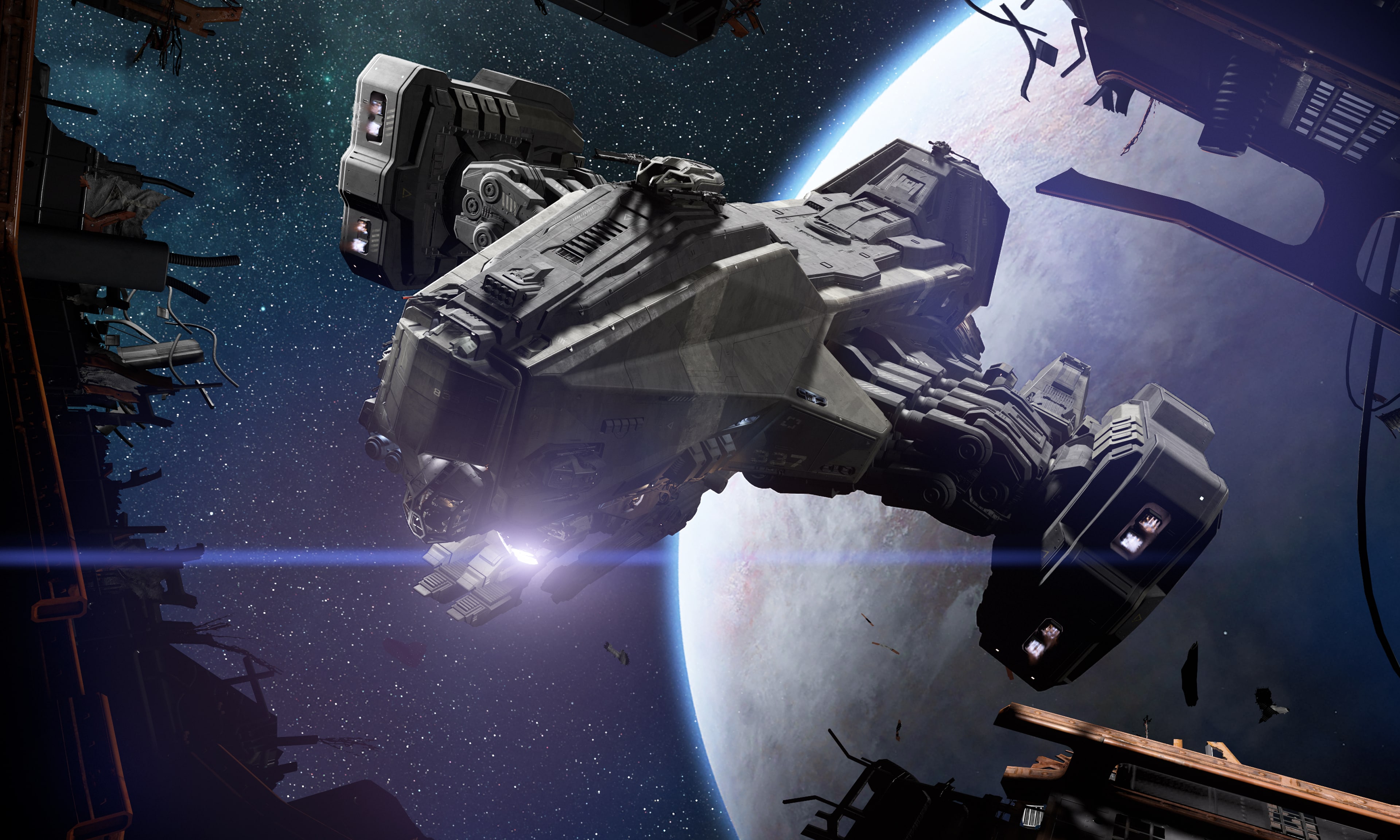
As Vesta, a Retaliator-class ship retrofitted for cargo transport, was ascending off the surface, the pilot, identified from landing logs as Errol Daniels of Croshaw, realized that he was about to collide with an inbound Freelancer, still unidentified as of press time. He executed evasive maneuvers. Unfortunately the Freelancer attempted the same. Their attempts to evade took them both out of the traffic lane where they collided. Their trajectory sent them toward the F-Block just south of downtown New Junction, where they crashed into the Walden Towers housing development.
First responders quickly descended on the crash site to find the structures engulfed in flames. Residents had already begun flooding out of the towers, many covered in soot and ash. As fire technicians went into the building, they were joined by other locals who raced from the surrounding residences to aid in the evacuation.
“What happened today was awful. One of the worst days I’ve seen in my thirty-four years,” said Dan Corvi, a lieutenant of the NJFD. “But, it was incredible to see a community pull together to help avert further loss of life.”
The fires burned for over three hours, severely damaging the central support system of the Walden. Rescue efforts on the higher floors had to be called off until the fire could be brought under control. Remote scanners had to be deployed to continue the search for survivors.
Representatives from the Governors Council arrived to oversee the rescue efforts.
“Of course we are totally committed to offering any support and assistance we can,” Dexter Fowley of the New Junction Governors Council declared in an impromptu press conference. “I’ve already received word from Bresson and even Tanis that they will send whatever help is available to help the families, so I’d like to thank them.”
Fowley went on to address the greater concern.
“It seems that the horrible events of today have exposed a lack of protocol that needs to be addressed. Quite simply, a system for all pilots, both commercial and non, to address flight protocol within traffic lanes and a standardized form of emergency evasion techniques. After I’m no longer needed here, I plan to gather the other Governors and send a message to the Senate asking for the necessary means to devise such a system. We have been content with our system in the past; today has shown us that we need to demand more, so these lives will not have been lost in vain.”
TRAGÖDIE AM HIMMEL
By. Arthur Kenna
Personalverfasser
Der Verkehr ist eine Lebensweise im geschäftigen Handelshafen New Junction on Lo im Corel-System. In der Nähe des Banu-Protektorats gelegen, sieht die Stadt Tausende von Schiffen, die an jedem Tag in und um ihre Atmosphäre fahren. Da der Handel in das Stadtgefüge eingewoben war, gibt es seit der Gründung der Stadt die Fahrspuren, die die Auf- und Abfahrtswege in den Hafen begrenzen. Historisch gesehen gab es nie ein ernsthaftes Problem.
Sie können einen solchen Anspruch nicht mehr geltend machen.
Kurz vor Sonnenaufgang wurden die Bewohner von New Junction von einem Regen aus Feuer und Schutt aus ihrem Schlaf gerissen, als ein Paar Transportschiffe zusammenstießen und an die Oberfläche stürzten. Während lokale Planungstafeln und kaiserliche Zonenplaner die Fahrspuren sorgfältig von Wohngebieten weg positionieren, um mögliche Schäden im Falle einer solchen Tragödie zu minimieren, verdeutlichte dieser Vorfall eine mögliche Aufsicht in ihrer Planung.
Ghara Halloway, der frühmorgendliche Begleiter der örtlichen TDD, war Zeuge der ganzen Sache.
"Ich dachte, sie hätten sich gesehen, weißt du?" Sie erzählte, immer noch zitternd. "Es gab diesen Moment, in dem mir klar wurde, dass sie sich aus irgendeinem Grund nicht gesehen hatten, und ich spürte diese Grube in meinem Magen. Ich wusste nicht einmal, was ich tun sollte."
Als Vesta, ein Schiff der Vergeltungsklasse, das für den Güterverkehr nachgerüstet wurde, von der Oberfläche aufstieg, erkannte der Pilot, der aus den Landeprotokollen als Errol Daniels von Croshaw identifiziert wurde, dass er im Begriff war, mit einem eingehenden Freelancer zu kollidieren, der zum Zeitpunkt der Pressearbeit noch nicht identifiziert war. Er führte Ausweichmanöver durch. Leider hat der Freelancer das Gleiche versucht. Ihre Ausweichversuche führten sie beide aus der Fahrspur, wo sie kollidierten. Ihre Flugbahn schickte sie zum F-Block südlich von Downtown New Junction, wo sie in die Wohnsiedlung Walden Towers stürzten.
Erste Helfer kamen schnell auf die Absturzstelle, um die von Flammen umgebenen Strukturen zu finden. Die Bewohner hatten bereits damit begonnen, aus den Türmen zu fluten, viele davon mit Ruß und Asche bedeckt. Als die Feuerwehrleute in das Gebäude eintraten, schlossen sich ihnen andere Einheimische an, die aus den umliegenden Residenzen rannten, um bei der Evakuierung zu helfen.
"Was heute passiert ist, war schrecklich. Einer der schlimmsten Tage, die ich in meinen vierunddreißig Jahren gesehen habe", sagte Dan Corvi, ein Lieutenant der NJFD. "Aber es war unglaublich, eine Gemeinschaft zusammenzuziehen, um weitere Verluste an Menschenleben zu verhindern."
Die Brände brannten über drei Stunden lang und schädigten das zentrale Stützsystem der Walden stark. Die Rettungsarbeiten in den höheren Stockwerken mussten abgebrochen werden, bis das Feuer unter Kontrolle gebracht werden konnte. Um die Suche nach Überlebenden fortzusetzen, mussten Remote-Scanner eingesetzt werden.
Vertreter des Rates der Gouverneure kamen an, um die Rettungsbemühungen zu überwachen.
"Natürlich sind wir fest entschlossen, jede Unterstützung und Unterstützung anzubieten, die wir leisten können", erklärte Dexter Fowley vom New Junction Governors Council in einer spontanen Pressekonferenz. "Ich habe bereits eine Nachricht aus Brixen und sogar aus Tanis erhalten, dass sie jede verfügbare Hilfe schicken werden, um den Familien zu helfen, also möchte ich ihnen danken."
Fowley ging auf die größere Sorge ein.
"Es scheint, dass die schrecklichen Ereignisse von heute einen Mangel an Protokoll offenbart haben, der behoben werden muss. Ganz einfach, ein System für alle Piloten, ob kommerziell oder nicht, um das Flugprotokoll innerhalb der Fahrspuren zu behandeln, und eine standardisierte Form von Notfallumgehungstechniken. Nachdem ich hier nicht mehr gebraucht werde, plane ich, die anderen Gouverneure zu versammeln und eine Nachricht an den Senat zu senden, in der ich um die notwendigen Mittel zur Entwicklung eines solchen Systems bitte. Wir waren in der Vergangenheit mit unserem System zufrieden; heute hat uns gezeigt, dass wir mehr verlangen müssen, damit diese Leben nicht umsonst gestorben sind."
TRAGEDY IN THE SKIES
By. Arthur Kenna
Staff Writer
Traffic is a way of life in the bustling trade port of New Junction on Lo in the Corel system. Located near the Banu Protectorate, the city sees thousands of ships pass in and around its atmosphere on any given day. As commerce was woven into the fabric of the town, the traffic lanes that demarcate ascent and descent paths into the port have been in place since the town’s founding. Historically, there had never been a serious problem.
They can no longer make such a claim.
Shortly before sunrise, the residents of New Junction were ripped from their slumber by a rain of fire and debris when a pair of transport ships collided and crashed to the surface below. While local planning boards and Imperial zoning officials carefully position traffic lanes away from residential areas to minimize potential damage should a tragedy such as this occur, this incident highlighted a possible oversight in their planning.
Ghara Halloway, the early morning attendant at the local TDD, witnessed the whole thing.
“I figured they’d seen each other, you know?” She recounted, still trembling. “There was that moment when I realized that, for whatever reason, they hadn’t seen each other, I felt this pit in my stomach. I didn’t even know what to do.”
As Vesta, a Retaliator-class ship retrofitted for cargo transport, was ascending off the surface, the pilot, identified from landing logs as Errol Daniels of Croshaw, realized that he was about to collide with an inbound Freelancer, still unidentified as of press time. He executed evasive maneuvers. Unfortunately the Freelancer attempted the same. Their attempts to evade took them both out of the traffic lane where they collided. Their trajectory sent them toward the F-Block just south of downtown New Junction, where they crashed into the Walden Towers housing development.
First responders quickly descended on the crash site to find the structures engulfed in flames. Residents had already begun flooding out of the towers, many covered in soot and ash. As fire technicians went into the building, they were joined by other locals who raced from the surrounding residences to aid in the evacuation.
“What happened today was awful. One of the worst days I’ve seen in my thirty-four years,” said Dan Corvi, a lieutenant of the NJFD. “But, it was incredible to see a community pull together to help avert further loss of life.”
The fires burned for over three hours, severely damaging the central support system of the Walden. Rescue efforts on the higher floors had to be called off until the fire could be brought under control. Remote scanners had to be deployed to continue the search for survivors.
Representatives from the Governors Council arrived to oversee the rescue efforts.
“Of course we are totally committed to offering any support and assistance we can,” Dexter Fowley of the New Junction Governors Council declared in an impromptu press conference. “I’ve already received word from Bresson and even Tanis that they will send whatever help is available to help the families, so I’d like to thank them.”
Fowley went on to address the greater concern.
“It seems that the horrible events of today have exposed a lack of protocol that needs to be addressed. Quite simply, a system for all pilots, both commercial and non, to address flight protocol within traffic lanes and a standardized form of emergency evasion techniques. After I’m no longer needed here, I plan to gather the other Governors and send a message to the Senate asking for the necessary means to devise such a system. We have been content with our system in the past; today has shown us that we need to demand more, so these lives will not have been lost in vain.”
TRAGEDY IN THE SKIES
By. Arthur Kenna
Staff Writer
Traffic is a way of life in the bustling trade port of New Junction on Lo in the Corel system. Located near the Banu Protectorate, the city sees thousands of ships pass in and around its atmosphere on any given day. As commerce was woven into the fabric of the town, the traffic lanes that demarcate ascent and descent paths into the port have been in place since the town’s founding. Historically, there had never been a serious problem.
They can no longer make such a claim.
Shortly before sunrise, the residents of New Junction were ripped from their slumber by a rain of fire and debris when a pair of transport ships collided and crashed to the surface below. While local planning boards and Imperial zoning officials carefully position traffic lanes away from residential areas to minimize potential damage should a tragedy such as this occur, this incident highlighted a possible oversight in their planning.
Ghara Halloway, the early morning attendant at the local TDD, witnessed the whole thing.
“I figured they’d seen each other, you know?” She recounted, still trembling. “There was that moment when I realized that, for whatever reason, they hadn’t seen each other, I felt this pit in my stomach. I didn’t even know what to do.”
As Vesta, a Retaliator-class ship retrofitted for cargo transport, was ascending off the surface, the pilot, identified from landing logs as Errol Daniels of Croshaw, realized that he was about to collide with an inbound Freelancer, still unidentified as of press time. He executed evasive maneuvers. Unfortunately the Freelancer attempted the same. Their attempts to evade took them both out of the traffic lane where they collided. Their trajectory sent them toward the F-Block just south of downtown New Junction, where they crashed into the Walden Towers housing development.
First responders quickly descended on the crash site to find the structures engulfed in flames. Residents had already begun flooding out of the towers, many covered in soot and ash. As fire technicians went into the building, they were joined by other locals who raced from the surrounding residences to aid in the evacuation.
“What happened today was awful. One of the worst days I’ve seen in my thirty-four years,” said Dan Corvi, a lieutenant of the NJFD. “But, it was incredible to see a community pull together to help avert further loss of life.”
The fires burned for over three hours, severely damaging the central support system of the Walden. Rescue efforts on the higher floors had to be called off until the fire could be brought under control. Remote scanners had to be deployed to continue the search for survivors.
Representatives from the Governors Council arrived to oversee the rescue efforts.
“Of course we are totally committed to offering any support and assistance we can,” Dexter Fowley of the New Junction Governors Council declared in an impromptu press conference. “I’ve already received word from Bresson and even Tanis that they will send whatever help is available to help the families, so I’d like to thank them.”
Fowley went on to address the greater concern.
“It seems that the horrible events of today have exposed a lack of protocol that needs to be addressed. Quite simply, a system for all pilots, both commercial and non, to address flight protocol within traffic lanes and a standardized form of emergency evasion techniques. After I’m no longer needed here, I plan to gather the other Governors and send a message to the Senate asking for the necessary means to devise such a system. We have been content with our system in the past; today has shown us that we need to demand more, so these lives will not have been lost in vain.”
Links
No links available.


Metadata
- CIG ID
- 13814
- Channel
- Spectrum Dispatch
- Category
- Undefined
- Series
- News Update
- Comments
- 128
- Published
- 12 years ago (2014-04-16T00:00:00+00:00)