Galactic Guide: Tyrol System
Spectrum Dispatch Undefined Galactic GuideContent
A system on the brink of death, the Tyrol system consists of seven planets orbiting a binary star pair on the verge of going nova. While such estimates are difficult to make, scientists believe that the sub-giant will be explosively consumed by the white dwarf at any time in the next several thousand years. With the risk factor being so hard to calculate, the United Empire of Earth, in hopes of keeping casualties to a minimum, has discouraged long-term settlement of the system. A number of entities, ranging from non-profit educational institutions to high level weapons manufacturers, have invested in expeditions to Tyrol aimed at studying the star’s progress as well as other experiments that would be too hazardous to undertake in more populated systems.
There has however, emerged another reason to make the trek to Tyrol beyond scientific pursuits. With minimal Advocacy and Navy forces present in the system, many come to Tyrol attempting to avoid the watchful eye of the law. Tyrol has emerged in the popular consciousness as being synonymous with danger. The outlaws and miscreants who have chosen to populate the system’s two unofficial settlements are often looked upon as romantic figures, Humans who have made the ultimate decision not to fear death and to live free. The reality is that most inhabitants of Tyrol made the choice out of desperation or simply because they had nowhere else to go.
Inner Planets
The first planet in the Tyrol System is heavily charred thanks to its proximity to the binary stars. A series of connected research stations were constructed below the surface of the planet’s largest surviving moon in 2848, as part of a research proposal to study the dying stars up close. The consortium operating the base was able to do so until their funding was cut in 2901. The facility was quickly overtaken by a small smuggling community made up of squatters and malcontents. Known today as ‘Front Row,’ the moon’s population has an appropriately dark sense of humor about the fact that they will be the first to experience Tyrol going nova. If you do decide to visit, be mindful of the fact that you might find the entire system obliterated without notice should you schedule too long a layover!
Like Tyrol’s stars, the second and third planets in the system have also relatively recently undergone heavy transformation. Scientists believe that Tyrol II was at one time a super-Earth; today, it is a tidally-locked, flame-licked iron core. Tyrol III, although mineral-rich, is a similar graveyard. Discussion is ongoing as to whether it was a world destroyed by the star’s evolution or if it had never completely formed in the first place.
Mid-System
In distant ages, Tyrol boasted a healthy green band that included both the system’s asteroid belt and the fourth planet. The asteroid belt continues to furnish scores of valuable minerals sought by miners that have the resources to bring their own equipment and security forces. The chthonian planet Tyrol IV, speculated to have been a gas giant that has had its atmosphere completely stripped away, has caches of gemstones once generated by the gaseous overpressure, making it a prime focus for those looking to harvest resources in the system.
Tyrol V (Haven)
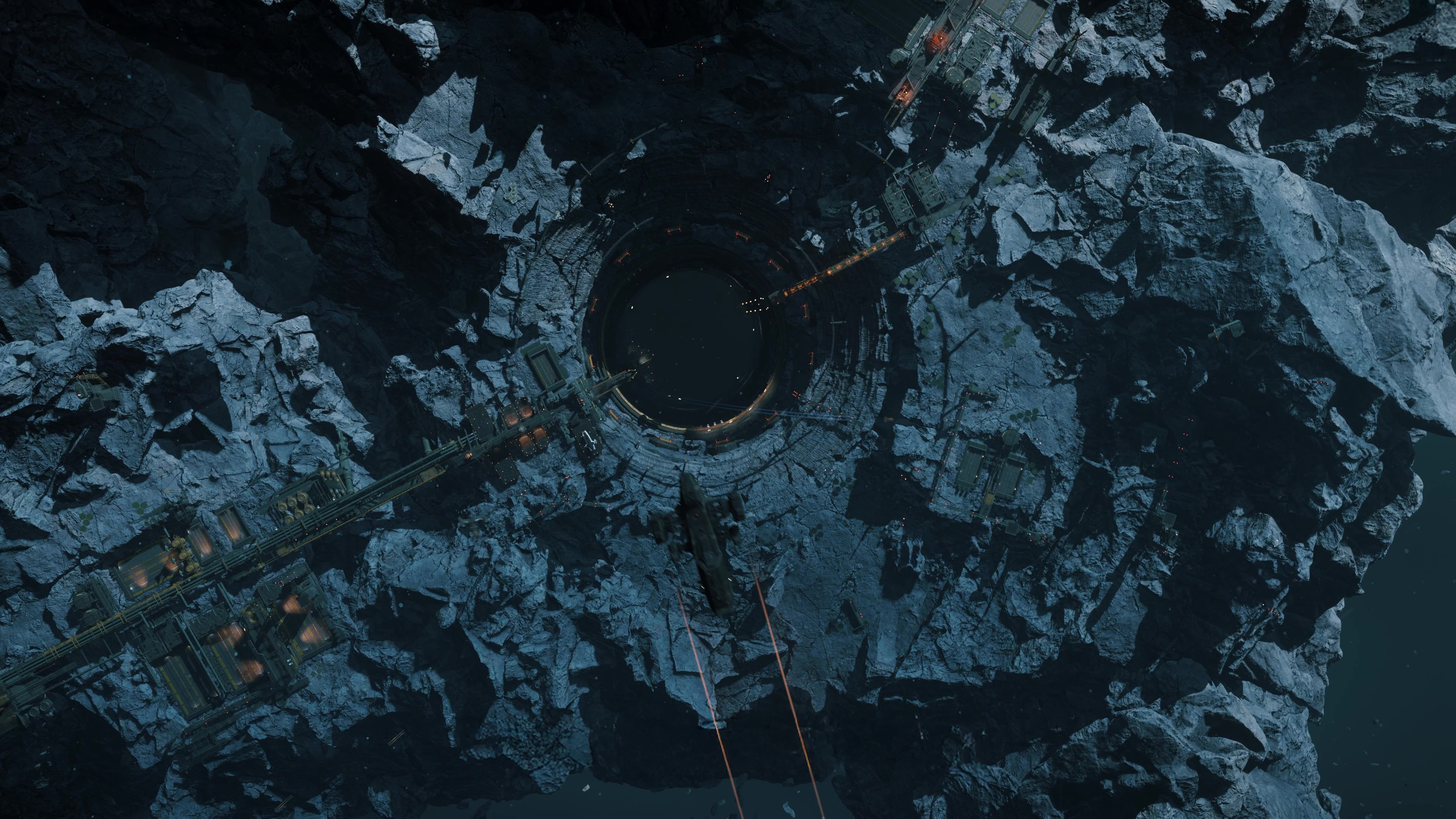
The home of Haven, Tyrol V is interesting for one simple reason — the fact that it has locals at all. Formerly an icy ball, Haven’s surface was melted away by the stars’ evolution. What remains is a desolate rock, snaked with surface chasms and massive underground caverns generated by millennia under ice.
It’s here, hidden beneath the surface’s now-oppressive heat, that a peculiar blend of homesteaders, outlaws and nihilists make their homes. In popular culture, Haven is considered the ‘last chance’ for the irredeemable: a home for those that can no longer make their way in the civilized universe and those that no longer wish to. The ever-present threat of supernova looms large over the planetary culture, but it is ultimately treated as a fact of life. Few who call Haven home have bothered with evacuation transports or early warning systems; if you have chosen to live among the renegades on Haven, you have likely made peace with a star capable of snuffing out your life in an unexpected instant.
Visitors are cautioned not to leave the shade of Haven without heavy thermal shielding. An unprotected individual can survive mere moments of exposure on the planet’s surface.
Outer Planets
The sixth planet in the Tyrol System is a typical Jovian-style gas giant. A churning mass of colored hydrogen and helium, Tyrol VI has thus far been minimally affected by the star’s decline. Independent scientists have built a transmitting rig inside an asteroid at one of the planet’s Lagrange points, aiming to record what will likely be a very impressive light show when the stars go nova. The hope is that the comm drone will be able to clear the jump point before the system burns.
The final planet in Tyrol is a small protoplanet whose formal status is hotly debated among the few who care. Whether it is technically a planet or not, Tyrol VII is expected to be the only orbiting object not immediately impacted when the system goes nova. Several universities have discussed converting the planetoid into a permanent, manned deep-freeze base from which the process can be safely observed, although no one has locked down the requisite funding for such a venture.
Travel Warning
Natural damage sustained during visits to near-nova star systems such as Tyrol is quite typical. Keep a close eye on your ship and make sure to set aside some extra credits for repairs once your visit is over.
Heard in the Wind
“Couple years back, I was posted up at Front Row waiting for some out-of-system grudges to cool when this ship nearly crashes while landing. Guy comes stumbling out, bleeding bad, starts yelling for Yanda, a medic who’d stop by there from time to time. Hollered for hours. Never did figure out that Yanda had drifted a day earlier. Hell of a nice ship, though. Still fly it to this day.”
- Corinda Fenrick, Convicted Assassin, 2928
“Then let us use Tyrol as a reminder of the scope of Humanity’s impact upon the universe. How desperately we try to shape the worlds around us, to force nature to comply with our will, our plans, and just how very small that effort is compared to the destructive power of a star.”
- Dr. Flower Raith, Humanity Verses the Universe, Rhetor University Press, 2935
Das Tiroler System, ein System am Rande des Todes, besteht aus sieben Planeten, die ein Doppelsternpärchen umkreisen und kurz davor stehen, Nova zu werden. Obwohl solche Schätzungen schwierig sind, glauben Wissenschaftler, dass der Unterriese in den nächsten mehreren tausend Jahren jederzeit vom Weißen Zwerg explosionsartig verzehrt werden wird. Da der Risikofaktor so schwer zu berechnen ist, hat das Vereinigte Reich der Erde in der Hoffnung, die Verluste auf ein Minimum zu beschränken, eine langfristige Lösung des Systems verhindert. Eine Reihe von Einrichtungen, von gemeinnützigen Bildungseinrichtungen bis hin zu hochrangigen Waffenherstellern, haben in Expeditionen nach Tirol investiert, um den Fortschritt des Sterns zu untersuchen, sowie in andere Experimente, die in bevölkerungsreicheren Systemen zu gefährlich wären.
Es hat sich jedoch ein weiterer Grund ergeben, den Trek nach Tirol über die wissenschaftlichen Aktivitäten hinaus zu führen. Mit minimalen Advocacy- und Marinekräften im System kommen viele nach Tirol und versuchen, dem wachsamen Auge des Gesetzes auszuweichen. Tirol hat sich im Volksbewusstsein als Synonym für Gefahr herausgestellt. Die Gesetzlosen und Schurken, die sich entschieden haben, die beiden inoffiziellen Siedlungen des Systems zu bevölkern, werden oft als romantische Gestalten betrachtet, Menschen, die die endgültige Entscheidung getroffen haben, den Tod nicht zu fürchten und frei zu leben. In Wirklichkeit haben die meisten Tiroler die Wahl aus Verzweiflung oder einfach weil sie nirgendwo sonst hingehen konnten.
Innere Planeten
Der erste Planet im Tiroler System ist aufgrund seiner Nähe zu den Doppelsternen stark verkohlt. Im Jahr 2848 wurden im Rahmen eines Forschungsvorhabens zur Erforschung der sterbenden Sterne eine Reihe von zusammenhängenden Forschungsstationen unter der Oberfläche des größten überlebenden Mondes des Planeten errichtet. Das Konsortium, das die Basis betreibt, konnte dies tun, bis ihre Finanzierung 2901 gekürzt wurde. Die Anlage wurde schnell von einer kleinen Schmugglergemeinde übernommen, die sich aus Hausbesetzern und Unzufriedenen zusammensetzt. Die heute als "Front Row" bekannte Mondbevölkerung hat einen entsprechend dunklen Sinn für Humor darüber, dass sie als erste Tirol beim Novawechsel erleben wird. Wenn Sie sich für einen Besuch entscheiden, denken Sie daran, dass Sie das gesamte System ohne Vorankündigung ausgelöscht finden könnten, wenn Sie einen zu langen Aufenthalt planen!
Wie die Tiroler Sterne haben auch der zweite und dritte Planet im System in jüngster Zeit starke Veränderungen erfahren. Wissenschaftler glauben, dass Tirol II einst eine Super-Erde war; heute ist es ein tidally-locked, flammgeschlickter Eisenkern. Tirol III ist zwar mineralreich, aber ein ähnlicher Friedhof. Es wird derzeit darüber diskutiert, ob es sich um eine durch die Evolution des Sterns zerstörte Welt handelte oder ob sie sich nie vollständig gebildet hatte.
Mid-System
In fernen Zeiten rühmte sich Tirol eines gesunden grünen Bandes, das sowohl den Asteroidengürtel des Systems als auch den vierten Planeten umfasste. Der Asteroidengürtel liefert weiterhin zahlreiche wertvolle Mineralien, die von Bergleuten gesucht werden, die über die Ressourcen verfügen, um ihre eigene Ausrüstung und Sicherheitskräfte mitzubringen. Der chthonische Planet Tirol IV, spekuliert als ein Gasriese, der seine Atmosphäre komplett zerstört hat, hat durch den gasförmigen Überdruck Edelsteinspeicher, die einst durch den gasförmigen Überdruck erzeugt wurden, was ihn zu einem Hauptfokus für diejenigen macht, die Ressourcen im System sammeln wollen.
Tirol V (Haven)
Die Heimat von Haven, Tirol V, ist aus einem einfachen Grund interessant - der Tatsache, dass sie überhaupt Einheimische hat. Früher ein eisiger Ball, wurde Haven's Oberfläche durch die Evolution der Sterne weggeschmolzen. Was bleibt, ist ein trostloser Fels, der sich mit oberirdischen Abgründen und massiven unterirdischen Höhlen schlängelt, die von Jahrtausenden unter Eis erzeugt wurden.
Hier, versteckt unter der jetzt unterdrückenden Hitze der Oberfläche, findet eine besondere Mischung aus Gehöften, Gesetzlosen und Nihilisten ihr Zuhause. In der Populärkultur gilt Haven als die "letzte Chance" für das Unwiederbringliche: ein Zuhause für diejenigen, die sich im zivilisierten Universum nicht mehr durchsetzen können und die es nicht mehr wollen. Die allgegenwärtige Bedrohung durch die Supernova ist groß über der planetarischen Kultur, wird aber letztlich als Tatsache des Lebens betrachtet. Nur wenige, die Haven zu Hause anrufen, haben sich mit Evakuierungstransporten oder Frühwarnsystemen beschäftigt; wenn Sie sich entschieden haben, unter den Abtrünnigen auf Haven zu leben, haben Sie wahrscheinlich Frieden mit einem Stern geschlossen, der in der Lage ist, Ihr Leben in einem unerwarteten Moment auszulöschen.
Die Besucher werden darauf hingewiesen, den Schatten von Haven nicht ohne starke thermische Abschirmung zu verlassen. Ein ungeschützter Mensch kann nur Augenblicke der Exposition auf der Planetenoberfläche überleben.
Äußere Planeten
Der sechste Planet im Tiroler System ist ein typischer Gasriese im jovianischen Stil. Tirol VI, eine schäumende Masse aus farbigem Wasserstoff und Helium, ist bisher nur geringfügig vom Niedergang des Sterns betroffen. Unabhängige Wissenschaftler haben eine Übertragungsanlage in einem Asteroiden an einem der Lagrange-Punkte des Planeten gebaut, um eine wahrscheinlich sehr beeindruckende Lichtshow aufzunehmen, wenn die Sterne Nova gehen. Die Hoffnung ist, dass die Komm-Drohne in der Lage sein wird, den Sprungpunkt zu löschen, bevor das System brennt.
Der letzte Planet in Tirol ist ein kleiner Protoplanet, dessen formaler Status unter den wenigen, die sich um ihn kümmern, heiß diskutiert wird. Ob es sich nun um einen technischen Planeten handelt oder nicht, es wird erwartet, dass Tirol VII das einzige umlaufende Objekt ist, das nicht sofort betroffen ist, wenn das System in die Nova geht. Mehrere Universitäten haben die Umwandlung des Planetoids in eine permanente, bemannte Tiefkühlbasis diskutiert, von der aus der Prozess sicher beobachtet werden kann, obwohl niemand die erforderlichen Mittel für ein solches Vorhaben bereitgestellt hat.
Reisewarnung
Naturschäden bei Besuchen in Near-Nova-Sternsystemen wie Tirol sind durchaus typisch. Behalte dein Schiff im Auge und sorge dafür, dass du nach deinem Besuch einige zusätzliche Kredite für Reparaturen zur Verfügung stellst.
Im Wind gehört
"Vor ein paar Jahren wurde ich in der Front Row aufgestellt und wartete darauf, dass sich einige Missgriffe außerhalb des Systems abkühlen, wenn dieses Schiff bei der Landung fast abstürzt. Der Typ stolpert heraus, blutet stark, fängt an, nach Yanda zu schreien, einer Ärztin, die dort von Zeit zu Zeit vorbeikam. Er schrie stundenlang. Ich habe nie herausgefunden, dass Yanda einen Tag zuvor getrieben wurde. Aber ein verdammt schönes Schiff. Fliege es immer noch bis heute."
- Corinda Fenrick, verurteilte Attentäterin, 2928
"Dann lasst uns Tirol als Erinnerung an den Umfang der Auswirkungen der Menschheit auf das Universum nutzen. Wie verzweifelt wir versuchen, die Welten um uns herum zu formen, die Natur zu zwingen, unserem Willen, unseren Plänen nachzukommen, und wie gering dieser Aufwand im Vergleich zur zerstörerischen Kraft eines Sterns ist."
- Dr. Flower Raith, Humanity Verses the Universe, Rhetor University Press, 2935
A system on the brink of death, the Tyrol system consists of seven planets orbiting a binary star pair on the verge of going nova. While such estimates are difficult to make, scientists believe that the sub-giant will be explosively consumed by the white dwarf at any time in the next several thousand years. With the risk factor being so hard to calculate, the United Empire of Earth, in hopes of keeping casualties to a minimum, has discouraged long-term settlement of the system. A number of entities, ranging from non-profit educational institutions to high level weapons manufacturers, have invested in expeditions to Tyrol aimed at studying the star’s progress as well as other experiments that would be too hazardous to undertake in more populated systems.
There has however, emerged another reason to make the trek to Tyrol beyond scientific pursuits. With minimal Advocacy and Navy forces present in the system, many come to Tyrol attempting to avoid the watchful eye of the law. Tyrol has emerged in the popular consciousness as being synonymous with danger. The outlaws and miscreants who have chosen to populate the system’s two unofficial settlements are often looked upon as romantic figures, Humans who have made the ultimate decision not to fear death and to live free. The reality is that most inhabitants of Tyrol made the choice out of desperation or simply because they had nowhere else to go.
Inner Planets
The first planet in the Tyrol System is heavily charred thanks to its proximity to the binary stars. A series of connected research stations were constructed below the surface of the planet’s largest surviving moon in 2848, as part of a research proposal to study the dying stars up close. The consortium operating the base was able to do so until their funding was cut in 2901. The facility was quickly overtaken by a small smuggling community made up of squatters and malcontents. Known today as ‘Front Row,’ the moon’s population has an appropriately dark sense of humor about the fact that they will be the first to experience Tyrol going nova. If you do decide to visit, be mindful of the fact that you might find the entire system obliterated without notice should you schedule too long a layover!
Like Tyrol’s stars, the second and third planets in the system have also relatively recently undergone heavy transformation. Scientists believe that Tyrol II was at one time a super-Earth; today, it is a tidally-locked, flame-licked iron core. Tyrol III, although mineral-rich, is a similar graveyard. Discussion is ongoing as to whether it was a world destroyed by the star’s evolution or if it had never completely formed in the first place.
Mid-System
In distant ages, Tyrol boasted a healthy green band that included both the system’s asteroid belt and the fourth planet. The asteroid belt continues to furnish scores of valuable minerals sought by miners that have the resources to bring their own equipment and security forces. The chthonian planet Tyrol IV, speculated to have been a gas giant that has had its atmosphere completely stripped away, has caches of gemstones once generated by the gaseous overpressure, making it a prime focus for those looking to harvest resources in the system.
Tyrol V (Haven)
The home of Haven, Tyrol V is interesting for one simple reason — the fact that it has locals at all. Formerly an icy ball, Haven’s surface was melted away by the stars’ evolution. What remains is a desolate rock, snaked with surface chasms and massive underground caverns generated by millennia under ice.
It’s here, hidden beneath the surface’s now-oppressive heat, that a peculiar blend of homesteaders, outlaws and nihilists make their homes. In popular culture, Haven is considered the ‘last chance’ for the irredeemable: a home for those that can no longer make their way in the civilized universe and those that no longer wish to. The ever-present threat of supernova looms large over the planetary culture, but it is ultimately treated as a fact of life. Few who call Haven home have bothered with evacuation transports or early warning systems; if you have chosen to live among the renegades on Haven, you have likely made peace with a star capable of snuffing out your life in an unexpected instant.
Visitors are cautioned not to leave the shade of Haven without heavy thermal shielding. An unprotected individual can survive mere moments of exposure on the planet’s surface.
Outer Planets
The sixth planet in the Tyrol System is a typical Jovian-style gas giant. A churning mass of colored hydrogen and helium, Tyrol VI has thus far been minimally affected by the star’s decline. Independent scientists have built a transmitting rig inside an asteroid at one of the planet’s Lagrange points, aiming to record what will likely be a very impressive light show when the stars go nova. The hope is that the comm drone will be able to clear the jump point before the system burns.
The final planet in Tyrol is a small protoplanet whose formal status is hotly debated among the few who care. Whether it is technically a planet or not, Tyrol VII is expected to be the only orbiting object not immediately impacted when the system goes nova. Several universities have discussed converting the planetoid into a permanent, manned deep-freeze base from which the process can be safely observed, although no one has locked down the requisite funding for such a venture.
Travel Warning
Natural damage sustained during visits to near-nova star systems such as Tyrol is quite typical. Keep a close eye on your ship and make sure to set aside some extra credits for repairs once your visit is over.
Heard in the Wind
“Couple years back, I was posted up at Front Row waiting for some out-of-system grudges to cool when this ship nearly crashes while landing. Guy comes stumbling out, bleeding bad, starts yelling for Yanda, a medic who’d stop by there from time to time. Hollered for hours. Never did figure out that Yanda had drifted a day earlier. Hell of a nice ship, though. Still fly it to this day.”
- Corinda Fenrick, Convicted Assassin, 2928
“Then let us use Tyrol as a reminder of the scope of Humanity’s impact upon the universe. How desperately we try to shape the worlds around us, to force nature to comply with our will, our plans, and just how very small that effort is compared to the destructive power of a star.”
- Dr. Flower Raith, Humanity Verses the Universe, Rhetor University Press, 2935
A system on the brink of death, the Tyrol system consists of seven planets orbiting a binary star pair on the verge of going nova. While such estimates are difficult to make, scientists believe that the sub-giant will be explosively consumed by the white dwarf at any time in the next several thousand years. With the risk factor being so hard to calculate, the United Empire of Earth, in hopes of keeping casualties to a minimum, has discouraged long-term settlement of the system. A number of entities, ranging from non-profit educational institutions to high level weapons manufacturers, have invested in expeditions to Tyrol aimed at studying the star’s progress as well as other experiments that would be too hazardous to undertake in more populated systems.
There has however, emerged another reason to make the trek to Tyrol beyond scientific pursuits. With minimal Advocacy and Navy forces present in the system, many come to Tyrol attempting to avoid the watchful eye of the law. Tyrol has emerged in the popular consciousness as being synonymous with danger. The outlaws and miscreants who have chosen to populate the system’s two unofficial settlements are often looked upon as romantic figures, Humans who have made the ultimate decision not to fear death and to live free. The reality is that most inhabitants of Tyrol made the choice out of desperation or simply because they had nowhere else to go.
Inner Planets
The first planet in the Tyrol System is heavily charred thanks to its proximity to the binary stars. A series of connected research stations were constructed below the surface of the planet’s largest surviving moon in 2848, as part of a research proposal to study the dying stars up close. The consortium operating the base was able to do so until their funding was cut in 2901. The facility was quickly overtaken by a small smuggling community made up of squatters and malcontents. Known today as ‘Front Row,’ the moon’s population has an appropriately dark sense of humor about the fact that they will be the first to experience Tyrol going nova. If you do decide to visit, be mindful of the fact that you might find the entire system obliterated without notice should you schedule too long a layover!
Like Tyrol’s stars, the second and third planets in the system have also relatively recently undergone heavy transformation. Scientists believe that Tyrol II was at one time a super-Earth; today, it is a tidally-locked, flame-licked iron core. Tyrol III, although mineral-rich, is a similar graveyard. Discussion is ongoing as to whether it was a world destroyed by the star’s evolution or if it had never completely formed in the first place.
Mid-System
In distant ages, Tyrol boasted a healthy green band that included both the system’s asteroid belt and the fourth planet. The asteroid belt continues to furnish scores of valuable minerals sought by miners that have the resources to bring their own equipment and security forces. The chthonian planet Tyrol IV, speculated to have been a gas giant that has had its atmosphere completely stripped away, has caches of gemstones once generated by the gaseous overpressure, making it a prime focus for those looking to harvest resources in the system.
Tyrol V (Haven)
The home of Haven, Tyrol V is interesting for one simple reason — the fact that it has locals at all. Formerly an icy ball, Haven’s surface was melted away by the stars’ evolution. What remains is a desolate rock, snaked with surface chasms and massive underground caverns generated by millennia under ice.
It’s here, hidden beneath the surface’s now-oppressive heat, that a peculiar blend of homesteaders, outlaws and nihilists make their homes. In popular culture, Haven is considered the ‘last chance’ for the irredeemable: a home for those that can no longer make their way in the civilized universe and those that no longer wish to. The ever-present threat of supernova looms large over the planetary culture, but it is ultimately treated as a fact of life. Few who call Haven home have bothered with evacuation transports or early warning systems; if you have chosen to live among the renegades on Haven, you have likely made peace with a star capable of snuffing out your life in an unexpected instant.
Visitors are cautioned not to leave the shade of Haven without heavy thermal shielding. An unprotected individual can survive mere moments of exposure on the planet’s surface.
Outer Planets
The sixth planet in the Tyrol System is a typical Jovian-style gas giant. A churning mass of colored hydrogen and helium, Tyrol VI has thus far been minimally affected by the star’s decline. Independent scientists have built a transmitting rig inside an asteroid at one of the planet’s Lagrange points, aiming to record what will likely be a very impressive light show when the stars go nova. The hope is that the comm drone will be able to clear the jump point before the system burns.
The final planet in Tyrol is a small protoplanet whose formal status is hotly debated among the few who care. Whether it is technically a planet or not, Tyrol VII is expected to be the only orbiting object not immediately impacted when the system goes nova. Several universities have discussed converting the planetoid into a permanent, manned deep-freeze base from which the process can be safely observed, although no one has locked down the requisite funding for such a venture.
Travel Warning
Natural damage sustained during visits to near-nova star systems such as Tyrol is quite typical. Keep a close eye on your ship and make sure to set aside some extra credits for repairs once your visit is over.
Heard in the Wind
“Couple years back, I was posted up at Front Row waiting for some out-of-system grudges to cool when this ship nearly crashes while landing. Guy comes stumbling out, bleeding bad, starts yelling for Yanda, a medic who’d stop by there from time to time. Hollered for hours. Never did figure out that Yanda had drifted a day earlier. Hell of a nice ship, though. Still fly it to this day.”
- Corinda Fenrick, Convicted Assassin, 2928
“Then let us use Tyrol as a reminder of the scope of Humanity’s impact upon the universe. How desperately we try to shape the worlds around us, to force nature to comply with our will, our plans, and just how very small that effort is compared to the destructive power of a star.”
- Dr. Flower Raith, Humanity Verses the Universe, Rhetor University Press, 2935
Links
No links available.

Metadata
- CIG ID
- 14619
- Channel
- Spectrum Dispatch
- Category
- Undefined
- Series
- Galactic Guide
- Comments
- 107
- Published
- 11 years ago (2015-04-15T00:00:00+00:00)