Monthly Studio Report: May 2017
Transmission Undefined Monthly ReportsContent
Greetings Citizens!
Welcome to Monthly Report for May 2017, our detailed list of what the developers in Los Angeles, Frankfurt, Austin, and the UK have been up to for the past four weeks in both written and video form.
CLOUD IMPERIUM: LOS ANGELES
ENGINEERING
Our Tech Design, Engineering, and QA teams have made steady progress in their various disciplines to roll out a fleet of ships that operate under the Item System 2.0 system with updated or new items that can be loaded onto them. We’ve now successfully converted the Origin M50 Interceptor to fully utilize this new system since it is a comparatively easier ship to set up while still allowing us to discover issues that we can address for all 49 flyable ships and beyond.
Our first round through the setup procedure allowed us to identify opportunities to create tools that will further speed our implementation time in the future. This attention to detail has really allowed us to balance power usage, heat generation, associate EM and IR signals, and balance hydrogen and quantum fuel consumption across our ships and a lot of insight into how the player could consider upgrading their ship components.
The engineering team also made major strides in the areas of persistence and inventory by creating a technique for clients to request persistent information. This work will be incorporated into several large features in 3.0 such as cargo, shops, commodities, Air Traffic Control, Ships, Players, and more. It will allow game code to query for and modify data for entities that aren’t even spawned, such as selling cargo from a ship that’s landed at a station and hidden away by ATC. These features will also allow game code to correctly re-spawn and orient ships or items that have been abandoned on planets or in space, meaning you can expect the world and your possessions to remain in the same state in between game sessions.
We’ve made progress on the system which allows one to park their ship inside of another to transport safely from point A to point B. This was based off of a rework of the landing mechanic that’s currently in the game. The new docking areas are set up the same way as landing pads used within the universe, taking components with a different interface and a new mechanism for locking. There has also been some work on the physics of getting the Ursa Rover to sit in the cargo bay of the Constellation Andromeda without popping through walls and jittering.
The team has also now also converted the basic quantum drive to Item 2.0, giving it the ability to store quantum travel and other navpoints. This means that all discovered quantum travel points can be set as travel destinations at any time regardless of distance and signature strength. This also involves working closely with Design on a way to better display them to the player in a logical interface. From here, we can move on to pure 2.0 systems as Quantum Drive now uses the pipe system for fuel and power checks as well as make quantum drive look and sound as awesome as it behaves by connecting VFX and Audio to the actual transit.
This month we’ve implemented a several new features into our Intelligent Flight Control System (IFCS). On the physics side, we’ve implemented an autopilot system to allow AI and any other systems to utilize IFCS, like takeoff, landing or quantum drive, or anywhere a ship control needs to be automated. We’ve also added support for Cinematics to be able to automate the motion of thrusters on ships, so they don’t need to hand animate every thruster action in a cinematic. With this in place, the thrusters on a ship will now behave as intelligently as they do in game.
SHIP TEAM
Our ship team made steady progress on the RSI Aurora since our last update. The art team has now completed the seat geo for the ES and LN variants and started work on the engines while tech design is implementing these new assets directly into the ship archetype making this our first scratch built Item System 2.0 ship. Also, the Anvil Terrapin’s exterior is nearing completion of the greybox phase and has near final animation.
TECH ART
As you know, the scale of Star Citizen is such that even large teams need some additional support in the form of outsourcing partners. One of the difficulties with outsourcing tends to be ensuring a team’s refined processes are adhered to and all assets that are delivered meet our requirements for easy integration into the game. As you’ve heard about in the past, there are many pipelines and processes within Star Citizen and some are more complicated than others. Onboarding an outsourcing team requires tools that can be installed and run in an external environment with limited support from us in order to save time. So this month, the tech animation team developed a standalone installer that automatically mounts sample assets, tools and documentation, no matter if it’s for Motion Builder or in Maya. We can now easily minimize the ramp-up time for any potential partners and while allowing them to benefit from the extensive internal tools that are developed for our needs.
Tech animation is responsible for the character’s skeleton and, like all things, creating a character skeleton can be done manually or automatically. Typically, a skeleton rig is not so complex and tends to be somewhat static, so it doesn’t change often, but, when you’re on the cutting edge of technology, updates are often required. For example, an animation engineer may require the addition of a specifically named joint for code purposes, thus requiring changes to all skeletons in the game, which would be a time consuming process if done manually. We’ve now completed our SRC (or Source) rigging scripts and can make these kinds of updates quickly, easily, and bug-free. The time and energy saved is not only for the rigging team, but also for the animation team who will be utilizing these skeletons day to day. A programming analogy would be to think of the rig as a compiled executable. The SRC rigging scripts are the source code. If we need to add something to the skeleton, we update the source code and compile it rather than patching the executable. You just build it anew.
The tech art team also created a new data structure that will allow players to customize their eye color. This supports the first pass of the character creator where players will be able to select from a preset eye color pallet.
In addition, tech art took advantage of a feature provided by the LA Engineering team that allows the body skin tone to automatically adjust to the skin tone of the face through the magic of item port tags. In the case of NPCs, this will maintain consistency for our characters and in the case of players this will ensure your body always matches your face.
They’ve also created a process to generate SDF (or signed distance field) volume textures, which are used in conjunction with our atmospheric flight model to simulate engine trails. We’ve made solid progress on art tools for our various art teams. One such tool is our “unbevel” tool, which simplifies our LOD (or Level of Detail) creation process to increase performance on anything beyond our first LOD and speed up delivery time for our ship pipeline.
Finally, this month we’ve taken large steps forward on our procedural system for outposts including color tinting, material variation, and even variation of props and their placement within the outposts.
CHARACTER TEAM
Our character team have added more armor suits to the armory. We now have a fully rigged female medium marine and the male heavy outlaw suit going has moved from concept toward final implementation. We’re also far along on many new uniforms, costumes, characters, and heads for Squadron 42. The male OMC light is wrapping up its initial high poly pass and has moved onto in-game mesh creation. The male Shubin miner uniform has begun in-game texturing now that the mesh is complete. A new outlaw uniform has just finished up concepting and is on its way to high poly. Our Female Marine BDU finished up sculpting and is headed to in-game modeling.
With the FOV slider work in-progress for 3.0, the character team also spent time working on our helmet interiors starting with the heavy outlaw and heavy marine which is used by our UI team to establish necessary boundaries.
NARRATIVE
The Narrative spent the month divided. Dave and Will shipped off to the Wilmslow office to spend some time with Design and attend Squadron 42 level reviews with Chris. During that time, they also generated a handful of new scripts for 3.0 to cover [REDACTED] [REDACTED] and [REDACTED] which was very exciting to expand upon. Meanwhile, back in the LA office, Adam and Cherie were holding down the fort. Adam was juggling Jump Point articles, News Updates, while working on components for 3.0 while Cherie was maintaining her stalwart battle against chaos on our internal wiki and spearheading several new archiving systems to catalog the massive amounts of performance capture data as well as video captured for our various marketing and community programs.
QA
QA has been busy supporting the transition into the Item 2.0 conversion by taking an early look at the ships, and determining how to convert all existing checklists to the new 2.0 framework. When making any impact to our game, QA has to test everything, which in this case, included all the different interaction points. Prior, the interaction points were limited to the exit and entrance, but now checks have been added for Ladder Entry/Exit, EVA entry/exit, Power On/Off, Engines On/Off as well as looking ahead for features not yet implemented such as Ejection and cases in which more than one player attempts a particular interaction.
CLOUD IMPERIUM: AUSTIN
DESIGN
Right now the ATX Design Team is completely focused on things related to 3.0 or near term goals.
First off, the team has been building State Machines for the first few NPCs that we’ll be implementing. To provide a bit of background, a “State Machine” is a way to visualize how the NPC will behave, it not only acts as a behavior tree, but also informs the animation team when and where our animations need to transition between each other. We hand off these state machines to the Animators who then approve the behavior or give it back with feedback. Not only does this drive the animations we need, but also guides the NPC’s behavior setup in Subsumption.
The Nav Beacon System is a new mechanic that will allow players to create their own roads throughout a given Star System. These are physicalized objects that are deployed through utility mounts and give players visual markers to lock onto for Quantum Travel while in space or, if used on planetary surfaces, will provide a known point to fly towards. Players will be able to grant “Use” access to others as well as “Hack” another person’s beacon, both allows you to use someone else’s Nav Beacon. There are multiple sizes and quality levels that dictate several things: how far they can be seen from and how long they last before they need to be serviced by the Owner. Finally, because they are physical objects you will be able to not only find, but destroy someone else’s Beacon, which should make for some interesting gameplay.
Finally, the team have been organizing Miles Eckhart’s assets (which are being polished by the animation team in our Derby Office), creating his state machine, and getting his initial behavior up and running in Subsumption. Eckhart will be unlocked to the players by accumulating ‘Reputation’ with him, earned by completing other available missions. Once unlocked, you can visit him for a wide variety of missions. The new “Mission Manager” will drive his selection, but you will be able to choose from anything he currently has available. Setting up this character will provide a lot of great information for future Mission Givers, so we’re looking forward to getting him out there.
PU Game Director Tony Zurovec has had his hands full with several things this month like reviewing mission scenarios for 3.0, but a major part of his focus was on Subsumption. As a reminder, Subsumption is the data-driven and highly abstracted foundation on which all of the AI and mission logic in Star Citizen is constructed. Tony finished the conversion of the Subsumption tech to Linux for integration with our backend services and completed the Shopping Service for game code to start hooking the new shopping tech into.
SHIP TEAM
Ship Artist Josh Coons has been working on the ship LODs for the Cutlass Black. It’s a very time-consuming task since our LODs are mostly handmade and the ship he’s working on is quite large with many pieces that have to be optimized. In addition to optimizing the mesh, he also reduces the material IDs, as he goes down the LOD chain. This way the mesh will have less draw calls from a distance and be more efficient on the engine.
ANIMATION
This month, the PU Animation Team finished up the two-handed carry animations for a variety of postures (such as standing, crouching and zero-g), a number of crate sizes and even a variety of heights. Code and Tech has hooked it up so that you can retrieve cargo in zero-g, EVA back to your ship and stow your acquired loot in your cargo bay. Animation Director Steve Bender stopped by the office for a visit, so we ended up doing a last minute mocap shoot in our office where he ran around like a crazy person capturing all our FPS starts and stops for a stocked rifle locomotion set. We also took this opportunity to get Sandy Gardiner in the suit and capture some exercise motion for our female characters when they decide to do a workout in our exercise usable. On the second day, lead animator Bryan Brewer hopped in and captured needed animations for the crouching carry animations. Animation worked closely with design to start work on some of the interactable NPCs, such as bartenders and shopkeepers.
The Ship Animation Team continued to improve upon the cockpit experience. They worked with designers and programmers over in the UK to update our gforce blendspace poses, utilize a low pass filter for smoother, smarter camera motion; as well as adjust the cockpit geometry to allow for button presses. In addition to this, we created a system that will allow us to make comms calls within the ships during flight.
IT/DEV OPS
Our Server Engineers have been providing support for the shopping service which communicates with Diffusion and the game systems through our new Diffusion gateway. The gateway allows external/non-Diffusion services to communicate with the game as if they were an internal Diffusion service.
We’ve also focused on integrating the Diffusion code into the primary game development branch that will be deployed with 3.0. This was a massive integration with a lot of moving parts and required a large amount of collaboration between Server Engineering and DevOps. The effort has taken a few weeks to get everything moved over, tested, and in a state where it can be deployed.
We have also been working on a Service Creation Tool. This tool will provide a simple to use UI allowing engineers to create new services, add/remove or modify components, and management in source control. The output of the tool is a basic service shell and set of source files that are customized for the new service. When complete, this will be a huge time saver and allow new engineers to create services without worrying about any boilerplate work and thus allowing for rapid service development. We have started to add Star Citizen specific extensions to Ooz. For those who don’t know, Ooz was written by Lead Server Engineer Jason Ely and is the scripting language that drives Diffusion. These extensions expose SC-specific constructs to Diffusion, allowing services to provide more intricate support for game-play features which help move the game into a more distributed architecture.
We’ve also continued work on the Router Mesh functionality. This feature distributes services over multiple router endpoints and provides redundant communication paths between other services. The mesh will use a technique to isolate high bandwidth services away from lower bandwidth or more critical services. The primary responsibility of the router mesh is to provide a high level of service availability and performance.
Finally, the DevOps team has been busy optimizing the build and publishing systems. The game builds are growing rapidly as content continues to pour in for 3.0, so we’re constantly tweaking and tuning to keep up with the demands of the dev team. Ahmed and his team have been collecting feedback on network performance from our three locations and comparing that to internal data, so we can optimize network performance wherever possible. This is an ongoing task but we’ve already found some good opportunities for improvement in this area.
QA
For May, Austin QA worked heavily on regression of bugs, particularly on a massive sweep through our open bugs to see what items are still valid given the new systems and tech coming online for both PU and S42. This allowed us to eliminate a considerable number of bugs before they ever reached development, saving our busy developer cohorts time they would have spent investigating issues that were no longer occurring in the latest builds. Major testing items for our group included actor serialization, multi-threaded resource containers and network transport queue for the Engineering teams. We continued testing the Moons in the Stanton system for any potential issues such as collision and performance testing. New vehicles, ships and FPS items came online throughout the month (including the Behring P8-SC SMG which we were very excited to play with) in addition to testing the continued Item 2.0 implementations. All of which have kept our Arena Commander and Star Marine testers very busy.
On the new system front, we’ve been working very hard testing the new procedural breathing and stamina system as well as the new Air Traffic Controller system. We’ve also been testing some updates to our current game Launcher – primarily bug fixes to our players but also a few quality-of-life fixes, continued providing additional support for the animation groups here in Austin, including mocap file cleanup, supporting setup and teardown for pick-up shoots and in-game video captures for final reviews. Regular Editor and engine testing has continued as well, with ATX QA completing regular smokes of the subsumption editor, procedural planet tools as well as our normal editor testing.
PLAYER RELATIONS
The Player Relations team has been extremely busy preparing for upcoming 3.0 work. The biggest item that players will see is the New Player Experience that will ultimately go on the website. These are intended to provide helpful guides for new players entering into the Star Citizen universe and help bring them up to speed with the game and its various mechanics.
We’ll also be adding to the Evocati ranks in the coming weeks, and are excited to announce that we’ll be adding headcount in Austin, Manchester, and Frankfurt.
FOUNDRY 42: UK
SPRINTS
Let’s start with the ongoing Sprints.
We’ve completed the initial groundwork for the Air Traffic Controller sprint and moved on to more of the functionality including communicating with the ATC. When you want to land, you can now target the station and, using the player interaction system, select the option to request a landing. You will then start a communication channel with the NPC and have a dialogue with them. We’re currently in the process of implementing this in real world test cases, for example in our PU map we’re setting it up at port Olisar so both requesting your ship as well as landing will all go through the ATC system.
As part of a push to make Star Citizen more accessible, we’re introducing a new Hint System to lower the initial learning curve for new players. As they take their first steps into Star Citizen universe, various hints will get displayed on the UI after a given amount of time to indicate how to interact with the different systems, such as entering the proximity of the ASOP terminal or letting them know about the mobiGlas feature.
For 3.0, we’ve also changed how the Player Spawns into a level. Currently, each bedroom in the PU map has its own spawn point and then some flowgraph logic to position them correctly in the bed, and play the correct animation. As you can imagine, based on the number of spawn locations in the PU, this is adding up to a lot of flowgraph and setup. Going forwards, we’re creating a new spawn component which can be added to any entity. For example, if this component is added to a bed, we will then assume the player will need to be attached correctly to it and play the normal lie down idle animation automatically. This now means we can now remove a large amount of flowgraph and simplify the setup of the level.
We’ve made progress on implementing the mission broker and the mission manager systems. These will determine how a mission and all its objectives are presented and given to the player to complete. This system will also track what missions a player already has and how far through the objectives they are.
In the AI Locomotion sprint, we’re spending time refining the way the AI walks and runs around a level. We have found that just following the path which is determined by the path finding code gives a result which looks very unnatural. We’ve now implemented a new path smoothing algorithm which makes AI traverse around corners in a much more natural way, so it doesn’t look like they’re just going from one point to the next. Because they are generally moving to get to a particular place we are currently working on making reaching that point, and going into whatever animation is required, be as seamless as possible.
GRAPHICS
The graphics team wrapped up the major features mentioned in our last update such as lit fog, real-time environment probes for planet lighting, and the render-to-texture work for holograms and video comms. In addition to general bug-fixing, they’ve also tweaked our lighting model to improve the appearance of ground reflections of the sun on planets at sunset and sunrise.
ANIMATION
On the FPS weapons side, the UK animation team completed the previs for the new Gemini L86 ballistic pistol and nearly completed the Arrowhead with just some minor polish work left on the reload states.
The takedowns have gone from an implementation pass to a refined animation pass, with concentration on stronger composition, solid posing, clear silhouettes, and polish to the mocap data to better sell the overall action.
The AI animation work is ongoing with improvements to the posing of enemy patrol states and reactions to sight and sound.
The team are also helping to export the remaining gameplay story cinematic scenes, so that design can implement, and better visualize the story within the levels they are working on.
The Derby animation team are finishing off the facial animations for the 3.0 Mission Givers and Eckhart’s body animation is being polished and implemented too. Last week, some of the team attended a PU audio and facial shoot in London. They captured some awesome footage from a great set of actors and we think it will go a long way to fleshing out the Universe.
VFX
The VFX Team have continued tests with the new Lightning Entity, this time focusing on smaller-scale, interior electrical effects. They also tested the features in the new particle system, as provided by the Graphics team including better trail options, and depth-buffer-based collision (required for sparks, for example). The team started the first Levski exterior VFX Pass which includes refinery flames and general ambiance. Flight-ready VFX, including interior damage and thruster effects are now done for the Cutlass rework and the team have continued on the Atmospheric Flight Effects sprint, with heavy focus on playtesting, bug-fixing and testing new features as provided by the Graphics and Engineering teams.
Outside of these features, the team continued ongoing polish on the VFX for new weapons, and reworked versions is continuing up to the 3.0 release.
SHIP ART
The Origin 600i has finished its concept phase and the next ground vehicle has been rocking along. We’re just about to kickoff a whole new round of ships, but can’t spoil which ones.
In Reclaimer news, the team completed work on the drone room. They were keen to focus on the drone deployment and storage mechanism, and are excited to see this become functional when drones come online. The Engine room has also been completed, making use of re-purposed assets from the Idris where possible. All the reused assets go through a process of re-skinning with Reclaimer materials to make everything feel consistent and cohesive. On the exterior, the damage setup is nearly complete with internal geometry being built to be exposed when the ship takes damage.
The initial batch of work on the Derelict ships and wreckage elements are coming to an end with support is now in place for design to create mission scenarios based on derelict ships in space or on planets. Material variations of each ship have been created, so that depending on which planet the ships are placed on; they will look visually embedded to the surface type. All that’s remaining for this phase are the technical elements such has LODS, Vis-Areas and Collisions.
The Gladius cockpit has been revamped and re-lit for the new “Cockpit Experience” sprint.
This has been an exercise in improving the player’s feeling of immersion and has been a collaboration between several departments. From the art side, this was achieved by clearing a channel between the top support screens to reveal the Gatling gun on the nose, making a range of interactive buttons for more interesting animations and remodeling the throttle for improved functionality. The cockpit canopy has been extended for better clarity and new interior lighting has been added to help bring it all to life.
On the Hull C exterior, the team is nearly finished with the landing gear mechanisms and detailing the inner bay areas, while we create the initial animations and work towards final art. They finished modelling the front section of the interior and the section is getting a detailed lighting pass using the new light groups controller. Once this is complete, the tunnel section and rear engine room will be modeled and lit in the same fashion.
WEAPON ART
On the ships weapons front, we have taken the Klaus & Werner styling from the FPS weapons and used that influence to work on a K&W Laser Repeater. At the other end of the spectrum, we also concepted some cool-looking MaxOx Neutron Repeaters.
ENVIRONMENT ART
The Art team continued to hammer away at Shubin mining station interiors and focused on improving the overall “believability” of the structure, by zeroing in on the functionality of the individual areas.
Adding Texture and Visual Interest to our Space overworld has been a big priority for the 3.0, so the team has turned to giving our Space Scenes a major face-lift with the goal of diversifying environments and adding a unique flavor to each of our locations. Large volumes of inter-planetary space dust have been added and the team re-worked some of the distant nebula in the Stanton System to this end. We also worked on large-scale nebula rendering techniques, using the Pyro System as a test case. These techniques will help us create our interstellar scale nebula.
For Squadron 42, the team delved deeper into the look and feel of the Coil, which plays a major role in the first campaign. The team explored using powerful fluid simulations to help achieve this look.
For the Truckstop station materials, the team finalized the panels shapes, adding some hue and gloss variation and elements of wear and dirt. The unclad frames are also being finalized, with structural elements surrounding machinery and high frequency detail. They continued to work on the solar panels, trying different ideas out, and getting them to a stage where they gel well with the rest of the truckstop. The team also finalized the main hull pieces and proceeded to the front and back sections of the station. Special consideration is being made to ensure all the pieces work well as a modular set and don’t look visually repetitive. Detailing areas around the landing pad is ongoing and this includes adding more visual complexity to the back of the landing pad as well as the borders around the edge of the pad.
In relation to the Surface Outposts; more of the archetypal outposts have had a dressing and lighting pass, including an emergency shelter for crashed pilots to take refuge which can be found dotted around the moons. Also, an illegal drug lab, which may, or may not, be on one of the moons. The team also worked on providing further infrastructure to habitation pods including comms arrays, water collectors and small deploy-able communication units.
Planet integration materials for the outpost exterior has been tested and tweaked for sand and ice biomes. This determines the amount of dirt build-up that can vary for each biome, and can be adjusted for each outpost for variation.
Branding prototyping has been explored for procedural locations with the Rayari brand as a test case. This includes the main logos and text, along with secondary logos, idents, lines and signage. This would procedurally swap brands depending on who owns the outpost.
DESIGN
The live design team plowed ahead with content for the PU, but they’ve made sure to spend a bit of time giving some much-needed love to some of the existing Arena Commander and Star Marine maps. Dying Star has received a new lease of life with the addition of procedural asteroids, which give a more cinematic dogfighting experience. Both of the Star Marine maps have received a number of balancing changes, based on feedback from the community.
In Echo Eleven, we’ve made some adjustments to the capture points, and in Last Stand and Demien we’ve added a sneaky new EVA route from the Marine spawn zone to landing pad B.
UI
On the UI front, the team chipped away at all the various features of the new MobiGlas. Progress has been made getting the home screen fully functional and displaying elements of the actor status, atmospheric readouts, suit status readouts, as well as personal overview. The Player Loadout Management app is now working on the mobiGlas. This interface should easily carry over to handle ship-loadout customization as well. The next big task is to get the new overhauled Mission Manager and Universal Inventory Manager up and running as well. The team also worked to get the mobiGlas UI to be projected using the new render-to-texture tech, which will make the UI look much more properly integrated within the game world.
Work has continued on designing and implementing the upcoming character customization menu on the front-end, which will be introduced in 3.0. From here, players will be able to create and customize their various characters for the PU, obviously depending on how many character slots the player has. Initially, the level of customization will be limited, but it will expand in the future to provide much more granular control of character features.
AUDIO
The audio team has been working on several features for the 3.0 release, including the procedural planet ambiance system, which is designed to place appropriate sounds around the player dynamically as they traverse planetary bodies.
They’ve also refined the approach on how we produce ship armaments and first person weapon audio, further ensuring they’re satisfying for the player, while reflecting player-driven modifications and customization.
The team produced sound schemes for the different kinds of diegetic user interfaces that will feature in 3.0, including the kiosks – the audio direction of these vary to suit their tech level, and this presents some great opportunities to reinforce their look and feel.
Preparation has begun in earnest for a Foley session at Pinewood Studios, to ensure audio coverage for character clothing and armor; and content to extend the footstep system further. Progress has also been made on the foundational audio tech such as dynamic bank loading, the actor-status system, the audio propagation system, and the music logic system.
In addition, over the past month, the team produced content for derelict ships, bespoke 3.0 location sound design, ship damage VFX audio support, ship audio improvements and more.
FOUNDRY 42: DE
AI
The AI team started a sprint focused on human combat, with the end goal of improving all the combat work done in the previous months into something that represents our final quality. We initially focused on all the shooting functionalities, making sure the basic controls for accuracy and friendly fire are implemented correctly then dove into improving behaviors related to awareness, such as reactions to potential threats seen or heard from a wide range of distances.
They also finished converting the ship AI to a newer updated version, meaning that weapons, shields, and countermeasures now work with the new Item 2.0 system. For now, it also supports the old ships to avoid any compatibility issues that may creep up. This is part of an ongoing effort to move ships away from Kythera AI control and bring us one step closer to fully switching to Subsumption-based AI for all ships.
The past month, the AI team did some additional work on the AI modules. These modules represent an item that can be attached to a seat (any seat of a spaceship or a turret) and execute a behavior logic defined with the Subsumption editor. You might think of it as a piece of custom software that can be instructed to take control of the same items that are available to a player sitting in the same seat. It might work as an autopilot or autonomously take control of a turret and fire at an enemy target. This feature is crucial in multi-crew ships where the pilot might assign specific activities to the AI modules instead of another player or NPC.
SYSTEM DESIGN
The System Design team continued working on the Air Traffic Control system, adding conversations with the traffic controller and a smart system for allocating landing pads for pilots wanting to land or take off.
They also updated all our doors to Item 2.0, which now makes them modular and a lot easier to implement. These changes included switchable loadouts for each door, the ability to connect two rooms so air can travel between them and provide the functionality needed for new systems that are already in the works such as breaching, hacking. They also started reworking airlocks so they work better with the room and atmospheric systems.
The team also did some very rough prototyping work on dynamic advertising which will contextually fill in the in-game panels/screens throughout stations with content that is reflecting the interests of the player that enters its proximity. The same system could be used for showing large scale broadcasts and warnings throughout the universe based on what is happening in the game at that specific moment, either globally or locally.
LIGHTING
Our Lead lighting artist Chris Campbell continued work on the surface outposts (particularly on the habitation sets) and coordinated with the UK Environment Art team to stay in sync with all their updates to assets and dressing.
Another issue Lighting has been trying to solve for 3.0 is how to improve the amount of visibility on the dark side of the moons. Previously, without any interest objects in the sky, the planet surface would be far too dark since it would have to rely solely on cubemaps, therefore the player wouldn’t be able to see any detail in the environment. Chris worked with the engineers to add another layer of atmospheric glow and irradiance which allowed us to brighten the atmosphere, giving a nice gradient that shows the shape of the horizon and some depth in front of the player. The irradiance provides a base level of brightness on the actual surface geometry, so the player can faintly see themselves as well as the surface around them. Finally, he’s also been providing support for S42 environment lighting and setting visual benchmarks for the levels.
ENGINE TEAM
The Engine Team implemented the initial version of our new IO scheduler which will improve performance by only streaming in textures, meshes, sounds, etc that are being used to stay within a memory budget. Eventually, it will also allow the job manager to better utilize CPU cores in cases where streaming jobs are waiting for IO. Moreover, it will lay the groundwork for a version of the scheduler specifically designed for SSD drives to exploit their superior random disc access properties that will allow for multiple concurrent data streams with high throughput. All in all, this ensures all data is available in time for complex scenes to render without having to wait for LODs and all the related artifacts. Meanwhile the incremental patcher moved into initial internal QA testing. As previously discussed, this system will deliver builds incrementally to devs and gamers alike, so every time you update the game you’ll only need to download what has actually changed or been added since the last time rather than the entire build which will make the update process much faster.
We also revived our internal memory analysis tools for Linux to help find and fix memory leaks on server instances much faster. Memory leaks are one of the contributing factors for server stability and we want them fixed as quickly as possible to make sure servers can run for a long time without issues.
On the rendering side, the team made several improvements to the atmosphere and night skies as mentioned in the lighting update. The night side of planets and moons now exhibit more details due to scattered moonlight and a visible sky gradient in the distance when close to the terrain surface. They also looked into additional improvements for stronger ground-based haze to further increase visual cues for scene readability and continued working on the Object Container streaming (SolEd as well as PlanEd) and the rewrite of the living entity code is on track.
ENVIRONMENT ART
The Environment art team continued to work with the Level Designers on Levski’s exterior. Both art and design regularly work closely together to verify that the art is made in a way that doesn’t break any portion of the design. The last layout changes for Levski are coming in and the set dressing pass is close to complete. The area around Levski is also being populated with slightly larger mining structures than what we previously had in. Since the Levski exterior has grown over the past few weeks, it’s also going through an optimization pass with the artists looking into reducing memory consumption wherever applicable and making each individual asset as efficient as possible.
The terrain of Delamar was polished up and both the Assets and Rocks are all being finalized. The team also set up the specific asset scattering presets for the different ecosystem to populate the asteroid with defined objects.
The overall Planet tech has gotten a couple of new features as well. The overall amount of materials that can be used on the terrain has increased significantly, therefore new materials are being created for the moons to make the surfaces even more diverse from one another. Along with that, the moons also got a performance boost by optimizing which assets are being drawn on the surface of the procedural entities at any given time.
TECH ART
The Tech Art team worked on multiple Mannequin tasks including animations for both usables and cinematics. In case you are unfamiliar, Mannequin is a tool within Lumberyard that allows us to construct complex interactive character animations. They also refined some of the pipeline tools by adding new features and fixing bugs to make them easier to use and more dependable. The team also prototyped a Vanduul weapon, started R&D on some Physical Simulation for weapons, and fixed some lingering bugs.
VFX
Over the past month, the VFX team continued to work on the particle effects for the planets as well as implemented new animated decals. This now allows us to project certain animated textures onto objects, so it will follow the contours of those objects instead of having them on a flat plane that is roughly aligned to the surface. This helps integrate certain effects into the world a lot more efficiently and with a better result than what we could do previously.
The VFX team also expanded this month. Our newest member will primarily focus on the large amount of cinematics work that needs to be done for Squadron 42, including soft and rigid body simulations as well as destruction particle effects and the scene setups that go along with it.
WEAPON TEAM
This month, the FPS weapons team primarily focused on R&D efforts for weapons skins. They prototyped camouflage patterns, decals and material variations which will set us up for future weapon customization and allow us to quickly and easily create special one-off variants. The ship weapons artists are currently working on the Preacher Armament Distortion Scattergun S1 to S3 and started work on the Apocalypse Arms Ballistic Scattergun S1 to S3.
CINEMATICS
This past month, the Cinematics team focused on a Pre-vis pipeline, with the goal of getting most of the cinematics into the game regardless of whether they are polished or rough. This will help Designers and directors get a better idea of the overall flow and pacing for the full playthrough of Squadron 42. They will be working closely with the Facial and audio team to get a representation of the full performances in the engine.
They also worked with Kyle Moody from the UK to set up a small motion capture system setup in one of our common areas. These eleven OptiTrack cameras gave us a small capture volume of roughly three meters squared. The cinematics team will primarily use this setup to capture background characters for individual scenes as well as transition animations to help link animations that are not quit aligning. It can also be used to capture quick animations that we can use for outstanding R&D tasks for our Animation engineers, and save the animators some time. The system won’t be set up permanently, but once we have a small list of animations that we want, the team can set it up in about an hour and quickly get what they need.
GAME PROGRAMMING
This month, the Game Programming team did a pass on improving the functionality of doors, then started working on airlocks. Both the doors and airlocks need to be simplified as much as possible and integrated with the latest changes of the Item 2.0 system.
They also started planning the work needed for the improved Weapon System. That new system is based on the Item 2.0 system and will allow the designers to create a wider variety of weapons more easily. It will also address technical issues such as client-side-prediction and server authority. It’s still in the research phase and is a long-term effort however we’re confident that we’re on the right track and implementation can begin within the next few weeks. Finally, they added a few small features to the weapons such as the ability to have different muzzle flash effects or different vent effects based on the current fire mode.
QA
This month, the QA team welcomed their newest hire, John Lang, who quickly got up to speed and became a primary point of contact for any Game-Dev client issues in Frankfurt. He’s also been heavily involved in various system testing this month, such as the new Stamina System currently being worked on in both the Frankfurt and UK offices. Together with Glenn Kneale they were able to begin the initial testing pass in an effort to gather data for our game programmers to use for bug fixes and overall improvements to the system.
The QA team also worked on testing the patcher, Editor, server connections, and the Star Citizen client using the new pak system in order to catch crashes and differences between builds pulled with the old patcher vs. the new patcher. This is an ongoing test that they perform daily to stay on top of any new issues that arise from build to build.
Additionally, they also spent time testing various multiplayer issues for the Stanton System, which included moon collision testing. They worked extremely close with the engineers to test very specific things in very specific ways to get the data that the engineers are after. The engineers then take those findings to work out fixes for issues and also to improve things such as stability and memory usage.
TURBULENT
This month, the team’s main goal was to streamline some of the information about the game and make the entry point into Star Citizen better. We aren’t removing any content and RSI will remain the Hub for all Star Citizen development and the Star citizen community, but soon you will see some new designs to the site that will clarify and streamline information about Star Citizen the game, the development, the community and Squadron 42.
Aside from Design, our content and UX team have been hard at work with the creation of a new player guide. We have been working closely with CIG Player Relations, QA, Marketing and Production departments to consolidate information and generate a guide for new players. This is not an easy task because it’s not easy to identify what we call the “must knows” for the new players. Since the game is in alpha, the player guide will be designed as modular, changing as new patches are released to accommodate the ever-changing menus, UI and additional features. However, we are confident that the work we are doing will support new citizens and further expand our community.
Keep your eyes open for the exciting new site launch.
Community
Summer is here and the community team has been busy supporting the 3.0 push. May was the busiest month for Bar Citizens ever, with events happening around the world from Boston to Perth, Berlin to Oklahoma City just to name a few. Bar Citizen is a great way to get to know your fellow Citizens, so keep your eyes peeled for one happening near you.
This month on our dedicated community show, Citizens of the Stars, Todd Papy answered the highest voted Quantum Questions, Big JR made a life-sized Artex GSS replica and we had great community guests including Karmola, Alysianah, Captain Richard and Clifford aka Miku.
Josh Herman joined us for another special episode of Happy Hour, in which he created another 3D creature for Star Citizen live for the community.
We ran one of our most fun sales yet, revealing the Eclipse bomber as part of a UEE de-classification scene. The team had a whole lot of fun with social media, putting out little hints and teasers about the ship in the lead up to the reveal.
Sandi spent some time in Austin this month for a Concierge Summit to work out how to better serve our backers. The project they’ve been working on is top secret, but expect to hear more about it soon.
Our Subscribers helped test the Drake Buccaneer all this month, and it sounds like it’s in a good place right now. Next month, they’ll be flying the Caterpillar and anyone who subscribes is welcome to join. Subscribers also received the next item in their holographic flair set, a 3D model of the Icarus One station for their tables.
And speaking of flair, we held a Subscriber Town Hall with members of the Star Citizen props team. The team answered plenty of subscriber questions about their work, and it was a rare opportunity for the community to meet the people making the universe feel lived in.
That was it for the last month. To give you an idea of what to expect this month:
Spectrum will receive a major update that will adds a myriad of new features, including Reddit-style threading and the return of ship forums.
We’ve been spending some time behind the scenes working on the New Player Experience and learning how to best teach new Citizens how to fly. You’ll see the results of that work in the not-too-distant future.
The team has also been busy planning Gamescom and CitizenCon, and we will have a date and further information to announce about CitizenCon shortly.
WE’LL SEE YOU NEXT MONTH…
des Lebens mit dem Zusatz von prozeduralen Asteroiden, die ein filmischeres Nahkampferlebnis bieten. Beide der Star Marine Karten haben eine Reihe von ausgleichenden Änderungen erhalten, basierend auf dem Feedback der Community.
In Echo Eleven haben wir einige Anpassungen an den Capture Points vorgenommen, und in Last Stand und Demien haben wir eine raffinierte neue EVA-Route von der Marine Spawn Zone zum Landeplatz B hinzugefügt.
UI
Auf der Benutzeroberfläche hat das Team alle Funktionen des neuen MobiGlas abgeschafft. Es wurden Fortschritte gemacht, um den Startbildschirm voll funktionsfähig zu machen und Elemente des Akteurstatus, atmosphärische Anzeigen, Anzugstatusanzeigen sowie die persönliche Übersicht anzuzeigen. Die Player Loadout Management App arbeitet nun am mobiGlas. Diese Schnittstelle sollte leicht übernommen werden können, um auch die Anpassung von Schiffsladungen zu übernehmen. Die nächste große Aufgabe ist es, den neu überarbeiteten Mission Manager und Universal Inventory Manager ebenfalls in Betrieb zu nehmen. Das Team arbeitete auch daran, die mobiGlas Benutzeroberfläche mit der neuen Render-to-Texture-Technologie zu projizieren, die die Benutzeroberfläche viel besser in die Spielwelt integrieren wird.
Die Arbeit an der Gestaltung und Implementierung des kommenden Menüs zur Charakteranpassung auf dem Frontend, das in 3.0 eingeführt wird, wurde fortgesetzt. Von hier aus können die Spieler ihre verschiedenen Charaktere für die PU erstellen und anpassen, natürlich abhängig davon, wie viele Charakterplätze der Spieler hat. Zunächst wird der Grad der Anpassung begrenzt sein, aber in Zukunft wird er sich erweitern, um eine viel detailliertere Kontrolle der Charakterfunktionen zu ermöglichen.
AUDIO
Das Audio-Team hat an mehreren Features für die Version 3.0 gearbeitet, darunter das prozedurale Planet Ambiance System, das entwickelt wurde, um geeignete Sounds dynamisch um den Spieler herum zu platzieren, während er Planetenkörper durchquert.
Sie haben auch den Ansatz verfeinert, wie wir Schiffswaffen und First-Person-Waffen-Audio produzieren, um sicherzustellen, dass sie für den Spieler zufriedenstellend sind, während sie spielergesteuerte Änderungen und Anpassungen widerspiegeln.
Das Team entwickelte Klangschemata für die verschiedenen Arten von diegetischen Benutzeroberflächen, die in 3.0 zum Einsatz kommen werden, einschließlich der Kioske - die Klangführung dieser Kioske variiert je nach technischem Niveau, was einige großartige Möglichkeiten bietet, ihr Aussehen und ihre Haptik zu verstärken.
Die Vorbereitungen für eine Foley-Session in den Pinewood Studios haben begonnen, um die Tonübertragung für Charakterbekleidung und Rüstung zu gewährleisten, und um das System weiter auszubauen. Fortschritte wurden auch bei der grundlegenden Audiotechnik wie der dynamischen Bankladung, dem Schauspieler-Status-System, dem Audioverbreitungssystem und dem Musiklogiksystem erzielt.
Darüber hinaus produzierte das Team im vergangenen Monat Inhalte für verfallene Schiffe, maßgeschneidertes 3.0-Sound-Design, VFX-Audiounterstützung für Schiffsschäden, Audioverbesserungen für Schiffe und mehr.
GIEßEREI 42: DE
KI
Das KI-Team startete einen Sprint, der sich auf den menschlichen Kampf konzentrierte, mit dem Ziel, die gesamte in den Vormonaten geleistete Kampfarbeit zu verbessern und zu etwas zu machen, das unsere endgültige Qualität darstellt. Wir haben uns zunächst auf alle Schießfunktionen konzentriert, um sicherzustellen, dass die grundlegenden Kontrollen für Genauigkeit und freundliches Feuer korrekt implementiert sind, und dann in die Verbesserung des Verhaltens im Zusammenhang mit dem Bewusstsein, wie z.B. Reaktionen auf potenzielle Bedrohungen, die aus einer Vielzahl von Entfernungen gesehen oder gehört werden.
Sie haben auch die Umstellung der SchiffskI auf eine neuere Version abgeschlossen, so dass Waffen, Schilde und Gegenmaßnahmen nun mit dem neuen Item 2.0-System funktionieren. Vorerst unterstützt es auch die alten Schiffe, um Kompatibilitätsprobleme zu vermeiden, die sich auftun könnten. Dies ist Teil der laufenden Bemühungen, Schiffe von der Kythera-KI-Kontrolle zu entfernen und uns dem vollständigen Umstieg auf die Subsumption-based KI für alle Schiffe einen Schritt näher zu bringen.
Im vergangenen Monat hat das KI-Team einige zusätzliche Arbeiten an den KI-Modulen durchgeführt. Diese Module stellen ein Element dar, das an einem Sitz (jeder Sitz eines Raumschiffs oder eines Turms) befestigt werden kann und führen eine mit dem Subsumption-Editor definierte Verhaltenslogik aus. Sie könnten es sich als eine benutzerdefinierte Software vorstellen, die angewiesen werden kann, die Kontrolle über die gleichen Gegenstände zu übernehmen, die einem Spieler zur Verfügung stehen, der auf dem gleichen Platz sitzt. Es kann als Autopilot fungieren oder autonom die Kontrolle über einen Turm übernehmen und auf ein feindliches Ziel schießen. Diese Funktion ist entscheidend für Schiffe mit mehreren Besatzungen, bei denen der Lotse den KI-Modulen anstelle eines anderen Spielers oder NSCs bestimmte Aktivitäten zuweisen kann.
SYSTEM-DESIGN
Das System Design Team arbeitete weiter an dem Flugsicherungssystem, fügte Gespräche mit dem Fluglotsen hinzu und entwickelte ein intelligentes System zur Zuweisung von Landeplätzen für Piloten, die landen oder starten wollen.
Sie haben auch alle unsere Türen auf Punkt 2.0 aktualisiert, was sie nun modular und viel einfacher zu implementieren macht. Zu diesen Änderungen gehörten schaltbare Auslastungen für jede Tür, die Möglichkeit, zwei Räume miteinander zu verbinden, damit die Luft zwischen ihnen hindurchfliegen kann, und die Funktionalität, die für neue Systeme benötigt wird, die bereits in Arbeit sind, wie z.B. Verletzung und Hacking. Sie begannen auch mit der Überarbeitung von Luftschleusen, damit sie besser mit den Raum- und Atmosphärensystemen arbeiten konnten.
Das Team hat auch sehr grobe Prototypingarbeiten an dynamischer Werbung durchgeführt, die die In-Game-Panels/Screens in allen Stationen kontextuell mit Inhalten füllen, die die Interessen des Spielers widerspiegeln, der seine Nähe betritt. Das gleiche System könnte verwendet werden, um großflächige Übertragungen und Warnungen im ganzen Universum zu zeigen, basierend auf dem, was im Spiel zu diesem bestimmten Zeitpunkt geschieht, entweder global oder lokal.
LICHT
Unser leitender Lichtkünstler Chris Campbell setzte die Arbeit an den Oberflächenaußenposten (insbesondere an den Wohnanlagen) fort und koordinierte sie mit dem britischen Environment Art-Team, um mit allen Aktualisierungen der Anlagen und der Kleidung synchron zu bleiben.
Ein weiteres Problem, das Lighting für 3.0 zu lösen versucht hat, ist, wie man die Sichtbarkeit auf der dunklen Seite der Monde verbessern kann. Bisher wäre die Planetenoberfläche ohne interessante Objekte am Himmel viel zu dunkel, da sie sich ausschließlich auf Kubikkarten stützen müsste, so dass der Spieler in der Umgebung keine Details sehen könnte. Chris arbeitete mit den Ingenieuren zusammen, um eine weitere Schicht atmosphärischen Lichts und Bestrahlungsstärke hinzuzufügen, die es uns ermöglichte, die Atmosphäre aufzuhellen und einen schönen Gradienten zu erzeugen, der die Form des Horizonts und eine gewisse Tiefe vor dem Spieler zeigt. Die Bestrahlungsstärke liefert eine Grundhelligkeit auf die tatsächliche Oberflächengeometrie, so dass der Spieler sowohl sich selbst als auch die Oberfläche um ihn herum schwach sehen kann. Schließlich hat er auch die Unterstützung für die S42-Umgebungsbeleuchtung übernommen und visuelle Maßstäbe für die Niveaus gesetzt.
MOTORTEAM
Das Engine-Team implementierte die erste Version unseres neuen IO-Schedulers, der die Leistung verbessert, indem er nur Texturen, Meshes, Sounds usw. streamt, die verwendet werden, um innerhalb eines Speicherbudgets zu bleiben. Schließlich wird es dem Job-Manager auch ermöglichen, die CPU-Kerne besser zu nutzen, wenn Streaming-Jobs auf IO warten. Darüber hinaus wird es die Grundlage für eine Version des Schedulers legen, die speziell für SSD-Laufwerke entwickelt wurde, um ihre überlegenen Eigenschaften des zufälligen Plattenzugriffs auszunutzen, die mehrere gleichzeitige Datenströme mit hohem Durchsatz ermöglichen. Alles in allem ist damit sichergestellt, dass alle Daten rechtzeitig für das Rendern komplexer Szenen verfügbar sind, ohne auf LODs und alle damit verbundenen Artefakte warten zu müssen. Währenddessen wechselte der inkrementelle Patcher in den ersten internen QA-Test. Wie bereits erwähnt, wird dieses System Builds sowohl für Entwickler als auch für Spieler inkrementell liefern, so dass Sie bei jedem Update des Spiels nur das herunterladen müssen, was sich seit dem letzten Mal tatsächlich geändert oder hinzugefügt hat, und nicht den gesamten Build, was den Aktualisierungsprozess erheblich beschleunigt.
Wir haben auch unsere internen Speicheranalysetools für Linux wiederbelebt, um Speicherlecks in Serverinstanzen viel schneller zu finden und zu beheben. Speicherlecks sind einer der Faktoren, die zur Serverstabilität beitragen, und wir möchten, dass sie so schnell wie möglich behoben werden, damit Server lange Zeit ohne Probleme laufen können.
Auf der Rendering-Seite verbesserte das Team die Atmosphäre und den Nachthimmel, wie im Beleuchtungsupdate erwähnt. Die Nachtseite von Planeten und Monden zeigt nun mehr Details durch gestreutes Mondlicht und einen sichtbaren Himmelsneigungswinkel in der Ferne in der Nähe der Geländeoberfläche. Sie untersuchten auch zusätzliche Verbesserungen für stärkeren bodengestützten Dunst, um die visuellen Hinweise für die Szenenlesbarkeit weiter zu erhöhen, und setzten die Arbeit am Object Container Streaming (SolEd sowie PlanEd) fort, und die Neuschreibung des Living Entity Codes ist im Plan.
UMWELTKUNST
Das Environment Art Team arbeitete weiterhin mit den Level Designers an Levskis Außenseite. Sowohl Kunst als auch Design arbeiten regelmäßig eng zusammen, um sicherzustellen, dass die Kunst auf eine Weise gemacht wird, die keinen Teil des Designs zerstört. Die letzten Layout-Änderungen für Levski kommen herein und der Set Dressing Pass ist fast fertig. Auch das Gebiet um Levski wird mit etwas größeren Bergbauwerken bevölkert als das, was wir bisher hatten. Da die Levski-Außenseite in den letzten Wochen gewachsen ist, durchläuft sie auch einen Optimierungspass mit den Künstlern, die versuchen, den Speicherverbrauch zu reduzieren, wo immer es möglich ist, und jedes einzelne Asset so effizient wie möglich zu gestalten.
Das Gelände von Delamar wurde aufgefrischt und sowohl die Assets als auch die Rocks werden gerade fertiggestellt. Das Team erstellte auch die spezifischen Asset-Streuungsvorgaben für die verschiedenen Ökosysteme, um den Asteroiden mit definierten Objekten zu füllen.
Die gesamte Planet-Technologie hat auch ein paar neue Features erhalten. Die Gesamtmenge der Materialien, die auf dem Gelände verwendet werden können, ist deutlich gestiegen, daher werden für die Monde neue Materialien geschaffen, um die Oberflächen noch vielfältiger zu gestalten. Darüber hinaus erhielten die Monde auch einen Leistungsschub, indem sie optimierten, welche Vermögenswerte zu einem bestimmten Zeitpunkt auf die Oberfläche der Verfahrenseinheiten gezogen werden.
TECH ART
Das Tech Art Team arbeitete an mehreren Mannequin-Aufgaben, darunter Animationen für Benutzeroberflächen und Kinofilme. Falls Sie nicht vertraut sind, ist Mannequin ein Werkzeug innerhalb von Lumberyard, das es uns ermöglicht, komplexe interaktive Charakteranimationen zu erstellen. Sie haben auch einige der Pipeline-Tools verfeinert, indem sie neue Funktionen hinzugefügt und Fehler behoben haben, um sie einfacher zu bedienen und zuverlässiger zu machen. Das Team prototypisierte auch eine Vanduul-Waffe, begann mit der Forschung und Entwicklung an einer physikalischen Simulation für Waffen und behebt einige verbliebene Fehler.
VFX
Im vergangenen Monat hat das VFX-Team weiter an den Partikeleffekten für die Planeten gearbeitet und neue animierte Decals implementiert. Dies ermöglicht es uns nun, bestimmte animierte Texturen auf Objekte zu projizieren, so dass sie den Konturen dieser Objekte folgen, anstatt sie auf einer ebenen Ebene zu haben, die grob auf die Oberfläche ausgerichtet ist. Dies hilft, bestimmte Effekte viel effizienter und mit einem besseren Ergebnis in die Welt zu integrieren, als wir es bisher tun konnten.
Auch das VFX-Team hat sich in diesem Monat erweitert. Unser neuestes Mitglied wird sich in erster Linie auf die große Menge an filmischer Arbeit konzentrieren, die für die Staffel 42 geleistet werden muss, einschließlich Soft- und Starrkörpersimulationen sowie Zerstörungspartikel-Effekten und den damit verbundenen Szenenaufbau.
WEAPON TEAM
In diesem Monat konzentrierte sich das FPS-Waffenteam vor allem auf die Forschung und Entwicklung von Waffenhäuten. Sie prototypisierten Tarnmuster, Decals und Materialvariationen, die uns für zukünftige Waffenanpassungen vorbereiten und es uns ermöglichen, schnell und einfach spezielle Einzelvarianten zu erstellen. Die Schiffswaffenkünstler arbeiten derzeit an der Preacher Armament Distortion Scattergun S1 bis S3 und begannen mit der Arbeit an der Apocalypse Arms Ballistic Scattergun S1 bis S3.
KINEMATIK
Im vergangenen Monat konzentrierte sich das Cinematics-Team auf eine Pre-Vis-Pipeline, mit dem Ziel, die meisten Kinofilme ins Spiel zu bringen, unabhängig davon, ob sie poliert oder rau sind. Dies wird Designern und Regisseuren helfen, eine bessere Vorstellung vom Gesamtablauf und dem Tempo für den vollständigen Durchschlag der Staffel 42 zu bekommen. Sie werden eng mit dem Facial- und Audio-Team zusammenarbeiten, um eine Darstellung der vollen Leistung des Motors zu erhalten.
Sie arbeiteten auch mit Kyle Moody aus Großbritannien zusammen, um ein kleines Motion Capture System in einem unserer Gemeinschaftsräume einzurichten. Diese elf OptiTrack-Kameras gaben uns ein kleines Aufnahmevolumen von rund drei Quadratmetern. Das Cinematics-Team wird dieses Setup in erster Linie nutzen, um Hintergrundcharaktere für einzelne Szenen sowie Übergangsanimationen zu erfassen, um Animationen zu verknüpfen, die nicht ausrichten. Es kann auch verwendet werden, um schnelle Animationen zu erfassen, die wir für hervorragende F&E-Aufgaben für unsere Animationsingenieure verwenden können, und den Animatoren etwas Zeit zu sparen. Das System wird nicht dauerhaft eingerichtet, aber sobald wir eine kleine Liste von Animationen haben, die wir möchten, kann das Team es in etwa einer Stunde einrichten und schnell das bekommen, was es braucht.
SPIELEPROGRAMMIERUNG
In diesem Monat hat das Game Programming Team einen Durchlauf zur Verbesserung der Funktionalität von Türen durchgeführt und dann mit der Arbeit an Luftschleusen begonnen. Sowohl die Türen als auch die Schleusen müssen so weit wie möglich vereinfacht und in die neuesten Änderungen des Item 2.0-Systems integriert werden.
Sie begannen auch mit der Planung der Arbeiten für das verbesserte Waffensystem. Dieses neue System basiert auf dem Item 2.0-System und wird es den Designern ermöglichen, eine größere Vielfalt an Waffen leichter zu entwickeln. Außerdem werden technische Fragen wie die Vorhersage auf der Client-Seite und die Serverautorität behandelt. Es befindet sich noch in der Forschungsphase und ist eine langfristige Anstrengung, aber wir sind zuversichtlich, dass wir auf dem richtigen Weg sind und die Implementierung innerhalb der nächsten Wochen beginnen kann. Schließlich fügten sie den Waffen ein paar kleine Funktionen hinzu, wie z.B. die Möglichkeit, verschiedene Mündungsfeuereffekte oder verschiedene Lüftungseffekte basierend auf dem aktuellen Feuermodus zu haben.
QA
In diesem Monat begrüßte das QA-Team seinen neuesten Mitarbeiter, John Lang, der sich schnell auf den neuesten Stand brachte und zum ersten Ansprechpartner für alle Game-Dev-Kundenfragen in Frankfurt wurde. Er war auch in diesem Monat intensiv an verschiedenen Systemtests beteiligt, wie z.B. am neuen Stamina-System, an dem derzeit sowohl in den Frankfurter als auch in den britischen Niederlassungen gearbeitet wird. Zusammen mit Glenn Kneale konnten sie den ersten Testdurchlauf beginnen, um Daten für unsere Spieleprogrammierer zu sammeln, die sie für Bugfixes und allgemeine Verbesserungen des Systems verwenden können.
Das QA-Team arbeitete auch daran, den Patcher, Editor, Serververbindungen und den Star Citizen-Client mit dem neuen Pak-System zu testen, um Abstürze und Unterschiede zwischen Builds, die mit dem alten Patcher und dem neuen Patcher erstellt wurden, zu erkennen. Dies ist ein laufender Test, den sie täglich durchführen, um über alle neuen Probleme, die sich aus dem Build to Build ergeben, informiert zu sein.
Darüber hinaus verbrachten sie auch Zeit damit, verschiedene Multiplayer-Probleme für das Stanton-System zu testen, einschließlich Mondkollisionstests. Sie arbeiteten extrem eng mit den Ingenieuren zusammen, um sehr spezifische Dinge auf sehr spezifische Weise zu testen, um die Daten zu erhalten, nach denen die Ingenieure suchen. Die Ingenieure nutzen diese Erkenntnisse dann, um Lösungen für Probleme auszuarbeiten und auch Dinge wie Stabilität und Speichernutzung zu verbessern.
TURBULENT
In diesem Monat war das Hauptziel des Teams, einige der Informationen über das Spiel zu rationalisieren und den Einstieg in Star Citizen zu verbessern. Wir entfernen keine Inhalte und RSI wird die Drehscheibe für die gesamte Star Citizen-Entwicklung und die Star-Bürger-Community bleiben, aber bald werden Sie einige neue Designs auf der Website sehen, die Informationen über Star Citizen das Spiel, die Entwicklung, die Community und Staffel 42 klären und rationalisieren werden.
Abgesehen vom Design haben unser Content und unser UX-Team hart an der Erstellung eines neuen Spielerführers gearbeitet. Wir arbeiten eng mit den Abteilungen CIG Player Relations, QA, Marketing und Produktion zusammen, um Informationen zu bündeln und einen Leitfaden für neue Spieler zu erstellen. Dies ist keine leichte Aufgabe, denn es ist nicht einfach, das zu identifizieren, was wir das "Muss-Wissen" für die neuen Spieler nennen. Da das Spiel in Alpha ist, wird der Spielerleitfaden modular aufgebaut sein und sich mit der Veröffentlichung neuer Patches ändern, um die sich ständig ändernden Menüs, Benutzeroberflächen und zusätzlichen Funktionen zu berücksichtigen. Wir sind jedoch zuversichtlich, dass die Arbeit, die wir leisten, neue Bürger unterstützen und unsere Gemeinschaft weiter ausbauen wird.
Halten Sie die Augen offen für den aufregenden Start einer neuen Website.
Community
Der Sommer ist da und das Community-Team war damit beschäftigt, den 3.0-Push zu unterstützen. Der Mai war der geschäftigste Monat für Bar Citizens aller Zeiten, mit Veranstaltungen auf der ganzen Welt, von Boston bis Perth, von Berlin bis Oklahoma City, um nur einige zu nennen. Bar Citizen ist eine großartige Möglichkeit, Ihre Mitbürger kennenzulernen, also halten Sie die Augen offen für ein Ereignis in Ihrer Nähe.
Diesen Monat beantwortete Todd Papy auf unserer engagierten Community-Show Citizens of the Stars die am höchsten bewerteten Quantum Questions, Big JR fertigte eine lebensgroße Artex GSS-Replik an und wir hatten großartige Community-Gäste wie Karmola, Alysianah, Captain Richard und Clifford aka Miku.
Josh Herman schloss sich uns für eine weitere spezielle Episode von Happy Hour an, in der er eine weitere 3D-Kreatur für Star Citizen live für die Community kreierte.
Wir hatten einen unserer bisher lustigsten Verkäufe und enthüllten den Eclipse-Bomber als Teil einer UEE-Deklassifizierungsszene. Das Team hatte viel Spaß mit Social Media und gab kleine Tipps und Tricks über das Schiff in der Führung bis zur Enthüllung.
Sandi verbrachte diesen Monat einige Zeit in Austin für einen Concierge Summit, um herauszufinden, wie wir unseren Unterstützern besser dienen können. Das Projekt, an dem sie gearbeitet haben, ist streng geheim, aber erwarten Sie, dass Sie bald mehr darüber erfahren.
Unsere Abonnenten haben den ganzen Monat lang geholfen, den Drake Buccaneer zu testen, und es klingt, als wäre er gerade an einem guten Ort. Nächsten Monat fliegen sie den Caterpillar und jeder, der sich anmeldet, ist willkommen. Die Abonnenten erhielten auch den nächsten Artikel in ihrem holografischen Flair-Set, ein 3D-Modell der Icarus One Station für ihre Tische.
Und wo wir gerade vom Flair sprechen, wir hatten ein Abonnentenrathaus mit Mitgliedern des Star Citizen Requisitenteams. Das Team beantwortete viele Fragen von Abonnenten über ihre Arbeit, und es war eine seltene Gelegenheit für die Gemeinschaft, die Menschen zu treffen, die das Universum dazu bringen, sich darin wohl zu fühlen.
Das war's für den letzten Monat. Um Ihnen eine Vorstellung davon zu geben, was Sie diesen Monat erwartet:
Spectrum wird ein umfangreiches Update erhalten, das eine Vielzahl neuer Funktionen bietet, darunter Threading im Reddit-Stil und die Rückkehr von Schiffsforen.
Wir haben einige Zeit hinter den Kulissen an der New Player Experience gearbeitet und gelernt, wie man neuen Bürgern am besten das Fliegen beibringt. Die Ergebnisse dieser Arbeit werden Sie in nicht allzu ferner Zukunft sehen.
Das Team hat auch die Gamescom und CitizenCon geplant, und wir werden in Kürze einen Termin und weitere Informationen über CitizenCon bekannt geben.
WIR SEHEN UNS NÄCHSTEN MONAT..... Grüße Bürger!
Willkommen zum Monatsbericht für Mai 2017, unserer detaillierten Liste dessen, was die Entwickler in Los Angeles, Frankfurt, Austin und Großbritannien in den letzten vier Wochen sowohl in schriftlicher als auch in Video-Form geleistet haben.
WOLKENIMPERIUM: LOS ANGELES
MASCHINENBAU
Unsere Teams für Tech Design, Engineering und QA haben in ihren verschiedenen Disziplinen stetige Fortschritte gemacht, um eine Flotte von Schiffen, die unter dem Item System 2.0 arbeiten, mit aktualisierten oder neuen Elementen auszustatten, die auf sie geladen werden können. Wir haben nun erfolgreich den Origin M50 Interceptor umgerüstet, um dieses neue System voll auszuschöpfen, da es ein vergleichsweise einfacher einzurichtendes Schiff ist und es uns dennoch ermöglicht, Probleme zu entdecken, die wir für alle 49 flugfähigen Schiffe und darüber hinaus lösen können.
Unsere erste Runde durch das Setup-Verfahren ermöglichte es uns, Möglichkeiten zur Entwicklung von Tools zu identifizieren, die unsere Implementierungszeit in Zukunft weiter verkürzen werden. Diese Liebe zum Detail hat es uns wirklich ermöglicht, den Stromverbrauch, die Wärmeerzeugung, die zugehörigen EM- und IR-Signale sowie den Wasserstoff- und Quantenkraftstoffverbrauch auf unseren Schiffen auszugleichen, und viele Einblicke in die Frage, wie der Spieler die Modernisierung seiner Schiffskomponenten in Betracht ziehen könnte.
Das Engineering-Team machte auch große Fortschritte in den Bereichen Persistenz und Inventarisierung, indem es eine Technik entwickelte, mit der Kunden persistente Informationen anfordern konnten. Diese Arbeit wird in mehrere große Features in 3.0 integriert, wie z.B. Fracht, Geschäfte, Waren, Flugsicherung, Schiffe, Spieler und mehr. Es ermöglicht es dem Spiel-Code, Daten für Einheiten abzufragen und zu ändern, die nicht einmal gelaicht werden, wie z.B. den Verkauf von Fracht von einem Schiff, das an einer Station gelandet und von ATC versteckt ist. Diese Funktionen ermöglichen es dem Spielcode auch, Schiffe oder Gegenstände, die auf Planeten oder im Weltraum ausgesetzt wurden, korrekt wieder zu laichen und zu orientieren, was bedeutet, dass Sie erwarten können, dass die Welt und Ihr Besitz zwischen den Spielsitzungen im gleichen Zustand bleiben.
Wir haben Fortschritte gemacht bei dem System, das es einem erlaubt, sein Schiff in einem anderen zu parken, um es sicher von Punkt A nach Punkt B zu transportieren. Dies basiert auf einer Überarbeitung des Landemechanikers, der sich gerade im Spiel befindet. Die neuen Andockbereiche sind wie die im Universum verwendeten Landeplätze aufgebaut und bestehen aus Komponenten mit einer anderen Schnittstelle und einem neuen Verriegelungsmechanismus. Es gab auch einige Arbeiten über die Physik, den Ursa Rover dazu zu bringen, in der Ladebucht des Sternbildes Andromeda zu sitzen, ohne durch Wände zu springen und zu zittern.
Das Team hat nun auch den grundlegenden Quantenantrieb auf Item 2.0 umgestellt, so dass es in der Lage ist, Quantenwege und andere Navigationspunkte zu speichern. Das bedeutet, dass alle entdeckten Quanten-Wegpunkte unabhängig von der Entfernung und Signaturstärke jederzeit als Reiseziele eingestellt werden können. Dazu gehört auch die enge Zusammenarbeit mit Design, um sie dem Spieler in einer logischen Oberfläche besser präsentieren zu können. Von hier aus können wir zu reinen 2.0-Systemen übergehen, da Quantum Drive nun das Rohrsystem für Kraftstoff- und Leistungsprüfungen verwendet und den Quantenantrieb so fantastisch aussehen und klingen lässt, wie er sich verhält, indem er VFX und Audio mit dem eigentlichen Transit verbindet.
In diesem Monat haben wir mehrere neue Funktionen in unser Intelligent Flight Control System (IFCS) implementiert. Auf der physikalischen Seite haben wir ein Autopilotsystem implementiert, das es der KI und allen anderen Systemen ermöglicht, IFCS zu nutzen, wie Start, Landung oder Quantenantrieb, oder überall dort, wo eine Schiffssteuerung automatisiert werden muss. Wir haben auch Unterstützung für Cinematics hinzugefügt, um die Bewegung von Triebwerken auf Schiffen zu automatisieren, so dass sie nicht jede Triebwerksaktion in einem Film animieren müssen. Damit verhalten sich die Triebwerke auf einem Schiff nun so intelligent wie im Spiel.
SCHIFFTEAM
Unser Schiffsteam hat seit unserem letzten Update stetige Fortschritte auf dem RSI Aurora gemacht. Das Kunstteam hat nun die Sitzgeo für die ES- und LN-Varianten fertiggestellt und mit der Arbeit an den Triebwerken begonnen, während tech design diese neuen Assets direkt in den Schiffsarchetyp implementiert und dies zu unserem ersten neu gebauten Item System 2.0 Schiff macht. Außerdem steht das Äußere der Amboss-Schildkröte kurz vor dem Abschluss der Greybox-Phase und hat eine nahezu endgültige Animation.
TECH ART
Wie Sie wissen, ist die Größe von Star Citizen so groß, dass auch große Teams zusätzliche Unterstützung in Form von Outsourcing-Partnern benötigen. Eine der Schwierigkeiten beim Outsourcing besteht darin, sicherzustellen, dass die verfeinerten Prozesse eines Teams eingehalten werden und alle gelieferten Assets unseren Anforderungen an eine einfache Integration in das Spiel entsprechen. Wie Sie in der Vergangenheit gehört haben, gibt es viele Pipelines und Prozesse innerhalb von Star Citizen und einige sind komplizierter als andere. Das Onboarding eines Outsourcing-Teams erfordert Tools, die in einer externen Umgebung mit begrenzter Unterstützung durch uns installiert und ausgeführt werden können, um Zeit zu sparen. In diesem Monat hat das Tech-Animationsteam daher einen eigenständigen Installer entwickelt, der automatisch Musterobjekte, Tools und Dokumentationen einbindet, egal ob für Motion Builder oder in Maya. Wir können nun die Ramp-up-Zeit für potenzielle Partner minimieren und ihnen gleichzeitig die Möglichkeit geben, von den umfangreichen internen Tools zu profitieren, die für unsere Bedürfnisse entwickelt wurden.
Tech Animation ist für das Skelett des Charakters verantwortlich und, wie immer, kann das Erstellen eines Charakterskeletts manuell oder automatisch erfolgen. Normalerweise ist ein Skeleton-Rigg nicht so komplex und neigt dazu, etwas statisch zu sein, so dass es sich nicht oft ändert, aber wenn man auf dem neuesten Stand der Technik ist, sind oft Updates erforderlich. So kann beispielsweise ein Animationsingenieur die Hinzufügung eines speziell benannten Gelenks für Codezwecke verlangen, was Änderungen an allen Skeletten im Spiel erfordert, was ein zeitaufwändiger Prozess wäre, wenn es manuell durchgeführt würde. Wir haben nun unsere SRC (oder Source) Rigging-Skripte fertiggestellt und können diese Art von Updates schnell, einfach und fehlerfrei durchführen. Die Zeit- und Energieersparnis ist nicht nur für das Rigging-Team, sondern auch für das Animationsteam, das diese Skelette täglich einsetzen wird. Eine Programmieranalogie wäre es, das Rigg als kompilierte ausführbare Datei zu betrachten. Die SRC-Rigging-Skripte sind der Quellcode. Wenn wir etwas zum Skelett hinzufügen müssen, aktualisieren wir den Quellcode und kompilieren ihn, anstatt die ausführbare Datei zu patchen. Man baut es einfach neu.
Das Tech Art Team hat auch eine neue Datenstruktur erstellt, die es den Spielern ermöglicht, ihre Augenfarbe anzupassen. Dies unterstützt den ersten Durchgang des Charakterers, bei dem die Spieler aus einer voreingestellten Augenfarbenpalette auswählen können.
Darüber hinaus nutzte Tech Art eine Funktion des LA Engineering-Teams, die es dem Körperhautton ermöglicht, sich durch die Magie von Item Port Tags automatisch an den Hautton des Gesichts anzupassen. Im Falle von NSCs wird dadurch die Konsistenz unserer Charaktere gewahrt und im Falle von Spielern wird sichergestellt, dass Ihr Körper immer zu Ihrem Gesicht passt.
Sie haben auch einen Prozess zur Erzeugung von SDF-Volumentexturen (oder signierten Distanzfeldern) entwickelt, die in Verbindung mit unserem atmosphärischen Flugmodell zur Simulation von Triebwerksspuren verwendet werden. Wir haben solide Fortschritte bei den Kunstwerkzeugen für unsere verschiedenen Kunstteams gemacht. Ein solches Werkzeug ist unser "unbevel"-Tool, das unseren LOD (oder Level of Detail)-Erstellungsprozess vereinfacht, um die Leistung bei allem, was über unseren ersten LOD hinausgeht, zu erhöhen und die Lieferzeit für unsere Schiffspipeline zu verkürzen.
Schließlich haben wir in diesem Monat große Fortschritte bei unserem Verfahrenssystem für Außenposten gemacht, einschließlich Farbtönung, Materialvariation und sogar Variation der Requisiten und deren Platzierung innerhalb der Außenposten.
CHARAKTER-TEAM
Unser Charakter-Team hat der Waffenkammer weitere Rüstungsanzüge hinzugefügt. Wir haben jetzt einen vollständig manipulierten weiblichen Medium Marine und der männliche schwere Outlaw-Anzug, der vom Konzept zur endgültigen Umsetzung übergegangen ist. Wir sind auch mit vielen neuen Uniformen, Kostümen, Charakteren und Köpfen für Staffel 42 weit weg. Das männliche OMC-Licht wickelt seinen ersten hohen Poly-Pass ein und hat sich auf die Erstellung von In-Game-Netzen im Spiel konzentriert. Die männliche Shubin-Mineruniform hat mit der Texturierung im Spiel begonnen, nachdem das Netz vollständig ist. Eine neue Outlaw-Uniform hat gerade ihre Konzeption abgeschlossen und ist auf dem Weg zu High Poly. Unsere weibliche Marine BDU hat die Bildhauerei abgeschlossen und ist auf dem Weg zur In-Game-Modellierung.
Da der FOV-Schieberegler für 3.0 in Arbeit ist, verbrachte das Charakter-Team auch Zeit damit, an unseren Helminnenräumen zu arbeiten, angefangen bei dem schweren Gesetzlosen und der schweren Marine, die von unserem UI-Team verwendet wird, um notwendige Grenzen zu setzen.
NARRATIV
Die Erzählung verbrachte den Monat geteilt. Dave und Will fuhren ins Wilmslow-Büro, um einige Zeit mit Design zu verbringen und an Squadron 42 Level Reviews mit Chris teilzunehmen. Während dieser Zeit generierten sie auch eine Handvoll neuer Skripte für 3.0, um[REDACTED][REDACTED][REDACTED] und[REDACTED] zu behandeln, was sehr spannend war. In der Zwischenzeit, zurück im Büro in LA, hielten Adam und Cherie die Stellung. Adam jonglierte mit Jump Point Artikeln, News Updates, während er an Komponenten für 3.0 arbeitete, während Cherie ihren unerschütterlichen Kampf gegen das Chaos in unserem internen Wiki beibehielt und mehrere neue Archivierungssysteme anführte, um die riesigen Mengen an Performance Capture Daten sowie Videos, die für unsere verschiedenen Marketing- und Community-Programme aufgenommen wurden, zu katalogisieren.
QA
QA war damit beschäftigt, den Übergang zur Item 2.0-Konvertierung zu unterstützen, indem sie einen frühen Blick auf die Schiffe warf und feststellte, wie alle bestehenden Checklisten auf das neue 2.0-Framework umgestellt werden können. Wenn es darum geht, Einfluss auf unser Spiel zu nehmen, muss die QA alles testen, was in diesem Fall alle verschiedenen Interaktionspunkte beinhaltet. Zuvor waren die Interaktionspunkte auf den Ausgang und den Eingang beschränkt, aber jetzt wurden Überprüfungen für Ladder Entry/Exit, EVA Entry/Exit, Power On/Off, Engines On/Off sowie auf noch nicht implementierte Funktionen wie Ejection und Fälle, in denen mehr als ein Spieler eine bestimmte Interaktion versucht, hinzugefügt.
WOLKENIMPERIUM: AUSTIN
DESIGN
Im Moment konzentriert sich das ATX Design Team vollständig auf Dinge, die mit 3.0 oder kurzfristigen Zielen zusammenhängen.
Zunächst einmal hat das Team Zustandsmaschinen für die ersten NSCs gebaut, die wir implementieren werden. Um ein wenig Hintergrund zu schaffen, ist eine "State Machine" eine Möglichkeit, das Verhalten des NSC zu visualisieren, sie fungiert nicht nur als Verhaltensbaum, sondern informiert auch das Animationsteam, wann und wo unsere Animationen miteinander übergehen müssen. Wir übergeben diese Zustandsmaschinen an die Animatoren, die das Verhalten dann genehmigen oder mit Feedback zurückgeben. Dies steuert nicht nur die Animationen, die wir benötigen, sondern leitet auch das Verhalten des NSCs in Subsumption.
Das Nav Beacon System ist ein neuer Mechanismus, der es Spielern ermöglicht, ihre eigenen Straßen in einem bestimmten Sternensystem zu erstellen. Dies sind physisierte Objekte, die durch Hilfsmontagen bereitgestellt werden und den Spielern visuelle Markierungen geben, auf die sie sich für Quantenreisen im Weltraum festlegen können, oder die, wenn sie auf Planetenoberflächen verwendet werden, einen bekannten Punkt bieten, auf den sie zu fliegen können. Die Spieler können anderen Spielern den "Use"-Zugang gewähren und das Bake einer anderen Person "Hacken". Beide ermöglichen es Ihnen, das Nav Bake einer anderen Person zu benutzen. Es gibt mehrere Größen und Qualitätsstufen, die mehrere Dinge vorschreiben: wie weit sie sichtbar sind und wie lange sie dauern, bis sie vom Eigentümer gewartet werden müssen. Schließlich, weil es sich um physische Objekte handelt, können Sie den Beacon eines anderen nicht nur finden, sondern auch zerstören, was für ein interessantes Gameplay sorgen sollte.
Schließlich hat das Team die Vermögenswerte von Miles Eckhart organisiert (die vom Animationsteam in unserem Derby Office poliert werden), seine Zustandsmaschine erstellt und sein anfängliches Verhalten in Subsumption zum Laufen gebracht. Eckhart wird für die Spieler freigeschaltet, indem er mit ihm den Ruf" ansammelt, den er durch die Erfüllung anderer verfügbarer Missionen verdient. Einmal freigeschaltet, kannst du ihn für eine Vielzahl von Missionen besuchen. Der neue "Mission Manager" wird seine Auswahl treffen, aber Sie können aus allem auswählen, was er derzeit zur Verfügung hat. Die Einrichtung dieses Charakters wird viele großartige Informationen für zukünftige Missionsgeber liefern, also freuen wir uns darauf, ihn dort hinzubringen.
PU Game Director Tony Zurovec hatte in diesem Monat alle Hände voll zu tun, wie z.B. die Überprüfung von Missionsszenarien für 3.0, aber ein großer Teil seines Fokus lag auf Subsumption. Zur Erinnerung: Subsumption ist die datengesteuerte und hoch abstrahierte Grundlage, auf der die gesamte KI und Missionslogik in Star Citizen aufgebaut ist. Tony beendete die Umstellung der Subsumption-Technologie auf Linux zur Integration mit unseren Backend-Services und schloss den Shopping-Service für Spiel-Code ab, um mit der neuen Shopping-Technologie zu beginnen.
SCHIFFTEAM
Der Schiffskünstler Josh Coons hat an den Schiffs-LODs für die Cutlass Black gearbeitet. Es ist eine sehr zeitaufwändige Aufgabe, da unsere LODs meist in Handarbeit hergestellt werden und das Schiff, an dem er arbeitet, ziemlich groß ist mit vielen Teilen, die optimiert werden müssen. Neben der Optimierung des Netzes reduziert er auch die Material-IDs, wenn er die LOD-Kette hinuntergeht. Auf diese Weise hat das Netz weniger Draw Calls aus der Ferne und ist effizienter am Motor.
ANIMATION
Diesen Monat fertigte das PU-Animationsteam die Zweihand-Trage-Animationen für eine Vielzahl von Körperhaltungen (wie Stehen, Hocken und Null-Gramm), eine Reihe von Kastengrößen und sogar verschiedene Höhen. Code and Tech hat es so angeschlossen, dass Sie die Ladung in Null-Gramm, EVA zurück zu Ihrem Schiff holen und Ihre erworbene Beute in Ihrem Frachtraum verstauen können. Animation Director Steve Bender kam zu einem Besuch im Büro vorbei, so dass wir in letzter Minute ein Mocap-Shooting in unserem Büro machten, wo er wie eine verrückte Person herumlief und alle unsere FPS-Starts und -Halte für ein lagerndes Gewehrbewegungsset festhielt. Wir haben diese Gelegenheit auch genutzt, um Sandy Gardiner in den Anzug zu bekommen und einige Bewegungsabläufe für unsere weiblichen Charaktere einzufangen, wenn sie sich entscheiden, ein Training in unserer nutzbaren Übung durchzuführen. Am zweiten Tag sprang der Lead-Animator Bryan Brewer ein und nahm die für das Hocken benötigten Animationen auf. Animation arbeitete eng mit dem Design zusammen, um mit der Arbeit an einigen der interagierbaren NSCs wie Barkeepern und Ladenbesitzern zu beginnen.
Das Ship Animation Team hat das Cockpit-Erlebnis weiter verbessert. Sie arbeiteten mit Designern und Programmierern in Großbritannien zusammen, um unsere gforce blendspace Posen zu aktualisieren, einen Tiefpassfilter für eine sanftere, intelligentere Kamerabewegung zu verwenden und die Cockpitgeometrie so anzupassen, dass Knopfdrucke möglich sind. Darüber hinaus haben wir ein System geschaffen, das es uns ermöglicht, während des Fluges Funkrufe innerhalb der Schiffe durchzuführen.
IT/DEV OPS
Unsere Serveringenieure unterstützen den Einkaufsservice, der über unser neues Diffusion-Gateway mit Diffusion und den Spielsystemen kommuniziert. Das Gateway ermöglicht es externen/nicht diffusionsfähigen Diensten, mit dem Spiel zu kommunizieren, als wären sie ein interner Diffusionsdienst.
Wir haben uns auch auf die Integration des Diffusion-Codes in den primären Spieleentwicklungsbereich konzentriert, der mit 3.0 bereitgestellt wird. Dies war eine massive Integration mit vielen beweglichen Teilen und erforderte eine große Menge an Zusammenarbeit zwischen Server Engineering und DevOps. Die Bemühungen haben einige Wochen gedauert, um alles in einen Zustand zu bringen, in dem es eingesetzt werden kann.
Wir haben auch an einem Service Creation Tool gearbeitet. Dieses Tool bietet eine einfach zu bedienende Benutzeroberfläche, mit der Ingenieure neue Dienste erstellen, Komponenten hinzufügen/entfernen oder ändern und die Verwaltung in der Versionsverwaltung durchführen können. Die Ausgabe des Tools ist eine grundlegende Service-Shell und eine Reihe von Quelldateien, die für den neuen Service angepasst sind. Nach Fertigstellung wird dies eine enorme Zeitersparnis bedeuten und es neuen Ingenieuren ermöglichen, Dienstleistungen zu erstellen, ohne sich um irgendwelche Boilerplate-Arbeiten kümmern zu müssen, was eine schnelle Serviceentwicklung ermöglicht. Wir haben begonnen, Star Citizen-spezifische Erweiterungen zu Ooz hinzuzufügen. Für diejenigen, die es nicht wissen, wurde Ooz von Lead Server Engineer Jason Ely geschrieben und ist die Skriptsprache, die Diffusion antreibt. Diese Erweiterungen setzen SC-spezifische Konstrukte der Diffusion aus, so dass Dienste eine komplexere Unterstützung für Gameplay-Funktionen bieten können, die dazu beitragen, das Spiel in eine stärker verteilte Architektur zu bringen.
Wir haben auch die Arbeit an der Router Mesh Funktionalität fortgesetzt. Diese Funktion verteilt Dienste auf mehrere Router-Endpunkte und bietet redundante Kommunikationswege zwischen anderen Diensten. Das Netz wird eine Technik verwenden, um Dienste mit hoher Bandbreite von Diensten mit niedrigerer Bandbreite oder kritischeren Diensten zu isolieren. Die Hauptverantwortung des Router-Mesh liegt in der Bereitstellung eines hohen Maßes an Serviceverfügbarkeit und Performance.
Schließlich hat sich das DevOps-Team mit der Optimierung der Build und Publishing Systeme beschäftigt. Die Spieleentwicklung wächst rasant, da die Inhalte für 3.0 weiterhin fließen, so dass wir ständig an den Anforderungen des Entwicklerteams feilen und optimieren. Ahmed und sein Team haben von unseren drei Standorten Feedback zur Netzwerkleistung gesammelt und mit internen Daten verglichen, so dass wir die Netzwerkleistung nach Möglichkeit optimieren können. Dies ist eine laufende Aufgabe, aber wir haben in diesem Bereich bereits gute Verbesserungsmöglichkeiten gefunden.
QA
Für Mai arbeitete Austin QA intensiv an der Regression von Bugs, insbesondere an einer massiven Durchsuchung unserer offenen Bugs, um zu sehen, welche Elemente angesichts der neuen Systeme und Technologien, die für PU und S42 online kommen, noch gültig sind. Dies ermöglichte es uns, eine beträchtliche Anzahl von Fehlern zu beseitigen, bevor sie die Entwicklung erreichten, was unseren geschäftigen Entwicklerkohorten Zeit ersparte, die sie damit verbracht hätten, Probleme zu untersuchen, die in den neuesten Builds nicht mehr auftraten. Zu den wichtigsten Testaufgaben für unsere Gruppe gehörten die Serialisierung von Akteuren, multi-threaded Ressourcencontainer und die Netzwerktransportwarteschlange für die Engineering-Teams. Wir haben die Monde im Stanton-System weiterhin auf mögliche Probleme wie Kollisions- und Leistungstests getestet. Neue Fahrzeuge, Schiffe und FPS-Artikel kamen den ganzen Monat über online (einschließlich des Behring P8-SC SMG, mit dem wir sehr begeistert waren) und testeten die weiteren Implementierungen von Item 2.0. All das hat unsere Arena Commander und Star Marine Tester sehr beschäftigt.
Auf der neuen Systemfront haben wir sehr hart daran gearbeitet, das neue prozedurale Atem- und Ausdauersystem sowie das neue Flugsicherungssystem zu testen. Wir haben auch einige Updates für unseren aktuellen Spiel-Launcher getestet - hauptsächlich Bugfixes für unsere Spieler, aber auch ein paar Quality of Life Fixes, die weiterhin zusätzliche Unterstützung für die Animationsgruppen hier in Austin bieten, einschließlich Mocap-Dateibereinigung, Unterstützung für Auf- und Abbau für Pick-up-Aufnahmen und In-Game-Videoaufnahmen für abschließende Bewertungen. Regelmäßige Editor- und Motorentests wurden ebenfalls fortgesetzt, wobei ATX QA die regelmäßigen Rauchentwicklungen des Subsumption Editors, prozedurale Planetenwerkzeuge sowie unsere normalen Editor-Tests durchführte.
SPIELERBEZIEHUNGEN
Das Player Relations-Team war sehr beschäftigt mit der Vorbereitung auf die bevorstehende 3.0-Arbeit. Das größte Element, das die Spieler sehen werden, ist die neue Spielerfahrung, die letztendlich auf der Website zu sehen sein wird. Diese sollen hilfreiche Leitfäden für neue Spieler bieten, die in das Star Citizen-Universum einsteigen, und ihnen helfen, sich mit dem Spiel und seinen verschiedenen Mechanismen vertraut zu machen.
Wir werden auch in den kommenden Wochen die Evocati-Rangliste erweitern und freuen uns, bekannt zu geben, dass wir die Mitarbeiterzahl in Austin, Manchester und Frankfurt erhöhen werden.
GIEßEREI 42: GROßBRITANNIEN
FRÜHSTÜCKE
Beginnen wir mit den laufenden Sprints.
Wir haben die ersten Vorbereitungen für den Sprint der Flugverkehrsleiterin abgeschlossen und sind zu mehr Funktionalität übergegangen, einschließlich der Kommunikation mit dem ATC. Wenn du landen möchtest, kannst du nun die Station anvisieren und über das Spielerinteraktionssystem die Option wählen, eine Landung anzufordern. Dann starten Sie einen Kommunikationskanal mit dem NSC und führen einen Dialog mit ihm. Wir sind derzeit dabei, dies in realen Testfällen umzusetzen, z.B. in unserer PU-Map, die wir im Hafen Olisar einrichten, so dass sowohl die Anforderung Ihres Schiffes als auch die Landung über das ATC-System laufen.
Im Rahmen der Bemühungen, Star Citizen zugänglicher zu machen, führen wir ein neues Hinweis-System ein, um die anfängliche Lernkurve für neue Spieler zu senken. Während sie ihre ersten Schritte in das Star Citizen-Universum machen, werden nach einer gewissen Zeit auf der Benutzeroberfläche verschiedene Hinweise angezeigt, wie sie mit den verschiedenen Systemen interagieren können, wie z.B. das Betreten der Nähe des ASOP-Terminals oder das Informieren über die mobiGlas-Funktion.
Für 3.0 haben wir auch geändert, wie der Spieler zu einem Level wird. Derzeit hat jedes Schlafzimmer in der PU-Karte einen eigenen Spawn-Punkt und dann eine Flowgraph-Logik, um sie richtig im Bett zu positionieren und die richtige Animation abzuspielen. Wie Sie sich vorstellen können, ergibt sich daraus, basierend auf der Anzahl der Spawn-Positionen in der PU, eine Menge Flowgraph und Setup. In Zukunft erstellen wir eine neue Spawn-Komponente, die jeder Entität hinzugefügt werden kann. Wenn diese Komponente beispielsweise einem Bett hinzugefügt wird, gehen wir davon aus, dass der Player korrekt daran befestigt werden muss und spielen die normale Lie down Idle-Animation automatisch ab. Das bedeutet nun, dass wir nun eine große Menge an Fließbild entfernen und die Einstellung des Niveaus vereinfachen können.
Wir haben Fortschritte bei der Implementierung des Mission Brokers und der Missionsmanagementsysteme gemacht. Diese bestimmen, wie eine Mission und alle ihre Ziele präsentiert und dem Spieler zur Erfüllung übergeben werden. Dieses System wird auch verfolgen, welche Missionen ein Spieler bereits hat und wie weit er die Ziele erreicht hat.
Im KI Locomotion Sprint verbringen wir Zeit damit, die Art und Weise zu verfeinern, wie die KI läuft und um ein Level läuft. Wir haben festgestellt, dass das Folgen des Pfades, der durch den Pfadfindungscode bestimmt wird, ein Ergebnis liefert, das sehr unnatürlich aussieht. Wir haben jetzt einen neuen Algorithmus zur Glättung von Pfaden implementiert, der die KI dazu bringt, auf viel natürlichere Weise um Ecken zu kreuzen, so dass es nicht so aussieht, als würden sie nur von einem Punkt zum nächsten gehen. Da sie sich im Allgemeinen bewegen, um an einen bestimmten Ort zu gelangen, arbeiten wir derzeit daran, diesen Punkt zu erreichen und in die gewünschte Animation zu gehen, sollten Sie so nahtlos wie möglich sein.
GRAFIK
Das Grafikteam hat die wichtigsten Funktionen, die in unserem letzten Update erwähnt wurden, wie z.B. Lichtnebel, Echtzeit-Umgebungssonden für die Planetenbeleuchtung und die Render-to-Textur-Arbeit für Hologramme und Videokommunikation, zusammengefasst. Zusätzlich zur allgemeinen Fehlerbehebung haben sie auch unser Beleuchtungsmodell optimiert, um das Erscheinungsbild der Bodenreflexionen der Sonne auf Planeten bei Sonnenuntergang und Sonnenaufgang zu verbessern.
ANIMATION
Auf der FPS-Waffenseite hat das britische Animationsteam die Vorbereitungen für die neue ballistische Pistole Gemini L86 abgeschlossen und den Arrowhead mit nur noch wenigen kleineren Polierarbeiten an den Reload-Zuständen fast vollständig abgeschlossen.
Die Takedowns sind von einem Implementierungspass zu einem verfeinerten Animationspass übergegangen, mit Konzentration auf stärkere Komposition, solides Posing, klare Silhouetten und Polieren auf die Mocap-Daten, um die gesamte Aktion besser zu verkaufen.
Die KI-Animationsarbeit wird fortgesetzt mit Verbesserungen bei der Pose von feindlichen Patrouillenstaaten und Reaktionen auf Sicht und Ton.
Das Team hilft auch dabei, die restlichen filmischen Szenen der Gameplay-Story zu exportieren, damit das Design die Story innerhalb der Ebenen, an denen sie arbeiten, umsetzen und besser visualisieren kann.
Das Derby-Animationsteam vervollständigt die Gesichtsanimationen für die 3.0-Missionsgeber und Eckharts Körperanimation wird ausgearbeitet und umgesetzt. Letzte Woche nahm ein Teil des Teams an einem PU-Audio- und Gesichtsaufnahmen in London teil. Sie haben einige großartige Aufnahmen von einer großen Anzahl von Schauspielern gemacht, und wir denken, dass es ein langer Weg sein wird, das Universum zu vervollständigen.
VFX
Das VFX-Team hat die Tests mit der neuen Lightning Entity fortgesetzt, diesmal mit dem Fokus auf kleinere, elektrische Inneneffekte. Sie testeten auch die Funktionen des neuen Partikelsystems, wie sie vom Grafikteam zur Verfügung gestellt wurden, einschließlich besserer Spuroptionen und tiefenpufferbasierter Kollisionen (z.B. bei Funkenflug). Das Team startete den ersten Levski exterior VFX Pass, der Raffinerieflammen und allgemeines Ambiente beinhaltet. Flugfertige VFX, einschließlich Innenschäden und Thruster-Effekte, werden nun für die Entermesser-Reparatur durchgeführt, und das Team hat den Atmospheric Flight Effects Sprint fortgesetzt, wobei der Schwerpunkt auf Playtests, Bugfixing und dem Testen neuer Funktionen liegt, wie sie von den Grafik- und Ingenieurteams bereitgestellt werden.
Außerhalb dieser Funktionen setzte das Team die kontinuierliche Weiterentwicklung des VFX für neue Waffen fort, und überarbeitete Versionen werden bis zum Release 3.0 fortgesetzt.
SCHIFFKUNST
Der Origin 600i hat seine Konzeptphase beendet und das nächste Bodenfahrzeug hat mitgeschaukelt. Wir sind gerade dabei, eine ganz neue Runde von Schiffen zu starten, können aber nicht verderben, welche.
In den Nachrichten von Reclaimer hat das Team die Arbeiten am Drohnenraum abgeschlossen. Sie waren sehr daran interessiert, sich auf den Einsatz und den Speichermechanismus der Drohne zu konzentrieren, und sind gespannt, wie dieser funktioniert, wenn Drohnen online gehen. Auch der Maschinenraum wurde fertiggestellt, wobei, wo immer möglich, auf die von der Idris wiederverwendeten Anlagen zurückgegriffen wurde. Alle wiederverwendeten Assets durchlaufen einen Prozess der Neuverkleidung mit Reclaimer-Materialien, um ein einheitliches und zusammenhängendes Gefühl zu erzeugen. Auf der Außenseite ist der Schadensaufbau nahezu vollständig, wobei die Innengeometrie so aufgebaut ist, dass sie bei Beschädigung des Schiffes freigelegt wird.
Die ersten Arbeiten an den verfallenen Schiffen und Wrackteilen gehen zu Ende, mit Unterstützung des Entwurfs zur Erstellung von Missionsszenarien auf der Grundlage verfallener Schiffe im Weltraum oder auf Planeten. Materialvariationen der einzelnen Schiffe wurden erstellt, so dass sie je nach Planet, auf dem sich die Schiffe befinden, optisch eingebettet in den Oberflächentyp wirken. Alles, was für diese Phase übrig bleibt, sind die technischen Elemente wie LODS, Visaflächen und Kollisionen.
Das Gladius Cockpit wurde für den neuen Sprint "Cockpit Experience" überarbeitet und neu beleuchtet.
Dies war eine Übung zur Verbesserung des Spielergefühls und eine Zusammenarbeit zwischen mehreren Abteilungen. Von der Kunstseite wurde dies erreicht, indem ein Kanal zwischen den oberen Stützbildschirmen geräumt wurde, um die Gatling-Pistole auf der Nase freizulegen, eine Reihe von interaktiven Tasten für interessantere Animationen zu erstellen und das Gaspedal für eine verbesserte Funktionalität umzugestalten. Das Cockpitverdeck wurde für mehr Klarheit erweitert und eine neue Innenbeleuchtung wurde hinzugefügt, um das Ganze zum Leben zu erwecken.
Auf der Außenseite des Rumpfes C ist das Team mit den Fahrwerksmechanismen und der Detaillierung der Innenschiffsbereiche fast fertig, während wir die ersten Animationen erstellen und an der endgültigen Kunst arbeiten. Sie haben die Modellierung des vorderen Teils des Innenraums abgeschlossen und der Abschnitt erhält einen detaillierten Lichtdurchlass mit der neuen Lichtgruppen-Steuerung. Nach Abschluss dieser Arbeiten werden der Tunnelabschnitt und der hintere Maschinenraum in gleicher Weise modelliert und beleuchtet.
WAFFENKUNST
An der Waffenfront der Schiffe haben wir das Klaus & Werner Styling aus den FPS-Waffen übernommen und diesen Einfluss genutzt, um an einem K&W Laser Repeater zu arbeiten. Am anderen Ende des Spektrums haben wir auch einige cool aussehende MaxOx Neutronenrepeater konzipiert.
UMWELTKUNST
Das Art-Team hämmerte weiter in den Innenräumen der Shubin Mining Station und konzentrierte sich auf die Verbesserung der allgemeinen "Glaubwürdigkeit" der Struktur, indem es sich auf die Funktionalität der einzelnen Bereiche konzentrierte.
Die Hinzufügung von Textur und visuellem Interesse zu unserer Raumüberwelt war eine große Priorität für den 3.0. Deshalb hat sich das Team entschlossen, unseren Raumfahrtszenen ein umfassendes Face-Lifting zu geben, mit dem Ziel, die Umgebungen zu diversifizieren und jedem unserer Standorte einen einzigartigen Geschmack zu verleihen. Große Mengen an interplanetarem Weltraumstaub wurden hinzugefügt und das Team hat zu diesem Zweck einige der entfernten Nebel im Stantonssystem überarbeitet. Wir haben auch an groß angelegten Nebel-Rendering-Techniken gearbeitet, die das Pyro-System als Testfall verwendeten. Diese Techniken werden uns helfen, unseren interstellaren Maßstabsnebel zu erzeugen.
Für die Staffel 42 vertiefte das Team das Aussehen und die Handhabung der Spule, die in der ersten Kampagne eine wichtige Rolle spielt. Das Team erforschte mit Hilfe leistungsfähiger Flüssigkeitssimulationen, um diesen Look zu erreichen.
Für die Materialien der Truckstop-Station hat das Team die Formen der Paneele fertiggestellt und einige Farbton- und Glanzvariationen sowie Elemente von Verschleiß und Schmutz hinzugefügt. Auch die unverkleideten Rahmen werden fertiggestellt, wobei die Strukturelemente Maschinen und hochfrequente Details umgeben. Sie arbeiteten weiter an den Solarmodulen, probierten verschiedene Ideen aus und brachten sie in eine Phase, in der sie mit dem Rest des Truckstopps gut gelingen. Das Team finalisierte auch die Hauptrumpfteile und ging zu den vorderen und hinteren Abschnitten der Station. Besonderes Augenmerk wird darauf gelegt, dass alle Teile gut als modulares Set funktionieren und nicht optisch wiederholend aussehen. Die Detaillierung der Bereiche um den Landeplatz herum ist im Gange, und dazu gehört auch die Erhöhung der visuellen Komplexität auf der Rückseite des Landeplatzes sowie der Ränder um den Rand des Landeplatzes.
In Bezug auf die Oberflächenaußenposten; mehr der archetypischen Außenposten hatten einen Ankleide- und Beleuchtungspass, einschließlich eines Notunterstandes für abgestürzte Piloten, die Zuflucht suchen, der um die Monde herum zu finden ist. Auch ein illegales Drogenlabor, das sich auf einem der Monde befinden kann oder auch nicht. Das Team arbeitete auch an der Bereitstellung weiterer Infrastrukturen für Wohnkapseln, einschließlich Kommunikationsfelder, Wassersammler und kleine, einsetzbare Kommunikationseinheiten.
Planetenintegrationsmaterialien für den Außenposten wurden getestet und für Sand- und Eisbiome optimiert. Dies bestimmt die Menge der Schmutzansammlung, die für jedes Biom variieren kann, und kann für jeden Außenposten auf Variation eingestellt werden.
Das Branding-Prototyping wurde für verfahrenstechnische Standorte mit der Marke Rayari als Testfall untersucht. Dazu gehören die Hauptlogos und Texte sowie sekundäre Logos, Ausdrücke, Linien und Beschilderungen. Dies würde den Markenwechsel prozedural vornehmen, je nachdem, wem der Außenposten gehört.
DESIGN
Das Live-Designteam hat die Inhalte für die PU weiter entwickelt, aber es hat dafür gesorgt, dass es ein wenig Zeit damit verbracht hat, einige der vorhandenen Arena Commander- und Star Marine Karten mit der dringend benötigten Liebe zu versehen. Dying Star hat einen neuen Mietvertrag erhalten.
Greetings Citizens!
Welcome to Monthly Report for May 2017, our detailed list of what the developers in Los Angeles, Frankfurt, Austin, and the UK have been up to for the past four weeks in both written and video form.
CLOUD IMPERIUM: LOS ANGELES
ENGINEERING
Our Tech Design, Engineering, and QA teams have made steady progress in their various disciplines to roll out a fleet of ships that operate under the Item System 2.0 system with updated or new items that can be loaded onto them. We’ve now successfully converted the Origin M50 Interceptor to fully utilize this new system since it is a comparatively easier ship to set up while still allowing us to discover issues that we can address for all 49 flyable ships and beyond.
Our first round through the setup procedure allowed us to identify opportunities to create tools that will further speed our implementation time in the future. This attention to detail has really allowed us to balance power usage, heat generation, associate EM and IR signals, and balance hydrogen and quantum fuel consumption across our ships and a lot of insight into how the player could consider upgrading their ship components.
The engineering team also made major strides in the areas of persistence and inventory by creating a technique for clients to request persistent information. This work will be incorporated into several large features in 3.0 such as cargo, shops, commodities, Air Traffic Control, Ships, Players, and more. It will allow game code to query for and modify data for entities that aren’t even spawned, such as selling cargo from a ship that’s landed at a station and hidden away by ATC. These features will also allow game code to correctly re-spawn and orient ships or items that have been abandoned on planets or in space, meaning you can expect the world and your possessions to remain in the same state in between game sessions.
We’ve made progress on the system which allows one to park their ship inside of another to transport safely from point A to point B. This was based off of a rework of the landing mechanic that’s currently in the game. The new docking areas are set up the same way as landing pads used within the universe, taking components with a different interface and a new mechanism for locking. There has also been some work on the physics of getting the Ursa Rover to sit in the cargo bay of the Constellation Andromeda without popping through walls and jittering.
The team has also now also converted the basic quantum drive to Item 2.0, giving it the ability to store quantum travel and other navpoints. This means that all discovered quantum travel points can be set as travel destinations at any time regardless of distance and signature strength. This also involves working closely with Design on a way to better display them to the player in a logical interface. From here, we can move on to pure 2.0 systems as Quantum Drive now uses the pipe system for fuel and power checks as well as make quantum drive look and sound as awesome as it behaves by connecting VFX and Audio to the actual transit.
This month we’ve implemented a several new features into our Intelligent Flight Control System (IFCS). On the physics side, we’ve implemented an autopilot system to allow AI and any other systems to utilize IFCS, like takeoff, landing or quantum drive, or anywhere a ship control needs to be automated. We’ve also added support for Cinematics to be able to automate the motion of thrusters on ships, so they don’t need to hand animate every thruster action in a cinematic. With this in place, the thrusters on a ship will now behave as intelligently as they do in game.
SHIP TEAM
Our ship team made steady progress on the RSI Aurora since our last update. The art team has now completed the seat geo for the ES and LN variants and started work on the engines while tech design is implementing these new assets directly into the ship archetype making this our first scratch built Item System 2.0 ship. Also, the Anvil Terrapin’s exterior is nearing completion of the greybox phase and has near final animation.
TECH ART
As you know, the scale of Star Citizen is such that even large teams need some additional support in the form of outsourcing partners. One of the difficulties with outsourcing tends to be ensuring a team’s refined processes are adhered to and all assets that are delivered meet our requirements for easy integration into the game. As you’ve heard about in the past, there are many pipelines and processes within Star Citizen and some are more complicated than others. Onboarding an outsourcing team requires tools that can be installed and run in an external environment with limited support from us in order to save time. So this month, the tech animation team developed a standalone installer that automatically mounts sample assets, tools and documentation, no matter if it’s for Motion Builder or in Maya. We can now easily minimize the ramp-up time for any potential partners and while allowing them to benefit from the extensive internal tools that are developed for our needs.
Tech animation is responsible for the character’s skeleton and, like all things, creating a character skeleton can be done manually or automatically. Typically, a skeleton rig is not so complex and tends to be somewhat static, so it doesn’t change often, but, when you’re on the cutting edge of technology, updates are often required. For example, an animation engineer may require the addition of a specifically named joint for code purposes, thus requiring changes to all skeletons in the game, which would be a time consuming process if done manually. We’ve now completed our SRC (or Source) rigging scripts and can make these kinds of updates quickly, easily, and bug-free. The time and energy saved is not only for the rigging team, but also for the animation team who will be utilizing these skeletons day to day. A programming analogy would be to think of the rig as a compiled executable. The SRC rigging scripts are the source code. If we need to add something to the skeleton, we update the source code and compile it rather than patching the executable. You just build it anew.
The tech art team also created a new data structure that will allow players to customize their eye color. This supports the first pass of the character creator where players will be able to select from a preset eye color pallet.
In addition, tech art took advantage of a feature provided by the LA Engineering team that allows the body skin tone to automatically adjust to the skin tone of the face through the magic of item port tags. In the case of NPCs, this will maintain consistency for our characters and in the case of players this will ensure your body always matches your face.
They’ve also created a process to generate SDF (or signed distance field) volume textures, which are used in conjunction with our atmospheric flight model to simulate engine trails. We’ve made solid progress on art tools for our various art teams. One such tool is our “unbevel” tool, which simplifies our LOD (or Level of Detail) creation process to increase performance on anything beyond our first LOD and speed up delivery time for our ship pipeline.
Finally, this month we’ve taken large steps forward on our procedural system for outposts including color tinting, material variation, and even variation of props and their placement within the outposts.
CHARACTER TEAM
Our character team have added more armor suits to the armory. We now have a fully rigged female medium marine and the male heavy outlaw suit going has moved from concept toward final implementation. We’re also far along on many new uniforms, costumes, characters, and heads for Squadron 42. The male OMC light is wrapping up its initial high poly pass and has moved onto in-game mesh creation. The male Shubin miner uniform has begun in-game texturing now that the mesh is complete. A new outlaw uniform has just finished up concepting and is on its way to high poly. Our Female Marine BDU finished up sculpting and is headed to in-game modeling.
With the FOV slider work in-progress for 3.0, the character team also spent time working on our helmet interiors starting with the heavy outlaw and heavy marine which is used by our UI team to establish necessary boundaries.
NARRATIVE
The Narrative spent the month divided. Dave and Will shipped off to the Wilmslow office to spend some time with Design and attend Squadron 42 level reviews with Chris. During that time, they also generated a handful of new scripts for 3.0 to cover [REDACTED] [REDACTED] and [REDACTED] which was very exciting to expand upon. Meanwhile, back in the LA office, Adam and Cherie were holding down the fort. Adam was juggling Jump Point articles, News Updates, while working on components for 3.0 while Cherie was maintaining her stalwart battle against chaos on our internal wiki and spearheading several new archiving systems to catalog the massive amounts of performance capture data as well as video captured for our various marketing and community programs.
QA
QA has been busy supporting the transition into the Item 2.0 conversion by taking an early look at the ships, and determining how to convert all existing checklists to the new 2.0 framework. When making any impact to our game, QA has to test everything, which in this case, included all the different interaction points. Prior, the interaction points were limited to the exit and entrance, but now checks have been added for Ladder Entry/Exit, EVA entry/exit, Power On/Off, Engines On/Off as well as looking ahead for features not yet implemented such as Ejection and cases in which more than one player attempts a particular interaction.
CLOUD IMPERIUM: AUSTIN
DESIGN
Right now the ATX Design Team is completely focused on things related to 3.0 or near term goals.
First off, the team has been building State Machines for the first few NPCs that we’ll be implementing. To provide a bit of background, a “State Machine” is a way to visualize how the NPC will behave, it not only acts as a behavior tree, but also informs the animation team when and where our animations need to transition between each other. We hand off these state machines to the Animators who then approve the behavior or give it back with feedback. Not only does this drive the animations we need, but also guides the NPC’s behavior setup in Subsumption.
The Nav Beacon System is a new mechanic that will allow players to create their own roads throughout a given Star System. These are physicalized objects that are deployed through utility mounts and give players visual markers to lock onto for Quantum Travel while in space or, if used on planetary surfaces, will provide a known point to fly towards. Players will be able to grant “Use” access to others as well as “Hack” another person’s beacon, both allows you to use someone else’s Nav Beacon. There are multiple sizes and quality levels that dictate several things: how far they can be seen from and how long they last before they need to be serviced by the Owner. Finally, because they are physical objects you will be able to not only find, but destroy someone else’s Beacon, which should make for some interesting gameplay.
Finally, the team have been organizing Miles Eckhart’s assets (which are being polished by the animation team in our Derby Office), creating his state machine, and getting his initial behavior up and running in Subsumption. Eckhart will be unlocked to the players by accumulating ‘Reputation’ with him, earned by completing other available missions. Once unlocked, you can visit him for a wide variety of missions. The new “Mission Manager” will drive his selection, but you will be able to choose from anything he currently has available. Setting up this character will provide a lot of great information for future Mission Givers, so we’re looking forward to getting him out there.
PU Game Director Tony Zurovec has had his hands full with several things this month like reviewing mission scenarios for 3.0, but a major part of his focus was on Subsumption. As a reminder, Subsumption is the data-driven and highly abstracted foundation on which all of the AI and mission logic in Star Citizen is constructed. Tony finished the conversion of the Subsumption tech to Linux for integration with our backend services and completed the Shopping Service for game code to start hooking the new shopping tech into.
SHIP TEAM
Ship Artist Josh Coons has been working on the ship LODs for the Cutlass Black. It’s a very time-consuming task since our LODs are mostly handmade and the ship he’s working on is quite large with many pieces that have to be optimized. In addition to optimizing the mesh, he also reduces the material IDs, as he goes down the LOD chain. This way the mesh will have less draw calls from a distance and be more efficient on the engine.
ANIMATION
This month, the PU Animation Team finished up the two-handed carry animations for a variety of postures (such as standing, crouching and zero-g), a number of crate sizes and even a variety of heights. Code and Tech has hooked it up so that you can retrieve cargo in zero-g, EVA back to your ship and stow your acquired loot in your cargo bay. Animation Director Steve Bender stopped by the office for a visit, so we ended up doing a last minute mocap shoot in our office where he ran around like a crazy person capturing all our FPS starts and stops for a stocked rifle locomotion set. We also took this opportunity to get Sandy Gardiner in the suit and capture some exercise motion for our female characters when they decide to do a workout in our exercise usable. On the second day, lead animator Bryan Brewer hopped in and captured needed animations for the crouching carry animations. Animation worked closely with design to start work on some of the interactable NPCs, such as bartenders and shopkeepers.
The Ship Animation Team continued to improve upon the cockpit experience. They worked with designers and programmers over in the UK to update our gforce blendspace poses, utilize a low pass filter for smoother, smarter camera motion; as well as adjust the cockpit geometry to allow for button presses. In addition to this, we created a system that will allow us to make comms calls within the ships during flight.
IT/DEV OPS
Our Server Engineers have been providing support for the shopping service which communicates with Diffusion and the game systems through our new Diffusion gateway. The gateway allows external/non-Diffusion services to communicate with the game as if they were an internal Diffusion service.
We’ve also focused on integrating the Diffusion code into the primary game development branch that will be deployed with 3.0. This was a massive integration with a lot of moving parts and required a large amount of collaboration between Server Engineering and DevOps. The effort has taken a few weeks to get everything moved over, tested, and in a state where it can be deployed.
We have also been working on a Service Creation Tool. This tool will provide a simple to use UI allowing engineers to create new services, add/remove or modify components, and management in source control. The output of the tool is a basic service shell and set of source files that are customized for the new service. When complete, this will be a huge time saver and allow new engineers to create services without worrying about any boilerplate work and thus allowing for rapid service development. We have started to add Star Citizen specific extensions to Ooz. For those who don’t know, Ooz was written by Lead Server Engineer Jason Ely and is the scripting language that drives Diffusion. These extensions expose SC-specific constructs to Diffusion, allowing services to provide more intricate support for game-play features which help move the game into a more distributed architecture.
We’ve also continued work on the Router Mesh functionality. This feature distributes services over multiple router endpoints and provides redundant communication paths between other services. The mesh will use a technique to isolate high bandwidth services away from lower bandwidth or more critical services. The primary responsibility of the router mesh is to provide a high level of service availability and performance.
Finally, the DevOps team has been busy optimizing the build and publishing systems. The game builds are growing rapidly as content continues to pour in for 3.0, so we’re constantly tweaking and tuning to keep up with the demands of the dev team. Ahmed and his team have been collecting feedback on network performance from our three locations and comparing that to internal data, so we can optimize network performance wherever possible. This is an ongoing task but we’ve already found some good opportunities for improvement in this area.
QA
For May, Austin QA worked heavily on regression of bugs, particularly on a massive sweep through our open bugs to see what items are still valid given the new systems and tech coming online for both PU and S42. This allowed us to eliminate a considerable number of bugs before they ever reached development, saving our busy developer cohorts time they would have spent investigating issues that were no longer occurring in the latest builds. Major testing items for our group included actor serialization, multi-threaded resource containers and network transport queue for the Engineering teams. We continued testing the Moons in the Stanton system for any potential issues such as collision and performance testing. New vehicles, ships and FPS items came online throughout the month (including the Behring P8-SC SMG which we were very excited to play with) in addition to testing the continued Item 2.0 implementations. All of which have kept our Arena Commander and Star Marine testers very busy.
On the new system front, we’ve been working very hard testing the new procedural breathing and stamina system as well as the new Air Traffic Controller system. We’ve also been testing some updates to our current game Launcher – primarily bug fixes to our players but also a few quality-of-life fixes, continued providing additional support for the animation groups here in Austin, including mocap file cleanup, supporting setup and teardown for pick-up shoots and in-game video captures for final reviews. Regular Editor and engine testing has continued as well, with ATX QA completing regular smokes of the subsumption editor, procedural planet tools as well as our normal editor testing.
PLAYER RELATIONS
The Player Relations team has been extremely busy preparing for upcoming 3.0 work. The biggest item that players will see is the New Player Experience that will ultimately go on the website. These are intended to provide helpful guides for new players entering into the Star Citizen universe and help bring them up to speed with the game and its various mechanics.
We’ll also be adding to the Evocati ranks in the coming weeks, and are excited to announce that we’ll be adding headcount in Austin, Manchester, and Frankfurt.
FOUNDRY 42: UK
SPRINTS
Let’s start with the ongoing Sprints.
We’ve completed the initial groundwork for the Air Traffic Controller sprint and moved on to more of the functionality including communicating with the ATC. When you want to land, you can now target the station and, using the player interaction system, select the option to request a landing. You will then start a communication channel with the NPC and have a dialogue with them. We’re currently in the process of implementing this in real world test cases, for example in our PU map we’re setting it up at port Olisar so both requesting your ship as well as landing will all go through the ATC system.
As part of a push to make Star Citizen more accessible, we’re introducing a new Hint System to lower the initial learning curve for new players. As they take their first steps into Star Citizen universe, various hints will get displayed on the UI after a given amount of time to indicate how to interact with the different systems, such as entering the proximity of the ASOP terminal or letting them know about the mobiGlas feature.
For 3.0, we’ve also changed how the Player Spawns into a level. Currently, each bedroom in the PU map has its own spawn point and then some flowgraph logic to position them correctly in the bed, and play the correct animation. As you can imagine, based on the number of spawn locations in the PU, this is adding up to a lot of flowgraph and setup. Going forwards, we’re creating a new spawn component which can be added to any entity. For example, if this component is added to a bed, we will then assume the player will need to be attached correctly to it and play the normal lie down idle animation automatically. This now means we can now remove a large amount of flowgraph and simplify the setup of the level.
We’ve made progress on implementing the mission broker and the mission manager systems. These will determine how a mission and all its objectives are presented and given to the player to complete. This system will also track what missions a player already has and how far through the objectives they are.
In the AI Locomotion sprint, we’re spending time refining the way the AI walks and runs around a level. We have found that just following the path which is determined by the path finding code gives a result which looks very unnatural. We’ve now implemented a new path smoothing algorithm which makes AI traverse around corners in a much more natural way, so it doesn’t look like they’re just going from one point to the next. Because they are generally moving to get to a particular place we are currently working on making reaching that point, and going into whatever animation is required, be as seamless as possible.
GRAPHICS
The graphics team wrapped up the major features mentioned in our last update such as lit fog, real-time environment probes for planet lighting, and the render-to-texture work for holograms and video comms. In addition to general bug-fixing, they’ve also tweaked our lighting model to improve the appearance of ground reflections of the sun on planets at sunset and sunrise.
ANIMATION
On the FPS weapons side, the UK animation team completed the previs for the new Gemini L86 ballistic pistol and nearly completed the Arrowhead with just some minor polish work left on the reload states.
The takedowns have gone from an implementation pass to a refined animation pass, with concentration on stronger composition, solid posing, clear silhouettes, and polish to the mocap data to better sell the overall action.
The AI animation work is ongoing with improvements to the posing of enemy patrol states and reactions to sight and sound.
The team are also helping to export the remaining gameplay story cinematic scenes, so that design can implement, and better visualize the story within the levels they are working on.
The Derby animation team are finishing off the facial animations for the 3.0 Mission Givers and Eckhart’s body animation is being polished and implemented too. Last week, some of the team attended a PU audio and facial shoot in London. They captured some awesome footage from a great set of actors and we think it will go a long way to fleshing out the Universe.
VFX
The VFX Team have continued tests with the new Lightning Entity, this time focusing on smaller-scale, interior electrical effects. They also tested the features in the new particle system, as provided by the Graphics team including better trail options, and depth-buffer-based collision (required for sparks, for example). The team started the first Levski exterior VFX Pass which includes refinery flames and general ambiance. Flight-ready VFX, including interior damage and thruster effects are now done for the Cutlass rework and the team have continued on the Atmospheric Flight Effects sprint, with heavy focus on playtesting, bug-fixing and testing new features as provided by the Graphics and Engineering teams.
Outside of these features, the team continued ongoing polish on the VFX for new weapons, and reworked versions is continuing up to the 3.0 release.
SHIP ART
The Origin 600i has finished its concept phase and the next ground vehicle has been rocking along. We’re just about to kickoff a whole new round of ships, but can’t spoil which ones.
In Reclaimer news, the team completed work on the drone room. They were keen to focus on the drone deployment and storage mechanism, and are excited to see this become functional when drones come online. The Engine room has also been completed, making use of re-purposed assets from the Idris where possible. All the reused assets go through a process of re-skinning with Reclaimer materials to make everything feel consistent and cohesive. On the exterior, the damage setup is nearly complete with internal geometry being built to be exposed when the ship takes damage.
The initial batch of work on the Derelict ships and wreckage elements are coming to an end with support is now in place for design to create mission scenarios based on derelict ships in space or on planets. Material variations of each ship have been created, so that depending on which planet the ships are placed on; they will look visually embedded to the surface type. All that’s remaining for this phase are the technical elements such has LODS, Vis-Areas and Collisions.
The Gladius cockpit has been revamped and re-lit for the new “Cockpit Experience” sprint.
This has been an exercise in improving the player’s feeling of immersion and has been a collaboration between several departments. From the art side, this was achieved by clearing a channel between the top support screens to reveal the Gatling gun on the nose, making a range of interactive buttons for more interesting animations and remodeling the throttle for improved functionality. The cockpit canopy has been extended for better clarity and new interior lighting has been added to help bring it all to life.
On the Hull C exterior, the team is nearly finished with the landing gear mechanisms and detailing the inner bay areas, while we create the initial animations and work towards final art. They finished modelling the front section of the interior and the section is getting a detailed lighting pass using the new light groups controller. Once this is complete, the tunnel section and rear engine room will be modeled and lit in the same fashion.
WEAPON ART
On the ships weapons front, we have taken the Klaus & Werner styling from the FPS weapons and used that influence to work on a K&W Laser Repeater. At the other end of the spectrum, we also concepted some cool-looking MaxOx Neutron Repeaters.
ENVIRONMENT ART
The Art team continued to hammer away at Shubin mining station interiors and focused on improving the overall “believability” of the structure, by zeroing in on the functionality of the individual areas.
Adding Texture and Visual Interest to our Space overworld has been a big priority for the 3.0, so the team has turned to giving our Space Scenes a major face-lift with the goal of diversifying environments and adding a unique flavor to each of our locations. Large volumes of inter-planetary space dust have been added and the team re-worked some of the distant nebula in the Stanton System to this end. We also worked on large-scale nebula rendering techniques, using the Pyro System as a test case. These techniques will help us create our interstellar scale nebula.
For Squadron 42, the team delved deeper into the look and feel of the Coil, which plays a major role in the first campaign. The team explored using powerful fluid simulations to help achieve this look.
For the Truckstop station materials, the team finalized the panels shapes, adding some hue and gloss variation and elements of wear and dirt. The unclad frames are also being finalized, with structural elements surrounding machinery and high frequency detail. They continued to work on the solar panels, trying different ideas out, and getting them to a stage where they gel well with the rest of the truckstop. The team also finalized the main hull pieces and proceeded to the front and back sections of the station. Special consideration is being made to ensure all the pieces work well as a modular set and don’t look visually repetitive. Detailing areas around the landing pad is ongoing and this includes adding more visual complexity to the back of the landing pad as well as the borders around the edge of the pad.
In relation to the Surface Outposts; more of the archetypal outposts have had a dressing and lighting pass, including an emergency shelter for crashed pilots to take refuge which can be found dotted around the moons. Also, an illegal drug lab, which may, or may not, be on one of the moons. The team also worked on providing further infrastructure to habitation pods including comms arrays, water collectors and small deploy-able communication units.
Planet integration materials for the outpost exterior has been tested and tweaked for sand and ice biomes. This determines the amount of dirt build-up that can vary for each biome, and can be adjusted for each outpost for variation.
Branding prototyping has been explored for procedural locations with the Rayari brand as a test case. This includes the main logos and text, along with secondary logos, idents, lines and signage. This would procedurally swap brands depending on who owns the outpost.
DESIGN
The live design team plowed ahead with content for the PU, but they’ve made sure to spend a bit of time giving some much-needed love to some of the existing Arena Commander and Star Marine maps. Dying Star has received a new lease of life with the addition of procedural asteroids, which give a more cinematic dogfighting experience. Both of the Star Marine maps have received a number of balancing changes, based on feedback from the community.
In Echo Eleven, we’ve made some adjustments to the capture points, and in Last Stand and Demien we’ve added a sneaky new EVA route from the Marine spawn zone to landing pad B.
UI
On the UI front, the team chipped away at all the various features of the new MobiGlas. Progress has been made getting the home screen fully functional and displaying elements of the actor status, atmospheric readouts, suit status readouts, as well as personal overview. The Player Loadout Management app is now working on the mobiGlas. This interface should easily carry over to handle ship-loadout customization as well. The next big task is to get the new overhauled Mission Manager and Universal Inventory Manager up and running as well. The team also worked to get the mobiGlas UI to be projected using the new render-to-texture tech, which will make the UI look much more properly integrated within the game world.
Work has continued on designing and implementing the upcoming character customization menu on the front-end, which will be introduced in 3.0. From here, players will be able to create and customize their various characters for the PU, obviously depending on how many character slots the player has. Initially, the level of customization will be limited, but it will expand in the future to provide much more granular control of character features.
AUDIO
The audio team has been working on several features for the 3.0 release, including the procedural planet ambiance system, which is designed to place appropriate sounds around the player dynamically as they traverse planetary bodies.
They’ve also refined the approach on how we produce ship armaments and first person weapon audio, further ensuring they’re satisfying for the player, while reflecting player-driven modifications and customization.
The team produced sound schemes for the different kinds of diegetic user interfaces that will feature in 3.0, including the kiosks – the audio direction of these vary to suit their tech level, and this presents some great opportunities to reinforce their look and feel.
Preparation has begun in earnest for a Foley session at Pinewood Studios, to ensure audio coverage for character clothing and armor; and content to extend the footstep system further. Progress has also been made on the foundational audio tech such as dynamic bank loading, the actor-status system, the audio propagation system, and the music logic system.
In addition, over the past month, the team produced content for derelict ships, bespoke 3.0 location sound design, ship damage VFX audio support, ship audio improvements and more.
FOUNDRY 42: DE
AI
The AI team started a sprint focused on human combat, with the end goal of improving all the combat work done in the previous months into something that represents our final quality. We initially focused on all the shooting functionalities, making sure the basic controls for accuracy and friendly fire are implemented correctly then dove into improving behaviors related to awareness, such as reactions to potential threats seen or heard from a wide range of distances.
They also finished converting the ship AI to a newer updated version, meaning that weapons, shields, and countermeasures now work with the new Item 2.0 system. For now, it also supports the old ships to avoid any compatibility issues that may creep up. This is part of an ongoing effort to move ships away from Kythera AI control and bring us one step closer to fully switching to Subsumption-based AI for all ships.
The past month, the AI team did some additional work on the AI modules. These modules represent an item that can be attached to a seat (any seat of a spaceship or a turret) and execute a behavior logic defined with the Subsumption editor. You might think of it as a piece of custom software that can be instructed to take control of the same items that are available to a player sitting in the same seat. It might work as an autopilot or autonomously take control of a turret and fire at an enemy target. This feature is crucial in multi-crew ships where the pilot might assign specific activities to the AI modules instead of another player or NPC.
SYSTEM DESIGN
The System Design team continued working on the Air Traffic Control system, adding conversations with the traffic controller and a smart system for allocating landing pads for pilots wanting to land or take off.
They also updated all our doors to Item 2.0, which now makes them modular and a lot easier to implement. These changes included switchable loadouts for each door, the ability to connect two rooms so air can travel between them and provide the functionality needed for new systems that are already in the works such as breaching, hacking. They also started reworking airlocks so they work better with the room and atmospheric systems.
The team also did some very rough prototyping work on dynamic advertising which will contextually fill in the in-game panels/screens throughout stations with content that is reflecting the interests of the player that enters its proximity. The same system could be used for showing large scale broadcasts and warnings throughout the universe based on what is happening in the game at that specific moment, either globally or locally.
LIGHTING
Our Lead lighting artist Chris Campbell continued work on the surface outposts (particularly on the habitation sets) and coordinated with the UK Environment Art team to stay in sync with all their updates to assets and dressing.
Another issue Lighting has been trying to solve for 3.0 is how to improve the amount of visibility on the dark side of the moons. Previously, without any interest objects in the sky, the planet surface would be far too dark since it would have to rely solely on cubemaps, therefore the player wouldn’t be able to see any detail in the environment. Chris worked with the engineers to add another layer of atmospheric glow and irradiance which allowed us to brighten the atmosphere, giving a nice gradient that shows the shape of the horizon and some depth in front of the player. The irradiance provides a base level of brightness on the actual surface geometry, so the player can faintly see themselves as well as the surface around them. Finally, he’s also been providing support for S42 environment lighting and setting visual benchmarks for the levels.
ENGINE TEAM
The Engine Team implemented the initial version of our new IO scheduler which will improve performance by only streaming in textures, meshes, sounds, etc that are being used to stay within a memory budget. Eventually, it will also allow the job manager to better utilize CPU cores in cases where streaming jobs are waiting for IO. Moreover, it will lay the groundwork for a version of the scheduler specifically designed for SSD drives to exploit their superior random disc access properties that will allow for multiple concurrent data streams with high throughput. All in all, this ensures all data is available in time for complex scenes to render without having to wait for LODs and all the related artifacts. Meanwhile the incremental patcher moved into initial internal QA testing. As previously discussed, this system will deliver builds incrementally to devs and gamers alike, so every time you update the game you’ll only need to download what has actually changed or been added since the last time rather than the entire build which will make the update process much faster.
We also revived our internal memory analysis tools for Linux to help find and fix memory leaks on server instances much faster. Memory leaks are one of the contributing factors for server stability and we want them fixed as quickly as possible to make sure servers can run for a long time without issues.
On the rendering side, the team made several improvements to the atmosphere and night skies as mentioned in the lighting update. The night side of planets and moons now exhibit more details due to scattered moonlight and a visible sky gradient in the distance when close to the terrain surface. They also looked into additional improvements for stronger ground-based haze to further increase visual cues for scene readability and continued working on the Object Container streaming (SolEd as well as PlanEd) and the rewrite of the living entity code is on track.
ENVIRONMENT ART
The Environment art team continued to work with the Level Designers on Levski’s exterior. Both art and design regularly work closely together to verify that the art is made in a way that doesn’t break any portion of the design. The last layout changes for Levski are coming in and the set dressing pass is close to complete. The area around Levski is also being populated with slightly larger mining structures than what we previously had in. Since the Levski exterior has grown over the past few weeks, it’s also going through an optimization pass with the artists looking into reducing memory consumption wherever applicable and making each individual asset as efficient as possible.
The terrain of Delamar was polished up and both the Assets and Rocks are all being finalized. The team also set up the specific asset scattering presets for the different ecosystem to populate the asteroid with defined objects.
The overall Planet tech has gotten a couple of new features as well. The overall amount of materials that can be used on the terrain has increased significantly, therefore new materials are being created for the moons to make the surfaces even more diverse from one another. Along with that, the moons also got a performance boost by optimizing which assets are being drawn on the surface of the procedural entities at any given time.
TECH ART
The Tech Art team worked on multiple Mannequin tasks including animations for both usables and cinematics. In case you are unfamiliar, Mannequin is a tool within Lumberyard that allows us to construct complex interactive character animations. They also refined some of the pipeline tools by adding new features and fixing bugs to make them easier to use and more dependable. The team also prototyped a Vanduul weapon, started R&D on some Physical Simulation for weapons, and fixed some lingering bugs.
VFX
Over the past month, the VFX team continued to work on the particle effects for the planets as well as implemented new animated decals. This now allows us to project certain animated textures onto objects, so it will follow the contours of those objects instead of having them on a flat plane that is roughly aligned to the surface. This helps integrate certain effects into the world a lot more efficiently and with a better result than what we could do previously.
The VFX team also expanded this month. Our newest member will primarily focus on the large amount of cinematics work that needs to be done for Squadron 42, including soft and rigid body simulations as well as destruction particle effects and the scene setups that go along with it.
WEAPON TEAM
This month, the FPS weapons team primarily focused on R&D efforts for weapons skins. They prototyped camouflage patterns, decals and material variations which will set us up for future weapon customization and allow us to quickly and easily create special one-off variants. The ship weapons artists are currently working on the Preacher Armament Distortion Scattergun S1 to S3 and started work on the Apocalypse Arms Ballistic Scattergun S1 to S3.
CINEMATICS
This past month, the Cinematics team focused on a Pre-vis pipeline, with the goal of getting most of the cinematics into the game regardless of whether they are polished or rough. This will help Designers and directors get a better idea of the overall flow and pacing for the full playthrough of Squadron 42. They will be working closely with the Facial and audio team to get a representation of the full performances in the engine.
They also worked with Kyle Moody from the UK to set up a small motion capture system setup in one of our common areas. These eleven OptiTrack cameras gave us a small capture volume of roughly three meters squared. The cinematics team will primarily use this setup to capture background characters for individual scenes as well as transition animations to help link animations that are not quit aligning. It can also be used to capture quick animations that we can use for outstanding R&D tasks for our Animation engineers, and save the animators some time. The system won’t be set up permanently, but once we have a small list of animations that we want, the team can set it up in about an hour and quickly get what they need.
GAME PROGRAMMING
This month, the Game Programming team did a pass on improving the functionality of doors, then started working on airlocks. Both the doors and airlocks need to be simplified as much as possible and integrated with the latest changes of the Item 2.0 system.
They also started planning the work needed for the improved Weapon System. That new system is based on the Item 2.0 system and will allow the designers to create a wider variety of weapons more easily. It will also address technical issues such as client-side-prediction and server authority. It’s still in the research phase and is a long-term effort however we’re confident that we’re on the right track and implementation can begin within the next few weeks. Finally, they added a few small features to the weapons such as the ability to have different muzzle flash effects or different vent effects based on the current fire mode.
QA
This month, the QA team welcomed their newest hire, John Lang, who quickly got up to speed and became a primary point of contact for any Game-Dev client issues in Frankfurt. He’s also been heavily involved in various system testing this month, such as the new Stamina System currently being worked on in both the Frankfurt and UK offices. Together with Glenn Kneale they were able to begin the initial testing pass in an effort to gather data for our game programmers to use for bug fixes and overall improvements to the system.
The QA team also worked on testing the patcher, Editor, server connections, and the Star Citizen client using the new pak system in order to catch crashes and differences between builds pulled with the old patcher vs. the new patcher. This is an ongoing test that they perform daily to stay on top of any new issues that arise from build to build.
Additionally, they also spent time testing various multiplayer issues for the Stanton System, which included moon collision testing. They worked extremely close with the engineers to test very specific things in very specific ways to get the data that the engineers are after. The engineers then take those findings to work out fixes for issues and also to improve things such as stability and memory usage.
TURBULENT
This month, the team’s main goal was to streamline some of the information about the game and make the entry point into Star Citizen better. We aren’t removing any content and RSI will remain the Hub for all Star Citizen development and the Star citizen community, but soon you will see some new designs to the site that will clarify and streamline information about Star Citizen the game, the development, the community and Squadron 42.
Aside from Design, our content and UX team have been hard at work with the creation of a new player guide. We have been working closely with CIG Player Relations, QA, Marketing and Production departments to consolidate information and generate a guide for new players. This is not an easy task because it’s not easy to identify what we call the “must knows” for the new players. Since the game is in alpha, the player guide will be designed as modular, changing as new patches are released to accommodate the ever-changing menus, UI and additional features. However, we are confident that the work we are doing will support new citizens and further expand our community.
Keep your eyes open for the exciting new site launch.
Community
Summer is here and the community team has been busy supporting the 3.0 push. May was the busiest month for Bar Citizens ever, with events happening around the world from Boston to Perth, Berlin to Oklahoma City just to name a few. Bar Citizen is a great way to get to know your fellow Citizens, so keep your eyes peeled for one happening near you.
This month on our dedicated community show, Citizens of the Stars, Todd Papy answered the highest voted Quantum Questions, Big JR made a life-sized Artex GSS replica and we had great community guests including Karmola, Alysianah, Captain Richard and Clifford aka Miku.
Josh Herman joined us for another special episode of Happy Hour, in which he created another 3D creature for Star Citizen live for the community.
We ran one of our most fun sales yet, revealing the Eclipse bomber as part of a UEE de-classification scene. The team had a whole lot of fun with social media, putting out little hints and teasers about the ship in the lead up to the reveal.
Sandi spent some time in Austin this month for a Concierge Summit to work out how to better serve our backers. The project they’ve been working on is top secret, but expect to hear more about it soon.
Our Subscribers helped test the Drake Buccaneer all this month, and it sounds like it’s in a good place right now. Next month, they’ll be flying the Caterpillar and anyone who subscribes is welcome to join. Subscribers also received the next item in their holographic flair set, a 3D model of the Icarus One station for their tables.
And speaking of flair, we held a Subscriber Town Hall with members of the Star Citizen props team. The team answered plenty of subscriber questions about their work, and it was a rare opportunity for the community to meet the people making the universe feel lived in.
That was it for the last month. To give you an idea of what to expect this month:
Spectrum will receive a major update that will adds a myriad of new features, including Reddit-style threading and the return of ship forums.
We’ve been spending some time behind the scenes working on the New Player Experience and learning how to best teach new Citizens how to fly. You’ll see the results of that work in the not-too-distant future.
The team has also been busy planning Gamescom and CitizenCon, and we will have a date and further information to announce about CitizenCon shortly.
WE’LL SEE YOU NEXT MONTH…
Greetings Citizens!
Welcome to Monthly Report for May 2017, our detailed list of what the developers in Los Angeles, Frankfurt, Austin, and the UK have been up to for the past four weeks in both written and video form.
CLOUD IMPERIUM: LOS ANGELES
ENGINEERING
Our Tech Design, Engineering, and QA teams have made steady progress in their various disciplines to roll out a fleet of ships that operate under the Item System 2.0 system with updated or new items that can be loaded onto them. We’ve now successfully converted the Origin M50 Interceptor to fully utilize this new system since it is a comparatively easier ship to set up while still allowing us to discover issues that we can address for all 49 flyable ships and beyond.
Our first round through the setup procedure allowed us to identify opportunities to create tools that will further speed our implementation time in the future. This attention to detail has really allowed us to balance power usage, heat generation, associate EM and IR signals, and balance hydrogen and quantum fuel consumption across our ships and a lot of insight into how the player could consider upgrading their ship components.
The engineering team also made major strides in the areas of persistence and inventory by creating a technique for clients to request persistent information. This work will be incorporated into several large features in 3.0 such as cargo, shops, commodities, Air Traffic Control, Ships, Players, and more. It will allow game code to query for and modify data for entities that aren’t even spawned, such as selling cargo from a ship that’s landed at a station and hidden away by ATC. These features will also allow game code to correctly re-spawn and orient ships or items that have been abandoned on planets or in space, meaning you can expect the world and your possessions to remain in the same state in between game sessions.
We’ve made progress on the system which allows one to park their ship inside of another to transport safely from point A to point B. This was based off of a rework of the landing mechanic that’s currently in the game. The new docking areas are set up the same way as landing pads used within the universe, taking components with a different interface and a new mechanism for locking. There has also been some work on the physics of getting the Ursa Rover to sit in the cargo bay of the Constellation Andromeda without popping through walls and jittering.
The team has also now also converted the basic quantum drive to Item 2.0, giving it the ability to store quantum travel and other navpoints. This means that all discovered quantum travel points can be set as travel destinations at any time regardless of distance and signature strength. This also involves working closely with Design on a way to better display them to the player in a logical interface. From here, we can move on to pure 2.0 systems as Quantum Drive now uses the pipe system for fuel and power checks as well as make quantum drive look and sound as awesome as it behaves by connecting VFX and Audio to the actual transit.
This month we’ve implemented a several new features into our Intelligent Flight Control System (IFCS). On the physics side, we’ve implemented an autopilot system to allow AI and any other systems to utilize IFCS, like takeoff, landing or quantum drive, or anywhere a ship control needs to be automated. We’ve also added support for Cinematics to be able to automate the motion of thrusters on ships, so they don’t need to hand animate every thruster action in a cinematic. With this in place, the thrusters on a ship will now behave as intelligently as they do in game.
SHIP TEAM
Our ship team made steady progress on the RSI Aurora since our last update. The art team has now completed the seat geo for the ES and LN variants and started work on the engines while tech design is implementing these new assets directly into the ship archetype making this our first scratch built Item System 2.0 ship. Also, the Anvil Terrapin’s exterior is nearing completion of the greybox phase and has near final animation.
TECH ART
As you know, the scale of Star Citizen is such that even large teams need some additional support in the form of outsourcing partners. One of the difficulties with outsourcing tends to be ensuring a team’s refined processes are adhered to and all assets that are delivered meet our requirements for easy integration into the game. As you’ve heard about in the past, there are many pipelines and processes within Star Citizen and some are more complicated than others. Onboarding an outsourcing team requires tools that can be installed and run in an external environment with limited support from us in order to save time. So this month, the tech animation team developed a standalone installer that automatically mounts sample assets, tools and documentation, no matter if it’s for Motion Builder or in Maya. We can now easily minimize the ramp-up time for any potential partners and while allowing them to benefit from the extensive internal tools that are developed for our needs.
Tech animation is responsible for the character’s skeleton and, like all things, creating a character skeleton can be done manually or automatically. Typically, a skeleton rig is not so complex and tends to be somewhat static, so it doesn’t change often, but, when you’re on the cutting edge of technology, updates are often required. For example, an animation engineer may require the addition of a specifically named joint for code purposes, thus requiring changes to all skeletons in the game, which would be a time consuming process if done manually. We’ve now completed our SRC (or Source) rigging scripts and can make these kinds of updates quickly, easily, and bug-free. The time and energy saved is not only for the rigging team, but also for the animation team who will be utilizing these skeletons day to day. A programming analogy would be to think of the rig as a compiled executable. The SRC rigging scripts are the source code. If we need to add something to the skeleton, we update the source code and compile it rather than patching the executable. You just build it anew.
The tech art team also created a new data structure that will allow players to customize their eye color. This supports the first pass of the character creator where players will be able to select from a preset eye color pallet.
In addition, tech art took advantage of a feature provided by the LA Engineering team that allows the body skin tone to automatically adjust to the skin tone of the face through the magic of item port tags. In the case of NPCs, this will maintain consistency for our characters and in the case of players this will ensure your body always matches your face.
They’ve also created a process to generate SDF (or signed distance field) volume textures, which are used in conjunction with our atmospheric flight model to simulate engine trails. We’ve made solid progress on art tools for our various art teams. One such tool is our “unbevel” tool, which simplifies our LOD (or Level of Detail) creation process to increase performance on anything beyond our first LOD and speed up delivery time for our ship pipeline.
Finally, this month we’ve taken large steps forward on our procedural system for outposts including color tinting, material variation, and even variation of props and their placement within the outposts.
CHARACTER TEAM
Our character team have added more armor suits to the armory. We now have a fully rigged female medium marine and the male heavy outlaw suit going has moved from concept toward final implementation. We’re also far along on many new uniforms, costumes, characters, and heads for Squadron 42. The male OMC light is wrapping up its initial high poly pass and has moved onto in-game mesh creation. The male Shubin miner uniform has begun in-game texturing now that the mesh is complete. A new outlaw uniform has just finished up concepting and is on its way to high poly. Our Female Marine BDU finished up sculpting and is headed to in-game modeling.
With the FOV slider work in-progress for 3.0, the character team also spent time working on our helmet interiors starting with the heavy outlaw and heavy marine which is used by our UI team to establish necessary boundaries.
NARRATIVE
The Narrative spent the month divided. Dave and Will shipped off to the Wilmslow office to spend some time with Design and attend Squadron 42 level reviews with Chris. During that time, they also generated a handful of new scripts for 3.0 to cover [REDACTED] [REDACTED] and [REDACTED] which was very exciting to expand upon. Meanwhile, back in the LA office, Adam and Cherie were holding down the fort. Adam was juggling Jump Point articles, News Updates, while working on components for 3.0 while Cherie was maintaining her stalwart battle against chaos on our internal wiki and spearheading several new archiving systems to catalog the massive amounts of performance capture data as well as video captured for our various marketing and community programs.
QA
QA has been busy supporting the transition into the Item 2.0 conversion by taking an early look at the ships, and determining how to convert all existing checklists to the new 2.0 framework. When making any impact to our game, QA has to test everything, which in this case, included all the different interaction points. Prior, the interaction points were limited to the exit and entrance, but now checks have been added for Ladder Entry/Exit, EVA entry/exit, Power On/Off, Engines On/Off as well as looking ahead for features not yet implemented such as Ejection and cases in which more than one player attempts a particular interaction.
CLOUD IMPERIUM: AUSTIN
DESIGN
Right now the ATX Design Team is completely focused on things related to 3.0 or near term goals.
First off, the team has been building State Machines for the first few NPCs that we’ll be implementing. To provide a bit of background, a “State Machine” is a way to visualize how the NPC will behave, it not only acts as a behavior tree, but also informs the animation team when and where our animations need to transition between each other. We hand off these state machines to the Animators who then approve the behavior or give it back with feedback. Not only does this drive the animations we need, but also guides the NPC’s behavior setup in Subsumption.
The Nav Beacon System is a new mechanic that will allow players to create their own roads throughout a given Star System. These are physicalized objects that are deployed through utility mounts and give players visual markers to lock onto for Quantum Travel while in space or, if used on planetary surfaces, will provide a known point to fly towards. Players will be able to grant “Use” access to others as well as “Hack” another person’s beacon, both allows you to use someone else’s Nav Beacon. There are multiple sizes and quality levels that dictate several things: how far they can be seen from and how long they last before they need to be serviced by the Owner. Finally, because they are physical objects you will be able to not only find, but destroy someone else’s Beacon, which should make for some interesting gameplay.
Finally, the team have been organizing Miles Eckhart’s assets (which are being polished by the animation team in our Derby Office), creating his state machine, and getting his initial behavior up and running in Subsumption. Eckhart will be unlocked to the players by accumulating ‘Reputation’ with him, earned by completing other available missions. Once unlocked, you can visit him for a wide variety of missions. The new “Mission Manager” will drive his selection, but you will be able to choose from anything he currently has available. Setting up this character will provide a lot of great information for future Mission Givers, so we’re looking forward to getting him out there.
PU Game Director Tony Zurovec has had his hands full with several things this month like reviewing mission scenarios for 3.0, but a major part of his focus was on Subsumption. As a reminder, Subsumption is the data-driven and highly abstracted foundation on which all of the AI and mission logic in Star Citizen is constructed. Tony finished the conversion of the Subsumption tech to Linux for integration with our backend services and completed the Shopping Service for game code to start hooking the new shopping tech into.
SHIP TEAM
Ship Artist Josh Coons has been working on the ship LODs for the Cutlass Black. It’s a very time-consuming task since our LODs are mostly handmade and the ship he’s working on is quite large with many pieces that have to be optimized. In addition to optimizing the mesh, he also reduces the material IDs, as he goes down the LOD chain. This way the mesh will have less draw calls from a distance and be more efficient on the engine.
ANIMATION
This month, the PU Animation Team finished up the two-handed carry animations for a variety of postures (such as standing, crouching and zero-g), a number of crate sizes and even a variety of heights. Code and Tech has hooked it up so that you can retrieve cargo in zero-g, EVA back to your ship and stow your acquired loot in your cargo bay. Animation Director Steve Bender stopped by the office for a visit, so we ended up doing a last minute mocap shoot in our office where he ran around like a crazy person capturing all our FPS starts and stops for a stocked rifle locomotion set. We also took this opportunity to get Sandy Gardiner in the suit and capture some exercise motion for our female characters when they decide to do a workout in our exercise usable. On the second day, lead animator Bryan Brewer hopped in and captured needed animations for the crouching carry animations. Animation worked closely with design to start work on some of the interactable NPCs, such as bartenders and shopkeepers.
The Ship Animation Team continued to improve upon the cockpit experience. They worked with designers and programmers over in the UK to update our gforce blendspace poses, utilize a low pass filter for smoother, smarter camera motion; as well as adjust the cockpit geometry to allow for button presses. In addition to this, we created a system that will allow us to make comms calls within the ships during flight.
IT/DEV OPS
Our Server Engineers have been providing support for the shopping service which communicates with Diffusion and the game systems through our new Diffusion gateway. The gateway allows external/non-Diffusion services to communicate with the game as if they were an internal Diffusion service.
We’ve also focused on integrating the Diffusion code into the primary game development branch that will be deployed with 3.0. This was a massive integration with a lot of moving parts and required a large amount of collaboration between Server Engineering and DevOps. The effort has taken a few weeks to get everything moved over, tested, and in a state where it can be deployed.
We have also been working on a Service Creation Tool. This tool will provide a simple to use UI allowing engineers to create new services, add/remove or modify components, and management in source control. The output of the tool is a basic service shell and set of source files that are customized for the new service. When complete, this will be a huge time saver and allow new engineers to create services without worrying about any boilerplate work and thus allowing for rapid service development. We have started to add Star Citizen specific extensions to Ooz. For those who don’t know, Ooz was written by Lead Server Engineer Jason Ely and is the scripting language that drives Diffusion. These extensions expose SC-specific constructs to Diffusion, allowing services to provide more intricate support for game-play features which help move the game into a more distributed architecture.
We’ve also continued work on the Router Mesh functionality. This feature distributes services over multiple router endpoints and provides redundant communication paths between other services. The mesh will use a technique to isolate high bandwidth services away from lower bandwidth or more critical services. The primary responsibility of the router mesh is to provide a high level of service availability and performance.
Finally, the DevOps team has been busy optimizing the build and publishing systems. The game builds are growing rapidly as content continues to pour in for 3.0, so we’re constantly tweaking and tuning to keep up with the demands of the dev team. Ahmed and his team have been collecting feedback on network performance from our three locations and comparing that to internal data, so we can optimize network performance wherever possible. This is an ongoing task but we’ve already found some good opportunities for improvement in this area.
QA
For May, Austin QA worked heavily on regression of bugs, particularly on a massive sweep through our open bugs to see what items are still valid given the new systems and tech coming online for both PU and S42. This allowed us to eliminate a considerable number of bugs before they ever reached development, saving our busy developer cohorts time they would have spent investigating issues that were no longer occurring in the latest builds. Major testing items for our group included actor serialization, multi-threaded resource containers and network transport queue for the Engineering teams. We continued testing the Moons in the Stanton system for any potential issues such as collision and performance testing. New vehicles, ships and FPS items came online throughout the month (including the Behring P8-SC SMG which we were very excited to play with) in addition to testing the continued Item 2.0 implementations. All of which have kept our Arena Commander and Star Marine testers very busy.
On the new system front, we’ve been working very hard testing the new procedural breathing and stamina system as well as the new Air Traffic Controller system. We’ve also been testing some updates to our current game Launcher – primarily bug fixes to our players but also a few quality-of-life fixes, continued providing additional support for the animation groups here in Austin, including mocap file cleanup, supporting setup and teardown for pick-up shoots and in-game video captures for final reviews. Regular Editor and engine testing has continued as well, with ATX QA completing regular smokes of the subsumption editor, procedural planet tools as well as our normal editor testing.
PLAYER RELATIONS
The Player Relations team has been extremely busy preparing for upcoming 3.0 work. The biggest item that players will see is the New Player Experience that will ultimately go on the website. These are intended to provide helpful guides for new players entering into the Star Citizen universe and help bring them up to speed with the game and its various mechanics.
We’ll also be adding to the Evocati ranks in the coming weeks, and are excited to announce that we’ll be adding headcount in Austin, Manchester, and Frankfurt.
FOUNDRY 42: UK
SPRINTS
Let’s start with the ongoing Sprints.
We’ve completed the initial groundwork for the Air Traffic Controller sprint and moved on to more of the functionality including communicating with the ATC. When you want to land, you can now target the station and, using the player interaction system, select the option to request a landing. You will then start a communication channel with the NPC and have a dialogue with them. We’re currently in the process of implementing this in real world test cases, for example in our PU map we’re setting it up at port Olisar so both requesting your ship as well as landing will all go through the ATC system.
As part of a push to make Star Citizen more accessible, we’re introducing a new Hint System to lower the initial learning curve for new players. As they take their first steps into Star Citizen universe, various hints will get displayed on the UI after a given amount of time to indicate how to interact with the different systems, such as entering the proximity of the ASOP terminal or letting them know about the mobiGlas feature.
For 3.0, we’ve also changed how the Player Spawns into a level. Currently, each bedroom in the PU map has its own spawn point and then some flowgraph logic to position them correctly in the bed, and play the correct animation. As you can imagine, based on the number of spawn locations in the PU, this is adding up to a lot of flowgraph and setup. Going forwards, we’re creating a new spawn component which can be added to any entity. For example, if this component is added to a bed, we will then assume the player will need to be attached correctly to it and play the normal lie down idle animation automatically. This now means we can now remove a large amount of flowgraph and simplify the setup of the level.
We’ve made progress on implementing the mission broker and the mission manager systems. These will determine how a mission and all its objectives are presented and given to the player to complete. This system will also track what missions a player already has and how far through the objectives they are.
In the AI Locomotion sprint, we’re spending time refining the way the AI walks and runs around a level. We have found that just following the path which is determined by the path finding code gives a result which looks very unnatural. We’ve now implemented a new path smoothing algorithm which makes AI traverse around corners in a much more natural way, so it doesn’t look like they’re just going from one point to the next. Because they are generally moving to get to a particular place we are currently working on making reaching that point, and going into whatever animation is required, be as seamless as possible.
GRAPHICS
The graphics team wrapped up the major features mentioned in our last update such as lit fog, real-time environment probes for planet lighting, and the render-to-texture work for holograms and video comms. In addition to general bug-fixing, they’ve also tweaked our lighting model to improve the appearance of ground reflections of the sun on planets at sunset and sunrise.
ANIMATION
On the FPS weapons side, the UK animation team completed the previs for the new Gemini L86 ballistic pistol and nearly completed the Arrowhead with just some minor polish work left on the reload states.
The takedowns have gone from an implementation pass to a refined animation pass, with concentration on stronger composition, solid posing, clear silhouettes, and polish to the mocap data to better sell the overall action.
The AI animation work is ongoing with improvements to the posing of enemy patrol states and reactions to sight and sound.
The team are also helping to export the remaining gameplay story cinematic scenes, so that design can implement, and better visualize the story within the levels they are working on.
The Derby animation team are finishing off the facial animations for the 3.0 Mission Givers and Eckhart’s body animation is being polished and implemented too. Last week, some of the team attended a PU audio and facial shoot in London. They captured some awesome footage from a great set of actors and we think it will go a long way to fleshing out the Universe.
VFX
The VFX Team have continued tests with the new Lightning Entity, this time focusing on smaller-scale, interior electrical effects. They also tested the features in the new particle system, as provided by the Graphics team including better trail options, and depth-buffer-based collision (required for sparks, for example). The team started the first Levski exterior VFX Pass which includes refinery flames and general ambiance. Flight-ready VFX, including interior damage and thruster effects are now done for the Cutlass rework and the team have continued on the Atmospheric Flight Effects sprint, with heavy focus on playtesting, bug-fixing and testing new features as provided by the Graphics and Engineering teams.
Outside of these features, the team continued ongoing polish on the VFX for new weapons, and reworked versions is continuing up to the 3.0 release.
SHIP ART
The Origin 600i has finished its concept phase and the next ground vehicle has been rocking along. We’re just about to kickoff a whole new round of ships, but can’t spoil which ones.
In Reclaimer news, the team completed work on the drone room. They were keen to focus on the drone deployment and storage mechanism, and are excited to see this become functional when drones come online. The Engine room has also been completed, making use of re-purposed assets from the Idris where possible. All the reused assets go through a process of re-skinning with Reclaimer materials to make everything feel consistent and cohesive. On the exterior, the damage setup is nearly complete with internal geometry being built to be exposed when the ship takes damage.
The initial batch of work on the Derelict ships and wreckage elements are coming to an end with support is now in place for design to create mission scenarios based on derelict ships in space or on planets. Material variations of each ship have been created, so that depending on which planet the ships are placed on; they will look visually embedded to the surface type. All that’s remaining for this phase are the technical elements such has LODS, Vis-Areas and Collisions.
The Gladius cockpit has been revamped and re-lit for the new “Cockpit Experience” sprint.
This has been an exercise in improving the player’s feeling of immersion and has been a collaboration between several departments. From the art side, this was achieved by clearing a channel between the top support screens to reveal the Gatling gun on the nose, making a range of interactive buttons for more interesting animations and remodeling the throttle for improved functionality. The cockpit canopy has been extended for better clarity and new interior lighting has been added to help bring it all to life.
On the Hull C exterior, the team is nearly finished with the landing gear mechanisms and detailing the inner bay areas, while we create the initial animations and work towards final art. They finished modelling the front section of the interior and the section is getting a detailed lighting pass using the new light groups controller. Once this is complete, the tunnel section and rear engine room will be modeled and lit in the same fashion.
WEAPON ART
On the ships weapons front, we have taken the Klaus & Werner styling from the FPS weapons and used that influence to work on a K&W Laser Repeater. At the other end of the spectrum, we also concepted some cool-looking MaxOx Neutron Repeaters.
ENVIRONMENT ART
The Art team continued to hammer away at Shubin mining station interiors and focused on improving the overall “believability” of the structure, by zeroing in on the functionality of the individual areas.
Adding Texture and Visual Interest to our Space overworld has been a big priority for the 3.0, so the team has turned to giving our Space Scenes a major face-lift with the goal of diversifying environments and adding a unique flavor to each of our locations. Large volumes of inter-planetary space dust have been added and the team re-worked some of the distant nebula in the Stanton System to this end. We also worked on large-scale nebula rendering techniques, using the Pyro System as a test case. These techniques will help us create our interstellar scale nebula.
For Squadron 42, the team delved deeper into the look and feel of the Coil, which plays a major role in the first campaign. The team explored using powerful fluid simulations to help achieve this look.
For the Truckstop station materials, the team finalized the panels shapes, adding some hue and gloss variation and elements of wear and dirt. The unclad frames are also being finalized, with structural elements surrounding machinery and high frequency detail. They continued to work on the solar panels, trying different ideas out, and getting them to a stage where they gel well with the rest of the truckstop. The team also finalized the main hull pieces and proceeded to the front and back sections of the station. Special consideration is being made to ensure all the pieces work well as a modular set and don’t look visually repetitive. Detailing areas around the landing pad is ongoing and this includes adding more visual complexity to the back of the landing pad as well as the borders around the edge of the pad.
In relation to the Surface Outposts; more of the archetypal outposts have had a dressing and lighting pass, including an emergency shelter for crashed pilots to take refuge which can be found dotted around the moons. Also, an illegal drug lab, which may, or may not, be on one of the moons. The team also worked on providing further infrastructure to habitation pods including comms arrays, water collectors and small deploy-able communication units.
Planet integration materials for the outpost exterior has been tested and tweaked for sand and ice biomes. This determines the amount of dirt build-up that can vary for each biome, and can be adjusted for each outpost for variation.
Branding prototyping has been explored for procedural locations with the Rayari brand as a test case. This includes the main logos and text, along with secondary logos, idents, lines and signage. This would procedurally swap brands depending on who owns the outpost.
DESIGN
The live design team plowed ahead with content for the PU, but they’ve made sure to spend a bit of time giving some much-needed love to some of the existing Arena Commander and Star Marine maps. Dying Star has received a new lease of life with the addition of procedural asteroids, which give a more cinematic dogfighting experience. Both of the Star Marine maps have received a number of balancing changes, based on feedback from the community.
In Echo Eleven, we’ve made some adjustments to the capture points, and in Last Stand and Demien we’ve added a sneaky new EVA route from the Marine spawn zone to landing pad B.
UI
On the UI front, the team chipped away at all the various features of the new MobiGlas. Progress has been made getting the home screen fully functional and displaying elements of the actor status, atmospheric readouts, suit status readouts, as well as personal overview. The Player Loadout Management app is now working on the mobiGlas. This interface should easily carry over to handle ship-loadout customization as well. The next big task is to get the new overhauled Mission Manager and Universal Inventory Manager up and running as well. The team also worked to get the mobiGlas UI to be projected using the new render-to-texture tech, which will make the UI look much more properly integrated within the game world.
Work has continued on designing and implementing the upcoming character customization menu on the front-end, which will be introduced in 3.0. From here, players will be able to create and customize their various characters for the PU, obviously depending on how many character slots the player has. Initially, the level of customization will be limited, but it will expand in the future to provide much more granular control of character features.
AUDIO
The audio team has been working on several features for the 3.0 release, including the procedural planet ambiance system, which is designed to place appropriate sounds around the player dynamically as they traverse planetary bodies.
They’ve also refined the approach on how we produce ship armaments and first person weapon audio, further ensuring they’re satisfying for the player, while reflecting player-driven modifications and customization.
The team produced sound schemes for the different kinds of diegetic user interfaces that will feature in 3.0, including the kiosks – the audio direction of these vary to suit their tech level, and this presents some great opportunities to reinforce their look and feel.
Preparation has begun in earnest for a Foley session at Pinewood Studios, to ensure audio coverage for character clothing and armor; and content to extend the footstep system further. Progress has also been made on the foundational audio tech such as dynamic bank loading, the actor-status system, the audio propagation system, and the music logic system.
In addition, over the past month, the team produced content for derelict ships, bespoke 3.0 location sound design, ship damage VFX audio support, ship audio improvements and more.
FOUNDRY 42: DE
AI
The AI team started a sprint focused on human combat, with the end goal of improving all the combat work done in the previous months into something that represents our final quality. We initially focused on all the shooting functionalities, making sure the basic controls for accuracy and friendly fire are implemented correctly then dove into improving behaviors related to awareness, such as reactions to potential threats seen or heard from a wide range of distances.
They also finished converting the ship AI to a newer updated version, meaning that weapons, shields, and countermeasures now work with the new Item 2.0 system. For now, it also supports the old ships to avoid any compatibility issues that may creep up. This is part of an ongoing effort to move ships away from Kythera AI control and bring us one step closer to fully switching to Subsumption-based AI for all ships.
The past month, the AI team did some additional work on the AI modules. These modules represent an item that can be attached to a seat (any seat of a spaceship or a turret) and execute a behavior logic defined with the Subsumption editor. You might think of it as a piece of custom software that can be instructed to take control of the same items that are available to a player sitting in the same seat. It might work as an autopilot or autonomously take control of a turret and fire at an enemy target. This feature is crucial in multi-crew ships where the pilot might assign specific activities to the AI modules instead of another player or NPC.
SYSTEM DESIGN
The System Design team continued working on the Air Traffic Control system, adding conversations with the traffic controller and a smart system for allocating landing pads for pilots wanting to land or take off.
They also updated all our doors to Item 2.0, which now makes them modular and a lot easier to implement. These changes included switchable loadouts for each door, the ability to connect two rooms so air can travel between them and provide the functionality needed for new systems that are already in the works such as breaching, hacking. They also started reworking airlocks so they work better with the room and atmospheric systems.
The team also did some very rough prototyping work on dynamic advertising which will contextually fill in the in-game panels/screens throughout stations with content that is reflecting the interests of the player that enters its proximity. The same system could be used for showing large scale broadcasts and warnings throughout the universe based on what is happening in the game at that specific moment, either globally or locally.
LIGHTING
Our Lead lighting artist Chris Campbell continued work on the surface outposts (particularly on the habitation sets) and coordinated with the UK Environment Art team to stay in sync with all their updates to assets and dressing.
Another issue Lighting has been trying to solve for 3.0 is how to improve the amount of visibility on the dark side of the moons. Previously, without any interest objects in the sky, the planet surface would be far too dark since it would have to rely solely on cubemaps, therefore the player wouldn’t be able to see any detail in the environment. Chris worked with the engineers to add another layer of atmospheric glow and irradiance which allowed us to brighten the atmosphere, giving a nice gradient that shows the shape of the horizon and some depth in front of the player. The irradiance provides a base level of brightness on the actual surface geometry, so the player can faintly see themselves as well as the surface around them. Finally, he’s also been providing support for S42 environment lighting and setting visual benchmarks for the levels.
ENGINE TEAM
The Engine Team implemented the initial version of our new IO scheduler which will improve performance by only streaming in textures, meshes, sounds, etc that are being used to stay within a memory budget. Eventually, it will also allow the job manager to better utilize CPU cores in cases where streaming jobs are waiting for IO. Moreover, it will lay the groundwork for a version of the scheduler specifically designed for SSD drives to exploit their superior random disc access properties that will allow for multiple concurrent data streams with high throughput. All in all, this ensures all data is available in time for complex scenes to render without having to wait for LODs and all the related artifacts. Meanwhile the incremental patcher moved into initial internal QA testing. As previously discussed, this system will deliver builds incrementally to devs and gamers alike, so every time you update the game you’ll only need to download what has actually changed or been added since the last time rather than the entire build which will make the update process much faster.
We also revived our internal memory analysis tools for Linux to help find and fix memory leaks on server instances much faster. Memory leaks are one of the contributing factors for server stability and we want them fixed as quickly as possible to make sure servers can run for a long time without issues.
On the rendering side, the team made several improvements to the atmosphere and night skies as mentioned in the lighting update. The night side of planets and moons now exhibit more details due to scattered moonlight and a visible sky gradient in the distance when close to the terrain surface. They also looked into additional improvements for stronger ground-based haze to further increase visual cues for scene readability and continued working on the Object Container streaming (SolEd as well as PlanEd) and the rewrite of the living entity code is on track.
ENVIRONMENT ART
The Environment art team continued to work with the Level Designers on Levski’s exterior. Both art and design regularly work closely together to verify that the art is made in a way that doesn’t break any portion of the design. The last layout changes for Levski are coming in and the set dressing pass is close to complete. The area around Levski is also being populated with slightly larger mining structures than what we previously had in. Since the Levski exterior has grown over the past few weeks, it’s also going through an optimization pass with the artists looking into reducing memory consumption wherever applicable and making each individual asset as efficient as possible.
The terrain of Delamar was polished up and both the Assets and Rocks are all being finalized. The team also set up the specific asset scattering presets for the different ecosystem to populate the asteroid with defined objects.
The overall Planet tech has gotten a couple of new features as well. The overall amount of materials that can be used on the terrain has increased significantly, therefore new materials are being created for the moons to make the surfaces even more diverse from one another. Along with that, the moons also got a performance boost by optimizing which assets are being drawn on the surface of the procedural entities at any given time.
TECH ART
The Tech Art team worked on multiple Mannequin tasks including animations for both usables and cinematics. In case you are unfamiliar, Mannequin is a tool within Lumberyard that allows us to construct complex interactive character animations. They also refined some of the pipeline tools by adding new features and fixing bugs to make them easier to use and more dependable. The team also prototyped a Vanduul weapon, started R&D on some Physical Simulation for weapons, and fixed some lingering bugs.
VFX
Over the past month, the VFX team continued to work on the particle effects for the planets as well as implemented new animated decals. This now allows us to project certain animated textures onto objects, so it will follow the contours of those objects instead of having them on a flat plane that is roughly aligned to the surface. This helps integrate certain effects into the world a lot more efficiently and with a better result than what we could do previously.
The VFX team also expanded this month. Our newest member will primarily focus on the large amount of cinematics work that needs to be done for Squadron 42, including soft and rigid body simulations as well as destruction particle effects and the scene setups that go along with it.
WEAPON TEAM
This month, the FPS weapons team primarily focused on R&D efforts for weapons skins. They prototyped camouflage patterns, decals and material variations which will set us up for future weapon customization and allow us to quickly and easily create special one-off variants. The ship weapons artists are currently working on the Preacher Armament Distortion Scattergun S1 to S3 and started work on the Apocalypse Arms Ballistic Scattergun S1 to S3.
CINEMATICS
This past month, the Cinematics team focused on a Pre-vis pipeline, with the goal of getting most of the cinematics into the game regardless of whether they are polished or rough. This will help Designers and directors get a better idea of the overall flow and pacing for the full playthrough of Squadron 42. They will be working closely with the Facial and audio team to get a representation of the full performances in the engine.
They also worked with Kyle Moody from the UK to set up a small motion capture system setup in one of our common areas. These eleven OptiTrack cameras gave us a small capture volume of roughly three meters squared. The cinematics team will primarily use this setup to capture background characters for individual scenes as well as transition animations to help link animations that are not quit aligning. It can also be used to capture quick animations that we can use for outstanding R&D tasks for our Animation engineers, and save the animators some time. The system won’t be set up permanently, but once we have a small list of animations that we want, the team can set it up in about an hour and quickly get what they need.
GAME PROGRAMMING
This month, the Game Programming team did a pass on improving the functionality of doors, then started working on airlocks. Both the doors and airlocks need to be simplified as much as possible and integrated with the latest changes of the Item 2.0 system.
They also started planning the work needed for the improved Weapon System. That new system is based on the Item 2.0 system and will allow the designers to create a wider variety of weapons more easily. It will also address technical issues such as client-side-prediction and server authority. It’s still in the research phase and is a long-term effort however we’re confident that we’re on the right track and implementation can begin within the next few weeks. Finally, they added a few small features to the weapons such as the ability to have different muzzle flash effects or different vent effects based on the current fire mode.
QA
This month, the QA team welcomed their newest hire, John Lang, who quickly got up to speed and became a primary point of contact for any Game-Dev client issues in Frankfurt. He’s also been heavily involved in various system testing this month, such as the new Stamina System currently being worked on in both the Frankfurt and UK offices. Together with Glenn Kneale they were able to begin the initial testing pass in an effort to gather data for our game programmers to use for bug fixes and overall improvements to the system.
The QA team also worked on testing the patcher, Editor, server connections, and the Star Citizen client using the new pak system in order to catch crashes and differences between builds pulled with the old patcher vs. the new patcher. This is an ongoing test that they perform daily to stay on top of any new issues that arise from build to build.
Additionally, they also spent time testing various multiplayer issues for the Stanton System, which included moon collision testing. They worked extremely close with the engineers to test very specific things in very specific ways to get the data that the engineers are after. The engineers then take those findings to work out fixes for issues and also to improve things such as stability and memory usage.
TURBULENT
This month, the team’s main goal was to streamline some of the information about the game and make the entry point into Star Citizen better. We aren’t removing any content and RSI will remain the Hub for all Star Citizen development and the Star citizen community, but soon you will see some new designs to the site that will clarify and streamline information about Star Citizen the game, the development, the community and Squadron 42.
Aside from Design, our content and UX team have been hard at work with the creation of a new player guide. We have been working closely with CIG Player Relations, QA, Marketing and Production departments to consolidate information and generate a guide for new players. This is not an easy task because it’s not easy to identify what we call the “must knows” for the new players. Since the game is in alpha, the player guide will be designed as modular, changing as new patches are released to accommodate the ever-changing menus, UI and additional features. However, we are confident that the work we are doing will support new citizens and further expand our community.
Keep your eyes open for the exciting new site launch.
Community
Summer is here and the community team has been busy supporting the 3.0 push. May was the busiest month for Bar Citizens ever, with events happening around the world from Boston to Perth, Berlin to Oklahoma City just to name a few. Bar Citizen is a great way to get to know your fellow Citizens, so keep your eyes peeled for one happening near you.
This month on our dedicated community show, Citizens of the Stars, Todd Papy answered the highest voted Quantum Questions, Big JR made a life-sized Artex GSS replica and we had great community guests including Karmola, Alysianah, Captain Richard and Clifford aka Miku.
Josh Herman joined us for another special episode of Happy Hour, in which he created another 3D creature for Star Citizen live for the community.
We ran one of our most fun sales yet, revealing the Eclipse bomber as part of a UEE de-classification scene. The team had a whole lot of fun with social media, putting out little hints and teasers about the ship in the lead up to the reveal.
Sandi spent some time in Austin this month for a Concierge Summit to work out how to better serve our backers. The project they’ve been working on is top secret, but expect to hear more about it soon.
Our Subscribers helped test the Drake Buccaneer all this month, and it sounds like it’s in a good place right now. Next month, they’ll be flying the Caterpillar and anyone who subscribes is welcome to join. Subscribers also received the next item in their holographic flair set, a 3D model of the Icarus One station for their tables.
And speaking of flair, we held a Subscriber Town Hall with members of the Star Citizen props team. The team answered plenty of subscriber questions about their work, and it was a rare opportunity for the community to meet the people making the universe feel lived in.
That was it for the last month. To give you an idea of what to expect this month:
Spectrum will receive a major update that will adds a myriad of new features, including Reddit-style threading and the return of ship forums.
We’ve been spending some time behind the scenes working on the New Player Experience and learning how to best teach new Citizens how to fly. You’ll see the results of that work in the not-too-distant future.
The team has also been busy planning Gamescom and CitizenCon, and we will have a date and further information to announce about CitizenCon shortly.
WE’LL SEE YOU NEXT MONTH…
Links
No links available.
Images
106


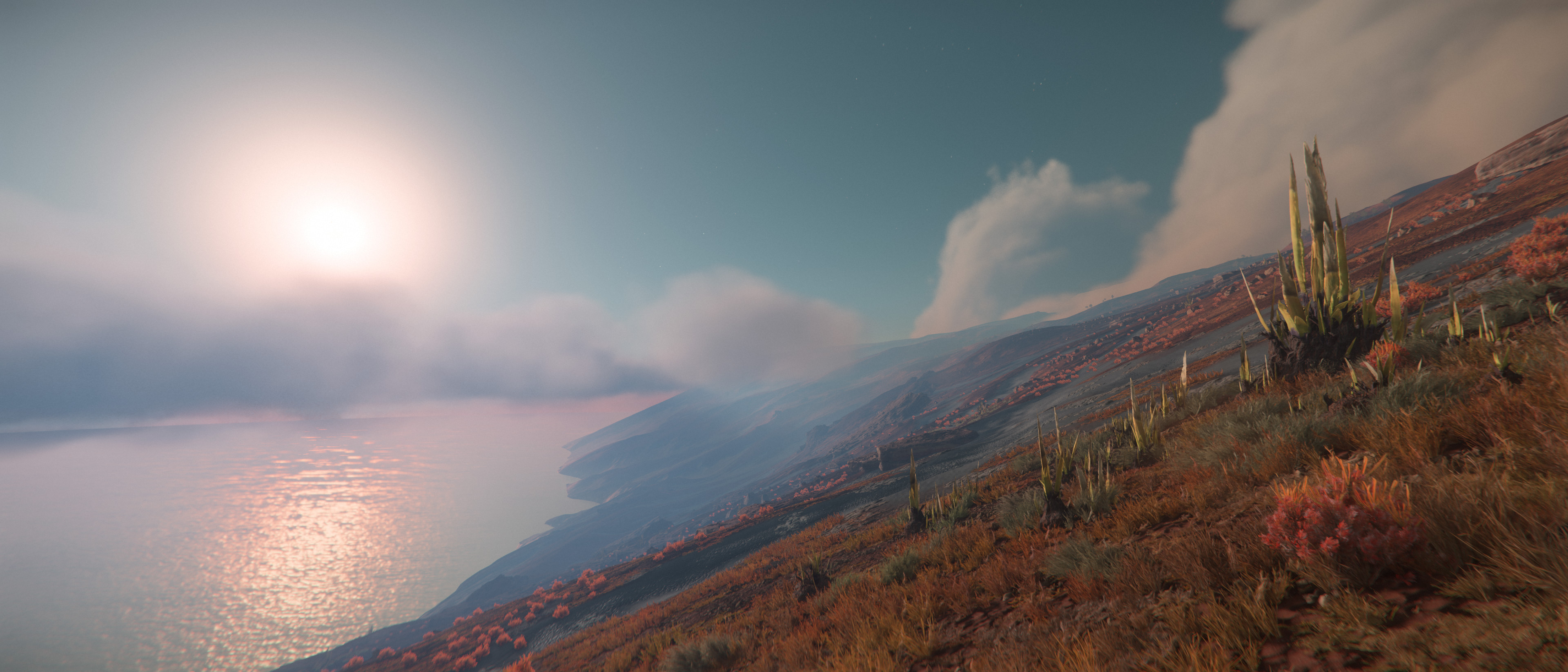
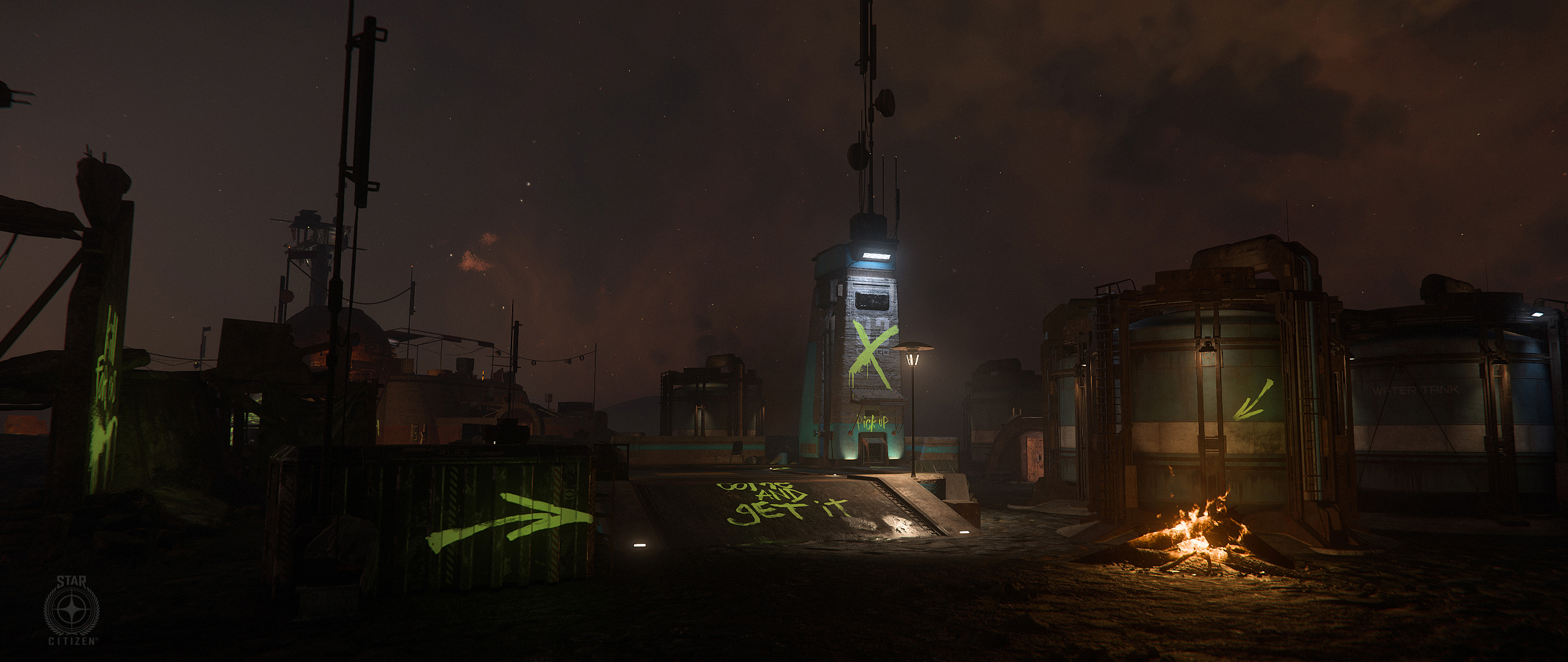
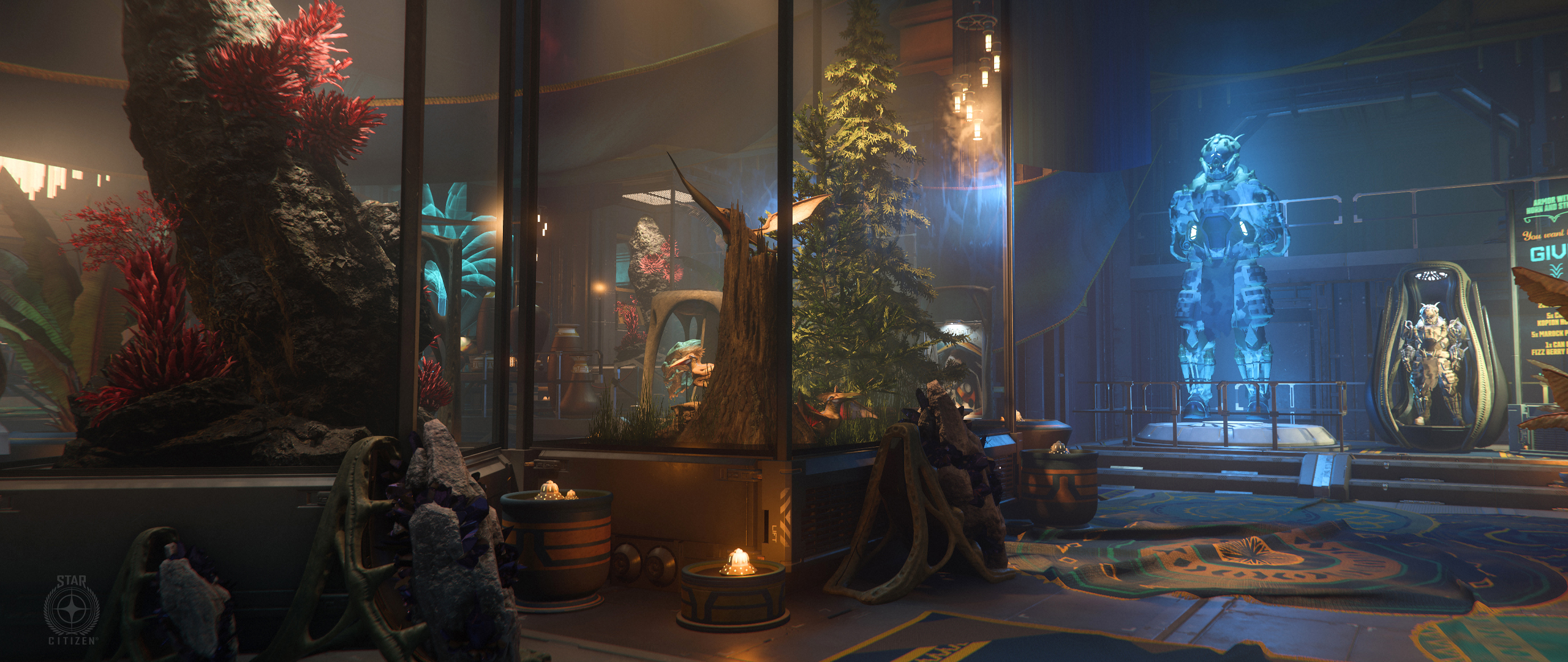
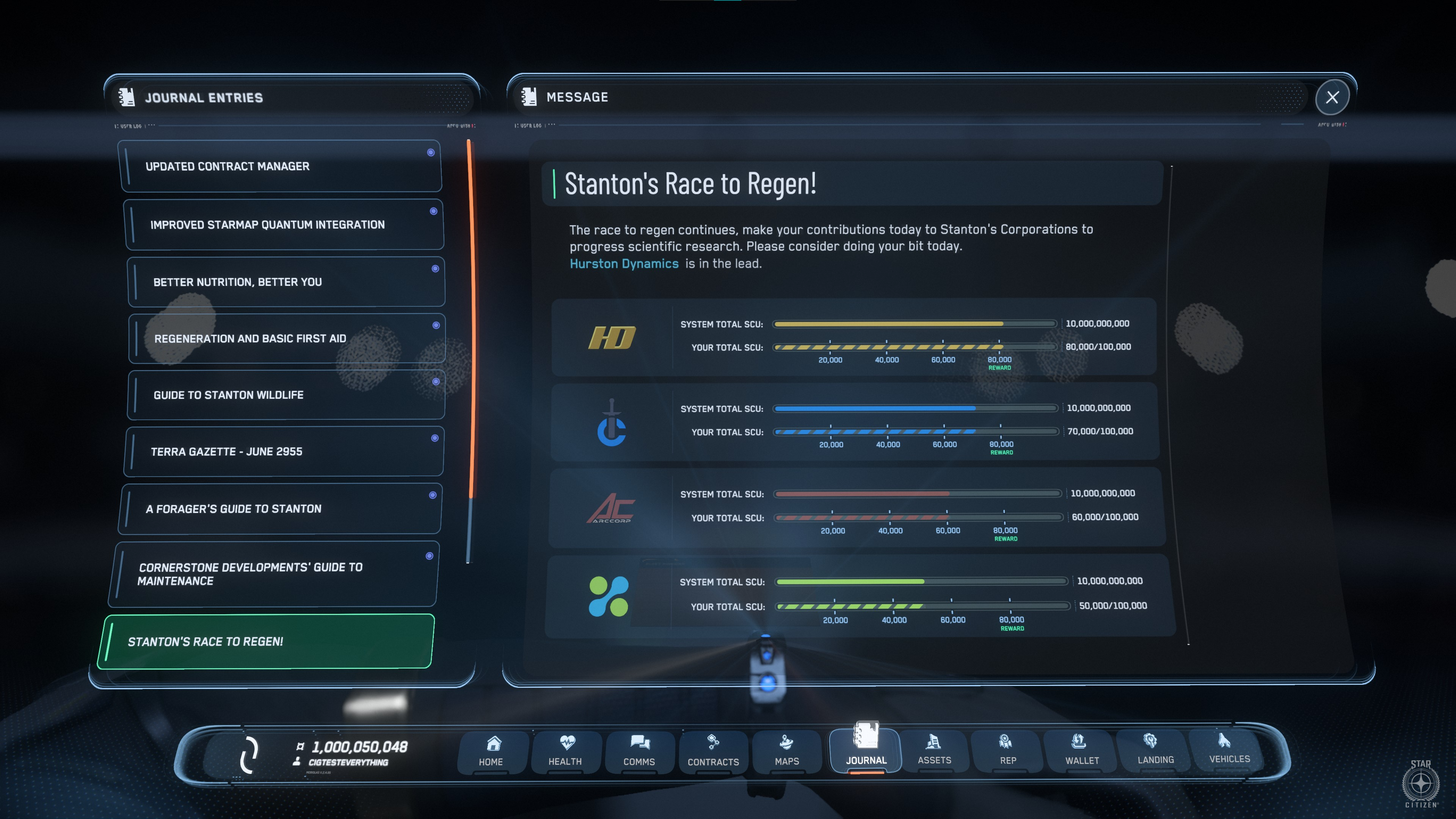
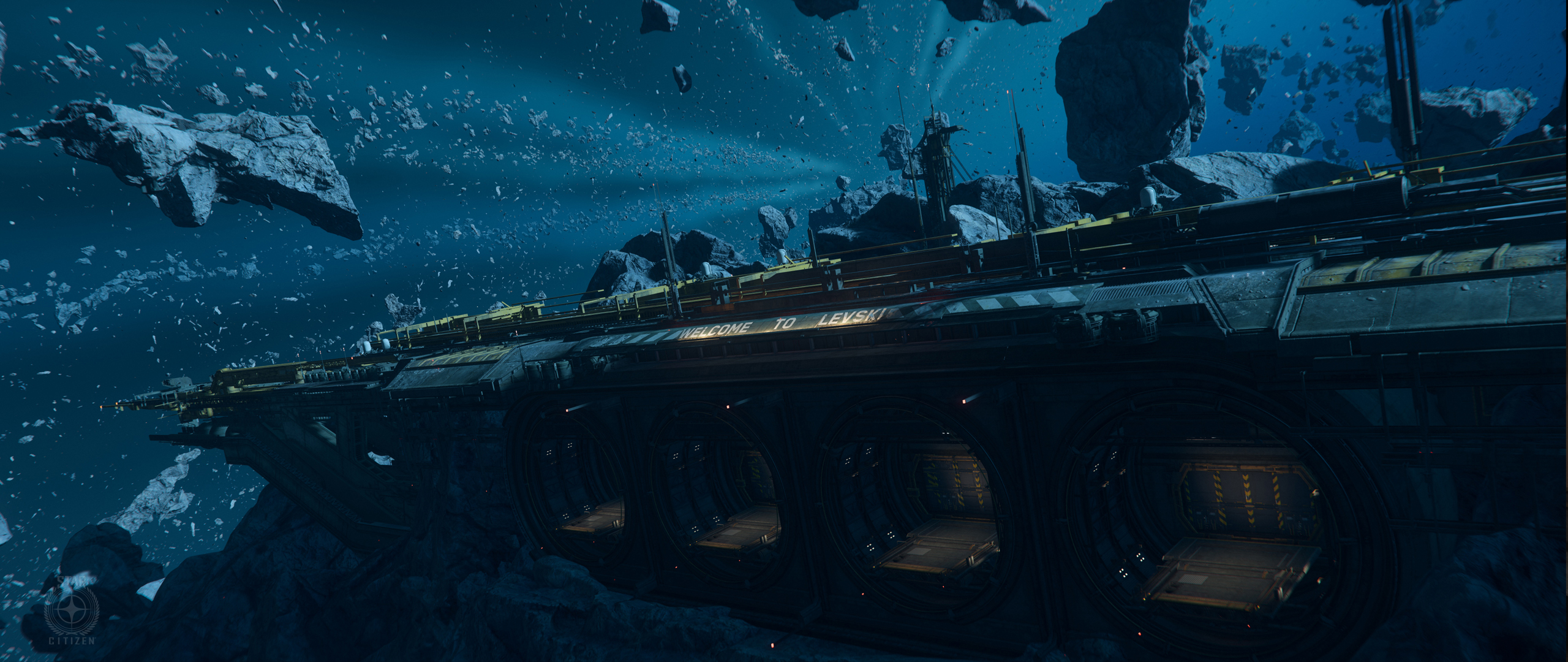
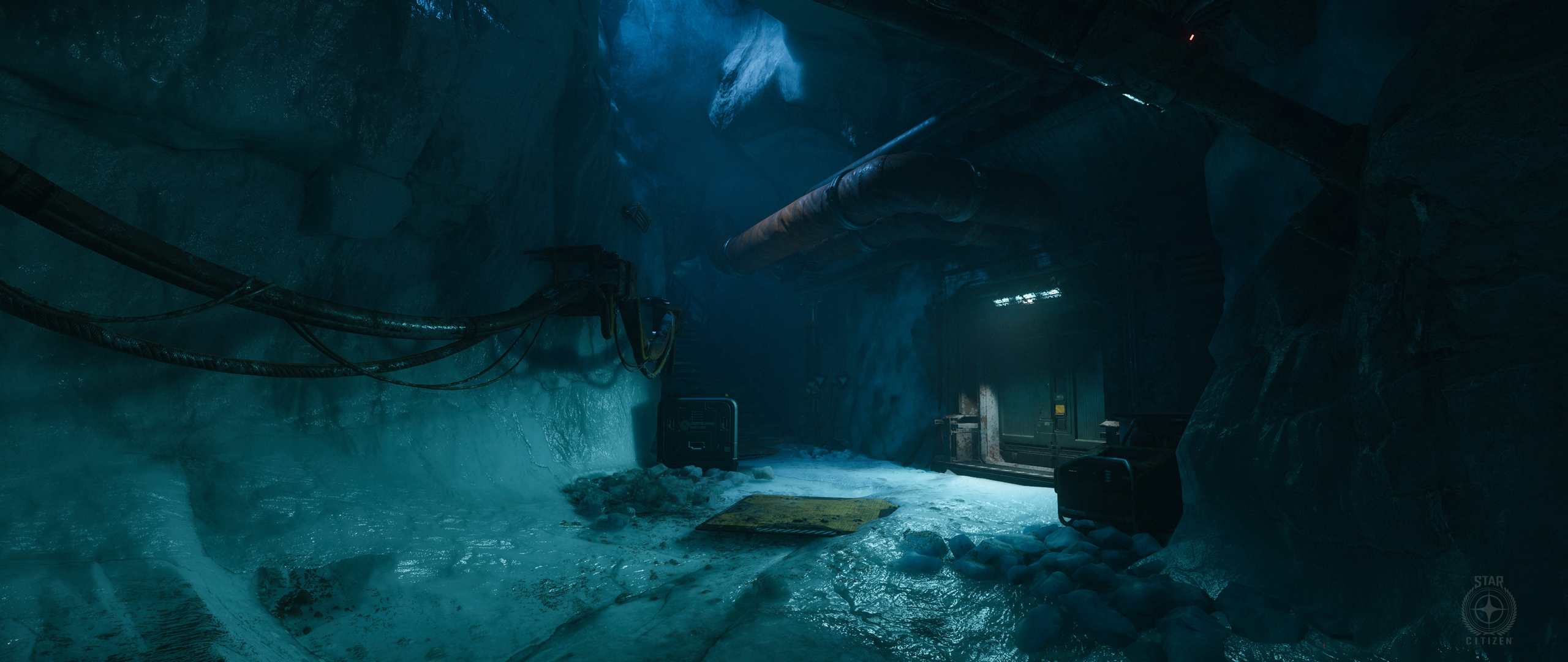
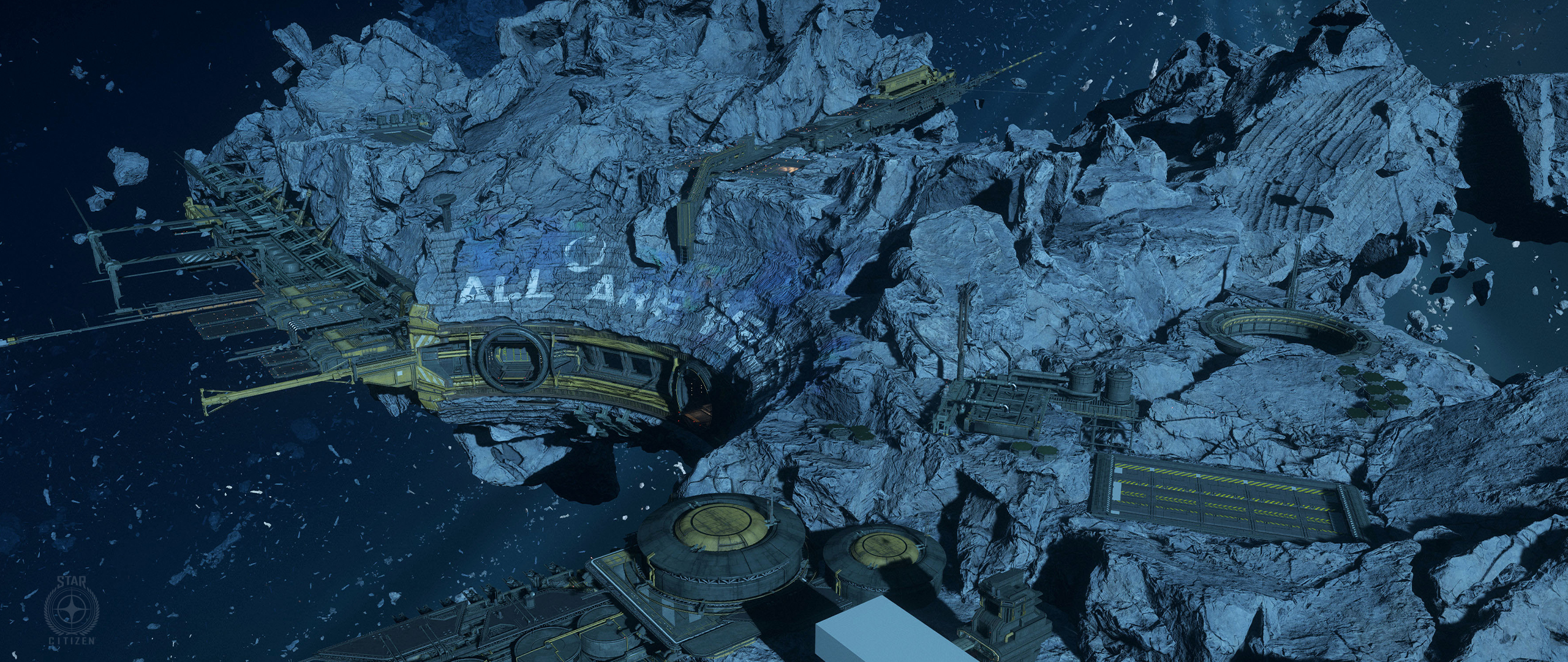
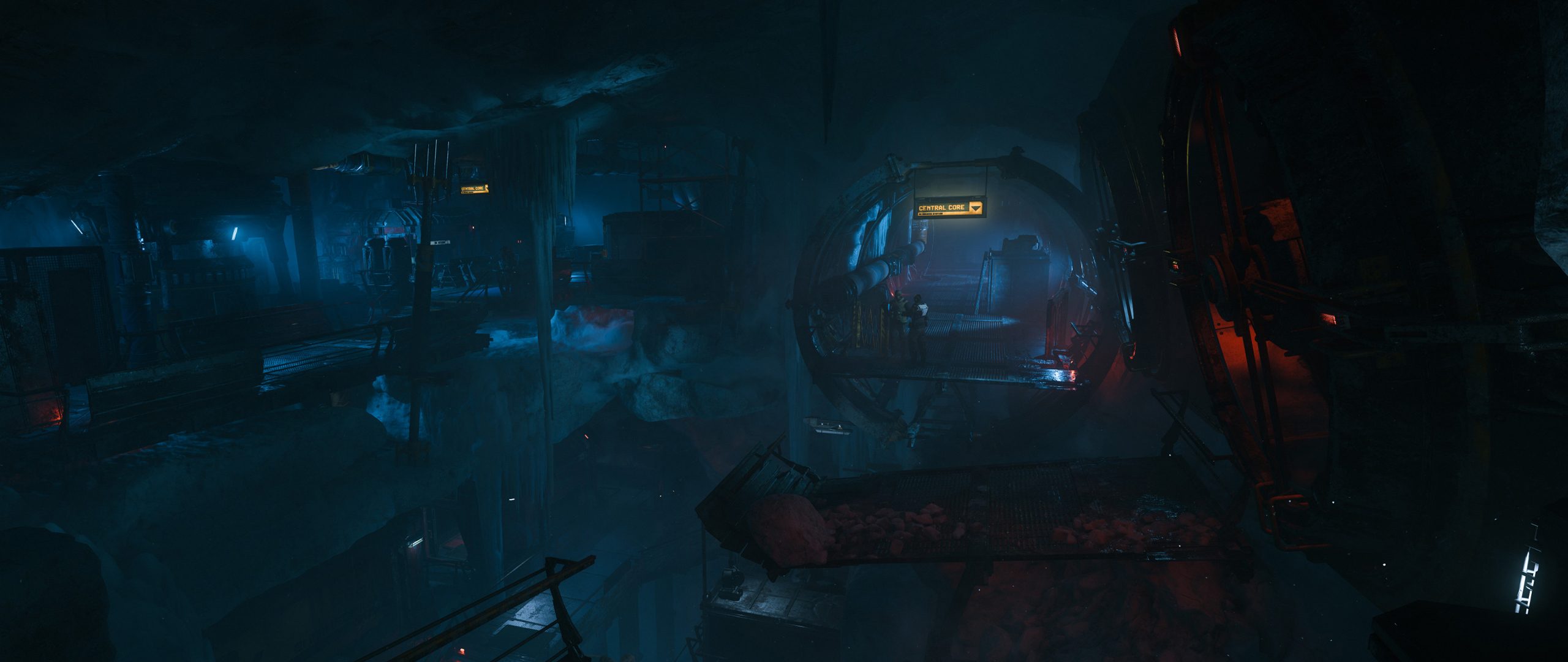
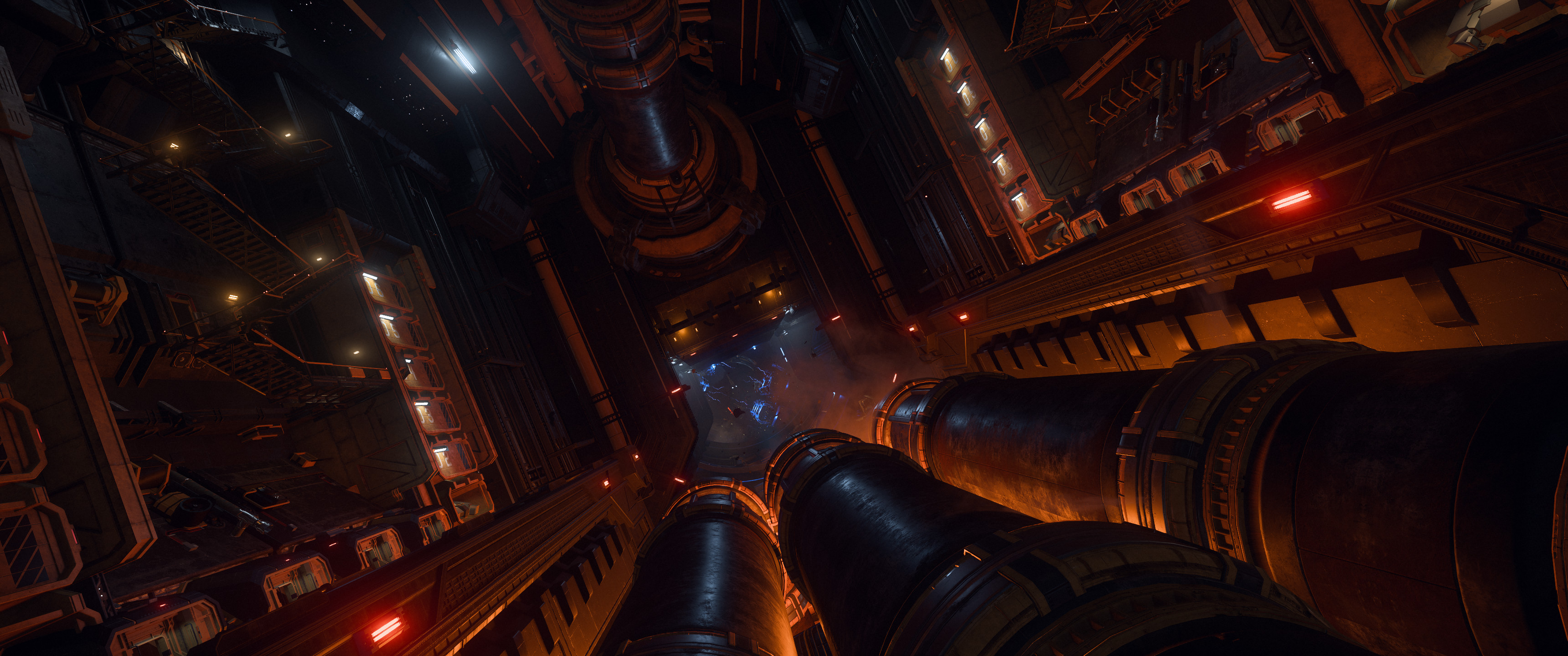
Metadata
- CIG ID
- 15951
- Channel
- Transmission
- Category
- Undefined
- Series
- Monthly Reports
- Comments
- 45
- Published
- 9 years ago (2017-06-09T00:00:00+00:00)