Squadron 42 Monthly Report: August 2019
Transmission Undefined Monthly ReportsContent
This is a cross-post of the report that was recently sent out via the monthly Squadron 42 newsletter. We’re publishing this a second time as a Comm-Link to make it easier for the community to reference back to. Attention Recruits,
What you are about to read is the latest information on the continuing development of Squadron 42 (SCI des: SQ42).
Operatives around the world collected the intel needed to provide you with this progress report. Intelligence suggests we’ve uncovered intel on operations concerning cinematic techniques, the creation of derelict ships, and a new Vulkan-friendly pipeline.
The information contained in this communication is extremely sensitive and it is of paramount importance that it does not fall into the wrong hands. Purge all records after reading.
UEE Naval High Command
AI
Character AI worked towards completing the first pass on the new iteration of combat behaviors. This implementation includes better structural organization of the different tactics characters can evaluate during combat and helps the programmers to implement and test all possible options. It’s also great for the player as it makes the overall combat experience more stable and interesting. For example, enemies now have proper tactics for handling open spaces and have a better selection of cover options when fighting in locations with multiple floors. They also started implementing different weapon fire modes so that NPCs can decide which one best suits their current situation. The choice is also affected by the AI’s ‘experience’ – so a scared, inexperienced soldier might shoot as much as possible with reduced accuracy and bullet conservation. Several fixes were made to ensure aiming and shooting syncs correctly between the client and server too. Ship AI worked on behavior and technical improvements. So of these allow the designers to access more behavior parameters, such as the option to look at a target while flying to a specific offset or to the beginning of a Track View scene. They implemented the first version of the Defend Target behavior that makes great use of the new target selection functionalities – the designers can now customize weights and threat scores to enable the AI to select the most appropriate target. This selection is influenced by several factors, such as the enemy ship’s threat score, the number of enemies targeting a specific entity, or damage inflicted. This provides a more realistic fight experience and allows players to witness more meaningful decisions during firefights.
Further progress was made towards the new ship 3D pathfinding implementation. This new approach has two basic control modes: position and velocity. Positional control means that a spaceship wants to reach a specific location, so a path will be generated incrementally as it moves in space. Velocity control means that a spaceship is going to maneuver related to a specific target or location. Both approaches make use of the physical data stored in the signed distance fields (SDF).
Animation
Animation continued R&D into the motion matching tech mentioned last month, including looking at how seamlessly it can transition from locomotion into a usable enter animation. They also looked into interrupt and resume tech for story scenes, which will allow a player to leave a scene, have the characters pause naturally, and start again seamlessly when they rejoin. The SQ42 Feature Team also started implementing a firing range.
Art (Characters)
The Character Team finished the first hairstyle under the finalized hair creation pipeline, and while they’re still expecting updates on the tech end, the artists are ready to start working through the remaining tasks. They also made revisions to various uniforms and wrapped up a key piece of enemy armor. An extremely important character concept was also completed and will soon move into the implementation phase.
Art (Environment)
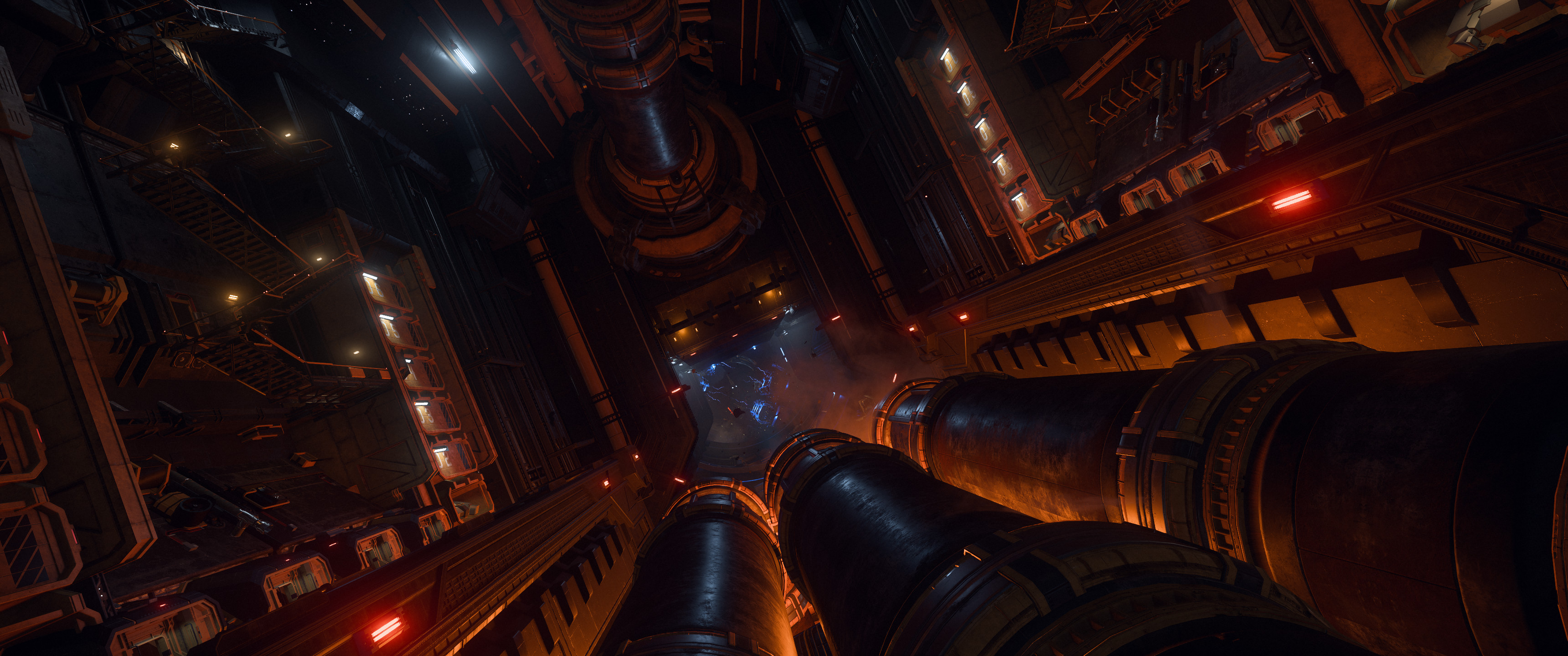
Archon Station’s interiors progressed well throughout August – the social hub is coming to a close and many of the team have moved onto the engineering sections seen during key parts of the campaign. The exterior of the comms array was tweaked slightly and work continued on the geometry and shaders. The station is about to receive a lighting pass and has been handed to the Space Scaping Team for placing.
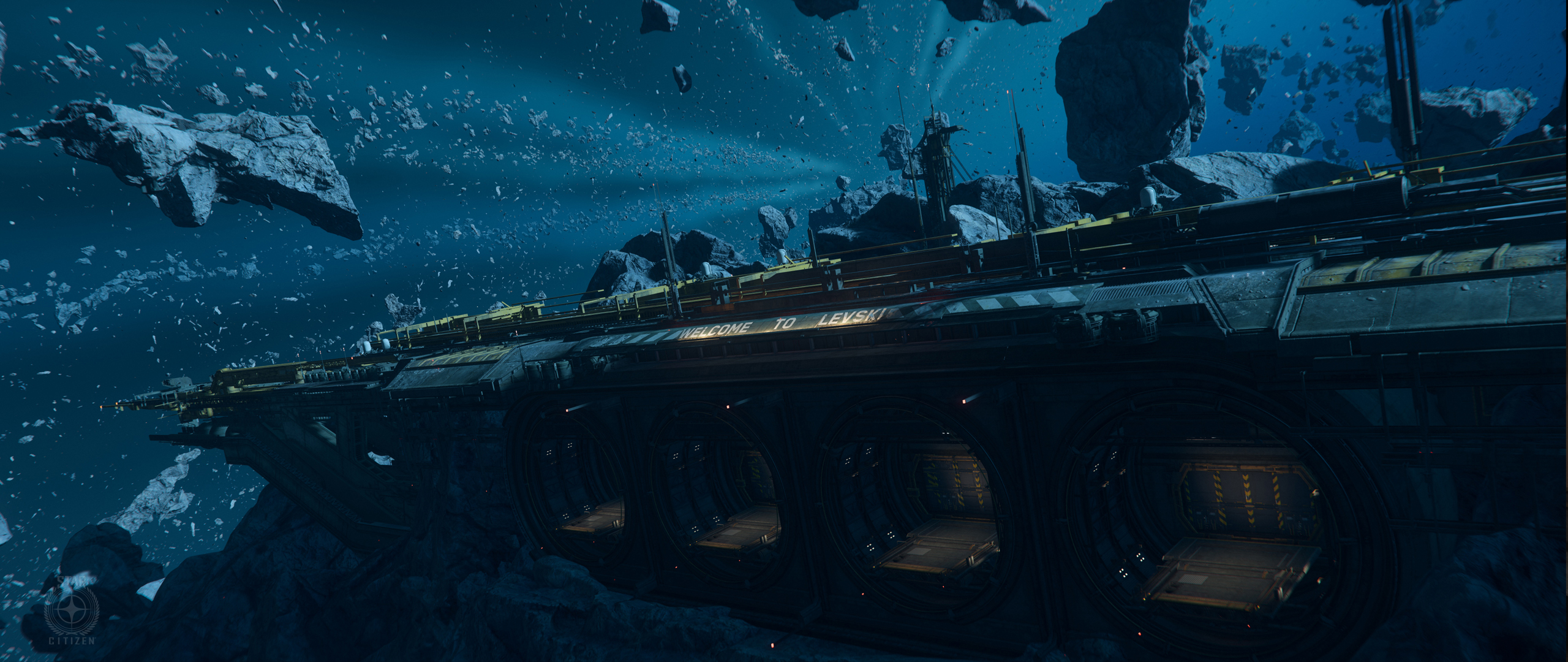
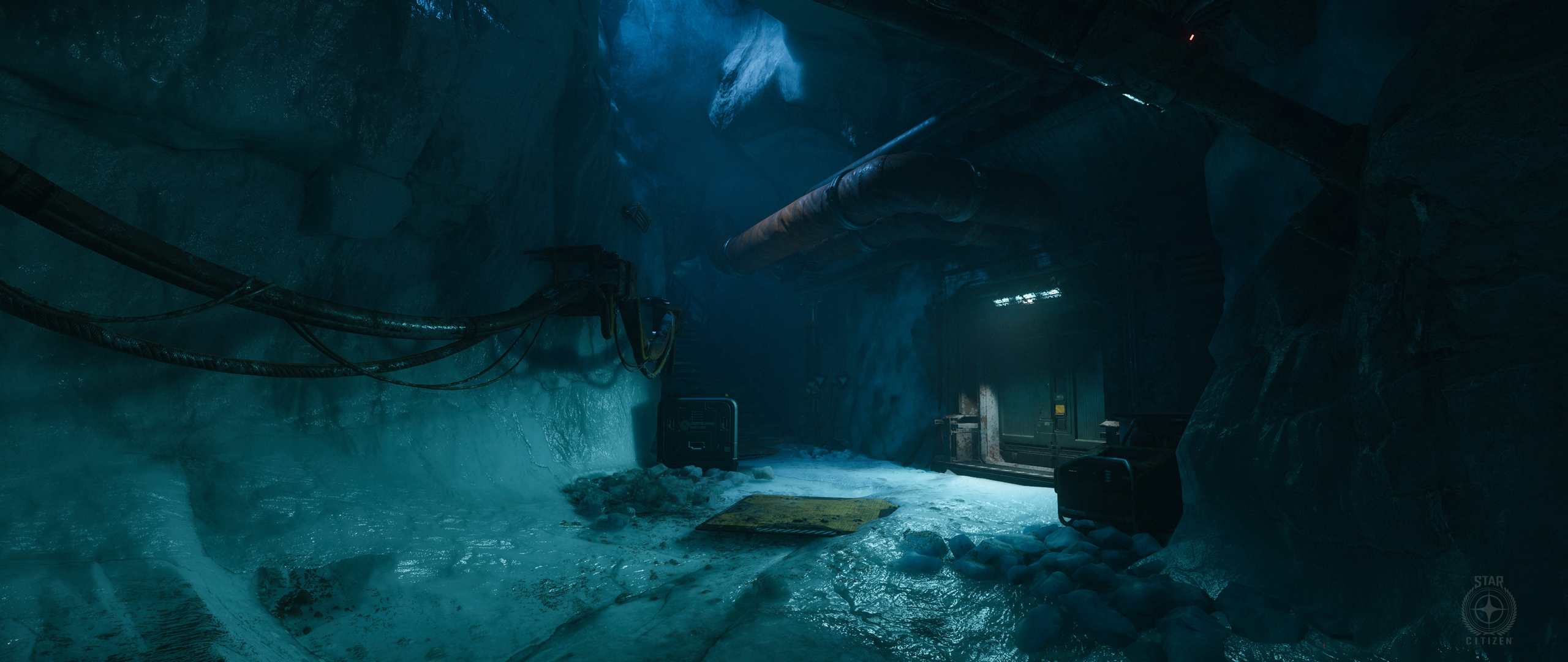
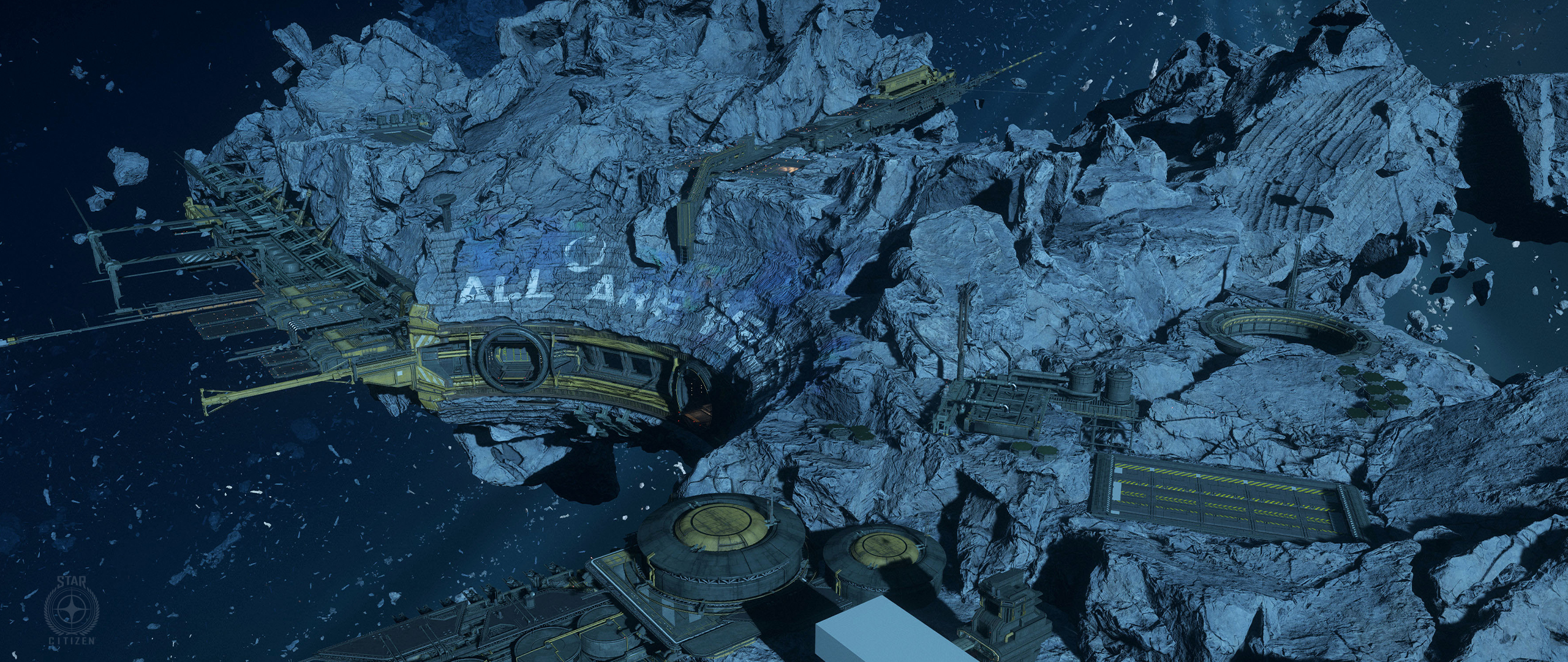
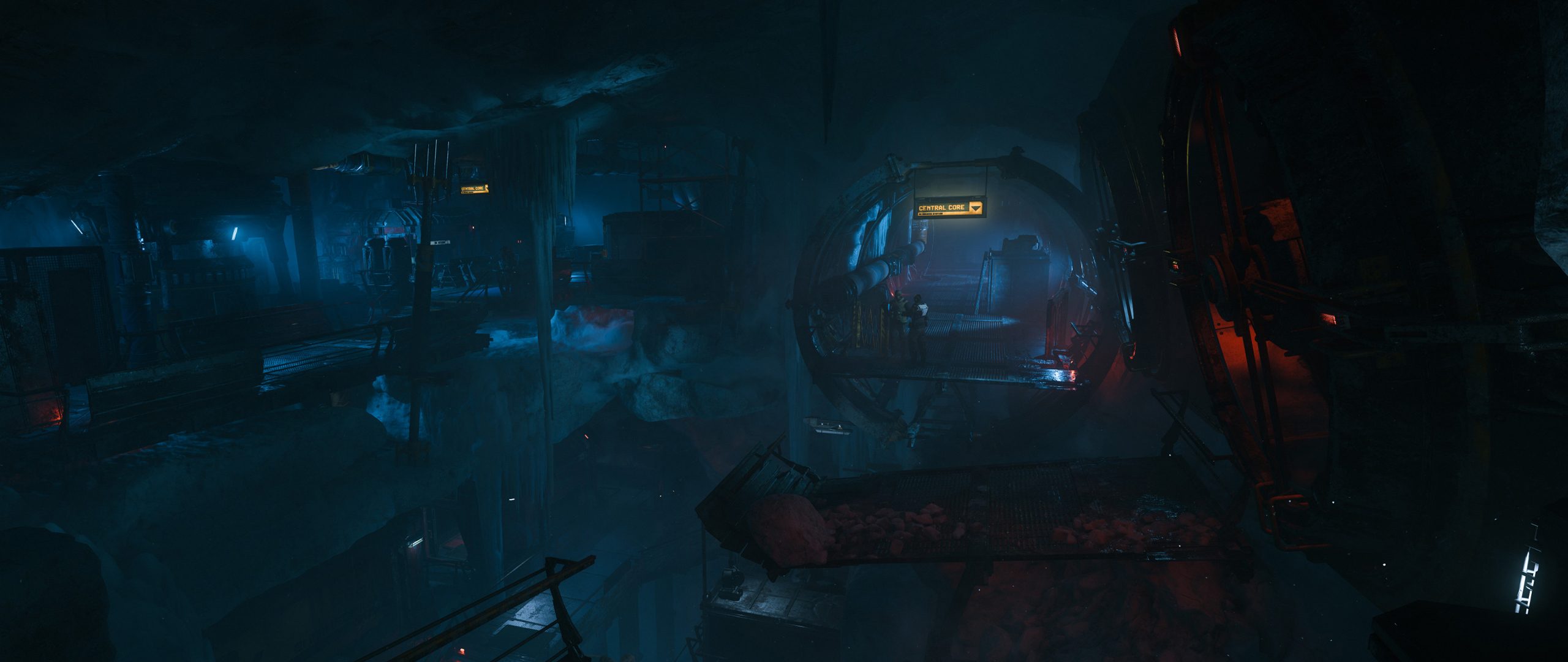
The development of derelict ships began, with a few interesting variations created, including rotting, frozen, and attacked – all of which are being hand-sculpted to give maximum visual and emotional impact.
Cinematics
SQ42 allows players to create a character at the beginning of the story. This presents a unique challenge for cinematics and narrative, as most things relating to the story feature full performance capture and one of the team’s goals is to keep all cinematic sequences unified. To test this, they picked sequences they’re currently working on and switched between the male and female facial performance capture and evaluated where they can keep the player body motion unified, where they can edit and adjust, and where they have to split the performances. To help, Tech Art unified the player actor records and loadout options and now have an easy way to change the tag from male to female. A lot of scenes worked well with slight adjustment and polish, but areas benefiting from the individual actor’s performance will be split. Audio timing and syncing were also considered. The team don’t want direct copies of line readings and want to give the actors freedom of expression, but the overall cadence and timing must match, particularly the start times for each capture. The female character model is also smaller than the male version, both in terms of body size and camera framing. So, further adjustments to the character motions were made, such as adjusting the hands and back to fit in chairs properly. To solve the framing issue, a camera tag was created to reduce the “tripod” height by 10cm in scenes that show the female player close up.
Engineering
The Engine Team finished supporting tri-mesh splitting, which optimizes collisions and intersection tests, implements collision filtering and collision merging, and fixes foliage skinning. They also made batch process physics proxy updates which now don’t update the physics proxy if the entity has network serialization disabled. Rendering wise, the first draft of the new graphics pipeline was submitted. The goal is to gradually transition to a Vulkan/DX12-friendly pipeline and the implement the Vulkan backend. The first pass includes initial interfaces and implementation, tone mapping, and the first Vulkan code added to renderer. For planet rendering, they moved from the explicit table-based evaluation of atmosphere inscatter to an incremental raymarch stepping process. This now allows additional evaluation of ground fog density samples (and clouds at a later stage) and incorporates them into the scatter equations.
Gameplay Story
The Gameplay Story Team made progress on a wide range of scenes last month. Some had already been worked on and only required modest updates, while others were new so were built up from scratch. Mo-cap was delivered quickly throughout the month and enabled the team to make progress at an impressive pace. The also worked closely with Props to finalize several handheld objects and complete all scenes they’re included in.
Graphics
The Graphics Team continued with the same core features as last month, including gas cloud sun shadows. Volumetric sun shadows are now computed on the GPU and correctly account for shadows between adjacent and parented gas clouds. The remaining work involves factoring these volumetric shadows into the general lighting equation for opaque meshes. Alongside this, improvements were made to the glass shader refraction effect, which is used to render plastic sheets and icicles. Work also continued on the updated renderer design. This will continue over the next few months alongside a huge clean-up of old code and redundant features.
Level Design
The Social Team continued to work on narrative scenes, working out conversation breaks and re-joins, directional triggers, and other specific details relating to social AI and player conversations. Most of the Level Design Team worked with Art to finalize the layout and AI operation of a major FPS combat zone. The Dogfight Team is still focused on the various use-cases for the more complicated AI requirements of space combat, while the Tech Team finalized the templates for various crew behaviors.
Narrative
As levels continue to be refined and the pacing of gameplay is solidified, the Narrative Team worked closely with Design to identify areas where additional narrative moments could help to flesh out the world and story. After creating scripts, they worked with Animation, Audio, and Design to implement placeholder assets for playtesting and polishing. Last month also saw the team assisting Environment Art by providing additional environmental storytelling and props documentation. These writeups provide detailed backstory and references for everything from key hero assets intended to catch players’ eyes to small props that make the universe feel more alive. Additionally, they continued writing all the text that players will encounter throughout the game.
QA
QA’s August support predominantly went to Cinematics, who are working on a wide range of cutscenes. A new level was created for the testing of ship explosions and AA-turret setup via Track View to make it easier to quickly test any issues they encounter. Work on a new level to test character animations and lighting began too. Testing for the newest AI collision avoidance changes is also underway. While AI testing in DE is primarily done for the Persistent Universe, any new AI issues are cross-checked with the SQ42 test team in the UK as there’s often overlap.
Tech Animation
Tech Animation supported the Social AI Team with in-engine animation setups and animation rigs for a wide variety of props. They completed technical setups for new weapon attachment types and bugs were fixed for the animation, design, and art teams.
Tech Art
Tech Art revisited the facial expression scanning pipeline and evaluated various new photogrammetry-based scan solutions. Since highly detailed scans of facial expressions are the core of the new in-house rigging pipeline, efficient creation, processing, and manual touch-ups of the scan meshes are crucial for quick turnaround. This new solution will ultimately help the team expand the character creator’s ‘DNA’ gene pool and give both the designers and players more options to create unique and interesting faces.
VFX
The VFX Team continued their close collaboration with Art and Design on some of the key space environments. As part of this, they added improvements to the ‘VFX transparent shader’, which is used to fill environments with moving dust and debris. The VFX tech artists continued to work with the graphics engineers to improve the gas cloud tools and began investigating the destruction pipeline to further improve the campaigns more epic destruction events. They also started developing effects for a new rocket launcher, including the muzzle flashes, backblast, missile trails, and missile impact on various surfaces.
Covert Intel
An’ I’m only doing good when I’m havin’ fun. WE’LL SEE YOU NEXT MONTH…
Dies ist ein Querverweis auf den Bericht, der kürzlich über den monatlichen Squadron 42 Newsletter verschickt wurde. Wir veröffentlichen dies ein zweites Mal als Comm-Link, um es der Community zu erleichtern, auf die man zurückgreifen kann.
Achtung Rekruten,
Was Sie hier lesen werden, sind die neuesten Informationen über die Weiterentwicklung der Squadron 42 (SCI des: SQ42).
Mitarbeiter auf der ganzen Welt sammelten die notwendigen Informationen, um Ihnen diesen Fortschrittsbericht zur Verfügung zu stellen. Der Geheimdienst geht davon aus, dass wir Informationen über Operationen im Zusammenhang mit filmischen Techniken, der Herstellung verfallener Schiffe und einer neuen Vulkan-freundlichen Pipeline gefunden haben.
Die in dieser Mitteilung enthaltenen Informationen sind äußerst sensibel, und es ist von größter Bedeutung, dass sie nicht in die falschen Hände geraten. Alle Datensätze nach dem Lesen löschen.
UEE Naval Oberkommando
KI
Charakter-KI arbeitete darauf hin, den ersten Durchgang über die neue Iteration des Kampfverhaltens abzuschließen. Diese Implementierung beinhaltet eine bessere strukturelle Organisation der verschiedenen Taktikcharaktere, die während des Kampfes bewertet werden können, und hilft den Programmierern, alle möglichen Optionen zu implementieren und zu testen. Es ist auch großartig für den Spieler, da es die gesamte Kampferfahrung stabiler und interessanter macht. Zum Beispiel haben Feinde jetzt die richtige Taktik im Umgang mit offenen Räumen und eine bessere Auswahl an Deckungsmöglichkeiten, wenn sie an Orten mit mehreren Etagen kämpfen. Sie begannen auch, verschiedene Waffenfeuerarten zu implementieren, damit die NSCs entscheiden können, welcher am besten zu ihrer aktuellen Situation passt. Die Wahl wird auch durch die "Erfahrung" der KI beeinflusst - so könnte ein ängstlicher, unerfahrener Soldat so viel wie möglich mit reduzierter Genauigkeit und Kugelschutz schießen. Es wurden mehrere Korrekturen vorgenommen, um sicherzustellen, dass das Zielen und Schießen auch zwischen Client und Server korrekt synchronisiert wird. Die SchiffskI arbeitete an Verhaltensweisen und technischen Verbesserungen. So können die Designer auf weitere Verhaltensparameter zugreifen, wie z.B. die Option, ein Ziel zu betrachten, während sie zu einem bestimmten Offset oder zum Beginn einer Track View Szene fliegen. Sie implementierten die erste Version des Defend Target Verhaltens, die die neuen Funktionen der Zielauswahl stark nutzt - die Designer können nun Gewichte und Bedrohungswerte anpassen, damit die KI das am besten geeignete Ziel auswählen kann. Diese Auswahl wird von mehreren Faktoren beeinflusst, wie z.B. dem Bedrohungswert des gegnerischen Schiffes, der Anzahl der Feinde, die auf eine bestimmte Einheit abzielen, oder dem zugefügten Schaden. Dies bietet ein realistischeres Kampferlebnis und ermöglicht es den Spielern, bedeutsamere Entscheidungen während der Feuerwehr zu erleben.
Weitere Fortschritte wurden bei der neuen Implementierung der 3D-Pfadfindung für Schiffe erzielt. Dieser neue Ansatz verfügt über zwei grundlegende Steuermodi: Position und Geschwindigkeit. Positionskontrolle bedeutet, dass ein Raumschiff einen bestimmten Ort erreichen möchte, so dass ein Pfad schrittweise generiert wird, während es sich im Raum bewegt. Geschwindigkeitssteuerung bedeutet, dass ein Raumschiff auf ein bestimmtes Ziel oder einen bestimmten Standort bezogen manövriert wird. Beide Ansätze nutzen die physikalischen Daten, die in den signierten Abstandsfeldern (SDF) gespeichert sind.
Animation
Animation setzte die Forschung und Entwicklung in der im letzten Monat erwähnten Motion-Matching-Technologie fort, einschließlich der Frage, wie nahtlos sie von der Fortbewegung in eine brauchbare Enter-Animation übergehen kann. Sie untersuchten auch die Unterbrechungs- und Fortsetzungstechnik für Geschichtenszenen, die es einem Spieler ermöglichen, eine Szene zu verlassen, die Charaktere natürlich pausieren zu lassen und nahtlos wieder anzufangen, wenn sie sich wieder treffen. Das SQ42 Feature Team begann auch mit der Implementierung eines Schießplatzes.
Kunst (Charaktere)
Das Charakter-Team hat die erste Frisur unter der abgeschlossenen Haarkreationspipeline fertiggestellt, und während sie noch Updates auf der technischen Seite erwarten, sind die Künstler bereit, mit der Bearbeitung der restlichen Aufgaben zu beginnen. Sie überarbeiteten auch verschiedene Uniformen und packten ein Schlüsselstück der feindlichen Rüstung ein. Ein äußerst wichtiges Charakterkonzept wurde ebenfalls fertiggestellt und wird bald in die Umsetzungsphase übergehen.
Kunst (Umwelt)
Die Innenräume der Archon Station entwickelten sich im Laufe des Monats August gut - die soziale Drehscheibe nähert sich ihrem Ende und viele des Teams haben sich auf die technischen Bereiche konzentriert, die während der wichtigsten Teile der Kampagne zu sehen waren. Das Äußere des Comms-Arrays wurde leicht optimiert und die Arbeit an der Geometrie und den Shadern fortgesetzt. Die Station ist dabei, einen Lichtpass zu erhalten und wurde dem Space Scaping Team zur Platzierung übergeben.
Die Entwicklung verfallener Schiffe begann, mit einigen interessanten Variationen, darunter Fäulnis, Vereisung und Angriff - allesamt handgefertigt, um eine maximale visuelle und emotionale Wirkung zu erzielen.
Kinematiken
SQ42 ermöglicht es Spielern, einen Charakter am Anfang der Geschichte zu erstellen. Dies stellt eine einzigartige Herausforderung für die Filmkunst und die Erzählung dar, da die meisten Dinge im Zusammenhang mit der Geschichte eine vollständige Leistungserfassung beinhalten und eines der Ziele des Teams darin besteht, alle Filmsequenzen einheitlich zu gestalten. Um dies zu testen, wählten sie Sequenzen aus, an denen sie gerade arbeiten, und wechselten zwischen der männlichen und weiblichen Gesichtsleistungserfassung und bewerteten, wo sie die Körperbewegung des Spielers einheitlich halten können, wo sie bearbeiten und anpassen können und wo sie die Leistungen aufteilen müssen. Um zu helfen, vereinheitlichte Tech Art die Aufzeichnungen der Spielerakteure und Ladungsoptionen und bietet nun eine einfache Möglichkeit, das Tag von männlich auf weiblich zu ändern. Viele Szenen funktionierten gut mit leichter Anpassung und Politur, aber Bereiche, die von der Leistung des einzelnen Schauspielers profitieren, werden aufgeteilt. Audio-Timing und Synchronisation wurden ebenfalls berücksichtigt. Das Team will keine direkten Kopien von Zeilenlesungen und möchte den Akteuren die Freiheit des Ausdrucks geben, aber die Gesamtrhythmen und das Timing müssen übereinstimmen, insbesondere die Startzeiten für jede Aufnahme. Das weibliche Charaktermodell ist ebenfalls kleiner als die männliche Version, sowohl in Bezug auf die Körpergröße als auch auf die Kamerafassung. So wurden weitere Anpassungen an den Charakterbewegungen vorgenommen, wie z.B. das Anpassen der Hände und des Rückens, um in den Stuhl zu passen. Um das Problem des Framings zu lösen, wurde ein Kamera-Tag erstellt, um die Höhe des "Stativs" in Szenen, die die weibliche Spielerin aus nächster Nähe zeigen, um 10 cm zu reduzieren.
Ingenieurwesen
Das Motorenteam beendete die Unterstützung des Tri-Mesh-Splittings, das Kollisionen und Kreuzungstests optimiert, Kollisionsfilterung und Kollisionszusammenführung implementiert und Laubhautablösung behebt. Sie haben auch Updates für Physikproxy-Updates im Batch-Verfahren durchgeführt, die nun den Physikproxy nicht mehr aktualisieren, wenn die Entität die Netzwerkserialisierung deaktiviert hat. Rendering weise wurde der erste Entwurf der neuen Grafikpipeline eingereicht. Ziel ist es, schrittweise auf eine Vulkan/DX12-freundliche Pipeline umzustellen und das Vulkan-Backend zu implementieren. Der erste Durchgang beinhaltet erste Schnittstellen und Implementierung, Tonemapping und den ersten Vulkan-Code, der dem Renderer hinzugefügt wurde. Für das Planeten-Rendering wechselten sie von der expliziten tabellenbasierten Auswertung der Atmosphärenstreuung zu einem inkrementellen Raymarch-Schrittprozess. Dies ermöglicht nun eine zusätzliche Auswertung von Bodennebeldichteproben (und Wolken zu einem späteren Zeitpunkt) und integriert sie in die Streugleichungen.
Gameplay-Geschichte
Das Gameplay Story Team hat im vergangenen Monat bei einer Vielzahl von Szenen Fortschritte gemacht. Einige waren bereits bearbeitet worden und erforderten nur bescheidene Updates, während andere neu waren und so von Grund auf neu aufgebaut wurden. Mo-cap wurde den ganzen Monat über schnell geliefert und ermöglichte es dem Team, in beeindruckendem Tempo Fortschritte zu erzielen. Das Team arbeitete auch eng mit Requisiten zusammen, um mehrere Handheld-Objekte fertigzustellen und alle Szenen, in denen sie enthalten sind, zu vervollständigen.
Grafiken
Das Grafik-Team fuhr mit den gleichen Kernfunktionen wie im letzten Monat fort, einschließlich der Sonnenschatten der Gaswolke. Volumetrische Sonnenschatten werden nun auf dem Grafikprozessor berechnet und berücksichtigen korrekt die Schatten zwischen benachbarten und übergeordneten Gaswolken. Der Rest besteht darin, diese volumetrischen Schatten in die allgemeine Beleuchtungsgleichung für opake Netze einzubeziehen. Daneben wurde der Glas-Shader-Brechungseffekt verbessert, der für die Herstellung von Kunststoffplatten und Eiszapfen verwendet wird. Auch am aktualisierten Renderer-Design wurde weiter gearbeitet. Dies wird sich in den nächsten Monaten fortsetzen, zusammen mit einer umfangreichen Bereinigung von altem Code und redundanten Funktionen.
Leveldesign
Das Sozialteam arbeitete weiterhin an narrativen Szenen, arbeitete an Gesprächsbrüchen und -zusammenführungen, Richtungsauslösungen und anderen spezifischen Details im Zusammenhang mit sozialen KI- und Spielergesprächen. Die meisten des Level Design Teams arbeiteten mit Art zusammen, um das Layout und den KI-Betrieb einer großen FPS-Kampfzone zu finalisieren. Das Dogfight Team konzentriert sich weiterhin auf die verschiedenen Anwendungsfälle für die komplizierteren KI-Anforderungen im Weltraumkampf, während das Tech Team die Vorlagen für verschiedene Verhaltensweisen der Besatzung fertig gestellt hat.
Narrativ
Während die Levels weiter verfeinert werden und das Tempo des Gameplays verfestigt wird, arbeitete das Narrative Team eng mit Design zusammen, um Bereiche zu identifizieren, in denen zusätzliche narrative Momente dazu beitragen könnten, die Welt und Geschichte zu konkretisieren. Nach der Erstellung von Skripten arbeiteten sie mit Animation, Audio und Design zusammen, um Platzhalter-Assets für Playtests und Polieren zu implementieren. Im vergangenen Monat unterstützte das Team auch Environment Art, indem es zusätzliche Geschichten und Requisiten für die Umwelt erzählte. Diese Aufzeichnungen liefern detaillierte Hintergrundgeschichten und Referenzen für alles, von wichtigen Heldenressourcen, die dazu dienen, die Aufmerksamkeit der Spieler auf sich zu ziehen, bis hin zu kleinen Requisiten, die das Universum lebendiger erscheinen lassen. Darüber hinaus schrieben sie weiterhin den gesamten Text, auf den die Spieler während des Spiels treffen werden.
QA
Der August-Support von QA ging hauptsächlich an Cinematics, die an einer Vielzahl von Filmszenen arbeiten. Eine neue Ebene wurde für die Prüfung von Schiffsexplosionen und die Einrichtung von AA-Türmen über die Track View geschaffen, um es einfacher zu machen, alle auftretenden Probleme schnell zu testen. Auch die Arbeit an Charakteranimationen und Beleuchtung begann auf einer neuen Ebene. Die Prüfung auf die neuesten Änderungen der KI-Kollisionsvermeidung ist ebenfalls im Gange. Während KI-Tests in DE hauptsächlich für das Persistent Universe durchgeführt werden, werden alle neuen KI-Probleme mit dem SQ42-Testteam in Großbritannien verglichen, da es oft Überschneidungen gibt.
Technische Animation
Tech Animation unterstützte das Social AI Team mit In-Engine-Animationsaufbauten und Animationsanlagen für eine Vielzahl von Requisiten. Sie schlossen die technischen Vorbereitungen für neue Waffenbefestigungstypen ab und Fehler wurden für die Animations-, Design- und Kunstteams behoben.
Technische Kunst
Tech Art besuchte erneut die Mimik-Scan-Pipeline und evaluierte verschiedene neue photogrammetriebasierte Scan-Lösungen. Da hochdetaillierte Gesichtsausdruckscans das Herzstück der neuen hauseigenen Rigging-Pipeline bilden, ist eine effiziente Erstellung, Bearbeitung und manuelle Nachbearbeitung der Scan-Netze entscheidend für eine schnelle Bearbeitung. Diese neue Lösung wird dem Team letztendlich helfen, den Genpool des Charakters "DNA" zu erweitern und sowohl den Designern als auch den Spielern mehr Möglichkeiten bieten, einzigartige und interessante Gesichter zu kreieren.
VFX
Das VFX-Team setzte die enge Zusammenarbeit mit Art and Design in einigen der wichtigsten Weltraumumgebungen fort. In diesem Zusammenhang haben sie den "VFX transparent Shader" verbessert, mit dem Umgebungen mit sich bewegendem Staub und Schmutz gefüllt werden. Die VFX Tech-Künstler arbeiteten weiterhin mit den Grafikern zusammen, um die Gas Cloud Tools zu verbessern und begannen, die Zerstörungspipeline zu untersuchen, um die Kampagnen weiter zu verbessern. Sie begannen auch mit der Entwicklung von Effekten für einen neuen Raketenwerfer, einschließlich der Mündungsfeuer, Rückstoß, Raketenspuren und Raketeneinschläge auf verschiedenen Oberflächen.
Verdeckte Intel
Und ich tue nur Gutes, wenn ich Spaß habe. WIR SEHEN UNS NÄCHSTEN MONAT.....
This is a cross-post of the report that was recently sent out via the monthly Squadron 42 newsletter. We’re publishing this a second time as a Comm-Link to make it easier for the community to reference back to. Attention Recruits,
What you are about to read is the latest information on the continuing development of Squadron 42 (SCI des: SQ42).
Operatives around the world collected the intel needed to provide you with this progress report. Intelligence suggests we’ve uncovered intel on operations concerning cinematic techniques, the creation of derelict ships, and a new Vulkan-friendly pipeline.
The information contained in this communication is extremely sensitive and it is of paramount importance that it does not fall into the wrong hands. Purge all records after reading.
UEE Naval High Command
AI
Character AI worked towards completing the first pass on the new iteration of combat behaviors. This implementation includes better structural organization of the different tactics characters can evaluate during combat and helps the programmers to implement and test all possible options. It’s also great for the player as it makes the overall combat experience more stable and interesting. For example, enemies now have proper tactics for handling open spaces and have a better selection of cover options when fighting in locations with multiple floors. They also started implementing different weapon fire modes so that NPCs can decide which one best suits their current situation. The choice is also affected by the AI’s ‘experience’ – so a scared, inexperienced soldier might shoot as much as possible with reduced accuracy and bullet conservation. Several fixes were made to ensure aiming and shooting syncs correctly between the client and server too. Ship AI worked on behavior and technical improvements. So of these allow the designers to access more behavior parameters, such as the option to look at a target while flying to a specific offset or to the beginning of a Track View scene. They implemented the first version of the Defend Target behavior that makes great use of the new target selection functionalities – the designers can now customize weights and threat scores to enable the AI to select the most appropriate target. This selection is influenced by several factors, such as the enemy ship’s threat score, the number of enemies targeting a specific entity, or damage inflicted. This provides a more realistic fight experience and allows players to witness more meaningful decisions during firefights.
Further progress was made towards the new ship 3D pathfinding implementation. This new approach has two basic control modes: position and velocity. Positional control means that a spaceship wants to reach a specific location, so a path will be generated incrementally as it moves in space. Velocity control means that a spaceship is going to maneuver related to a specific target or location. Both approaches make use of the physical data stored in the signed distance fields (SDF).
Animation
Animation continued R&D into the motion matching tech mentioned last month, including looking at how seamlessly it can transition from locomotion into a usable enter animation. They also looked into interrupt and resume tech for story scenes, which will allow a player to leave a scene, have the characters pause naturally, and start again seamlessly when they rejoin. The SQ42 Feature Team also started implementing a firing range.
Art (Characters)
The Character Team finished the first hairstyle under the finalized hair creation pipeline, and while they’re still expecting updates on the tech end, the artists are ready to start working through the remaining tasks. They also made revisions to various uniforms and wrapped up a key piece of enemy armor. An extremely important character concept was also completed and will soon move into the implementation phase.
Art (Environment)
Archon Station’s interiors progressed well throughout August – the social hub is coming to a close and many of the team have moved onto the engineering sections seen during key parts of the campaign. The exterior of the comms array was tweaked slightly and work continued on the geometry and shaders. The station is about to receive a lighting pass and has been handed to the Space Scaping Team for placing.
The development of derelict ships began, with a few interesting variations created, including rotting, frozen, and attacked – all of which are being hand-sculpted to give maximum visual and emotional impact.
Cinematics
SQ42 allows players to create a character at the beginning of the story. This presents a unique challenge for cinematics and narrative, as most things relating to the story feature full performance capture and one of the team’s goals is to keep all cinematic sequences unified. To test this, they picked sequences they’re currently working on and switched between the male and female facial performance capture and evaluated where they can keep the player body motion unified, where they can edit and adjust, and where they have to split the performances. To help, Tech Art unified the player actor records and loadout options and now have an easy way to change the tag from male to female. A lot of scenes worked well with slight adjustment and polish, but areas benefiting from the individual actor’s performance will be split. Audio timing and syncing were also considered. The team don’t want direct copies of line readings and want to give the actors freedom of expression, but the overall cadence and timing must match, particularly the start times for each capture. The female character model is also smaller than the male version, both in terms of body size and camera framing. So, further adjustments to the character motions were made, such as adjusting the hands and back to fit in chairs properly. To solve the framing issue, a camera tag was created to reduce the “tripod” height by 10cm in scenes that show the female player close up.
Engineering
The Engine Team finished supporting tri-mesh splitting, which optimizes collisions and intersection tests, implements collision filtering and collision merging, and fixes foliage skinning. They also made batch process physics proxy updates which now don’t update the physics proxy if the entity has network serialization disabled. Rendering wise, the first draft of the new graphics pipeline was submitted. The goal is to gradually transition to a Vulkan/DX12-friendly pipeline and the implement the Vulkan backend. The first pass includes initial interfaces and implementation, tone mapping, and the first Vulkan code added to renderer. For planet rendering, they moved from the explicit table-based evaluation of atmosphere inscatter to an incremental raymarch stepping process. This now allows additional evaluation of ground fog density samples (and clouds at a later stage) and incorporates them into the scatter equations.
Gameplay Story
The Gameplay Story Team made progress on a wide range of scenes last month. Some had already been worked on and only required modest updates, while others were new so were built up from scratch. Mo-cap was delivered quickly throughout the month and enabled the team to make progress at an impressive pace. The also worked closely with Props to finalize several handheld objects and complete all scenes they’re included in.
Graphics
The Graphics Team continued with the same core features as last month, including gas cloud sun shadows. Volumetric sun shadows are now computed on the GPU and correctly account for shadows between adjacent and parented gas clouds. The remaining work involves factoring these volumetric shadows into the general lighting equation for opaque meshes. Alongside this, improvements were made to the glass shader refraction effect, which is used to render plastic sheets and icicles. Work also continued on the updated renderer design. This will continue over the next few months alongside a huge clean-up of old code and redundant features.
Level Design
The Social Team continued to work on narrative scenes, working out conversation breaks and re-joins, directional triggers, and other specific details relating to social AI and player conversations. Most of the Level Design Team worked with Art to finalize the layout and AI operation of a major FPS combat zone. The Dogfight Team is still focused on the various use-cases for the more complicated AI requirements of space combat, while the Tech Team finalized the templates for various crew behaviors.
Narrative
As levels continue to be refined and the pacing of gameplay is solidified, the Narrative Team worked closely with Design to identify areas where additional narrative moments could help to flesh out the world and story. After creating scripts, they worked with Animation, Audio, and Design to implement placeholder assets for playtesting and polishing. Last month also saw the team assisting Environment Art by providing additional environmental storytelling and props documentation. These writeups provide detailed backstory and references for everything from key hero assets intended to catch players’ eyes to small props that make the universe feel more alive. Additionally, they continued writing all the text that players will encounter throughout the game.
QA
QA’s August support predominantly went to Cinematics, who are working on a wide range of cutscenes. A new level was created for the testing of ship explosions and AA-turret setup via Track View to make it easier to quickly test any issues they encounter. Work on a new level to test character animations and lighting began too. Testing for the newest AI collision avoidance changes is also underway. While AI testing in DE is primarily done for the Persistent Universe, any new AI issues are cross-checked with the SQ42 test team in the UK as there’s often overlap.
Tech Animation
Tech Animation supported the Social AI Team with in-engine animation setups and animation rigs for a wide variety of props. They completed technical setups for new weapon attachment types and bugs were fixed for the animation, design, and art teams.
Tech Art
Tech Art revisited the facial expression scanning pipeline and evaluated various new photogrammetry-based scan solutions. Since highly detailed scans of facial expressions are the core of the new in-house rigging pipeline, efficient creation, processing, and manual touch-ups of the scan meshes are crucial for quick turnaround. This new solution will ultimately help the team expand the character creator’s ‘DNA’ gene pool and give both the designers and players more options to create unique and interesting faces.
VFX
The VFX Team continued their close collaboration with Art and Design on some of the key space environments. As part of this, they added improvements to the ‘VFX transparent shader’, which is used to fill environments with moving dust and debris. The VFX tech artists continued to work with the graphics engineers to improve the gas cloud tools and began investigating the destruction pipeline to further improve the campaigns more epic destruction events. They also started developing effects for a new rocket launcher, including the muzzle flashes, backblast, missile trails, and missile impact on various surfaces.
Covert Intel
An’ I’m only doing good when I’m havin’ fun. WE’LL SEE YOU NEXT MONTH…
This is a cross-post of the report that was recently sent out via the monthly Squadron 42 newsletter. We’re publishing this a second time as a Comm-Link to make it easier for the community to reference back to. Attention Recruits,
What you are about to read is the latest information on the continuing development of Squadron 42 (SCI des: SQ42).
Operatives around the world collected the intel needed to provide you with this progress report. Intelligence suggests we’ve uncovered intel on operations concerning cinematic techniques, the creation of derelict ships, and a new Vulkan-friendly pipeline.
The information contained in this communication is extremely sensitive and it is of paramount importance that it does not fall into the wrong hands. Purge all records after reading.
UEE Naval High Command
AI
Character AI worked towards completing the first pass on the new iteration of combat behaviors. This implementation includes better structural organization of the different tactics characters can evaluate during combat and helps the programmers to implement and test all possible options. It’s also great for the player as it makes the overall combat experience more stable and interesting. For example, enemies now have proper tactics for handling open spaces and have a better selection of cover options when fighting in locations with multiple floors. They also started implementing different weapon fire modes so that NPCs can decide which one best suits their current situation. The choice is also affected by the AI’s ‘experience’ – so a scared, inexperienced soldier might shoot as much as possible with reduced accuracy and bullet conservation. Several fixes were made to ensure aiming and shooting syncs correctly between the client and server too. Ship AI worked on behavior and technical improvements. So of these allow the designers to access more behavior parameters, such as the option to look at a target while flying to a specific offset or to the beginning of a Track View scene. They implemented the first version of the Defend Target behavior that makes great use of the new target selection functionalities – the designers can now customize weights and threat scores to enable the AI to select the most appropriate target. This selection is influenced by several factors, such as the enemy ship’s threat score, the number of enemies targeting a specific entity, or damage inflicted. This provides a more realistic fight experience and allows players to witness more meaningful decisions during firefights.
Further progress was made towards the new ship 3D pathfinding implementation. This new approach has two basic control modes: position and velocity. Positional control means that a spaceship wants to reach a specific location, so a path will be generated incrementally as it moves in space. Velocity control means that a spaceship is going to maneuver related to a specific target or location. Both approaches make use of the physical data stored in the signed distance fields (SDF).
Animation
Animation continued R&D into the motion matching tech mentioned last month, including looking at how seamlessly it can transition from locomotion into a usable enter animation. They also looked into interrupt and resume tech for story scenes, which will allow a player to leave a scene, have the characters pause naturally, and start again seamlessly when they rejoin. The SQ42 Feature Team also started implementing a firing range.
Art (Characters)
The Character Team finished the first hairstyle under the finalized hair creation pipeline, and while they’re still expecting updates on the tech end, the artists are ready to start working through the remaining tasks. They also made revisions to various uniforms and wrapped up a key piece of enemy armor. An extremely important character concept was also completed and will soon move into the implementation phase.
Art (Environment)
Archon Station’s interiors progressed well throughout August – the social hub is coming to a close and many of the team have moved onto the engineering sections seen during key parts of the campaign. The exterior of the comms array was tweaked slightly and work continued on the geometry and shaders. The station is about to receive a lighting pass and has been handed to the Space Scaping Team for placing.
The development of derelict ships began, with a few interesting variations created, including rotting, frozen, and attacked – all of which are being hand-sculpted to give maximum visual and emotional impact.
Cinematics
SQ42 allows players to create a character at the beginning of the story. This presents a unique challenge for cinematics and narrative, as most things relating to the story feature full performance capture and one of the team’s goals is to keep all cinematic sequences unified. To test this, they picked sequences they’re currently working on and switched between the male and female facial performance capture and evaluated where they can keep the player body motion unified, where they can edit and adjust, and where they have to split the performances. To help, Tech Art unified the player actor records and loadout options and now have an easy way to change the tag from male to female. A lot of scenes worked well with slight adjustment and polish, but areas benefiting from the individual actor’s performance will be split. Audio timing and syncing were also considered. The team don’t want direct copies of line readings and want to give the actors freedom of expression, but the overall cadence and timing must match, particularly the start times for each capture. The female character model is also smaller than the male version, both in terms of body size and camera framing. So, further adjustments to the character motions were made, such as adjusting the hands and back to fit in chairs properly. To solve the framing issue, a camera tag was created to reduce the “tripod” height by 10cm in scenes that show the female player close up.
Engineering
The Engine Team finished supporting tri-mesh splitting, which optimizes collisions and intersection tests, implements collision filtering and collision merging, and fixes foliage skinning. They also made batch process physics proxy updates which now don’t update the physics proxy if the entity has network serialization disabled. Rendering wise, the first draft of the new graphics pipeline was submitted. The goal is to gradually transition to a Vulkan/DX12-friendly pipeline and the implement the Vulkan backend. The first pass includes initial interfaces and implementation, tone mapping, and the first Vulkan code added to renderer. For planet rendering, they moved from the explicit table-based evaluation of atmosphere inscatter to an incremental raymarch stepping process. This now allows additional evaluation of ground fog density samples (and clouds at a later stage) and incorporates them into the scatter equations.
Gameplay Story
The Gameplay Story Team made progress on a wide range of scenes last month. Some had already been worked on and only required modest updates, while others were new so were built up from scratch. Mo-cap was delivered quickly throughout the month and enabled the team to make progress at an impressive pace. The also worked closely with Props to finalize several handheld objects and complete all scenes they’re included in.
Graphics
The Graphics Team continued with the same core features as last month, including gas cloud sun shadows. Volumetric sun shadows are now computed on the GPU and correctly account for shadows between adjacent and parented gas clouds. The remaining work involves factoring these volumetric shadows into the general lighting equation for opaque meshes. Alongside this, improvements were made to the glass shader refraction effect, which is used to render plastic sheets and icicles. Work also continued on the updated renderer design. This will continue over the next few months alongside a huge clean-up of old code and redundant features.
Level Design
The Social Team continued to work on narrative scenes, working out conversation breaks and re-joins, directional triggers, and other specific details relating to social AI and player conversations. Most of the Level Design Team worked with Art to finalize the layout and AI operation of a major FPS combat zone. The Dogfight Team is still focused on the various use-cases for the more complicated AI requirements of space combat, while the Tech Team finalized the templates for various crew behaviors.
Narrative
As levels continue to be refined and the pacing of gameplay is solidified, the Narrative Team worked closely with Design to identify areas where additional narrative moments could help to flesh out the world and story. After creating scripts, they worked with Animation, Audio, and Design to implement placeholder assets for playtesting and polishing. Last month also saw the team assisting Environment Art by providing additional environmental storytelling and props documentation. These writeups provide detailed backstory and references for everything from key hero assets intended to catch players’ eyes to small props that make the universe feel more alive. Additionally, they continued writing all the text that players will encounter throughout the game.
QA
QA’s August support predominantly went to Cinematics, who are working on a wide range of cutscenes. A new level was created for the testing of ship explosions and AA-turret setup via Track View to make it easier to quickly test any issues they encounter. Work on a new level to test character animations and lighting began too. Testing for the newest AI collision avoidance changes is also underway. While AI testing in DE is primarily done for the Persistent Universe, any new AI issues are cross-checked with the SQ42 test team in the UK as there’s often overlap.
Tech Animation
Tech Animation supported the Social AI Team with in-engine animation setups and animation rigs for a wide variety of props. They completed technical setups for new weapon attachment types and bugs were fixed for the animation, design, and art teams.
Tech Art
Tech Art revisited the facial expression scanning pipeline and evaluated various new photogrammetry-based scan solutions. Since highly detailed scans of facial expressions are the core of the new in-house rigging pipeline, efficient creation, processing, and manual touch-ups of the scan meshes are crucial for quick turnaround. This new solution will ultimately help the team expand the character creator’s ‘DNA’ gene pool and give both the designers and players more options to create unique and interesting faces.
VFX
The VFX Team continued their close collaboration with Art and Design on some of the key space environments. As part of this, they added improvements to the ‘VFX transparent shader’, which is used to fill environments with moving dust and debris. The VFX tech artists continued to work with the graphics engineers to improve the gas cloud tools and began investigating the destruction pipeline to further improve the campaigns more epic destruction events. They also started developing effects for a new rocket launcher, including the muzzle flashes, backblast, missile trails, and missile impact on various surfaces.
Covert Intel
An’ I’m only doing good when I’m havin’ fun. WE’LL SEE YOU NEXT MONTH…
Links
No links available.
Images
18


Metadata
- CIG ID
- 17232
- Channel
- Transmission
- Category
- Undefined
- Series
- Monthly Reports
- Comments
- 10
- Published
- 7 years ago (2019-09-10T00:00:00+00:00)