Star Citizen Monthly Report: February 2020
Transmission Undefined Monthly ReportsContent
The second month of 2020 kicked off with focus on the upcoming Alpha 3.9 patch. From the interiors of New Babbage to a rework of the Inner Thought system, it’s going to make a big impact when it launches in the coming months and will pave the way for even more exciting ships, locations, and features in the future. Read on to find out what our global studios did, and are doing, to make it a reality.
AI
Character Combat kick off February’s report, who spent the month progressing combat behaviors, specifically iterating on assault and hold-position tactics. They improved the Reservation Manager System usually employed to reserve object use in the universe. This was achieved by adding the ability for NPCs to reserve volumes of space to correctly position themselves and retain the knowledge of where the AI wants them to go. They also began adjusting the AI system to accommodate server meshing. The main requirement for this is to split the responsibility of the different systems by server so that the Networking Team can correctly test and identify problems as soon as possible. They’re also tweaking the navigation system to better support the object-container streaming level design workflow. This involves constructing a pipeline where navigation data is embedded in each container to improve control over which portions of data are loaded at a time.
Ship AI completed the first iteration of the full 3D navigation system for NPC ships. The system is currently with QA for testing before it’s integrated into Alpha 3.9. This is an important step for the Ship AI Team as it offers new opportunities to implement more diverse missions not limited to open-space environments. Thanks to dynamic collision avoidance, they were able to remove the current speed limits on all AI ships. Instead of a capped standard combat mode (SCM) speed, NPCs can now set their own according to the desired relative goal velocity.
Social AI continued polishing vendor behavior, readying it for use in the bar setups and shops. Last month’s focus was preparing and delivering drinks and cocktails – a multi-disciplinary effort that will define the pipeline for all future social environment work in the PU. When finished, the team will be able to generate content and create templates for multiple layouts much quicker. Currently, the vendor can pick up and deliver anything that already exists in the world, such as a bottle of beer, and prepare many things that don’t, such as a cocktail. They’re also working on other social behaviors, such as fitness and janitor activities. Both leverage the in-development ‘path scripting’ functionality. The purpose of this is to use the environment to define possible AI options, such as cleaning and patrolling, and can be used to simplify story scene scripting. It works by allowing a designer to lay down paths in the environment, create branches for each vertex, and define which subsumption logic can be executed and which conditions should be met.
Animation
Last month, Animation worked on the social AI behaviors that give life to the hangar and bar environments. They also focused on locomotion and body dragging, created new animation sets for several upcoming ships, and worked on reloads and malfunctions for the AI Team. Weapons-wise, three new guns (two rifles and a pistol) made their way through the pipeline.
Art (Environment)
The Art Team’s February was dominated by microTech’s moons, Calliope, Clio, and Euterpe, which are now ready for release. New assets were also created in preparation for the upcoming organics shader. The team updated the pipelines and streamlined the creation process on asset packs and any files left over from the conversion to V4 were cleaned up. This puts them in a good place to continue with new content for the Pyro System.
Art (Ships)
In the US, the Ships Team redesigned the Origin M50 cockpit to align with the updated brand style and to conform with UI requirements. The geometry will be updated shortly. The Drake Cutlass Blue’s prisoner pods evolved to a cylindrical form after discussions with Design and Animation regarding how prisoners would be placed into them and how many could fit into the ship. Time was also spent preparing the Esperia Prowler for release.
In Europe, focus was on closing out the Anvil Carrack, including fixing landing pad errors and bugs that caused the ship to be too heavy to take off. The whitebox assets for the Crusader Hercules and an upcoming (but as-yet-unannounced) ship were also reviewed. The team is currently gearing up to create various faction skins for the Mission Team. While doing so, any ships not using the current hard surface shader will be updated. They also set up the tint system and enabled cockpit canopies to support VFX rain effects and ongoing shader work.
Art (Weapons)
Work continued on the Lightning Bolt Co. weapons mentioned last month, with both having the bulk of the modeling completed for the LOD0 stage. An accompanying scope was also kicked off for the Atzkav sniper rifle. The Gemini C54 sub-machine gun was handed over to Design and Animation for its first fitting pass. Regarding ship weapons, the Klaus & Werner Sledge mass driver made it through the art pipeline, while size variants of the Esperia ballistic and laser cannons were finalized.
Audio
The Audio Team supported feature requests for the upcoming Alpha 3.8.2 and 3.9.0 releases. The Carrack received a full audio pass and new sounds were created for the actor status update. Locations-wise, full planetary setups were completed for Clio, Calliope, and Euterpe, and a pass was made on New Babbage’s interiors. They also asked the community for comments on Alpha 3.8.1 and broke down the feedback into actionable points that will be scheduled for implementation in future quarters.
Backend Services
Last month, Backend Services focused on scaling the loadout service and fixed several small issues with long-term persistence, insurance claims, account resets, and ship loadouts. The iCache is in the final stages, with advanced query methods being added and tested – internal stress and reliability testing are ongoing.
Characters
February saw the Character Team texturing outfits and implementing props and variants for New Babbage. Several new characters were concepted, a suit for the new prison gameplay was developed, and bugs were worked out of the upcoming Caldera environment suit.
Community
The team dubbed last month ‘February with Friends’, with festivities including the annual greetings card and in-game screenshot contest. The team hosted a gallery with more than 200 Valentine’s entries that can be viewed now.
February’s infographic looked into how friends, grouping, and communications currently work in-game, while the inaugural Spectrum AMA (Ask Me Anything) tackled the upcoming prison gameplay.
Community also supported the announcement of CitizenCon 2950.
“The event is coming to Los Angeles, California, and we can’t wait for you all to see what we have in store. Cosplayers should take this opportunity to start brainstorming, as the contest has already been confirmed for a return engagement. Beyond that, keep it tuned to the official CitizenCon website for more details as they become available.” – The Community Team
Design
Last month, Austin’s Design Team focused on Alpha 3.9, including assigning all mission-giver usables new object templates. This is important as it enables them to take advantage of the new Subsumption hooks. They also prepared shops for the impending introduction of food and drinks for the new hunger/thirst status, and progress was made on the ‘material economy’ required for the Quantum Editor toolset.
Engineering
In Frankfurt, Engineering worked on physics threading and performance. This involved investigating the full parallelization of integration parts in physics time step-code, multithreading the polygonize function for interior volumes, continuing concurrent/immediate queuing for physics, implementing local command queues, and adding the option to create queues on demand. They began finalizing and integrating the new signed distance field (SDF) system to accelerate collision checks on complex geometry and increase the precision of results. Unified fields can now be animated as any other part (they’re still special in some regards but can be seen as a regular part from the outside) and distance fields on objects can be taken into account when sampling distances.
Optimization-wise, they disabled physics on skin attachments and made OC and SDF-size improvements and allocation optimizations for interior volumes. They enabled foliage to support 64-bit precision status updates and zones, made render proxy for ropes work with the zone system, continued work on death reaction animations, and provided support for actor/ragdoll body dragging.
Work was done to the zone system, while a culling update thread to parallelize spatial culling structure updates was introduced. The team optimized streaming by skipping many unnecessary atomic operations on smart pointer copies and reduced the parallelization of occlusion culling. They also made improvements to the concurrent access check (support checking RW-lock semantics) and WAF improvements.
In support of the Gen12 renderer and Vulkan, they generalized texture views, refactored the texture creation process and remaining D3D texture view code, added MSAA support, removed old direct VB/IB memory access code, added ViewInfo for access to common view/camera related parameters, and looked into moving shader parsing into the resource container. The first improvement pass for hair AO was made, which is now coupled with color, and dye shift softness was introduced. Ocean shader improvements were made too by porting ocean rendering to deferred and further working on cube map reflections.
The raymarcher was simplified by removing the explicit evaluations of segments to significantly compact generated code and reduce register use. Non-linear stepping for raymarching was also implemented to improve quality at a reduced number of samples. Planet terrain was iterated on to support the rendering of large ground-based objects on the height and shadow maps. A persona live mo-cap plugin for the editor was created too. Finally, animation code was amended to ensure ragdolls work with ground alignment and the CHR chunk loader was simplified to initialize physics (which is still ongoing).
Features (Gameplay)
The majority of Gameplay Feature’s month was spent wrapping-up engineering support for prison missions.
“It’s been a long and involved process getting this feature together, but we feel everyone will be extremely pleased and excited by the results!” – The Gameplay Features Team
They also worked on design and engineering for the ongoing friends service refactor. The aim is to make it considerably easier for players to connect in the universe by unifying each iteration of the friend database. Though a multi-quarter task, the first version will be available soon.
Features (Vehicles)
The US-based Vehicle Team continued to develop sub-targeting, which will allow players to cycle between specific targets on a single vehicle. It will also enable players to store and spawn vehicles within the cargo bays of their other vehicles. Work also began on the life support systems, while the repair system is being upgraded for compatibility with server meshing and other upcoming features.
The UK team continued with IFCS, changing thruster efficiency curves, making aerodynamics changes, and improving tools for in-editor implementation. They also kicked-off the new HUD UI using the building blocks system and continued with their tasks for server meshing.
Graphics
Last month, the Graphics Team started developing tools to allow Environment Art to use the new tint palette system in deep hierarchies of object containers with minimal setup. This works by setting up a hierarchy of tint-palettes for the various sections of an environment (exterior, interior, lobby, habs, engineering, etc.) followed by a fallback hierarchy in case the preferred pallet isn’t available. For example, Port Olisar’s habitation area would search in the ‘Olisar’ hierarchy for a ‘habs’ palette. However, if it doesn’t find it, it will search the ‘Generic Space Station’ palette, followed by ‘Generic Location’, and so on.
Level Design
The Level Design Team spent February finalizing and polishing New Babbage. They’re currently tweaking the usables and AI, ensuring everything runs smoothly. They also spent time updating location navigation meshes, which involved individualizing them per-area and splitting them into smaller sections to ensure stable AI behavior as smaller containers stream in and out. The next iteration of the restricted areas system was started and will bring no-fly zones closer to final delivery. There’s still work to be done as more code comes online, but the second iteration will provide an improvement over the current one.
Lighting
February began with a new member joining the Lighting Team to help them expand support across the PU, enable more bugs to be fixed, and generally improve overall quality. For prisons, the team worked on the individual cells, the wider Klescher facility, and how the exterior is embedding into the planet. The attached cave network will feature more man-made lighting than other subterranean locations; the goal being to establish a dark, oppressive, and uncomfortable atmosphere.
The prisons also include the first test-case use of dynamic cubemaps, which will periodically re-bake probes based on player distance and the angle of the sun. The exterior of the facility is a perfect use case, as the boreholes should appear differently throughout the day. Once the potential bugs and performance issues are ironed out, the feature will be rolled out to new and existing locations across the PU.
Several shop locations within New Babbage received their main passes, including TDD, OmegaPro, Centermass, Planetary Services, and Aparelli. Lighting tasks are currently being progressing for the main commons, plaza, and promenade dome. The biggest challenge is relaying different visual identities based on the time of day. For the first time, the team will be able to utilize new technology built into the LightGroup feature that changes states based on the angle of the sun. This allows the team to automatically turn lights on/off when the sun goes down/comes up, and make changes to the color and intensity of lights around the landing zone.
Narrative
Narrative spent time in February supporting Alpha 3.9. This included inputting new mission contracts, creating names and descriptions for dozens of new items, and writing detailed fiction to bring New Babbage and the Klescher facility to life. In support of this, a new internally developed string management system was delivered to make entering and managing all in-game text much easier. Time was given to fleshing out content for future locations and missions, Galactapedia saw further revisions and additions, and the Imperator election heated up with an announcement of the top ten candidates. They also assisted various teams with lore-based initiatives that will be announced later in the year.
Player Relations
Alongside supporting various promotions and events, Player Relations worked on getting the Carrack and Alpha 3.8.2 stable and ready for release.
Props
February saw the Props Team completing the landing zone and prison work mentioned last month, mainly focusing on street furniture, shop interiors, and bar furniture. They also worked on several new food items, which propelled the pipeline forward as they now have a process for supporting skinned props. This was a wider initiative, involving the Props, Animation, and Actor Status teams.
“It’s still early days, but we hope to make more use of these new tools going forward and expect to see more dynamic props in the future!” – The Props Team
QA
February saw the embedded feature testers focusing on different weapon type behaviors, while the combat testers continued with shotgun and pistol behavior. Support for both the Ship and Combat AI teams resumed as the 3D navigation system is now continually worked on. In Frankfurt, a new tester joined the team. They’re currently in training but will soon specialize in combat AI. This will involve taking responsibility for testing new behaviors and missions featuring AI. Testing New Babbage was a high priority, with QA helping Level Design with the newly implemented usables and transit system. Work in the tools section branched to include the new localization tool, StarWords, which will be included in everyday testing going forward.
Tech Art
Last month, Tech Animation implemented a new rig-logic editing plugin command for Maya. For performance and efficiency, the backend was implemented in C++. The Qt-based frontend/UI layer is currently implemented using python. While the Vanduul face rigs already use this new runtime rig logic, all 120+ human face-rigs will soon be ported over to the new system.
Turbulent
February saw Turbulent complete Hex’s backend transformation as well as rework the pipeline. They’re currently adding features to the Network Operations Center and enabling tools to visualize and manage existing services. A minor update to the launcher was also made to support enhancements to testing environments. The team also improved logging granularity in ledger and inventory services event tracking to provide resourceful statistics to engineering. Game Services continued working on the friend list unification. The second of three milestones was completed last week.
Turbulent’s Web Team supported the flyable release of the Carrack, including the addition of the limited-edition ‘Expedition’ livery. They also worked with Community on the Valentine’s Day contests and the CitizenCon save-the-date announcement.
User Interface (UI)
Most of UI’s art focus last month was on creating environmental displays, including the screen graphics for prisons and signs, screens, and menus for New Babbage. Feature-wise, they further improved the look of the radial Inner Thought menus and polished the Actor Status display for the visor. Both are scheduled for Alpha 3.9.
VFX
The VFX Team completed a significant amount of content for the prison, New Babbage interiors, and microTech’s moons. They finalized their work on the Carrack and several new health effects that communicate to players when they’re too hot, cold, and hungry. They also provided effects for volatile cargo, mining consumables, and made minor adjustments to the Scourge railgun. Feature-wise, work on SDF-driven atmospheric entry-effects continues with promising results, while look-dev on the fire component began.
The Code Team fixed issues with pre-aged planet effects, added extra debug options, and improved computation for the scattering query grid by moving it to the GPU. VFX Tech Art supported the Character Team with an experimental new LOD pipeline using the tools in Houdini. The team also kicked off training sessions in Houdini to improve the procedural generation of assets across all art departments.
The Frankfurt-based team fleshed out VFX for the Esperia Prowler, including a new visual style favoring stealth and defense. The effects are toned down compared to other ships to make it harder to detect and track as it flies around.
WE’LL SEE YOU NEXT MONTH…
Der zweite Monat des Jahres 2020 startete mit dem Schwerpunkt auf dem bevorstehenden Alpha 3.9-Patch. Von den Innenräumen von New Babbage bis hin zu einer Überarbeitung des Inner Thought-Systems wird es eine große Wirkung haben, wenn es in den kommenden Monaten auf den Markt kommt und den Weg für noch aufregendere Schiffe, Orte und Funktionen in der Zukunft ebnen wird. Lesen Sie weiter, um herauszufinden, was unsere globalen Studios getan haben und tun, um es Wirklichkeit werden zu lassen.
KI
Character Combat ist der Auftakt zum Februar-Bericht, der den Monat damit verbrachte, das Kampfverhalten voranzutreiben, wobei insbesondere die Angriffs- und Haltungstaktiken wiederholt wurden. Sie verbesserten das Reservations-Manager-System, das normalerweise für die Reservierung von Objekten im Universum eingesetzt wird. Dies wurde dadurch erreicht, dass die NPCs nun in der Lage sind, Raumvolumina zu reservieren, um sich korrekt zu positionieren und das Wissen darüber zu behalten, wohin die KI sie führen soll. Sie begannen auch damit, das KI-System so anzupassen, dass es die Vermaschung von Servern ermöglicht. Die wichtigste Voraussetzung dafür ist die Aufteilung der Verantwortung der verschiedenen Systeme nach Servern, damit das Networking-Team Probleme so schnell wie möglich korrekt testen und identifizieren kann. Sie passen auch das Navigationssystem an, um den Design-Workflow auf der Streamingebene von Objektcontainern besser zu unterstützen. Dazu gehört der Aufbau einer Pipeline, bei der Navigationsdaten in jeden Container eingebettet werden, um die Kontrolle darüber zu verbessern, welche Datenteile jeweils geladen werden.
Die Schiffs-KI hat die erste Iteration des vollständigen 3D-Navigationssystems für NPC-Schiffe abgeschlossen. Das System wird derzeit von der Qualitätssicherung getestet, bevor es in Alpha 3.9 integriert wird. Dies ist ein wichtiger Schritt für das Schiffs-KI-Team, da es neue Möglichkeiten bietet, vielfältigere Missionen zu implementieren, die nicht auf Freifeldumgebungen beschränkt sind. Dank der dynamischen Kollisionsvermeidung konnten sie die derzeitigen Geschwindigkeitsbegrenzungen auf allen KI-Schiffen aufheben. Statt einer begrenzten Standardkampfmodus-Geschwindigkeit (SCM) können die NPCs nun ihre eigene Geschwindigkeit entsprechend der gewünschten relativen Zielgeschwindigkeit einstellen.
Die soziale KI hat das Verhalten der Anbieter weiter poliert und für den Einsatz in den Barbetrieben und Geschäften vorbereitet. Im letzten Monat lag der Schwerpunkt auf der Vorbereitung und Lieferung von Getränken und Cocktails - eine multidisziplinäre Anstrengung, die die Pipeline für alle zukünftigen Arbeiten im sozialen Umfeld der PU definieren wird. Nach Abschluss der Arbeit wird das Team in der Lage sein, Inhalte zu generieren und Vorlagen für verschiedene Layouts viel schneller zu erstellen. Zurzeit kann der Anbieter alles abholen und liefern, was es bereits auf der Welt gibt, z.B. eine Flasche Bier, und viele Dinge vorbereiten, die es nicht gibt, z.B. einen Cocktail. Sie arbeiten auch an anderen sozialen Verhaltensweisen, wie z.B. Fitness und Hausmeistertätigkeiten. Beide nutzen die in der Entwicklung befindliche "Pfad-Scripting"-Funktionalität. Damit soll die Umgebung dazu genutzt werden, mögliche KI-Optionen zu definieren, wie z.B. Reinigung und Patrouillenfahrten, und kann dazu verwendet werden, die Erstellung von Szenen-Skripten zu vereinfachen. Es funktioniert, indem es einem Designer erlaubt, Pfade in der Umgebung festzulegen, Verzweigungen für jeden Vertex zu erstellen und zu definieren, welche Subsumtionslogik ausgeführt werden kann und welche Bedingungen erfüllt sein sollten.
Animation
Im vergangenen Monat arbeitete Animation an den sozialen KI-Verhaltensweisen, die die Hangar- und Bar-Umgebungen beleben. Sie konzentrierten sich auch auf die Fortbewegung und das Ziehen des Körpers, erstellten neue Animationssets für mehrere kommende Schiffe und arbeiteten an Nachladungen und Fehlfunktionen für das KI-Team. Was die Waffen anbelangt, so haben drei neue Gewehre (zwei Gewehre und eine Pistole) ihren Weg durch die Pipeline gefunden.
Kunst (Umwelt)
Der Februar des Kunstteams wurde von den Monden Calliope, Clio und Euterpe von microTech dominiert, die nun zur Veröffentlichung bereit sind. Außerdem wurden neue Anlagen zur Vorbereitung auf den bevorstehenden Organik-Shader geschaffen. Das Team aktualisierte die Pipelines und straffte den Erstellungsprozess von Asset-Paketen, und alle von der Konvertierung in V4 übrig gebliebenen Dateien wurden bereinigt. Damit sind sie in einer guten Position, um mit neuen Inhalten für das Pyro-System fortzufahren.
Kunst (Schiffe)
In den USA hat das Schiffsteam das Origin M50-Cockpit neu gestaltet, um es an den aktualisierten Markenstil anzupassen und die Anforderungen der Benutzeroberfläche zu erfüllen. Die Geometrie wird in Kürze aktualisiert werden. Die Gefangenenkapseln der Drake Cutlass Blue entwickelten sich zu einer zylindrischen Form, nachdem mit Design und Animation besprochen wurde, wie die Gefangenen darin untergebracht werden sollten und wie viele in das Schiff passen würden. Es wurde auch Zeit darauf verwendet, den Esperia Prowler für die Freilassung vorzubereiten.
In Europa konzentrierte man sich auf die Schließung der Ambosskarabiner, einschließlich der Behebung von Fehlern bei den Landeplätzen und Fehlern, die dazu führten, dass das Schiff zu schwer zum Abheben war. Auch die Whitebox-Assets für die Crusader Hercules und ein kommendes (aber noch nicht angekündigtes) Schiff wurden überprüft. Das Team bereitet sich derzeit darauf vor, verschiedene Faction Skins für das Missionsteam zu erstellen. Dabei werden alle Schiffe, die nicht den aktuellen Hard Surface Shader verwenden, aktualisiert. Sie richteten auch das Tint-System ein und aktivierten die Cockpit-Canopies, um VFX-Regen-Effekte und die laufende Shader-Arbeit zu unterstützen.
Kunst (Waffen)
Die Arbeit an den im letzten Monat erwähnten Waffen der Lightning Bolt Co. wurde fortgesetzt, wobei bei beiden der Großteil der Modellierung für die LOD0-Phase abgeschlossen wurde. Ein begleitendes Zielfernrohr wurde auch für das Atzkav-Scharfschützengewehr in Angriff genommen. Die Maschinenpistole Gemini C54 wurde für ihren ersten Anpassungsdurchgang an Design und Animation übergeben. Was die Schiffswaffen betrifft, so schaffte es der Klaus & Werner Sledge-Massentreiber durch die Kunst-Pipeline, während die Größenvarianten der Esperia-Ballistik- und Laserkanonen fertiggestellt wurden.
Audio
Das Audio-Team unterstützte Feature-Anfragen für die kommenden Alpha 3.8.2 und 3.9.0 Releases. Das Carrack erhielt einen vollständigen Audio-Pass und es wurden neue Sounds für das Schauspieler-Status-Update erstellt. Was die Standorte betrifft, so wurden die vollständigen Planetenaufstellungen für Clio, Calliope und Euterpe fertiggestellt, und es wurde ein Pass für die Innenräume von New Babbage erstellt. Sie baten die Gemeinschaft auch um Kommentare zu Alpha 3.8.1 und unterteilten das Feedback in umsetzbare Punkte, die in den kommenden Quartalen umgesetzt werden sollen.
Backend-Dienste
Im vergangenen Monat konzentrierte sich Backend Services auf die Skalierung des Ausladedienstes und behebt mehrere kleine Probleme mit langfristiger Persistenz, Versicherungsansprüchen, Kontenrückstellungen und Schiffsausladungen. Der iCache befindet sich in der Endphase, wobei erweiterte Abfragemethoden hinzugefügt und getestet werden - interne Stress- und Zuverlässigkeitstests sind im Gange.
Zeichen
Im Februar texturierte das Character Team die Outfits und implementierte Requisiten und Varianten für New Babbage. Es wurden mehrere neue Charaktere konzipiert, ein Anzug für das neue Gefängnis-Gameplay wurde entwickelt, und aus dem kommenden Caldera-Umgebungs-Anzug wurden Bugs herausgearbeitet.
Gemeinschaft
Das Team nannte den vergangenen Monat "Februar mit Freunden", mit Feierlichkeiten wie der jährlichen Grußkarte und dem Screenshot-Wettbewerb im Spiel. Das Team veranstaltete eine Galerie mit mehr als 200 Valentins-Beiträgen, die jetzt eingesehen werden können.
In der Infografik vom Februar wurde untersucht, wie Freunde, Gruppenbildung und Kommunikation derzeit im Spiel funktionieren, während das erste Spectrum AMA (Ask Me Anything) das bevorstehende Gefängnis-Gameplay in Angriff nahm.
Die Gemeinschaft unterstützte auch die Ankündigung der CitizenCon 2950.
"Die Veranstaltung kommt nach Los Angeles, Kalifornien, und wir können es kaum erwarten, dass Sie alle sehen, was wir auf dem Programm haben. Die Cosplayer sollten diese Gelegenheit nutzen, um mit einem Brainstorming zu beginnen, da der Wettbewerb bereits für eine Wiederaufnahme bestätigt wurde. Darüber hinaus sollten Sie die offizielle Website der CitizenCon besuchen, um weitere Einzelheiten zu erfahren, sobald sie verfügbar sind. - Das Gemeinschaftsteam
Gestaltung
Im letzten Monat konzentrierte sich das Design-Team von Austin auf Alpha 3.9, einschließlich der Zuweisung neuer Objektvorlagen für alle Missionsgeber. Dies ist wichtig, da es ihnen ermöglicht, die neuen Subsumptions-Hooks zu nutzen. Sie bereiteten auch Geschäfte für die bevorstehende Einführung von Lebensmitteln und Getränken für den neuen Hunger/Durst-Status vor, und es wurden Fortschritte bei der "Materialwirtschaft" erzielt, die für das Quantum-Editor-Toolset erforderlich ist.
Technik
In Frankfurt arbeitete das Ingenieurwesen an den Themen Einfädelung und Leistung in der Physik. Dies beinhaltete die Untersuchung der vollständigen Parallelisierung von Integrationsteilen im physikalischen Zeitschrittcode, Multithreading der Polygonisierungsfunktion für Innenvolumen, die Fortsetzung des concurrent/immediate Queuing für die Physik, die Implementierung lokaler Befehlswarteschlangen und die Möglichkeit, Warteschlangen bei Bedarf zu erstellen. Sie begannen mit der Fertigstellung und Integration des neuen SDF-Systems (Signed Distance Field), um die Kollisionsprüfung komplexer Geometrien zu beschleunigen und die Präzision der Ergebnisse zu erhöhen. Vereinheitlichte Felder können nun wie jeder andere Teil animiert werden (sie sind in mancher Hinsicht immer noch speziell, können aber von außen als regulärer Teil betrachtet werden) und Abstandsfelder auf Objekten können bei der Abtastung von Abständen berücksichtigt werden.
In Bezug auf die Optimierung haben sie die Physik auf Hautanhängen deaktiviert und Verbesserungen der OC- und SDF-Größe sowie Zuordnungsoptimierungen für Innenvolumen vorgenommen. Sie ermöglichten die Unterstützung von Statusaktualisierungen und Zonen mit 64-Bit-Präzision im Blattwerk, ließen Proxy-Rendering für Seile mit dem Zonensystem arbeiten, setzten die Arbeit an Animationen der Todesreaktion fort und unterstützten das Ziehen von Schauspielern/Ragdoll-Körpern.
Es wurde an dem Zonensystem gearbeitet, während ein Aktualisierungs-Thread zur Parallelisierung der räumlichen Aktualisierungen der Keulungsstruktur eingeführt wurde. Das Team optimierte das Streaming, indem es viele unnötige atomare Operationen auf Smart-Pointer-Kopien übersprang und die Parallelisierung des Occlusion Culling reduzierte. Sie nahmen auch Verbesserungen bei der Prüfung des gleichzeitigen Zugriffs (Unterstützung der Prüfung der RW-Lock-Semantik) und Verbesserungen der WAF vor.
Zur Unterstützung des Gen12-Renderers und von Vulkan wurden Texturansichten verallgemeinert, der Texturerzeugungsprozess und der verbleibende D3D-Texturansichtscode überarbeitet, MSAA-Unterstützung hinzugefügt, der alte direkte VB/IB-Speicherzugriffscode entfernt, ViewInfo für den Zugriff auf gängige ansichts- und kamerabezogene Parameter hinzugefügt und das Verschieben des Shader-Parsing in den Ressourcencontainer untersucht. Der erste Verbesserungsdurchgang für Haar-AO wurde durchgeführt, der nun mit Farbe gekoppelt ist, und es wurde eine Weichheit der Farbstoffverschiebung eingeführt. Verbesserungen bei den Ozean-Shadern wurden ebenfalls vorgenommen, indem das Ozean-Rendering auf verzögerte und weitere Arbeiten an Würfelkartenreflexionen übertragen wurden.
Der Raymarcher wurde vereinfacht, indem die expliziten Auswertungen von Segmenten entfernt wurden, um den generierten Code deutlich zu verdichten und den Registerverbrauch zu reduzieren. Außerdem wurde ein nichtlinearer Schritt für das Raymarchen implementiert, um die Qualität bei einer reduzierten Anzahl von Proben zu verbessern. Das Planetengelände wurde iterativ bearbeitet, um die Darstellung großer bodengebundener Objekte auf den Höhen- und Schattenkarten zu unterstützen. Es wurde auch ein Live-Mo-Cap-Plugin für den Editor erstellt. Schließlich wurde der Animationscode geändert, um sicherzustellen, dass die Ragdolls mit der Bodenausrichtung arbeiten, und der CHR-Chunk-Lader wurde vereinfacht, um die Physik zu initialisieren (was noch nicht abgeschlossen ist).
Funktionen (Spielablauf)
Der größte Teil des Spielmonats wurde damit verbracht, die technische Unterstützung für Gefängnismissionen abzuschließen.
"Es war ein langer und aufwändiger Prozess, dieses Feature zusammenzustellen, aber wir glauben, dass alle sehr zufrieden und begeistert von den Ergebnissen sein werden! - Das Team für Spielfunktionen
Sie arbeiteten auch an Design und Technik für den laufenden Friends Service Refactor. Das Ziel ist es, den Spielern die Verbindung im Universum erheblich zu erleichtern, indem jede Iteration der Freundesdatenbank vereinheitlicht wird. Obwohl es sich um eine Aufgabe mit mehreren Quartalen handelt, wird die erste Version bald verfügbar sein.
Funktionen (Fahrzeuge)
Das in den USA ansässige Vehicle Team hat die Entwicklung von Sub-Targeting fortgesetzt, das es den Spielern ermöglicht, mit einem einzigen Fahrzeug zwischen bestimmten Zielen zu fahren. Es wird den Spielern auch ermöglichen, Fahrzeuge in den Laderäumen ihrer anderen Fahrzeuge zu lagern und zu laichen. Die Arbeit an den lebenserhaltenden Systemen wurde ebenfalls begonnen, während das Reparatursystem für die Kompatibilität mit der Serververnetzung und anderen bevorstehenden Funktionen aufgerüstet wird.
Das britische Team setzte die Arbeit am IFCS fort, indem es die Effizienzkurven der Triebwerke änderte, Änderungen an der Aerodynamik vornahm und die Werkzeuge für die Implementierung im Editor verbesserte. Außerdem starteten sie die neue HUD-Benutzeroberfläche unter Verwendung des Baukastensystems und setzten ihre Aufgaben für die Serververnetzung fort.
Grafiken
Im letzten Monat begann das Grafikteam mit der Entwicklung von Werkzeugen, die es der Environment Art ermöglichen, das neue Farbpalettensystem in tiefen Hierarchien von Objektcontainern mit minimaler Einrichtung zu verwenden. Dies funktioniert, indem eine Hierarchie von Farbpaletten für die verschiedenen Bereiche einer Umgebung (Außenbereich, Innenbereich, Lobby, habs, Technik, usw.) erstellt wird, gefolgt von einer Fallback-Hierarchie für den Fall, dass die bevorzugte Palette nicht verfügbar ist. Zum Beispiel würde der Wohnbereich von Port Olisar in der 'Olisar'-Hierarchie nach einer 'habs'-Palette suchen. Wird sie jedoch nicht gefunden, wird die Palette 'Generic Space Station' durchsucht, gefolgt von 'Generic Location' und so weiter.
Ebene Entwurf
Das Level Design Team verbrachte den Februar damit, New Babbage fertigzustellen und zu polieren. Sie sind gerade dabei, die Nutzbarkeit und die KI zu optimieren, um sicherzustellen, dass alles reibungslos läuft. Sie haben auch Zeit damit verbracht, die Navigationsnetze für die Standorte zu aktualisieren, wobei sie diese pro Bereich individualisiert und in kleinere Abschnitte aufgeteilt haben, um ein stabiles KI-Verhalten zu gewährleisten, wenn kleinere Container ein- und ausgehen. Die nächste Iteration des Sperrzonen-Systems wurde gestartet und wird die Flugverbotszonen näher an die endgültige Auslieferung bringen. Es gibt noch viel zu tun, wenn mehr Code online kommt, aber die zweite Iteration wird eine Verbesserung gegenüber der aktuellen bieten.
Beleuchtung
Der Februar begann damit, dass ein neues Mitglied dem Beleuchtungsteam beitrat, um ihnen zu helfen, den Support in der gesamten PU auszuweiten, mehr Fehler zu beheben und die Gesamtqualität zu verbessern. Für die Gefängnisse arbeitete das Team an den einzelnen Zellen, der größeren Klescher-Einrichtung und an der Einbettung des Außenbereichs in den Planeten. Das angeschlossene Höhlennetz wird mehr künstliche Beleuchtung aufweisen als andere unterirdische Orte; Ziel ist es, eine dunkle, bedrückende und unangenehme Atmosphäre zu schaffen.
Die Gefängnisse beinhalten auch den ersten Testfall, bei dem dynamische Kubikkarten verwendet werden, bei denen die Sonden in regelmäßigen Abständen auf der Grundlage der Entfernung der Spieler und des Sonnenwinkels neu gebacken werden. Das Äußere der Einrichtung ist ein perfekter Anwendungsfall, da die Bohrlöcher im Laufe des Tages unterschiedlich aussehen sollten. Sobald die potenziellen Fehler und Leistungsprobleme behoben sind, wird die Funktion an neuen und bestehenden Standorten in der gesamten PU eingeführt.
Mehrere Standorte innerhalb von New Babbage erhielten ihre Hauptpässe, darunter TDD, OmegaPro, Centermass, Planetary Services und Aparelli. Die Beleuchtungsarbeiten für die wichtigsten Gemeinschaftseinrichtungen, den Platz und die Kuppel der Promenade werden derzeit vorangetrieben. Die größte Herausforderung ist die Vermittlung verschiedener visueller Identitäten je nach Tageszeit. Zum ersten Mal wird das Team in der Lage sein, eine neue Technologie zu nutzen, die in die LightGroup-Funktion integriert ist und die Zustände in Abhängigkeit vom Sonnenstand ändert. Dies ermöglicht es dem Team, die Lichter automatisch ein- und auszuschalten, wenn die Sonne unter- bzw. aufsteigt, und die Farbe und Intensität der Lichter um die Landezone herum zu verändern.
Erzählung
Narrative verbrachte im Februar Zeit mit der Unterstützung von Alpha 3.9. Dazu gehörte die Eingabe neuer Missionsverträge, die Erstellung von Namen und Beschreibungen für Dutzende von neuen Gegenständen und das Schreiben detaillierter Fiktion, um New Babbage und die Klescher-Anlage zum Leben zu erwecken. Zur Unterstützung wurde ein neues, intern entwickeltes System zur Verwaltung von Zeichenketten geliefert, das die Eingabe und Verwaltung aller Texte im Spiel wesentlich erleichtert. Es wurde Zeit für die Ausarbeitung von Inhalten für künftige Standorte und Missionen eingeräumt, Galactapedia wurde weiter überarbeitet und ergänzt, und die Imperator-Wahl wurde mit der Bekanntgabe der zehn besten Kandidaten angeheizt. Außerdem unterstützten sie verschiedene Teams bei den Initiativen, die im Laufe des Jahres bekannt gegeben werden sollen.
Beziehungen zu den Spielern
Neben der Unterstützung verschiedener Werbeaktionen und Veranstaltungen arbeitete Player Relations daran, Carrack und Alpha 3.8.2 stabil und veröffentlichungsreif zu machen.
Requisiten
Im Februar schloss das Requisitenteam die im letzten Monat erwähnte Landezone und die Gefängnisarbeiten ab, wobei es sich hauptsächlich auf die Stadtmöblierung, die Inneneinrichtung der Geschäfte und die Einrichtung der Bars konzentrierte. Sie arbeiteten auch an mehreren neuen Nahrungsmitteln, die die Pipeline vorantreiben, da sie nun über ein Verfahren zur Unterstützung von gehäuteten Requisiten verfügen. Dies war eine umfassendere Initiative, an der die Teams für Requisiten, Animation und Schauspielerstatus beteiligt waren.
"Es ist noch ein Anfang, aber wir hoffen, dass wir diese neuen Instrumente in Zukunft mehr nutzen werden und erwarten, dass wir in Zukunft mehr dynamische Requisiten sehen werden! - Das Requisiten-Team
QA
Im Februar konzentrierten sich die Tester der eingebetteten Funktionen auf unterschiedliche Verhaltensweisen der Waffentypen, während die Kampftester mit dem Verhalten von Schrotflinten und Pistolen weitermachten. Die Unterstützung für das Schiffs- und das Kampf-KI-Team wurde wieder aufgenommen, da nun kontinuierlich an dem 3D-Navigationssystem gearbeitet wird. In Frankfurt kam ein neuer Tester zum Team hinzu. Sie befinden sich derzeit in der Ausbildung, werden sich aber bald auf die Kampf-KI spezialisieren. Dazu wird die Verantwortung für das Testen neuer Verhaltensweisen und Missionen mit KI übernommen. Das Testen von New Babbage hatte eine hohe Priorität, wobei die QA beim Leveldesign mit dem neu implementierten Nutz- und Transitsystem behilflich ist. Die Arbeit im Bereich der Werkzeuge verzweigte sich, um das neue Lokalisierungswerkzeug StarWords mit einzubeziehen, das in Zukunft in die alltäglichen Tests einbezogen werden soll.
Technische Kunst
Letzten Monat implementierte Tech Animation einen neuen Rig-Logic-Editing-Plugin-Befehl für Maya. Aus Gründen der Leistung und Effizienz wurde das Backend in C++ implementiert. Die Qt-basierte Frontend/UI-Schicht wird derzeit mit Python implementiert. Während die Vanduul-Face-Rigs bereits diese neue Runtime-Rig-Logik verwenden, werden bald alle über 120 Human Face-Rigs auf das neue System portiert werden.
Unruhig
Im Februar wurde in Turbulenzen die Backend-Transformation von Hex abgeschlossen und die Pipeline überarbeitet. Zurzeit wird das Network Operations Center um neue Funktionen erweitert und es werden Tools zur Visualisierung und Verwaltung bestehender Dienste bereitgestellt. Außerdem wurde eine kleinere Aktualisierung der Trägerrakete vorgenommen, um Verbesserungen der Testumgebungen zu unterstützen. Das Team verbesserte auch die Protokollierungsgranularität in der Ereignisverfolgung von Ledger- und Bestandsdiensten, um der Technik einfallsreiche Statistiken zur Verfügung zu stellen. Game Services arbeitete weiter an der Vereinheitlichung der Freundesliste. Der zweite von drei Meilensteinen wurde letzte Woche abgeschlossen.
Das Web-Team von Turbulent unterstützte die fliegbare Veröffentlichung des Carrack, einschließlich der Hinzufügung der limitierten Auflage der "Expedition"-Lackierung. Sie arbeiteten auch mit der Gemeinschaft bei den Wettbewerben zum Valentinstag und der Ankündigung der CitizenCon zur Rettung des Datums zusammen.
Benutzerschnittstelle (UI)
Der größte Teil des Kunstfokus von UI im letzten Monat lag auf der Erstellung von Umweltdarstellungen, einschließlich der Bildschirmgrafiken für Gefängnisse und Schilder, Bildschirme und Menüs für New Babbage. Was die Funktionen betrifft, so haben sie das Aussehen der radialen Inner Thought-Menüs weiter verbessert und die Anzeige des Schauspieler-Status für das Visier aufpoliert. Beide sind für Alpha 3.9 geplant.
VFX
Das VFX-Team hat eine beträchtliche Menge an Inhalten für das Gefängnis, die Innenräume von New Babbage und die Monde von microTech fertiggestellt. Sie schlossen ihre Arbeit am Carrack und einige neue Gesundheitseffekte ab, die den Spielern mitteilen, wenn ihnen zu heiß, zu kalt und zu hungrig ist. Sie stellten auch Effekte für flüchtige Ladung und Bergbau-Verbrauchsmaterialien bereit und nahmen kleinere Anpassungen an der Scourge-Bahnkanone vor. Die Arbeit an SDF-gesteuerten atmosphärischen Einstiegseffekten wird mit viel versprechenden Ergebnissen fortgesetzt, während mit der Entwicklung der Feuer-Komponente begonnen wurde.
Das Code-Team behebt Probleme mit vorgealterten Planeteneffekten, fügt zusätzliche Debug-Optionen hinzu und verbessert die Berechnung des Streuabfragerasters, indem es auf die GPU verlagert wird. VFX Tech Art unterstützte das Character-Team mit einer experimentellen neuen LOD-Pipeline unter Verwendung der Werkzeuge in Houdini. Das Team startete auch Schulungssitzungen in Houdini, um die prozedurale Erstellung von Assets in allen Kunstabteilungen zu verbessern.
Das in Frankfurt ansässige Team entwickelte VFX für den Esperia Prowler, einschließlich eines neuen visuellen Stils, der die Tarnung und Verteidigung begünstigt. Die Effekte sind im Vergleich zu anderen Schiffen abgeschwächt, um die Erkennung und Verfolgung des umherfliegenden Schiffes zu erschweren.
WIR SEHEN SIE NÄCHSTEN MONAT...
The second month of 2020 kicked off with focus on the upcoming Alpha 3.9 patch. From the interiors of New Babbage to a rework of the Inner Thought system, it’s going to make a big impact when it launches in the coming months and will pave the way for even more exciting ships, locations, and features in the future. Read on to find out what our global studios did, and are doing, to make it a reality.
AI
Character Combat kick off February’s report, who spent the month progressing combat behaviors, specifically iterating on assault and hold-position tactics. They improved the Reservation Manager System usually employed to reserve object use in the universe. This was achieved by adding the ability for NPCs to reserve volumes of space to correctly position themselves and retain the knowledge of where the AI wants them to go. They also began adjusting the AI system to accommodate server meshing. The main requirement for this is to split the responsibility of the different systems by server so that the Networking Team can correctly test and identify problems as soon as possible. They’re also tweaking the navigation system to better support the object-container streaming level design workflow. This involves constructing a pipeline where navigation data is embedded in each container to improve control over which portions of data are loaded at a time.
Ship AI completed the first iteration of the full 3D navigation system for NPC ships. The system is currently with QA for testing before it’s integrated into Alpha 3.9. This is an important step for the Ship AI Team as it offers new opportunities to implement more diverse missions not limited to open-space environments. Thanks to dynamic collision avoidance, they were able to remove the current speed limits on all AI ships. Instead of a capped standard combat mode (SCM) speed, NPCs can now set their own according to the desired relative goal velocity.
Social AI continued polishing vendor behavior, readying it for use in the bar setups and shops. Last month’s focus was preparing and delivering drinks and cocktails – a multi-disciplinary effort that will define the pipeline for all future social environment work in the PU. When finished, the team will be able to generate content and create templates for multiple layouts much quicker. Currently, the vendor can pick up and deliver anything that already exists in the world, such as a bottle of beer, and prepare many things that don’t, such as a cocktail. They’re also working on other social behaviors, such as fitness and janitor activities. Both leverage the in-development ‘path scripting’ functionality. The purpose of this is to use the environment to define possible AI options, such as cleaning and patrolling, and can be used to simplify story scene scripting. It works by allowing a designer to lay down paths in the environment, create branches for each vertex, and define which subsumption logic can be executed and which conditions should be met.
Animation
Last month, Animation worked on the social AI behaviors that give life to the hangar and bar environments. They also focused on locomotion and body dragging, created new animation sets for several upcoming ships, and worked on reloads and malfunctions for the AI Team. Weapons-wise, three new guns (two rifles and a pistol) made their way through the pipeline.
Art (Environment)
The Art Team’s February was dominated by microTech’s moons, Calliope, Clio, and Euterpe, which are now ready for release. New assets were also created in preparation for the upcoming organics shader. The team updated the pipelines and streamlined the creation process on asset packs and any files left over from the conversion to V4 were cleaned up. This puts them in a good place to continue with new content for the Pyro System.
Art (Ships)
In the US, the Ships Team redesigned the Origin M50 cockpit to align with the updated brand style and to conform with UI requirements. The geometry will be updated shortly. The Drake Cutlass Blue’s prisoner pods evolved to a cylindrical form after discussions with Design and Animation regarding how prisoners would be placed into them and how many could fit into the ship. Time was also spent preparing the Esperia Prowler for release.
In Europe, focus was on closing out the Anvil Carrack, including fixing landing pad errors and bugs that caused the ship to be too heavy to take off. The whitebox assets for the Crusader Hercules and an upcoming (but as-yet-unannounced) ship were also reviewed. The team is currently gearing up to create various faction skins for the Mission Team. While doing so, any ships not using the current hard surface shader will be updated. They also set up the tint system and enabled cockpit canopies to support VFX rain effects and ongoing shader work.
Art (Weapons)
Work continued on the Lightning Bolt Co. weapons mentioned last month, with both having the bulk of the modeling completed for the LOD0 stage. An accompanying scope was also kicked off for the Atzkav sniper rifle. The Gemini C54 sub-machine gun was handed over to Design and Animation for its first fitting pass. Regarding ship weapons, the Klaus & Werner Sledge mass driver made it through the art pipeline, while size variants of the Esperia ballistic and laser cannons were finalized.
Audio
The Audio Team supported feature requests for the upcoming Alpha 3.8.2 and 3.9.0 releases. The Carrack received a full audio pass and new sounds were created for the actor status update. Locations-wise, full planetary setups were completed for Clio, Calliope, and Euterpe, and a pass was made on New Babbage’s interiors. They also asked the community for comments on Alpha 3.8.1 and broke down the feedback into actionable points that will be scheduled for implementation in future quarters.
Backend Services
Last month, Backend Services focused on scaling the loadout service and fixed several small issues with long-term persistence, insurance claims, account resets, and ship loadouts. The iCache is in the final stages, with advanced query methods being added and tested – internal stress and reliability testing are ongoing.
Characters
February saw the Character Team texturing outfits and implementing props and variants for New Babbage. Several new characters were concepted, a suit for the new prison gameplay was developed, and bugs were worked out of the upcoming Caldera environment suit.
Community
The team dubbed last month ‘February with Friends’, with festivities including the annual greetings card and in-game screenshot contest. The team hosted a gallery with more than 200 Valentine’s entries that can be viewed now.
February’s infographic looked into how friends, grouping, and communications currently work in-game, while the inaugural Spectrum AMA (Ask Me Anything) tackled the upcoming prison gameplay.
Community also supported the announcement of CitizenCon 2950.
“The event is coming to Los Angeles, California, and we can’t wait for you all to see what we have in store. Cosplayers should take this opportunity to start brainstorming, as the contest has already been confirmed for a return engagement. Beyond that, keep it tuned to the official CitizenCon website for more details as they become available.” – The Community Team
Design
Last month, Austin’s Design Team focused on Alpha 3.9, including assigning all mission-giver usables new object templates. This is important as it enables them to take advantage of the new Subsumption hooks. They also prepared shops for the impending introduction of food and drinks for the new hunger/thirst status, and progress was made on the ‘material economy’ required for the Quantum Editor toolset.
Engineering
In Frankfurt, Engineering worked on physics threading and performance. This involved investigating the full parallelization of integration parts in physics time step-code, multithreading the polygonize function for interior volumes, continuing concurrent/immediate queuing for physics, implementing local command queues, and adding the option to create queues on demand. They began finalizing and integrating the new signed distance field (SDF) system to accelerate collision checks on complex geometry and increase the precision of results. Unified fields can now be animated as any other part (they’re still special in some regards but can be seen as a regular part from the outside) and distance fields on objects can be taken into account when sampling distances.
Optimization-wise, they disabled physics on skin attachments and made OC and SDF-size improvements and allocation optimizations for interior volumes. They enabled foliage to support 64-bit precision status updates and zones, made render proxy for ropes work with the zone system, continued work on death reaction animations, and provided support for actor/ragdoll body dragging.
Work was done to the zone system, while a culling update thread to parallelize spatial culling structure updates was introduced. The team optimized streaming by skipping many unnecessary atomic operations on smart pointer copies and reduced the parallelization of occlusion culling. They also made improvements to the concurrent access check (support checking RW-lock semantics) and WAF improvements.
In support of the Gen12 renderer and Vulkan, they generalized texture views, refactored the texture creation process and remaining D3D texture view code, added MSAA support, removed old direct VB/IB memory access code, added ViewInfo for access to common view/camera related parameters, and looked into moving shader parsing into the resource container. The first improvement pass for hair AO was made, which is now coupled with color, and dye shift softness was introduced. Ocean shader improvements were made too by porting ocean rendering to deferred and further working on cube map reflections.
The raymarcher was simplified by removing the explicit evaluations of segments to significantly compact generated code and reduce register use. Non-linear stepping for raymarching was also implemented to improve quality at a reduced number of samples. Planet terrain was iterated on to support the rendering of large ground-based objects on the height and shadow maps. A persona live mo-cap plugin for the editor was created too. Finally, animation code was amended to ensure ragdolls work with ground alignment and the CHR chunk loader was simplified to initialize physics (which is still ongoing).
Features (Gameplay)
The majority of Gameplay Feature’s month was spent wrapping-up engineering support for prison missions.
“It’s been a long and involved process getting this feature together, but we feel everyone will be extremely pleased and excited by the results!” – The Gameplay Features Team
They also worked on design and engineering for the ongoing friends service refactor. The aim is to make it considerably easier for players to connect in the universe by unifying each iteration of the friend database. Though a multi-quarter task, the first version will be available soon.
Features (Vehicles)
The US-based Vehicle Team continued to develop sub-targeting, which will allow players to cycle between specific targets on a single vehicle. It will also enable players to store and spawn vehicles within the cargo bays of their other vehicles. Work also began on the life support systems, while the repair system is being upgraded for compatibility with server meshing and other upcoming features.
The UK team continued with IFCS, changing thruster efficiency curves, making aerodynamics changes, and improving tools for in-editor implementation. They also kicked-off the new HUD UI using the building blocks system and continued with their tasks for server meshing.
Graphics
Last month, the Graphics Team started developing tools to allow Environment Art to use the new tint palette system in deep hierarchies of object containers with minimal setup. This works by setting up a hierarchy of tint-palettes for the various sections of an environment (exterior, interior, lobby, habs, engineering, etc.) followed by a fallback hierarchy in case the preferred pallet isn’t available. For example, Port Olisar’s habitation area would search in the ‘Olisar’ hierarchy for a ‘habs’ palette. However, if it doesn’t find it, it will search the ‘Generic Space Station’ palette, followed by ‘Generic Location’, and so on.
Level Design
The Level Design Team spent February finalizing and polishing New Babbage. They’re currently tweaking the usables and AI, ensuring everything runs smoothly. They also spent time updating location navigation meshes, which involved individualizing them per-area and splitting them into smaller sections to ensure stable AI behavior as smaller containers stream in and out. The next iteration of the restricted areas system was started and will bring no-fly zones closer to final delivery. There’s still work to be done as more code comes online, but the second iteration will provide an improvement over the current one.
Lighting
February began with a new member joining the Lighting Team to help them expand support across the PU, enable more bugs to be fixed, and generally improve overall quality. For prisons, the team worked on the individual cells, the wider Klescher facility, and how the exterior is embedding into the planet. The attached cave network will feature more man-made lighting than other subterranean locations; the goal being to establish a dark, oppressive, and uncomfortable atmosphere.
The prisons also include the first test-case use of dynamic cubemaps, which will periodically re-bake probes based on player distance and the angle of the sun. The exterior of the facility is a perfect use case, as the boreholes should appear differently throughout the day. Once the potential bugs and performance issues are ironed out, the feature will be rolled out to new and existing locations across the PU.
Several shop locations within New Babbage received their main passes, including TDD, OmegaPro, Centermass, Planetary Services, and Aparelli. Lighting tasks are currently being progressing for the main commons, plaza, and promenade dome. The biggest challenge is relaying different visual identities based on the time of day. For the first time, the team will be able to utilize new technology built into the LightGroup feature that changes states based on the angle of the sun. This allows the team to automatically turn lights on/off when the sun goes down/comes up, and make changes to the color and intensity of lights around the landing zone.
Narrative
Narrative spent time in February supporting Alpha 3.9. This included inputting new mission contracts, creating names and descriptions for dozens of new items, and writing detailed fiction to bring New Babbage and the Klescher facility to life. In support of this, a new internally developed string management system was delivered to make entering and managing all in-game text much easier. Time was given to fleshing out content for future locations and missions, Galactapedia saw further revisions and additions, and the Imperator election heated up with an announcement of the top ten candidates. They also assisted various teams with lore-based initiatives that will be announced later in the year.
Player Relations
Alongside supporting various promotions and events, Player Relations worked on getting the Carrack and Alpha 3.8.2 stable and ready for release.
Props
February saw the Props Team completing the landing zone and prison work mentioned last month, mainly focusing on street furniture, shop interiors, and bar furniture. They also worked on several new food items, which propelled the pipeline forward as they now have a process for supporting skinned props. This was a wider initiative, involving the Props, Animation, and Actor Status teams.
“It’s still early days, but we hope to make more use of these new tools going forward and expect to see more dynamic props in the future!” – The Props Team
QA
February saw the embedded feature testers focusing on different weapon type behaviors, while the combat testers continued with shotgun and pistol behavior. Support for both the Ship and Combat AI teams resumed as the 3D navigation system is now continually worked on. In Frankfurt, a new tester joined the team. They’re currently in training but will soon specialize in combat AI. This will involve taking responsibility for testing new behaviors and missions featuring AI. Testing New Babbage was a high priority, with QA helping Level Design with the newly implemented usables and transit system. Work in the tools section branched to include the new localization tool, StarWords, which will be included in everyday testing going forward.
Tech Art
Last month, Tech Animation implemented a new rig-logic editing plugin command for Maya. For performance and efficiency, the backend was implemented in C++. The Qt-based frontend/UI layer is currently implemented using python. While the Vanduul face rigs already use this new runtime rig logic, all 120+ human face-rigs will soon be ported over to the new system.
Turbulent
February saw Turbulent complete Hex’s backend transformation as well as rework the pipeline. They’re currently adding features to the Network Operations Center and enabling tools to visualize and manage existing services. A minor update to the launcher was also made to support enhancements to testing environments. The team also improved logging granularity in ledger and inventory services event tracking to provide resourceful statistics to engineering. Game Services continued working on the friend list unification. The second of three milestones was completed last week.
Turbulent’s Web Team supported the flyable release of the Carrack, including the addition of the limited-edition ‘Expedition’ livery. They also worked with Community on the Valentine’s Day contests and the CitizenCon save-the-date announcement.
User Interface (UI)
Most of UI’s art focus last month was on creating environmental displays, including the screen graphics for prisons and signs, screens, and menus for New Babbage. Feature-wise, they further improved the look of the radial Inner Thought menus and polished the Actor Status display for the visor. Both are scheduled for Alpha 3.9.
VFX
The VFX Team completed a significant amount of content for the prison, New Babbage interiors, and microTech’s moons. They finalized their work on the Carrack and several new health effects that communicate to players when they’re too hot, cold, and hungry. They also provided effects for volatile cargo, mining consumables, and made minor adjustments to the Scourge railgun. Feature-wise, work on SDF-driven atmospheric entry-effects continues with promising results, while look-dev on the fire component began.
The Code Team fixed issues with pre-aged planet effects, added extra debug options, and improved computation for the scattering query grid by moving it to the GPU. VFX Tech Art supported the Character Team with an experimental new LOD pipeline using the tools in Houdini. The team also kicked off training sessions in Houdini to improve the procedural generation of assets across all art departments.
The Frankfurt-based team fleshed out VFX for the Esperia Prowler, including a new visual style favoring stealth and defense. The effects are toned down compared to other ships to make it harder to detect and track as it flies around.
WE’LL SEE YOU NEXT MONTH…
The second month of 2020 kicked off with focus on the upcoming Alpha 3.9 patch. From the interiors of New Babbage to a rework of the Inner Thought system, it’s going to make a big impact when it launches in the coming months and will pave the way for even more exciting ships, locations, and features in the future. Read on to find out what our global studios did, and are doing, to make it a reality.
AI
Character Combat kick off February’s report, who spent the month progressing combat behaviors, specifically iterating on assault and hold-position tactics. They improved the Reservation Manager System usually employed to reserve object use in the universe. This was achieved by adding the ability for NPCs to reserve volumes of space to correctly position themselves and retain the knowledge of where the AI wants them to go. They also began adjusting the AI system to accommodate server meshing. The main requirement for this is to split the responsibility of the different systems by server so that the Networking Team can correctly test and identify problems as soon as possible. They’re also tweaking the navigation system to better support the object-container streaming level design workflow. This involves constructing a pipeline where navigation data is embedded in each container to improve control over which portions of data are loaded at a time.
Ship AI completed the first iteration of the full 3D navigation system for NPC ships. The system is currently with QA for testing before it’s integrated into Alpha 3.9. This is an important step for the Ship AI Team as it offers new opportunities to implement more diverse missions not limited to open-space environments. Thanks to dynamic collision avoidance, they were able to remove the current speed limits on all AI ships. Instead of a capped standard combat mode (SCM) speed, NPCs can now set their own according to the desired relative goal velocity.
Social AI continued polishing vendor behavior, readying it for use in the bar setups and shops. Last month’s focus was preparing and delivering drinks and cocktails – a multi-disciplinary effort that will define the pipeline for all future social environment work in the PU. When finished, the team will be able to generate content and create templates for multiple layouts much quicker. Currently, the vendor can pick up and deliver anything that already exists in the world, such as a bottle of beer, and prepare many things that don’t, such as a cocktail. They’re also working on other social behaviors, such as fitness and janitor activities. Both leverage the in-development ‘path scripting’ functionality. The purpose of this is to use the environment to define possible AI options, such as cleaning and patrolling, and can be used to simplify story scene scripting. It works by allowing a designer to lay down paths in the environment, create branches for each vertex, and define which subsumption logic can be executed and which conditions should be met.
Animation
Last month, Animation worked on the social AI behaviors that give life to the hangar and bar environments. They also focused on locomotion and body dragging, created new animation sets for several upcoming ships, and worked on reloads and malfunctions for the AI Team. Weapons-wise, three new guns (two rifles and a pistol) made their way through the pipeline.
Art (Environment)
The Art Team’s February was dominated by microTech’s moons, Calliope, Clio, and Euterpe, which are now ready for release. New assets were also created in preparation for the upcoming organics shader. The team updated the pipelines and streamlined the creation process on asset packs and any files left over from the conversion to V4 were cleaned up. This puts them in a good place to continue with new content for the Pyro System.
Art (Ships)
In the US, the Ships Team redesigned the Origin M50 cockpit to align with the updated brand style and to conform with UI requirements. The geometry will be updated shortly. The Drake Cutlass Blue’s prisoner pods evolved to a cylindrical form after discussions with Design and Animation regarding how prisoners would be placed into them and how many could fit into the ship. Time was also spent preparing the Esperia Prowler for release.
In Europe, focus was on closing out the Anvil Carrack, including fixing landing pad errors and bugs that caused the ship to be too heavy to take off. The whitebox assets for the Crusader Hercules and an upcoming (but as-yet-unannounced) ship were also reviewed. The team is currently gearing up to create various faction skins for the Mission Team. While doing so, any ships not using the current hard surface shader will be updated. They also set up the tint system and enabled cockpit canopies to support VFX rain effects and ongoing shader work.
Art (Weapons)
Work continued on the Lightning Bolt Co. weapons mentioned last month, with both having the bulk of the modeling completed for the LOD0 stage. An accompanying scope was also kicked off for the Atzkav sniper rifle. The Gemini C54 sub-machine gun was handed over to Design and Animation for its first fitting pass. Regarding ship weapons, the Klaus & Werner Sledge mass driver made it through the art pipeline, while size variants of the Esperia ballistic and laser cannons were finalized.
Audio
The Audio Team supported feature requests for the upcoming Alpha 3.8.2 and 3.9.0 releases. The Carrack received a full audio pass and new sounds were created for the actor status update. Locations-wise, full planetary setups were completed for Clio, Calliope, and Euterpe, and a pass was made on New Babbage’s interiors. They also asked the community for comments on Alpha 3.8.1 and broke down the feedback into actionable points that will be scheduled for implementation in future quarters.
Backend Services
Last month, Backend Services focused on scaling the loadout service and fixed several small issues with long-term persistence, insurance claims, account resets, and ship loadouts. The iCache is in the final stages, with advanced query methods being added and tested – internal stress and reliability testing are ongoing.
Characters
February saw the Character Team texturing outfits and implementing props and variants for New Babbage. Several new characters were concepted, a suit for the new prison gameplay was developed, and bugs were worked out of the upcoming Caldera environment suit.
Community
The team dubbed last month ‘February with Friends’, with festivities including the annual greetings card and in-game screenshot contest. The team hosted a gallery with more than 200 Valentine’s entries that can be viewed now.
February’s infographic looked into how friends, grouping, and communications currently work in-game, while the inaugural Spectrum AMA (Ask Me Anything) tackled the upcoming prison gameplay.
Community also supported the announcement of CitizenCon 2950.
“The event is coming to Los Angeles, California, and we can’t wait for you all to see what we have in store. Cosplayers should take this opportunity to start brainstorming, as the contest has already been confirmed for a return engagement. Beyond that, keep it tuned to the official CitizenCon website for more details as they become available.” – The Community Team
Design
Last month, Austin’s Design Team focused on Alpha 3.9, including assigning all mission-giver usables new object templates. This is important as it enables them to take advantage of the new Subsumption hooks. They also prepared shops for the impending introduction of food and drinks for the new hunger/thirst status, and progress was made on the ‘material economy’ required for the Quantum Editor toolset.
Engineering
In Frankfurt, Engineering worked on physics threading and performance. This involved investigating the full parallelization of integration parts in physics time step-code, multithreading the polygonize function for interior volumes, continuing concurrent/immediate queuing for physics, implementing local command queues, and adding the option to create queues on demand. They began finalizing and integrating the new signed distance field (SDF) system to accelerate collision checks on complex geometry and increase the precision of results. Unified fields can now be animated as any other part (they’re still special in some regards but can be seen as a regular part from the outside) and distance fields on objects can be taken into account when sampling distances.
Optimization-wise, they disabled physics on skin attachments and made OC and SDF-size improvements and allocation optimizations for interior volumes. They enabled foliage to support 64-bit precision status updates and zones, made render proxy for ropes work with the zone system, continued work on death reaction animations, and provided support for actor/ragdoll body dragging.
Work was done to the zone system, while a culling update thread to parallelize spatial culling structure updates was introduced. The team optimized streaming by skipping many unnecessary atomic operations on smart pointer copies and reduced the parallelization of occlusion culling. They also made improvements to the concurrent access check (support checking RW-lock semantics) and WAF improvements.
In support of the Gen12 renderer and Vulkan, they generalized texture views, refactored the texture creation process and remaining D3D texture view code, added MSAA support, removed old direct VB/IB memory access code, added ViewInfo for access to common view/camera related parameters, and looked into moving shader parsing into the resource container. The first improvement pass for hair AO was made, which is now coupled with color, and dye shift softness was introduced. Ocean shader improvements were made too by porting ocean rendering to deferred and further working on cube map reflections.
The raymarcher was simplified by removing the explicit evaluations of segments to significantly compact generated code and reduce register use. Non-linear stepping for raymarching was also implemented to improve quality at a reduced number of samples. Planet terrain was iterated on to support the rendering of large ground-based objects on the height and shadow maps. A persona live mo-cap plugin for the editor was created too. Finally, animation code was amended to ensure ragdolls work with ground alignment and the CHR chunk loader was simplified to initialize physics (which is still ongoing).
Features (Gameplay)
The majority of Gameplay Feature’s month was spent wrapping-up engineering support for prison missions.
“It’s been a long and involved process getting this feature together, but we feel everyone will be extremely pleased and excited by the results!” – The Gameplay Features Team
They also worked on design and engineering for the ongoing friends service refactor. The aim is to make it considerably easier for players to connect in the universe by unifying each iteration of the friend database. Though a multi-quarter task, the first version will be available soon.
Features (Vehicles)
The US-based Vehicle Team continued to develop sub-targeting, which will allow players to cycle between specific targets on a single vehicle. It will also enable players to store and spawn vehicles within the cargo bays of their other vehicles. Work also began on the life support systems, while the repair system is being upgraded for compatibility with server meshing and other upcoming features.
The UK team continued with IFCS, changing thruster efficiency curves, making aerodynamics changes, and improving tools for in-editor implementation. They also kicked-off the new HUD UI using the building blocks system and continued with their tasks for server meshing.
Graphics
Last month, the Graphics Team started developing tools to allow Environment Art to use the new tint palette system in deep hierarchies of object containers with minimal setup. This works by setting up a hierarchy of tint-palettes for the various sections of an environment (exterior, interior, lobby, habs, engineering, etc.) followed by a fallback hierarchy in case the preferred pallet isn’t available. For example, Port Olisar’s habitation area would search in the ‘Olisar’ hierarchy for a ‘habs’ palette. However, if it doesn’t find it, it will search the ‘Generic Space Station’ palette, followed by ‘Generic Location’, and so on.
Level Design
The Level Design Team spent February finalizing and polishing New Babbage. They’re currently tweaking the usables and AI, ensuring everything runs smoothly. They also spent time updating location navigation meshes, which involved individualizing them per-area and splitting them into smaller sections to ensure stable AI behavior as smaller containers stream in and out. The next iteration of the restricted areas system was started and will bring no-fly zones closer to final delivery. There’s still work to be done as more code comes online, but the second iteration will provide an improvement over the current one.
Lighting
February began with a new member joining the Lighting Team to help them expand support across the PU, enable more bugs to be fixed, and generally improve overall quality. For prisons, the team worked on the individual cells, the wider Klescher facility, and how the exterior is embedding into the planet. The attached cave network will feature more man-made lighting than other subterranean locations; the goal being to establish a dark, oppressive, and uncomfortable atmosphere.
The prisons also include the first test-case use of dynamic cubemaps, which will periodically re-bake probes based on player distance and the angle of the sun. The exterior of the facility is a perfect use case, as the boreholes should appear differently throughout the day. Once the potential bugs and performance issues are ironed out, the feature will be rolled out to new and existing locations across the PU.
Several shop locations within New Babbage received their main passes, including TDD, OmegaPro, Centermass, Planetary Services, and Aparelli. Lighting tasks are currently being progressing for the main commons, plaza, and promenade dome. The biggest challenge is relaying different visual identities based on the time of day. For the first time, the team will be able to utilize new technology built into the LightGroup feature that changes states based on the angle of the sun. This allows the team to automatically turn lights on/off when the sun goes down/comes up, and make changes to the color and intensity of lights around the landing zone.
Narrative
Narrative spent time in February supporting Alpha 3.9. This included inputting new mission contracts, creating names and descriptions for dozens of new items, and writing detailed fiction to bring New Babbage and the Klescher facility to life. In support of this, a new internally developed string management system was delivered to make entering and managing all in-game text much easier. Time was given to fleshing out content for future locations and missions, Galactapedia saw further revisions and additions, and the Imperator election heated up with an announcement of the top ten candidates. They also assisted various teams with lore-based initiatives that will be announced later in the year.
Player Relations
Alongside supporting various promotions and events, Player Relations worked on getting the Carrack and Alpha 3.8.2 stable and ready for release.
Props
February saw the Props Team completing the landing zone and prison work mentioned last month, mainly focusing on street furniture, shop interiors, and bar furniture. They also worked on several new food items, which propelled the pipeline forward as they now have a process for supporting skinned props. This was a wider initiative, involving the Props, Animation, and Actor Status teams.
“It’s still early days, but we hope to make more use of these new tools going forward and expect to see more dynamic props in the future!” – The Props Team
QA
February saw the embedded feature testers focusing on different weapon type behaviors, while the combat testers continued with shotgun and pistol behavior. Support for both the Ship and Combat AI teams resumed as the 3D navigation system is now continually worked on. In Frankfurt, a new tester joined the team. They’re currently in training but will soon specialize in combat AI. This will involve taking responsibility for testing new behaviors and missions featuring AI. Testing New Babbage was a high priority, with QA helping Level Design with the newly implemented usables and transit system. Work in the tools section branched to include the new localization tool, StarWords, which will be included in everyday testing going forward.
Tech Art
Last month, Tech Animation implemented a new rig-logic editing plugin command for Maya. For performance and efficiency, the backend was implemented in C++. The Qt-based frontend/UI layer is currently implemented using python. While the Vanduul face rigs already use this new runtime rig logic, all 120+ human face-rigs will soon be ported over to the new system.
Turbulent
February saw Turbulent complete Hex’s backend transformation as well as rework the pipeline. They’re currently adding features to the Network Operations Center and enabling tools to visualize and manage existing services. A minor update to the launcher was also made to support enhancements to testing environments. The team also improved logging granularity in ledger and inventory services event tracking to provide resourceful statistics to engineering. Game Services continued working on the friend list unification. The second of three milestones was completed last week.
Turbulent’s Web Team supported the flyable release of the Carrack, including the addition of the limited-edition ‘Expedition’ livery. They also worked with Community on the Valentine’s Day contests and the CitizenCon save-the-date announcement.
User Interface (UI)
Most of UI’s art focus last month was on creating environmental displays, including the screen graphics for prisons and signs, screens, and menus for New Babbage. Feature-wise, they further improved the look of the radial Inner Thought menus and polished the Actor Status display for the visor. Both are scheduled for Alpha 3.9.
VFX
The VFX Team completed a significant amount of content for the prison, New Babbage interiors, and microTech’s moons. They finalized their work on the Carrack and several new health effects that communicate to players when they’re too hot, cold, and hungry. They also provided effects for volatile cargo, mining consumables, and made minor adjustments to the Scourge railgun. Feature-wise, work on SDF-driven atmospheric entry-effects continues with promising results, while look-dev on the fire component began.
The Code Team fixed issues with pre-aged planet effects, added extra debug options, and improved computation for the scattering query grid by moving it to the GPU. VFX Tech Art supported the Character Team with an experimental new LOD pipeline using the tools in Houdini. The team also kicked off training sessions in Houdini to improve the procedural generation of assets across all art departments.
The Frankfurt-based team fleshed out VFX for the Esperia Prowler, including a new visual style favoring stealth and defense. The effects are toned down compared to other ships to make it harder to detect and track as it flies around.
WE’LL SEE YOU NEXT MONTH…
Links
Images
26


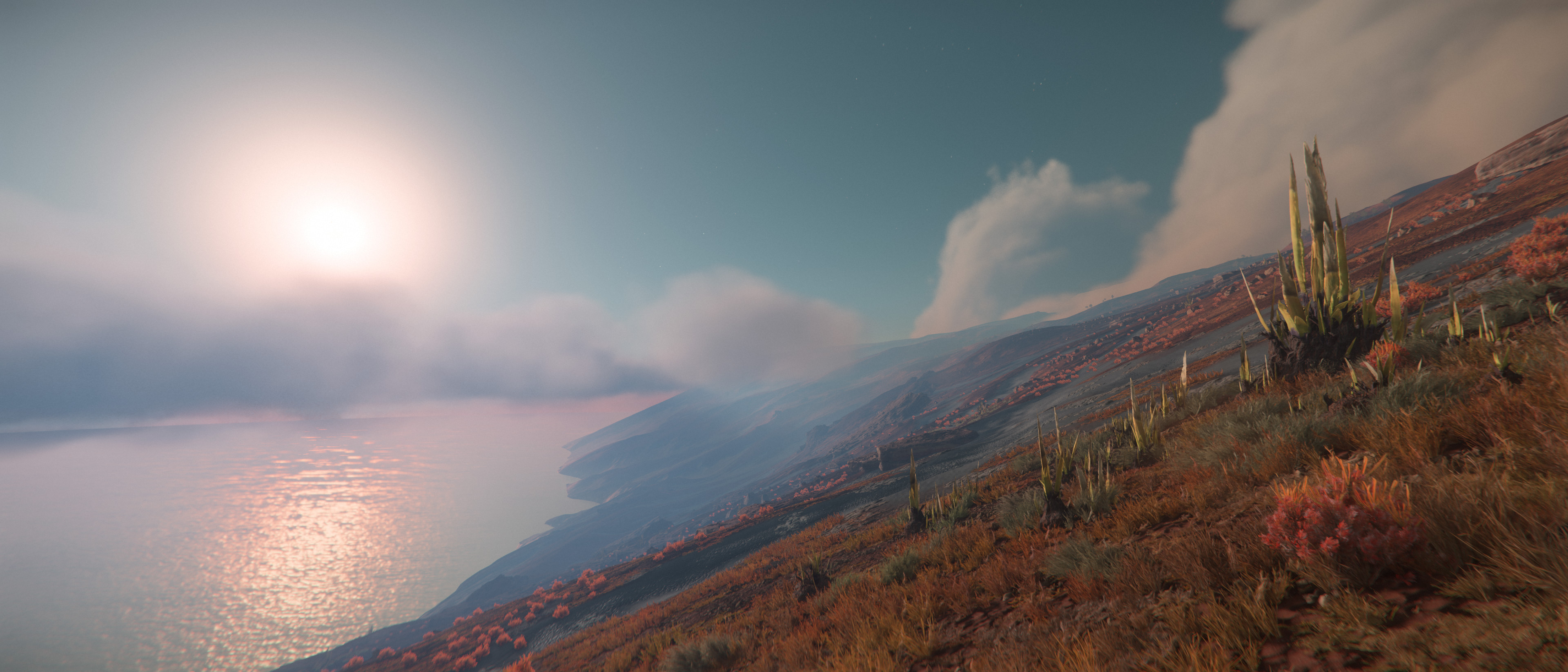
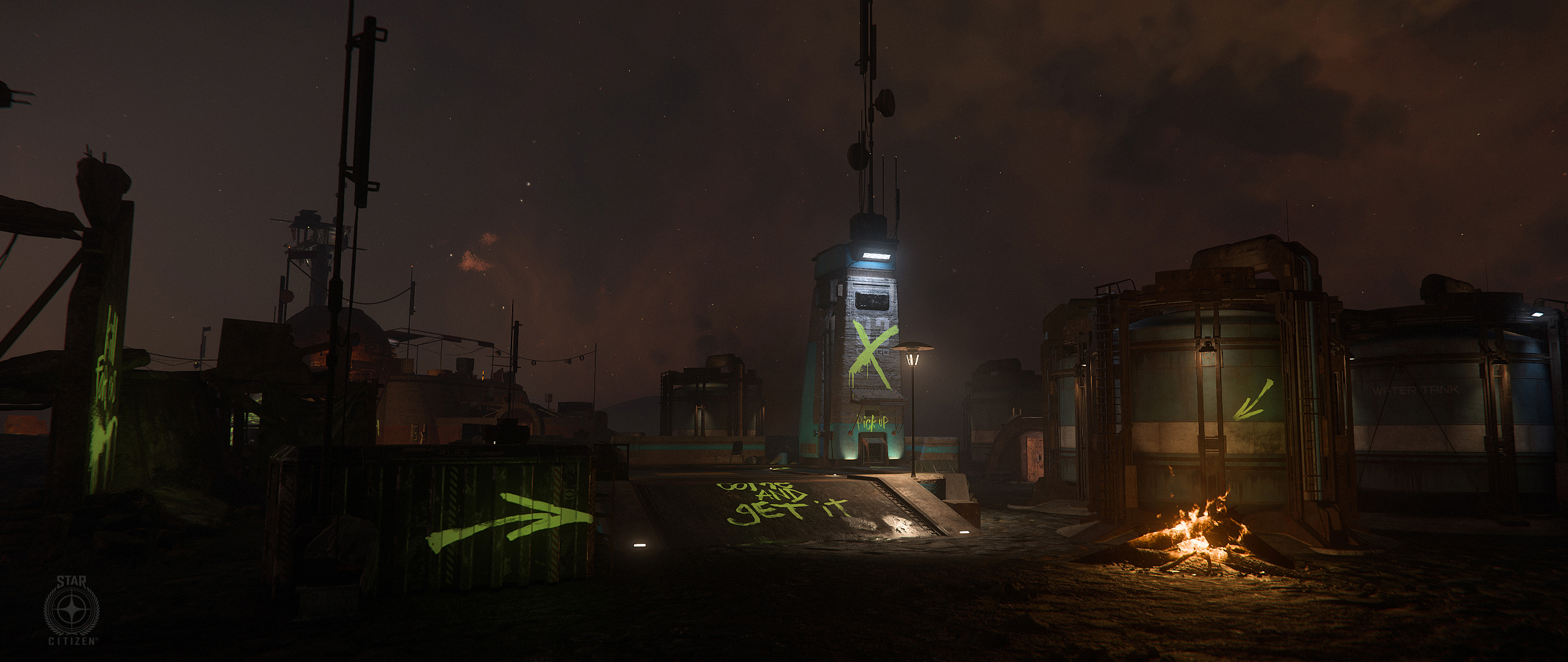
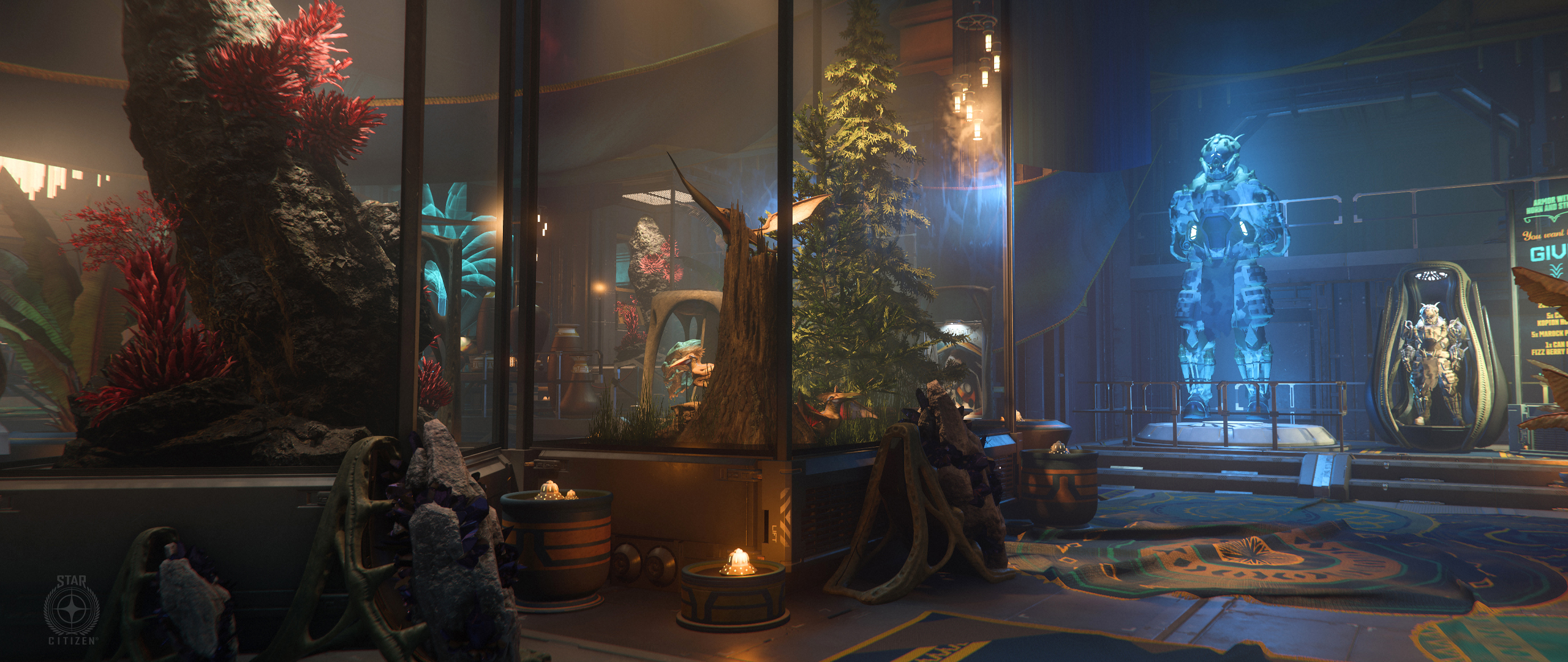
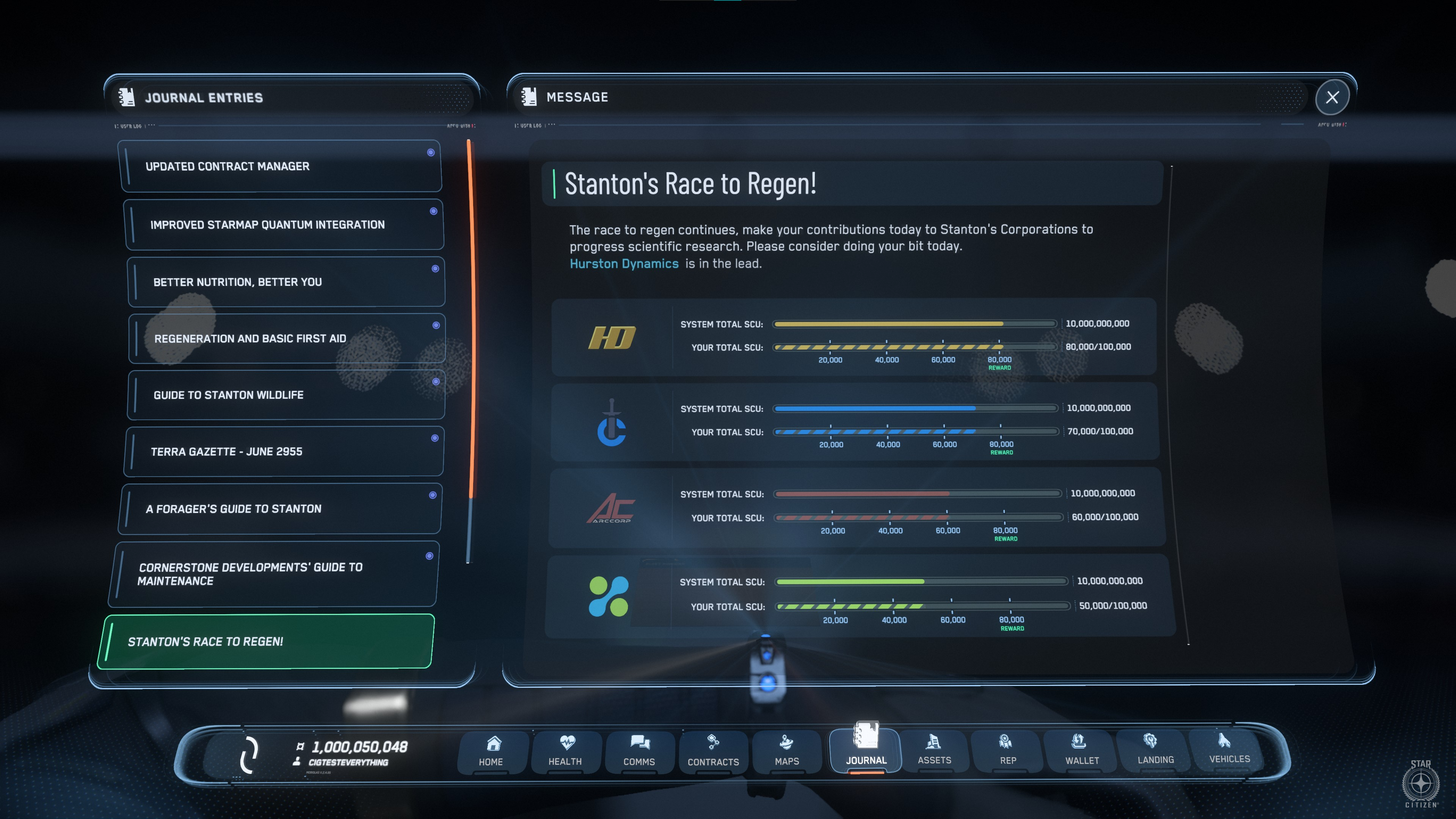
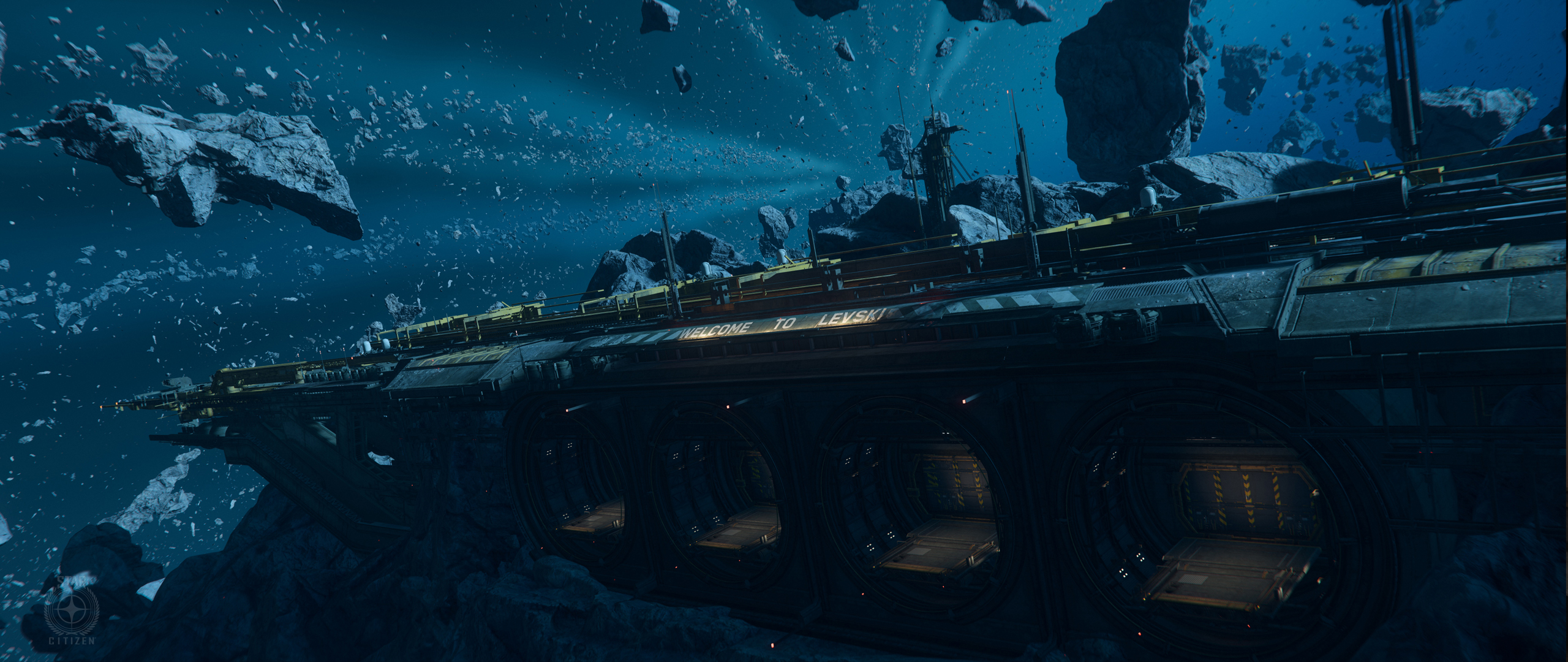
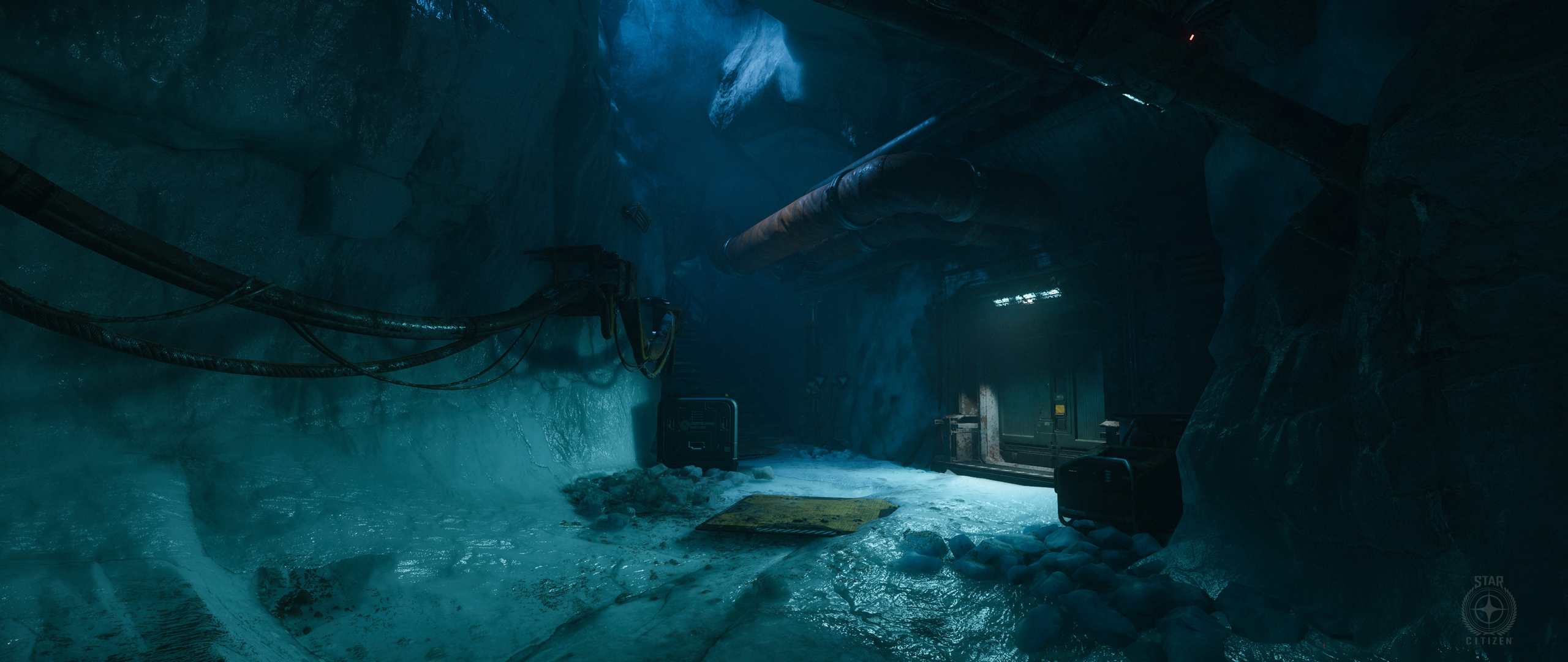
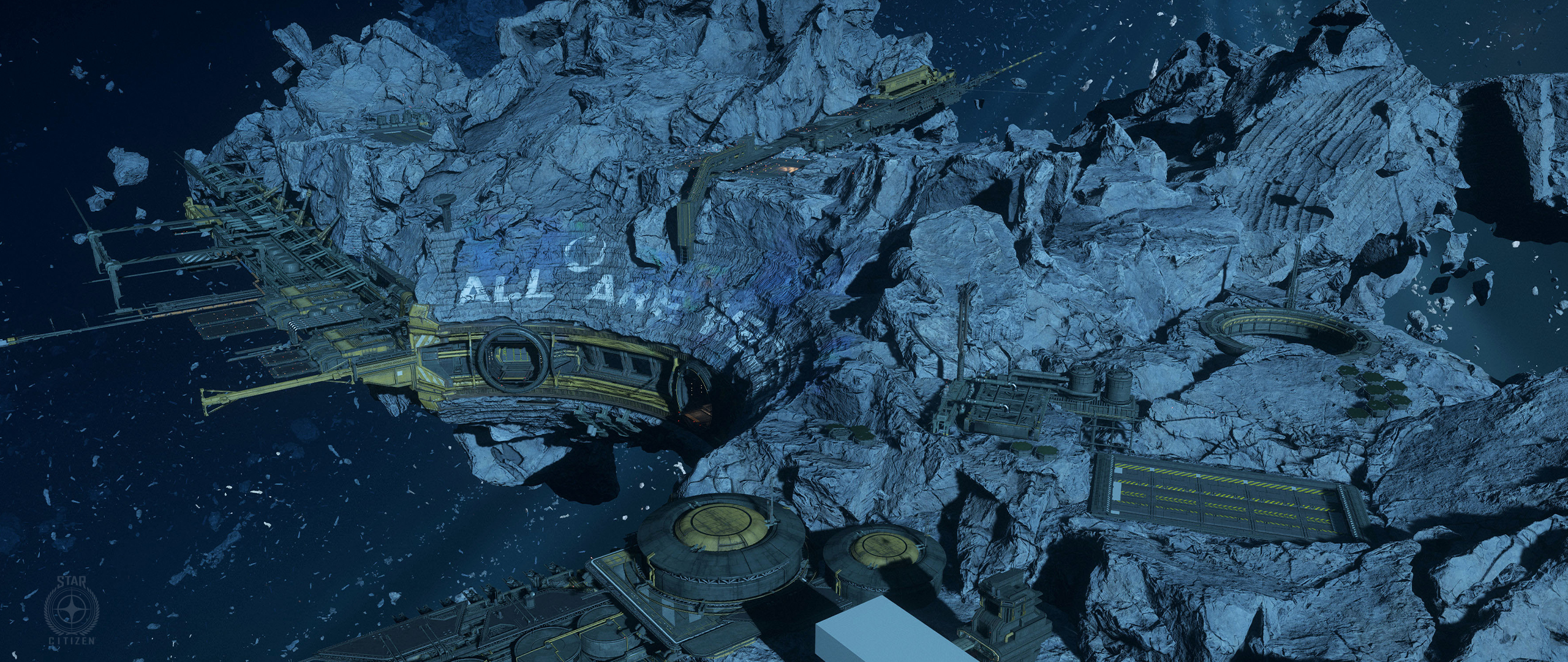
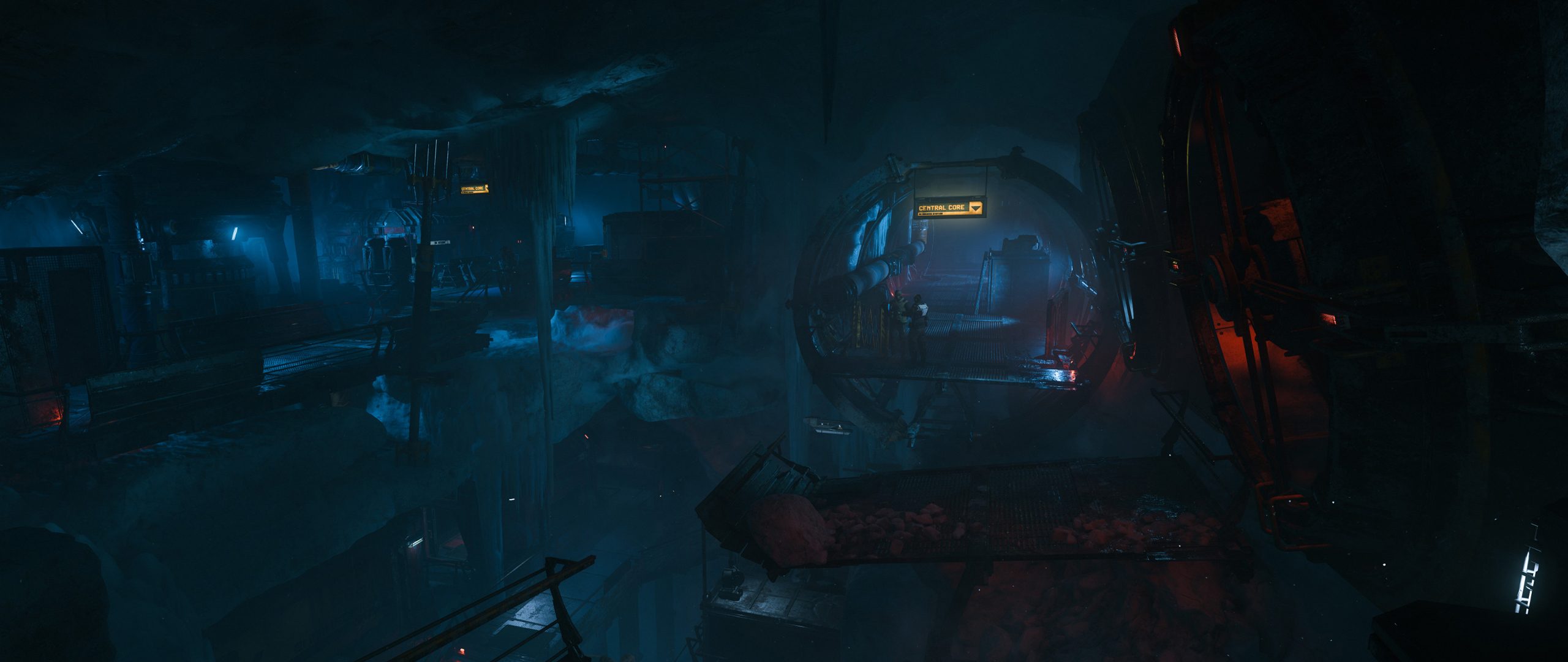
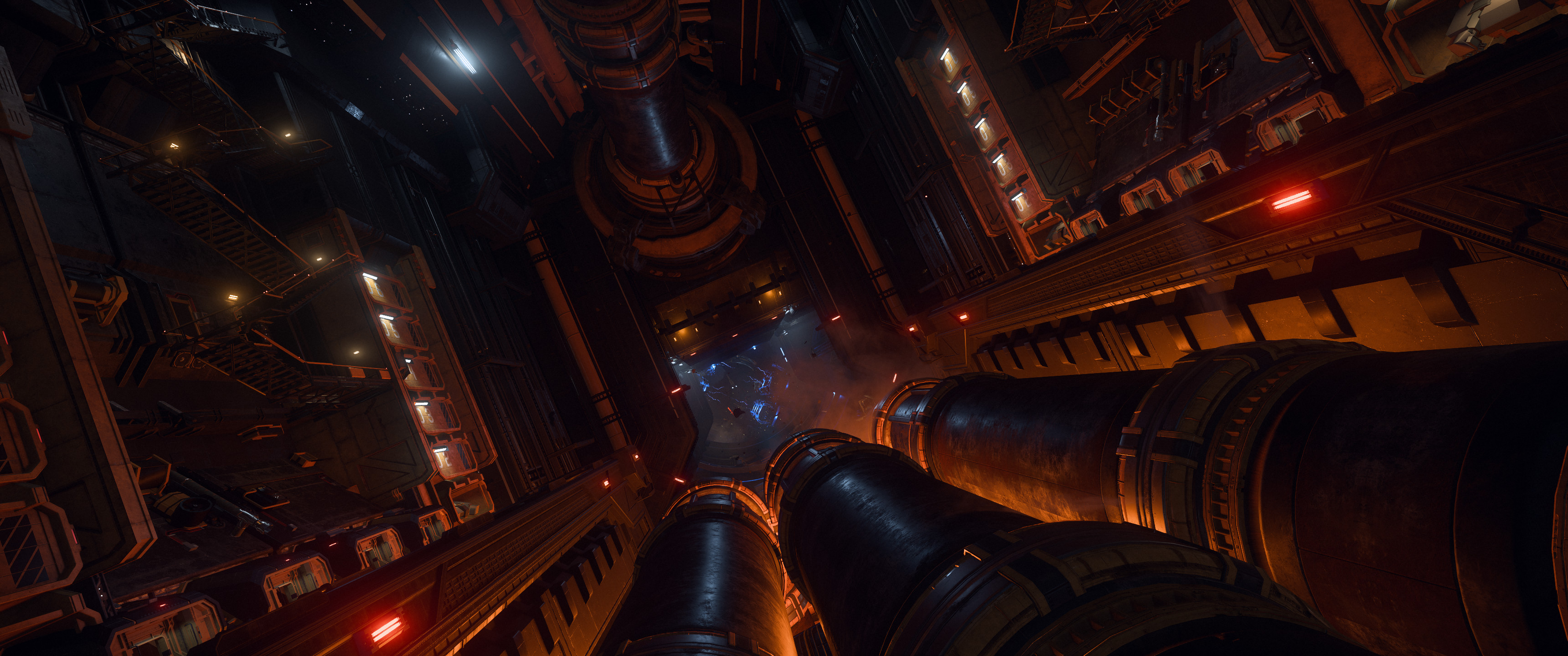
Metadata
- CIG ID
- 17503
- Channel
- Transmission
- Category
- Undefined
- Series
- Monthly Reports
- Comments
- 40
- Published
- 6 years ago (2020-03-06T00:00:00+00:00)