Star Citizen Monthly Report: March 2020
Transmission Undefined Monthly ReportsContent
With its release right around the corner, Alpha 3.9’s features and new additions were worked on extensively throughout March. Read on for all the details on exactly what was done throughout the month (well, what we can share for now of course). Stay safe out there.
AI
We start with Combat AI, who focused on refactoring the Cover System. This involved utilizing voxelization data (the same process used for navigation mesh creation) to better evaluate the environment and construct cover surfaces and locations. The aim is to simplify the environment and build consistent cover data from the pre-assembled prefabs. This will enable the designers to mark objects as elements to be considered in the cover generation phase so the code can handle it efficiently, potentially turning multiple objects into one cover object. They also worked on a new combat tactic for holding positions, which included a polishing pass based on discussions with the designers and feedback from the directors. They also began investigating the work required to introduce the reloading mechanic to NPCs.
Ship AI dedicated part of the month to addressing bugs and corner cases following the integration of the 3D collision avoidance system into game-dev and the Alpha 3.9 stream. Better collision avoidance enables additional combat maneuvers to be developed to add flare to the dogfighting AI. In particular, they focused on defensive maneuvers (retreat/flee) that tell AI ships to prioritize shaking off attackers to reduce their chances of being hit. Additional work was done for formation flying too. Preliminary design work began on capital ship behaviors and standard dogfight activity was streamlined to accommodate new maneuvers and cope with the growing number of combat requirements.
Social AI worked on new features that can be used for both systemic patrol and environmental scripting. Environmental scripting is used to create story scene markups that can be used dynamically by Subsumption behaviors to keep actor performances as intact as possible. Various fitness behaviors were developed for New Babbage. There are currently nine different warmups and six exercises, including jogging, mountain-climber twist, push up, sit up, plank, leg raise, and burpee. Alongside fitness, the team spent time polishing the bartender, who will debut in Lorville. He can currently provide bottled Smoltz, draft beer, and whiskey and cola. The release stream was also stabilized and bugs were fixed for Alpha 3.9.
Animation
Alongside body dragging, the Actor Team began looking at the visual fidelity of the ‘effort’ set to get a heavier weight and feel to it. This is currently scheduled to be delivered in Alpha 4.0 and will further improve the set coming out soon.
“We also worked on some shockingly good animations for some new FPS weapons coming soon…” – The Animation Team.
On the combat AI side, they created assets and graphs for reloading and weapon malfunction animations.
The Social Team focused on creating animations for work zones, which include datapad and multi-tool use. The Facial Team supported eating and drinking and various upcoming PU characters. Mo-cap wise, they burned down the backlog of capture data and improved their toolsets to better streamline future shoots.
Art (Environment)
Last month, the team worked on the first two planets in the Pyro system alongside various other environments. New landscapes, terrain, geology shapes, and vegetation are being explored and worked on with a huge amount of excitement.
“Pyro is an unfriendly and hostile system and the opportunity to create something more otherworldly and dangerous-looking is a nice challenge and change of pace for us.” – The Environment Art Team
Art (Ships)
The US-based team spent time in March polishing the Esperia Prowler. They also further developed the M50’s cockpit and exterior to better align them with the contemporary Origin style. The Cutlass Blue’s prisoner pods were also iterated on to appear more “prisoner containment” like.
An as-yet-unseen ship completed the whitebox stage and will head into greybox soon. Several older ships were updated to work with the latest shaders, preparing them for the tint pallet system.
Art (Weapons)
March saw the Weapons Team iterate on the Lightning Bolt Co.’s sniper rifle and pistol after a round of feedback from design and animation. Tweaks were made to the iron sights, rig issues were debugged, and the player’s holding position was adjusted. Various bug-fixing and polishing tasks were also completed in preparation for its Alpha 3.9 release.
Audio
The Audio Team progressed with their various tasks for Alpha 3.9. New Babbage received music written by Pedro Camacho and the Audio Team that changes based on the day/night cycle. They also completed their work on the Player Status system, progressed with the Esperia Prowler, ambiances for prisons, and fixed a handful of bugs. They looked at the overall game mix too, which is done prior to every major release. The Dialogue Team implemented walla and dialogue lines for New Babbage and the prison, while Audio Code focused on stability and fixing audio-related crashes and bugs.
Backend Services
March saw Backend Services fixing bugs, tweaking existing features, and optimizing services. They’re currently testing and tweaking various parts of the iCache and are preparing to migrate several legacy services to the new model.
Characters
The Character Team’s March focus was on an upcoming event and the Alpha 3.9 release. Most of the modeling and artwork was finalized, while the tech artists completed fixes for rigging (including sim and volume adjustments) and new instore items. A model was also finished that marks the beginning of some interesting work for a future PU release.
Community
The Community Team celebrated St. Patrick’s Day, or Stella Fortuna as it’s known in-universe, with a limerick contest. They received over 650 entries and rewarded the winners with exclusive emerald versions of the RSI Constellation Phoenix, RSI Ursa Rover, and Kruger Archimedes. Here’s the winning limerick, courtesy of Canuck_2099.
I rented a mining Prospector, Its scanner, a resource detector.
So I fractured a rock,
And it caused quite a shock.
Lucky me it had shields to protect her!
The Community Team hosted another Ask Me Anything, this time tackling the most asked questions on the upcoming Player Status feature. The system will launch with Alpha 3.9 and brings things like hunger, thirst, and body temperature to Star Citizen.
“Members of our Frankfurt-based team attended a Bar Citizen in Liège and had an absolute blast meeting the community in Belgium. A big thank you to the organizers for putting on such a great event!” – The Community Team
Engineering
March saw Engineering working on physics threading and performance. They enabled up to 30 physics threads (defaulting to ¾ of logical cores available); added the option to limit the number of threads per task; improved the memory performance and footprint of command queues; defined local queues that can be processed in parallel; moved relevant game code to local physics command queues; created local queues based on the entities’ adam so they can process the joint/part updates in parallel; moved many reposition/recompute calls to queues; and made various other queue related optimizations.
They also added driven ragdoll support for body dragging, gravity adjustments to actor entity ground tracking, per-joint driven ragdoll stiffness, and impulse to the root of a tracking-driven ragdoll.
Regarding unused vertex optimization, all unused vertices in physics meshes are now pruned. Alongside saving 8GB of disk space, it provides better data cache locality on the CPU. Work also continued on part containers/compute bounding box optimization (formerly known as physics geometry instancing). Skinned foliage was missing leaves, which was fixed before being given to the object-container-splitting physics voxel grids.
The Vulcan (G12) render mesh API was refactored for more streamlined and efficient creation and data upload. Unused legacy code was removed, and a shader handle was added to the remaining legacy pipeline. For unified raymarching, the initial elements of the adaptive resolution were submitted, work continued on the upsampling of adaptive resolution results, and samples were placed via low discrepancy generators. They also determined the screen bound of planetary atmospheres to further guide sample placement and began R&D into ensuring adaptive resolution raymarching works well with ray jittering and TSAA.
They also investigated performance issues with oceans caused by CPU readback and fixed HDR display and D3D debug runtime errors.
For general work, Engineering improved the ECUS update code by fixing a flaw in the update logic that caused unnecessary iterations of aggregate groups. They further improved the logic to reduce scans of entire connection lists and optimized threading.
A significant improvement was made to the large render batch management’s performance. Previously, Engineering had iterated on the list of potential batches, but it grew to over 1000 entries, making clean up computationally expensive (1.5ms). To solve this, they now maintain a list of rendered batches. Subsections of component update functions were added to their batch jobs to improve profiling, as were profiling subsections to batch jobs. For the Zone System, a new interface for updating local bounds was added.
The animation side of Engineering made a prototype of a new skin loader and added support for physical skin proxies. They also moved all relevant World Builder code into its own engine module for faster programming iteration time.
Features (Gameplay)
Gameplay Features worked through the final stages of the Friends List refactor. There’s still testing to do, but the initial phase of this long-sought feature is on schedule for launch in Alpha 3.9. Among other things, the new feature includes a new party window and the ability to right-click on contacts and ‘Join Session’ with any online contact. A presence indicator will also show the part of the game they’re playing and whether they’re available to party-up with, and a ‘Join Leader’ button will allow players to connect with another pilot on any server.
“We understand how much of a pain point partying-up was in previous versions of the game and we wanted to resolve this for you ASAP. We felt it was important to rebuild the entire experience from the ground up, because it really needed to be! I’m certain it will still have a few rough edges, but we feel like it’s a MASSIVE improvement over what was there before and that you guys would appreciate having this in your hands sooner rather than later. Please look for threads related to it on Spectrum, as we will 100% be looking for feedback from you guys on where you would like to see it go from here.” – The Gameplay Features Team
The team also added food items into several key shops around the ‘verse to support the Actor Feature Team’s hunger/thirst gameplay. A Quick Buy feature was also added for these smaller, handheld items, so purchasing them doesn’t require using the mobiGlas. Several critical bugs for Alpha 3.9 were fixed, and they supported the Mission Feature Team on implementing prisons into the final patch build.
Features (Vehicles)
In the US, Vehicle Features supported the release of the Esperia Prowler by resolving an issue with the VTOL animations that prevented the wings from animating correctly during take-off/landing. In the latter half of the month, focus shifted to support Alpha 3.9. Improvments to sub-targeting continue.
In the EU, the team worked to convert and update ship HUDs to use the new building blocks tech. They also further developed IFCS:
“A lot of things have been happening regarding the flight model, with thruster efficiency curves being finalized, tested, and improved. This work has also necessitated a new aerodynamic model, which we’re ironing out now and getting ready to convert a lot of ships to use.” – The Vehicle Features Team
Graphics
The Graphics Team spent the month continuing their crucial work on the Vulkan renderer, converting the existing volumetric fog system and debug tools to the new system. They also began planning and prototyping how to handle interdependencies of resources between shader passes, as the system will need to allocate resources and efficiently schedule work while ensuring it doesn’t read resources before write operations are completed. The team also investigated how to improve the legibility of holographic/transparent UI screens in extremely bright or dark environments. This involved using the average and maximum brightness, or a localized region of the screen, to determine a suitable UI brightness. Several color blending approaches were also investigated.
Lighting
Last month, the Lighting Team spent most of their PU-based work on Alpha 3.9. For New Babbage, this meant optimizing the cost of shadow casting by balancing the highest possible quality and framerate. The new day/night light states received constant refinement to ensure the transitions were believable and to prevent situations with too much darkness.
Lighting for the Klescher prison facility involved a totally different approach, as this location is built using a mixture of bespoke object containers (such as the main hub) and modularly built elements (like the mines and caves). The team made several iterations on the hub, exteriors, and habitation pods and are currently focused on the underground sections. The challenge there is placing lights that feel natural, diverse, and lead the player.
Narrative
The Narrative Team continued their focus on getting Alpha 3.9 ready for release, writing dozens of descriptions for food, drinks, clothing, and more. Additional mission polish was done following feedback from ongoing playtests, while a new law was crafted to cut down on pad ramming.
They also began looking into the lore of several upcoming star systems, providing details on flora, fauna, points of interest, and gameplay scenarios players might encounter. Additionally, there was a coordinated effort with Systemic Services and Tools to expand the list of materials and resources in Star Citizen’s economy. The Galactapedia saw new additions and updates on the 4th, 11th, and 25th of the month.
The 2950 Imperator election continues, with the team writing a Stella Fortuna-themed piece focusing on candidate Antwan Lillard. They also appeared on Star Citizen Live to answer a few questions about the Second Tevarin War, and subscribers got a new edition of Jump Point magazine.
Player Relations
As usual, the Player Relations Team focused on supporting the growing number of backers and ongoing projects, including the rollout of the Character Reset tool that backers can use as a “nuclear option” to fix their account. They also ask that players check out the Knowledge Base – a comprehensive index of updates, solutions, and workarounds to any issues in accessing and playing within the PU.
Props
The Props Team’s March focus was on food and drink items, adding additional variants and completing technical setups. Most items required several different meshes for their various states, included shop variants to enable them to be bought and consumed. They also created new shop displays for New Babbage and work began in earnest on mining consumables. Naturally, time was also spent fixing bugs and polishing Alpha 3.9 assets where needed.
QA
In March, QA began testing New Babbage. This was primarily focused on level setup and involved working closely with the embedded environment art tester. Object container splitting and physics grid changes made their way into the Alpha 3.9 build and subsequently affected ATC functions across all landing zones.
For Combat AI, they focused on the newly implemented missions and expanded combat testing to assess how the NPCs react to multiple players and how they use cover when flanked.
Regarding Ship AI, tests continued on dogfighting, security, and civilian ships, with an emphasis on the 3D navigation system in asteroid belts and clusters. The Tech Art request for CPU and GPU captures of different head types was completed, which will enable them to debug character skinning issues while animating. Alpha 3.9 was also tested, as were the ongoing Evocati builds.
Tech Animation
“This quarter saw the welcome addition of two new staff members to the Technical Animation Team. Their skills and motivation have brought a welcome boost to our small team and give us greater scope to support the company as a whole.” The Tech Animation Team
Alongside training new team members, March saw Tech Animation refactoring the in-house facial rigging and animation suite. This is with a view to supporting next-generation content with a flexible and modular approach to the codebase and rigging platform. This will ultimately be used to further refine the existing facial rigs and create all new ones to populate our universe.
The team also helped implement the animations that led to the creation of a new toolset to help visualize and apply flowgraph-style animation sets to the non-flowgraph sandbox animation tool suite. This helps the team create and preserve animation state machines, which is required for the complex AI behaviors players are awaiting in the universe.
Continued work with the Social AI Team identified the need for Tech Animation to further refine their rigging toolsets to support the vast number of upcoming new props. They’re now robust enough and enable a streamlined approach to authoring new animation rigs. They also spring-cleaned their codebase, identifying new pipeline foundations and tools to refactor.
Tech Art also developed a tool to enable Character Art to add skeleton extensions from a preset before editing and exporting them to speed up the authoring process. They worked with the Weapons Team on bugs and requests, including rig updates, Mannequin setups, IK target updates, and export errors.
They partnered with Social-AI on a variety of tasks, including setups for new usables, fixing integration issues, feeding back on upcoming Mannequin setups, fixing proc clip issues, and investigating wildline setups for the bartender. They also created a rig for the Aegis Gladius to enable proper animated interactions between characters and the ship.
Tech Art
Last month, Tech Animation added additional functionality to the runtime rig plugin command for Maya, which will give improved sanity checks, more detailed error reports, and a streamlined command-line interface. They investigated ways to improve the performance of the DNA system that underpins head customization. During head morphing, the DNA system blends various components to make a unique facial rig. One of these data chunks is known internally as skin weight, which is used by the dual-quaternion skinning deformer. These weights are traditionally defined per character. However, the team realized that they don’t vary that much and by unifying them, they could save the blending computations at runtime for improved performance. They assessed what visual impact the weight unification would have, with the aim being not to lose any quality whatsoever. The findings were positive, so this will go ahead and become particularly beneficial once the highest quality heads (T0) are added to the DNA system.
Turbulent
Game services developers at Turbulent completed the Friend List unification between Spectrum and the game client. Sensitive improvements were made to the Network Operation Center, which now has basic visibility on groups, lobbies, and voice channels for those working on the game. A new iteration of the internal custom logging system was also released.
Turbulent worked on several as-yet-unannounced projects and supported the St. Patrick’s Day promotion that featured the Kruger Archimedes Emerald.
VFX
The VFX Team continued delivering effects for the upcoming new content, including the Esperia Prowler, New Babbage, and prison. They also worked on destruction effects for volatile cargo. Code-wise, visor frost was updated to correctly use the ‘frost amount’ set from the codec. A new set of debug display options was completed for the VFX artists and bug fixes and optimizations were made too. Feature-wise, the SDF-based atmospheric entry effects completed and are ready to be rolled out to all vehicles in a future release. Pre-production R&D also continued for the fire component.
WE’LL SEE YOU NEXT MONTH…
Da die Veröffentlichung von Alpha 3.9 unmittelbar bevorsteht, wurde im März intensiv an den Funktionen und Neuerungen von Alpha 3.9 gearbeitet. Lesen Sie weiter für alle Details darüber, was genau im Laufe des Monats getan wurde (na ja, was wir natürlich erst einmal mitteilen können). Bleiben Sie sicher da draußen.
KI
Wir beginnen mit Combat AI, die sich auf die Überarbeitung des Deckungssystems konzentrierte. Dabei wurden Voxelizationsdaten (derselbe Prozess, der für die Erstellung von Navigationsnetzen verwendet wurde) verwendet, um die Umgebung besser zu bewerten und Deckungsflächen und Standorte zu konstruieren. Ziel ist es, die Umgebung zu vereinfachen und konsistente Deckungsdaten aus den vorkonfektionierten Fertighäusern aufzubauen. Dies ermöglicht es den Designern, Objekte als Elemente zu markieren, die in der Phase der Cover-Generierung berücksichtigt werden sollen, so dass der Code diese effizient handhaben kann und möglicherweise mehrere Objekte in ein Cover-Objekt verwandelt. Sie arbeiteten auch an einer neuen Kampftaktik zum Halten von Positionen, die einen Polierdurchgang auf der Grundlage von Diskussionen mit den Designern und Rückmeldungen der Direktoren beinhaltete. Sie begannen auch mit der Untersuchung der Arbeiten, die zur Einführung der Nachlade-Mechanik bei den NPCs erforderlich sind.
Die Schiffs-KI widmete einen Teil des Monats der Behebung von Fehlern und Eckfällen nach der Integration des 3D-Kollisionsvermeidungssystems in die Spieleentwicklung und den Alpha 3.9-Stream. Eine bessere Kollisionsvermeidung ermöglicht es, zusätzliche Kampfmanöver zu entwickeln, um die KI im Nahkampf zu verbessern. Insbesondere konzentrierten sie sich auf Abwehrmanöver (Rückzug/Flucht), die KI-Schiffe anweisen, das Abschütteln von Angreifern zu priorisieren, um ihre Trefferchancen zu verringern. Auch für den Formationsflug wurde zusätzliche Arbeit geleistet. Es wurde mit der Vorentwurfsarbeit für das Verhalten von Großkampfschiffen begonnen, und die Standard-Dogfight-Aktivitäten wurden rationalisiert, um neue Manöver zu ermöglichen und die wachsende Zahl von Kampfanforderungen zu bewältigen.
Die soziale KI arbeitete an neuen Funktionen, die sowohl für systemische Patrouillen als auch für Umweltskripte verwendet werden können. Das Umweltdrehbuch wird zur Erstellung von Szenenauszeichnungen verwendet, die von Subsumptionsverhalten dynamisch genutzt werden können, um die Leistungen der Schauspieler so intakt wie möglich zu halten. Für New Babbage wurden verschiedene Fitnessverhaltensweisen entwickelt. Derzeit gibt es neun verschiedene Aufwärmübungen und sechs Übungen, darunter Jogging, Bergsteigerdrehung, Push-up, Aufsetzen, Planken, Beinheben und Aufstoßen. Neben der Fitness verbrachte das Team auch Zeit damit, den Barkeeper zu polieren, der in Lorville debütieren wird. Er kann derzeit Smoltz in Flaschen, Bier vom Fass sowie Whisky und Cola anbieten. Der Freigabestrom wurde ebenfalls stabilisiert und Fehler für Alpha 3.9 behoben.
Animation
Neben dem Ziehen des Körpers begann das Schauspielerteam, die visuelle Treue der "Anstrengung" zu betrachten, die gesetzt wurde, um ein größeres Gewicht und Gefühl zu erhalten. Dies ist derzeit für Alpha 4.0 geplant und wird das bald erscheinende Set weiter verbessern.
"Wir haben auch an einigen schockierend guten Animationen für einige neue FPS-Waffen gearbeitet, die bald erscheinen werden..." - Das Animationsteam.
Auf der Seite der Kampf-KI haben sie Hilfsmittel und Grafiken für Nachlade- und Waffenfunktionsanimationen erstellt.
Das Sozialteam konzentrierte sich auf die Erstellung von Animationen für Arbeitszonen, die Datenpad- und Multi-Tool-Einsatz umfassen. Das Facial Team unterstützte Essen und Trinken und verschiedene aufkommende PU-Charaktere. Was die Mützen betrifft, so haben sie den Rückstand bei der Datenerfassung abgebrannt und ihre Toolsets verbessert, um zukünftige Aufnahmen besser zu gestalten.
Kunst (Umwelt)
Im vergangenen Monat arbeitete das Team neben verschiedenen anderen Umgebungen an den ersten beiden Planeten des Pyro-Systems. Neue Landschaften, Gelände, geologische Formen und Vegetation werden mit großer Spannung erforscht und bearbeitet.
"Pyro ist ein unfreundliches und feindseliges System, und die Möglichkeit, etwas mehr jenseitige und gefährlich aussehende zu schaffen, ist eine schöne Herausforderung und eine Abwechslung für uns. - Das Team für Umweltkunst
Kunst (Schiffe)
Das in den USA ansässige Team verbrachte im März Zeit damit, den Esperia Prowler zu polieren. Sie entwickelten auch das Cockpit und das Äußere der M50 weiter, um sie besser an den zeitgenössischen Origin-Stil anzupassen. Auch die Gefangenenkapseln der Cutlass Blue wurden überarbeitet, um den Eindruck einer "Gefangeneneindämmung" zu erwecken.
Ein bisher noch nicht gesehenes Schiff hat die Whitebox-Phase abgeschlossen und wird bald in die Greybox gehen. Mehrere ältere Schiffe wurden auf den neuesten Stand gebracht, um mit den neuesten Shadern zu arbeiten und sie für das Farbpalettensystem vorzubereiten.
Kunst (Waffen)
Im März wiederholte das Waffenteam nach einer Runde von Feedback aus dem Design und der Animation die Scharfschützengewehr und -pistole der Lightning Bolt Co. Die Eisenvisierung wurde optimiert, Probleme mit dem Rigg wurden behoben und die Halteposition des Spielers angepasst. Außerdem wurden verschiedene Fehlerbehebungs- und Polierarbeiten in Vorbereitung auf die Veröffentlichung von Alpha 3.9 durchgeführt.
Audio
Das Audio-Team machte bei seinen verschiedenen Aufgaben für Alpha 3.9 Fortschritte. New Babbage erhielt von Pedro Camacho und dem Audio-Team geschriebene Musik, die sich je nach Tag/Nacht-Zyklus ändert. Sie schlossen auch ihre Arbeit am Spielerstatus-System ab, machten Fortschritte mit dem Esperia Prowler, den Ambiences für Gefängnisse und beendeten eine Handvoll Fehler. Sie haben sich auch den gesamten Spiel-Mix angeschaut, der vor jeder größeren Veröffentlichung durchgeführt wird. Das Dialogteam implementierte Walla und Dialogzeilen für New Babbage und das Gefängnis, während sich der Audiocode auf die Stabilität und die Behebung von Abstürzen und Fehlern im Zusammenhang mit dem Ton konzentrierte.
Backend-Dienste
Im März wurden bei den Backend-Diensten Fehler behoben, bestehende Funktionen optimiert und die Dienste optimiert. Sie testen und optimieren derzeit verschiedene Teile des iCache und bereiten die Migration verschiedener Legacy-Dienste auf das neue Modell vor.
Zeichen
Der Schwerpunkt des Charakterteams lag im März auf einer bevorstehenden Veranstaltung und der Veröffentlichung von Alpha 3.9. Der Großteil der Modellierung und der Kunstwerke wurde fertiggestellt, während die Technikkünstler Korrekturen für das Rigging (einschließlich Sim- und Lautstärkeanpassungen) und neue Instore-Gegenstände fertigstellten. Außerdem wurde ein Modell fertiggestellt, das den Beginn einiger interessanter Arbeiten für eine zukünftige PU-Version markiert.
Gemeinschaft
Das Community Team feierte den St. Patrick's Day, oder Stella Fortuna, wie es im Universum genannt wird, mit einem Limerick-Wettbewerb. Sie erhielten über 650 Einsendungen und belohnten die Gewinner mit exklusiven Smaragdversionen der RSI Constellation Phoenix, RSI Ursa Rover und Kruger Archimedes. Hier ist der Sieger-Limerick, mit freundlicher Genehmigung von Canuck_2099.
Ich habe einen Prospector für den Bergbau gemietet, seinen Scanner, einen Rohstoffdetektor.
Also habe ich einen Stein zerbrochen,
Und es hat einen ziemlichen Schock ausgelöst.
Zum Glück hatte es Schilde, um sie zu schützen!
Das Community-Team veranstaltete ein weiteres Ask Me Anything, diesmal mit den am häufigsten gestellten Fragen zum bevorstehenden Spielerstatus-Feature. Das System wird mit Alpha 3.9 gestartet und bringt Dinge wie Hunger, Durst und Körpertemperatur zu Star Citizen.
"Mitglieder unseres Frankfurter Teams besuchten eine Bar Citizen in Lüttich und hatten einen absoluten Wahnsinnsspaß beim Treffen mit der Gemeinde in Belgien. Ein großes Dankeschön an die Organisatoren für die Durchführung einer so großartigen Veranstaltung!" - Das Gemeinschaftsteam
Technik
Im März arbeiteten die Ingenieure an physikalischen Einfädelungen und Leistungen. Sie aktivierten bis zu 30 Physik-Threads (standardmäßig sind unter ¾ logische Kerne verfügbar); fügten die Option hinzu, die Anzahl der Threads pro Aufgabe zu begrenzen; verbesserten die Speicherleistung und den Platzbedarf der Befehlswarteschlangen; definierten lokale Warteschlangen, die parallel verarbeitet werden können; verschoben relevanten Spielcode in lokale Physik-Befehlswarteschlangen; erstellten lokale Warteschlangen auf der Grundlage des Adam der Entitäten, so dass sie die Aktualisierungen der Verbindungen/Teilstücke parallel verarbeiten können; verschoben viele Neupositionierungs-/Rechenaufrufe in Warteschlangen und nahmen verschiedene andere warteschlangenbezogene Optimierungen vor.
Sie fügten auch die Unterstützung für getriebene Ragdolls für das Body-Dragging, Schwerkraftanpassungen für die Bodenverfolgung der Akteurseinheiten, die Steifigkeit der gelenkgetriebenen Ragdolls und den Impuls für die Wurzel einer verfolgungsgesteuerten Ragdoll hinzu.
Hinsichtlich der ungenutzten Eckpunktoptimierung werden jetzt alle ungenutzten Eckpunkte in den physikalischen Netzen beschnitten. Neben der Einsparung von 8 GB Plattenplatz bietet es eine bessere Daten-Cache-Lokalität auf der CPU. Die Arbeit an der Optimierung von Teilecontainern/Bounding Boxen (früher bekannt als physikalische Geometrie-Instanzen) wurde ebenfalls fortgesetzt. Den gehäuteten Blättern fehlten Blätter, was behoben wurde, bevor sie an die objektcontaineraufteilenden Physik-Voxel-Gitter übergeben wurden.
Die Vulcan (G12)-Rendering-Mesh-API wurde für eine rationalisierte und effizientere Erstellung und den Daten-Upload überarbeitet. Ungenutzter Legacy-Code wurde entfernt und ein Shader-Handle wurde der verbleibenden Legacy-Pipeline hinzugefügt. Zur Vereinheitlichung des Raymarching wurden die ersten Elemente der adaptiven Auflösung vorgelegt, die Arbeit an der Abtastung der Ergebnisse der adaptiven Auflösung wurde fortgesetzt, und die Abtastwerte wurden über Generatoren mit geringer Diskrepanz platziert. Sie bestimmten auch die Bildschirmgrenze der Planetenatmosphären, um die Platzierung der Proben weiter zu steuern, und begannen mit der Forschung und Entwicklung, um sicherzustellen, dass das Raymarching mit adaptiver Auflösung gut mit Strahlenzittern und TSAA funktioniert.
Sie untersuchten auch Leistungsprobleme mit Ozeanen, die durch das CPU-Readback verursacht wurden, und beendeten HDR-Anzeige- und D3D-Debug-Laufzeitfehler.
Für allgemeine Arbeiten verbesserte die Technik den ECUS-Aktualisierungscode, indem ein Fehler in der Aktualisierungslogik behoben wurde, der unnötige Iterationen von Aggregatgruppen verursachte. Die Logik wurde weiter verbessert, um das Scannen ganzer Verbindungslisten zu reduzieren und das Threading zu optimieren.
Die Leistung der Verwaltung großer Render-Batches wurde erheblich verbessert. Zuvor hatte die Technik auf der Liste der möglichen Stapel iteriert, aber die Liste wuchs auf über 1000 Einträge an, was die Bereinigung rechenintensiv machte (1,5 ms). Um dieses Problem zu lösen, führen sie jetzt eine Liste der gerenderten Batches. Unterabschnitte von Komponentenaktualisierungsfunktionen wurden ihren Batch-Jobs hinzugefügt, um die Profilerstellung zu verbessern, ebenso wie die Profilerstellung von Unterabschnitten zu Batch-Jobs. Für das Zonensystem wurde eine neue Schnittstelle für die Aktualisierung lokaler Grenzen hinzugefügt.
Die Animationsseite der Technik erstellte einen Prototyp eines neuen Skin-Loaders und fügte Unterstützung für physische Skin-Proxys hinzu. Außerdem wurde der gesamte relevante Code von World Builder in ein eigenes Engine Modul verschoben, um die Iterationszeit bei der Programmierung zu verkürzen.
Funktionen (Spielablauf)
Die Spielfunktionen haben die letzten Phasen der Überarbeitung der Freundesliste durchlaufen. Es sind noch Tests durchzuführen, aber die erste Phase dieses lang ersehnten Features ist planmäßig für den Start in Alpha 3.9 vorgesehen. Die neue Funktion umfasst unter anderem ein neues Party-Fenster und die Möglichkeit, mit der rechten Maustaste auf Kontakte zu klicken und mit jedem beliebigen Online-Kontakt "Sitzung beitreten" zu können. Eine Präsenzanzeige zeigt außerdem an, welchen Teil des Spiels sie gerade spielen und ob sie zum Feiern zur Verfügung stehen, und ein "Join Leader"-Knopf ermöglicht es den Spielern, sich mit einem anderen Piloten auf einem beliebigen Server zu verbinden.
"Wir wissen, wie schmerzhaft es in früheren Versionen des Spiels war, zu feiern, und wir wollten dies so schnell wie möglich für Sie lösen. Wir hielten es für wichtig, die gesamte Erfahrung von Grund auf neu aufzubauen, denn das war wirklich notwendig! Ich bin mir sicher, dass es noch ein paar Ecken und Kanten haben wird, aber wir sind der Meinung, dass es eine MASSIVE Verbesserung im Vergleich zu dem ist, was vorher da war, und dass ihr es zu schätzen wisst, wenn ihr das lieber früher als später in die Hand nehmt. Bitte suchen Sie nach Themen, die damit in Zusammenhang stehen, auf Spectrum, da wir zu 100% auf Rückmeldungen von Ihnen warten, wie es weitergehen soll". - Das Team für Spielfunktionen
Das Team fügte auch Lebensmittel in mehreren wichtigen Geschäften rund um den "Vers" hinzu, um das Hunger/Durst-Gameplay des Schauspieler-Featureteams zu unterstützen. Für diese kleineren, handgehaltenen Gegenstände wurde auch eine Schnellkauf-Funktion hinzugefügt, so dass der Kauf dieser Gegenstände nicht mit dem mobiGlas erfolgen muss. Mehrere kritische Fehler für Alpha 3.9 wurden behoben, und sie unterstützten das Mission Feature Team bei der Implementierung von Gefängnissen in den endgültigen Patch-Build.
Funktionen (Fahrzeuge)
In den USA unterstützte Vehicle Features die Veröffentlichung des Esperia Prowlers durch die Lösung eines Problems mit den VTOL-Animationen, das die korrekte Animation der Flügel bei Start und Landung verhinderte. In der zweiten Hälfte des Monats verlagerte sich der Schwerpunkt auf die Unterstützung von Alpha 3.9. Die Verbesserungen an der Unterzielerfassung werden fortgesetzt.
In der EU arbeitete das Team daran, Schiffs-HUDs umzubauen und zu aktualisieren, um die neuen technischen Bausteine zu verwenden. Sie entwickelten auch das IFCS weiter:
"Es hat sich eine Menge in Bezug auf das Flugmodell getan, wobei die Kurven der Triebwerkseffizienz fertig gestellt, getestet und verbessert wurden. Diese Arbeit hat auch ein neues aerodynamisches Modell erforderlich gemacht, das wir jetzt ausbügeln und für die Umrüstung vieler Schiffe auf den Betrieb vorbereiten. - Das Team für Fahrzeugeigenschaften
Grafiken
Das Grafikteam verbrachte den Monat damit, seine entscheidende Arbeit am Vulkan-Renderer fortzusetzen und das bestehende volumetrische Nebelsystem und die Debug-Tools in das neue System zu konvertieren. Außerdem begannen sie mit der Planung und Prototyperstellung, wie die Abhängigkeiten der Ressourcen zwischen den Shader-Durchgängen gehandhabt werden können, da das System Ressourcen zuweisen und die Arbeit effizient planen muss, während es gleichzeitig sicherstellen muss, dass es keine Ressourcen liest, bevor die Schreibvorgänge abgeschlossen sind. Das Team untersuchte auch, wie die Lesbarkeit holographischer/transparenter UI-Bildschirme in extrem hellen oder dunklen Umgebungen verbessert werden kann. Dazu wurde die durchschnittliche und maximale Helligkeit oder ein lokalisierter Bereich des Bildschirms verwendet, um eine geeignete UI-Helligkeit zu bestimmen. Es wurden auch mehrere Ansätze zur Farbmischung untersucht.
Beleuchtung
Im vergangenen Monat hat das Beleuchtungsteam den größten Teil seiner PU-basierten Arbeit auf Alpha 3.9 verwendet. Für New Babbage bedeutete dies, die Kosten für den Schattenwurf zu optimieren, indem man die höchstmögliche Qualität und Framerate ausbalancierte. Die neuen Tag-/Nachtlichtzustände wurden ständig verfeinert, um sicherzustellen, dass die Übergänge glaubwürdig sind und um Situationen mit zu viel Dunkelheit zu verhindern.
Die Beleuchtung der Klescher-Gefangenenanlage erforderte einen völlig anderen Ansatz, da dieser Ort aus einer Mischung aus maßgeschneiderten Objektcontainern (wie dem Hauptknotenpunkt) und modular aufgebauten Elementen (wie den Minen und Höhlen) gebaut wird. Das Team führte mehrere Iterationen am Hauptknotenpunkt, an den Außenbereichen und den Wohnkammern durch und konzentriert sich derzeit auf die unterirdischen Bereiche. Die Herausforderung besteht darin, dort Lichter zu platzieren, die sich natürlich und abwechslungsreich anfühlen und den Spieler führen.
Erzählung
Das Erzählteam konzentrierte sich weiterhin darauf, Alpha 3.9 für die Veröffentlichung vorzubereiten und schrieb Dutzende von Beschreibungen für Essen, Getränke, Kleidung und mehr. Nach dem Feedback aus den laufenden Spieltests wurden weitere Verbesserungen vorgenommen, während ein neues Gesetz ausgearbeitet wurde, um das Rammen von Blöcken zu reduzieren.
Sie begannen auch, sich mit den Überlieferungen über mehrere aufstrebende Sternensysteme zu befassen und lieferten Einzelheiten über Flora, Fauna, Sehenswürdigkeiten und Spielszenarien, auf die die Spieler stoßen könnten. Zusätzlich gab es eine koordinierte Anstrengung mit Systemic Services and Tools, um die Liste der Materialien und Ressourcen in der Wirtschaft des Sternenbürgers zu erweitern. Am 4., 11. und 25. des Monats wurden in der Galactapedia neue Ergänzungen und Aktualisierungen vorgenommen.
Die 2950er Imperator-Wahl geht weiter, wobei das Team einen Beitrag zum Thema Stella Fortuna schreibt, der sich auf den Kandidaten Antwan Lillard konzentriert. Sie erschienen auch in Star Citizen Live, um einige Fragen zum Zweiten Tevarin-Krieg zu beantworten, und die Abonnenten erhielten eine neue Ausgabe der Zeitschrift Jump Point.
Beziehungen zu den Spielern
Wie üblich konzentrierte sich das Team für Spielerbeziehungen auf die Unterstützung der wachsenden Zahl von Unterstützern und der laufenden Projekte, einschließlich der Einführung des Tools zur Charakterrückstellung, das die Unterstützer als "nukleare Option" nutzen können, um ihr Konto zu reparieren. Außerdem bitten sie die Spieler, sich die Wissensdatenbank anzuschauen - ein umfassender Index mit Aktualisierungen, Lösungen und Umgehungslösungen für alle Probleme beim Zugriff auf die PU und beim Spielen innerhalb der PU.
Requisiten
Der Schwerpunkt des Requisitenteams lag im März auf Lebensmitteln und Getränken, wobei zusätzliche Varianten hinzugefügt und technische Einrichtungen vervollständigt wurden. Die meisten Artikel erforderten mehrere verschiedene Maschen für ihre verschiedenen Zustände, einschließlich Shop-Varianten, damit sie gekauft und konsumiert werden konnten. Sie schufen auch neue Ladenauslagen für New Babbage und begannen ernsthaft mit der Arbeit an den Verbrauchsmaterialien für den Bergbau. Natürlich wurde auch Zeit darauf verwendet, Fehler zu beheben und Alpha 3.9-Anlagen zu polieren, wo dies erforderlich war.
QA
Im März begann die QA mit der Erprobung von New Babbage. Dies konzentrierte sich in erster Linie auf die Einrichtung von Ebenen und beinhaltete eine enge Zusammenarbeit mit dem Kunst-Tester für eingebettete Umgebungen. Die Aufteilung von Objektcontainern und Änderungen des physikalischen Gitters fanden ihren Weg in das Alpha 3.9-Build und wirkten sich anschließend auf die ATC-Funktionen in allen Landezonen aus.
Bei der Kampf-KI konzentrierten sie sich auf die neu implementierten Missionen und erweiterte Kampftests, um zu beurteilen, wie die NSCs auf mehrere Spieler reagieren und wie sie Deckung nutzen, wenn sie flankiert werden.
Bei der Schiffs-KI wurden die Tests auf Luftkampf-, Sicherheits- und Zivilschiffen fortgesetzt, wobei der Schwerpunkt auf dem 3D-Navigationssystem in Asteroidengürteln und -clustern lag. Die Tech-Art-Anforderung für CPU- und GPU-Erfassungen verschiedener Kopftypen wurde abgeschlossen, was es ihnen ermöglichen wird, Probleme bei der Charakterhäutung während der Animation zu debuggen. Auch Alpha 3.9 wurde getestet, ebenso wie die laufenden Evocati-Builds.
Technische Animation
"In diesem Quartal wurde das Team für technische Animation um zwei neue Mitarbeiter erweitert. Ihre Fähigkeiten und ihre Motivation haben unserem kleinen Team einen willkommenen Aufschwung gebracht und uns mehr Spielraum für die Unterstützung des Unternehmens als Ganzes gegeben. Das Team für technische Animation
Neben der Schulung neuer Teammitglieder wurde im März von Tech Animation die hausinterne Gesichtsausrüstung und Animationssuite überarbeitet. Ziel ist es, Inhalte der nächsten Generation mit einem flexiblen und modularen Ansatz für die Codebasis und die Rigging-Plattform zu unterstützen. Dies wird letztendlich dazu verwendet werden, die bestehenden Gesichts-Rigs weiter zu verfeinern und alle neuen zu schaffen, um unser Universum zu bevölkern.
Das Team half auch bei der Implementierung der Animationen, die zur Erstellung eines neuen Werkzeugsatzes führten, der die Visualisierung und Anwendung von Animationssätzen im Flowgraph-Stil auf die Nicht-Flowgraph-Sandbox-Animationswerkzeugsuite unterstützt. Dies hilft dem Team bei der Erstellung und Erhaltung von Animationszustandsmaschinen, die für die komplexen KI-Verhaltensweisen erforderlich sind, die die Spieler im Universum erwarten.
Die weitere Arbeit mit dem sozialen KI-Team hat den Bedarf an Tech-Animation identifiziert, um ihre Rigging-Toolsets weiter zu verfeinern, um die große Anzahl der bevorstehenden neuen Requisiten zu unterstützen. Sie sind jetzt robust genug und ermöglichen einen rationellen Ansatz für die Erstellung neuer Animations-Rigs. Sie haben auch ihre Codebasis gründlich gereinigt und neue Pipeline-Fundamente und Werkzeuge für die Refactorierung identifiziert.
Tech Art hat auch ein Werkzeug entwickelt, mit dem Character Art vor der Bearbeitung und dem Export Skeletterweiterungen aus einer Voreinstellung hinzufügen kann, um den Authoring-Prozess zu beschleunigen. Sie arbeiteten mit dem Weapons Team an Fehlern und Anfragen, einschließlich Rig-Updates, Mannequin-Setups, IK-Zielaktualisierungen und Exportfehler.
Sie arbeiteten mit Social-AI an einer Vielzahl von Aufgaben zusammen, darunter die Einrichtung neuer Benutzeroberflächen, die Behebung von Integrationsproblemen, die Rückmeldung zu bevorstehenden Mannequin-Einrichtungen, die Behebung von Problemen mit Proc-Clips und die Untersuchung von Wildline-Einrichtungen für den Barkeeper. Außerdem wurde ein Rigg für die Aegis Gladius erstellt, um die richtige animierte Interaktion zwischen den Charakteren und dem Schiff zu ermöglichen.
Technische Kunst
Im letzten Monat hat Tech Animation zusätzliche Funktionen zum Laufzeit-Rig-Plugin-Befehl für Maya hinzugefügt, die verbesserte Zustandsprüfungen, detailliertere Fehlerberichte und eine optimierte Befehlszeilenschnittstelle bieten. Sie untersuchten Möglichkeiten zur Verbesserung der Leistung des DNA-Systems, das die Anpassung des Kopfes unterstützt. Während des Kopf-Morphings mischt das DNA-System verschiedene Komponenten zu einem einzigartigen Gesichts-Rig. Einer dieser Datenblöcke ist intern als Hautgewicht bekannt, das vom Dual-Quaternion-Häutungsdeformierer verwendet wird. Diese Gewichte werden traditionell pro Zeichen definiert. Das Team erkannte jedoch, dass sie nicht so stark variieren, und durch ihre Vereinheitlichung konnten sie die Mischungsberechnungen zur Laufzeit einsparen und so die Leistung verbessern. Sie schätzten ab, welchen visuellen Einfluss die Gewichtsvereinheitlichung haben würde, mit dem Ziel, keinerlei Qualitätsverlust zu erleiden. Die Ergebnisse waren positiv, so dass dies fortgeführt wird und besonders vorteilhaft sein wird, wenn die hochwertigsten Köpfe (T0) in das DNA-System aufgenommen werden.
Unruhig
Die Entwickler der Spieleservices bei Turbulent haben die Vereinheitlichung der Freundesliste zwischen Spectrum und dem Spiel-Client abgeschlossen. Es wurden empfindliche Verbesserungen am Network Operation Center vorgenommen, das nun über eine grundlegende Sichtbarkeit auf Gruppen, Lobbys und Sprachkanäle für diejenigen verfügt, die an dem Spiel arbeiten. Eine neue Version des internen benutzerdefinierten Protokollierungssystems wurde ebenfalls veröffentlicht.
Turbulent arbeitete an mehreren noch nicht angekündigten Projekten und unterstützte die St. Patrick's Day-Promotion, bei der der Krüger Archimedes Emerald im Mittelpunkt stand.
VFX
Das VFX-Team lieferte weiterhin Effekte für die bevorstehenden neuen Inhalte, einschließlich des Esperia Prowlers, New Babbage und des Gefängnisses. Sie arbeiteten auch an Zerstörungseffekten für flüchtige Fracht. Was den Code betrifft, so wurde der Visierfrost aktualisiert, um die vom Codec eingestellte "Frostmenge" korrekt zu verwenden. Ein neuer Satz von Debug-Anzeigeoptionen wurde für die VFX-Künstler fertiggestellt, und es wurden auch Fehler behoben und Optimierungen vorgenommen. Die SDF-basierten atmosphärischen Eingangseffekte wurden vervollständigt und können in einer zukünftigen Version für alle Fahrzeuge eingesetzt werden. Auch die Vorproduktionsforschung und -entwicklung für die Feuerkomponente wurde fortgesetzt.
WIR SEHEN SIE NÄCHSTEN MONAT...
With its release right around the corner, Alpha 3.9’s features and new additions were worked on extensively throughout March. Read on for all the details on exactly what was done throughout the month (well, what we can share for now of course). Stay safe out there.
AI
We start with Combat AI, who focused on refactoring the Cover System. This involved utilizing voxelization data (the same process used for navigation mesh creation) to better evaluate the environment and construct cover surfaces and locations. The aim is to simplify the environment and build consistent cover data from the pre-assembled prefabs. This will enable the designers to mark objects as elements to be considered in the cover generation phase so the code can handle it efficiently, potentially turning multiple objects into one cover object. They also worked on a new combat tactic for holding positions, which included a polishing pass based on discussions with the designers and feedback from the directors. They also began investigating the work required to introduce the reloading mechanic to NPCs.
Ship AI dedicated part of the month to addressing bugs and corner cases following the integration of the 3D collision avoidance system into game-dev and the Alpha 3.9 stream. Better collision avoidance enables additional combat maneuvers to be developed to add flare to the dogfighting AI. In particular, they focused on defensive maneuvers (retreat/flee) that tell AI ships to prioritize shaking off attackers to reduce their chances of being hit. Additional work was done for formation flying too. Preliminary design work began on capital ship behaviors and standard dogfight activity was streamlined to accommodate new maneuvers and cope with the growing number of combat requirements.
Social AI worked on new features that can be used for both systemic patrol and environmental scripting. Environmental scripting is used to create story scene markups that can be used dynamically by Subsumption behaviors to keep actor performances as intact as possible. Various fitness behaviors were developed for New Babbage. There are currently nine different warmups and six exercises, including jogging, mountain-climber twist, push up, sit up, plank, leg raise, and burpee. Alongside fitness, the team spent time polishing the bartender, who will debut in Lorville. He can currently provide bottled Smoltz, draft beer, and whiskey and cola. The release stream was also stabilized and bugs were fixed for Alpha 3.9.
Animation
Alongside body dragging, the Actor Team began looking at the visual fidelity of the ‘effort’ set to get a heavier weight and feel to it. This is currently scheduled to be delivered in Alpha 4.0 and will further improve the set coming out soon.
“We also worked on some shockingly good animations for some new FPS weapons coming soon…” – The Animation Team.
On the combat AI side, they created assets and graphs for reloading and weapon malfunction animations.
The Social Team focused on creating animations for work zones, which include datapad and multi-tool use. The Facial Team supported eating and drinking and various upcoming PU characters. Mo-cap wise, they burned down the backlog of capture data and improved their toolsets to better streamline future shoots.
Art (Environment)
Last month, the team worked on the first two planets in the Pyro system alongside various other environments. New landscapes, terrain, geology shapes, and vegetation are being explored and worked on with a huge amount of excitement.
“Pyro is an unfriendly and hostile system and the opportunity to create something more otherworldly and dangerous-looking is a nice challenge and change of pace for us.” – The Environment Art Team
Art (Ships)
The US-based team spent time in March polishing the Esperia Prowler. They also further developed the M50’s cockpit and exterior to better align them with the contemporary Origin style. The Cutlass Blue’s prisoner pods were also iterated on to appear more “prisoner containment” like.
An as-yet-unseen ship completed the whitebox stage and will head into greybox soon. Several older ships were updated to work with the latest shaders, preparing them for the tint pallet system.
Art (Weapons)
March saw the Weapons Team iterate on the Lightning Bolt Co.’s sniper rifle and pistol after a round of feedback from design and animation. Tweaks were made to the iron sights, rig issues were debugged, and the player’s holding position was adjusted. Various bug-fixing and polishing tasks were also completed in preparation for its Alpha 3.9 release.
Audio
The Audio Team progressed with their various tasks for Alpha 3.9. New Babbage received music written by Pedro Camacho and the Audio Team that changes based on the day/night cycle. They also completed their work on the Player Status system, progressed with the Esperia Prowler, ambiances for prisons, and fixed a handful of bugs. They looked at the overall game mix too, which is done prior to every major release. The Dialogue Team implemented walla and dialogue lines for New Babbage and the prison, while Audio Code focused on stability and fixing audio-related crashes and bugs.
Backend Services
March saw Backend Services fixing bugs, tweaking existing features, and optimizing services. They’re currently testing and tweaking various parts of the iCache and are preparing to migrate several legacy services to the new model.
Characters
The Character Team’s March focus was on an upcoming event and the Alpha 3.9 release. Most of the modeling and artwork was finalized, while the tech artists completed fixes for rigging (including sim and volume adjustments) and new instore items. A model was also finished that marks the beginning of some interesting work for a future PU release.
Community
The Community Team celebrated St. Patrick’s Day, or Stella Fortuna as it’s known in-universe, with a limerick contest. They received over 650 entries and rewarded the winners with exclusive emerald versions of the RSI Constellation Phoenix, RSI Ursa Rover, and Kruger Archimedes. Here’s the winning limerick, courtesy of Canuck_2099.
I rented a mining Prospector, Its scanner, a resource detector.
So I fractured a rock,
And it caused quite a shock.
Lucky me it had shields to protect her!
The Community Team hosted another Ask Me Anything, this time tackling the most asked questions on the upcoming Player Status feature. The system will launch with Alpha 3.9 and brings things like hunger, thirst, and body temperature to Star Citizen.
“Members of our Frankfurt-based team attended a Bar Citizen in Liège and had an absolute blast meeting the community in Belgium. A big thank you to the organizers for putting on such a great event!” – The Community Team
Engineering
March saw Engineering working on physics threading and performance. They enabled up to 30 physics threads (defaulting to ¾ of logical cores available); added the option to limit the number of threads per task; improved the memory performance and footprint of command queues; defined local queues that can be processed in parallel; moved relevant game code to local physics command queues; created local queues based on the entities’ adam so they can process the joint/part updates in parallel; moved many reposition/recompute calls to queues; and made various other queue related optimizations.
They also added driven ragdoll support for body dragging, gravity adjustments to actor entity ground tracking, per-joint driven ragdoll stiffness, and impulse to the root of a tracking-driven ragdoll.
Regarding unused vertex optimization, all unused vertices in physics meshes are now pruned. Alongside saving 8GB of disk space, it provides better data cache locality on the CPU. Work also continued on part containers/compute bounding box optimization (formerly known as physics geometry instancing). Skinned foliage was missing leaves, which was fixed before being given to the object-container-splitting physics voxel grids.
The Vulcan (G12) render mesh API was refactored for more streamlined and efficient creation and data upload. Unused legacy code was removed, and a shader handle was added to the remaining legacy pipeline. For unified raymarching, the initial elements of the adaptive resolution were submitted, work continued on the upsampling of adaptive resolution results, and samples were placed via low discrepancy generators. They also determined the screen bound of planetary atmospheres to further guide sample placement and began R&D into ensuring adaptive resolution raymarching works well with ray jittering and TSAA.
They also investigated performance issues with oceans caused by CPU readback and fixed HDR display and D3D debug runtime errors.
For general work, Engineering improved the ECUS update code by fixing a flaw in the update logic that caused unnecessary iterations of aggregate groups. They further improved the logic to reduce scans of entire connection lists and optimized threading.
A significant improvement was made to the large render batch management’s performance. Previously, Engineering had iterated on the list of potential batches, but it grew to over 1000 entries, making clean up computationally expensive (1.5ms). To solve this, they now maintain a list of rendered batches. Subsections of component update functions were added to their batch jobs to improve profiling, as were profiling subsections to batch jobs. For the Zone System, a new interface for updating local bounds was added.
The animation side of Engineering made a prototype of a new skin loader and added support for physical skin proxies. They also moved all relevant World Builder code into its own engine module for faster programming iteration time.
Features (Gameplay)
Gameplay Features worked through the final stages of the Friends List refactor. There’s still testing to do, but the initial phase of this long-sought feature is on schedule for launch in Alpha 3.9. Among other things, the new feature includes a new party window and the ability to right-click on contacts and ‘Join Session’ with any online contact. A presence indicator will also show the part of the game they’re playing and whether they’re available to party-up with, and a ‘Join Leader’ button will allow players to connect with another pilot on any server.
“We understand how much of a pain point partying-up was in previous versions of the game and we wanted to resolve this for you ASAP. We felt it was important to rebuild the entire experience from the ground up, because it really needed to be! I’m certain it will still have a few rough edges, but we feel like it’s a MASSIVE improvement over what was there before and that you guys would appreciate having this in your hands sooner rather than later. Please look for threads related to it on Spectrum, as we will 100% be looking for feedback from you guys on where you would like to see it go from here.” – The Gameplay Features Team
The team also added food items into several key shops around the ‘verse to support the Actor Feature Team’s hunger/thirst gameplay. A Quick Buy feature was also added for these smaller, handheld items, so purchasing them doesn’t require using the mobiGlas. Several critical bugs for Alpha 3.9 were fixed, and they supported the Mission Feature Team on implementing prisons into the final patch build.
Features (Vehicles)
In the US, Vehicle Features supported the release of the Esperia Prowler by resolving an issue with the VTOL animations that prevented the wings from animating correctly during take-off/landing. In the latter half of the month, focus shifted to support Alpha 3.9. Improvments to sub-targeting continue.
In the EU, the team worked to convert and update ship HUDs to use the new building blocks tech. They also further developed IFCS:
“A lot of things have been happening regarding the flight model, with thruster efficiency curves being finalized, tested, and improved. This work has also necessitated a new aerodynamic model, which we’re ironing out now and getting ready to convert a lot of ships to use.” – The Vehicle Features Team
Graphics
The Graphics Team spent the month continuing their crucial work on the Vulkan renderer, converting the existing volumetric fog system and debug tools to the new system. They also began planning and prototyping how to handle interdependencies of resources between shader passes, as the system will need to allocate resources and efficiently schedule work while ensuring it doesn’t read resources before write operations are completed. The team also investigated how to improve the legibility of holographic/transparent UI screens in extremely bright or dark environments. This involved using the average and maximum brightness, or a localized region of the screen, to determine a suitable UI brightness. Several color blending approaches were also investigated.
Lighting
Last month, the Lighting Team spent most of their PU-based work on Alpha 3.9. For New Babbage, this meant optimizing the cost of shadow casting by balancing the highest possible quality and framerate. The new day/night light states received constant refinement to ensure the transitions were believable and to prevent situations with too much darkness.
Lighting for the Klescher prison facility involved a totally different approach, as this location is built using a mixture of bespoke object containers (such as the main hub) and modularly built elements (like the mines and caves). The team made several iterations on the hub, exteriors, and habitation pods and are currently focused on the underground sections. The challenge there is placing lights that feel natural, diverse, and lead the player.
Narrative
The Narrative Team continued their focus on getting Alpha 3.9 ready for release, writing dozens of descriptions for food, drinks, clothing, and more. Additional mission polish was done following feedback from ongoing playtests, while a new law was crafted to cut down on pad ramming.
They also began looking into the lore of several upcoming star systems, providing details on flora, fauna, points of interest, and gameplay scenarios players might encounter. Additionally, there was a coordinated effort with Systemic Services and Tools to expand the list of materials and resources in Star Citizen’s economy. The Galactapedia saw new additions and updates on the 4th, 11th, and 25th of the month.
The 2950 Imperator election continues, with the team writing a Stella Fortuna-themed piece focusing on candidate Antwan Lillard. They also appeared on Star Citizen Live to answer a few questions about the Second Tevarin War, and subscribers got a new edition of Jump Point magazine.
Player Relations
As usual, the Player Relations Team focused on supporting the growing number of backers and ongoing projects, including the rollout of the Character Reset tool that backers can use as a “nuclear option” to fix their account. They also ask that players check out the Knowledge Base – a comprehensive index of updates, solutions, and workarounds to any issues in accessing and playing within the PU.
Props
The Props Team’s March focus was on food and drink items, adding additional variants and completing technical setups. Most items required several different meshes for their various states, included shop variants to enable them to be bought and consumed. They also created new shop displays for New Babbage and work began in earnest on mining consumables. Naturally, time was also spent fixing bugs and polishing Alpha 3.9 assets where needed.
QA
In March, QA began testing New Babbage. This was primarily focused on level setup and involved working closely with the embedded environment art tester. Object container splitting and physics grid changes made their way into the Alpha 3.9 build and subsequently affected ATC functions across all landing zones.
For Combat AI, they focused on the newly implemented missions and expanded combat testing to assess how the NPCs react to multiple players and how they use cover when flanked.
Regarding Ship AI, tests continued on dogfighting, security, and civilian ships, with an emphasis on the 3D navigation system in asteroid belts and clusters. The Tech Art request for CPU and GPU captures of different head types was completed, which will enable them to debug character skinning issues while animating. Alpha 3.9 was also tested, as were the ongoing Evocati builds.
Tech Animation
“This quarter saw the welcome addition of two new staff members to the Technical Animation Team. Their skills and motivation have brought a welcome boost to our small team and give us greater scope to support the company as a whole.” The Tech Animation Team
Alongside training new team members, March saw Tech Animation refactoring the in-house facial rigging and animation suite. This is with a view to supporting next-generation content with a flexible and modular approach to the codebase and rigging platform. This will ultimately be used to further refine the existing facial rigs and create all new ones to populate our universe.
The team also helped implement the animations that led to the creation of a new toolset to help visualize and apply flowgraph-style animation sets to the non-flowgraph sandbox animation tool suite. This helps the team create and preserve animation state machines, which is required for the complex AI behaviors players are awaiting in the universe.
Continued work with the Social AI Team identified the need for Tech Animation to further refine their rigging toolsets to support the vast number of upcoming new props. They’re now robust enough and enable a streamlined approach to authoring new animation rigs. They also spring-cleaned their codebase, identifying new pipeline foundations and tools to refactor.
Tech Art also developed a tool to enable Character Art to add skeleton extensions from a preset before editing and exporting them to speed up the authoring process. They worked with the Weapons Team on bugs and requests, including rig updates, Mannequin setups, IK target updates, and export errors.
They partnered with Social-AI on a variety of tasks, including setups for new usables, fixing integration issues, feeding back on upcoming Mannequin setups, fixing proc clip issues, and investigating wildline setups for the bartender. They also created a rig for the Aegis Gladius to enable proper animated interactions between characters and the ship.
Tech Art
Last month, Tech Animation added additional functionality to the runtime rig plugin command for Maya, which will give improved sanity checks, more detailed error reports, and a streamlined command-line interface. They investigated ways to improve the performance of the DNA system that underpins head customization. During head morphing, the DNA system blends various components to make a unique facial rig. One of these data chunks is known internally as skin weight, which is used by the dual-quaternion skinning deformer. These weights are traditionally defined per character. However, the team realized that they don’t vary that much and by unifying them, they could save the blending computations at runtime for improved performance. They assessed what visual impact the weight unification would have, with the aim being not to lose any quality whatsoever. The findings were positive, so this will go ahead and become particularly beneficial once the highest quality heads (T0) are added to the DNA system.
Turbulent
Game services developers at Turbulent completed the Friend List unification between Spectrum and the game client. Sensitive improvements were made to the Network Operation Center, which now has basic visibility on groups, lobbies, and voice channels for those working on the game. A new iteration of the internal custom logging system was also released.
Turbulent worked on several as-yet-unannounced projects and supported the St. Patrick’s Day promotion that featured the Kruger Archimedes Emerald.
VFX
The VFX Team continued delivering effects for the upcoming new content, including the Esperia Prowler, New Babbage, and prison. They also worked on destruction effects for volatile cargo. Code-wise, visor frost was updated to correctly use the ‘frost amount’ set from the codec. A new set of debug display options was completed for the VFX artists and bug fixes and optimizations were made too. Feature-wise, the SDF-based atmospheric entry effects completed and are ready to be rolled out to all vehicles in a future release. Pre-production R&D also continued for the fire component.
WE’LL SEE YOU NEXT MONTH…
With its release right around the corner, Alpha 3.9’s features and new additions were worked on extensively throughout March. Read on for all the details on exactly what was done throughout the month (well, what we can share for now of course). Stay safe out there.
AI
We start with Combat AI, who focused on refactoring the Cover System. This involved utilizing voxelization data (the same process used for navigation mesh creation) to better evaluate the environment and construct cover surfaces and locations. The aim is to simplify the environment and build consistent cover data from the pre-assembled prefabs. This will enable the designers to mark objects as elements to be considered in the cover generation phase so the code can handle it efficiently, potentially turning multiple objects into one cover object. They also worked on a new combat tactic for holding positions, which included a polishing pass based on discussions with the designers and feedback from the directors. They also began investigating the work required to introduce the reloading mechanic to NPCs.
Ship AI dedicated part of the month to addressing bugs and corner cases following the integration of the 3D collision avoidance system into game-dev and the Alpha 3.9 stream. Better collision avoidance enables additional combat maneuvers to be developed to add flare to the dogfighting AI. In particular, they focused on defensive maneuvers (retreat/flee) that tell AI ships to prioritize shaking off attackers to reduce their chances of being hit. Additional work was done for formation flying too. Preliminary design work began on capital ship behaviors and standard dogfight activity was streamlined to accommodate new maneuvers and cope with the growing number of combat requirements.
Social AI worked on new features that can be used for both systemic patrol and environmental scripting. Environmental scripting is used to create story scene markups that can be used dynamically by Subsumption behaviors to keep actor performances as intact as possible. Various fitness behaviors were developed for New Babbage. There are currently nine different warmups and six exercises, including jogging, mountain-climber twist, push up, sit up, plank, leg raise, and burpee. Alongside fitness, the team spent time polishing the bartender, who will debut in Lorville. He can currently provide bottled Smoltz, draft beer, and whiskey and cola. The release stream was also stabilized and bugs were fixed for Alpha 3.9.
Animation
Alongside body dragging, the Actor Team began looking at the visual fidelity of the ‘effort’ set to get a heavier weight and feel to it. This is currently scheduled to be delivered in Alpha 4.0 and will further improve the set coming out soon.
“We also worked on some shockingly good animations for some new FPS weapons coming soon…” – The Animation Team.
On the combat AI side, they created assets and graphs for reloading and weapon malfunction animations.
The Social Team focused on creating animations for work zones, which include datapad and multi-tool use. The Facial Team supported eating and drinking and various upcoming PU characters. Mo-cap wise, they burned down the backlog of capture data and improved their toolsets to better streamline future shoots.
Art (Environment)
Last month, the team worked on the first two planets in the Pyro system alongside various other environments. New landscapes, terrain, geology shapes, and vegetation are being explored and worked on with a huge amount of excitement.
“Pyro is an unfriendly and hostile system and the opportunity to create something more otherworldly and dangerous-looking is a nice challenge and change of pace for us.” – The Environment Art Team
Art (Ships)
The US-based team spent time in March polishing the Esperia Prowler. They also further developed the M50’s cockpit and exterior to better align them with the contemporary Origin style. The Cutlass Blue’s prisoner pods were also iterated on to appear more “prisoner containment” like.
An as-yet-unseen ship completed the whitebox stage and will head into greybox soon. Several older ships were updated to work with the latest shaders, preparing them for the tint pallet system.
Art (Weapons)
March saw the Weapons Team iterate on the Lightning Bolt Co.’s sniper rifle and pistol after a round of feedback from design and animation. Tweaks were made to the iron sights, rig issues were debugged, and the player’s holding position was adjusted. Various bug-fixing and polishing tasks were also completed in preparation for its Alpha 3.9 release.
Audio
The Audio Team progressed with their various tasks for Alpha 3.9. New Babbage received music written by Pedro Camacho and the Audio Team that changes based on the day/night cycle. They also completed their work on the Player Status system, progressed with the Esperia Prowler, ambiances for prisons, and fixed a handful of bugs. They looked at the overall game mix too, which is done prior to every major release. The Dialogue Team implemented walla and dialogue lines for New Babbage and the prison, while Audio Code focused on stability and fixing audio-related crashes and bugs.
Backend Services
March saw Backend Services fixing bugs, tweaking existing features, and optimizing services. They’re currently testing and tweaking various parts of the iCache and are preparing to migrate several legacy services to the new model.
Characters
The Character Team’s March focus was on an upcoming event and the Alpha 3.9 release. Most of the modeling and artwork was finalized, while the tech artists completed fixes for rigging (including sim and volume adjustments) and new instore items. A model was also finished that marks the beginning of some interesting work for a future PU release.
Community
The Community Team celebrated St. Patrick’s Day, or Stella Fortuna as it’s known in-universe, with a limerick contest. They received over 650 entries and rewarded the winners with exclusive emerald versions of the RSI Constellation Phoenix, RSI Ursa Rover, and Kruger Archimedes. Here’s the winning limerick, courtesy of Canuck_2099.
I rented a mining Prospector, Its scanner, a resource detector.
So I fractured a rock,
And it caused quite a shock.
Lucky me it had shields to protect her!
The Community Team hosted another Ask Me Anything, this time tackling the most asked questions on the upcoming Player Status feature. The system will launch with Alpha 3.9 and brings things like hunger, thirst, and body temperature to Star Citizen.
“Members of our Frankfurt-based team attended a Bar Citizen in Liège and had an absolute blast meeting the community in Belgium. A big thank you to the organizers for putting on such a great event!” – The Community Team
Engineering
March saw Engineering working on physics threading and performance. They enabled up to 30 physics threads (defaulting to ¾ of logical cores available); added the option to limit the number of threads per task; improved the memory performance and footprint of command queues; defined local queues that can be processed in parallel; moved relevant game code to local physics command queues; created local queues based on the entities’ adam so they can process the joint/part updates in parallel; moved many reposition/recompute calls to queues; and made various other queue related optimizations.
They also added driven ragdoll support for body dragging, gravity adjustments to actor entity ground tracking, per-joint driven ragdoll stiffness, and impulse to the root of a tracking-driven ragdoll.
Regarding unused vertex optimization, all unused vertices in physics meshes are now pruned. Alongside saving 8GB of disk space, it provides better data cache locality on the CPU. Work also continued on part containers/compute bounding box optimization (formerly known as physics geometry instancing). Skinned foliage was missing leaves, which was fixed before being given to the object-container-splitting physics voxel grids.
The Vulcan (G12) render mesh API was refactored for more streamlined and efficient creation and data upload. Unused legacy code was removed, and a shader handle was added to the remaining legacy pipeline. For unified raymarching, the initial elements of the adaptive resolution were submitted, work continued on the upsampling of adaptive resolution results, and samples were placed via low discrepancy generators. They also determined the screen bound of planetary atmospheres to further guide sample placement and began R&D into ensuring adaptive resolution raymarching works well with ray jittering and TSAA.
They also investigated performance issues with oceans caused by CPU readback and fixed HDR display and D3D debug runtime errors.
For general work, Engineering improved the ECUS update code by fixing a flaw in the update logic that caused unnecessary iterations of aggregate groups. They further improved the logic to reduce scans of entire connection lists and optimized threading.
A significant improvement was made to the large render batch management’s performance. Previously, Engineering had iterated on the list of potential batches, but it grew to over 1000 entries, making clean up computationally expensive (1.5ms). To solve this, they now maintain a list of rendered batches. Subsections of component update functions were added to their batch jobs to improve profiling, as were profiling subsections to batch jobs. For the Zone System, a new interface for updating local bounds was added.
The animation side of Engineering made a prototype of a new skin loader and added support for physical skin proxies. They also moved all relevant World Builder code into its own engine module for faster programming iteration time.
Features (Gameplay)
Gameplay Features worked through the final stages of the Friends List refactor. There’s still testing to do, but the initial phase of this long-sought feature is on schedule for launch in Alpha 3.9. Among other things, the new feature includes a new party window and the ability to right-click on contacts and ‘Join Session’ with any online contact. A presence indicator will also show the part of the game they’re playing and whether they’re available to party-up with, and a ‘Join Leader’ button will allow players to connect with another pilot on any server.
“We understand how much of a pain point partying-up was in previous versions of the game and we wanted to resolve this for you ASAP. We felt it was important to rebuild the entire experience from the ground up, because it really needed to be! I’m certain it will still have a few rough edges, but we feel like it’s a MASSIVE improvement over what was there before and that you guys would appreciate having this in your hands sooner rather than later. Please look for threads related to it on Spectrum, as we will 100% be looking for feedback from you guys on where you would like to see it go from here.” – The Gameplay Features Team
The team also added food items into several key shops around the ‘verse to support the Actor Feature Team’s hunger/thirst gameplay. A Quick Buy feature was also added for these smaller, handheld items, so purchasing them doesn’t require using the mobiGlas. Several critical bugs for Alpha 3.9 were fixed, and they supported the Mission Feature Team on implementing prisons into the final patch build.
Features (Vehicles)
In the US, Vehicle Features supported the release of the Esperia Prowler by resolving an issue with the VTOL animations that prevented the wings from animating correctly during take-off/landing. In the latter half of the month, focus shifted to support Alpha 3.9. Improvments to sub-targeting continue.
In the EU, the team worked to convert and update ship HUDs to use the new building blocks tech. They also further developed IFCS:
“A lot of things have been happening regarding the flight model, with thruster efficiency curves being finalized, tested, and improved. This work has also necessitated a new aerodynamic model, which we’re ironing out now and getting ready to convert a lot of ships to use.” – The Vehicle Features Team
Graphics
The Graphics Team spent the month continuing their crucial work on the Vulkan renderer, converting the existing volumetric fog system and debug tools to the new system. They also began planning and prototyping how to handle interdependencies of resources between shader passes, as the system will need to allocate resources and efficiently schedule work while ensuring it doesn’t read resources before write operations are completed. The team also investigated how to improve the legibility of holographic/transparent UI screens in extremely bright or dark environments. This involved using the average and maximum brightness, or a localized region of the screen, to determine a suitable UI brightness. Several color blending approaches were also investigated.
Lighting
Last month, the Lighting Team spent most of their PU-based work on Alpha 3.9. For New Babbage, this meant optimizing the cost of shadow casting by balancing the highest possible quality and framerate. The new day/night light states received constant refinement to ensure the transitions were believable and to prevent situations with too much darkness.
Lighting for the Klescher prison facility involved a totally different approach, as this location is built using a mixture of bespoke object containers (such as the main hub) and modularly built elements (like the mines and caves). The team made several iterations on the hub, exteriors, and habitation pods and are currently focused on the underground sections. The challenge there is placing lights that feel natural, diverse, and lead the player.
Narrative
The Narrative Team continued their focus on getting Alpha 3.9 ready for release, writing dozens of descriptions for food, drinks, clothing, and more. Additional mission polish was done following feedback from ongoing playtests, while a new law was crafted to cut down on pad ramming.
They also began looking into the lore of several upcoming star systems, providing details on flora, fauna, points of interest, and gameplay scenarios players might encounter. Additionally, there was a coordinated effort with Systemic Services and Tools to expand the list of materials and resources in Star Citizen’s economy. The Galactapedia saw new additions and updates on the 4th, 11th, and 25th of the month.
The 2950 Imperator election continues, with the team writing a Stella Fortuna-themed piece focusing on candidate Antwan Lillard. They also appeared on Star Citizen Live to answer a few questions about the Second Tevarin War, and subscribers got a new edition of Jump Point magazine.
Player Relations
As usual, the Player Relations Team focused on supporting the growing number of backers and ongoing projects, including the rollout of the Character Reset tool that backers can use as a “nuclear option” to fix their account. They also ask that players check out the Knowledge Base – a comprehensive index of updates, solutions, and workarounds to any issues in accessing and playing within the PU.
Props
The Props Team’s March focus was on food and drink items, adding additional variants and completing technical setups. Most items required several different meshes for their various states, included shop variants to enable them to be bought and consumed. They also created new shop displays for New Babbage and work began in earnest on mining consumables. Naturally, time was also spent fixing bugs and polishing Alpha 3.9 assets where needed.
QA
In March, QA began testing New Babbage. This was primarily focused on level setup and involved working closely with the embedded environment art tester. Object container splitting and physics grid changes made their way into the Alpha 3.9 build and subsequently affected ATC functions across all landing zones.
For Combat AI, they focused on the newly implemented missions and expanded combat testing to assess how the NPCs react to multiple players and how they use cover when flanked.
Regarding Ship AI, tests continued on dogfighting, security, and civilian ships, with an emphasis on the 3D navigation system in asteroid belts and clusters. The Tech Art request for CPU and GPU captures of different head types was completed, which will enable them to debug character skinning issues while animating. Alpha 3.9 was also tested, as were the ongoing Evocati builds.
Tech Animation
“This quarter saw the welcome addition of two new staff members to the Technical Animation Team. Their skills and motivation have brought a welcome boost to our small team and give us greater scope to support the company as a whole.” The Tech Animation Team
Alongside training new team members, March saw Tech Animation refactoring the in-house facial rigging and animation suite. This is with a view to supporting next-generation content with a flexible and modular approach to the codebase and rigging platform. This will ultimately be used to further refine the existing facial rigs and create all new ones to populate our universe.
The team also helped implement the animations that led to the creation of a new toolset to help visualize and apply flowgraph-style animation sets to the non-flowgraph sandbox animation tool suite. This helps the team create and preserve animation state machines, which is required for the complex AI behaviors players are awaiting in the universe.
Continued work with the Social AI Team identified the need for Tech Animation to further refine their rigging toolsets to support the vast number of upcoming new props. They’re now robust enough and enable a streamlined approach to authoring new animation rigs. They also spring-cleaned their codebase, identifying new pipeline foundations and tools to refactor.
Tech Art also developed a tool to enable Character Art to add skeleton extensions from a preset before editing and exporting them to speed up the authoring process. They worked with the Weapons Team on bugs and requests, including rig updates, Mannequin setups, IK target updates, and export errors.
They partnered with Social-AI on a variety of tasks, including setups for new usables, fixing integration issues, feeding back on upcoming Mannequin setups, fixing proc clip issues, and investigating wildline setups for the bartender. They also created a rig for the Aegis Gladius to enable proper animated interactions between characters and the ship.
Tech Art
Last month, Tech Animation added additional functionality to the runtime rig plugin command for Maya, which will give improved sanity checks, more detailed error reports, and a streamlined command-line interface. They investigated ways to improve the performance of the DNA system that underpins head customization. During head morphing, the DNA system blends various components to make a unique facial rig. One of these data chunks is known internally as skin weight, which is used by the dual-quaternion skinning deformer. These weights are traditionally defined per character. However, the team realized that they don’t vary that much and by unifying them, they could save the blending computations at runtime for improved performance. They assessed what visual impact the weight unification would have, with the aim being not to lose any quality whatsoever. The findings were positive, so this will go ahead and become particularly beneficial once the highest quality heads (T0) are added to the DNA system.
Turbulent
Game services developers at Turbulent completed the Friend List unification between Spectrum and the game client. Sensitive improvements were made to the Network Operation Center, which now has basic visibility on groups, lobbies, and voice channels for those working on the game. A new iteration of the internal custom logging system was also released.
Turbulent worked on several as-yet-unannounced projects and supported the St. Patrick’s Day promotion that featured the Kruger Archimedes Emerald.
VFX
The VFX Team continued delivering effects for the upcoming new content, including the Esperia Prowler, New Babbage, and prison. They also worked on destruction effects for volatile cargo. Code-wise, visor frost was updated to correctly use the ‘frost amount’ set from the codec. A new set of debug display options was completed for the VFX artists and bug fixes and optimizations were made too. Feature-wise, the SDF-based atmospheric entry effects completed and are ready to be rolled out to all vehicles in a future release. Pre-production R&D also continued for the fire component.
WE’LL SEE YOU NEXT MONTH…
Links
Images
22


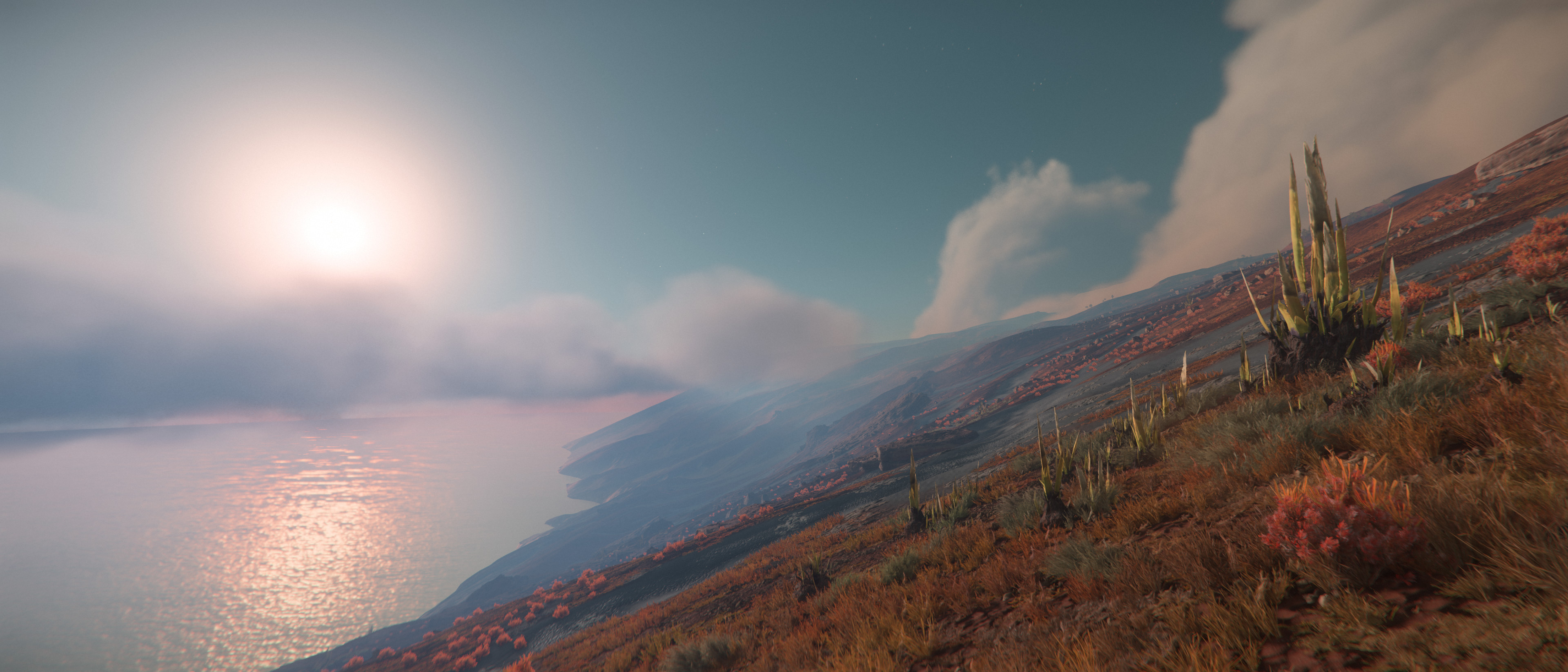
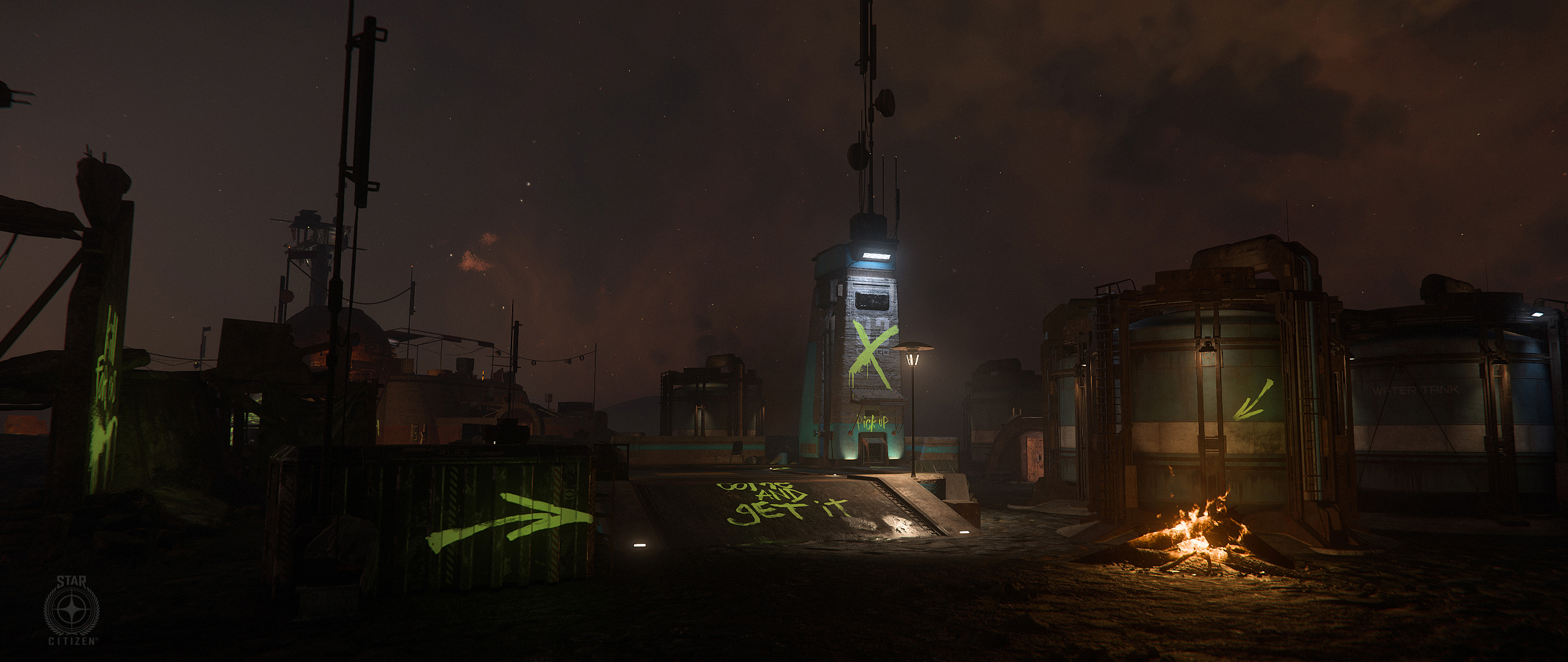
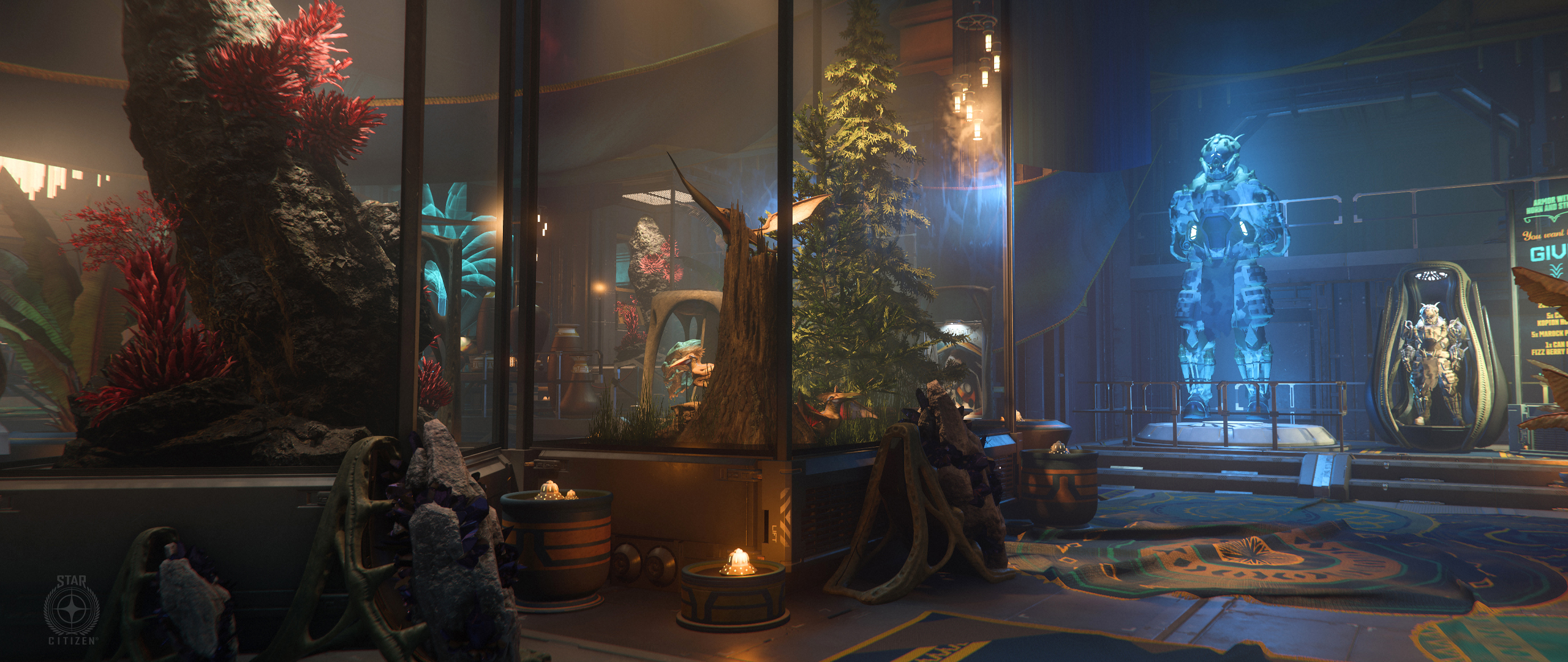
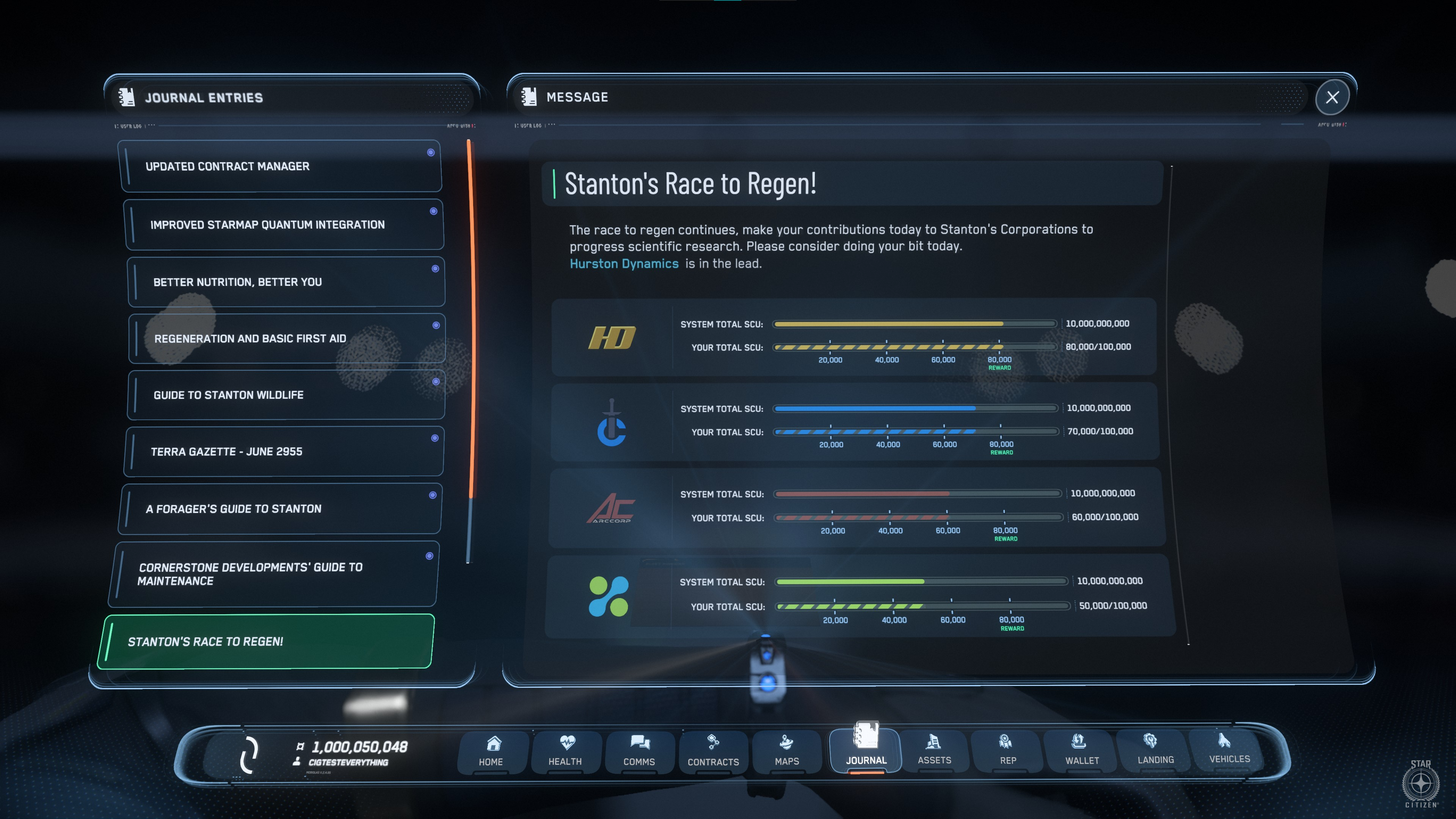
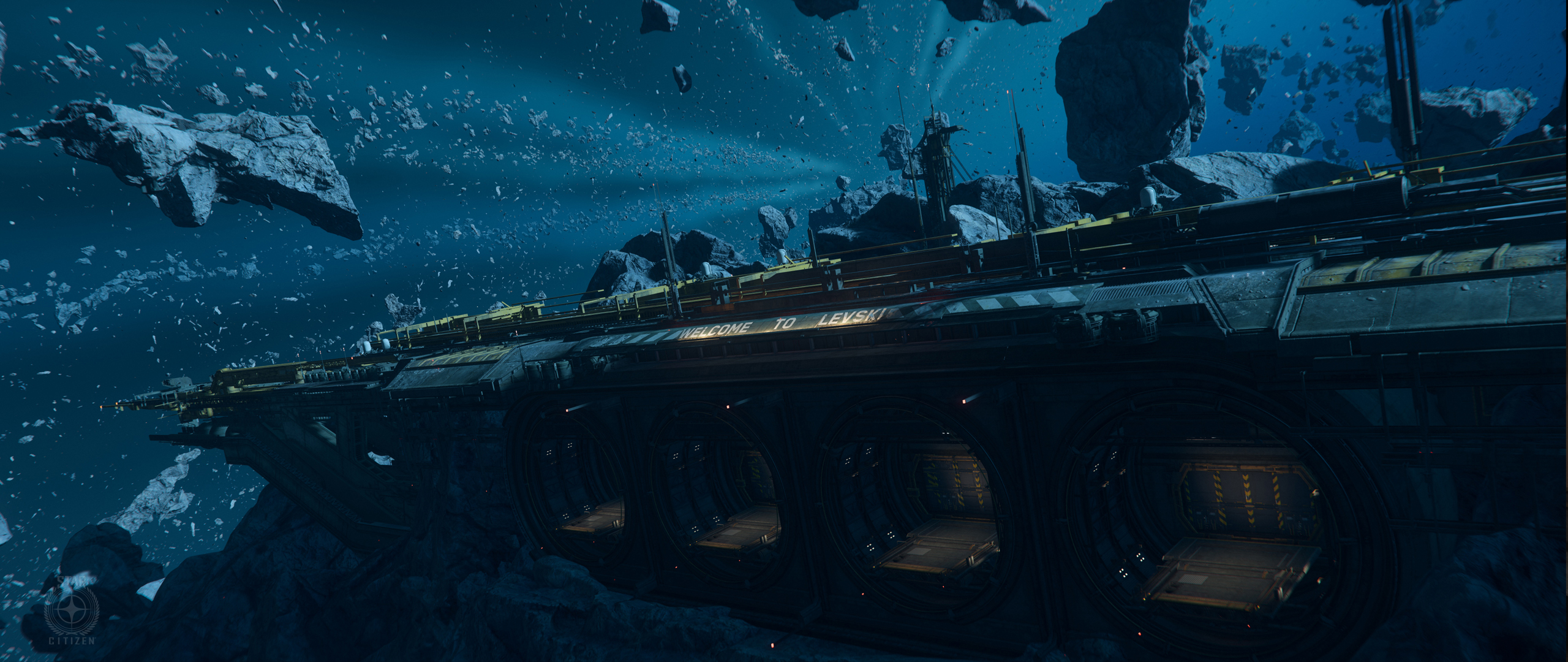
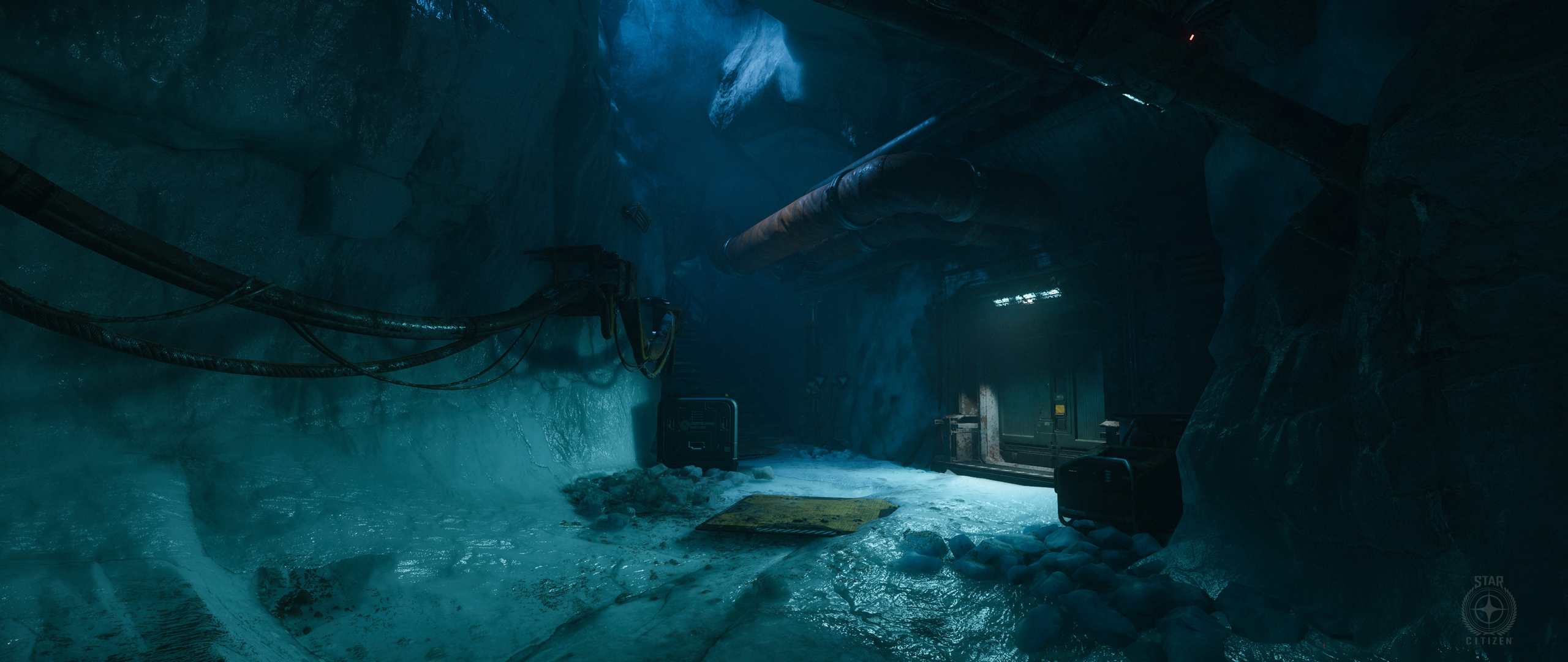
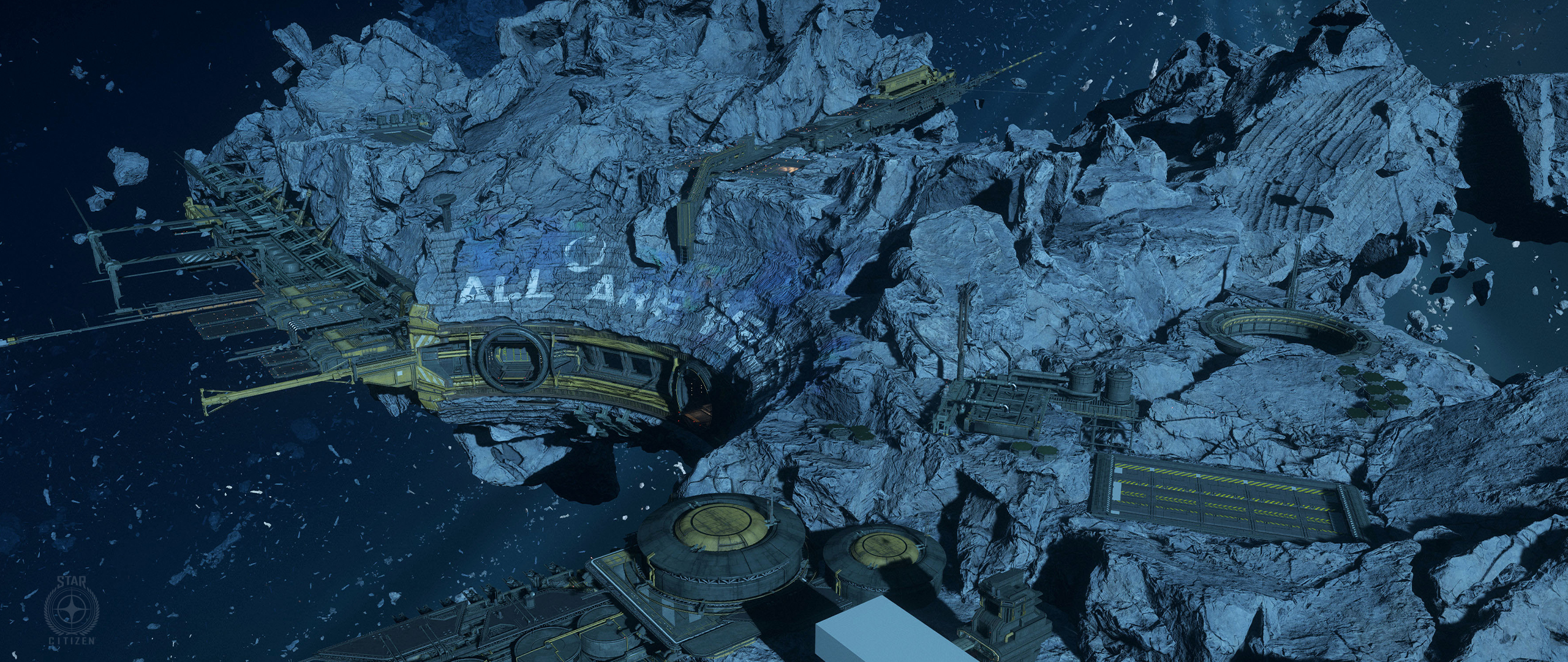
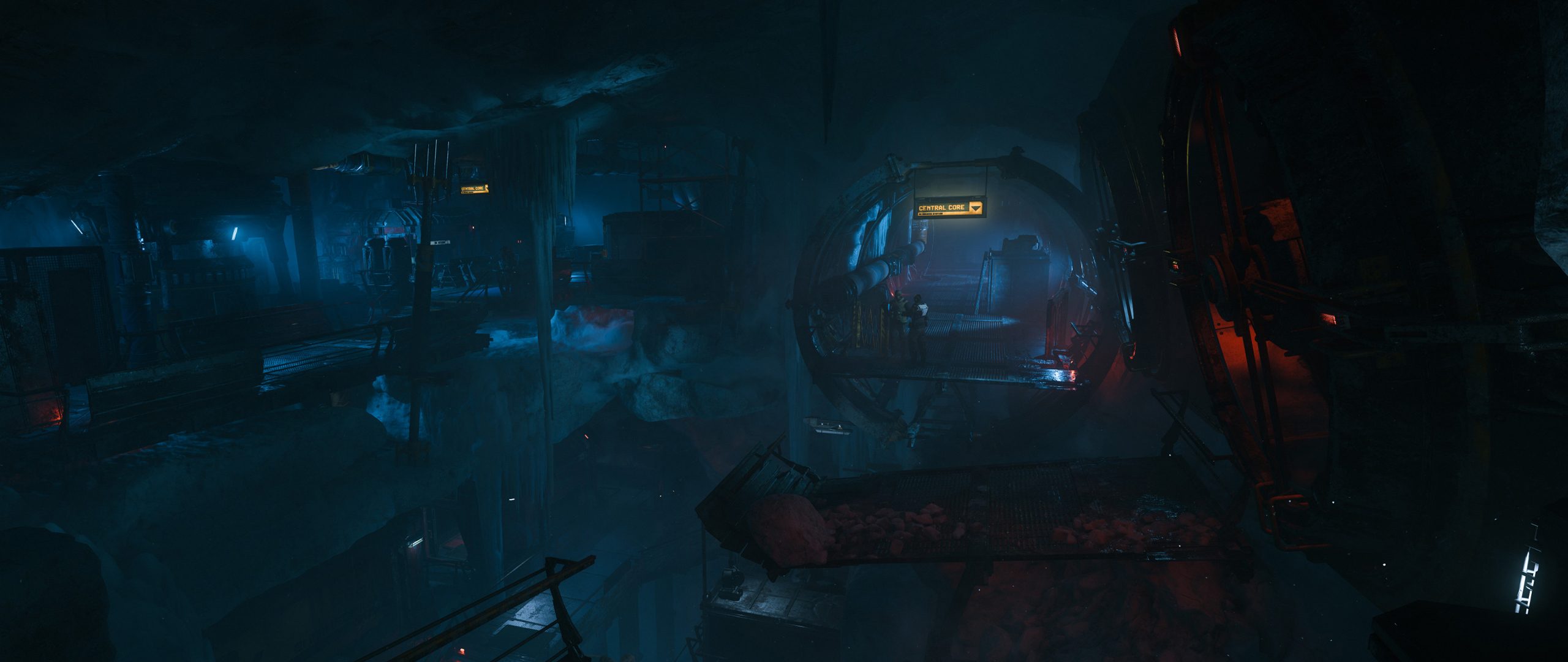
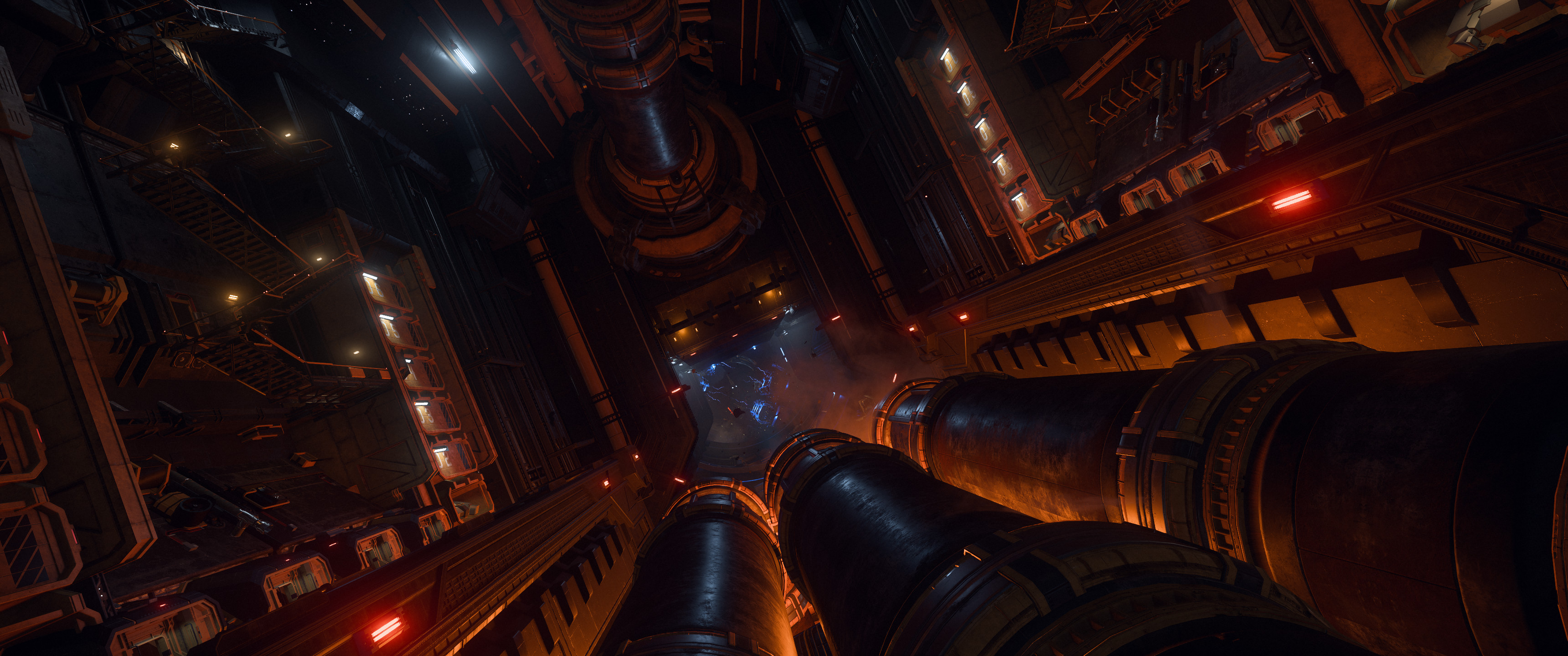
Metadata
- CIG ID
- 17543
- Channel
- Transmission
- Category
- Undefined
- Series
- Monthly Reports
- Comments
- 43
- Published
- 6 years ago (2020-04-02T00:00:00+00:00)