Star Citizen Monthly Report: June 2020
Transmission Undefined Monthly ReportsContent
This time next month, Alpha 3.10 will be well explored and civilians everywhere will be familiar with the latest iteration of the flight model. Naturally, the devs spent part of June tweaking relevant features and polishing assets to ready them for the masses. However, much more has been done, with tasks for Alpha 3.11 and beyond well underway. Check out all the details of what went on last month and what’s coming in the future…
AI (Combat)
We start June’s report with Character Combat, who tackled several aspects of realistic firing, including improving the code side of triggering and reloading. They made all requests event-based and added proper success notifications and different action results between the actor state machine and AI components. This gives the AI consistent knowledge of the results of requested actions, allowing them to create behaviors that can handle different scenarios correctly. For example, if an NPC is pushing towards an enemy, the team may want them to automatically reload their weapon. However, if no ammunition is available, the behavior will be notified and a new reaction activated. This can happen to NPCs less skilled in evaluating their ability to manage ammunition, while those better skilled can choose not to use that tactic unless enough ammunition is available.
They also began leveraging the usable system functionalities of the bartender in combat scenarios. In the social environment, they created the concept of usables that can produce and accept items:
“An ammo box is nothing else than an item provider. The item itself could produce magazines or it might have magazines attached, similar to how a beer fridge can contain beer bottles, but a mixing station can create the drinks from specific source items. This allows NPCs to search for places in the world that can provide them with magazines of a specific type, relocate to those objects, and refill their loadout. This gives opportunity for the player and forces NPCs to evaluate the environment to decide if and when it’s appropriate to use those refill spots.” Character Combat Team
Time was also spent completing tasks for server mesh implementation.
AI (Ships)
Ship AI kicked off a single-player version of the Player Group Manager, which is used to manage player parties and group quantum travel. The system relies on a backend service that only exists in a multiplayer context, so to support quantum-travel-linking in SQ42 between the player and NPC characters, a standalone version was created. A set of supporting nodes to allow the Mission Team to create and reference a managed group in Subsumption was also required.
We mention this here as, when complete, players in the PU will be able to use quantum-travel-linking within a group containing both real players and NPCs.
The team also implemented new queries to the Tactical Target System to improve the target selection in the ‘pilot combat’ activity. They also iterated on the sphere strafe movement block by adding speed controls and the ability to lock orbiting ships to a single axis within an acceptable range.
AI (Social)
Last month, Social AI focused on the first pass of two new scenarios: bridge crew behaviors and capital ship hangar crews.
The bridge crew behavior allows NPCs to handle the required work of a capital ship. Designers can specify in the NPC schedules which type of role they have (similar to how a player will assign a hired NPC), which will help the ‘generic’ behavior select the right seats and routines they have to perform. The captain will also roam the bridge and supervise other members of the crew.
The hangar crew behavior represents a set of behaviors for all NPCs that work in a hangar, including overseer, fueler, ordnance, mechanic, grunt, and air-traffic controller. In this instance, the ship is an example of a compound usable – a usable that can contain the functionality of other single usables.
The first iteration of the vendor behavior is also nearing completion. June saw the addition of patrons that can order a drink, bring it to a table, and then return it to the counter.
AI (General)
Global focus was on improvements to the various systems used by all AI Team members. Improvements were made to the debug draw of the Subsumption logic, allowing Subsumption functions, use channels, and conversations to display the updated value of their local variables. The range-event dispatcher-debug now easily displays the monitored characters’ distance, orientation, and more. The team also worked on the movement system to provide additional functions to validate the execution of a plan. For example, to correctly consider the movement along a path driven by a cutscene or an animation so that once finished, the character continues their movement smoothly. The ‘LookComponent’ was refactored to correctly handle requests with different priorities too.
Animation
Throughout June, the team blocked out animations for various features and improved their ability to efficiently capture, select, and turn-around motion capture. They also worked on knockbacks, staggers, and hit reactions from grenades and other thrown objects.
The team worked with Combat AI on weapon reloads, reloading from locations, and Vanduul locomotion mentioned above. For Social AI, they worked on lockers, smoking, crates, the bartender and bar patrons, and solved an issue with the seated console metric.
Animations for three new weapons were completed, including the two new Lightning Bolt Co. guns. Several mission givers were also worked on. Regarding mo-cap, they worked through the backlog of NPC captures and rebuilt the Take Selection tool, which allows the effective review and selection of completed mo-cap.
Art (Environment)
Last month, the Planet Art Team moved into full production of Pyro Three and Four. They’re currently producing the required assets, with a lot of new content reaching completion. They’re currently undertaking R&D on touch-bending for vegetation, which will ensure bushes and small vegetation are pushed away more realistically when the player walks through them. Work on Crusader continues too, with further development on the shaders underway.
Art (Ships)
In the UK, the team continued work on the Crusader Starlifter. “One of the last areas to go in was the impressive front cargo door/ramp that gives it full roll-on, roll-off capability for your ground vehicles.” – Vehicle Team
Other areas completed last month were the rec room and kitchen/dining area. The exterior is in the final art phase and currently receiving a material pass and UV mapping. Two unannounced ships and the Origin 100 series made great progress too.
In the US, the team worked on the turret seat, turret interior, rec room, scanning room, cockpit, foyer, and habs for the Star Runner. It’s now in the final art phase, with feedback being implemented to give it more of a ‘smuggler’s ship’ personality. The Aopoa Khartu-al was also reviewed, which led to its weapons and shields being buffed. This update will be live in Alpha 3.10.
Art (Weapons)
June saw development of the new Lightning Bolt Co. weapons completed. These guns have comparatively complex animation and technical setups, so required more attention than usual. Work continued on the Behring BR-2, while a new weapon entered development that the team is excited to unveil at the end of Q3.
On the UI side, all Gemini weapons now have functioning ammo counters, with work moving onto the Lightning Bolt Co. brand.
Audio
The Audio Team closed out all Alpha 3.10 tasks, including the Grim HEX updates and new weapons. Ambiances for a lot of older areas were rebalanced, such as Levski and Lorville. An audio-only rework of the Arclight pistol was completed too.
Backend Services
Last month, the Backend Team added the ability for the diffusion router to record analytic data, which will help live operations monitor the health of all services. Some low-level networking code was updated, fixing a few potential connection issues. They started on the new login flow that supports proper queuing and reporting to connecting players. Work was completed on high-performance dedicated pathways for some of the services to greatly improve network performance. The loadout and persistent variable services were also updated to support a distributed model for better performance and increased up-time reliability.
Characters
June saw the Character Team working on adding new mobiGlas variants to in-game shops. Because the mobiGlas is one of the oldest game assets, it’s built on older tech. “Setup for this item is tricky and being able to swap out a mobiGlas without unequipping one permanently was a huge technical challenge that shops had to deal with, even as we started bringing new colors online. This is now in QA and so far, minus a few string bugs, appears promising.” – The Character Team
They also began work on seasonal assets and kicked off tasks on an all-new model for the Pyro system. “We have begun modeling work on what we are calling the ‘Pyro Crab’. We don’t know what the future holds yet for this asset, but we’re excited to work on it.”
Community
The Community Team started the month with the Theaters of War Spectrum AMA, where Sean Tracy, Jonny Jacevicius, Tom Solaru, and Milan Pejcic answered player questions on the upcoming game mode. Following the concept release of the Origin G12 Rover, the team worked with the vehicle’s designers to answer the top-voted community questions in the Origin G12 Q&A.
To celebrate First Contact Day on June 12, 2438, the team kicked off Alien Week 2950. This week-long event featured two extraterrestrial-themed contests, the Intragalactic Cook-Off and First Contact contest. They also challenged the community’s xenolinguists to translate a letter from the Banu themselves in honor of the prestigious day.
Engineering
Last month, Engineering worked on the ISPC compiler for WAF: “Think HLSL for CPUs to write CPU target agnostic vectorized SSE functions that can be invoked from C/C++. This allows us to have bespoke, run-time invoked code paths for different CPU architectures to get the best possible performance for computation of heavy code.” – The Engineering Team
They also began experimenting with a new code-build system to improve quality-of-life for developers. This will feature implemented Python script to fold similar threads when inspecting GDB crash dumps and add a VC 2019 compiler transition to QA test requests.
Optimizations were made to the physics grid, physics instances, and local OBB algorithms. For planet entities, work was done to prevent cell generation under terrain, while the generation of POD entities on terrain patches was improved by moving complex constructors out of tight loops. They removed various methods from the physical entity interface to avoid virtual-function overhead, made box-pruning optimizations, and promoted moment-related variables to double precision so that the solver is more numerically stable in terms of large masses.
Body-dragging was further polished, and work continued on physical damage, this time focusing on deformations. Engineering continued tuning the integrity reduction formula based on the surface types of colliding parts, while ship-to-ship collision detection was tweaked to benefit stability and performance. Ragdoll experiments were also conducted and a quick prototype for cross-section data structure was completed.
Regarding the entity component update-scheduler, the Engineering Team worked on flattening or even removing recursive processing, made improvements to component processing inside an aggregate, and started implementing support for multiple component policies per-update-pass.
Numerous tasks were also completed for the Gen12 Renderer. For planetary atmospheres, they completed the guided filter to de-noise and up-sample lower resolution raymarching results for inscatter and transmittance. Work also began on re-projecting raymarching results to further reduce cost per-frame.
They also implemented a JSON-based profiler data-logger driven by internally collected telemetry, and revamped the HTML generator that utilizes JSON data to build email reports. The goal is to automate performance regression so they can see how it has evolved, both internally and in the PU.
Features (Gameplay)
June saw the Gameplay Feature Team continuing work on the player trading app, which is now in the art phase. “We are happy to announce that players will likely see the base functionality in our public test environments very soon, with the hopes that the art pass will be complete for live release soon.” – The Gameplay Feature Team
They also put significant time into the upcoming Alpha 3.10 patch and the ability to purchase ship paint from in-game shops.
Features (Vehicles)
The Vehicle Feature Team spent June finishing various features for Alpha 3.10, including the tweaks, improvements, and retuning needed to prepare ships for the new aerodynamic flight model and thruster efficiency curves. They also squashed bugs with thruster balance and other aspects of IFCS. Work also continued on the new targeting system and its associated UI.
Looking ahead, the development of features coming further down the line continued, including docking and improvements to missiles. Further development of the flight model will continue too.
Graphics
Last month, the Graphics Team continued working on CPU performance improvements, the first being to avoid expensive synchronization events between the CPU and GPU that could occur under certain scenarios and hardware setups. After discovering that the UI code used to rescale and tesselate vector art was highly CPU intensive, they added code to quantize UI screen resolution. This avoids code-path cases where the visual difference would otherwise be unnoticeable or extremely subtle (e.g. if two identical UI screens differ in size by just a few pixels). Another major optimization was to avoid DirectX and graphics-driver CPU overhead by minimizing shader and texture swapping. They also cached buffers that were being needlessly set many times per frame, reducing the overall number of function calls to DirectX by over 30%.
As with Engineering, work on the Gen12 renderer continued, this time with the new deferred graphics pipeline that features faster and easier-to-extend code.
“With some of the fundamentals now falling into place, we hope to ramp up the efforts to convert existing features over to the Gen12 renderer with an aim to enable an early version in the next few months.” – The Graphics Team
The edge-highlight/silhouette feature was upgraded to provide cleaner visuals with customizable line width, which was requested by the Vehicle Team to improve the appearance of various UI features.
Finally for Graphics, they changed how the culling system works for ships to allow them to be visible from much greater distances to aid gameplay. To help mitigate performance impact from the increased viewing distance, they implemented an automated testing system to measure the performance of every ship from every viewing distance to identify any requiring an optimization pass.
Level Design
June saw the Level Design Team working on new, as-yet-unannounced content and fixed as many bugs as possible for Alpha 3.10. They also closed out tasks on key locations such as Levski and New Babbage and made further progress with Orison.
Lighting
The Lighting Team wrapped up their key deliverables for Alpha 3.10, including additions to Grim HEX. This involved finalizing the new utilitarian hangars along with polishing and optimizing the asteroid’s exterior. New Babbage’s Hi-Tech hangars also had their lighting pass completed.
After feedback, the final lighting style was implemented across all hangar sizes and door configurations, giving them a unique feel. This was also the team’s first opportunity to implement various states of door lighting depending on whether they’re idle, opening, or closing.
The Factory Line store in New Babbage received its final lighting pass too. Alongside these new locations, bugs were fixed in older locations (such as surface outposts) and the rework of Lorville’s day and night states was completed. Players will now experience a different mood at L19 when the sun goes down.
Narrative
Narrative worked with Community on the Banu message for Alien Week, while some of the team explored their culinary abilities by designing three alien recipes (here, here, and here). Narrative also joined Audio and AI to discuss the prospect of players fighting the Vanduul.
On the development side, they worked on building additional mission content and worked alongside various other teams to propose an overhaul to the existing mission giver experience. They also created documents outlining the general feel of some upcoming locations alongside potential flora, fauna, and NPCs.
Props
Throughout June, the team continued work on props for the Factory Line, adding additional dressing to the area and making progress with the Muse Simpod. “This turned into a longer-than-expected task. There’s a lot of crossover with Animation, so we’re building the asset with that in mind from the start.” – The Props Team
The team continued to support the bartender feature and time was invested into the skinned asset pipeline; they now have an in-team solution rather than handing props to Tech Animation. “This unlocks us to make more use of these fun reactive assets without worrying about increasing other teams’ workloads, so it’s a big deal for us!”
Finally, white boxing kicked off for the cargo deck props, starting with background assets and storage solutions.
QA
Last month, QA completed several test requests, including one relating to the ongoing Tactical Point System refactor. This involved making sure that enemy NPCs still function properly, will reposition behind cover, and position themselves so they can fire. They also tested that the Social AI was still able to find, move to, and use usables, and that the Ship AI was able to find points to patrol.
QA tested the AI’s use of cover locations when fighting against the player, ensuring they use movement transitions (such as sliding) when going into cover, peeking, shooting, blindfiring, and when partially in cover. They also tested AI reactions to cover being compromised. For example, they needed to verify that the shotgun AI was a lot more aggressive compared to the others.
For Actor Tech, the undertook a test request for case-sensitive CRC32s involving load testing for all areas of the PU, SQ42, ships, vehicles, and editor levels. Once the load tests were completed, they moved to testing the actual features themselves to ensure that functionality was not compromised. A full test of the PU, SQ42, and some basic editor functionality was requested by the Engine Team following their work on the material editor. This was undertaken to ensure no new crashes were introduced and that the correct textures continued to load without issues.
Testing of StarWords v1.2 (the tool that handles most game text) is underway, with various improvements made based on feedback during testing.
Tech Animation
Technical Animation spent time with several of the feature teams to iterate on key deliverables for the PU, including the bartender. This involved creating rigging for glasses and liquids, which continues alongside refinement and system iteration to ensure quality and robustness.
The previously reported initiatives to overhaul the skin file setup and physics proxy refactor began to show results. The team is in the final stages of UI and process refinement and aims to deliver the pipeline by the end of the quarter.
Turbulent
The Web Platform Team worked on streamlining the Enlist Now forms, process, and user experience. These changes were deployed on June 10 and include numerous improvements.
“Based on the original Kickstarter campaign, the account creation process grew organically into something fairly complicated. It was a process involving multiple pages, email verification, and so forth. It is now possible to create an account on the website directly in the sidebar without having to leave the current page. All of the legacy and existing accounts have been migrated to the new system to make the transition as seamless as possible for existing users. The account creation form used to have a number of fields that required a lot of explanation for new users. We reduced the number of fields to a minimum and, as a result, enabled login with ‘email and password’ instead of just ‘login ID and password’. This change was done in a way that is completely seamless for existing users.” – The Turbulent Web Platform Team
User Interface (UI)
The UI Team supported the vehicle targeting and turret improvements recently seen in Inside Star Citizen, while the Code Team fixed bugs for Alpha 3.10 and gave 3D support to the building blocks UI tool. On the UI design side, work continued on a new mobiGlas app and the future of the Starmap and radar were iterated on. Screens were also created for the Factory Line store and concept art was created for new versions of scanning and vehicle UI.
VFX
One of the VFX Team’s bigger tasks for Alpha 3.10 was the new signed-distance-field-driven atmospheric entry effects. To compensate for the fact that entry effects are physical-based and most ships never reach high enough speeds to generate them, they made slight changes to the code.
“This is progressing well and we are looking forward to seeing beauty shots and videos from the community as they fly towards planets and moons!” – The VFX Team
Work also continued on the fire propagation feature. The team are still in the prototyping phase but can already see the potential and technical challenges of this feature. They also continued supporting the Environment Team with their ongoing gas cloud work. VFX tasks were completed for an upcoming vehicle too.
WE’LL SEE YOU NEXT MONTH…
Nächsten Monat um diese Zeit wird Alpha 3.10 gut erforscht sein, und Zivilisten überall werden mit der neuesten Iteration des Flugmodells vertraut sein. Natürlich verbrachten die Entwickler einen Teil des Juni damit, an den relevanten Merkmalen zu feilen und die Anlagen zu polieren, um sie massentauglich zu machen. Es ist jedoch noch viel mehr getan worden, und die Aufgaben für Alpha 3.11 und darüber hinaus sind in vollem Gange. Informieren Sie sich über alle Einzelheiten dessen, was im letzten Monat geschehen ist und was in Zukunft kommen wird...
AI (Kampf)
Wir beginnen den Juni-Bericht mit Character Combat, der mehrere Aspekte des realistischen Schießens behandelt, darunter die Verbesserung der Codeseite beim Auslösen und Nachladen. Sie stellten alle Anfragen ereignisbasiert und fügten korrekte Erfolgsmeldungen und unterschiedliche Aktionsergebnisse zwischen dem Akteurszustandsautomaten und KI-Komponenten hinzu. Dadurch verfügt die KI über ein konsistentes Wissen über die Ergebnisse der angeforderten Aktionen, so dass sie Verhaltensweisen erstellen kann, die verschiedene Szenarien korrekt handhaben können. Wenn zum Beispiel ein NSC auf einen Feind zusteuert, möchte das Team möglicherweise, dass er seine Waffe automatisch nachlädt. Wenn jedoch keine Munition verfügbar ist, wird das Verhalten gemeldet und eine neue Reaktion aktiviert. Dies kann NSCs passieren, die bei der Beurteilung ihrer Fähigkeit, mit Munition umzugehen, weniger geschickt sind, während die besser ausgebildeten NSCs sich dafür entscheiden können, diese Taktik nicht anzuwenden, solange nicht genügend Munition verfügbar ist.
Sie begannen auch, die nutzbaren Systemfunktionen des Barkeepers in Kampfszenarien zu nutzen. Im sozialen Umfeld schufen sie das Konzept der Gebrauchsgegenstände, die Gegenstände herstellen und annehmen können:
"Eine Munitionskiste ist nichts anderes als ein Itemlieferant. Der Gegenstand selbst könnte Magazine produzieren oder er könnte Magazine enthalten, ähnlich wie ein Bierkühlschrank Bierflaschen enthalten kann, aber eine Mischstation kann die Getränke aus bestimmten Ausgangsartikeln herstellen. Auf diese Weise können die NVKs nach Orten in der Welt suchen, die ihnen Zeitschriften eines bestimmten Typs liefern können, sich zu diesen Objekten begeben und ihre Ladung wieder auffüllen. Dies gibt dem Spieler Gelegenheit und zwingt die NPCs, die Umgebung zu bewerten, um zu entscheiden, ob und wann es angebracht ist, diese Nachfüllstellen zu benutzen". Charakterkampf-Team
Zeit wurde auch für die Erledigung von Aufgaben für die Implementierung von Server-Mesh aufgewendet.
AI (Schiffe)
Die Schiffs-KI hat eine Einzelspieler-Version des Spieler-Gruppenmanagers auf den Weg gebracht, der zur Verwaltung von Spielerpartien und Gruppenquantenreisen eingesetzt wird. Das System stützt sich auf einen Backend-Service, der nur im Mehrspielerkontext existiert. Um Quantenreisen in SQ42 zwischen dem Spieler und den NPC-Charakteren zu unterstützen, wurde eine eigenständige Version erstellt. Eine Reihe von unterstützenden Knotenpunkten, die es dem Einsatzteam ermöglichen, eine verwaltete Gruppe in Subsumption zu erstellen und zu referenzieren, war ebenfalls erforderlich.
Wir erwähnen dies hier, da die Spieler in der PU nach ihrer Fertigstellung in der Lage sein werden, die Quanten-Reiseverbindung innerhalb einer Gruppe zu nutzen, die sowohl echte Spieler als auch NPCs enthält.
Das Team führte auch neue Abfragen an das Taktische Zielsystem ein, um die Zielauswahl bei der "Pilotkampf"-Aktivität zu verbessern. Sie iterierten auch am Kugelbeschuss-Bewegungsblock, indem sie Geschwindigkeitskontrollen und die Fähigkeit hinzufügten, Schiffe im Orbit innerhalb eines akzeptablen Bereichs auf einer einzigen Achse zu blockieren.
KI (sozial)
Im vergangenen Monat konzentrierte sich Social AI auf den ersten Durchgang von zwei neuen Szenarien: das Verhalten der Brückenbesatzung und die Besatzungen der Hangars von Großkampfschiffen.
Das Verhalten der Brückenbesatzung ermöglicht es den NPCs, die erforderliche Arbeit eines Großkampfschiffes zu bewältigen. Die Konstrukteure können in den NPC-Zeitplänen angeben, welche Art von Rolle sie haben (ähnlich wie ein Spieler einen angeheuerten NPC zuweist), was dem "generischen" Verhalten bei der Auswahl der richtigen Plätze und Routinen hilft, die sie ausführen müssen. Der Kapitän wird auch die Brücke durchstreifen und andere Besatzungsmitglieder beaufsichtigen.
Das Verhalten der Hangarbesatzung stellt eine Reihe von Verhaltensweisen für alle NSCs dar, die in einem Hangar arbeiten, einschließlich Aufseher, Betanker, Geschütze, Mechaniker, Grunzer und Fluglotse. In diesem Fall ist das Schiff ein Beispiel für eine zusammengesetzte Nutzbarkeit - eine Nutzbarkeit, die die Funktionalität anderer einzelner Nutzbarkeiten enthalten kann.
Die erste Iteration des Verkäuferverhaltens steht ebenfalls kurz vor dem Abschluss. Im Juni kamen weitere Gäste hinzu, die ein Getränk bestellen, an einen Tisch bringen und dann an die Theke zurückbringen können.
AI (allgemein)
Der globale Schwerpunkt lag auf der Verbesserung der verschiedenen Systeme, die von allen Mitgliedern des KI-Teams verwendet werden. Die Debug-Zeichnung der Subsumptionslogik wurde verbessert, so dass Subsumtionsfunktionen, die Verwendung von Kanälen und Konversationen den aktualisierten Wert ihrer lokalen Variablen anzeigen können. Der Entfernungs-Ereignis-Dispatcher-Debug zeigt jetzt auf einfache Weise die Entfernung, Orientierung und mehr der überwachten Zeichen an. Das Team arbeitete auch am Bewegungssystem, um zusätzliche Funktionen zur Validierung der Ausführung eines Plans bereitzustellen. Zum Beispiel die korrekte Berücksichtigung der Bewegung entlang eines Pfades, der von einer Zwischensequenz oder einer Animation getrieben wird, so dass der Charakter, sobald er fertig ist, seine Bewegung reibungslos fortsetzt. Die 'LookComponent' wurde refaktorisiert, um auch Anfragen mit unterschiedlichen Prioritäten korrekt zu behandeln.
Animation
Den ganzen Juni über blockierte das Team Animationen für verschiedene Funktionen und verbesserte ihre Fähigkeit, Bewegungen effizient zu erfassen, auszuwählen und umzudrehen. Sie arbeiteten auch an Rückschlägen, Torkeln und Trefferreaktionen von Granaten und anderen geworfenen Objekten.
Das Team arbeitete mit Combat AI an Waffennachladungen, Nachladungen von Orten und der oben erwähnten Vanduul-Bewegung. Für die soziale KI arbeiteten sie an Schließfächern, Rauchen, Kisten, dem Barkeeper und den Barbesuchern und lösten ein Problem mit der Metrik der Sitzkonsole.
Animationen für drei neue Waffen wurden fertiggestellt, darunter die beiden neuen Waffen der Lightning Bolt Co. Es wurde auch an mehreren Missionsgebern gearbeitet. In Bezug auf mo-cap arbeiteten sie den Rückstand der NPC-Erfassungen ab und bauten das Werkzeug zur Auswahl der Waffen neu auf, das eine effektive Überprüfung und Auswahl der fertigen mo-cap ermöglicht.
Kunst (Umwelt)
Im vergangenen Monat begann das Planet Art Team mit der vollständigen Produktion von Pyro Drei und Vier. Sie produzieren derzeit die erforderlichen Assets, wobei eine Menge neuer Inhalte die Fertigstellung erreichen. Sie betreiben derzeit Forschung und Entwicklung im Bereich Touch-Bending für die Vegetation, wodurch sichergestellt wird, dass Büsche und kleine Vegetation realistischer weggedrückt werden, wenn der Spieler durch sie hindurchgeht. Auch die Arbeit an Crusader geht weiter, und die Weiterentwicklung der Shader ist im Gange.
Kunst (Schiffe)
Im Vereinigten Königreich setzte das Team die Arbeit am Crusader Starlifter fort. "Einer der letzten Bereiche, der betreten wurde, war die eindrucksvolle vordere Frachttür/-auffahrrampe, die ihm volle Roll-on- und Roll-off-Fähigkeit für Ihre Bodenfahrzeuge verleiht. - Fahrzeug-Team
Andere Bereiche, die im letzten Monat fertiggestellt wurden, waren der Aufenthaltsraum und der Küchen-/Essbereich. Der Außenbereich befindet sich in der letzten Kunstphase und erhält derzeit einen Materialpass und eine UV-Kartierung. Zwei unangekündigte Schiffe und die Origin-100-Serie machten ebenfalls große Fortschritte.
In den USA arbeitete das Team am Turmsitz, an der Innenausstattung des Turms, am Aufenthaltsraum, am Scanraum, am Cockpit, am Foyer und am Habs für den Star Runner. Er befindet sich jetzt in der letzten Kunstphase, wobei Feedback umgesetzt wird, um ihm mehr eine "Schmugglerschiff"-Persönlichkeit zu verleihen. Die Aopoa Khartu-al wurde ebenfalls überarbeitet, was dazu führte, dass ihre Waffen und Schilde verbessert wurden. Dieses Update wird in Alpha 3.10 live übertragen.
Kunst (Waffen)
Im Juni wurde die Entwicklung der neuen Waffen der Lightning Bolt Co. abgeschlossen. Diese Waffen verfügen über vergleichsweise komplexe Animationen und technische Einrichtungen und erforderten daher mehr Aufmerksamkeit als üblich. Die Arbeit an der Behring BR-2 wurde fortgesetzt, während eine neue Waffe in die Entwicklung eintrat, die das Team am Ende des dritten Quartals mit großer Spannung enthüllen wird.
Auf Seiten der UI verfügen nun alle Gemini-Waffen über funktionierende Munitionszähler, wobei die Arbeiten an der Marke Lightning Bolt Co. fortgesetzt wurden.
Audio
Das Audio-Team schloss alle Alpha 3.10-Aufgaben ab, einschließlich der grimmigen HEX-Updates und neuer Waffen. Die Stimmungen für viele ältere Bereiche wurden neu ausbalanciert, wie z.B. Levski und Lorville. Eine reine Audio-Überarbeitung der Arclight-Pistole wurde ebenfalls abgeschlossen.
Backend-Dienste
Letzten Monat fügte das Backend-Team die Möglichkeit hinzu, dass der Diffusionsrouter analytische Daten aufzeichnen kann, was den Live-Betrieb bei der Überwachung des Gesundheitszustands aller Dienste unterstützen wird. Einige Low-Level-Netzwerkcodes wurden aktualisiert und einige potenzielle Verbindungsprobleme behoben. Sie begannen mit dem neuen Anmeldungsfluss, der eine ordnungsgemäße Warteschlangenbildung und Berichterstattung an die verbindenden Spieler unterstützt. Die Arbeit an hochleistungsfähigen dedizierten Pfaden für einige der Dienste wurde abgeschlossen, um die Netzwerkleistung erheblich zu verbessern. Die Loadout- und Persistent Variable-Dienste wurden ebenfalls aktualisiert, um ein verteiltes Modell für eine bessere Leistung und höhere Zuverlässigkeit der Betriebszeit zu unterstützen.
Zeichen
Im Juni arbeitete das Charakter-Team daran, neue mobiGlas-Varianten in die Ingame-Shops aufzunehmen. Da mobiGlas eines der ältesten Spielelemente ist, basiert es auf älterer Technologie. "Die Einrichtung für diesen Gegenstand ist knifflig, und die Möglichkeit, ein mobiGlas auszutauschen, ohne es dauerhaft auszurüsten, war eine große technische Herausforderung, mit der die Shops fertig werden mussten, selbst als wir begannen, neue Farben online zu bringen. Dies befindet sich jetzt in der Qualitätssicherung, und bis jetzt, abzüglich einiger String-Bugs, scheint dies vielversprechend zu sein". - Das Charakter-Team
Sie begannen auch mit der Arbeit an saisonalen Anlagen und starteten die Arbeiten an einem völlig neuen Modell für das Pyro-System. "Wir haben mit der Modellierung dessen begonnen, was wir die 'Pyro-Krabbe' nennen. Wir wissen noch nicht, was die Zukunft für diese Anlage bereithält, aber wir freuen uns darauf, daran zu arbeiten.
Gemeinschaft
Das Community-Team begann den Monat mit dem Theaters of War Spectrum AMA, wo Sean Tracy, Jonny Jacevicius, Tom Solaru und Milan Pejcic den Spielern Fragen zum kommenden Spielmodus beantworteten. Nach der Konzeptveröffentlichung des Origin G12 Rover arbeitete das Team mit den Designern des Fahrzeugs zusammen, um die Fragen der Community zu beantworten, die in den Origin G12 Q&A am häufigsten gestellt wurden.
Zur Feier des Erstkontakttages am 12. Juni 2438 startete das Team die Alien Week 2950. Diese einwöchige Veranstaltung umfasste zwei Wettbewerbe zu außerirdischen Themen, den Intragalaktischen Cook-Off- und den Erstkontakt-Wettbewerb. Außerdem forderten sie die Xenolinguisten der Gemeinschaft auf, zu Ehren des prestigeträchtigen Tages selbst einen Brief von den Banu zu übersetzen.
Technik
Letzten Monat arbeitete Engineering am ISPC-Compiler für die WAF: "Denken Sie an HLSL für CPUs, um CPU-Ziel-agnostische vektorisierte SSE-Funktionen zu schreiben, die von C/C++ aus aufgerufen werden können. Dies ermöglicht es uns, maßgeschneiderte, zur Laufzeit aufgerufene Codepfade für verschiedene CPU-Architekturen zu haben, um die bestmögliche Leistung für die Berechnung von schwerem Code zu erhalten. - Das Ingenieurteam
Sie begannen auch mit einem neuen Code-Build-System zu experimentieren, um die Lebensqualität für Entwickler zu verbessern. Dieses wird ein implementiertes Python-Skript enthalten, um ähnliche Threads bei der Inspektion von GDB-Absturz-Dumps zu falten und einen VC 2019-Compilerübergang zu QA-Testanforderungen hinzuzufügen.
Optimierungen wurden am Physik-Grid, an den Physikinstanzen und an den lokalen OBB-Algorithmen vorgenommen. Bei den Planetenentitäten wurde daran gearbeitet, die Zellgenerierung unter dem Gelände zu verhindern, während die Generierung von POD-Entitäten auf Geländefeldern verbessert wurde, indem komplexe Konstruktoren aus engen Schleifen herausbewegt wurden. Sie entfernten verschiedene Methoden von der Schnittstelle der physischen Entitäten, um den Overhead virtueller Funktionen zu vermeiden, führten Optimierungen des Box-Pruning durch und führten momentenbezogene Variablen mit doppelter Genauigkeit ein, so dass der Solver in Bezug auf große Massen numerisch stabiler ist.
Das Body-Dragging wurde weiter ausgefeilt, und die Arbeit an physischen Schäden wurde fortgesetzt, wobei der Schwerpunkt diesmal auf Verformungen lag. Die Ingenieure arbeiteten weiter an der Abstimmung der Integritätsreduktionsformel auf der Grundlage der Oberflächentypen der kollidierenden Teile, während die Schiff-zu-Schiff-Kollisionserkennung optimiert wurde, um Stabilität und Leistung zu verbessern. Es wurden auch Ragdoll-Experimente durchgeführt, und ein schneller Prototyp für die Querschnittsdatenstruktur wurde fertiggestellt.
Hinsichtlich des Aktualisierungs-Schedulers für Entitätskomponenten arbeitete das Ingenieurteam an der Abflachung oder sogar Entfernung rekursiver Verarbeitung, verbesserte die Komponentenverarbeitung innerhalb eines Aggregats und begann mit der Implementierung der Unterstützung für mehrere Komponentenrichtlinien pro Aktualisierungsdurchgang.
Zahlreiche Aufgaben wurden auch für den Gen12 Renderer erledigt. Für Planetenatmosphären wurde der geführte Filter vervollständigt, um das Rauschen zu entfernen und die Raymarching-Ergebnisse mit niedrigerer Auflösung für Instreuung und Transmission hochzurechnen. Außerdem wurde mit der Neuprojektion von Raymarching-Ergebnissen begonnen, um die Kosten pro Rahmen weiter zu senken.
Sie implementierten auch einen JSON-basierten Profiler-Datenlogger, der durch intern gesammelte Telemetrie gesteuert wird, und überarbeiteten den HTML-Generator, der JSON-Daten zur Erstellung von E-Mail-Berichten verwendet. Ziel ist es, die Leistungsregression zu automatisieren, damit sie sehen können, wie sie sich entwickelt hat, sowohl intern als auch in der PU.
Funktionen (Gameplay)
Im Juni setzte das Gameplay-Feature-Team die Arbeit an der Spielerhandelsapplikation fort, die sich nun in der Kunstphase befindet. "Wir freuen uns, ankündigen zu können, dass die Spieler die Basisfunktionalität wahrscheinlich schon sehr bald in unseren öffentlichen Testumgebungen sehen werden, in der Hoffnung, dass der Kunstpass bald zur Live-Veröffentlichung fertig gestellt sein wird. - Das Gameplay-Feature-Team
Sie haben auch viel Zeit in das bevorstehende Alpha 3.10-Patch und die Möglichkeit gesteckt, Schiffsfarben in den Geschäften im Spiel zu kaufen.
Features (Fahrzeuge)
Das Vehicle Feature Team verbrachte den Juni damit, verschiedene Features für Alpha 3.10 fertigzustellen, einschließlich der Optimierungen, Verbesserungen und Neuabstimmungen, die erforderlich sind, um Schiffe auf das neue aerodynamische Flugmodell und die Effizienzkurven der Triebwerke vorzubereiten. Außerdem beseitigten sie Fehler bei der Triebwerksbalance und anderen Aspekten des IFCS. Auch die Arbeit am neuen Zielsystem und der damit verbundenen UI wurde fortgesetzt.
Mit Blick auf die Zukunft wurde die Entwicklung weiterer Funktionen fortgesetzt, darunter das Andocken und Verbesserungen an den Raketen. Auch die Weiterentwicklung des Flugmodells wird fortgesetzt.
Grafiken
Im vergangenen Monat arbeitete das Grafikteam weiter an der Verbesserung der CPU-Leistung, wobei das erste Ziel darin bestand, teure Synchronisierungsereignisse zwischen CPU und GPU zu vermeiden, die unter bestimmten Szenarien und Hardware-Konfigurationen auftreten könnten. Nachdem sie herausgefunden hatten, dass der UI-Code, der zum Skalieren und Tessellieren von Vektorgrafiken verwendet wird, sehr CPU-intensiv ist, fügten sie Code zum Quantisieren der UI-Bildschirmauflösung hinzu. Dadurch werden Codepfad-Fälle vermieden, in denen der visuelle Unterschied sonst unbemerkbar oder äußerst subtil wäre (z.B. wenn zwei identische UI-Bildschirme sich in der Größe nur um wenige Pixel unterscheiden). Eine weitere wichtige Optimierung war die Vermeidung von DirectX- und Grafiktreiber-CPU-Overhead durch Minimierung von Shader- und Textur-Swapping. Außerdem wurden Puffer zwischengespeichert, die unnötigerweise viele Male pro Bild gesetzt wurden, wodurch die Gesamtzahl der Funktionsaufrufe an DirectX um über 30% reduziert wurde.
Wie bei der Entwicklung wurde die Arbeit am Gen12-Renderer fortgesetzt, diesmal mit der neuen verzögerten Grafik-Pipeline, die schnelleren und leichter zu erweiternden Code bietet.
"Da nun einige der Grundlagen vorhanden sind, hoffen wir, die Bemühungen zur Konvertierung bestehender Funktionen auf den Gen12-Renderer zu intensivieren, um in den nächsten Monaten eine frühe Version zu ermöglichen. - Das Grafik-Team
Das Kanten-Highlight/Silhouetten-Feature wurde aufgewertet, um eine sauberere Optik mit anpassbarer Linienbreite zu bieten, was vom Fahrzeugteam angefordert wurde, um das Erscheinungsbild verschiedener UI-Funktionen zu verbessern.
Bei den Grafiken schließlich änderten sie die Funktionsweise des Culling-Systems für Schiffe, damit diese aus viel größerer Entfernung sichtbar sind, um das Gameplay zu erleichtern. Um die Auswirkungen auf die Leistung aufgrund des größeren Betrachtungsabstands zu verringern, implementierten sie ein automatisiertes Testsystem zur Messung der Leistung jedes Schiffs aus jeder Betrachtungsdistanz, um alle zu identifizieren, die einen Optimierungsdurchgang erfordern.
Level-Entwurf
Im Juni arbeitete das Level Design Team an neuen, noch unangekündigten Inhalten und behebt so viele Fehler wie möglich für Alpha 3.10. Außerdem schlossen sie Aufgaben an Schlüsselstandorten wie Levski und New Babbage ab und machten weitere Fortschritte mit Orison.
Beleuchtung
Das Beleuchtungsteam schloss seine wichtigsten Ergebnisse für Alpha 3.10 ab, einschließlich der Ergänzungen zu Grim HEX. Dies beinhaltete die Fertigstellung der neuen utilitaristischen Hangars zusammen mit dem Polieren und Optimieren der Außenseite des Asteroiden. Auch die neuen Hi-Tech-Hangars von Babbage erhielten ihren Beleuchtungspass.
Nach dem Feedback wurde der endgültige Beleuchtungsstil in allen Hangargrößen und Türkonfigurationen implementiert, was ihnen eine einzigartige Atmosphäre verleiht. Dies war auch die erste Gelegenheit für das Team, verschiedene Zustände der Türbeleuchtung zu implementieren, je nachdem, ob sich die Türen im Leerlauf, zum Öffnen oder Schließen befinden.
Der Factory-Line-Laden in New Babbage erhielt ebenfalls seinen letzten Beleuchtungspass. Neben diesen neuen Standorten wurden auch Fehler an älteren Standorten (wie Außenposten an der Oberfläche) behoben, und die Überarbeitung der Tag- und Nachtzustände von Lorville wurde abgeschlossen. Die Spieler werden nun in L19 eine andere Stimmung erleben, wenn die Sonne untergeht.
Erzählung
Narrative arbeitete mit der Community an der Banu-Botschaft für die Alien Week, während einige Mitglieder des Teams ihre kulinarischen Fähigkeiten durch das Entwerfen von drei Alien-Rezepten (hier, hier und hier) unter Beweis stellten. Narrative arbeitete auch mit Audio und KI zusammen, um die Aussicht auf Spieler zu diskutieren, die gegen Vanduul kämpfen.
Auf der Entwicklungsseite arbeiteten sie an der Erstellung zusätzlicher Missionsinhalte und arbeiteten mit verschiedenen anderen Teams zusammen, um eine Überarbeitung der bestehenden Erfahrung der Missionsgeber vorzuschlagen. Sie erstellten auch Dokumente, in denen neben der potentiellen Flora, Fauna und den NPCs auch der allgemeine Eindruck einiger zukünftiger Standorte skizziert wurde.
Requisiten
Während des gesamten Juni setzte das Team die Arbeit an den Requisiten für die Factory Line fort, fügte dem Bereich zusätzliche Kleidung hinzu und machte Fortschritte mit der Muse Simpod. "Dies wurde zu einer Aufgabe, die länger dauerte als erwartet. Es gibt viele Überschneidungen mit der Animation, also bauen wir die Anlage von Anfang an mit diesem Ziel auf". - Das Requisiten-Team
Das Team unterstützte weiterhin die Barkeeper-Funktion, und es wurde Zeit in die gehäutete Asset-Pipeline investiert; sie haben jetzt eine In-Team-Lösung, anstatt Requisiten an Tech Animation zu übergeben. "Das gibt uns die Möglichkeit, diese unterhaltsamen, reaktiven Assets mehr zu nutzen, ohne uns Sorgen machen zu müssen, dass wir die Arbeitslast anderer Teams erhöhen, es ist also eine große Sache für uns!
Schließlich startete das White Boxing für die Requisiten des Frachtdecks, angefangen bei den Hintergrundmaterialien und den Lagerlösungen.
QUALITÄTSSICHERUNG
Im vergangenen Monat schloss die QA mehrere Testanfragen ab, darunter eine, die sich auf den laufenden Refaktor des Taktischen Punktesystems bezieht. Damit sollte sichergestellt werden, dass feindliche NSCs weiterhin einwandfrei funktionieren, sich hinter der Deckung neu positionieren und sich so positionieren, dass sie feuern können. Sie testeten auch, dass die soziale KI immer noch in der Lage war, Brauchbares zu finden, sich dorthin zu bewegen und zu benutzen, und dass die SchiffskI in der Lage war, Punkte für die Patrouille zu finden.
Die QA testete die Verwendung von Deckungspositionen der KI im Kampf gegen den Spieler und stellte sicher, dass sie Bewegungsübergänge (wie z.B. Rutschen) verwenden, wenn sie in Deckung gehen, spähen, schießen, blindlings schießen und wenn sie sich teilweise in Deckung befinden. Sie testeten auch die Reaktionen der KI auf eine Beeinträchtigung der Deckung. Beispielsweise mussten sie überprüfen, ob die KI mit der Schrotflinte im Vergleich zu den anderen viel aggressiver war.
Für Actor Tech unternahm das Unternehmen eine Testanfrage für case-sensitive CRC32, die einen Belastungstest für alle Bereiche der PU-, SQ42-, Schiffs-, Fahrzeug- und Editorebene beinhaltete. Nachdem die Belastungstests abgeschlossen waren, ging man dazu über, die eigentlichen Funktionen selbst zu testen, um sicherzustellen, dass die Funktionalität nicht beeinträchtigt wurde. Ein vollständiger Test der PU, SQ42 und einiger grundlegender Editorfunktionen wurde vom Ingenieurteam im Anschluss an ihre Arbeit am Material-Editor angefordert. Dies wurde durchgeführt, um sicherzustellen, dass keine neuen Abstürze eingeführt wurden und dass die korrekten Texturen weiterhin ohne Probleme geladen werden konnten.
Die Tests von StarWords v1.2 (dem Tool, das den meisten Spieltext verarbeitet) sind im Gange, wobei aufgrund des Feedbacks während der Tests verschiedene Verbesserungen vorgenommen wurden.
Technische Animation
Die Technische Animation verbrachte Zeit mit mehreren der Feature-Teams, um die wichtigsten Ergebnisse für die PU, einschließlich des Barkeepers, zu wiederholen. Dies beinhaltete die Erstellung von Rigging für Gläser und Flüssigkeiten, die neben der Verfeinerung und Iteration des Systems fortgesetzt wird, um Qualität und Robustheit zu gewährleisten.
Die zuvor berichteten Initiativen zur Überholung des Skin-Dateiaufbaus und des Physik-Proxy-Refactors zeigten erste Ergebnisse. Das Team befindet sich in der Endphase der UI- und Prozessverfeinerung und strebt an, die Pipeline bis zum Ende des Quartals zu liefern.
Turbulent
Das Web-Plattform-Team arbeitete an der Rationalisierung der Enlist-Now-Formulare, des Prozesses und der Benutzererfahrung. Diese Änderungen wurden am 10. Juni eingeführt und umfassen zahlreiche Verbesserungen.
"Basierend auf der ursprünglichen Kickstarter-Kampagne wuchs der Prozess der Kontoerstellung organisch zu etwas ziemlich Kompliziertem heran. Es war ein Prozess, der mehrere Seiten, E-Mail-Verifizierung und so weiter umfasste. Es ist jetzt möglich, ein Konto auf der Website direkt in der Seitenleiste zu erstellen, ohne die aktuelle Seite verlassen zu müssen. Alle alten und bestehenden Konten wurden auf das neue System migriert, um den Übergang für die bestehenden Benutzer so nahtlos wie möglich zu gestalten. Das Formular zur Erstellung eines Kontos enthielt früher eine Reihe von Feldern, die für neue Benutzer sehr erklärungsbedürftig waren. Wir haben die Anzahl der Felder auf ein Minimum reduziert und infolgedessen die Anmeldung mit "E-Mail und Passwort" statt nur mit "Anmelde-ID und Passwort" ermöglicht. Diese Änderung wurde in einer Weise vorgenommen, die für bestehende Benutzer völlig nahtlos ist". - Das turbulente Web-Plattform-Team
Benutzerschnittstelle (UI)
Das UI-Team unterstützte die Fahrzeugziel- und Turmverbesserungen, die kürzlich in Inside Star Citizen zu sehen waren, während das Code-Team Fehler für Alpha 3.10 beseitigte und 3D-Unterstützung für das UI-Tool Building Blocks gab. Auf der Seite des UI-Designs wurde die Arbeit an einer neuen mobiGlas-Anwendung fortgesetzt und die Zukunft von Starmap und Radar iteriert. Außerdem wurden Bildschirme für den Factory-Line-Laden erstellt, und es wurden Konzeptzeichnungen für neue Versionen der Scan- und Fahrzeug-UI erstellt.
VFX
Eine der größeren Aufgaben des VFX-Teams für Alpha 3.10 waren die neuen unterschriebenen distanzfeldgetriebenen atmosphärischen Eintrittseffekte. Um die Tatsache auszugleichen, dass die Eintrittseffekte physikalisch bedingt sind und die meisten Schiffe nie schnell genug sind, um sie zu erzeugen, nahmen sie leichte Änderungen am Code vor.
"Dies schreitet gut voran, und wir freuen uns auf schöne Aufnahmen und Videos von der Gemeinschaft, während sie auf Planeten und Monde zufliegen! - Das VFX-Team
Auch die Arbeit an der Feuerausbreitungsfunktion wurde fortgesetzt. Das Team befindet sich noch in der Prototyping-Phase, kann aber bereits das Potenzial und die technischen Herausforderungen dieser Funktion erkennen. Sie unterstützten auch weiterhin das Umweltteam bei seinen laufenden Arbeiten zur Gaswolke. Die VFX-Aufgaben wurden auch für ein kommendes Fahrzeug abgeschlossen.
WIR SEHEN UNS NÄCHSTEN MONAT...
This time next month, Alpha 3.10 will be well explored and civilians everywhere will be familiar with the latest iteration of the flight model. Naturally, the devs spent part of June tweaking relevant features and polishing assets to ready them for the masses. However, much more has been done, with tasks for Alpha 3.11 and beyond well underway. Check out all the details of what went on last month and what’s coming in the future…
AI (Combat)
We start June’s report with Character Combat, who tackled several aspects of realistic firing, including improving the code side of triggering and reloading. They made all requests event-based and added proper success notifications and different action results between the actor state machine and AI components. This gives the AI consistent knowledge of the results of requested actions, allowing them to create behaviors that can handle different scenarios correctly. For example, if an NPC is pushing towards an enemy, the team may want them to automatically reload their weapon. However, if no ammunition is available, the behavior will be notified and a new reaction activated. This can happen to NPCs less skilled in evaluating their ability to manage ammunition, while those better skilled can choose not to use that tactic unless enough ammunition is available.
They also began leveraging the usable system functionalities of the bartender in combat scenarios. In the social environment, they created the concept of usables that can produce and accept items:
“An ammo box is nothing else than an item provider. The item itself could produce magazines or it might have magazines attached, similar to how a beer fridge can contain beer bottles, but a mixing station can create the drinks from specific source items. This allows NPCs to search for places in the world that can provide them with magazines of a specific type, relocate to those objects, and refill their loadout. This gives opportunity for the player and forces NPCs to evaluate the environment to decide if and when it’s appropriate to use those refill spots.” Character Combat Team
Time was also spent completing tasks for server mesh implementation.
AI (Ships)
Ship AI kicked off a single-player version of the Player Group Manager, which is used to manage player parties and group quantum travel. The system relies on a backend service that only exists in a multiplayer context, so to support quantum-travel-linking in SQ42 between the player and NPC characters, a standalone version was created. A set of supporting nodes to allow the Mission Team to create and reference a managed group in Subsumption was also required.
We mention this here as, when complete, players in the PU will be able to use quantum-travel-linking within a group containing both real players and NPCs.
The team also implemented new queries to the Tactical Target System to improve the target selection in the ‘pilot combat’ activity. They also iterated on the sphere strafe movement block by adding speed controls and the ability to lock orbiting ships to a single axis within an acceptable range.
AI (Social)
Last month, Social AI focused on the first pass of two new scenarios: bridge crew behaviors and capital ship hangar crews.
The bridge crew behavior allows NPCs to handle the required work of a capital ship. Designers can specify in the NPC schedules which type of role they have (similar to how a player will assign a hired NPC), which will help the ‘generic’ behavior select the right seats and routines they have to perform. The captain will also roam the bridge and supervise other members of the crew.
The hangar crew behavior represents a set of behaviors for all NPCs that work in a hangar, including overseer, fueler, ordnance, mechanic, grunt, and air-traffic controller. In this instance, the ship is an example of a compound usable – a usable that can contain the functionality of other single usables.
The first iteration of the vendor behavior is also nearing completion. June saw the addition of patrons that can order a drink, bring it to a table, and then return it to the counter.
AI (General)
Global focus was on improvements to the various systems used by all AI Team members. Improvements were made to the debug draw of the Subsumption logic, allowing Subsumption functions, use channels, and conversations to display the updated value of their local variables. The range-event dispatcher-debug now easily displays the monitored characters’ distance, orientation, and more. The team also worked on the movement system to provide additional functions to validate the execution of a plan. For example, to correctly consider the movement along a path driven by a cutscene or an animation so that once finished, the character continues their movement smoothly. The ‘LookComponent’ was refactored to correctly handle requests with different priorities too.
Animation
Throughout June, the team blocked out animations for various features and improved their ability to efficiently capture, select, and turn-around motion capture. They also worked on knockbacks, staggers, and hit reactions from grenades and other thrown objects.
The team worked with Combat AI on weapon reloads, reloading from locations, and Vanduul locomotion mentioned above. For Social AI, they worked on lockers, smoking, crates, the bartender and bar patrons, and solved an issue with the seated console metric.
Animations for three new weapons were completed, including the two new Lightning Bolt Co. guns. Several mission givers were also worked on. Regarding mo-cap, they worked through the backlog of NPC captures and rebuilt the Take Selection tool, which allows the effective review and selection of completed mo-cap.
Art (Environment)
Last month, the Planet Art Team moved into full production of Pyro Three and Four. They’re currently producing the required assets, with a lot of new content reaching completion. They’re currently undertaking R&D on touch-bending for vegetation, which will ensure bushes and small vegetation are pushed away more realistically when the player walks through them. Work on Crusader continues too, with further development on the shaders underway.
Art (Ships)
In the UK, the team continued work on the Crusader Starlifter. “One of the last areas to go in was the impressive front cargo door/ramp that gives it full roll-on, roll-off capability for your ground vehicles.” – Vehicle Team
Other areas completed last month were the rec room and kitchen/dining area. The exterior is in the final art phase and currently receiving a material pass and UV mapping. Two unannounced ships and the Origin 100 series made great progress too.
In the US, the team worked on the turret seat, turret interior, rec room, scanning room, cockpit, foyer, and habs for the Star Runner. It’s now in the final art phase, with feedback being implemented to give it more of a ‘smuggler’s ship’ personality. The Aopoa Khartu-al was also reviewed, which led to its weapons and shields being buffed. This update will be live in Alpha 3.10.
Art (Weapons)
June saw development of the new Lightning Bolt Co. weapons completed. These guns have comparatively complex animation and technical setups, so required more attention than usual. Work continued on the Behring BR-2, while a new weapon entered development that the team is excited to unveil at the end of Q3.
On the UI side, all Gemini weapons now have functioning ammo counters, with work moving onto the Lightning Bolt Co. brand.
Audio
The Audio Team closed out all Alpha 3.10 tasks, including the Grim HEX updates and new weapons. Ambiances for a lot of older areas were rebalanced, such as Levski and Lorville. An audio-only rework of the Arclight pistol was completed too.
Backend Services
Last month, the Backend Team added the ability for the diffusion router to record analytic data, which will help live operations monitor the health of all services. Some low-level networking code was updated, fixing a few potential connection issues. They started on the new login flow that supports proper queuing and reporting to connecting players. Work was completed on high-performance dedicated pathways for some of the services to greatly improve network performance. The loadout and persistent variable services were also updated to support a distributed model for better performance and increased up-time reliability.
Characters
June saw the Character Team working on adding new mobiGlas variants to in-game shops. Because the mobiGlas is one of the oldest game assets, it’s built on older tech. “Setup for this item is tricky and being able to swap out a mobiGlas without unequipping one permanently was a huge technical challenge that shops had to deal with, even as we started bringing new colors online. This is now in QA and so far, minus a few string bugs, appears promising.” – The Character Team
They also began work on seasonal assets and kicked off tasks on an all-new model for the Pyro system. “We have begun modeling work on what we are calling the ‘Pyro Crab’. We don’t know what the future holds yet for this asset, but we’re excited to work on it.”
Community
The Community Team started the month with the Theaters of War Spectrum AMA, where Sean Tracy, Jonny Jacevicius, Tom Solaru, and Milan Pejcic answered player questions on the upcoming game mode. Following the concept release of the Origin G12 Rover, the team worked with the vehicle’s designers to answer the top-voted community questions in the Origin G12 Q&A.
To celebrate First Contact Day on June 12, 2438, the team kicked off Alien Week 2950. This week-long event featured two extraterrestrial-themed contests, the Intragalactic Cook-Off and First Contact contest. They also challenged the community’s xenolinguists to translate a letter from the Banu themselves in honor of the prestigious day.
Engineering
Last month, Engineering worked on the ISPC compiler for WAF: “Think HLSL for CPUs to write CPU target agnostic vectorized SSE functions that can be invoked from C/C++. This allows us to have bespoke, run-time invoked code paths for different CPU architectures to get the best possible performance for computation of heavy code.” – The Engineering Team
They also began experimenting with a new code-build system to improve quality-of-life for developers. This will feature implemented Python script to fold similar threads when inspecting GDB crash dumps and add a VC 2019 compiler transition to QA test requests.
Optimizations were made to the physics grid, physics instances, and local OBB algorithms. For planet entities, work was done to prevent cell generation under terrain, while the generation of POD entities on terrain patches was improved by moving complex constructors out of tight loops. They removed various methods from the physical entity interface to avoid virtual-function overhead, made box-pruning optimizations, and promoted moment-related variables to double precision so that the solver is more numerically stable in terms of large masses.
Body-dragging was further polished, and work continued on physical damage, this time focusing on deformations. Engineering continued tuning the integrity reduction formula based on the surface types of colliding parts, while ship-to-ship collision detection was tweaked to benefit stability and performance. Ragdoll experiments were also conducted and a quick prototype for cross-section data structure was completed.
Regarding the entity component update-scheduler, the Engineering Team worked on flattening or even removing recursive processing, made improvements to component processing inside an aggregate, and started implementing support for multiple component policies per-update-pass.
Numerous tasks were also completed for the Gen12 Renderer. For planetary atmospheres, they completed the guided filter to de-noise and up-sample lower resolution raymarching results for inscatter and transmittance. Work also began on re-projecting raymarching results to further reduce cost per-frame.
They also implemented a JSON-based profiler data-logger driven by internally collected telemetry, and revamped the HTML generator that utilizes JSON data to build email reports. The goal is to automate performance regression so they can see how it has evolved, both internally and in the PU.
Features (Gameplay)
June saw the Gameplay Feature Team continuing work on the player trading app, which is now in the art phase. “We are happy to announce that players will likely see the base functionality in our public test environments very soon, with the hopes that the art pass will be complete for live release soon.” – The Gameplay Feature Team
They also put significant time into the upcoming Alpha 3.10 patch and the ability to purchase ship paint from in-game shops.
Features (Vehicles)
The Vehicle Feature Team spent June finishing various features for Alpha 3.10, including the tweaks, improvements, and retuning needed to prepare ships for the new aerodynamic flight model and thruster efficiency curves. They also squashed bugs with thruster balance and other aspects of IFCS. Work also continued on the new targeting system and its associated UI.
Looking ahead, the development of features coming further down the line continued, including docking and improvements to missiles. Further development of the flight model will continue too.
Graphics
Last month, the Graphics Team continued working on CPU performance improvements, the first being to avoid expensive synchronization events between the CPU and GPU that could occur under certain scenarios and hardware setups. After discovering that the UI code used to rescale and tesselate vector art was highly CPU intensive, they added code to quantize UI screen resolution. This avoids code-path cases where the visual difference would otherwise be unnoticeable or extremely subtle (e.g. if two identical UI screens differ in size by just a few pixels). Another major optimization was to avoid DirectX and graphics-driver CPU overhead by minimizing shader and texture swapping. They also cached buffers that were being needlessly set many times per frame, reducing the overall number of function calls to DirectX by over 30%.
As with Engineering, work on the Gen12 renderer continued, this time with the new deferred graphics pipeline that features faster and easier-to-extend code.
“With some of the fundamentals now falling into place, we hope to ramp up the efforts to convert existing features over to the Gen12 renderer with an aim to enable an early version in the next few months.” – The Graphics Team
The edge-highlight/silhouette feature was upgraded to provide cleaner visuals with customizable line width, which was requested by the Vehicle Team to improve the appearance of various UI features.
Finally for Graphics, they changed how the culling system works for ships to allow them to be visible from much greater distances to aid gameplay. To help mitigate performance impact from the increased viewing distance, they implemented an automated testing system to measure the performance of every ship from every viewing distance to identify any requiring an optimization pass.
Level Design
June saw the Level Design Team working on new, as-yet-unannounced content and fixed as many bugs as possible for Alpha 3.10. They also closed out tasks on key locations such as Levski and New Babbage and made further progress with Orison.
Lighting
The Lighting Team wrapped up their key deliverables for Alpha 3.10, including additions to Grim HEX. This involved finalizing the new utilitarian hangars along with polishing and optimizing the asteroid’s exterior. New Babbage’s Hi-Tech hangars also had their lighting pass completed.
After feedback, the final lighting style was implemented across all hangar sizes and door configurations, giving them a unique feel. This was also the team’s first opportunity to implement various states of door lighting depending on whether they’re idle, opening, or closing.
The Factory Line store in New Babbage received its final lighting pass too. Alongside these new locations, bugs were fixed in older locations (such as surface outposts) and the rework of Lorville’s day and night states was completed. Players will now experience a different mood at L19 when the sun goes down.
Narrative
Narrative worked with Community on the Banu message for Alien Week, while some of the team explored their culinary abilities by designing three alien recipes (here, here, and here). Narrative also joined Audio and AI to discuss the prospect of players fighting the Vanduul.
On the development side, they worked on building additional mission content and worked alongside various other teams to propose an overhaul to the existing mission giver experience. They also created documents outlining the general feel of some upcoming locations alongside potential flora, fauna, and NPCs.
Props
Throughout June, the team continued work on props for the Factory Line, adding additional dressing to the area and making progress with the Muse Simpod. “This turned into a longer-than-expected task. There’s a lot of crossover with Animation, so we’re building the asset with that in mind from the start.” – The Props Team
The team continued to support the bartender feature and time was invested into the skinned asset pipeline; they now have an in-team solution rather than handing props to Tech Animation. “This unlocks us to make more use of these fun reactive assets without worrying about increasing other teams’ workloads, so it’s a big deal for us!”
Finally, white boxing kicked off for the cargo deck props, starting with background assets and storage solutions.
QA
Last month, QA completed several test requests, including one relating to the ongoing Tactical Point System refactor. This involved making sure that enemy NPCs still function properly, will reposition behind cover, and position themselves so they can fire. They also tested that the Social AI was still able to find, move to, and use usables, and that the Ship AI was able to find points to patrol.
QA tested the AI’s use of cover locations when fighting against the player, ensuring they use movement transitions (such as sliding) when going into cover, peeking, shooting, blindfiring, and when partially in cover. They also tested AI reactions to cover being compromised. For example, they needed to verify that the shotgun AI was a lot more aggressive compared to the others.
For Actor Tech, the undertook a test request for case-sensitive CRC32s involving load testing for all areas of the PU, SQ42, ships, vehicles, and editor levels. Once the load tests were completed, they moved to testing the actual features themselves to ensure that functionality was not compromised. A full test of the PU, SQ42, and some basic editor functionality was requested by the Engine Team following their work on the material editor. This was undertaken to ensure no new crashes were introduced and that the correct textures continued to load without issues.
Testing of StarWords v1.2 (the tool that handles most game text) is underway, with various improvements made based on feedback during testing.
Tech Animation
Technical Animation spent time with several of the feature teams to iterate on key deliverables for the PU, including the bartender. This involved creating rigging for glasses and liquids, which continues alongside refinement and system iteration to ensure quality and robustness.
The previously reported initiatives to overhaul the skin file setup and physics proxy refactor began to show results. The team is in the final stages of UI and process refinement and aims to deliver the pipeline by the end of the quarter.
Turbulent
The Web Platform Team worked on streamlining the Enlist Now forms, process, and user experience. These changes were deployed on June 10 and include numerous improvements.
“Based on the original Kickstarter campaign, the account creation process grew organically into something fairly complicated. It was a process involving multiple pages, email verification, and so forth. It is now possible to create an account on the website directly in the sidebar without having to leave the current page. All of the legacy and existing accounts have been migrated to the new system to make the transition as seamless as possible for existing users. The account creation form used to have a number of fields that required a lot of explanation for new users. We reduced the number of fields to a minimum and, as a result, enabled login with ‘email and password’ instead of just ‘login ID and password’. This change was done in a way that is completely seamless for existing users.” – The Turbulent Web Platform Team
User Interface (UI)
The UI Team supported the vehicle targeting and turret improvements recently seen in Inside Star Citizen, while the Code Team fixed bugs for Alpha 3.10 and gave 3D support to the building blocks UI tool. On the UI design side, work continued on a new mobiGlas app and the future of the Starmap and radar were iterated on. Screens were also created for the Factory Line store and concept art was created for new versions of scanning and vehicle UI.
VFX
One of the VFX Team’s bigger tasks for Alpha 3.10 was the new signed-distance-field-driven atmospheric entry effects. To compensate for the fact that entry effects are physical-based and most ships never reach high enough speeds to generate them, they made slight changes to the code.
“This is progressing well and we are looking forward to seeing beauty shots and videos from the community as they fly towards planets and moons!” – The VFX Team
Work also continued on the fire propagation feature. The team are still in the prototyping phase but can already see the potential and technical challenges of this feature. They also continued supporting the Environment Team with their ongoing gas cloud work. VFX tasks were completed for an upcoming vehicle too.
WE’LL SEE YOU NEXT MONTH…
This time next month, Alpha 3.10 will be well explored and civilians everywhere will be familiar with the latest iteration of the flight model. Naturally, the devs spent part of June tweaking relevant features and polishing assets to ready them for the masses. However, much more has been done, with tasks for Alpha 3.11 and beyond well underway. Check out all the details of what went on last month and what’s coming in the future…
AI (Combat)
We start June’s report with Character Combat, who tackled several aspects of realistic firing, including improving the code side of triggering and reloading. They made all requests event-based and added proper success notifications and different action results between the actor state machine and AI components. This gives the AI consistent knowledge of the results of requested actions, allowing them to create behaviors that can handle different scenarios correctly. For example, if an NPC is pushing towards an enemy, the team may want them to automatically reload their weapon. However, if no ammunition is available, the behavior will be notified and a new reaction activated. This can happen to NPCs less skilled in evaluating their ability to manage ammunition, while those better skilled can choose not to use that tactic unless enough ammunition is available.
They also began leveraging the usable system functionalities of the bartender in combat scenarios. In the social environment, they created the concept of usables that can produce and accept items:
“An ammo box is nothing else than an item provider. The item itself could produce magazines or it might have magazines attached, similar to how a beer fridge can contain beer bottles, but a mixing station can create the drinks from specific source items. This allows NPCs to search for places in the world that can provide them with magazines of a specific type, relocate to those objects, and refill their loadout. This gives opportunity for the player and forces NPCs to evaluate the environment to decide if and when it’s appropriate to use those refill spots.” Character Combat Team
Time was also spent completing tasks for server mesh implementation.
AI (Ships)
Ship AI kicked off a single-player version of the Player Group Manager, which is used to manage player parties and group quantum travel. The system relies on a backend service that only exists in a multiplayer context, so to support quantum-travel-linking in SQ42 between the player and NPC characters, a standalone version was created. A set of supporting nodes to allow the Mission Team to create and reference a managed group in Subsumption was also required.
We mention this here as, when complete, players in the PU will be able to use quantum-travel-linking within a group containing both real players and NPCs.
The team also implemented new queries to the Tactical Target System to improve the target selection in the ‘pilot combat’ activity. They also iterated on the sphere strafe movement block by adding speed controls and the ability to lock orbiting ships to a single axis within an acceptable range.
AI (Social)
Last month, Social AI focused on the first pass of two new scenarios: bridge crew behaviors and capital ship hangar crews.
The bridge crew behavior allows NPCs to handle the required work of a capital ship. Designers can specify in the NPC schedules which type of role they have (similar to how a player will assign a hired NPC), which will help the ‘generic’ behavior select the right seats and routines they have to perform. The captain will also roam the bridge and supervise other members of the crew.
The hangar crew behavior represents a set of behaviors for all NPCs that work in a hangar, including overseer, fueler, ordnance, mechanic, grunt, and air-traffic controller. In this instance, the ship is an example of a compound usable – a usable that can contain the functionality of other single usables.
The first iteration of the vendor behavior is also nearing completion. June saw the addition of patrons that can order a drink, bring it to a table, and then return it to the counter.
AI (General)
Global focus was on improvements to the various systems used by all AI Team members. Improvements were made to the debug draw of the Subsumption logic, allowing Subsumption functions, use channels, and conversations to display the updated value of their local variables. The range-event dispatcher-debug now easily displays the monitored characters’ distance, orientation, and more. The team also worked on the movement system to provide additional functions to validate the execution of a plan. For example, to correctly consider the movement along a path driven by a cutscene or an animation so that once finished, the character continues their movement smoothly. The ‘LookComponent’ was refactored to correctly handle requests with different priorities too.
Animation
Throughout June, the team blocked out animations for various features and improved their ability to efficiently capture, select, and turn-around motion capture. They also worked on knockbacks, staggers, and hit reactions from grenades and other thrown objects.
The team worked with Combat AI on weapon reloads, reloading from locations, and Vanduul locomotion mentioned above. For Social AI, they worked on lockers, smoking, crates, the bartender and bar patrons, and solved an issue with the seated console metric.
Animations for three new weapons were completed, including the two new Lightning Bolt Co. guns. Several mission givers were also worked on. Regarding mo-cap, they worked through the backlog of NPC captures and rebuilt the Take Selection tool, which allows the effective review and selection of completed mo-cap.
Art (Environment)
Last month, the Planet Art Team moved into full production of Pyro Three and Four. They’re currently producing the required assets, with a lot of new content reaching completion. They’re currently undertaking R&D on touch-bending for vegetation, which will ensure bushes and small vegetation are pushed away more realistically when the player walks through them. Work on Crusader continues too, with further development on the shaders underway.
Art (Ships)
In the UK, the team continued work on the Crusader Starlifter. “One of the last areas to go in was the impressive front cargo door/ramp that gives it full roll-on, roll-off capability for your ground vehicles.” – Vehicle Team
Other areas completed last month were the rec room and kitchen/dining area. The exterior is in the final art phase and currently receiving a material pass and UV mapping. Two unannounced ships and the Origin 100 series made great progress too.
In the US, the team worked on the turret seat, turret interior, rec room, scanning room, cockpit, foyer, and habs for the Star Runner. It’s now in the final art phase, with feedback being implemented to give it more of a ‘smuggler’s ship’ personality. The Aopoa Khartu-al was also reviewed, which led to its weapons and shields being buffed. This update will be live in Alpha 3.10.
Art (Weapons)
June saw development of the new Lightning Bolt Co. weapons completed. These guns have comparatively complex animation and technical setups, so required more attention than usual. Work continued on the Behring BR-2, while a new weapon entered development that the team is excited to unveil at the end of Q3.
On the UI side, all Gemini weapons now have functioning ammo counters, with work moving onto the Lightning Bolt Co. brand.
Audio
The Audio Team closed out all Alpha 3.10 tasks, including the Grim HEX updates and new weapons. Ambiances for a lot of older areas were rebalanced, such as Levski and Lorville. An audio-only rework of the Arclight pistol was completed too.
Backend Services
Last month, the Backend Team added the ability for the diffusion router to record analytic data, which will help live operations monitor the health of all services. Some low-level networking code was updated, fixing a few potential connection issues. They started on the new login flow that supports proper queuing and reporting to connecting players. Work was completed on high-performance dedicated pathways for some of the services to greatly improve network performance. The loadout and persistent variable services were also updated to support a distributed model for better performance and increased up-time reliability.
Characters
June saw the Character Team working on adding new mobiGlas variants to in-game shops. Because the mobiGlas is one of the oldest game assets, it’s built on older tech. “Setup for this item is tricky and being able to swap out a mobiGlas without unequipping one permanently was a huge technical challenge that shops had to deal with, even as we started bringing new colors online. This is now in QA and so far, minus a few string bugs, appears promising.” – The Character Team
They also began work on seasonal assets and kicked off tasks on an all-new model for the Pyro system. “We have begun modeling work on what we are calling the ‘Pyro Crab’. We don’t know what the future holds yet for this asset, but we’re excited to work on it.”
Community
The Community Team started the month with the Theaters of War Spectrum AMA, where Sean Tracy, Jonny Jacevicius, Tom Solaru, and Milan Pejcic answered player questions on the upcoming game mode. Following the concept release of the Origin G12 Rover, the team worked with the vehicle’s designers to answer the top-voted community questions in the Origin G12 Q&A.
To celebrate First Contact Day on June 12, 2438, the team kicked off Alien Week 2950. This week-long event featured two extraterrestrial-themed contests, the Intragalactic Cook-Off and First Contact contest. They also challenged the community’s xenolinguists to translate a letter from the Banu themselves in honor of the prestigious day.
Engineering
Last month, Engineering worked on the ISPC compiler for WAF: “Think HLSL for CPUs to write CPU target agnostic vectorized SSE functions that can be invoked from C/C++. This allows us to have bespoke, run-time invoked code paths for different CPU architectures to get the best possible performance for computation of heavy code.” – The Engineering Team
They also began experimenting with a new code-build system to improve quality-of-life for developers. This will feature implemented Python script to fold similar threads when inspecting GDB crash dumps and add a VC 2019 compiler transition to QA test requests.
Optimizations were made to the physics grid, physics instances, and local OBB algorithms. For planet entities, work was done to prevent cell generation under terrain, while the generation of POD entities on terrain patches was improved by moving complex constructors out of tight loops. They removed various methods from the physical entity interface to avoid virtual-function overhead, made box-pruning optimizations, and promoted moment-related variables to double precision so that the solver is more numerically stable in terms of large masses.
Body-dragging was further polished, and work continued on physical damage, this time focusing on deformations. Engineering continued tuning the integrity reduction formula based on the surface types of colliding parts, while ship-to-ship collision detection was tweaked to benefit stability and performance. Ragdoll experiments were also conducted and a quick prototype for cross-section data structure was completed.
Regarding the entity component update-scheduler, the Engineering Team worked on flattening or even removing recursive processing, made improvements to component processing inside an aggregate, and started implementing support for multiple component policies per-update-pass.
Numerous tasks were also completed for the Gen12 Renderer. For planetary atmospheres, they completed the guided filter to de-noise and up-sample lower resolution raymarching results for inscatter and transmittance. Work also began on re-projecting raymarching results to further reduce cost per-frame.
They also implemented a JSON-based profiler data-logger driven by internally collected telemetry, and revamped the HTML generator that utilizes JSON data to build email reports. The goal is to automate performance regression so they can see how it has evolved, both internally and in the PU.
Features (Gameplay)
June saw the Gameplay Feature Team continuing work on the player trading app, which is now in the art phase. “We are happy to announce that players will likely see the base functionality in our public test environments very soon, with the hopes that the art pass will be complete for live release soon.” – The Gameplay Feature Team
They also put significant time into the upcoming Alpha 3.10 patch and the ability to purchase ship paint from in-game shops.
Features (Vehicles)
The Vehicle Feature Team spent June finishing various features for Alpha 3.10, including the tweaks, improvements, and retuning needed to prepare ships for the new aerodynamic flight model and thruster efficiency curves. They also squashed bugs with thruster balance and other aspects of IFCS. Work also continued on the new targeting system and its associated UI.
Looking ahead, the development of features coming further down the line continued, including docking and improvements to missiles. Further development of the flight model will continue too.
Graphics
Last month, the Graphics Team continued working on CPU performance improvements, the first being to avoid expensive synchronization events between the CPU and GPU that could occur under certain scenarios and hardware setups. After discovering that the UI code used to rescale and tesselate vector art was highly CPU intensive, they added code to quantize UI screen resolution. This avoids code-path cases where the visual difference would otherwise be unnoticeable or extremely subtle (e.g. if two identical UI screens differ in size by just a few pixels). Another major optimization was to avoid DirectX and graphics-driver CPU overhead by minimizing shader and texture swapping. They also cached buffers that were being needlessly set many times per frame, reducing the overall number of function calls to DirectX by over 30%.
As with Engineering, work on the Gen12 renderer continued, this time with the new deferred graphics pipeline that features faster and easier-to-extend code.
“With some of the fundamentals now falling into place, we hope to ramp up the efforts to convert existing features over to the Gen12 renderer with an aim to enable an early version in the next few months.” – The Graphics Team
The edge-highlight/silhouette feature was upgraded to provide cleaner visuals with customizable line width, which was requested by the Vehicle Team to improve the appearance of various UI features.
Finally for Graphics, they changed how the culling system works for ships to allow them to be visible from much greater distances to aid gameplay. To help mitigate performance impact from the increased viewing distance, they implemented an automated testing system to measure the performance of every ship from every viewing distance to identify any requiring an optimization pass.
Level Design
June saw the Level Design Team working on new, as-yet-unannounced content and fixed as many bugs as possible for Alpha 3.10. They also closed out tasks on key locations such as Levski and New Babbage and made further progress with Orison.
Lighting
The Lighting Team wrapped up their key deliverables for Alpha 3.10, including additions to Grim HEX. This involved finalizing the new utilitarian hangars along with polishing and optimizing the asteroid’s exterior. New Babbage’s Hi-Tech hangars also had their lighting pass completed.
After feedback, the final lighting style was implemented across all hangar sizes and door configurations, giving them a unique feel. This was also the team’s first opportunity to implement various states of door lighting depending on whether they’re idle, opening, or closing.
The Factory Line store in New Babbage received its final lighting pass too. Alongside these new locations, bugs were fixed in older locations (such as surface outposts) and the rework of Lorville’s day and night states was completed. Players will now experience a different mood at L19 when the sun goes down.
Narrative
Narrative worked with Community on the Banu message for Alien Week, while some of the team explored their culinary abilities by designing three alien recipes (here, here, and here). Narrative also joined Audio and AI to discuss the prospect of players fighting the Vanduul.
On the development side, they worked on building additional mission content and worked alongside various other teams to propose an overhaul to the existing mission giver experience. They also created documents outlining the general feel of some upcoming locations alongside potential flora, fauna, and NPCs.
Props
Throughout June, the team continued work on props for the Factory Line, adding additional dressing to the area and making progress with the Muse Simpod. “This turned into a longer-than-expected task. There’s a lot of crossover with Animation, so we’re building the asset with that in mind from the start.” – The Props Team
The team continued to support the bartender feature and time was invested into the skinned asset pipeline; they now have an in-team solution rather than handing props to Tech Animation. “This unlocks us to make more use of these fun reactive assets without worrying about increasing other teams’ workloads, so it’s a big deal for us!”
Finally, white boxing kicked off for the cargo deck props, starting with background assets and storage solutions.
QA
Last month, QA completed several test requests, including one relating to the ongoing Tactical Point System refactor. This involved making sure that enemy NPCs still function properly, will reposition behind cover, and position themselves so they can fire. They also tested that the Social AI was still able to find, move to, and use usables, and that the Ship AI was able to find points to patrol.
QA tested the AI’s use of cover locations when fighting against the player, ensuring they use movement transitions (such as sliding) when going into cover, peeking, shooting, blindfiring, and when partially in cover. They also tested AI reactions to cover being compromised. For example, they needed to verify that the shotgun AI was a lot more aggressive compared to the others.
For Actor Tech, the undertook a test request for case-sensitive CRC32s involving load testing for all areas of the PU, SQ42, ships, vehicles, and editor levels. Once the load tests were completed, they moved to testing the actual features themselves to ensure that functionality was not compromised. A full test of the PU, SQ42, and some basic editor functionality was requested by the Engine Team following their work on the material editor. This was undertaken to ensure no new crashes were introduced and that the correct textures continued to load without issues.
Testing of StarWords v1.2 (the tool that handles most game text) is underway, with various improvements made based on feedback during testing.
Tech Animation
Technical Animation spent time with several of the feature teams to iterate on key deliverables for the PU, including the bartender. This involved creating rigging for glasses and liquids, which continues alongside refinement and system iteration to ensure quality and robustness.
The previously reported initiatives to overhaul the skin file setup and physics proxy refactor began to show results. The team is in the final stages of UI and process refinement and aims to deliver the pipeline by the end of the quarter.
Turbulent
The Web Platform Team worked on streamlining the Enlist Now forms, process, and user experience. These changes were deployed on June 10 and include numerous improvements.
“Based on the original Kickstarter campaign, the account creation process grew organically into something fairly complicated. It was a process involving multiple pages, email verification, and so forth. It is now possible to create an account on the website directly in the sidebar without having to leave the current page. All of the legacy and existing accounts have been migrated to the new system to make the transition as seamless as possible for existing users. The account creation form used to have a number of fields that required a lot of explanation for new users. We reduced the number of fields to a minimum and, as a result, enabled login with ‘email and password’ instead of just ‘login ID and password’. This change was done in a way that is completely seamless for existing users.” – The Turbulent Web Platform Team
User Interface (UI)
The UI Team supported the vehicle targeting and turret improvements recently seen in Inside Star Citizen, while the Code Team fixed bugs for Alpha 3.10 and gave 3D support to the building blocks UI tool. On the UI design side, work continued on a new mobiGlas app and the future of the Starmap and radar were iterated on. Screens were also created for the Factory Line store and concept art was created for new versions of scanning and vehicle UI.
VFX
One of the VFX Team’s bigger tasks for Alpha 3.10 was the new signed-distance-field-driven atmospheric entry effects. To compensate for the fact that entry effects are physical-based and most ships never reach high enough speeds to generate them, they made slight changes to the code.
“This is progressing well and we are looking forward to seeing beauty shots and videos from the community as they fly towards planets and moons!” – The VFX Team
Work also continued on the fire propagation feature. The team are still in the prototyping phase but can already see the potential and technical challenges of this feature. They also continued supporting the Environment Team with their ongoing gas cloud work. VFX tasks were completed for an upcoming vehicle too.
WE’LL SEE YOU NEXT MONTH…
Links
Images
24


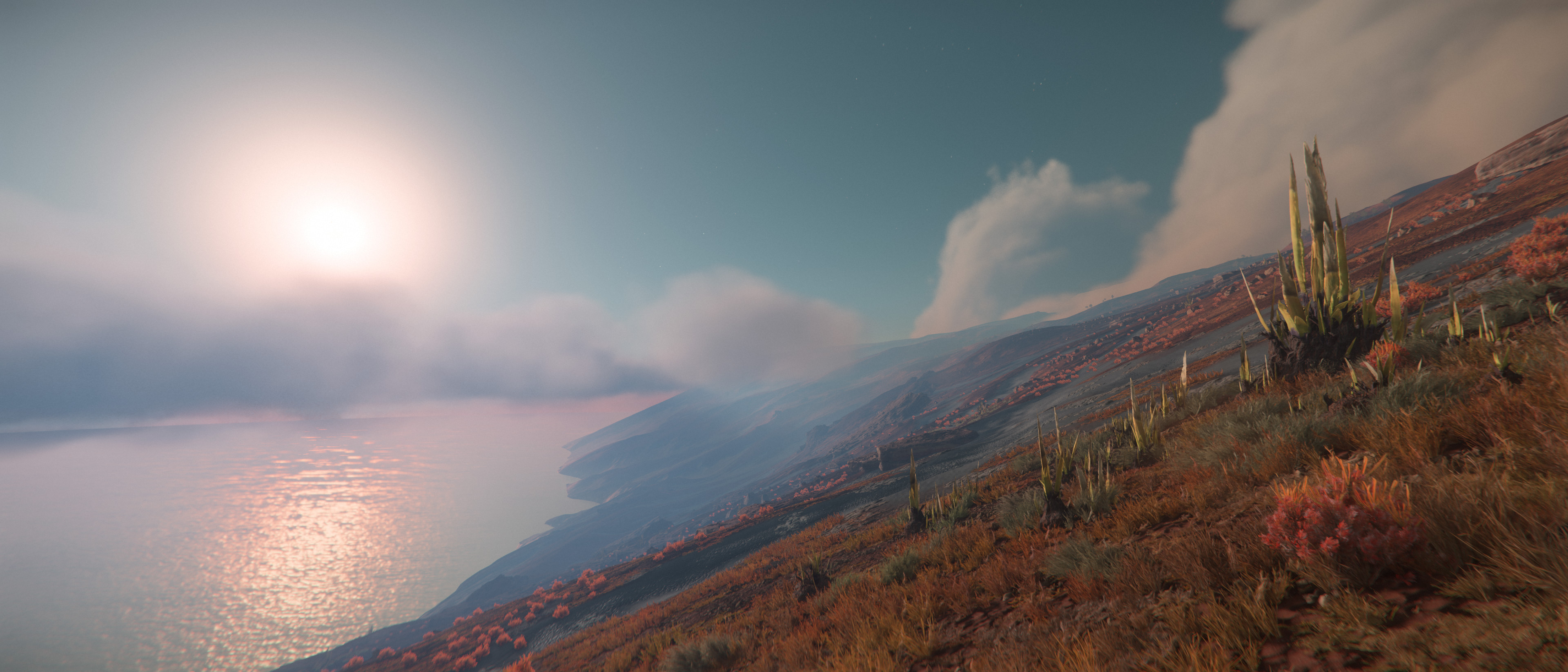
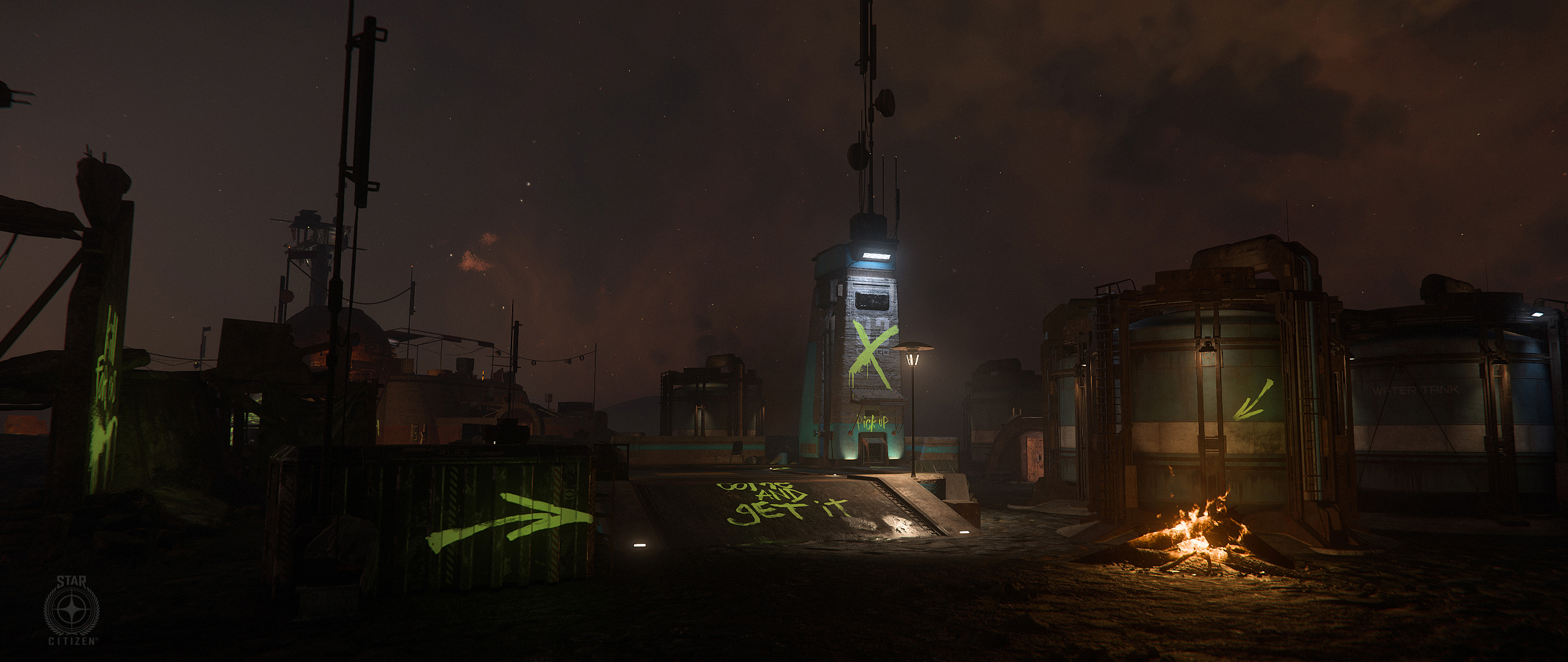
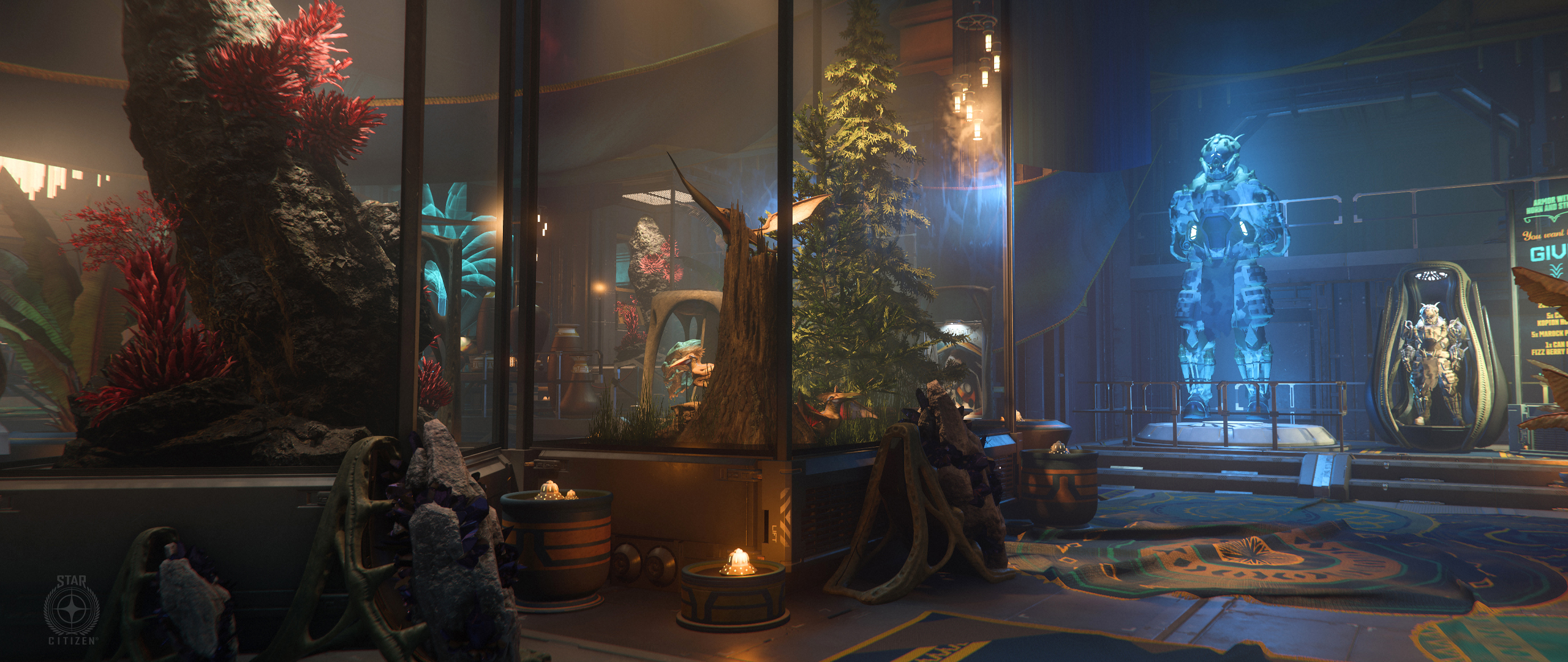
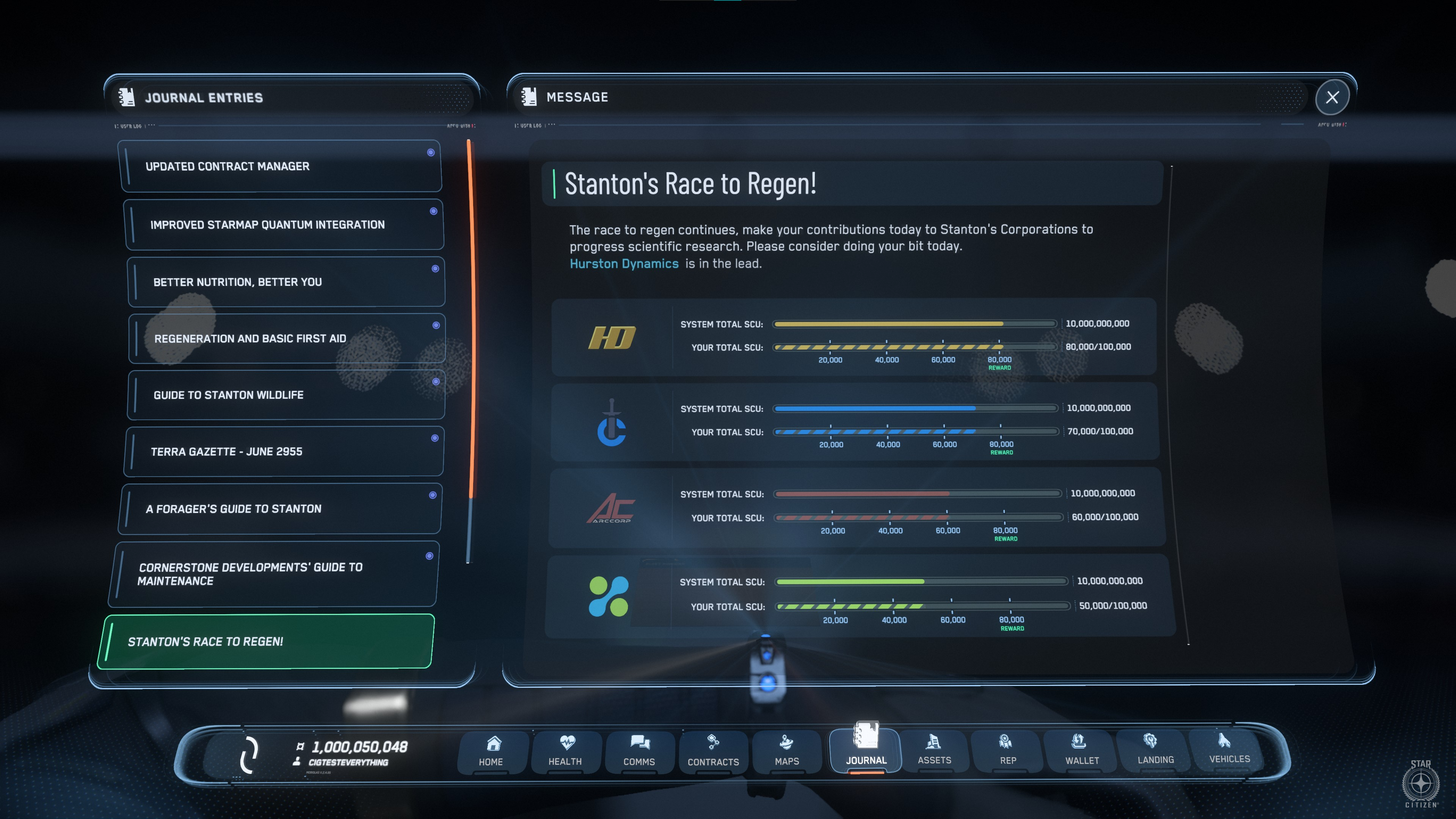
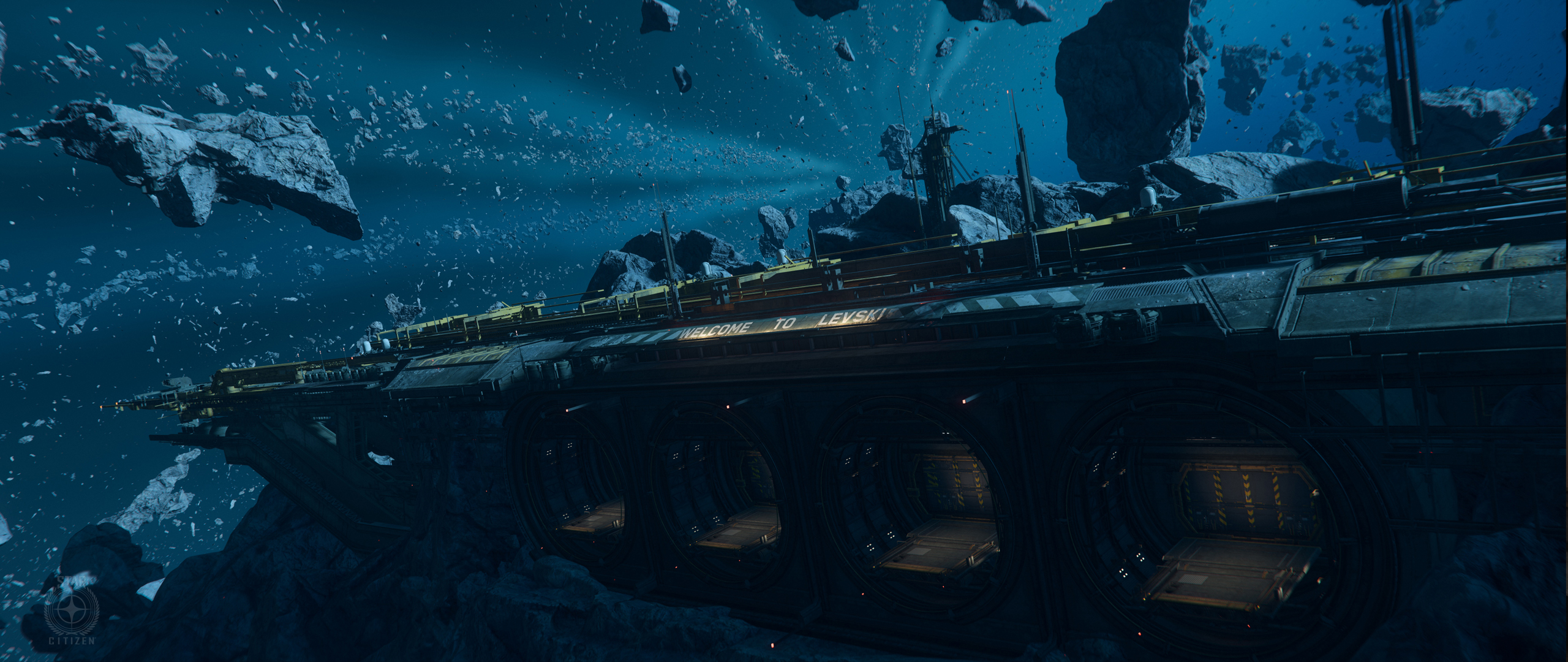
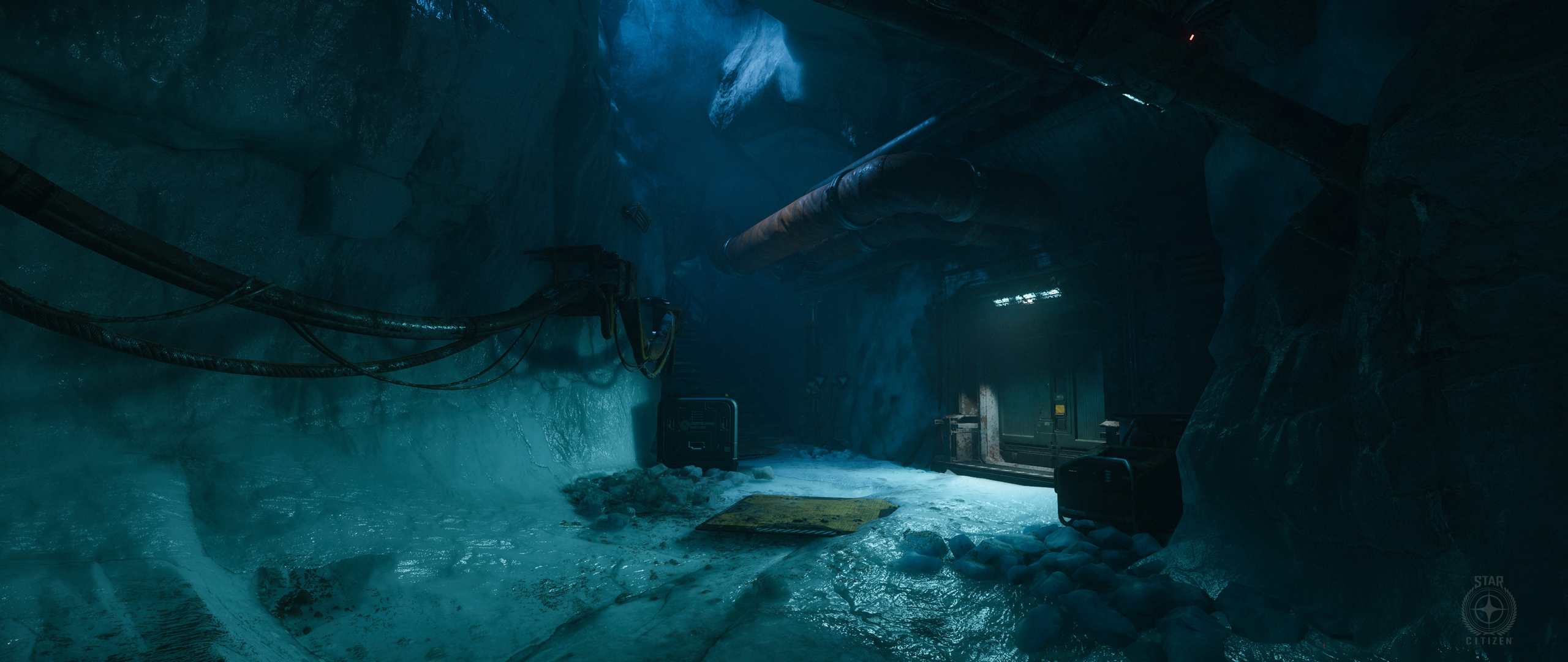
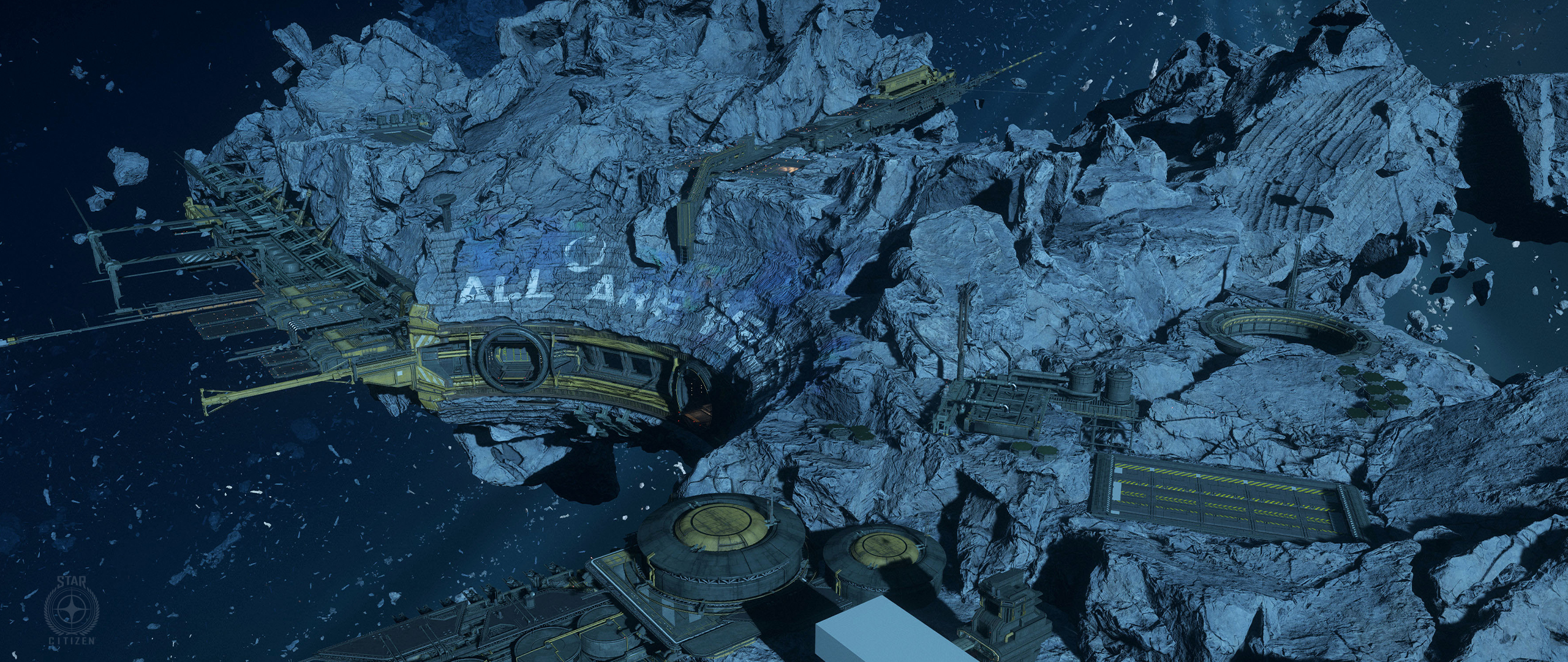
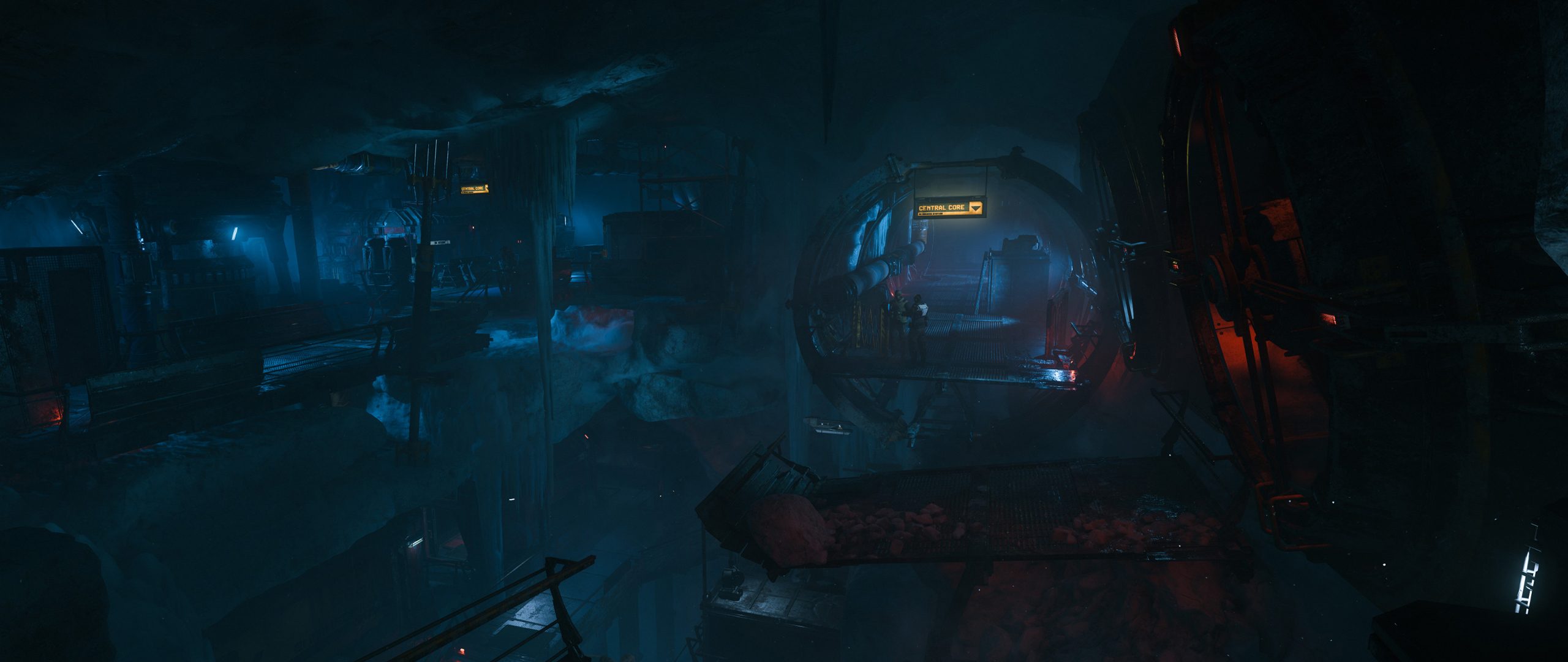
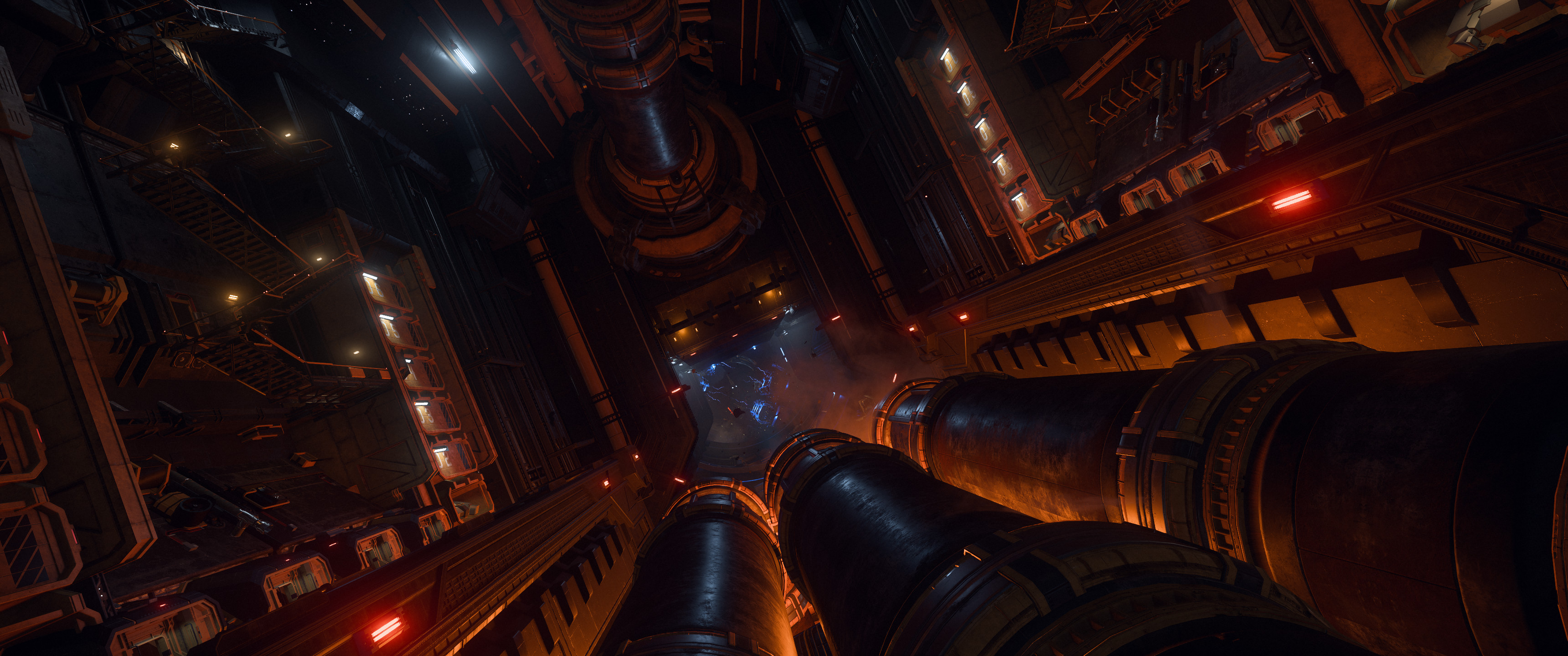
Metadata
- CIG ID
- 17670
- Channel
- Transmission
- Category
- Undefined
- Series
- Monthly Reports
- Comments
- 0
- Published
- 6 years ago (2020-07-01T00:00:00+00:00)