Squadron 42 Monthly Report: October 2020
Transmission Undefined Monthly ReportsContent
This is a cross-post of the report that was recently sent out via the monthly Squadron 42 newsletter. We’re publishing this a second time as a Comm-Link to make it easier for the community to reference back to. Attention Recruits,
What you are about to read is the latest information on the continuing development of Squadron 42 (SCI des: SQ42).
Thanks to the work of dedicated operatives, we’ve uncovered classified information on advanced Vanduul combat techniques, capital ship behaviors, Archon Station, and more. Read on for the full debrief.
Remember, the information within this communication is highly sensitive and must not fall into enemy hands.
UEE Naval High Command
AI (Combat)
We start with the Character Combat Team, who progressed with Vanduul and Human combat behaviors. Specifically for the Vanduul, the team authored several animations for melee attacks with the direction based on the location of the target. They’re currently adding initial support for ‘animation warp,’ which will enable the Vanduul to procedurally adjust the rotation and translation of the animation. The first pass on combo attacks was added, which gives a more fluid selection of animation when executing a chain of melee attacks. The first pass of the ‘surrender’ behavior was completed. This allows NPCs that are under pressure and without ammunition to decide to surrender. During their regular combat behavior, NPCs will try to find lootable ammo boxes (and in the future request help from friendlies and loot available weapons). If no options are available, they’ll try to survive by staying out of dangerous environments.
The team began implementing support for character traits. This functionality exposes the ability of selected traits in the ‘Character Skills and Traits Editor.’ The designers can then assign traits to templates that are then assigned to characters. These can be used to either modify or enable specific behaviors in certain characters. For example, a ‘coward’ NPC won’t try to put pressure on the player.
Several bugs were fixed for visual perception, cover usage, and Vanduul dodge reactions, too.
AI (General)
Last month, the AI Team found and fixed more issues related to characters standing on top of usables. This time, the problem was specific to characters streaming in before their usables. Code was added to handle this particular edge case. Some of the recent AI component updates were also updated with stricter dependency rules to avoid conflicting read/writes inside the zone system. This prevents contention when reading entity positions.
AI (Ships)
Ship AI began October extending the quantum travel Subsumption task. This will be used in specific scenarios where a behavior needs to queue quantum travel for a ship and then continue with regular duties, which is particularly useful in multi-crew ships. The team continued to iterate on missile targeting, first of all ensuring turrets respond immediately to incoming hostile torpedoes when not in combat mode. They then adjusted targeting priorities to give a better balance when capital ships are fighting multiple targets. This will also improve how seat operators handle burst fire when controlling ship weapons.
Time was also spent improving how collision avoidance handles missiles, with the team figuring out how to filter out missiles in the code due to them not being part of collision avoidance. For the accuracy calculation, the team implemented different convergence speeds towards targets when the AI is hitting or missing the target. This simulates NPCs trying to hit a target faster when they are missing but relaxing slightly when they’re on target.
The capital ship combat behavior was also improved to allow longer-range combat. NPCs will now react to an enemy starting to charge a weapon, too.
Several bugs were fixed and improvements made to the break-away movement request, the patrol-around-position assignment, and the hostility of specific targets.
AI (Social)
Last month, the Social AI Team moved the first version of the mess hall scenario into a state that allows other teams to better iterate on animations, props, and the technical setup. At the moment, the scenario supports usables that provide cutlery, food, and drinks. NPCs can iterate on food lines, retrieve anything their sustenance behavior wants, and then take the food to tables and can consume it. This involves both systemic animations and mo-cap created for specific scenarios. All of these usables are item providers, which NPCs can search to obtain specific objects. These objects are actually used by the AI, so consuming food and drink impacts the NPC’s status system. This also expands the use of grip tags in the ‘take,’ ‘prepare,’ and ‘place’ use-channel.
The team are currently working on several behaviors that will benefit both the PU and Squadron 42, including arcade-machine use and dancing. Playing arcade machines will be one of the available leisure activities, while dancing will likely be a special activity for the patrons of discos and other appropriate areas.
Animation
Last month, the Animation Team worked on staggering, push/pull, stance transition improvements, a handful of new weapons, and improvements to the ‘crouch’ set. Tasks progressed for the ‘social and life’ animations, including the chowline, mess hall, bartender drinks, bathrooms, armory character, engineer, and exercises. They also added the AI surrender mechanic and continued with Vanduul melee combat.
Facial animation assets were created for the Feature teams, including effort sets, and female-player performances continued. On the motion-capture side, new shoots for the Actor Feature, Social AI, and Combat AI teams were planned. A few outstanding scenes were also completed and improvements were made to the MotionBuilder skeleton
Art (Characters)
Character Art’s October involved work on major campaign characters. After submitting major changes to Morrow’s head, the team updated his jumpsuit, which will serve as the basis for all related navy uniforms. The team also revisited Vallon, this time focusing on her hair. The quality is now extremely high and will form the basis of a ‘generic’ hairstyle too. The team is currently updating major assets for a key ship introduction, including bridge officer and deck crew uniforms, engineer outfits, and several heads and hairstyles.
Art (Environment)
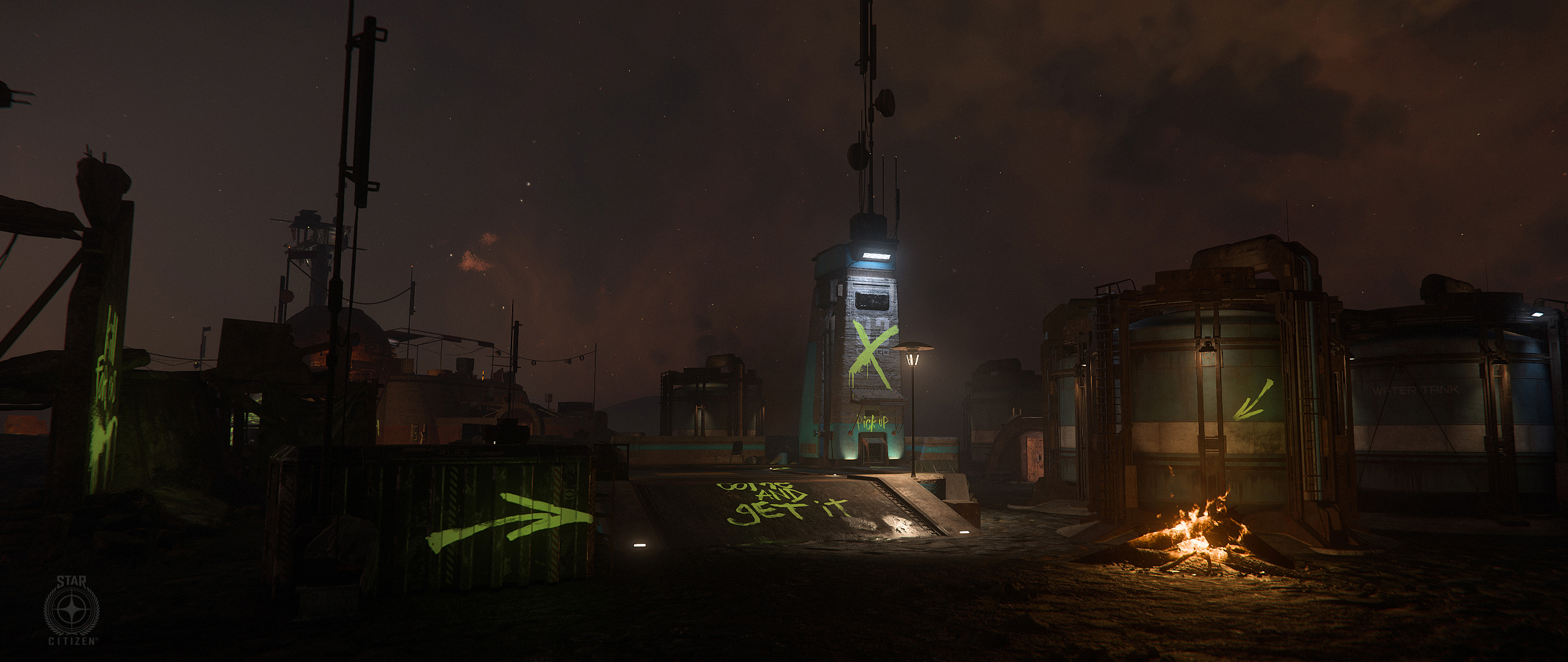
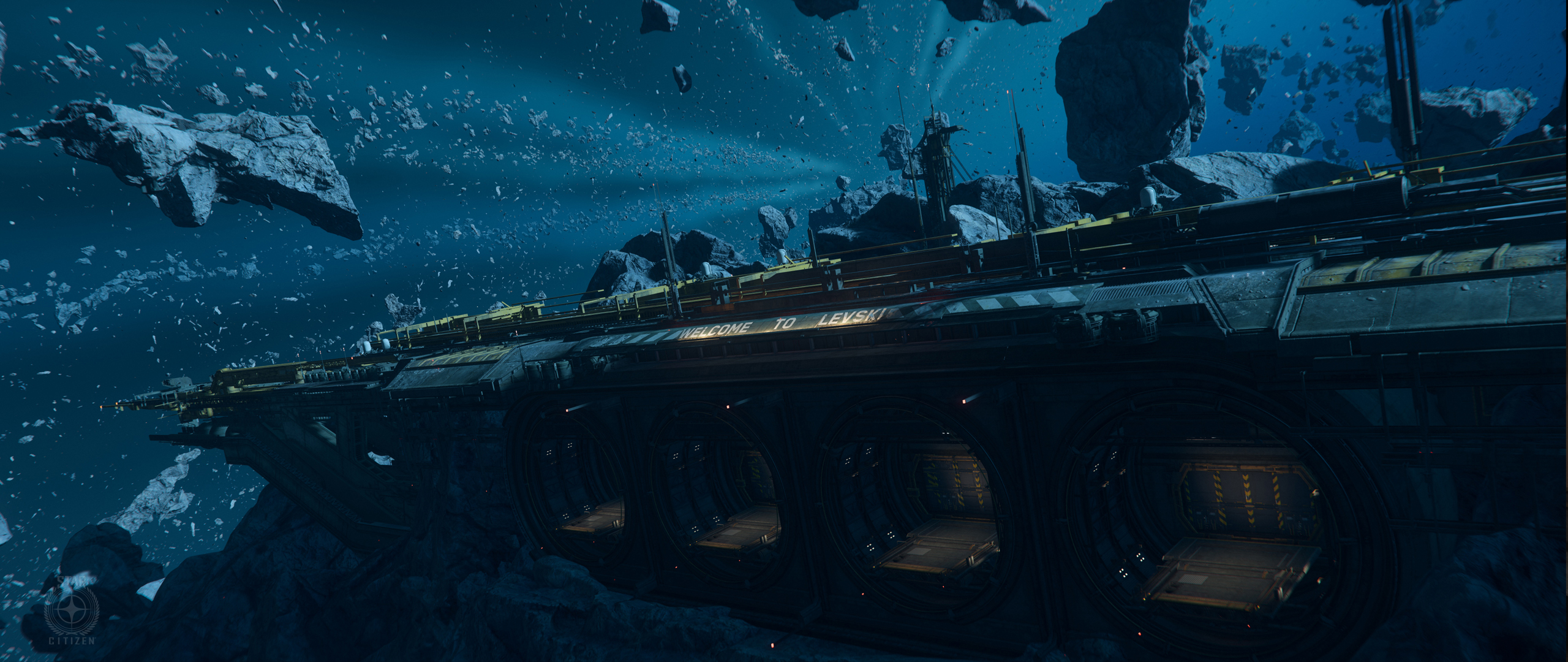
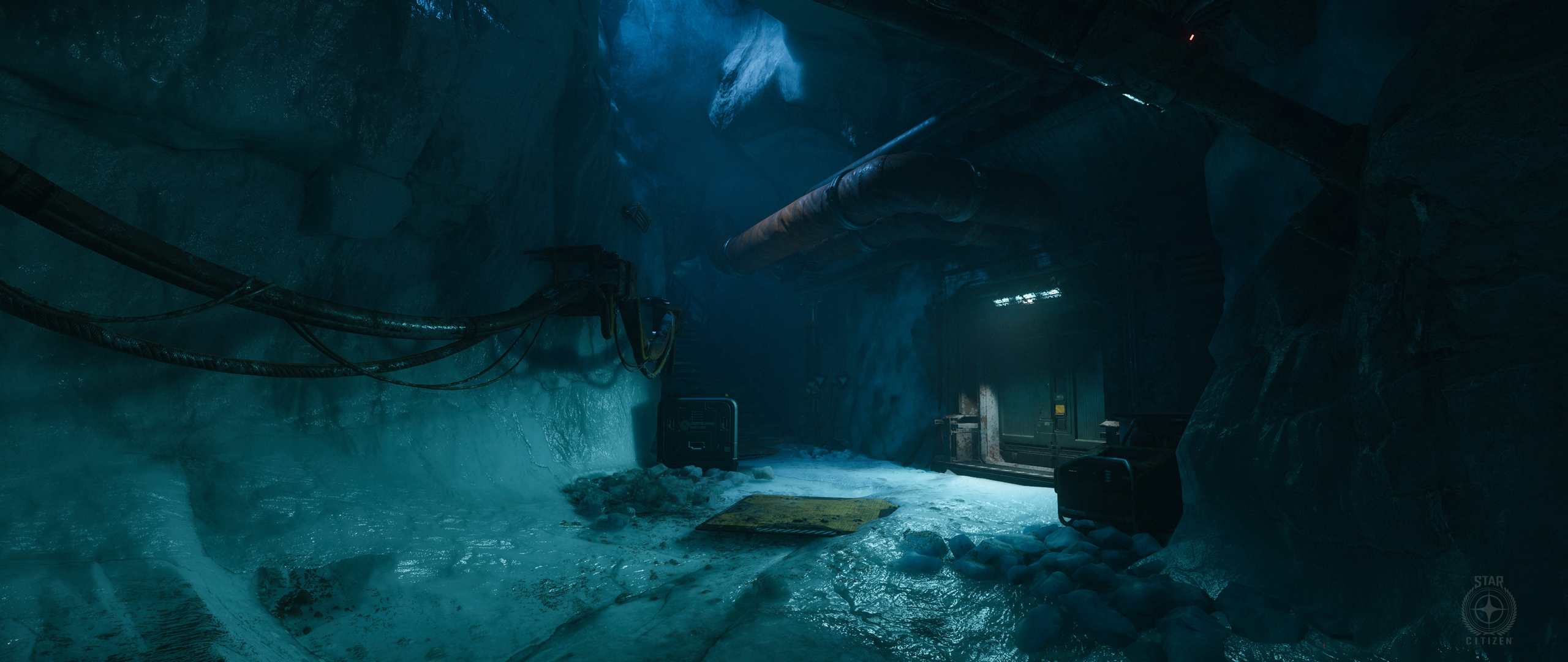
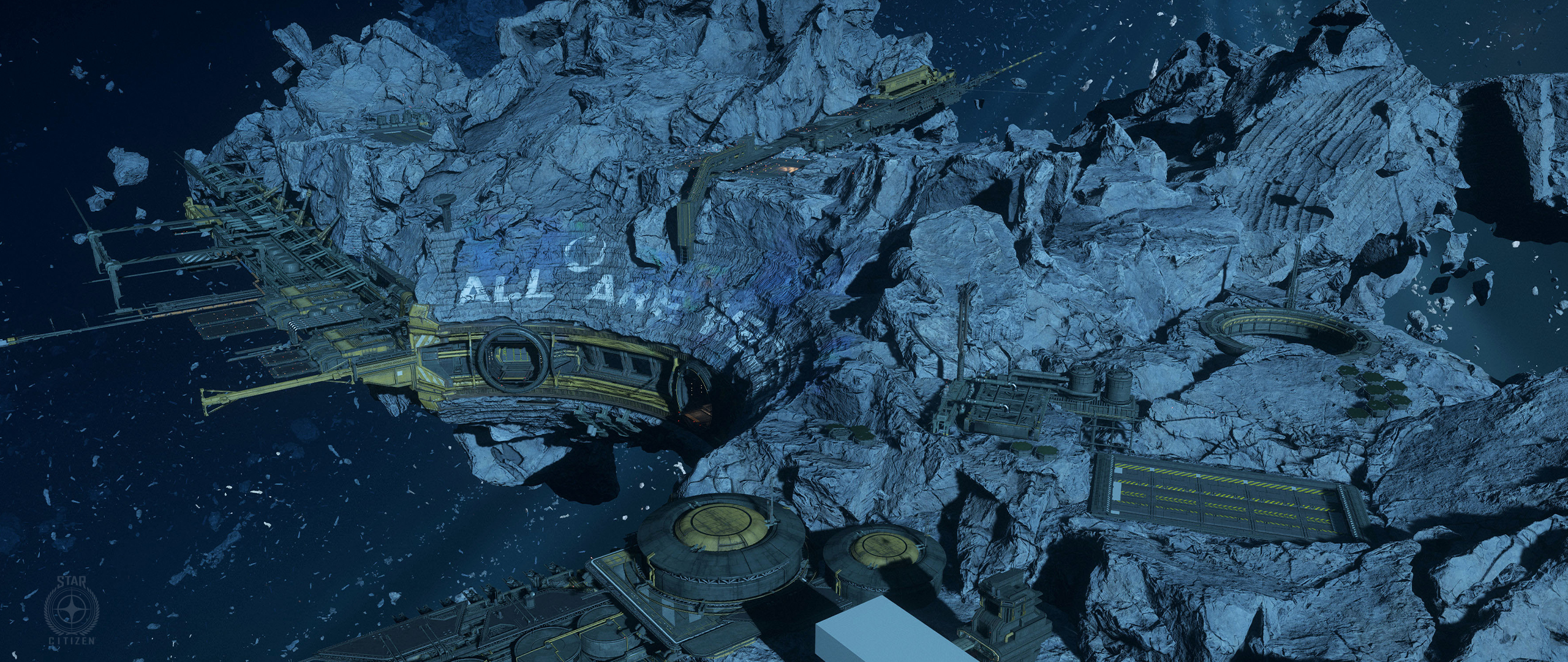
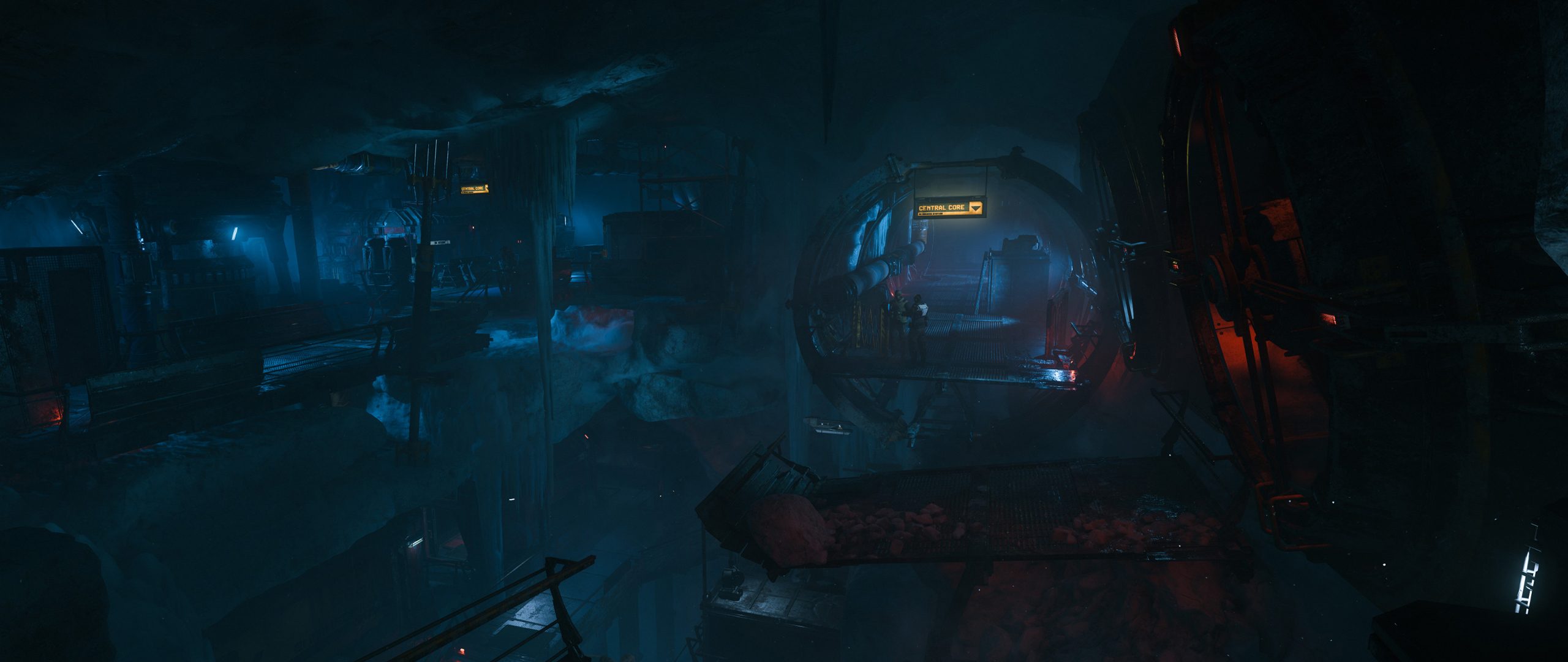
Throughout October, the SQ42 Art Team focused on two key areas of the game, Chop-Shop and Archon Station. They also put the finishing touches on Aciedo Station, which was shown extensively during the first briefing room update. The Chop-Shop contains a mix of hard surface and organic elements, so the team experimented with both scanned data and procedural systems to achieve the final result. They also worked alongside the Design teams to construct the location’s playable spaces, with the organic and hard surface kits being used with the completed whitebox layouts.
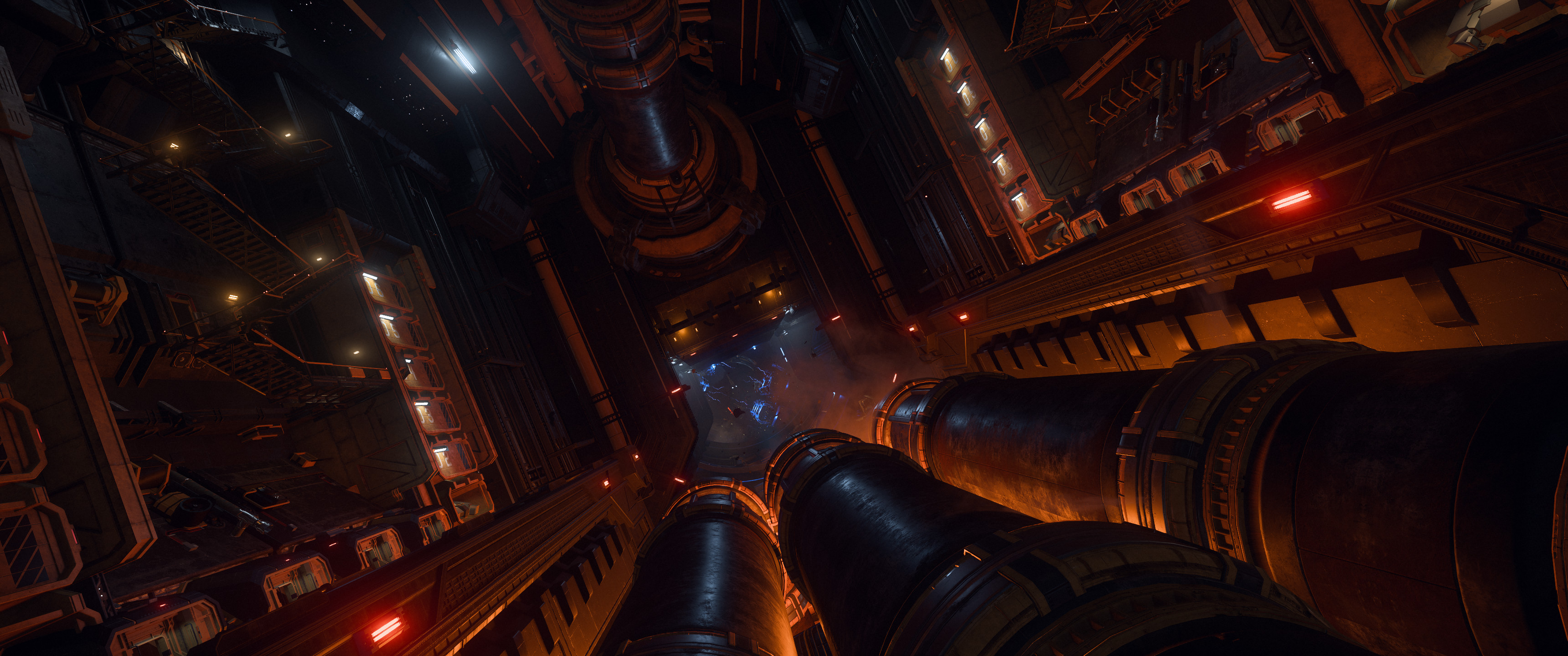
Archon Station is the largest location that players visit in the game, so the team who worked on Aciedo have now moved over to form a larger Archon strike-team. They began by closing off the hangar and are now starting to break down a kit of shared library assets for use throughout the station. This is driven by a new style guide that provides clear direction for the interior to keep it consistent with the previously completed exterior. Planetside, progress was made on the Chemline Solutions facility, which was placed among new ground terrain.
Steady progress was made on the Javelin and Idris interiors too, with lighting, material, and geometry polished. The finishing touches were also added to the Javelin’s engine room.
Elsewhere, excellent progress with made on the space outpost kit. This station asset is unique to the Odin System and will be used to populate space scenes with believable facilities and stations. They also implemented a hugely important story location.
Audio (SQ42)
Audio spent the month finishing editorials for dialogue and implemented improvements into the music system. They also worked alongside the SQ42 composers to create new music.
Engineering
The Actor Team started the month continuing their work on force reactions. Now, characters will respond to either sudden effects such as an explosion or sustained effects like wind or g-force. This is being expanded to include staggers, where the force is strong enough to move the player but not enough to knock them down. The team began implementing FPS radar and scanning, accounting for weapon emissions and audio signifiers. Further time was dedicated to cooperative locomotion, with trolly push/pull polished and the smooth locomotion trajectory code refactored to better integrate into AI path-following. This will result in higher-quality visuals, particularly with character strafing. It will also provide better animation alignment when entering usables, which will also help with the in-development motion-matching tech.
The SQ42 Feature Team continued to improve camera depth-of-field when in conversation or when following an NPC. They also added TrackView support to better trigger the destruction of ships and added additional polish to the dynamic lighting rig.
The team also improved mission startup, revising which elements object-container-streaming loads first. The firing-range flowgraph setup was revisited, too.
Gameplay Story
October saw the Gameplay Story Team focus on a key introductory chapter, with the scenes themselves now looking impressive and working as desired. The current goal is to support the Code and Design teams in perfecting the blending of scenes via AI locomotion. Although a difficult process, great progress is being made and the results look promising. They also worked alongside Design to implement scenes for chapter 6, 7, 13, and 18, which are needed by the Gameplay Story team.
Graphics
The Graphics Team delivered the iridescent shader, which simulates color shifts based on the camera angle relative to the surface. Shader optimizations and look-up textures were used to reduce the cost of this feature to the point it can be widely used without performance concerns. The light-beam shader was also worked on, which underwent significant quality improvements and bug fixes. This feature helps the team simulate distant beams of light beyond the range that can be simulated by the volumetric fog system.
Work also continued on the Gen12 renderer and the automated testing system.
Level Design
The Social Design Team brought a number of scenes up to their “gold standard,” which include completed behaviors, usables, interrupts, and abandons. The Level Design Team moved several FPS sections to a near-complete state. This will highlight any additional mo-cap required to extend the narrative and support the multiple approaches supported across most of the environments.
The Space/Dogfight Team supported the various feature teams. For example, AI and Flight Gameplay are working on enhanced path-following and hazard awareness behaviors. They also continued to space-scape the Odin System alongside the Art teams.
Narrative
Throughout the month, Narrative met with Design to plan out additional dialogue needed across the campaign. They then scripted lines and made placeholder recordings to enable Design to see how the additions sound in situ. As the various environments continue to develop, the Art teams asked for support on additional props or environmental set dressing. These include additional story indicators that reward players who dig a little deeper and explore the game’s locations.
As mentioned in last month’s report, Narrative continued to work with Audio and Combat AI to develop the Vanduul culture and behavior, while the team’s xenolinguist further developed the language.
QA
QA supported Cinematics with recordings of each level, enabled them to review each chapter to ensure scenes are working and appearing as intended.
Tech Animation
Throughout October, Tech Animation focused heavily on upgrading the head assets in the character pipeline. A huge amount of technical detail goes into every head asset that will be accounted for and restructured throughout the overhaul. The team also began overhauling combat animations to remove technical glitches in AI weapon holding, ships were rigged for the Animation Team, and support was given to Social AI.
UI
Much of the UI team’s SQ42-specific work was focused on new tech, including a new system to allow animators to move and position UI within cutscenes. They also further iterated on the 3D lighting system to improve the appearance of ships and items on UI screens and holograms. On the art side, visual target concepts for the Aegis Gladius UI were finalized, including the visuals for the MFD screens.
VFX
Last month, VFX continued to improve the destruction pipeline, focusing on a couple of specific sequences with varying degrees of complexity. They also worked on effects for the Multi-Tool tractor beam attachment.
Dies ist ein Cross-Post des Berichts, der kürzlich über den monatlichen Squadron 42 Newsletter verschickt wurde. Wir veröffentlichen ihn ein zweites Mal als Comm-Link, um es für die Community einfacher zu machen, darauf zurückzugreifen.
Achtung Rekruten,
Was ihr gleich lesen werdet, sind die neuesten Informationen über die Weiterentwicklung von Squadron 42 (SCI des: SQ42).
Dank der Arbeit engagierter Agenten haben wir geheime Informationen über fortgeschrittene Vanduul-Kampftechniken, das Verhalten von Großkampfschiffen, die Archon-Station und vieles mehr aufgedeckt. Lies weiter für die vollständige Nachbesprechung.
Denkt daran, dass die Informationen in dieser Kommunikation hochsensibel sind und nicht in feindliche Hände fallen dürfen.
UEE Marine-Oberkommando
KI (Kampf)
Wir beginnen mit dem Character Combat Team, das sich mit Vanduul und menschlichem Kampfverhalten weiterentwickelt hat. Speziell für den Vanduul hat das Team mehrere Animationen für Nahkampfangriffe erstellt, deren Richtung von der Position des Ziels abhängt. Derzeit wird die anfängliche Unterstützung für 'Animation Warp' hinzugefügt, die es dem Vanduul ermöglicht, die Rotation und die Übersetzung der Animation prozedural anzupassen. Der erste Pass on Combo-Angriffe wurde hinzugefügt, was eine flüssigere Auswahl der Animation bei der Ausführung einer Kette von Nahkampfangriffen ermöglicht. Der erste Durchgang des 'Aufgeben'-Verhaltens wurde abgeschlossen. Dies ermöglicht es NSCs, die unter Druck und ohne Munition sind, sich zur Kapitulation zu entschließen. Während ihres regulären Kampfverhaltens werden die NSCs versuchen, plünderbare Munitionskisten zu finden (und in Zukunft von befreundeten NSCs Hilfe anfordern und verfügbare Waffen plündern). Wenn keine Optionen verfügbar sind, werden sie versuchen, zu überleben, indem sie sich aus gefährlichen Umgebungen fernhalten.
Das Team begann damit, Unterstützung für Charaktereigenschaften zu implementieren. Diese Funktionalität zeigt die Fähigkeit ausgewählter Eigenschaften im 'Editor für Charakterfertigkeiten und -eigenschaften' an. Die Designer können dann den Vorlagen Eigenschaften zuweisen, die dann den Charakteren zugeordnet werden. Diese können dazu verwendet werden, bestimmte Verhaltensweisen bestimmter Charaktere zu modifizieren oder zu aktivieren. Zum Beispiel wird ein 'feiger' NSC nicht versuchen, Druck auf den Spieler auszuüben.
Es wurden auch einige Fehler bei der visuellen Wahrnehmung, der Benutzung der Tarnung und den Vanduul-Ausweichreaktionen behoben.
KI (Allgemein)
Letzten Monat hat das KI-Team weitere Probleme gefunden und behoben, die mit Charakteren zu tun haben, die oben auf den Nutzbaren stehen. Dieses Mal war das Problem spezifisch für Charaktere, die vor ihren Usables hereinströmten. Es wurde Code hinzugefügt, um diesen speziellen Edge-Fall zu behandeln. Einige der letzten KI-Komponenten-Updates wurden auch mit strengeren Abhängigkeitsregeln aktualisiert, um widersprüchliche Lese-/Schreibvorgänge innerhalb des Zonensystems zu vermeiden. Dies verhindert Streitigkeiten beim Lesen der Entity-Positionen.
KI (Schiffe)
Schiff KI begann im Oktober mit der Erweiterung der Aufgabe der Quantenreise Subsumption. Diese wird in bestimmten Szenarien verwendet werden, in denen ein Verhalten Quantenreisen für ein Schiff in die Warteschlange stellen und dann mit den regulären Aufgaben fortfahren muss, was besonders in Schiffen mit mehreren Besatzungen nützlich ist. Das Team setzte die Wiederholung der Raketenziele fort und stellte zunächst sicher, dass die Geschütztürme sofort auf ankommende feindliche Torpedos reagieren, wenn sie sich nicht im Kampfmodus befinden. Dann passten sie die Zielprioritäten an, um eine bessere Balance zu erreichen, wenn Großkampfschiffe gegen mehrere Ziele kämpfen. Dies wird auch die Art und Weise verbessern, wie Sitzbediener bei der Kontrolle von Schiffswaffen mit Feuerstößen umgehen.
Es wurde auch Zeit damit verbracht, die Handhabung der Kollisionsvermeidung von Raketen zu verbessern, wobei das Team herausfand, wie man Raketen im Code herausfiltern kann, da sie nicht Teil der Kollisionsvermeidung sind. Für die Genauigkeitsberechnung implementierte das Team unterschiedliche Konvergenzgeschwindigkeiten in Richtung der Ziele, wenn die KI das Ziel trifft oder verfehlt. Dies simuliert NSCs, die versuchen, ein Ziel schneller zu treffen, wenn sie das Ziel verfehlen, sich aber leicht entspannen, wenn sie auf dem Ziel sind.
Das Kampfverhalten des Großkampfschiffs wurde ebenfalls verbessert, um einen Kampf über größere Entfernungen zu ermöglichen. NPCs reagieren nun auch, wenn ein Feind beginnt, eine Waffe aufzuladen.
Mehrere Fehler wurden behoben und Verbesserungen an der Aufforderung zur Ausreißerbewegung, der Zuweisung von Patrouillenpositionen und der Feindseligkeit bestimmter Ziele vorgenommen.
KI (sozial)
Letzten Monat hat das soziale KI-Team die erste Version des Messehallen-Szenarios in einen Zustand versetzt, der es anderen Teams ermöglicht, besser an Animationen, Requisiten und dem technischen Setup zu arbeiten. Im Moment unterstützt das Szenario Usables, die Besteck, Essen und Getränke bereitstellen. NSCs können an Essenslinien iterieren, alles abrufen, was ihr Ernährungsverhalten wünscht, und dann das Essen an Tische bringen und verzehren. Dies beinhaltet sowohl systemische Animationen als auch Mo-Cap, die für bestimmte Szenarien erstellt wurden. All diese Gebrauchsgegenstände sind Item-Provider, die NSCs suchen können, um bestimmte Objekte zu erhalten. Diese Objekte werden tatsächlich von der KI benutzt, so dass der Konsum von Essen und Trinken das Statussystem des NSCs beeinflusst. Dadurch wird auch die Verwendung von Grip-Tags im 'Nehmen', 'Vorbereiten' und 'Platzieren' des Nutzungskanals erweitert.
Das Team arbeitet derzeit an verschiedenen Verhaltensweisen, die sowohl der PU als auch der Squadron 42 zugute kommen werden, darunter der Einsatz von Arcade-Maschinen und das Tanzen. Das Spielen von Spielautomaten wird eine der verfügbaren Freizeitaktivitäten sein, während das Tanzen wahrscheinlich eine besondere Aktivität für die Besucher von Diskotheken und anderen geeigneten Bereichen sein wird.
Animation
Letzten Monat hat das Animationsteam an Torkeln, Push/Pull, Verbesserungen der Haltungsübergänge, einer Handvoll neuer Waffen und Verbesserungen am 'Hocke'-Set gearbeitet. Die Aufgaben für die 'Sozial- und Lebensanimationen' gingen voran, einschließlich der Essensgrenze, der Kantine, der Barkeeper-Drinks, der Toiletten, des Waffencharakters, des Ingenieurs und der Übungen. Außerdem wurde der KI-Kapitulierungs-Mechaniker hinzugefügt und der Vanduul-Nahkampf fortgesetzt.
Es wurden Gesichtsanimationen für die Feature-Teams erstellt, einschließlich Effektsets, und die Leistungen der weiblichen Spieler wurden fortgesetzt. Auf der Motion-Capture-Seite wurden neue Shootings für die Schauspieler-Feature-, Sozial-KI- und Kampf-KI-Teams geplant. Außerdem wurden einige herausragende Szenen fertiggestellt und Verbesserungen am MotionBuilder-Skelett vorgenommen
Kunst (Charaktere)
Der Character Art's Oktober beinhaltete die Arbeit an den Hauptcharakteren der Kampagne. Nachdem größere Änderungen an Morrows Kopf vorgenommen wurden, aktualisierte das Team seinen Overall, der als Basis für alle zugehörigen Marine-Uniformen dienen wird. Das Team besuchte auch Vallon erneut, diesmal konzentrierte sich das Team auf ihre Haare. Die Qualität ist jetzt extrem hoch und wird auch die Grundlage für eine 'generische' Frisur bilden. Das Team ist gerade dabei, die wichtigsten Elemente für eine wichtige Schiffseinführung zu aktualisieren, einschließlich der Uniformen der Brückenoffiziere und der Decksmannschaft, der Uniformen der Ingenieure und verschiedener Köpfe und Frisuren.
Kunst (Umwelt)
Den ganzen Oktober über konzentrierte sich das SQ42 Art Team auf zwei Schlüsselbereiche des Spiels, Chop-Shop und Archon Station. Außerdem gaben sie der Aciedo Station den letzten Schliff, die während des ersten Briefing Room Updates ausgiebig gezeigt wurde. Der Chop-Shop enthält eine Mischung aus harten Oberflächen und organischen Elementen, also experimentierte das Team sowohl mit gescannten Daten als auch mit Verfahrenssystemen, um das Endergebnis zu erreichen. Sie arbeiteten auch mit den Design-Teams zusammen, um die spielbaren Räume der Station zu konstruieren, wobei die Bausätze mit organischer und harter Oberfläche mit den fertigen Whitebox-Layouts verwendet wurden.
Die Archon-Station ist der größte Ort, den die Spieler im Spiel besuchen, daher ist das Team, das an Aciedo gearbeitet hat, jetzt zu einem größeren Archon-Streikteam übergegangen. Sie haben mit der Schließung des Hangars begonnen und sind nun dabei, ein Set von gemeinsamen Bibliotheksbeständen zur Nutzung in der gesamten Station abzubauen. Dies wird durch einen neuen Styleguide vorangetrieben, der eine klare Richtung für das Innere vorgibt, um es im Einklang mit dem zuvor fertiggestellten Äußeren zu halten. Auf dem Planeten wurden Fortschritte bei der Chemline-Einrichtung gemacht, die inmitten des neuen Geländes platziert wurde.
Auch bei der Innenausstattung von Javelin und Idris wurden stetige Fortschritte gemacht, Beleuchtung, Material und Geometrie wurden auf Hochglanz gebracht. Auch der Maschinenraum des Javelin erhielt den letzten Schliff.
An anderer Stelle wurden ausgezeichnete Fortschritte mit dem Weltraum-Außenposten-Kit gemacht. Dieser Stations-Außenposten ist einzigartig im Odin-System und wird dazu verwendet werden, Weltraumszenen mit glaubwürdigen Einrichtungen und Stationen zu bestücken. Sie haben auch einen äußerst wichtigen Schauplatz für die Story implementiert.
Ton (SQ42)
Audio hat den Monat damit verbracht, die Editorials für die Dialoge fertigzustellen und Verbesserungen im Musiksystem zu implementieren. Sie arbeiteten auch mit den SQ42-Komponisten zusammen, um neue Musik zu kreieren.
Technik
Das Schauspieler-Team begann den Monat damit, seine Arbeit an den Reaktionen der Kräfte fortzusetzen. Jetzt werden die Charaktere entweder auf plötzliche Effekte wie eine Explosion oder auf anhaltende Effekte wie Wind oder G-Kraft reagieren. Dies wird erweitert und beinhaltet nun auch Torkeln, bei dem die Kraft stark genug ist, um den Spieler zu bewegen, aber nicht genug, um ihn zu Fall zu bringen. Das Team hat damit begonnen, FPS-Radar und Scanning zu implementieren, wobei Waffenemissionen und Audio-Signifikanten berücksichtigt werden. Weitere Zeit wurde der kooperativen Fortbewegung gewidmet, wobei der Trolly Push/Pull poliert und der Code der glatten Fortbewegungsbahn überarbeitet wurde, um sich besser in die KI-Pfadfindung zu integrieren. Dies wird zu qualitativ hochwertigeren visuellen Darstellungen führen, insbesondere beim Charakter-Strafing. Es wird auch eine bessere Ausrichtung der Animationen bei der Eingabe von Usables ermöglichen, was auch bei der in der Entwicklung befindlichen Motion-Matching-Technologie hilfreich sein wird.
Das SQ42 Feature Team hat die Schärfentiefe der Kamera weiter verbessert, wenn sie im Gespräch sind oder einem NPC folgen. Sie fügten auch TrackView-Unterstützung hinzu, um die Zerstörung von Schiffen besser auslösen zu können und gaben der dynamischen Beleuchtungsanlage zusätzlichen Glanz.
Das Team hat auch den Missionsstart verbessert, indem es überarbeitet hat, welche Elemente beim Objekt-Container-Streaming zuerst geladen werden. Das Schießstand-Flowgraph-Setup wurde ebenfalls überarbeitet.
Gameplay-Geschichte
Im Oktober konzentrierte sich das Gameplay-Story-Team auf ein wichtiges Einführungskapitel, wobei die Szenen selbst nun beeindruckend aussehen und wie gewünscht funktionieren. Das aktuelle Ziel ist es, die Code- und Design-Teams bei der Perfektionierung der Überblendung von Szenen mittels KI-Lokomotion zu unterstützen. Obwohl es ein schwieriger Prozess ist, werden große Fortschritte gemacht und die Ergebnisse sehen vielversprechend aus. Sie arbeiteten auch mit dem Design zusammen, um Szenen für die Kapitel 6, 7, 13 und 18 zu implementieren, die vom Gameplay-Story-Team benötigt werden.
Grafiken
Das Grafikteam lieferte den irisierenden Shader, der Farbverschiebungen basierend auf dem Kamerawinkel relativ zur Oberfläche simuliert. Es wurden Shader-Optimierungen und Look-Up-Texturen verwendet, um die Kosten für dieses Feature so weit zu reduzieren, dass es ohne Leistungseinbußen weit verbreitet werden kann. Es wurde auch am Lichtstrahl-Shader gearbeitet, der erhebliche Qualitätsverbesserungen und Fehlerbehebungen erfahren hat. Dieses Feature hilft dem Team, entfernte Lichtstrahlen jenseits der Reichweite zu simulieren, die durch das volumetrische Nebelsystem simuliert werden kann.
Außerdem wurde die Arbeit am Gen12-Renderer und dem automatischen Testsystem fortgesetzt.
Level-Design
Das Social Design Team hat eine Reihe von Szenen auf ihren "Goldstandard" gebracht, darunter abgeschlossene Verhaltensweisen, Brauchbares, Unterbrechungen und Abbrüche. Das Leveldesign-Team hat mehrere FPS-Abschnitte in einen fast vollständigen Zustand gebracht. Dies wird alle zusätzlichen mo-cap hervorheben, die erforderlich sind, um die Erzählung zu erweitern und die vielfältigen Ansätze zu unterstützen, die in den meisten Umgebungen unterstützt werden.
Das Space/Dogfight-Team unterstützte die verschiedenen Feature-Teams. Zum Beispiel arbeiten KI und Flight Gameplay an verbesserten Verhaltensweisen für Pfadfindung und Gefahrenbewusstsein. Außerdem setzten sie gemeinsam mit den Art-Teams die Weltraumfahrt durch das Odin-System fort.
Erzählung
Im Laufe des Monats traf sich Narrative mit Design, um zusätzliche Dialoge zu planen, die für die gesamte Kampagne benötigt werden. Sie schrieben dann Zeilen und machten Aufnahmen von Platzhaltern, damit Design sehen konnte, wie die Ergänzungen vor Ort klingen. Da sich die verschiedenen Umgebungen ständig weiterentwickeln, baten die Art-Teams um Unterstützung bei zusätzlichen Requisiten oder bei der Ausstattung der Umgebung. Dazu gehören zusätzliche Story-Indikatoren, die Spieler belohnen, die ein wenig tiefer graben und die Schauplätze des Spiels erkunden.
Wie im Bericht des letzten Monats erwähnt, arbeitete Narrative weiterhin mit Audio und Kampf-KI zusammen, um die Vanduul-Kultur und das Verhalten zu entwickeln, während der Xenolinguist des Teams die Sprache weiterentwickelte.
QA
QA unterstützte Cinematics mit Aufnahmen jedes Levels und ermöglichte es ihnen, jedes Kapitel zu überprüfen, um sicherzustellen, dass die Szenen funktionieren und wie beabsichtigt erscheinen.
Technische Animation
Während des gesamten Oktobers konzentrierte sich Tech Animation stark auf die Verbesserung der Head Assets in der Charakter-Pipeline. Eine riesige Menge an technischen Details steckt in jedem Head-Asset, das während der Überholung berücksichtigt und umstrukturiert wird. Das Team begann auch mit der Überholung der Kampfanimationen, um technische Pannen in der KI-Waffenhaltung zu beseitigen, Schiffe wurden für das Animationsteam ausgerüstet und die soziale KI wurde unterstützt.
BENUTZEROBERFLÄCHE
Ein Großteil der SQ42-spezifischen Arbeit des UI-Teams konzentrierte sich auf neue Technologien, einschließlich eines neuen Systems, das es den Animatoren erlaubt, die UI innerhalb der Cutscenes zu bewegen und zu positionieren. Außerdem wurde das 3D-Beleuchtungssystem weiterentwickelt, um das Aussehen von Schiffen und Gegenständen auf den UI-Bildschirmen und Hologrammen zu verbessern. Auf der künstlerischen Seite wurden die visuellen Zielkonzepte für die Aegis Gladius UI fertiggestellt, einschließlich der Visuals für die MFD-Bildschirme.
VFX
Letzten Monat hat VFX die Zerstörungspipeline weiter verbessert und sich dabei auf ein paar spezifische Sequenzen mit unterschiedlichem Komplexitätsgrad konzentriert. Sie arbeiteten auch an Effekten für die Multi-Tool Traktorstrahlbefestigung.
This is a cross-post of the report that was recently sent out via the monthly Squadron 42 newsletter. We’re publishing this a second time as a Comm-Link to make it easier for the community to reference back to. Attention Recruits,
What you are about to read is the latest information on the continuing development of Squadron 42 (SCI des: SQ42).
Thanks to the work of dedicated operatives, we’ve uncovered classified information on advanced Vanduul combat techniques, capital ship behaviors, Archon Station, and more. Read on for the full debrief.
Remember, the information within this communication is highly sensitive and must not fall into enemy hands.
UEE Naval High Command
AI (Combat)
We start with the Character Combat Team, who progressed with Vanduul and Human combat behaviors. Specifically for the Vanduul, the team authored several animations for melee attacks with the direction based on the location of the target. They’re currently adding initial support for ‘animation warp,’ which will enable the Vanduul to procedurally adjust the rotation and translation of the animation. The first pass on combo attacks was added, which gives a more fluid selection of animation when executing a chain of melee attacks. The first pass of the ‘surrender’ behavior was completed. This allows NPCs that are under pressure and without ammunition to decide to surrender. During their regular combat behavior, NPCs will try to find lootable ammo boxes (and in the future request help from friendlies and loot available weapons). If no options are available, they’ll try to survive by staying out of dangerous environments.
The team began implementing support for character traits. This functionality exposes the ability of selected traits in the ‘Character Skills and Traits Editor.’ The designers can then assign traits to templates that are then assigned to characters. These can be used to either modify or enable specific behaviors in certain characters. For example, a ‘coward’ NPC won’t try to put pressure on the player.
Several bugs were fixed for visual perception, cover usage, and Vanduul dodge reactions, too.
AI (General)
Last month, the AI Team found and fixed more issues related to characters standing on top of usables. This time, the problem was specific to characters streaming in before their usables. Code was added to handle this particular edge case. Some of the recent AI component updates were also updated with stricter dependency rules to avoid conflicting read/writes inside the zone system. This prevents contention when reading entity positions.
AI (Ships)
Ship AI began October extending the quantum travel Subsumption task. This will be used in specific scenarios where a behavior needs to queue quantum travel for a ship and then continue with regular duties, which is particularly useful in multi-crew ships. The team continued to iterate on missile targeting, first of all ensuring turrets respond immediately to incoming hostile torpedoes when not in combat mode. They then adjusted targeting priorities to give a better balance when capital ships are fighting multiple targets. This will also improve how seat operators handle burst fire when controlling ship weapons.
Time was also spent improving how collision avoidance handles missiles, with the team figuring out how to filter out missiles in the code due to them not being part of collision avoidance. For the accuracy calculation, the team implemented different convergence speeds towards targets when the AI is hitting or missing the target. This simulates NPCs trying to hit a target faster when they are missing but relaxing slightly when they’re on target.
The capital ship combat behavior was also improved to allow longer-range combat. NPCs will now react to an enemy starting to charge a weapon, too.
Several bugs were fixed and improvements made to the break-away movement request, the patrol-around-position assignment, and the hostility of specific targets.
AI (Social)
Last month, the Social AI Team moved the first version of the mess hall scenario into a state that allows other teams to better iterate on animations, props, and the technical setup. At the moment, the scenario supports usables that provide cutlery, food, and drinks. NPCs can iterate on food lines, retrieve anything their sustenance behavior wants, and then take the food to tables and can consume it. This involves both systemic animations and mo-cap created for specific scenarios. All of these usables are item providers, which NPCs can search to obtain specific objects. These objects are actually used by the AI, so consuming food and drink impacts the NPC’s status system. This also expands the use of grip tags in the ‘take,’ ‘prepare,’ and ‘place’ use-channel.
The team are currently working on several behaviors that will benefit both the PU and Squadron 42, including arcade-machine use and dancing. Playing arcade machines will be one of the available leisure activities, while dancing will likely be a special activity for the patrons of discos and other appropriate areas.
Animation
Last month, the Animation Team worked on staggering, push/pull, stance transition improvements, a handful of new weapons, and improvements to the ‘crouch’ set. Tasks progressed for the ‘social and life’ animations, including the chowline, mess hall, bartender drinks, bathrooms, armory character, engineer, and exercises. They also added the AI surrender mechanic and continued with Vanduul melee combat.
Facial animation assets were created for the Feature teams, including effort sets, and female-player performances continued. On the motion-capture side, new shoots for the Actor Feature, Social AI, and Combat AI teams were planned. A few outstanding scenes were also completed and improvements were made to the MotionBuilder skeleton
Art (Characters)
Character Art’s October involved work on major campaign characters. After submitting major changes to Morrow’s head, the team updated his jumpsuit, which will serve as the basis for all related navy uniforms. The team also revisited Vallon, this time focusing on her hair. The quality is now extremely high and will form the basis of a ‘generic’ hairstyle too. The team is currently updating major assets for a key ship introduction, including bridge officer and deck crew uniforms, engineer outfits, and several heads and hairstyles.
Art (Environment)
Throughout October, the SQ42 Art Team focused on two key areas of the game, Chop-Shop and Archon Station. They also put the finishing touches on Aciedo Station, which was shown extensively during the first briefing room update. The Chop-Shop contains a mix of hard surface and organic elements, so the team experimented with both scanned data and procedural systems to achieve the final result. They also worked alongside the Design teams to construct the location’s playable spaces, with the organic and hard surface kits being used with the completed whitebox layouts.
Archon Station is the largest location that players visit in the game, so the team who worked on Aciedo have now moved over to form a larger Archon strike-team. They began by closing off the hangar and are now starting to break down a kit of shared library assets for use throughout the station. This is driven by a new style guide that provides clear direction for the interior to keep it consistent with the previously completed exterior. Planetside, progress was made on the Chemline Solutions facility, which was placed among new ground terrain.
Steady progress was made on the Javelin and Idris interiors too, with lighting, material, and geometry polished. The finishing touches were also added to the Javelin’s engine room.
Elsewhere, excellent progress with made on the space outpost kit. This station asset is unique to the Odin System and will be used to populate space scenes with believable facilities and stations. They also implemented a hugely important story location.
Audio (SQ42)
Audio spent the month finishing editorials for dialogue and implemented improvements into the music system. They also worked alongside the SQ42 composers to create new music.
Engineering
The Actor Team started the month continuing their work on force reactions. Now, characters will respond to either sudden effects such as an explosion or sustained effects like wind or g-force. This is being expanded to include staggers, where the force is strong enough to move the player but not enough to knock them down. The team began implementing FPS radar and scanning, accounting for weapon emissions and audio signifiers. Further time was dedicated to cooperative locomotion, with trolly push/pull polished and the smooth locomotion trajectory code refactored to better integrate into AI path-following. This will result in higher-quality visuals, particularly with character strafing. It will also provide better animation alignment when entering usables, which will also help with the in-development motion-matching tech.
The SQ42 Feature Team continued to improve camera depth-of-field when in conversation or when following an NPC. They also added TrackView support to better trigger the destruction of ships and added additional polish to the dynamic lighting rig.
The team also improved mission startup, revising which elements object-container-streaming loads first. The firing-range flowgraph setup was revisited, too.
Gameplay Story
October saw the Gameplay Story Team focus on a key introductory chapter, with the scenes themselves now looking impressive and working as desired. The current goal is to support the Code and Design teams in perfecting the blending of scenes via AI locomotion. Although a difficult process, great progress is being made and the results look promising. They also worked alongside Design to implement scenes for chapter 6, 7, 13, and 18, which are needed by the Gameplay Story team.
Graphics
The Graphics Team delivered the iridescent shader, which simulates color shifts based on the camera angle relative to the surface. Shader optimizations and look-up textures were used to reduce the cost of this feature to the point it can be widely used without performance concerns. The light-beam shader was also worked on, which underwent significant quality improvements and bug fixes. This feature helps the team simulate distant beams of light beyond the range that can be simulated by the volumetric fog system.
Work also continued on the Gen12 renderer and the automated testing system.
Level Design
The Social Design Team brought a number of scenes up to their “gold standard,” which include completed behaviors, usables, interrupts, and abandons. The Level Design Team moved several FPS sections to a near-complete state. This will highlight any additional mo-cap required to extend the narrative and support the multiple approaches supported across most of the environments.
The Space/Dogfight Team supported the various feature teams. For example, AI and Flight Gameplay are working on enhanced path-following and hazard awareness behaviors. They also continued to space-scape the Odin System alongside the Art teams.
Narrative
Throughout the month, Narrative met with Design to plan out additional dialogue needed across the campaign. They then scripted lines and made placeholder recordings to enable Design to see how the additions sound in situ. As the various environments continue to develop, the Art teams asked for support on additional props or environmental set dressing. These include additional story indicators that reward players who dig a little deeper and explore the game’s locations.
As mentioned in last month’s report, Narrative continued to work with Audio and Combat AI to develop the Vanduul culture and behavior, while the team’s xenolinguist further developed the language.
QA
QA supported Cinematics with recordings of each level, enabled them to review each chapter to ensure scenes are working and appearing as intended.
Tech Animation
Throughout October, Tech Animation focused heavily on upgrading the head assets in the character pipeline. A huge amount of technical detail goes into every head asset that will be accounted for and restructured throughout the overhaul. The team also began overhauling combat animations to remove technical glitches in AI weapon holding, ships were rigged for the Animation Team, and support was given to Social AI.
UI
Much of the UI team’s SQ42-specific work was focused on new tech, including a new system to allow animators to move and position UI within cutscenes. They also further iterated on the 3D lighting system to improve the appearance of ships and items on UI screens and holograms. On the art side, visual target concepts for the Aegis Gladius UI were finalized, including the visuals for the MFD screens.
VFX
Last month, VFX continued to improve the destruction pipeline, focusing on a couple of specific sequences with varying degrees of complexity. They also worked on effects for the Multi-Tool tractor beam attachment.
This is a cross-post of the report that was recently sent out via the monthly Squadron 42 newsletter. We’re publishing this a second time as a Comm-Link to make it easier for the community to reference back to. Attention Recruits,
What you are about to read is the latest information on the continuing development of Squadron 42 (SCI des: SQ42).
Thanks to the work of dedicated operatives, we’ve uncovered classified information on advanced Vanduul combat techniques, capital ship behaviors, Archon Station, and more. Read on for the full debrief.
Remember, the information within this communication is highly sensitive and must not fall into enemy hands.
UEE Naval High Command
AI (Combat)
We start with the Character Combat Team, who progressed with Vanduul and Human combat behaviors. Specifically for the Vanduul, the team authored several animations for melee attacks with the direction based on the location of the target. They’re currently adding initial support for ‘animation warp,’ which will enable the Vanduul to procedurally adjust the rotation and translation of the animation. The first pass on combo attacks was added, which gives a more fluid selection of animation when executing a chain of melee attacks. The first pass of the ‘surrender’ behavior was completed. This allows NPCs that are under pressure and without ammunition to decide to surrender. During their regular combat behavior, NPCs will try to find lootable ammo boxes (and in the future request help from friendlies and loot available weapons). If no options are available, they’ll try to survive by staying out of dangerous environments.
The team began implementing support for character traits. This functionality exposes the ability of selected traits in the ‘Character Skills and Traits Editor.’ The designers can then assign traits to templates that are then assigned to characters. These can be used to either modify or enable specific behaviors in certain characters. For example, a ‘coward’ NPC won’t try to put pressure on the player.
Several bugs were fixed for visual perception, cover usage, and Vanduul dodge reactions, too.
AI (General)
Last month, the AI Team found and fixed more issues related to characters standing on top of usables. This time, the problem was specific to characters streaming in before their usables. Code was added to handle this particular edge case. Some of the recent AI component updates were also updated with stricter dependency rules to avoid conflicting read/writes inside the zone system. This prevents contention when reading entity positions.
AI (Ships)
Ship AI began October extending the quantum travel Subsumption task. This will be used in specific scenarios where a behavior needs to queue quantum travel for a ship and then continue with regular duties, which is particularly useful in multi-crew ships. The team continued to iterate on missile targeting, first of all ensuring turrets respond immediately to incoming hostile torpedoes when not in combat mode. They then adjusted targeting priorities to give a better balance when capital ships are fighting multiple targets. This will also improve how seat operators handle burst fire when controlling ship weapons.
Time was also spent improving how collision avoidance handles missiles, with the team figuring out how to filter out missiles in the code due to them not being part of collision avoidance. For the accuracy calculation, the team implemented different convergence speeds towards targets when the AI is hitting or missing the target. This simulates NPCs trying to hit a target faster when they are missing but relaxing slightly when they’re on target.
The capital ship combat behavior was also improved to allow longer-range combat. NPCs will now react to an enemy starting to charge a weapon, too.
Several bugs were fixed and improvements made to the break-away movement request, the patrol-around-position assignment, and the hostility of specific targets.
AI (Social)
Last month, the Social AI Team moved the first version of the mess hall scenario into a state that allows other teams to better iterate on animations, props, and the technical setup. At the moment, the scenario supports usables that provide cutlery, food, and drinks. NPCs can iterate on food lines, retrieve anything their sustenance behavior wants, and then take the food to tables and can consume it. This involves both systemic animations and mo-cap created for specific scenarios. All of these usables are item providers, which NPCs can search to obtain specific objects. These objects are actually used by the AI, so consuming food and drink impacts the NPC’s status system. This also expands the use of grip tags in the ‘take,’ ‘prepare,’ and ‘place’ use-channel.
The team are currently working on several behaviors that will benefit both the PU and Squadron 42, including arcade-machine use and dancing. Playing arcade machines will be one of the available leisure activities, while dancing will likely be a special activity for the patrons of discos and other appropriate areas.
Animation
Last month, the Animation Team worked on staggering, push/pull, stance transition improvements, a handful of new weapons, and improvements to the ‘crouch’ set. Tasks progressed for the ‘social and life’ animations, including the chowline, mess hall, bartender drinks, bathrooms, armory character, engineer, and exercises. They also added the AI surrender mechanic and continued with Vanduul melee combat.
Facial animation assets were created for the Feature teams, including effort sets, and female-player performances continued. On the motion-capture side, new shoots for the Actor Feature, Social AI, and Combat AI teams were planned. A few outstanding scenes were also completed and improvements were made to the MotionBuilder skeleton
Art (Characters)
Character Art’s October involved work on major campaign characters. After submitting major changes to Morrow’s head, the team updated his jumpsuit, which will serve as the basis for all related navy uniforms. The team also revisited Vallon, this time focusing on her hair. The quality is now extremely high and will form the basis of a ‘generic’ hairstyle too. The team is currently updating major assets for a key ship introduction, including bridge officer and deck crew uniforms, engineer outfits, and several heads and hairstyles.
Art (Environment)
Throughout October, the SQ42 Art Team focused on two key areas of the game, Chop-Shop and Archon Station. They also put the finishing touches on Aciedo Station, which was shown extensively during the first briefing room update. The Chop-Shop contains a mix of hard surface and organic elements, so the team experimented with both scanned data and procedural systems to achieve the final result. They also worked alongside the Design teams to construct the location’s playable spaces, with the organic and hard surface kits being used with the completed whitebox layouts.
Archon Station is the largest location that players visit in the game, so the team who worked on Aciedo have now moved over to form a larger Archon strike-team. They began by closing off the hangar and are now starting to break down a kit of shared library assets for use throughout the station. This is driven by a new style guide that provides clear direction for the interior to keep it consistent with the previously completed exterior. Planetside, progress was made on the Chemline Solutions facility, which was placed among new ground terrain.
Steady progress was made on the Javelin and Idris interiors too, with lighting, material, and geometry polished. The finishing touches were also added to the Javelin’s engine room.
Elsewhere, excellent progress with made on the space outpost kit. This station asset is unique to the Odin System and will be used to populate space scenes with believable facilities and stations. They also implemented a hugely important story location.
Audio (SQ42)
Audio spent the month finishing editorials for dialogue and implemented improvements into the music system. They also worked alongside the SQ42 composers to create new music.
Engineering
The Actor Team started the month continuing their work on force reactions. Now, characters will respond to either sudden effects such as an explosion or sustained effects like wind or g-force. This is being expanded to include staggers, where the force is strong enough to move the player but not enough to knock them down. The team began implementing FPS radar and scanning, accounting for weapon emissions and audio signifiers. Further time was dedicated to cooperative locomotion, with trolly push/pull polished and the smooth locomotion trajectory code refactored to better integrate into AI path-following. This will result in higher-quality visuals, particularly with character strafing. It will also provide better animation alignment when entering usables, which will also help with the in-development motion-matching tech.
The SQ42 Feature Team continued to improve camera depth-of-field when in conversation or when following an NPC. They also added TrackView support to better trigger the destruction of ships and added additional polish to the dynamic lighting rig.
The team also improved mission startup, revising which elements object-container-streaming loads first. The firing-range flowgraph setup was revisited, too.
Gameplay Story
October saw the Gameplay Story Team focus on a key introductory chapter, with the scenes themselves now looking impressive and working as desired. The current goal is to support the Code and Design teams in perfecting the blending of scenes via AI locomotion. Although a difficult process, great progress is being made and the results look promising. They also worked alongside Design to implement scenes for chapter 6, 7, 13, and 18, which are needed by the Gameplay Story team.
Graphics
The Graphics Team delivered the iridescent shader, which simulates color shifts based on the camera angle relative to the surface. Shader optimizations and look-up textures were used to reduce the cost of this feature to the point it can be widely used without performance concerns. The light-beam shader was also worked on, which underwent significant quality improvements and bug fixes. This feature helps the team simulate distant beams of light beyond the range that can be simulated by the volumetric fog system.
Work also continued on the Gen12 renderer and the automated testing system.
Level Design
The Social Design Team brought a number of scenes up to their “gold standard,” which include completed behaviors, usables, interrupts, and abandons. The Level Design Team moved several FPS sections to a near-complete state. This will highlight any additional mo-cap required to extend the narrative and support the multiple approaches supported across most of the environments.
The Space/Dogfight Team supported the various feature teams. For example, AI and Flight Gameplay are working on enhanced path-following and hazard awareness behaviors. They also continued to space-scape the Odin System alongside the Art teams.
Narrative
Throughout the month, Narrative met with Design to plan out additional dialogue needed across the campaign. They then scripted lines and made placeholder recordings to enable Design to see how the additions sound in situ. As the various environments continue to develop, the Art teams asked for support on additional props or environmental set dressing. These include additional story indicators that reward players who dig a little deeper and explore the game’s locations.
As mentioned in last month’s report, Narrative continued to work with Audio and Combat AI to develop the Vanduul culture and behavior, while the team’s xenolinguist further developed the language.
QA
QA supported Cinematics with recordings of each level, enabled them to review each chapter to ensure scenes are working and appearing as intended.
Tech Animation
Throughout October, Tech Animation focused heavily on upgrading the head assets in the character pipeline. A huge amount of technical detail goes into every head asset that will be accounted for and restructured throughout the overhaul. The team also began overhauling combat animations to remove technical glitches in AI weapon holding, ships were rigged for the Animation Team, and support was given to Social AI.
UI
Much of the UI team’s SQ42-specific work was focused on new tech, including a new system to allow animators to move and position UI within cutscenes. They also further iterated on the 3D lighting system to improve the appearance of ships and items on UI screens and holograms. On the art side, visual target concepts for the Aegis Gladius UI were finalized, including the visuals for the MFD screens.
VFX
Last month, VFX continued to improve the destruction pipeline, focusing on a couple of specific sequences with varying degrees of complexity. They also worked on effects for the Multi-Tool tractor beam attachment.
Links
| Text | URL |
|---|---|
| briefing room | https://youtu.be/y-uR8lJFbMY |
Images
17


Metadata
- CIG ID
- 17863
- Channel
- Transmission
- Category
- Undefined
- Series
- Monthly Reports
- Comments
- 16
- Published
- 5 years ago (2020-11-11T00:00:00+00:00)