Battle of Fabela
Spectrum Dispatch Undefined News UpdateContent
This portfolio originally appeared in Jump Point 7.8.
On August 15, 2825, a Vanduul clan attacked the Caliban settlement of Fabela. The public believed the subsequent battle was a victory for the UEE due to sensational news coverage, such as the Terra Gazette’s headline “Marine Single-Handedly Stops Vanduul Attack.” When Newsorgs flocked to the remote, long-forgotten mining settlement, all they showed were shots of smoldering rubble and interviews with residents who were utterly resolute on their plans to rebuild. Meanwhile, government officials appeared on spectrum crediting their strategic policy shift for the repelled Vanduul threat.
The Battle of Fabela came at an opportune time for the UEE. Less than a century earlier, millions had fled Orion, Tiber, and Virgil as the Vanduul ruthlessly conquered territory and killed anyone in their way. Following the overthrow of the Messers, Imperator Toi and the Senate turned the military’s focus away from silencing political dissidents to increasing defense along the Vanduul border. Marine outposts and advanced military equipment soon appeared in cities and settlements across Caliban, Elysium, and Vega. These assets aided in the defense of Fabela, but the public version of the story spun around the battle didn’t match the facts on the ground.
Caught between the public perception and reality was Paul Barlow, the only Marine in his squad to survive. Barlow became a hero and was paraded across the Empire. As the years passed, the Battle of Fabela faded from public consciousness and into legend. When the press tracked down Barlow for a comment following the Fall of Caliban in 2884, the Marine’s most famous living hero made a stunning confession — that he lied about the Battle of Fabela under pressure from superior officers. In an explosive interview in the New United, Barlow described himself as “no damn hero, just a survivor struggling to live in my own shadow”.
A Good Lie
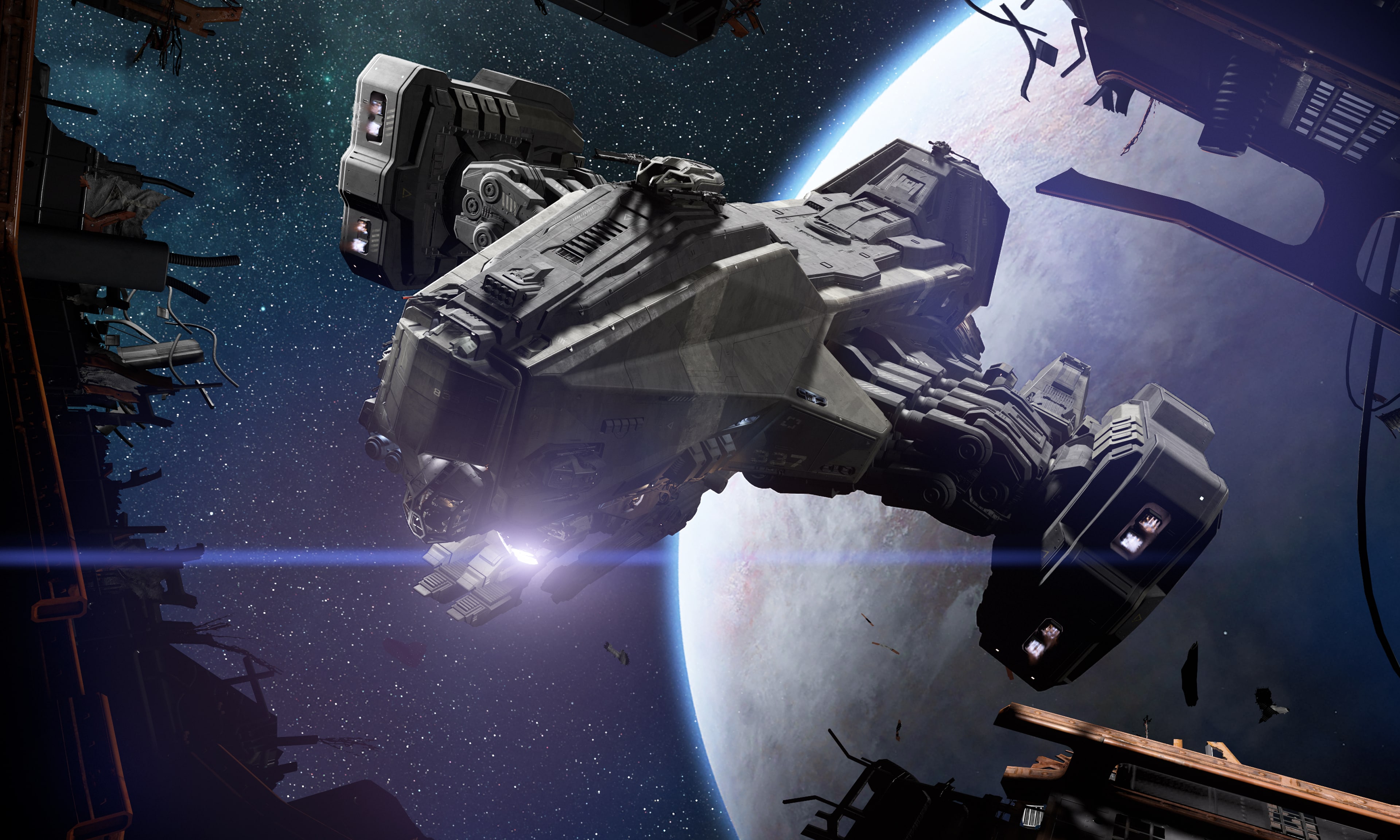
The widely reported “official” story began with Barlow miraculously surviving the initial Vanduul bombing run. He freed himself from under the rubble and raced to an Anvil Ballista to send a distress comm. As the Vanduul bombers circled for another approach, Barlow used the Ballista to destroy several targets. Barlow managed to survive the second assault, so when the remaining Vanduul ships returned from a different direction, they met a similar fate. UEE reinforcements arrived shortly thereafter and reported that one Marine defeated an entire Vanduul squadron. Embedded reporters quickly spread this version of the story, each eager to have the exclusive account of the events.
Following his confession decades later, Barlow worked with journalist Melania Andrieux on a book that juxtaposed the “official” account with his version of events. In ‘A Good Lie’, Barlow laid bare the truth that had haunted him for decades. He claimed that the night of the attack began like any other. Most of his squad had been relieved by the third watch and had gathered in the barracks to drink and play Trigger. As the lowest ranking Marine, Barlow was ordered on a beer run. He drunkenly stumbled toward the settlement’s small general store when a frightful sound pierced the night sky. Seconds later, Vanduul bombers reduced Fabela’s spaceport and supporting military infrastructure to rubble.
Barlow freed himself from under some wreckage, as swirling dust and debris made him cough ferociously. The official story spun this as the moment Barlow realized that only he could save the settlement. In reality, Barlow fled in fear towards the mine, hoping to hide inside until the attack ended. Barlow ran until he entered a small clearing by the mine, where he found Ignacio Assaf, the man Barlow considered the true hero of the Battle of Fabela.
The Forgotten Hero
A former miner that made a living salvaging old equipment, Assaf had been wounded by shrapnel during the initial Vanduul bombing run but was determined to do everything he could to stop the invaders. He had been formulating a plan when the drunk, dirty, and shell-shocked Barlow arrived looking for a place to hide. Assaf calmed down Barlow and convinced him to use his military clearance to access a nearby Ballista that had been awaiting maintenance. Stored away from the main depot, it was one of the only pieces of military equipment not destroyed during the attack. The two climbed inside; Barlow jumped in the driver’s seat to send a distress comm, while Assaf took the gunner’s seat. On the Vanduul’s next approach, Assaf severely crippled the Void bomber that had caused most of the devastation. The remaining Vanduul split up and changed tactics, staggering their attack from different directions. Assaf fired off shots has fast as possible, downing the other bomber and two Scythes before the Ballista ran out of missiles.
With munitions spent, Barlow hustled the hurt Assaf out of the Ballista and toward the mine, certain that the Vanduul would destroy it on their next flyby. They were between the Ballista and the mine when the sound of approaching ships filled the sky. Barlow believed they were dead, but instead was shocked and relieved to see a Navy squadron intercepting the attackers.
That’s when reinforcements reported seeing destroyed Vanduul ships spread across the battlefield and a Marine waving them down. Sadly, their arrival was too late for Assaf, who succumbed to the wounds caused by shrapnel. It was only once Barlow had been fully debriefed that his superiors became aware of what occurred. As opposed to issuing a correction to the various news organizations, they decided to have his account match the sensational headlines. The Marines urged him to streamline events and avoid embarrassing details or face a possible court-martial. The young Marine agreed to their plan, believing it to be a “good lie” and in the best interest of the Empire – a decision that haunted him for the rest of his life.
Today, a fog of war exists around the Battle of Fabela. Barlow’s revelations briefly stunned the empire, but never replaced the story ingrained in the public consciousness. The Marines stood by their version of events and refused to comment on his allegations. An official investigation into his claims never occurred. Meanwhile, Barlow dedicated the rest of his life to helping veterans suffering from PTSD. Assaf’s family received all proceeds from his book, which included the following dedication, “Though history may forget you, I never will.”
Dieses Portfolio erschien ursprünglich in Jump Point 7.8.
Am 15. August 2825 griff ein Vanduul-Clan die Caliban-Siedlung Fabela an. Die Öffentlichkeit glaubte, dass die anschließende Schlacht ein Sieg für die UEE war, was auf sensationelle Nachrichtenberichte zurückzuführen war, wie z.B. die Schlagzeile der Terra Gazette "Marine stoppt Vanduul-Angriff eigenhändig". Als die Newsorgs in die abgelegene, längst vergessene Bergbausiedlung strömten, zeigten sie nur Aufnahmen von schwelenden Trümmern und Interviews mit Anwohnern, die ihre Pläne für den Wiederaufbau mit aller Entschlossenheit verfolgten. In der Zwischenzeit erschienen Regierungsbeamte auf dem Spektrum, die ihren strategischen Politikwechsel auf die zurückgeschlagene Vanduul-Bedrohung zurückführten.
Die Schlacht von Fabela kam für die UEE genau zum richtigen Zeitpunkt. Weniger als ein Jahrhundert zuvor waren Millionen vor Orion, Tiber und Virgil geflohen, als die Vanduul rücksichtslos Territorium eroberten und jeden töteten, der sich ihnen in den Weg stellte. Nach dem Sturz der Messers lenkten Imperator Toi und der Senat den Fokus des Militärs weg vom Schweigen politischer Dissidenten hin zu einer verstärkten Verteidigung entlang der Vanduul-Grenze. Bald erschienen in Städten und Siedlungen in Caliban, Elysium und Vega Marine-Außenposten und fortschrittliche Militärausrüstung. Diese Einrichtungen halfen bei der Verteidigung von Fabela, aber die öffentliche Version der Geschichte, die sich um die Schlacht drehte, entsprach nicht den Tatsachen vor Ort.
Gefangen zwischen der öffentlichen Wahrnehmung und der Realität war Paul Barlow, der als einziger Marine in seiner Truppe überlebte. Barlow wurde zum Helden und wurde im ganzen Reich vorgeführt. Im Laufe der Jahre verblasste die Schlacht von Fabela aus dem öffentlichen Bewusstsein und wurde zur Legende. Als die Presse nach dem Fall von Caliban im Jahr 2884 Barlow für einen Kommentar aufspürte, legte der berühmteste lebende Held der Marine ein verblüffendes Geständnis ab - dass er unter dem Druck der vorgesetzten Offiziere über die Schlacht von Fabela gelogen hatte. In einem brisanten Interview in der New United beschrieb sich Barlow selbst als "kein verdammter Held, nur ein Überlebender, der darum kämpft, in meinem eigenen Schatten zu leben".
Eine gute Lüge
Die weit verbreitete "offizielle" Geschichte begann damit, dass Barlow auf wundersame Weise den ersten Bombenangriff auf Vanduul überlebte. Er befreite sich aus den Trümmern und rannte zu einem Amboss-Ballisten, um eine Notrufmeldung zu senden. Als die Vanduul-Bomber auf einen weiteren Anflug kreisten, benutzte Barlow die Balliste, um mehrere Ziele zu zerstören. Barlow schaffte es, den zweiten Angriff zu überleben, und als die übrigen Vanduul-Schiffe aus einer anderen Richtung zurückkehrten, ereilte sie ein ähnliches Schicksal. UEE-Verstärkungen trafen kurz darauf ein und berichteten, dass ein Marine ein ganzes Vanduul-Geschwader besiegte. Eingebettete Reporter verbreiteten diese Version der Geschichte schnell, jeder begierig darauf, den exklusiven Bericht über die Ereignisse zu erhalten.
Nach seinem Geständnis Jahrzehnte später arbeitete Barlow zusammen mit der Journalistin Melania Andrieux an einem Buch, das den "offiziellen" Bericht seiner Version der Ereignisse gegenüberstellte. In "Eine gute Lüge" enthüllte Barlow die Wahrheit, die ihn jahrzehntelang verfolgt hatte. Er behauptete, dass die Nacht des Angriffs wie jede andere begann. Der größte Teil seiner Truppe war durch die dritte Wache abgelöst worden und hatte sich in der Kaserne versammelt, um zu trinken und Trigger zu spielen. Als rangniedrigster Marine wurde Barlow zu einer Bierfahrt beordert. Er stolperte betrunken auf den kleinen Gemischtwarenladen der Siedlung zu, als ein schreckliches Geräusch den Nachthimmel durchdrang. Sekunden später verwandelten Vanduul-Bomber den Weltraumbahnhof von Fabela und die unterstützende militärische Infrastruktur in Schutt und Asche.
Barlow befreite sich unter einigen Trümmern, als er durch wirbelnden Staub und Trümmer heftig husten musste. Die offizielle Geschichte drehte sich in dem Moment, als Barlow erkannte, dass nur er die Siedlung retten konnte. In Wirklichkeit floh Barlow aus Angst in Richtung der Mine und hoffte, sich bis zum Ende des Angriffs darin zu verstecken. Barlow rannte, bis er eine kleine Lichtung bei der Mine betrat, wo er Ignacio Assaf fand, den Mann, den Barlow als den wahren Helden der Schlacht von Fabela betrachtete.
Der vergessene Held
Als ehemaliger Bergmann, der seinen Lebensunterhalt mit der Bergung alter Ausrüstung verdiente, war Assaf während des ersten Bombenangriffs auf Vanduul durch Schrapnell verwundet worden, war aber entschlossen, alles zu tun, um die Invasoren aufzuhalten. Er hatte einen Plan ausgearbeitet, als der betrunkene, schmutzige und von Granatsplittern geschockte Barlow auf der Suche nach einem Versteck eintraf. Assaf beruhigte Barlow und überzeugte ihn, seine militärische Freigabe zu nutzen, um Zugang zu einer nahe gelegenen Ballista zu erhalten, die auf ihre Wartung gewartet hatte. Sie wurde außerhalb des Hauptdepots aufbewahrt und war eines der wenigen militärischen Ausrüstungsgegenstände, die während des Angriffs nicht zerstört wurden. Die beiden kletterten hinein; Barlow sprang auf den Fahrersitz, um ein Notrufsignal zu senden, während Assaf den Platz des Bordschützen einnahm. Beim nächsten Anflug der Vanduul legte Assaf den Void-Bomber, der die meisten Verwüstungen angerichtet hatte, schwer lahm. Die verbleibenden Vanduul teilten sich auf und änderten ihre Taktik, indem sie ihren Angriff aus verschiedenen Richtungen staffelten. Assaf feuerte die Schüsse so schnell wie möglich ab und brachte den anderen Bomber und zwei Sensen zu Fall, bevor der Ballista die Raketen ausgingen.
Mit verbrauchter Munition drängte Barlow den verletzten Assaf aus der Ballista in Richtung der Mine, in der Gewissheit, dass die Vanduul sie bei ihrem nächsten Vorbeiflug zerstören würden. Sie befanden sich zwischen der Ballista und der Mine, als das Geräusch der sich nähernden Schiffe den Himmel erfüllte. Barlow glaubte, sie seien tot, war aber stattdessen schockiert und erleichtert, als er sah, dass ein Marinegeschwader die Angreifer abfing.
Damals berichteten Verstärkungen, dass zerstörte Vanduul-Schiffe über das Schlachtfeld verteilt waren und ein Marine sie zu Boden winkte. Leider kamen sie zu spät für Assaf, der den durch Schrapnell verursachten Wunden erlag. Erst nachdem Barlow vollständig befragt worden war, erfuhren seine Vorgesetzten von den Vorkommnissen. Anstatt eine Korrektur an die verschiedenen Nachrichtenorganisationen herauszugeben, beschlossen sie, dass sein Bericht mit den sensationellen Schlagzeilen übereinstimmen sollte. Die Marines drängten ihn, die Ereignisse zu straffen und peinliche Details zu vermeiden oder sich einem möglichen Kriegsgericht zu stellen. Der junge Marine stimmte ihrem Plan zu, da er ihn für eine "gute Lüge" und im besten Interesse des Imperiums hielt - eine Entscheidung, die ihn für den Rest seines Lebens verfolgen sollte.
Heute existiert ein Nebel des Krieges um die Schlacht von Fabela. Barlows Enthüllungen versetzten das Imperium kurzzeitig in Erstaunen, ersetzten aber nie die Geschichte, die im öffentlichen Bewusstsein verankert war. Die Marines blieben bei ihrer Version der Ereignisse und weigerten sich, seine Anschuldigungen zu kommentieren. Eine offizielle Untersuchung seiner Behauptungen fand nie statt. In der Zwischenzeit widmete Barlow den Rest seines Lebens der Hilfe für Veteranen, die an PTSD litten. Assafs Familie erhielt den gesamten Erlös aus seinem Buch, das die folgende Widmung enthielt: "Obwohl die Geschichte Sie vergessen könnte, werde ich es nie vergessen.
This portfolio originally appeared in Jump Point 7.8.
On August 15, 2825, a Vanduul clan attacked the Caliban settlement of Fabela. The public believed the subsequent battle was a victory for the UEE due to sensational news coverage, such as the Terra Gazette’s headline “Marine Single-Handedly Stops Vanduul Attack.” When Newsorgs flocked to the remote, long-forgotten mining settlement, all they showed were shots of smoldering rubble and interviews with residents who were utterly resolute on their plans to rebuild. Meanwhile, government officials appeared on spectrum crediting their strategic policy shift for the repelled Vanduul threat.
The Battle of Fabela came at an opportune time for the UEE. Less than a century earlier, millions had fled Orion, Tiber, and Virgil as the Vanduul ruthlessly conquered territory and killed anyone in their way. Following the overthrow of the Messers, Imperator Toi and the Senate turned the military’s focus away from silencing political dissidents to increasing defense along the Vanduul border. Marine outposts and advanced military equipment soon appeared in cities and settlements across Caliban, Elysium, and Vega. These assets aided in the defense of Fabela, but the public version of the story spun around the battle didn’t match the facts on the ground.
Caught between the public perception and reality was Paul Barlow, the only Marine in his squad to survive. Barlow became a hero and was paraded across the Empire. As the years passed, the Battle of Fabela faded from public consciousness and into legend. When the press tracked down Barlow for a comment following the Fall of Caliban in 2884, the Marine’s most famous living hero made a stunning confession — that he lied about the Battle of Fabela under pressure from superior officers. In an explosive interview in the New United, Barlow described himself as “no damn hero, just a survivor struggling to live in my own shadow”.
A Good Lie
The widely reported “official” story began with Barlow miraculously surviving the initial Vanduul bombing run. He freed himself from under the rubble and raced to an Anvil Ballista to send a distress comm. As the Vanduul bombers circled for another approach, Barlow used the Ballista to destroy several targets. Barlow managed to survive the second assault, so when the remaining Vanduul ships returned from a different direction, they met a similar fate. UEE reinforcements arrived shortly thereafter and reported that one Marine defeated an entire Vanduul squadron. Embedded reporters quickly spread this version of the story, each eager to have the exclusive account of the events.
Following his confession decades later, Barlow worked with journalist Melania Andrieux on a book that juxtaposed the “official” account with his version of events. In ‘A Good Lie’, Barlow laid bare the truth that had haunted him for decades. He claimed that the night of the attack began like any other. Most of his squad had been relieved by the third watch and had gathered in the barracks to drink and play Trigger. As the lowest ranking Marine, Barlow was ordered on a beer run. He drunkenly stumbled toward the settlement’s small general store when a frightful sound pierced the night sky. Seconds later, Vanduul bombers reduced Fabela’s spaceport and supporting military infrastructure to rubble.
Barlow freed himself from under some wreckage, as swirling dust and debris made him cough ferociously. The official story spun this as the moment Barlow realized that only he could save the settlement. In reality, Barlow fled in fear towards the mine, hoping to hide inside until the attack ended. Barlow ran until he entered a small clearing by the mine, where he found Ignacio Assaf, the man Barlow considered the true hero of the Battle of Fabela.
The Forgotten Hero
A former miner that made a living salvaging old equipment, Assaf had been wounded by shrapnel during the initial Vanduul bombing run but was determined to do everything he could to stop the invaders. He had been formulating a plan when the drunk, dirty, and shell-shocked Barlow arrived looking for a place to hide. Assaf calmed down Barlow and convinced him to use his military clearance to access a nearby Ballista that had been awaiting maintenance. Stored away from the main depot, it was one of the only pieces of military equipment not destroyed during the attack. The two climbed inside; Barlow jumped in the driver’s seat to send a distress comm, while Assaf took the gunner’s seat. On the Vanduul’s next approach, Assaf severely crippled the Void bomber that had caused most of the devastation. The remaining Vanduul split up and changed tactics, staggering their attack from different directions. Assaf fired off shots has fast as possible, downing the other bomber and two Scythes before the Ballista ran out of missiles.
With munitions spent, Barlow hustled the hurt Assaf out of the Ballista and toward the mine, certain that the Vanduul would destroy it on their next flyby. They were between the Ballista and the mine when the sound of approaching ships filled the sky. Barlow believed they were dead, but instead was shocked and relieved to see a Navy squadron intercepting the attackers.
That’s when reinforcements reported seeing destroyed Vanduul ships spread across the battlefield and a Marine waving them down. Sadly, their arrival was too late for Assaf, who succumbed to the wounds caused by shrapnel. It was only once Barlow had been fully debriefed that his superiors became aware of what occurred. As opposed to issuing a correction to the various news organizations, they decided to have his account match the sensational headlines. The Marines urged him to streamline events and avoid embarrassing details or face a possible court-martial. The young Marine agreed to their plan, believing it to be a “good lie” and in the best interest of the Empire – a decision that haunted him for the rest of his life.
Today, a fog of war exists around the Battle of Fabela. Barlow’s revelations briefly stunned the empire, but never replaced the story ingrained in the public consciousness. The Marines stood by their version of events and refused to comment on his allegations. An official investigation into his claims never occurred. Meanwhile, Barlow dedicated the rest of his life to helping veterans suffering from PTSD. Assaf’s family received all proceeds from his book, which included the following dedication, “Though history may forget you, I never will.”
This portfolio originally appeared in Jump Point 7.8.
On August 15, 2825, a Vanduul clan attacked the Caliban settlement of Fabela. The public believed the subsequent battle was a victory for the UEE due to sensational news coverage, such as the Terra Gazette’s headline “Marine Single-Handedly Stops Vanduul Attack.” When Newsorgs flocked to the remote, long-forgotten mining settlement, all they showed were shots of smoldering rubble and interviews with residents who were utterly resolute on their plans to rebuild. Meanwhile, government officials appeared on spectrum crediting their strategic policy shift for the repelled Vanduul threat.
The Battle of Fabela came at an opportune time for the UEE. Less than a century earlier, millions had fled Orion, Tiber, and Virgil as the Vanduul ruthlessly conquered territory and killed anyone in their way. Following the overthrow of the Messers, Imperator Toi and the Senate turned the military’s focus away from silencing political dissidents to increasing defense along the Vanduul border. Marine outposts and advanced military equipment soon appeared in cities and settlements across Caliban, Elysium, and Vega. These assets aided in the defense of Fabela, but the public version of the story spun around the battle didn’t match the facts on the ground.
Caught between the public perception and reality was Paul Barlow, the only Marine in his squad to survive. Barlow became a hero and was paraded across the Empire. As the years passed, the Battle of Fabela faded from public consciousness and into legend. When the press tracked down Barlow for a comment following the Fall of Caliban in 2884, the Marine’s most famous living hero made a stunning confession — that he lied about the Battle of Fabela under pressure from superior officers. In an explosive interview in the New United, Barlow described himself as “no damn hero, just a survivor struggling to live in my own shadow”.
A Good Lie
The widely reported “official” story began with Barlow miraculously surviving the initial Vanduul bombing run. He freed himself from under the rubble and raced to an Anvil Ballista to send a distress comm. As the Vanduul bombers circled for another approach, Barlow used the Ballista to destroy several targets. Barlow managed to survive the second assault, so when the remaining Vanduul ships returned from a different direction, they met a similar fate. UEE reinforcements arrived shortly thereafter and reported that one Marine defeated an entire Vanduul squadron. Embedded reporters quickly spread this version of the story, each eager to have the exclusive account of the events.
Following his confession decades later, Barlow worked with journalist Melania Andrieux on a book that juxtaposed the “official” account with his version of events. In ‘A Good Lie’, Barlow laid bare the truth that had haunted him for decades. He claimed that the night of the attack began like any other. Most of his squad had been relieved by the third watch and had gathered in the barracks to drink and play Trigger. As the lowest ranking Marine, Barlow was ordered on a beer run. He drunkenly stumbled toward the settlement’s small general store when a frightful sound pierced the night sky. Seconds later, Vanduul bombers reduced Fabela’s spaceport and supporting military infrastructure to rubble.
Barlow freed himself from under some wreckage, as swirling dust and debris made him cough ferociously. The official story spun this as the moment Barlow realized that only he could save the settlement. In reality, Barlow fled in fear towards the mine, hoping to hide inside until the attack ended. Barlow ran until he entered a small clearing by the mine, where he found Ignacio Assaf, the man Barlow considered the true hero of the Battle of Fabela.
The Forgotten Hero
A former miner that made a living salvaging old equipment, Assaf had been wounded by shrapnel during the initial Vanduul bombing run but was determined to do everything he could to stop the invaders. He had been formulating a plan when the drunk, dirty, and shell-shocked Barlow arrived looking for a place to hide. Assaf calmed down Barlow and convinced him to use his military clearance to access a nearby Ballista that had been awaiting maintenance. Stored away from the main depot, it was one of the only pieces of military equipment not destroyed during the attack. The two climbed inside; Barlow jumped in the driver’s seat to send a distress comm, while Assaf took the gunner’s seat. On the Vanduul’s next approach, Assaf severely crippled the Void bomber that had caused most of the devastation. The remaining Vanduul split up and changed tactics, staggering their attack from different directions. Assaf fired off shots has fast as possible, downing the other bomber and two Scythes before the Ballista ran out of missiles.
With munitions spent, Barlow hustled the hurt Assaf out of the Ballista and toward the mine, certain that the Vanduul would destroy it on their next flyby. They were between the Ballista and the mine when the sound of approaching ships filled the sky. Barlow believed they were dead, but instead was shocked and relieved to see a Navy squadron intercepting the attackers.
That’s when reinforcements reported seeing destroyed Vanduul ships spread across the battlefield and a Marine waving them down. Sadly, their arrival was too late for Assaf, who succumbed to the wounds caused by shrapnel. It was only once Barlow had been fully debriefed that his superiors became aware of what occurred. As opposed to issuing a correction to the various news organizations, they decided to have his account match the sensational headlines. The Marines urged him to streamline events and avoid embarrassing details or face a possible court-martial. The young Marine agreed to their plan, believing it to be a “good lie” and in the best interest of the Empire – a decision that haunted him for the rest of his life.
Today, a fog of war exists around the Battle of Fabela. Barlow’s revelations briefly stunned the empire, but never replaced the story ingrained in the public consciousness. The Marines stood by their version of events and refused to comment on his allegations. An official investigation into his claims never occurred. Meanwhile, Barlow dedicated the rest of his life to helping veterans suffering from PTSD. Assaf’s family received all proceeds from his book, which included the following dedication, “Though history may forget you, I never will.”
Links
No links available.


Metadata
- CIG ID
- 17862
- Channel
- Spectrum Dispatch
- Category
- Undefined
- Series
- News Update
- Comments
- 37
- Published
- 5 years ago (2020-11-11T00:00:00+00:00)