Letter from the Chairman
Transmission General From the ChairmanContent
12/23/2020 - 4:00 PM Letter from the Chairman “It was the best of times, it was the worst of times…”
- A Tale of Two Cities, Charles Dickens
I can’t think of a better quote that encapsulates what Star Citizen has achieved this year, and the horrible year that 2020 became, as the world became upended by the biggest global pandemic since the 1918 influenza pandemic.
I would have never guessed last year that I would spend the last nine months of 2020 working from home under various levels of lockdowns, that I wouldn’t be able to travel to see friends or family in person or visit our various offices. COVID-19 has affected billions of people and cut short the life of way too many. To any of you that have lost friends or family members, or been adversely affected economically, our thoughts are with you. Hopefully 2021 will be a better year, allowing all of us to get back to a semblance of normal life. We certainly miss the personal connection we have internally when working together in the same space, or we get to experience with the community at events like CitizenCon, various Bar Citizens or get-togethers.
The growth of Star Citizen’s community and the increased amount of time spent playing is one of the few bright spots of 2020 for me. One of the strengths of Star Citizen is that it is a place where people can meet up and adventure together, away from the worries of the world, with friends or strangers. People may not have been able to socialize in person but through our revamped friends system, FOIP/VOIP, chat or third party apps like Discord, people have been able to get together and have fun in Star Citizen’s virtual universe. With the reduction of human connection in the real world, multiplayer games like Star Citizen have been essential in maintaining some semblance of human connection in an isolating time.
This has been borne out by the number of hours and active users that have played Star Citizen this year. When I look back on the breadth and passion of our player-base this year, I’m amazed. In 2020, we had players from over 200 unique countries and territories around the world and from 56,340 unique cities play 26,576,364 hours of Star Citizen. This year, we had over 740,000 unique players play Star Citizen, and we still have another week and a half to go. Nearly half a million of them were returning or continually active players, and a quarter of a million were complete newcomers to the ‘verse that we welcomed to our community this year. It’s no wonder that with that type of record engagement we had our most successful year of revenue ever, eclipsing last year’s historic mark by over 60% (you can read about our 2019 Financials in our annual post by our CFO).
Year in Review
Taking stock of this year, despite the challenges, I am proud of what we were able to deliver to players this year in Star Citizen. We continued to make good on our pledge of quarterly updates, releasing four major ones – 3.9, 3.10, 3.11, and 3.12 – this year, along with two in-game events, Invictus Launch Week and IAE. Invictus Launch Week in May was a big debut for us and for the players, as it marked the introduction of capital ships to the ‘verse. Not only did we show off the Idris in Star Citizen, but we also presented the Javelin, and the spectacle of both major UEE capital ships and the ‘verse’s sci-fi version of a real-world Fleet Week in-game was so big that it led to our largest single day, week, and month of unique player logins ever. It also brought our servers down, and we learned a lot from that event that helped us accelerate our backend and game services work to prepare us for even more concurrency. When this year’s IAE rolled around, we were ready, and had a demonstrably smoother experience for players after the lessons learned in May.
Looking back at all of 2020, we made some big strides with each update.
In Alpha 3.9 we introduced the city of New Babbage and its spaceport as an active landing zone, microTech’s 3 moons (Calliope, Clio and Euterpe), Player Status, Personal Inventory, Player Inner Thought, and Prison gameplay.
Alpha 3.10 brought a huge update to our flight model and combat that made flying in the game more immersive and exciting, especially in atmosphere; a new Player Trading App; and body dragging (a necessary first step in medical and bounty hunting gameplay).
Alpha 3.11 brought Force Reactions, Cargo Stations, Armistice Zone changes, and a revamped Throwable system for all items as well as grenades.
Finally, Alpha 3.12 brought Gas Clouds, Refinery Stations, handheld Tractor Beam, Weapon Zeroing and the first iteration of the Reputation System, which tracks a player’s standing with various organizations.
The Vehicle team delivered some long-awaited ships over the year such as the Origin 100 series, Esperia Prowler, Cutlass Red, Cutlass Blue, and fan-favorites such as the Carrack and Mercury Star Runner. We added a couple of brand-new flyable ships in the Consolidated Outland Nomad and the Esperia Talon and a new straight-to-drivable vehicle in the GRIN Roc. The weapons team delivered eight new FPS weapons including the game’s first Grenade Launcher, which is explosive good fun!
We also kept improving our subscription programs in 2020, evolving them further away from the old model of supplying video shows and delivering more tangible in-game benefits. This year, subscribers of both subscription tiers received complementary in-game flair including weapons like the Ultiflex Combat Knives and new electron-powered pistol and sniper rifle; cold weather outerwear; utility items like the QuikFlarePro glow sticks and Greycat Pyro Multi-tool; combat gear like the Overlord and Paladin helmets, and various Overlord armor suits; and fun items like faithfully reproduced Second Tevarin War uniforms and Wowblast toy pistols that fired foam projectiles. Subscribers also got to enjoy monthly free flies of some of our most popular newly flyable ships, including the Cutlass Red, Cutlass Blue, Carrack, ARGO MOLE, Sabre, Avenger Titan, Esperia Prowler, and the M50; not to mention a perk new to 2020 of subscriber-exclusive cross-chassis upgrades. The amazing new flair and sub perks were a real hit with players this year, and led to our best year of active subscribers yet.
All in all, this was a great year for Star Citizen, and I couldn’t be prouder of our dev team for everything they produced and delivered to our community this year.
While we didn’t deliver a few of the major tech milestones we had hoped to this year like iCache and Server Meshing, we’ve made a lot of progress towards these goals. We are confident that you will see at least one, if not both, debuts of these important technologies next year. Likewise, we plan to open up more play tests next year for Theatres of War, our combined arms game mode within Star Citizen of rapid battles on foot, in vehicles, and in space that many of you have been inquiring about.
The shift to work from home, while relatively painless and achieved quickly due to our superb IT and DevOps departments, has had an impact on productivity. We are not as efficient in closing out features and content, or solving bugs, when everyone is a remote worker. Creative work feeds off spontaneous collaboration, which is harder to achieve when you have to call someone over Teams as opposed to looking over their shoulder at a desk or bumping into them while grabbing a coffee. Bugs are easier to fix when an engineer can walk over to a tester’s desk and see the bug reproduced and then debug the issue directly. As much as I am proud of how quickly everyone transitioned to a global work-from-home environment, I am looking forward to the point next year where we can start to return to office for in-person collaboration.
A New Roadmap: Progress, Priorities, No More Promises, More Insight
This week also marks our first deploy of an all-new roadmap designed to give you more insight and visibility into our development teams than ever before. We’ve embarked on various efforts in the past to show you what our teams are working on, but all have shown just a subset of what our teams are doing. Our most recent roadmap was still predicated on asking our teams to predict when they could deliver a feature, content, or tech, and then holding them as much as possible to that date. However, with agile development and with us building so much that has complex unknowns and downstream dependencies, we realized over time that this approach wasn’t sustainable.
Introducing the Progress Tracker
The cornerstone of this new Roadmap is our new Progress Tracker view. With the Progress Tracker, we set out to accomplish two goals: 1) pull back the curtains for all teams, and 2) show you what each team (including each Squadron 42 team) is working on for this quarter and what their priorities are after completing the immediate deliverable at hand. This view is solely meant to share what the teams are working on at any given time, and it should not be used to determine when a deliverable will hit the live servers.
For the Progress Tracker view, we’ve committed up front to giving you four quarters of visibility into each team’s development. The further out you project, the more fluid (subject to change) the work is and the less hardened the schedules. That’s why we don’t think it is useful to go beyond that four quarters threshold. Even at three to four quarters out, you should know that deliverables will be subject to movement, sometimes moving out a quarter or more. That’s because priorities can change, unknowns may surface that block development, or downstream dependencies may get delayed that force us to pause work or revisit our estimates. But it’s important to note that the new Progress Tracker will show you our best estimates of our teams’ deliverables and the duration of their sprints for four quarters out.
Our First Update
With the introduction of the Progress Tracker, we will roll out the demonstrated teams in stages. As we’ve mentioned before, we have over 50 development teams at Cloud Imperium, ranging in size from 4 to 20 team-members. For this first launch of our new Roadmap, we are showing 20 teams. These are all core feature and content teams that are upstream in development, meaning they set the major tentpole development deliverables for the rest of Star Citizen and Squadron 42. These include the Actor Feature Team, Live Mission Content Team, Landing Zone Content Team, US Persistent Universe Feature Team, Planet Content Team, Vehicle Content Team, Vehicle Feature Team, Weapon Feature Team, and more, as well as several dedicated Squadron 42 teams like Squadron 42 Art, Squadron 42 FPS Design, Squadron 42 Flight Design, and Squadron 42 Social Design. And with four quarters of work, we are showing you over 200 deliverables from these 20 teams. To put that into perspective, in our 3.12 Release Card in our previous Roadmap, we showed 26 deliverables. So with just 40% of our teams, we are already showing you more than 8 times what we used to show in a single release card.
What is still missing is our Core Tech Group, which is comprised of 9 teams working on iCache and Server Meshing, as well as AI, Network, Graphics, and Engine. We know many of you are eagerly awaiting the roadmap for these teams, and we plan to show those in January, when we will also update the Progress Tracker with more teams. As we mentioned in a previous update, our initial publish will exclude our downstream teams, such as VFX, Audio, UI, and others. These teams support the upstream teams, and therefore need to first see the schedules set by the core feature and content teams before they can determine their own work and priorities. Because of that, we opted to hold these teams back from the debut of our Progress Tracker, so they could continue work to solidify their schedules, with the intent of adding them to the Progress Tracker in Q1.
Update Schedule and More Features
With our new Roadmap, we plan to continue to provide updates on a regular basis. The old Roadmap was updated every week, and while we will visit our new Roadmap weekly, we’ll aim to update bi-weekly. However, that doesn’t mean that we will have many updates to provide at such a frequent cadence.
In the short term, we plan to add our Core Tech Group to the Progress Tracker in January, and the downstream teams shortly after that. After that’s done, we will continue to update the new Roadmap as work completes, new projects come online, and any changes occur to progress and priorities.
You’ll note that the first delivery of the Progress Tracker is actually v0.5. We still have many features & improvements in store for the Progress Tracker before we would call it complete. For instance, we plan to add the ability to search and favorite teams and deliverables, as well as link deliverables in the Progress Tracker to their estimated delivery in the revamped Release View. Not only will we continue to add new features, but we’ll also of course continue to optimize the user experience with improvements to the overall usability.
The Revamped Release View
You’ll also notice with the new Roadmap that we have two views: the new Progress Tracker view and a Release View, which is a reimagining of the old Roadmap cards. While the Progress Tracker is showing you what deliverables all teams are working on or plan to work on for the next four quarters, the Release View is meant to give you an idea of when we expect to release those deliverables in the mid-term.
Our desire is to show you four quarters of releases, but one critical takeaway is that only the immediate quarter in front of us has a chance to have a release view that will be hardened, as the deliverables that appear on the card for the quarter in front of us will have passed Go/No Go gates or be close enough to completion that we can predict their delivery with a high degree of confidence. You could say at that point that we have a ~90% degree of confidence that this deliverable will make its indicated release quarter. Once you go past the quarter in front of us though, that predictability and confidence for delivery will begin to degrade.
In cases where we have yet to start on a project, it is especially difficult to predict delivery with a high degree of confidence, particularly for projects that have more unknowns. In those instances where we just don’t know yet, we won’t even place that deliverable onto a release card two to four quarters out, even though you will see it scheduled out in the Progress Tracker for work. But for some deliverables that we’ve gotten into a rhythm delivering, such as vehicles and landing zones, we will be better equipped to estimate timelines. These could appear in a release card even a few quarters out. For any of these deliverables further down the line, even then we will only place them onto a release card if we have at least a good level of confidence – around a ~70% confidence level – that we could make that window. If we can’t even clear this hurdle of confidence internally, then we won’t put it on a release card.
As of this first publish, we are showing you a Release View with just one release column, which is Q1 2021, or Alpha 3.13. But when we return in January, we plan on adding Q2, Q3 and Q4, all alongside debuting a new roadmap feature to further share which deliverables we hope to release in the year to come. In order to capture the fluidity of deliverables that are further in the future, we will be adopting a color coding system that indicates that the further out we get from the first quarter, the fuzzier the release card and the more the deliverables in there are subject to change. The quarter in front of us may be a solid color (although in this case, 3.13 would be grey until we’re closer to GO/No-Go), denoting that we’re in the midst of working on our deliverables and understand velocity enough to determine a very reliable delivery estimate. For the next 3 quarters after that, the release cards will be in light grey, to denote that these estimated delivery times are still fluid and could move around. At the highest level, you’ll know that if you are viewing a release card that is grey, it will be fluid. That’s because even if we have ~70% confidence it will make it, there’s a good ~30% chance it could move. If the release card is solid colored, it will be hardened, with just a ~10% chance or less of moving. Put another way, if it’s grey, don’t be surprised if it moves/changes. If it’s solid, expect it to stay put (with very rare exception).
We know that the new Roadmap and Progress Tracker, as well as our desire for you to shift your mindset in how you view our progress, will take some getting used to. But we feel that this new view will finally give all of our community the most transparent peek inside our development they’ve ever had, and we have plans to continue to build on this roadmap to make it more informative and instructive for all watchers.
Squadron 42
The new Roadmap is not meant to give people an early estimate on when Squadron 42 will be completed. We made a conscious decision to only show the Squadron 42 work concurrently with the Star Citizen work over the Roadmap’s four-quarter window. This is because it is too early to discuss release or finish dates on Squadron 42.
As I said earlier this year, Squadron 42 will be done when it is done, and will not be released just to make a date, but instead only when all the technology and content is finished, the game is polished, and it plays great. I am not willing to compromise the development of a game I believe in with all my heart and soul, and I feel it would be a huge disservice to all the team members that have poured so much love and hard work into Squadron 42 if we rushed it out or cut corners to put it in the hands of everyone who is clamoring for it. Over the past few years, I’ve seen more than a few eagerly awaited titles release before they were bug free and fully polished. This holiday season is no exception. This is just another reminder to me of why I am so lucky to have such a supportive community, as well as a development model that is funded by people that care about the best game possible, and not about making their quarterly numbers or the big holiday shopping season.
For most games it is typical to not even announce the project until about 12 months out and only start building awareness with marketing 6 months before launch. The issues with showing gameplay, locations or assets on a narratively driven game this early are twofold. First, a marketing campaign can only last so long and second, there is only so much of the gameplay that we can show before release as we want you to experience a really engrossing story. If we show the non-spoiler gameplay now, that’s prime footage and gameplay that could have been used closer to release. It is better to treat Squadron 42 like a beautifully wrapped present under the tree that you are excited to open on Christmas Day, not knowing exactly what is inside, other than that it’s going to be great.
Because of this I have decided that it is best to not show Squadron 42 gameplay publicly, nor discuss any release date until we are closer to the home stretch and have high confidence in the remaining time needed to finish the game to the quality we want.
The planned Squadron 42 specific update show, the Briefing Room is not dead; it will just go on hiatus until we are closer to release and it comes back as a part of an overall plan to build excitement as we show all the amazing features and details players will experience in Squadron 42. This does not mean we will stop communicating our progress on Squadron 42. We will continue with our monthly reports for Squadron 42, and we will also share our current development progress in our New Roadmap.
I will say that the Squadron 42 team has really stepped up this year; It’s been a pleasure seeing how responsive and agile everyone has been, and just how much the team cares about making things great, despite the challenges of working remotely. All of us, including myself, are in close-out mode and I can’t wait for you all to experience the sprawling sci-fi epic that Squadron 42 is.
In the meantime, Star Citizen is the best visibility into the gameplay and technical progress we make; you can download a new update every three months with new features and content, as well as advances in tech. We have weekly video shows that go behind the scenes in the creation of these features and content, and we welcome feedback and player input in how to improve things. A lot of the core gameplay of Star Citizen, especially the flight and on-foot combat, will be the same between both games. Squadron 42 will have a much higher level of bespoke locations and assets and a more crafted feel; combined with a cinematic quality and characters played by famous actors delivering performances that take you on a rollercoaster narrative experience that will rival the biggest sci-fi event films.
My hope is that you’ll be so engaged in Star Citizen that Squadron 42 will be here before you know it.
2020: Explosive Growth in New Players and Engagement
Several years ago, in keeping with our value of transparent development, we began sharing our financials with you at the end of each year. This year, we decided to take that one step further and talk about engagement and player growth in 2020.
If you’ve been following Star Citizen for years, you’ll notice that 2020 was an unprecedented year with explosive growth. The only publicly available metric we provided until recently is spending on our game, via the “funding tracker.” That title is a bit of a misnomer, as we now have thousands of players that are coming to the project as new players without knowledge of its crowdfunding history and are instead spending for early access to the Star Citizen alpha and the current experience it provides.
The spending on Star Citizen has indeed been phenomenal, and our revenues as shown on the tracker have set monthly records since January, with the exception of October and December, which has yet to close. 2019 was itself a record year at the time, with million in sales revenue, yet 2020 is so far already 60% higher, and will likely close at over million in sales this year.
Some might think that this is all old backers spending more, but that’s only the tip of the iceberg. Fueling this explosive growth is new players discovering Star Citizen for the first time. Revenues are a lagging indicator, and by themselves tell a very small part of the story. Only if you are doing everything else right will players come and will spending rise. The single biggest takeaway for 2020 is that as we shifted towards a “Playable Now” narrative and delivered more features and content, alongside a greater emphasis on quality of life and performance, we found ourselves drawing more and more new gamers into our universe and reactivating more old backers to return to check out our progress. And despite the fact that we continue to be alpha software with bugs and developing features, these players – new and reactivated – are sticking around in greater numbers than ever before.
Bringing New Players Into the ‘Verse
We added over four hundred thousand new accounts to the game in 2020, and grew our paying players by 20%, recording our best year ever in terms of new paid player growth (and our second best in new accounts). This January, we crossed 1 million paying player accounts, and have been steadily adding tens of thousands more every month, especially in May when we debuted Invictus Launch Week. Today, we stand at 1,177,919 Paying Accounts and counting. Even before COVID-19 hit the world, we were recording our best months ever in Q1 in New Accounts, New Paying Players, and revenues. And as the year progressed, we found ourselves building towards our best year ever in new player growth, reactivated players, and unique active players.
Rising Engagement
Beyond recording our best new player growth numbers ever, in terms of daily engagement we’ve continued to average 30k Daily Active Users throughout the year, which is a 70% increase over last year. And our MAU (monthly active users) is roughly 35-40% higher than 2019 and 2018. For the whole year (keeping in mind that we still have 10 of our busiest days of the year to go), 2020 has proven to be our biggest year ever in terms of total unique logins. We had over 33 million game sessions started by over 740,000 Unique Players so far in 2020. That Unique Player count is 35% and 40% higher than 2019 and 2018, respectively, and 25% higher than our previous high in 2016 (fresh off the novelty and excitement of the Persistent Universe finally going live).
Quadrupling Play Time
We know that this may be hard to believe for some long-time backers who have followed the project for years and been playing since the days of driving a Greycat PTV through your hangar. Moreover, recency bias often leads us to believe that the last 30k or other game-stopping bug means the game is buggier than ever. But in fact, the complete opposite is true. Yes, the game is still in alpha with bugs, and yes, our stability and performance is not yet at gold master software standards; we recognize that and are focused on improving performance with each patch. We know it may not feel like it at times, but Star Citizen is actually more performant than ever before, and the player stats are what tell us that. Since we delivered 2.0 at the end of 2015, our minutes played per player have been steadily increasing. And concurrency, which before was drastically constrained by crashes and bugs that induced restarts, has been steadily climbing as our game environment has become more stable, allowing more players to stay online for longer periods of time. In the first 12 months after we rolled out the Persistent Universe with 2.0, our players were averaging about 32 minutes of play time per day. Today, minutes played per player per day has more than quadrupled.
In 2016, fresh off the launch of 2.0, players were averaging 32 minutes of playtime per day. That number jumped to 56 minutes on average per day for 2017. In 2018, it jumped again to 81 minutes per day. In 2019, that average increased to 114 minutes played per day per player. And now in 2020, we find ourselves at an average playtime per player per day of 2 hours and 25 minutes.
We’re Making Steady Strides in Progress
Many backers who’ve taken breaks and come back to the game marvel at how much it has progressed, especially since last summer. With each successive patch, from 3.5 to 3.6 to 3.7 and into this year, and with the spectacle of events like Invictus Launch Week, we’ve been able to attract hundreds of thousands of new gamers who are awed by the scale and immersion of this one-of-a-kind sci-fi experience. Not only have we added more to do, with new locations to explore, new ships to fly, new missions to undertake, and more to discover, but we’ve also added game-changing new tech like Server-Side Object Container Streaming and the beginnings of our Long-term Persistence in 2020. With these additions, coupled with Star Citizen’s continued improvements in industry-leading visuals, it’s no wonder that we’ve recorded our best year ever in terms of attracting and retaining new players, who have in turn helped us make 2020 a record year in revenues as well.
That last part – retention – is also extremely important to us; we don’t want to welcome a new player to the ‘verse only to see them churn away instantly due to a paucity of content or a raft of bugs. So that’s why we’ve begun to emphasize quality of life, performance, and stability since 3.7. And while we are still far from where we want to be in those areas, it’s a focus for us now, as we walk the tightrope of ensuring the game is playable and performant enough for ongoing playing and testing while also introducing new features, content, and tech (which unfortunately always introduces new bugs and issues) to move the Star Citizen experience forward.
Final Notes as We Approach a New Year
What we’re most proud of this year isn’t the revenue, it’s the fact that we provided an appealing enough value proposition to compel hundreds of thousands of new players to invest their time to try out our game. It’s the fact that we had enough content and enough of an enduring experience to retain a high percentage of those players for weeks and months afterwards. It’s the fact we were engaging and exciting enough with new and revamped gameplay to bring back hundreds of thousands of lapsed backers. When we pull back to regard 2020 in its entirety, all of this shows us that we are making tremendous strides and moving Star Citizen ever closer to its ultimate goal. When we’re playing every day and mired in the day-to-day, it can be hard to see the forest for the trees. But we wanted to arm you, the community that has supported us along the way, with the perspective that we possess internally when we see all the holistic metrics in aggregate that tell us the game is enjoying its healthiest year ever in growth and engagement.
One final and important note worth making is that the broadening player base and influx of new users is giving Star Citizen a healthier and more sustainable foundation than ever before. We don’t want any backer or new player to ever feel like they are obligated to pledge for a new ship to keep this dream going. All you need is a starter package, and everything can be earned in-game. We are ever grateful for the support of all our backers and immensely appreciative of their funding. But as our player base continues to grow, we want long-time backers to know that a new generation of players is joining Star Citizen in record numbers, and their contribution via their spend is allowing us to continue investing in the infrastructure and talent to keep building Star Citizen and make it the game we all want it to be. We of course want our old backers to continue logging in and playing, to help test and give us the feedback we need to make this game perfect. And if you feel you’ve contributed enough monetary support over the years, then just contribute your time through playing the game. You don’t need to worry about Star Citizen’s or Cloud Imperium’s viability. We’re healthier than ever. But we still value your time and your voices.
Thanks to all of you in our community who share in the collective dream of Star Citizen, we had our best year ever in the ways that count most – player engagement and new citizens. And we think next year will be even bigger. Star Citizen hit an inflection point back at Alpha 3.7 and we haven’t looked back since. And it’s all thanks to you and the thousands of players, new and old alike, who have joined us in helping to make this the best damn universe sim ever.
From all of us at Cloud Imperium, we want to wish everyone a happy holidays and a great 2021!
Founder & CEO Chris Roberts
Brief des Vorsitzenden
23.12.2020 - 13:00 UHR
"Es war die beste aller Zeiten, es war die schlechteste aller Zeiten..."
- A Tale of Two Cities, Charles Dickens
Ich kann mir kein besseres Zitat vorstellen, das auf den Punkt bringt, was Star Citizen in diesem Jahr erreicht hat und was für ein schreckliches Jahr 2020 wurde, als die Welt von der größten globalen Pandemie seit der Grippepandemie 1918 auf den Kopf gestellt wurde.
Ich hätte letztes Jahr nie gedacht, dass ich die letzten neun Monate des Jahres 2020 damit verbringen würde, von zu Hause aus unter verschiedenen Stufen von Lockdowns zu arbeiten, dass ich nicht in der Lage sein würde, zu reisen, um Freunde oder Familie persönlich zu sehen oder unsere verschiedenen Büros zu besuchen. COVID-19 hat Milliarden von Menschen betroffen und das Leben von viel zu vielen gekürzt. Unsere Gedanken sind bei allen, die Freunde oder Familienmitglieder verloren haben oder wirtschaftlich beeinträchtigt wurden. Hoffentlich wird 2021 ein besseres Jahr, das uns allen erlaubt, zu einem halbwegs normalen Leben zurückzukehren. Wir vermissen sicherlich die persönliche Verbindung, die wir intern haben, wenn wir zusammen im selben Raum arbeiten, oder die wir mit der Community bei Events wie der CitizenCon, verschiedenen Bar Citizens oder Get-togethers erleben können.
Das Wachstum der Community von Star Citizen und die vermehrt verbrachte Zeit zum Spielen ist für mich einer der wenigen Lichtblicke des Jahres 2020. Eine der Stärken von Star Citizen ist, dass es ein Ort ist, an dem sich Menschen treffen und gemeinsam Abenteuer erleben können, weg von den Sorgen der Welt, mit Freunden oder Fremden. Die Leute konnten sich vielleicht nicht persönlich treffen, aber durch unser überarbeitetes Freundesystem, FOIP/VOIP, Chat oder Drittanbieter-Apps wie Discord, konnten die Leute zusammenkommen und Spaß im virtuellen Universum von Star Citizen haben. Mit dem Rückgang der menschlichen Beziehungen in der realen Welt sind Multiplayer-Spiele wie Star Citizen essentiell, um einen gewissen Anschein von menschlicher Verbundenheit in einer isolierenden Zeit aufrecht zu erhalten.
Dies wird durch die Anzahl der Stunden und aktiven Nutzer, die Star Citizen in diesem Jahr gespielt haben, bestätigt. Wenn ich auf die Breite und Leidenschaft unserer Spielerbasis in diesem Jahr zurückblicke, bin ich erstaunt. Im Jahr 2020 hatten wir Spieler aus über 200 verschiedenen Ländern und Territorien auf der ganzen Welt und aus 56.340 verschiedenen Städten, die 26.576.364 Stunden Star Citizen gespielt haben. Dieses Jahr hatten wir über 740.000 einzigartige Spieler, die Star Citizen gespielt haben, und wir haben noch eineinhalb Wochen vor uns. Fast eine halbe Million davon waren wiederkehrende oder kontinuierlich aktive Spieler, und eine Viertelmillion waren komplette Neulinge im Verse, die wir dieses Jahr in unserer Community willkommen geheißen haben. Es ist kein Wunder, dass wir mit dieser Art von Rekord-Engagement unser erfolgreichstes Umsatzjahr aller Zeiten hatten und die historische Marke des letzten Jahres um mehr als 60 % übertroffen haben (du kannst unsere Finanzzahlen für 2019 in unserem jährlichen Beitrag unseres Finanzchefs nachlesen).
Das Jahr im Rückblick
Wenn ich eine Bilanz dieses Jahres ziehe, bin ich trotz der Herausforderungen stolz auf das, was wir den Spielern in Star Citizen in diesem Jahr liefern konnten. Wir haben unser Versprechen von vierteljährlichen Updates eingehalten und vier große Updates - 3.9, 3.10, 3.11 und 3.12 - in diesem Jahr veröffentlicht, zusammen mit zwei In-Game-Events, der Invictus Launch Week und IAE. Die Invictus Launch Week im Mai war ein großes Debüt für uns und für die Spieler, denn sie markierte die Einführung der Großkampfschiffe in das Verse. Wir haben nicht nur die Idris in Star Citizen vorgestellt, sondern auch die Javelin, und das Spektakel der beiden großen UEE-Kapitalschiffe und der Sci-Fi-Version einer realen Flottenwoche im Spiel war so groß, dass es zu unserem größten Tag, einer Woche und einem Monat mit den meisten Spielerlogins überhaupt führte. Es brachte auch unsere Server zum Absturz und wir lernten eine Menge aus diesem Ereignis, was uns half, unsere Arbeit am Backend und an den Spieldiensten zu beschleunigen, um uns auf noch mehr Gleichzeitigkeit vorzubereiten. Als die diesjährige IAE anstand, waren wir bereit und hatten nach den Lektionen, die wir im Mai gelernt hatten, eine nachweislich reibungslosere Erfahrung für die Spieler.
Wenn wir auf das Jahr 2020 zurückblicken, haben wir mit jedem Update einige große Schritte gemacht.
In Alpha 3.9 führten wir die Stadt New Babbage und ihren Raumhafen als aktive Landezone ein, die 3 Monde von MicroTech (Calliope, Clio und Euterpe), den Spielerstatus, das persönliche Inventar, die inneren Gedanken der Spieler und das Gefängnis-Gameplay.
Alpha 3.10 brachte ein großes Update unseres Flugmodells und des Kampfes, das das Fliegen im Spiel immersiver und aufregender machte, besonders in der Atmosphäre; eine neue Spieler-Handels-App; und Body Dragging (ein notwendiger erster Schritt im medizinischen und Kopfgeldjagd-Gameplay).
Alpha 3.11 brachte Force Reactions, Ladestationen, Änderungen an der Waffenstillstandszone und ein überarbeitetes Wurfsystem für alle Gegenstände sowie Granaten.
Alpha 3.12 schließlich brachte Gaswolken, Raffineriestationen, einen handgeführten Traktorstrahl, Waffennullstellung und die erste Iteration des Reputationssystems, das das Ansehen des Spielers bei verschiedenen Organisationen verfolgt.
Das Fahrzeugteam lieferte im Laufe des Jahres einige lang erwartete Schiffe wie die Origin 100 Serie, Esperia Prowler, Cutlass Red, Cutlass Blue und Fan-Favoriten wie die Carrack und Mercury Star Runner. Wir fügten mit dem Consolidated Outland Nomad und dem Esperia Talon ein paar brandneue flugfähige Schiffe und mit dem GRIN Roc ein neues direkt fahrbares Fahrzeug hinzu. Das Waffenteam lieferte acht neue FPS-Waffen, einschließlich des ersten Granatwerfers des Spiels, der explosiven Spaß macht!
Auch unsere Abo-Programme haben wir 2020 weiter verbessert, indem wir sie weiter weg vom alten Modell der Bereitstellung von Videoshows entwickelten und mehr greifbare Vorteile im Spiel lieferten. In diesem Jahr erhielten die Abonnenten beider Abo-Stufen zusätzliches Flair im Spiel, darunter Waffen wie die Ultiflex-Kampfmesser und die neue elektronenbetriebene Pistole und das Scharfschützengewehr; Kleidung für kaltes Wetter; Gebrauchsgegenstände wie die QuikFlarePro-Leuchtstäbe und das Greycat-Pyro-Multi-Werkzeug; Kampfausrüstung wie die Overlord- und Paladin-Helme und verschiedene Overlord-Rüstungsanzüge; und lustige Gegenstände wie originalgetreu nachgebildete Uniformen aus dem Zweiten Tevarin-Krieg und Wowblast-Spielzeugpistolen, die Schaumstoffgeschosse abfeuern. Abonnenten kamen außerdem in den Genuss monatlicher Freiflüge einiger unserer beliebtesten neu fliegbaren Schiffe, darunter die Cutlass Red, Cutlass Blue, Carrack, ARGO MOLE, Sabre, Avenger Titan, Esperia Prowler und die M50; ganz zu schweigen von einer 2020 neu eingeführten, abonnentenexklusiven Cross-Chassis-Aufrüstung. Das erstaunliche neue Flair und die Sub-Perks waren dieses Jahr ein echter Hit bei den Spielern und führten zu unserem bisher besten Jahr an aktiven Abonnenten.
Alles in allem war dies ein großartiges Jahr für Star Citizen, und ich könnte nicht stolzer auf unser Entwicklerteam sein, für alles, was sie in diesem Jahr produziert und unserer Community geliefert haben.
Obwohl wir ein paar der großen Tech-Meilensteine, die wir uns für dieses Jahr erhofft hatten, wie iCache und Server Meshing, nicht ausliefern konnten, haben wir eine Menge Fortschritte in Richtung dieser Ziele gemacht. Wir sind zuversichtlich, dass du im nächsten Jahr mindestens eine, wenn nicht sogar beide, Debüts dieser wichtigen Technologien sehen wirst. Ebenso planen wir, im nächsten Jahr mehr Spieltests für Theatres of War zu eröffnen, unseren kombinierten Waffen-Spielmodus in Star Citizen, der schnelle Schlachten zu Fuß, in Fahrzeugen und im Weltraum beinhaltet und nach dem viele von euch gefragt haben.
Die Umstellung auf die Arbeit von zu Hause aus, obwohl sie relativ schmerzlos war und dank unserer hervorragenden IT- und DevOps-Abteilungen schnell erreicht wurde, hat sich auf die Produktivität ausgewirkt. Wir sind nicht so effizient bei der Fertigstellung von Features und Inhalten oder bei der Behebung von Bugs, wenn jeder von zu Hause aus arbeitet. Kreative Arbeit lebt von spontaner Zusammenarbeit, die schwieriger zu erreichen ist, wenn man jemanden über das Team anrufen muss, anstatt ihm am Schreibtisch über die Schulter zu schauen oder ihn beim Kaffeetrinken anzurempeln. Bugs sind einfacher zu beheben, wenn ein Ingenieur zum Schreibtisch eines Testers hinübergehen kann, um zu sehen, wie der Bug reproduziert wird und dann das Problem direkt zu beheben. So sehr ich auch stolz darauf bin, wie schnell alle zu einer globalen Arbeitsumgebung von zu Hause aus übergegangen sind, so sehr freue ich mich auf den Punkt im nächsten Jahr, an dem wir beginnen können, ins Büro zurückzukehren, um persönlich zusammenzuarbeiten.
Eine neue Roadmap: Fortschritt, Prioritäten, keine Versprechungen mehr, mehr Einsicht
Diese Woche haben wir zum ersten Mal eine komplett neue Roadmap vorgestellt, die euch mehr Einblicke in unsere Entwicklungsteams geben soll als je zuvor. Wir haben in der Vergangenheit verschiedene Versuche unternommen, euch zu zeigen, woran unsere Teams arbeiten, aber alle haben nur einen Teil davon gezeigt, was unsere Teams tun. Unsere letzte Roadmap basierte immer noch darauf, unsere Teams zu bitten, vorherzusagen, wann sie ein Feature, einen Inhalt oder eine Technologie liefern können, und sie dann so weit wie möglich an dieses Datum zu halten. Mit der agilen Entwicklung und der Tatsache, dass wir so viel bauen, das komplexe Unbekannte und nachgelagerte Abhängigkeiten hat, haben wir mit der Zeit gemerkt, dass dieser Ansatz nicht nachhaltig ist.
Die Einführung des Progress Trackers
Der Eckpfeiler dieser neuen Roadmap ist unsere neue Progress Tracker Ansicht. Mit dem Progress Tracker haben wir uns vorgenommen, zwei Ziele zu erreichen: 1) die Vorhänge für alle Teams zu öffnen und 2) dir zu zeigen, woran jedes Team (einschließlich jedes Squadron 42 Teams) in diesem Quartal arbeitet und welche Prioritäten sie nach der Fertigstellung der aktuellen Aufgabe haben. Diese Ansicht ist nur dazu gedacht, zu zeigen, woran die Teams gerade arbeiten und sollte nicht dazu verwendet werden, um zu bestimmen, wann ein Projekt auf den Live-Servern erscheinen wird.
Für die Progress Tracker Ansicht haben wir uns verpflichtet, dir vier Quartale Einblick in die Entwicklung jedes Teams zu geben. Je weiter du in die Zukunft projizierst, desto fließender (änderungsanfällig) ist die Arbeit und desto weniger gefestigt sind die Zeitpläne. Deshalb denken wir, dass es nicht sinnvoll ist, über diese vier Quartale hinauszugehen. Selbst bei drei bis vier Quartalen solltest du wissen, dass sich die Ergebnisse noch verschieben können, manchmal sogar um ein Quartal oder mehr. Das liegt daran, dass sich Prioritäten ändern können, Unbekannte auftauchen können, die die Entwicklung blockieren, oder nachgelagerte Abhängigkeiten sich verzögern können, die uns zwingen, die Arbeit zu unterbrechen oder unsere Schätzungen zu überdenken. Aber es ist wichtig zu wissen, dass der neue Progress Tracker dir unsere besten Schätzungen für die Ergebnisse unserer Teams und die Dauer ihrer Sprints für die nächsten vier Quartale zeigen wird.
Unser erstes Update
Mit der Einführung des Progress Trackers werden wir die vorgestellten Teams schrittweise ausrollen. Wie wir bereits erwähnt haben, haben wir über 50 Entwicklungsteams bei Cloud Imperium, die zwischen 4 und 20 Teammitgliedern groß sind. Für diesen ersten Start unserer neuen Roadmap zeigen wir 20 Teams. Dies sind alle Kern-Feature- und Content-Teams, die in der Entwicklung vorgelagert sind, was bedeutet, dass sie die Hauptentwicklungsziele für den Rest von Star Citizen und Squadron 42 festlegen. Dazu gehören das Actor Feature Team, das Live Mission Content Team, das Landing Zone Content Team, das US Persistent Universe Feature Team, das Planet Content Team, das Vehicle Content Team, das Vehicle Feature Team, das Weapon Feature Team und mehr, sowie einige spezielle Squadron 42 Teams wie Squadron 42 Art, Squadron 42 FPS Design, Squadron 42 Flight Design und Squadron 42 Social Design. Und mit vier Quartalen Arbeit zeigen wir euch über 200 Ergebnisse von diesen 20 Teams. Um das in die richtige Perspektive zu rücken, haben wir in unserer 3.12 Release Card in unserer vorherigen Roadmap 26 Deliverables gezeigt. Mit nur 40% unserer Teams zeigen wir dir also bereits mehr als das 8-fache dessen, was wir früher in einer einzigen Release Card gezeigt haben.
Was noch fehlt, ist unsere Core Tech Group, die aus 9 Teams besteht, die an iCache und Server Meshing, sowie AI, Network, Graphics und Engine arbeiten. Wir wissen, dass viele von euch sehnsüchtig auf die Roadmap für diese Teams warten, und wir planen, diese im Januar zu zeigen, wenn wir auch den Progress Tracker mit weiteren Teams aktualisieren werden. Wie wir bereits in einem früheren Update erwähnt haben, werden wir unsere Downstream-Teams, wie VFX, Audio, UI und andere, zunächst nicht veröffentlichen. Diese Teams unterstützen die vorgelagerten Teams und müssen daher zunächst die Zeitpläne der Core Feature- und Content-Teams sehen, bevor sie ihre eigene Arbeit und Prioritäten festlegen können. Aus diesem Grund haben wir uns entschieden, diese Teams von der Einführung des Progress Trackers auszuschließen, damit sie weiter an ihren Zeitplänen arbeiten können, mit der Absicht, sie im ersten Quartal in den Progress Tracker aufzunehmen.
Zeitplan aktualisieren und mehr Features
Mit unserer neuen Roadmap planen wir, weiterhin regelmäßig Updates zu veröffentlichen. Die alte Roadmap wurde jede Woche aktualisiert und während wir unsere neue Roadmap wöchentlich besuchen werden, streben wir ein zweiwöchentliches Update an. Das bedeutet jedoch nicht, dass wir viele Updates in dieser Häufigkeit veröffentlichen werden.
Kurzfristig planen wir, unsere Core Tech Group im Januar in den Progress Tracker aufzunehmen und die nachgelagerten Teams kurz danach. Danach werden wir die neue Roadmap weiter aktualisieren, sobald die Arbeit abgeschlossen ist, neue Projekte online gehen und sich der Fortschritt und die Prioritäten ändern.
Du wirst feststellen, dass die erste Auslieferung des Progress Trackers eigentlich v0.5 ist. Wir haben noch viele Features und Verbesserungen für den Progress Tracker auf Lager, bevor wir ihn als vollständig bezeichnen würden. Zum Beispiel planen wir, die Möglichkeit hinzuzufügen, Teams und Deliverables zu suchen und zu favorisieren, sowie Deliverables im Progress Tracker mit ihrer geschätzten Lieferung in der überarbeiteten Release View zu verknüpfen. Wir werden nicht nur weiterhin neue Funktionen hinzufügen, sondern natürlich auch die Benutzerfreundlichkeit weiter optimieren und die Benutzerführung verbessern.
Die überarbeitete Freigabeansicht
In der neuen Roadmap gibt es zwei Ansichten: den neuen Progress Tracker und die Release-Ansicht, die eine Neuinterpretation der alten Roadmap-Karten ist. Während der Progress Tracker dir zeigt, an welchen Deliverables alle Teams in den nächsten vier Quartalen arbeiten oder planen, soll die Release View dir eine Vorstellung davon geben, wann wir erwarten, diese Deliverables mittelfristig zu veröffentlichen.
Unser Wunsch ist es, dir vier Quartale von Releases zu zeigen, aber ein kritisches Takeaway ist, dass nur das unmittelbare Quartal vor uns eine Chance hat, eine Release View zu haben, die gehärtet sein wird, da die Deliverables, die auf der Karte für das Quartal vor uns erscheinen, Go/No Go Gates passiert haben oder nahe genug an der Fertigstellung sind, dass wir ihre Auslieferung mit einem hohen Grad an Vertrauen vorhersagen können. Man könnte sagen, dass wir zu diesem Zeitpunkt einen Vertrauensgrad von ~90% haben, dass dieses Deliverable sein angegebenes Release-Quartal erreichen wird. Sobald wir jedoch das vor uns liegende Quartal überschreiten, beginnt die Vorhersagbarkeit und das Vertrauen in die Lieferung zu sinken.
In Fällen, in denen wir noch nicht mit einem Projekt begonnen haben, ist es besonders schwierig, die Lieferung mit einem hohen Grad an Vertrauen vorherzusagen, besonders bei Projekten mit mehr Unbekannten. In den Fällen, in denen wir es einfach noch nicht wissen, werden wir die Lieferung erst in zwei bis vier Quartalen auf eine Release Card setzen, auch wenn du sie im Progress Tracker für die Arbeit eingeplant siehst. Aber für einige Deliverables, die wir in einen Rhythmus gebracht haben, wie z.B. Fahrzeuge und Landezonen, werden wir besser in der Lage sein, die Zeitspanne abzuschätzen. Diese könnten in einer Release Card erscheinen, sogar ein paar Quartale später. Für alle diese Deliverables, die weiter in der Zukunft liegen, werden wir nur dann eine Veröffentlichungskarte erstellen, wenn wir zumindest ein gutes Maß an Vertrauen haben - etwa ein Vertrauensniveau von 70 % - dass wir dieses Zeitfenster einhalten können. Wenn wir diese Hürde des Vertrauens nicht einmal intern überwinden können, dann werden wir es nicht auf die Karte setzen.
Ab dieser ersten Veröffentlichung zeigen wir dir eine Release-Ansicht mit nur einer Release-Spalte, nämlich Q1 2021, oder Alpha 3.13. Aber wenn wir im Januar zurückkehren, planen wir, Q2, Q3 und Q4 hinzuzufügen und gleichzeitig ein neues Roadmap-Feature einzuführen, um zu zeigen, welche Produkte wir im kommenden Jahr zu veröffentlichen hoffen. Um die Fluktuation der Produkte, die weiter in der Zukunft liegen, zu erfassen, werden wir ein Farbcodierungssystem einführen, das anzeigt, dass je weiter wir uns vom ersten Quartal entfernen, desto unschärfer wird die Veröffentlichungskarte und desto mehr können sich die Produkte darin ändern. Das Quartal, das vor uns liegt, kann eine einfarbige Farbe sein (obwohl in diesem Fall 3.13 grau wäre, bis wir näher am GO/No-Go sind), was bedeutet, dass wir mitten in der Arbeit an unseren Deliverables sind und die Geschwindigkeit genug verstehen, um eine sehr verlässliche Lieferschätzung zu bestimmen. Für die nächsten 3 Quartale danach werden die Release-Karten hellgrau sein, um anzuzeigen, dass die geschätzten Lieferzeiten noch im Fluss sind und sich verschieben können. Auf der höchsten Ebene wirst du wissen, dass, wenn du eine graue Veröffentlichungskarte siehst, diese noch fließend sein wird. Das liegt daran, dass selbst wenn wir ~70% Zuversicht haben, dass sie es schaffen wird, gibt es eine gute ~30% Chance, dass sie sich verschieben könnte. Wenn die Karte einfarbig ist, wird sie gehärtet sein, mit einer Wahrscheinlichkeit von ~10% oder weniger, dass sie sich bewegt. Anders ausgedrückt: Wenn sie grau ist, sei nicht überrascht, wenn sie sich bewegt/verändert. Wenn sie solide ist, dann bleibt sie an Ort und Stelle (mit sehr seltenen Ausnahmen).
Wir wissen, dass die neue Roadmap und der Progress Tracker, sowie unser Wunsch, dass du deine Einstellung zu unserem Fortschritt änderst, etwas gewöhnungsbedürftig sein werden. Aber wir glauben, dass diese neue Ansicht unserer Community den transparentesten Einblick in unsere Entwicklung geben wird, den sie je hatte, und wir haben Pläne, diese Roadmap weiter auszubauen, um sie für alle Beobachter noch informativer und aufschlussreicher zu machen.
Schwadron 42
Die neue Roadmap ist nicht dazu gedacht, den Leuten eine frühe Einschätzung zu geben, wann Squadron 42 fertiggestellt sein wird. Wir haben uns bewusst dafür entschieden, die Arbeiten an Squadron 42 nur parallel zu den Arbeiten an Star Citizen über das Vier-Quartals-Fenster der Roadmap zu zeigen. Das liegt daran, dass es noch zu früh ist, um Veröffentlichungs- oder Fertigstellungstermine für Squadron 42 zu diskutieren.
Wie ich schon früher in diesem Jahr gesagt habe, wird Squadron 42 fertig sein, wenn es fertig ist, und wird nicht veröffentlicht werden, nur um ein Datum festzulegen, sondern erst dann, wenn die gesamte Technik und der Inhalt fertig sind, das Spiel poliert ist und es sich gut spielt. Ich bin nicht bereit, die Entwicklung eines Spiels zu gefährden, an das ich mit Leib und Seele glaube, und ich denke, es wäre ein großer Bärendienst für alle Teammitglieder, die so viel Liebe und harte Arbeit in Squadron 42 gesteckt haben, wenn wir es überstürzen oder an allen Ecken und Enden sparen würden, um es in die Hände derer zu geben, die es unbedingt haben wollen. In den letzten Jahren habe ich mehr als nur ein paar sehnsüchtig erwartete Titel gesehen, die veröffentlicht wurden, bevor sie fehlerfrei und vollständig poliert waren. Diese Urlaubssaison ist da keine Ausnahme. Das ist nur eine weitere Erinnerung daran, warum ich so glücklich bin, eine so unterstützende Community zu haben, sowie ein Entwicklungsmodell, das von Leuten finanziert wird, die sich um das bestmögliche Spiel kümmern, und nicht darum, ihre Quartalszahlen oder die große Weihnachtseinkaufssaison zu machen.
Für die meisten Spiele ist es typisch, das Projekt erst 12 Monate vor der Veröffentlichung anzukündigen und erst 6 Monate vor der Veröffentlichung mit dem Marketing zu beginnen. Die Probleme, Gameplay, Locations oder Assets eines narrativ getriebenen Spiels so früh zu zeigen, sind zweierlei. Erstens kann eine Marketingkampagne nur so lange dauern und zweitens gibt es nur so viel vom Gameplay, wie wir vor der Veröffentlichung zeigen können, da wir wollen, dass ihr eine wirklich fesselnde Geschichte erlebt. Wenn wir das nicht gespoilerte Gameplay jetzt zeigen, dann ist das erstklassiges Material und Gameplay, das man auch näher an der Veröffentlichung hätte verwenden können. Es ist besser, Squadron 42 wie ein wunderschön verpacktes Geschenk unter dem Baum zu behandeln, das du am Weihnachtstag voller Vorfreude öffnest, ohne genau zu wissen, was drin ist, außer, dass es großartig sein wird.
Aus diesem Grund habe ich beschlossen, dass es am besten ist, weder Squadron 42 Gameplay öffentlich zu zeigen, noch ein Veröffentlichungsdatum zu diskutieren, bis wir näher an der Zielgeraden sind und ein hohes Vertrauen in die verbleibende Zeit haben, die benötigt wird, um das Spiel in der Qualität fertigzustellen, die wir wollen.
Die geplante Squadron 42-spezifische Update-Show, der Briefing Room, ist nicht tot; sie wird nur in eine Pause gehen, bis wir näher an der Veröffentlichung sind und sie als Teil eines Gesamtplans zurückkommt, um die Spannung zu steigern, während wir all die erstaunlichen Features und Details zeigen, die Spieler in Squadron 42 erleben werden. Das bedeutet nicht, dass wir aufhören werden, unsere Fortschritte in Squadron 42 zu kommunizieren. Wir werden mit unseren monatlichen Berichten für Squadron 42 fortfahren und wir werden auch unseren aktuellen Entwicklungsfortschritt in unserer neuen Roadmap teilen.
Ich möchte sagen, dass das Team von Squadron 42 in diesem Jahr wirklich einen Schritt nach vorne gemacht hat. Es war eine Freude zu sehen, wie reaktionsschnell und agil alle waren und wie sehr sich das Team darum kümmert, die Dinge großartig zu machen, trotz der Herausforderungen, die die Arbeit aus der Ferne mit sich bringt. Wir alle, mich eingeschlossen, befinden uns im Abschlussmodus und ich kann es kaum erwarten, dass ihr alle das ausgedehnte Sci-Fi-Epos Squadron 42 erleben könnt.
In der Zwischenzeit ist Star Citizen der beste Einblick in das Gameplay und den technischen Fortschritt, den wir machen; du kannst alle drei Monate ein neues Update mit neuen Features und Inhalten, sowie Fortschritten in der Technik herunterladen. Wir haben wöchentliche Video-Shows, die hinter die Kulissen der Entwicklung dieser Features und Inhalte blicken, und wir freuen uns über Feedback und den Input der Spieler, wie wir die Dinge verbessern können. Ein großer Teil des Kern-Gameplays von Star Citizen, vor allem der Flug und der Kampf zu Fuß, wird in beiden Spielen gleich sein. Squadron 42 wird ein viel höheres Maß an maßgeschneiderten Locations und Assets haben und ein mehr handwerkliches Gefühl; kombiniert mit einer filmischen Qualität und Charakteren, die von berühmten Schauspielern gespielt werden, die Performances abliefern, die dich auf eine Achterbahn der Erzählung mitnehmen, die mit den größten Sci-Fi-Event-Filmen konkurrieren wird.
Meine Hoffnung ist, dass du so begeistert von Star Citizen sein wirst, dass Squadron 42 hier sein wird, bevor du es merkst.
2020: Explosives Wachstum an neuen Spielern und Engagement
Vor einigen Jahren haben wir im Sinne einer transparenten Entwicklung damit begonnen, am Ende eines jeden Jahres unsere Finanzzahlen mit euch zu teilen. Dieses Jahr haben wir beschlossen, einen Schritt weiter zu gehen und über das Engagement und das Spielerwachstum im Jahr 2020 zu sprechen.
Wenn du Star Citizen seit Jahren verfolgst, wirst du feststellen, dass 2020 ein noch nie dagewesenes Jahr mit explosivem Wachstum war. Die einzige öffentlich zugängliche Metrik, die wir bis vor kurzem zur Verfügung gestellt haben, sind die Ausgaben für unser Spiel, über den "Funding Tracker". Dieser Titel ist ein wenig irreführend, da wir nun tausende von Spielern haben, die als neue Spieler zum Projekt kommen, ohne Wissen über die Crowdfunding-Geschichte und stattdessen für den frühen Zugang zur Star Citizen Alpha und die aktuelle Erfahrung, die sie bietet, ausgeben.
Die Ausgaben für Star Citizen sind in der Tat phänomenal, und unsere Einnahmen, wie sie im Tracker angezeigt werden, haben seit Januar monatliche Rekorde aufgestellt, mit Ausnahme von Oktober und Dezember, die noch nicht abgeschlossen sind. 2019 war selbst ein Rekordjahr mit 48 Millionen Dollar Umsatz, doch 2020 ist bisher schon 60% höher und wird wahrscheinlich mit über 80 Millionen Dollar Umsatz in diesem Jahr abschließen.
Einige mögen denken, dass dies alles alte Backer sind, die mehr ausgeben, aber das ist nur die Spitze des Eisbergs. Dieses explosive Wachstum wird von neuen Spielern angetrieben, die Star Citizen zum ersten Mal entdecken. Die Einnahmen sind ein nachlaufender Indikator und erzählen nur einen sehr kleinen Teil der Geschichte. Nur wenn du alles andere richtig machst, werden Spieler kommen und die Ausgaben steigen. Die wichtigste Erkenntnis für das Jahr 2020 ist, dass wir mehr und mehr neue Spieler in unser Universum locken und mehr alte Unterstützer reaktivieren, damit sie zurückkehren, um sich unsere Fortschritte anzuschauen, während wir uns auf eine "Jetzt spielbar"-Erzählung verlegen und mehr Features und Inhalte liefern, neben einer größeren Betonung auf Lebensqualität und Leistung. Und trotz der Tatsache, dass wir weiterhin eine Alpha-Software mit Bugs und sich entwickelnden Features sind, bleiben diese Spieler - neue und reaktivierte - in größerer Zahl als je zuvor dabei.
Neue Spieler ins 'Verse' bringen
Im Jahr 2020 haben wir über vierhunderttausend neue Accounts ins Spiel gebracht und unsere zahlenden Spieler um 20% gesteigert, was unser bestes Jahr in Bezug auf das Wachstum neuer zahlender Spieler (und unser zweitbestes in Bezug auf neue Accounts) darstellt. Im Januar dieses Jahres haben wir die 1-Millionen-Grenze an zahlenden Spielerkonten überschritten und jeden Monat kommen stetig zehntausende neue hinzu, vor allem im Mai, als wir die Invictus Launch Week starteten. Heute stehen wir bei 1.177.919 zahlenden Konten, Tendenz steigend. Noch bevor COVID-19 die Welt eroberte, verzeichneten wir im ersten Quartal unsere besten Monate in Bezug auf neue Accounts, neue zahlende Spieler und Einnahmen. Und im weiteren Verlauf des Jahres haben wir uns auf unser bestes Jahr in Bezug auf das Wachstum neuer Spieler, reaktivierter Spieler und einzelner aktiver Spieler zubewegt.
Steigendes Engagement
Neben dem besten Wachstum an neuen Spielern, das wir je verzeichnet haben, konnten wir im Laufe des Jahres durchschnittlich 30.000 täglich aktive Spieler gewinnen, was eine Steigerung von 70% im Vergleich zum letzten Jahr bedeutet. Und unsere MAU (monthly active users) sind etwa 35-40% höher als 2019 und 2018. Für das gesamte Jahr (wenn man bedenkt, dass wir noch 10 unserer geschäftigsten Tage des Jahres vor uns haben), hat sich 2020 als unser größtes Jahr überhaupt erwiesen, was die gesamten Unique Logins angeht. Wir hatten über 33 Millionen Spielsitzungen, die von über 740.000 Unique Playern im Jahr 2020 gestartet wurden. Das sind 35 % bzw. 40 % mehr als 2019 und 2018 und 25 % mehr als unser bisheriger Höchststand im Jahr 2016 (als das neue und aufregende Persistent Universe endlich live ging).
Vervierfachung der Spielzeit
Wir wissen, dass dies für einige langjährige Backer, die das Projekt seit Jahren verfolgen und seit den Tagen spielen, in denen du einen Greycat PTV durch deinen Hangar gefahren hast, schwer zu glauben sein mag. Außerdem verleitet uns der Recency Bias oft zu der Annahme, dass der letzte 30k oder ein anderer Bug, der das Spiel stoppt, bedeutet, dass das Spiel fehlerhafter denn je ist. Aber in Wirklichkeit ist das komplette Gegenteil der Fall. Ja, das Spiel ist immer noch in der Alpha-Phase mit Bugs, und ja, unsere Stabilität und Performance ist noch nicht auf Goldmaster-Software-Standard; wir erkennen das an und konzentrieren uns darauf, die Performance mit jedem Patch zu verbessern. Wir wissen, dass es sich manchmal nicht so anfühlt, aber Star Citizen ist tatsächlich performanter als jemals zuvor, und die Spielerstatistiken sagen uns das. Seit wir Ende 2015 2.0 ausgeliefert haben, sind unsere Spielminuten pro Spieler stetig gestiegen. Und die Gleichzeitigkeit, die zuvor durch Abstürze und Bugs, die zu Neustarts führten, drastisch eingeschränkt war, ist stetig gestiegen, da unsere Spielumgebung stabiler geworden ist und es mehr Spielern erlaubt, für längere Zeiträume online zu bleiben. In den ersten 12 Monaten, nachdem wir das persistente Universum mit 2.0 eingeführt haben, haben unsere Spieler im Durchschnitt etwa 32 Minuten pro Tag gespielt. Heute haben sich die Spielminuten pro Spieler und Tag mehr als vervierfacht.
Im Jahr 2016, frisch nach dem Start von 2.0, spielten die Spieler im Durchschnitt 32 Minuten pro Tag. Im Jahr 2017 stieg diese Zahl auf durchschnittlich 56 Minuten pro Tag. Im Jahr 2018 stieg sie erneut auf 81 Minuten pro Tag. Im Jahr 2019 stieg dieser Durchschnitt auf 114 Minuten Spielzeit pro Tag und Spieler. Und jetzt im Jahr 2020 befinden wir uns bei einer durchschnittlichen Spielzeit pro Spieler und Tag von 2 Stunden und 25 Minuten.
Wir machen stetige Fortschritte
Viele Backer, die eine Pause eingelegt haben und zum Spiel zurückkehren, sind erstaunt, wie sehr es sich weiterentwickelt hat, besonders seit letztem Sommer. Mit jedem weiteren Patch, von 3.5 über 3.6 zu 3.7 und bis in dieses Jahr hinein, und mit dem Spektakel von Events wie der Invictus Launch Week, konnten wir Hunderttausende von neuen Spielern anlocken, die von dem Ausmaß und der Immersion dieser einzigartigen Sci-Fi-Erfahrung beeindruckt sind. Wir haben nicht nur mehr zu tun, mit neuen Orten zum Erforschen, neuen Schiffen zum Fliegen, neuen Missionen zum Unterfangen und mehr zum Entdecken, sondern wir haben auch bahnbrechende neue Technologien wie Server-Side Object Container Streaming und die Anfänge unserer Langzeitpersistenz im Jahr 2020 hinzugefügt. Mit diesen Erweiterungen, gepaart mit Star Citizens kontinuierlichen Verbesserungen der branchenführenden Grafik, ist es kein Wunder, dass wir unser bestes Jahr in Bezug auf die Gewinnung und Bindung neuer Spieler verzeichnen konnten, die uns wiederum dabei geholfen haben, 2020 zu einem Rekordjahr in Sachen Umsatz zu machen.
Der letzte Teil - die Bindung - ist uns ebenfalls sehr wichtig. Wir wollen keinen neuen Spieler im Verse willkommen heißen, der dann sofort wieder abwandert, weil es ihm an Inhalten mangelt oder er mit Bugs zu kämpfen hat. Aus diesem Grund haben wir seit 3.7 begonnen, Lebensqualität, Performance und Stabilität in den Vordergrund zu stellen. Und obwohl wir in diesen Bereichen noch lange nicht da sind, wo wir hinwollen, ist das jetzt ein Schwerpunkt für uns, da wir auf dem schmalen Grat wandern, das Spiel spielbar und performant genug zu machen, um es weiterhin zu spielen und zu testen, während wir gleichzeitig neue Features, Inhalte und Technologien einführen (was leider immer neue Bugs und Probleme mit sich bringt), um das Star Citizen Erlebnis voranzutreiben.
Abschließende Notizen zu einem neuen Jahr
Worauf wir in diesem Jahr am meisten stolz sind, sind nicht die Einnahmen, sondern die Tatsache, dass wir ein attraktives Angebot gemacht haben, das hunderttausende neuer Spieler dazu gebracht hat, ihre Zeit zu investieren, um unser Spiel auszuprobieren. Es ist die Tatsache, dass wir genug Inhalte und ein langanhaltendes Erlebnis hatten, um einen hohen Prozentsatz dieser Spieler über Wochen und Monate hinweg zu halten. Es ist die Tatsache, dass wir mit neuem und überarbeitetem Gameplay fesselnd und aufregend genug waren, um Hunderttausende von verfallenen Backern zurückzubringen. Wenn wir auf das Jahr 2020 in seiner Gesamtheit zurückblicken, zeigt uns das alles, dass wir enorme Fortschritte machen und Star Citizen immer näher an sein ultimatives Ziel bringen. Wenn wir jeden Tag spielen und in das Tagesgeschäft vertieft sind, kann es schwer sein, den Wald vor lauter Bäumen zu sehen. Aber wir wollten euch, die Community, die uns auf unserem Weg unterstützt hat, mit der Perspektive ausstatten, die wir intern haben, wenn wir all die ganzheitlichen Metriken in ihrer Gesamtheit sehen, die uns sagen, dass das Spiel sein gesündestes Jahr in Bezug auf Wachstum und Engagement erlebt.
Eine abschließende und wichtige Anmerkung ist, dass die wachsende Spielerbasis und der Zustrom neuer Nutzer Star Citizen ein gesünderes und nachhaltigeres Fundament gibt als je zuvor. Wir wollen nicht, dass ein Backer oder ein neuer Spieler jemals das Gefühl hat, für ein neues Schiff pledgen zu müssen, um diesen Traum am Laufen zu halten. Alles, was du brauchst, ist ein Starterpaket, und alles kann im Spiel verdient werden. Wir sind immer dankbar für die Unterstützung all unserer Backer und wissen ihre Finanzierung immens zu schätzen. Da unsere Spielerbasis weiter wächst, möchten wir unsere langjährigen Unterstützer wissen lassen, dass eine neue Generation von Spielern in Rekordzahlen zu Star Citizen stößt und dass ihr Beitrag durch ihre Ausgaben es uns ermöglicht, weiterhin in die Infrastruktur und die Talente zu investieren, um Star Citizen weiter zu entwickeln und es zum Spiel zu machen. e wir alle wollen, dass es so ist. Wir wollen natürlich, dass unsere alten Backer sich weiterhin einloggen und spielen, um uns beim Testen zu helfen und uns das Feedback zu geben, das wir brauchen, um dieses Spiel perfekt zu machen. Und wenn du das Gefühl hast, dass du über die Jahre genug monetäre Unterstützung beigesteuert hast, dann steuere einfach deine Zeit durch das Spielen des Spiels bei. Du musst dir keine Sorgen um die Lebensfähigkeit von Star Citizen oder Cloud Imperium machen. Wir sind gesünder als je zuvor. Aber wir schätzen immer noch eure Zeit und eure Stimmen.
Dank euch allen in unserer Community, die den kollektiven Traum von Star Citizen teilen, hatten wir unser bestes Jahr in den Bereichen, die am meisten zählen - Spielerengagement und neue Bürger. Und wir denken, dass das nächste Jahr noch größer wird. Star Citizen hat mit der Alpha 3.7 einen Wendepunkt erreicht und wir haben seitdem nicht mehr zurückgeblickt. Und das alles dank dir und den tausenden von neuen und alten Spielern, die sich uns angeschlossen haben, um diese verdammte Universumssimulation zur besten aller Zeiten zu machen.
Wir alle bei Cloud Imperium wünschen allen ein frohes Fest und ein großartiges 2021!
12/23/2020 - 4:00 PM Letter from the Chairman “It was the best of times, it was the worst of times…”
- A Tale of Two Cities, Charles Dickens
I can’t think of a better quote that encapsulates what Star Citizen has achieved this year, and the horrible year that 2020 became, as the world became upended by the biggest global pandemic since the 1918 influenza pandemic.
I would have never guessed last year that I would spend the last nine months of 2020 working from home under various levels of lockdowns, that I wouldn’t be able to travel to see friends or family in person or visit our various offices. COVID-19 has affected billions of people and cut short the life of way too many. To any of you that have lost friends or family members, or been adversely affected economically, our thoughts are with you. Hopefully 2021 will be a better year, allowing all of us to get back to a semblance of normal life. We certainly miss the personal connection we have internally when working together in the same space, or we get to experience with the community at events like CitizenCon, various Bar Citizens or get-togethers.
The growth of Star Citizen’s community and the increased amount of time spent playing is one of the few bright spots of 2020 for me. One of the strengths of Star Citizen is that it is a place where people can meet up and adventure together, away from the worries of the world, with friends or strangers. People may not have been able to socialize in person but through our revamped friends system, FOIP/VOIP, chat or third party apps like Discord, people have been able to get together and have fun in Star Citizen’s virtual universe. With the reduction of human connection in the real world, multiplayer games like Star Citizen have been essential in maintaining some semblance of human connection in an isolating time.
This has been borne out by the number of hours and active users that have played Star Citizen this year. When I look back on the breadth and passion of our player-base this year, I’m amazed. In 2020, we had players from over 200 unique countries and territories around the world and from 56,340 unique cities play 26,576,364 hours of Star Citizen. This year, we had over 740,000 unique players play Star Citizen, and we still have another week and a half to go. Nearly half a million of them were returning or continually active players, and a quarter of a million were complete newcomers to the ‘verse that we welcomed to our community this year. It’s no wonder that with that type of record engagement we had our most successful year of revenue ever, eclipsing last year’s historic mark by over 60% (you can read about our 2019 Financials in our annual post by our CFO).
Year in Review
Taking stock of this year, despite the challenges, I am proud of what we were able to deliver to players this year in Star Citizen. We continued to make good on our pledge of quarterly updates, releasing four major ones – 3.9, 3.10, 3.11, and 3.12 – this year, along with two in-game events, Invictus Launch Week and IAE. Invictus Launch Week in May was a big debut for us and for the players, as it marked the introduction of capital ships to the ‘verse. Not only did we show off the Idris in Star Citizen, but we also presented the Javelin, and the spectacle of both major UEE capital ships and the ‘verse’s sci-fi version of a real-world Fleet Week in-game was so big that it led to our largest single day, week, and month of unique player logins ever. It also brought our servers down, and we learned a lot from that event that helped us accelerate our backend and game services work to prepare us for even more concurrency. When this year’s IAE rolled around, we were ready, and had a demonstrably smoother experience for players after the lessons learned in May.
Looking back at all of 2020, we made some big strides with each update.
In Alpha 3.9 we introduced the city of New Babbage and its spaceport as an active landing zone, microTech’s 3 moons (Calliope, Clio and Euterpe), Player Status, Personal Inventory, Player Inner Thought, and Prison gameplay.
Alpha 3.10 brought a huge update to our flight model and combat that made flying in the game more immersive and exciting, especially in atmosphere; a new Player Trading App; and body dragging (a necessary first step in medical and bounty hunting gameplay).
Alpha 3.11 brought Force Reactions, Cargo Stations, Armistice Zone changes, and a revamped Throwable system for all items as well as grenades.
Finally, Alpha 3.12 brought Gas Clouds, Refinery Stations, handheld Tractor Beam, Weapon Zeroing and the first iteration of the Reputation System, which tracks a player’s standing with various organizations.
The Vehicle team delivered some long-awaited ships over the year such as the Origin 100 series, Esperia Prowler, Cutlass Red, Cutlass Blue, and fan-favorites such as the Carrack and Mercury Star Runner. We added a couple of brand-new flyable ships in the Consolidated Outland Nomad and the Esperia Talon and a new straight-to-drivable vehicle in the GRIN Roc. The weapons team delivered eight new FPS weapons including the game’s first Grenade Launcher, which is explosive good fun!
We also kept improving our subscription programs in 2020, evolving them further away from the old model of supplying video shows and delivering more tangible in-game benefits. This year, subscribers of both subscription tiers received complementary in-game flair including weapons like the Ultiflex Combat Knives and new electron-powered pistol and sniper rifle; cold weather outerwear; utility items like the QuikFlarePro glow sticks and Greycat Pyro Multi-tool; combat gear like the Overlord and Paladin helmets, and various Overlord armor suits; and fun items like faithfully reproduced Second Tevarin War uniforms and Wowblast toy pistols that fired foam projectiles. Subscribers also got to enjoy monthly free flies of some of our most popular newly flyable ships, including the Cutlass Red, Cutlass Blue, Carrack, ARGO MOLE, Sabre, Avenger Titan, Esperia Prowler, and the M50; not to mention a perk new to 2020 of subscriber-exclusive cross-chassis upgrades. The amazing new flair and sub perks were a real hit with players this year, and led to our best year of active subscribers yet.
All in all, this was a great year for Star Citizen, and I couldn’t be prouder of our dev team for everything they produced and delivered to our community this year.
While we didn’t deliver a few of the major tech milestones we had hoped to this year like iCache and Server Meshing, we’ve made a lot of progress towards these goals. We are confident that you will see at least one, if not both, debuts of these important technologies next year. Likewise, we plan to open up more play tests next year for Theatres of War, our combined arms game mode within Star Citizen of rapid battles on foot, in vehicles, and in space that many of you have been inquiring about.
The shift to work from home, while relatively painless and achieved quickly due to our superb IT and DevOps departments, has had an impact on productivity. We are not as efficient in closing out features and content, or solving bugs, when everyone is a remote worker. Creative work feeds off spontaneous collaboration, which is harder to achieve when you have to call someone over Teams as opposed to looking over their shoulder at a desk or bumping into them while grabbing a coffee. Bugs are easier to fix when an engineer can walk over to a tester’s desk and see the bug reproduced and then debug the issue directly. As much as I am proud of how quickly everyone transitioned to a global work-from-home environment, I am looking forward to the point next year where we can start to return to office for in-person collaboration.
A New Roadmap: Progress, Priorities, No More Promises, More Insight
This week also marks our first deploy of an all-new roadmap designed to give you more insight and visibility into our development teams than ever before. We’ve embarked on various efforts in the past to show you what our teams are working on, but all have shown just a subset of what our teams are doing. Our most recent roadmap was still predicated on asking our teams to predict when they could deliver a feature, content, or tech, and then holding them as much as possible to that date. However, with agile development and with us building so much that has complex unknowns and downstream dependencies, we realized over time that this approach wasn’t sustainable.
Introducing the Progress Tracker
The cornerstone of this new Roadmap is our new Progress Tracker view. With the Progress Tracker, we set out to accomplish two goals: 1) pull back the curtains for all teams, and 2) show you what each team (including each Squadron 42 team) is working on for this quarter and what their priorities are after completing the immediate deliverable at hand. This view is solely meant to share what the teams are working on at any given time, and it should not be used to determine when a deliverable will hit the live servers.
For the Progress Tracker view, we’ve committed up front to giving you four quarters of visibility into each team’s development. The further out you project, the more fluid (subject to change) the work is and the less hardened the schedules. That’s why we don’t think it is useful to go beyond that four quarters threshold. Even at three to four quarters out, you should know that deliverables will be subject to movement, sometimes moving out a quarter or more. That’s because priorities can change, unknowns may surface that block development, or downstream dependencies may get delayed that force us to pause work or revisit our estimates. But it’s important to note that the new Progress Tracker will show you our best estimates of our teams’ deliverables and the duration of their sprints for four quarters out.
Our First Update
With the introduction of the Progress Tracker, we will roll out the demonstrated teams in stages. As we’ve mentioned before, we have over 50 development teams at Cloud Imperium, ranging in size from 4 to 20 team-members. For this first launch of our new Roadmap, we are showing 20 teams. These are all core feature and content teams that are upstream in development, meaning they set the major tentpole development deliverables for the rest of Star Citizen and Squadron 42. These include the Actor Feature Team, Live Mission Content Team, Landing Zone Content Team, US Persistent Universe Feature Team, Planet Content Team, Vehicle Content Team, Vehicle Feature Team, Weapon Feature Team, and more, as well as several dedicated Squadron 42 teams like Squadron 42 Art, Squadron 42 FPS Design, Squadron 42 Flight Design, and Squadron 42 Social Design. And with four quarters of work, we are showing you over 200 deliverables from these 20 teams. To put that into perspective, in our 3.12 Release Card in our previous Roadmap, we showed 26 deliverables. So with just 40% of our teams, we are already showing you more than 8 times what we used to show in a single release card.
What is still missing is our Core Tech Group, which is comprised of 9 teams working on iCache and Server Meshing, as well as AI, Network, Graphics, and Engine. We know many of you are eagerly awaiting the roadmap for these teams, and we plan to show those in January, when we will also update the Progress Tracker with more teams. As we mentioned in a previous update, our initial publish will exclude our downstream teams, such as VFX, Audio, UI, and others. These teams support the upstream teams, and therefore need to first see the schedules set by the core feature and content teams before they can determine their own work and priorities. Because of that, we opted to hold these teams back from the debut of our Progress Tracker, so they could continue work to solidify their schedules, with the intent of adding them to the Progress Tracker in Q1.
Update Schedule and More Features
With our new Roadmap, we plan to continue to provide updates on a regular basis. The old Roadmap was updated every week, and while we will visit our new Roadmap weekly, we’ll aim to update bi-weekly. However, that doesn’t mean that we will have many updates to provide at such a frequent cadence.
In the short term, we plan to add our Core Tech Group to the Progress Tracker in January, and the downstream teams shortly after that. After that’s done, we will continue to update the new Roadmap as work completes, new projects come online, and any changes occur to progress and priorities.
You’ll note that the first delivery of the Progress Tracker is actually v0.5. We still have many features & improvements in store for the Progress Tracker before we would call it complete. For instance, we plan to add the ability to search and favorite teams and deliverables, as well as link deliverables in the Progress Tracker to their estimated delivery in the revamped Release View. Not only will we continue to add new features, but we’ll also of course continue to optimize the user experience with improvements to the overall usability.
The Revamped Release View
You’ll also notice with the new Roadmap that we have two views: the new Progress Tracker view and a Release View, which is a reimagining of the old Roadmap cards. While the Progress Tracker is showing you what deliverables all teams are working on or plan to work on for the next four quarters, the Release View is meant to give you an idea of when we expect to release those deliverables in the mid-term.
Our desire is to show you four quarters of releases, but one critical takeaway is that only the immediate quarter in front of us has a chance to have a release view that will be hardened, as the deliverables that appear on the card for the quarter in front of us will have passed Go/No Go gates or be close enough to completion that we can predict their delivery with a high degree of confidence. You could say at that point that we have a ~90% degree of confidence that this deliverable will make its indicated release quarter. Once you go past the quarter in front of us though, that predictability and confidence for delivery will begin to degrade.
In cases where we have yet to start on a project, it is especially difficult to predict delivery with a high degree of confidence, particularly for projects that have more unknowns. In those instances where we just don’t know yet, we won’t even place that deliverable onto a release card two to four quarters out, even though you will see it scheduled out in the Progress Tracker for work. But for some deliverables that we’ve gotten into a rhythm delivering, such as vehicles and landing zones, we will be better equipped to estimate timelines. These could appear in a release card even a few quarters out. For any of these deliverables further down the line, even then we will only place them onto a release card if we have at least a good level of confidence – around a ~70% confidence level – that we could make that window. If we can’t even clear this hurdle of confidence internally, then we won’t put it on a release card.
As of this first publish, we are showing you a Release View with just one release column, which is Q1 2021, or Alpha 3.13. But when we return in January, we plan on adding Q2, Q3 and Q4, all alongside debuting a new roadmap feature to further share which deliverables we hope to release in the year to come. In order to capture the fluidity of deliverables that are further in the future, we will be adopting a color coding system that indicates that the further out we get from the first quarter, the fuzzier the release card and the more the deliverables in there are subject to change. The quarter in front of us may be a solid color (although in this case, 3.13 would be grey until we’re closer to GO/No-Go), denoting that we’re in the midst of working on our deliverables and understand velocity enough to determine a very reliable delivery estimate. For the next 3 quarters after that, the release cards will be in light grey, to denote that these estimated delivery times are still fluid and could move around. At the highest level, you’ll know that if you are viewing a release card that is grey, it will be fluid. That’s because even if we have ~70% confidence it will make it, there’s a good ~30% chance it could move. If the release card is solid colored, it will be hardened, with just a ~10% chance or less of moving. Put another way, if it’s grey, don’t be surprised if it moves/changes. If it’s solid, expect it to stay put (with very rare exception).
We know that the new Roadmap and Progress Tracker, as well as our desire for you to shift your mindset in how you view our progress, will take some getting used to. But we feel that this new view will finally give all of our community the most transparent peek inside our development they’ve ever had, and we have plans to continue to build on this roadmap to make it more informative and instructive for all watchers.
Squadron 42
The new Roadmap is not meant to give people an early estimate on when Squadron 42 will be completed. We made a conscious decision to only show the Squadron 42 work concurrently with the Star Citizen work over the Roadmap’s four-quarter window. This is because it is too early to discuss release or finish dates on Squadron 42.
As I said earlier this year, Squadron 42 will be done when it is done, and will not be released just to make a date, but instead only when all the technology and content is finished, the game is polished, and it plays great. I am not willing to compromise the development of a game I believe in with all my heart and soul, and I feel it would be a huge disservice to all the team members that have poured so much love and hard work into Squadron 42 if we rushed it out or cut corners to put it in the hands of everyone who is clamoring for it. Over the past few years, I’ve seen more than a few eagerly awaited titles release before they were bug free and fully polished. This holiday season is no exception. This is just another reminder to me of why I am so lucky to have such a supportive community, as well as a development model that is funded by people that care about the best game possible, and not about making their quarterly numbers or the big holiday shopping season.
For most games it is typical to not even announce the project until about 12 months out and only start building awareness with marketing 6 months before launch. The issues with showing gameplay, locations or assets on a narratively driven game this early are twofold. First, a marketing campaign can only last so long and second, there is only so much of the gameplay that we can show before release as we want you to experience a really engrossing story. If we show the non-spoiler gameplay now, that’s prime footage and gameplay that could have been used closer to release. It is better to treat Squadron 42 like a beautifully wrapped present under the tree that you are excited to open on Christmas Day, not knowing exactly what is inside, other than that it’s going to be great.
Because of this I have decided that it is best to not show Squadron 42 gameplay publicly, nor discuss any release date until we are closer to the home stretch and have high confidence in the remaining time needed to finish the game to the quality we want.
The planned Squadron 42 specific update show, the Briefing Room is not dead; it will just go on hiatus until we are closer to release and it comes back as a part of an overall plan to build excitement as we show all the amazing features and details players will experience in Squadron 42. This does not mean we will stop communicating our progress on Squadron 42. We will continue with our monthly reports for Squadron 42, and we will also share our current development progress in our New Roadmap.
I will say that the Squadron 42 team has really stepped up this year; It’s been a pleasure seeing how responsive and agile everyone has been, and just how much the team cares about making things great, despite the challenges of working remotely. All of us, including myself, are in close-out mode and I can’t wait for you all to experience the sprawling sci-fi epic that Squadron 42 is.
In the meantime, Star Citizen is the best visibility into the gameplay and technical progress we make; you can download a new update every three months with new features and content, as well as advances in tech. We have weekly video shows that go behind the scenes in the creation of these features and content, and we welcome feedback and player input in how to improve things. A lot of the core gameplay of Star Citizen, especially the flight and on-foot combat, will be the same between both games. Squadron 42 will have a much higher level of bespoke locations and assets and a more crafted feel; combined with a cinematic quality and characters played by famous actors delivering performances that take you on a rollercoaster narrative experience that will rival the biggest sci-fi event films.
My hope is that you’ll be so engaged in Star Citizen that Squadron 42 will be here before you know it.
2020: Explosive Growth in New Players and Engagement
Several years ago, in keeping with our value of transparent development, we began sharing our financials with you at the end of each year. This year, we decided to take that one step further and talk about engagement and player growth in 2020.
If you’ve been following Star Citizen for years, you’ll notice that 2020 was an unprecedented year with explosive growth. The only publicly available metric we provided until recently is spending on our game, via the “funding tracker.” That title is a bit of a misnomer, as we now have thousands of players that are coming to the project as new players without knowledge of its crowdfunding history and are instead spending for early access to the Star Citizen alpha and the current experience it provides.
The spending on Star Citizen has indeed been phenomenal, and our revenues as shown on the tracker have set monthly records since January, with the exception of October and December, which has yet to close. 2019 was itself a record year at the time, with million in sales revenue, yet 2020 is so far already 60% higher, and will likely close at over million in sales this year.
Some might think that this is all old backers spending more, but that’s only the tip of the iceberg. Fueling this explosive growth is new players discovering Star Citizen for the first time. Revenues are a lagging indicator, and by themselves tell a very small part of the story. Only if you are doing everything else right will players come and will spending rise. The single biggest takeaway for 2020 is that as we shifted towards a “Playable Now” narrative and delivered more features and content, alongside a greater emphasis on quality of life and performance, we found ourselves drawing more and more new gamers into our universe and reactivating more old backers to return to check out our progress. And despite the fact that we continue to be alpha software with bugs and developing features, these players – new and reactivated – are sticking around in greater numbers than ever before.
Bringing New Players Into the ‘Verse
We added over four hundred thousand new accounts to the game in 2020, and grew our paying players by 20%, recording our best year ever in terms of new paid player growth (and our second best in new accounts). This January, we crossed 1 million paying player accounts, and have been steadily adding tens of thousands more every month, especially in May when we debuted Invictus Launch Week. Today, we stand at 1,177,919 Paying Accounts and counting. Even before COVID-19 hit the world, we were recording our best months ever in Q1 in New Accounts, New Paying Players, and revenues. And as the year progressed, we found ourselves building towards our best year ever in new player growth, reactivated players, and unique active players.
Rising Engagement
Beyond recording our best new player growth numbers ever, in terms of daily engagement we’ve continued to average 30k Daily Active Users throughout the year, which is a 70% increase over last year. And our MAU (monthly active users) is roughly 35-40% higher than 2019 and 2018. For the whole year (keeping in mind that we still have 10 of our busiest days of the year to go), 2020 has proven to be our biggest year ever in terms of total unique logins. We had over 33 million game sessions started by over 740,000 Unique Players so far in 2020. That Unique Player count is 35% and 40% higher than 2019 and 2018, respectively, and 25% higher than our previous high in 2016 (fresh off the novelty and excitement of the Persistent Universe finally going live).
Quadrupling Play Time
We know that this may be hard to believe for some long-time backers who have followed the project for years and been playing since the days of driving a Greycat PTV through your hangar. Moreover, recency bias often leads us to believe that the last 30k or other game-stopping bug means the game is buggier than ever. But in fact, the complete opposite is true. Yes, the game is still in alpha with bugs, and yes, our stability and performance is not yet at gold master software standards; we recognize that and are focused on improving performance with each patch. We know it may not feel like it at times, but Star Citizen is actually more performant than ever before, and the player stats are what tell us that. Since we delivered 2.0 at the end of 2015, our minutes played per player have been steadily increasing. And concurrency, which before was drastically constrained by crashes and bugs that induced restarts, has been steadily climbing as our game environment has become more stable, allowing more players to stay online for longer periods of time. In the first 12 months after we rolled out the Persistent Universe with 2.0, our players were averaging about 32 minutes of play time per day. Today, minutes played per player per day has more than quadrupled.
In 2016, fresh off the launch of 2.0, players were averaging 32 minutes of playtime per day. That number jumped to 56 minutes on average per day for 2017. In 2018, it jumped again to 81 minutes per day. In 2019, that average increased to 114 minutes played per day per player. And now in 2020, we find ourselves at an average playtime per player per day of 2 hours and 25 minutes.
We’re Making Steady Strides in Progress
Many backers who’ve taken breaks and come back to the game marvel at how much it has progressed, especially since last summer. With each successive patch, from 3.5 to 3.6 to 3.7 and into this year, and with the spectacle of events like Invictus Launch Week, we’ve been able to attract hundreds of thousands of new gamers who are awed by the scale and immersion of this one-of-a-kind sci-fi experience. Not only have we added more to do, with new locations to explore, new ships to fly, new missions to undertake, and more to discover, but we’ve also added game-changing new tech like Server-Side Object Container Streaming and the beginnings of our Long-term Persistence in 2020. With these additions, coupled with Star Citizen’s continued improvements in industry-leading visuals, it’s no wonder that we’ve recorded our best year ever in terms of attracting and retaining new players, who have in turn helped us make 2020 a record year in revenues as well.
That last part – retention – is also extremely important to us; we don’t want to welcome a new player to the ‘verse only to see them churn away instantly due to a paucity of content or a raft of bugs. So that’s why we’ve begun to emphasize quality of life, performance, and stability since 3.7. And while we are still far from where we want to be in those areas, it’s a focus for us now, as we walk the tightrope of ensuring the game is playable and performant enough for ongoing playing and testing while also introducing new features, content, and tech (which unfortunately always introduces new bugs and issues) to move the Star Citizen experience forward.
Final Notes as We Approach a New Year
What we’re most proud of this year isn’t the revenue, it’s the fact that we provided an appealing enough value proposition to compel hundreds of thousands of new players to invest their time to try out our game. It’s the fact that we had enough content and enough of an enduring experience to retain a high percentage of those players for weeks and months afterwards. It’s the fact we were engaging and exciting enough with new and revamped gameplay to bring back hundreds of thousands of lapsed backers. When we pull back to regard 2020 in its entirety, all of this shows us that we are making tremendous strides and moving Star Citizen ever closer to its ultimate goal. When we’re playing every day and mired in the day-to-day, it can be hard to see the forest for the trees. But we wanted to arm you, the community that has supported us along the way, with the perspective that we possess internally when we see all the holistic metrics in aggregate that tell us the game is enjoying its healthiest year ever in growth and engagement.
One final and important note worth making is that the broadening player base and influx of new users is giving Star Citizen a healthier and more sustainable foundation than ever before. We don’t want any backer or new player to ever feel like they are obligated to pledge for a new ship to keep this dream going. All you need is a starter package, and everything can be earned in-game. We are ever grateful for the support of all our backers and immensely appreciative of their funding. But as our player base continues to grow, we want long-time backers to know that a new generation of players is joining Star Citizen in record numbers, and their contribution via their spend is allowing us to continue investing in the infrastructure and talent to keep building Star Citizen and make it the game we all want it to be. We of course want our old backers to continue logging in and playing, to help test and give us the feedback we need to make this game perfect. And if you feel you’ve contributed enough monetary support over the years, then just contribute your time through playing the game. You don’t need to worry about Star Citizen’s or Cloud Imperium’s viability. We’re healthier than ever. But we still value your time and your voices.
Thanks to all of you in our community who share in the collective dream of Star Citizen, we had our best year ever in the ways that count most – player engagement and new citizens. And we think next year will be even bigger. Star Citizen hit an inflection point back at Alpha 3.7 and we haven’t looked back since. And it’s all thanks to you and the thousands of players, new and old alike, who have joined us in helping to make this the best damn universe sim ever.
From all of us at Cloud Imperium, we want to wish everyone a happy holidays and a great 2021!
Founder & CEO Chris Roberts
12/23/2020 - 4:00 PM Letter from the Chairman “It was the best of times, it was the worst of times…”
- A Tale of Two Cities, Charles Dickens
I can’t think of a better quote that encapsulates what Star Citizen has achieved this year, and the horrible year that 2020 became, as the world became upended by the biggest global pandemic since the 1918 influenza pandemic.
I would have never guessed last year that I would spend the last nine months of 2020 working from home under various levels of lockdowns, that I wouldn’t be able to travel to see friends or family in person or visit our various offices. COVID-19 has affected billions of people and cut short the life of way too many. To any of you that have lost friends or family members, or been adversely affected economically, our thoughts are with you. Hopefully 2021 will be a better year, allowing all of us to get back to a semblance of normal life. We certainly miss the personal connection we have internally when working together in the same space, or we get to experience with the community at events like CitizenCon, various Bar Citizens or get-togethers.
The growth of Star Citizen’s community and the increased amount of time spent playing is one of the few bright spots of 2020 for me. One of the strengths of Star Citizen is that it is a place where people can meet up and adventure together, away from the worries of the world, with friends or strangers. People may not have been able to socialize in person but through our revamped friends system, FOIP/VOIP, chat or third party apps like Discord, people have been able to get together and have fun in Star Citizen’s virtual universe. With the reduction of human connection in the real world, multiplayer games like Star Citizen have been essential in maintaining some semblance of human connection in an isolating time.
This has been borne out by the number of hours and active users that have played Star Citizen this year. When I look back on the breadth and passion of our player-base this year, I’m amazed. In 2020, we had players from over 200 unique countries and territories around the world and from 56,340 unique cities play 26,576,364 hours of Star Citizen. This year, we had over 740,000 unique players play Star Citizen, and we still have another week and a half to go. Nearly half a million of them were returning or continually active players, and a quarter of a million were complete newcomers to the ‘verse that we welcomed to our community this year. It’s no wonder that with that type of record engagement we had our most successful year of revenue ever, eclipsing last year’s historic mark by over 60% (you can read about our 2019 Financials in our annual post by our CFO).
Year in Review
Taking stock of this year, despite the challenges, I am proud of what we were able to deliver to players this year in Star Citizen. We continued to make good on our pledge of quarterly updates, releasing four major ones – 3.9, 3.10, 3.11, and 3.12 – this year, along with two in-game events, Invictus Launch Week and IAE. Invictus Launch Week in May was a big debut for us and for the players, as it marked the introduction of capital ships to the ‘verse. Not only did we show off the Idris in Star Citizen, but we also presented the Javelin, and the spectacle of both major UEE capital ships and the ‘verse’s sci-fi version of a real-world Fleet Week in-game was so big that it led to our largest single day, week, and month of unique player logins ever. It also brought our servers down, and we learned a lot from that event that helped us accelerate our backend and game services work to prepare us for even more concurrency. When this year’s IAE rolled around, we were ready, and had a demonstrably smoother experience for players after the lessons learned in May.
Looking back at all of 2020, we made some big strides with each update.
In Alpha 3.9 we introduced the city of New Babbage and its spaceport as an active landing zone, microTech’s 3 moons (Calliope, Clio and Euterpe), Player Status, Personal Inventory, Player Inner Thought, and Prison gameplay.
Alpha 3.10 brought a huge update to our flight model and combat that made flying in the game more immersive and exciting, especially in atmosphere; a new Player Trading App; and body dragging (a necessary first step in medical and bounty hunting gameplay).
Alpha 3.11 brought Force Reactions, Cargo Stations, Armistice Zone changes, and a revamped Throwable system for all items as well as grenades.
Finally, Alpha 3.12 brought Gas Clouds, Refinery Stations, handheld Tractor Beam, Weapon Zeroing and the first iteration of the Reputation System, which tracks a player’s standing with various organizations.
The Vehicle team delivered some long-awaited ships over the year such as the Origin 100 series, Esperia Prowler, Cutlass Red, Cutlass Blue, and fan-favorites such as the Carrack and Mercury Star Runner. We added a couple of brand-new flyable ships in the Consolidated Outland Nomad and the Esperia Talon and a new straight-to-drivable vehicle in the GRIN Roc. The weapons team delivered eight new FPS weapons including the game’s first Grenade Launcher, which is explosive good fun!
We also kept improving our subscription programs in 2020, evolving them further away from the old model of supplying video shows and delivering more tangible in-game benefits. This year, subscribers of both subscription tiers received complementary in-game flair including weapons like the Ultiflex Combat Knives and new electron-powered pistol and sniper rifle; cold weather outerwear; utility items like the QuikFlarePro glow sticks and Greycat Pyro Multi-tool; combat gear like the Overlord and Paladin helmets, and various Overlord armor suits; and fun items like faithfully reproduced Second Tevarin War uniforms and Wowblast toy pistols that fired foam projectiles. Subscribers also got to enjoy monthly free flies of some of our most popular newly flyable ships, including the Cutlass Red, Cutlass Blue, Carrack, ARGO MOLE, Sabre, Avenger Titan, Esperia Prowler, and the M50; not to mention a perk new to 2020 of subscriber-exclusive cross-chassis upgrades. The amazing new flair and sub perks were a real hit with players this year, and led to our best year of active subscribers yet.
All in all, this was a great year for Star Citizen, and I couldn’t be prouder of our dev team for everything they produced and delivered to our community this year.
While we didn’t deliver a few of the major tech milestones we had hoped to this year like iCache and Server Meshing, we’ve made a lot of progress towards these goals. We are confident that you will see at least one, if not both, debuts of these important technologies next year. Likewise, we plan to open up more play tests next year for Theatres of War, our combined arms game mode within Star Citizen of rapid battles on foot, in vehicles, and in space that many of you have been inquiring about.
The shift to work from home, while relatively painless and achieved quickly due to our superb IT and DevOps departments, has had an impact on productivity. We are not as efficient in closing out features and content, or solving bugs, when everyone is a remote worker. Creative work feeds off spontaneous collaboration, which is harder to achieve when you have to call someone over Teams as opposed to looking over their shoulder at a desk or bumping into them while grabbing a coffee. Bugs are easier to fix when an engineer can walk over to a tester’s desk and see the bug reproduced and then debug the issue directly. As much as I am proud of how quickly everyone transitioned to a global work-from-home environment, I am looking forward to the point next year where we can start to return to office for in-person collaboration.
A New Roadmap: Progress, Priorities, No More Promises, More Insight
This week also marks our first deploy of an all-new roadmap designed to give you more insight and visibility into our development teams than ever before. We’ve embarked on various efforts in the past to show you what our teams are working on, but all have shown just a subset of what our teams are doing. Our most recent roadmap was still predicated on asking our teams to predict when they could deliver a feature, content, or tech, and then holding them as much as possible to that date. However, with agile development and with us building so much that has complex unknowns and downstream dependencies, we realized over time that this approach wasn’t sustainable.
Introducing the Progress Tracker
The cornerstone of this new Roadmap is our new Progress Tracker view. With the Progress Tracker, we set out to accomplish two goals: 1) pull back the curtains for all teams, and 2) show you what each team (including each Squadron 42 team) is working on for this quarter and what their priorities are after completing the immediate deliverable at hand. This view is solely meant to share what the teams are working on at any given time, and it should not be used to determine when a deliverable will hit the live servers.
For the Progress Tracker view, we’ve committed up front to giving you four quarters of visibility into each team’s development. The further out you project, the more fluid (subject to change) the work is and the less hardened the schedules. That’s why we don’t think it is useful to go beyond that four quarters threshold. Even at three to four quarters out, you should know that deliverables will be subject to movement, sometimes moving out a quarter or more. That’s because priorities can change, unknowns may surface that block development, or downstream dependencies may get delayed that force us to pause work or revisit our estimates. But it’s important to note that the new Progress Tracker will show you our best estimates of our teams’ deliverables and the duration of their sprints for four quarters out.
Our First Update
With the introduction of the Progress Tracker, we will roll out the demonstrated teams in stages. As we’ve mentioned before, we have over 50 development teams at Cloud Imperium, ranging in size from 4 to 20 team-members. For this first launch of our new Roadmap, we are showing 20 teams. These are all core feature and content teams that are upstream in development, meaning they set the major tentpole development deliverables for the rest of Star Citizen and Squadron 42. These include the Actor Feature Team, Live Mission Content Team, Landing Zone Content Team, US Persistent Universe Feature Team, Planet Content Team, Vehicle Content Team, Vehicle Feature Team, Weapon Feature Team, and more, as well as several dedicated Squadron 42 teams like Squadron 42 Art, Squadron 42 FPS Design, Squadron 42 Flight Design, and Squadron 42 Social Design. And with four quarters of work, we are showing you over 200 deliverables from these 20 teams. To put that into perspective, in our 3.12 Release Card in our previous Roadmap, we showed 26 deliverables. So with just 40% of our teams, we are already showing you more than 8 times what we used to show in a single release card.
What is still missing is our Core Tech Group, which is comprised of 9 teams working on iCache and Server Meshing, as well as AI, Network, Graphics, and Engine. We know many of you are eagerly awaiting the roadmap for these teams, and we plan to show those in January, when we will also update the Progress Tracker with more teams. As we mentioned in a previous update, our initial publish will exclude our downstream teams, such as VFX, Audio, UI, and others. These teams support the upstream teams, and therefore need to first see the schedules set by the core feature and content teams before they can determine their own work and priorities. Because of that, we opted to hold these teams back from the debut of our Progress Tracker, so they could continue work to solidify their schedules, with the intent of adding them to the Progress Tracker in Q1.
Update Schedule and More Features
With our new Roadmap, we plan to continue to provide updates on a regular basis. The old Roadmap was updated every week, and while we will visit our new Roadmap weekly, we’ll aim to update bi-weekly. However, that doesn’t mean that we will have many updates to provide at such a frequent cadence.
In the short term, we plan to add our Core Tech Group to the Progress Tracker in January, and the downstream teams shortly after that. After that’s done, we will continue to update the new Roadmap as work completes, new projects come online, and any changes occur to progress and priorities.
You’ll note that the first delivery of the Progress Tracker is actually v0.5. We still have many features & improvements in store for the Progress Tracker before we would call it complete. For instance, we plan to add the ability to search and favorite teams and deliverables, as well as link deliverables in the Progress Tracker to their estimated delivery in the revamped Release View. Not only will we continue to add new features, but we’ll also of course continue to optimize the user experience with improvements to the overall usability.
The Revamped Release View
You’ll also notice with the new Roadmap that we have two views: the new Progress Tracker view and a Release View, which is a reimagining of the old Roadmap cards. While the Progress Tracker is showing you what deliverables all teams are working on or plan to work on for the next four quarters, the Release View is meant to give you an idea of when we expect to release those deliverables in the mid-term.
Our desire is to show you four quarters of releases, but one critical takeaway is that only the immediate quarter in front of us has a chance to have a release view that will be hardened, as the deliverables that appear on the card for the quarter in front of us will have passed Go/No Go gates or be close enough to completion that we can predict their delivery with a high degree of confidence. You could say at that point that we have a ~90% degree of confidence that this deliverable will make its indicated release quarter. Once you go past the quarter in front of us though, that predictability and confidence for delivery will begin to degrade.
In cases where we have yet to start on a project, it is especially difficult to predict delivery with a high degree of confidence, particularly for projects that have more unknowns. In those instances where we just don’t know yet, we won’t even place that deliverable onto a release card two to four quarters out, even though you will see it scheduled out in the Progress Tracker for work. But for some deliverables that we’ve gotten into a rhythm delivering, such as vehicles and landing zones, we will be better equipped to estimate timelines. These could appear in a release card even a few quarters out. For any of these deliverables further down the line, even then we will only place them onto a release card if we have at least a good level of confidence – around a ~70% confidence level – that we could make that window. If we can’t even clear this hurdle of confidence internally, then we won’t put it on a release card.
As of this first publish, we are showing you a Release View with just one release column, which is Q1 2021, or Alpha 3.13. But when we return in January, we plan on adding Q2, Q3 and Q4, all alongside debuting a new roadmap feature to further share which deliverables we hope to release in the year to come. In order to capture the fluidity of deliverables that are further in the future, we will be adopting a color coding system that indicates that the further out we get from the first quarter, the fuzzier the release card and the more the deliverables in there are subject to change. The quarter in front of us may be a solid color (although in this case, 3.13 would be grey until we’re closer to GO/No-Go), denoting that we’re in the midst of working on our deliverables and understand velocity enough to determine a very reliable delivery estimate. For the next 3 quarters after that, the release cards will be in light grey, to denote that these estimated delivery times are still fluid and could move around. At the highest level, you’ll know that if you are viewing a release card that is grey, it will be fluid. That’s because even if we have ~70% confidence it will make it, there’s a good ~30% chance it could move. If the release card is solid colored, it will be hardened, with just a ~10% chance or less of moving. Put another way, if it’s grey, don’t be surprised if it moves/changes. If it’s solid, expect it to stay put (with very rare exception).
We know that the new Roadmap and Progress Tracker, as well as our desire for you to shift your mindset in how you view our progress, will take some getting used to. But we feel that this new view will finally give all of our community the most transparent peek inside our development they’ve ever had, and we have plans to continue to build on this roadmap to make it more informative and instructive for all watchers.
Squadron 42
The new Roadmap is not meant to give people an early estimate on when Squadron 42 will be completed. We made a conscious decision to only show the Squadron 42 work concurrently with the Star Citizen work over the Roadmap’s four-quarter window. This is because it is too early to discuss release or finish dates on Squadron 42.
As I said earlier this year, Squadron 42 will be done when it is done, and will not be released just to make a date, but instead only when all the technology and content is finished, the game is polished, and it plays great. I am not willing to compromise the development of a game I believe in with all my heart and soul, and I feel it would be a huge disservice to all the team members that have poured so much love and hard work into Squadron 42 if we rushed it out or cut corners to put it in the hands of everyone who is clamoring for it. Over the past few years, I’ve seen more than a few eagerly awaited titles release before they were bug free and fully polished. This holiday season is no exception. This is just another reminder to me of why I am so lucky to have such a supportive community, as well as a development model that is funded by people that care about the best game possible, and not about making their quarterly numbers or the big holiday shopping season.
For most games it is typical to not even announce the project until about 12 months out and only start building awareness with marketing 6 months before launch. The issues with showing gameplay, locations or assets on a narratively driven game this early are twofold. First, a marketing campaign can only last so long and second, there is only so much of the gameplay that we can show before release as we want you to experience a really engrossing story. If we show the non-spoiler gameplay now, that’s prime footage and gameplay that could have been used closer to release. It is better to treat Squadron 42 like a beautifully wrapped present under the tree that you are excited to open on Christmas Day, not knowing exactly what is inside, other than that it’s going to be great.
Because of this I have decided that it is best to not show Squadron 42 gameplay publicly, nor discuss any release date until we are closer to the home stretch and have high confidence in the remaining time needed to finish the game to the quality we want.
The planned Squadron 42 specific update show, the Briefing Room is not dead; it will just go on hiatus until we are closer to release and it comes back as a part of an overall plan to build excitement as we show all the amazing features and details players will experience in Squadron 42. This does not mean we will stop communicating our progress on Squadron 42. We will continue with our monthly reports for Squadron 42, and we will also share our current development progress in our New Roadmap.
I will say that the Squadron 42 team has really stepped up this year; It’s been a pleasure seeing how responsive and agile everyone has been, and just how much the team cares about making things great, despite the challenges of working remotely. All of us, including myself, are in close-out mode and I can’t wait for you all to experience the sprawling sci-fi epic that Squadron 42 is.
In the meantime, Star Citizen is the best visibility into the gameplay and technical progress we make; you can download a new update every three months with new features and content, as well as advances in tech. We have weekly video shows that go behind the scenes in the creation of these features and content, and we welcome feedback and player input in how to improve things. A lot of the core gameplay of Star Citizen, especially the flight and on-foot combat, will be the same between both games. Squadron 42 will have a much higher level of bespoke locations and assets and a more crafted feel; combined with a cinematic quality and characters played by famous actors delivering performances that take you on a rollercoaster narrative experience that will rival the biggest sci-fi event films.
My hope is that you’ll be so engaged in Star Citizen that Squadron 42 will be here before you know it.
2020: Explosive Growth in New Players and Engagement
Several years ago, in keeping with our value of transparent development, we began sharing our financials with you at the end of each year. This year, we decided to take that one step further and talk about engagement and player growth in 2020.
If you’ve been following Star Citizen for years, you’ll notice that 2020 was an unprecedented year with explosive growth. The only publicly available metric we provided until recently is spending on our game, via the “funding tracker.” That title is a bit of a misnomer, as we now have thousands of players that are coming to the project as new players without knowledge of its crowdfunding history and are instead spending for early access to the Star Citizen alpha and the current experience it provides.
The spending on Star Citizen has indeed been phenomenal, and our revenues as shown on the tracker have set monthly records since January, with the exception of October and December, which has yet to close. 2019 was itself a record year at the time, with million in sales revenue, yet 2020 is so far already 60% higher, and will likely close at over million in sales this year.
Some might think that this is all old backers spending more, but that’s only the tip of the iceberg. Fueling this explosive growth is new players discovering Star Citizen for the first time. Revenues are a lagging indicator, and by themselves tell a very small part of the story. Only if you are doing everything else right will players come and will spending rise. The single biggest takeaway for 2020 is that as we shifted towards a “Playable Now” narrative and delivered more features and content, alongside a greater emphasis on quality of life and performance, we found ourselves drawing more and more new gamers into our universe and reactivating more old backers to return to check out our progress. And despite the fact that we continue to be alpha software with bugs and developing features, these players – new and reactivated – are sticking around in greater numbers than ever before.
Bringing New Players Into the ‘Verse
We added over four hundred thousand new accounts to the game in 2020, and grew our paying players by 20%, recording our best year ever in terms of new paid player growth (and our second best in new accounts). This January, we crossed 1 million paying player accounts, and have been steadily adding tens of thousands more every month, especially in May when we debuted Invictus Launch Week. Today, we stand at 1,177,919 Paying Accounts and counting. Even before COVID-19 hit the world, we were recording our best months ever in Q1 in New Accounts, New Paying Players, and revenues. And as the year progressed, we found ourselves building towards our best year ever in new player growth, reactivated players, and unique active players.
Rising Engagement
Beyond recording our best new player growth numbers ever, in terms of daily engagement we’ve continued to average 30k Daily Active Users throughout the year, which is a 70% increase over last year. And our MAU (monthly active users) is roughly 35-40% higher than 2019 and 2018. For the whole year (keeping in mind that we still have 10 of our busiest days of the year to go), 2020 has proven to be our biggest year ever in terms of total unique logins. We had over 33 million game sessions started by over 740,000 Unique Players so far in 2020. That Unique Player count is 35% and 40% higher than 2019 and 2018, respectively, and 25% higher than our previous high in 2016 (fresh off the novelty and excitement of the Persistent Universe finally going live).
Quadrupling Play Time
We know that this may be hard to believe for some long-time backers who have followed the project for years and been playing since the days of driving a Greycat PTV through your hangar. Moreover, recency bias often leads us to believe that the last 30k or other game-stopping bug means the game is buggier than ever. But in fact, the complete opposite is true. Yes, the game is still in alpha with bugs, and yes, our stability and performance is not yet at gold master software standards; we recognize that and are focused on improving performance with each patch. We know it may not feel like it at times, but Star Citizen is actually more performant than ever before, and the player stats are what tell us that. Since we delivered 2.0 at the end of 2015, our minutes played per player have been steadily increasing. And concurrency, which before was drastically constrained by crashes and bugs that induced restarts, has been steadily climbing as our game environment has become more stable, allowing more players to stay online for longer periods of time. In the first 12 months after we rolled out the Persistent Universe with 2.0, our players were averaging about 32 minutes of play time per day. Today, minutes played per player per day has more than quadrupled.
In 2016, fresh off the launch of 2.0, players were averaging 32 minutes of playtime per day. That number jumped to 56 minutes on average per day for 2017. In 2018, it jumped again to 81 minutes per day. In 2019, that average increased to 114 minutes played per day per player. And now in 2020, we find ourselves at an average playtime per player per day of 2 hours and 25 minutes.
We’re Making Steady Strides in Progress
Many backers who’ve taken breaks and come back to the game marvel at how much it has progressed, especially since last summer. With each successive patch, from 3.5 to 3.6 to 3.7 and into this year, and with the spectacle of events like Invictus Launch Week, we’ve been able to attract hundreds of thousands of new gamers who are awed by the scale and immersion of this one-of-a-kind sci-fi experience. Not only have we added more to do, with new locations to explore, new ships to fly, new missions to undertake, and more to discover, but we’ve also added game-changing new tech like Server-Side Object Container Streaming and the beginnings of our Long-term Persistence in 2020. With these additions, coupled with Star Citizen’s continued improvements in industry-leading visuals, it’s no wonder that we’ve recorded our best year ever in terms of attracting and retaining new players, who have in turn helped us make 2020 a record year in revenues as well.
That last part – retention – is also extremely important to us; we don’t want to welcome a new player to the ‘verse only to see them churn away instantly due to a paucity of content or a raft of bugs. So that’s why we’ve begun to emphasize quality of life, performance, and stability since 3.7. And while we are still far from where we want to be in those areas, it’s a focus for us now, as we walk the tightrope of ensuring the game is playable and performant enough for ongoing playing and testing while also introducing new features, content, and tech (which unfortunately always introduces new bugs and issues) to move the Star Citizen experience forward.
Final Notes as We Approach a New Year
What we’re most proud of this year isn’t the revenue, it’s the fact that we provided an appealing enough value proposition to compel hundreds of thousands of new players to invest their time to try out our game. It’s the fact that we had enough content and enough of an enduring experience to retain a high percentage of those players for weeks and months afterwards. It’s the fact we were engaging and exciting enough with new and revamped gameplay to bring back hundreds of thousands of lapsed backers. When we pull back to regard 2020 in its entirety, all of this shows us that we are making tremendous strides and moving Star Citizen ever closer to its ultimate goal. When we’re playing every day and mired in the day-to-day, it can be hard to see the forest for the trees. But we wanted to arm you, the community that has supported us along the way, with the perspective that we possess internally when we see all the holistic metrics in aggregate that tell us the game is enjoying its healthiest year ever in growth and engagement.
One final and important note worth making is that the broadening player base and influx of new users is giving Star Citizen a healthier and more sustainable foundation than ever before. We don’t want any backer or new player to ever feel like they are obligated to pledge for a new ship to keep this dream going. All you need is a starter package, and everything can be earned in-game. We are ever grateful for the support of all our backers and immensely appreciative of their funding. But as our player base continues to grow, we want long-time backers to know that a new generation of players is joining Star Citizen in record numbers, and their contribution via their spend is allowing us to continue investing in the infrastructure and talent to keep building Star Citizen and make it the game we all want it to be. We of course want our old backers to continue logging in and playing, to help test and give us the feedback we need to make this game perfect. And if you feel you’ve contributed enough monetary support over the years, then just contribute your time through playing the game. You don’t need to worry about Star Citizen’s or Cloud Imperium’s viability. We’re healthier than ever. But we still value your time and your voices.
Thanks to all of you in our community who share in the collective dream of Star Citizen, we had our best year ever in the ways that count most – player engagement and new citizens. And we think next year will be even bigger. Star Citizen hit an inflection point back at Alpha 3.7 and we haven’t looked back since. And it’s all thanks to you and the thousands of players, new and old alike, who have joined us in helping to make this the best damn universe sim ever.
From all of us at Cloud Imperium, we want to wish everyone a happy holidays and a great 2021!
Founder & CEO Chris Roberts
Links
No links available.
Images
8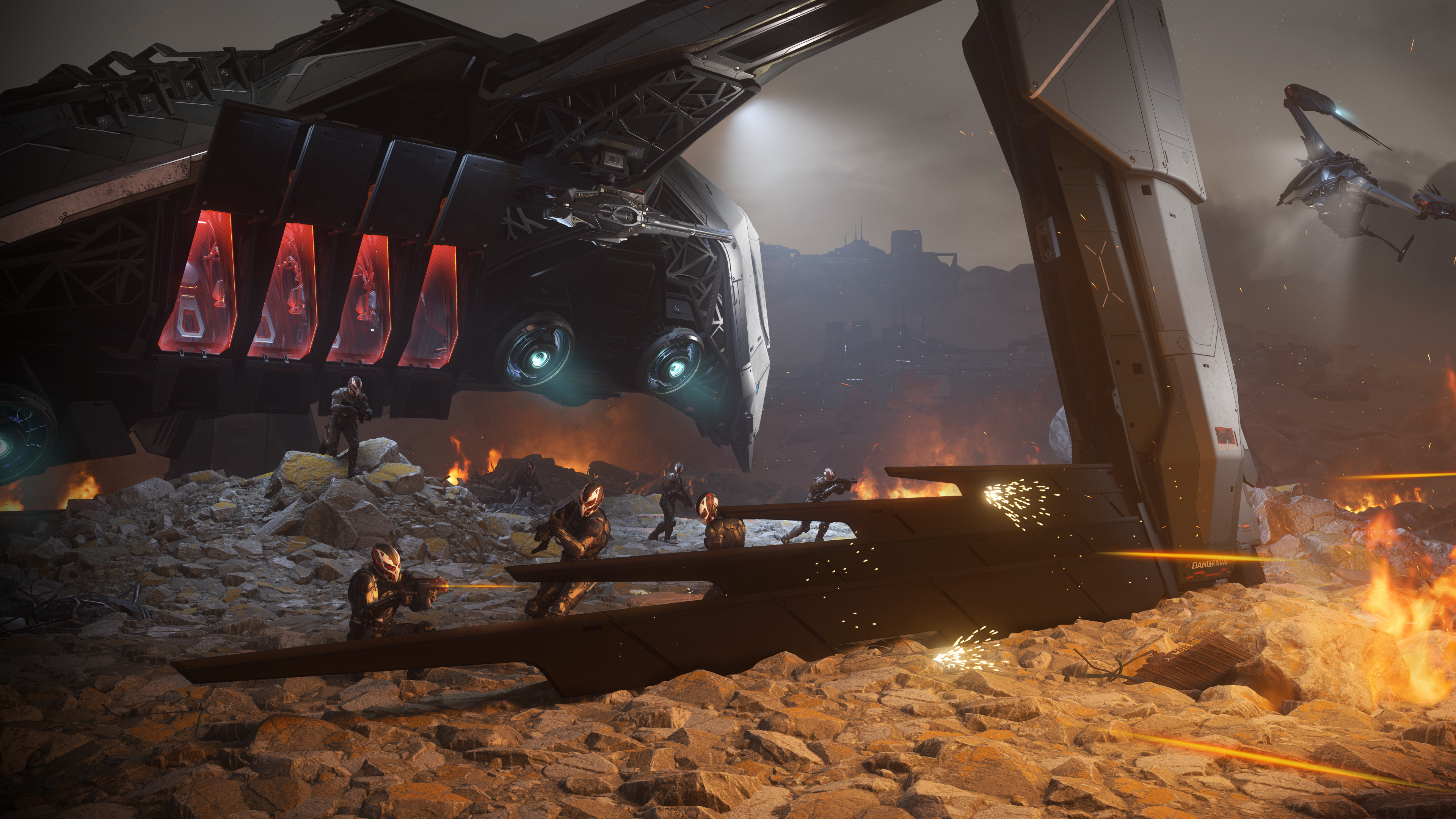


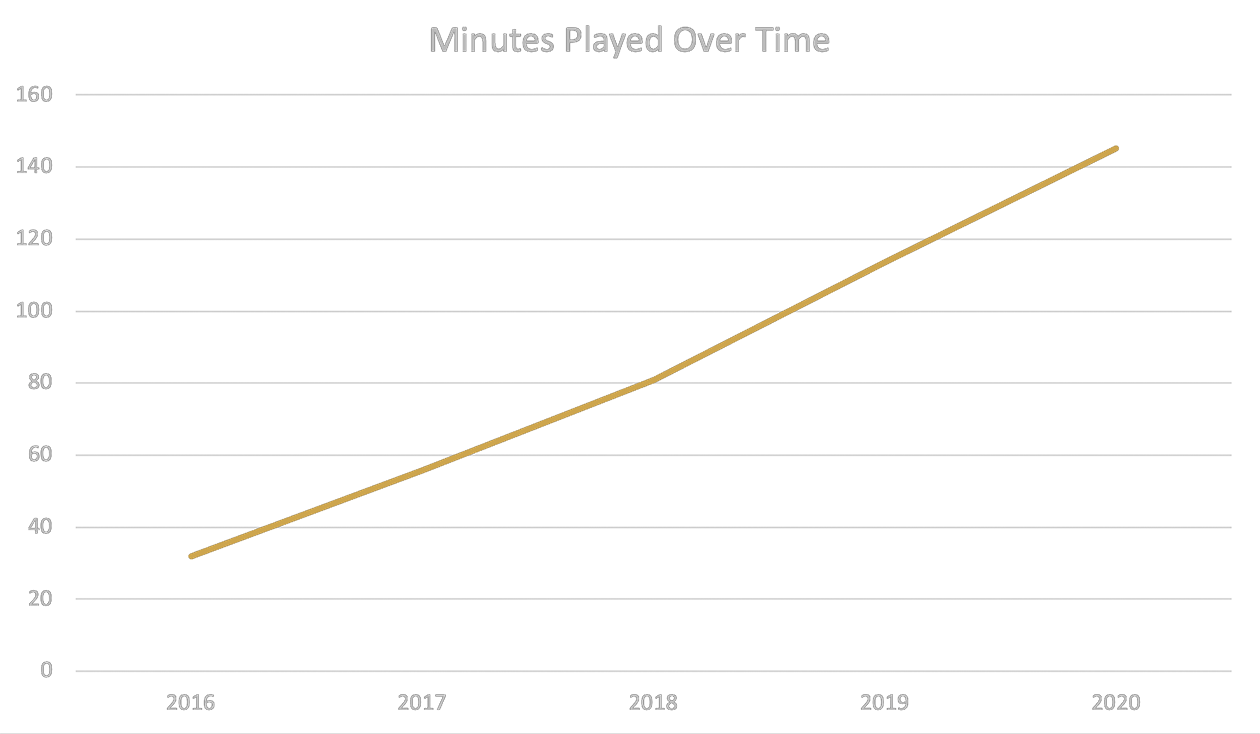


Metadata
- CIG ID
- 17936
- Channel
- Transmission
- Category
- General
- Series
- From the Chairman
- Comments
- 0
- Published
- 4 months ago (2026-05-25T17:00:00+00:00)