Star Citizen Monthly Report: July 2021
Transmission Undefined Monthly ReportsContent
Star Citizen Alpha 3.14 is rapidly approaching, with many of the PU teams pushing throughout July to implement content and polish features for release. However, significant progress was also made on tasks for Alpha 3.15 and beyond, so read on for all the exciting details!
AI (Content)
July’s PU report starts with AI Content, who received a large amount of data from a recent mo-cap shoot. The vendor behavior was the first to be addressed, with the team finishing the first polish pass alongside Design who sanity-checked the coffee shop setup. The next steps are to internally review the behavior with final data, retarget it onto the female skeleton, and complete a Look IK pass.
The doctor and nurse elements of the medical behavior received data too, which is currently being implemented and polished. The doctor is now set up to react to the player respawning or entering the room in-flow, while the nurse inspects the relevant usables. Dialogue and facial animations to match the flow will be added shortly.
AI Content also rectified bugs for Alpha 3.14, with a focus on Orison’s Voyager Bar. Some feature work was put on hold to sanity check the setups and bring the AI to a better standard for release.
Finally, they kicked off the pre-production of future behaviors with outpost, hospital, and patron behaviors all well received by the directors.
AI (Features)
Last month, the AI Feature team primarily focused on reviewing combat, with the aim of refining the existing behaviors and functionality to provide a more intelligible and enjoyable experience. The first part of this was reviewing the settings for perception and reactions to give the designers greater control over how the AI behaves when encountering a stimulus. Next, they worked on the basic combat behaviors, ensuring cover selection is working as intended and that the AI provides the base level of functionality after the first reaction to the enemy.
“Often the majority of the technology for improving combat already exists; it’s more a case of reviewing very specific situations and ensuring that the AI behaves as intended and fixing sometimes simple bugs that produce bad behavior. From these beginnings, we hope to do a full review over all of the combat behaviors, which will lead to better and more enjoyable gameplay.” – AI Feature Team
They also worked on specific behaviors to enable AI to spread out and surround the player and taunt them while in melee combat. This required changes to the tactical point system to support a new metric allowing them to weight points spread out from other AI. Melee behaviors received attention to ensure they quickly switch to combat when the situation requires too
Finally, the animators continued working on the ‘speed protocol’ and ‘polish’ stages for the mo-capped cowering and surrendering animations. This will be useful for both unarmed and untrained AI and the AI combat behaviors currently under review.
AI (Tech)
AI Tech enabled the planetary navigation system to make connections between adjacent mesh tiles, which is part of the base work to add support for planetary pathfinding. This means that triangles from a navigation mesh tile will create links to triangles from other adjacent tiles at the generation step.
They updated the tile generator debug draw to also work with planetary navigation mesh tiles to help them debug issues that could appear during the planet mesh generation step.
Work was submitted to allow NPCs to push a trolley along a path. The work for this includes playing an animation to connect to the trolley, selecting a path, pushing the trolley along the path, disconnecting from the trolley at the end, and moving away. For movement with the trolley, the team considered the size of the agent for collision avoidance and looked at the animations used for pushing it uphill and downhill or when NPC needs to turn the trolley to orient it with the path.
Work was also done to automate testing by extending functionality on the flowgraph to use references to other entities inside the same object container. Related to this, the AI teams began creating small levels and test behaviors that will be enabled later for automated testing, which will ultimately provide better stability to their systems. The previously mentioned collision avoidance work continued in July, this time on performance optimization and creating cleaner functionality. Time was also dedicated to improving quantum travel behavior in a group. Now, the leader checks that all participants (including the player if they’re part of the group) have finished spooling before sending the signal to jump.
Development of the Subsumption editor continued too, with AI Tech adding functionality to watch or modify multiple Subsumption functions from the same view, which was named the ‘multi-graph view.’ They also adjusted save functionality to work alongside it.
Animation
Throughout July, the Animation team looked into the useables used throughout the PU and how they’re laid out. They then created TrackView-based pre-vis videos showing existing assets used in better ways (such as using the rail leaning at the bar counter), created poses for useables that don’t already exist (such as beatdowns in prison), and drove the visual feel of AI layout in certain areas. So far, this has been completed for the prisons, medical locations, shanty towns, casaba stores, and Gloc Bar. The goal of this is to meld the animation and design disciplines together to lay out existing and new animations in a way that simulates how Humans behave.
Art (Characters)
July saw Character Art progress with new in-shop armor and Subscriber armor and helmets. The team began designing cybernetics and wrapped up new outfits for shopkeepers and the inhabitants of Pyro; the latter of which were passed onto the Character Art team.
Alongside work on characters, Tech Art supported Actor Features in delivering a medical gown asset and medical skeleton. They also supported UI with shader R&D and provided exports of all character assets in support of the physical inventory UI. The backpacks mentioned in previous reports were completed too, including ensuring they appear correctly on characters and in shops.
Art (Environment)
July saw the Environment Art team continuing to polish Pyro’s planets and moons to the expected quality standards.
In Montreal, the team progressed with the greybox phase for the rest stop and Grim HEX medical clinics. Devs can now walk into both locations and experience the correct mood, volumes, and flow. The rest stop clinics were the ideal opportunity to start working on module-based locations, which involves covering many rest stops with a restricted library of medical modules.
Area18 and Lorville’s hospitals are approaching whitebox-complete. These locations are much larger in scope and require adaptation and revisiting to ensure they live up to their potential.
“As the scope of these is closer to those of New Babbage and Orison, we want to make sure that the volumes and general feeling of the areas are spot-on before moving onto the detail pass.” -The Locations Team
On the design side, the team further supported hospitals by ensuring the flow is fully operational and populating the locations with AI. In parallel, they iterated on the creation and placement of the derelict spaceship puzzles mentioned in last month’s report. These puzzles will ultimately be scattered across planets and space and will represent minor points of interest. They’re currently in the proof-of-concept phase, with the team investigating various future opportunities.
Art (Ships)
The US-based Ships team began the month preparing the Constellation Taurus for release. They also resolved bugs affecting various ships across the fleet.
Alongside release prep, Ships pushed other vehicles through the pipeline, including both Crusader Ares variants, which entered the final art stages. The Drake Vulture continued to progress through the whitebox phase, an all-new vehicle entered the pipeline, and the upcoming variant mentioned in last month’s report moved into greybox.
In the UK, last month’s yet-to-be-announced ship had its damage, LODs, and final art completed, with the team currently wrapping up the finishing touches before handing it over to Tech Art and other downstream teams.
The Redeemer received its exterior damage meshes and a final polish pass. The team are currently working on the exterior LODs, while the interior is going through its final art pass with the cockpit, turrets, and lower level nearing completion.
A new yet-to-be-announced vehicle (that the team is excited to share) moved from whitebox to greybox, while the Sabre’s cockpit and lighting were wrapped up.
For the Retaliator, the first round of interior gold-standard work is coming to a close, with the interior spaces corrected for metrics and AI navigation. New ship item compartments were added and the cockpit received a pass too
Another unannounced ship is deep into the greybox phase:
“With some issues with its exterior mechanisms now resolved, it’s moving through the pipeline well. There are a number of artists working together on this one and each area of the ship’s interior is coming along nicely.” -The Ship Team
Finally, work began on a new fuel arm for the MISC Starfarer to support the refueling feature work coming soon.
Art (Weapons)
The Weapon Content team had another busy month, completing the two Size 7 Behring weapons for the Crusader Ares before closing out bugs for Alpha 3.14.
Work also kicked off for a new Size 3 bomb for the A2 Starlifter and a variant of the mounted weapon turret for an upcoming ship.
Audio
The Audio team began July working on Grim HEX’s medical center, which received effects and music passes to help compound the run-down aesthetic. They also added effects to the A2 Starlifter, including the onboard kitchen. The Dialogue team recorded VO and are currently preparing it to go in-game.
The Technical Sound Design team made improvements to dogfighting and ship weapons. When live, players will hear weapons from a greater distance and the battles themselves will sound more intense, which will be most notable in Arena Commander. They also fixed bugs for Orison.
Work on the Orison score continued with composer Pedro Camacho. Having had great results from the planetary and industrial platform pieces, they’re looking to complete the location with a final piece for the spaceport. The spaceport also received ambiances, as did the wind sculpture. Audio also created sound for the RSI Constellation Taurus trailer.
Community
The Community team began July with the finale of the Show Us Your Colors Celebration, putting together a selection of the best submissions into a gallery.
Adding to the cosplay contest announced in June, they kicked off a video contest, the winners of which will be a part of this year’s CitizenCon show.
Community also continued to update the Star Citizen Public Roadmap, including the notable additions of the Q3 schedule for downstream development teams and a further look into what’s coming in Alpha 3.17.
In the leadup to the release of Alpha 3.14, a series of Patch Watch posts were shared on Spectrum, highlighting some of the specific ship changes and tuning going into the latest update. Additionally, a postmortem on Alpha 3.13 and Invictus Launch Week 2951 was published, highlighting what went well, what didn’t, and what will be improved in the future.
Engine
In June, the Physics team finished support for compressed meshes. This means the representation of render meshes inside physics is now compressed, leading to memory and bandwidth savings. More code, such as preparation of vertex positions and normals for planetary patches, was also moved from C++ to ISPC to allow for faster processing on the CPU. Further optimizations include pre-allocating mesh blocks to avoid stalls during on-demand allocation, caching the current grid of vehicles to prevent stalls in physics, optimized binding of secondary node data during CGF loading, and a new round of terrain mesh generation improvements. Additionally, the set of analytical SDF primitives supported by physics was extended and torus added.
For the renderer, the team continued with the transition to Gen12. A lot of work was completed on the global draw packet cache and related changes on the high-level render and 3D engine code, which will be used to speed up the streaming in of object containers and sharing of data for multiple instances. Additionally, Gen12 received the following changes: support for referencing refraction during rendering, tessellation support in the G-buffer pass, and a ported z-prepass. Several pieces of legacy code were removed to simplify the render pipeline. Also, Gen12 now runs with async shader compilation enabled by default. This is mostly relevant for development but is also useful in shipping builds as the shader cache isn’t fully deterministic (yet) and compilation of infrequently used shaders can happen in the PU.
Volumetric clouds and atmospheric rendering saw improvements throughout July as well as continued research. For Alpha 3.14, several performance improvements were implemented when rendering clouds into cube maps. For example, runtime cube maps that are used for ambient lighting around the player. Density queries now also include the cloud’s tint at the requested location, which is important for the seamless integration of particles into cloud volumes. Cloud shaping was changed slightly to improve the local vs global read, particularly with regards to combatting the occasional tiled look of cloud details when viewed from orbit.
For rendering performance, the entire filter chain that reprojects and upsamples raymarching results is being revisited to improve quality so that this performance mode can always be enabled. The PU currently raymarches either at full resolution, which is very taxing, or uses a simple form of lower-resolution raymarching, which leaves a lot to be desired in terms of quality vs gained performance. Lastly, work on SDF integration into the raymarcher (efficient empty space skipping) is still ongoing.
On the core engine side, work continued on the entity component update scheduler (ECUS). Its internal structure was revisited to allow more than one update within a pass. Several improvements were also made to support and improve the new profiler frontend that was introduced in June. For instance, CPU sampling support was added for Linux builds of the server. Moreover, several tree optimizations were made inside StarHash.
Features (Characters & Weapons)
The Features team continued working on the new player inventory, with daily reviews on the user experience.
“There are a lot of hard choices being made on what has to make it into the first release and what can be postponed. Even with some aspects of the inventory coming online later, the new player inventory is shaping up to be a significant improvement to the existing PMA.” -The Features Team
A key aspect of where the new player inventory differs significantly compared to the PMA is the limit to physical space and location. While the various landing zones will have a generous amount of storage available to the player, anything left in one location cannot be accessed from another. So, the player will need to make sure they transfer any items they need when exploring into their backpack or vehicle. Items purchased from shops will also be delivered to local storage.
On the technical side, there was a push to solve NPCs standing on chairs and benches (again). Simply put, if an AI is in the process of exiting their usable as they stream out, they will now teleport to the position where they would have exited to when they stream back in.
Features (Gameplay)
The US Gameplay Features team spent part of July polishing features for Alpha 3.14 and planning for future initiatives. The former including work on NikNax, the player asset management mobiGlas app. As the feature’s functionality nears completion, the team conducted feedback and revision sessions to begin finalizing the look and feel of the app. They’ll wrap up development at the end of the quarter and are aiming to launch NikNax in Alpha 3.15.
Gameplay features also continued to focus on the latest Dynamic Event, Ninetails Lockdown, working alongside QA and Player Experience to gather feedback and refine it before release.
For future initiatives, the designers and Environment team began setting up the new shops on Orison and planned the expo hall setup for IAE 2951. Meanwhile, the engineers worked on TDDs for the cargo refactor and character archetype editor, both of which will reach the review stage soon.
The European Gameplay Feature team began finalizing the first iteration of the loot generation system. Once live, they’ll look for feedback from the community for future improvements and balancing.
Features (Vehicles)
The Vehicle Experience team focused on the combat balance in Alpha 3.14, working closely with the community to iterate on, improve, and balance the various new features. The same went for the Vehicle Technical team, who focused on fixing bugs and supporting their latest feature, scanning.
Alongside supporting the other vehicle teams in fixing bugs and improving upcoming features, Vehicle Features continued to develop the new ship HUDs alongside the UI team.
“One of the more exciting things we’ve helped support for Alpha 3.14 is the new thruster dust VFX. Driven by the VFX team, we helped with the code and functionality of this new highly detailed thruster effects system that works per thruster and changes as the thruster animates and moves around.” -The Vehicle Feature Team
Vehicle Features also continued to develop jump points, which recently went through design adjustments to improve functionality. The team collaborated with Narrative to ensure they don’t stray from lore and are confident the recent adjustments will make the feature better in the long run. Internally, they also made jump points easier to work with and test, making sure they can rapidly iterate and improve the look and feel of the whole experience.
Graphics & VFX Programming
July was a busy month for Graphics and VFX Programming, with Alpha 3.14 issues such as fog popping, flashing objects and particles, and blurry UI screens and holograms requiring attention.
For the shader, they made improvements to the quality of hair rendering in comms calls, though work continues, and refactored the shared code responsible for the depth pass, shadows, motion blur, and silhouette rendering. This will fix various bugs and prepare for some of the Gen12 features and requirements.
The reworked render-to-texture post-effect pipeline was completed and is now with the UI artists for testing. This introduces custom bloom, drop shadow, color correction, and brightness adaptation that will apply to all visor and lens UIs, improving the visuals and legibility. The logic controlling the allocation of memory between the various UI screens was also adjusted to maximize quality while sticking to a fixed memory budget.
For Gen12, various validation issues were fixed along with issues on specific laptops where the dedicated GPU was disabled from the OS/driver level, meaning the Vulkan renderer wouldn’t initialize. Several architectural amendments were also made to improve the readability and usability of the new renderer.
On the VFX-programming side, various new features were added such as tinting for space-loop particles based on planetary cloud albedo, new rotation features for particles, and the ability to attach vector fields to characters to achieve effects. The latter includes leaves being pushed around by character’s feet.
Lighting
The Lighting team’s July included tasks for Orison, Alpha 3.14, and adding lighting interaction into the remaining habs. The personal manager app’s (PMA) lighting was updated to make it more user-friendly when selecting clothing and armor. Work also continued on the colonial outposts and hospital lighting for Lorville and Grim HEX.
Finally, they started atmosphere and color grading for Pyro’s planets and moons and progressed with the lighting for Pyro’s jump point gas cloud.
Narrative
Narrative began the month with a mo-cap shoot in the UK to capture the first set of vendor voice packs. This archetype was the result of working closely with the AI and Audio teams and will include lines used by bartenders and food stall vendors across the PU. Some additional lines were also recorded to support upcoming mission content.
There was a lot of discussion with the various environment teams over the upcoming outposts and hospitals currently in development. This work included write-ups for the various types of NPC encountered in these locations and additional documentation to describe the branding, posters, and other environmental text that might be needed. Additional work was done to flesh out some of the gangs of Pyro, delving into their hierarchies, leaders, and wealth levels.
As with previous months, Narrative worked closely with AI Content to outline script and character needs for some of the archetypes in development. This time, discussion focused on the security and patron behaviors. These conversations ensure both teams are in sync when developing characters and make sure scripts are generated using known AI triggers and contexts, and that the behaviors align with the intended purpose of the characters.
On the dispatch front, the team released another installment of Loremakers: Community Questions, where they answered questions from the forum. The recent Jump Point Vault featured a story about the Crossroads of Crime in Nexus, Joker returned for a new episode of B0otycall, and another update of the Galactapedia was published, including articles on Levski, Dr. Scott Childress, Whitley’s Guide, and Jax McCleary.
Props
The Props Team spent the month working up the utilitarian variants of the medical gameplay props. These match the metrics and functionality of the high-tech props seen in Alpha 3.14 but have the appropriate art style to match more lawless or low-tech hospital locations, such as Grim HEX.
Time was also spent creating new assets for Orison’s Crusader Showroom, including furniture, signage, and installations. Work continued on props for the colonial outposts too.
QA
QA spent July making near-daily publishes for Alpha 3.14, which were primarily for logging server health and making fixes.
The team’s development focus focused on the Ninetails event, with QA provided daily support for the US-based PU team along with internal playtests as needed. Towards the end of the month, this expanded to supporting the personal inventory system.
On the management side, the team focused on scheduling to ensure they have proper coverage for the upcoming Alpha 3.14 content and coordinated with the UK studio to divide feature QATRs and events to better fit the release schedule. They also planned what’s needed for staging streams, including headcount and ownership.
Systemic Services & Tools
In July, Systemic Services & Tools (SST) continued the development of Quantum (the economy and AI simulation). This involved improving fidelity and interaction with the game itself to provide further intelligent reasoning as to why certain service beacons spawn and why shop and fuel prices shift.
The team are currently dealing with the final edge cases for the Super pCache for Alpha 3.14 and optimizing other dependencies on the services.
Tech Animation
Tech Animation completed their planning for the rest of the quarter and are well underway with deliveries, including assisting in the creation and implementation of upcoming key deliverables. For example, AI combat iteration, usables, and art refinement to head assets.
Additionally, the team took on some interesting challenges, one of which is to create a cross-platform RBF solder to assist in character deformation. The mandate is to create the same codebase to be used in Maya and the engine for improved usability. This will also speed up the processing of Maya animation assets and potentially the game too.
The team also began alembic cache animation support. While existing tools already support this technology, the team need to further integrate it into the animation toolset for a number of key deliverables.
Turbulent (Services)
Last month, the Live Tools team fixed bugs and made improvements to the previously released role-based access in Hex. They also improved the crash-handling pipeline and supported the Publishing Technology team with the Alpha 3.14 release.
The Game Service team continued working on the server meshing project alongside making supportive fixes to Hex and Alpha 3.14.
Turbulent (Web Platform)
In July, the Platform Tech team delivered an automation mechanism to make it easier and quicker for the Platform team to ensure players have the right items in their accounts.
They’re currently working on a project to make some database functionality asynchronous using Kafka technology. The first proof-of-concept will be in the Pledge Store fulfillment processes and will make it more efficient and less prone to bugs.
UI
July saw the UI Feature and Actor Feature teams work closely on UI screens for the upcoming hospitals and healing gameplay. Once functional, they ironed out teething problems with showing a 3D skeleton on a UI screen for the first time. They also fixed bugs and completed feature requests to support other teams and Alpha 3.14.
Initial design work was done for tools and re-usable components, which will help less-experienced designers and artists build UI screens.
The UI Tech team improved the visuals of holographic 3D items in the UI and optimized ways to display large lists without overloading the game. Work also continued on common controls for 3D objects that can be used in future screens across the game, including the new map system.
Vehicle Tech
Vehicle Tech spent last month fixing bugs and polishing the gameplay experience for Alpha 3.14. This included addressing feedback for the radar, ping, and scanning features provided by the community to ensure they work at their best, particularly when searching for hard-to-find entities in space, such as faraway spaceships, mineables, and other commodities.
Additionally, they began preparing to expand these features to first-person gameplay, where players will be able to ping for hidden lifeforms on foot and then scan them for vital mission-related information.
“It will be nice to condense the macro-level vehicle scanning features into a more granular, on-foot experience, where players will be able to perform actions on entities that are only a few meters in front of them as opposed to dozens of kilometers away.” -The Vehicle Tech Team
Finally, support began for showing player-emitted signatures and ambient levels around their vehicles in the HUD. This will give players an idea of how detectable they are and how well they can detect others.
VFX
July saw the VFX team continue their overhaul of vehicle radar ping effects, including making use of a new shader for the ping itself, which is assigned to a rapidly expanding sphere highlighting any geometry it intersects.
“We have been very encouraged by the positive reaction to this overhaul so far, because as well as looking much neater than the old version, a lot of effort went into making sure the effects are respectful of the gameplay requirements. There is more work to be done on this for a future release though, as we want the effect to change depending on the player’s choice of ping angle.”” -The VFX Team
They also focused heavily on bug fixing and tech debt alongside polishing the new thruster landing dust effects for Alpha 3.14.
WE’LL SEE YOU NEXT MONTH…
Die Star Citizen Alpha 3.14 nähert sich mit großen Schritten und viele der PU-Teams arbeiten den ganzen Juli über daran, Inhalte zu implementieren und Features für die Veröffentlichung zu polieren. Aber auch bei den Aufgaben für die Alpha 3.15 und darüber hinaus wurden große Fortschritte gemacht, also lies weiter für alle spannenden Details!
KI (Inhalt)
Der PU-Bericht für den Juli beginnt mit AI Content, der eine große Menge an Daten von einem kürzlichen Mo-Cap-Dreh erhalten hat. Das Verhalten des Verkäufers war das erste, das angegangen wurde, wobei das Team den ersten Polishing-Pass zusammen mit dem Design abschloss, das das Coffeeshop-Setup auf seine Tauglichkeit überprüfte. Die nächsten Schritte sind die interne Überprüfung des Verhaltens mit finalen Daten, das Retargeting auf das weibliche Skelett und ein Look IK Pass.
Die Arzt- und Krankenschwester-Elemente des medizinischen Verhaltens haben ebenfalls Daten erhalten, die derzeit implementiert und poliert werden. Der Arzt ist nun so eingestellt, dass er auf das Respawning des Spielers oder das Betreten des Raumes im Flow reagiert, während die Krankenschwester die relevanten Usables inspiziert. Dialoge und Gesichtsanimationen, die zum Flow passen, werden in Kürze hinzugefügt.
AI Content hat auch Bugs für Alpha 3.14 behoben, mit einem Fokus auf Orisons Voyager Bar. Die Arbeit an einigen Features wurde auf Eis gelegt, um die Setups auf Herz und Nieren zu prüfen und die KI auf einen besseren Standard für die Veröffentlichung zu bringen.
Zu guter Letzt wurde mit der Vorproduktion zukünftiger Verhaltensweisen begonnen, wobei die Verhaltensweisen Außenposten, Krankenhaus und Gönner alle gut von den Regisseuren aufgenommen wurden.
KI (Features)
Im letzten Monat konzentrierte sich das KI-Feature-Team hauptsächlich auf die Überprüfung der Kämpfe, mit dem Ziel, die bestehenden Verhaltensweisen und Funktionen zu verfeinern, um ein verständlicheres und angenehmeres Erlebnis zu bieten. Der erste Teil davon war die Überarbeitung der Einstellungen für Wahrnehmung und Reaktionen, um den Designern mehr Kontrolle darüber zu geben, wie sich die KI verhält, wenn sie auf einen Reiz trifft. Als nächstes arbeiteten sie an den grundlegenden Kampfverhalten, um sicherzustellen, dass die Auswahl der Deckung wie vorgesehen funktioniert und dass die KI nach der ersten Reaktion auf den Feind das Basisniveau an Funktionalität bietet.
"Oftmals existiert der Großteil der Technologie zur Verbesserung des Kampfes bereits; es geht eher darum, sehr spezifische Situationen zu überprüfen und sicherzustellen, dass sich die KI wie beabsichtigt verhält und manchmal einfache Bugs zu beheben, die schlechtes Verhalten produzieren. Von diesen Anfängen ausgehend, hoffen wir, eine vollständige Überprüfung aller Kampfverhaltensweisen durchzuführen, was zu einem besseren und angenehmeren Gameplay führen wird." - AI Feature Team
Sie arbeiteten auch an bestimmten Verhaltensweisen, um es der KI zu ermöglichen, sich auszubreiten, den Spieler zu umzingeln und ihn im Nahkampf zu verspotten. Dies erforderte Änderungen am taktischen Punktesystem, um eine neue Metrik zu unterstützen, die es ihnen erlaubt, Punkte zu gewichten, die sich von anderen KIs ausbreiten. Das Verhalten im Nahkampf wurde überarbeitet, um sicherzustellen, dass sie schnell in den Kampf wechseln, wenn es die Situation erfordert.
Zu guter Letzt arbeiteten die Animatoren weiter an dem 'Geschwindigkeitsprotokoll' und dem 'Feinschliff' für die Animationen des Kauerns und des Sich-Ergebens. Dies wird sowohl für die unbewaffnete und untrainierte KI als auch für die KI-Kampfverhaltensweisen, die derzeit überarbeitet werden, nützlich sein.
KI (Tech)
AI Tech hat das planetare Navigationssystem in die Lage versetzt, Verbindungen zwischen benachbarten Mesh-Tiles herzustellen, was Teil der Basisarbeit ist, um Unterstützung für planetare Pfadfindung hinzuzufügen. Das bedeutet, dass Dreiecke aus einer Navigations-Mesh-Tile beim Generierungsschritt Links zu Dreiecken aus anderen benachbarten Tiles erstellen.
Sie aktualisierten die Debug-Zeichnung des Kachelgenerators, um auch mit planetaren Navigationsnetzkacheln zu arbeiten, um Probleme zu beheben, die während des Generierungsschritts des Planetennetzes auftreten können.
Es wurden Arbeiten eingereicht, die es NSCs erlauben, einen Wagen entlang eines Pfades zu schieben. Die Arbeit dafür beinhaltet das Abspielen einer Animation, um sich mit dem Wagen zu verbinden, die Auswahl eines Pfades, das Schieben des Wagens entlang des Pfades, das Abkoppeln vom Wagen am Ende und das Wegfahren. Für die Bewegung mit dem Trolley berücksichtigte das Team die Größe des Agenten zur Kollisionsvermeidung und schaute sich die Animationen an, die für das Schieben bergauf und bergab verwendet werden oder wenn der NPC den Trolley drehen muss, um ihn mit dem Pfad auszurichten.
Es wurde auch daran gearbeitet, das Testen zu automatisieren, indem die Funktionalität des Flowgraphs erweitert wurde, um Referenzen auf andere Entitäten innerhalb des gleichen Objektcontainers zu verwenden. In diesem Zusammenhang begannen die KI-Teams damit, kleine Level und Testverhalten zu erstellen, die später für automatisiertes Testen aktiviert werden, was letztendlich für eine bessere Stabilität ihrer Systeme sorgen wird. Die bereits erwähnte Arbeit an der Kollisionsvermeidung wurde im Juli fortgesetzt, dieses Mal mit dem Ziel der Leistungsoptimierung und der Schaffung einer saubereren Funktionalität. Es wurde auch Zeit darauf verwendet, das Quantenreiseverhalten in einer Gruppe zu verbessern. Jetzt prüft der Anführer, ob alle Teilnehmer (einschließlich des Spielers, wenn er Teil der Gruppe ist) das Spulen beendet haben, bevor er das Signal zum Sprung sendet.
Die Entwicklung des Subsumption-Editors wurde ebenfalls fortgesetzt. AI Tech fügte eine Funktion hinzu, mit der man mehrere Subsumption-Funktionen von derselben Ansicht aus beobachten oder verändern kann, was als "Multi-Graph-Ansicht" bezeichnet wurde. Sie passten auch die Speicherfunktion an.
Animation
Im Juli hat sich das Animationsteam mit den Useables beschäftigt, die in der PU verwendet werden und wie sie angeordnet sind. Sie haben dann TrackView-basierte Pre-Vis-Videos erstellt, die zeigen, wie vorhandene Assets besser genutzt werden (z.B. die Schiene an der Theke), Posen für Useables erstellt, die es noch nicht gibt (z.B. Beatdowns im Gefängnis), und das visuelle Gefühl des KI-Layouts in bestimmten Bereichen verbessert. Bisher wurde dies für die Gefängnisse, die medizinischen Standorte, die Shanty Towns, die Casaba Stores und die Gloc Bar abgeschlossen. Das Ziel ist es, die Disziplinen Animation und Design miteinander zu verschmelzen, um bestehende und neue Animationen so zu gestalten, dass sie das Verhalten der Menschen simulieren.
Art (Charaktere)
Im Juli machte die Charakterkunst Fortschritte mit neuen Rüstungen für den Shop und für Abonnenten sowie Helmen. Das Team begann mit dem Design von Kybernetik und verpackte neue Outfits für Ladenbesitzer und die Bewohner von Pyro; letztere wurden an das Character Art Team weitergegeben.
Neben der Arbeit an den Charakteren unterstützte Tech Art die Actor Features bei der Bereitstellung eines medizinischen Kittels und eines medizinischen Skeletts. Sie unterstützten auch die UI mit Shader-F&E und lieferten Exporte aller Charakter-Assets zur Unterstützung der physischen Inventar-UI. Die in früheren Berichten erwähnten Rucksäcke wurden ebenfalls fertiggestellt, einschließlich der Sicherstellung, dass sie korrekt auf den Charakteren und in den Läden erscheinen.
Kunst (Umwelt)
Im Juli fuhr das Environment Art Team fort, die Planeten und Monde von Pyro auf die erwarteten Qualitätsstandards zu polieren.
In Montreal machte das Team mit der Greybox-Phase für die Raststätte und die Grim HEX-Kliniken Fortschritte. Devs können nun beide Orte betreten und die richtige Stimmung, Lautstärke und den Fluss erleben. Die Raststättenkliniken waren die ideale Gelegenheit, um mit der Arbeit an modulbasierten Locations zu beginnen, was bedeutet, dass viele Raststätten mit einer begrenzten Bibliothek an medizinischen Modulen abgedeckt werden.
Area18 und Lorvilles Krankenhäuser nähern sich der Whitebox-Komplettierung. Diese Standorte haben einen viel größeren Umfang und erfordern Anpassungen und Überarbeitungen, um sicherzustellen, dass sie ihr Potenzial ausschöpfen.
"Da diese vom Umfang her näher an New Babbage und Orison dran sind, wollen wir sicherstellen, dass die Volumina und das allgemeine Gefühl der Gebiete stimmen, bevor wir zum Detailpass übergehen." -The Locations Team
Auf der Designseite unterstützte das Team die Krankenhäuser weiter, indem es sicherstellte, dass der Fluss voll funktionsfähig ist und die Locations mit KI bevölkert. Parallel dazu wurde an der Erstellung und Platzierung der Rätsel für die verlassenen Raumschiffe gearbeitet, die im letzten Bericht erwähnt wurden. Diese Rätsel werden letztendlich über Planeten und den Weltraum verstreut sein und kleinere Sehenswürdigkeiten darstellen. Sie befinden sich derzeit in der Proof-of-Concept-Phase, wobei das Team verschiedene zukünftige Möglichkeiten untersucht.
Kunst (Ships)
Das in den USA ansässige Schiffsteam hat den Monat damit begonnen, die Constellation Taurus für die Veröffentlichung vorzubereiten. Außerdem wurden Bugs behoben, die verschiedene Schiffe der Flotte betrafen.
Neben den Vorbereitungen für die Veröffentlichung schob Ships weitere Fahrzeuge durch die Pipeline, darunter die beiden Crusader Ares-Varianten, die in die finale Art-Phase gingen. Der Drake Vulture durchlief weiterhin die Whitebox-Phase, ein komplett neues Fahrzeug wurde in die Pipeline aufgenommen und die im letzten Bericht erwähnte kommende Variante ging in die Greybox.
In Großbritannien wurden für das im letzten Monat angekündigte Schiff der Schaden, die LODs und die finale Grafik fertiggestellt, wobei das Team derzeit den letzten Feinschliff vornimmt, bevor es es an Tech Art und andere nachgelagerte Teams übergibt.
Die Redeemer erhielt ihre äußeren Schadensmeshes und einen letzten Polierdurchgang. Das Team arbeitet derzeit an den äußeren LODs, während der Innenraum mit dem Cockpit, den Geschütztürmen und der unteren Ebene kurz vor der Fertigstellung steht.
Ein neues, noch nicht angekündigtes Fahrzeug (auf das sich das Team sehr freut) ist von der Whitebox in die Greybox übergegangen, während das Cockpit und die Beleuchtung des Sabre fertiggestellt wurden.
Für den Retaliator geht die erste Runde der Innenraum-Goldstandard-Arbeiten dem Ende entgegen, wobei die Innenräume für die Metrik und die KI-Navigation korrigiert wurden. Neue Schiffsgegenstandsfächer wurden hinzugefügt und auch das Cockpit erhielt einen Pass
Ein weiteres unangekündigtes Schiff befindet sich tief in der Greybox-Phase:
"Nachdem einige Probleme mit den äußeren Mechanismen behoben wurden, bewegt es sich gut durch die Pipeline. Es gibt eine Reihe von Künstlern, die zusammen an diesem Schiff arbeiten und jeder Bereich des Schiffsinneren kommt gut voran." -Das Schiffsteam
Zu guter Letzt wurde mit der Arbeit an einem neuen Treibstoffarm für die MISC Starfarer begonnen, um die baldige Arbeit am Betankungs-Feature zu unterstützen.
Kunst (Waffen)
Das Waffenteam hatte einen weiteren arbeitsreichen Monat, in dem die beiden Größe 7 Behring Waffen für den Crusader Ares fertiggestellt wurden, bevor die Bugs für Alpha 3.14 geschlossen wurden.
Außerdem wurde mit der Arbeit an einer neuen Größe 3 Bombe für den A2 Starlifter und einer Variante des montierten Waffenturms für ein kommendes Schiff begonnen.
Audio
Das Audioteam begann im Juli mit der Arbeit am medizinischen Zentrum von Grim HEX, das Effekte und Musikpässe erhielt, um die heruntergekommene Ästhetik zu unterstützen. Außerdem wurden Effekte für den A2 Starlifter hinzugefügt, einschließlich der Küche an Bord. Das Dialog-Team hat die Sprachausgabe aufgenommen und bereitet sie derzeit für das Spiel vor.
Das Technical Sound Design Team hat Verbesserungen an Dogfighting und Schiffswaffen vorgenommen. Wenn sie live sind, werden die Spieler die Waffen aus größerer Entfernung hören und die Kämpfe selbst werden intensiver klingen, was vor allem im Arena Commander zu hören sein wird. Außerdem wurden Bugs für Orison behoben.
Die Arbeit an der Orison-Partitur wurde mit dem Komponisten Pedro Camacho fortgesetzt. Nachdem sie mit den Stücken für den Planeten und die Industrieplattform gute Ergebnisse erzielt haben, wollen sie die Location mit einem letzten Stück für den Raumhafen vervollständigen. Der Raumhafen erhielt ebenfalls Ambientes, ebenso wie die Windskulptur. Audio kreierte auch den Sound für den RSI Constellation Taurus Trailer.
Community
Das Community-Team begann den Juli mit dem Finale der Show Us Your Colors Celebration und stellte eine Auswahl der besten Einsendungen in einer Galerie zusammen.
Zusätzlich zum Cosplay-Wettbewerb, der im Juni angekündigt wurde, starteten sie einen Video-Wettbewerb, dessen Gewinner ein Teil der diesjährigen CitizenCon-Show sein werden.
Die Community aktualisierte auch die öffentliche Star Citizen Roadmap, einschließlich der bemerkenswerten Ergänzungen des Q3 Zeitplans für die nachgelagerten Entwicklungsteams und einem weiteren Blick auf das, was in der Alpha 3.17 kommen wird.
Im Vorfeld der Veröffentlichung der Alpha 3.14 wurde eine Reihe von Patch Watch Posts auf Spectrum geteilt, die einige der spezifischen Schiffsänderungen und Tuningmaßnahmen des letzten Updates hervorheben. Außerdem wurde ein Postmortem zu Alpha 3.13 und Invictus Launch Week 2951 veröffentlicht, in dem hervorgehoben wird, was gut gelaufen ist, was nicht und was in Zukunft verbessert werden soll.
Engine
Im Juni hat das Physics Team die Unterstützung für komprimierte Meshes fertiggestellt. Das bedeutet, dass die Darstellung von Rendermeshes innerhalb der Physik nun komprimiert ist, was zu Einsparungen bei Speicher und Bandbreite führt. Weiterer Code, wie z.B. die Vorbereitung von Vertex-Positionen und Normalen für planetare Patches, wurde ebenfalls von C++ zu ISPC verschoben, um eine schnellere Verarbeitung auf der CPU zu ermöglichen. Weitere Optimierungen beinhalten die Vorab-Zuweisung von Mesh-Blöcken, um Stalls während der On-Demand-Allokation zu vermeiden, das Zwischenspeichern des aktuellen Fahrzeuggitters, um Stalls in der Physik zu verhindern, optimiertes Binden von sekundären Node-Daten während des CGF-Ladens und eine neue Runde von Verbesserungen bei der Terrain-Mesh-Generierung. Zusätzlich wurde das Set der analytischen SDF-Primitive, die von der Physik unterstützt werden, erweitert und Torus hinzugefügt.
Für den Renderer setzte das Team den Übergang zu Gen12 fort. Es wurden viele Arbeiten am globalen Draw Packet Cache und damit verbundene Änderungen am High-Level Render- und 3D-Engine-Code abgeschlossen, die das Einströmen von Objekt-Containern und das Teilen von Daten für mehrere Instanzen beschleunigen werden. Zusätzlich erhielt Gen12 die folgenden Änderungen: Unterstützung für die Referenzierung von Refraktion während des Renderings, Tesselation-Unterstützung im G-Buffer-Pass und einen portierten z-Prepass. Mehrere Teile des Legacy-Codes wurden entfernt, um die Render-Pipeline zu vereinfachen. Außerdem läuft Gen12 nun mit standardmäßig aktivierter asynchroner Shaderkompilierung. Dies ist vor allem für die Entwicklung relevant, aber auch für die Auslieferung von Builds nützlich, da der Shader-Cache (noch) nicht vollständig deterministisch ist und die Kompilierung von selten genutzten Shadern in der PU passieren kann.
Volumetrische Wolken und atmosphärisches Rendering wurden im Juli verbessert und weiter erforscht. Für Alpha 3.14 wurden mehrere Leistungsverbesserungen beim Rendering von Wolken in Cube Maps implementiert. Zum Beispiel Laufzeit-Würfelkarten, die für die Umgebungsbeleuchtung um den Spieler herum verwendet werden. Dichteabfragen beinhalten nun auch den Farbton der Wolke an der angefragten Stelle, was für die nahtlose Integration von Partikeln in Wolkenvolumen wichtig ist. Die Wolkenformung wurde leicht verändert, um das lokale vs. globale Lesen zu verbessern, insbesondere im Hinblick auf die Bekämpfung des gelegentlichen Kachel-Looks von Wolkendetails, wenn sie aus dem Orbit betrachtet werden.
Für die Rendering-Performance wird die gesamte Filterkette, die die Ergebnisse des Raymarchings reprojiziert und upsamplet, überarbeitet, um die Qualität zu verbessern, so dass dieser Performance-Modus immer aktiviert werden kann. Die PU raymarched derzeit entweder mit voller Auflösung, was sehr anstrengend ist, oder verwendet eine einfache Form des niedriger aufgelösten Raymarching, was in Bezug auf Qualität und Leistung sehr zu wünschen übrig lässt. Die Arbeit an der SDF-Integration in den Raymarcher (effizientes Überspringen von leeren Räumen) ist noch nicht abgeschlossen.
Auf der Seite der Core Engine wurde die Arbeit am Entity Component Update Scheduler (ECUS) fortgesetzt. Seine interne Struktur wurde überarbeitet, um mehr als ein Update innerhalb eines Durchgangs zu ermöglichen. Es wurden auch einige Verbesserungen vorgenommen, um das neue Profiler-Frontend, das im Juni eingeführt wurde, zu unterstützen und zu verbessern. Zum Beispiel wurde CPU-Sampling-Unterstützung für Linux-Builds des Servers hinzugefügt. Außerdem wurden mehrere Baumoptimierungen innerhalb von StarHash vorgenommen.
Features (Charaktere & Waffen)
Das Features-Team arbeitete weiter an dem neuen Spielerinventar, wobei es täglich an der Benutzererfahrung arbeitete.
"Es werden viele harte Entscheidungen getroffen, was es in den ersten Release schaffen muss und was verschoben werden kann. Auch wenn einige Aspekte des Inventars erst später online gehen werden, wird das neue Spielerinventar eine deutliche Verbesserung gegenüber dem bestehenden PMA sein." -The Features Team
Ein Hauptaspekt, in dem sich das neue Spielerinventar deutlich vom PMA unterscheidet, ist die Begrenzung des physischen Raums und des Standorts. Während die verschiedenen Landezonen dem Spieler eine großzügige Menge an Speicherplatz zur Verfügung stellen, kann auf alles, was sich an einem Ort befindet, nicht von einem anderen aus zugegriffen werden. Der Spieler muss also sicherstellen, dass er alle Gegenstände, die er bei der Erkundung benötigt, in seinen Rucksack oder sein Fahrzeug packt. Gegenstände, die in Geschäften gekauft wurden, werden ebenfalls in das lokale Lager gebracht.
Auf der technischen Seite gab es einen Vorstoß, um NPCs zu lösen, die auf Stühlen und Bänken stehen (wieder). Einfach ausgedrückt, wenn eine KI dabei ist, ihren nutzbaren Bereich zu verlassen, wenn sie herausströmen, werden sie sich nun an die Position teleportieren, an der sie ausgestiegen wären, wenn sie wieder hineinströmen.
Features (Gameplay)
Das US Gameplay Features Team hat einen Teil des Juli damit verbracht, Features für die Alpha 3.14 zu polieren und für zukünftige Initiativen zu planen. Ersteres beinhaltete die Arbeit an NikNax, der mobiGlas-App zur Verwaltung von Spieler-Assets. Während sich die Funktionalität des Features der Fertigstellung nähert, führte das Team Feedback- und Überarbeitungssitzungen durch, um das Aussehen und die Bedienung der App zu finalisieren. Sie werden die Entwicklung am Ende des Quartals abschließen und wollen NikNax in der Alpha 3.15 veröffentlichen.
Die Gameplay-Funktionen konzentrierten sich weiterhin auf das neueste dynamische Event, Ninetails Lockdown, und arbeiteten mit QA und Player Experience zusammen, um Feedback zu sammeln und es vor der Veröffentlichung zu verfeinern.
Für zukünftige Initiativen begannen die Designer und das Umgebungsteam mit dem Aufbau der neuen Läden auf Orison und planten das Setup der Expo-Halle für IAE 2951. In der Zwischenzeit arbeiteten die Ingenieure an den TDDs für den Fracht-Refactor und den Charakter-Archetypen-Editor, die beide bald das Review-Stadium erreichen werden.
Das europäische Gameplay Feature Team begann mit der Fertigstellung der ersten Iteration des Beutegenerierungssystems. Sobald es live ist, werden sie nach Feedback aus der Community für zukünftige Verbesserungen und Balancing suchen.
Features (Fahrzeuge)
Das Vehicle Experience Team konzentrierte sich in der Alpha 3.14 auf die Kampfbalance und arbeitete eng mit der Community zusammen, um die verschiedenen neuen Features zu überarbeiten, zu verbessern und auszubalancieren. Das gleiche gilt für das technische Fahrzeugteam, das sich auf die Behebung von Fehlern und die Unterstützung des neuesten Features, dem Scannen, konzentrierte.
Neben der Unterstützung der anderen Fahrzeug-Teams bei der Behebung von Fehlern und der Verbesserung kommender Features, entwickelten die Fahrzeug-Features weiterhin die neuen Schiffs-HUDs zusammen mit dem UI-Team.
"Eines der aufregendsten Dinge, die wir für Alpha 3.14 unterstützt haben, ist das neue Thruster-Staub-VFX. Angetrieben vom VFX-Team haben wir beim Code und der Funktionalität dieses neuen, hochdetaillierten Triebwerkseffektsystems geholfen, das pro Triebwerk funktioniert und sich verändert, wenn das Triebwerk animiert wird und sich bewegt." -Das Vehicle Feature Team
Vehicle Features hat auch die Entwicklung der Sprungpunkte fortgesetzt, die kürzlich Designanpassungen zur Verbesserung der Funktionalität erfahren haben. Das Team hat mit Narrative zusammengearbeitet, um sicherzustellen, dass sie nicht von der Lore abweichen und ist zuversichtlich, dass die jüngsten Anpassungen das Feature auf lange Sicht besser machen werden. Auch intern wurden die Sprungpunkte einfacher gestaltet, um die Arbeit und das Testen zu vereinfachen und sicherzustellen, dass sie schnell iteriert werden können, um das Aussehen und das Gefühl des gesamten Erlebnisses zu verbessern.
Grafik & VFX Programmierung
Der Juli war ein arbeitsreicher Monat für die Grafik- und VFX-Programmierung. Probleme mit der Alpha 3.14, wie z.B. das Auftauchen von Nebel, blinkende Objekte und Partikel sowie verschwommene UI-Bildschirme und Hologramme erforderten Aufmerksamkeit.
Für den Shader wurden Verbesserungen an der Qualität des Haarrenderings in den Komm-Aufrufen vorgenommen, obwohl die Arbeit weitergeht, und der gemeinsame Code, der für den Tiefenpass, Schatten, Bewegungsunschärfe und Silhouettenrendering verantwortlich ist, wurde überarbeitet. Dies behebt verschiedene Bugs und bereitet auf einige der Gen12 Features und Anforderungen vor.
Die überarbeitete Render-to-Texture-Post-Effekt-Pipeline wurde fertiggestellt und ist nun bei den UI-Artists zum Testen. Dies führt benutzerdefinierte Bloom-, Schlagschatten-, Farbkorrektur- und Helligkeitsanpassungen ein, die auf alle Visor- und Linsen-UIs angewendet werden, um die Optik und Lesbarkeit zu verbessern. Die Logik, die die Zuweisung des Speichers zwischen den verschiedenen UI-Bildschirmen steuert, wurde ebenfalls angepasst, um die Qualität zu maximieren und gleichzeitig ein festes Speicherbudget einzuhalten.
Für die Gen12 wurden verschiedene Validierungsprobleme behoben sowie Probleme auf bestimmten Laptops, bei denen die dedizierte GPU auf Betriebssystem-/Treiberebene deaktiviert war, was bedeutete, dass der Vulkan-Renderer nicht initialisiert werden konnte. Es wurden auch einige architektonische Änderungen vorgenommen, um die Lesbarkeit und Nutzbarkeit des neuen Renderers zu verbessern.
Auf der Seite der VFX-Programmierung wurden verschiedene neue Features hinzugefügt, wie z.B. die Färbung von Space-Loop-Partikeln basierend auf der Albedo der planetaren Wolken, neue Rotationsfunktionen für Partikel und die Möglichkeit, Vektorfelder an Charaktere anzuhängen, um Effekte zu erzielen. Letzteres beinhaltet Blätter, die von den Füßen der Charaktere herumgeschoben werden.
Beleuchtung
Der Juli des Lighting Teams beinhaltete Aufgaben für Orison, Alpha 3.14 und das Hinzufügen von Beleuchtungsinteraktion in die verbleibenden Habs. Die Beleuchtung der Personal Manager App (PMA) wurde aktualisiert, um sie bei der Auswahl von Kleidung und Rüstung benutzerfreundlicher zu machen. Außerdem wurde die Arbeit an den kolonialen Außenposten und der Krankenhausbeleuchtung für Lorville und Grim HEX fortgesetzt.
Zu guter Letzt begannen sie mit der Atmosphäre und dem Color Grading für Pyros Planeten und Monde und machten Fortschritte bei der Beleuchtung von Pyros Sprungpunkt-Gaswolke.
Narrative
Narrative begann den Monat mit einem Mo-Cap-Dreh in Großbritannien, um das erste Set von Vendor Voice Packs aufzunehmen. Dieser Archetyp war das Ergebnis einer engen Zusammenarbeit mit den KI- und Audio-Teams und wird Sätze enthalten, die von Barkeepern und Verkäufern von Essensständen in der PU verwendet werden. Es wurden auch einige zusätzliche Zeilen aufgenommen, um kommende Missionsinhalte zu unterstützen.
Es gab eine Menge Diskussionen mit den verschiedenen Umgebungsteams über die kommenden Außenposten und Krankenhäuser, die sich derzeit in der Entwicklung befinden. Diese Arbeit beinhaltete Aufschreibungen für die verschiedenen Arten von NSC, die an diesen Orten anzutreffen sind, und zusätzliche Dokumentation, um das Branding, die Poster und andere Umgebungstexte zu beschreiben, die eventuell benötigt werden. Zusätzliche Arbeit wurde geleistet, um einige der Gangs von Pyro zu beschreiben und ihre Hierarchien, Anführer und Reichtumsstufen zu erläutern.
Wie schon in den vergangenen Monaten arbeitete Narrative eng mit AI Content zusammen, um die Anforderungen an Skripte und Charaktere für einige der Archetypen in der Entwicklung zu umreißen. Dieses Mal konzentrierte sich die Diskussion auf die Sicherheit und das Verhalten der Gönner. Diese Gespräche stellen sicher, dass beide Teams bei der Entwicklung der Charaktere auf dem gleichen Stand sind und dass die Skripte mit bekannten KI-Auslösern und Kontexten erstellt werden und dass die Verhaltensweisen mit dem beabsichtigten Zweck der Charaktere übereinstimmen.
An der Versandfront veröffentlichte das Team eine weitere Folge von Loremakers: Community Questions, in der Fragen aus dem Forum beantwortet wurden. Im aktuellen Jump Point Vault gab es eine Geschichte über die Kreuzung des Verbrechens im Nexus, Joker kehrte für eine neue Episode von B0otycall zurück und ein weiteres Update der Galactapedia wurde veröffentlicht, das Artikel über Levski, Dr. Scott Childress, Whitley's Guide und Jax McCleary enthält.
Requisiten
Das Requisitenteam hat den Monat damit verbracht, die utilitaristischen Varianten der medizinischen Gameplay-Requisiten auszuarbeiten. Diese entsprechen der Metrik und Funktionalität der High-Tech-Requisiten aus Alpha 3.14, haben aber den passenden Art-Style, um zu gesetzlosen oder Low-Tech-Krankenhäusern zu passen, wie zum Beispiel Grim HEX.
Es wurde auch Zeit damit verbracht, neue Assets für Orison's Crusader Showroom zu erstellen, einschließlich Möbel, Beschilderung und Installationen. Die Arbeit an den Requisiten für die kolonialen Außenposten wurde ebenfalls fortgesetzt.
QA
Die QA verbrachte den Juli damit, fast täglich Veröffentlichungen für die Alpha 3.14 vorzunehmen, die hauptsächlich dazu dienten, den Zustand des Servers zu protokollieren und Korrekturen vorzunehmen.
Der Entwicklungsfokus des Teams lag auf dem Ninetails-Event, wobei QA täglich Unterstützung für das in den USA ansässige PU-Team leistete und bei Bedarf interne Playtests durchführte. Gegen Ende des Monats wurde dies auf den Support des persönlichen Inventarsystems ausgeweitet.
Auf der Management-Seite konzentrierte sich das Team auf die Zeitplanung, um sicherzustellen, dass sie eine angemessene Abdeckung für die kommenden Inhalte der Alpha 3.14 haben und koordinierte sich mit dem UK-Studio, um Feature-QATRs und Events aufzuteilen, damit sie besser in den Release-Zeitplan passen. Sie planten auch, was für die Staging Streams benötigt wird, einschließlich der Anzahl der Mitarbeiter und der Verantwortlichkeiten.
Systemic Services & Tools
Im Juli setzte Systemic Services & Tools (SST) die Entwicklung von Quantum (der Wirtschafts- und KI-Simulation) fort. Dies beinhaltete die Verbesserung der Wiedergabetreue und der Interaktion mit dem Spiel selbst, um weitere intelligente Argumente zu liefern, warum bestimmte Service-Leuchten spawnen und warum sich Shop- und Kraftstoffpreise ändern.
Das Team beschäftigt sich derzeit mit den letzten Edge Cases für den Super pCache für Alpha 3.14 und optimiert andere Abhängigkeiten der Dienste.
Tech Animation
Die Tech Animation hat ihre Planung für den Rest des Quartals abgeschlossen und ist mit den Auslieferungen weit fortgeschritten. Zum Beispiel die Iteration von KI-Kämpfen, Usables und die künstlerische Verfeinerung von Head Assets.
Zusätzlich hat das Team einige interessante Herausforderungen angenommen, eine davon ist die Erstellung eines plattformübergreifenden RBF-Lots zur Unterstützung der Charakterverformung. Der Auftrag ist es, die gleiche Codebasis zu erstellen, die in Maya und der Engine für eine verbesserte Benutzerfreundlichkeit verwendet werden kann. Dies wird auch die Verarbeitung von Maya-Animations-Assets und potentiell auch das Spiel beschleunigen.
Das Team begann auch mit der Unterstützung von Alembic Cache Animationen. Während existierende Tools diese Technologie bereits unterstützen, muss das Team sie weiter in das Animationstoolset für eine Reihe von Schlüsselergebnissen integrieren.
Turbulent (Dienstleistungen)
Im letzten Monat hat das Team der Live Tools Fehler behoben und Verbesserungen für den zuvor veröffentlichten rollenbasierten Zugriff in Hex vorgenommen. Sie verbesserten auch die Pipeline zur Behandlung von Abstürzen und unterstützten das Publishing Technology Team bei der Veröffentlichung der Alpha 3.14.
Das Game Service Team arbeitete weiter am Server Meshing Projekt und nahm gleichzeitig unterstützende Korrekturen an Hex und Alpha 3.14 vor.
Turbulent (Web Plattform)
Im Juli lieferte das Platform Tech Team einen Automatisierungsmechanismus, der es für das Platform Team einfacher und schneller macht, sicherzustellen, dass die Spieler die richtigen Gegenstände in ihren Accounts haben.
Derzeit arbeiten sie an einem Projekt, um einige Datenbankfunktionen mit Hilfe der Kafka-Technologie asynchron zu machen. Der erste Proof-of-Concept wird in den Abwicklungsprozessen des Pledge Stores stattfinden und wird diesen effizienter und weniger fehleranfällig machen.
UI
Im Juli haben die UI Feature und Actor Feature Teams eng an den UI Screens für die kommenden Krankenhäuser und das Heilungsgameplay gearbeitet. Sobald sie funktionstüchtig waren, bügelten sie Kinderkrankheiten aus, die bei der Darstellung eines 3D-Skeletts auf einem UI-Bildschirm zum ersten Mal auftraten. Außerdem wurden Bugs behoben und Feature Requests abgeschlossen, um andere Teams und die Alpha 3.14 zu unterstützen.
Erste Designarbeiten wurden für Werkzeuge und wiederverwendbare Komponenten durchgeführt, die weniger erfahrenen Designern und Künstlern bei der Erstellung von UI-Screens helfen werden.
Das UI Tech Team verbesserte die visuelle Darstellung von holografischen 3D-Gegenständen in der UI und optimierte Wege, um große Listen anzuzeigen, ohne das Spiel zu überladen. Außerdem wurde die Arbeit an gemeinsamen Steuerelementen für 3D-Objekte fortgesetzt, die in zukünftigen Bildschirmen im gesamten Spiel verwendet werden können, einschließlich des neuen Kartensystems.
Fahrzeugtechnik
Die Fahrzeugtechnik hat den letzten Monat damit verbracht, Bugs zu beheben und das Spielerlebnis für die Alpha 3.14 zu polieren. Dazu gehörte auch das Feedback der Community zu den Radar-, Ping- und Scan-Funktionen, um sicherzustellen, dass sie optimal funktionieren, insbesondere bei der Suche nach schwer zu findenden Objekten im Weltraum, wie z.B. weit entfernten Raumschiffen, Minen und anderen Rohstoffen.
Zusätzlich begannen sie mit den Vorbereitungen, diese Features auf das First-Person-Gameplay auszuweiten, wo die Spieler zu Fuß nach versteckten Lebensformen suchen und sie dann nach wichtigen missionsbezogenen Informationen scannen können.
"Es wird schön sein, die Fahrzeug-Scan-Features auf der Makroebene zu einem granulareren Erlebnis zu Fuß zu verdichten, bei dem die Spieler in der Lage sein werden, Aktionen an Entitäten durchzuführen, die sich nur ein paar Meter vor ihnen befinden, im Gegensatz zu Dutzenden von Kilometern entfernt." -The Vehicle Tech Team
Zu guter Letzt wurde damit begonnen, die von Spielern ausgestrahlten Signaturen und Umgebungspegel um ihre Fahrzeuge im HUD anzuzeigen. Dies wird den Spielern eine Vorstellung davon geben, wie auffindbar sie sind und wie gut sie andere entdecken können.
VFX
Im Juli hat das VFX-Team die Überarbeitung der Fahrzeugradar-Ping-Effekte fortgesetzt, einschließlich der Verwendung eines neuen Shaders für den Ping selbst, der einer sich schnell ausdehnenden Kugel zugeordnet ist, die jede Geometrie hervorhebt, die sie schneidet.
"Wir sind sehr ermutigt von der positiven Reaktion auf diese Überarbeitung, denn die Effekte sehen nicht nur viel ordentlicher aus als die alte Version, sondern es wurde auch viel Aufwand betrieben, um sicherzustellen, dass die Effekte die Anforderungen des Gameplays respektieren. Es gibt allerdings noch mehr Arbeit für eine zukünftige Version, da wir wollen, dass sich der Effekt abhängig von der Wahl des Ping-Winkels durch den Spieler ändert." -The VFX Team
Neben dem Polieren der neuen Schubdüsen-Landestaub-Effekte für Alpha 3.14 konzentrierten sie sich auch auf Bugfixing und Tech Debt.
WIR SEHEN UNS NÄCHSTEN MONAT WIEDER...
Star Citizen Alpha 3.14 is rapidly approaching, with many of the PU teams pushing throughout July to implement content and polish features for release. However, significant progress was also made on tasks for Alpha 3.15 and beyond, so read on for all the exciting details!
AI (Content)
July’s PU report starts with AI Content, who received a large amount of data from a recent mo-cap shoot. The vendor behavior was the first to be addressed, with the team finishing the first polish pass alongside Design who sanity-checked the coffee shop setup. The next steps are to internally review the behavior with final data, retarget it onto the female skeleton, and complete a Look IK pass.
The doctor and nurse elements of the medical behavior received data too, which is currently being implemented and polished. The doctor is now set up to react to the player respawning or entering the room in-flow, while the nurse inspects the relevant usables. Dialogue and facial animations to match the flow will be added shortly.
AI Content also rectified bugs for Alpha 3.14, with a focus on Orison’s Voyager Bar. Some feature work was put on hold to sanity check the setups and bring the AI to a better standard for release.
Finally, they kicked off the pre-production of future behaviors with outpost, hospital, and patron behaviors all well received by the directors.
AI (Features)
Last month, the AI Feature team primarily focused on reviewing combat, with the aim of refining the existing behaviors and functionality to provide a more intelligible and enjoyable experience. The first part of this was reviewing the settings for perception and reactions to give the designers greater control over how the AI behaves when encountering a stimulus. Next, they worked on the basic combat behaviors, ensuring cover selection is working as intended and that the AI provides the base level of functionality after the first reaction to the enemy.
“Often the majority of the technology for improving combat already exists; it’s more a case of reviewing very specific situations and ensuring that the AI behaves as intended and fixing sometimes simple bugs that produce bad behavior. From these beginnings, we hope to do a full review over all of the combat behaviors, which will lead to better and more enjoyable gameplay.” – AI Feature Team
They also worked on specific behaviors to enable AI to spread out and surround the player and taunt them while in melee combat. This required changes to the tactical point system to support a new metric allowing them to weight points spread out from other AI. Melee behaviors received attention to ensure they quickly switch to combat when the situation requires too
Finally, the animators continued working on the ‘speed protocol’ and ‘polish’ stages for the mo-capped cowering and surrendering animations. This will be useful for both unarmed and untrained AI and the AI combat behaviors currently under review.
AI (Tech)
AI Tech enabled the planetary navigation system to make connections between adjacent mesh tiles, which is part of the base work to add support for planetary pathfinding. This means that triangles from a navigation mesh tile will create links to triangles from other adjacent tiles at the generation step.
They updated the tile generator debug draw to also work with planetary navigation mesh tiles to help them debug issues that could appear during the planet mesh generation step.
Work was submitted to allow NPCs to push a trolley along a path. The work for this includes playing an animation to connect to the trolley, selecting a path, pushing the trolley along the path, disconnecting from the trolley at the end, and moving away. For movement with the trolley, the team considered the size of the agent for collision avoidance and looked at the animations used for pushing it uphill and downhill or when NPC needs to turn the trolley to orient it with the path.
Work was also done to automate testing by extending functionality on the flowgraph to use references to other entities inside the same object container. Related to this, the AI teams began creating small levels and test behaviors that will be enabled later for automated testing, which will ultimately provide better stability to their systems. The previously mentioned collision avoidance work continued in July, this time on performance optimization and creating cleaner functionality. Time was also dedicated to improving quantum travel behavior in a group. Now, the leader checks that all participants (including the player if they’re part of the group) have finished spooling before sending the signal to jump.
Development of the Subsumption editor continued too, with AI Tech adding functionality to watch or modify multiple Subsumption functions from the same view, which was named the ‘multi-graph view.’ They also adjusted save functionality to work alongside it.
Animation
Throughout July, the Animation team looked into the useables used throughout the PU and how they’re laid out. They then created TrackView-based pre-vis videos showing existing assets used in better ways (such as using the rail leaning at the bar counter), created poses for useables that don’t already exist (such as beatdowns in prison), and drove the visual feel of AI layout in certain areas. So far, this has been completed for the prisons, medical locations, shanty towns, casaba stores, and Gloc Bar. The goal of this is to meld the animation and design disciplines together to lay out existing and new animations in a way that simulates how Humans behave.
Art (Characters)
July saw Character Art progress with new in-shop armor and Subscriber armor and helmets. The team began designing cybernetics and wrapped up new outfits for shopkeepers and the inhabitants of Pyro; the latter of which were passed onto the Character Art team.
Alongside work on characters, Tech Art supported Actor Features in delivering a medical gown asset and medical skeleton. They also supported UI with shader R&D and provided exports of all character assets in support of the physical inventory UI. The backpacks mentioned in previous reports were completed too, including ensuring they appear correctly on characters and in shops.
Art (Environment)
July saw the Environment Art team continuing to polish Pyro’s planets and moons to the expected quality standards.
In Montreal, the team progressed with the greybox phase for the rest stop and Grim HEX medical clinics. Devs can now walk into both locations and experience the correct mood, volumes, and flow. The rest stop clinics were the ideal opportunity to start working on module-based locations, which involves covering many rest stops with a restricted library of medical modules.
Area18 and Lorville’s hospitals are approaching whitebox-complete. These locations are much larger in scope and require adaptation and revisiting to ensure they live up to their potential.
“As the scope of these is closer to those of New Babbage and Orison, we want to make sure that the volumes and general feeling of the areas are spot-on before moving onto the detail pass.” -The Locations Team
On the design side, the team further supported hospitals by ensuring the flow is fully operational and populating the locations with AI. In parallel, they iterated on the creation and placement of the derelict spaceship puzzles mentioned in last month’s report. These puzzles will ultimately be scattered across planets and space and will represent minor points of interest. They’re currently in the proof-of-concept phase, with the team investigating various future opportunities.
Art (Ships)
The US-based Ships team began the month preparing the Constellation Taurus for release. They also resolved bugs affecting various ships across the fleet.
Alongside release prep, Ships pushed other vehicles through the pipeline, including both Crusader Ares variants, which entered the final art stages. The Drake Vulture continued to progress through the whitebox phase, an all-new vehicle entered the pipeline, and the upcoming variant mentioned in last month’s report moved into greybox.
In the UK, last month’s yet-to-be-announced ship had its damage, LODs, and final art completed, with the team currently wrapping up the finishing touches before handing it over to Tech Art and other downstream teams.
The Redeemer received its exterior damage meshes and a final polish pass. The team are currently working on the exterior LODs, while the interior is going through its final art pass with the cockpit, turrets, and lower level nearing completion.
A new yet-to-be-announced vehicle (that the team is excited to share) moved from whitebox to greybox, while the Sabre’s cockpit and lighting were wrapped up.
For the Retaliator, the first round of interior gold-standard work is coming to a close, with the interior spaces corrected for metrics and AI navigation. New ship item compartments were added and the cockpit received a pass too
Another unannounced ship is deep into the greybox phase:
“With some issues with its exterior mechanisms now resolved, it’s moving through the pipeline well. There are a number of artists working together on this one and each area of the ship’s interior is coming along nicely.” -The Ship Team
Finally, work began on a new fuel arm for the MISC Starfarer to support the refueling feature work coming soon.
Art (Weapons)
The Weapon Content team had another busy month, completing the two Size 7 Behring weapons for the Crusader Ares before closing out bugs for Alpha 3.14.
Work also kicked off for a new Size 3 bomb for the A2 Starlifter and a variant of the mounted weapon turret for an upcoming ship.
Audio
The Audio team began July working on Grim HEX’s medical center, which received effects and music passes to help compound the run-down aesthetic. They also added effects to the A2 Starlifter, including the onboard kitchen. The Dialogue team recorded VO and are currently preparing it to go in-game.
The Technical Sound Design team made improvements to dogfighting and ship weapons. When live, players will hear weapons from a greater distance and the battles themselves will sound more intense, which will be most notable in Arena Commander. They also fixed bugs for Orison.
Work on the Orison score continued with composer Pedro Camacho. Having had great results from the planetary and industrial platform pieces, they’re looking to complete the location with a final piece for the spaceport. The spaceport also received ambiances, as did the wind sculpture. Audio also created sound for the RSI Constellation Taurus trailer.
Community
The Community team began July with the finale of the Show Us Your Colors Celebration, putting together a selection of the best submissions into a gallery.
Adding to the cosplay contest announced in June, they kicked off a video contest, the winners of which will be a part of this year’s CitizenCon show.
Community also continued to update the Star Citizen Public Roadmap, including the notable additions of the Q3 schedule for downstream development teams and a further look into what’s coming in Alpha 3.17.
In the leadup to the release of Alpha 3.14, a series of Patch Watch posts were shared on Spectrum, highlighting some of the specific ship changes and tuning going into the latest update. Additionally, a postmortem on Alpha 3.13 and Invictus Launch Week 2951 was published, highlighting what went well, what didn’t, and what will be improved in the future.
Engine
In June, the Physics team finished support for compressed meshes. This means the representation of render meshes inside physics is now compressed, leading to memory and bandwidth savings. More code, such as preparation of vertex positions and normals for planetary patches, was also moved from C++ to ISPC to allow for faster processing on the CPU. Further optimizations include pre-allocating mesh blocks to avoid stalls during on-demand allocation, caching the current grid of vehicles to prevent stalls in physics, optimized binding of secondary node data during CGF loading, and a new round of terrain mesh generation improvements. Additionally, the set of analytical SDF primitives supported by physics was extended and torus added.
For the renderer, the team continued with the transition to Gen12. A lot of work was completed on the global draw packet cache and related changes on the high-level render and 3D engine code, which will be used to speed up the streaming in of object containers and sharing of data for multiple instances. Additionally, Gen12 received the following changes: support for referencing refraction during rendering, tessellation support in the G-buffer pass, and a ported z-prepass. Several pieces of legacy code were removed to simplify the render pipeline. Also, Gen12 now runs with async shader compilation enabled by default. This is mostly relevant for development but is also useful in shipping builds as the shader cache isn’t fully deterministic (yet) and compilation of infrequently used shaders can happen in the PU.
Volumetric clouds and atmospheric rendering saw improvements throughout July as well as continued research. For Alpha 3.14, several performance improvements were implemented when rendering clouds into cube maps. For example, runtime cube maps that are used for ambient lighting around the player. Density queries now also include the cloud’s tint at the requested location, which is important for the seamless integration of particles into cloud volumes. Cloud shaping was changed slightly to improve the local vs global read, particularly with regards to combatting the occasional tiled look of cloud details when viewed from orbit.
For rendering performance, the entire filter chain that reprojects and upsamples raymarching results is being revisited to improve quality so that this performance mode can always be enabled. The PU currently raymarches either at full resolution, which is very taxing, or uses a simple form of lower-resolution raymarching, which leaves a lot to be desired in terms of quality vs gained performance. Lastly, work on SDF integration into the raymarcher (efficient empty space skipping) is still ongoing.
On the core engine side, work continued on the entity component update scheduler (ECUS). Its internal structure was revisited to allow more than one update within a pass. Several improvements were also made to support and improve the new profiler frontend that was introduced in June. For instance, CPU sampling support was added for Linux builds of the server. Moreover, several tree optimizations were made inside StarHash.
Features (Characters & Weapons)
The Features team continued working on the new player inventory, with daily reviews on the user experience.
“There are a lot of hard choices being made on what has to make it into the first release and what can be postponed. Even with some aspects of the inventory coming online later, the new player inventory is shaping up to be a significant improvement to the existing PMA.” -The Features Team
A key aspect of where the new player inventory differs significantly compared to the PMA is the limit to physical space and location. While the various landing zones will have a generous amount of storage available to the player, anything left in one location cannot be accessed from another. So, the player will need to make sure they transfer any items they need when exploring into their backpack or vehicle. Items purchased from shops will also be delivered to local storage.
On the technical side, there was a push to solve NPCs standing on chairs and benches (again). Simply put, if an AI is in the process of exiting their usable as they stream out, they will now teleport to the position where they would have exited to when they stream back in.
Features (Gameplay)
The US Gameplay Features team spent part of July polishing features for Alpha 3.14 and planning for future initiatives. The former including work on NikNax, the player asset management mobiGlas app. As the feature’s functionality nears completion, the team conducted feedback and revision sessions to begin finalizing the look and feel of the app. They’ll wrap up development at the end of the quarter and are aiming to launch NikNax in Alpha 3.15.
Gameplay features also continued to focus on the latest Dynamic Event, Ninetails Lockdown, working alongside QA and Player Experience to gather feedback and refine it before release.
For future initiatives, the designers and Environment team began setting up the new shops on Orison and planned the expo hall setup for IAE 2951. Meanwhile, the engineers worked on TDDs for the cargo refactor and character archetype editor, both of which will reach the review stage soon.
The European Gameplay Feature team began finalizing the first iteration of the loot generation system. Once live, they’ll look for feedback from the community for future improvements and balancing.
Features (Vehicles)
The Vehicle Experience team focused on the combat balance in Alpha 3.14, working closely with the community to iterate on, improve, and balance the various new features. The same went for the Vehicle Technical team, who focused on fixing bugs and supporting their latest feature, scanning.
Alongside supporting the other vehicle teams in fixing bugs and improving upcoming features, Vehicle Features continued to develop the new ship HUDs alongside the UI team.
“One of the more exciting things we’ve helped support for Alpha 3.14 is the new thruster dust VFX. Driven by the VFX team, we helped with the code and functionality of this new highly detailed thruster effects system that works per thruster and changes as the thruster animates and moves around.” -The Vehicle Feature Team
Vehicle Features also continued to develop jump points, which recently went through design adjustments to improve functionality. The team collaborated with Narrative to ensure they don’t stray from lore and are confident the recent adjustments will make the feature better in the long run. Internally, they also made jump points easier to work with and test, making sure they can rapidly iterate and improve the look and feel of the whole experience.
Graphics & VFX Programming
July was a busy month for Graphics and VFX Programming, with Alpha 3.14 issues such as fog popping, flashing objects and particles, and blurry UI screens and holograms requiring attention.
For the shader, they made improvements to the quality of hair rendering in comms calls, though work continues, and refactored the shared code responsible for the depth pass, shadows, motion blur, and silhouette rendering. This will fix various bugs and prepare for some of the Gen12 features and requirements.
The reworked render-to-texture post-effect pipeline was completed and is now with the UI artists for testing. This introduces custom bloom, drop shadow, color correction, and brightness adaptation that will apply to all visor and lens UIs, improving the visuals and legibility. The logic controlling the allocation of memory between the various UI screens was also adjusted to maximize quality while sticking to a fixed memory budget.
For Gen12, various validation issues were fixed along with issues on specific laptops where the dedicated GPU was disabled from the OS/driver level, meaning the Vulkan renderer wouldn’t initialize. Several architectural amendments were also made to improve the readability and usability of the new renderer.
On the VFX-programming side, various new features were added such as tinting for space-loop particles based on planetary cloud albedo, new rotation features for particles, and the ability to attach vector fields to characters to achieve effects. The latter includes leaves being pushed around by character’s feet.
Lighting
The Lighting team’s July included tasks for Orison, Alpha 3.14, and adding lighting interaction into the remaining habs. The personal manager app’s (PMA) lighting was updated to make it more user-friendly when selecting clothing and armor. Work also continued on the colonial outposts and hospital lighting for Lorville and Grim HEX.
Finally, they started atmosphere and color grading for Pyro’s planets and moons and progressed with the lighting for Pyro’s jump point gas cloud.
Narrative
Narrative began the month with a mo-cap shoot in the UK to capture the first set of vendor voice packs. This archetype was the result of working closely with the AI and Audio teams and will include lines used by bartenders and food stall vendors across the PU. Some additional lines were also recorded to support upcoming mission content.
There was a lot of discussion with the various environment teams over the upcoming outposts and hospitals currently in development. This work included write-ups for the various types of NPC encountered in these locations and additional documentation to describe the branding, posters, and other environmental text that might be needed. Additional work was done to flesh out some of the gangs of Pyro, delving into their hierarchies, leaders, and wealth levels.
As with previous months, Narrative worked closely with AI Content to outline script and character needs for some of the archetypes in development. This time, discussion focused on the security and patron behaviors. These conversations ensure both teams are in sync when developing characters and make sure scripts are generated using known AI triggers and contexts, and that the behaviors align with the intended purpose of the characters.
On the dispatch front, the team released another installment of Loremakers: Community Questions, where they answered questions from the forum. The recent Jump Point Vault featured a story about the Crossroads of Crime in Nexus, Joker returned for a new episode of B0otycall, and another update of the Galactapedia was published, including articles on Levski, Dr. Scott Childress, Whitley’s Guide, and Jax McCleary.
Props
The Props Team spent the month working up the utilitarian variants of the medical gameplay props. These match the metrics and functionality of the high-tech props seen in Alpha 3.14 but have the appropriate art style to match more lawless or low-tech hospital locations, such as Grim HEX.
Time was also spent creating new assets for Orison’s Crusader Showroom, including furniture, signage, and installations. Work continued on props for the colonial outposts too.
QA
QA spent July making near-daily publishes for Alpha 3.14, which were primarily for logging server health and making fixes.
The team’s development focus focused on the Ninetails event, with QA provided daily support for the US-based PU team along with internal playtests as needed. Towards the end of the month, this expanded to supporting the personal inventory system.
On the management side, the team focused on scheduling to ensure they have proper coverage for the upcoming Alpha 3.14 content and coordinated with the UK studio to divide feature QATRs and events to better fit the release schedule. They also planned what’s needed for staging streams, including headcount and ownership.
Systemic Services & Tools
In July, Systemic Services & Tools (SST) continued the development of Quantum (the economy and AI simulation). This involved improving fidelity and interaction with the game itself to provide further intelligent reasoning as to why certain service beacons spawn and why shop and fuel prices shift.
The team are currently dealing with the final edge cases for the Super pCache for Alpha 3.14 and optimizing other dependencies on the services.
Tech Animation
Tech Animation completed their planning for the rest of the quarter and are well underway with deliveries, including assisting in the creation and implementation of upcoming key deliverables. For example, AI combat iteration, usables, and art refinement to head assets.
Additionally, the team took on some interesting challenges, one of which is to create a cross-platform RBF solder to assist in character deformation. The mandate is to create the same codebase to be used in Maya and the engine for improved usability. This will also speed up the processing of Maya animation assets and potentially the game too.
The team also began alembic cache animation support. While existing tools already support this technology, the team need to further integrate it into the animation toolset for a number of key deliverables.
Turbulent (Services)
Last month, the Live Tools team fixed bugs and made improvements to the previously released role-based access in Hex. They also improved the crash-handling pipeline and supported the Publishing Technology team with the Alpha 3.14 release.
The Game Service team continued working on the server meshing project alongside making supportive fixes to Hex and Alpha 3.14.
Turbulent (Web Platform)
In July, the Platform Tech team delivered an automation mechanism to make it easier and quicker for the Platform team to ensure players have the right items in their accounts.
They’re currently working on a project to make some database functionality asynchronous using Kafka technology. The first proof-of-concept will be in the Pledge Store fulfillment processes and will make it more efficient and less prone to bugs.
UI
July saw the UI Feature and Actor Feature teams work closely on UI screens for the upcoming hospitals and healing gameplay. Once functional, they ironed out teething problems with showing a 3D skeleton on a UI screen for the first time. They also fixed bugs and completed feature requests to support other teams and Alpha 3.14.
Initial design work was done for tools and re-usable components, which will help less-experienced designers and artists build UI screens.
The UI Tech team improved the visuals of holographic 3D items in the UI and optimized ways to display large lists without overloading the game. Work also continued on common controls for 3D objects that can be used in future screens across the game, including the new map system.
Vehicle Tech
Vehicle Tech spent last month fixing bugs and polishing the gameplay experience for Alpha 3.14. This included addressing feedback for the radar, ping, and scanning features provided by the community to ensure they work at their best, particularly when searching for hard-to-find entities in space, such as faraway spaceships, mineables, and other commodities.
Additionally, they began preparing to expand these features to first-person gameplay, where players will be able to ping for hidden lifeforms on foot and then scan them for vital mission-related information.
“It will be nice to condense the macro-level vehicle scanning features into a more granular, on-foot experience, where players will be able to perform actions on entities that are only a few meters in front of them as opposed to dozens of kilometers away.” -The Vehicle Tech Team
Finally, support began for showing player-emitted signatures and ambient levels around their vehicles in the HUD. This will give players an idea of how detectable they are and how well they can detect others.
VFX
July saw the VFX team continue their overhaul of vehicle radar ping effects, including making use of a new shader for the ping itself, which is assigned to a rapidly expanding sphere highlighting any geometry it intersects.
“We have been very encouraged by the positive reaction to this overhaul so far, because as well as looking much neater than the old version, a lot of effort went into making sure the effects are respectful of the gameplay requirements. There is more work to be done on this for a future release though, as we want the effect to change depending on the player’s choice of ping angle.”” -The VFX Team
They also focused heavily on bug fixing and tech debt alongside polishing the new thruster landing dust effects for Alpha 3.14.
WE’LL SEE YOU NEXT MONTH…
Star Citizen Alpha 3.14 is rapidly approaching, with many of the PU teams pushing throughout July to implement content and polish features for release. However, significant progress was also made on tasks for Alpha 3.15 and beyond, so read on for all the exciting details!
AI (Content)
July’s PU report starts with AI Content, who received a large amount of data from a recent mo-cap shoot. The vendor behavior was the first to be addressed, with the team finishing the first polish pass alongside Design who sanity-checked the coffee shop setup. The next steps are to internally review the behavior with final data, retarget it onto the female skeleton, and complete a Look IK pass.
The doctor and nurse elements of the medical behavior received data too, which is currently being implemented and polished. The doctor is now set up to react to the player respawning or entering the room in-flow, while the nurse inspects the relevant usables. Dialogue and facial animations to match the flow will be added shortly.
AI Content also rectified bugs for Alpha 3.14, with a focus on Orison’s Voyager Bar. Some feature work was put on hold to sanity check the setups and bring the AI to a better standard for release.
Finally, they kicked off the pre-production of future behaviors with outpost, hospital, and patron behaviors all well received by the directors.
AI (Features)
Last month, the AI Feature team primarily focused on reviewing combat, with the aim of refining the existing behaviors and functionality to provide a more intelligible and enjoyable experience. The first part of this was reviewing the settings for perception and reactions to give the designers greater control over how the AI behaves when encountering a stimulus. Next, they worked on the basic combat behaviors, ensuring cover selection is working as intended and that the AI provides the base level of functionality after the first reaction to the enemy.
“Often the majority of the technology for improving combat already exists; it’s more a case of reviewing very specific situations and ensuring that the AI behaves as intended and fixing sometimes simple bugs that produce bad behavior. From these beginnings, we hope to do a full review over all of the combat behaviors, which will lead to better and more enjoyable gameplay.” – AI Feature Team
They also worked on specific behaviors to enable AI to spread out and surround the player and taunt them while in melee combat. This required changes to the tactical point system to support a new metric allowing them to weight points spread out from other AI. Melee behaviors received attention to ensure they quickly switch to combat when the situation requires too
Finally, the animators continued working on the ‘speed protocol’ and ‘polish’ stages for the mo-capped cowering and surrendering animations. This will be useful for both unarmed and untrained AI and the AI combat behaviors currently under review.
AI (Tech)
AI Tech enabled the planetary navigation system to make connections between adjacent mesh tiles, which is part of the base work to add support for planetary pathfinding. This means that triangles from a navigation mesh tile will create links to triangles from other adjacent tiles at the generation step.
They updated the tile generator debug draw to also work with planetary navigation mesh tiles to help them debug issues that could appear during the planet mesh generation step.
Work was submitted to allow NPCs to push a trolley along a path. The work for this includes playing an animation to connect to the trolley, selecting a path, pushing the trolley along the path, disconnecting from the trolley at the end, and moving away. For movement with the trolley, the team considered the size of the agent for collision avoidance and looked at the animations used for pushing it uphill and downhill or when NPC needs to turn the trolley to orient it with the path.
Work was also done to automate testing by extending functionality on the flowgraph to use references to other entities inside the same object container. Related to this, the AI teams began creating small levels and test behaviors that will be enabled later for automated testing, which will ultimately provide better stability to their systems. The previously mentioned collision avoidance work continued in July, this time on performance optimization and creating cleaner functionality. Time was also dedicated to improving quantum travel behavior in a group. Now, the leader checks that all participants (including the player if they’re part of the group) have finished spooling before sending the signal to jump.
Development of the Subsumption editor continued too, with AI Tech adding functionality to watch or modify multiple Subsumption functions from the same view, which was named the ‘multi-graph view.’ They also adjusted save functionality to work alongside it.
Animation
Throughout July, the Animation team looked into the useables used throughout the PU and how they’re laid out. They then created TrackView-based pre-vis videos showing existing assets used in better ways (such as using the rail leaning at the bar counter), created poses for useables that don’t already exist (such as beatdowns in prison), and drove the visual feel of AI layout in certain areas. So far, this has been completed for the prisons, medical locations, shanty towns, casaba stores, and Gloc Bar. The goal of this is to meld the animation and design disciplines together to lay out existing and new animations in a way that simulates how Humans behave.
Art (Characters)
July saw Character Art progress with new in-shop armor and Subscriber armor and helmets. The team began designing cybernetics and wrapped up new outfits for shopkeepers and the inhabitants of Pyro; the latter of which were passed onto the Character Art team.
Alongside work on characters, Tech Art supported Actor Features in delivering a medical gown asset and medical skeleton. They also supported UI with shader R&D and provided exports of all character assets in support of the physical inventory UI. The backpacks mentioned in previous reports were completed too, including ensuring they appear correctly on characters and in shops.
Art (Environment)
July saw the Environment Art team continuing to polish Pyro’s planets and moons to the expected quality standards.
In Montreal, the team progressed with the greybox phase for the rest stop and Grim HEX medical clinics. Devs can now walk into both locations and experience the correct mood, volumes, and flow. The rest stop clinics were the ideal opportunity to start working on module-based locations, which involves covering many rest stops with a restricted library of medical modules.
Area18 and Lorville’s hospitals are approaching whitebox-complete. These locations are much larger in scope and require adaptation and revisiting to ensure they live up to their potential.
“As the scope of these is closer to those of New Babbage and Orison, we want to make sure that the volumes and general feeling of the areas are spot-on before moving onto the detail pass.” -The Locations Team
On the design side, the team further supported hospitals by ensuring the flow is fully operational and populating the locations with AI. In parallel, they iterated on the creation and placement of the derelict spaceship puzzles mentioned in last month’s report. These puzzles will ultimately be scattered across planets and space and will represent minor points of interest. They’re currently in the proof-of-concept phase, with the team investigating various future opportunities.
Art (Ships)
The US-based Ships team began the month preparing the Constellation Taurus for release. They also resolved bugs affecting various ships across the fleet.
Alongside release prep, Ships pushed other vehicles through the pipeline, including both Crusader Ares variants, which entered the final art stages. The Drake Vulture continued to progress through the whitebox phase, an all-new vehicle entered the pipeline, and the upcoming variant mentioned in last month’s report moved into greybox.
In the UK, last month’s yet-to-be-announced ship had its damage, LODs, and final art completed, with the team currently wrapping up the finishing touches before handing it over to Tech Art and other downstream teams.
The Redeemer received its exterior damage meshes and a final polish pass. The team are currently working on the exterior LODs, while the interior is going through its final art pass with the cockpit, turrets, and lower level nearing completion.
A new yet-to-be-announced vehicle (that the team is excited to share) moved from whitebox to greybox, while the Sabre’s cockpit and lighting were wrapped up.
For the Retaliator, the first round of interior gold-standard work is coming to a close, with the interior spaces corrected for metrics and AI navigation. New ship item compartments were added and the cockpit received a pass too
Another unannounced ship is deep into the greybox phase:
“With some issues with its exterior mechanisms now resolved, it’s moving through the pipeline well. There are a number of artists working together on this one and each area of the ship’s interior is coming along nicely.” -The Ship Team
Finally, work began on a new fuel arm for the MISC Starfarer to support the refueling feature work coming soon.
Art (Weapons)
The Weapon Content team had another busy month, completing the two Size 7 Behring weapons for the Crusader Ares before closing out bugs for Alpha 3.14.
Work also kicked off for a new Size 3 bomb for the A2 Starlifter and a variant of the mounted weapon turret for an upcoming ship.
Audio
The Audio team began July working on Grim HEX’s medical center, which received effects and music passes to help compound the run-down aesthetic. They also added effects to the A2 Starlifter, including the onboard kitchen. The Dialogue team recorded VO and are currently preparing it to go in-game.
The Technical Sound Design team made improvements to dogfighting and ship weapons. When live, players will hear weapons from a greater distance and the battles themselves will sound more intense, which will be most notable in Arena Commander. They also fixed bugs for Orison.
Work on the Orison score continued with composer Pedro Camacho. Having had great results from the planetary and industrial platform pieces, they’re looking to complete the location with a final piece for the spaceport. The spaceport also received ambiances, as did the wind sculpture. Audio also created sound for the RSI Constellation Taurus trailer.
Community
The Community team began July with the finale of the Show Us Your Colors Celebration, putting together a selection of the best submissions into a gallery.
Adding to the cosplay contest announced in June, they kicked off a video contest, the winners of which will be a part of this year’s CitizenCon show.
Community also continued to update the Star Citizen Public Roadmap, including the notable additions of the Q3 schedule for downstream development teams and a further look into what’s coming in Alpha 3.17.
In the leadup to the release of Alpha 3.14, a series of Patch Watch posts were shared on Spectrum, highlighting some of the specific ship changes and tuning going into the latest update. Additionally, a postmortem on Alpha 3.13 and Invictus Launch Week 2951 was published, highlighting what went well, what didn’t, and what will be improved in the future.
Engine
In June, the Physics team finished support for compressed meshes. This means the representation of render meshes inside physics is now compressed, leading to memory and bandwidth savings. More code, such as preparation of vertex positions and normals for planetary patches, was also moved from C++ to ISPC to allow for faster processing on the CPU. Further optimizations include pre-allocating mesh blocks to avoid stalls during on-demand allocation, caching the current grid of vehicles to prevent stalls in physics, optimized binding of secondary node data during CGF loading, and a new round of terrain mesh generation improvements. Additionally, the set of analytical SDF primitives supported by physics was extended and torus added.
For the renderer, the team continued with the transition to Gen12. A lot of work was completed on the global draw packet cache and related changes on the high-level render and 3D engine code, which will be used to speed up the streaming in of object containers and sharing of data for multiple instances. Additionally, Gen12 received the following changes: support for referencing refraction during rendering, tessellation support in the G-buffer pass, and a ported z-prepass. Several pieces of legacy code were removed to simplify the render pipeline. Also, Gen12 now runs with async shader compilation enabled by default. This is mostly relevant for development but is also useful in shipping builds as the shader cache isn’t fully deterministic (yet) and compilation of infrequently used shaders can happen in the PU.
Volumetric clouds and atmospheric rendering saw improvements throughout July as well as continued research. For Alpha 3.14, several performance improvements were implemented when rendering clouds into cube maps. For example, runtime cube maps that are used for ambient lighting around the player. Density queries now also include the cloud’s tint at the requested location, which is important for the seamless integration of particles into cloud volumes. Cloud shaping was changed slightly to improve the local vs global read, particularly with regards to combatting the occasional tiled look of cloud details when viewed from orbit.
For rendering performance, the entire filter chain that reprojects and upsamples raymarching results is being revisited to improve quality so that this performance mode can always be enabled. The PU currently raymarches either at full resolution, which is very taxing, or uses a simple form of lower-resolution raymarching, which leaves a lot to be desired in terms of quality vs gained performance. Lastly, work on SDF integration into the raymarcher (efficient empty space skipping) is still ongoing.
On the core engine side, work continued on the entity component update scheduler (ECUS). Its internal structure was revisited to allow more than one update within a pass. Several improvements were also made to support and improve the new profiler frontend that was introduced in June. For instance, CPU sampling support was added for Linux builds of the server. Moreover, several tree optimizations were made inside StarHash.
Features (Characters & Weapons)
The Features team continued working on the new player inventory, with daily reviews on the user experience.
“There are a lot of hard choices being made on what has to make it into the first release and what can be postponed. Even with some aspects of the inventory coming online later, the new player inventory is shaping up to be a significant improvement to the existing PMA.” -The Features Team
A key aspect of where the new player inventory differs significantly compared to the PMA is the limit to physical space and location. While the various landing zones will have a generous amount of storage available to the player, anything left in one location cannot be accessed from another. So, the player will need to make sure they transfer any items they need when exploring into their backpack or vehicle. Items purchased from shops will also be delivered to local storage.
On the technical side, there was a push to solve NPCs standing on chairs and benches (again). Simply put, if an AI is in the process of exiting their usable as they stream out, they will now teleport to the position where they would have exited to when they stream back in.
Features (Gameplay)
The US Gameplay Features team spent part of July polishing features for Alpha 3.14 and planning for future initiatives. The former including work on NikNax, the player asset management mobiGlas app. As the feature’s functionality nears completion, the team conducted feedback and revision sessions to begin finalizing the look and feel of the app. They’ll wrap up development at the end of the quarter and are aiming to launch NikNax in Alpha 3.15.
Gameplay features also continued to focus on the latest Dynamic Event, Ninetails Lockdown, working alongside QA and Player Experience to gather feedback and refine it before release.
For future initiatives, the designers and Environment team began setting up the new shops on Orison and planned the expo hall setup for IAE 2951. Meanwhile, the engineers worked on TDDs for the cargo refactor and character archetype editor, both of which will reach the review stage soon.
The European Gameplay Feature team began finalizing the first iteration of the loot generation system. Once live, they’ll look for feedback from the community for future improvements and balancing.
Features (Vehicles)
The Vehicle Experience team focused on the combat balance in Alpha 3.14, working closely with the community to iterate on, improve, and balance the various new features. The same went for the Vehicle Technical team, who focused on fixing bugs and supporting their latest feature, scanning.
Alongside supporting the other vehicle teams in fixing bugs and improving upcoming features, Vehicle Features continued to develop the new ship HUDs alongside the UI team.
“One of the more exciting things we’ve helped support for Alpha 3.14 is the new thruster dust VFX. Driven by the VFX team, we helped with the code and functionality of this new highly detailed thruster effects system that works per thruster and changes as the thruster animates and moves around.” -The Vehicle Feature Team
Vehicle Features also continued to develop jump points, which recently went through design adjustments to improve functionality. The team collaborated with Narrative to ensure they don’t stray from lore and are confident the recent adjustments will make the feature better in the long run. Internally, they also made jump points easier to work with and test, making sure they can rapidly iterate and improve the look and feel of the whole experience.
Graphics & VFX Programming
July was a busy month for Graphics and VFX Programming, with Alpha 3.14 issues such as fog popping, flashing objects and particles, and blurry UI screens and holograms requiring attention.
For the shader, they made improvements to the quality of hair rendering in comms calls, though work continues, and refactored the shared code responsible for the depth pass, shadows, motion blur, and silhouette rendering. This will fix various bugs and prepare for some of the Gen12 features and requirements.
The reworked render-to-texture post-effect pipeline was completed and is now with the UI artists for testing. This introduces custom bloom, drop shadow, color correction, and brightness adaptation that will apply to all visor and lens UIs, improving the visuals and legibility. The logic controlling the allocation of memory between the various UI screens was also adjusted to maximize quality while sticking to a fixed memory budget.
For Gen12, various validation issues were fixed along with issues on specific laptops where the dedicated GPU was disabled from the OS/driver level, meaning the Vulkan renderer wouldn’t initialize. Several architectural amendments were also made to improve the readability and usability of the new renderer.
On the VFX-programming side, various new features were added such as tinting for space-loop particles based on planetary cloud albedo, new rotation features for particles, and the ability to attach vector fields to characters to achieve effects. The latter includes leaves being pushed around by character’s feet.
Lighting
The Lighting team’s July included tasks for Orison, Alpha 3.14, and adding lighting interaction into the remaining habs. The personal manager app’s (PMA) lighting was updated to make it more user-friendly when selecting clothing and armor. Work also continued on the colonial outposts and hospital lighting for Lorville and Grim HEX.
Finally, they started atmosphere and color grading for Pyro’s planets and moons and progressed with the lighting for Pyro’s jump point gas cloud.
Narrative
Narrative began the month with a mo-cap shoot in the UK to capture the first set of vendor voice packs. This archetype was the result of working closely with the AI and Audio teams and will include lines used by bartenders and food stall vendors across the PU. Some additional lines were also recorded to support upcoming mission content.
There was a lot of discussion with the various environment teams over the upcoming outposts and hospitals currently in development. This work included write-ups for the various types of NPC encountered in these locations and additional documentation to describe the branding, posters, and other environmental text that might be needed. Additional work was done to flesh out some of the gangs of Pyro, delving into their hierarchies, leaders, and wealth levels.
As with previous months, Narrative worked closely with AI Content to outline script and character needs for some of the archetypes in development. This time, discussion focused on the security and patron behaviors. These conversations ensure both teams are in sync when developing characters and make sure scripts are generated using known AI triggers and contexts, and that the behaviors align with the intended purpose of the characters.
On the dispatch front, the team released another installment of Loremakers: Community Questions, where they answered questions from the forum. The recent Jump Point Vault featured a story about the Crossroads of Crime in Nexus, Joker returned for a new episode of B0otycall, and another update of the Galactapedia was published, including articles on Levski, Dr. Scott Childress, Whitley’s Guide, and Jax McCleary.
Props
The Props Team spent the month working up the utilitarian variants of the medical gameplay props. These match the metrics and functionality of the high-tech props seen in Alpha 3.14 but have the appropriate art style to match more lawless or low-tech hospital locations, such as Grim HEX.
Time was also spent creating new assets for Orison’s Crusader Showroom, including furniture, signage, and installations. Work continued on props for the colonial outposts too.
QA
QA spent July making near-daily publishes for Alpha 3.14, which were primarily for logging server health and making fixes.
The team’s development focus focused on the Ninetails event, with QA provided daily support for the US-based PU team along with internal playtests as needed. Towards the end of the month, this expanded to supporting the personal inventory system.
On the management side, the team focused on scheduling to ensure they have proper coverage for the upcoming Alpha 3.14 content and coordinated with the UK studio to divide feature QATRs and events to better fit the release schedule. They also planned what’s needed for staging streams, including headcount and ownership.
Systemic Services & Tools
In July, Systemic Services & Tools (SST) continued the development of Quantum (the economy and AI simulation). This involved improving fidelity and interaction with the game itself to provide further intelligent reasoning as to why certain service beacons spawn and why shop and fuel prices shift.
The team are currently dealing with the final edge cases for the Super pCache for Alpha 3.14 and optimizing other dependencies on the services.
Tech Animation
Tech Animation completed their planning for the rest of the quarter and are well underway with deliveries, including assisting in the creation and implementation of upcoming key deliverables. For example, AI combat iteration, usables, and art refinement to head assets.
Additionally, the team took on some interesting challenges, one of which is to create a cross-platform RBF solder to assist in character deformation. The mandate is to create the same codebase to be used in Maya and the engine for improved usability. This will also speed up the processing of Maya animation assets and potentially the game too.
The team also began alembic cache animation support. While existing tools already support this technology, the team need to further integrate it into the animation toolset for a number of key deliverables.
Turbulent (Services)
Last month, the Live Tools team fixed bugs and made improvements to the previously released role-based access in Hex. They also improved the crash-handling pipeline and supported the Publishing Technology team with the Alpha 3.14 release.
The Game Service team continued working on the server meshing project alongside making supportive fixes to Hex and Alpha 3.14.
Turbulent (Web Platform)
In July, the Platform Tech team delivered an automation mechanism to make it easier and quicker for the Platform team to ensure players have the right items in their accounts.
They’re currently working on a project to make some database functionality asynchronous using Kafka technology. The first proof-of-concept will be in the Pledge Store fulfillment processes and will make it more efficient and less prone to bugs.
UI
July saw the UI Feature and Actor Feature teams work closely on UI screens for the upcoming hospitals and healing gameplay. Once functional, they ironed out teething problems with showing a 3D skeleton on a UI screen for the first time. They also fixed bugs and completed feature requests to support other teams and Alpha 3.14.
Initial design work was done for tools and re-usable components, which will help less-experienced designers and artists build UI screens.
The UI Tech team improved the visuals of holographic 3D items in the UI and optimized ways to display large lists without overloading the game. Work also continued on common controls for 3D objects that can be used in future screens across the game, including the new map system.
Vehicle Tech
Vehicle Tech spent last month fixing bugs and polishing the gameplay experience for Alpha 3.14. This included addressing feedback for the radar, ping, and scanning features provided by the community to ensure they work at their best, particularly when searching for hard-to-find entities in space, such as faraway spaceships, mineables, and other commodities.
Additionally, they began preparing to expand these features to first-person gameplay, where players will be able to ping for hidden lifeforms on foot and then scan them for vital mission-related information.
“It will be nice to condense the macro-level vehicle scanning features into a more granular, on-foot experience, where players will be able to perform actions on entities that are only a few meters in front of them as opposed to dozens of kilometers away.” -The Vehicle Tech Team
Finally, support began for showing player-emitted signatures and ambient levels around their vehicles in the HUD. This will give players an idea of how detectable they are and how well they can detect others.
VFX
July saw the VFX team continue their overhaul of vehicle radar ping effects, including making use of a new shader for the ping itself, which is assigned to a rapidly expanding sphere highlighting any geometry it intersects.
“We have been very encouraged by the positive reaction to this overhaul so far, because as well as looking much neater than the old version, a lot of effort went into making sure the effects are respectful of the gameplay requirements. There is more work to be done on this for a future release though, as we want the effect to change depending on the player’s choice of ping angle.”” -The VFX Team
They also focused heavily on bug fixing and tech debt alongside polishing the new thruster landing dust effects for Alpha 3.14.
WE’LL SEE YOU NEXT MONTH…
Links
Images
20


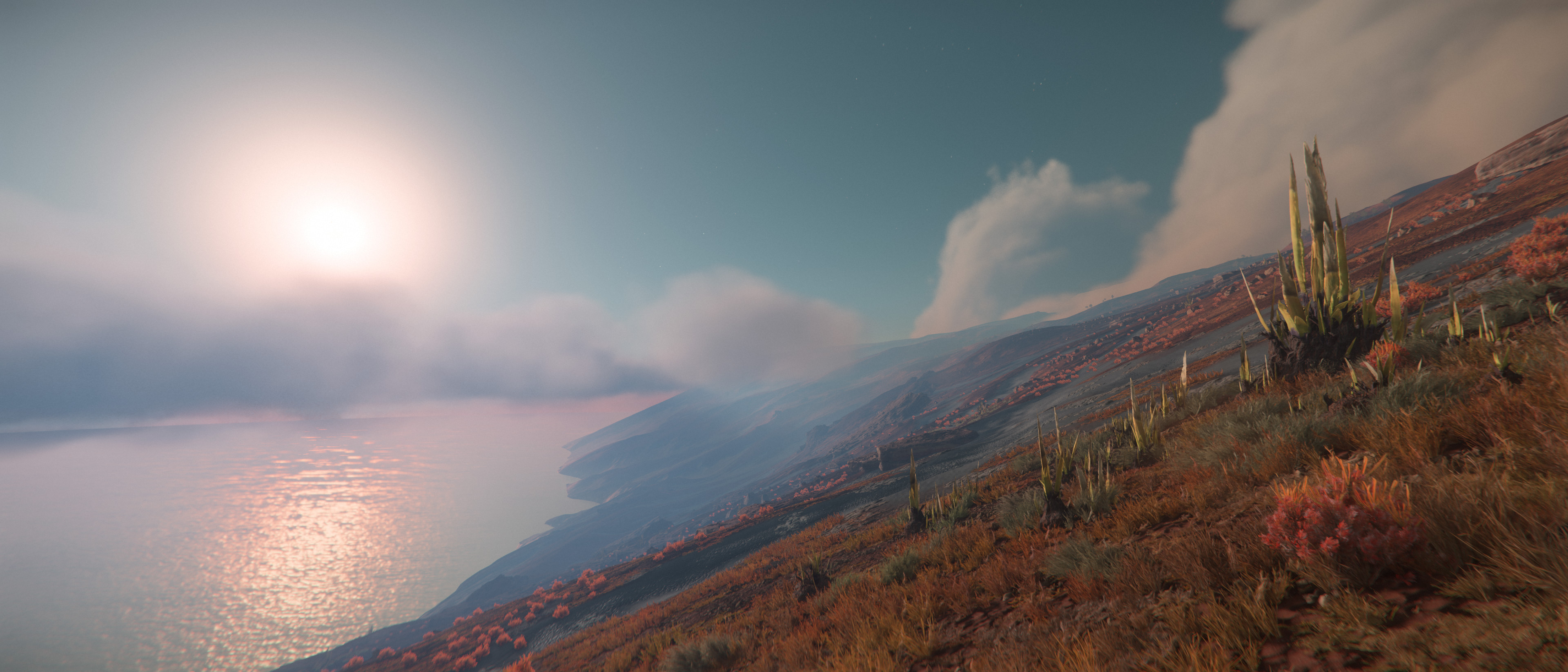
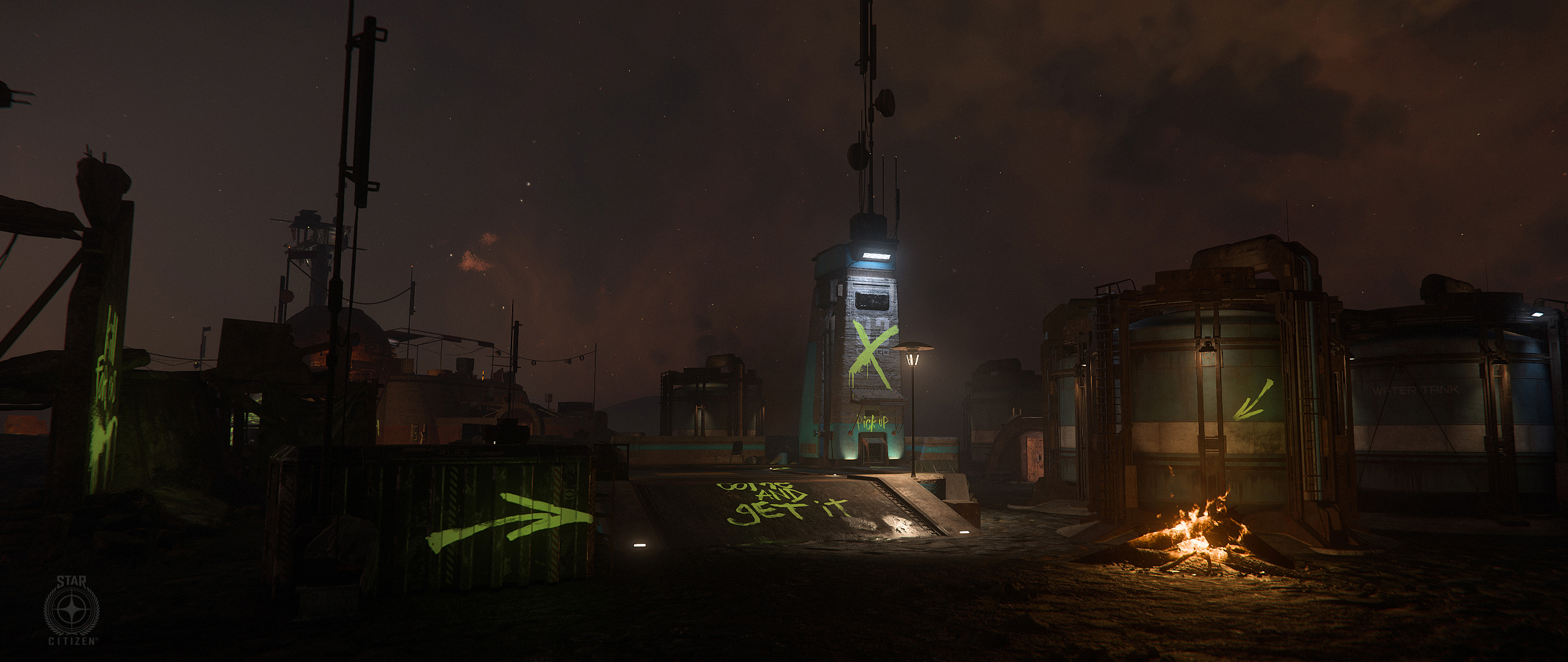
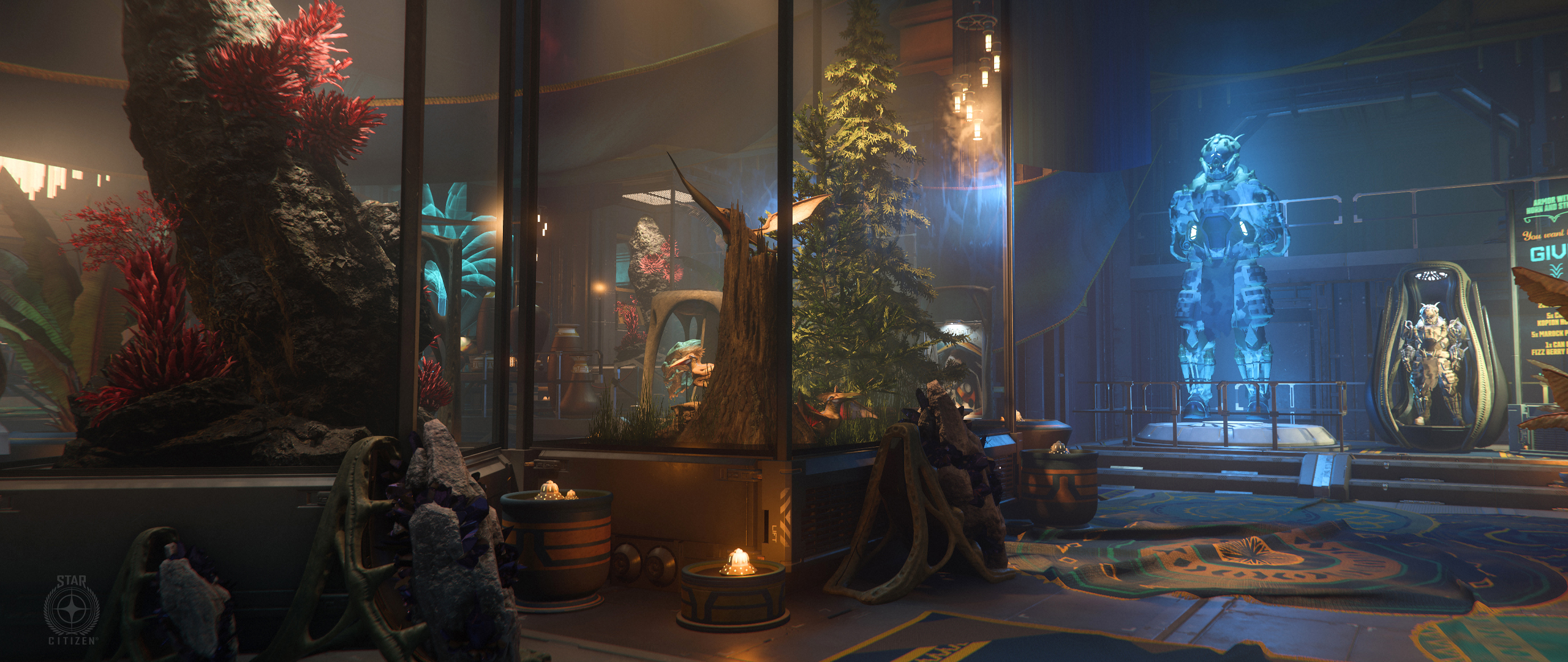
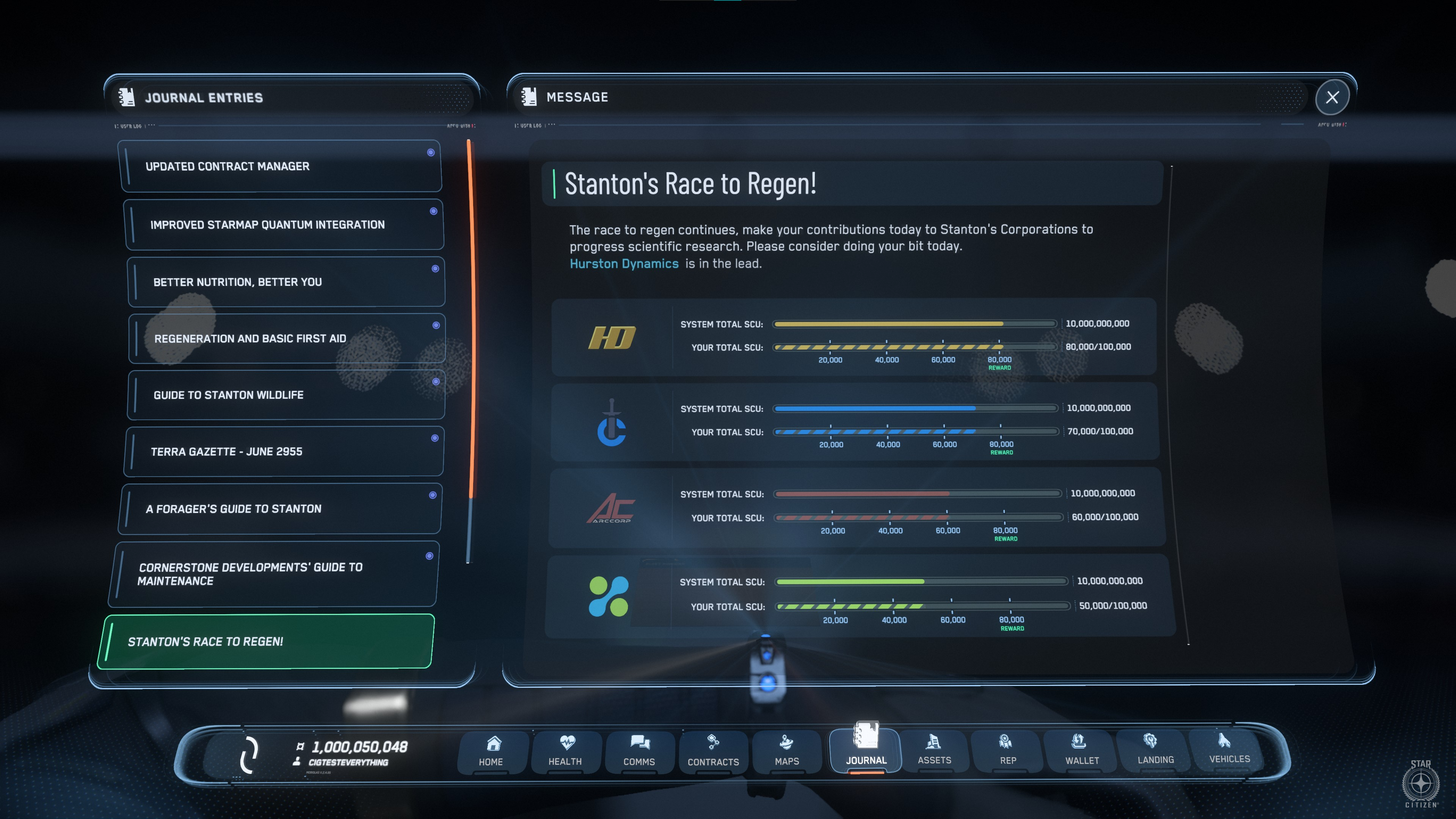
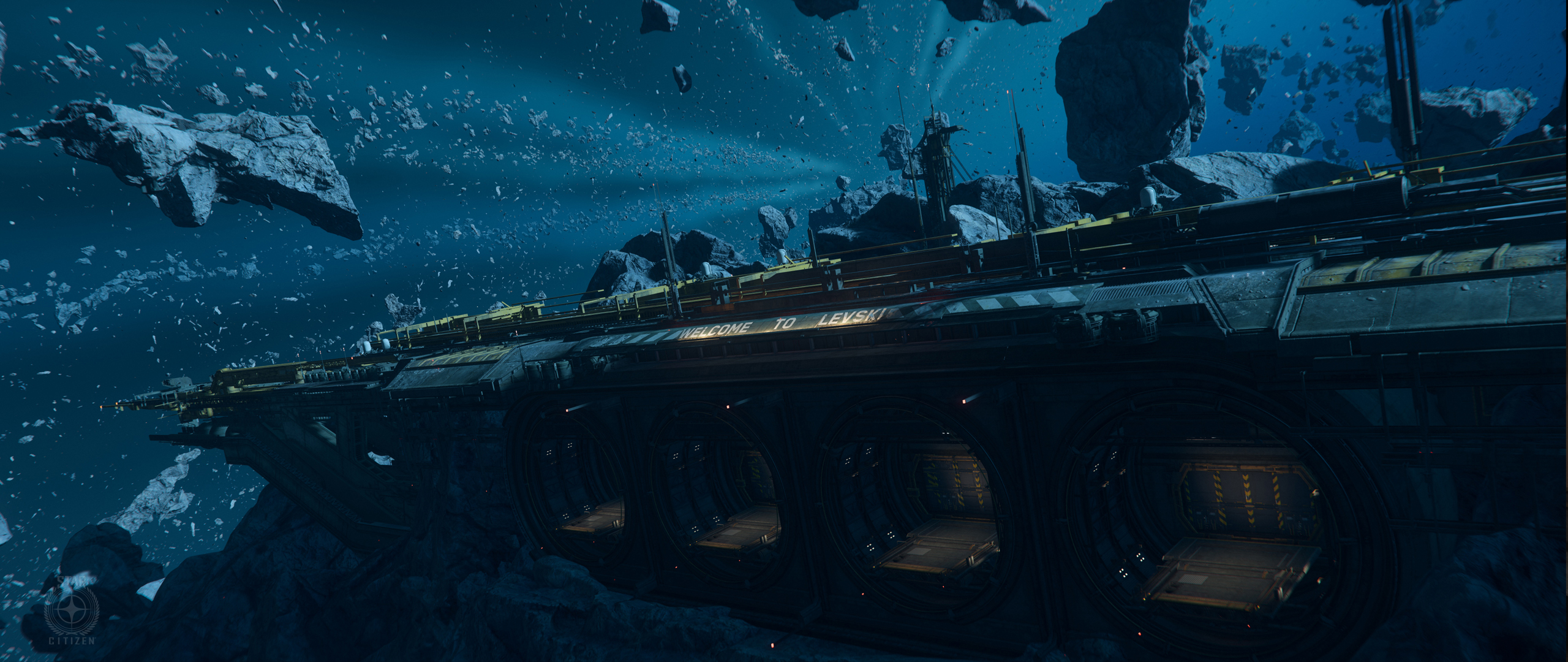
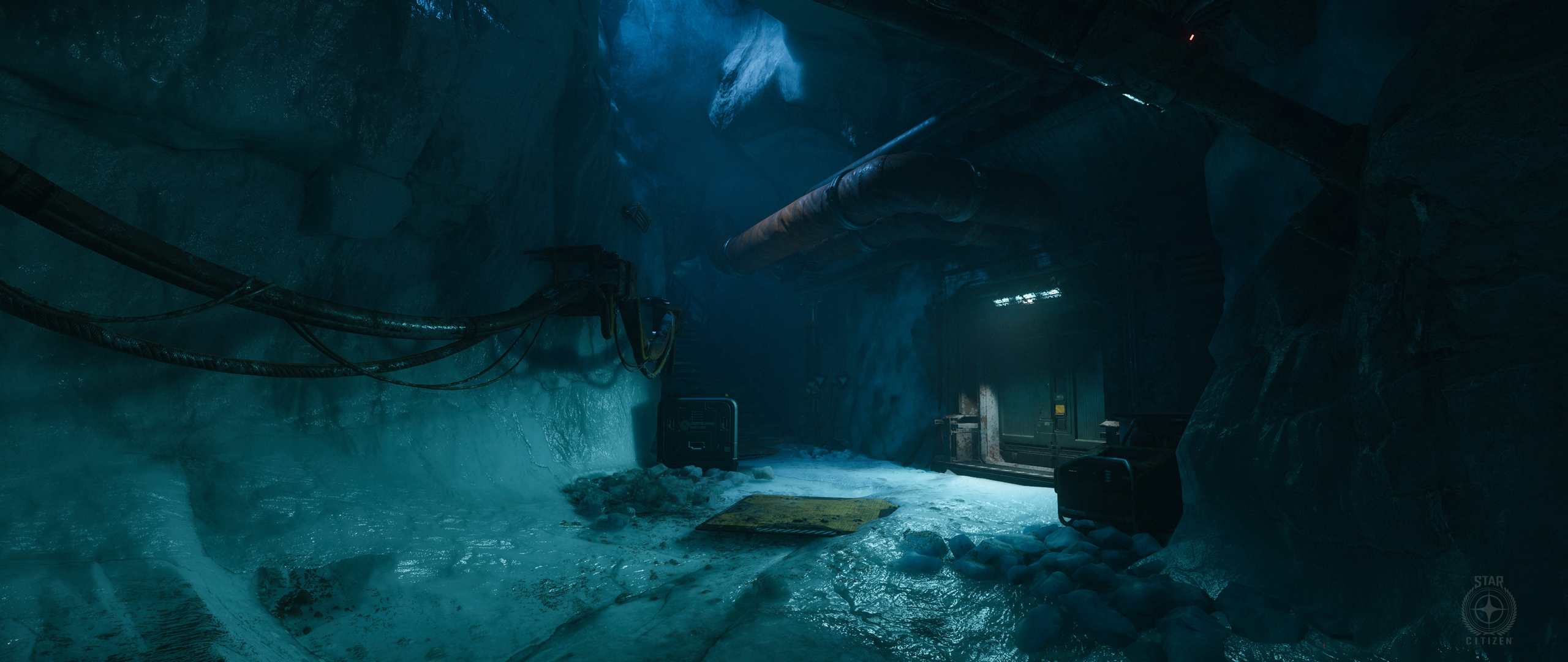
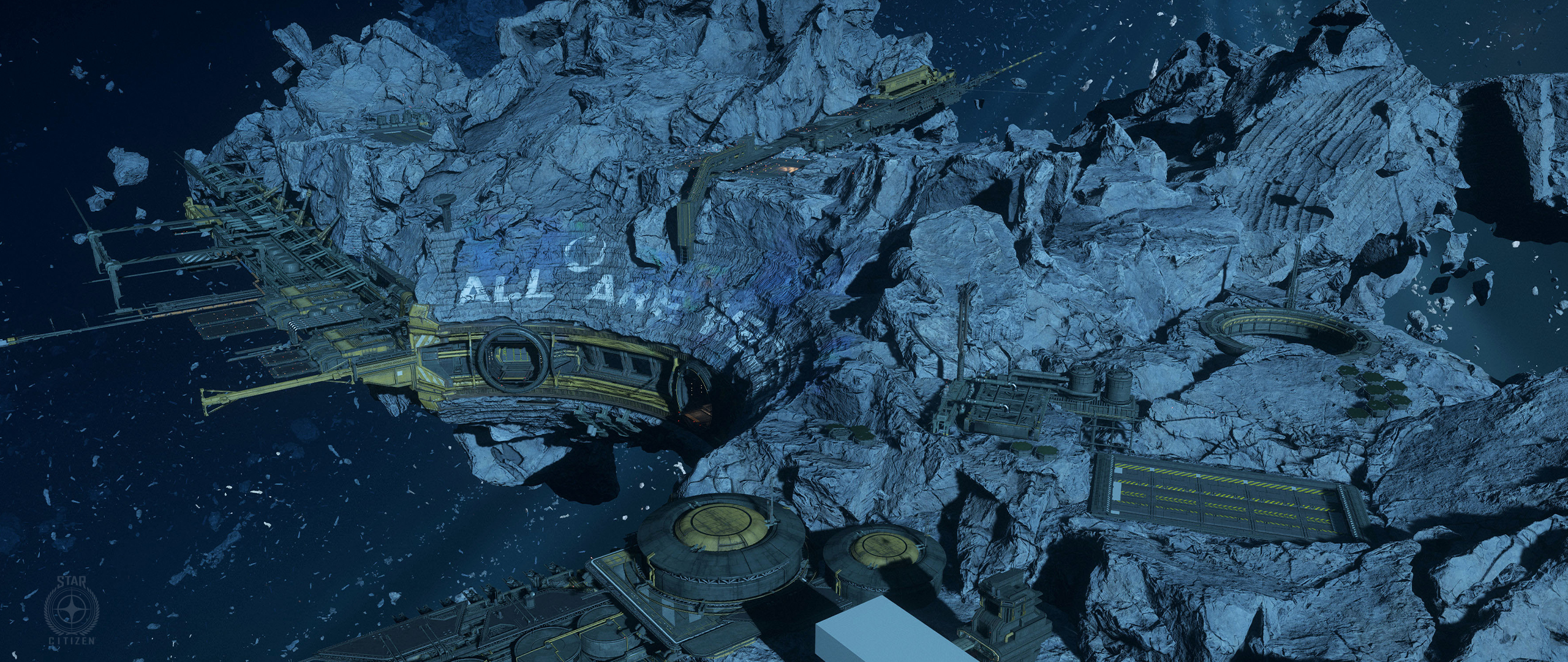
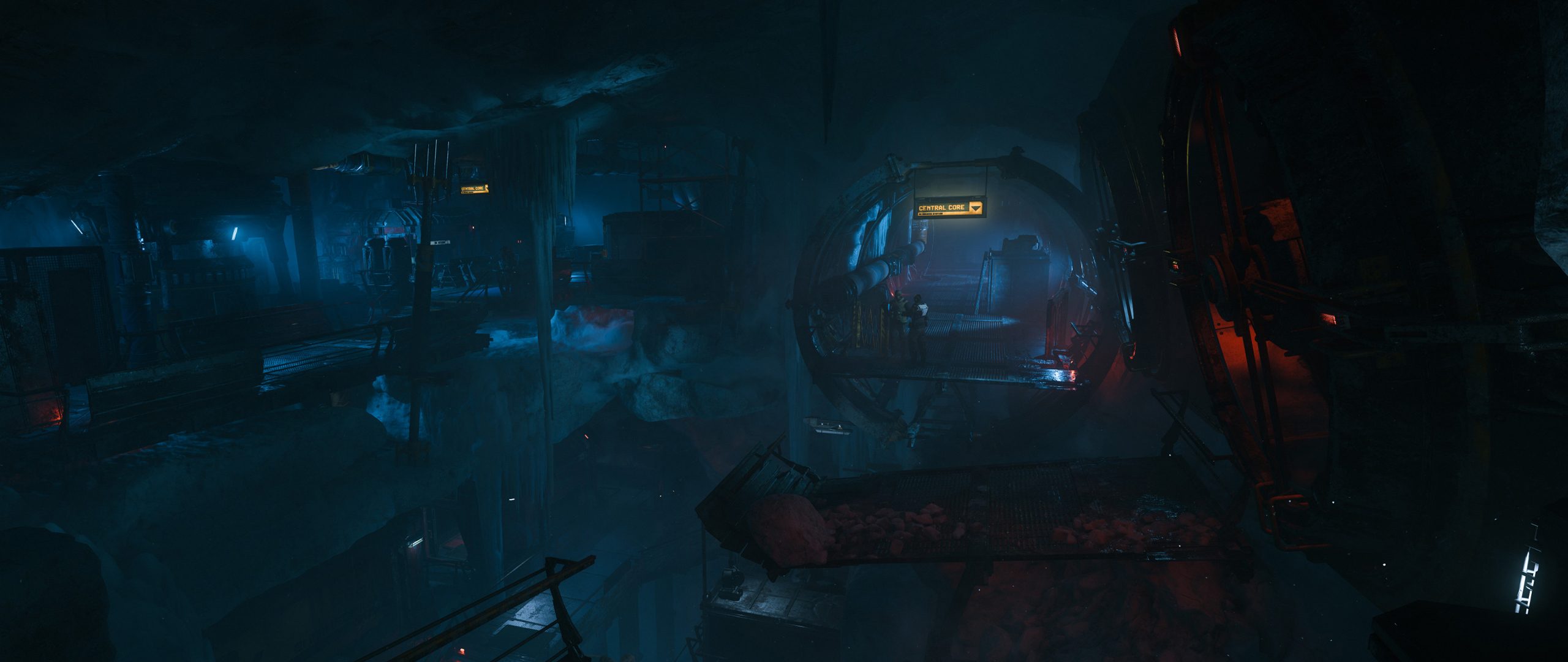
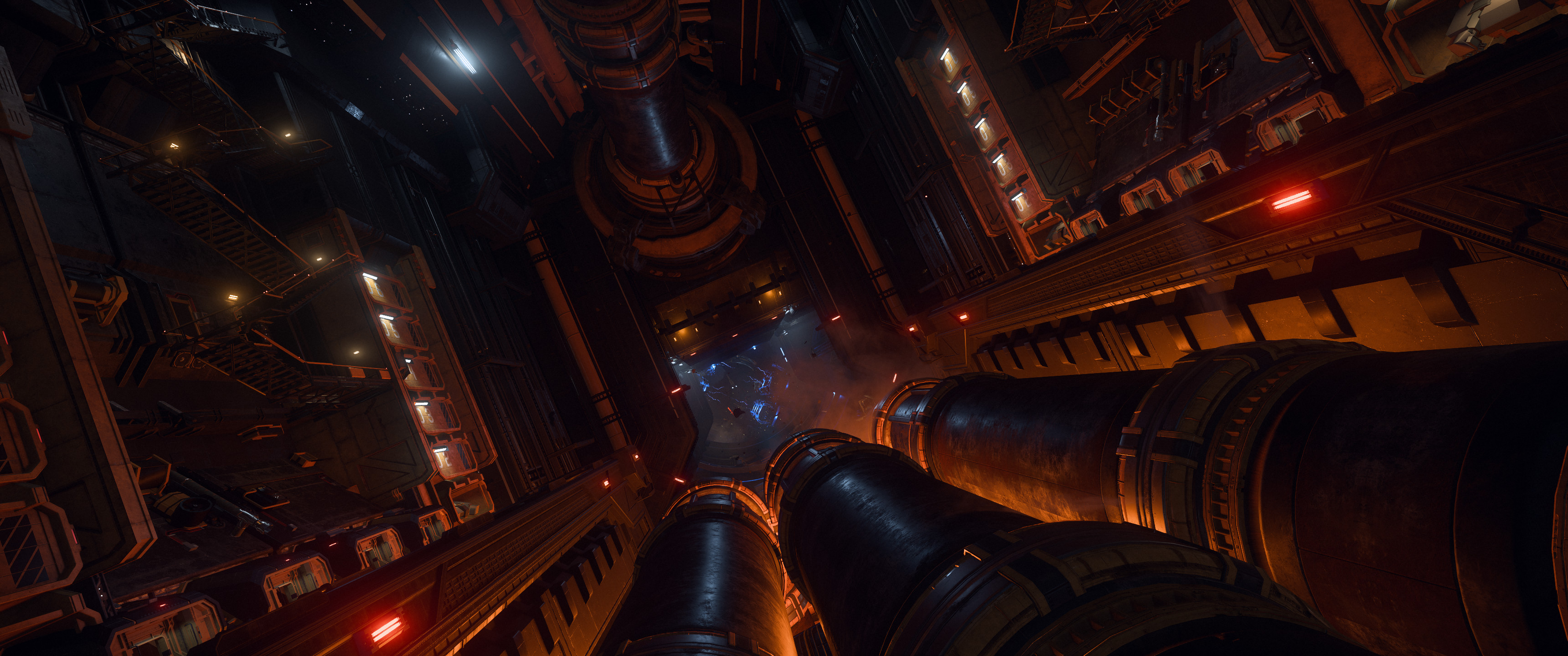
Metadata
- CIG ID
- 18251
- Channel
- Transmission
- Category
- Undefined
- Series
- Monthly Reports
- Comments
- 24
- Published
- 5 years ago (2021-08-04T00:00:00+00:00)