Squadron 42 Monthly Report: February 2023
Feedback Undefined NoneContent
Armorer Squadron 42 Monthly Report February 2023 This is a cross-post of the report that was recently sent out via the monthly Squadron 42 newsletter. We’re publishing this a second time as a Comm-Link to make it easier for the community to reference back to.
TO: SQUADRON 42 RECRUITS
SUBJ: DEVELOPMENT UPDATE 03:01:2023
REF: CIG UK, CIG DE, CIG LA, CIG TX
FAO Squadron 42 Recruits.
Welcome to February’s Squadron 42 development report. Enclosed you will find details on the latest progress made across the campaign, including enemy creatures, saving and loading, and naval behaviors.
Thank you for your continued support of Squadron 42.
Sincerely,
CIG COMMUNICATIONS
AI (Content)
Following on from their recent work of enabling characters to drink in usables, the AI Content team began setting characters up to use the mobiGlas at a variety of seats and tables.
“This is actually simpler than drinking and allowed us to get some great results in a short space of time.” AI Content
They also completed a large amount of animation polish, including a medic inspecting a patient, exiting beds from different directions and heights, and sitting on the floor feeling sick.
On the Design side, the team enabled utility characters to load boxes onto a trolley, move the trolley, and then unload the boxes to add additional life to large areas. They also began populating chapter 15 with AI characters in a variety of locations. For this, they utilized new technology to simplify the process and give them more control, the first pass of which is looking promising.
Alongside this, the bridge crew behavior in Shubin Station was refined and a first-pass setup for an interactive weapon rack was completed.
AI (Features)
Last month, the AI Features team finished work on a non-Humanoid creature AI. This involved increasing the range of animations that the creature can use, including a slow walk that allows the creature to stalk its prey, and look-poses that allow the creature to turn its head to face the target.
Improvements were also made to the code that distributes the creatures around a target when they attack in groups. This uses the formation system currently used by spaceship AI; when moving towards the target, it checks for and creates a formation around the target, with offsets designed to space the attacks equally. This implementation is currently with the designers for feedback before final adjustments are made.
AI Features continued with the medic behaviors, which allows the enemy AI to revive friends. ‘Downed’ AI are those that have taken near-fatal damage and can only be revived using a med-pen. ‘Unconscious’ AI are those that have been knocked out (e.g. by stealth takedown) and can be revived by any friendly. Recent work saw the team tidying up the different interactions and, in particular, focusing on what the AI does when encountering a downed or unconscious AI during combat. For example, if the AI is a medic, they will respond and revive their friend, regardless of condition. However, if they’re not a medic, they will call for one and any nearby will come to their aid.
Development of the buddy AI mentioned last month continued too. This now includes matching the player’s stance (e.g. crouch) and moving between cover when enemies are near.
On the animation side, the team prepared for and shot additional performance capture to replace various blockout animations.
Finally for AI Features, the team spent time re-reviewing their existing features to check that everything worked as expected as a whole. This led to them testing and fixing issues that could only be seen when all the functionality was working together.
AI (Tech)
AI Tech began February by completing the NPC Transit feature, which manages elevators and trains. Now, NPCs will understand if a transit carriage is present at their location and whether they can move directly inside, if they need to wait, or if they should press a button to call it. They will also understand when they’ve arrived at their destination and will move outside. While in the carriage, NPCs will look for a usable and idle there until they reach their destination. Upon completion, the feature was passed to Design, following which AI Tech addressed feedback and fixed bugs.
The team then allocated time to improving NPC trolley usage, ensuring that NPCs can use elevators and move trolleys with them if the behavior requests it. To achieve this, they had to write new and update existing behaviors and fix bugs related to path-following while pushing a trolley.
The team also finished the base skeleton for ‘boids’ (bird-oid objects), which will enable groups of small creatures like birds, fish, and rats. This required them to implement new components, including a system that allows designers to write rules and constraints related to spawning and movement, which were exposed to DataForge for easy access.
On the navigation-system side, AI Teach continued to work on cost area shapes that will influence the topology of navigation mesh triangles. This will enable the pathfinder to avoid or prefer to use specific areas. As mentioned in last month’s report, this will initially be used to avoid fire hazards and define sidewalks for social AI actors.
The team also progressed with navigation agent-type override parameters, which are used when creating areas with specific navigation constraints. For example, they enable an NPC to transition from standing in a regular space to crouching in a vent.
AI Tech also exposed new parameters to specify entity properties during the navigation-generation phase. Now, the designers will be able to mark entities as:
Included: The default value - the entity is processed during voxelization and the nav-mesh is generated using that object.
Excluded: One entity will be ignored during generation - for the navigation system, it will be equivalent to not having found that object.
Ignoring Walkability: The entity will cause the nav-mesh to consider it an obstacle - NPCs will not be able to walk on top of that object.
For AI tools, the team progressed their work on Apollo (the Subsumption tool) and added new functionality requested by the designers, including:
Mastergraph editing to allow users to select the default state of each parent state.
The ability to create new multigraph nodes by dragging functions from the outlier.
Support for comments inside XMLs (this was an engine-wide improvement).
Support to read object-container information related to platform creation directly from P4K files.
They also fixed several issues relating to the resizing of the node graph view.
Work continued on the usable coordinator tool, with the team adding support for multiple input types that can better specify when choosing the next usable or usable group. For example, specifying the number of usables required to determine that a group is ‘complete.’ They also fixed an issue preventing the usable group coordinator from working correctly with object containers and implemented the ability to add multiple instances of the same usable with different properties.
AI (Vehicle Features)
Vehicle Feature’s embedded AI team continued working on the new AI combat behaviors.
“We’ve had a lot of back and forth with the Design teams and directors to nail down behavior tactics that we’re happy with, and we are now working to implement and test this new combat AI.” AI Vehicle Features
Additionally, the new control surface feature for the vehicle flight system is being integrated with AI. Adjustments are being made to the AI movement systems to enable them to fly correctly and reliably with control surfaces rather than thrusters.
Animation
Throughout February, the SQ42 Animation team worked on various features, including their first creature enemy, Vanduul searching actions and threatens, ammo looting, and AI healing. They also worked on pro-style takedowns based on the recent unskilled versions; some design changes were made and responses to failed attacks were blocked out.
Background AI was developed for sick characters, medical wards, and emergency exits from object use. The team also worked on the Kastak Arms sniper rifle and began reviewing the first pass of the Titan animation rig. Zero-g grenade use for the player was also developed alongside further zero-g traversal and movement.
Various mo-cap data was captured, including a crowd watching a fight, numerous walk styles, use of hygiene cubicles, movement and stacking boxes, security weapon racks, and improved threat reactions for civilians.
The Facial Animation team worked on lines for enemies in Aciedo and captured facial forms and locomotion performances for injured and sick characters.
Art (Characters)
February saw the Character Art team continue work on the Screaming Galsons faction, including a set of cybernetic arms that the team are excited to implement.
They’re currently progressing with the high-poly stages for the navy pilot flightsuit and other navy assets. Work began on the OMC faction and the model for the enemy creature mentioned above.
Engine
In February, the Physics team made several improvements to box pruning. For example, changes were made to avoid bipartite box pruning inefficiencies, to decide when to run box pruning before obb pruning, and to significantly improve box pruning performance in general. Additional optimizations include using the spaceship's localspace obb for IFCS collision warning sweep checks to reduce the size of the checked volume. Furthermore, support for various unary and binary distance-field operations was added to the physics system as well as support for tapered capsules (aka bispheres) on articulated entities. Lastly, huge pages are now used for physical entity factories.
On the renderer, Gen12 received motion vector support for render-to-texture pipelines. Also, redundant copying of render target data for partial refractions was eliminated. Moreover, the team spent time improving ultra-wide-screen support. As one of the results, rendering of the in-game console was vastly improved, resulting in clearer text display. Improving the visor for ultra-wide screens is still being worked on. Lastly, the CPU side code for scatter queries was optimized.
For the core engine, further substantial improvements and performance optimizations were implemented for the remote shader compiler server. Work on streaming system improvements started, and the final touches on p4k v2 support for internal development tools are being wrapped up. The team also started looking into more advanced tool support for memory tracking of both the server and client.
Features (Gameplay)
Last month, Gameplay Features continued working on save and load, getting the Subsumption missions restoring correctly and back to their correct state. They set save points up in one of the missions and passed it to QA to see what wasn’t loading back in correctly so they could debug and fix it.
“We’re now getting the save time down and saving in the background so there isn’t a long stall each time.” Gameplay Features Team
They also implemented a tutorial feature for the designers. At opportune moments, they’ll be able to slow down and pause the game while bringing up instructions for a particular piece of gameplay functionality before continuing when the player achieves what’s required. They also set up consoles and datapads to run mobiGlas apps. This allows them to access the same functionality from different places or even create console-specific apps.
The new Starmap was enabled as the radar in the Gladius, which can transition between radar and full-screen modes and power on and off. The initial implementation of the new display markers was completed too.
Further polish was done on the seamless transition between the player camera and cinematic camera based on the Cinematics team’s feedback. For example, they improved the appearance when the player is moving over standing still.
Finally, the team further developed a feature that controls vehicles remotely. They can now constrain vehicles to a given area and ultimately lock them in a given place.
Features (Vehicles)
The Vehicle team spent part of the month enabling the newly redesigned quantum travel feature across various chapters in the campaign.
“It’s taken a lot of bug fixing, testing, and iteration to get to this stage, but so far it’s been going well and the new quantum travel is set to be enabled game-wide very shortly. As well as just bug fixing and testing, we’ve had lots of design feedback from the directors and we’ve been making iterations to the UI, controls, VFX, and general feel of the feature.” Vehicle Features Team
The other major area of focus was vehicle UI. The team recently received new features from UI Tech that enables them to render 3D UI on the player visor as an AR layer. This led to them building up reticles and aiming and targeting UI in this new tech as they work toward a vehicle heads-up display that integrates with the new multi-function display (MFD) system.
On a related topic, the underlying MFD tech is complete and the feature is almost usable in-game. The team now have the goal of enabling it game-wide for use in playtests by all devs in the company.
Ship radar received further work due to requests made by other teams to support their design work. Most of these came from the Level Design teams and involve mission logic manipulating the radar system to generate gameplay encounters.
Lastly, the ship-recall feature mentioned in last month’s report was fed back on, with Vehicle Features further iterating on it to improve and polish the gameplay. This involved collaboration with the AI, Flight Systems, and other Feature teams. When complete, the player will be able to use the SQ42 mobiGlas to call their ship and request it fly back to them.
Gameplay Story
Gameplay Story concentrated on mo-cap planning and polish passes last month to further improve their scenes. For example, they updated chapters 1 and 13 by completing thorough passes on the characters and reusing animations to make the scenes function correctly. They also created various new scenes by reusing old animations and using new mo-cap to add to others.
A significant scene in chapter 12 received a full pass, with a key character guiding and interacting with the player across a new environment.
The team also worked on a scene used if the player is injured and visits the medical bay to be healed. The scene was initially created using wildlines but didn't flow as well as hoped, so new animations were produced to make the character interact better with the player. Additional content was also added to allow the player to abandon and rejoin the scene.
Graphics & VFX Programming
Last month, the Graphics team continued to close out the final tasks for Gen12 before they transition to assisting in the completion of the Vulkan graphics API.
The damage-map system was converted to Gen12, and support for profile groups was added to achieve parity with profiling tools in the legacy renderer. Additionally, the render pipeline was made configurable to allow secondary viewports to balance the desired quality and cost. Finally, legacy lens flares were converted to Gen12 alongside initial support for HDR.
Support for TSAA is currently being added to secondary viewports, which will significantly improve visual quality, especially for hair. The team also submitted the first iteration of a new render-layer feature to allow easy customization of objects in the world for use with game features such as scanning and the mini-map.
For features, the Graphics team further developed several shaders, including converting LayerBlend v1 assets to the more recent v2 and adding usability improvements to the new shader. Various improvements were also made to the UI shaders, including stability fixes for anti-aliased borders, the option to render circles on each vertex, and lighting support to allow planets in the Starmap to appear both lit and holographic in a single pass.
For tools, texture processing was made significantly faster through parallelizing filtering and compression, which will be a significant improvement for the artists and build system. Work started on a new mesh format too, with the goal of vastly improving loading times and render performance.
The VFX Programming team's time was split between fire, quantum travel, and tool work. For fire, work began on decal shading to achieve glow, burn, and soot on objects within the scene. Quantum travel now has support for 'quantum casting' and ‘red shift’ along with various other code improvements. For tools, usability improvements continued and support was added for referencing particle effects from other particle effects.
The Planet Tech team worked on better shaping support for asteroid fields, improvements to the harvestable system, and adding support for instancing to terrain chunks.
Also, the Planet and Graphics teams worked together on a new water system. This is still at an early stage but aims to allow for GPU wave/ripple simulations at multiple scales as well as network-synced impacts for larger events (e.g. spaceships crashing). Shading improvements are also being made to achieve better reflections, refraction, and foam.
Level Design (Flight)
The Space/Dogfight team continued working to get all of the ship combat sections of the game flowing seamlessly into the social and FPS sections. They also continued working with the various Feature teams to get critical system updates integrated into the game flow. Last month, they further improved quantum travel and pinned targets. Save and load was also worked on alongside Gameplay Features.
Level Design (Social)
Last month, Level Design’s Social team made a concerted push on content across various chapters, including a major focus on background behaviors and schedules for the Idris. This content brings ‘interstitials’ (the connective tissue that bridges all scene content) to life. This was rolled out to one focus chapter to enable the team to see and evaluate in situ all of the Idris-specific behaviors, including the deck crew, bridge crew, utility, marines, engineers, gunners, medical, leisure, sleeping, sustenance, and hygiene. A large party scene aboard the ship progressed well too.
Narrative
A bulk of Narrative’s month was spent preparing for an upcoming mo-cap shoot. This included meeting with various stakeholders to review the content and ensure that the script reflects the latest changes, outline any potential lines they’d like to capture, and go through the casting process.
The team is also planning to use this shoot to start capturing scripts for some of the background characters (codenamed Redshirts) who will be used to populate larger spaces. These characters will utilize dynamic conversation tech along with an array of wildlines to act in a variety of careers. Narrative are aiming to capture a few of these line sets in every shoot to slowly build up numbers as opposed to scheduling them all into a single shoot. They’ll also capture additional combat sets for some of the campaign’s enemies.
Narrative continued meeting with the Design teams to walk through the latest level iterations. This is to assess if any additional content is required to support gameplay, provide guidance, or embellish the tone and flavor of the moment.
Otherwise, the team kicked off outlining the various collectibles that will be scattered throughout the game. Now that the types of collectibles have been decided, Narrative can start outlining each one so the Props team can start creating assets.
Tech Animation
Last month, the Tech Animation team were on set at Pinewood Studios in London, working alongside an outsource studio to finalize face scanning to populate the remainder of the gene pool for the head generation systems (DNA). This is relevant for both the PU and Squadron 42.
“We scanned a broad range of models, young and old, from all facets of Humanity available to us, which will go a long way to truly showing diversity in our game. The scanning went exceptionally well, our chosen outsource studio has a fantastic resource in their facial scanning rig, which delivered exceptional results. Coupled with lots of hard work and a good sense of humor, we made the most of our two weeks.” Tech Animation Team
UI
Last month, the UI Art and Design team worked on reusable signage created in Building Blocks to make things easier for the environment artists. This means they can select options from a menu and the sign is automatically generated rather than them having to create a unique texture each time.
They also continued concept work on two UI styles, ensuring they’re unique and the art direction is well received. They also produced concepts for additional MFD screen layouts and tweaked aiming and targeting alongside the Vehicle team.
UI continued to iterate on one of the in-world holographic UIs.
“As it’s the first of its kind in the game, after reviewing the prototype, we found lots of things to improve, so it had another concepting and in-game implementation pass to get it to the level we need.” UI Team
The team made an initial visual pass on the new hacking UI to make it feel more three-dimensional and holographic. UI also supported the SQ42 Feature team in setting up a universal 3D marker in the Starmap, and continued to create UI assets for the Cinematics team.
UI Tech created a color picker for use in the character customizer. They also continued to help polish the Starmap, adding space dust to make it easier to perceive movement, improving the controls, and creating cubic holo volumes. They added workflow fixes too, such as improved comments in Building Blocks, and making it easier to inspect drawn UIs.
VFX
Last month, VFX spent time cleaning up data asserts coming from various assets (including particle libraries). This was made easier by the VFX programmers who added more detailed information to the errors, including file paths for missing assets.
The team also completed their overhaul of the particle library structure, meaning older VFX can be swapped out for new and improved versions.
Finally, the team provided close support to Art, Design, and Cinematics on a variety of locations.
WE'LL SEE YOU NEXT MONTH...
// END TRANSMISSION
Geschwader 42 Monatsbericht
Februar 2023
Dies ist ein Querverweis auf den Bericht, der kürzlich über den monatlichen Squadron 42 Newsletter verschickt wurde. Wir veröffentlichen ihn ein zweites Mal als Comm-Link, damit die Community leichter darauf zurückgreifen kann.
TO: REKRUTEN DES GESCHWADERS 42
SUBJ: ENTWICKLUNG UPDATE 03:01:2023
REF: CIG UK, CIG DE, CIG LA, CIG TX
FAO-Geschwader 42 Rekruten.
Willkommen zum Entwicklungsbericht für Squadron 42 im Februar. Anbei findest du Details zu den neuesten Fortschritten in der Kampagne, wie z.B. feindliche Kreaturen, Speichern und Laden sowie das Verhalten der Marine.
Vielen Dank für eure anhaltende Unterstützung von Squadron 42.
Mit freundlichen Grüßen,
CIG COMMUNICATIONS
AI (Inhalt)
Nachdem das KI-Content-Team vor Kurzem den Charakteren die Möglichkeit gegeben hat, in den Usables zu trinken, hat es nun begonnen, die Charaktere so aufzustellen, dass sie das mobiGlas an verschiedenen Sitzen und Tischen benutzen.
"Das ist einfacher als Trinken und wir konnten in kurzer Zeit tolle Ergebnisse erzielen. AI Content
Das Team hat auch eine große Anzahl von Animationen fertiggestellt, z. B. einen Sanitäter, der einen Patienten untersucht, der aus verschiedenen Richtungen und Höhen aus dem Bett steigt und der auf dem Boden sitzt und sich krank fühlt.
Auf der Designseite ermöglichte das Team, dass Gebrauchsgegenstände Kisten auf einen Wagen laden, den Wagen bewegen und die Kisten wieder ausladen können, um große Bereiche mit Leben zu füllen. Außerdem begannen sie, Kapitel 15 mit KI-Charakteren an verschiedenen Orten zu bevölkern. Dafür haben sie neue Technologien eingesetzt, die den Prozess vereinfachen und ihnen mehr Kontrolle geben - der erste Durchlauf sieht vielversprechend aus.
Außerdem wurde das Verhalten der Brückenbesatzung in der Shubin-Station verfeinert und ein erster Durchlauf für ein interaktives Waffenregal abgeschlossen.
KI (Features)
Im letzten Monat beendete das KI-Features-Team die Arbeit an der KI für nicht-humanoide Kreaturen. Dazu gehörte die Erweiterung der Animationen, die die Kreatur verwenden kann, wie z. B. ein langsamer Gang, mit dem sie sich an ihre Beute heranpirschen kann, und Blickhaltungen, mit denen die Kreatur ihren Kopf drehen kann, um ihr Ziel zu sehen.
Außerdem wurde der Code verbessert, der die Kreaturen um ein Ziel herum verteilt, wenn sie in Gruppen angreifen. Dabei kommt das Formationssystem zum Einsatz, das derzeit von der Raumschiff-KI verwendet wird: Wenn sie sich auf das Ziel zubewegt, prüft sie, ob es eine Formation um das Ziel herum gibt, und erstellt diese, wobei die Angriffe gleichmäßig verteilt werden sollen. Diese Implementierung liegt derzeit bei den Designern, um Feedback zu erhalten, bevor endgültige Anpassungen vorgenommen werden.
Die KI-Funktionen wurden mit dem Sanitäterverhalten fortgesetzt, das es der gegnerischen KI ermöglicht, Freunde wiederzubeleben. KI, die am Boden liegt, ist eine KI, die fast tödlichen Schaden erlitten hat und nur mit einem Med-Pen wiederbelebt werden kann. Bewusstlose KI ist eine KI, die ausgeschaltet wurde (z. B. durch einen Stealth-Takedown) und von einem beliebigen Freund wiederbelebt werden kann. In letzter Zeit hat das Team die verschiedenen Interaktionen aufgeräumt und sich vor allem darauf konzentriert, was die KI tut, wenn sie im Kampf auf eine ausgeschaltete oder bewusstlose KI trifft. Wenn die KI zum Beispiel ein Sanitäter ist, wird sie reagieren und ihren Freund wiederbeleben, unabhängig von seinem Zustand. Wenn sie jedoch kein Sanitäter ist, ruft sie nach einem und jeder, der in der Nähe ist, kommt ihr zu Hilfe.
Die Entwicklung der im letzten Monat erwähnten Buddy-KI wurde ebenfalls fortgesetzt. Sie passt sich jetzt der Haltung des Spielers an (z. B. in der Hocke) und bewegt sich aus der Deckung, wenn Feinde in der Nähe sind.
Auf der Animationsseite hat das Team zusätzliche Performance Captures vorbereitet und gedreht, um verschiedene Blockout-Animationen zu ersetzen.
Bei den KI-Funktionen schließlich verbrachte das Team einige Zeit damit, die bestehenden Funktionen zu überprüfen, um sicherzustellen, dass alles wie erwartet funktioniert. Das führte dazu, dass sie Probleme testeten und behoben, die nur sichtbar waren, wenn alle Funktionen zusammen funktionierten.
KI (Technik)
Die KI-Abteilung hat im Februar das NPC-Transit-Feature fertiggestellt, das Aufzüge und Züge steuert. Jetzt wissen die NSCs, ob an ihrem Standort ein Transitwagen steht und ob sie direkt einsteigen können, warten müssen oder einen Knopf drücken sollen, um ihn zu rufen. Sie wissen auch, wann sie an ihrem Ziel angekommen sind und gehen nach draußen. Während sie in der Kutsche sitzen, suchen die NSCs nach einem brauchbaren Platz und warten dort, bis sie ihr Ziel erreicht haben. Nach der Fertigstellung wurde das Feature an das Design weitergeleitet, woraufhin AI Tech das Feedback aufnahm und die Fehler beseitigte.
Anschließend widmete sich das Team der Verbesserung der NSC-Wagennutzung und stellte sicher, dass NSCs Aufzüge benutzen und Wagen mit sich führen können, wenn das Verhalten es erfordert. Um dies zu erreichen, mussten sie neue Verhaltensweisen schreiben und bestehende aktualisieren sowie Fehler im Zusammenhang mit dem Wegverfolgen beim Schieben eines Wagens beheben.
Das Team hat auch das Grundgerüst für "Boids" (vogelähnliche Objekte) fertiggestellt, die Gruppen von kleinen Lebewesen wie Vögeln, Fischen und Ratten ermöglichen werden. Dazu mussten sie neue Komponenten implementieren, darunter ein System, mit dem die Designer Regeln und Einschränkungen für das Spawnen und die Bewegung schreiben können, die für einen einfachen Zugriff in DataForge veröffentlicht wurden.
Auf der Seite des Navigationssystems arbeitete AI Teach weiter an den Formen der Kostenbereiche, die die Topologie der Dreiecke des Navigationsnetzes beeinflussen werden. So kann der Pfadfinder bestimmte Gebiete meiden oder bevorzugen. Wie im Bericht vom letzten Monat erwähnt, wird dies zunächst zur Vermeidung von Feuergefahren und zur Festlegung von Gehwegen für soziale KI-Akteure genutzt.
Das Team hat auch die Überschreibungsparameter für Navigationsagenten weiterentwickelt, die bei der Erstellung von Bereichen mit bestimmten Navigationsbeschränkungen verwendet werden. Sie ermöglichen es einem NSC zum Beispiel, in einem normalen Raum zu stehen und in einem Lüftungsschacht zu kauern.
AI Tech hat auch neue Parameter eingeführt, mit denen die Eigenschaften von Entitäten während der Navigationsphase festgelegt werden können. Jetzt können die Designer Entitäten wie folgt markieren:
Eingeschlossen: Der Standardwert - das Objekt wird während der Voxelisierung verarbeitet und das Nav-Mesh wird mit diesem Objekt erstellt.
Ausgeschlossen: Ein Objekt wird bei der Erstellung ignoriert - für das Navigationssystem bedeutet das, dass das Objekt nicht gefunden wurde.
Begehbarkeit ignorieren: Das Objekt wird vom Nav-Mesh als Hindernis betrachtet - NSCs können nicht über das Objekt laufen.
Bei den KI-Tools hat das Team die Arbeit an Apollo (dem Subsumptionstool) vorangetrieben und neue Funktionen hinzugefügt, die von den Designern gewünscht wurden, darunter:
Bearbeitung des Mastergraphen, damit die Benutzer den Standardzustand jedes übergeordneten Zustands auswählen können.
Die Möglichkeit, neue Multigraphenknoten durch Ziehen von Funktionen aus dem Ausreißer zu erstellen.
Unterstützung für Kommentare innerhalb von XMLs (dies war eine engineweite Verbesserung).
Unterstützung des Lesens von Objekt-Container-Informationen für die Erstellung von Plattformen direkt aus P4K-Dateien.
Außerdem wurden mehrere Probleme im Zusammenhang mit der Größenänderung der Node-Graph-Ansicht behoben.
Das Team fügte Unterstützung für mehrere Eingabetypen hinzu, mit denen die Auswahl der nächsten verwendbaren oder verwendbaren Gruppe besser spezifiziert werden kann. So kann z. B. die Anzahl der nutzbaren Gruppen festgelegt werden, die erforderlich sind, um eine Gruppe als "vollständig" zu betrachten. Außerdem wurde ein Problem behoben, das den Koordinator für verwendbare Gruppen daran hinderte, korrekt mit Objektcontainern zu arbeiten, und es wurde die Möglichkeit geschaffen, mehrere Instanzen desselben verwendbaren Objekts mit unterschiedlichen Eigenschaften hinzuzufügen.
KI (Fahrzeugfunktionen)
Das Team für die eingebettete KI von Vehicle Feature arbeitete weiter an den neuen KI-Kampfverhaltensweisen.
"Wir haben viel mit den Designteams und den Direktoren diskutiert, um eine Verhaltenstaktik festzulegen, mit der wir zufrieden sind, und wir arbeiten jetzt daran, diese neue Kampf-KI zu implementieren und zu testen". KI-Fahrzeugeigenschaften
Außerdem wird das neue Steuerflächen-Feature für das Fahrzeug-Flugsystem in die KI integriert. Es werden Anpassungen an den KI-Bewegungssystemen vorgenommen, damit sie korrekt und zuverlässig mit Steuerflächen anstelle von Triebwerken fliegen können.
Animation
Im Februar hat das SQ42 Animationsteam an verschiedenen Features gearbeitet, darunter der erste Kreaturenfeind, Vanduul-Suchaktionen und Bedrohungen, das Plündern von Munition und die KI-Heilung. Außerdem arbeiteten sie an Takedowns im Profi-Stil, die auf den letzten ungelernten Versionen basierten; es wurden einige Designänderungen vorgenommen und Reaktionen auf fehlgeschlagene Angriffe ausgeblendet.
Die Hintergrund-KI wurde für kranke Charaktere, Krankenstationen und Notausgänge bei der Benutzung von Gegenständen entwickelt. Das Team arbeitete auch am Kastak Arms Scharfschützengewehr und begann mit der Überprüfung des ersten Durchgangs des Titan-Animations-Rigs. Außerdem wurde der Einsatz von Granaten in der Schwerelosigkeit für den Spieler entwickelt und die Bewegung in der Schwerelosigkeit weiter verbessert.
Es wurden verschiedene Mo-Cap-Daten aufgenommen, darunter eine Menschenmenge, die einen Kampf beobachtet, zahlreiche Laufstile, die Verwendung von Hygienekabinen, Bewegungs- und Stapelboxen, Sicherheitswaffenständer und verbesserte Bedrohungsreaktionen für Zivilisten.
Das Team für Gesichtsanimation arbeitete an den Linien für die Gegner in Aciedo und nahm Gesichtsformen und Bewegungsabläufe für verletzte und kranke Charaktere auf.
Kunst (Charaktere)
Im Februar hat das Character Art Team die Arbeit an der Fraktion der Screaming Galsons fortgesetzt und unter anderem kybernetische Arme entworfen, die das Team gerne einbauen möchte.
Zurzeit arbeiten sie an den High-Poly-Phasen für den Fluganzug des Marinepiloten und andere Marine-Assets. Die Arbeit an der OMC-Fraktion und dem Modell für die oben erwähnte feindliche Kreatur hat begonnen.
Motor
Im Februar hat das Physikteam mehrere Verbesserungen am Box Pruning vorgenommen. Zum Beispiel wurden Änderungen vorgenommen, um Ineffizienzen beim bipartiten Box Pruning zu vermeiden, um zu entscheiden, wann das Box Pruning vor dem Obb Pruning ausgeführt werden soll, und um die Leistung des Box Pruning im Allgemeinen deutlich zu verbessern. Zu den weiteren Optimierungen gehört die Verwendung des Lokalraum-Obb für IFCS-Kollisionswarnungs-Sweep-Checks, um die Größe des geprüften Volumens zu reduzieren. Außerdem wurde das Physiksystem um die Unterstützung verschiedener unärer und binärer Abstandsfeldoperationen erweitert und unterstützt nun auch verjüngte Kapseln (auch bekannt als Biskugeln) bei gelenkigen Objekten. Und schließlich werden jetzt große Seiten für physische Entitätsfabriken verwendet.
Beim Renderer erhielt Gen12 Bewegungsvektor-Unterstützung für Render-to-Texture-Pipelines. Außerdem wurde das überflüssige Kopieren von Renderziel-Daten für partielle Brechungen abgeschafft. Außerdem verbrachte das Team viel Zeit damit, die Unterstützung für Ultrabreitbildschirme zu verbessern. So wurde unter anderem das Rendering der Spielkonsole deutlich verbessert, was zu einer klareren Textdarstellung führte. An der Verbesserung des Visors für Ultrabreitbildschirme wird noch gearbeitet. Und schließlich wurde der CPU-seitige Code für Scatter-Abfragen optimiert.
Für die Core Engine wurden weitere wesentliche Verbesserungen und Leistungsoptimierungen für den Remote Shader Compiler Server implementiert. Die Arbeit an den Verbesserungen des Streaming-Systems wurde aufgenommen und der letzte Schliff an der p4k v2-Unterstützung für die internen Entwicklungstools wird gerade fertiggestellt. Das Team hat außerdem damit begonnen, die Unterstützung für fortgeschrittene Tools zur Speicherverfolgung sowohl auf dem Server als auch auf dem Client zu verbessern.
Features (Gameplay)
Im letzten Monat haben die Gameplay-Features weiter am Speichern und Laden gearbeitet und dafür gesorgt, dass die Subsumption-Missionen korrekt wiederhergestellt werden. Sie setzten Speicherpunkte in einer der Missionen und übergaben sie an die QA, um zu sehen, was nicht richtig geladen wurde, damit sie es beheben konnten.
"Wir reduzieren jetzt die Speicherzeit und speichern im Hintergrund, damit es nicht jedes Mal zu einem langen Stillstand kommt. Gameplay Features Team
Sie haben auch ein Tutorial-Feature für die Designer/innen eingeführt. In geeigneten Momenten können sie das Spiel verlangsamen und anhalten, während sie Anweisungen für eine bestimmte Spielfunktion einblenden. Sie richten auch Konsolen und Datenpads ein, auf denen mobiGlas-Apps laufen. So können sie von verschiedenen Orten aus auf dieselben Funktionen zugreifen oder sogar konsolenspezifische Apps erstellen.
Die neue Starmap wurde als Radar im Gladius aktiviert, das zwischen Radar- und Vollbildmodus wechseln und ein- und ausgeschaltet werden kann. Die erste Implementierung der neuen Anzeigemarkierungen wurde ebenfalls abgeschlossen.
Auf der Grundlage des Feedbacks des Cinematics-Teams wurde der nahtlose Übergang zwischen der Spielerkamera und der Filmkamera weiter verfeinert. So wurde zum Beispiel die Darstellung verbessert, wenn sich der Spieler bewegt, anstatt stillzustehen.
Schließlich hat das Team eine Funktion weiterentwickelt, mit der Fahrzeuge ferngesteuert werden können. Sie können jetzt Fahrzeuge auf ein bestimmtes Gebiet beschränken und sie schließlich an einem bestimmten Ort festsetzen.
Funktionen (Fahrzeuge)
Das Fahrzeugteam verbrachte einen Teil des Monats damit, die neu gestaltete Quantenreisefunktion in verschiedenen Kapiteln der Kampagne zu aktivieren.
"Es hat eine Menge Fehlerbehebung, Tests und Iterationen gebraucht, um dieses Stadium zu erreichen, aber bis jetzt läuft es gut und die neue Quantenreise wird bald spielweit aktiviert. Neben der Fehlerbehebung und dem Testen haben wir auch viel Design-Feedback von den Regisseuren erhalten und die Benutzeroberfläche, die Steuerung, die VFX und das allgemeine Gefühl des Features überarbeitet. Team Fahrzeugfunktionen
Ein weiterer wichtiger Bereich war die Fahrzeug-UI. Das Team hat vor Kurzem neue Funktionen von UI Tech erhalten, mit denen es die 3D-Benutzeroberfläche als AR-Layer auf dem Visier des Spielers darstellen kann. Das führte dazu, dass sie Fadenkreuze und die Zielerfassung mit dieser neuen Technologie entwickelten, während sie an einem Fahrzeug-Heads-up-Display arbeiteten, das in das neue Multifunktionsdisplay (MFD) integriert wurde.
Die zugrundeliegende MFD-Technologie ist fertiggestellt und das Feature ist fast im Spiel nutzbar. Das Team hat sich nun zum Ziel gesetzt, die Funktion spielweit zu aktivieren, damit sie von allen Entwicklern im Unternehmen in Playtests genutzt werden kann.
Am Schiffsradar wurde weiter gearbeitet, weil andere Teams darum gebeten hatten, ihre Designarbeit zu unterstützen. Die meisten dieser Anfragen kamen von den Level Design Teams und beinhalten Missionslogik, die das Radarsystem manipuliert, um Begegnungen im Spiel zu erzeugen.
Schließlich wurde das im letzten Bericht erwähnte Schiffsrückruf-Feature von Vehicle Features weiter bearbeitet, um das Gameplay zu verbessern und zu verfeinern. Dies geschah in Zusammenarbeit mit den Teams für KI, Flugsysteme und andere Features. Sobald die Funktion fertiggestellt ist, können die Spieler/innen mit dem SQ42 mobiGlas ihr Schiff rufen und es bitten, zu ihnen zurückzufliegen.
Gameplay Story
Das Team von Gameplay Story hat sich im letzten Monat auf die Planung des Mo-Caps und den Feinschliff konzentriert, um seine Szenen weiter zu verbessern. Sie haben zum Beispiel die Kapitel 1 und 13 aktualisiert, indem sie die Charaktere gründlich überarbeitet und Animationen wiederverwendet haben, damit die Szenen richtig funktionieren. Außerdem haben sie verschiedene neue Szenen erstellt, indem sie alte Animationen wiederverwendet und andere mit neuem Mo-Cap ergänzt haben.
Eine wichtige Szene in Kapitel 12 wurde komplett überarbeitet, in der eine Hauptfigur den Spieler durch eine neue Umgebung führt und mit ihm interagiert.
Das Team arbeitete auch an einer Szene, die verwendet wird, wenn der Spieler verletzt ist und die Krankenstation aufsucht, um geheilt zu werden. Die Szene wurde zunächst mit Wildlines erstellt, funktionierte aber nicht so gut wie erhofft, also wurden neue Animationen erstellt, damit die Figur besser mit dem Spieler interagieren kann. Außerdem wurden zusätzliche Inhalte hinzugefügt, die es dem Spieler ermöglichen, die Szene zu verlassen und wieder einzusteigen.
Grafik & VFX-Programmierung
Im letzten Monat schloss das Grafikteam die letzten Aufgaben für Gen12 ab, bevor es zur Unterstützung bei der Fertigstellung der Vulkan-Grafik-API übergeht.
Das Damage-Map-System wurde auf Gen12 umgestellt und die Unterstützung für Profilgruppen wurde hinzugefügt, um Parität mit den Profilierungswerkzeugen im alten Renderer zu erreichen. Außerdem wurde die Render-Pipeline konfigurierbar gemacht, um sekundäre Ansichtsfenster zu ermöglichen, um die gewünschte Qualität und die Kosten auszugleichen. Schließlich wurden auch die alten Lens Flares auf Gen12 umgestellt und die erste Unterstützung für HDR eingeführt.
Die Unterstützung für TSAA wird derzeit zu den sekundären Ansichtsfenstern hinzugefügt, was die visuelle Qualität, insbesondere bei Haaren, deutlich verbessern wird. Das Team hat außerdem die erste Version eines neuen Renderlayer-Features eingereicht, mit dem sich Objekte in der Welt für Spielfunktionen wie Scannen und die Minikarte leicht anpassen lassen.
Das Grafikteam hat mehrere Shader weiterentwickelt, darunter die Konvertierung von LayerBlend v1 in die neuere Version v2 und Verbesserungen der Benutzerfreundlichkeit des neuen Shaders. Außerdem wurden verschiedene Verbesserungen an den UI-Shadern vorgenommen, darunter Stabilitätskorrekturen für Anti-Aliasing-Ränder, die Option, Kreise an jedem Scheitelpunkt zu rendern, und Beleuchtungsunterstützung, damit Planeten in der Sternenkarte in einem einzigen Durchgang sowohl beleuchtet als auch holografisch erscheinen können.
Bei den Werkzeugen wurde die Texturverarbeitung durch die Parallelisierung von Filterung und Komprimierung deutlich beschleunigt, was eine erhebliche Verbesserung für die Künstler und das Build-System darstellt. Außerdem wurde mit der Arbeit an einem neuen Mesh-Format begonnen, mit dem die Ladezeiten und die Renderleistung erheblich verbessert werden sollen.
Die Zeit des VFX-Programmierteams wurde zwischen Feuer, Quantenreisen und Werkzeugen aufgeteilt. Beim Feuer wurde mit der Arbeit am Decal Shading begonnen, um Glühen, Brennen und Ruß auf Objekten in der Szene zu erzielen. Bei der Quantenreise gibt es jetzt Unterstützung für "Quantencasting" und "Rotverschiebung" sowie verschiedene andere Codeverbesserungen. Bei den Werkzeugen wurde die Benutzerfreundlichkeit weiter verbessert und es wurde Unterstützung für die Referenzierung von Partikeleffekten aus anderen Partikeleffekten hinzugefügt.
Das Planet Tech-Team arbeitete an einer besseren Unterstützung für die Formgebung von Asteroidenfeldern, Verbesserungen am Erntesystem und an der Unterstützung für das Instanzieren von Geländestücken.
Außerdem haben das Planeten- und das Grafikteam gemeinsam an einem neuen Wassersystem gearbeitet. Es befindet sich noch in einem frühen Stadium, soll aber GPU-Wellen-/Riffel-Simulationen in verschiedenen Maßstäben sowie netzwerksynchrone Auswirkungen für größere Ereignisse (z. B. abstürzende Raumschiffe) ermöglichen. Auch das Shading wird verbessert, um bessere Reflexionen, Brechungen und Schaum zu erzielen.
Leveldesign (Flug)
Das Space/Dogfight-Team hat weiter daran gearbeitet, dass alle Schiffskampfabschnitte des Spiels nahtlos in die sozialen und FPS-Abschnitte übergehen. Außerdem arbeiteten sie weiter mit den verschiedenen Feature-Teams zusammen, um wichtige System-Updates in den Spielablauf zu integrieren. Im letzten Monat haben sie die Quantenreise und das Anheften von Zielen weiter verbessert. Neben den Gameplay-Features wurde auch am Speichern und Laden gearbeitet.
Level Design (Soziales)
Im letzten Monat hat das Level Design Social Team einen konzertierten Vorstoß bei den Inhalten in verschiedenen Kapiteln unternommen, einschließlich eines großen Fokus auf Hintergrundverhalten und Zeitpläne für die Idris. Diese Inhalte erwecken die "Interstitials" (das Bindegewebe, das alle Szeneninhalte miteinander verbindet) zum Leben. Dies wurde auf ein Schwerpunktkapitel ausgeweitet, um dem Team die Möglichkeit zu geben, alle Idris-spezifischen Verhaltensweisen an Ort und Stelle zu sehen und zu bewerten, einschließlich der Decksmannschaft, der Brückenmannschaft, der Versorgungseinrichtungen, der Marinesoldaten, der Ingenieure, der Kanoniere, der medizinischen Versorgung, der Freizeit, des Schlafens, der Verpflegung und der Hygiene. Auch eine große Partyszene an Bord des Schiffes kam gut voran.
Narrative
Ein Großteil des Monats wurde damit verbracht, die Vorbereitungen für den anstehenden MoCap-Dreh zu treffen. Dazu gehörten Treffen mit verschiedenen Interessengruppen, um den Inhalt zu besprechen und sicherzustellen, dass das Drehbuch die neuesten Änderungen widerspiegelt, um mögliche Sätze zu skizzieren, die sie gerne aufnehmen würden, und um den Casting-Prozess zu durchlaufen.
Das Team plant außerdem, diesen Dreh zu nutzen, um die Skripte für einige der Hintergrundfiguren (Codename Redshirts) zu erstellen, die größere Räume bevölkern werden. Diese Charaktere werden mit dynamischer Konversationstechnologie und einer Reihe von Wildlines ausgestattet sein, um eine Vielzahl von Berufen auszuüben. Die Narrative wollen bei jedem Dreh ein paar dieser Linien-Sets einfangen, um die Anzahl langsam zu erhöhen, anstatt sie alle in einem einzigen Dreh einzuplanen. Außerdem werden sie zusätzliche Kampfsets für einige der Feinde der Kampagne einfangen.
Narrative haben sich weiterhin mit den Design-Teams getroffen, um die neuesten Level-Iterationen durchzugehen. Dabei soll festgestellt werden, ob zusätzliche Inhalte benötigt werden, um das Gameplay zu unterstützen, Anleitungen zu geben oder den Ton und den Geschmack des Moments zu verschönern.
Ansonsten hat das Team damit begonnen, die verschiedenen Sammelobjekte, die im Spiel verteilt sein werden, vorzustellen. Jetzt, wo die Arten von Sammelobjekten feststehen, können die Narrative damit beginnen, die einzelnen Objekte zu skizzieren, damit das Requisitenteam mit der Erstellung der Objekte beginnen kann.
Technische Animation
Letzten Monat war das Tech Animationsteam am Set in den Pinewood Studios in London und hat mit einem externen Studio zusammengearbeitet, um das Scannen von Gesichtern abzuschließen und den Rest des Genpools für die Kopfgenerierungssysteme (DNA) zu füllen. Dies ist sowohl für die PU als auch für Squadron 42 relevant.
"Wir haben eine breite Palette von Modellen gescannt, junge und alte, aus allen Facetten der Menschheit, die uns zur Verfügung stehen, was einen großen Beitrag zur Vielfalt in unserem Spiel leisten wird. Das Scannen verlief außerordentlich gut, denn das von uns gewählte externe Studio verfügt über eine fantastische Anlage zum Scannen von Gesichtern, die außergewöhnliche Ergebnisse liefert. Gepaart mit viel harter Arbeit und einem guten Sinn für Humor haben wir das Beste aus unseren zwei Wochen gemacht." Tech Animation Team
UI
Im letzten Monat hat das UI Art and Design Team an wiederverwendbaren Schildern gearbeitet, die in Building Blocks erstellt wurden, um es den Environment Artists leichter zu machen. Das bedeutet, dass sie Optionen aus einem Menü auswählen können und das Schild automatisch generiert wird, damit sie nicht jedes Mal eine neue Textur erstellen müssen.
Außerdem haben sie die Konzeptarbeit für zwei UI-Stile fortgesetzt, um sicherzustellen, dass sie einzigartig sind und die künstlerische Ausrichtung gut ankommt. Außerdem erstellten sie Konzepte für zusätzliche MFD-Bildschirmlayouts und optimierten gemeinsam mit dem Fahrzeugteam das Zielen und Anvisieren.
UI hat eine der holografischen Benutzeroberflächen in der Welt weiterentwickelt.
"Da es das erste seiner Art im Spiel ist, fanden wir nach der Überprüfung des Prototyps viele Dinge, die wir verbessern konnten, so dass es einen weiteren Konzeptions- und Implementierungsdurchlauf gab, um es auf das Niveau zu bringen, das wir brauchen. UI-Team
Das Team hat einen ersten visuellen Pass für die neue Hacking UI gemacht, damit sie sich dreidimensionaler und holografischer anfühlt. Außerdem unterstützte das UI-Team das SQ42-Feature-Team bei der Einrichtung eines universellen 3D-Markers in der Starmap und erstellte weiterhin UI-Assets für das Cinematics-Team.
UI Tech hat einen Farbwähler für die Charakteranpassung erstellt. Sie haben auch weiter an der Starmap gefeilt, indem sie Raumstaub hinzugefügt haben, um Bewegungen besser wahrnehmen zu können, die Steuerung verbessert und kubische Holo-Volumen erstellt haben. Außerdem haben sie den Arbeitsablauf verbessert, z. B. durch verbesserte Kommentare in den Bausteinen und eine einfachere Überprüfung der gezeichneten Benutzeroberflächen.
VFX
Im letzten Monat hat VFX Zeit damit verbracht, Datenbestätigungen aus verschiedenen Assets (einschließlich Partikelbibliotheken) zu bereinigen. Dies wurde von den VFX-Programmierern erleichtert, indem sie den Fehlern detailliertere Informationen hinzufügten, einschließlich der Dateipfade für fehlende Assets.
Außerdem hat das Team die Überarbeitung der Partikelbibliotheksstruktur abgeschlossen, so dass ältere VFX durch neue und verbesserte Versionen ersetzt werden können.
Schließlich unterstützte das Team die Bereiche Art, Design und Cinematics bei einer Vielzahl von Aufgaben.
WIR SEHEN UNS NÄCHSTEN MONAT...
// ENDE DER ÜBERTRAGUNG
Armorer Squadron 42 Monthly Report February 2023 This is a cross-post of the report that was recently sent out via the monthly Squadron 42 newsletter. We’re publishing this a second time as a Comm-Link to make it easier for the community to reference back to.
TO: SQUADRON 42 RECRUITS
SUBJ: DEVELOPMENT UPDATE 03:01:2023
REF: CIG UK, CIG DE, CIG LA, CIG TX
FAO Squadron 42 Recruits.
Welcome to February’s Squadron 42 development report. Enclosed you will find details on the latest progress made across the campaign, including enemy creatures, saving and loading, and naval behaviors.
Thank you for your continued support of Squadron 42.
Sincerely,
CIG COMMUNICATIONS
AI (Content)
Following on from their recent work of enabling characters to drink in usables, the AI Content team began setting characters up to use the mobiGlas at a variety of seats and tables.
“This is actually simpler than drinking and allowed us to get some great results in a short space of time.” AI Content
They also completed a large amount of animation polish, including a medic inspecting a patient, exiting beds from different directions and heights, and sitting on the floor feeling sick.
On the Design side, the team enabled utility characters to load boxes onto a trolley, move the trolley, and then unload the boxes to add additional life to large areas. They also began populating chapter 15 with AI characters in a variety of locations. For this, they utilized new technology to simplify the process and give them more control, the first pass of which is looking promising.
Alongside this, the bridge crew behavior in Shubin Station was refined and a first-pass setup for an interactive weapon rack was completed.
AI (Features)
Last month, the AI Features team finished work on a non-Humanoid creature AI. This involved increasing the range of animations that the creature can use, including a slow walk that allows the creature to stalk its prey, and look-poses that allow the creature to turn its head to face the target.
Improvements were also made to the code that distributes the creatures around a target when they attack in groups. This uses the formation system currently used by spaceship AI; when moving towards the target, it checks for and creates a formation around the target, with offsets designed to space the attacks equally. This implementation is currently with the designers for feedback before final adjustments are made.
AI Features continued with the medic behaviors, which allows the enemy AI to revive friends. ‘Downed’ AI are those that have taken near-fatal damage and can only be revived using a med-pen. ‘Unconscious’ AI are those that have been knocked out (e.g. by stealth takedown) and can be revived by any friendly. Recent work saw the team tidying up the different interactions and, in particular, focusing on what the AI does when encountering a downed or unconscious AI during combat. For example, if the AI is a medic, they will respond and revive their friend, regardless of condition. However, if they’re not a medic, they will call for one and any nearby will come to their aid.
Development of the buddy AI mentioned last month continued too. This now includes matching the player’s stance (e.g. crouch) and moving between cover when enemies are near.
On the animation side, the team prepared for and shot additional performance capture to replace various blockout animations.
Finally for AI Features, the team spent time re-reviewing their existing features to check that everything worked as expected as a whole. This led to them testing and fixing issues that could only be seen when all the functionality was working together.
AI (Tech)
AI Tech began February by completing the NPC Transit feature, which manages elevators and trains. Now, NPCs will understand if a transit carriage is present at their location and whether they can move directly inside, if they need to wait, or if they should press a button to call it. They will also understand when they’ve arrived at their destination and will move outside. While in the carriage, NPCs will look for a usable and idle there until they reach their destination. Upon completion, the feature was passed to Design, following which AI Tech addressed feedback and fixed bugs.
The team then allocated time to improving NPC trolley usage, ensuring that NPCs can use elevators and move trolleys with them if the behavior requests it. To achieve this, they had to write new and update existing behaviors and fix bugs related to path-following while pushing a trolley.
The team also finished the base skeleton for ‘boids’ (bird-oid objects), which will enable groups of small creatures like birds, fish, and rats. This required them to implement new components, including a system that allows designers to write rules and constraints related to spawning and movement, which were exposed to DataForge for easy access.
On the navigation-system side, AI Teach continued to work on cost area shapes that will influence the topology of navigation mesh triangles. This will enable the pathfinder to avoid or prefer to use specific areas. As mentioned in last month’s report, this will initially be used to avoid fire hazards and define sidewalks for social AI actors.
The team also progressed with navigation agent-type override parameters, which are used when creating areas with specific navigation constraints. For example, they enable an NPC to transition from standing in a regular space to crouching in a vent.
AI Tech also exposed new parameters to specify entity properties during the navigation-generation phase. Now, the designers will be able to mark entities as:
Included: The default value - the entity is processed during voxelization and the nav-mesh is generated using that object.
Excluded: One entity will be ignored during generation - for the navigation system, it will be equivalent to not having found that object.
Ignoring Walkability: The entity will cause the nav-mesh to consider it an obstacle - NPCs will not be able to walk on top of that object.
For AI tools, the team progressed their work on Apollo (the Subsumption tool) and added new functionality requested by the designers, including:
Mastergraph editing to allow users to select the default state of each parent state.
The ability to create new multigraph nodes by dragging functions from the outlier.
Support for comments inside XMLs (this was an engine-wide improvement).
Support to read object-container information related to platform creation directly from P4K files.
They also fixed several issues relating to the resizing of the node graph view.
Work continued on the usable coordinator tool, with the team adding support for multiple input types that can better specify when choosing the next usable or usable group. For example, specifying the number of usables required to determine that a group is ‘complete.’ They also fixed an issue preventing the usable group coordinator from working correctly with object containers and implemented the ability to add multiple instances of the same usable with different properties.
AI (Vehicle Features)
Vehicle Feature’s embedded AI team continued working on the new AI combat behaviors.
“We’ve had a lot of back and forth with the Design teams and directors to nail down behavior tactics that we’re happy with, and we are now working to implement and test this new combat AI.” AI Vehicle Features
Additionally, the new control surface feature for the vehicle flight system is being integrated with AI. Adjustments are being made to the AI movement systems to enable them to fly correctly and reliably with control surfaces rather than thrusters.
Animation
Throughout February, the SQ42 Animation team worked on various features, including their first creature enemy, Vanduul searching actions and threatens, ammo looting, and AI healing. They also worked on pro-style takedowns based on the recent unskilled versions; some design changes were made and responses to failed attacks were blocked out.
Background AI was developed for sick characters, medical wards, and emergency exits from object use. The team also worked on the Kastak Arms sniper rifle and began reviewing the first pass of the Titan animation rig. Zero-g grenade use for the player was also developed alongside further zero-g traversal and movement.
Various mo-cap data was captured, including a crowd watching a fight, numerous walk styles, use of hygiene cubicles, movement and stacking boxes, security weapon racks, and improved threat reactions for civilians.
The Facial Animation team worked on lines for enemies in Aciedo and captured facial forms and locomotion performances for injured and sick characters.
Art (Characters)
February saw the Character Art team continue work on the Screaming Galsons faction, including a set of cybernetic arms that the team are excited to implement.
They’re currently progressing with the high-poly stages for the navy pilot flightsuit and other navy assets. Work began on the OMC faction and the model for the enemy creature mentioned above.
Engine
In February, the Physics team made several improvements to box pruning. For example, changes were made to avoid bipartite box pruning inefficiencies, to decide when to run box pruning before obb pruning, and to significantly improve box pruning performance in general. Additional optimizations include using the spaceship's localspace obb for IFCS collision warning sweep checks to reduce the size of the checked volume. Furthermore, support for various unary and binary distance-field operations was added to the physics system as well as support for tapered capsules (aka bispheres) on articulated entities. Lastly, huge pages are now used for physical entity factories.
On the renderer, Gen12 received motion vector support for render-to-texture pipelines. Also, redundant copying of render target data for partial refractions was eliminated. Moreover, the team spent time improving ultra-wide-screen support. As one of the results, rendering of the in-game console was vastly improved, resulting in clearer text display. Improving the visor for ultra-wide screens is still being worked on. Lastly, the CPU side code for scatter queries was optimized.
For the core engine, further substantial improvements and performance optimizations were implemented for the remote shader compiler server. Work on streaming system improvements started, and the final touches on p4k v2 support for internal development tools are being wrapped up. The team also started looking into more advanced tool support for memory tracking of both the server and client.
Features (Gameplay)
Last month, Gameplay Features continued working on save and load, getting the Subsumption missions restoring correctly and back to their correct state. They set save points up in one of the missions and passed it to QA to see what wasn’t loading back in correctly so they could debug and fix it.
“We’re now getting the save time down and saving in the background so there isn’t a long stall each time.” Gameplay Features Team
They also implemented a tutorial feature for the designers. At opportune moments, they’ll be able to slow down and pause the game while bringing up instructions for a particular piece of gameplay functionality before continuing when the player achieves what’s required. They also set up consoles and datapads to run mobiGlas apps. This allows them to access the same functionality from different places or even create console-specific apps.
The new Starmap was enabled as the radar in the Gladius, which can transition between radar and full-screen modes and power on and off. The initial implementation of the new display markers was completed too.
Further polish was done on the seamless transition between the player camera and cinematic camera based on the Cinematics team’s feedback. For example, they improved the appearance when the player is moving over standing still.
Finally, the team further developed a feature that controls vehicles remotely. They can now constrain vehicles to a given area and ultimately lock them in a given place.
Features (Vehicles)
The Vehicle team spent part of the month enabling the newly redesigned quantum travel feature across various chapters in the campaign.
“It’s taken a lot of bug fixing, testing, and iteration to get to this stage, but so far it’s been going well and the new quantum travel is set to be enabled game-wide very shortly. As well as just bug fixing and testing, we’ve had lots of design feedback from the directors and we’ve been making iterations to the UI, controls, VFX, and general feel of the feature.” Vehicle Features Team
The other major area of focus was vehicle UI. The team recently received new features from UI Tech that enables them to render 3D UI on the player visor as an AR layer. This led to them building up reticles and aiming and targeting UI in this new tech as they work toward a vehicle heads-up display that integrates with the new multi-function display (MFD) system.
On a related topic, the underlying MFD tech is complete and the feature is almost usable in-game. The team now have the goal of enabling it game-wide for use in playtests by all devs in the company.
Ship radar received further work due to requests made by other teams to support their design work. Most of these came from the Level Design teams and involve mission logic manipulating the radar system to generate gameplay encounters.
Lastly, the ship-recall feature mentioned in last month’s report was fed back on, with Vehicle Features further iterating on it to improve and polish the gameplay. This involved collaboration with the AI, Flight Systems, and other Feature teams. When complete, the player will be able to use the SQ42 mobiGlas to call their ship and request it fly back to them.
Gameplay Story
Gameplay Story concentrated on mo-cap planning and polish passes last month to further improve their scenes. For example, they updated chapters 1 and 13 by completing thorough passes on the characters and reusing animations to make the scenes function correctly. They also created various new scenes by reusing old animations and using new mo-cap to add to others.
A significant scene in chapter 12 received a full pass, with a key character guiding and interacting with the player across a new environment.
The team also worked on a scene used if the player is injured and visits the medical bay to be healed. The scene was initially created using wildlines but didn't flow as well as hoped, so new animations were produced to make the character interact better with the player. Additional content was also added to allow the player to abandon and rejoin the scene.
Graphics & VFX Programming
Last month, the Graphics team continued to close out the final tasks for Gen12 before they transition to assisting in the completion of the Vulkan graphics API.
The damage-map system was converted to Gen12, and support for profile groups was added to achieve parity with profiling tools in the legacy renderer. Additionally, the render pipeline was made configurable to allow secondary viewports to balance the desired quality and cost. Finally, legacy lens flares were converted to Gen12 alongside initial support for HDR.
Support for TSAA is currently being added to secondary viewports, which will significantly improve visual quality, especially for hair. The team also submitted the first iteration of a new render-layer feature to allow easy customization of objects in the world for use with game features such as scanning and the mini-map.
For features, the Graphics team further developed several shaders, including converting LayerBlend v1 assets to the more recent v2 and adding usability improvements to the new shader. Various improvements were also made to the UI shaders, including stability fixes for anti-aliased borders, the option to render circles on each vertex, and lighting support to allow planets in the Starmap to appear both lit and holographic in a single pass.
For tools, texture processing was made significantly faster through parallelizing filtering and compression, which will be a significant improvement for the artists and build system. Work started on a new mesh format too, with the goal of vastly improving loading times and render performance.
The VFX Programming team's time was split between fire, quantum travel, and tool work. For fire, work began on decal shading to achieve glow, burn, and soot on objects within the scene. Quantum travel now has support for 'quantum casting' and ‘red shift’ along with various other code improvements. For tools, usability improvements continued and support was added for referencing particle effects from other particle effects.
The Planet Tech team worked on better shaping support for asteroid fields, improvements to the harvestable system, and adding support for instancing to terrain chunks.
Also, the Planet and Graphics teams worked together on a new water system. This is still at an early stage but aims to allow for GPU wave/ripple simulations at multiple scales as well as network-synced impacts for larger events (e.g. spaceships crashing). Shading improvements are also being made to achieve better reflections, refraction, and foam.
Level Design (Flight)
The Space/Dogfight team continued working to get all of the ship combat sections of the game flowing seamlessly into the social and FPS sections. They also continued working with the various Feature teams to get critical system updates integrated into the game flow. Last month, they further improved quantum travel and pinned targets. Save and load was also worked on alongside Gameplay Features.
Level Design (Social)
Last month, Level Design’s Social team made a concerted push on content across various chapters, including a major focus on background behaviors and schedules for the Idris. This content brings ‘interstitials’ (the connective tissue that bridges all scene content) to life. This was rolled out to one focus chapter to enable the team to see and evaluate in situ all of the Idris-specific behaviors, including the deck crew, bridge crew, utility, marines, engineers, gunners, medical, leisure, sleeping, sustenance, and hygiene. A large party scene aboard the ship progressed well too.
Narrative
A bulk of Narrative’s month was spent preparing for an upcoming mo-cap shoot. This included meeting with various stakeholders to review the content and ensure that the script reflects the latest changes, outline any potential lines they’d like to capture, and go through the casting process.
The team is also planning to use this shoot to start capturing scripts for some of the background characters (codenamed Redshirts) who will be used to populate larger spaces. These characters will utilize dynamic conversation tech along with an array of wildlines to act in a variety of careers. Narrative are aiming to capture a few of these line sets in every shoot to slowly build up numbers as opposed to scheduling them all into a single shoot. They’ll also capture additional combat sets for some of the campaign’s enemies.
Narrative continued meeting with the Design teams to walk through the latest level iterations. This is to assess if any additional content is required to support gameplay, provide guidance, or embellish the tone and flavor of the moment.
Otherwise, the team kicked off outlining the various collectibles that will be scattered throughout the game. Now that the types of collectibles have been decided, Narrative can start outlining each one so the Props team can start creating assets.
Tech Animation
Last month, the Tech Animation team were on set at Pinewood Studios in London, working alongside an outsource studio to finalize face scanning to populate the remainder of the gene pool for the head generation systems (DNA). This is relevant for both the PU and Squadron 42.
“We scanned a broad range of models, young and old, from all facets of Humanity available to us, which will go a long way to truly showing diversity in our game. The scanning went exceptionally well, our chosen outsource studio has a fantastic resource in their facial scanning rig, which delivered exceptional results. Coupled with lots of hard work and a good sense of humor, we made the most of our two weeks.” Tech Animation Team
UI
Last month, the UI Art and Design team worked on reusable signage created in Building Blocks to make things easier for the environment artists. This means they can select options from a menu and the sign is automatically generated rather than them having to create a unique texture each time.
They also continued concept work on two UI styles, ensuring they’re unique and the art direction is well received. They also produced concepts for additional MFD screen layouts and tweaked aiming and targeting alongside the Vehicle team.
UI continued to iterate on one of the in-world holographic UIs.
“As it’s the first of its kind in the game, after reviewing the prototype, we found lots of things to improve, so it had another concepting and in-game implementation pass to get it to the level we need.” UI Team
The team made an initial visual pass on the new hacking UI to make it feel more three-dimensional and holographic. UI also supported the SQ42 Feature team in setting up a universal 3D marker in the Starmap, and continued to create UI assets for the Cinematics team.
UI Tech created a color picker for use in the character customizer. They also continued to help polish the Starmap, adding space dust to make it easier to perceive movement, improving the controls, and creating cubic holo volumes. They added workflow fixes too, such as improved comments in Building Blocks, and making it easier to inspect drawn UIs.
VFX
Last month, VFX spent time cleaning up data asserts coming from various assets (including particle libraries). This was made easier by the VFX programmers who added more detailed information to the errors, including file paths for missing assets.
The team also completed their overhaul of the particle library structure, meaning older VFX can be swapped out for new and improved versions.
Finally, the team provided close support to Art, Design, and Cinematics on a variety of locations.
WE'LL SEE YOU NEXT MONTH...
// END TRANSMISSION
Armorer Squadron 42 Monthly Report February 2023 This is a cross-post of the report that was recently sent out via the monthly Squadron 42 newsletter. We’re publishing this a second time as a Comm-Link to make it easier for the community to reference back to.
TO: SQUADRON 42 RECRUITS
SUBJ: DEVELOPMENT UPDATE 03:01:2023
REF: CIG UK, CIG DE, CIG LA, CIG TX
FAO Squadron 42 Recruits.
Welcome to February’s Squadron 42 development report. Enclosed you will find details on the latest progress made across the campaign, including enemy creatures, saving and loading, and naval behaviors.
Thank you for your continued support of Squadron 42.
Sincerely,
CIG COMMUNICATIONS
AI (Content)
Following on from their recent work of enabling characters to drink in usables, the AI Content team began setting characters up to use the mobiGlas at a variety of seats and tables.
“This is actually simpler than drinking and allowed us to get some great results in a short space of time.” AI Content
They also completed a large amount of animation polish, including a medic inspecting a patient, exiting beds from different directions and heights, and sitting on the floor feeling sick.
On the Design side, the team enabled utility characters to load boxes onto a trolley, move the trolley, and then unload the boxes to add additional life to large areas. They also began populating chapter 15 with AI characters in a variety of locations. For this, they utilized new technology to simplify the process and give them more control, the first pass of which is looking promising.
Alongside this, the bridge crew behavior in Shubin Station was refined and a first-pass setup for an interactive weapon rack was completed.
AI (Features)
Last month, the AI Features team finished work on a non-Humanoid creature AI. This involved increasing the range of animations that the creature can use, including a slow walk that allows the creature to stalk its prey, and look-poses that allow the creature to turn its head to face the target.
Improvements were also made to the code that distributes the creatures around a target when they attack in groups. This uses the formation system currently used by spaceship AI; when moving towards the target, it checks for and creates a formation around the target, with offsets designed to space the attacks equally. This implementation is currently with the designers for feedback before final adjustments are made.
AI Features continued with the medic behaviors, which allows the enemy AI to revive friends. ‘Downed’ AI are those that have taken near-fatal damage and can only be revived using a med-pen. ‘Unconscious’ AI are those that have been knocked out (e.g. by stealth takedown) and can be revived by any friendly. Recent work saw the team tidying up the different interactions and, in particular, focusing on what the AI does when encountering a downed or unconscious AI during combat. For example, if the AI is a medic, they will respond and revive their friend, regardless of condition. However, if they’re not a medic, they will call for one and any nearby will come to their aid.
Development of the buddy AI mentioned last month continued too. This now includes matching the player’s stance (e.g. crouch) and moving between cover when enemies are near.
On the animation side, the team prepared for and shot additional performance capture to replace various blockout animations.
Finally for AI Features, the team spent time re-reviewing their existing features to check that everything worked as expected as a whole. This led to them testing and fixing issues that could only be seen when all the functionality was working together.
AI (Tech)
AI Tech began February by completing the NPC Transit feature, which manages elevators and trains. Now, NPCs will understand if a transit carriage is present at their location and whether they can move directly inside, if they need to wait, or if they should press a button to call it. They will also understand when they’ve arrived at their destination and will move outside. While in the carriage, NPCs will look for a usable and idle there until they reach their destination. Upon completion, the feature was passed to Design, following which AI Tech addressed feedback and fixed bugs.
The team then allocated time to improving NPC trolley usage, ensuring that NPCs can use elevators and move trolleys with them if the behavior requests it. To achieve this, they had to write new and update existing behaviors and fix bugs related to path-following while pushing a trolley.
The team also finished the base skeleton for ‘boids’ (bird-oid objects), which will enable groups of small creatures like birds, fish, and rats. This required them to implement new components, including a system that allows designers to write rules and constraints related to spawning and movement, which were exposed to DataForge for easy access.
On the navigation-system side, AI Teach continued to work on cost area shapes that will influence the topology of navigation mesh triangles. This will enable the pathfinder to avoid or prefer to use specific areas. As mentioned in last month’s report, this will initially be used to avoid fire hazards and define sidewalks for social AI actors.
The team also progressed with navigation agent-type override parameters, which are used when creating areas with specific navigation constraints. For example, they enable an NPC to transition from standing in a regular space to crouching in a vent.
AI Tech also exposed new parameters to specify entity properties during the navigation-generation phase. Now, the designers will be able to mark entities as:
Included: The default value - the entity is processed during voxelization and the nav-mesh is generated using that object.
Excluded: One entity will be ignored during generation - for the navigation system, it will be equivalent to not having found that object.
Ignoring Walkability: The entity will cause the nav-mesh to consider it an obstacle - NPCs will not be able to walk on top of that object.
For AI tools, the team progressed their work on Apollo (the Subsumption tool) and added new functionality requested by the designers, including:
Mastergraph editing to allow users to select the default state of each parent state.
The ability to create new multigraph nodes by dragging functions from the outlier.
Support for comments inside XMLs (this was an engine-wide improvement).
Support to read object-container information related to platform creation directly from P4K files.
They also fixed several issues relating to the resizing of the node graph view.
Work continued on the usable coordinator tool, with the team adding support for multiple input types that can better specify when choosing the next usable or usable group. For example, specifying the number of usables required to determine that a group is ‘complete.’ They also fixed an issue preventing the usable group coordinator from working correctly with object containers and implemented the ability to add multiple instances of the same usable with different properties.
AI (Vehicle Features)
Vehicle Feature’s embedded AI team continued working on the new AI combat behaviors.
“We’ve had a lot of back and forth with the Design teams and directors to nail down behavior tactics that we’re happy with, and we are now working to implement and test this new combat AI.” AI Vehicle Features
Additionally, the new control surface feature for the vehicle flight system is being integrated with AI. Adjustments are being made to the AI movement systems to enable them to fly correctly and reliably with control surfaces rather than thrusters.
Animation
Throughout February, the SQ42 Animation team worked on various features, including their first creature enemy, Vanduul searching actions and threatens, ammo looting, and AI healing. They also worked on pro-style takedowns based on the recent unskilled versions; some design changes were made and responses to failed attacks were blocked out.
Background AI was developed for sick characters, medical wards, and emergency exits from object use. The team also worked on the Kastak Arms sniper rifle and began reviewing the first pass of the Titan animation rig. Zero-g grenade use for the player was also developed alongside further zero-g traversal and movement.
Various mo-cap data was captured, including a crowd watching a fight, numerous walk styles, use of hygiene cubicles, movement and stacking boxes, security weapon racks, and improved threat reactions for civilians.
The Facial Animation team worked on lines for enemies in Aciedo and captured facial forms and locomotion performances for injured and sick characters.
Art (Characters)
February saw the Character Art team continue work on the Screaming Galsons faction, including a set of cybernetic arms that the team are excited to implement.
They’re currently progressing with the high-poly stages for the navy pilot flightsuit and other navy assets. Work began on the OMC faction and the model for the enemy creature mentioned above.
Engine
In February, the Physics team made several improvements to box pruning. For example, changes were made to avoid bipartite box pruning inefficiencies, to decide when to run box pruning before obb pruning, and to significantly improve box pruning performance in general. Additional optimizations include using the spaceship's localspace obb for IFCS collision warning sweep checks to reduce the size of the checked volume. Furthermore, support for various unary and binary distance-field operations was added to the physics system as well as support for tapered capsules (aka bispheres) on articulated entities. Lastly, huge pages are now used for physical entity factories.
On the renderer, Gen12 received motion vector support for render-to-texture pipelines. Also, redundant copying of render target data for partial refractions was eliminated. Moreover, the team spent time improving ultra-wide-screen support. As one of the results, rendering of the in-game console was vastly improved, resulting in clearer text display. Improving the visor for ultra-wide screens is still being worked on. Lastly, the CPU side code for scatter queries was optimized.
For the core engine, further substantial improvements and performance optimizations were implemented for the remote shader compiler server. Work on streaming system improvements started, and the final touches on p4k v2 support for internal development tools are being wrapped up. The team also started looking into more advanced tool support for memory tracking of both the server and client.
Features (Gameplay)
Last month, Gameplay Features continued working on save and load, getting the Subsumption missions restoring correctly and back to their correct state. They set save points up in one of the missions and passed it to QA to see what wasn’t loading back in correctly so they could debug and fix it.
“We’re now getting the save time down and saving in the background so there isn’t a long stall each time.” Gameplay Features Team
They also implemented a tutorial feature for the designers. At opportune moments, they’ll be able to slow down and pause the game while bringing up instructions for a particular piece of gameplay functionality before continuing when the player achieves what’s required. They also set up consoles and datapads to run mobiGlas apps. This allows them to access the same functionality from different places or even create console-specific apps.
The new Starmap was enabled as the radar in the Gladius, which can transition between radar and full-screen modes and power on and off. The initial implementation of the new display markers was completed too.
Further polish was done on the seamless transition between the player camera and cinematic camera based on the Cinematics team’s feedback. For example, they improved the appearance when the player is moving over standing still.
Finally, the team further developed a feature that controls vehicles remotely. They can now constrain vehicles to a given area and ultimately lock them in a given place.
Features (Vehicles)
The Vehicle team spent part of the month enabling the newly redesigned quantum travel feature across various chapters in the campaign.
“It’s taken a lot of bug fixing, testing, and iteration to get to this stage, but so far it’s been going well and the new quantum travel is set to be enabled game-wide very shortly. As well as just bug fixing and testing, we’ve had lots of design feedback from the directors and we’ve been making iterations to the UI, controls, VFX, and general feel of the feature.” Vehicle Features Team
The other major area of focus was vehicle UI. The team recently received new features from UI Tech that enables them to render 3D UI on the player visor as an AR layer. This led to them building up reticles and aiming and targeting UI in this new tech as they work toward a vehicle heads-up display that integrates with the new multi-function display (MFD) system.
On a related topic, the underlying MFD tech is complete and the feature is almost usable in-game. The team now have the goal of enabling it game-wide for use in playtests by all devs in the company.
Ship radar received further work due to requests made by other teams to support their design work. Most of these came from the Level Design teams and involve mission logic manipulating the radar system to generate gameplay encounters.
Lastly, the ship-recall feature mentioned in last month’s report was fed back on, with Vehicle Features further iterating on it to improve and polish the gameplay. This involved collaboration with the AI, Flight Systems, and other Feature teams. When complete, the player will be able to use the SQ42 mobiGlas to call their ship and request it fly back to them.
Gameplay Story
Gameplay Story concentrated on mo-cap planning and polish passes last month to further improve their scenes. For example, they updated chapters 1 and 13 by completing thorough passes on the characters and reusing animations to make the scenes function correctly. They also created various new scenes by reusing old animations and using new mo-cap to add to others.
A significant scene in chapter 12 received a full pass, with a key character guiding and interacting with the player across a new environment.
The team also worked on a scene used if the player is injured and visits the medical bay to be healed. The scene was initially created using wildlines but didn't flow as well as hoped, so new animations were produced to make the character interact better with the player. Additional content was also added to allow the player to abandon and rejoin the scene.
Graphics & VFX Programming
Last month, the Graphics team continued to close out the final tasks for Gen12 before they transition to assisting in the completion of the Vulkan graphics API.
The damage-map system was converted to Gen12, and support for profile groups was added to achieve parity with profiling tools in the legacy renderer. Additionally, the render pipeline was made configurable to allow secondary viewports to balance the desired quality and cost. Finally, legacy lens flares were converted to Gen12 alongside initial support for HDR.
Support for TSAA is currently being added to secondary viewports, which will significantly improve visual quality, especially for hair. The team also submitted the first iteration of a new render-layer feature to allow easy customization of objects in the world for use with game features such as scanning and the mini-map.
For features, the Graphics team further developed several shaders, including converting LayerBlend v1 assets to the more recent v2 and adding usability improvements to the new shader. Various improvements were also made to the UI shaders, including stability fixes for anti-aliased borders, the option to render circles on each vertex, and lighting support to allow planets in the Starmap to appear both lit and holographic in a single pass.
For tools, texture processing was made significantly faster through parallelizing filtering and compression, which will be a significant improvement for the artists and build system. Work started on a new mesh format too, with the goal of vastly improving loading times and render performance.
The VFX Programming team's time was split between fire, quantum travel, and tool work. For fire, work began on decal shading to achieve glow, burn, and soot on objects within the scene. Quantum travel now has support for 'quantum casting' and ‘red shift’ along with various other code improvements. For tools, usability improvements continued and support was added for referencing particle effects from other particle effects.
The Planet Tech team worked on better shaping support for asteroid fields, improvements to the harvestable system, and adding support for instancing to terrain chunks.
Also, the Planet and Graphics teams worked together on a new water system. This is still at an early stage but aims to allow for GPU wave/ripple simulations at multiple scales as well as network-synced impacts for larger events (e.g. spaceships crashing). Shading improvements are also being made to achieve better reflections, refraction, and foam.
Level Design (Flight)
The Space/Dogfight team continued working to get all of the ship combat sections of the game flowing seamlessly into the social and FPS sections. They also continued working with the various Feature teams to get critical system updates integrated into the game flow. Last month, they further improved quantum travel and pinned targets. Save and load was also worked on alongside Gameplay Features.
Level Design (Social)
Last month, Level Design’s Social team made a concerted push on content across various chapters, including a major focus on background behaviors and schedules for the Idris. This content brings ‘interstitials’ (the connective tissue that bridges all scene content) to life. This was rolled out to one focus chapter to enable the team to see and evaluate in situ all of the Idris-specific behaviors, including the deck crew, bridge crew, utility, marines, engineers, gunners, medical, leisure, sleeping, sustenance, and hygiene. A large party scene aboard the ship progressed well too.
Narrative
A bulk of Narrative’s month was spent preparing for an upcoming mo-cap shoot. This included meeting with various stakeholders to review the content and ensure that the script reflects the latest changes, outline any potential lines they’d like to capture, and go through the casting process.
The team is also planning to use this shoot to start capturing scripts for some of the background characters (codenamed Redshirts) who will be used to populate larger spaces. These characters will utilize dynamic conversation tech along with an array of wildlines to act in a variety of careers. Narrative are aiming to capture a few of these line sets in every shoot to slowly build up numbers as opposed to scheduling them all into a single shoot. They’ll also capture additional combat sets for some of the campaign’s enemies.
Narrative continued meeting with the Design teams to walk through the latest level iterations. This is to assess if any additional content is required to support gameplay, provide guidance, or embellish the tone and flavor of the moment.
Otherwise, the team kicked off outlining the various collectibles that will be scattered throughout the game. Now that the types of collectibles have been decided, Narrative can start outlining each one so the Props team can start creating assets.
Tech Animation
Last month, the Tech Animation team were on set at Pinewood Studios in London, working alongside an outsource studio to finalize face scanning to populate the remainder of the gene pool for the head generation systems (DNA). This is relevant for both the PU and Squadron 42.
“We scanned a broad range of models, young and old, from all facets of Humanity available to us, which will go a long way to truly showing diversity in our game. The scanning went exceptionally well, our chosen outsource studio has a fantastic resource in their facial scanning rig, which delivered exceptional results. Coupled with lots of hard work and a good sense of humor, we made the most of our two weeks.” Tech Animation Team
UI
Last month, the UI Art and Design team worked on reusable signage created in Building Blocks to make things easier for the environment artists. This means they can select options from a menu and the sign is automatically generated rather than them having to create a unique texture each time.
They also continued concept work on two UI styles, ensuring they’re unique and the art direction is well received. They also produced concepts for additional MFD screen layouts and tweaked aiming and targeting alongside the Vehicle team.
UI continued to iterate on one of the in-world holographic UIs.
“As it’s the first of its kind in the game, after reviewing the prototype, we found lots of things to improve, so it had another concepting and in-game implementation pass to get it to the level we need.” UI Team
The team made an initial visual pass on the new hacking UI to make it feel more three-dimensional and holographic. UI also supported the SQ42 Feature team in setting up a universal 3D marker in the Starmap, and continued to create UI assets for the Cinematics team.
UI Tech created a color picker for use in the character customizer. They also continued to help polish the Starmap, adding space dust to make it easier to perceive movement, improving the controls, and creating cubic holo volumes. They added workflow fixes too, such as improved comments in Building Blocks, and making it easier to inspect drawn UIs.
VFX
Last month, VFX spent time cleaning up data asserts coming from various assets (including particle libraries). This was made easier by the VFX programmers who added more detailed information to the errors, including file paths for missing assets.
The team also completed their overhaul of the particle library structure, meaning older VFX can be swapped out for new and improved versions.
Finally, the team provided close support to Art, Design, and Cinematics on a variety of locations.
WE'LL SEE YOU NEXT MONTH...
// END TRANSMISSION
Links
No links available.
Images
4
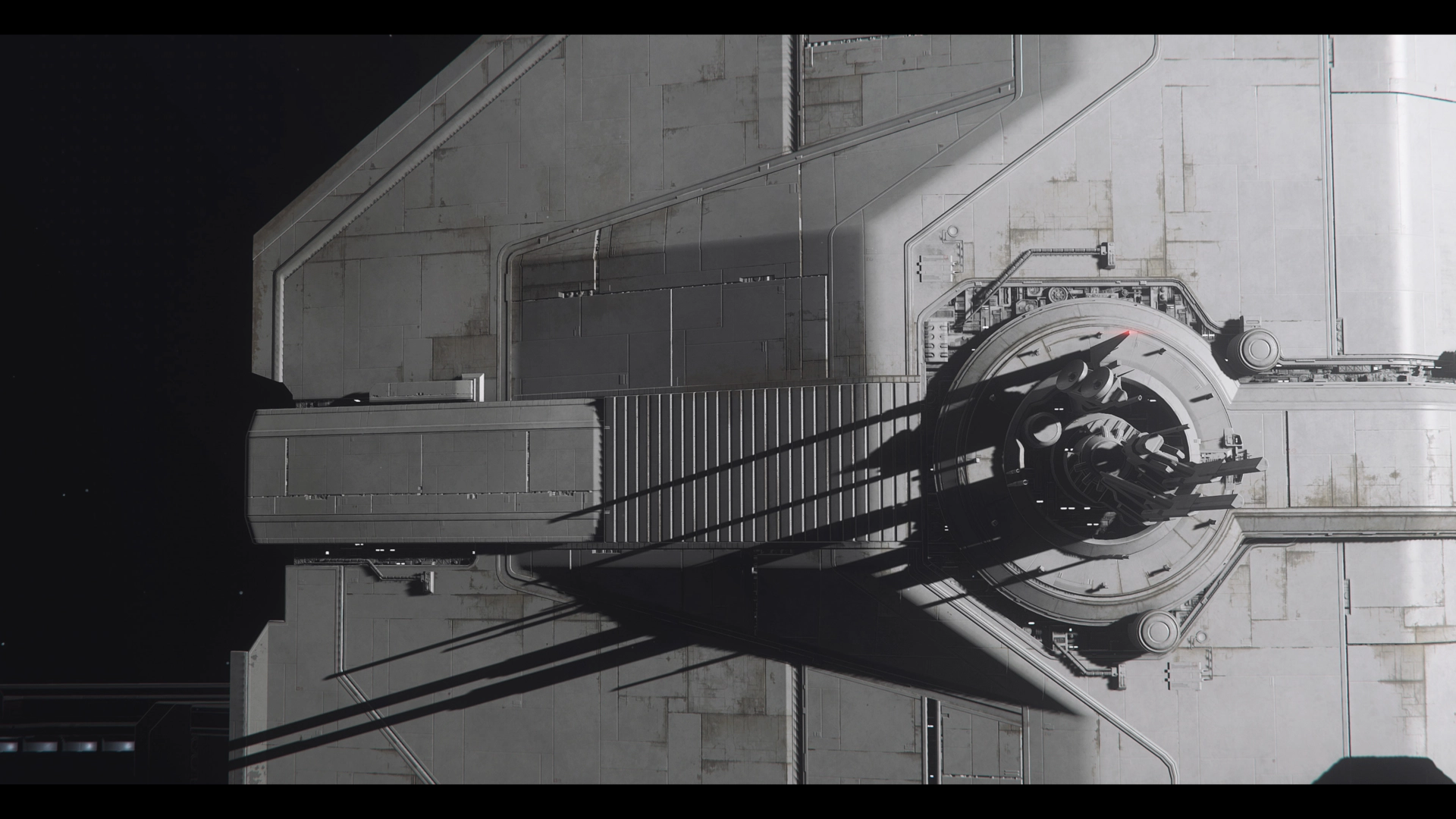
Metadata
- CIG ID
- 19160
- Channel
- Feedback
- Category
- Undefined
- Series
- None
- Comments
- 0
- Published
- 5 months ago (2026-05-25T14:00:00+00:00)