Star Citizen Monthly Report: November & December 2023
Transmission Undefined NoneContent
PU Monthly Report
November/December 2023
Happy New Year! We’re kicking off 2024 with a look back at the last couple of months of 2023. Read on for a full rundown of everything done for the Persistent Universe throughout November and December, including new creatures, vehicles, planet tech, and more.
AI (Content)
AI Content spent the end of the year bug fixing to improve social AI. Once in a more robust state, they’ll start implementing various SQ42 features and behaviors.
In the meantime, they revived the civilian behavior. This involved fixing basic AI usables such as chairs, seats, and rails across various locations and identifying outdated usable setups and communicating with the Props team to bring them up to date.
Voice packs and basic behaviors were updated for the hawker, vendor, admin, and bartender AI across different stations and landing zones. Now, NPCs will have the proper voice packs assigned to them with their behaviors triggering lines correctly. NPCs will also use their usables correctly with better animations rather than just standing still (however, some shops might not have full functionality due to lacking proper usables).
The team also identified and fixed a selection of security AI bugs in Lorville’s transit area. This involved implementing some of SQ42’s security behaviors, including sentry and guards, and giving NPCs appropriate voice packs.
Finally, AI Content worked with Level Design to implement SQ42’s engineer and security behaviors across different areas with limited functionality.
AI (Features)
As part of the Alpha 3.22 release, AI Features spent time investigating issues preventing the improved combat behavior from working as intended during missions, including slow-reacting AI.
“Like the infamous ‘standing on chairs’ issue, AI being slow to react doesn’t have a single cause but highlights a range of issues that appear to manifest as the same problem. Each cause needs to be individually investigated and a solution proposed, and often this requires hours of testing and debugging to find the precise conditions under which the specific issue occurs. Often issues are intermittent or only manifest in specific missions at specific locations.” AI Features Team
The team are aiming to reduce the amount of time it takes to debug these issues via three approaches:
The first is to improve knowledge of the AI debugging tools, particularly among the QA team, so that when an issue is first encountered, all the right information is available. This can often highlight issues with specific mission or location setups that don’t require further debugging. For example, missing or badly placed navigation mesh, missing animations, or poor server frame rates.
The second is to speed up the process of getting to the right location; if an issue only occurs in a specific spot during a certain mission, the team need to be able to quickly reproduce it rather than waiting for the mission and location combination to line up as part of the normal flow. When investigating issues, one of the biggest time sinks is flying to the location (even using the no-clip god mode), so they’re looking at providing teleport functionality to active mission locations.
Finally, when they’ve identified a cause that might occur again, they’ll improve the debugging tools to highlight it so that they can more easily identify subsequent occurrences.
For the Alpha 3.22 release, AI Features worked on several causes of slow-reacting AI, including:
Fixing an issue where increases in the AI perception meter were not being recognized in the general reaction function, causing NPCs to ‘hang’ in a reaction idle animation.
Fixing an issue where AI weren’t exiting the investigate behavior correctly due to not checking the current target.
Debugging an issue where the hostility and perception systems weren’t correctly encapsulating the specific requirements for hostility in a particular mission and location. However, this requires a better specification of the intended design and will come with planned improvements to the hostility system. The team are also investigating if they can add a hotfix to work around this issue in the next release.
These aren’t the only slow-reacting AI issues, so the team will continue to investigate and fix issues in subsequent releases while ensuring they maintain the improved combat functionality.
AI Features also worked on AI issues identified with the replication layer. The replication layer is a core component of server meshing, allowing the AI to migrate between servers or restore their state after a server crash. The team identified that when the AI was serialized back from the replication layer, its observable state (alive, dead, unconscious, etc.) was not correctly restored, which led to issues. For example, the AI thinking another agent was dead and not trying to attack them. As part of this fix, the team are making the switch between these states more consistent and less ad-hoc by tying it more closely with the status component that controls when the switch occurs.
AI (Tech)
At the end of the year, AI Tech progressed with features and support for release builds. For boids, they’re close to finalizing the first iteration that will allow the designers to place fish, rodents, and birds in the environment. Recent updates include rules to avoid dangerous areas or actors, transition rules that will detect weapons fired/bullets hit, and the ability to switch from idle/wandering to a fleeing rule set. The team also further iterated on killing boids agents and how they transition from an animation-driven state to ragdoll. For birds, they extended the number of wandering states. For example, besides flying, birds can also walk after a landing transition. Synchronization between the server and client is currently being worked on.
Effort was also put into optimizing and improving various features, including the pathfinder algorithm, collision-avoidance system, navigation system, and Subsumption loading logic.
For Apollo tools, AI Tech continued to support the designers with additional functionality, including the ability to create PNG files from behaviors, improved readability for Subsumption flowgraph nodes, and improved undo/redo actions.
Several existing features were polished and finalized, including NPCs utilizing trolleys, which received improved collision avoidance. This was achieved by updating the PID controller logic and how it’s used for path following when NPCs are pushing trolleys.
For AI using ladders, new functionality was added. For example, NPCs can now check if the ladder is available and will only use it if free or another NPC is climbing it in the same direction. In case the ladder is being used the opposite way, NPCs will find a free spot at the top or bottom and wait.
On the ship AI side, the team improved and extended spline functionality. This involved allowing ships to move along a spline while staying orientated toward the target and moving to the beginning of a spline that’s already moving (e.g. a spline attached to a different ship).
Toward the end of the year, AI Tech started to look for a better solution to generating navigation mesh on planets, as the current implementation could be faster and has problems generating navigation mesh close to planetary poles (which is affecting some outpost locations and their associated NPCs). This is currently in progress and an update will be provided in a future report.
Animation
Animation spent time bringing creatures to the ‘verse, starting with a four-legged predator, a bird, and fish. They also continued to work on facial animation for increased line count and fidelity.
Art (Characters)
In November and December, Character Art completed the legendary Duster outfit and the racing flightsuit helmet. They continued working on the racing flightsuit itself and prepared an outfit for Subscriber flair. Alongside this, R&D was done for creatures.
The Character Concept Art team started an exploration phase on features for the character customizer and for other creatures.
Art (Ships)
Toward the end of the year, the RSI Polaris passed its whitebox review gate and progressed into the greybox phase where all of the surface modeling and animations will be completed. Emphasis was on modularity for the interior to improve reuse and scalability.
Work started on the gold-standard pass for the Aegis Sabre Raven, which includes a component pass and dashboard polish.
Three new variants were worked on: one entered production, another continued through greybox, and the last progressed into LOD0.
November also saw work wrap up on the Gatac Syulen and structural salvage support for the Aegis Reclaimer.
Community
November and December were busy months for the Community team, who supported Pyro on the Preview Channel for the first time. The team was incredibly grateful for all of the positive feedback, and had a blast gathering sentiment around Star Citizen's second system.
Alongside general housekeeping related to winding down CitizenCon 2953, the team uploaded all panels from the event to YouTube, along with chapters and timestamps, and published community pictures of the life-size Drake Dragonfly taken on Saturday and Sunday at the event.
Community supported the return of the Intergalactic Aerospace Expo (IAE) and associated Free Fly, publishing the IAE 2953 FAQ and Guide to Professions and Design Convention Badge contests.
They also continued to connect with citizens across the globe at a variety of Bar Citizen events, alongside planning for the 2024 Bar Citizen World Tour.
“We had a blast at the recent Bar Citizen events we were lucky enough to attend! Thanks to everyone who joined us in Dublin, Ireland, and Milan, Italy, as well as the Virtual Bar Citizen put on by the great folks at Sol Citizens! That's a wrap for the Bar Citizen World Tour for 2023, but as a reminder, we're looking to hear from you on where we should visit in 2024, and already have our first Bar Citizen attendance locked in with Barcelona, Spain, coming up on February 3!”
The team worked with the Player Experience group to highlight a selection of Test Universe Champions who contributed significantly to the recent round of patch testing. This initiative will continue in future patches, with new categories each cycle.
December saw the Community team embrace the tradition of Luminalia, including a referral promotion and a Luminalia Greeting Card contest with extra rewards.
They also teamed up with Intel and CLXGaming to give away Star Citizen game packages (along with the exclusive Sabre Raven ship) to five lucky winners, and a custom Sabre Raven PC, during the Dreamhack gaming festival in Atlanta.
The team then supported the release of Alpha 3.22: Wrecks to Riches. Alongside the Player Experience team, they tracked and directed player feedback on the latest features and discussed solutions to bugs and quality-of-life issues with the development teams. They also updated the Salvage & Repair Guide to help players better understand the new gameplay introduced with Structural Salvage.
Last but not least, the team has started working on CitizenCon 2954! More on that later...
Economy
November and December saw the Economy team finish price-balancing armors and vehicles. They then began looking into the prices of FPS weapons as part of balancing the wider economy to bring all systems together. A contextual inventory inheritance was designed to tag items in shops that will allow them to more easily rebalance prices too.
The team worked on the economic implications of freight elevators and started balancing the time and cost of using them.
They also investigated UEC income and began taking actions to prevent exploits and rebalance mission rewards, and investigated exploits relating to ship claim time and prices.
Features (Arena Commander)
Throughout November and December, the Features team focused on closing out essential refactors and polish tasks before they transition to supporting the Persistent Universe in a more permanent capacity. They also supported upcoming special events and the Alpha 3.22 release.
Engineering completed work on the ‘Kill Collector’ Experimental Modes for Alpha 3.22, including a system that allows devs to replace the collection item depending on both the game mode and active events. Further work was done on the special events and award systems, including prerequisite requirements allowing the team to implement exclusive awards. This work also included the addition of unique loading screens, backgrounds, and a banner that displays on the frontend when an event or experimental mode is active, the latter including a countdown until the next rotation. Experimentation also began with an in-game FPS loadout customizer utilizing the new spawn screen.
For engineering, the team successfully completed the initial tests of enabling streaming in Arena Commander. This will enable them to deliver improved performance to the module and use any Persistent Universe location without limitations. Previously, some locations, such as ones near cities, were unable to be used without significant additional work - with streaming, the turnaround on porting any location to Arena Commander will be minimal.
Design supported work for Kill Collector, Duo Showdown, and other game modes and special events for Alpha 3.22 and beyond. Alongside a number of quality-of-life updates and polish to the frontend, spawn screen, and multi-crew systems, they also began planning for the year ahead.
Level Design completed work on three new racetracks (with one more in progress) for a new game mode. A brand-new track around the Pyro jump point was also created specifically to test the new Master Modes: Classic Race game mode for Alpha 3.22. The team created a prototype game mode that saw a successful playtest and will be further worked upon in 2024 too.
Finally, the team completed a new grav-lev racing game mode, which was debuted at Dreamhack Atlanta.
Features (Mission)
In November, the Features team began implementing a deadline system within a few missions across the ‘verse, which will ensure missions can’t be kept indefinitely if the accepted players are not engaging with them. This is for a few reasons. For example, players can lock out other missions and, narratively, it doesn’t make sense that a contractor would wait five hours for players to kill someone when they know their exact position. However, this is not a universally implemented system; each mission’s deadline will be individually considered.
The steal/recover mission continued to be polished and variants are currently being made.
The New Player Experience was also polished, with the team adding new parts to introduce some of the more important in-game systems. The team then turned to cleaning up and polishing the existing infiltrate and defend missions. And with Data Heist’s release, the team kicked off a counter mission using one of the modular missions.
Jumptown saw changes to how players engage in combat, while the journey started to make each location feel unique.
In December, Missions Features began prototyping a time-trial foot race to utilize more of the Ledge Grab v2 feature.
Finally, converting missions to use the freight elevator began. For example, Blockade Runner, XenoThreat, and other missions are being assessed to determine what needs to be updated to ensure they align with the new feature ahead of its release.
Graphics, VFX Programming, & Planet Tech
At the end of 2023, the Graphics teams largely progressed with their longer-term tasks. For example, work continued on improving the visual quality of gas clouds through the addition of a directional occlusion effect. The gas-cloud-system output is also being unified with the planetary-cloud system so that the new cloud upscaling solution can be used by both.
The Global Illumination team added support for transparency via a dense view-frustum voxel grid of low-resolution probes along with a sparser zone-space grid of higher-resolution probes. Work is also ongoing to improve the representation of materials in the raytracing system.
Vulkan is reaching the final stages of development, with the team wrapping up the last of their rendering tech. Ongoing work is targeting reducing stutter by working on shader/PSO compilation caching and general performance polishing before the initial release.
The Planet Tech team continued wrapping up the water feature, focusing on robustness, memory usage, and performance. Alongside this, the Graphics team improved the water-edge effects against both the environment and visor/camera lens.
VFX Programming worked toward finishing off fire-hazard visuals, investigated networking support for the fire-hazard system, and added support for water VFX. On the tools side, support is being added for unique IDs associated with each particle effect to allow robust referencing and the reorganization of effects.
Narrative
The end of the year brought with it a flurry of activity for the Narrative team as they worked to close out strong and set themselves up for an even better 2954. November was host to IAE, which featured immersive career dioramas on the show floor and new vids from security professional Garman Humble and social-media influencer Mahli. For the release of Alpha 3.22, the team worked on supporting a wide range of new features such as structural salvage, derelict settlements, cargo containers, Arena Commander additions, and a variety of Luminalia items (including the holiday favorite biscuit, Ringalings). The team also worked on the development of the San’tok.yāi, with a focus on the Xi’an language and lore.
Looking ahead, the team planned upcoming work for the PU, including new missions that will be more narratively focused, and discussed how best to utilize guilds and factions as players progress and earn reputation. Time was also dedicated to improving the generalized NPC voicepack to streamline it and make it more functional with an eye toward making the universe more immersive while still manageable for the scope of Star Citizen.
As always, a selection of lore posts was featured on the RSI website – a look back at Banu first contact with Jerry: A History Half-Remembered, a November Galactapedia Update, a Loremakers: Community Questions, and to end the year, a December Galactapedia Update.
R&D
In November and December, the R&D team spent a significant amount of time on the temporal render mode for atmosphere and clouds. As a result, the first WIP version of advanced history rejection, as well as refined disocclusion detection and preparation of dilated motion vectors, was submitted. More research went into the upsample and history blend process to achieve highly detailed results that match the reference full-resolution render output as much as possible.
For ground fog, experimental support for fog density maps was added and is currently in review with Tech Art. The signal encoding and reconstruction code for volumetric cloud shadows received a fix to minimize ringing artifacts occasionally visible in areas where (unattenuated) sunlight first hits clouds. The atmosphere light pass received refined irradiance estimates based on community feedback, which had reported that the bottom of ships approaching a planet in higher orbit were almost entirely black as opposed to receiving reflected ground light.
Aside from the work on visuals, various improvements were also implemented to the postmortem crash analysis tool, which processes reports submitted via internal testing as well as the PU and PTU. The tool now supports the deduping of callstacks for all threads in a process and sorts them so that important threads are listed at the top. The tool now also supports dumps written by ‘fast-linked’ binaries. Additional support is planned to capture and extract auxiliary callstacks for memory corruptions (specifically, double deletes and writes after free events). Those will then be used for issue deduplication in Sentry to allow the coalescence of memory crashes much more effectively.
Tech Art/Animation
The Technical Animation team spent the end of the year on deliverables for the content teams across both projects.
These include an outfit manager that will pull together a full set of assets for any character outfit in-game, which will help the Animation teams author specific content.
Previously missing from the pipeline, physics proxy tools creation was added for an intuitive and streamlined way to create physicalized skeletons in Maya. An animation-events editor was also added to keep audio linked to animations across projects. New ADB diff tools also help the devs track and diagnose problems with complex XML format files that need historical context to be useful.
A replacement for a very old toolset that validates content being exported from Maya was created.
“We're now in a position to add to the tests and potentially change some low-level paradigms to enable exploration of new pipeline possibilities.” Technical Animation team
Additionally, Technical Animation authored and fixed more head assets, refined existing pipelines, continued developing engine animation systems, and ideated on additional ways to help them approach gold master.
Specifically for PU, the team spent time authoring new creatures.
VFX
During November and December, the VFX team worked on structural-salvage effects for the Drake Vulture and Aegis Reclaimer.
They also provided effects support for new locations and existing location reworks, including several new derelicts and Rappel, a “rather hellish environment with the ground literally burning!”
Vehicle-effects support was provided too, including for the Aopoa San'tok.yāi and the Origin X1 series.
Image by
Your_Lordship Image by
ShockbreakerImage by
Your_LordshipImage by
Shockbreaker
PU-Monatsbericht
November/Dezember 2023
Frohes neues Jahr! Wir beginnen das Jahr 2024 mit einem Rückblick auf die letzten Monate des Jahres 2023. Hier findest du eine vollständige Übersicht über alles, was im November und Dezember im Persistent Universe passiert ist, darunter neue Kreaturen, Fahrzeuge, Planetentechnologie und vieles mehr.
KI (Inhalt)
AI Content hat das Jahresende damit verbracht, Fehler zu beheben und die soziale KI zu verbessern. Sobald sie stabiler ist, werden sie verschiedene SQ42-Funktionen und Verhaltensweisen einführen.
In der Zwischenzeit haben sie das zivile Verhalten wiederbelebt. Dazu wurden grundlegende KI-Benutzungsgegenstände wie Stühle, Sitze und Schienen an verschiedenen Orten repariert und veraltete Benutzungsgegenstände identifiziert, die mit dem Requisitenteam auf den neuesten Stand gebracht wurden.
Sprachpakete und grundlegende Verhaltensweisen wurden für die KI von Händlern, Verkäufern, Verwaltern und Barkeepern in verschiedenen Stationen und Landezonen aktualisiert. Jetzt werden den NSCs die richtigen Sprachpakete zugewiesen und ihre Verhaltensweisen lösen die richtigen Zeilen aus. Außerdem verwenden die NSCs jetzt ihre Gebrauchsgegenstände korrekt und mit besseren Animationen, anstatt einfach nur stillzustehen (einige Läden haben jedoch möglicherweise nicht die volle Funktionalität, weil ihnen die richtigen Gebrauchsgegenstände fehlen).
Das Team hat außerdem eine Reihe von Sicherheits-KI-Fehlern in Lorvilles Transitbereich identifiziert und behoben. Dazu gehörte die Implementierung einiger Sicherheitsverhaltensweisen von SQ42, wie z. B. Wache und Wächter, und die Ausstattung der NSCs mit entsprechenden Sprachpaketen.
Schließlich arbeitete der KI-Content mit dem Leveldesign zusammen, um das Ingenieur- und Sicherheitsverhalten von SQ42 in verschiedenen Bereichen mit begrenzter Funktionalität zu implementieren.
KI (Features)
Als Teil der Alpha 3.22 hat der Bereich KI-Features einige Zeit damit verbracht, Probleme zu untersuchen, die verhindern, dass das verbesserte Kampfverhalten in den Missionen wie vorgesehen funktioniert, z. B. die langsam reagierende KI.
"Wie das berüchtigte Problem mit den Stühlen hat auch die langsam reagierende KI nicht nur eine einzige Ursache, sondern weist auf eine Reihe von Problemen hin, die sich als dasselbe Problem zu manifestieren scheinen. Jede Ursache muss einzeln untersucht und eine Lösung vorgeschlagen werden, was oft stundenlange Tests und Fehlersuche erfordert, um die genauen Bedingungen herauszufinden, unter denen das spezifische Problem auftritt. Oft treten die Probleme nur sporadisch oder nur bei bestimmten Missionen an bestimmten Orten auf." Team KI-Funktionen
Das Team hat sich zum Ziel gesetzt, den Zeitaufwand für die Fehlersuche durch drei Ansätze zu verringern:
Der erste besteht darin, die Kenntnisse über die KI-Fehlerbehebungswerkzeuge zu verbessern, vor allem im QA-Team, damit beim ersten Auftreten eines Fehlers alle richtigen Informationen zur Verfügung stehen. Dadurch können oft Probleme mit bestimmten Missions- oder Standortkonfigurationen aufgedeckt werden, die keine weitere Fehlersuche erfordern. Zum Beispiel ein fehlendes oder schlecht platziertes Navigationsnetz, fehlende Animationen oder schlechte Server-Frameraten.
Wenn ein Problem nur an einer bestimmten Stelle während einer bestimmten Mission auftritt, muss das Team in der Lage sein, es schnell zu reproduzieren, anstatt darauf zu warten, dass die Kombination aus Mission und Ort im normalen Spielablauf auftaucht. Bei der Untersuchung von Problemen ist einer der größten Zeitfresser der Flug zum Ort (selbst im No-Clip-God-Modus), daher wird eine Teleportfunktion zu aktiven Missionsorten geprüft.
Wenn sie eine Ursache gefunden haben, die wieder auftreten könnte, werden sie die Debugging-Tools verbessern, um sie hervorzuheben, damit sie spätere Vorfälle leichter identifizieren können.
Für die Version Alpha 3.22 haben die KI-Funktionen an mehreren Ursachen für langsam reagierende KI gearbeitet, darunter:
Es wurde ein Problem behoben, bei dem der Anstieg der KI-Wahrnehmungsanzeige in der allgemeinen Reaktionsfunktion nicht erkannt wurde, was dazu führte, dass NSCs in einer Reaktionsleerlaufanimation "hängen" blieben.
Es wurde ein Problem behoben, bei dem die KI das Erkundungsverhalten nicht korrekt beendete, weil sie das aktuelle Ziel nicht überprüfte.
Behebung eines Problems, bei dem die Feindseligkeits- und Wahrnehmungssysteme die spezifischen Anforderungen an die Feindseligkeit in einer bestimmten Mission und an einem bestimmten Ort nicht korrekt kapselten. Dies erfordert jedoch eine bessere Spezifikation des beabsichtigten Designs und wird mit den geplanten Verbesserungen des Feindseligkeitssystems einhergehen. Das Team prüft außerdem, ob es in der nächsten Version einen Hotfix einbauen kann, um dieses Problem zu beheben.
Dies sind nicht die einzigen Probleme mit der langsam reagierenden KI. Das Team wird auch weiterhin Probleme untersuchen und in den nächsten Versionen beheben und gleichzeitig sicherstellen, dass die verbesserte Kampffunktionalität erhalten bleibt.
Die KI-Funktionen haben auch an KI-Problemen gearbeitet, die im Zusammenhang mit der Replikationsschicht festgestellt wurden. Die Replikationsschicht ist eine Kernkomponente des Server-Meshings und ermöglicht es der KI, zwischen Servern zu wechseln oder ihren Zustand nach einem Serverabsturz wiederherzustellen. Das Team stellte fest, dass der beobachtbare Zustand der KI (lebendig, tot, bewusstlos usw.) nicht korrekt wiederhergestellt wurde, wenn die KI von der Replikationsschicht zurückserialisiert wurde, was zu Problemen führte. Zum Beispiel dachte die KI, ein anderer Agent sei tot und versuchte nicht, ihn anzugreifen. Als Teil dieser Korrektur macht das Team den Wechsel zwischen diesen Zuständen konsistenter und weniger ad-hoc, indem es ihn enger mit der Statuskomponente verknüpft, die steuert, wann der Wechsel stattfindet.
KI (Tech)
Zum Ende des Jahres hat die KI-Technik Fortschritte bei den Funktionen und der Unterstützung für Release-Builds gemacht. Für Boids steht die erste Iteration kurz vor der Fertigstellung, die es den Designern ermöglicht, Fische, Nager und Vögel in der Umgebung zu platzieren. Zu den jüngsten Aktualisierungen gehören Regeln zur Vermeidung von gefährlichen Gebieten oder Akteuren, Übergangsregeln, die abgefeuerte Waffen und getroffene Kugeln erkennen, und die Möglichkeit, von Leerlauf/Wandern zu einem Regelsatz für die Flucht zu wechseln. Das Team hat auch die Regeln für das Töten von Boids-Agenten und den Übergang von einem animierten Zustand zu einer Stoffpuppe überarbeitet. Bei Vögeln wurde die Anzahl der Wanderzustände erweitert. Zum Beispiel können Vögel nicht nur fliegen, sondern nach einem Landeübergang auch laufen. An der Synchronisierung zwischen dem Server und dem Client wird derzeit noch gearbeitet.
Außerdem wurde an der Optimierung und Verbesserung verschiedener Funktionen gearbeitet, darunter der Pathfinder-Algorithmus, das Kollisionsvermeidungssystem, das Navigationssystem und die Subsumption-Ladelogik.
Bei den Apollo-Tools hat AI Tech die Designer mit zusätzlichen Funktionen unterstützt, z. B. der Möglichkeit, PNG-Dateien aus Verhaltensweisen zu erstellen, der verbesserten Lesbarkeit von Subsumption-Flowgraph-Knoten und den verbesserten Undo/Redo-Aktionen.
Mehrere bestehende Funktionen wurden aufpoliert und fertiggestellt, darunter NSCs, die Karren benutzen, die eine verbesserte Kollisionsvermeidung erhielten. Dazu wurde die Logik des PID-Reglers aktualisiert und die Art und Weise, wie er für die Pfadverfolgung verwendet wird, wenn NSCs Karren schieben.
Für die KI, die Leitern benutzt, wurden neue Funktionen hinzugefügt. Zum Beispiel können NSCs jetzt prüfen, ob die Leiter verfügbar ist und sie nur benutzen, wenn sie frei ist oder ein anderer NSC sie in dieselbe Richtung klettert. Wenn die Leiter in die entgegengesetzte Richtung benutzt wird, suchen sich die NSCs einen freien Platz am oberen oder unteren Ende und warten.
Im Bereich der SchiffskI hat das Team die Spline-Funktionalität verbessert und erweitert. Dazu gehörte, dass sich Schiffe entlang eines Splines bewegen können, während sie auf das Ziel ausgerichtet bleiben und sich zum Anfang eines Splines bewegen, der sich bereits bewegt (z. B. ein Spline, der an ein anderes Schiff angeschlossen ist).
Gegen Ende des Jahres hat AI Tech begonnen, nach einer besseren Lösung für die Generierung von Navigationsmeshs auf Planeten zu suchen, da die aktuelle Implementierung schneller sein könnte und Probleme bei der Generierung von Navigationsmeshs in der Nähe von Planetenpolen hat (was sich auf einige Außenposten und die dazugehörigen NSCs auswirkt). Daran wird derzeit gearbeitet und ein Update wird in einem zukünftigen Bericht veröffentlicht.
Animation
Die Animation hat sich damit beschäftigt, Kreaturen in die Welt zu bringen, angefangen mit einem vierbeinigen Raubtier, einem Vogel und einem Fisch. Außerdem wurde weiter an der Gesichtsanimation gearbeitet, um die Anzahl der Linien und die Wiedergabetreue zu erhöhen.
Kunst (Charaktere)
Im November und Dezember stellte Character Art das legendäre Duster-Outfit und den Helm des Rennfluganzugs fertig. Sie arbeiteten weiter am Rennfluganzug selbst und bereiteten ein Outfit für Subscriber Flair vor. Parallel dazu wurde an den Kreaturen gearbeitet.
Das Character Concept Art Team begann mit der Erforschung von Funktionen für den Character Customizer und für andere Kreaturen.
Kunst (Schiffe)
Gegen Ende des Jahres durchlief die RSI Polaris das Whitebox-Review-Gate und ging in die Greybox-Phase über, in der die gesamte Oberflächenmodellierung und die Animationen abgeschlossen werden. Der Schwerpunkt lag auf der Modularität des Innenraums, um die Wiederverwendung und Skalierbarkeit zu verbessern.
Die Arbeit am Gold-Standard-Pass für den Aegis Sabre Raven begann, der einen Komponenten-Pass und den Feinschliff des Armaturenbretts umfasst.
Es wurde an drei neuen Varianten gearbeitet: Eine ging in die Produktion, eine andere wurde in der Greybox weiterbearbeitet und die letzte wurde in LOD0 überführt.
Im November wurden außerdem die Arbeiten an der Gatac Syulen und der strukturellen Bergungsunterstützung für den Aegis Reclaimer abgeschlossen.
Community
November und Dezember waren arbeitsreiche Monate für das Community-Team, das Pyro zum ersten Mal im Vorschaukanal unterstützte. Das Team war unglaublich dankbar für all das positive Feedback und hatte viel Spaß dabei, die Stimmung rund um das zweite System von Star Citizen zu sammeln.
Neben allgemeinen Aufgaben im Zusammenhang mit dem Abschluss der CitizenCon 2953 lud das Team alle Panels der Veranstaltung mit Kapiteln und Zeitstempeln auf YouTube hoch und veröffentlichte Community-Fotos der lebensgroßen Drake Dragonfly, die am Samstag und Sonntag auf der Veranstaltung aufgenommen wurden.
Die Community unterstützte die Rückkehr der Intergalactic Aerospace Expo (IAE) und die damit verbundene Free Fly, indem sie die IAE 2953 FAQ und den Leitfaden für Berufe und Design Convention Badge Wettbewerbe veröffentlichte.
Außerdem wurde der Kontakt zu den Bürgerinnen und Bürgern auf der ganzen Welt bei einer Vielzahl von Bar Citizen-Veranstaltungen aufrechterhalten und die Bar Citizen World Tour 2024 geplant.
"Wir hatten einen Riesenspaß bei den letzten Bar Citizen-Veranstaltungen, an denen wir teilnehmen durften! Vielen Dank an alle, die in Dublin, Irland, und Mailand, Italien, dabei waren, sowie an den virtuellen Bar Citizen, der von den großartigen Leuten von Sol Citizens organisiert wurde! Das war's mit der Bar Citizen World Tour für 2023, aber zur Erinnerung: Wir wollen von euch wissen, wo wir 2024 hingehen sollen, und haben bereits unseren ersten Bar Citizen-Besuch fest eingeplant: Barcelona, Spanien, am 3. Februar!"
Das Team hat mit der Gruppe für Spielerfahrung zusammengearbeitet, um eine Auswahl von Test Universe Champions hervorzuheben, die einen wichtigen Beitrag zur letzten Runde der Patch-Tests geleistet haben. Diese Initiative wird auch in zukünftigen Patches fortgesetzt, mit neuen Kategorien in jedem Zyklus.
Im Dezember hat das Community-Team die Tradition von Luminalia aufgegriffen und eine Empfehlungsaktion sowie einen Luminalia-Grußkartenwettbewerb mit zusätzlichen Belohnungen veranstaltet.
In Zusammenarbeit mit Intel und CLXGaming wurden außerdem Star Citizen-Spielepakete (zusammen mit dem exklusiven Sabre Raven-Schiff) an fünf glückliche Gewinner/innen sowie ein maßgefertigter Sabre Raven-PC während des Dreamhack Gaming Festivals in Atlanta verlost.
Anschließend unterstützte das Team die Veröffentlichung von Alpha 3.22: Wrecks to Riches. Zusammen mit dem Team für Spielerfahrung verfolgten sie das Feedback der Spieler zu den neuesten Funktionen und diskutierten mit den Entwicklungsteams Lösungen für Bugs und Qualitätsprobleme. Außerdem aktualisierten sie den Bergungs- und Reparaturleitfaden, um den Spielern zu helfen, das mit der strukturellen Bergung eingeführte neue Gameplay besser zu verstehen.
Und nicht zuletzt hat das Team mit der Arbeit an der CitizenCon 2954 begonnen! Mehr dazu später...
Wirtschaft
Im November und Dezember hat das Wirtschaftsteam die Preisanpassung für Rüstungen und Fahrzeuge abgeschlossen. Anschließend wurden die Preise für FPS-Waffen untersucht, um die Wirtschaft insgesamt auszubalancieren und alle Systeme zusammenzuführen. Eine kontextabhängige Inventarvererbung wurde entwickelt, um die Gegenstände in den Läden zu kennzeichnen, damit die Preise leichter angepasst werden können.
Das Team arbeitete an den wirtschaftlichen Auswirkungen von Lastenaufzügen und begann, die Zeit und die Kosten für ihre Nutzung auszugleichen.
Außerdem untersuchten sie die UEC-Einnahmen und begannen, Maßnahmen zu ergreifen, um Exploits zu verhindern und Missionsbelohnungen neu auszubalancieren.
Features (Arena Commander)
Im November und Dezember konzentrierte sich das Features-Team auf den Abschluss wichtiger Refactors und Polishing-Aufgaben, bevor es in den dauerhaften Support des persistenten Universums übergeht. Außerdem unterstützten sie anstehende Sonderveranstaltungen und die Veröffentlichung der Alpha 3.22.
Die Technikabteilung schloss die Arbeit an den experimentellen Modi "Kill Collector" für Alpha 3.22 ab, einschließlich eines Systems, das es den Entwicklern ermöglicht, den Sammelgegenstand je nach Spielmodus und aktiven Ereignissen zu ersetzen. Es wurde weiter an den besonderen Ereignissen und Belohnungssystemen gearbeitet, einschließlich der Voraussetzungen, die es dem Team ermöglichen, exklusive Belohnungen einzuführen. Dazu gehörten auch einzigartige Ladebildschirme, Hintergründe und ein Banner, das im Frontend angezeigt wird, wenn ein Ereignis oder ein experimenteller Modus aktiv ist, wobei letzterer einen Countdown bis zur nächsten Rotation enthält. Außerdem wurde mit einem FPS-Loadout-Anpassungsprogramm im Spiel experimentiert, das den neuen Spawn-Bildschirm nutzt.
Im Bereich Technik hat das Team die ersten Tests zur Aktivierung des Streamings im Arena Commander erfolgreich abgeschlossen. Dadurch können sie die Leistung des Moduls verbessern und jeden Ort im Persistenten Universum ohne Einschränkungen nutzen. Bisher konnten einige Orte, z. B. in der Nähe von Städten, nur mit erheblichem Mehraufwand genutzt werden - mit dem Streaming wird der Zeitaufwand für die Portierung eines Ortes in den Arena Commander minimal sein.
Das Design unterstützte die Arbeit für Kill Collector, Duo Showdown und andere Spielmodi und spezielle Events für Alpha 3.22 und darüber hinaus. Neben einer Reihe von Qualitätsverbesserungen und der Optimierung des Frontends, des Spawn-Bildschirms und der Multi-Crew-Systeme wurde auch mit der Planung für das kommende Jahr begonnen.
Das Level Design hat die Arbeit an drei neuen Rennstrecken (eine weitere ist in Arbeit) für einen neuen Spielmodus abgeschlossen. Außerdem wurde eine brandneue Strecke rund um den Pyro-Sprungpunkt erstellt, um die neuen Master Modes zu testen: Classic Race Spielmodus für Alpha 3.22 zu testen. Das Team hat einen Prototyp des Spielmodus erstellt, der erfolgreich getestet wurde und an dem auch 2024 weiter gearbeitet werden wird.
Schließlich hat das Team einen neuen Grav-Lev-Rennspielmodus fertiggestellt, der auf der Dreamhack Atlanta vorgestellt wurde.
Features (Mission)
Im November hat das Features-Team damit begonnen, ein Fristensystem für einige Missionen im gesamten Verse einzuführen, das dafür sorgt, dass Missionen nicht ewig aufrechterhalten werden können, wenn die akzeptierten Spieler/innen sich nicht mit ihnen beschäftigen. Dafür gibt es mehrere Gründe. Zum Beispiel können Spieler/innen andere Missionen aussperren, und aus narrativer Sicht macht es keinen Sinn, dass ein Auftraggeber fünf Stunden darauf wartet, dass Spieler/innen jemanden töten, wenn sie dessen genaue Position kennen. Dieses System ist jedoch nicht universell einsetzbar; die Frist jeder Mission wird individuell berücksichtigt.
Die Mission "Stehlen/Wiederfinden" wurde weiter ausgefeilt und es werden derzeit Varianten erstellt.
Das Team fügte neue Teile hinzu, um einige der wichtigsten Systeme im Spiel einzuführen. Das Team hat sich dann daran gemacht, die bestehenden Infiltrations- und Verteidigungsmissionen aufzuräumen und zu polieren. Und mit der Veröffentlichung von Data Heist startete das Team eine Gegenmission, die eine der modularen Missionen nutzt.
In Jumptown wurde die Art und Weise, wie die Spieler/innen in den Kampf ziehen, verändert, während die Reise begann, damit sich jeder Ort einzigartig anfühlt.
Im Dezember begann Missions Features mit der Entwicklung eines Prototyps für ein Zeitrennen zu Fuß, bei dem das Feature "Ledge Grab v2" noch stärker zum Einsatz kommt.
Schließlich wurde damit begonnen, die Missionen für die Nutzung des Lastenaufzugs umzubauen. So werden zum Beispiel Blockade Runner, XenoThreat und andere Missionen überprüft, um festzustellen, was aktualisiert werden muss, um sicherzustellen, dass sie mit dem neuen Feature vor dessen Veröffentlichung übereinstimmen.
Grafik, VFX-Programmierung und Planetentechnologie
Ende 2023 kamen die Grafikteams mit ihren längerfristigen Aufgaben weitgehend voran. So wurde zum Beispiel die Arbeit an der Verbesserung der visuellen Qualität von Gaswolken durch die Hinzufügung eines direktionalen Okklusionseffekts fortgesetzt. Außerdem wird die Ausgabe des Gaswolkensystems mit der des Planetensystems vereinheitlicht, damit die neue Lösung zum Hochskalieren der Wolken von beiden genutzt werden kann.
Das Global Illumination Team hat die Unterstützung für Transparenz durch ein dichtes Voxel-Gitter mit niedriger Auflösung und ein spärlicheres Zonen-Raum-Gitter mit höherer Auflösung hinzugefügt. Es wird auch daran gearbeitet, die Darstellung von Materialien im Raytracing-System zu verbessern.
Vulkan befindet sich in der Endphase der Entwicklung, und das Team hat die letzten Rendering-Technologien fertiggestellt. Die laufenden Arbeiten zielen darauf ab, Stotterer zu reduzieren, indem sie an der Zwischenspeicherung der Shader/PSO-Kompilierung und der allgemeinen Leistungsoptimierung vor der ersten Veröffentlichung arbeiten.
Das Planet Tech-Team hat die Arbeiten an der Wasserfunktion fortgesetzt und sich dabei auf Robustheit, Speicherverbrauch und Leistung konzentriert. Außerdem hat das Grafikteam die Wasserkanteneffekte sowohl für die Umgebung als auch für den Visor/die Kameralinse verbessert.
Das VFX-Programmierungsteam arbeitete an der Fertigstellung der Feuergefahrenvisualisierung, untersuchte die Netzwerkunterstützung für das Feuergefahrensystem und fügte Unterstützung für Wasser-VFX hinzu. Auf der Seite der Werkzeuge wird die Unterstützung für eindeutige IDs für jeden Partikeleffekt hinzugefügt, um eine robuste Referenzierung und die Neuorganisation von Effekten zu ermöglichen.
Narrative
Das Ende des Jahres brachte für das Narrative-Team eine Fülle von Aktivitäten mit sich, um das Jahr gut abzuschließen und sich für ein noch besseres Jahr 2954 vorzubereiten. Im November fand die IAE statt, auf der es immersive Karrieredioramen und neue Videos von Sicherheitsexperte Garman Humble und Social-Media-Influencer Mahli zu sehen gab. Für die Veröffentlichung der Alpha 3.22 arbeitete das Team an der Unterstützung einer Vielzahl neuer Funktionen wie strukturelle Bergung, verlassene Siedlungen, Frachtcontainer, Erweiterungen für den Arenakommandanten und eine Vielzahl von Luminalia-Gegenständen (einschließlich des Lieblingskekses der Feiertage, Ringalings). Das Team arbeitete auch an der Entwicklung der San'tok.yāi, wobei der Schwerpunkt auf der Sprache und den Überlieferungen von Xi'an lag.
Mit Blick auf die Zukunft plante das Team die anstehenden Arbeiten für das PU, darunter neue Missionen, die stärker auf die Geschichte ausgerichtet sein werden, und besprach, wie Gilden und Fraktionen am besten genutzt werden können, wenn die Spieler/innen vorankommen und Ansehen erlangen. Außerdem wurde an der Verbesserung des allgemeinen NPC-Stimmenpakets gearbeitet, um es zu straffen und funktionaler zu machen, damit das Universum noch eindringlicher und gleichzeitig für den Umfang von Star Citizen überschaubar wird.
Wie immer wurde auf der RSI-Website eine Auswahl von Beiträgen zur Geschichte veröffentlicht - ein Blick zurück auf Banus ersten Kontakt mit Jerry: A History Half-Remembered, ein November Galactapedia Update, ein Loremakers: Community Questions und zum Abschluss des Jahres ein Galactapedia-Update im Dezember.
F&E
Im November und Dezember verbrachte das F&E-Team viel Zeit mit dem temporalen Rendermodus für Atmosphäre und Wolken. Als Ergebnis wurde die erste WIP-Version der fortgeschrittenen Geschichtsverweigerung sowie eine verfeinerte Disocclusion-Erkennung und die Vorbereitung von dilatierten Bewegungsvektoren eingereicht. Weitere Forschung wurde in den Upsample- und History-Blend-Prozess gesteckt, um hochdetaillierte Ergebnisse zu erzielen, die dem Referenz-Renderoutput in voller Auflösung so weit wie möglich entsprechen.
Für Bodennebel wurde eine experimentelle Unterstützung für Nebeldichtekarten hinzugefügt, die derzeit von Tech Art geprüft wird. Die Signalcodierung und der Rekonstruktionscode für volumetrische Wolkenschatten wurden verbessert, um Ringing-Artefakte zu minimieren, die gelegentlich in Bereichen sichtbar sind, in denen (ungedämpftes) Sonnenlicht zuerst auf Wolken trifft. Der Atmosphärenlichtpass wurde aufgrund von Rückmeldungen aus der Community verfeinert. Diese hatten berichtet, dass die Unterseite von Schiffen, die sich einem Planeten in einer höheren Umlaufbahn nähern, fast vollständig schwarz ist, während das Bodenlicht reflektiert wird.
Neben der Arbeit an der Grafik wurden auch verschiedene Verbesserungen am Postmortem-Crash-Analyse-Tool vorgenommen, das Berichte verarbeitet, die über interne Tests sowie über die PU und PTU eingereicht wurden. Das Tool unterstützt jetzt das Deduplizieren von Callstacks für alle Threads in einem Prozess und sortiert sie so, dass wichtige Threads ganz oben aufgeführt werden. Das Tool unterstützt jetzt auch Dumps, die von "fast-linked" Binaries geschrieben wurden. Es ist geplant, zusätzliche Callstacks zu erfassen und zu extrahieren, um Speicherkorruptionen (insbesondere doppelte Löschvorgänge und Schreibvorgänge nach Free-Events) zu erkennen. Diese werden dann für die Problemdeduplizierung in Sentry verwendet, um die Zusammenführung von Speicherabstürzen viel effektiver zu machen.
Tech Art/Animation
Das Team für technische Animation hat das Jahresende damit verbracht, Ergebnisse für die Content-Teams beider Projekte zu liefern.
Dazu gehört ein Outfit-Manager, der einen kompletten Satz an Assets für jedes Charakter-Outfit im Spiel zusammenstellt und den Animationsteams hilft, spezifische Inhalte zu erstellen.
Die Erstellung von Physik-Proxy-Tools, die bisher in der Pipeline fehlten, wurde hinzugefügt, um die Erstellung von physischen Skeletten in Maya intuitiv und effizient zu gestalten. Außerdem wurde ein Editor für Animationsereignisse hinzugefügt, mit dem Audio projektübergreifend mit Animationen verknüpft werden kann. Neue ADB-Diff-Tools helfen den Entwicklern außerdem dabei, Probleme mit komplexen XML-Formatdateien zu erkennen und zu diagnostizieren, die einen historischen Kontext benötigen, um nützlich zu sein.
Ein Ersatz für ein sehr altes Toolset, das aus Maya exportierte Inhalte validiert, wurde erstellt.
"Wir sind jetzt in der Lage, die Tests zu erweitern und möglicherweise einige Low-Level-Paradigmen zu ändern, um neue Möglichkeiten in der Pipeline zu erforschen. Technisches Animationsteam
Darüber hinaus hat Technical Animation weitere Head-Assets erstellt und korrigiert, bestehende Pipelines verfeinert, die Engine-Animationssysteme weiterentwickelt und Ideen für zusätzliche Möglichkeiten entwickelt, die ihnen helfen, sich dem Goldmaster zu nähern.
Speziell für PU verbrachte das Team Zeit mit der Erstellung neuer Kreaturen.
VFX
Im November und Dezember arbeitete das VFX-Team an strukturellen Zerstörungseffekten für den Drake Vulture und den Aegis Reclaimer.
Außerdem lieferten sie Effekte für neue Drehorte und die Überarbeitung bestehender Drehorte, darunter mehrere neue Wracks und Rappel, eine "ziemlich höllische Umgebung, in der der Boden buchstäblich brennt!"
Auch Fahrzeugeffekte wurden unterstützt, unter anderem für den Aopoa San'tok.yāi und die Origin X1-Serie.
PU Monthly Report
November/December 2023
Happy New Year! We’re kicking off 2024 with a look back at the last couple of months of 2023. Read on for a full rundown of everything done for the Persistent Universe throughout November and December, including new creatures, vehicles, planet tech, and more.
AI (Content)
AI Content spent the end of the year bug fixing to improve social AI. Once in a more robust state, they’ll start implementing various SQ42 features and behaviors.
In the meantime, they revived the civilian behavior. This involved fixing basic AI usables such as chairs, seats, and rails across various locations and identifying outdated usable setups and communicating with the Props team to bring them up to date.
Voice packs and basic behaviors were updated for the hawker, vendor, admin, and bartender AI across different stations and landing zones. Now, NPCs will have the proper voice packs assigned to them with their behaviors triggering lines correctly. NPCs will also use their usables correctly with better animations rather than just standing still (however, some shops might not have full functionality due to lacking proper usables).
The team also identified and fixed a selection of security AI bugs in Lorville’s transit area. This involved implementing some of SQ42’s security behaviors, including sentry and guards, and giving NPCs appropriate voice packs.
Finally, AI Content worked with Level Design to implement SQ42’s engineer and security behaviors across different areas with limited functionality.
AI (Features)
As part of the Alpha 3.22 release, AI Features spent time investigating issues preventing the improved combat behavior from working as intended during missions, including slow-reacting AI.
“Like the infamous ‘standing on chairs’ issue, AI being slow to react doesn’t have a single cause but highlights a range of issues that appear to manifest as the same problem. Each cause needs to be individually investigated and a solution proposed, and often this requires hours of testing and debugging to find the precise conditions under which the specific issue occurs. Often issues are intermittent or only manifest in specific missions at specific locations.” AI Features Team
The team are aiming to reduce the amount of time it takes to debug these issues via three approaches:
The first is to improve knowledge of the AI debugging tools, particularly among the QA team, so that when an issue is first encountered, all the right information is available. This can often highlight issues with specific mission or location setups that don’t require further debugging. For example, missing or badly placed navigation mesh, missing animations, or poor server frame rates.
The second is to speed up the process of getting to the right location; if an issue only occurs in a specific spot during a certain mission, the team need to be able to quickly reproduce it rather than waiting for the mission and location combination to line up as part of the normal flow. When investigating issues, one of the biggest time sinks is flying to the location (even using the no-clip god mode), so they’re looking at providing teleport functionality to active mission locations.
Finally, when they’ve identified a cause that might occur again, they’ll improve the debugging tools to highlight it so that they can more easily identify subsequent occurrences.
For the Alpha 3.22 release, AI Features worked on several causes of slow-reacting AI, including:
Fixing an issue where increases in the AI perception meter were not being recognized in the general reaction function, causing NPCs to ‘hang’ in a reaction idle animation.
Fixing an issue where AI weren’t exiting the investigate behavior correctly due to not checking the current target.
Debugging an issue where the hostility and perception systems weren’t correctly encapsulating the specific requirements for hostility in a particular mission and location. However, this requires a better specification of the intended design and will come with planned improvements to the hostility system. The team are also investigating if they can add a hotfix to work around this issue in the next release.
These aren’t the only slow-reacting AI issues, so the team will continue to investigate and fix issues in subsequent releases while ensuring they maintain the improved combat functionality.
AI Features also worked on AI issues identified with the replication layer. The replication layer is a core component of server meshing, allowing the AI to migrate between servers or restore their state after a server crash. The team identified that when the AI was serialized back from the replication layer, its observable state (alive, dead, unconscious, etc.) was not correctly restored, which led to issues. For example, the AI thinking another agent was dead and not trying to attack them. As part of this fix, the team are making the switch between these states more consistent and less ad-hoc by tying it more closely with the status component that controls when the switch occurs.
AI (Tech)
At the end of the year, AI Tech progressed with features and support for release builds. For boids, they’re close to finalizing the first iteration that will allow the designers to place fish, rodents, and birds in the environment. Recent updates include rules to avoid dangerous areas or actors, transition rules that will detect weapons fired/bullets hit, and the ability to switch from idle/wandering to a fleeing rule set. The team also further iterated on killing boids agents and how they transition from an animation-driven state to ragdoll. For birds, they extended the number of wandering states. For example, besides flying, birds can also walk after a landing transition. Synchronization between the server and client is currently being worked on.
Effort was also put into optimizing and improving various features, including the pathfinder algorithm, collision-avoidance system, navigation system, and Subsumption loading logic.
For Apollo tools, AI Tech continued to support the designers with additional functionality, including the ability to create PNG files from behaviors, improved readability for Subsumption flowgraph nodes, and improved undo/redo actions.
Several existing features were polished and finalized, including NPCs utilizing trolleys, which received improved collision avoidance. This was achieved by updating the PID controller logic and how it’s used for path following when NPCs are pushing trolleys.
For AI using ladders, new functionality was added. For example, NPCs can now check if the ladder is available and will only use it if free or another NPC is climbing it in the same direction. In case the ladder is being used the opposite way, NPCs will find a free spot at the top or bottom and wait.
On the ship AI side, the team improved and extended spline functionality. This involved allowing ships to move along a spline while staying orientated toward the target and moving to the beginning of a spline that’s already moving (e.g. a spline attached to a different ship).
Toward the end of the year, AI Tech started to look for a better solution to generating navigation mesh on planets, as the current implementation could be faster and has problems generating navigation mesh close to planetary poles (which is affecting some outpost locations and their associated NPCs). This is currently in progress and an update will be provided in a future report.
Animation
Animation spent time bringing creatures to the ‘verse, starting with a four-legged predator, a bird, and fish. They also continued to work on facial animation for increased line count and fidelity.
Art (Characters)
In November and December, Character Art completed the legendary Duster outfit and the racing flightsuit helmet. They continued working on the racing flightsuit itself and prepared an outfit for Subscriber flair. Alongside this, R&D was done for creatures.
The Character Concept Art team started an exploration phase on features for the character customizer and for other creatures.
Art (Ships)
Toward the end of the year, the RSI Polaris passed its whitebox review gate and progressed into the greybox phase where all of the surface modeling and animations will be completed. Emphasis was on modularity for the interior to improve reuse and scalability.
Work started on the gold-standard pass for the Aegis Sabre Raven, which includes a component pass and dashboard polish.
Three new variants were worked on: one entered production, another continued through greybox, and the last progressed into LOD0.
November also saw work wrap up on the Gatac Syulen and structural salvage support for the Aegis Reclaimer.
Community
November and December were busy months for the Community team, who supported Pyro on the Preview Channel for the first time. The team was incredibly grateful for all of the positive feedback, and had a blast gathering sentiment around Star Citizen's second system.
Alongside general housekeeping related to winding down CitizenCon 2953, the team uploaded all panels from the event to YouTube, along with chapters and timestamps, and published community pictures of the life-size Drake Dragonfly taken on Saturday and Sunday at the event.
Community supported the return of the Intergalactic Aerospace Expo (IAE) and associated Free Fly, publishing the IAE 2953 FAQ and Guide to Professions and Design Convention Badge contests.
They also continued to connect with citizens across the globe at a variety of Bar Citizen events, alongside planning for the 2024 Bar Citizen World Tour.
“We had a blast at the recent Bar Citizen events we were lucky enough to attend! Thanks to everyone who joined us in Dublin, Ireland, and Milan, Italy, as well as the Virtual Bar Citizen put on by the great folks at Sol Citizens! That's a wrap for the Bar Citizen World Tour for 2023, but as a reminder, we're looking to hear from you on where we should visit in 2024, and already have our first Bar Citizen attendance locked in with Barcelona, Spain, coming up on February 3!”
The team worked with the Player Experience group to highlight a selection of Test Universe Champions who contributed significantly to the recent round of patch testing. This initiative will continue in future patches, with new categories each cycle.
December saw the Community team embrace the tradition of Luminalia, including a referral promotion and a Luminalia Greeting Card contest with extra rewards.
They also teamed up with Intel and CLXGaming to give away Star Citizen game packages (along with the exclusive Sabre Raven ship) to five lucky winners, and a custom Sabre Raven PC, during the Dreamhack gaming festival in Atlanta.
The team then supported the release of Alpha 3.22: Wrecks to Riches. Alongside the Player Experience team, they tracked and directed player feedback on the latest features and discussed solutions to bugs and quality-of-life issues with the development teams. They also updated the Salvage & Repair Guide to help players better understand the new gameplay introduced with Structural Salvage.
Last but not least, the team has started working on CitizenCon 2954! More on that later...
Economy
November and December saw the Economy team finish price-balancing armors and vehicles. They then began looking into the prices of FPS weapons as part of balancing the wider economy to bring all systems together. A contextual inventory inheritance was designed to tag items in shops that will allow them to more easily rebalance prices too.
The team worked on the economic implications of freight elevators and started balancing the time and cost of using them.
They also investigated UEC income and began taking actions to prevent exploits and rebalance mission rewards, and investigated exploits relating to ship claim time and prices.
Features (Arena Commander)
Throughout November and December, the Features team focused on closing out essential refactors and polish tasks before they transition to supporting the Persistent Universe in a more permanent capacity. They also supported upcoming special events and the Alpha 3.22 release.
Engineering completed work on the ‘Kill Collector’ Experimental Modes for Alpha 3.22, including a system that allows devs to replace the collection item depending on both the game mode and active events. Further work was done on the special events and award systems, including prerequisite requirements allowing the team to implement exclusive awards. This work also included the addition of unique loading screens, backgrounds, and a banner that displays on the frontend when an event or experimental mode is active, the latter including a countdown until the next rotation. Experimentation also began with an in-game FPS loadout customizer utilizing the new spawn screen.
For engineering, the team successfully completed the initial tests of enabling streaming in Arena Commander. This will enable them to deliver improved performance to the module and use any Persistent Universe location without limitations. Previously, some locations, such as ones near cities, were unable to be used without significant additional work - with streaming, the turnaround on porting any location to Arena Commander will be minimal.
Design supported work for Kill Collector, Duo Showdown, and other game modes and special events for Alpha 3.22 and beyond. Alongside a number of quality-of-life updates and polish to the frontend, spawn screen, and multi-crew systems, they also began planning for the year ahead.
Level Design completed work on three new racetracks (with one more in progress) for a new game mode. A brand-new track around the Pyro jump point was also created specifically to test the new Master Modes: Classic Race game mode for Alpha 3.22. The team created a prototype game mode that saw a successful playtest and will be further worked upon in 2024 too.
Finally, the team completed a new grav-lev racing game mode, which was debuted at Dreamhack Atlanta.
Features (Mission)
In November, the Features team began implementing a deadline system within a few missions across the ‘verse, which will ensure missions can’t be kept indefinitely if the accepted players are not engaging with them. This is for a few reasons. For example, players can lock out other missions and, narratively, it doesn’t make sense that a contractor would wait five hours for players to kill someone when they know their exact position. However, this is not a universally implemented system; each mission’s deadline will be individually considered.
The steal/recover mission continued to be polished and variants are currently being made.
The New Player Experience was also polished, with the team adding new parts to introduce some of the more important in-game systems. The team then turned to cleaning up and polishing the existing infiltrate and defend missions. And with Data Heist’s release, the team kicked off a counter mission using one of the modular missions.
Jumptown saw changes to how players engage in combat, while the journey started to make each location feel unique.
In December, Missions Features began prototyping a time-trial foot race to utilize more of the Ledge Grab v2 feature.
Finally, converting missions to use the freight elevator began. For example, Blockade Runner, XenoThreat, and other missions are being assessed to determine what needs to be updated to ensure they align with the new feature ahead of its release.
Graphics, VFX Programming, & Planet Tech
At the end of 2023, the Graphics teams largely progressed with their longer-term tasks. For example, work continued on improving the visual quality of gas clouds through the addition of a directional occlusion effect. The gas-cloud-system output is also being unified with the planetary-cloud system so that the new cloud upscaling solution can be used by both.
The Global Illumination team added support for transparency via a dense view-frustum voxel grid of low-resolution probes along with a sparser zone-space grid of higher-resolution probes. Work is also ongoing to improve the representation of materials in the raytracing system.
Vulkan is reaching the final stages of development, with the team wrapping up the last of their rendering tech. Ongoing work is targeting reducing stutter by working on shader/PSO compilation caching and general performance polishing before the initial release.
The Planet Tech team continued wrapping up the water feature, focusing on robustness, memory usage, and performance. Alongside this, the Graphics team improved the water-edge effects against both the environment and visor/camera lens.
VFX Programming worked toward finishing off fire-hazard visuals, investigated networking support for the fire-hazard system, and added support for water VFX. On the tools side, support is being added for unique IDs associated with each particle effect to allow robust referencing and the reorganization of effects.
Narrative
The end of the year brought with it a flurry of activity for the Narrative team as they worked to close out strong and set themselves up for an even better 2954. November was host to IAE, which featured immersive career dioramas on the show floor and new vids from security professional Garman Humble and social-media influencer Mahli. For the release of Alpha 3.22, the team worked on supporting a wide range of new features such as structural salvage, derelict settlements, cargo containers, Arena Commander additions, and a variety of Luminalia items (including the holiday favorite biscuit, Ringalings). The team also worked on the development of the San’tok.yāi, with a focus on the Xi’an language and lore.
Looking ahead, the team planned upcoming work for the PU, including new missions that will be more narratively focused, and discussed how best to utilize guilds and factions as players progress and earn reputation. Time was also dedicated to improving the generalized NPC voicepack to streamline it and make it more functional with an eye toward making the universe more immersive while still manageable for the scope of Star Citizen.
As always, a selection of lore posts was featured on the RSI website – a look back at Banu first contact with Jerry: A History Half-Remembered, a November Galactapedia Update, a Loremakers: Community Questions, and to end the year, a December Galactapedia Update.
R&D
In November and December, the R&D team spent a significant amount of time on the temporal render mode for atmosphere and clouds. As a result, the first WIP version of advanced history rejection, as well as refined disocclusion detection and preparation of dilated motion vectors, was submitted. More research went into the upsample and history blend process to achieve highly detailed results that match the reference full-resolution render output as much as possible.
For ground fog, experimental support for fog density maps was added and is currently in review with Tech Art. The signal encoding and reconstruction code for volumetric cloud shadows received a fix to minimize ringing artifacts occasionally visible in areas where (unattenuated) sunlight first hits clouds. The atmosphere light pass received refined irradiance estimates based on community feedback, which had reported that the bottom of ships approaching a planet in higher orbit were almost entirely black as opposed to receiving reflected ground light.
Aside from the work on visuals, various improvements were also implemented to the postmortem crash analysis tool, which processes reports submitted via internal testing as well as the PU and PTU. The tool now supports the deduping of callstacks for all threads in a process and sorts them so that important threads are listed at the top. The tool now also supports dumps written by ‘fast-linked’ binaries. Additional support is planned to capture and extract auxiliary callstacks for memory corruptions (specifically, double deletes and writes after free events). Those will then be used for issue deduplication in Sentry to allow the coalescence of memory crashes much more effectively.
Tech Art/Animation
The Technical Animation team spent the end of the year on deliverables for the content teams across both projects.
These include an outfit manager that will pull together a full set of assets for any character outfit in-game, which will help the Animation teams author specific content.
Previously missing from the pipeline, physics proxy tools creation was added for an intuitive and streamlined way to create physicalized skeletons in Maya. An animation-events editor was also added to keep audio linked to animations across projects. New ADB diff tools also help the devs track and diagnose problems with complex XML format files that need historical context to be useful.
A replacement for a very old toolset that validates content being exported from Maya was created.
“We're now in a position to add to the tests and potentially change some low-level paradigms to enable exploration of new pipeline possibilities.” Technical Animation team
Additionally, Technical Animation authored and fixed more head assets, refined existing pipelines, continued developing engine animation systems, and ideated on additional ways to help them approach gold master.
Specifically for PU, the team spent time authoring new creatures.
VFX
During November and December, the VFX team worked on structural-salvage effects for the Drake Vulture and Aegis Reclaimer.
They also provided effects support for new locations and existing location reworks, including several new derelicts and Rappel, a “rather hellish environment with the ground literally burning!”
Vehicle-effects support was provided too, including for the Aopoa San'tok.yāi and the Origin X1 series.
Image by
Your_Lordship Image by
ShockbreakerImage by
Your_LordshipImage by
Shockbreaker
PU Monthly Report
November/December 2023
Happy New Year! We’re kicking off 2024 with a look back at the last couple of months of 2023. Read on for a full rundown of everything done for the Persistent Universe throughout November and December, including new creatures, vehicles, planet tech, and more.
AI (Content)
AI Content spent the end of the year bug fixing to improve social AI. Once in a more robust state, they’ll start implementing various SQ42 features and behaviors.
In the meantime, they revived the civilian behavior. This involved fixing basic AI usables such as chairs, seats, and rails across various locations and identifying outdated usable setups and communicating with the Props team to bring them up to date.
Voice packs and basic behaviors were updated for the hawker, vendor, admin, and bartender AI across different stations and landing zones. Now, NPCs will have the proper voice packs assigned to them with their behaviors triggering lines correctly. NPCs will also use their usables correctly with better animations rather than just standing still (however, some shops might not have full functionality due to lacking proper usables).
The team also identified and fixed a selection of security AI bugs in Lorville’s transit area. This involved implementing some of SQ42’s security behaviors, including sentry and guards, and giving NPCs appropriate voice packs.
Finally, AI Content worked with Level Design to implement SQ42’s engineer and security behaviors across different areas with limited functionality.
AI (Features)
As part of the Alpha 3.22 release, AI Features spent time investigating issues preventing the improved combat behavior from working as intended during missions, including slow-reacting AI.
“Like the infamous ‘standing on chairs’ issue, AI being slow to react doesn’t have a single cause but highlights a range of issues that appear to manifest as the same problem. Each cause needs to be individually investigated and a solution proposed, and often this requires hours of testing and debugging to find the precise conditions under which the specific issue occurs. Often issues are intermittent or only manifest in specific missions at specific locations.” AI Features Team
The team are aiming to reduce the amount of time it takes to debug these issues via three approaches:
The first is to improve knowledge of the AI debugging tools, particularly among the QA team, so that when an issue is first encountered, all the right information is available. This can often highlight issues with specific mission or location setups that don’t require further debugging. For example, missing or badly placed navigation mesh, missing animations, or poor server frame rates.
The second is to speed up the process of getting to the right location; if an issue only occurs in a specific spot during a certain mission, the team need to be able to quickly reproduce it rather than waiting for the mission and location combination to line up as part of the normal flow. When investigating issues, one of the biggest time sinks is flying to the location (even using the no-clip god mode), so they’re looking at providing teleport functionality to active mission locations.
Finally, when they’ve identified a cause that might occur again, they’ll improve the debugging tools to highlight it so that they can more easily identify subsequent occurrences.
For the Alpha 3.22 release, AI Features worked on several causes of slow-reacting AI, including:
Fixing an issue where increases in the AI perception meter were not being recognized in the general reaction function, causing NPCs to ‘hang’ in a reaction idle animation.
Fixing an issue where AI weren’t exiting the investigate behavior correctly due to not checking the current target.
Debugging an issue where the hostility and perception systems weren’t correctly encapsulating the specific requirements for hostility in a particular mission and location. However, this requires a better specification of the intended design and will come with planned improvements to the hostility system. The team are also investigating if they can add a hotfix to work around this issue in the next release.
These aren’t the only slow-reacting AI issues, so the team will continue to investigate and fix issues in subsequent releases while ensuring they maintain the improved combat functionality.
AI Features also worked on AI issues identified with the replication layer. The replication layer is a core component of server meshing, allowing the AI to migrate between servers or restore their state after a server crash. The team identified that when the AI was serialized back from the replication layer, its observable state (alive, dead, unconscious, etc.) was not correctly restored, which led to issues. For example, the AI thinking another agent was dead and not trying to attack them. As part of this fix, the team are making the switch between these states more consistent and less ad-hoc by tying it more closely with the status component that controls when the switch occurs.
AI (Tech)
At the end of the year, AI Tech progressed with features and support for release builds. For boids, they’re close to finalizing the first iteration that will allow the designers to place fish, rodents, and birds in the environment. Recent updates include rules to avoid dangerous areas or actors, transition rules that will detect weapons fired/bullets hit, and the ability to switch from idle/wandering to a fleeing rule set. The team also further iterated on killing boids agents and how they transition from an animation-driven state to ragdoll. For birds, they extended the number of wandering states. For example, besides flying, birds can also walk after a landing transition. Synchronization between the server and client is currently being worked on.
Effort was also put into optimizing and improving various features, including the pathfinder algorithm, collision-avoidance system, navigation system, and Subsumption loading logic.
For Apollo tools, AI Tech continued to support the designers with additional functionality, including the ability to create PNG files from behaviors, improved readability for Subsumption flowgraph nodes, and improved undo/redo actions.
Several existing features were polished and finalized, including NPCs utilizing trolleys, which received improved collision avoidance. This was achieved by updating the PID controller logic and how it’s used for path following when NPCs are pushing trolleys.
For AI using ladders, new functionality was added. For example, NPCs can now check if the ladder is available and will only use it if free or another NPC is climbing it in the same direction. In case the ladder is being used the opposite way, NPCs will find a free spot at the top or bottom and wait.
On the ship AI side, the team improved and extended spline functionality. This involved allowing ships to move along a spline while staying orientated toward the target and moving to the beginning of a spline that’s already moving (e.g. a spline attached to a different ship).
Toward the end of the year, AI Tech started to look for a better solution to generating navigation mesh on planets, as the current implementation could be faster and has problems generating navigation mesh close to planetary poles (which is affecting some outpost locations and their associated NPCs). This is currently in progress and an update will be provided in a future report.
Animation
Animation spent time bringing creatures to the ‘verse, starting with a four-legged predator, a bird, and fish. They also continued to work on facial animation for increased line count and fidelity.
Art (Characters)
In November and December, Character Art completed the legendary Duster outfit and the racing flightsuit helmet. They continued working on the racing flightsuit itself and prepared an outfit for Subscriber flair. Alongside this, R&D was done for creatures.
The Character Concept Art team started an exploration phase on features for the character customizer and for other creatures.
Art (Ships)
Toward the end of the year, the RSI Polaris passed its whitebox review gate and progressed into the greybox phase where all of the surface modeling and animations will be completed. Emphasis was on modularity for the interior to improve reuse and scalability.
Work started on the gold-standard pass for the Aegis Sabre Raven, which includes a component pass and dashboard polish.
Three new variants were worked on: one entered production, another continued through greybox, and the last progressed into LOD0.
November also saw work wrap up on the Gatac Syulen and structural salvage support for the Aegis Reclaimer.
Community
November and December were busy months for the Community team, who supported Pyro on the Preview Channel for the first time. The team was incredibly grateful for all of the positive feedback, and had a blast gathering sentiment around Star Citizen's second system.
Alongside general housekeeping related to winding down CitizenCon 2953, the team uploaded all panels from the event to YouTube, along with chapters and timestamps, and published community pictures of the life-size Drake Dragonfly taken on Saturday and Sunday at the event.
Community supported the return of the Intergalactic Aerospace Expo (IAE) and associated Free Fly, publishing the IAE 2953 FAQ and Guide to Professions and Design Convention Badge contests.
They also continued to connect with citizens across the globe at a variety of Bar Citizen events, alongside planning for the 2024 Bar Citizen World Tour.
“We had a blast at the recent Bar Citizen events we were lucky enough to attend! Thanks to everyone who joined us in Dublin, Ireland, and Milan, Italy, as well as the Virtual Bar Citizen put on by the great folks at Sol Citizens! That's a wrap for the Bar Citizen World Tour for 2023, but as a reminder, we're looking to hear from you on where we should visit in 2024, and already have our first Bar Citizen attendance locked in with Barcelona, Spain, coming up on February 3!”
The team worked with the Player Experience group to highlight a selection of Test Universe Champions who contributed significantly to the recent round of patch testing. This initiative will continue in future patches, with new categories each cycle.
December saw the Community team embrace the tradition of Luminalia, including a referral promotion and a Luminalia Greeting Card contest with extra rewards.
They also teamed up with Intel and CLXGaming to give away Star Citizen game packages (along with the exclusive Sabre Raven ship) to five lucky winners, and a custom Sabre Raven PC, during the Dreamhack gaming festival in Atlanta.
The team then supported the release of Alpha 3.22: Wrecks to Riches. Alongside the Player Experience team, they tracked and directed player feedback on the latest features and discussed solutions to bugs and quality-of-life issues with the development teams. They also updated the Salvage & Repair Guide to help players better understand the new gameplay introduced with Structural Salvage.
Last but not least, the team has started working on CitizenCon 2954! More on that later...
Economy
November and December saw the Economy team finish price-balancing armors and vehicles. They then began looking into the prices of FPS weapons as part of balancing the wider economy to bring all systems together. A contextual inventory inheritance was designed to tag items in shops that will allow them to more easily rebalance prices too.
The team worked on the economic implications of freight elevators and started balancing the time and cost of using them.
They also investigated UEC income and began taking actions to prevent exploits and rebalance mission rewards, and investigated exploits relating to ship claim time and prices.
Features (Arena Commander)
Throughout November and December, the Features team focused on closing out essential refactors and polish tasks before they transition to supporting the Persistent Universe in a more permanent capacity. They also supported upcoming special events and the Alpha 3.22 release.
Engineering completed work on the ‘Kill Collector’ Experimental Modes for Alpha 3.22, including a system that allows devs to replace the collection item depending on both the game mode and active events. Further work was done on the special events and award systems, including prerequisite requirements allowing the team to implement exclusive awards. This work also included the addition of unique loading screens, backgrounds, and a banner that displays on the frontend when an event or experimental mode is active, the latter including a countdown until the next rotation. Experimentation also began with an in-game FPS loadout customizer utilizing the new spawn screen.
For engineering, the team successfully completed the initial tests of enabling streaming in Arena Commander. This will enable them to deliver improved performance to the module and use any Persistent Universe location without limitations. Previously, some locations, such as ones near cities, were unable to be used without significant additional work - with streaming, the turnaround on porting any location to Arena Commander will be minimal.
Design supported work for Kill Collector, Duo Showdown, and other game modes and special events for Alpha 3.22 and beyond. Alongside a number of quality-of-life updates and polish to the frontend, spawn screen, and multi-crew systems, they also began planning for the year ahead.
Level Design completed work on three new racetracks (with one more in progress) for a new game mode. A brand-new track around the Pyro jump point was also created specifically to test the new Master Modes: Classic Race game mode for Alpha 3.22. The team created a prototype game mode that saw a successful playtest and will be further worked upon in 2024 too.
Finally, the team completed a new grav-lev racing game mode, which was debuted at Dreamhack Atlanta.
Features (Mission)
In November, the Features team began implementing a deadline system within a few missions across the ‘verse, which will ensure missions can’t be kept indefinitely if the accepted players are not engaging with them. This is for a few reasons. For example, players can lock out other missions and, narratively, it doesn’t make sense that a contractor would wait five hours for players to kill someone when they know their exact position. However, this is not a universally implemented system; each mission’s deadline will be individually considered.
The steal/recover mission continued to be polished and variants are currently being made.
The New Player Experience was also polished, with the team adding new parts to introduce some of the more important in-game systems. The team then turned to cleaning up and polishing the existing infiltrate and defend missions. And with Data Heist’s release, the team kicked off a counter mission using one of the modular missions.
Jumptown saw changes to how players engage in combat, while the journey started to make each location feel unique.
In December, Missions Features began prototyping a time-trial foot race to utilize more of the Ledge Grab v2 feature.
Finally, converting missions to use the freight elevator began. For example, Blockade Runner, XenoThreat, and other missions are being assessed to determine what needs to be updated to ensure they align with the new feature ahead of its release.
Graphics, VFX Programming, & Planet Tech
At the end of 2023, the Graphics teams largely progressed with their longer-term tasks. For example, work continued on improving the visual quality of gas clouds through the addition of a directional occlusion effect. The gas-cloud-system output is also being unified with the planetary-cloud system so that the new cloud upscaling solution can be used by both.
The Global Illumination team added support for transparency via a dense view-frustum voxel grid of low-resolution probes along with a sparser zone-space grid of higher-resolution probes. Work is also ongoing to improve the representation of materials in the raytracing system.
Vulkan is reaching the final stages of development, with the team wrapping up the last of their rendering tech. Ongoing work is targeting reducing stutter by working on shader/PSO compilation caching and general performance polishing before the initial release.
The Planet Tech team continued wrapping up the water feature, focusing on robustness, memory usage, and performance. Alongside this, the Graphics team improved the water-edge effects against both the environment and visor/camera lens.
VFX Programming worked toward finishing off fire-hazard visuals, investigated networking support for the fire-hazard system, and added support for water VFX. On the tools side, support is being added for unique IDs associated with each particle effect to allow robust referencing and the reorganization of effects.
Narrative
The end of the year brought with it a flurry of activity for the Narrative team as they worked to close out strong and set themselves up for an even better 2954. November was host to IAE, which featured immersive career dioramas on the show floor and new vids from security professional Garman Humble and social-media influencer Mahli. For the release of Alpha 3.22, the team worked on supporting a wide range of new features such as structural salvage, derelict settlements, cargo containers, Arena Commander additions, and a variety of Luminalia items (including the holiday favorite biscuit, Ringalings). The team also worked on the development of the San’tok.yāi, with a focus on the Xi’an language and lore.
Looking ahead, the team planned upcoming work for the PU, including new missions that will be more narratively focused, and discussed how best to utilize guilds and factions as players progress and earn reputation. Time was also dedicated to improving the generalized NPC voicepack to streamline it and make it more functional with an eye toward making the universe more immersive while still manageable for the scope of Star Citizen.
As always, a selection of lore posts was featured on the RSI website – a look back at Banu first contact with Jerry: A History Half-Remembered, a November Galactapedia Update, a Loremakers: Community Questions, and to end the year, a December Galactapedia Update.
R&D
In November and December, the R&D team spent a significant amount of time on the temporal render mode for atmosphere and clouds. As a result, the first WIP version of advanced history rejection, as well as refined disocclusion detection and preparation of dilated motion vectors, was submitted. More research went into the upsample and history blend process to achieve highly detailed results that match the reference full-resolution render output as much as possible.
For ground fog, experimental support for fog density maps was added and is currently in review with Tech Art. The signal encoding and reconstruction code for volumetric cloud shadows received a fix to minimize ringing artifacts occasionally visible in areas where (unattenuated) sunlight first hits clouds. The atmosphere light pass received refined irradiance estimates based on community feedback, which had reported that the bottom of ships approaching a planet in higher orbit were almost entirely black as opposed to receiving reflected ground light.
Aside from the work on visuals, various improvements were also implemented to the postmortem crash analysis tool, which processes reports submitted via internal testing as well as the PU and PTU. The tool now supports the deduping of callstacks for all threads in a process and sorts them so that important threads are listed at the top. The tool now also supports dumps written by ‘fast-linked’ binaries. Additional support is planned to capture and extract auxiliary callstacks for memory corruptions (specifically, double deletes and writes after free events). Those will then be used for issue deduplication in Sentry to allow the coalescence of memory crashes much more effectively.
Tech Art/Animation
The Technical Animation team spent the end of the year on deliverables for the content teams across both projects.
These include an outfit manager that will pull together a full set of assets for any character outfit in-game, which will help the Animation teams author specific content.
Previously missing from the pipeline, physics proxy tools creation was added for an intuitive and streamlined way to create physicalized skeletons in Maya. An animation-events editor was also added to keep audio linked to animations across projects. New ADB diff tools also help the devs track and diagnose problems with complex XML format files that need historical context to be useful.
A replacement for a very old toolset that validates content being exported from Maya was created.
“We're now in a position to add to the tests and potentially change some low-level paradigms to enable exploration of new pipeline possibilities.” Technical Animation team
Additionally, Technical Animation authored and fixed more head assets, refined existing pipelines, continued developing engine animation systems, and ideated on additional ways to help them approach gold master.
Specifically for PU, the team spent time authoring new creatures.
VFX
During November and December, the VFX team worked on structural-salvage effects for the Drake Vulture and Aegis Reclaimer.
They also provided effects support for new locations and existing location reworks, including several new derelicts and Rappel, a “rather hellish environment with the ground literally burning!”
Vehicle-effects support was provided too, including for the Aopoa San'tok.yāi and the Origin X1 series.
Image by
Your_Lordship Image by
ShockbreakerImage by
Your_LordshipImage by
Shockbreaker
Links
No links available.
Images
8
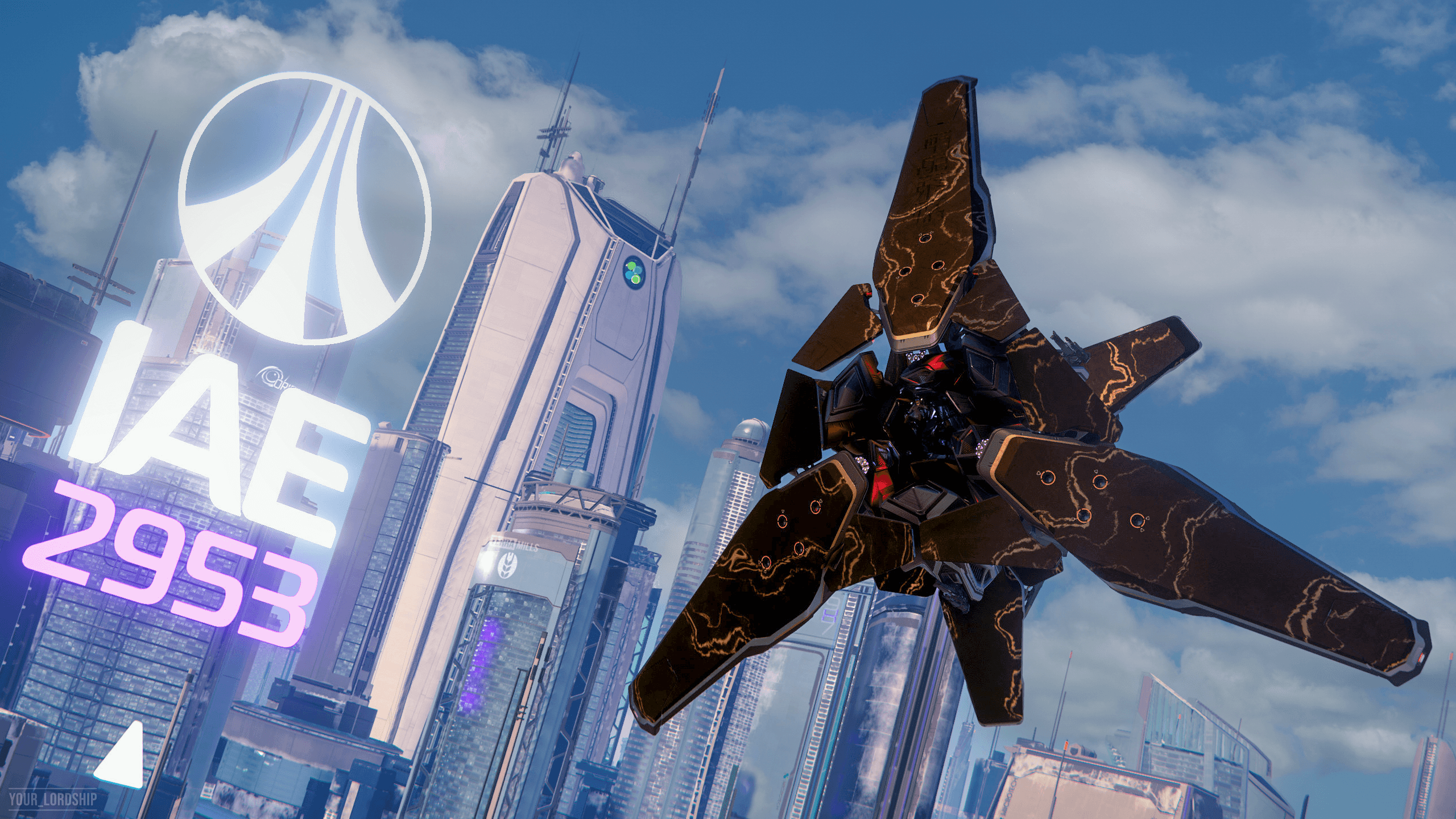
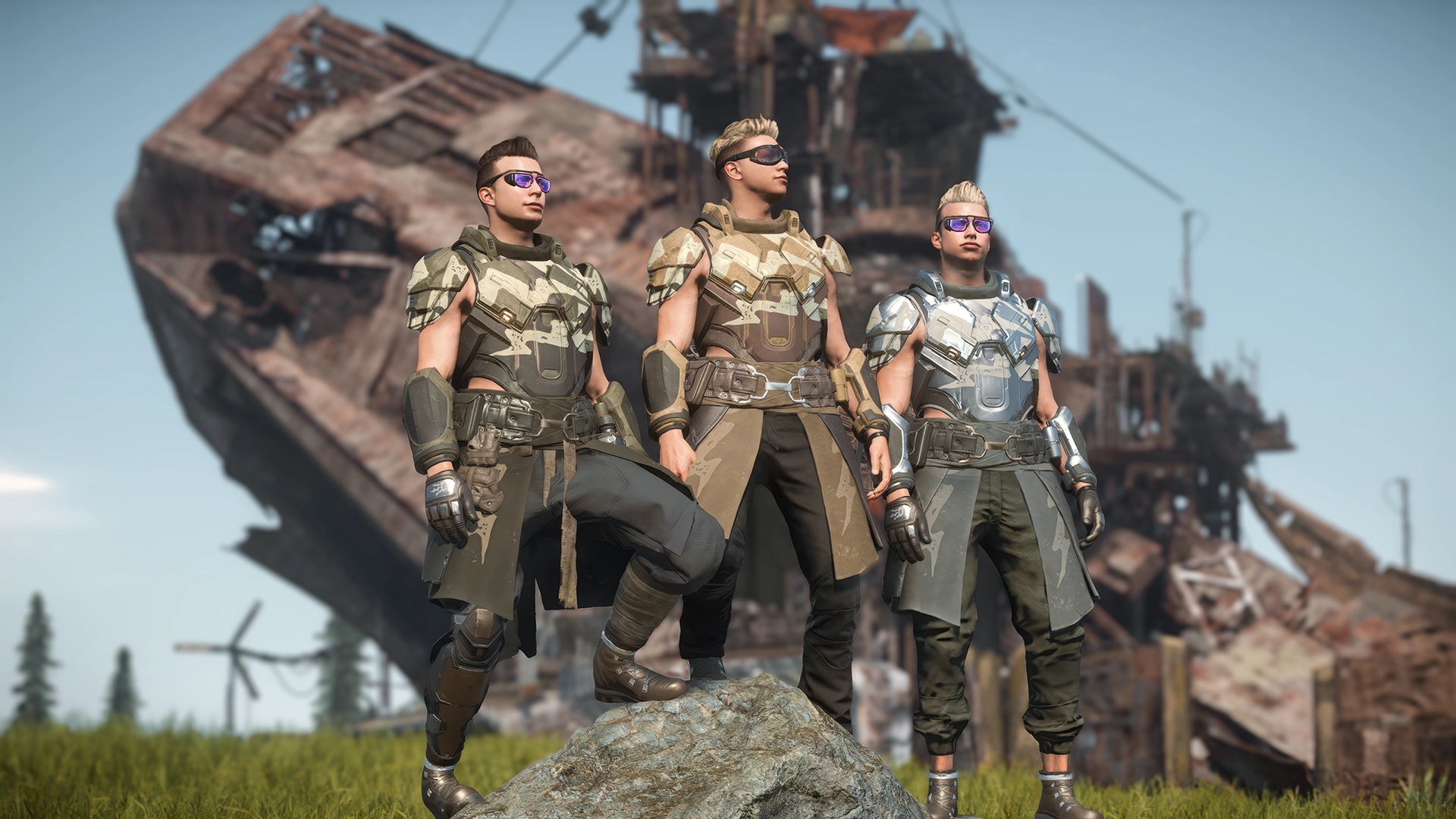
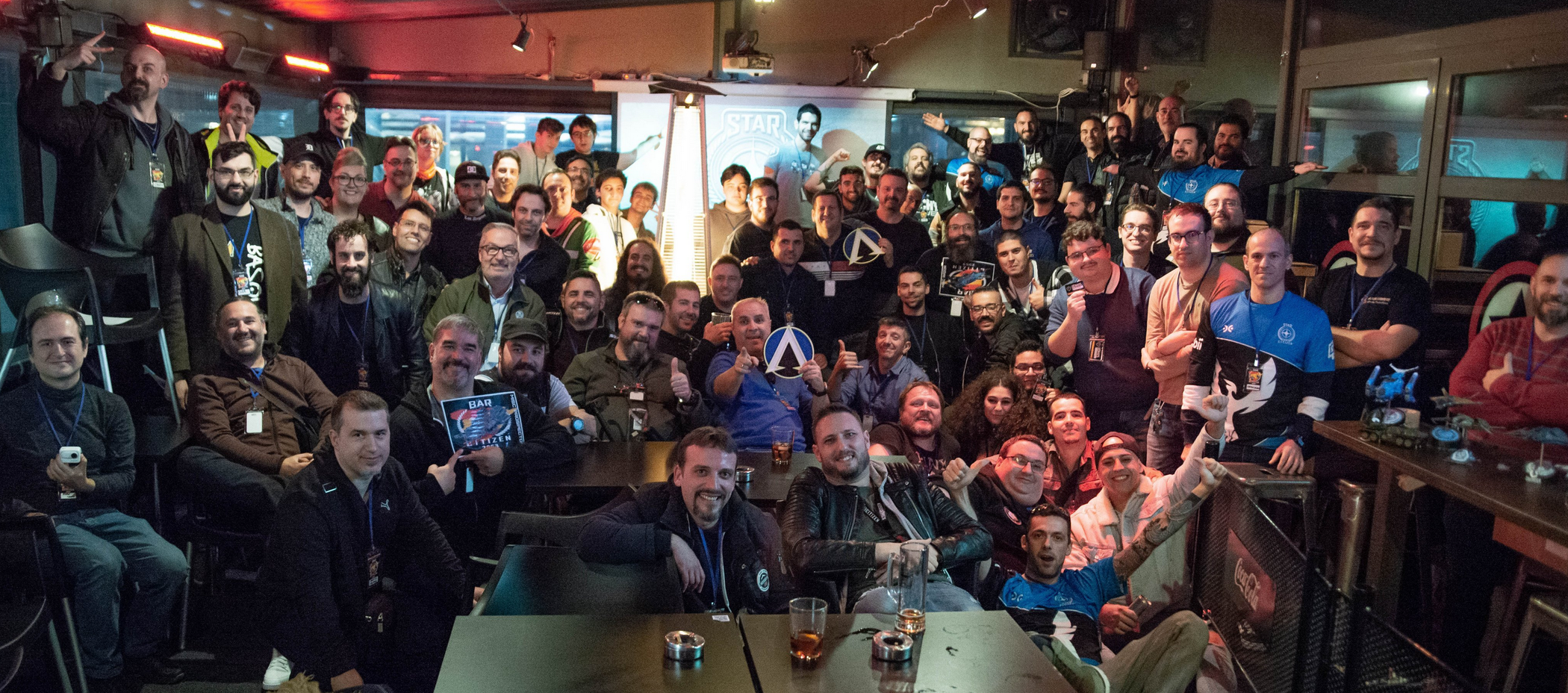
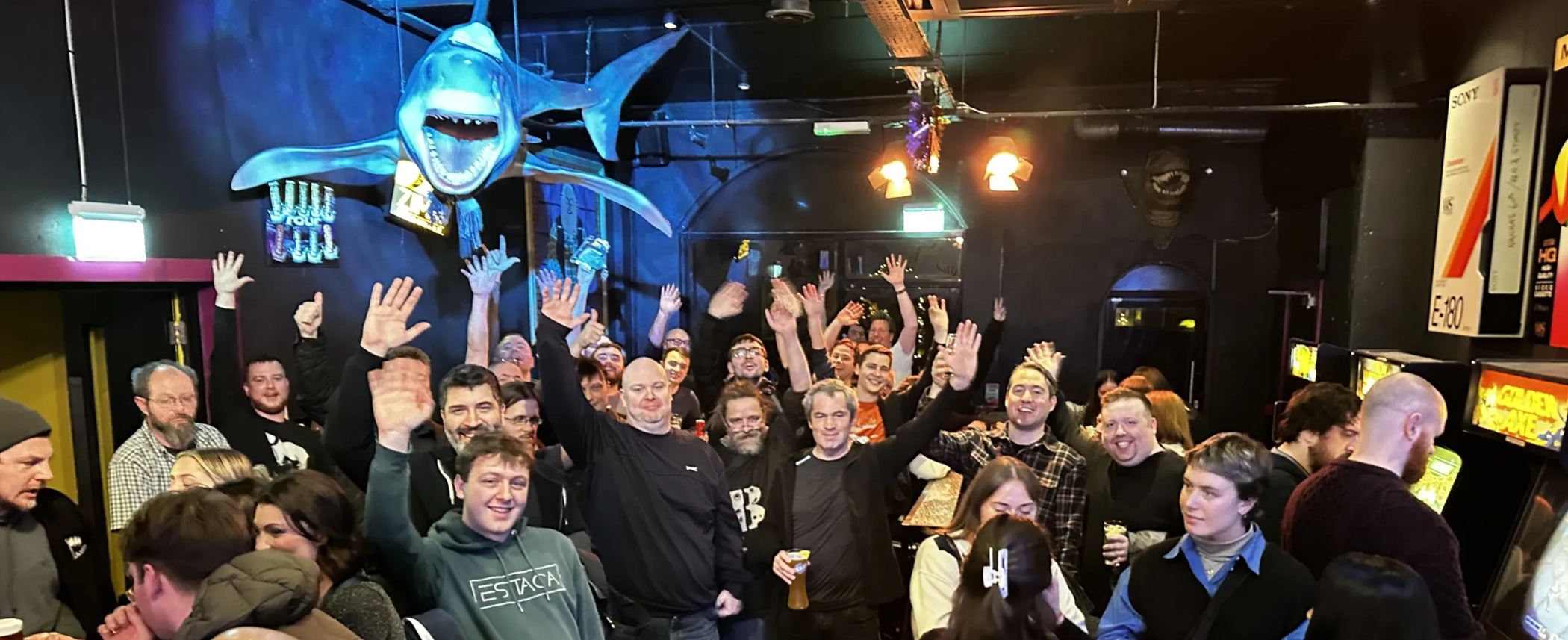
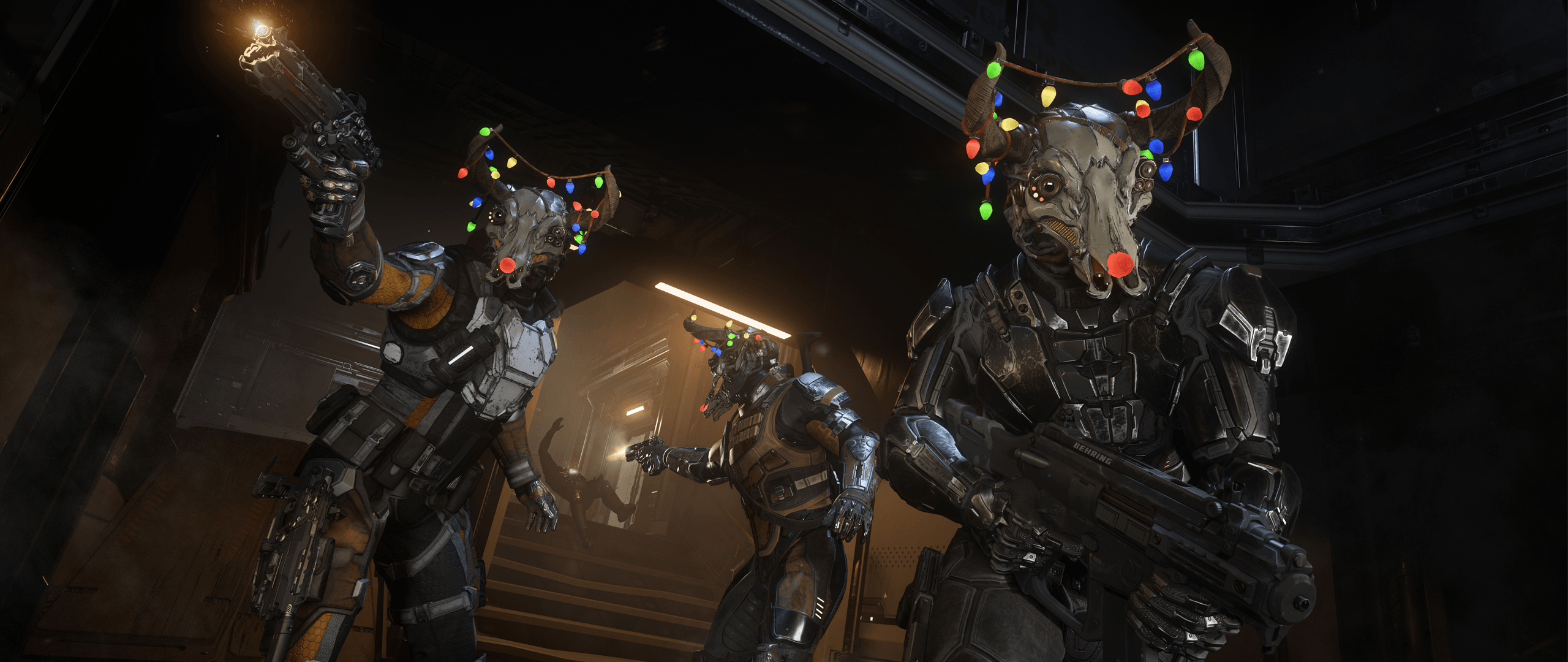
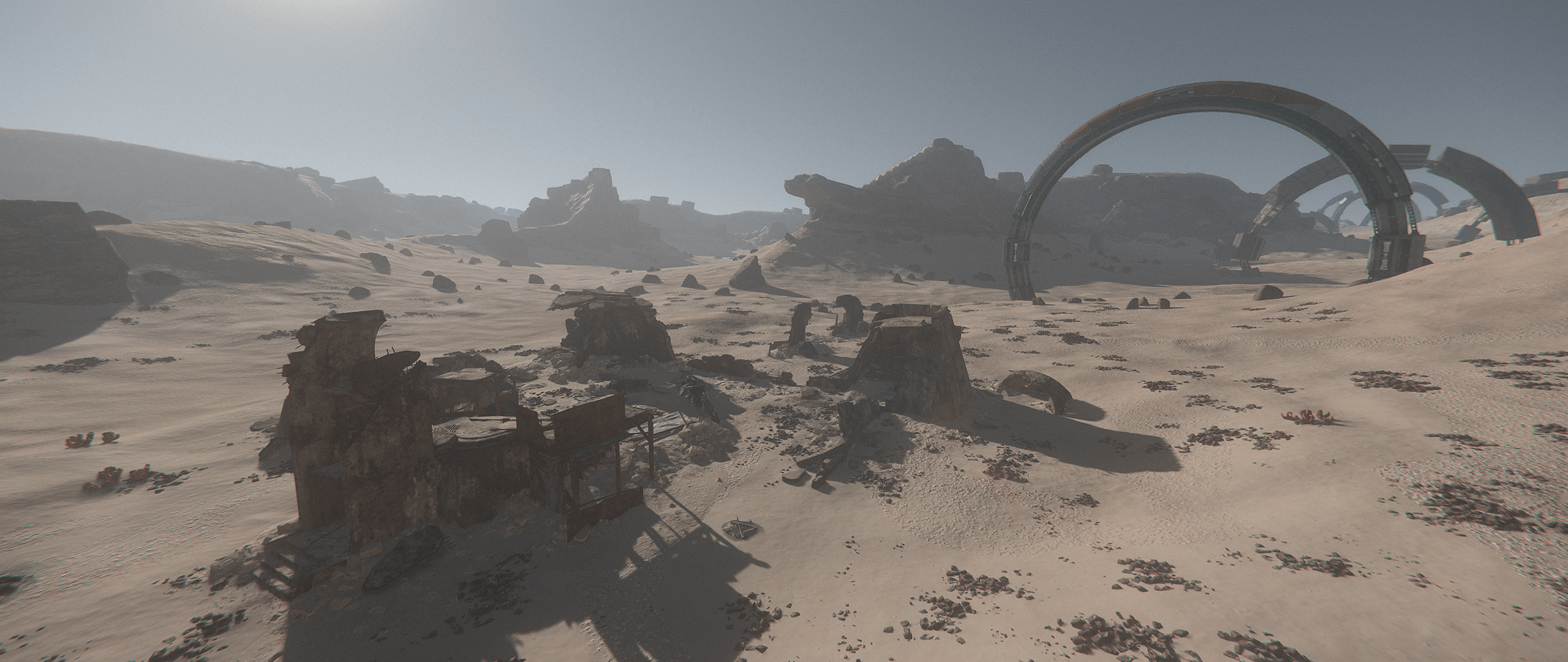
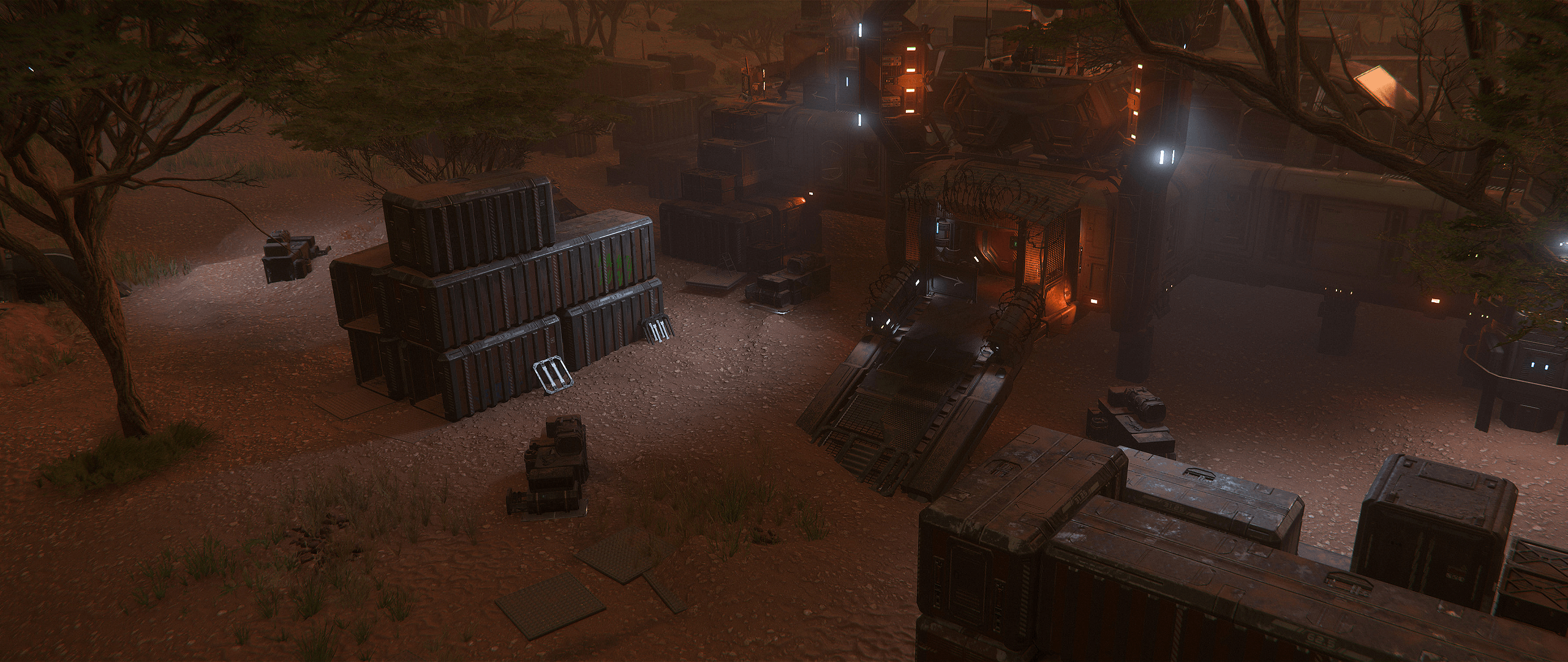
Metadata
- CIG ID
- 19734
- Channel
- Transmission
- Category
- Undefined
- Series
- None
- Comments
- 0
- Published
- 4 months ago (2026-05-25T12:00:00+00:00)