Star Citizen Monthly Report: January 2024
Transmission Undefined NoneContent
PU Monthly Report
January 2024
Welcome to January’s PU Monthly Report! Our teams kicked off the new year strong by making significant progress in a variety of areas including ships, locations, AI, and UI.
AI (Features)
AI Features began the year working on a key AI-driven initiative for Alpha 3.23. This involved a variety of improvements and new behaviors that required frequent discussions between various disciplines.
AI (Tech)
AI Tech started 2024 picking up where they left off last year. For example, they added the ability for multiple NPCs to use ladders simultaneously when moving in the same direction, which completes the feature.
The transit system received upgrades to make the ‘UseTransit’ logic smoother and more robust when handling fails, retries, and fallbacks.
For NPCs using elevators, the flow was improved to create a more efficient sequence. For example, characters won’t be seen going back and forward anymore and will instead board the elevator directly, eliminating unnecessary waiting or interim positions.
The development of generating navigation mesh on planets continued, particularly close to poles, to support outpost locations with NPCs. To achieve this, a new ‘TileName’ system for planets was implemented, which translates position locations into terrain patch IDs for more accurate navigation around poles.
AI Tech also continued to support the designers with additional functionalities and quality-of-life fixes for Apollo. This included the ability to delete functions directly from the multi-graph view, enhanced clicking behavior when zoomed out far enough, improved menu options, and functionality to define shops in platforms.
For spaceship behaviors, the latest fixes and changes to the new pilot-combat behavior were included in the new Arena Commander mode added in Alpha 3.22.
The team are currently developing a new data-loading procedure for Subsumption data. This will allow stricter requirements on the data so they can immediately identify issues. This functionality will be enabled as an additional step when submitting for validation.
Alongside these highlights, AI Tech continued to support release builds and addressed numerous smaller improvements and bug fixes.
Art (Characters)
In January, the Character Art team completed the racing flightsuit and its helmet, and continued working on Headhunter outfits.
The Character Concept Art team began exploring legendary armors and worked on handoff sheets.
Art (Ships)
Last month, the RSI Zeus continued to progress through the greybox stage, with some areas moving slightly beyond. The team are currently focusing on finishing various areas, including the entrance ladder and engineering, while polishing previous areas to make them match the contemporary RSI style.
A previously announced vehicle completed its LOD0 phase, with the team also working on paints throughout January.
“Some areas have already made it through final content, and we hope to be completely hands off in a couple of weeks before moving on to additional promised content work.” Ship Art Team
The RSI Polaris is currently in greybox, with modular pieces done for the lifts, habs, corridors, and hangar.
An unannounced ship progressed well, receiving an updated lighting pass, including POMs to meet the current visual standard, three different lighting states, standardized headlights, geo updates, and glows in the thrusters. It also received a material refactor and other updates.
Two variants continued development: One moved through greybox and began the LOD0 phase, while the other completed LOD0 and is awaiting its gate review. Several related bugs were also fixed.
Finally for Ship Art, gold-standard work on the Aegis Retaliator began.
Art (Weapons)
January saw the Weapons Art team redesigning and changing the dimensions of weapons optics. Improvements were also made to the FPS weapon wear map, while various animations were fixed for ship weapons.
Community
The Community team kicked off the new year by announcing the winners of the Luminalia Greeting Card Contest. They received hundreds of submissions from passionate backers who created wonderful pieces of art!
Community and other teams participated in the Daymar Rally organized by ATMO Esports. CIG’s Bike and Buggy teams performed alongside other players competing in the dirtiest race in the 'verse.
“The event was a blast, and participating in the Daymar Rally was a great way to enjoy Star Citizen with everyone, connect with the community, and compete in the greatest marathon in Stanton!” Community Team
They then published the Arena Commander Schedule as a comm-link for better visibility. This will be updated every month so that everyone can discover the new game modes coming to Arena Commander.
The team also spent a considerable amount of time planning CitizenCon 2954... more information to come very soon!
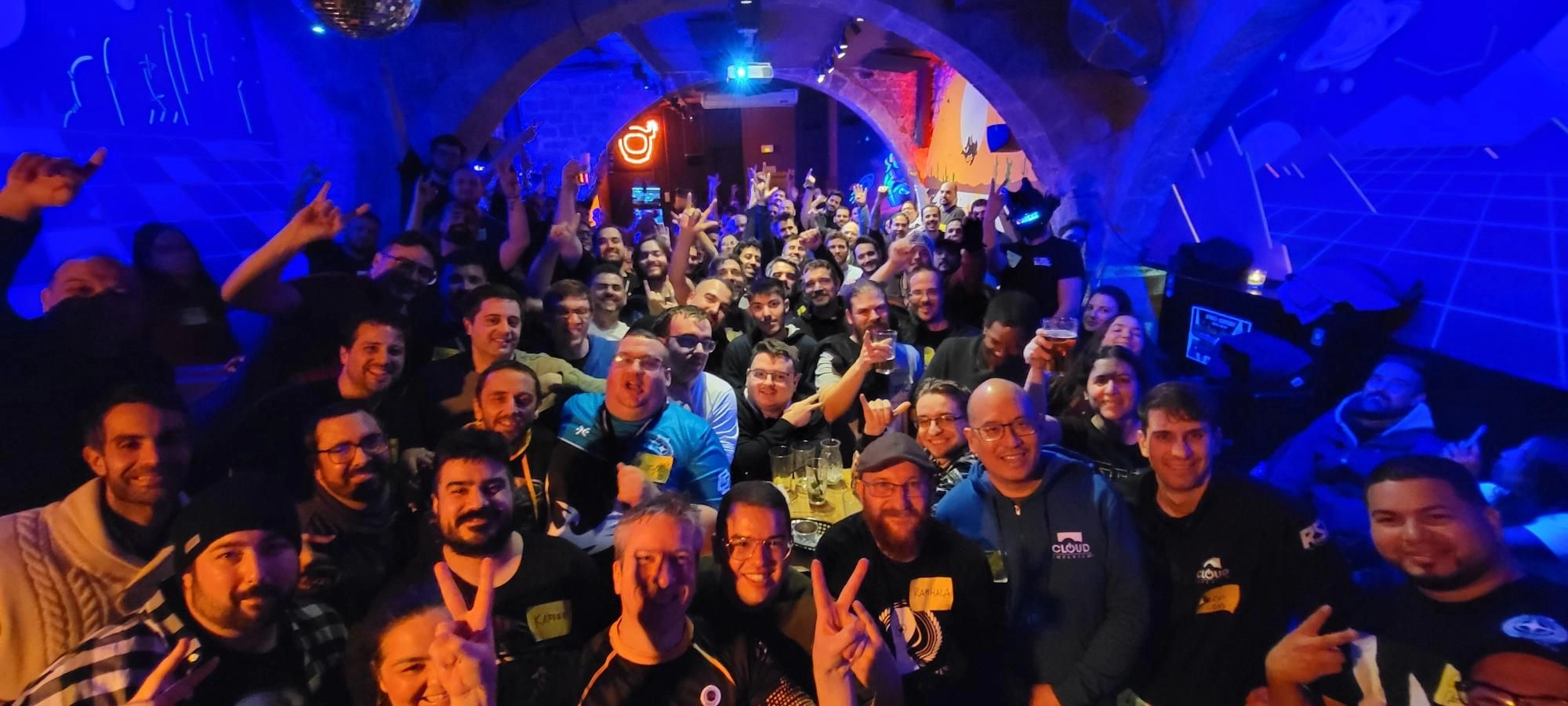
Finally, members of the Community and development teams visited Spain last weekend for Bar Citizen Barcelona.
“We were humbled to see so many of you at the Space Cowboy, where we had lots of heartwarming chats and shared some special loot only available in Bar Citizens that CIG staff attend! The team is also happy to announce that the Bar Citizen World Tour continues in 2024! Just like before, we want to hear from you about where we should visit. Feel free to contact the Community team on Spectrum and they'll add it to the list of locations to consider. Read more about Bar Citizen World Tour 2024 here!”
Economy
Last month, the Economy team completed a balance pass on the UEC prices of FPS weapons. They’re currently looking into the impact of structural salvage on the in-game economy.
Core Gameplay
To amplify efforts, the Character, Vehicle, Gameplay, and Arena Commander sections are no longer separate, as the Gameplay Features team was reorganized toward the end of the last year (including teams for SQ42, the PU, and Arena Commander) to operate as one unified Core Gameplay Pillar. As such, their progress will be reported under the ‘Core Gameplay Pillar’ moving forward.
Last month, the Core Gameplay teams continued porting some of the SQ42 features seen at CitizenCon to the PU, which included making many features multiplayer-compatible.
The porting efforts and remaining code work on recoil improvements and dynamic crosshair were completed and refined to give players the best experience possible. EVA was also ported over and now has more intuitive strafing behavior and multiplayer support.
For player interaction improvements, the team fixed various bugs. They’re currently making sure that the interaction prompt, default actions, and control hints all work together to make it clear what will happen when players interact with something. Master Modes testing and refinement is ongoing too, with several successful playtests and rounds of positive feedback.
The resource network and life-support features were further developed, the devs scoping out the remaining work needed for feature release and clearing important tech debt. They also continued to work on jump-point gameplay, including the procedurally generated tunnels and flow of entering the jump points.
Progress was also made on several tech initiatives in January. For example, support continued for Server Meshing and server-crash recovery. Notably, there were improvements to the usable code for robustness and reliability.
For Maelstrom (the dynamic-destruction system), the current workload involves evaluating existing setups and generating workflows to fit the new pipeline. The team have already started retrofitting existing systems, including improvements to allow ship landing gear to detach with maelstrom debris and simplifying the design markup for configuring item control within vehicles. These changes not only facilitate the new pipeline but improve on the implementation based on feedback.
The team also continued last year’s work on the transit system, preparing it for an upcoming refactor and completing work to ensure the current version is suitable for Server Meshing and Crash Recovery. This involved implementing a safe-recovery system for players who experience a server crash while inside moving transit. Engineering also continued refactoring the docking and landing systems, including a rewrite of the automatic dock/undock feature.
For the former Arena Commander Feature team, January’s focus was on transitioning to the Persistent Universe and becoming familiar with the workflow and systems. While the team's focus is now the PU, they’ll continue to maintain, improve, and provide regular content updates for Arena Commander, albeit with reduced velocity. That being said, the team finished work on three special events and formed a strike team to close out the Resource Network Experimental Mode.
January also saw two successful go/no-gos for Arena Commander: Grav Race, where players race grav-lev vehicles across five racetracks, and a major update to Master Modes, which includes a limited test of the new AI behaviors tailormade for Master Modes. Atmospheric maps were also added across all Master Modes game modes.
After last month’s successful tests, the team began implementing ‘streaming bubbles’ across all Arena Commander locations for improved performance and easier map setup. Additionally, they continued to refactor several UI systems to Building Blocks, improving the overall UI.
Finally for Core Gameplay, the team worked on a wide range of features for the upcoming cargo update. This includes new cargo freight elevators, instanced hangars, personal hangar persistence, commodity trading changes and associated commodity kiosk updates, cargo grid improvements, hover trolley support, hauling mission support, and more.
This is a significant endeavor that involves working closely with teams across CIG including, UI, Design, Art, Animation, Narrative, and Core Tech to deliver on the full vision.
“So far, we are right in the thick of building out core functionality and establishing pipelines, with early prototyping proving out functionality and providing input for iteration. There is still much work to come, but progress has been solid to date.” Core Gameplay Pillar
In-Game Branding
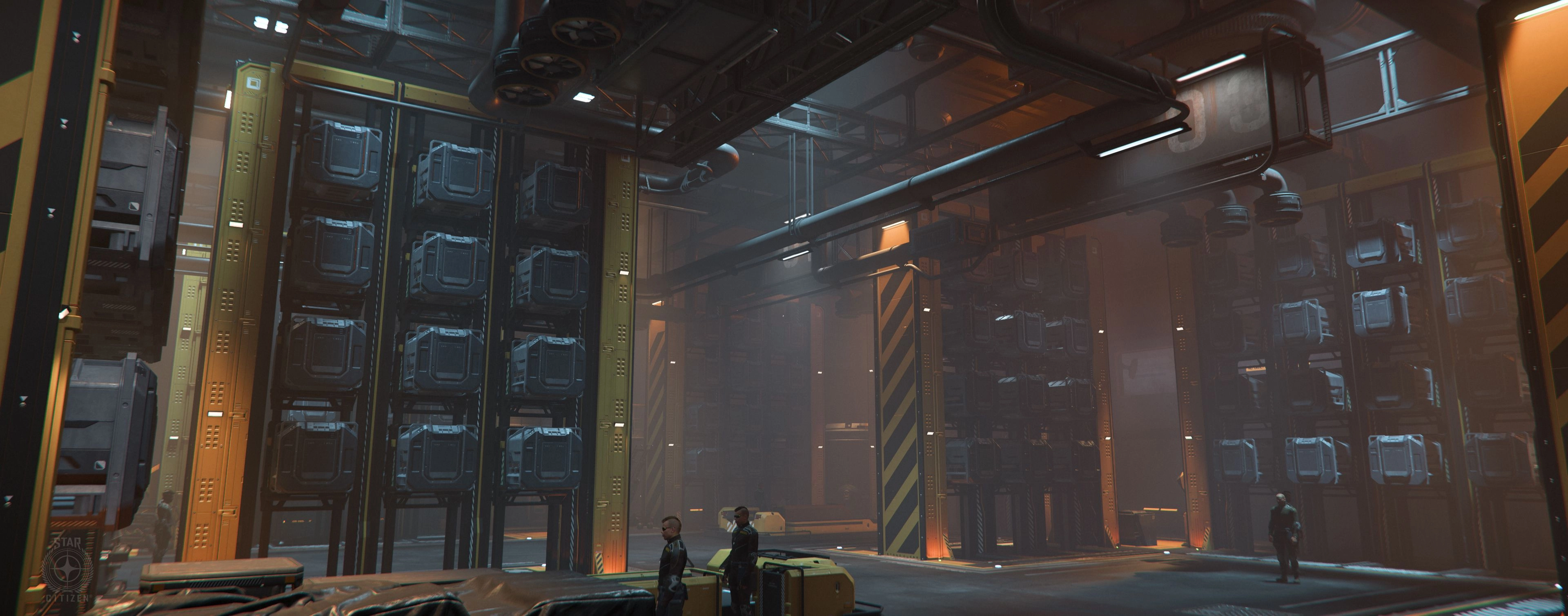
Alongside the Environment team, In-Game Branding continued integrating branding elements into the new distribution centers.
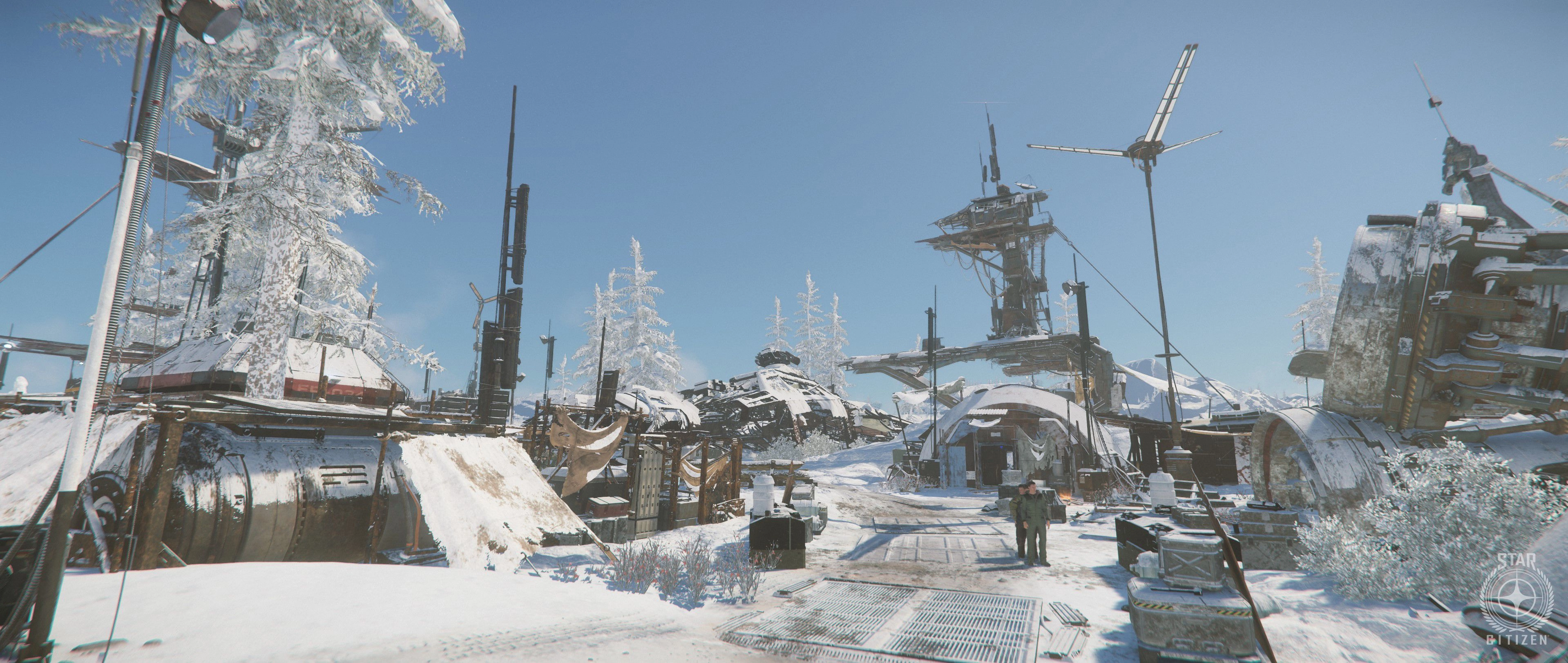
The development of Pyro’s outposts continued too, with attention on finalizing signage to enhance visibility and communication.
Live Tools
The Live Tools team developed and implemented several new features to assist the Player Support teams. They’re currently ensuring that the Network Operation Center becomes easier to use and meets the evolving needs of the different users.
In addition, the team is further improving other internal development tools and providing the necessary help and maintenance.
Locations (EU)
EU Sandbox 1 continued to develop the upcoming Distribution Centers, while Sandbox 2 worked on location markup for the new Starmap and high-tech and colonial cargo elevators.
Progress was made toward Pyro’s initial release. This involved finalizing the placement of outposts and integrating content, such as the new ‘defend’ mission.
Alongside this, the Landing Zone team continued to work on the Cargo feature, including freight and ship elevators for hangars.
Locations (Montreal)
Montreal’s Locations team began the year closing out mandates, starting new ones, and planning for 2024. For example, they closed out the final bug fixing for additional derelict settlements and kicked off the whitebox for building interiors. They also continued their work on the Distribution Centers mandate.
Mission Design
Mission Design continued to fix Siege of Orison for the live release, tackling many long-standing issues using new evidence. Work also continued on Blockade Runner, including finishing iteration cycles and fixing bugs.
Numerous quality-of-life fixes were also made and planning was done for future releases.
Narrative
The Narrative team came back from the holiday break to multiple large-scale initiatives that will add more story and character content into the game. They also met with the various design teams to generate text for some of the systemic missions being introduced in upcoming patches.
The team then looked back to the existing lore and science of other planets and moons to make adjustments based on gameplay needs.
“This back and forth is crucial to aligning the established lore to maximize fun game loops, like resource gathering, as well as endeavors undertaken by the Environment team.” Narrative Team
On the Narrative Design front, the team continuing examining existing behaviors and looking for ways to fix bugs and pops while building a more comprehensive system based on what was learned during Squadron 42’s development. The first initiative is building a general civilian line set to populate larger spaces. The team is also looking at updating the tourist behavior to accommodate large-scale events like Invictus and IAE.
Another volley of lore posts hit the website in January too – a Whitley’s Guide on MISC’s unique Reliant lineup, a Portfolio on Pyrotechnic Amalgamated, which dives into the history of the famed mining company, and finally a Galactapedia article exploring Humanity’s perilous connection with AI development.
R&D
In January, further progress was made on the temporal render mode for atmosphere and clouds. Among other things, ghosting around cloud fringes was reduced. Also, a code interface was implemented to allow gas clouds to hook into the temporal reconstruction process, as R&D would like to explore the possibility of sharing this render pass. This will allow gas clouds to benefit from associated performance improvements as well.
Furthermore, the support in capturing and extracting auxiliary call stacks for memory corruptions (specifically, double deletes and write after free events) mentioned in last month's report was implemented on both the engine and tool sides, with its integration into Sentry currently being investigated by Turbulent.
UI
In January, a Building Block framework was worked on for the freight elevator UI. This was accompanied by the ongoing creation of art mockups to ensure a visually cohesive experience. A user-experience (UX) pass is also underway for the freight elevator and Resource Network mandates. Additionally, wireframes were crafted for the commodity kiosk UX, while attention was given to enhancing the overall user experience within the item shop.
VFX
Last month, the VFX team focused on fixing ‘log spam’ that had built up over time. This involved solving minor data errors that don’t break the game but can be problematic to devs working in the editor if too many accumulate. For example, a missing texture referenced by a particle effect.
They also continued to support several locations, including the latest version of Siege of Orison and a few Pyro outposts.
Web Platform
Last month, a new Launcher team was created to enhance the user experience of the RSI launcher. Their first major focus is the development of Launcher 2.0, which will bring a fresh UI design and up-to-date technology to support the Star Citizen community. The Evocati community was given the first version of the new launcher to assess the sign-in, download, verify, launch, and game library location features. Testing will continue up to its release to the wider community.
Alongside this, the Content Experience team worked on a simple image component to provide an efficient solution for image management. With features like lazy loading, customizable formatting, and centralized control, it streamlines performance, scalability, and flexibility. Its easy integration and prevention of content shifting make it an essential tool for maintaining a unified image-handling approach.
PU-Monatsbericht
Januar 2024
Willkommen zum PU-Monatsbericht für Januar! Unsere Teams haben das neue Jahr mit großen Fortschritten in verschiedenen Bereichen begonnen, darunter Schiffe, Orte, KI und Benutzeroberfläche.
KI (Features)
Die KI-Abteilung begann das Jahr mit der Arbeit an einer wichtigen KI-Initiative für Alpha 3.23. Dabei ging es um eine Vielzahl von Verbesserungen und neuen Verhaltensweisen, die häufige Diskussionen zwischen verschiedenen Disziplinen erforderten.
KI (Technik)
AI Tech begann das Jahr 2024 damit, dort weiterzumachen, wo sie im letzten Jahr aufgehört hatten. So haben sie zum Beispiel die Möglichkeit hinzugefügt, dass mehrere NSCs gleichzeitig Leitern benutzen können, wenn sie sich in die gleiche Richtung bewegen, was das Feature vervollständigt.
Das Transitsystem wurde verbessert, um die "UseTransit"-Logik reibungsloser und robuster zu machen, wenn es um Fehlschläge, Wiederholungen und Rückfälle geht.
Für NSCs, die Aufzüge benutzen, wurde der Ablauf verbessert, um eine effizientere Abfolge zu schaffen. Die Charaktere gehen jetzt nicht mehr hin und her, sondern steigen direkt in den Aufzug ein, sodass unnötige Wartezeiten oder Zwischenpositionen entfallen.
Die Entwicklung des Navigationsnetzes auf Planeten wurde fortgesetzt, insbesondere in der Nähe der Pole, um Außenposten mit NSCs zu unterstützen. Um dies zu erreichen, wurde ein neues 'TileName'-System für Planeten implementiert, das Positionsorte in Terrain-Patch-IDs übersetzt, um eine genauere Navigation um Pole zu ermöglichen.
AI Tech unterstützte die Designer auch weiterhin mit zusätzlichen Funktionen und Qualitätsverbesserungen für Apollo. Dazu gehörten die Möglichkeit, Funktionen direkt aus der Multi-Grafik-Ansicht zu löschen, ein verbessertes Klickverhalten, wenn man weit genug herausgezoomt hat, verbesserte Menüoptionen und die Möglichkeit, Geschäfte in Plattformen zu definieren.
Was das Verhalten der Raumschiffe angeht, so wurden die letzten Korrekturen und Änderungen am neuen Pilotenkampfverhalten in den neuen Arena Commander-Modus aufgenommen, der in Alpha 3.22 hinzugefügt wurde.
Das Team entwickelt derzeit ein neues Datenladeverfahren für Subsumption-Daten. Dies wird strengere Anforderungen an die Daten ermöglichen, damit sie Probleme sofort erkennen können. Diese Funktion wird als zusätzlicher Schritt beim Einreichen zur Validierung aktiviert.
Neben diesen Highlights unterstützte AI Tech weiterhin die Release-Builds und nahm zahlreiche kleinere Verbesserungen und Fehlerbehebungen vor.
Kunst (Charaktere)
Im Januar hat das Character Art Team den Renn-Fluganzug und den Helm fertiggestellt und weiter an den Outfits der Headhunter gearbeitet.
Das Character Concept Art Team begann mit der Erforschung legendärer Rüstungen und arbeitete an Übergabebögen.
Kunst (Schiffe)
Im letzten Monat hat die RSI Zeus die Greybox-Phase weiter durchlaufen und ist in einigen Bereichen etwas weiter fortgeschritten. Das Team konzentriert sich derzeit auf die Fertigstellung verschiedener Bereiche, darunter die Einstiegsleiter und die Technik, und poliert frühere Bereiche, um sie an den modernen RSI-Stil anzupassen.
Ein bereits angekündigtes Fahrzeug hat seine LOD0-Phase abgeschlossen, und das Team hat im Januar auch an den Farben gearbeitet.
"Einige Bereiche haben es bereits durch den endgültigen Inhalt geschafft und wir hoffen, dass wir in ein paar Wochen komplett fertig sind, bevor wir uns weiteren versprochenen Inhalten zuwenden." Schiffskunst-Team
Die RSI Polaris befindet sich derzeit in der Greybox, mit modularen Teilen für die Aufzüge, Aufenthaltsräume, Korridore und den Hangar.
Ein unangekündigtes Schiff kam gut voran und erhielt einen aktualisierten Beleuchtungspass, einschließlich POMs, um dem aktuellen visuellen Standard zu entsprechen, drei verschiedene Beleuchtungszustände, standardisierte Scheinwerfer, Geo-Updates und Glühen in den Triebwerken. Außerdem wurden die Materialien überarbeitet und andere Updates vorgenommen.
Zwei Varianten wurden weiter entwickelt: Die eine durchlief die Greybox-Phase und begann mit der LOD0-Phase, während die andere die LOD0-Phase abschloss und auf die Überprüfung durch das Gate wartet. Außerdem wurden mehrere damit verbundene Fehler behoben.
Im Bereich Schiffskunst wurde mit der Gold-Standard-Arbeit am Aegis Retaliator begonnen.
Art (Weapons)
Im Januar hat das Team für Waffenkunst das Design und die Abmessungen der Waffenoptiken überarbeitet. Außerdem wurde die Abnutzungskarte für FPS-Waffen verbessert, während verschiedene Animationen für Schiffswaffen korrigiert wurden.
Community
Das Community-Team hat das neue Jahr mit der Bekanntgabe der Gewinner des Luminalia-Grußkartenwettbewerbs begonnen. Sie haben Hunderte von Einsendungen von leidenschaftlichen Unterstützern erhalten, die wunderbare Kunstwerke geschaffen haben!
Das Community-Team und andere Teams nahmen an der Daymar Rallye teil, die von ATMO Esports organisiert wurde. Die Bike- und Buggy-Teams von CIG traten zusammen mit anderen Spielern beim schmutzigsten Rennen im Verse an.
"Die Teilnahme an der Daymar-Rallye war eine tolle Möglichkeit, Star Citizen mit allen zu genießen, sich mit der Community zu vernetzen und am größten Marathon in Stanton teilzunehmen!" Community-Team
Anschließend wurde der Arena Commander Schedule als Comm-Link veröffentlicht, um ihn besser sichtbar zu machen. Dieser wird jeden Monat aktualisiert, damit jeder die neuen Spielmodi für Arena Commander entdecken kann.
Das Team hat auch viel Zeit mit der Planung der CitizenCon 2954 verbracht... weitere Informationen folgen bald!
Schließlich besuchten Mitglieder der Community und des Entwicklerteams am vergangenen Wochenende Spanien für Bar Citizen Barcelona.
"Wir haben uns sehr gefreut, so viele von euch auf dem Space Cowboy zu sehen, wo wir viele herzliche Gespräche führten und spezielle Beute teilten, die es nur in Bar Citizens gibt, an denen CIG-Mitarbeiter teilnehmen! Das Team freut sich außerdem, ankündigen zu können, dass die Bar Citizen World Tour 2024 weitergeht! Wie schon zuvor wollen wir von dir wissen, wo wir hinfahren sollen. Melde dich beim Community-Team auf Spectrum, damit sie es auf die Liste der zu berücksichtigenden Orte setzen können. Lies mehr über die Bar Citizen World Tour 2024 hier!"
Wirtschaft
Letzten Monat hat das Wirtschaftsteam die UEC-Preise für FPS-Waffen angepasst. Derzeit wird untersucht, wie sich die strukturelle Bergung auf die Wirtschaft im Spiel auswirkt.
Kern-Gameplay
Um die Bemühungen zu verstärken, sind die Abteilungen Charakter, Fahrzeug, Gameplay und Arena Commander nicht mehr getrennt, da das Team für Gameplay-Features gegen Ende des letzten Jahres umstrukturiert wurde (einschließlich der Teams für SQ42, PU und Arena Commander), um als eine einheitliche Säule für das Core Gameplay zu arbeiten. Daher werden ihre Fortschritte in Zukunft unter der Rubrik "Core Gameplay Pillar" berichtet.
Im letzten Monat haben die Core Gameplay-Teams die Portierung einiger SQ42-Features, die auf der CitizenCon vorgestellt wurden, auf die PU fortgesetzt und dabei viele Features multiplayertauglich gemacht.
Die Portierung und die verbleibenden Code-Arbeiten zur Verbesserung des Rückstoßes und des dynamischen Fadenkreuzes wurden abgeschlossen und verfeinert, um den Spielern das bestmögliche Erlebnis zu bieten. EVA wurde ebenfalls portiert und bietet nun ein intuitiveres Strafing-Verhalten und Multiplayer-Unterstützung.
Um die Interaktion mit den Spielern zu verbessern, hat das Team verschiedene Bugs behoben. Derzeit wird sichergestellt, dass die Interaktionsaufforderung, die Standardaktionen und die Steuerungshinweise zusammenarbeiten, damit klar ist, was passiert, wenn die Spieler/innen mit etwas interagieren. Auch die Hauptmodi werden weiter getestet und verfeinert. Es gab mehrere erfolgreiche Spieltests und viele positive Rückmeldungen.
Das Ressourcennetzwerk und die Lebenserhaltungsfunktionen wurden weiterentwickelt, wobei die Entwickler/innen die verbleibende Arbeit für die Veröffentlichung der Funktionen und die Beseitigung wichtiger technischer Schulden planten. Außerdem wurde die Arbeit an den Sprungpunkten fortgesetzt, einschließlich der prozedural generierten Tunnel und des Ablaufs beim Betreten der Sprungpunkte.
Auch bei mehreren technischen Initiativen wurden im Januar Fortschritte erzielt. So wurde zum Beispiel die Unterstützung für das Server-Meshing und die Wiederherstellung von Server-Abstürzen fortgesetzt. Außerdem wurde der benutzbare Code im Hinblick auf Robustheit und Zuverlässigkeit verbessert.
Bei Maelstrom (dem dynamischen Zerstörungssystem) besteht das aktuelle Arbeitspensum darin, bestehende Setups zu evaluieren und Workflows zu erstellen, die in die neue Pipeline passen. Das Team hat bereits damit begonnen, bestehende Systeme nachzurüsten. Dazu gehören Verbesserungen, die es ermöglichen, das Fahrwerk von Schiffen mit Maelstrom-Trümmern abzutrennen, und die Vereinfachung des Design-Markups für die Konfiguration der Gegenstandssteuerung in Fahrzeugen. Diese Änderungen erleichtern nicht nur die neue Pipeline, sondern verbessern auch die Umsetzung auf der Grundlage des Feedbacks.
Das Team hat außerdem die Arbeit des letzten Jahres am Transitsystem fortgesetzt und es auf ein bevorstehendes Refactoring vorbereitet. Außerdem wurde die Arbeit abgeschlossen, um sicherzustellen, dass die aktuelle Version für Server Meshing und Crash Recovery geeignet ist. Dazu gehörte die Implementierung eines sicheren Wiederherstellungssystems für Spieler/innen, die während eines Transits einen Serverabsturz erleiden. Außerdem wurde die Überarbeitung des Andock- und Landungssystems fortgesetzt, einschließlich einer Neuformulierung der automatischen Andock-/Abkopplungsfunktion.
Für das ehemalige Arena Commander Feature Team lag der Schwerpunkt im Januar auf der Umstellung auf das persistente Universum und darauf, sich mit dem Arbeitsablauf und den Systemen vertraut zu machen. Das Team konzentriert sich jetzt auf das PU, wird aber weiterhin die Inhalte von Arena Commander pflegen, verbessern und regelmäßig aktualisieren, wenn auch mit geringerer Geschwindigkeit. Außerdem hat das Team die Arbeit an drei besonderen Ereignissen abgeschlossen und ein Strike-Team gebildet, um den experimentellen Modus des Ressourcennetzwerks abzuschließen.
Im Januar gab es außerdem zwei erfolgreiche Go/No-Gos für Arena Commander: Grav Race, bei dem die Spieler/innen mit Grav-Lift-Fahrzeugen über fünf Rennstrecken rasen, und ein großes Update für die Hauptmodi, das einen begrenzten Test der neuen KI-Verhaltensweisen beinhaltet, die für die Hauptmodi maßgeschneidert wurden. Außerdem wurden atmosphärische Karten für alle Master Modes Spielmodi hinzugefügt.
Nach den erfolgreichen Tests im letzten Monat begann das Team mit der Einführung von "Streaming Bubbles" an allen Arena Commander-Standorten, um die Leistung zu verbessern und die Kartenerstellung zu erleichtern. Außerdem wurden mehrere UI-Systeme auf Building Blocks umgestellt, um die UI insgesamt zu verbessern.
Im Bereich Core Gameplay schließlich arbeitete das Team an einer Vielzahl von Funktionen für das kommende Fracht-Update. Dazu gehören neue Frachtaufzüge, instanzierte Hangars, persönliche Hangarpersistenz, Änderungen am Rohstoffhandel und damit verbundene Aktualisierungen am Rohstoffkiosk, Verbesserungen am Frachtnetz, Unterstützung für Schwebewagen, Unterstützung für Schleppmissionen und vieles mehr.
Dies ist ein bedeutendes Projekt, bei dem wir eng mit den Teams von CIG zusammenarbeiten, darunter UI, Design, Art, Animation, Narrative und Core Tech, um die gesamte Vision zu verwirklichen.
"Bisher stecken wir mitten in der Entwicklung der Kernfunktionen und der Erstellung von Pipelines, wobei die ersten Prototypen die Funktionen testen und Input für die Iteration liefern. Es liegt noch viel Arbeit vor uns, aber die Fortschritte sind bisher solide". Hauptpfeiler des Gameplays
In-Game Branding
Zusammen mit dem Umweltteam hat das In-Game Branding die Integration von Branding-Elementen in die neuen Vertriebszentren fortgesetzt.
Auch die Entwicklung der Außenposten von Pyro wurde fortgesetzt, wobei das Hauptaugenmerk auf der Fertigstellung der Beschilderung lag, um die Sichtbarkeit und Kommunikation zu verbessern.
Live Tools
Das Live-Tools-Team entwickelte und implementierte mehrere neue Funktionen zur Unterstützung der Spieler-Support-Teams. Zurzeit sorgen sie dafür, dass das Network Operation Center noch benutzerfreundlicher wird und den sich verändernden Bedürfnissen der verschiedenen Nutzer entspricht.
Außerdem verbessert das Team auch andere interne Entwicklungstools und sorgt für die nötige Hilfe und Wartung.
Standorte (EU)
In der EU-Sandbox 1 wurde die Entwicklung der kommenden Distributionszentren fortgesetzt, während Sandbox 2 an der Standortauszeichnung für die neue Starmap und die Hightech- und Kolonialfrachtaufzüge arbeitete.
Es wurden Fortschritte bei der ersten Veröffentlichung von Pyro gemacht. Dazu gehörten die endgültige Platzierung der Außenposten und die Integration von Inhalten wie der neuen Mission "Verteidigen".
Außerdem arbeitete das Landing Zone-Team weiter an der Frachtfunktion, einschließlich der Fracht- und Schiffsaufzüge für Hangars.
Standorte (Montreal)
Das Locations-Team in Montreal begann das Jahr damit, Aufträge abzuschließen, neue zu beginnen und für 2024 zu planen. So wurden zum Beispiel die letzten Fehlerbehebungen für weitere verlassene Siedlungen abgeschlossen und die Whitebox für die Inneneinrichtung von Gebäuden gestartet. Außerdem setzten sie ihre Arbeit am Mandat für die Distributionszentren fort.
Missionsdesign
Das Missionsdesign arbeitete weiter daran, die Belagerung von Orison für die Live-Veröffentlichung zu reparieren, wobei viele seit langem bestehende Probleme mit neuen Beweisen angegangen wurden. Außerdem wurde die Arbeit an Blockade Runner fortgesetzt, einschließlich der Beendigung von Iterationszyklen und der Behebung von Fehlern.
Außerdem wurden zahlreiche Qualitätsverbesserungen vorgenommen und Planungen für zukünftige Veröffentlichungen vorgenommen.
Narrative
Das Narrative-Team kehrte aus der Feiertagspause zurück und arbeitete an mehreren groß angelegten Initiativen, die dem Spiel mehr Story- und Charakterinhalte hinzufügen werden. Außerdem trafen sie sich mit den verschiedenen Designteams, um Texte für einige der systemischen Missionen zu erstellen, die in den kommenden Patches eingeführt werden.
Das Team hat sich mit der bestehenden Geschichte und Wissenschaft anderer Planeten und Monde befasst, um Anpassungen an die Bedürfnisse des Spiels vorzunehmen.
"Dieses Hin und Her ist wichtig, um die bestehenden Überlieferungen so abzustimmen, dass unterhaltsame Spielschleifen wie das Ressourcensammeln und die Bemühungen des Umweltteams maximiert werden." Narrative Team
An der Narrative Design Front untersucht das Team weiterhin bestehende Verhaltensweisen und sucht nach Möglichkeiten, Bugs und Pops zu beheben und gleichzeitig ein umfassenderes System zu entwickeln, das auf dem basiert, was während der Entwicklung von Squadron 42 gelernt wurde. Die erste Initiative ist der Aufbau eines allgemeinen zivilen Liniensets, um größere Räume zu bevölkern. Außerdem will das Team das Verhalten der Touristen aktualisieren, um Großveranstaltungen wie Invictus und IAE zu unterstützen.
Ein Whitley's Guide über die einzigartige Reliant-Reihe der MISC, ein Portfolio über Pyrotechnic Amalgamated, das in die Geschichte der berühmten Bergbaugesellschaft eintaucht, und schließlich ein Galactapedia-Artikel, der die gefährliche Verbindung der Menschheit mit der KI-Entwicklung untersucht.
F&E
Im Januar wurden weitere Fortschritte beim temporalen Rendering-Modus für Atmosphäre und Wolken gemacht. Unter anderem wurde das Geisterbild an den Wolkenrändern reduziert. Außerdem wurde eine Codeschnittstelle implementiert, die es Gaswolken ermöglicht, sich in den zeitlichen Rekonstruktionsprozess einzuklinken, da F&E die Möglichkeit einer gemeinsamen Nutzung dieses Rendering-Passes untersuchen möchte. So können auch Gaswolken von den damit verbundenen Leistungsverbesserungen profitieren.
Darüber hinaus wurde die im letzten Bericht erwähnte Unterstützung für das Erfassen und Extrahieren von Hilfsaufrufstapeln für Speicherkorruptionen (insbesondere doppelte Löschvorgänge und Schreibvorgänge nach dem Freigeben) sowohl auf der Engine- als auch auf der Tool-Seite implementiert; die Integration in Sentry wird derzeit von Turbulent untersucht.
UI
Im Januar wurde an einem Building Block Framework für die Benutzeroberfläche des Lastenaufzugs gearbeitet. Parallel dazu wurden laufend Mockups erstellt, um ein optisch stimmiges Erlebnis zu gewährleisten. Auch für den Lastenaufzug und das Ressourcennetzwerk wurde ein User-Experience-Pass (UX) erstellt. Darüber hinaus wurden Wireframes für die UX des Warenkiosks erstellt, während das Augenmerk auf der Verbesserung der allgemeinen Benutzererfahrung im Item Shop lag.
VFX
Im letzten Monat konzentrierte sich das VFX-Team auf die Beseitigung von "Log-Spam", der sich im Laufe der Zeit angesammelt hatte. Dabei ging es darum, kleinere Datenfehler zu beheben, die das Spiel nicht kaputt machen, aber für Entwickler, die im Editor arbeiten, problematisch sein können, wenn sich zu viele davon ansammeln. Zum Beispiel eine fehlende Textur, die von einem Partikeleffekt referenziert wird.
Außerdem wurden mehrere Orte weiter unterstützt, darunter die neueste Version von Siege of Orison und einige Pyro-Außenposten.
Web-Plattform
Im letzten Monat wurde ein neues Launcher-Team gegründet, um die Benutzerfreundlichkeit des RSI-Launchers zu verbessern. Ihr erster Schwerpunkt ist die Entwicklung des Launcher 2.0, der ein neues UI-Design und modernste Technologie zur Unterstützung der Star Citizen Community mit sich bringen wird. Die Evocati-Community hat die erste Version des neuen Launchers erhalten, um die Funktionen Anmeldung, Download, Überprüfung, Start und Spielespeicherplatz zu testen. Die Tests werden bis zur Veröffentlichung für die breite Community fortgesetzt.
Parallel dazu hat das Content Experience Team an einer einfachen Bildkomponente gearbeitet, um eine effiziente Lösung für die Bildverwaltung zu bieten. Mit Funktionen wie "Lazy Loading", anpassbarer Formatierung und zentraler Steuerung sorgt sie für mehr Leistung, Skalierbarkeit und Flexibilität. Die einfache Integration und die Vermeidung von Inhaltsverschiebungen machen sie zu einem unverzichtbaren Werkzeug für einen einheitlichen Umgang mit Bildern.
PU Monthly Report
January 2024
Welcome to January’s PU Monthly Report! Our teams kicked off the new year strong by making significant progress in a variety of areas including ships, locations, AI, and UI.
AI (Features)
AI Features began the year working on a key AI-driven initiative for Alpha 3.23. This involved a variety of improvements and new behaviors that required frequent discussions between various disciplines.
AI (Tech)
AI Tech started 2024 picking up where they left off last year. For example, they added the ability for multiple NPCs to use ladders simultaneously when moving in the same direction, which completes the feature.
The transit system received upgrades to make the ‘UseTransit’ logic smoother and more robust when handling fails, retries, and fallbacks.
For NPCs using elevators, the flow was improved to create a more efficient sequence. For example, characters won’t be seen going back and forward anymore and will instead board the elevator directly, eliminating unnecessary waiting or interim positions.
The development of generating navigation mesh on planets continued, particularly close to poles, to support outpost locations with NPCs. To achieve this, a new ‘TileName’ system for planets was implemented, which translates position locations into terrain patch IDs for more accurate navigation around poles.
AI Tech also continued to support the designers with additional functionalities and quality-of-life fixes for Apollo. This included the ability to delete functions directly from the multi-graph view, enhanced clicking behavior when zoomed out far enough, improved menu options, and functionality to define shops in platforms.
For spaceship behaviors, the latest fixes and changes to the new pilot-combat behavior were included in the new Arena Commander mode added in Alpha 3.22.
The team are currently developing a new data-loading procedure for Subsumption data. This will allow stricter requirements on the data so they can immediately identify issues. This functionality will be enabled as an additional step when submitting for validation.
Alongside these highlights, AI Tech continued to support release builds and addressed numerous smaller improvements and bug fixes.
Art (Characters)
In January, the Character Art team completed the racing flightsuit and its helmet, and continued working on Headhunter outfits.
The Character Concept Art team began exploring legendary armors and worked on handoff sheets.
Art (Ships)
Last month, the RSI Zeus continued to progress through the greybox stage, with some areas moving slightly beyond. The team are currently focusing on finishing various areas, including the entrance ladder and engineering, while polishing previous areas to make them match the contemporary RSI style.
A previously announced vehicle completed its LOD0 phase, with the team also working on paints throughout January.
“Some areas have already made it through final content, and we hope to be completely hands off in a couple of weeks before moving on to additional promised content work.” Ship Art Team
The RSI Polaris is currently in greybox, with modular pieces done for the lifts, habs, corridors, and hangar.
An unannounced ship progressed well, receiving an updated lighting pass, including POMs to meet the current visual standard, three different lighting states, standardized headlights, geo updates, and glows in the thrusters. It also received a material refactor and other updates.
Two variants continued development: One moved through greybox and began the LOD0 phase, while the other completed LOD0 and is awaiting its gate review. Several related bugs were also fixed.
Finally for Ship Art, gold-standard work on the Aegis Retaliator began.
Art (Weapons)
January saw the Weapons Art team redesigning and changing the dimensions of weapons optics. Improvements were also made to the FPS weapon wear map, while various animations were fixed for ship weapons.
Community
The Community team kicked off the new year by announcing the winners of the Luminalia Greeting Card Contest. They received hundreds of submissions from passionate backers who created wonderful pieces of art!
Community and other teams participated in the Daymar Rally organized by ATMO Esports. CIG’s Bike and Buggy teams performed alongside other players competing in the dirtiest race in the 'verse.
“The event was a blast, and participating in the Daymar Rally was a great way to enjoy Star Citizen with everyone, connect with the community, and compete in the greatest marathon in Stanton!” Community Team
They then published the Arena Commander Schedule as a comm-link for better visibility. This will be updated every month so that everyone can discover the new game modes coming to Arena Commander.
The team also spent a considerable amount of time planning CitizenCon 2954... more information to come very soon!
Finally, members of the Community and development teams visited Spain last weekend for Bar Citizen Barcelona.
“We were humbled to see so many of you at the Space Cowboy, where we had lots of heartwarming chats and shared some special loot only available in Bar Citizens that CIG staff attend! The team is also happy to announce that the Bar Citizen World Tour continues in 2024! Just like before, we want to hear from you about where we should visit. Feel free to contact the Community team on Spectrum and they'll add it to the list of locations to consider. Read more about Bar Citizen World Tour 2024 here!”
Economy
Last month, the Economy team completed a balance pass on the UEC prices of FPS weapons. They’re currently looking into the impact of structural salvage on the in-game economy.
Core Gameplay
To amplify efforts, the Character, Vehicle, Gameplay, and Arena Commander sections are no longer separate, as the Gameplay Features team was reorganized toward the end of the last year (including teams for SQ42, the PU, and Arena Commander) to operate as one unified Core Gameplay Pillar. As such, their progress will be reported under the ‘Core Gameplay Pillar’ moving forward.
Last month, the Core Gameplay teams continued porting some of the SQ42 features seen at CitizenCon to the PU, which included making many features multiplayer-compatible.
The porting efforts and remaining code work on recoil improvements and dynamic crosshair were completed and refined to give players the best experience possible. EVA was also ported over and now has more intuitive strafing behavior and multiplayer support.
For player interaction improvements, the team fixed various bugs. They’re currently making sure that the interaction prompt, default actions, and control hints all work together to make it clear what will happen when players interact with something. Master Modes testing and refinement is ongoing too, with several successful playtests and rounds of positive feedback.
The resource network and life-support features were further developed, the devs scoping out the remaining work needed for feature release and clearing important tech debt. They also continued to work on jump-point gameplay, including the procedurally generated tunnels and flow of entering the jump points.
Progress was also made on several tech initiatives in January. For example, support continued for Server Meshing and server-crash recovery. Notably, there were improvements to the usable code for robustness and reliability.
For Maelstrom (the dynamic-destruction system), the current workload involves evaluating existing setups and generating workflows to fit the new pipeline. The team have already started retrofitting existing systems, including improvements to allow ship landing gear to detach with maelstrom debris and simplifying the design markup for configuring item control within vehicles. These changes not only facilitate the new pipeline but improve on the implementation based on feedback.
The team also continued last year’s work on the transit system, preparing it for an upcoming refactor and completing work to ensure the current version is suitable for Server Meshing and Crash Recovery. This involved implementing a safe-recovery system for players who experience a server crash while inside moving transit. Engineering also continued refactoring the docking and landing systems, including a rewrite of the automatic dock/undock feature.
For the former Arena Commander Feature team, January’s focus was on transitioning to the Persistent Universe and becoming familiar with the workflow and systems. While the team's focus is now the PU, they’ll continue to maintain, improve, and provide regular content updates for Arena Commander, albeit with reduced velocity. That being said, the team finished work on three special events and formed a strike team to close out the Resource Network Experimental Mode.
January also saw two successful go/no-gos for Arena Commander: Grav Race, where players race grav-lev vehicles across five racetracks, and a major update to Master Modes, which includes a limited test of the new AI behaviors tailormade for Master Modes. Atmospheric maps were also added across all Master Modes game modes.
After last month’s successful tests, the team began implementing ‘streaming bubbles’ across all Arena Commander locations for improved performance and easier map setup. Additionally, they continued to refactor several UI systems to Building Blocks, improving the overall UI.
Finally for Core Gameplay, the team worked on a wide range of features for the upcoming cargo update. This includes new cargo freight elevators, instanced hangars, personal hangar persistence, commodity trading changes and associated commodity kiosk updates, cargo grid improvements, hover trolley support, hauling mission support, and more.
This is a significant endeavor that involves working closely with teams across CIG including, UI, Design, Art, Animation, Narrative, and Core Tech to deliver on the full vision.
“So far, we are right in the thick of building out core functionality and establishing pipelines, with early prototyping proving out functionality and providing input for iteration. There is still much work to come, but progress has been solid to date.” Core Gameplay Pillar
In-Game Branding
Alongside the Environment team, In-Game Branding continued integrating branding elements into the new distribution centers.
The development of Pyro’s outposts continued too, with attention on finalizing signage to enhance visibility and communication.
Live Tools
The Live Tools team developed and implemented several new features to assist the Player Support teams. They’re currently ensuring that the Network Operation Center becomes easier to use and meets the evolving needs of the different users.
In addition, the team is further improving other internal development tools and providing the necessary help and maintenance.
Locations (EU)
EU Sandbox 1 continued to develop the upcoming Distribution Centers, while Sandbox 2 worked on location markup for the new Starmap and high-tech and colonial cargo elevators.
Progress was made toward Pyro’s initial release. This involved finalizing the placement of outposts and integrating content, such as the new ‘defend’ mission.
Alongside this, the Landing Zone team continued to work on the Cargo feature, including freight and ship elevators for hangars.
Locations (Montreal)
Montreal’s Locations team began the year closing out mandates, starting new ones, and planning for 2024. For example, they closed out the final bug fixing for additional derelict settlements and kicked off the whitebox for building interiors. They also continued their work on the Distribution Centers mandate.
Mission Design
Mission Design continued to fix Siege of Orison for the live release, tackling many long-standing issues using new evidence. Work also continued on Blockade Runner, including finishing iteration cycles and fixing bugs.
Numerous quality-of-life fixes were also made and planning was done for future releases.
Narrative
The Narrative team came back from the holiday break to multiple large-scale initiatives that will add more story and character content into the game. They also met with the various design teams to generate text for some of the systemic missions being introduced in upcoming patches.
The team then looked back to the existing lore and science of other planets and moons to make adjustments based on gameplay needs.
“This back and forth is crucial to aligning the established lore to maximize fun game loops, like resource gathering, as well as endeavors undertaken by the Environment team.” Narrative Team
On the Narrative Design front, the team continuing examining existing behaviors and looking for ways to fix bugs and pops while building a more comprehensive system based on what was learned during Squadron 42’s development. The first initiative is building a general civilian line set to populate larger spaces. The team is also looking at updating the tourist behavior to accommodate large-scale events like Invictus and IAE.
Another volley of lore posts hit the website in January too – a Whitley’s Guide on MISC’s unique Reliant lineup, a Portfolio on Pyrotechnic Amalgamated, which dives into the history of the famed mining company, and finally a Galactapedia article exploring Humanity’s perilous connection with AI development.
R&D
In January, further progress was made on the temporal render mode for atmosphere and clouds. Among other things, ghosting around cloud fringes was reduced. Also, a code interface was implemented to allow gas clouds to hook into the temporal reconstruction process, as R&D would like to explore the possibility of sharing this render pass. This will allow gas clouds to benefit from associated performance improvements as well.
Furthermore, the support in capturing and extracting auxiliary call stacks for memory corruptions (specifically, double deletes and write after free events) mentioned in last month's report was implemented on both the engine and tool sides, with its integration into Sentry currently being investigated by Turbulent.
UI
In January, a Building Block framework was worked on for the freight elevator UI. This was accompanied by the ongoing creation of art mockups to ensure a visually cohesive experience. A user-experience (UX) pass is also underway for the freight elevator and Resource Network mandates. Additionally, wireframes were crafted for the commodity kiosk UX, while attention was given to enhancing the overall user experience within the item shop.
VFX
Last month, the VFX team focused on fixing ‘log spam’ that had built up over time. This involved solving minor data errors that don’t break the game but can be problematic to devs working in the editor if too many accumulate. For example, a missing texture referenced by a particle effect.
They also continued to support several locations, including the latest version of Siege of Orison and a few Pyro outposts.
Web Platform
Last month, a new Launcher team was created to enhance the user experience of the RSI launcher. Their first major focus is the development of Launcher 2.0, which will bring a fresh UI design and up-to-date technology to support the Star Citizen community. The Evocati community was given the first version of the new launcher to assess the sign-in, download, verify, launch, and game library location features. Testing will continue up to its release to the wider community.
Alongside this, the Content Experience team worked on a simple image component to provide an efficient solution for image management. With features like lazy loading, customizable formatting, and centralized control, it streamlines performance, scalability, and flexibility. Its easy integration and prevention of content shifting make it an essential tool for maintaining a unified image-handling approach.
PU Monthly Report
January 2024
Welcome to January’s PU Monthly Report! Our teams kicked off the new year strong by making significant progress in a variety of areas including ships, locations, AI, and UI.
AI (Features)
AI Features began the year working on a key AI-driven initiative for Alpha 3.23. This involved a variety of improvements and new behaviors that required frequent discussions between various disciplines.
AI (Tech)
AI Tech started 2024 picking up where they left off last year. For example, they added the ability for multiple NPCs to use ladders simultaneously when moving in the same direction, which completes the feature.
The transit system received upgrades to make the ‘UseTransit’ logic smoother and more robust when handling fails, retries, and fallbacks.
For NPCs using elevators, the flow was improved to create a more efficient sequence. For example, characters won’t be seen going back and forward anymore and will instead board the elevator directly, eliminating unnecessary waiting or interim positions.
The development of generating navigation mesh on planets continued, particularly close to poles, to support outpost locations with NPCs. To achieve this, a new ‘TileName’ system for planets was implemented, which translates position locations into terrain patch IDs for more accurate navigation around poles.
AI Tech also continued to support the designers with additional functionalities and quality-of-life fixes for Apollo. This included the ability to delete functions directly from the multi-graph view, enhanced clicking behavior when zoomed out far enough, improved menu options, and functionality to define shops in platforms.
For spaceship behaviors, the latest fixes and changes to the new pilot-combat behavior were included in the new Arena Commander mode added in Alpha 3.22.
The team are currently developing a new data-loading procedure for Subsumption data. This will allow stricter requirements on the data so they can immediately identify issues. This functionality will be enabled as an additional step when submitting for validation.
Alongside these highlights, AI Tech continued to support release builds and addressed numerous smaller improvements and bug fixes.
Art (Characters)
In January, the Character Art team completed the racing flightsuit and its helmet, and continued working on Headhunter outfits.
The Character Concept Art team began exploring legendary armors and worked on handoff sheets.
Art (Ships)
Last month, the RSI Zeus continued to progress through the greybox stage, with some areas moving slightly beyond. The team are currently focusing on finishing various areas, including the entrance ladder and engineering, while polishing previous areas to make them match the contemporary RSI style.
A previously announced vehicle completed its LOD0 phase, with the team also working on paints throughout January.
“Some areas have already made it through final content, and we hope to be completely hands off in a couple of weeks before moving on to additional promised content work.” Ship Art Team
The RSI Polaris is currently in greybox, with modular pieces done for the lifts, habs, corridors, and hangar.
An unannounced ship progressed well, receiving an updated lighting pass, including POMs to meet the current visual standard, three different lighting states, standardized headlights, geo updates, and glows in the thrusters. It also received a material refactor and other updates.
Two variants continued development: One moved through greybox and began the LOD0 phase, while the other completed LOD0 and is awaiting its gate review. Several related bugs were also fixed.
Finally for Ship Art, gold-standard work on the Aegis Retaliator began.
Art (Weapons)
January saw the Weapons Art team redesigning and changing the dimensions of weapons optics. Improvements were also made to the FPS weapon wear map, while various animations were fixed for ship weapons.
Community
The Community team kicked off the new year by announcing the winners of the Luminalia Greeting Card Contest. They received hundreds of submissions from passionate backers who created wonderful pieces of art!
Community and other teams participated in the Daymar Rally organized by ATMO Esports. CIG’s Bike and Buggy teams performed alongside other players competing in the dirtiest race in the 'verse.
“The event was a blast, and participating in the Daymar Rally was a great way to enjoy Star Citizen with everyone, connect with the community, and compete in the greatest marathon in Stanton!” Community Team
They then published the Arena Commander Schedule as a comm-link for better visibility. This will be updated every month so that everyone can discover the new game modes coming to Arena Commander.
The team also spent a considerable amount of time planning CitizenCon 2954... more information to come very soon!
Finally, members of the Community and development teams visited Spain last weekend for Bar Citizen Barcelona.
“We were humbled to see so many of you at the Space Cowboy, where we had lots of heartwarming chats and shared some special loot only available in Bar Citizens that CIG staff attend! The team is also happy to announce that the Bar Citizen World Tour continues in 2024! Just like before, we want to hear from you about where we should visit. Feel free to contact the Community team on Spectrum and they'll add it to the list of locations to consider. Read more about Bar Citizen World Tour 2024 here!”
Economy
Last month, the Economy team completed a balance pass on the UEC prices of FPS weapons. They’re currently looking into the impact of structural salvage on the in-game economy.
Core Gameplay
To amplify efforts, the Character, Vehicle, Gameplay, and Arena Commander sections are no longer separate, as the Gameplay Features team was reorganized toward the end of the last year (including teams for SQ42, the PU, and Arena Commander) to operate as one unified Core Gameplay Pillar. As such, their progress will be reported under the ‘Core Gameplay Pillar’ moving forward.
Last month, the Core Gameplay teams continued porting some of the SQ42 features seen at CitizenCon to the PU, which included making many features multiplayer-compatible.
The porting efforts and remaining code work on recoil improvements and dynamic crosshair were completed and refined to give players the best experience possible. EVA was also ported over and now has more intuitive strafing behavior and multiplayer support.
For player interaction improvements, the team fixed various bugs. They’re currently making sure that the interaction prompt, default actions, and control hints all work together to make it clear what will happen when players interact with something. Master Modes testing and refinement is ongoing too, with several successful playtests and rounds of positive feedback.
The resource network and life-support features were further developed, the devs scoping out the remaining work needed for feature release and clearing important tech debt. They also continued to work on jump-point gameplay, including the procedurally generated tunnels and flow of entering the jump points.
Progress was also made on several tech initiatives in January. For example, support continued for Server Meshing and server-crash recovery. Notably, there were improvements to the usable code for robustness and reliability.
For Maelstrom (the dynamic-destruction system), the current workload involves evaluating existing setups and generating workflows to fit the new pipeline. The team have already started retrofitting existing systems, including improvements to allow ship landing gear to detach with maelstrom debris and simplifying the design markup for configuring item control within vehicles. These changes not only facilitate the new pipeline but improve on the implementation based on feedback.
The team also continued last year’s work on the transit system, preparing it for an upcoming refactor and completing work to ensure the current version is suitable for Server Meshing and Crash Recovery. This involved implementing a safe-recovery system for players who experience a server crash while inside moving transit. Engineering also continued refactoring the docking and landing systems, including a rewrite of the automatic dock/undock feature.
For the former Arena Commander Feature team, January’s focus was on transitioning to the Persistent Universe and becoming familiar with the workflow and systems. While the team's focus is now the PU, they’ll continue to maintain, improve, and provide regular content updates for Arena Commander, albeit with reduced velocity. That being said, the team finished work on three special events and formed a strike team to close out the Resource Network Experimental Mode.
January also saw two successful go/no-gos for Arena Commander: Grav Race, where players race grav-lev vehicles across five racetracks, and a major update to Master Modes, which includes a limited test of the new AI behaviors tailormade for Master Modes. Atmospheric maps were also added across all Master Modes game modes.
After last month’s successful tests, the team began implementing ‘streaming bubbles’ across all Arena Commander locations for improved performance and easier map setup. Additionally, they continued to refactor several UI systems to Building Blocks, improving the overall UI.
Finally for Core Gameplay, the team worked on a wide range of features for the upcoming cargo update. This includes new cargo freight elevators, instanced hangars, personal hangar persistence, commodity trading changes and associated commodity kiosk updates, cargo grid improvements, hover trolley support, hauling mission support, and more.
This is a significant endeavor that involves working closely with teams across CIG including, UI, Design, Art, Animation, Narrative, and Core Tech to deliver on the full vision.
“So far, we are right in the thick of building out core functionality and establishing pipelines, with early prototyping proving out functionality and providing input for iteration. There is still much work to come, but progress has been solid to date.” Core Gameplay Pillar
In-Game Branding
Alongside the Environment team, In-Game Branding continued integrating branding elements into the new distribution centers.
The development of Pyro’s outposts continued too, with attention on finalizing signage to enhance visibility and communication.
Live Tools
The Live Tools team developed and implemented several new features to assist the Player Support teams. They’re currently ensuring that the Network Operation Center becomes easier to use and meets the evolving needs of the different users.
In addition, the team is further improving other internal development tools and providing the necessary help and maintenance.
Locations (EU)
EU Sandbox 1 continued to develop the upcoming Distribution Centers, while Sandbox 2 worked on location markup for the new Starmap and high-tech and colonial cargo elevators.
Progress was made toward Pyro’s initial release. This involved finalizing the placement of outposts and integrating content, such as the new ‘defend’ mission.
Alongside this, the Landing Zone team continued to work on the Cargo feature, including freight and ship elevators for hangars.
Locations (Montreal)
Montreal’s Locations team began the year closing out mandates, starting new ones, and planning for 2024. For example, they closed out the final bug fixing for additional derelict settlements and kicked off the whitebox for building interiors. They also continued their work on the Distribution Centers mandate.
Mission Design
Mission Design continued to fix Siege of Orison for the live release, tackling many long-standing issues using new evidence. Work also continued on Blockade Runner, including finishing iteration cycles and fixing bugs.
Numerous quality-of-life fixes were also made and planning was done for future releases.
Narrative
The Narrative team came back from the holiday break to multiple large-scale initiatives that will add more story and character content into the game. They also met with the various design teams to generate text for some of the systemic missions being introduced in upcoming patches.
The team then looked back to the existing lore and science of other planets and moons to make adjustments based on gameplay needs.
“This back and forth is crucial to aligning the established lore to maximize fun game loops, like resource gathering, as well as endeavors undertaken by the Environment team.” Narrative Team
On the Narrative Design front, the team continuing examining existing behaviors and looking for ways to fix bugs and pops while building a more comprehensive system based on what was learned during Squadron 42’s development. The first initiative is building a general civilian line set to populate larger spaces. The team is also looking at updating the tourist behavior to accommodate large-scale events like Invictus and IAE.
Another volley of lore posts hit the website in January too – a Whitley’s Guide on MISC’s unique Reliant lineup, a Portfolio on Pyrotechnic Amalgamated, which dives into the history of the famed mining company, and finally a Galactapedia article exploring Humanity’s perilous connection with AI development.
R&D
In January, further progress was made on the temporal render mode for atmosphere and clouds. Among other things, ghosting around cloud fringes was reduced. Also, a code interface was implemented to allow gas clouds to hook into the temporal reconstruction process, as R&D would like to explore the possibility of sharing this render pass. This will allow gas clouds to benefit from associated performance improvements as well.
Furthermore, the support in capturing and extracting auxiliary call stacks for memory corruptions (specifically, double deletes and write after free events) mentioned in last month's report was implemented on both the engine and tool sides, with its integration into Sentry currently being investigated by Turbulent.
UI
In January, a Building Block framework was worked on for the freight elevator UI. This was accompanied by the ongoing creation of art mockups to ensure a visually cohesive experience. A user-experience (UX) pass is also underway for the freight elevator and Resource Network mandates. Additionally, wireframes were crafted for the commodity kiosk UX, while attention was given to enhancing the overall user experience within the item shop.
VFX
Last month, the VFX team focused on fixing ‘log spam’ that had built up over time. This involved solving minor data errors that don’t break the game but can be problematic to devs working in the editor if too many accumulate. For example, a missing texture referenced by a particle effect.
They also continued to support several locations, including the latest version of Siege of Orison and a few Pyro outposts.
Web Platform
Last month, a new Launcher team was created to enhance the user experience of the RSI launcher. Their first major focus is the development of Launcher 2.0, which will bring a fresh UI design and up-to-date technology to support the Star Citizen community. The Evocati community was given the first version of the new launcher to assess the sign-in, download, verify, launch, and game library location features. Testing will continue up to its release to the wider community.
Alongside this, the Content Experience team worked on a simple image component to provide an efficient solution for image management. With features like lazy loading, customizable formatting, and centralized control, it streamlines performance, scalability, and flexibility. Its easy integration and prevention of content shifting make it an essential tool for maintaining a unified image-handling approach.
Links
No links available.
Images
5
Metadata
- CIG ID
- 19779
- Channel
- Transmission
- Category
- Undefined
- Series
- None
- Comments
- 0
- Published
- 4 months ago (2026-05-25T12:00:00+00:00)