Star Citizen Monthly Report: June 2024
Transmission Undefined NoneContent
PU Monthly Report
June 2024
Welcome to June’s PU Monthly Report! Many teams progressed with their final tasks toward Alpha 3.24, while others are forging ahead with work on exciting features and content for Alpha 4.0 (and in some cases beyond). Read on for all the details, and we’ll see you again this time next month.
AI (Features)
June saw AI Features improving the behaviors of grouped NPCS for a more consistent combat experience. To do this, they added an object representing the group that shares perception information about targets at the appropriate time. This allows the designers to tailor combat experiences to the specific demands of the mission by deciding who is and isn’t drawn into combat when it starts. It also allows them to ‘cheat’ a behavior for situations where communication between group members would be expected, e.g. via radio, preventing NPCs from doing a full first reaction when they would already know about the fight.
This is the first implementation of the system and the team will be playtesting and balancing it to make sure it presents a realistic but understandable challenge. Without the behavior, perception and entering combat would be more haphazard and not work well across the wide range of level and mission scenarios.
AI (Game Intelligence Development Tools)
June saw the creation of a new team within the AI group, Game Intelligence Development Tools (GIDT).
One of the team’s objectives is to focus on evaluating and improving tools and processes. For example, they’re currently working with AI Tech to improve the Apollo Subsumption editor with improved UX. Following a successful prototype, the team are currently implementing some of the features directly in-engine. This new visual paradigm is known as Apollo StarScript.
Other improvements include a new tool that enables the devs to group or ungroup task functions automatically, allowing them to easily add comments and visualize them when collapsed or expanded.
Another upcoming objective is to implement different service solutions for long-term AI functionalities, including the Quantum simulation, the Battle System, and the Commentator model.
AI (Tech)
June saw AI Tech optimizing parts of the Vision system used by NPCs, which involved moving parts of NPC-visibility-check computation to the client. This will help when there are multiple players on the same server, giving improvements to reaction time and frame rate.
They’re also investigating better ways to synchronize AI data between servers and clients in preparation for Server Meshing, which will allow for smoother transitions by keeping the same context when NPCs move from one server to another. As a test, they serialized more data into AI components, like path and movement requests.
On the ship AI side, functionality was added to point-defense cannons that allows them to track and shoot missiles. Improvements were also made to NPCs following leaders in formation by utilizing a PID controller for matching leader speed and adjusting roll based on the leader and NPC ship orientation.
Alongside this, the AI Tools team began unifying functionality and fixed bugs in preparation for the Apollo UI redesign.
Animation
The Animation team continued to fix technical issues with the kopion, animate assets, and create new animations for numerous creatures.
Art (Characters)
In June, the Character Art team progressed with three specialist armors, finalized the update to the utility armor, and supported requests for the Character Customizer. Art debt for looting items was worked on too.
The Character Concept Art team continued exploring designs for utility armors and completed handoff sheets for specialist armors, while the Hair team kicked off new beards and hairstyles.
Art (Ships)
Last month, the Ships team progressed with the RSI Polaris, getting close to finishing the interior for the greybox review. The exterior is heading toward final content, with the parallax occlusion mapping (POM) and lighting being completed. The RSI Zeus Mk II is also approaching its final content review.
Seven unannounced vehicles were worked on too. Four are approaching the whitebox review stage, two are heading toward greybox review, and the last is nearly finished.
Community
The Community team kicked off the month with May’s PU Monthly Report, alongside the Drake Ironclad Q&A.
The team then supported Alien Week, which was followed by the return of XenoThreat. A New Player Guide was published alongside two contests, Show Us Your Colors and Supergalactic Xeno-Treat Smackdown.
The Community team is currently preparing for the Alpha 3.24 release as well as the upcoming Foundation Festival and Ship Showdown events.
The Bar Citizen World Tour continued, with team members visiting local events to meet with the community and share new loot, including the new Hui’a Puzzle.
The team also spent time with the vibrant community in Asia, where we recently had the pleasure of attending two unforgettable events. First, our team traveled to Taipei for an incredibly immersive Bar Citizen (the decor was awesome!). There, we were treated to a handful of excellent presentations, including a live demonstration and tutorial by Morphologis, a racing tournaments that had us all on the edge of our seats (and screaming at the top of our lungs), and even some lively singalongs of pirate shanties courtesy of Drake Interplanetary.
Then, last Saturday, we had the privilege of connecting with our community in Shenzhen, China, at their largest gathering yet (over 2,000 attendees!). We participated in a lively Q&A session, enjoyed a variety of tournaments, giveaways, cosplay, and much more. Events like these, especially on the opposite side of the globe, serve as a powerful reminder of the diversity and global reach of our community. What's most inspiring is that our shared passion for the universe we are building transcends all language and cultural barriers – whether you're in Shenzhen, France, Antarctica (you never know) or anywhere else on the planet, a Bar Citizen event always feels like home among like-minded pilots.
“We kicked off another year of Bar Citizen events around the globe. As always, you all showed up in spades! It was wonderful meeting each and every one of you, hosting trivia challenges, enjoying good drinks, and great company. We can't wait to see you all again at upcoming events during PAX, TwitchCon, Gamescom, and more! So, if you're nearby, come on down and get your hands on an exclusive Hui'a! We would also like to say thank you to everyone supporting the development of Star Citizen and our recent updates, Tech Preview, and other PTU tests. We are committed to delivering a world-class game, for a world-class community, and your feedback is instrumentally important to us!” - Community Team
The Community team continued detailing the weekly publishes with This Week in Star Citizen, and updated the Arena Commander Schedule.
With CitizenCon 2954 less than four months away, the team is working hard to deliver the most packed and exciting event to date. The CitizenCon Cosplay Contest is also back, with the team planning to share more details closer to the event.
Core Gameplay
For Maelstrom, the development stream was recently published to the main internal branch. This provides a fresh set of features, such as a new unified-mesh-format grid with OC support per Maelstrom node for large vehicle destruction. It also provides tools to link gameplay events with destruction sequences, such as shatter, break, and integrity changes.
The unified mesh format brings numerous improvements to the Vulkan pipeline and internal code coverage alongside a flexible pipeline to bake supplementary data required for Maelstrom destruction. The ability to link internal Maelstrom sequences to game logic advances the devs' ability to easily build complex destruction sequences. Further development will bring Maelstrom destruction entities past the existing legacy destruction and harden the existing pipeline.
Following a full task breakdown, implementation of the transit refactor began. This included setting up basic component and entity classes for destinations, gateways, and gateway peripherals. A new DebugGUI transport-network visualizer was created to assist the initial set up and inform Design of the setup of each transport network. The transit engineers also continued supporting the upcoming Alpha 3.24 release.
For Radar & Scanning, work was completed to allow FPS ping to be used from certain seats - the first being in vehicles that lack their own radar. Alongside this, the team resolved several issues when using an FPS radar within vehicle zones to detect things outside. Work continued on the highlighting effect caused by FPS ping, with the devs now able to apply different colors for different factors, such as hostility. Several other parameters were added to the highlight effect to allow the finetuning of visuals, including fade, timeout, occlusions, fill, and outline.
Support began for new vehicle brackets, including nameplate and distance, and parameters were added to control when and how they should show in different states, such as targeted and pinned. The removal of Scan Operator Mode started too, which will be replaced with ADS Scanning.
The team submitted the framework for a system that will allow Design to begin tagging which scan-producers specific radars run. For example, medical scanners may see health information, while police scanners can detect contraband. An improvement was made to the radar system, allowing faster scan speeds while maintaining performance. Support continued for radar with the Room Query System that allows the occlusion of people behind locked doors.
Finally for Radar & Scanning, a new mechanic was implemented - Delta Signatures. This mechanic has vehicles emit signatures when certain actions are performed, such as ping activation, the activation of quantum boost, and the changing of Master Modes. UI to notify players when they detect a delta signature was implemented too.
For Arena Commander, the team focused on the new frontend style, the FPS horde mode, and backend support.
The implementation of the frontend restyle is nearly complete, with the majority now utilizing the new style and art direction. Several feature requests were sent to the Service teams after review, including a way to query game module and mode population and additional information for friends lists, such as the game mode and map.
For the FPS horde mode, the team implemented the Subsumption mission alongside a way to define spawn wave data. Design will soon begin reviewing the map and marking it up for AI ahead of the spawn-closet engineers becoming available post-Alpha 3.24.
A playtest was conducted on an EVA-only map, Gundo. Due to limitations with the location causing balance concerns, this map will not be released and will instead be used for rapid in-situ developer iteration of the EVA system.
Finally, the team began improving how badges are defined in the game code. This is due to limitations of the system as more teams utilize it. Improvements include giving designers more control over badges and their information by moving what was previously hardcoded to DataForge as well as adding several quality-of-life improvements for developers.
Economy
The Economy team progressed with tasks for Pyro, including setting up the shops and sorting out any related issues.
They also continued implementing the effort-vs-reward algorithm so that mission rewards are balanced according to the risk and time invested by the player. Support was provided for the coming changes to cargo and cargo missions too.
As mentioned in last month’s report, the team worked to rebalance the prices for entire sets of items, including vehicle components (power plants, coolers, shields, quantum drives, weapons, etc.), FPS weapon attachments, ammunition, consumables, and commodities.
The team’s ongoing work involves a new economy for quantum and hydrogen fuel to ensure that refueling isn’t a chore while maintaining the narrative feel of a large universe with unique economies spread across different star systems.
They’re also creating player profiles to better understand how different careers gain and use resources.
Graphics, VFX Programming & Planet Tech
Last month, the stability, performance, and memory usage of Vulkan continued to improve and is now much closer to being the default choice for Star Citizen. The team have also been in contact with AMD, Nvidia, and Intel to diagnose and fix various driver issues.
The Global Illumination team worked across a variety of areas. For example, they improved radiance cache resolution, made stability improvements, and optimized various areas with Fidelity FX. They also provided rough-specular support, improved motion-and-depth-complexity handling for the screen-space light cache, and updated the cascaded light grid to allow for a greater range of global illumination.
Gas-cloud color-processing volumes were added to allow the artists to vary the appearance of large gas clouds as players traverse them. The team also made the first pass at hooking up the required VFX to jump points alongside a new shader for the tunnel and a bespoke lighting and shadowing solution for ships inside it.
Support for fire hazards continued, which involved adding directionality to the generalized burn and dirt shader effect for entities. This allows localized burning, such as on one side of a door. Visual improvements were also added to creatures, such as the ability to spawn decals from GPU particles.
A new managed-entity-region system was designed and entered development. The goal of this is to manage the lifetime of the many procedurally spawned entities, such as creatures and mineable rocks. This is critical to the introduction of persistent entities, server recovery, and server meshing, as these systems require very strict and careful management of entity lifetimes.
GPU terrain generation was implemented as a stepping stone to the team’s plans for fully GPU-generated virtualized terrain, which will be utilized in Planet Tech v5.
Finally, an efficient query mechanism is being designed and added to planets. This will be used by the new location-scatter tool that will help populate planets for Star Citizen 1.0.
In-Game Branding
The In-Game Branding team made significant progress across various projects throughout June, including new navigational signage for Pyro and graffiti for Ruin Station. They also started work on a new location alongside the Landing Zone team.
Interactables
June saw the Interactables team finishing off liquid containers, which will be used in the upcoming Blockade Runner missions. Hazardous containers were worked on too, with the team taking all sizes to final following destructibility tests.
Lighting
The Lighting team focused on work for Alpha 4.0, including tasks for the new acidic cave archetype, Pyro station modules, and outpost locations.
They’re currently dialing in the atmospheres for all of Pyro’s planets and moons to give each a unique look and feel.
Locations
The Landing Zone team spent part of the month fixing bugs for cargo alongside adding to the variety of modules available for Pyro’s stations.
Alongside this, the Organics team progressed with asset creation for new biomes that will go on new planets in the future. They also closed out the acidic cave archetype.
Narrative
One of the Narrative team’s bigger focuses in June was their continued support of the upcoming cargo gameplay, which included writing new mission text. The team also dedicated time toward Star Citizen 1.0, diving deeper into the new content that patch will bring. Part of this will fall onto Narrative Design, who further expand the presence of Social AI in the universe.
Additionally, Narrative began building out the lore and mission text for a future large-scale event mission. They also provided the Branding team with several company bios that will be used to flesh out style guides.
“This month also saw another edition of Loremakers: Community Questions go live, so be sure to check it out and then add your own questions to the Narrative Team Ask A Dev Spectrum page for a chance to have your question answered next time.” Narrative Team
The team also published a fresh batch of Galactapedia entries alongside a story of Banu Divestment in honor of Alien Week.
Online Technology
In June, the Online Services team worked toward completing the Social Services backend overhaul. This will boost the performance and scalability of social functionalities, including chat, friends, and groups, and will enable the service to support a higher volume of concurrent users and requests. Additionally, it will simplify the integration of new features. For example, making things like creating and joining a party from within the Spectrum web portal possible.
The team also integrated a new version of Easy Anti-Cheat and will soon begin testing for false positives as well as testing the boot check feature on a limited sample size.
Furthermore, the team progressed with potential features for Alpha 4.0. This included significant overhauls to the mission and marker systems as well as the development of the player-trade functionality, which align with the overarching objective of achieving Server Meshing.
The Networking team continued to work toward the first version of Server Meshing. This included testing various configurations for the mesh and the underlying cloud infrastructure while capturing critical performance information to help finetune and target bottlenecks.
Tech Art/Animation
The Technical Animation team continued to invest in a wide range of long-term tasks, facilitating improvements across both projects.
For example, work progressed on the ‘Put On, Take Off’ initiative, which is close to completion. These animations will soon be integrated into the game and will significantly enhance the realism of character interactions and provide a more engaging player experience. Several creatures for Alpha 4.0 were finalized too.
Enhancements were also made to the Character Customizer, including the successful integration of new heads. This enhancement will offer players more variety and customization options, further enriching personalization.
“Our ongoing collaboration with the SST and Cinematics departments remains strong. The focus on ensuring the technical implementation of animations and scene content is of the highest quality is unwavering. This synergy is crucial in maintaining the seamless integration of animations and ensuring a top-tier visual experience for our audience. The achievements of the Technical Animation team this past month are a testament to their hard work and dedication. As we move forward, we are confident that we will continue to reach new heights and deliver exceptional content for our players.” Tech Animation Team
VFX
Last month, the VFX team supported teams on deliverables planned for Alpha 3.24 and 4.0, including the RSI Zeus Mk II.
VFX also supported Locations on new biome archetypes, including acidic caves, alongside new modules for Pyro.
Finally, VFX progressed with tasks for several upcoming features, such as fire hazards, the resource network, and Pyro.
Winners of Show Us Your Colors Celebration 2024
Winners of Show Us Your Colors Celebration 2024
PU-Monatsbericht
Juni 2024
Willkommen zum PU-Monatsbericht für den Monat Juni! Viele Teams haben ihre letzten Aufgaben für Alpha 3.24 erledigt, während andere an spannenden Funktionen und Inhalten für Alpha 4.0 (und in einigen Fällen darüber hinaus) arbeiten. Lies weiter, um alle Details zu erfahren, und wir sehen uns nächsten Monat um diese Zeit wieder.
KI (Features)
Im Juni haben die KI-Features das Verhalten von gruppierten NSCs verbessert, um ein einheitlicheres Kampferlebnis zu schaffen. Zu diesem Zweck wurde ein Objekt hinzugefügt, das die Gruppe repräsentiert und zum richtigen Zeitpunkt Wahrnehmungsinformationen über Ziele weitergibt. So können die Designer/innen das Kampferlebnis auf die spezifischen Anforderungen der Mission abstimmen, indem sie entscheiden, wer in den Kampf einbezogen wird und wer nicht, wenn er beginnt. Außerdem können sie ein Verhalten für Situationen "schummeln", in denen eine Kommunikation zwischen den Gruppenmitgliedern erwartet wird, z. B. über Funk, um zu verhindern, dass NSCs eine vollständige erste Reaktion zeigen, wenn sie bereits über den Kampf Bescheid wissen.
Dies ist die erste Implementierung des Systems und das Team wird es testen und ausbalancieren, um sicherzustellen, dass es eine realistische, aber verständliche Herausforderung darstellt. Ohne das Verhalten wäre die Wahrnehmung und das Eintreten in den Kampf eher zufällig und würde in den vielen verschiedenen Levels und Missionsszenarien nicht gut funktionieren.
AI (Game Intelligence Development Tools)
Im Juni wurde innerhalb der KI-Gruppe ein neues Team gegründet, Game Intelligence Development Tools (GIDT).
Eines der Ziele des Teams ist es, sich auf die Bewertung und Verbesserung von Tools und Prozessen zu konzentrieren. Zurzeit arbeitet das Team zum Beispiel mit AI Tech zusammen, um den Apollo Subsumption Editor mit verbesserter Benutzeroberfläche zu verbessern. Nach einem erfolgreichen Prototyp implementiert das Team derzeit einige der Funktionen direkt in die Software. Dieses neue visuelle Paradigma ist unter dem Namen Apollo StarScript bekannt.
Zu den weiteren Verbesserungen gehört ein neues Tool, mit dem die Entwickler/innen Aufgabenfunktionen automatisch gruppieren oder aufheben können, so dass sie ganz einfach Kommentare hinzufügen und sie visualisieren können, wenn sie zusammengeklappt oder erweitert sind.
Ein weiteres Ziel ist es, verschiedene Servicelösungen für langfristige KI-Funktionen zu implementieren, darunter die Quantensimulation, das Kampfsystem und das Kommentatorenmodell.
KI (Tech)
Im Juni hat die KI-Abteilung Teile des Sichtsystems für NSCs optimiert, indem sie die Berechnung der Sichtbarkeitsprüfung für NSCs auf den Client verlagerte. Dies hilft, wenn sich mehrere Spieler/innen auf demselben Server befinden, und verbessert die Reaktionszeit und die Bildrate.
In Vorbereitung auf das Server Meshing werden außerdem bessere Möglichkeiten zur Synchronisierung von KI-Daten zwischen Servern und Clients untersucht, die einen reibungsloseren Übergang ermöglichen, indem der gleiche Kontext beibehalten wird, wenn NSCs von einem Server zum anderen wechseln. Zu Testzwecken wurden mehr Daten in KI-Komponenten serialisiert, z. B. Pfad- und Bewegungsanfragen.
Auf der Seite der SchiffskI wurde eine Funktion zu den Punktverteidigungskanonen hinzugefügt, die es ihnen ermöglicht, Raketen zu verfolgen und abzuschießen. Auch die NSCs, die den Anführern in Formation folgen, wurden verbessert, indem ein PID-Regler eingesetzt wurde, der die Geschwindigkeit des Anführers anpasst und die Drehung anhand der Ausrichtung des Anführers und des NSC-Schiffs anpasst.
Außerdem hat das KI-Tools-Team damit begonnen, die Funktionen zu vereinheitlichen und Fehler zu beheben, um die Neugestaltung der Benutzeroberfläche von Apollo vorzubereiten.
Animation
Das Animationsteam hat weiterhin technische Probleme mit dem Kopion behoben, Objekte animiert und neue Animationen für zahlreiche Kreaturen erstellt.
Kunst (Charaktere)
Im Juni hat das Character Art Team drei Spezialrüstungen weiterentwickelt, das Update für die Gebrauchsrüstung abgeschlossen und Anfragen für den Character Customizer bearbeitet. Außerdem wurde an der Kunstschuld für Beutegegenstände gearbeitet.
Das Character Concept Art Team hat die Entwürfe für die Gebrauchsrüstungen weiter erforscht und die Übergabebögen für die Spezialrüstungen fertiggestellt, während das Hair Team neue Bärte und Frisuren entwickelt hat.
Kunst (Schiffe)
Im letzten Monat hat das Schiffsteam Fortschritte bei der RSI Polaris gemacht und ist kurz davor, die Innenausstattung für die Greybox-Review fertigzustellen. Das Äußere nähert sich dem endgültigen Inhalt, wobei das Parallax Occlusion Mapping (POM) und die Beleuchtung abgeschlossen werden. Auch der RSI Zeus Mk II nähert sich der endgültigen Inhaltsüberprüfung.
An sieben unangekündigten Fahrzeugen wurde ebenfalls gearbeitet. Vier stehen kurz vor der Whitebox-Überprüfung, zwei vor der Greybox-Überprüfung und das letzte ist fast fertig.
Community
Das Community-Team hat den Monat Mai mit dem PU-Monatsbericht und dem Drake Ironclad Q&A eingeleitet.
Danach unterstützte das Team die Alien-Woche, auf die die Rückkehr von XenoThreat folgte. Ein Leitfaden für neue Spieler wurde veröffentlicht und zwei Wettbewerbe, Show Us Your Colors und Supergalactic Xeno-Treat Smackdown.
Das Community-Team bereitet sich derzeit auf die Veröffentlichung der Alpha 3.24 sowie auf die kommenden Events Foundation Festival und Ship Showdown vor.
Die Bar Citizen World Tour wurde fortgesetzt, bei der Teammitglieder lokale Events besuchten, um sich mit der Community zu treffen und neue Beute zu verteilen, darunter das neue Hui'a Puzzle.
Das Team verbrachte auch Zeit mit der lebendigen Gemeinschaft in Asien, wo wir kürzlich das Vergnügen hatten, an zwei unvergesslichen Veranstaltungen teilzunehmen. Zunächst reiste unser Team nach Taipeh, um an einer unglaublich beeindruckenden Bar Citizen teilzunehmen (die Dekoration war fantastisch!). Dort wurden wir mit einer Handvoll hervorragender Präsentationen verwöhnt, darunter eine Live-Demonstration und ein Tutorial von Morphologis, ein Wettrennen, bei dem wir alle mitfieberten (und uns die Lunge aus dem Leib schrien), und sogar ein paar schwungvolle Piratenlieder, die von Drake Interplanetary gesungen wurden.
Letzten Samstag hatten wir dann das Privileg, unsere Community in Shenzhen, China, bei ihrem bisher größten Treffen (über 2.000 Teilnehmer!) kennenzulernen. Wir nahmen an einer lebhaften Fragerunde teil, genossen eine Vielzahl von Turnieren, Giveaways, Cosplay und vieles mehr. Veranstaltungen wie diese, vor allem auf der anderen Seite des Globus, erinnern uns an die Vielfalt und die globale Reichweite unserer Gemeinschaft. Am inspirierendsten ist, dass unsere gemeinsame Leidenschaft für das Universum, das wir aufbauen, alle Sprach- und Kulturbarrieren überwindet - egal ob du in Shenzhen, Frankreich, der Antarktis (man weiß ja nie) oder sonst wo auf der Welt bist, ein Bar Citizen-Event fühlt sich immer wie ein Zuhause unter Gleichgesinnten an.
"Wir haben ein weiteres Jahr mit Bar Citizen-Events rund um den Globus begonnen. Wie immer seid ihr alle zahlreich erschienen! Es war wundervoll, jeden einzelnen von euch zu treffen, Trivia-Challenges zu veranstalten, gute Drinks zu genießen und in toller Gesellschaft zu sein. Wir können es kaum erwarten, euch bei den nächsten Veranstaltungen auf der PAX, der TwitchCon, der Gamescom und vielen mehr wiederzusehen! Also, wenn du in der Nähe bist, komm vorbei und hol dir ein exklusives Hui'a! Wir möchten uns auch bei allen bedanken, die uns bei der Entwicklung von Star Citizen und unseren jüngsten Updates, Tech Preview und anderen PTU-Tests unterstützt haben. Wir sind bestrebt, ein Weltklassespiel für eine Weltklasse-Community zu entwickeln, und euer Feedback ist für uns von entscheidender Bedeutung!" - Community-Team
Das Community Team hat die wöchentlichen Veröffentlichungen mit Diese Woche in Star Citizen fortgesetzt und den Zeitplan für den Arena Commander aktualisiert.
In weniger als vier Monaten findet die CitizenCon 2954 statt und das Team arbeitet hart daran, das bisher vollste und aufregendste Event auf die Beine zu stellen. Auch der CitizenCon-Cosplay-Wettbewerb findet wieder statt, und das Team plant, weitere Details kurz vor dem Event bekannt zu geben.
Kern-Gameplay
Der Entwicklungsstrom für Maelstrom wurde kürzlich im internen Hauptzweig veröffentlicht. Dieser bietet eine Reihe neuer Funktionen, wie z. B. ein neues Unified-Mesh-Gitter mit OC-Unterstützung pro Maelstrom-Knoten für die Zerstörung großer Fahrzeuge. Außerdem bietet er Werkzeuge, um Gameplay-Ereignisse mit Zerstörungssequenzen zu verknüpfen, z. B. Zerschmettern, Brechen und Integritätsänderungen.
Das einheitliche Mesh-Format bringt zahlreiche Verbesserungen für die Vulkan-Pipeline und die interne Codeabdeckung sowie eine flexible Pipeline zum Backen zusätzlicher Daten, die für die Maelstrom-Zerstörung benötigt werden. Die Möglichkeit, interne Maelstrom-Sequenzen mit der Spiellogik zu verknüpfen, verbessert die Fähigkeit der Entwickler/innen, komplexe Zerstörungssequenzen zu erstellen. Die weitere Entwicklung wird die Maelstrom-Zerstörungseinheiten über die bestehende Legacy-Zerstörung hinaus bringen und die bestehende Pipeline härten.
Nach einer vollständigen Aufgabenteilung begann die Umsetzung des Transit-Refactors. Dazu gehörte die Einrichtung grundlegender Komponenten- und Entitätsklassen für Ziele, Gateways und Gateway-Peripheriegeräte. Ein neuer DebugGUI-Visualisierer für Transportnetzwerke wurde erstellt, um die Ersteinrichtung zu unterstützen und das Design über die Einrichtung der einzelnen Transportnetzwerke zu informieren. Die Transit-Ingenieure haben auch die Unterstützung für die kommende Version Alpha 3.24 fortgesetzt.
Im Bereich Radar & Scanning wurde die Arbeit daran abgeschlossen, dass FPS-Ping von bestimmten Plätzen aus genutzt werden kann - zum ersten Mal in Fahrzeugen ohne eigenes Radar. Außerdem hat das Team mehrere Probleme gelöst, die bei der Verwendung eines FPS-Radars innerhalb von Fahrzeugzonen auftraten, um Dinge außerhalb zu erkennen. Die Arbeit am Hervorhebungseffekt, der durch den FPS-Ping verursacht wird, wurde fortgesetzt, so dass die Entwickler jetzt verschiedene Farben für unterschiedliche Faktoren, wie z. B. Feindseligkeit, anwenden können. Mehrere andere Parameter wurden dem Hervorhebungseffekt hinzugefügt, um die Feinabstimmung der Optik zu ermöglichen, darunter Verblassen, Timeout, Verdeckungen, Füllen und Umriss.
Außerdem wurden Parameter hinzugefügt, mit denen du festlegen kannst, wann und wie sie in verschiedenen Zuständen angezeigt werden sollen, z. B. als Zielscheibe oder angeheftet. Außerdem wurde der Scan-Operator-Modus entfernt und durch das ADS-Scanning ersetzt.
Das Team hat das Gerüst für ein System vorgelegt, mit dem Design damit beginnen kann, zu markieren, welche Scan-Erzeuger bestimmte Radare betreiben. Zum Beispiel können medizinische Scanner Gesundheitsinformationen anzeigen, während Polizeiscanner Schmuggelware erkennen können. Das Radarsystem wurde verbessert und ermöglicht nun schnellere Scangeschwindigkeiten bei gleichbleibender Leistung. Das Radarsystem wird weiterhin durch das Room Query System unterstützt, mit dem Personen hinter verschlossenen Türen verdeckt werden können.
Schließlich wurde für Radar & Scanning eine neue Mechanik eingeführt - Delta Signatures. Diese Mechanik lässt Fahrzeuge Signaturen aussenden, wenn bestimmte Aktionen ausgeführt werden, wie z. B. die Ping-Aktivierung, die Aktivierung des Quanten-Boosts und der Wechsel des Master-Mods. Außerdem wurde eine Benutzeroberfläche implementiert, die die Spieler/innen benachrichtigt, wenn sie eine Delta-Signatur entdecken.
Bei Arena Commander konzentrierte sich das Team auf den neuen Frontend-Stil, den FPS-Hordenmodus und die Backend-Unterstützung.
Die Umsetzung der Neugestaltung des Frontends ist fast abgeschlossen und der Großteil des Spiels nutzt nun den neuen Stil und die neue Grafik. Mehrere Funktionswünsche wurden nach der Überprüfung an die Serviceteams geschickt, darunter eine Möglichkeit zur Abfrage von Spielmodulen und Spielmoduspopulationen sowie zusätzliche Informationen für Freundeslisten, wie Spielmodus und Karte.
Für den FPS-Horde-Modus implementierte das Team die Subsumption-Mission sowie eine Möglichkeit, Spawn-Wellen-Daten zu definieren. Das Designteam wird bald damit beginnen, die Karte zu überprüfen und sie für die KI zu markieren, bevor die Spawn-Closet-Ingenieure nach Alpha 3.24 verfügbar sind.
Ein Playtest wurde auf einer reinen EVA-Karte, Gundo, durchgeführt. Aufgrund von Problemen mit der Balance wird diese Karte nicht veröffentlicht und stattdessen für eine schnelle Iteration des EVA-Systems durch die Entwickler vor Ort genutzt.
Schließlich hat das Team damit begonnen, die Definition der Abzeichen im Spielcode zu verbessern. Das liegt daran, dass das System an seine Grenzen stößt, je mehr Teams es nutzen. Zu den Verbesserungen gehört, dass die Designer/innen mehr Kontrolle über die Abzeichen und ihre Informationen haben, indem sie das, was bisher fest kodiert war, zu DataForge verlagern und verschiedene Verbesserungen der Lebensqualität für die Entwickler/innen hinzufügen.
Wirtschaft
Das Wirtschaftsteam machte Fortschritte bei den Aufgaben für Pyro, einschließlich der Einrichtung der Shops und der Behebung aller damit verbundenen Probleme.
Außerdem wurde die Implementierung des Aufwand-Belohnungs-Algorithmus fortgesetzt, damit die Missionsbelohnungen dem Risiko und der investierten Zeit des Spielers entsprechen. Auch für die kommenden Änderungen an Fracht und Frachtmissionen wurde Unterstützung geleistet.
Wie bereits im Bericht des letzten Monats erwähnt, arbeitete das Team daran, die Preise für ganze Gruppen von Gegenständen, wie z. B. Fahrzeugkomponenten (Triebwerke, Kühler, Schilde, Quantenantentriebwerke, Waffen usw.), FPS-Waffenaufsätze, Munition, Verbrauchsgüter und Rohstoffe, wieder ins Gleichgewicht zu bringen.
Das Team arbeitet derzeit an einer neuen Wirtschaft für Quanten- und Wasserstofftreibstoff, um sicherzustellen, dass das Tanken nicht zu einer lästigen Pflicht wird und gleichzeitig das erzählerische Gefühl eines großen Universums mit einzigartigen Wirtschaften in verschiedenen Sternensystemen erhalten bleibt.
Außerdem erstellen sie Spielerprofile, um besser zu verstehen, wie verschiedene Karrieren Ressourcen gewinnen und nutzen.
Grafik, VFX-Programmierung und Planetentechnologie
Im letzten Monat haben sich die Stabilität, die Leistung und die Speichernutzung von Vulkan weiter verbessert, so dass es jetzt viel näher daran ist, die Standardwahl für Star Citizen zu sein. Das Team stand auch in Kontakt mit AMD, Nvidia und Intel, um verschiedene Treiberprobleme zu diagnostizieren und zu beheben.
Das Global Illumination Team hat in vielen verschiedenen Bereichen gearbeitet. Sie haben zum Beispiel die Auflösung des Radiance-Caches verbessert, die Stabilität erhöht und verschiedene Bereiche mit Fidelity FX optimiert. Außerdem wurde die Unterstützung für grobe Spekulationen bereitgestellt, die Handhabung von Bewegung und Tiefenkomplexität für den Lichtcache im Bildschirmraum verbessert und das kaskadierte Lichtgitter aktualisiert, um eine größere Bandbreite an globaler Beleuchtung zu ermöglichen.
Gaswolken-Farbverarbeitungsvolumina wurden hinzugefügt, damit die Künstler das Aussehen großer Gaswolken variieren können, während die Spieler sie durchqueren. Das Team hat außerdem die ersten Schritte unternommen, um die erforderlichen VFX mit Sprungpunkten zu verbinden, sowie einen neuen Shader für den Tunnel und eine maßgeschneiderte Beleuchtungs- und Schattenlösung für die Schiffe im Tunnel.
Die Unterstützung für Feuergefahren wurde fortgesetzt, indem der allgemeine Brand- und Schmutz-Shader-Effekt für Entitäten um eine Richtungsabhängigkeit erweitert wurde. Dadurch kann das Feuer lokalisiert werden, z. B. auf einer Seite einer Tür. Auch bei den Kreaturen wurden visuelle Verbesserungen vorgenommen, z. B. die Möglichkeit, Abziehbilder aus GPU-Partikeln zu spawnen.
Ein neues Managed-Entity-Region-System wurde entworfen und in die Entwicklung aufgenommen. Ziel ist es, die Lebensdauer der vielen prozedural gespawnten Entitäten wie Kreaturen und abbaubare Felsen zu verwalten. Dies ist entscheidend für die Einführung von persistenten Entities, Server Recovery und Server Meshing, da diese Systeme eine sehr strikte und sorgfältige Verwaltung der Lebenszeit von Entities erfordern.
Die GPU-Geländegenerierung wurde als Zwischenschritt zu den Plänen des Teams für ein vollständig GPU-generiertes, virtualisiertes Gelände implementiert, das in Planet Tech v5 zum Einsatz kommen wird.
Schließlich wird ein effizienter Abfragemechanismus entwickelt und zu den Planeten hinzugefügt. Dieser wird von dem neuen Location-Scatter-Tool genutzt, mit dem die Planeten für Star Citizen 1.0 bevölkert werden.
In-Game Branding
Das In-Game Branding Team hat im Juni große Fortschritte bei verschiedenen Projekten gemacht, darunter neue Navigationsschilder für Pyro und Graffiti für die Ruinenstation. Gemeinsam mit dem Team der Landezone haben sie außerdem mit der Arbeit an einem neuen Standort begonnen.
Interactables
Im Juni stellte das Interactables-Team die Flüssigkeitsbehälter fertig, die in den kommenden Blockade-Runner-Missionen zum Einsatz kommen werden. Auch an gefährlichen Containern wurde gearbeitet, wobei das Team alle Größen nach Tests zur Zerstörbarkeit in die endgültige Form brachte.
Beleuchtung
Das Beleuchtungsteam konzentrierte sich auf die Arbeit für Alpha 4.0, darunter Aufgaben für den neuen Archetyp Säurehöhle, Pyro-Stationsmodule und Außenpostenstandorte.
Zurzeit werden die Atmosphären für alle Planeten und Monde von Pyro angepasst, um ihnen ein einzigartiges Aussehen zu verleihen.
Standorte
Das Team der Landezone hat einen Teil des Monats damit verbracht, Fehler bei der Fracht zu beheben und die Vielfalt der Module für die Stationen von Pyro zu erweitern.
Außerdem hat das Organics-Team die Erstellung neuer Biome vorangetrieben, die in Zukunft auf neuen Planeten zu finden sein werden. Außerdem wurde der Archetyp "Säurehöhle" fertiggestellt.
Narrative
Einer der Hauptschwerpunkte des Narrative-Teams im Juni war die weitere Unterstützung des kommenden Cargo-Gameplays, wozu auch das Schreiben neuer Missionstexte gehörte. Das Team widmete sich auch Star Citizen 1.0 und tauchte tiefer in die neuen Inhalte ein, die der Patch mit sich bringen wird. Ein Teil dieser Arbeit wird vom Narrative Design übernommen, das die Präsenz der sozialen KI im Universum weiter ausbaut.
Außerdem hat Narrative Design damit begonnen, die Geschichte und den Missionstext für eine zukünftige groß angelegte Event-Mission auszuarbeiten. Außerdem haben sie dem Branding-Team mehrere Unternehmensbiografien zur Verfügung gestellt, die für die Ausarbeitung von Stilrichtlinien verwendet werden sollen.
"Diesen Monat wurde außerdem eine weitere Ausgabe von Loremakers: Community Questions live geschaltet, also sieh es dir auf jeden Fall an und füge dann deine eigenen Fragen auf der Narrative Team Ask A Dev Spectrum Seite hinzu, damit du die Chance hast, dass deine Frage beim nächsten Mal beantwortet wird." Narrative Team
Zu Ehren der Alien-Woche hat das Team außerdem einen neuen Stapel Galactapedia-Einträge sowie eine Geschichte über die Banu Divestment veröffentlicht.
Online-Technologie
Im Juni hat das Team der Online-Dienste an der Überarbeitung des Backends der sozialen Dienste gearbeitet. Dies wird die Leistung und Skalierbarkeit der sozialen Funktionen wie Chat, Freunde und Gruppen verbessern und den Dienst in die Lage versetzen, eine größere Anzahl von gleichzeitigen Nutzern und Anfragen zu unterstützen. Außerdem wird es die Integration neuer Funktionen vereinfachen. So wird es zum Beispiel möglich sein, direkt aus dem Spectrum-Webportal heraus eine Party zu gründen und ihr beizutreten.
Das Team hat außerdem eine neue Version von Easy Anti-Cheat integriert und wird in Kürze damit beginnen, die Fehlalarme und die Boot-Check-Funktion an einer begrenzten Anzahl von Spielern zu testen.
Darüber hinaus arbeitete das Team an potenziellen Funktionen für Alpha 4.0. Dazu gehörten erhebliche Überarbeitungen der Missions- und Markierungssysteme sowie die Entwicklung der Spieler-Handelsfunktion, die mit dem übergeordneten Ziel des Server Meshing übereinstimmen.
Das Netzwerkteam arbeitete weiter an der ersten Version des Server Meshing. Dazu gehörte das Testen verschiedener Konfigurationen für das Mesh und die zugrundeliegende Cloud-Infrastruktur, während gleichzeitig wichtige Leistungsdaten erfasst wurden, um Engpässe zu beseitigen und die Feinabstimmung zu unterstützen.
Tech Art/Animation
Das Team der Technischen Animation investierte weiterhin in eine Vielzahl langfristiger Aufgaben, die Verbesserungen in beiden Projekten ermöglichten.
So wurde zum Beispiel die Arbeit an der Initiative "Put On, Take Off" fortgesetzt, die kurz vor dem Abschluss steht. Diese Animationen werden bald in das Spiel integriert und werden den Realismus der Interaktionen zwischen den Charakteren erheblich verbessern und ein fesselndes Spielerlebnis bieten. Außerdem wurden mehrere Kreaturen für die Alpha 4.0 fertiggestellt.
Außerdem wurden Verbesserungen am Charakteranpassungsprogramm vorgenommen, darunter die erfolgreiche Integration neuer Köpfe. Diese Verbesserung bietet den Spielern mehr Vielfalt und Anpassungsmöglichkeiten und bereichert die Personalisierung.
"Unsere Zusammenarbeit mit den Abteilungen SST und Cinematics ist nach wie vor sehr gut. Wir legen großen Wert darauf, dass die technische Umsetzung der Animationen und Szeneninhalte von höchster Qualität ist. Diese Synergie ist entscheidend für die nahtlose Integration der Animationen und die Gewährleistung eines erstklassigen visuellen Erlebnisses für unser Publikum. Die Leistungen des Technical Animation Teams im vergangenen Monat sind ein Beweis für ihre harte Arbeit und ihr Engagement. Wir sind zuversichtlich, dass wir auch in Zukunft neue Höhen erreichen und unseren Spielern außergewöhnliche Inhalte liefern werden. Tech Animation Team
VFX
Im vergangenen Monat hat das VFX-Team die Teams bei den für Alpha 3.24 und 4.0 geplanten Arbeiten unterstützt, darunter auch der RSI Zeus Mk II.
Außerdem unterstützte VFX die Standorte bei der Entwicklung neuer Biome-Archetypen, darunter Säurehöhlen, sowie neuer Module für Pyro.
Und schließlich arbeitete VFX an mehreren kommenden Features wie Feuergefahren, dem Ressourcennetzwerk und Pyro.
PU Monthly Report
June 2024
Welcome to June’s PU Monthly Report! Many teams progressed with their final tasks toward Alpha 3.24, while others are forging ahead with work on exciting features and content for Alpha 4.0 (and in some cases beyond). Read on for all the details, and we’ll see you again this time next month.
AI (Features)
June saw AI Features improving the behaviors of grouped NPCS for a more consistent combat experience. To do this, they added an object representing the group that shares perception information about targets at the appropriate time. This allows the designers to tailor combat experiences to the specific demands of the mission by deciding who is and isn’t drawn into combat when it starts. It also allows them to ‘cheat’ a behavior for situations where communication between group members would be expected, e.g. via radio, preventing NPCs from doing a full first reaction when they would already know about the fight.
This is the first implementation of the system and the team will be playtesting and balancing it to make sure it presents a realistic but understandable challenge. Without the behavior, perception and entering combat would be more haphazard and not work well across the wide range of level and mission scenarios.
AI (Game Intelligence Development Tools)
June saw the creation of a new team within the AI group, Game Intelligence Development Tools (GIDT).
One of the team’s objectives is to focus on evaluating and improving tools and processes. For example, they’re currently working with AI Tech to improve the Apollo Subsumption editor with improved UX. Following a successful prototype, the team are currently implementing some of the features directly in-engine. This new visual paradigm is known as Apollo StarScript.
Other improvements include a new tool that enables the devs to group or ungroup task functions automatically, allowing them to easily add comments and visualize them when collapsed or expanded.
Another upcoming objective is to implement different service solutions for long-term AI functionalities, including the Quantum simulation, the Battle System, and the Commentator model.
AI (Tech)
June saw AI Tech optimizing parts of the Vision system used by NPCs, which involved moving parts of NPC-visibility-check computation to the client. This will help when there are multiple players on the same server, giving improvements to reaction time and frame rate.
They’re also investigating better ways to synchronize AI data between servers and clients in preparation for Server Meshing, which will allow for smoother transitions by keeping the same context when NPCs move from one server to another. As a test, they serialized more data into AI components, like path and movement requests.
On the ship AI side, functionality was added to point-defense cannons that allows them to track and shoot missiles. Improvements were also made to NPCs following leaders in formation by utilizing a PID controller for matching leader speed and adjusting roll based on the leader and NPC ship orientation.
Alongside this, the AI Tools team began unifying functionality and fixed bugs in preparation for the Apollo UI redesign.
Animation
The Animation team continued to fix technical issues with the kopion, animate assets, and create new animations for numerous creatures.
Art (Characters)
In June, the Character Art team progressed with three specialist armors, finalized the update to the utility armor, and supported requests for the Character Customizer. Art debt for looting items was worked on too.
The Character Concept Art team continued exploring designs for utility armors and completed handoff sheets for specialist armors, while the Hair team kicked off new beards and hairstyles.
Art (Ships)
Last month, the Ships team progressed with the RSI Polaris, getting close to finishing the interior for the greybox review. The exterior is heading toward final content, with the parallax occlusion mapping (POM) and lighting being completed. The RSI Zeus Mk II is also approaching its final content review.
Seven unannounced vehicles were worked on too. Four are approaching the whitebox review stage, two are heading toward greybox review, and the last is nearly finished.
Community
The Community team kicked off the month with May’s PU Monthly Report, alongside the Drake Ironclad Q&A.
The team then supported Alien Week, which was followed by the return of XenoThreat. A New Player Guide was published alongside two contests, Show Us Your Colors and Supergalactic Xeno-Treat Smackdown.
The Community team is currently preparing for the Alpha 3.24 release as well as the upcoming Foundation Festival and Ship Showdown events.
The Bar Citizen World Tour continued, with team members visiting local events to meet with the community and share new loot, including the new Hui’a Puzzle.
The team also spent time with the vibrant community in Asia, where we recently had the pleasure of attending two unforgettable events. First, our team traveled to Taipei for an incredibly immersive Bar Citizen (the decor was awesome!). There, we were treated to a handful of excellent presentations, including a live demonstration and tutorial by Morphologis, a racing tournaments that had us all on the edge of our seats (and screaming at the top of our lungs), and even some lively singalongs of pirate shanties courtesy of Drake Interplanetary.
Then, last Saturday, we had the privilege of connecting with our community in Shenzhen, China, at their largest gathering yet (over 2,000 attendees!). We participated in a lively Q&A session, enjoyed a variety of tournaments, giveaways, cosplay, and much more. Events like these, especially on the opposite side of the globe, serve as a powerful reminder of the diversity and global reach of our community. What's most inspiring is that our shared passion for the universe we are building transcends all language and cultural barriers – whether you're in Shenzhen, France, Antarctica (you never know) or anywhere else on the planet, a Bar Citizen event always feels like home among like-minded pilots.
“We kicked off another year of Bar Citizen events around the globe. As always, you all showed up in spades! It was wonderful meeting each and every one of you, hosting trivia challenges, enjoying good drinks, and great company. We can't wait to see you all again at upcoming events during PAX, TwitchCon, Gamescom, and more! So, if you're nearby, come on down and get your hands on an exclusive Hui'a! We would also like to say thank you to everyone supporting the development of Star Citizen and our recent updates, Tech Preview, and other PTU tests. We are committed to delivering a world-class game, for a world-class community, and your feedback is instrumentally important to us!” - Community Team
The Community team continued detailing the weekly publishes with This Week in Star Citizen, and updated the Arena Commander Schedule.
With CitizenCon 2954 less than four months away, the team is working hard to deliver the most packed and exciting event to date. The CitizenCon Cosplay Contest is also back, with the team planning to share more details closer to the event.
Core Gameplay
For Maelstrom, the development stream was recently published to the main internal branch. This provides a fresh set of features, such as a new unified-mesh-format grid with OC support per Maelstrom node for large vehicle destruction. It also provides tools to link gameplay events with destruction sequences, such as shatter, break, and integrity changes.
The unified mesh format brings numerous improvements to the Vulkan pipeline and internal code coverage alongside a flexible pipeline to bake supplementary data required for Maelstrom destruction. The ability to link internal Maelstrom sequences to game logic advances the devs' ability to easily build complex destruction sequences. Further development will bring Maelstrom destruction entities past the existing legacy destruction and harden the existing pipeline.
Following a full task breakdown, implementation of the transit refactor began. This included setting up basic component and entity classes for destinations, gateways, and gateway peripherals. A new DebugGUI transport-network visualizer was created to assist the initial set up and inform Design of the setup of each transport network. The transit engineers also continued supporting the upcoming Alpha 3.24 release.
For Radar & Scanning, work was completed to allow FPS ping to be used from certain seats - the first being in vehicles that lack their own radar. Alongside this, the team resolved several issues when using an FPS radar within vehicle zones to detect things outside. Work continued on the highlighting effect caused by FPS ping, with the devs now able to apply different colors for different factors, such as hostility. Several other parameters were added to the highlight effect to allow the finetuning of visuals, including fade, timeout, occlusions, fill, and outline.
Support began for new vehicle brackets, including nameplate and distance, and parameters were added to control when and how they should show in different states, such as targeted and pinned. The removal of Scan Operator Mode started too, which will be replaced with ADS Scanning.
The team submitted the framework for a system that will allow Design to begin tagging which scan-producers specific radars run. For example, medical scanners may see health information, while police scanners can detect contraband. An improvement was made to the radar system, allowing faster scan speeds while maintaining performance. Support continued for radar with the Room Query System that allows the occlusion of people behind locked doors.
Finally for Radar & Scanning, a new mechanic was implemented - Delta Signatures. This mechanic has vehicles emit signatures when certain actions are performed, such as ping activation, the activation of quantum boost, and the changing of Master Modes. UI to notify players when they detect a delta signature was implemented too.
For Arena Commander, the team focused on the new frontend style, the FPS horde mode, and backend support.
The implementation of the frontend restyle is nearly complete, with the majority now utilizing the new style and art direction. Several feature requests were sent to the Service teams after review, including a way to query game module and mode population and additional information for friends lists, such as the game mode and map.
For the FPS horde mode, the team implemented the Subsumption mission alongside a way to define spawn wave data. Design will soon begin reviewing the map and marking it up for AI ahead of the spawn-closet engineers becoming available post-Alpha 3.24.
A playtest was conducted on an EVA-only map, Gundo. Due to limitations with the location causing balance concerns, this map will not be released and will instead be used for rapid in-situ developer iteration of the EVA system.
Finally, the team began improving how badges are defined in the game code. This is due to limitations of the system as more teams utilize it. Improvements include giving designers more control over badges and their information by moving what was previously hardcoded to DataForge as well as adding several quality-of-life improvements for developers.
Economy
The Economy team progressed with tasks for Pyro, including setting up the shops and sorting out any related issues.
They also continued implementing the effort-vs-reward algorithm so that mission rewards are balanced according to the risk and time invested by the player. Support was provided for the coming changes to cargo and cargo missions too.
As mentioned in last month’s report, the team worked to rebalance the prices for entire sets of items, including vehicle components (power plants, coolers, shields, quantum drives, weapons, etc.), FPS weapon attachments, ammunition, consumables, and commodities.
The team’s ongoing work involves a new economy for quantum and hydrogen fuel to ensure that refueling isn’t a chore while maintaining the narrative feel of a large universe with unique economies spread across different star systems.
They’re also creating player profiles to better understand how different careers gain and use resources.
Graphics, VFX Programming & Planet Tech
Last month, the stability, performance, and memory usage of Vulkan continued to improve and is now much closer to being the default choice for Star Citizen. The team have also been in contact with AMD, Nvidia, and Intel to diagnose and fix various driver issues.
The Global Illumination team worked across a variety of areas. For example, they improved radiance cache resolution, made stability improvements, and optimized various areas with Fidelity FX. They also provided rough-specular support, improved motion-and-depth-complexity handling for the screen-space light cache, and updated the cascaded light grid to allow for a greater range of global illumination.
Gas-cloud color-processing volumes were added to allow the artists to vary the appearance of large gas clouds as players traverse them. The team also made the first pass at hooking up the required VFX to jump points alongside a new shader for the tunnel and a bespoke lighting and shadowing solution for ships inside it.
Support for fire hazards continued, which involved adding directionality to the generalized burn and dirt shader effect for entities. This allows localized burning, such as on one side of a door. Visual improvements were also added to creatures, such as the ability to spawn decals from GPU particles.
A new managed-entity-region system was designed and entered development. The goal of this is to manage the lifetime of the many procedurally spawned entities, such as creatures and mineable rocks. This is critical to the introduction of persistent entities, server recovery, and server meshing, as these systems require very strict and careful management of entity lifetimes.
GPU terrain generation was implemented as a stepping stone to the team’s plans for fully GPU-generated virtualized terrain, which will be utilized in Planet Tech v5.
Finally, an efficient query mechanism is being designed and added to planets. This will be used by the new location-scatter tool that will help populate planets for Star Citizen 1.0.
In-Game Branding
The In-Game Branding team made significant progress across various projects throughout June, including new navigational signage for Pyro and graffiti for Ruin Station. They also started work on a new location alongside the Landing Zone team.
Interactables
June saw the Interactables team finishing off liquid containers, which will be used in the upcoming Blockade Runner missions. Hazardous containers were worked on too, with the team taking all sizes to final following destructibility tests.
Lighting
The Lighting team focused on work for Alpha 4.0, including tasks for the new acidic cave archetype, Pyro station modules, and outpost locations.
They’re currently dialing in the atmospheres for all of Pyro’s planets and moons to give each a unique look and feel.
Locations
The Landing Zone team spent part of the month fixing bugs for cargo alongside adding to the variety of modules available for Pyro’s stations.
Alongside this, the Organics team progressed with asset creation for new biomes that will go on new planets in the future. They also closed out the acidic cave archetype.
Narrative
One of the Narrative team’s bigger focuses in June was their continued support of the upcoming cargo gameplay, which included writing new mission text. The team also dedicated time toward Star Citizen 1.0, diving deeper into the new content that patch will bring. Part of this will fall onto Narrative Design, who further expand the presence of Social AI in the universe.
Additionally, Narrative began building out the lore and mission text for a future large-scale event mission. They also provided the Branding team with several company bios that will be used to flesh out style guides.
“This month also saw another edition of Loremakers: Community Questions go live, so be sure to check it out and then add your own questions to the Narrative Team Ask A Dev Spectrum page for a chance to have your question answered next time.” Narrative Team
The team also published a fresh batch of Galactapedia entries alongside a story of Banu Divestment in honor of Alien Week.
Online Technology
In June, the Online Services team worked toward completing the Social Services backend overhaul. This will boost the performance and scalability of social functionalities, including chat, friends, and groups, and will enable the service to support a higher volume of concurrent users and requests. Additionally, it will simplify the integration of new features. For example, making things like creating and joining a party from within the Spectrum web portal possible.
The team also integrated a new version of Easy Anti-Cheat and will soon begin testing for false positives as well as testing the boot check feature on a limited sample size.
Furthermore, the team progressed with potential features for Alpha 4.0. This included significant overhauls to the mission and marker systems as well as the development of the player-trade functionality, which align with the overarching objective of achieving Server Meshing.
The Networking team continued to work toward the first version of Server Meshing. This included testing various configurations for the mesh and the underlying cloud infrastructure while capturing critical performance information to help finetune and target bottlenecks.
Tech Art/Animation
The Technical Animation team continued to invest in a wide range of long-term tasks, facilitating improvements across both projects.
For example, work progressed on the ‘Put On, Take Off’ initiative, which is close to completion. These animations will soon be integrated into the game and will significantly enhance the realism of character interactions and provide a more engaging player experience. Several creatures for Alpha 4.0 were finalized too.
Enhancements were also made to the Character Customizer, including the successful integration of new heads. This enhancement will offer players more variety and customization options, further enriching personalization.
“Our ongoing collaboration with the SST and Cinematics departments remains strong. The focus on ensuring the technical implementation of animations and scene content is of the highest quality is unwavering. This synergy is crucial in maintaining the seamless integration of animations and ensuring a top-tier visual experience for our audience. The achievements of the Technical Animation team this past month are a testament to their hard work and dedication. As we move forward, we are confident that we will continue to reach new heights and deliver exceptional content for our players.” Tech Animation Team
VFX
Last month, the VFX team supported teams on deliverables planned for Alpha 3.24 and 4.0, including the RSI Zeus Mk II.
VFX also supported Locations on new biome archetypes, including acidic caves, alongside new modules for Pyro.
Finally, VFX progressed with tasks for several upcoming features, such as fire hazards, the resource network, and Pyro.
Winners of Show Us Your Colors Celebration 2024
Winners of Show Us Your Colors Celebration 2024
PU Monthly Report
June 2024
Welcome to June’s PU Monthly Report! Many teams progressed with their final tasks toward Alpha 3.24, while others are forging ahead with work on exciting features and content for Alpha 4.0 (and in some cases beyond). Read on for all the details, and we’ll see you again this time next month.
AI (Features)
June saw AI Features improving the behaviors of grouped NPCS for a more consistent combat experience. To do this, they added an object representing the group that shares perception information about targets at the appropriate time. This allows the designers to tailor combat experiences to the specific demands of the mission by deciding who is and isn’t drawn into combat when it starts. It also allows them to ‘cheat’ a behavior for situations where communication between group members would be expected, e.g. via radio, preventing NPCs from doing a full first reaction when they would already know about the fight.
This is the first implementation of the system and the team will be playtesting and balancing it to make sure it presents a realistic but understandable challenge. Without the behavior, perception and entering combat would be more haphazard and not work well across the wide range of level and mission scenarios.
AI (Game Intelligence Development Tools)
June saw the creation of a new team within the AI group, Game Intelligence Development Tools (GIDT).
One of the team’s objectives is to focus on evaluating and improving tools and processes. For example, they’re currently working with AI Tech to improve the Apollo Subsumption editor with improved UX. Following a successful prototype, the team are currently implementing some of the features directly in-engine. This new visual paradigm is known as Apollo StarScript.
Other improvements include a new tool that enables the devs to group or ungroup task functions automatically, allowing them to easily add comments and visualize them when collapsed or expanded.
Another upcoming objective is to implement different service solutions for long-term AI functionalities, including the Quantum simulation, the Battle System, and the Commentator model.
AI (Tech)
June saw AI Tech optimizing parts of the Vision system used by NPCs, which involved moving parts of NPC-visibility-check computation to the client. This will help when there are multiple players on the same server, giving improvements to reaction time and frame rate.
They’re also investigating better ways to synchronize AI data between servers and clients in preparation for Server Meshing, which will allow for smoother transitions by keeping the same context when NPCs move from one server to another. As a test, they serialized more data into AI components, like path and movement requests.
On the ship AI side, functionality was added to point-defense cannons that allows them to track and shoot missiles. Improvements were also made to NPCs following leaders in formation by utilizing a PID controller for matching leader speed and adjusting roll based on the leader and NPC ship orientation.
Alongside this, the AI Tools team began unifying functionality and fixed bugs in preparation for the Apollo UI redesign.
Animation
The Animation team continued to fix technical issues with the kopion, animate assets, and create new animations for numerous creatures.
Art (Characters)
In June, the Character Art team progressed with three specialist armors, finalized the update to the utility armor, and supported requests for the Character Customizer. Art debt for looting items was worked on too.
The Character Concept Art team continued exploring designs for utility armors and completed handoff sheets for specialist armors, while the Hair team kicked off new beards and hairstyles.
Art (Ships)
Last month, the Ships team progressed with the RSI Polaris, getting close to finishing the interior for the greybox review. The exterior is heading toward final content, with the parallax occlusion mapping (POM) and lighting being completed. The RSI Zeus Mk II is also approaching its final content review.
Seven unannounced vehicles were worked on too. Four are approaching the whitebox review stage, two are heading toward greybox review, and the last is nearly finished.
Community
The Community team kicked off the month with May’s PU Monthly Report, alongside the Drake Ironclad Q&A.
The team then supported Alien Week, which was followed by the return of XenoThreat. A New Player Guide was published alongside two contests, Show Us Your Colors and Supergalactic Xeno-Treat Smackdown.
The Community team is currently preparing for the Alpha 3.24 release as well as the upcoming Foundation Festival and Ship Showdown events.
The Bar Citizen World Tour continued, with team members visiting local events to meet with the community and share new loot, including the new Hui’a Puzzle.
The team also spent time with the vibrant community in Asia, where we recently had the pleasure of attending two unforgettable events. First, our team traveled to Taipei for an incredibly immersive Bar Citizen (the decor was awesome!). There, we were treated to a handful of excellent presentations, including a live demonstration and tutorial by Morphologis, a racing tournaments that had us all on the edge of our seats (and screaming at the top of our lungs), and even some lively singalongs of pirate shanties courtesy of Drake Interplanetary.
Then, last Saturday, we had the privilege of connecting with our community in Shenzhen, China, at their largest gathering yet (over 2,000 attendees!). We participated in a lively Q&A session, enjoyed a variety of tournaments, giveaways, cosplay, and much more. Events like these, especially on the opposite side of the globe, serve as a powerful reminder of the diversity and global reach of our community. What's most inspiring is that our shared passion for the universe we are building transcends all language and cultural barriers – whether you're in Shenzhen, France, Antarctica (you never know) or anywhere else on the planet, a Bar Citizen event always feels like home among like-minded pilots.
“We kicked off another year of Bar Citizen events around the globe. As always, you all showed up in spades! It was wonderful meeting each and every one of you, hosting trivia challenges, enjoying good drinks, and great company. We can't wait to see you all again at upcoming events during PAX, TwitchCon, Gamescom, and more! So, if you're nearby, come on down and get your hands on an exclusive Hui'a! We would also like to say thank you to everyone supporting the development of Star Citizen and our recent updates, Tech Preview, and other PTU tests. We are committed to delivering a world-class game, for a world-class community, and your feedback is instrumentally important to us!” - Community Team
The Community team continued detailing the weekly publishes with This Week in Star Citizen, and updated the Arena Commander Schedule.
With CitizenCon 2954 less than four months away, the team is working hard to deliver the most packed and exciting event to date. The CitizenCon Cosplay Contest is also back, with the team planning to share more details closer to the event.
Core Gameplay
For Maelstrom, the development stream was recently published to the main internal branch. This provides a fresh set of features, such as a new unified-mesh-format grid with OC support per Maelstrom node for large vehicle destruction. It also provides tools to link gameplay events with destruction sequences, such as shatter, break, and integrity changes.
The unified mesh format brings numerous improvements to the Vulkan pipeline and internal code coverage alongside a flexible pipeline to bake supplementary data required for Maelstrom destruction. The ability to link internal Maelstrom sequences to game logic advances the devs' ability to easily build complex destruction sequences. Further development will bring Maelstrom destruction entities past the existing legacy destruction and harden the existing pipeline.
Following a full task breakdown, implementation of the transit refactor began. This included setting up basic component and entity classes for destinations, gateways, and gateway peripherals. A new DebugGUI transport-network visualizer was created to assist the initial set up and inform Design of the setup of each transport network. The transit engineers also continued supporting the upcoming Alpha 3.24 release.
For Radar & Scanning, work was completed to allow FPS ping to be used from certain seats - the first being in vehicles that lack their own radar. Alongside this, the team resolved several issues when using an FPS radar within vehicle zones to detect things outside. Work continued on the highlighting effect caused by FPS ping, with the devs now able to apply different colors for different factors, such as hostility. Several other parameters were added to the highlight effect to allow the finetuning of visuals, including fade, timeout, occlusions, fill, and outline.
Support began for new vehicle brackets, including nameplate and distance, and parameters were added to control when and how they should show in different states, such as targeted and pinned. The removal of Scan Operator Mode started too, which will be replaced with ADS Scanning.
The team submitted the framework for a system that will allow Design to begin tagging which scan-producers specific radars run. For example, medical scanners may see health information, while police scanners can detect contraband. An improvement was made to the radar system, allowing faster scan speeds while maintaining performance. Support continued for radar with the Room Query System that allows the occlusion of people behind locked doors.
Finally for Radar & Scanning, a new mechanic was implemented - Delta Signatures. This mechanic has vehicles emit signatures when certain actions are performed, such as ping activation, the activation of quantum boost, and the changing of Master Modes. UI to notify players when they detect a delta signature was implemented too.
For Arena Commander, the team focused on the new frontend style, the FPS horde mode, and backend support.
The implementation of the frontend restyle is nearly complete, with the majority now utilizing the new style and art direction. Several feature requests were sent to the Service teams after review, including a way to query game module and mode population and additional information for friends lists, such as the game mode and map.
For the FPS horde mode, the team implemented the Subsumption mission alongside a way to define spawn wave data. Design will soon begin reviewing the map and marking it up for AI ahead of the spawn-closet engineers becoming available post-Alpha 3.24.
A playtest was conducted on an EVA-only map, Gundo. Due to limitations with the location causing balance concerns, this map will not be released and will instead be used for rapid in-situ developer iteration of the EVA system.
Finally, the team began improving how badges are defined in the game code. This is due to limitations of the system as more teams utilize it. Improvements include giving designers more control over badges and their information by moving what was previously hardcoded to DataForge as well as adding several quality-of-life improvements for developers.
Economy
The Economy team progressed with tasks for Pyro, including setting up the shops and sorting out any related issues.
They also continued implementing the effort-vs-reward algorithm so that mission rewards are balanced according to the risk and time invested by the player. Support was provided for the coming changes to cargo and cargo missions too.
As mentioned in last month’s report, the team worked to rebalance the prices for entire sets of items, including vehicle components (power plants, coolers, shields, quantum drives, weapons, etc.), FPS weapon attachments, ammunition, consumables, and commodities.
The team’s ongoing work involves a new economy for quantum and hydrogen fuel to ensure that refueling isn’t a chore while maintaining the narrative feel of a large universe with unique economies spread across different star systems.
They’re also creating player profiles to better understand how different careers gain and use resources.
Graphics, VFX Programming & Planet Tech
Last month, the stability, performance, and memory usage of Vulkan continued to improve and is now much closer to being the default choice for Star Citizen. The team have also been in contact with AMD, Nvidia, and Intel to diagnose and fix various driver issues.
The Global Illumination team worked across a variety of areas. For example, they improved radiance cache resolution, made stability improvements, and optimized various areas with Fidelity FX. They also provided rough-specular support, improved motion-and-depth-complexity handling for the screen-space light cache, and updated the cascaded light grid to allow for a greater range of global illumination.
Gas-cloud color-processing volumes were added to allow the artists to vary the appearance of large gas clouds as players traverse them. The team also made the first pass at hooking up the required VFX to jump points alongside a new shader for the tunnel and a bespoke lighting and shadowing solution for ships inside it.
Support for fire hazards continued, which involved adding directionality to the generalized burn and dirt shader effect for entities. This allows localized burning, such as on one side of a door. Visual improvements were also added to creatures, such as the ability to spawn decals from GPU particles.
A new managed-entity-region system was designed and entered development. The goal of this is to manage the lifetime of the many procedurally spawned entities, such as creatures and mineable rocks. This is critical to the introduction of persistent entities, server recovery, and server meshing, as these systems require very strict and careful management of entity lifetimes.
GPU terrain generation was implemented as a stepping stone to the team’s plans for fully GPU-generated virtualized terrain, which will be utilized in Planet Tech v5.
Finally, an efficient query mechanism is being designed and added to planets. This will be used by the new location-scatter tool that will help populate planets for Star Citizen 1.0.
In-Game Branding
The In-Game Branding team made significant progress across various projects throughout June, including new navigational signage for Pyro and graffiti for Ruin Station. They also started work on a new location alongside the Landing Zone team.
Interactables
June saw the Interactables team finishing off liquid containers, which will be used in the upcoming Blockade Runner missions. Hazardous containers were worked on too, with the team taking all sizes to final following destructibility tests.
Lighting
The Lighting team focused on work for Alpha 4.0, including tasks for the new acidic cave archetype, Pyro station modules, and outpost locations.
They’re currently dialing in the atmospheres for all of Pyro’s planets and moons to give each a unique look and feel.
Locations
The Landing Zone team spent part of the month fixing bugs for cargo alongside adding to the variety of modules available for Pyro’s stations.
Alongside this, the Organics team progressed with asset creation for new biomes that will go on new planets in the future. They also closed out the acidic cave archetype.
Narrative
One of the Narrative team’s bigger focuses in June was their continued support of the upcoming cargo gameplay, which included writing new mission text. The team also dedicated time toward Star Citizen 1.0, diving deeper into the new content that patch will bring. Part of this will fall onto Narrative Design, who further expand the presence of Social AI in the universe.
Additionally, Narrative began building out the lore and mission text for a future large-scale event mission. They also provided the Branding team with several company bios that will be used to flesh out style guides.
“This month also saw another edition of Loremakers: Community Questions go live, so be sure to check it out and then add your own questions to the Narrative Team Ask A Dev Spectrum page for a chance to have your question answered next time.” Narrative Team
The team also published a fresh batch of Galactapedia entries alongside a story of Banu Divestment in honor of Alien Week.
Online Technology
In June, the Online Services team worked toward completing the Social Services backend overhaul. This will boost the performance and scalability of social functionalities, including chat, friends, and groups, and will enable the service to support a higher volume of concurrent users and requests. Additionally, it will simplify the integration of new features. For example, making things like creating and joining a party from within the Spectrum web portal possible.
The team also integrated a new version of Easy Anti-Cheat and will soon begin testing for false positives as well as testing the boot check feature on a limited sample size.
Furthermore, the team progressed with potential features for Alpha 4.0. This included significant overhauls to the mission and marker systems as well as the development of the player-trade functionality, which align with the overarching objective of achieving Server Meshing.
The Networking team continued to work toward the first version of Server Meshing. This included testing various configurations for the mesh and the underlying cloud infrastructure while capturing critical performance information to help finetune and target bottlenecks.
Tech Art/Animation
The Technical Animation team continued to invest in a wide range of long-term tasks, facilitating improvements across both projects.
For example, work progressed on the ‘Put On, Take Off’ initiative, which is close to completion. These animations will soon be integrated into the game and will significantly enhance the realism of character interactions and provide a more engaging player experience. Several creatures for Alpha 4.0 were finalized too.
Enhancements were also made to the Character Customizer, including the successful integration of new heads. This enhancement will offer players more variety and customization options, further enriching personalization.
“Our ongoing collaboration with the SST and Cinematics departments remains strong. The focus on ensuring the technical implementation of animations and scene content is of the highest quality is unwavering. This synergy is crucial in maintaining the seamless integration of animations and ensuring a top-tier visual experience for our audience. The achievements of the Technical Animation team this past month are a testament to their hard work and dedication. As we move forward, we are confident that we will continue to reach new heights and deliver exceptional content for our players.” Tech Animation Team
VFX
Last month, the VFX team supported teams on deliverables planned for Alpha 3.24 and 4.0, including the RSI Zeus Mk II.
VFX also supported Locations on new biome archetypes, including acidic caves, alongside new modules for Pyro.
Finally, VFX progressed with tasks for several upcoming features, such as fire hazards, the resource network, and Pyro.
Winners of Show Us Your Colors Celebration 2024
Winners of Show Us Your Colors Celebration 2024
Links
No links available.
Images
4
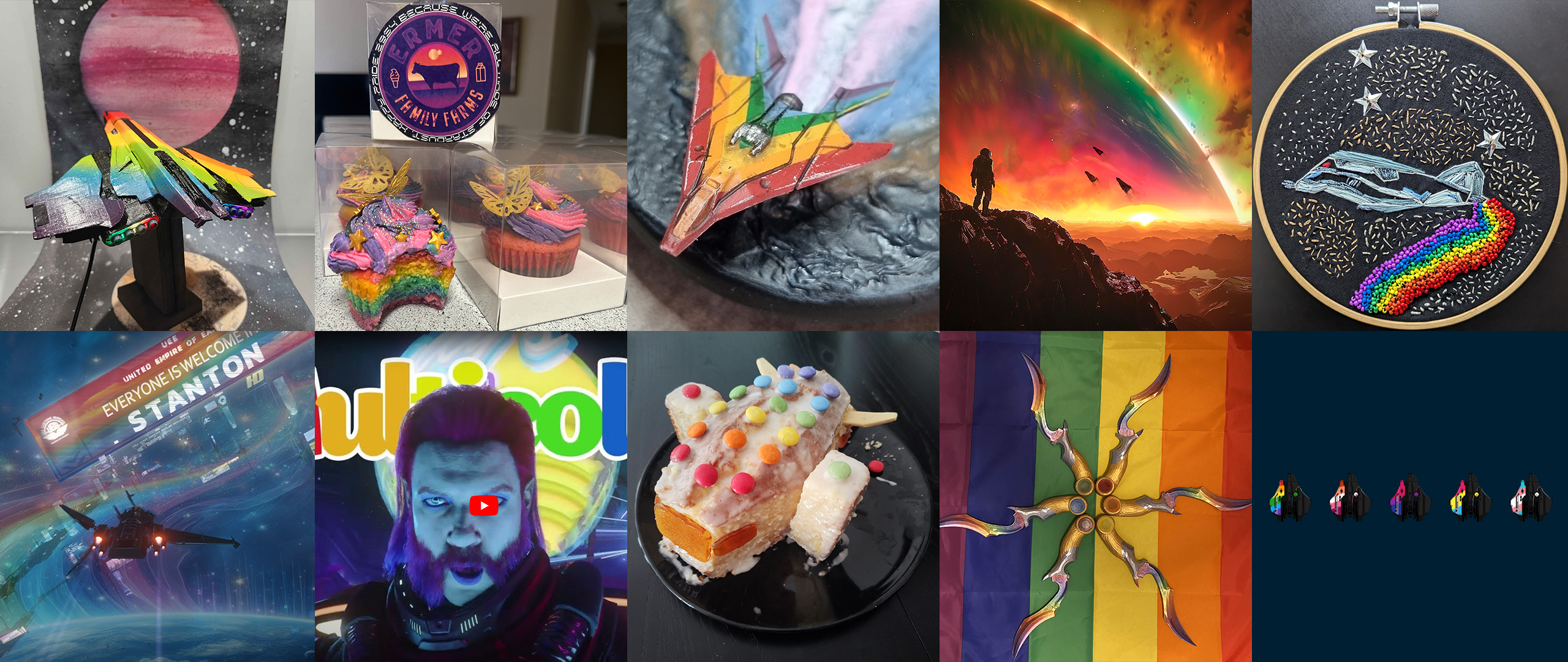
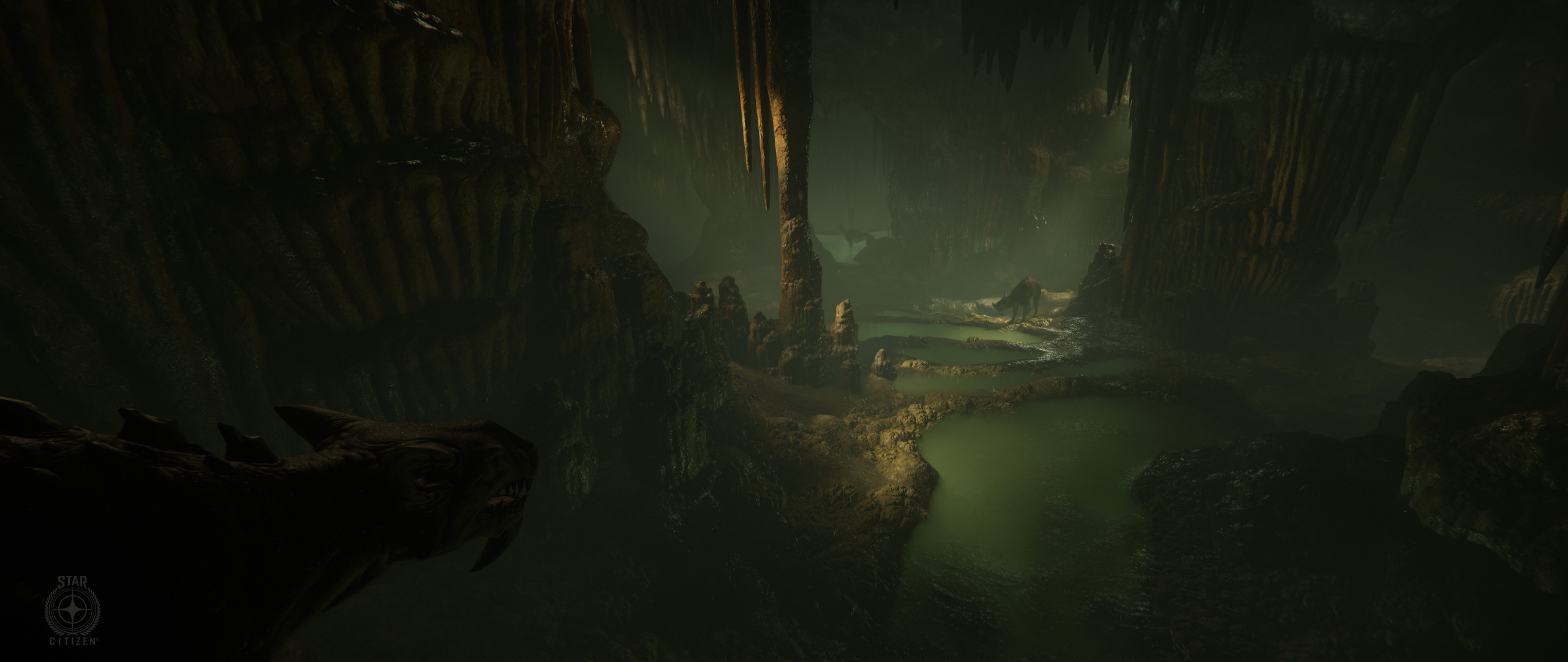
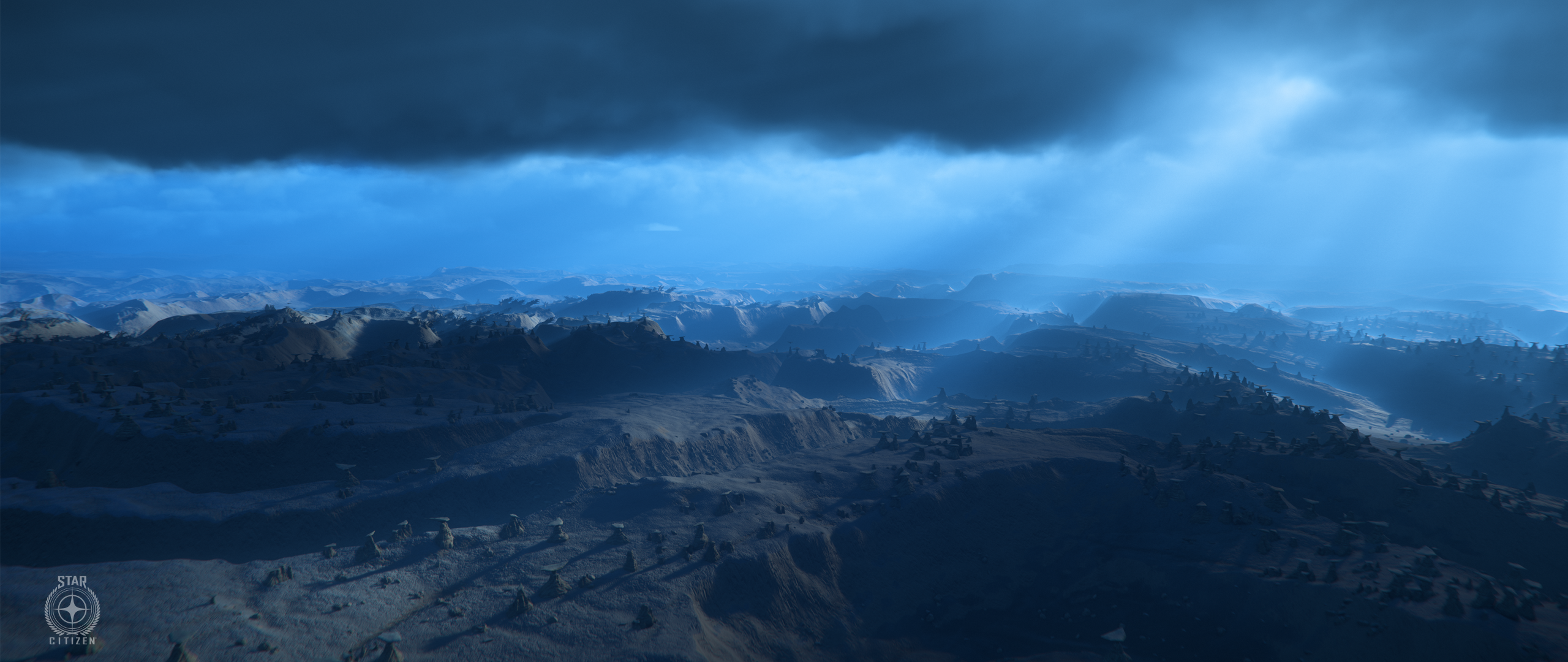
Metadata
- CIG ID
- 20039
- Channel
- Transmission
- Category
- Undefined
- Series
- None
- Comments
- 0
- Published
- 4 months ago (2026-05-25T12:00:00+00:00)