Galactic Guide: Tiber System
Spectrum Dispatch Undefined Galactic GuideContent
Tiber System
The star traveler’s guide to Tiber could best be summed up with a single word: don’t. The site of countless battles between Humans and the Vanduul, Tiber is a bleeding wound that shows no sign of healing.
Tiber was first charted by UNE long-range explorers associated with Project Far Star in 2474. Home to a standard K-type main sequence star orbited by two small planets, Tiber didn’t bear any exotic new resources or strategic jump lines, so the public were slow to populate the system. Smaller mining consortiums, eager for the cheaper permits and land rights, did trickle in.
The system existed mostly as a stopover point for travelers heading out to Orion until the late 27th century, when Vanduul Clans began to attack Orion with increasing ferocity and consistency. Tiber became a secondary staging area for military forces who would fall back to recoup and repair before heading back to this new front.
After the Battle of Orion in 2712, the UEE abandoned the system to the Vanduul and reinforced Tiber as their next battlefront, expecting the Vanduul to come rolling in, but they didn’t. Vanduul Clans held onto Orion and began harvesting the planets for resources. They didn’t seem to know or care about the jump point to Tiber.
That changed in 2726 when a UEE Navy patrol encountered a lone Vanduul Blade in the system. The Blade managed to escape through a jump point into a then-unknown system. Within the year, a Clan began launching raids into the system.
War finally arrived in Tiber in 2732 in the form of a prolonged sustained military engagement that became known as the Siege of Tiber. Lasting four long years, the UEE desperately tried to dig in and make a stand against the encroaching Vanduul hordes. The military threw everything they had against the Vanduul, nearly losing the system several times over the years, until the line was finally cracked by the Vanduul in 2736.
The defeat was so swift and sudden that the military had not prepared for the loss. While forces were scrambling back to a safe UEE system, they weren’t able to effectively mount a defense in Virgil. Those who may have hoped that the Vanduul would once again stop at the jump point like they had done in Orion were sorely mistaken. The Vanduul flooded into Virgil after the Navy and within a year, claim that system as their own too.
It was this prolonged, bloody conflict that bore Tiber its real nickname:
Grinder
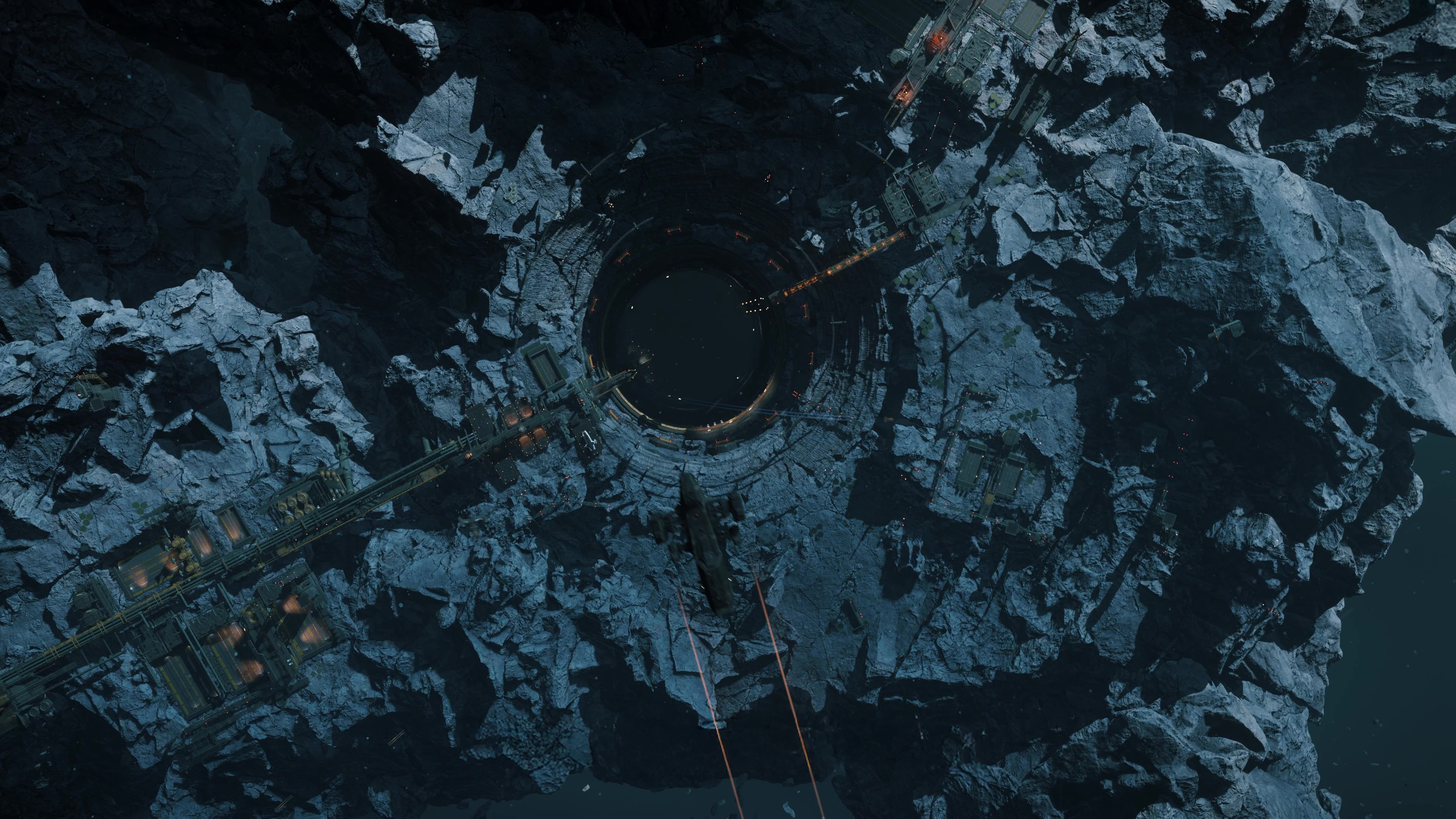
To this day, the system bears the scars of war. Shattered stations, ships and debris litter the space and planets. The UEE military has declared the system to be under Vanduul control but in the ensuing years, no fewer than nineteen major initiatives have been made to try and push the Vanduul out of Tiber.
Massive fleet actions, attempts at global landings to hold Tiber II itself, and even “clean slate” operations designed to simply eliminate the ability of the system to sustain military occupation have all fallen flat. Millions have died in these attempts, and the ever-expanding fields of wreckage are now legendary. Countless civilians, seeing the deadly battlefield debris as potential for profit, have made the same leap with similar fatal results.
Today, the battle continues unabated. In addition to regular reconnaissance sorties (and occasional reconnaissance-in-force missions) the system is frequented by thousands of private spacecraft commanders each year. Whether they are attempting to prove themselves by engaging a Scythe in fighter combat or trying to profit from the system’s resources, their fate is nearly always the same: left as grist for Grinder.
Tiber I
Tiber I is a small, dense planet close to Tiber’s sun. The planet’s CO2 -heavy atmosphere is breathable, but the extreme heat from the nearby sun would make life here an unpleasant proposition, even without the constant combat. Tiber I’s orbit is nestled just inside an extraordinarily heavy asteroid belt, which makes exploration even more difficult.
UEE deep space photography stations have recorded an unusual movement of weather systems on the surface of Tiber I, which meteorologists believe would allow for periods of improved conditions once every four years.
Tiber II (Tomb)
An arid, desert world coated in nearly blood-red copper dust, Tomb represents more than anything else the unquenching maw of the Vanduul war machine. Much of the planet’s surface is coated with the wreckage of spacecraft and other former war machines. The remains of countless repelled UEE attacks, private vessels looking for profit from the unusual system, and destroyed Vanduul technology layer the planet.
Tomb is not a permanent graveyard, however: the wreckage which accumulates there is in turn devoured by massive Vanduul harvesters. These mechanical beasts ingest all forms of matter and convert them for use by the Vanduul war machine. The harvesters found on Tiber have an even more terrifying dual purpose: they seem to be the source for the newer harvesters that have been dropped onto Human colonies during raids. Everything from starship wrecks to the bones of fallen soldiers ultimately feed the very enemy they were attempting to defeat.
The world is also home to countless Vanduul war-camps, Spartan temporary base camps used by the Vanduul Clans constantly on the move through the system. While Humans would not find Tomb’s environment particularly welcoming, the Vanduul seem to thrive in the climate, and they pay little mind to the landscape of destroyed spacecraft around them. Attempting to visit one of these camps would be suicide for a Human being, but declassified records from attempted Marine landings have provided a great deal of knowledge about their usual layout.
While Tomb may seem an attractive target to hopeful salvage teams, be well warned that no one is known to have successfully landed on the planet to recover any of the priceless military hardware left there. Travelers are warned to avoid any such attempt. The UEE has never been able to establish a viable landing zone on Tomb, and unless you are part of an unlucky Marine detachment, you have little hope of even reaching the surface.
Travel Warning
Do not under any circumstances transit to the Tiber System. Vanduul forces have established a permanent occupation.
Heard in the Wind
“This is our time. The line has been drawn and for the first time, our enemy will feel our resolve in every battle. When they push, we will push back. They will learn that Humanity has stopped running.”
- Grand Admiral Tesca Halimeade, Commanding Officer of UEE Naval forces in Tiber, 2735 (killed in action)
“I’d never seen anything like it. These… machines… if you can call them that, chewing up bodies and ships. It was… it was horrifying. The sound they made, the gnashing of metal and whir of blades… you could feel it under your skin… I hope I never hear it again.”
- Anonymous miner arrested for ignoring a military order on his way back from Tiber. 2801
Tiber-System
Der Reiseführer des Sternenreisenden zum Tiber lässt sich am besten mit einem einzigen Wort zusammenfassen: Nicht. Der Tiber ist Schauplatz unzähliger Kämpfe zwischen Mensch und Vanduul und ist eine blutende Wunde, die keine Anzeichen von Heilung zeigt.
Tiber wurde erstmals 2474 von UNE-Langstreckenforschern im Rahmen des Projekts Far Star kartiert. Als Heimat eines Standard-K-Hauptreihensterns, der von zwei kleinen Planeten umkreist wird, trug Tiber keine exotischen neuen Ressourcen oder strategischen Sprunglinien, so dass die Öffentlichkeit das System nur langsam bevölkerte. Kleinere Bergbaukonsortien, die nach den billigeren Genehmigungen und Landrechten strebten, sind eingedrungen.
Das System bestand hauptsächlich als Zwischenstation für Reisende, die nach Orion aufbrachen, bis ins 27. Jahrhundert, als Vanduul Clans begannen, Orion mit zunehmender Grausamkeit und Beständigkeit anzugreifen. Der Tiber wurde zu einem sekundären Aufenthaltsort für Streitkräfte, die zurückfielen, um sich zu erholen und zu reparieren, bevor sie zu dieser neuen Front zurückkehrten.
Nach der Schlacht von Orion im Jahr 2712 überließ die UEE das System der Vanduul und verstärkte Tiber als ihre nächste Kampffront, wobei sie erwartete, dass die Vanduul hereinkam, aber das taten sie nicht. Vanduul Clans hielten sich an Orion und begannen, die Planeten für Ressourcen zu ernten. Sie schienen den Sprungpunkt zu Tiber nicht zu kennen oder zu interessieren.
Das änderte sich 2726, als eine UEE Navy Patrouille auf eine einzelne Vanduul Blade im System traf. Die Klinge gelang es, durch einen Sprungpunkt in ein damals unbekanntes System zu entkommen. Innerhalb eines Jahres begann ein Clan, Razzien in das System zu starten.
Der Krieg kam schließlich 2732 in Tiber in Form eines verlängerten anhaltenden militärischen Engagements zustande, das als Belagerung des Tiber bekannt wurde. Vier lange Jahre lang versuchte die UEE verzweifelt, sich gegen die übergreifenden Vanduul-Horden zu wehren. Das Militär warf alles, was es gegen die Vanduul hatte, und verlor im Laufe der Jahre mehrmals fast das System, bis die Linie 2736 schließlich von der Vanduul geknackt wurde.
Die Niederlage war so schnell und plötzlich, dass das Militär sich nicht auf den Verlust vorbereitet hatte. Während die Streitkräfte zu einem sicheren UEE-System zurückschlugen, waren sie nicht in der Lage, effektiv eine Verteidigung in Virgil aufzubauen. Diejenigen, die gehofft hatten, dass die Vanduul wieder am Sprungpunkt anhalten würden, wie sie es in Orion getan hatten, lagen völlig falsch. Die Vanduul strömten nach der Marine in Virgil und behaupten innerhalb eines Jahres auch dieses System als ihr eigenes.
Es war dieser langwierige, blutige Konflikt, der Tiber seinen wahren Spitznamen gab:
Schleifmaschine
Bis heute trägt das System die Narben des Krieges. Zerstörte Stationen, Schiffe und Trümmer verstreuen den Raum und die Planeten. Das UEE-Militär hat erklärt, dass das System unter Vanduul-Kontrolle steht, aber in den folgenden Jahren wurden nicht weniger als neunzehn wichtige Initiativen ergriffen, um zu versuchen, die Vanduul aus Tiber zu vertreiben.
Massive Flottenaktionen, Versuche bei globalen Landungen, Tiber II selbst zu halten, und sogar "Clean Slate"-Operationen, die darauf abzielen, die Fähigkeit des Systems zur Aufrechterhaltung der militärischen Besetzung einfach zu beseitigen, sind gescheitert. Bei diesen Versuchen sind Millionen von Menschen gestorben, und die sich ständig erweiternden Wrackfelder sind heute legendär. Unzählige Zivilisten, die die tödlichen Trümmer auf dem Schlachtfeld als Gewinnpotenzial betrachten, haben den gleichen Sprung mit ähnlichen tödlichen Folgen gemacht.
Heute geht der Kampf unvermindert weiter. Zusätzlich zu den regelmäßigen Erkundungseinsätzen (und gelegentlichen Erkundungsmissionen) wird das System jedes Jahr von Tausenden von privaten Raumschiffkommandanten frequentiert. Egal, ob sie versuchen, sich zu beweisen, indem sie eine Sense im Kampf einsetzen oder versuchen, von den Ressourcen des Systems zu profitieren, ihr Schicksal ist fast immer das gleiche: links als Schrot für Grinder.
Tiber I
Tiber I ist ein kleiner, dichter Planet in der Nähe der Sonne Tibers. Die CO2-reiche Atmosphäre des Planeten ist atmungsaktiv, aber die extreme Hitze der nahen Sonne würde das Leben hier auch ohne den ständigen Kampf zu einem unangenehmen Erlebnis machen. Die Umlaufbahn des Tiber I schmiegt sich direkt in einen außergewöhnlich schweren Asteroidengürtel, was die Erkundung noch schwieriger macht.
UEE-Weltraumfotostationen haben eine ungewöhnliche Bewegung von Wettersystemen auf der Oberfläche von Tiber I registriert, von denen Meteorologen glauben, dass sie alle vier Jahre Perioden mit verbesserten Bedingungen ermöglichen würden.
Tiber II (Grab)
Als trockene, wüstenartige Welt, die mit fast blutrotem Kupferstaub überzogen ist, stellt Tomb mehr als alles andere den unlöschenden Schlund der Vanduul-Kriegsmaschine dar. Ein Großteil der Oberfläche des Planeten ist mit den Trümmern von Raumfahrzeugen und anderen ehemaligen Kriegsmaschinen bedeckt. Die Überreste unzähliger abgewehrter UEE-Angriffe, private Schiffe, die nach Profit aus dem ungewöhnlichen System suchten, und zerstörten die Vanduul-Technologie auf dem Planeten.
Das Grab ist jedoch kein permanenter Friedhof: Das Wrack, das sich dort ansammelt, wird wiederum von massiven Vanduul-Erntemaschinen verschlungen. Diese mechanischen Bestien nehmen alle Formen von Materie auf und wandeln sie für die Verwendung durch die Vanduul-Kriegsmaschine um. Die auf dem Tiber gefundenen Erntemaschinen haben einen noch erschreckenderen Doppelfunktion: Sie scheinen die Quelle für die neueren Erntemaschinen zu sein, die bei Überfällen auf menschliche Kolonien abgeworfen wurden. Alles, von Raumschiffwracks bis hin zu den Knochen der gefallenen Soldaten, versorgt letztendlich den Feind, den sie zu besiegen versuchten.
Die Welt ist auch die Heimat unzähliger Vanduul-Kriegslager, spartanischer temporärer Basislager, die von den Vanduul-Clans ständig durch das System bewegt werden. Während die Menschen die Umgebung von Tomb nicht besonders einladend finden würden, scheinen die Vanduul im Klima zu gedeihen, und sie achten wenig auf die Landschaft der zerstörten Raumschiffe um sie herum. Der Versuch, eines dieser Lager zu besuchen, wäre Selbstmord für einen Menschen, aber deklassierte Aufzeichnungen von versuchten Marinelandungen haben viel Wissen über ihren üblichen Aufbau geliefert.
Auch wenn Tomb ein attraktives Ziel für hoffnungsvolle Bergungsteams zu sein scheint, sollten Sie sich darüber im Klaren sein, dass niemand bekannt ist, dass er erfolgreich auf dem Planeten gelandet ist, um die dort verbliebene wertvolle militärische Ausrüstung zurückzugewinnen. Die Reisenden werden gewarnt, einen solchen Versuch zu vermeiden. Die UEE war nie in der Lage, eine brauchbare Landezone auf dem Grab zu errichten, und wenn Sie nicht Teil einer unglücklichen Marine-Abteilung sind, haben Sie wenig Hoffnung, die Oberfläche überhaupt zu erreichen.
Reisewarnung
Unter keinen Umständen zum Tiber-System gelangen. Vanduulische Truppen haben eine dauerhafte Besetzung etabliert.
Im Wind gehört
"Das ist unsere Zeit. Die Grenze wurde gezogen und zum ersten Mal wird unser Feind unsere Entschlossenheit in jedem Kampf spüren. Wenn sie drücken, werden wir zurückschlagen. Sie werden erfahren, dass die Menschheit aufgehört hat zu laufen."
- Großadmiral Tesca Halimeade, Kommandant der UEE Marinekräfte in Tiber, 2735 (im Einsatz getötet)
"Ich hatte noch nie so etwas gesehen. Diese.... Maschinen... wenn man sie so nennen kann, die Körper und Schiffe kauen. Es war.... es war schrecklich. Der Klang, den sie machten, das Knirschen von Metall und der Wirbel von Klingen.... man konnte es unter der Haut spüren... Ich hoffe, ich höre es nie wieder."
- Anonymer Bergarbeiter verhaftet wegen Missachtung eines militärischen Befehls auf dem Rückweg vom Tiber. 2801
Tiber System
The star traveler’s guide to Tiber could best be summed up with a single word: don’t. The site of countless battles between Humans and the Vanduul, Tiber is a bleeding wound that shows no sign of healing.
Tiber was first charted by UNE long-range explorers associated with Project Far Star in 2474. Home to a standard K-type main sequence star orbited by two small planets, Tiber didn’t bear any exotic new resources or strategic jump lines, so the public were slow to populate the system. Smaller mining consortiums, eager for the cheaper permits and land rights, did trickle in.
The system existed mostly as a stopover point for travelers heading out to Orion until the late 27th century, when Vanduul Clans began to attack Orion with increasing ferocity and consistency. Tiber became a secondary staging area for military forces who would fall back to recoup and repair before heading back to this new front.
After the Battle of Orion in 2712, the UEE abandoned the system to the Vanduul and reinforced Tiber as their next battlefront, expecting the Vanduul to come rolling in, but they didn’t. Vanduul Clans held onto Orion and began harvesting the planets for resources. They didn’t seem to know or care about the jump point to Tiber.
That changed in 2726 when a UEE Navy patrol encountered a lone Vanduul Blade in the system. The Blade managed to escape through a jump point into a then-unknown system. Within the year, a Clan began launching raids into the system.
War finally arrived in Tiber in 2732 in the form of a prolonged sustained military engagement that became known as the Siege of Tiber. Lasting four long years, the UEE desperately tried to dig in and make a stand against the encroaching Vanduul hordes. The military threw everything they had against the Vanduul, nearly losing the system several times over the years, until the line was finally cracked by the Vanduul in 2736.
The defeat was so swift and sudden that the military had not prepared for the loss. While forces were scrambling back to a safe UEE system, they weren’t able to effectively mount a defense in Virgil. Those who may have hoped that the Vanduul would once again stop at the jump point like they had done in Orion were sorely mistaken. The Vanduul flooded into Virgil after the Navy and within a year, claim that system as their own too.
It was this prolonged, bloody conflict that bore Tiber its real nickname:
Grinder
To this day, the system bears the scars of war. Shattered stations, ships and debris litter the space and planets. The UEE military has declared the system to be under Vanduul control but in the ensuing years, no fewer than nineteen major initiatives have been made to try and push the Vanduul out of Tiber.
Massive fleet actions, attempts at global landings to hold Tiber II itself, and even “clean slate” operations designed to simply eliminate the ability of the system to sustain military occupation have all fallen flat. Millions have died in these attempts, and the ever-expanding fields of wreckage are now legendary. Countless civilians, seeing the deadly battlefield debris as potential for profit, have made the same leap with similar fatal results.
Today, the battle continues unabated. In addition to regular reconnaissance sorties (and occasional reconnaissance-in-force missions) the system is frequented by thousands of private spacecraft commanders each year. Whether they are attempting to prove themselves by engaging a Scythe in fighter combat or trying to profit from the system’s resources, their fate is nearly always the same: left as grist for Grinder.
Tiber I
Tiber I is a small, dense planet close to Tiber’s sun. The planet’s CO2 -heavy atmosphere is breathable, but the extreme heat from the nearby sun would make life here an unpleasant proposition, even without the constant combat. Tiber I’s orbit is nestled just inside an extraordinarily heavy asteroid belt, which makes exploration even more difficult.
UEE deep space photography stations have recorded an unusual movement of weather systems on the surface of Tiber I, which meteorologists believe would allow for periods of improved conditions once every four years.
Tiber II (Tomb)
An arid, desert world coated in nearly blood-red copper dust, Tomb represents more than anything else the unquenching maw of the Vanduul war machine. Much of the planet’s surface is coated with the wreckage of spacecraft and other former war machines. The remains of countless repelled UEE attacks, private vessels looking for profit from the unusual system, and destroyed Vanduul technology layer the planet.
Tomb is not a permanent graveyard, however: the wreckage which accumulates there is in turn devoured by massive Vanduul harvesters. These mechanical beasts ingest all forms of matter and convert them for use by the Vanduul war machine. The harvesters found on Tiber have an even more terrifying dual purpose: they seem to be the source for the newer harvesters that have been dropped onto Human colonies during raids. Everything from starship wrecks to the bones of fallen soldiers ultimately feed the very enemy they were attempting to defeat.
The world is also home to countless Vanduul war-camps, Spartan temporary base camps used by the Vanduul Clans constantly on the move through the system. While Humans would not find Tomb’s environment particularly welcoming, the Vanduul seem to thrive in the climate, and they pay little mind to the landscape of destroyed spacecraft around them. Attempting to visit one of these camps would be suicide for a Human being, but declassified records from attempted Marine landings have provided a great deal of knowledge about their usual layout.
While Tomb may seem an attractive target to hopeful salvage teams, be well warned that no one is known to have successfully landed on the planet to recover any of the priceless military hardware left there. Travelers are warned to avoid any such attempt. The UEE has never been able to establish a viable landing zone on Tomb, and unless you are part of an unlucky Marine detachment, you have little hope of even reaching the surface.
Travel Warning
Do not under any circumstances transit to the Tiber System. Vanduul forces have established a permanent occupation.
Heard in the Wind
“This is our time. The line has been drawn and for the first time, our enemy will feel our resolve in every battle. When they push, we will push back. They will learn that Humanity has stopped running.”
- Grand Admiral Tesca Halimeade, Commanding Officer of UEE Naval forces in Tiber, 2735 (killed in action)
“I’d never seen anything like it. These… machines… if you can call them that, chewing up bodies and ships. It was… it was horrifying. The sound they made, the gnashing of metal and whir of blades… you could feel it under your skin… I hope I never hear it again.”
- Anonymous miner arrested for ignoring a military order on his way back from Tiber. 2801
Tiber System
The star traveler’s guide to Tiber could best be summed up with a single word: don’t. The site of countless battles between Humans and the Vanduul, Tiber is a bleeding wound that shows no sign of healing.
Tiber was first charted by UNE long-range explorers associated with Project Far Star in 2474. Home to a standard K-type main sequence star orbited by two small planets, Tiber didn’t bear any exotic new resources or strategic jump lines, so the public were slow to populate the system. Smaller mining consortiums, eager for the cheaper permits and land rights, did trickle in.
The system existed mostly as a stopover point for travelers heading out to Orion until the late 27th century, when Vanduul Clans began to attack Orion with increasing ferocity and consistency. Tiber became a secondary staging area for military forces who would fall back to recoup and repair before heading back to this new front.
After the Battle of Orion in 2712, the UEE abandoned the system to the Vanduul and reinforced Tiber as their next battlefront, expecting the Vanduul to come rolling in, but they didn’t. Vanduul Clans held onto Orion and began harvesting the planets for resources. They didn’t seem to know or care about the jump point to Tiber.
That changed in 2726 when a UEE Navy patrol encountered a lone Vanduul Blade in the system. The Blade managed to escape through a jump point into a then-unknown system. Within the year, a Clan began launching raids into the system.
War finally arrived in Tiber in 2732 in the form of a prolonged sustained military engagement that became known as the Siege of Tiber. Lasting four long years, the UEE desperately tried to dig in and make a stand against the encroaching Vanduul hordes. The military threw everything they had against the Vanduul, nearly losing the system several times over the years, until the line was finally cracked by the Vanduul in 2736.
The defeat was so swift and sudden that the military had not prepared for the loss. While forces were scrambling back to a safe UEE system, they weren’t able to effectively mount a defense in Virgil. Those who may have hoped that the Vanduul would once again stop at the jump point like they had done in Orion were sorely mistaken. The Vanduul flooded into Virgil after the Navy and within a year, claim that system as their own too.
It was this prolonged, bloody conflict that bore Tiber its real nickname:
Grinder
To this day, the system bears the scars of war. Shattered stations, ships and debris litter the space and planets. The UEE military has declared the system to be under Vanduul control but in the ensuing years, no fewer than nineteen major initiatives have been made to try and push the Vanduul out of Tiber.
Massive fleet actions, attempts at global landings to hold Tiber II itself, and even “clean slate” operations designed to simply eliminate the ability of the system to sustain military occupation have all fallen flat. Millions have died in these attempts, and the ever-expanding fields of wreckage are now legendary. Countless civilians, seeing the deadly battlefield debris as potential for profit, have made the same leap with similar fatal results.
Today, the battle continues unabated. In addition to regular reconnaissance sorties (and occasional reconnaissance-in-force missions) the system is frequented by thousands of private spacecraft commanders each year. Whether they are attempting to prove themselves by engaging a Scythe in fighter combat or trying to profit from the system’s resources, their fate is nearly always the same: left as grist for Grinder.
Tiber I
Tiber I is a small, dense planet close to Tiber’s sun. The planet’s CO2 -heavy atmosphere is breathable, but the extreme heat from the nearby sun would make life here an unpleasant proposition, even without the constant combat. Tiber I’s orbit is nestled just inside an extraordinarily heavy asteroid belt, which makes exploration even more difficult.
UEE deep space photography stations have recorded an unusual movement of weather systems on the surface of Tiber I, which meteorologists believe would allow for periods of improved conditions once every four years.
Tiber II (Tomb)
An arid, desert world coated in nearly blood-red copper dust, Tomb represents more than anything else the unquenching maw of the Vanduul war machine. Much of the planet’s surface is coated with the wreckage of spacecraft and other former war machines. The remains of countless repelled UEE attacks, private vessels looking for profit from the unusual system, and destroyed Vanduul technology layer the planet.
Tomb is not a permanent graveyard, however: the wreckage which accumulates there is in turn devoured by massive Vanduul harvesters. These mechanical beasts ingest all forms of matter and convert them for use by the Vanduul war machine. The harvesters found on Tiber have an even more terrifying dual purpose: they seem to be the source for the newer harvesters that have been dropped onto Human colonies during raids. Everything from starship wrecks to the bones of fallen soldiers ultimately feed the very enemy they were attempting to defeat.
The world is also home to countless Vanduul war-camps, Spartan temporary base camps used by the Vanduul Clans constantly on the move through the system. While Humans would not find Tomb’s environment particularly welcoming, the Vanduul seem to thrive in the climate, and they pay little mind to the landscape of destroyed spacecraft around them. Attempting to visit one of these camps would be suicide for a Human being, but declassified records from attempted Marine landings have provided a great deal of knowledge about their usual layout.
While Tomb may seem an attractive target to hopeful salvage teams, be well warned that no one is known to have successfully landed on the planet to recover any of the priceless military hardware left there. Travelers are warned to avoid any such attempt. The UEE has never been able to establish a viable landing zone on Tomb, and unless you are part of an unlucky Marine detachment, you have little hope of even reaching the surface.
Travel Warning
Do not under any circumstances transit to the Tiber System. Vanduul forces have established a permanent occupation.
Heard in the Wind
“This is our time. The line has been drawn and for the first time, our enemy will feel our resolve in every battle. When they push, we will push back. They will learn that Humanity has stopped running.”
- Grand Admiral Tesca Halimeade, Commanding Officer of UEE Naval forces in Tiber, 2735 (killed in action)
“I’d never seen anything like it. These… machines… if you can call them that, chewing up bodies and ships. It was… it was horrifying. The sound they made, the gnashing of metal and whir of blades… you could feel it under your skin… I hope I never hear it again.”
- Anonymous miner arrested for ignoring a military order on his way back from Tiber. 2801
Links
No links available.

Metadata
- CIG ID
- 13614
- Channel
- Spectrum Dispatch
- Category
- Undefined
- Series
- Galactic Guide
- Comments
- 285
- Published
- 12 years ago (2014-03-04T00:00:00+00:00)