Star Citizen Monthly Report: November & December 2019
Transmission Undefined Monthly ReportsContent
After a month’s hiatus for the holidays, the Star Citizen monthly report is back with all the behind-the-scenes details from development. November and December saw several exciting releases, so expect to read about the work that went into the very latest ships, locations, patches, and more. 2020 is shaping up to be the most exciting year in the ‘verse yet, so check back for the latest report from our global studios around this time each month.
AI
AI (Ships)
Ship AI had a busy couple of months working on NPC planetside traversal:
“Flying on the surface of a planet is definitely different from open space; the expectation is that ships fly in a straight and level attitude and bank when steering to different headings.” -Ship AI
The first iteration involved generating a flight path suitable for the terrain height and local slope. The information generated is then used to correct the path to ensure ships always have a specified minimal clearance to the terrain below while steering according to the inclination of the terrain. For example, a ship will favor a flight path through a valley rather than over a ridge. Hand-placed and procedurally generated objects (rocks, buildings, etc.) are not part of the terrain elevation information and are obtained by a different query. In the next iteration, the team will integrate this information so spaceships can adapt their flight paths accordingly.
The same considerations apply to in-atmosphere dogfighting. The prototype of this was shown during the recent CitizenCon playthrough, with three security ships engaging the fugitive Carrack. The team also experimented with a stunt maneuver to add flair and personality to AI behavior.
Work was also completed on Collision Avoidance. This system runs in the background during AI flight and provides steering correction if a collision is likely to happen within a given time horizon. In the current development version, the system considers the collision resolution of all piloted vehicles, vehicles without a pilot (abandoned vehicles, derelicts), static obstacles, and procedurally generated asteroids.
Recently, the system was heavily reworked to minimize its impact on the overall performance of AI systems. This includes ensuring all vehicles and obstacles are organized in memory according to their current host zone to make the search for the surrounding participants faster. It also makes sure the collision avoidance update never gets an exclusive lock on the cached information when creating and processing individual AI collision problems. This is a critical aspect, as the updates of all AI entities run concurrently, so having an exclusive lock can heavily impact performance.
AI (Social)
The Social AI Team made several improvements to path following, including the ability to: specify movement speed when following a path edge, add branching paths, wait at a path point continually playing any function until events have fired, trigger a random Subsumption function from a weighted list, and enable/disable Subsumption secondary activities when following a path edge.
Work also continued on the bartender, with the first iteration of mixing station tech added. This extends the character’s ability to not only pick up and serve items from the fridge, but to also prepare new drinks at the mixing station. Several other small improvements were also made to make the overall experience smoother.
Finally for Social AI, the base idle system in the actor state machine was improved by moving all decision-making to the control state. This should make the whole system more robust and stable over the network, potentially avoiding the desync issues seen in the past as well as helping the team debug potential issues more efficiently. Further on the optimization, the usable caching has been updated to now also listen for tile-created events from navigation meshes.
AI (Character Combat)
The team’s primary focus over the past few months was on the player combat experience against NPCs. This involved implementing new behavior tactics for shotgun-wielding NPCs, giving them the tactical choice to get much closer to the target than before to make proper use of the weapon. They also began improving vision perception so that the designers can more easily adjust the size of vision cones and how fast a target is perceived when inside them. The main aim of these changes is to provide a better stealth experience for players.
They also made improvements to the system that generates cover locations and usage to enable AI to choose to only partially cover themselves. Small optimizations were also made to AI hearing perception and specific designer movement requests.
Art (Environment)
“November and December were the busiest and most rewarding months of the year for us.” -Environment Team
The end of 2019 was a busy but rewarding time for the Environment Art Team, which saw the release of the much anticipated Planet Tech v4 across the PU.
The UK team worked tirelessly to ready New Babbage’s exterior for CitizenCon and its subsequent public release. Elsewhere, the Modular Team released 13 new Rest Stop interiors along with new low-orbit space stations around the major planets.
Art (Ships)
Ship Art spent the last couple of months pushing hard on the final art for the newly released ARGO MOLE. The Anvil Carrack had and continues to receive significant focus from the team; the exterior received a detail pass and some slight trimming to the rear to improve visual balance. The interior continues towards final art, with several areas not seen at CitizenCon nearing completion.
Art (Weapons)
The Weapons Team wrapped up the Behring P6-LR sniper rifle, with the 4x and 8x scopes both completed (with the former being demoed at CitizenCon). A new prop artist joined the team and, after training on the pipeline, began creating an additional set of Behring sights, which will be available in the PU soon. Metrics and guidelines were also established for sights and scopes to aid with future sets and to make sure they all align correctly with art and gameplay.
Work kicked off on the Gemini C54 submachine gun. The first block-out was created in-engine and is currently with the design and animation teams. Once it’s functional, it’ll be ready for review and full implementation.
On the ship weapon side, two Tevarin weapons were taken through the pipeline and will be ready for the release of the upcoming Esperia Prowler. Props were also completed for Alpha 3.8, including mining heads and props for New Babbage.
Audio
Quarter four of 2019 was a busy one for the Audio Team. This included supporting the CitizenCon 2949 demo (dialogue, SFX, and music), trailers (Jax McCleary, Carrack, MOLE), ships (Carrack, MOLE, Cutlass Red), weapons (BEHR P6-LR sniper rifle, Animus Missile Launcher), actor status features (FPS close combat, temperature), mining (new mining heads), rest stop interiors, planetary weather effects, and general Planet Tech v4 work.
Backend Services
The end of 2019 saw the Backend Team focusing on cleanup, bug fixing, and scaling out some of the heavy services, such as variables and loadouts. They now have an internal framework that allows them to scale out several services that will greatly reduce backend latency and improve response to the game servers and clients. This cleanup involved tweaking some of the services to reduce memory consumption and address performance and stability issues. Finally, testing was done on the long-term persistence initiative for the inventory and ledger.
Community
The Community Team’s highlight of November was CitizenCon 2949 in Manchester, UK.
“We were amazed by how many Citizens joined in on the fun, be it at the event itself, via livestream, or at viewing parties all around the globe.” -The Community Team
For those that missed out or want to relive the excitement, the team uploaded both keynotes and all the developer panels to the Star Citizen YouTube channel. Now everyone can relive the epic event from the opening keynote to the first-ever jump to Pyro.
The day after CitizenCon, the Intergalactic Aerospace Exposition opened its doors at Area18 on ArcCorp. Each day, one or more of Star Citizen’s vehicle manufacturers made their ships available for everyone to fly for free. The team was delighted to welcome many new Citizens to the ‘verse and added several new guides to the Welcome Hub to help new players explore the ‘verse.
They worked on the new Guide System that helps new players find seasoned pilots to show them the ropes. The new Traveler’s Guide series also provided an inside look on the frozen planet of microTech.
On the ship front, community questions on all of the recently announced ships were gathered and put to the devs: Anvil Pisces, Kraken Privateer, Crusader Ares, and ARGO MOLE.
The year came to a close with the Alpha 3.8 – New Frontiers live release and two festive holiday contests. The team invited players to spread the holiday spirit by crafting a Star-Citizen-inspired greeting card or setting up a seasonal scene in-game and snapping a screenshot.
Design
The Design Team developed the demo flow for the CitizenCon demo, which included work on the upcoming Pyro system.
They converted all existing missions to work with the current and future iterations of Server-side Object Container Streaming (SOCS). This signals a major change, as players are now guided to specific locations before they’re fully loaded.
New missions were added, including Claim Jumpers (which introduced a new sentry turret), the Arlington Family bounty chain, Call to Arms, and several new bounties, and FPS cave missions (which will be expanded upon in the future). Bounty missions were also improved to make the targeted enemies more fun to fight against, while crime stats were given to all criminal NPC ships.
Fines are now no longer automatically deducted from player aUEC balances. Instead, terminals must be visited to pay them off when it suits best. These fines escalate if not paid promptly, although they can be hacked away with the proper criminal know-how…
The Texas-based team had a busy few months working on, among other things, the Quantum system. Familiar to those who watched the CitizenCon panel, Quantum is the simulator than drives the economy of the game.
“We were excited to show you our progress and have since continued to integrate it with our backend services, such as shopping and probability volume. We’ve also spent time improving and developing our internal tools to better deliver content to you in the future.” -Design Team
The team also polished a few things for CitizenCon and the IAE, including setting up NPCs, building shops, making sure days transitioned smoothly, and arranging the expo hall. Lastly, they iterated on the shop inventories and layouts for the new rest stops, with a focus towards encouraging players to thoroughly explore each one.
“We particularly enjoyed seeing how much more quickly you found the Black Market stands in this iteration.” -Design Team
Engineering
Over in Frankfurt, Engineering spent November and December working on game physics – specifically soft bodies. This including exposing a linear air and water resistance scale, making damping linear (and not step dependent), modifying them to use box pruner to accelerate tri-mesh collisions, and general optimization. Regarding attachment support, they moved boundary brushes and entities to the object container entity and added the ability to query for the attached points during a previous attachment. They also exposed the surface area on geometries and optimized loading times and the calculations while verifying parts.
The team continued work on the new graphics pipeline and render interface (Gen12), made robust changes to the Vulkan layer to prepare for use on scene objects, added PSO and layout cache, improved API validation, and ported tiled shading light volume rasterization to the new pipeline. They also continued the parallel refactor of existing render code in support of the new graphics pipeline and APIs and worked on the global render state removal and device texture code refactor.
For planet terrain shadows, the team added multi-cascade and blending support to improve detail and range. This will also eliminate various existing shadow artifacts. Regarding fog, the team worked on volumetric terrain shadow support and came up with a multi-scattered ambient lighting solution that ties into unified raymarching.
Multi-scattering improvements via a specialized sky irradiance LUT was made to improve unified raymarching. Updates were made to the jittered lookup and TSAA to vastly improve quality and reduce the number of raymarching steps. They also made lighting consistent so that a planet’s atmosphere affects ground fog layers and vice versa, experimented with ozone layer support in-atmosphere, and added support for scattering queries (transparent objects).
Finally, work continued on planetary clouds, ocean rendering, frozen oceans, and wind bending for static brushes.
Features (Gameplay)
In the US, the Gameplay Features Team spent the majority of the past couple of months ensuring that all of the features under the USPU umbrella were effectively updated and tested for SOCS. The engineers also made quality-of-life improvements along the way, such as adjusting the physical forces on spawned cargo boxes to stop them destroyed ships. In addition, time was spent concepting and implementing work for the generic rest stop kiosk templates. This will make it easier and quicker to generate assets for future locations.
Features (Vehicles)
In the US, the Vehicle Feature Team improved radar and ping detection for better scanning gameplay. They’re currently working on ItemPort despawn optimization, which will help improve general performance. Support was also provided for SOCS and long-range radar scanning.
December for the EU Vehicle Feature Team was mostly about supporting the 3.8.0 release and finishing up the new refactor of the restricted area system (which we’ll see in new features in 3.9 like the spline landing guidance). The team has also been doing some design work for HUD UI updates to come in the future as well.
Graphics
The final few weeks of 2019 were extremely busy for the Graphics Team. A lot of work went into Planet Tech v4 to get it ready for release in Alpha 3.8, which was the culmination of many months of code-side work.
Improvements were made to the new palette/paint/tint system before it was handed to the art teams. This system will likely premier with environments in an upcoming Alpha release and later expand to other assets.
The team’s Alpha 3.8 focus was on stability and bug fixing, including fixing one that caused planetary fog to stretch and blur.
Level Design
In Frankfurt, the Level Design Team spent the last few months on the new Space Station interiors, which is the first step in bringing the interiors in line with the new larger exteriors. There’s still a way to go before they’re considered finished, including adding more spaces to make them feel even more alive.
Work went into the first iteration of microTech and the upcoming landing zone, New Babbage. While the exterior of the city is only visitable in the PU, the interiors are nearing completion and will be explorable in Alpha 3.9.
Alongside these major locations, they worked on level design for the IAE, including AI, the expo hall, and the transit loop in Area18. They also worked on items for CitizenCon, such as Jump Points and ground bases.
Lighting
The Lighting Team’s November was dedicated to lighting the areas seen at CitizenCon, including the ground base mission. This involved working in the location interiors and exteriors and implementing alarm states to assist gameplay. They also supported the expo hall and ships for the IAE event.
In December, the primary focus was on finalizing areas for the Alpha 3.8 release, which included three main tasks: Firstly, polishing the Rest Stop Interiors. Secondly, lighting the city, spaceport, and interiors and exteriors of microTech. Lastly, reworking the atmospheres of existing planets and moons following the implementation of Planet Tech v4.
Narrative
After CitizenCon, the team hit the ground running and dove back into Alpha 3.8 support. They tried to log as much time as possible in-game to see how the experience was feeling and worked with Design to tweak any missions as needed, making sure that all names and descriptions were displaying properly.
The Galactapedia continued to be expanded and the team reviewed player comments and feedback of the system so far.
Looking to the new year, planning began for Q1 of 2020 along with evergreen work on promotions, game text, and scripting.
Player Relations
The Player Relations team had an extremely busy few months supporting new players, releases, and CitizenCon (where the UK-based team manned the merch booth). They worked through tasks for the IAE before moving onto Alpha 3.8 testing with the Evocati.
Props
Carrying on from the last report, Props further developed the quantum and jump drives. Both received the final art and game-ready pass and were featured during the CitizenCon demo. The team also worked on several interactive props shown throughout the demo, such as access cards, servers and server modules, security gates, tarps, and flags. They also supported the lockers and crates used throughout the demo that contained the different clothing and armor needed for the player to traverse the hostile environment. On the day of the event, the Props Team gave an access-all-areas demo of their work, created the CitizenCon trophy, the sextant reward, and an in-game scope.
Breaking from the usual hard surface work, time was spent on the Anvil Carrack and penguin plushies that should be making an appearance at an upcoming landing zone. New stands, signs, and adverts were also created to support the IAE at Area18.
Work continued on the upcoming prisons, this time mainly focusing on the interactive props, such as oxygen and equipment dispensers and prisoner status consoles. Progress was also made on the hi-tech prop set for New Babbage. The artists finished their work with the Ship Team on the Carrack and ARGO MOLE.
Finally, support was given to mining gameplay that included supplying five new mining heads.
QA
The Frankfurt-based QA Team spent early November testing AI and microTech. They then moved onto testing on features for CitizenCon, Alpha 3.7.2, and Alpha 3.8. With Planet v4 Tech fully enabled, Live Design were able to complete their re-drop pass on all outposts, UGFs, derelicts, and other points of interest on each of the planets and moons. Once complete, they moved onto completing QA test requests for SOCS. While all the locations have now been tested, due to the size of the planets and moons, tests are ongoing. Regular smoke checks on core functionality continue, as well as sanity art passes on different planet quadrants, to cover as much of the planetary surfaces as possible.
In Texas, the team tested SOCS, long-term persistence, the IAE, and many Alpha 3.8 features. They also made sure the keynote and Theatres of War demos were running smoothly for CitizenCon. On the publishing side, focus was on the Alpha 3.7 and 3.8 builds, including pushing out builds to the Evocati and logging bugs and issues.
Tech Animation
November and December saw Tech Animation rework Mannequin setups to clean up older usable iterations and address bugs related to the rework. They worked with the animation and code teams on the updated bartender and implemented socket/attach point tech for props in Maya. They created multiple prop rigs for the usable and cinematics teams, including plates, trays, maintenance ladders, and ship turrets. Support was given to the Weapons Team along with new rigs, updates to older rigs, and in-engine bug fixes. The necessary rig additions for the new real digital acting tech were completed too.
New toolsets were authored to help visualize the complex engine-side attachment systems inside Maya. This assists the animators in their daily workflow and makes it infinitely easier to author props too. Development continued on the facial rigging pipelines. This lengthy initiative will ultimately yield great things when the team authors their own in-house face rigs compatible with the DNA systems.
Tech Art
Frankfurt’s Tech Art Team worked closely together with the UK’s Tech Animation on the design and implementation of the new runtime Rig Logic plugin for Maya. In contrast to previous hard-coded versions, the new plugin is entirely data-driven and utilizes so-called rig definition files that can be changed as needed without the assistance of an engine programmer. The removal of this bottleneck will give more creative freedom to the artists and significantly shorten iteration times. While the Maya runtime node is responsible for driving rigs in Maya based on facial and/or body animation, a bespoke Maya command was also implemented. This command allows convenient querying and editing of all parts of the rig definition data and forms the foundation of the team’s new rigging pipeline and tools.
Turbulent
Turbulent worked extensively on the IAE promotion, including creating and supporting the backend of the Ship Showdown competition, which saw the Drake Caterpillar crowned the community’s favorite ship. All backers were awarded a Caterpillar statue to decorate their ship as a thank you for voting. The team also supported all other promotions and releases over the past few months, including the Alpha 3.8, the IAE Free-Fly, Anvil Pisces, Drake Kraken Privateer, ARGO MOLE, and Crusader Ares.
Turbulent also developed the Galactapedia, which launched at CitizenCon. A depository for articles on everything in and to do with the world of Star Citizen, it’s an invaluable resource for lore and all things narrative.
The Welcome Hub and Guide System went live just before the holidays, both of which are designed to support new players as they get to grips with the ways of the ‘verse.
User Interface (UI)
Much of the UI team’s November was spent on the features shown at CitizenCon. The UI Tech Team continued to refine their building block system, with a focus on resizable and collapsible menus and the ability to assign different visual styles to one element. This can be seen on the new elevator panel, which has different versions for microTech, the Carrack, and low-tech locations despite using the same base canvas.
UI also worked heavily on the actor status display, which involved an updated element, which shows the player’s temperature, external temperature, and more. This is planned for release shortly.
The graphic artists worked on several screens seen in the CitizenCon demo. These and more will appear in the New Babbage interior spaces in Alpha 3.9.
VFX
November and December saw the VFX team wrap up work for CitizenCon and Alpha 3.8. Planetary weather effects continue to be authored, with a particular focus on ground storms across all planets and moons.
Jump gate effects were iterated on, including the tunnel effects, which resulted in interesting lore-abiding effects. Effects were also completed for the ARGO MOLE, Animus Rocket Launcher, and the Multi-tool mining beams. An effects pass was also done for the Theatres of War map, including a large Terraformer beam. Ways to improve the fire texture assets were experimented with too.
The tech artists also supported the final steps of procedurally generating buildings for New Babbage. This involved exporting meshes with a complete hierarchy that contain the LOD and collision meshes. This is an improvement on the previous manual iteration. WE’LL SEE YOU NEXT MONTH…
Nach einer einmonatigen Ferienpause ist der Monatsbericht des Star Citizen mit allen Details hinter den Kulissen aus der Entwicklung zurück. Im November und Dezember wurden mehrere aufregende Veröffentlichungen veröffentlicht, also erwarten Sie, dass Sie über die Arbeit lesen werden, die in die neuesten Schiffe, Standorte, Patches und mehr eingeflossen ist. Das Jahr 2020 wird das bisher aufregendste Jahr in der 'verse' sein, also schauen Sie jeden Monat um diese Zeit nach dem neuesten Bericht aus unseren globalen Studios.
KI
AI (Schiffe)
Das Schiff AI hatte einige Monate lang viel zu tun, um die NPC-Planetendurchquerung durchzuführen:
"Das Fliegen auf der Oberfläche eines Planeten unterscheidet sich definitiv vom offenen Raum; es wird erwartet, dass die Schiffe gerade und eben fliegen und sich beim Steuern auf verschiedene Richtungen neigen. -Schiff KI
In der ersten Iteration wurde eine der Geländehöhe und der lokalen Neigung angepasste Flugbahn generiert. Die generierten Informationen werden dann zur Korrektur des Pfades verwendet, um sicherzustellen, dass die Schiffe immer einen bestimmten Mindestabstand zum darunter liegenden Gelände haben, während sie entsprechend der Neigung des Geländes steuern. So wird ein Schiff beispielsweise eine Flugroute durch ein Tal statt über einen Bergrücken bevorzugen. Von Hand platzierte und prozedural erzeugte Objekte (Felsen, Gebäude usw.) sind nicht Teil der Geländehöheninformationen und werden durch eine andere Abfrage ermittelt. In der nächsten Iteration wird das Team diese Informationen integrieren, damit die Raumschiffe ihre Flugwege entsprechend anpassen können.
Dieselben Überlegungen gelten für den Luftkampf in der Atmosphäre. Der Prototyp davon wurde während des jüngsten CitizenCon-Spiels gezeigt, bei dem drei Sicherheitsschiffe den flüchtigen Carrack angriffen. Das Team experimentierte auch mit einem Stuntmanöver, um dem Verhalten der KI Flair und Persönlichkeit zu verleihen.
Auch die Arbeiten zur Kollisionsvermeidung wurden abgeschlossen. Dieses System läuft während des KI-Fluges im Hintergrund und sorgt für eine Lenkkorrektur, wenn innerhalb eines bestimmten Zeithorizonts eine Kollision wahrscheinlich ist. In der aktuellen Entwicklungsversion berücksichtigt das System die Kollisionsauflösung aller gesteuerten Fahrzeuge, Fahrzeuge ohne Pilot (verlassene Fahrzeuge, Wrackteile), statische Hindernisse und prozedural erzeugte Asteroiden.
Kürzlich wurde das System stark überarbeitet, um die Auswirkungen auf die Gesamtleistung der KI-Systeme zu minimieren. Dazu gehört auch, dass alle Fahrzeuge und Hindernisse im Speicher entsprechend ihrer aktuellen Gastgeberzone organisiert werden, um die Suche nach den umliegenden Teilnehmern zu beschleunigen. Außerdem wird sichergestellt, dass die Aktualisierung der Kollisionsvermeidung bei der Erstellung und Verarbeitung einzelner KI-Kollisionsprobleme niemals eine exklusive Sperre auf die zwischengespeicherten Informationen erhält. Dies ist ein kritischer Aspekt, da die Aktualisierungen aller KI-Einheiten gleichzeitig laufen, so dass eine exklusive Sperre die Leistung stark beeinträchtigen kann.
KI (sozial)
Das Team für soziale KI hat mehrere Verbesserungen an der Pfadverfolgung vorgenommen, darunter die Möglichkeit, die Bewegungsgeschwindigkeit beim Verfolgen einer Pfadkante zu spezifizieren, Verzweigungspfade hinzuzufügen, an einem Pfadpunkt zu warten und kontinuierlich eine beliebige Funktion abzuspielen, bis Ereignisse ausgelöst wurden, eine zufällige Subsumtionsfunktion aus einer gewichteten Liste auszulösen und Nebenaktivitäten der Subsumtion zu aktivieren/deaktivieren, wenn man einer Pfadkante folgt.
Auch die Arbeit am Barkeeper wurde fortgesetzt, wobei die erste Iteration der Mischstationstechnik hinzugefügt wurde. Dies erweitert die Fähigkeit der Figur, nicht nur Gegenstände aus dem Kühlschrank zu holen und zu servieren, sondern auch neue Getränke an der Mischstation zuzubereiten. Es wurden auch mehrere andere kleine Verbesserungen vorgenommen, um die Erfahrung insgesamt reibungsloser zu gestalten.
Schließlich wurde für die soziale KI das grundlegende Leerlaufsystem im Akteurszentralstaat verbessert, indem alle Entscheidungen in den Kontrollstaat verlagert wurden. Dies sollte das gesamte System im Netzwerk robuster und stabiler machen, wodurch die in der Vergangenheit aufgetretenen Desynchronisationsprobleme vermieden werden könnten und das Team potenzielle Probleme effizienter debuggen kann. Im Zuge der weiteren Optimierung wurde das nutzbare Caching aktualisiert, um nun auch auf von Kacheln erzeugte Ereignisse aus Navigationsnetzen zu hören.
AI (Charakterkampf)
In den letzten Monaten lag der Schwerpunkt der Mannschaft auf der Erfahrung der Spieler im Kampf gegen die NSCs. Dies beinhaltete die Einführung neuer Verhaltenstaktiken für Schrotflinten schwingende NSCs, die die taktische Wahl haben, viel näher an das Ziel heranzukommen als bisher, um die Waffe richtig einzusetzen. Sie begannen auch, die Sehwahrnehmung zu verbessern, so dass die Designer die Größe der Sehkegel und die Geschwindigkeit, mit der ein Ziel in ihrem Inneren wahrgenommen wird, leichter einstellen können. Das Hauptziel dieser Änderungen besteht darin, den Spielern eine bessere Tarnung zu ermöglichen.
Sie haben auch Verbesserungen am System vorgenommen, das die Standorte und die Nutzung von Deckungen generiert, um der KI die Möglichkeit zu geben, sich nur teilweise selbst zu decken. Kleine Optimierungen wurden auch an der KI-Hörwahrnehmung und an spezifischen Bewegungswünschen der Designer vorgenommen.
Kunst (Umwelt)
"November und Dezember waren für uns die geschäftigsten und lohnendsten Monate des Jahres. -Umwelt-Team
Ende 2019 war eine arbeitsreiche, aber lohnende Zeit für das Environment Art Team, das die Veröffentlichung des lang erwarteten Planet Tech v4 in der gesamten PU erlebte.
Das britische Team arbeitete unermüdlich daran, das Äußere von New Babbage für die CitizenCon und ihre anschließende öffentliche Veröffentlichung vorzubereiten. An anderer Stelle hat das Modulare Team 13 neue Raststätten-Innenräume zusammen mit neuen Raumstationen in niedriger Umlaufbahn um die großen Planeten herausgebracht.
Kunst (Schiffe)
Ship Art verbrachte die letzten paar Monate damit, hart an der endgültigen Kunst für die neu veröffentlichte ARGO MOLE zu arbeiten. Der Anvil Carrack wurde und wird vom Team stark fokussiert; das Äußere erhielt einen Detailpass und eine leichte Verkleidung nach hinten, um die visuelle Balance zu verbessern. Das Interieur geht weiter in Richtung endgültiger Kunst, wobei einige Bereiche, die auf der CitizenCon nicht zu sehen waren, kurz vor der Fertigstellung stehen.
Kunst (Waffen)
Das Waffenteam hat das Behring-Scharfschützengewehr P6-LR eingepackt, wobei sowohl das 4fach- als auch das 8fach-Zielfernrohr fertiggestellt wurden (das erstere wurde auf der CitizenCon vorgeführt). Ein neuer Requisiteur trat dem Team bei und begann nach der Ausbildung an der Pipeline mit der Erstellung eines zusätzlichen Satzes von Behring-Visierelementen, die bald in der PU erhältlich sein werden. Es wurden auch Metriken und Richtlinien für Sehenswürdigkeiten und Zielfernrohre festgelegt, um bei zukünftigen Sets zu helfen und sicherzustellen, dass sie alle korrekt mit Kunst und Spiel übereinstimmen.
Die Arbeiten an der Maschinenpistole Gemini C54 haben begonnen. Der erste Block-Out wurde in der Maschine erstellt und befindet sich derzeit bei den Design- und Animationsteams. Sobald es funktionsfähig ist, wird es zur Überprüfung und vollständigen Umsetzung bereit sein.
Auf der Seite der Schiffswaffen wurden zwei Tevarin-Waffen durch die Pipeline gebracht und werden für die Freilassung des bevorstehenden Esperia Prowlers bereit sein. Außerdem wurden Requisiten für Alpha 3.8 fertiggestellt, darunter auch Abbauköpfe und Requisiten für New Babbage.
Audio
Das vierte Quartal des Jahres 2019 war für das Audio-Team ein arbeitsreiches Quartal. Dazu gehörte die Unterstützung der CitizenCon 2949-Demo (Dialog, SFX und Musik), Trailer (Jax McCleary, Carrack, MOLE), Schiffe (Carrack, MOLE, Cutlass Red), Waffen (BEHR P6-LR-Scharfschützengewehr, Animus-Raketenwerfer), Schauspieler-Statusfunktionen (FPS-Nahkampf, Temperatur), Bergbau (neue Minenköpfe), Raststätten-Innenräume, planetarische Wettereffekte und allgemeine Planet Tech v4-Arbeiten.
Backend-Dienste
Ende 2019 konzentrierte sich das Backend-Team auf die Bereinigung, Fehlerbehebung und die Auslagerung einiger der schwerfälligen Dienste, wie z.B. Variablen und Auslastungen. Sie verfügen nun über einen internen Rahmen, der es ihnen ermöglicht, verschiedene Dienste zu skalieren, was die Latenzzeiten im Backend erheblich reduziert und die Reaktion auf die Spielserver und Clients verbessert. Diese Bereinigung beinhaltete die Anpassung einiger Dienste, um den Speicherverbrauch zu reduzieren und Leistungs- und Stabilitätsprobleme anzugehen. Schließlich wurden Tests zur langfristigen Persistenzinitiative für das Inventar und das Hauptbuch durchgeführt.
Gemeinschaft
Der Höhepunkt des Community Teams im November war die CitizenCon 2949 in Manchester, Großbritannien.
"Wir waren erstaunt, wie viele Bürgerinnen und Bürger sich an dem Spaß beteiligt haben, sei es bei der Veranstaltung selbst, per Livestream oder bei Viewing-Partys rund um den Globus. -Das Gemeinschaftsteam
Für diejenigen, die das Ereignis verpasst haben oder die Aufregung noch einmal erleben wollen, hat das Team sowohl die Keynotes als auch alle Entwickler-Panels auf den YouTube-Kanal für Sternenbürger hochgeladen. Jetzt kann jeder das epische Ereignis von der Eröffnungsrede bis zum ersten Sprung nach Pyro noch einmal erleben.
Am Tag nach der CitizenCon öffnete die Intergalactic Aerospace Exposition in Area18 auf der ArcCorp ihre Tore. Jeden Tag stellten einer oder mehrere der Fahrzeughersteller der Star Citizen ihre Schiffe für alle kostenlos zur Verfügung. Das Team freute sich, viele neue Bürgerinnen und Bürger in der 'Strophe' willkommen zu heißen, und fügte dem Welcome Hub mehrere neue Leitfäden hinzu, um neuen Spielern die Erkundung der 'Strophe' zu erleichtern.
Sie arbeiteten an einem neuen Leitsystem, das neuen Spielern hilft, erfahrene Piloten zu finden, die ihnen die Grundlagen vermitteln. Die neue Traveler's Guide-Serie bot auch einen Einblick in den gefrorenen Planeten der Mikrotechnik.
An der Schiffsfront wurden Gemeinschaftsfragen zu allen kürzlich angekündigten Schiffen gesammelt und den Entwicklern vorgelegt: Amboss Fische, Kraken-Privatmann, Kreuzritter Ares und ARGO MOLE.
Das Jahr ging mit der Live-Veröffentlichung von Alpha 3.8 - New Frontiers und zwei festlichen Feiertagswettbewerben zu Ende. Das Team lud die Spieler ein, den Feiertagsgeist zu verbreiten, indem sie eine vom Sternenbürger inspirierte Grußkarte entwarfen oder eine saisonale Szene im Spiel einrichten und einen Screenshot machen.
Gestaltung
Das Design-Team entwickelte den Demo-Flow für die CitizenCon-Demo, die die Arbeit am kommenden Pyro-System umfasste.
Sie konvertierten alle bestehenden Missionen, um mit den aktuellen und zukünftigen Iterationen des serverseitigen Objekt-Container-Streaming (SOCS) zu arbeiten. Dies signalisiert eine große Veränderung, da die Spieler jetzt an bestimmte Orte geführt werden, bevor sie voll ausgelastet sind.
Es wurden neue Missionen hinzugefügt, darunter Claim Jumpers (die einen neuen Wachturm einführten), die Kopfgeldkette der Familie Arlington, Call to Arms und mehrere neue Kopfgelder sowie die Höhlenmissionen des FPS (die in Zukunft noch erweitert werden sollen). Auch die Kopfgeld-Missionen wurden verbessert, um den Kampf gegen die Zielpersonen unterhaltsamer zu gestalten, und alle Schiffe der kriminellen NPCs erhielten eine Kriminalitätsstatistik.
Bußgelder werden nun nicht mehr automatisch von den Guthaben der Spieler in der EUEC abgezogen. Stattdessen müssen die Terminals besucht werden, um sie dann auszuzahlen, wenn es am besten passt. Diese Geldstrafen eskalieren, wenn sie nicht sofort bezahlt werden, obwohl sie mit dem richtigen kriminellen Know-how abgehackt werden können...
Das in Texas ansässige Team hatte einige Monate lang viel zu tun, unter anderem mit der Arbeit am Quantum-System. Denjenigen, die das CitizenCon-Panel gesehen haben, ist Quantum der Simulator, der die Wirtschaft des Spiels vorantreibt.
"Wir haben uns sehr gefreut, Ihnen unsere Fortschritte zu zeigen, und haben sie seither weiter in unsere Backend-Dienste, wie z.B. Einkaufen und Wahrscheinlichkeitsvolumen, integriert. Wir haben auch Zeit damit verbracht, unsere internen Instrumente zu verbessern und weiterzuentwickeln, um Ihnen in Zukunft bessere Inhalte zu liefern. -Konstruktionsteam
Das Team polierte auch einige Dinge für die CitizenCon und die IAE, darunter die Einrichtung von NPCs, den Bau von Geschäften, die Gewährleistung eines reibungslosen Übergangs der Tage und die Organisation der Expo-Halle. Schließlich wurden die Inventarlisten und die Layouts der neuen Raststätten wiederholt, wobei der Schwerpunkt darauf gelegt wurde, die Spieler zu ermutigen, jede einzelne Raststätte gründlich zu erkunden.
"Wir haben uns besonders gefreut zu sehen, wie viel schneller Sie in dieser Iteration die Schwarzmarktstände gefunden haben. -Konstruktionsteam
Technik
Drüben in Frankfurt verbrachte die Technik die Monate November und Dezember damit, an der Spielphysik zu arbeiten - insbesondere an weichen Körpern. Dazu gehören die Belichtung einer linearen Luft- und Wasserwiderstands-Skala, die Linearisierung der Dämpfung (und nicht stufenweise), die Modifizierung der Dämpfung durch den Einsatz eines Kastenbeschneiders zur Beschleunigung von Dreimaschen-Kollisionen und die allgemeine Optimierung. Was die Unterstützung von Anhängen betrifft, so wurden Grenzbürsten und Entitäten zur Objektcontainerentität verschoben und die Möglichkeit hinzugefügt, nach den angehängten Punkten während einer vorherigen Anlage zu fragen. Sie setzten auch die Oberfläche auf Geometrien aus und optimierten die Ladezeiten und die Berechnungen bei der Verifizierung der Teile.
Das Team setzte die Arbeit an der neuen Grafik-Pipeline und der Rendering-Schnittstelle (Gen12) fort, nahm robuste Änderungen an der Vulkan-Ebene vor, um sie für die Verwendung bei Szenenobjekten vorzubereiten, fügte PSO und Layout-Cache hinzu, verbesserte die API-Validierung und portierte die Rasterung des Lichtvolumens der neuen Pipeline in Kacheln. Sie setzten auch die parallele Überarbeitung des bestehenden Rendering-Codes zur Unterstützung der neuen Grafik-Pipeline und APIs fort und arbeiteten an der globalen Entfernung des Render-Status und dem Refactoring des Gerätetextur-Codes.
Für die Schatten des Planetengeländes fügte das Team die Unterstützung von Mehrkaskaden- und Überblendungen hinzu, um Details und Reichweite zu verbessern. Dadurch werden auch verschiedene vorhandene Schattenartefakte beseitigt. In Bezug auf Nebel arbeitete das Team an der volumetrischen Unterstützung der Geländeschatten und entwickelte eine mehrfach gestreute Umgebungsbeleuchtung, die in ein einheitliches Raymarching eingebunden ist.
Verbesserungen der Mehrfachstreuung durch eine spezialisierte Himmelsbestrahlungs-LUT wurden vorgenommen, um das einheitliche Raymarching zu verbessern. Es wurden Aktualisierungen des jittered lookup und TSAA vorgenommen, um die Qualität erheblich zu verbessern und die Anzahl der Raymarching-Schritte zu reduzieren. Sie machten auch die Beleuchtung konsistent, so dass die Atmosphäre eines Planeten die Bodennebelschichten beeinflusst und umgekehrt, experimentierten mit der Unterstützung der Ozonschicht in der Atmosphäre und fügten die Unterstützung für Streuungsabfragen (transparente Objekte) hinzu.
Schließlich wurde die Arbeit an den Themen Planetenwolken, Ozean-Rendering, gefrorene Ozeane und Windverbiegung für statische Pinsel fortgesetzt.
Funktionen (Spielablauf)
In den USA hat das Gameplay-Features-Team die meisten der vergangenen Monate damit verbracht, sicherzustellen, dass alle Features unter dem Dach der USPU effektiv aktualisiert und für SOCS getestet wurden. Die Ingenieure haben auf dem Weg auch Verbesserungen der Lebensqualität vorgenommen, wie z.B. die Anpassung der physikalischen Kräfte auf abgelaute Frachtkisten, um die zerstörten Schiffe zu stoppen. Darüber hinaus wurde Zeit für die Konzeption und Implementierung der allgemeinen Vorlagen für Raststätten-Kioske aufgewendet. Dadurch wird es einfacher und schneller möglich sein, Vermögenswerte für zukünftige Standorte zu generieren.
Merkmale (Fahrzeuge)
In den USA hat das Vehicle Feature Team die Radar- und Ping-Erkennung für ein besseres Scannen des Spiels verbessert. Sie arbeiten derzeit an der ItemPort-Despawn-Optimierung, die zur Verbesserung der allgemeinen Leistung beitragen wird. Unterstützung wurde auch für SOCS und Langstreckenradar-Scanning geleistet.
Im Dezember ging es für das EU Vehicle Feature Team vor allem um die Unterstützung der Version 3.8.0 und die Fertigstellung des neuen Refactors des Sperrgebietssystems (was wir an neuen Funktionen in 3.9 wie der Spline-Landeführung sehen werden). Das Team hat auch einige Designarbeiten für zukünftige HUD-UI-Updates durchgeführt.
Grafiken
Die letzten Wochen des Jahres 2019 waren für das Grafikteam äußerst arbeitsreich. Eine Menge Arbeit wurde in Planet Tech v4 investiert, um es für die Veröffentlichung in Alpha 3.8 vorzubereiten, was der Höhepunkt vieler Monate der Arbeit am Code war.
Das neue Paletten-/Farben-/Farbsystem wurde verbessert, bevor es den Kunstteams übergeben wurde. Dieses System wird wahrscheinlich mit Umgebungen in einer bevorstehenden Alpha-Veröffentlichung Premiere haben und später auf andere Anlagen ausgeweitet werden.
Der Schwerpunkt des Teams bei Alpha 3.8 lag auf Stabilität und Fehlerbehebung, einschließlich der Behebung eines Fehlers, der dazu führte, dass sich der planetarische Nebel dehnte und verschwamm.
Level-Entwurf
In Frankfurt verbrachte das Level Design Team die letzten Monate mit den neuen Innenräumen der Raumstation, was der erste Schritt ist, um die Innenräume mit den neuen, größeren Außenbereichen in Einklang zu bringen. Es gibt noch einen Weg, bis sie als fertig angesehen werden, einschließlich der Hinzufügung weiterer Räume, um sie noch lebendiger zu machen.
Die Arbeiten gingen in die erste Iteration von microTech und die bevorstehende Landezone New Babbage. Während das Äußere der Stadt nur in der PU besichtigt werden kann, stehen die Innenräume kurz vor der Fertigstellung und werden in Alpha 3.9 erforscht werden können.
Neben diesen Hauptstandorten arbeiteten sie an der Gestaltung von Ebenen für die IAE, einschließlich der KI, der Expo-Halle und der Transitschleife in Area18. Sie arbeiteten auch an Themen für die CitizenCon, wie z.B. Jump Points und Bodenstationen.
Beleuchtung
Der November des Beleuchtungsteams war der Beleuchtung der Bereiche gewidmet, die auf der CitizenCon zu sehen waren, einschließlich der Bodenbasis-Mission. Dies beinhaltete die Arbeit an den Innen- und Außenbereichen des Standorts und die Implementierung von Alarmzuständen zur Unterstützung des Spielverlaufs. Sie unterstützten auch die Expo-Halle und die Schiffe für die IAE-Veranstaltung.
Im Dezember lag der Hauptschwerpunkt auf der Fertigstellung der Bereiche für die Version Alpha 3.8, die drei Hauptaufgaben umfasste: Erstens, das Polieren der Raststätten-Innenräume. Zweitens die Beleuchtung der Stadt, des Weltraumbahnhofs sowie der Innen- und Außenbereiche von microTech. Und schließlich die Überarbeitung der Atmosphären bestehender Planeten und Monde nach der Implementierung von Planet Tech v4.
Erzählung
Nach der CitizenCon machte das Team sofort Nägel mit Köpfen und tauchte wieder in die Unterstützung von Alpha 3.8 ein. Sie versuchten, so viel Zeit wie möglich im Spiel zu protokollieren, um zu sehen, wie sich die Erfahrung anfühlt, und arbeiteten mit dem Design zusammen, um alle Missionen nach Bedarf zu optimieren und sicherzustellen, dass alle Namen und Beschreibungen korrekt angezeigt werden.
Die Galactapedia wurde weiter ausgebaut, und das Team überprüfte die bisherigen Kommentare der Spieler und das Feedback des Systems.
Mit Blick auf das neue Jahr begannen die Planungen für das 1. Quartal 2020 zusammen mit der immergrünen Arbeit an Werbeaktionen, Spieltexten und Skripten.
Spieler-Beziehungen
Das Player-Relations-Team hatte ein paar Monate lang extrem viel zu tun, um neue Spieler, Veröffentlichungen und die CitizenCon (wo das in Großbritannien ansässige Team den Verkaufsstand besetzte) zu unterstützen. Sie arbeiteten Aufgaben für die IAE ab, bevor sie mit den Evocati zu den Alpha 3.8-Tests übergingen.
Requisiten
In Fortführung des letzten Berichts hat Props die Quanten- und Sprungantriebe weiterentwickelt. Beide erhielten den endgültigen Kunst- und Spielpass und wurden während der CitizenCon-Demo vorgestellt. Das Team arbeitete auch an mehreren interaktiven Requisiten, die während der gesamten Demo gezeigt wurden, wie z.B. Zugangskarten, Server und Servermodule, Sicherheitstore, Planen und Flaggen. Sie unterstützten auch die während der gesamten Demo verwendeten Schließfächer und Kisten, die die verschiedenen Kleidungsstücke und Rüstungen enthielten, die der Spieler für die Durchquerung der feindlichen Umgebung benötigte. Am Tag der Veranstaltung gab das Requisiten-Team eine Demonstration ihrer Arbeit in allen Bereichen, schuf die CitizenCon-Trophäe, die Sextanten-Belohnung und einen In-Game-Bereich.
Nach der üblichen harten Arbeit an der Oberfläche wurde die Zeit mit der Ambosskarre und den Pinguin-Plüschtieren verbracht, die an einer bevorstehenden Landezone auftauchen sollten. Neue Stände, Schilder und Anzeigen wurden ebenfalls zur Unterstützung der IAE in Area18 geschaffen.
Die Arbeit an den bevorstehenden Gefängnissen wurde fortgesetzt, diesmal vor allem an den interaktiven Requisiten, wie Sauerstoff- und Ausrüstungsspendern und Gefangenenstatus-Konsolen. Fortschritte wurden auch bei den High-Tech-Requisiten für New Babbage erzielt. Die Künstler beendeten ihre Arbeit mit dem Schiffsteam auf der Carrack und der ARGO MOLE.
Schließlich wurde auch das Bergbau-Gameplay unterstützt, das die Lieferung von fünf neuen Bergbauführern umfasste.
QA
Das in Frankfurt ansässige QA-Team verbrachte Anfang November damit, KI und MicroTech zu testen. Anschließend gingen sie zu Tests von Funktionen für CitizenCon, Alpha 3.7.2 und Alpha 3.8 über. Da die Planet v4 Tech vollständig aktiviert ist, konnte Live Design den Re-Drop-Pass auf allen Außenposten, UGFs, Wracks und anderen Sehenswürdigkeiten auf jedem der Planeten und Monde abschließen. Sobald sie abgeschlossen waren, gingen sie dazu über, die QA-Testanforderungen für SOCS abzuschließen. Während alle Standorte inzwischen getestet wurden, laufen aufgrund der Größe der Planeten und Monde noch Tests. Regelmäßige Rauchkontrollen der Kernfunktionalität werden fortgesetzt, ebenso wie die Durchläufe der Vernunftkunst auf verschiedenen Planetenquadranten, um möglichst viele der Planetenoberflächen abzudecken.
In Texas testete das Team SOCS, Langzeitpersistenz, die IAE und viele Alpha 3.8-Features. Sie sorgten auch dafür, dass die Keynote und die Theatres of War-Demos für die CitizenCon reibungslos liefen. Auf der Veröffentlichungsseite lag der Schwerpunkt auf den Alpha 3.7- und 3.8-Builds, einschließlich der Veröffentlichung von Builds für die Evocati und der Protokollierung von Fehlern und Problemen.
Technische Animation
Im November und Dezember überarbeitete Tech Animation die Mannequin-Setups, um ältere nutzbare Iterationen zu bereinigen und Fehler im Zusammenhang mit der Überarbeitung zu beheben. Sie arbeiteten mit den Animations- und Code-Teams an der Aktualisierung des Barkeepers und implementierten Steckdosen- und Befestigungstechnik für Requisiten in Maya. Sie schufen mehrere Requisiten für die Nutz- und Filmteams, einschließlich Platten, Ablagen, Wartungsleitern und Schiffstürme. Das Waffenteam erhielt Unterstützung, zusammen mit neuen Anlagen, Aktualisierungen älterer Anlagen und Fehlerbehebungen in der Maschine. Auch die notwendigen Rigg-Ergänzungen für die neue echte digitale Schauspieltechnik wurden abgeschlossen.
Es wurden neue Werkzeugsätze erstellt, um die komplexen motorseitigen Befestigungssysteme innerhalb der Maya zu visualisieren. Dies unterstützt die Animateure in ihrem täglichen Arbeitsablauf und macht es unendlich einfach, auch Requisiten zu erstellen. Die Entwicklung der Pipelines für die Gesichtsmanipulation wurde fortgesetzt. Diese langwierige Initiative wird letztendlich große Dinge hervorbringen, wenn das Team ihre eigenen, mit den DNA-Systemen kompatiblen Gesichtsgeräte entwickelt.
Technische Kunst
Das Frankfurter Tech-Art-Team arbeitete eng mit der britischen Tech-Animation bei der Entwicklung und Implementierung des neuen Rig-Logic-Plugins für Maya zusammen. Im Gegensatz zu früheren, fest programmierten Versionen ist das neue Plugin vollständig datengesteuert und verwendet so genannte Rig-Definitionsdateien, die bei Bedarf ohne die Hilfe eines Engine-Programmierers geändert werden können. Die Beseitigung dieses Engpasses wird den Künstlern mehr kreative Freiheit geben und die Iterationszeiten deutlich verkürzen. Während der Maya-Laufzeitknoten für das Fahren von Rigs in Maya auf der Grundlage von Gesichts- und/oder Körperanimation verantwortlich ist, wurde auch ein maßgeschneiderter Maya-Befehl implementiert. Dieser Befehl ermöglicht das bequeme Abfragen und Bearbeiten aller Teile der Rig-Definitionsdaten und bildet die Grundlage der neuen Rigging-Pipeline und der Werkzeuge des Teams.
Turbulent
Turbulent arbeitete ausgiebig an der IAE-Werbung, einschließlich der Schaffung und Unterstützung des Backend des Schiffs-Showdown-Wettbewerbs, bei dem die Drake Caterpillar zum Lieblingsschiff der Gemeinde gekrönt wurde. Alle Unterstützer erhielten eine Raupenstatue, die ihr Schiff als Dank für die Abstimmung schmückt. Das Team unterstützte auch alle anderen Beförderungen und Veröffentlichungen in den letzten Monaten, einschließlich der Alpha 3.8, der IAE Freefly, Anvil Pisces, Drake Kraken Privateer, ARGO MOLE und Crusader Ares.
Turbulent entwickelte auch die Galactapedia, die auf der CitizenCon vorgestellt wurde. Ein Aufbewahrungsort für Artikel über alles, was mit der Welt des Sternenbürgers zu tun hat, ist eine unschätzbare Quelle für Überlieferungen und alle Dinge, die erzählenswert sind.
Das Welcome Hub und das Guide System wurden kurz vor den Feiertagen live geschaltet. Beide sollen neue Spieler dabei unterstützen, sich mit den Wegen des "Verses" vertraut zu machen.
Benutzerschnittstelle (UI)
Ein großer Teil des Novembers des UI-Teams wurde mit den auf der CitizenCon gezeigten Features verbracht. Das UI Tech Team hat sein Bausteinsystem weiter verfeinert, wobei der Schwerpunkt auf größenveränderbaren und zusammenklappbaren Menüs und der Möglichkeit, einem Element verschiedene visuelle Stile zuzuweisen, lag. Dies ist auf dem neuen Aufzugspaneel zu sehen, das trotz der Verwendung derselben Grundplatte verschiedene Versionen für microTech, den Carrack und Low-Tech-Standorte aufweist.
Die Benutzeroberfläche arbeitete auch intensiv an der Anzeige des Schauspielerstatus, die ein aktualisiertes Element beinhaltet, das die Temperatur des Spielers, die Außentemperatur und mehr anzeigt. Diese soll in Kürze veröffentlicht werden.
Die Grafiker arbeiteten an mehreren Bildschirmen, die in der CitizenCon-Demo zu sehen sind. Diese und weitere werden in den Innenräumen von New Babbage in Alpha 3.9 erscheinen.
VFX
Im November und Dezember beendete das VFX-Team die Arbeit für CitizenCon und Alpha 3.8. Es wird weiterhin über planetarische Wettereffekte berichtet, wobei ein besonderer Schwerpunkt auf Bodenstürmen auf allen Planeten und Monden liegt.
Die Sprungtoreffekte wurden wiederholt, einschließlich der Tunneleffekte, was zu interessanten "Lore-Tabing"-Effekten führte. Die Effekte wurden auch für die ARGO MOLE, den Animus-Raketenwerfer und die Multi-Tool-Mining-Träger abgeschlossen. Ein Effekt-Pass wurde auch für die Karte der Kriegsschauplätze erstellt, einschließlich eines großen Terraformer-Balkens. Es wurde auch mit Möglichkeiten zur Verbesserung der Feuertextur experimentiert.
Die Tech-Künstler unterstützten auch die letzten Schritte der prozessualen Erstellung von Gebäuden für New Babbage. Dazu gehörte der Export von Netzen mit einer vollständigen Hierarchie, die die LOD- und Kollisionsnetze enthalten. Dies ist eine Verbesserung gegenüber der vorherigen manuellen Iteration. WIR SEHEN UNS NÄCHSTEN MONAT...
After a month’s hiatus for the holidays, the Star Citizen monthly report is back with all the behind-the-scenes details from development. November and December saw several exciting releases, so expect to read about the work that went into the very latest ships, locations, patches, and more. 2020 is shaping up to be the most exciting year in the ‘verse yet, so check back for the latest report from our global studios around this time each month.
AI
AI (Ships)
Ship AI had a busy couple of months working on NPC planetside traversal:
“Flying on the surface of a planet is definitely different from open space; the expectation is that ships fly in a straight and level attitude and bank when steering to different headings.” -Ship AI
The first iteration involved generating a flight path suitable for the terrain height and local slope. The information generated is then used to correct the path to ensure ships always have a specified minimal clearance to the terrain below while steering according to the inclination of the terrain. For example, a ship will favor a flight path through a valley rather than over a ridge. Hand-placed and procedurally generated objects (rocks, buildings, etc.) are not part of the terrain elevation information and are obtained by a different query. In the next iteration, the team will integrate this information so spaceships can adapt their flight paths accordingly.
The same considerations apply to in-atmosphere dogfighting. The prototype of this was shown during the recent CitizenCon playthrough, with three security ships engaging the fugitive Carrack. The team also experimented with a stunt maneuver to add flair and personality to AI behavior.
Work was also completed on Collision Avoidance. This system runs in the background during AI flight and provides steering correction if a collision is likely to happen within a given time horizon. In the current development version, the system considers the collision resolution of all piloted vehicles, vehicles without a pilot (abandoned vehicles, derelicts), static obstacles, and procedurally generated asteroids.
Recently, the system was heavily reworked to minimize its impact on the overall performance of AI systems. This includes ensuring all vehicles and obstacles are organized in memory according to their current host zone to make the search for the surrounding participants faster. It also makes sure the collision avoidance update never gets an exclusive lock on the cached information when creating and processing individual AI collision problems. This is a critical aspect, as the updates of all AI entities run concurrently, so having an exclusive lock can heavily impact performance.
AI (Social)
The Social AI Team made several improvements to path following, including the ability to: specify movement speed when following a path edge, add branching paths, wait at a path point continually playing any function until events have fired, trigger a random Subsumption function from a weighted list, and enable/disable Subsumption secondary activities when following a path edge.
Work also continued on the bartender, with the first iteration of mixing station tech added. This extends the character’s ability to not only pick up and serve items from the fridge, but to also prepare new drinks at the mixing station. Several other small improvements were also made to make the overall experience smoother.
Finally for Social AI, the base idle system in the actor state machine was improved by moving all decision-making to the control state. This should make the whole system more robust and stable over the network, potentially avoiding the desync issues seen in the past as well as helping the team debug potential issues more efficiently. Further on the optimization, the usable caching has been updated to now also listen for tile-created events from navigation meshes.
AI (Character Combat)
The team’s primary focus over the past few months was on the player combat experience against NPCs. This involved implementing new behavior tactics for shotgun-wielding NPCs, giving them the tactical choice to get much closer to the target than before to make proper use of the weapon. They also began improving vision perception so that the designers can more easily adjust the size of vision cones and how fast a target is perceived when inside them. The main aim of these changes is to provide a better stealth experience for players.
They also made improvements to the system that generates cover locations and usage to enable AI to choose to only partially cover themselves. Small optimizations were also made to AI hearing perception and specific designer movement requests.
Art (Environment)
“November and December were the busiest and most rewarding months of the year for us.” -Environment Team
The end of 2019 was a busy but rewarding time for the Environment Art Team, which saw the release of the much anticipated Planet Tech v4 across the PU.
The UK team worked tirelessly to ready New Babbage’s exterior for CitizenCon and its subsequent public release. Elsewhere, the Modular Team released 13 new Rest Stop interiors along with new low-orbit space stations around the major planets.
Art (Ships)
Ship Art spent the last couple of months pushing hard on the final art for the newly released ARGO MOLE. The Anvil Carrack had and continues to receive significant focus from the team; the exterior received a detail pass and some slight trimming to the rear to improve visual balance. The interior continues towards final art, with several areas not seen at CitizenCon nearing completion.
Art (Weapons)
The Weapons Team wrapped up the Behring P6-LR sniper rifle, with the 4x and 8x scopes both completed (with the former being demoed at CitizenCon). A new prop artist joined the team and, after training on the pipeline, began creating an additional set of Behring sights, which will be available in the PU soon. Metrics and guidelines were also established for sights and scopes to aid with future sets and to make sure they all align correctly with art and gameplay.
Work kicked off on the Gemini C54 submachine gun. The first block-out was created in-engine and is currently with the design and animation teams. Once it’s functional, it’ll be ready for review and full implementation.
On the ship weapon side, two Tevarin weapons were taken through the pipeline and will be ready for the release of the upcoming Esperia Prowler. Props were also completed for Alpha 3.8, including mining heads and props for New Babbage.
Audio
Quarter four of 2019 was a busy one for the Audio Team. This included supporting the CitizenCon 2949 demo (dialogue, SFX, and music), trailers (Jax McCleary, Carrack, MOLE), ships (Carrack, MOLE, Cutlass Red), weapons (BEHR P6-LR sniper rifle, Animus Missile Launcher), actor status features (FPS close combat, temperature), mining (new mining heads), rest stop interiors, planetary weather effects, and general Planet Tech v4 work.
Backend Services
The end of 2019 saw the Backend Team focusing on cleanup, bug fixing, and scaling out some of the heavy services, such as variables and loadouts. They now have an internal framework that allows them to scale out several services that will greatly reduce backend latency and improve response to the game servers and clients. This cleanup involved tweaking some of the services to reduce memory consumption and address performance and stability issues. Finally, testing was done on the long-term persistence initiative for the inventory and ledger.
Community
The Community Team’s highlight of November was CitizenCon 2949 in Manchester, UK.
“We were amazed by how many Citizens joined in on the fun, be it at the event itself, via livestream, or at viewing parties all around the globe.” -The Community Team
For those that missed out or want to relive the excitement, the team uploaded both keynotes and all the developer panels to the Star Citizen YouTube channel. Now everyone can relive the epic event from the opening keynote to the first-ever jump to Pyro.
The day after CitizenCon, the Intergalactic Aerospace Exposition opened its doors at Area18 on ArcCorp. Each day, one or more of Star Citizen’s vehicle manufacturers made their ships available for everyone to fly for free. The team was delighted to welcome many new Citizens to the ‘verse and added several new guides to the Welcome Hub to help new players explore the ‘verse.
They worked on the new Guide System that helps new players find seasoned pilots to show them the ropes. The new Traveler’s Guide series also provided an inside look on the frozen planet of microTech.
On the ship front, community questions on all of the recently announced ships were gathered and put to the devs: Anvil Pisces, Kraken Privateer, Crusader Ares, and ARGO MOLE.
The year came to a close with the Alpha 3.8 – New Frontiers live release and two festive holiday contests. The team invited players to spread the holiday spirit by crafting a Star-Citizen-inspired greeting card or setting up a seasonal scene in-game and snapping a screenshot.
Design
The Design Team developed the demo flow for the CitizenCon demo, which included work on the upcoming Pyro system.
They converted all existing missions to work with the current and future iterations of Server-side Object Container Streaming (SOCS). This signals a major change, as players are now guided to specific locations before they’re fully loaded.
New missions were added, including Claim Jumpers (which introduced a new sentry turret), the Arlington Family bounty chain, Call to Arms, and several new bounties, and FPS cave missions (which will be expanded upon in the future). Bounty missions were also improved to make the targeted enemies more fun to fight against, while crime stats were given to all criminal NPC ships.
Fines are now no longer automatically deducted from player aUEC balances. Instead, terminals must be visited to pay them off when it suits best. These fines escalate if not paid promptly, although they can be hacked away with the proper criminal know-how…
The Texas-based team had a busy few months working on, among other things, the Quantum system. Familiar to those who watched the CitizenCon panel, Quantum is the simulator than drives the economy of the game.
“We were excited to show you our progress and have since continued to integrate it with our backend services, such as shopping and probability volume. We’ve also spent time improving and developing our internal tools to better deliver content to you in the future.” -Design Team
The team also polished a few things for CitizenCon and the IAE, including setting up NPCs, building shops, making sure days transitioned smoothly, and arranging the expo hall. Lastly, they iterated on the shop inventories and layouts for the new rest stops, with a focus towards encouraging players to thoroughly explore each one.
“We particularly enjoyed seeing how much more quickly you found the Black Market stands in this iteration.” -Design Team
Engineering
Over in Frankfurt, Engineering spent November and December working on game physics – specifically soft bodies. This including exposing a linear air and water resistance scale, making damping linear (and not step dependent), modifying them to use box pruner to accelerate tri-mesh collisions, and general optimization. Regarding attachment support, they moved boundary brushes and entities to the object container entity and added the ability to query for the attached points during a previous attachment. They also exposed the surface area on geometries and optimized loading times and the calculations while verifying parts.
The team continued work on the new graphics pipeline and render interface (Gen12), made robust changes to the Vulkan layer to prepare for use on scene objects, added PSO and layout cache, improved API validation, and ported tiled shading light volume rasterization to the new pipeline. They also continued the parallel refactor of existing render code in support of the new graphics pipeline and APIs and worked on the global render state removal and device texture code refactor.
For planet terrain shadows, the team added multi-cascade and blending support to improve detail and range. This will also eliminate various existing shadow artifacts. Regarding fog, the team worked on volumetric terrain shadow support and came up with a multi-scattered ambient lighting solution that ties into unified raymarching.
Multi-scattering improvements via a specialized sky irradiance LUT was made to improve unified raymarching. Updates were made to the jittered lookup and TSAA to vastly improve quality and reduce the number of raymarching steps. They also made lighting consistent so that a planet’s atmosphere affects ground fog layers and vice versa, experimented with ozone layer support in-atmosphere, and added support for scattering queries (transparent objects).
Finally, work continued on planetary clouds, ocean rendering, frozen oceans, and wind bending for static brushes.
Features (Gameplay)
In the US, the Gameplay Features Team spent the majority of the past couple of months ensuring that all of the features under the USPU umbrella were effectively updated and tested for SOCS. The engineers also made quality-of-life improvements along the way, such as adjusting the physical forces on spawned cargo boxes to stop them destroyed ships. In addition, time was spent concepting and implementing work for the generic rest stop kiosk templates. This will make it easier and quicker to generate assets for future locations.
Features (Vehicles)
In the US, the Vehicle Feature Team improved radar and ping detection for better scanning gameplay. They’re currently working on ItemPort despawn optimization, which will help improve general performance. Support was also provided for SOCS and long-range radar scanning.
December for the EU Vehicle Feature Team was mostly about supporting the 3.8.0 release and finishing up the new refactor of the restricted area system (which we’ll see in new features in 3.9 like the spline landing guidance). The team has also been doing some design work for HUD UI updates to come in the future as well.
Graphics
The final few weeks of 2019 were extremely busy for the Graphics Team. A lot of work went into Planet Tech v4 to get it ready for release in Alpha 3.8, which was the culmination of many months of code-side work.
Improvements were made to the new palette/paint/tint system before it was handed to the art teams. This system will likely premier with environments in an upcoming Alpha release and later expand to other assets.
The team’s Alpha 3.8 focus was on stability and bug fixing, including fixing one that caused planetary fog to stretch and blur.
Level Design
In Frankfurt, the Level Design Team spent the last few months on the new Space Station interiors, which is the first step in bringing the interiors in line with the new larger exteriors. There’s still a way to go before they’re considered finished, including adding more spaces to make them feel even more alive.
Work went into the first iteration of microTech and the upcoming landing zone, New Babbage. While the exterior of the city is only visitable in the PU, the interiors are nearing completion and will be explorable in Alpha 3.9.
Alongside these major locations, they worked on level design for the IAE, including AI, the expo hall, and the transit loop in Area18. They also worked on items for CitizenCon, such as Jump Points and ground bases.
Lighting
The Lighting Team’s November was dedicated to lighting the areas seen at CitizenCon, including the ground base mission. This involved working in the location interiors and exteriors and implementing alarm states to assist gameplay. They also supported the expo hall and ships for the IAE event.
In December, the primary focus was on finalizing areas for the Alpha 3.8 release, which included three main tasks: Firstly, polishing the Rest Stop Interiors. Secondly, lighting the city, spaceport, and interiors and exteriors of microTech. Lastly, reworking the atmospheres of existing planets and moons following the implementation of Planet Tech v4.
Narrative
After CitizenCon, the team hit the ground running and dove back into Alpha 3.8 support. They tried to log as much time as possible in-game to see how the experience was feeling and worked with Design to tweak any missions as needed, making sure that all names and descriptions were displaying properly.
The Galactapedia continued to be expanded and the team reviewed player comments and feedback of the system so far.
Looking to the new year, planning began for Q1 of 2020 along with evergreen work on promotions, game text, and scripting.
Player Relations
The Player Relations team had an extremely busy few months supporting new players, releases, and CitizenCon (where the UK-based team manned the merch booth). They worked through tasks for the IAE before moving onto Alpha 3.8 testing with the Evocati.
Props
Carrying on from the last report, Props further developed the quantum and jump drives. Both received the final art and game-ready pass and were featured during the CitizenCon demo. The team also worked on several interactive props shown throughout the demo, such as access cards, servers and server modules, security gates, tarps, and flags. They also supported the lockers and crates used throughout the demo that contained the different clothing and armor needed for the player to traverse the hostile environment. On the day of the event, the Props Team gave an access-all-areas demo of their work, created the CitizenCon trophy, the sextant reward, and an in-game scope.
Breaking from the usual hard surface work, time was spent on the Anvil Carrack and penguin plushies that should be making an appearance at an upcoming landing zone. New stands, signs, and adverts were also created to support the IAE at Area18.
Work continued on the upcoming prisons, this time mainly focusing on the interactive props, such as oxygen and equipment dispensers and prisoner status consoles. Progress was also made on the hi-tech prop set for New Babbage. The artists finished their work with the Ship Team on the Carrack and ARGO MOLE.
Finally, support was given to mining gameplay that included supplying five new mining heads.
QA
The Frankfurt-based QA Team spent early November testing AI and microTech. They then moved onto testing on features for CitizenCon, Alpha 3.7.2, and Alpha 3.8. With Planet v4 Tech fully enabled, Live Design were able to complete their re-drop pass on all outposts, UGFs, derelicts, and other points of interest on each of the planets and moons. Once complete, they moved onto completing QA test requests for SOCS. While all the locations have now been tested, due to the size of the planets and moons, tests are ongoing. Regular smoke checks on core functionality continue, as well as sanity art passes on different planet quadrants, to cover as much of the planetary surfaces as possible.
In Texas, the team tested SOCS, long-term persistence, the IAE, and many Alpha 3.8 features. They also made sure the keynote and Theatres of War demos were running smoothly for CitizenCon. On the publishing side, focus was on the Alpha 3.7 and 3.8 builds, including pushing out builds to the Evocati and logging bugs and issues.
Tech Animation
November and December saw Tech Animation rework Mannequin setups to clean up older usable iterations and address bugs related to the rework. They worked with the animation and code teams on the updated bartender and implemented socket/attach point tech for props in Maya. They created multiple prop rigs for the usable and cinematics teams, including plates, trays, maintenance ladders, and ship turrets. Support was given to the Weapons Team along with new rigs, updates to older rigs, and in-engine bug fixes. The necessary rig additions for the new real digital acting tech were completed too.
New toolsets were authored to help visualize the complex engine-side attachment systems inside Maya. This assists the animators in their daily workflow and makes it infinitely easier to author props too. Development continued on the facial rigging pipelines. This lengthy initiative will ultimately yield great things when the team authors their own in-house face rigs compatible with the DNA systems.
Tech Art
Frankfurt’s Tech Art Team worked closely together with the UK’s Tech Animation on the design and implementation of the new runtime Rig Logic plugin for Maya. In contrast to previous hard-coded versions, the new plugin is entirely data-driven and utilizes so-called rig definition files that can be changed as needed without the assistance of an engine programmer. The removal of this bottleneck will give more creative freedom to the artists and significantly shorten iteration times. While the Maya runtime node is responsible for driving rigs in Maya based on facial and/or body animation, a bespoke Maya command was also implemented. This command allows convenient querying and editing of all parts of the rig definition data and forms the foundation of the team’s new rigging pipeline and tools.
Turbulent
Turbulent worked extensively on the IAE promotion, including creating and supporting the backend of the Ship Showdown competition, which saw the Drake Caterpillar crowned the community’s favorite ship. All backers were awarded a Caterpillar statue to decorate their ship as a thank you for voting. The team also supported all other promotions and releases over the past few months, including the Alpha 3.8, the IAE Free-Fly, Anvil Pisces, Drake Kraken Privateer, ARGO MOLE, and Crusader Ares.
Turbulent also developed the Galactapedia, which launched at CitizenCon. A depository for articles on everything in and to do with the world of Star Citizen, it’s an invaluable resource for lore and all things narrative.
The Welcome Hub and Guide System went live just before the holidays, both of which are designed to support new players as they get to grips with the ways of the ‘verse.
User Interface (UI)
Much of the UI team’s November was spent on the features shown at CitizenCon. The UI Tech Team continued to refine their building block system, with a focus on resizable and collapsible menus and the ability to assign different visual styles to one element. This can be seen on the new elevator panel, which has different versions for microTech, the Carrack, and low-tech locations despite using the same base canvas.
UI also worked heavily on the actor status display, which involved an updated element, which shows the player’s temperature, external temperature, and more. This is planned for release shortly.
The graphic artists worked on several screens seen in the CitizenCon demo. These and more will appear in the New Babbage interior spaces in Alpha 3.9.
VFX
November and December saw the VFX team wrap up work for CitizenCon and Alpha 3.8. Planetary weather effects continue to be authored, with a particular focus on ground storms across all planets and moons.
Jump gate effects were iterated on, including the tunnel effects, which resulted in interesting lore-abiding effects. Effects were also completed for the ARGO MOLE, Animus Rocket Launcher, and the Multi-tool mining beams. An effects pass was also done for the Theatres of War map, including a large Terraformer beam. Ways to improve the fire texture assets were experimented with too.
The tech artists also supported the final steps of procedurally generating buildings for New Babbage. This involved exporting meshes with a complete hierarchy that contain the LOD and collision meshes. This is an improvement on the previous manual iteration. WE’LL SEE YOU NEXT MONTH…
After a month’s hiatus for the holidays, the Star Citizen monthly report is back with all the behind-the-scenes details from development. November and December saw several exciting releases, so expect to read about the work that went into the very latest ships, locations, patches, and more. 2020 is shaping up to be the most exciting year in the ‘verse yet, so check back for the latest report from our global studios around this time each month.
AI
AI (Ships)
Ship AI had a busy couple of months working on NPC planetside traversal:
“Flying on the surface of a planet is definitely different from open space; the expectation is that ships fly in a straight and level attitude and bank when steering to different headings.” -Ship AI
The first iteration involved generating a flight path suitable for the terrain height and local slope. The information generated is then used to correct the path to ensure ships always have a specified minimal clearance to the terrain below while steering according to the inclination of the terrain. For example, a ship will favor a flight path through a valley rather than over a ridge. Hand-placed and procedurally generated objects (rocks, buildings, etc.) are not part of the terrain elevation information and are obtained by a different query. In the next iteration, the team will integrate this information so spaceships can adapt their flight paths accordingly.
The same considerations apply to in-atmosphere dogfighting. The prototype of this was shown during the recent CitizenCon playthrough, with three security ships engaging the fugitive Carrack. The team also experimented with a stunt maneuver to add flair and personality to AI behavior.
Work was also completed on Collision Avoidance. This system runs in the background during AI flight and provides steering correction if a collision is likely to happen within a given time horizon. In the current development version, the system considers the collision resolution of all piloted vehicles, vehicles without a pilot (abandoned vehicles, derelicts), static obstacles, and procedurally generated asteroids.
Recently, the system was heavily reworked to minimize its impact on the overall performance of AI systems. This includes ensuring all vehicles and obstacles are organized in memory according to their current host zone to make the search for the surrounding participants faster. It also makes sure the collision avoidance update never gets an exclusive lock on the cached information when creating and processing individual AI collision problems. This is a critical aspect, as the updates of all AI entities run concurrently, so having an exclusive lock can heavily impact performance.
AI (Social)
The Social AI Team made several improvements to path following, including the ability to: specify movement speed when following a path edge, add branching paths, wait at a path point continually playing any function until events have fired, trigger a random Subsumption function from a weighted list, and enable/disable Subsumption secondary activities when following a path edge.
Work also continued on the bartender, with the first iteration of mixing station tech added. This extends the character’s ability to not only pick up and serve items from the fridge, but to also prepare new drinks at the mixing station. Several other small improvements were also made to make the overall experience smoother.
Finally for Social AI, the base idle system in the actor state machine was improved by moving all decision-making to the control state. This should make the whole system more robust and stable over the network, potentially avoiding the desync issues seen in the past as well as helping the team debug potential issues more efficiently. Further on the optimization, the usable caching has been updated to now also listen for tile-created events from navigation meshes.
AI (Character Combat)
The team’s primary focus over the past few months was on the player combat experience against NPCs. This involved implementing new behavior tactics for shotgun-wielding NPCs, giving them the tactical choice to get much closer to the target than before to make proper use of the weapon. They also began improving vision perception so that the designers can more easily adjust the size of vision cones and how fast a target is perceived when inside them. The main aim of these changes is to provide a better stealth experience for players.
They also made improvements to the system that generates cover locations and usage to enable AI to choose to only partially cover themselves. Small optimizations were also made to AI hearing perception and specific designer movement requests.
Art (Environment)
“November and December were the busiest and most rewarding months of the year for us.” -Environment Team
The end of 2019 was a busy but rewarding time for the Environment Art Team, which saw the release of the much anticipated Planet Tech v4 across the PU.
The UK team worked tirelessly to ready New Babbage’s exterior for CitizenCon and its subsequent public release. Elsewhere, the Modular Team released 13 new Rest Stop interiors along with new low-orbit space stations around the major planets.
Art (Ships)
Ship Art spent the last couple of months pushing hard on the final art for the newly released ARGO MOLE. The Anvil Carrack had and continues to receive significant focus from the team; the exterior received a detail pass and some slight trimming to the rear to improve visual balance. The interior continues towards final art, with several areas not seen at CitizenCon nearing completion.
Art (Weapons)
The Weapons Team wrapped up the Behring P6-LR sniper rifle, with the 4x and 8x scopes both completed (with the former being demoed at CitizenCon). A new prop artist joined the team and, after training on the pipeline, began creating an additional set of Behring sights, which will be available in the PU soon. Metrics and guidelines were also established for sights and scopes to aid with future sets and to make sure they all align correctly with art and gameplay.
Work kicked off on the Gemini C54 submachine gun. The first block-out was created in-engine and is currently with the design and animation teams. Once it’s functional, it’ll be ready for review and full implementation.
On the ship weapon side, two Tevarin weapons were taken through the pipeline and will be ready for the release of the upcoming Esperia Prowler. Props were also completed for Alpha 3.8, including mining heads and props for New Babbage.
Audio
Quarter four of 2019 was a busy one for the Audio Team. This included supporting the CitizenCon 2949 demo (dialogue, SFX, and music), trailers (Jax McCleary, Carrack, MOLE), ships (Carrack, MOLE, Cutlass Red), weapons (BEHR P6-LR sniper rifle, Animus Missile Launcher), actor status features (FPS close combat, temperature), mining (new mining heads), rest stop interiors, planetary weather effects, and general Planet Tech v4 work.
Backend Services
The end of 2019 saw the Backend Team focusing on cleanup, bug fixing, and scaling out some of the heavy services, such as variables and loadouts. They now have an internal framework that allows them to scale out several services that will greatly reduce backend latency and improve response to the game servers and clients. This cleanup involved tweaking some of the services to reduce memory consumption and address performance and stability issues. Finally, testing was done on the long-term persistence initiative for the inventory and ledger.
Community
The Community Team’s highlight of November was CitizenCon 2949 in Manchester, UK.
“We were amazed by how many Citizens joined in on the fun, be it at the event itself, via livestream, or at viewing parties all around the globe.” -The Community Team
For those that missed out or want to relive the excitement, the team uploaded both keynotes and all the developer panels to the Star Citizen YouTube channel. Now everyone can relive the epic event from the opening keynote to the first-ever jump to Pyro.
The day after CitizenCon, the Intergalactic Aerospace Exposition opened its doors at Area18 on ArcCorp. Each day, one or more of Star Citizen’s vehicle manufacturers made their ships available for everyone to fly for free. The team was delighted to welcome many new Citizens to the ‘verse and added several new guides to the Welcome Hub to help new players explore the ‘verse.
They worked on the new Guide System that helps new players find seasoned pilots to show them the ropes. The new Traveler’s Guide series also provided an inside look on the frozen planet of microTech.
On the ship front, community questions on all of the recently announced ships were gathered and put to the devs: Anvil Pisces, Kraken Privateer, Crusader Ares, and ARGO MOLE.
The year came to a close with the Alpha 3.8 – New Frontiers live release and two festive holiday contests. The team invited players to spread the holiday spirit by crafting a Star-Citizen-inspired greeting card or setting up a seasonal scene in-game and snapping a screenshot.
Design
The Design Team developed the demo flow for the CitizenCon demo, which included work on the upcoming Pyro system.
They converted all existing missions to work with the current and future iterations of Server-side Object Container Streaming (SOCS). This signals a major change, as players are now guided to specific locations before they’re fully loaded.
New missions were added, including Claim Jumpers (which introduced a new sentry turret), the Arlington Family bounty chain, Call to Arms, and several new bounties, and FPS cave missions (which will be expanded upon in the future). Bounty missions were also improved to make the targeted enemies more fun to fight against, while crime stats were given to all criminal NPC ships.
Fines are now no longer automatically deducted from player aUEC balances. Instead, terminals must be visited to pay them off when it suits best. These fines escalate if not paid promptly, although they can be hacked away with the proper criminal know-how…
The Texas-based team had a busy few months working on, among other things, the Quantum system. Familiar to those who watched the CitizenCon panel, Quantum is the simulator than drives the economy of the game.
“We were excited to show you our progress and have since continued to integrate it with our backend services, such as shopping and probability volume. We’ve also spent time improving and developing our internal tools to better deliver content to you in the future.” -Design Team
The team also polished a few things for CitizenCon and the IAE, including setting up NPCs, building shops, making sure days transitioned smoothly, and arranging the expo hall. Lastly, they iterated on the shop inventories and layouts for the new rest stops, with a focus towards encouraging players to thoroughly explore each one.
“We particularly enjoyed seeing how much more quickly you found the Black Market stands in this iteration.” -Design Team
Engineering
Over in Frankfurt, Engineering spent November and December working on game physics – specifically soft bodies. This including exposing a linear air and water resistance scale, making damping linear (and not step dependent), modifying them to use box pruner to accelerate tri-mesh collisions, and general optimization. Regarding attachment support, they moved boundary brushes and entities to the object container entity and added the ability to query for the attached points during a previous attachment. They also exposed the surface area on geometries and optimized loading times and the calculations while verifying parts.
The team continued work on the new graphics pipeline and render interface (Gen12), made robust changes to the Vulkan layer to prepare for use on scene objects, added PSO and layout cache, improved API validation, and ported tiled shading light volume rasterization to the new pipeline. They also continued the parallel refactor of existing render code in support of the new graphics pipeline and APIs and worked on the global render state removal and device texture code refactor.
For planet terrain shadows, the team added multi-cascade and blending support to improve detail and range. This will also eliminate various existing shadow artifacts. Regarding fog, the team worked on volumetric terrain shadow support and came up with a multi-scattered ambient lighting solution that ties into unified raymarching.
Multi-scattering improvements via a specialized sky irradiance LUT was made to improve unified raymarching. Updates were made to the jittered lookup and TSAA to vastly improve quality and reduce the number of raymarching steps. They also made lighting consistent so that a planet’s atmosphere affects ground fog layers and vice versa, experimented with ozone layer support in-atmosphere, and added support for scattering queries (transparent objects).
Finally, work continued on planetary clouds, ocean rendering, frozen oceans, and wind bending for static brushes.
Features (Gameplay)
In the US, the Gameplay Features Team spent the majority of the past couple of months ensuring that all of the features under the USPU umbrella were effectively updated and tested for SOCS. The engineers also made quality-of-life improvements along the way, such as adjusting the physical forces on spawned cargo boxes to stop them destroyed ships. In addition, time was spent concepting and implementing work for the generic rest stop kiosk templates. This will make it easier and quicker to generate assets for future locations.
Features (Vehicles)
In the US, the Vehicle Feature Team improved radar and ping detection for better scanning gameplay. They’re currently working on ItemPort despawn optimization, which will help improve general performance. Support was also provided for SOCS and long-range radar scanning.
December for the EU Vehicle Feature Team was mostly about supporting the 3.8.0 release and finishing up the new refactor of the restricted area system (which we’ll see in new features in 3.9 like the spline landing guidance). The team has also been doing some design work for HUD UI updates to come in the future as well.
Graphics
The final few weeks of 2019 were extremely busy for the Graphics Team. A lot of work went into Planet Tech v4 to get it ready for release in Alpha 3.8, which was the culmination of many months of code-side work.
Improvements were made to the new palette/paint/tint system before it was handed to the art teams. This system will likely premier with environments in an upcoming Alpha release and later expand to other assets.
The team’s Alpha 3.8 focus was on stability and bug fixing, including fixing one that caused planetary fog to stretch and blur.
Level Design
In Frankfurt, the Level Design Team spent the last few months on the new Space Station interiors, which is the first step in bringing the interiors in line with the new larger exteriors. There’s still a way to go before they’re considered finished, including adding more spaces to make them feel even more alive.
Work went into the first iteration of microTech and the upcoming landing zone, New Babbage. While the exterior of the city is only visitable in the PU, the interiors are nearing completion and will be explorable in Alpha 3.9.
Alongside these major locations, they worked on level design for the IAE, including AI, the expo hall, and the transit loop in Area18. They also worked on items for CitizenCon, such as Jump Points and ground bases.
Lighting
The Lighting Team’s November was dedicated to lighting the areas seen at CitizenCon, including the ground base mission. This involved working in the location interiors and exteriors and implementing alarm states to assist gameplay. They also supported the expo hall and ships for the IAE event.
In December, the primary focus was on finalizing areas for the Alpha 3.8 release, which included three main tasks: Firstly, polishing the Rest Stop Interiors. Secondly, lighting the city, spaceport, and interiors and exteriors of microTech. Lastly, reworking the atmospheres of existing planets and moons following the implementation of Planet Tech v4.
Narrative
After CitizenCon, the team hit the ground running and dove back into Alpha 3.8 support. They tried to log as much time as possible in-game to see how the experience was feeling and worked with Design to tweak any missions as needed, making sure that all names and descriptions were displaying properly.
The Galactapedia continued to be expanded and the team reviewed player comments and feedback of the system so far.
Looking to the new year, planning began for Q1 of 2020 along with evergreen work on promotions, game text, and scripting.
Player Relations
The Player Relations team had an extremely busy few months supporting new players, releases, and CitizenCon (where the UK-based team manned the merch booth). They worked through tasks for the IAE before moving onto Alpha 3.8 testing with the Evocati.
Props
Carrying on from the last report, Props further developed the quantum and jump drives. Both received the final art and game-ready pass and were featured during the CitizenCon demo. The team also worked on several interactive props shown throughout the demo, such as access cards, servers and server modules, security gates, tarps, and flags. They also supported the lockers and crates used throughout the demo that contained the different clothing and armor needed for the player to traverse the hostile environment. On the day of the event, the Props Team gave an access-all-areas demo of their work, created the CitizenCon trophy, the sextant reward, and an in-game scope.
Breaking from the usual hard surface work, time was spent on the Anvil Carrack and penguin plushies that should be making an appearance at an upcoming landing zone. New stands, signs, and adverts were also created to support the IAE at Area18.
Work continued on the upcoming prisons, this time mainly focusing on the interactive props, such as oxygen and equipment dispensers and prisoner status consoles. Progress was also made on the hi-tech prop set for New Babbage. The artists finished their work with the Ship Team on the Carrack and ARGO MOLE.
Finally, support was given to mining gameplay that included supplying five new mining heads.
QA
The Frankfurt-based QA Team spent early November testing AI and microTech. They then moved onto testing on features for CitizenCon, Alpha 3.7.2, and Alpha 3.8. With Planet v4 Tech fully enabled, Live Design were able to complete their re-drop pass on all outposts, UGFs, derelicts, and other points of interest on each of the planets and moons. Once complete, they moved onto completing QA test requests for SOCS. While all the locations have now been tested, due to the size of the planets and moons, tests are ongoing. Regular smoke checks on core functionality continue, as well as sanity art passes on different planet quadrants, to cover as much of the planetary surfaces as possible.
In Texas, the team tested SOCS, long-term persistence, the IAE, and many Alpha 3.8 features. They also made sure the keynote and Theatres of War demos were running smoothly for CitizenCon. On the publishing side, focus was on the Alpha 3.7 and 3.8 builds, including pushing out builds to the Evocati and logging bugs and issues.
Tech Animation
November and December saw Tech Animation rework Mannequin setups to clean up older usable iterations and address bugs related to the rework. They worked with the animation and code teams on the updated bartender and implemented socket/attach point tech for props in Maya. They created multiple prop rigs for the usable and cinematics teams, including plates, trays, maintenance ladders, and ship turrets. Support was given to the Weapons Team along with new rigs, updates to older rigs, and in-engine bug fixes. The necessary rig additions for the new real digital acting tech were completed too.
New toolsets were authored to help visualize the complex engine-side attachment systems inside Maya. This assists the animators in their daily workflow and makes it infinitely easier to author props too. Development continued on the facial rigging pipelines. This lengthy initiative will ultimately yield great things when the team authors their own in-house face rigs compatible with the DNA systems.
Tech Art
Frankfurt’s Tech Art Team worked closely together with the UK’s Tech Animation on the design and implementation of the new runtime Rig Logic plugin for Maya. In contrast to previous hard-coded versions, the new plugin is entirely data-driven and utilizes so-called rig definition files that can be changed as needed without the assistance of an engine programmer. The removal of this bottleneck will give more creative freedom to the artists and significantly shorten iteration times. While the Maya runtime node is responsible for driving rigs in Maya based on facial and/or body animation, a bespoke Maya command was also implemented. This command allows convenient querying and editing of all parts of the rig definition data and forms the foundation of the team’s new rigging pipeline and tools.
Turbulent
Turbulent worked extensively on the IAE promotion, including creating and supporting the backend of the Ship Showdown competition, which saw the Drake Caterpillar crowned the community’s favorite ship. All backers were awarded a Caterpillar statue to decorate their ship as a thank you for voting. The team also supported all other promotions and releases over the past few months, including the Alpha 3.8, the IAE Free-Fly, Anvil Pisces, Drake Kraken Privateer, ARGO MOLE, and Crusader Ares.
Turbulent also developed the Galactapedia, which launched at CitizenCon. A depository for articles on everything in and to do with the world of Star Citizen, it’s an invaluable resource for lore and all things narrative.
The Welcome Hub and Guide System went live just before the holidays, both of which are designed to support new players as they get to grips with the ways of the ‘verse.
User Interface (UI)
Much of the UI team’s November was spent on the features shown at CitizenCon. The UI Tech Team continued to refine their building block system, with a focus on resizable and collapsible menus and the ability to assign different visual styles to one element. This can be seen on the new elevator panel, which has different versions for microTech, the Carrack, and low-tech locations despite using the same base canvas.
UI also worked heavily on the actor status display, which involved an updated element, which shows the player’s temperature, external temperature, and more. This is planned for release shortly.
The graphic artists worked on several screens seen in the CitizenCon demo. These and more will appear in the New Babbage interior spaces in Alpha 3.9.
VFX
November and December saw the VFX team wrap up work for CitizenCon and Alpha 3.8. Planetary weather effects continue to be authored, with a particular focus on ground storms across all planets and moons.
Jump gate effects were iterated on, including the tunnel effects, which resulted in interesting lore-abiding effects. Effects were also completed for the ARGO MOLE, Animus Rocket Launcher, and the Multi-tool mining beams. An effects pass was also done for the Theatres of War map, including a large Terraformer beam. Ways to improve the fire texture assets were experimented with too.
The tech artists also supported the final steps of procedurally generating buildings for New Babbage. This involved exporting meshes with a complete hierarchy that contain the LOD and collision meshes. This is an improvement on the previous manual iteration. WE’LL SEE YOU NEXT MONTH…
Links
Images
32


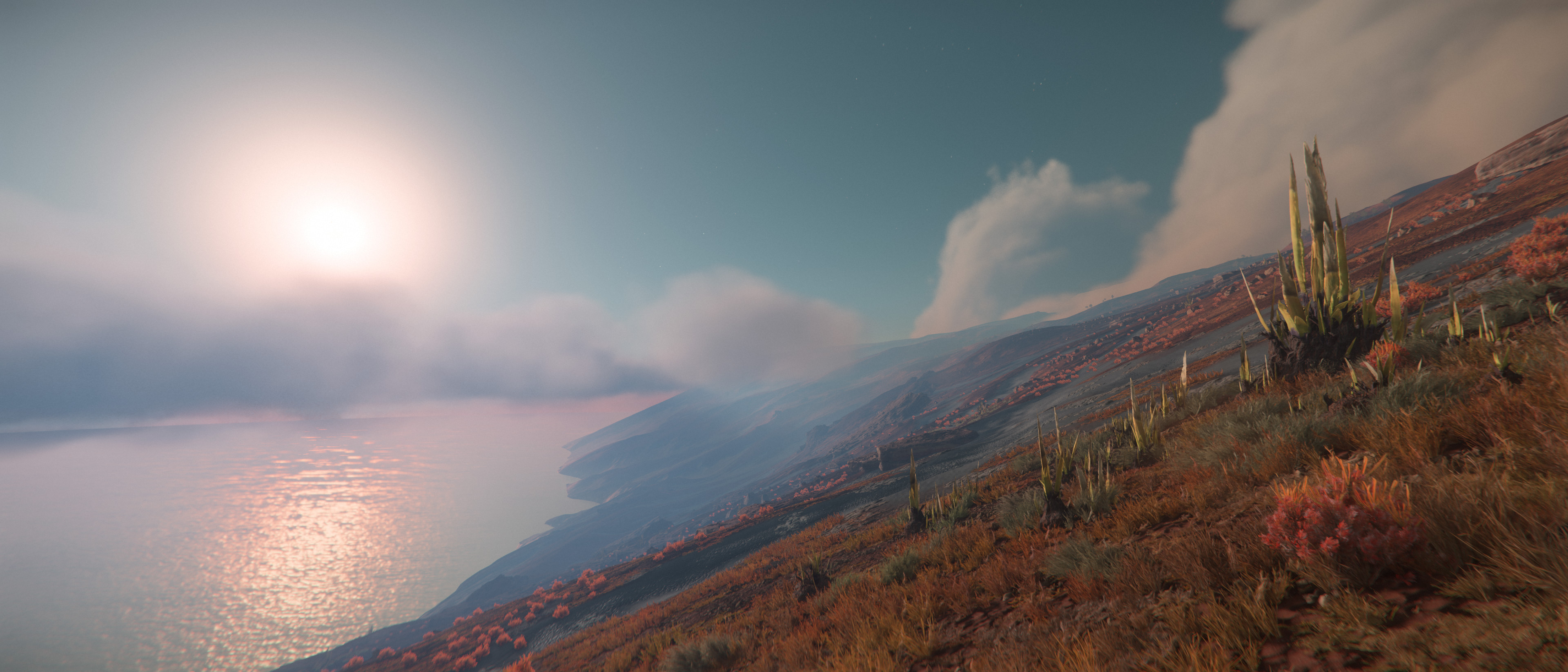
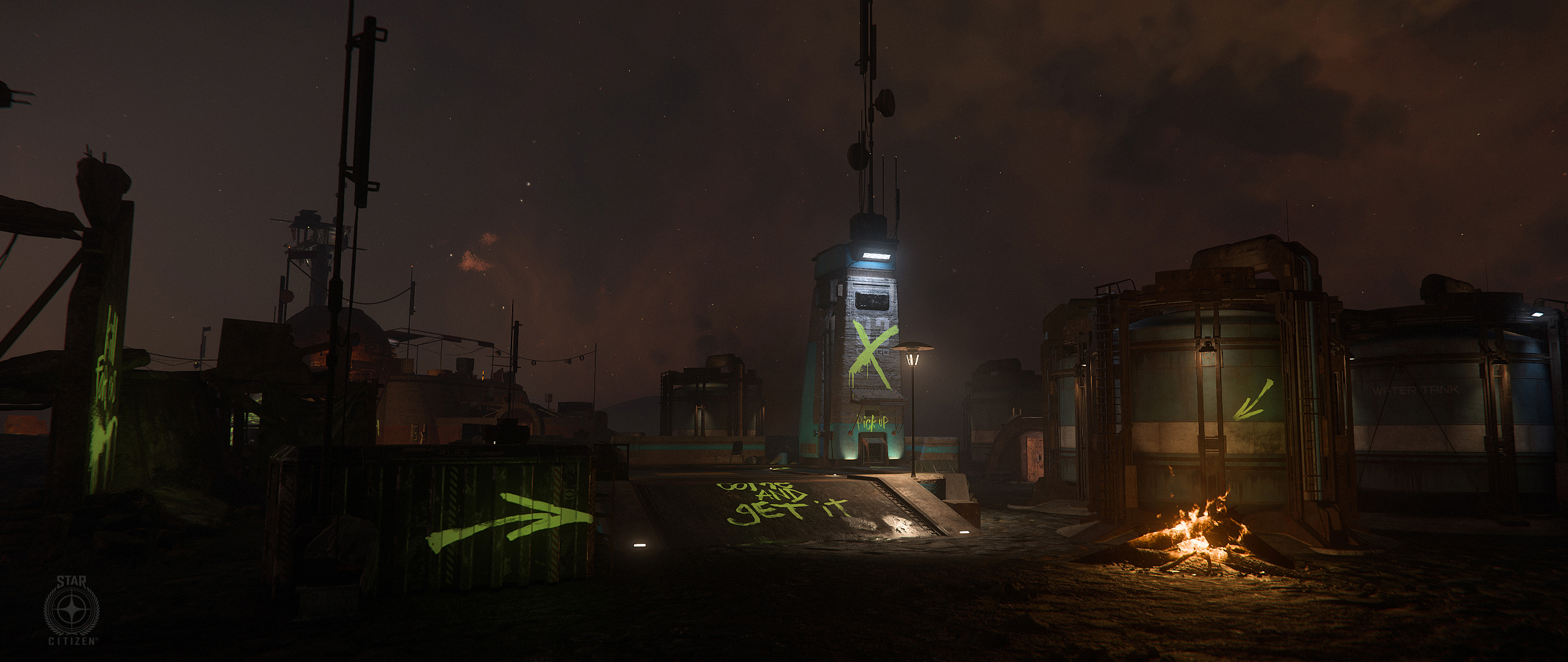
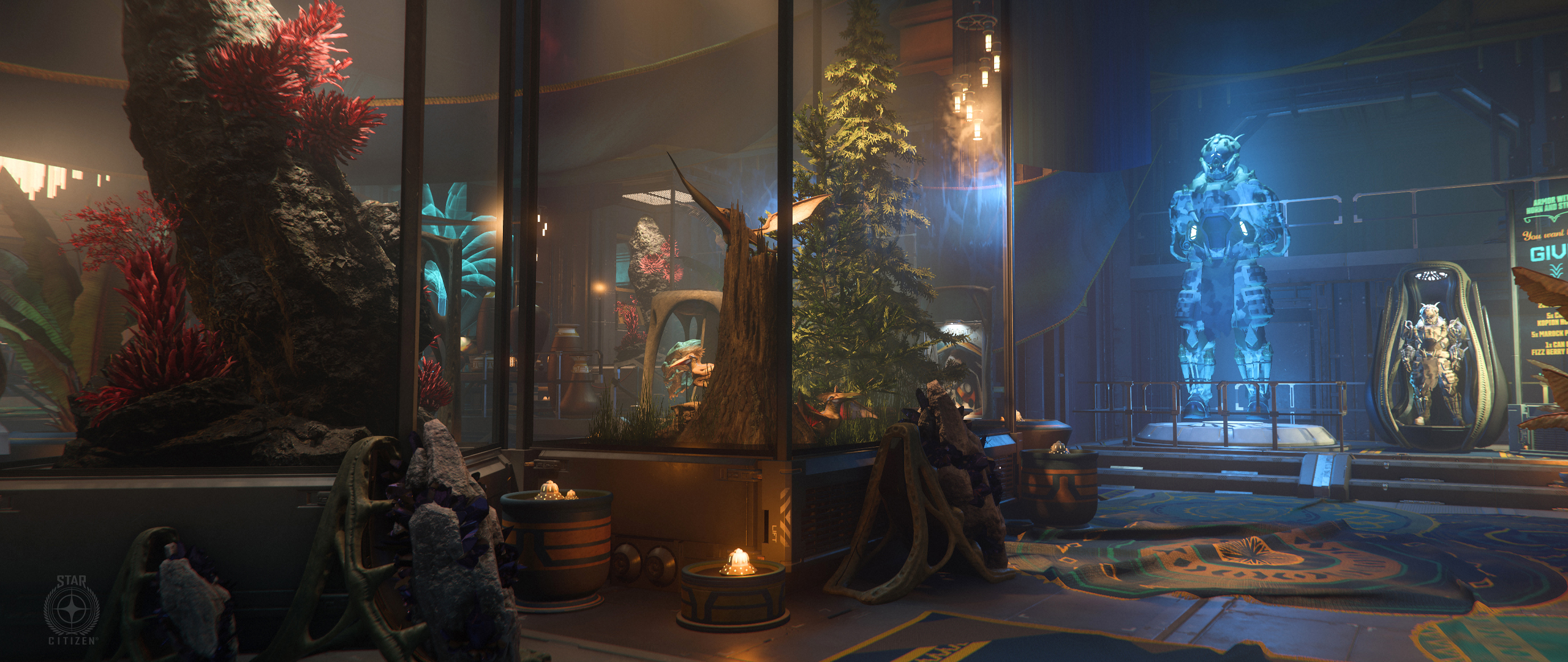
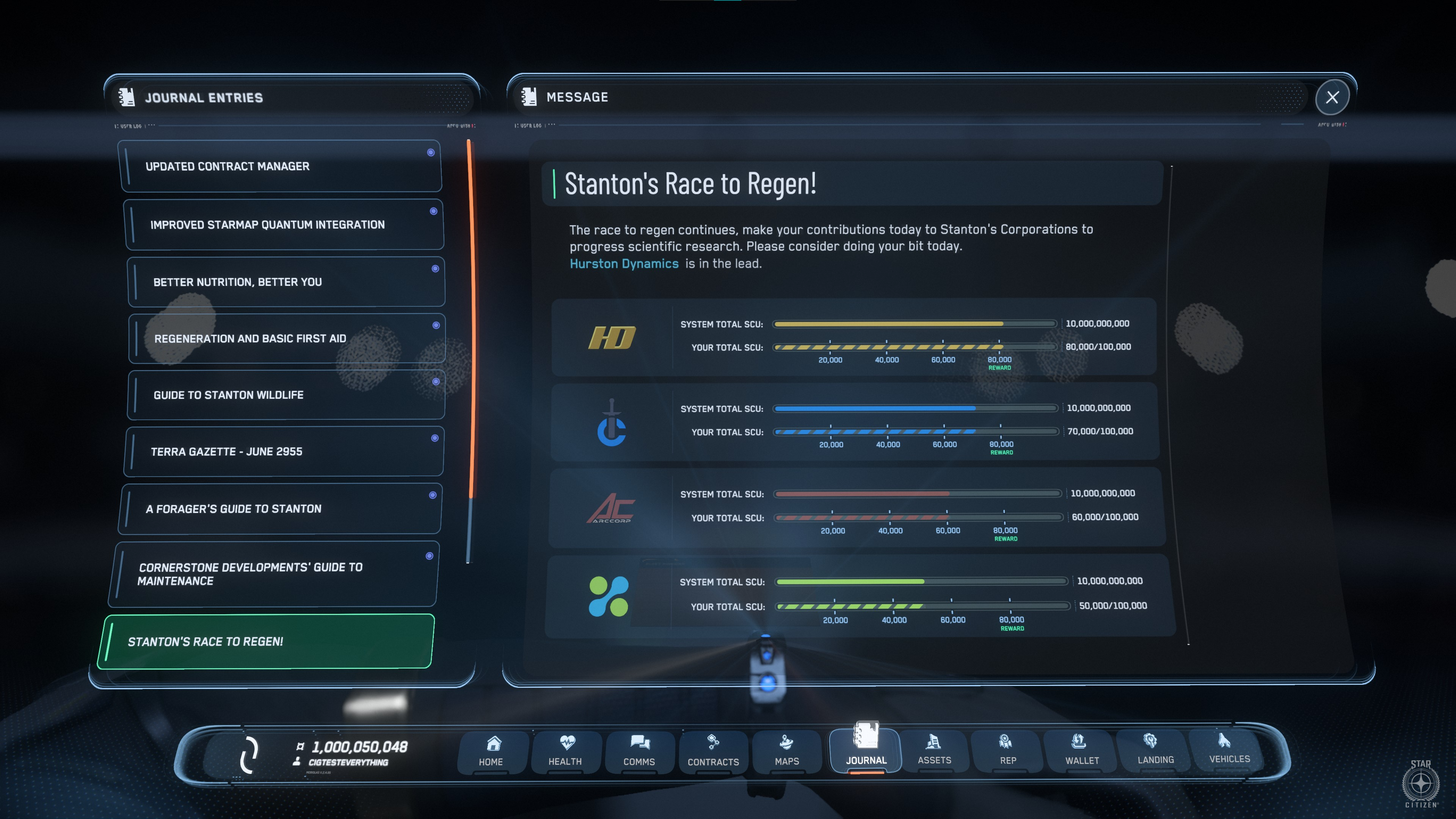
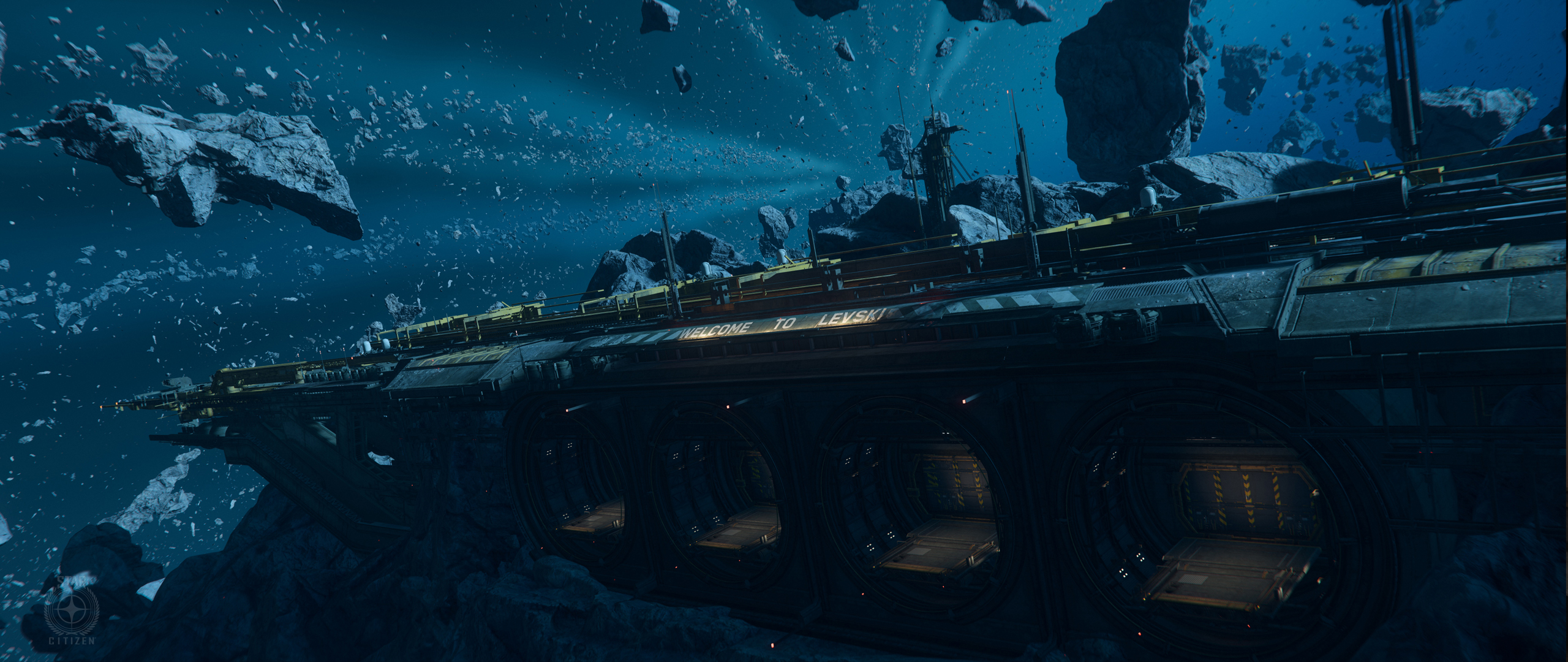
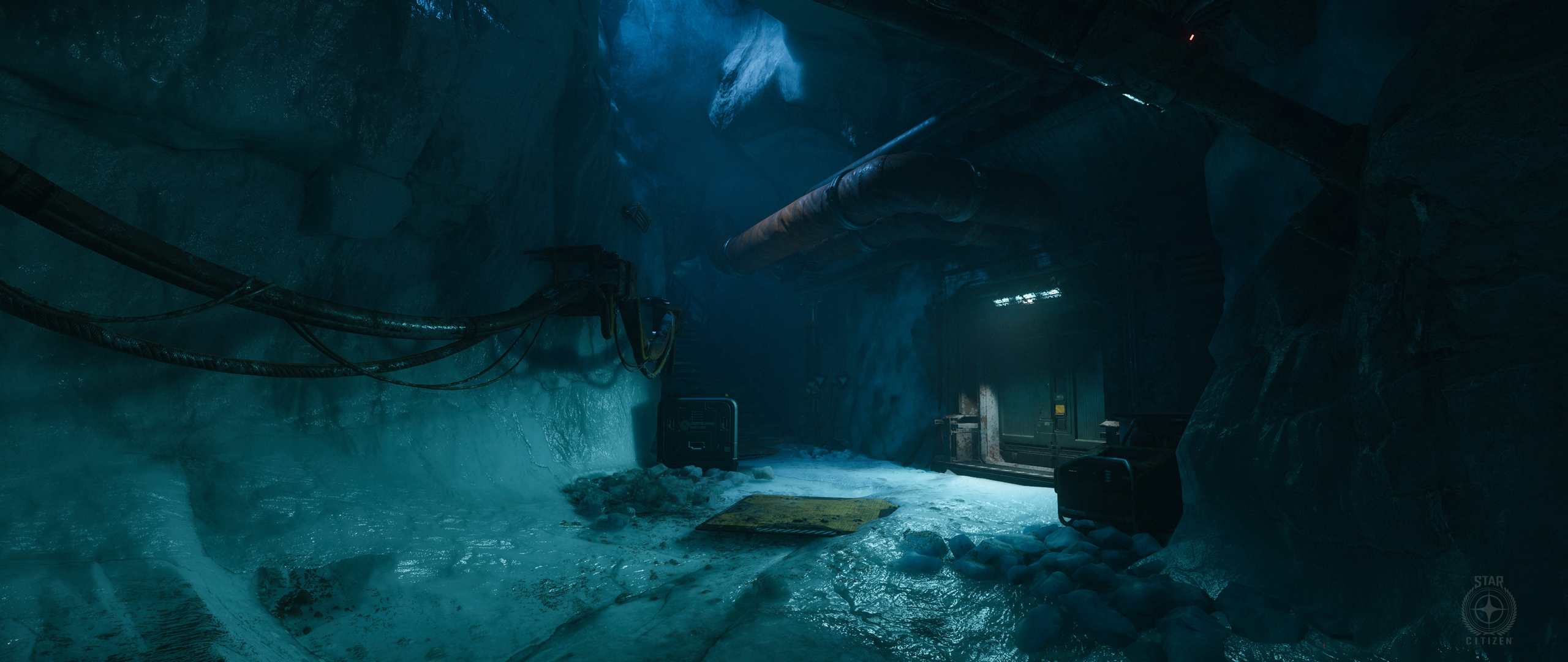
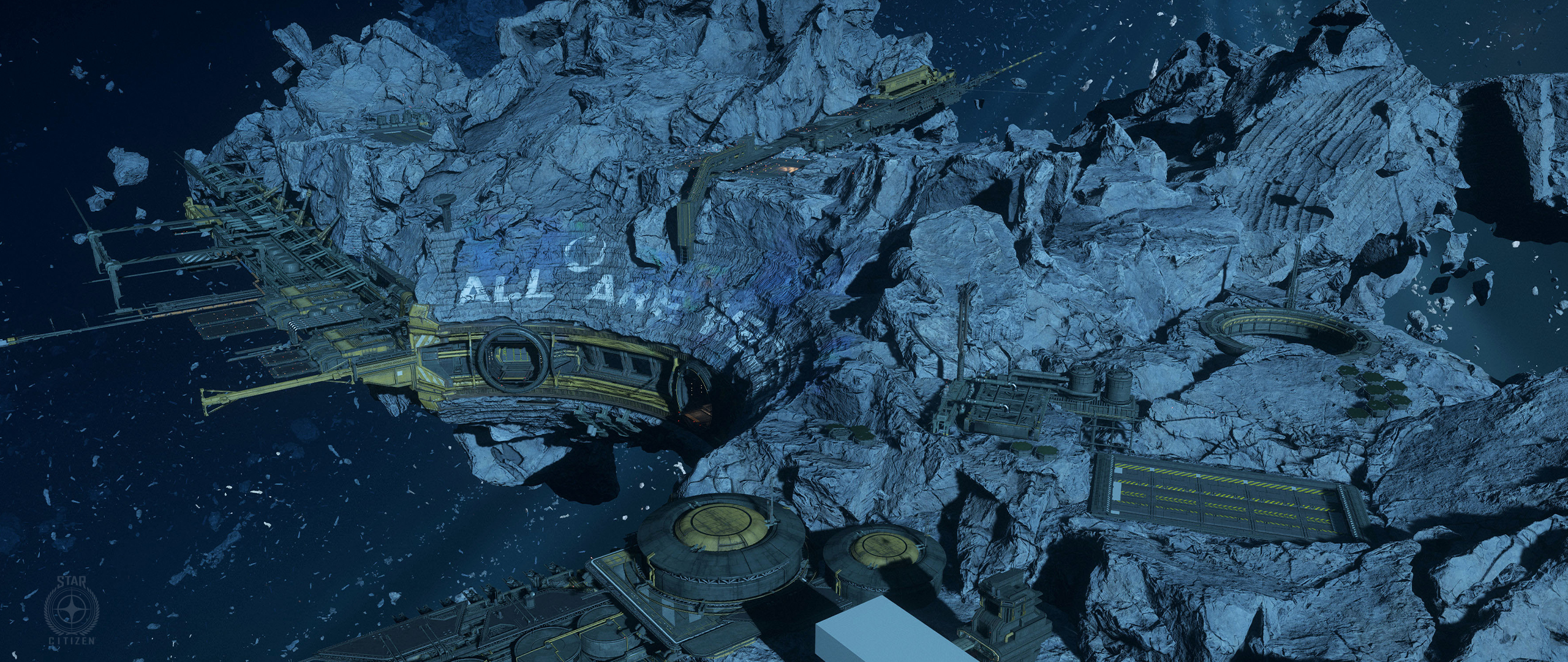
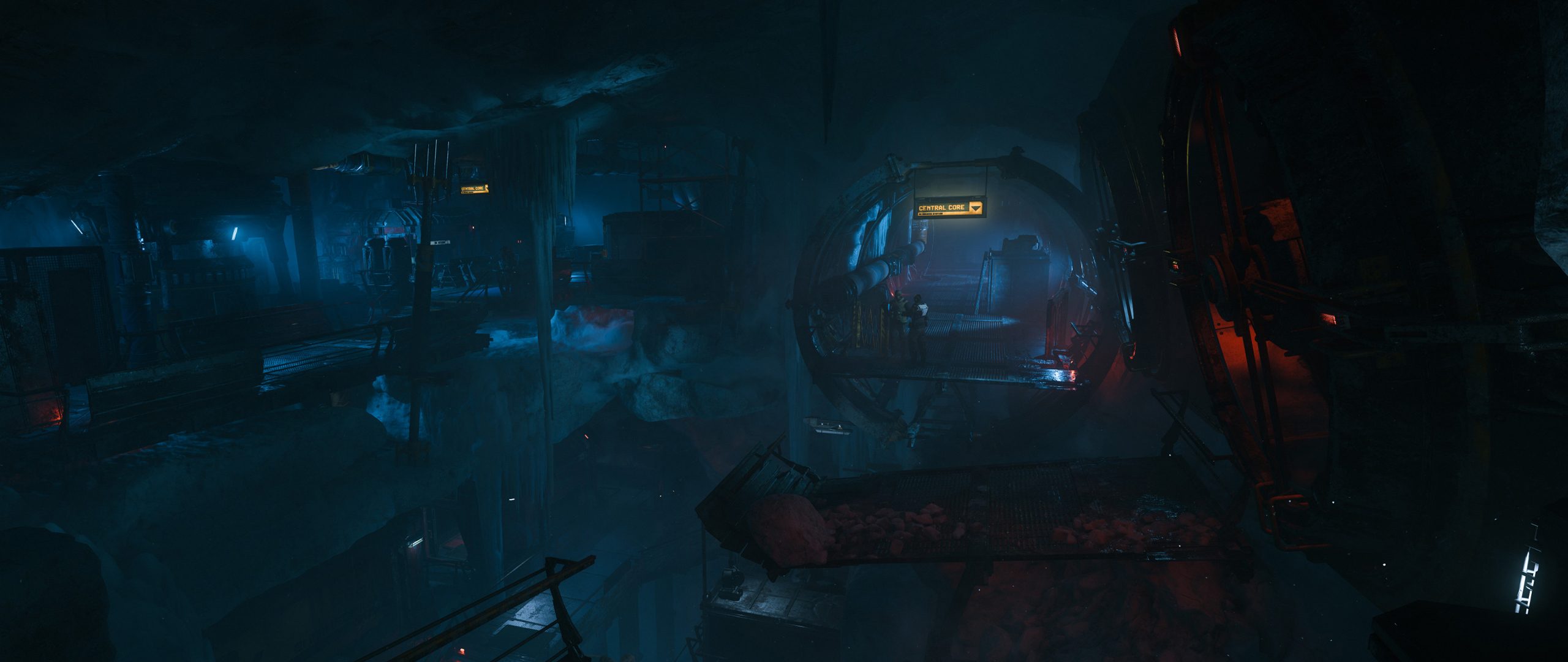
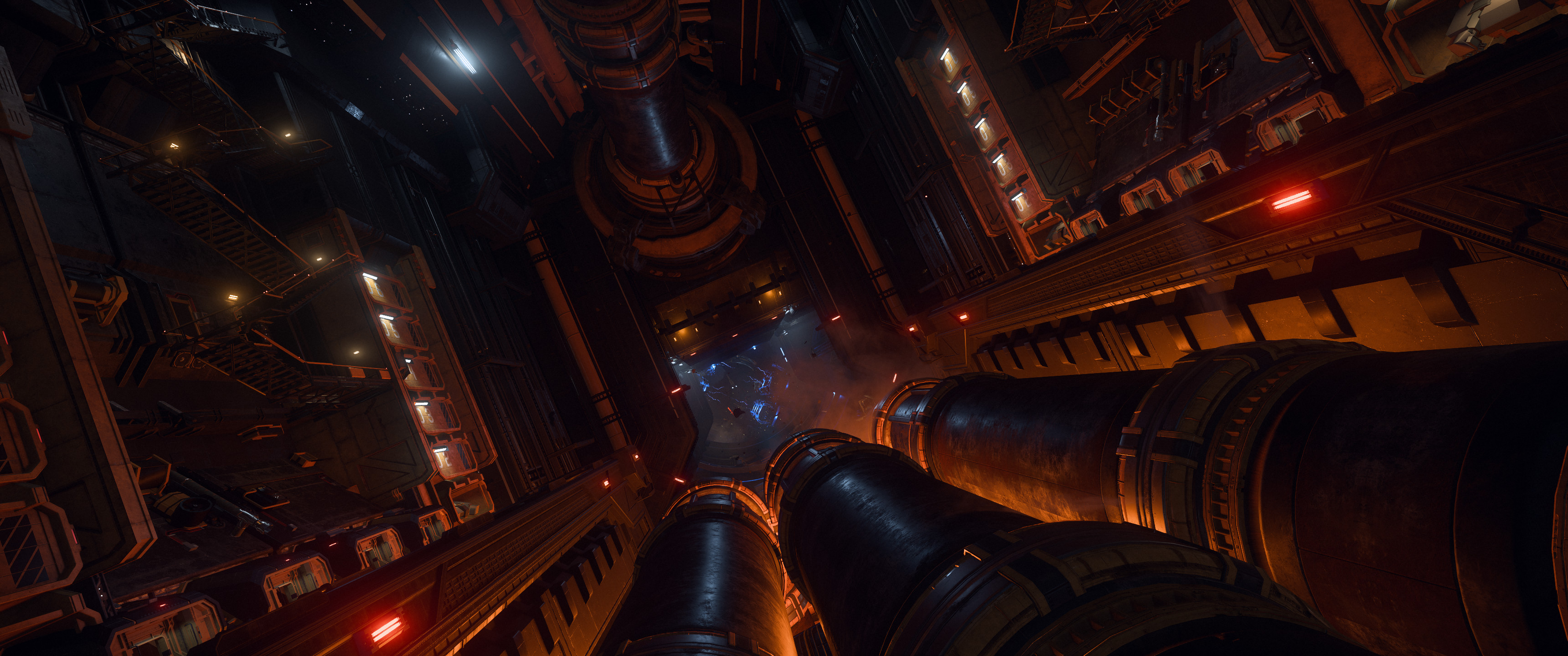
Metadata
- CIG ID
- 17416
- Channel
- Transmission
- Category
- Undefined
- Series
- Monthly Reports
- Comments
- 27
- Published
- 6 years ago (2020-01-18T00:00:00+00:00)