Monthly Studio Report: April 2015
Transmission Undefined Monthly ReportsContent
Greetings Citizens,
Welcome to the April 2015 Monthly Report! It was a busy month for the Star Citizen team, with the worldwide teams going full speed ahead on updates to Arena Commander, Star Marine, Squadron 42, the persistent universe and more. As we speak, Star Citizen Alpha 1.1.2 is available on the PTU. Thanks to the community, we’ve identified a number of bugs that the team is hard at work squashing today… expect an update on that next week. This is also your last weekend to pledge for a Hull series ship during the concept sale; check it out! We’ll also be putting out a more comprehensive update on Star Marine early next week, letting you know exactly what we’ve been working on these past few weeks. Until then, enjoy finding out what we’ve been up to in April!
Greetings Citizens,
April is over; man, that was fast! We’re trying things a little differently with this month’s report: instead of a single voice, we’ve given each team member the opportunity to contribute directly. And below this report, we’ve added a little background about what one of our artists does. You’ll have to let us know what you think in the comments but we believe it creates a much more dynamic update! Without further ado, let’s go to the department updates written by those who make up the departments.
Design
One of the items we’ve been working on in the Design department is Pirate Swarm is a mode within the map of Broken Moon. It features Pirate pilots using UEE ships that will attack the players. The number of waves has been reduced for play times to be more manageable, waves have been balanced as well to allow players a chance to reach the end. The Swarm modes have been played a bunch over the time since Arena Commander has been released, but we want to give you more than just static waves of the same ones over and over. Moving forward we want to get away from the term of Vanduul or Pirate Swarm and make it just ‘Swarm’.
What does that mean?
We want to give you options in which you can customize your gameplay.
That doesn’t tell me anything!
Hmm, how would you like to choose what enemies you fight? How would you like to select how many waves you want to go up against? Moving forward we really want to give you those types of options. The ability to make your play experience painfully difficult as a true swarm of enemies zero in on you, or if you just want to jump in and test a new weapon set up, then spawn a single easy wave to check it out. This is a simulation, you should have the ability to set up your training simulation as you please, and we aim to give you that option.
GOST is coming! GOST is a modular system we’re developing that allows us to more directly control the varied methods of interacting with our ships. Previously hard-coded archetypes of accessing, entering, sitting within, and navigating throughout ships will instead be authored by situation-specific logical components, granting us greater freedom than ever before. One example of the advantages of this system is that in the Hornet F7CM, instead of being auto-seated in the pilot’s seat, you’ll be able to deploy the access ladder, then choose to retract it, sit in the pilot’s seat, or sit in the copilot seat. Multi-crewed ships will reap even larger functional benefits, especially while dashing from the radar station to the hangar deck in the heat of battle or while simply taking a leisurely stroll to the lounge. Interact with your ships however you’d like—it’s all possible with GOST.
Overall, April has seen a lot of great progress for our long-term itemization in Star Citizen. With the continued work on all of the ship components, we’ve been working on a full overhaul and standardization of all of our component sizes. Having these in place is going to help with all aspects of ship design and development. From the ground up, we can use these sizes to build out much more detailed component plans for each of our ships, as well as starting to help us plan out just what our increased modularity of ship components will mean when putting together a loadout.
Having these sizes locked in, we’ve already started planning out some of the possible component swapping that will be available in the future. Some of our current experiments are exploring Power Plants, Shield Generators, and Cooling systems sharing more interchangeable placement. This is still going to take a lot of testing and tuning to make sure these choices feel meaningful enough to make while also keeping the overall power of each ship balanced.
Another set of components we’ve needed to rethink the sizing on are our Ammo Boxes, Battery Packs, Fuel Tanks, and Ballast systems. With our resized components, these all now share the same size, allowing them to easily be replaced with one another. Running a ballistics-heavy ship? Bring some extra ammo. Need to make a long-range flight next? Swap that ammo out with some spare fuel tanks. While not all of these components are adjustable on a ship currently, they’re going to help play a major part in loadout customization.
This month we took on tangibility mechanics – what has affectionately been called “grabby hands” – as a vital step towards bringing the cargo system to life. The basic premise is that everything is physical, that human scale objects can be picked up and manipulated, placed and tossed around with a level of fidelity and control that really brings the environment alive. Moving things around is great, and from our early prototypes it feels more natural and responsive than has ever been seen done before, but that’s only the first problem – doing it with animations that flow naturally while remaining responsive for gameplay and visibly correct in both first and third person is a whole extra level of complexity. It’s all pretty well documented here.
For all its challenges, this level of detail and interactivity is the path to a universe that feels real, from seeing a stranger flipping a coin to walking into your hangar and truly feeling at home. It extends beyond just the picking up of items, so I’ve also created early examples of direct interaction with buttons, dials, throttles, even computer screens. Being able to sit in your cockpit and manually pick out individual buttons to press, or directly pulling levers and valves to tweak and tune components for repair, or just walking up to a screen and being able to instantly interact intuitively and naturally without switching into a new mode – these are the things that make the art of Star Citizen tangible.
Engineering
This month we implemented a new 3D-to-2D “point of view” radar in the style of Wing Commander’s radar. Though range can be harder to discern with this radar it makes it very easy to know where your contacts are around you and which way to turn to get them in view. We started by using Wolfram Mathematica to rapidly prototype the math necessary to map a 3D direction onto the display, creating both an interactive output and a test output using a generated array of test points so we could see any mistakes that needed fixing. Once we were sure the math was correct we brought it all into C++ and hooked it up to the flash through a custom dock item field, then attached the flash to the front HUD of an Avenger to test it. This new radar type will be appearing in certain ships soon.
While the AI devs over in the UK have nowadays mostly been working on character-based AI for Squadron 42 and the Persistent Universe, we’ve been focused on the maintenance of spaceship-based AI as you see in the Vanduul Swarm game mode. Most recently, we’ve begun prototyping wingmen commands, the ability for the player to assign specific goals such as “attack my target” or “defend me” to his wingmen instead of just having them engage enemies as they please. This work will also work well towards our ability to create complex combat scenarios and missions in which AI ships will have different objectives to fulfill specific roles in the fleet. In the future, we expect to be working more in supporting Randy Vazquez, an LA technical designer who started working for us in the past couple of months and specifically focuses on AI encounter systems.
Continue bug support on release stream; crashes, mp de-syncs, unexpected behavior, and all around shenanigans. Prep work for radar system 2.0, signature system 2.0, vehicle params, and physical based damage. The improved radar system will be handle designer driven entries, threaded performance improvements, coherent abstraction so player and vehicles can use the same system with adjusted parameters, and more. The improved signature system will extend the designer driven system because calix demands more power, allow signatures to mask other signatures ( sun blocking ir signatures ), introduce the concept of frequency, and expand signature emission profiles. The vehicle params are a important step to reduce load times and allow external system to construct information on how a vehicle could be built without the need of spawning said vehicle. The params will also be used to cache resources. Physical damage will allow our kinetic projectiles damage to be based off kinetic energy and control how vehicles handle damage from physical hits and collisions.
Art
Throughout April members of the Santa Monica ship team have been coming together to update the Freelancer. This process has been an intricate one as it touches many facets of the games core mechanics including some new up and coming features. Coordination between studios has been crucial to this update. Concept artists in the UK have been hard at work fleshing out the Starfarer’s design and with this has come a particular aesthetic that solidified the MISC look in the Star Citizen universe.
Unity among manufacturers is a must so artists here in Santa Monica are applying those concepts to the Freelancer interior and exterior areas. This update has involved many changes such as proper metrics for character interactions, creating zones for cargo and adding areas for modular components. Maintaining the original experience and purpose of the ship will of course be maintained. As a whole the Freelancer has increases in size but the interior has remained a narrow and functional space as the previous design intended; allowing players to be immersed in the multi crew experience of a personal ship.
Throughout the community there has been a lot of feedback concerning the Freelancer, and we’ve listened! Worries about entering the cargo bay while it is full, accessibility to the back turret and the small mid-section as well some other issues have all been addressed. (No more clipping through bathrooms or popping up and down while trying to get to your bed). When the update is completed we believe the community will be pleasantly surprised.
Things have been busy as usual in the Concept department here in Santa Monica. We did a bit of concept work on the freelancer back turret and body before moving on to help where we could with the art for the Hull concept sale. That ship is looking gorgeous and we are excited for you all to see what we have done.
Omar has been doing some amazing work on the characters. He spent a few weeks in Austin working with the team there and they have all made some really amazing progress. He will be heading to the UK office for a few weeks to continue moving forward with character stuff. We can assure you that the character team is creating some really cool stuff and we know you are all going to be really excited when you see what they have been working on. Hopefully we will get Omar back in the concept department soon to work on ship stuff.
Well that wraps up the Santa Monica portion of this report. Hope you’ve enjoyed your tour through our development efforts for the month voiced by those on the front lines. As always thank you to everyone in the community for their continued support and for making this game possible. It is a real pleasure to be able to work on such an amazing universe with such an amazing community!
Cheers,
CIG Santa Monica Team
So as you can see just by applying solid values I’m already very far along. For this paint I’m going for a pearl sheen and a nice light blue color. The next phase in the process is adding in base texture maps. These are broad strokes and are meant to break up the surface. I typically use textures as overlays and let the engine drive the actual color and glossiness. This way we can reuse material later on. AS you can see while there is some larger break up a lot of the fine detail isn’t there. This is where, depending on the surface, I will add another texture that tiles a lot over the surface to give it some micro detail. This detail pass adds some brush stroke patterns and little air bubbles to make the surface more believable. Now since this a painted metal its time bring in the metal with the paint. In the interest of time I will skip the process for creating the metal and just show how I’m blending them. This is the metal I will be blending with. The next step is to combine the two materials and use a mask to tell the shader where the two materials should blend. So here is our final material I hope that this was interesting for you guys and gave you a little insight into my day to day workflow at Cloud Imperium. Hi my name is Daniel Kamentsky and I’m an Associate 3D artist at CIG in Santa Monica. You might know me from my time working on TNGS as a part of time shimapan. My role at CIG has recently shifted away from modeling and more towards surfacing.
As real time rendering evolves, with new rendering techniques such as PBR (physically based rendering) there is a growing demand for artists that specialize in the creation and application of materials. As one of these artists it’s my job to think about the more micro level of detail while the other ship artist focus on the modeling and large shapes.
So what does it mean to be a surfacing artist? Well for me it’s about being fascinated with small details and different surface types. Being a surfacing artist requires you to have a deep understanding of the way different materials react to light, how different materials are used in reality, and how to accurately create these materials with in a real time engine.
Anyways as an artist I’m better at showing rather than saying (or writing) so let me walk you through my process in creating a material in this set of images. So for this demo I’m going to create a painted metal material. With physically based rendering you are able to create believable materials with simple solid base colors. So with that in mind the first thing I normally do when making my materials is start by blocking in some solid values.
Hi everyone!
April showers have blessed Central Texas this month and we’ve been hard at work on many fronts. We’ve seen record concurrency numbers with the 1.1.1 game update, and experienced multiplayer connectivity issues as a result. We mobilized all resources to focus on this issue, and you’ll see more detail on these activities from several teams in the detailed reports. We’ve got a lot to share, so please check out some detailed info from the teams in the Austin studio!
Persistent Universe Team
Art
The month of April saw many developments within the Art Department of CIG Austin. We hosted an Environment Mini-Summit where our friends from Foundry 42, BHVR, and Illfonic came to visit to discuss long term planning for Star Citizen Environments. There are a lot of cross-studio dependencies that require face-to-face time to discuss in more depth, and it is very valuable to interact with people in person that we work with on a daily basis across the world. All in all the Summit was a success, and our Global Environment Leads Ian Leyland and Cort Soest have helped establish a firm foundation upon which to build the best environments possible. Our focus specifically for the PU this year will be fleshing out the “First 5” planetary landing zones, wrapping up our first batch of shops that will be found on those landing zones, and R&D on creating modular space stations that will serve a variety of functions in the PU.
Our character team has been solely focused on supporting the FPS character revisions this month. There was a lot of work to do to help bring these characters up to speed with the rest of the amazing work Illfonic has been doing to make Star Marine look the best it can. We’ve added armor plating to help beef up the Medium Marine a bit more, tweaked materials and colors to help both the Marines and Outlaws look like they belong to the same unit, and Josh Coons even jumped over from the Ship Team for a while to help bring the Outlaw helmets up to the next level. These characters are looking fantastic, and we’re really excited for you guys to get to run around with them very SOON!
Other things the Art Team has been up to this month include concept work for Hangar weapon racks and Holo-Kiosks for the Astro Armada shop, concept work on shielding and radiators for space stations, explorations into Blue Collar clothing sets, flickering job board VFX for the TDD shop, and texturing work for the mobiGlas asset.
Our Animation Team has been supporting various aspects of the project, including prone weapon sets for FPS, and Grabby Hands animations for testing out picking up and putting down objects. Lead Animator Bryan Brewer has been testing and debugging the brand new skeleton we are going to be moving our characters over to in order to improve various aspects of the character’s proportions and range of motion. Our entire animation team is now transitioning over to helping retarget our whole library of animations (over 2,000!) to this new skeleton.
Design
There were many discussions and meetings that took place this month amongst our designers in order to break down what we are calling the “Game Loop” for our upcoming Social Module release. Where does a player start when he/she logs in? What do they experience as they participate in various activities around a landing zone? What happens when they interact with REDACTED??? All very important questions that ultimately helped shape the design for Shopping, Storage, NPC setup, and more. We’ll continue to break these down even further as we progress into next month.
Pete Mackay has been adding extensive developments to his newly dubbed “Ship Cruncher” tool (formerly Thruster Calculator). It’s a pretty robust tool that allows designers to balance discrete item parameters, create baseline ship items for each item type, properly size ship gear and visualize granular changes on a macro scale, and collect robust data sets for each ship. The Ship Cruncher also does several different physics calculations to determine how fast a ship can change direction, its top speed, its turn radius, etc. It’s an all-inclusive package that will significantly help with ship balancing in the future.
Evan Manning has been adding data to the Star Map to be used by our friends at Turbulent for the release of the Star Map on the Platform side. There is a lot of information to be documented and Evan has been doing a great job of ensuring every element in each system is in its proper place.
Work continues on fleshing out various occupations within the Persistent Universe. Tony Zurovec continues to whittle away at the details of the Pioneer occupation, and Rob Reininger and Nate Blaisdell have taken cracks at initial passes on the Mercenary/Escort and Bounty Hunter occupations, respectively. Before long we’ll have more detailed breakdowns of how each of these occupations will work in the PU.
Engineering
April was a busy month for our engineering team, as many of them were recruited to support the live patch that went out the first week of the month.
Our Server Team paused their work on the Multiplayer Hangars feature in order to work closely with DevOps and QA to improve and strengthen our Instance Manager, our Matchmaking Service and other services. As a result, we have had a dramatic decrease in reports of issues related to inability to load into multiplayer matches. Congrats to our hardworking team for this splendid accomplishment!
We have other, longer term systems in the works that continue to progress closer towards completion. These systems are being worked on out of Austin with strong cross-over with Manchester and Denver (by our friends at Wyrmbyte)…such as: Unique Global Entity ID system, Generic Instance Manager, Player Info Server, Presence Server, Universe Simulator, HUB Server, and Player Persistence. Much of this work is slated to have deliverables of first iterations in the month of May…the team is definitely making some solid progress!
The team has also been working with tools such as RAD Telemetry to help them profile our server metrics, in order to support the ongoing task of optimizing server performance. They have started profiling our live builds and analyzing the results with fine toothed combs to identify areas to focus on to implement improvements.
Work also continues on our various tools systems, including support for such items as the Sandbox Editor, Trackview and our Asset Validation Tool. And development continues to progress quickly on our various AI Editors…such as our Useable Editor and our Character Archetype Editor…which are needed by our design team to help bring our worlds to life.
And while juggling all of these tasks the team has also been busy working on such things as finalizing 64-bit networking support for our Large World system, finalizing work on the iPredictor (movement prediction) system, creating a series of prototypes for the Mining Occupation, and helping support other systems that are live or in the works, such as REC and Multi-Seat Ships.
Finally, behind the scenes our team has been hard at work re-optimizing our development stream workflow, which will help us streamline our development to ultimately be more efficient and stable. Everyone is looking forward to this new workflow, which has been rolling out step-by-step over the past several weeks.
Well, that’s it in a nutshell for the month on April, 2015! We’ll be back with more next month!
Live Operations
QA
For the month of April QA has been busy on multiple fronts. With the release of 1.1.1, our concurrency rose to a level we had not seen before. This exposed aspects of our back-end infrastructure that were preventing successful connections to multiplayer matches. QA worked closely with DevOps and our server engineers in a full investigation. After multiple hot-fixes to our servers, the issues were dramatically improved. Subsequently a call was made for everyone to help participate in a scheduled stress test. The turnout was such that we were able to surpass our previous concurrency record and were happy to see our back-end system could handle this increased load.
Melissa Estrada has been assisting our developers in the Frankfurt studio to track down and regress editor issues they’ve encountered when doing comparison testing of our version of the editor to pure CryEngine SDK. Melissa also headed up an initiative to log all errors found in the game logs which will be a huge help in ensuring we have a cleaner game for the release of Star Marine. The team assisted our Global Environmental Tech Lead Cort Soest to filter unused maps in the editor to reduce internal build space by more than 100GB helping to enhance work efficiency.
Our checklists have been updated to include more Star Marine and Squadron 42 features as well as deeper checks to the editor. With help from Jeffrey Pease, efforts have been made to improve the patch notes creation process which help to more easily incorporate multiple members of the QA team that can assist in the event that someone is absent.
Miles Lee has made significant progress in developing test automation. As a result, we are able to automate the capturing of performance data for each of our various builds. He is also working on automating our build sanity checks and assisting DevOps with the development of a headless client system that will enable us to automate stress tests on our back-end infrastructure.
The team was also continually testing Star Marine. FPS specialists Tyler Witkin and his UK counterpart Glenn Kneal ensured production was notified of all issues found that day and highlighted any severe outstanding issues that were blocking or significantly hindering testing.
Our QA team was also fortunate enough to visit Professor Paul Toprac and his aspiring game developers participating in the Capstone GAMMA program at the University of Texas. We had a lot of fun playtesting and providing feedback on their projects.
Next month we plan to incorporate Social Module in our regular testing. We will be working very closely with Jake Ross to ensure we begin testing each aspect of the Module as soon as it is available.
Game Support
The month of April was quite busy for everyone, including Game Support!
We’re continuing to learn and refine our processes of communicating and working with players, particularly on the Live Service Notification forums and on Reddit. We’ve seen nothing but appreciation from players for these efforts, which means we’re doing something right! Our goal of serving live players with information is carried out by giving you the most accurate and updated information on the health of the service, what kind of game experience you can expect as a player, and what we’re all doing to make it better (especially on patch days!).
Behind the scenes, we’ve made some changes that will ultimately result in you getting a better, faster response. We’re closely working with Customer Service, Community, and DevOps on a daily basis to make sure that you get the right timely support. We’ve got a good plan and we’re excited to start getting to where you would want us to be as a service provider.
On a more visible level, we’ve also begun the work of running and managing stress tests, and we’ll be involved in many more of these. The rollout of 1.1.1 and increased concurrency resulted in multiplayer instability, and we worked with multiple teams to identify and address the more common issues. To properly test these fixes, we coordinated with the player base in what turned out to be an incredibly successful test which set new concurrency records for Star Citizen. Not only was this helpful, but it was fun!
Lastly, we’ve spent some time internally on creating some plans on what we’re going to need to support future modules, namely the upcoming Star Marine module, which for us basically means supporting an entirely new game! We’ll be excited to roll these plans out in the coming weeks and months as we expand our services to better support the growing community and ever-expanding needs of the Star Citizen universe.
IT/Operations
The IT team has been hard at work improving internal systems, planning for future systems, growing storage, and fine tuning service performance. The term explosive growth is often used when talking about storage and in our case, we’re no different. As our dev teams continue to produce content and collaborate, we need to make the results of their work available to all teams within the company. As storage needs grow in LA for example, we must grow storage in all other studio locations to match so that data can be replicated locally to each team.
Growth of storage space is not the only aspect we’ve been focused on this month. Storage performance can also become an issue when lots of people need access to the same things at the same time. We’ve already surpassed the capability of standard replication methods and found it necessary to build our own in order to keep up with demand. I’m proud to say that the IT team has come up with some very creative and innovative strategies to make better use of existing systems and believe me, we push hardware to the limits here at Cloud Imperium Games.
For example, one of our replication systems pushes about 900 mb/s for about 12 hours each day pushing content to 5 replication targets simultaneously. It is important for this data to get to each studio as quickly as possible so the performance demand on the servers is pretty high. To solve this problem we’ve built a custom flash storage system in in order to provide the IOPS we need for this process. Each upgrade seems to expose new areas we can improve on. In this example we got our replication going so fast that it began to bog down servers on the receiving end so we’ve been upgrading those servers where necessary as well.
While the IT team has been continuing to provide support to individual developers around the world it seems like storage and replication tuning have been our main focus this month. Next month we’re looking forward to building even better systems to help the dev teams crank out content even faster.
Dev Ops
April was a month of firefighting and stability improvements! We launched patch 1.1.1 and worked to fix stability issues with our Instance Manager, Party, and Matchmaking services. After two weeks of deploying hotfixes from our Server Engineering team, stability increased. Due to some of the stability issues we have had over the last few patch releases, CIG has decided to change our approach to Operational Deployments. What this means to the players is that they should not expect Friday patch releases, or releases late at night. Instead we will be aiming for a more tempered roll out of patches and hotfixes to our live environment, taking full advantage of our PTU environment for config and game testing. We hope this will lead to more stable releases for our players.
The DevOps team has also been hard at work building the base infrastructure for the live environment, PTU, and internal test environments. Work on the new launcher and patcher continues, and we am sure you all will be as excited to use it as we are. We will be demo’ing it very soon with an upcoming PTU test and getting feedback and usability testing on it. Work on our automated dynamic infrastructure scaling system continues, around 40% of this system is already deployed live, and we expect the rest to begin operating over the next month. Internally, we continue to re-build our build server, change how we merge code and data between working branches, build better crash reporting, and work on automated testing.
There is still a lot of work to do to rework our internal data pipeline to get it to the point that both CIG developers and players do not have to patch and move around massive amounts of data each time there are minor changes. The DevOps team is working on a large roadmap to fix this with help from our engineering and tech art teams in Austin and Germany while being supported by our IT staff on the hardware build out. A full completion of this plan will take many months to roll out, but should drastically reduce the time it takes for a game build to be generated, the time for developers to test their changes, the size of patches, and the amount of data developers need to grab each morning. More on this plan in the months to come.
Animation
The UK animation team has expanded in to a group of five ready to tackle and implement the ongoing Imaginarium shoot as it comes in. As well as being on hand for any block out animations needed here at Foundry 42 we’ve been doing some of the back end work to get the databases and tracking in place that are necessary to keep on top of a project as large and ambitious as Squadron 42.
Engineering
There are a couple of big ticket items coming to their first major milestones for the end of April. Firstly you will hopefully have your first taste of the new tutorial mode in Arena Commander. This has proved to be much more of an undertaking than originally planned, mainly because of just how deep our control systems go and then the complexity of trying to show the player how everything works. Sometimes when you are so close to a project you don’t always appreciate the bigger picture and realise just quite how much we’ve accomplished. We know most people internally who have played through the tutorial (including some of the QA team) have learnt something new about the game!
Secondly we’ve been doing a lot of work in the last few months converting all the game’s “entity Ids” from a 32 bit number to a 64 bit number. The entity Id is a unique identifier for each “thing” in the game, which can be stored and referenced very quickly, and for a computer is much more natural way of accessing items than something more human readable like a name string for example. For a normal single player game, and standalone multiplayer games, 32 bits is plenty (it gives you about 4 billion possibilities) but for an MMO game it proves to be woefully inadequate. The plan is that everything in the universe will have its own unique Id or a “global entity Id” as we’re now calling it, so every item in every database and on every server can be accessed via its own identifier. So as you traverse your way across the universe in your ship, with your particular loadout, with your cargo stored, and a couple of hitchhikers, and are hopping from one system to the next, it makes it much more straightforward technically to transfer all of that information from the server your currently on and onto the next, seamlessly. The fundamental change is actually a fairly simple one, the knock-ons where the code was assuming all these Ids would be 32 bits required a huge amount of fixing and is what takes the majority of the time. This process looks like it is now coming to an end much to the relief of the engineer in charge.
Going into May our gameplay engineers are really focusing in on our charge for the S42 vertical slice, many mechanics of which are now in the polish stage. This is the time where you start to see parts of the project really come together, you see a game instead of a collection of bits. Exciting times!
Audio
This past April for CIG Audio was mainly us keeping busy continuing our work in moving to Wwise. We’re really digging in now; assets are all across, banks created, bussing hierarchy etc. is built, and it’s giving us an opportunity now to refactor and improve while tying things together with Cryengine as much as we can. It’s a big push as Cryengine has only relatively recently begun supporting Wwise and there’ll still be a lot for us to do ourselves on that side, as we progress this year. We’re very much looking forward to releasing with it, but we’ve got plans beyond the standard tools associated with Wwise, for example automated Foley and footsteps that are driven systematically. It’s possible to spend so much time labouring over these, it’s a complete no-brainer to attempt to go the auto route with them.
We obtained some great new tools from Nugen Audio, one of which is going to be key in maintaining a good consistent loudness normalisation level for dialogue particularly, hugely useful.
As we mentioned last month, we’ve welcomed two new Sound Designers: Darren Lambourne, and Matteo Cerquone. Darren’s joined us from Ninja Theory where he worked on some amazing sounding titles. Matteo has joined as a junior, having come through the ranks at Vancouver Film School who turn out same excellent game sound designers.
Finally, we’ve welcomed a Dialogue Specialist, Bob Rissolo. Bob is straight into the deep end with a live-action shoot, helping to record great dialogue performances and ensuring we maintain the quality we need there. He’ll be moving from the US to join us at Foundry 42 which will be a real change for him and hopefully one that proves fruitful.
Luke and Pedro have been really hard at work on the Tutorial this month, which we hope you’ll enjoy from a sonic aspect, it’s highly evocative stuff in many ways!
Phil has kept on plugging away at the social module, along with Tom who’s been putting in great groundwork on S42 too.
Stefan has kept pushing on with FPS work – our Foley session at Pinewood was great, gave us an excellent kicking-off point for the different armour types. We’re still going to keep improving it through recording our own Foley assets as well, however. Can’t stop tweaking! He’s continuing the work on the guns which is a sophisticated system in its own right, getting one’s head around the HDR system is a tough first job but he’s definitely getting there. We still have more environmental aspects of the weapons audio to record though, there’s going to be a lot of audio data devoted to weapons in this game, that’s for sure.
Thanks for listening!
Art
Wow – April just flew by, we squeezed another birthday in while managing to keep all the plates spinning for Sq42 :) Good progress is being made on the Vanduul fleet, ships and shape language, patina paintovers, turret design, its an ever growing pandoras box of tasks. We’ve also spent a lot of time and effort on the FPS weapons needed for the campaign, this includes attachments (scopes, grips, rail systems) and also grenades, while also planning on making the existing weapons PBR correct. We’ve also started working with an new UK based concept company to help us solve the growing amount of tasks generated by the Cap ships and level design.
Environments
We’ve been focusing on our Vertical Slice section for Sq42 – this means we take a section of a level and take it up to final art quality. We’ve got some fancy new tech fresh from the rendering department which will enable us to build our modular levels much more cheaply. We’re also starting to make some real progress on how props are going to be done in both Sq42 & the PU, they will basically follow our same master material system which will utilise the same started texture resource as our environments, this will mean that we can dress our levels to a much higher standard. And lastly we’ve been putting the final touches and fixes to the new Tutorial section in Dying Star – we hope you like it. Ian has also taken on the role as Global environment lead and is pushing through the many lessons we’ve learnt to our partner studios who have been helping make what you see today.
Ship Team
This month, the Foundry 42 ship is hard at work preparing a lot of assets for the Cinematic shoot in London. This is an ongoing process, making sure Cinematic Directors and Chris Roberts have everything that they need to shoot all the cinematics for Squadron 42.
The ship team in Manchester is working on multiple capships full force, and we are making really good process. Our goal is to make these massive ships a living and breathing world for the player to explore. The Idris and Javelin and Bengal are all going into final production, to meet the F42 standards! A huge undertaking. The Starfarer production is also making good headway, Matt is systematically working through the whole ship ,a big project, his second project after the Gladiator. We are also working on a Xi’an Cargo ship, a ship that is needed in SQ42.
Characters
We’ve been concentrating heavily on the mocap/Pcap shoot, the camera rig is now in London with Andy and is being put through its paces capturing the actors as they arrive for the shoot – cant wait to see a digital version of (redacted). All in all exciting stuff!
Hey all!
First off, we’d like to say that it’s fantastic to be able to report to you our progress on the BDSSEtm every month. In our book, being able to interact directly with the community is the number one perk of open development.
Here’s what the BHVR team has been up to in April. Some of you asked us for the loooong version, so here it is:
Pushing towards the social module’s first release, we’re focused mainly, but not solely, on supporting and polishing the shopping experience. Planetside locations are going to be rich in adventure, encounters and interactions, but before we get to present to you the fancier game scenarios and mechanics, we are focused on the essentials, so let’s start with those:
When you’ll finally get to exit your hangar on foot and make your way up to planetside, we want you to have a good time visiting the various shops and markets available. Take a moment to familiarise yourself with these names if you haven’t already: Astro-Armada is a high-class ship dealer, Casaba-Outlet is a clothing and apparel franchise, Cubby-blast is a shop unique to ArcCorp-Area18 which will answer all of your personal weaponry needs, Dumper’s Depot is a scrap metal shop where you’ll find ship parts (in perfect condition for now), and last but not least the medical-unit offers medical services for that special moment when you get shotgunned in the face.
The shopping experience effort is on various fronts: On the design side, our level designers are putting together the physical and logical components needed in the levels: racks, shelves, items on shelves, the shops themselves, etc., as well as supporting our artists who are making these locations’ visuals gorgeous and reusable. Game Designers are synchronizing everyone’s work to fit the concepts and coming up with realistic solutions to epic problems that obviously come along the way (like … every five minutes).
Our UI team has been all over the place! They created some cool logos this month for “Interdimension Software“, “Electronic Access” as well as a “Star Marine” logo animation, along with decals for the Nyx planetside location. The mobiGlas and its Augmented Reality (AR), which are the main gateways into the shopping interface, are being enhanced with various visual components and other features such as reworked notifications for lobby, shops and hangars. We are not able to have the full polished set of features just yet, but giving it to you in its current state is very exciting. We’re looking forward to reading your feedback on its usability and visuals.
All of this is extremely exciting to us as we’ve written, discussed and iterated on these designs for a long time (centuries in spacecrab-time) and we’re finally seeing it all come together. Note that this first release is far from the final shopping experience we’re striving for. It is what we call “Phase one” as in “Set phasers to one”.
In other news, other Planetside locations are still being developed. Mariana, Odyssa, Crusader and Hurston Designs have passed from 2D level layouts to the whitebox stage. If you recall, we’ve stated in previous reports that we would get faster and faster in the development of Planetsides thanks to the Tag, Room and Tier systems. The four planets mentioned fit under the same Architectural style as ArcCorp, making them great candidates to prove that we can build them efficiently. So far so good! You can dig up more info and concepts about these Planets; it’s available on this very site.
As mentioned above, our little army of artists has spent a good amount of time ‘arting-up’ the various shopping locations, but also working on an all new modular set to be used in future planetside locations. For this new set, we’ve integrated a better pipeline that makes our work more efficient and with better visual results. We can’t wait to show you those results!
You’ve probably seen mock-ups of the holotable revamp. We are continuing the effort on this side as well. The visuals are still being defined while our engineers are making slight tweaks and fixes. To preserve its functionality for the soon to be released modes, we cannot dive in the full revamp just yet. You’ll understand that before making it better we’ll need to break it. Of course we don’t want you to end up with a broken holotable. For now you’ll see tweaks such as better visual cues for the REC equipment versus owned equipment.
Somewhat related to the holotable, but also affecting various systems throughout the game, we have made some progress on the holo-object refactor to reduce entity usage. In a nutshell, this means better performance which directly translates to more players in multiplayer instances!
Our engineers are also hard at work supporting the FPS access, the loadout customization in the lobby and the multi-crew lobby implementation. On top of that, the chat feature has been updated to support basic features and private conversations. These aren’t accessible to you yet but they’ll come in handy when we finally roll out the multiplayer hangars, which our guys are actively working on.
We also had a very fruitful day-long meeting with Turbulent where both of our teams joined forces for skyLine, the Starmap. We can’t say much about this feature just yet except that it’ll be super awesome, promise! We can’t wait to use it!
As usual, we prepared some cool Flair Objects for the subscribers and for past stretch goals. Hope you liked our little April’s Fools prank; we’ve heard that it actually made the game FPS much better ;). The Khartu-Al Takuetsu starship model has been given, and we’d like to thank the community for reporting and helping us find an insidious error that prevented it from appearing in hangars. (Don’t tell anyone, but we’re working on a special extra something for the 23million stretch goal reward…which was also a Khartu-Al).
Next month’s flair will be the first of a new series. The Puglisi collection items are especially nice pieces. They have strong visuals and also have a great fiction around them (thanks to Haddock for that!).
Okay, we’re running out of coffee and are very low on “space ink”tm, so until next time, have fun in the ‘verse!
Ahoy Star Citizens! It’s been another busy month for the FPS team. Over the past few weeks we’ve been focused on getting the feel of movement and gun-play really dialed in, along with implementing zero g locomotion and interactions. Read below for the details…
Engineering
The engineering team spent a lot of time and effort making sure all of the variables and parameters that designers were requesting were available to them for tweaking. This doesn’t just include player speed and weapon damage, but also things like breathe duration based on stamina from sprinting and how that affects aim on each of the weapons. They can now tweak how long a breath is, the pause at the top and bottom of a breath, how far that will throw off the player’s aim, etc… This allows the designers to fine tune everything to get all the weapons feeling exactly how they want in every situation. In addition, the stock CryEngine hint system was rewritten. The hint system is what was used to provide recoil and inaccuracy when continually firing a weapon. The general consensus was that the stock system didn’t provide enough control, so one of our engineers rewrote it from scratch to give tons of control over which direction the gun will recoil and what the limits are for up and down movement. Again, this is something that will give designers a much finer level of control in tuning the weapons moving forward.
Another big task that has been going on is network optimization. There was quite a bit of traffic being passed from the client to the server and vice versa that just didn’t need to be there… so a few of the guys here have been profiling all of the network traffic and stripping out what isn’t necessary and restructuring what is there to be much more efficient in terms of data size. It’s gotten much, much better over the last few weeks and there is still more that can be optimized. In the end, this will mean less lag and a much smoother experience for you Citizens! We know you understand how important it is to have as little network lag as possible, especially when playing a shooter!
Art
The art team has been focused on polishing ALL of the current weapons in the game, mostly making sure the materials are all up to Star Citizen standards (and you know how high that bar is!). A full lighting pass was also completed on the Gold Horizon space station level. The Astro Arena level that you saw at PAX East has undergone a complete rework on the art side to give it more depth and bring some more contrast in as a whole. Polish work on the VFX for all of the weapons is ongoing. We also want to make sure that the weapon effects in FPS are lining up with those used in ships. Similar technologies should have similar effects, even if the scale has been reduced. Lastly, work started on taking all of the Gold Horizon set pieces and making them conform to the standard tier set system so they can be used in any persistent universe locations.
Design
The design team was mostly focused on tweaking the feel of movement and gun-play over the last few weeks. Now that they have all of the parameters needed exposed to them, they have been dialing in breathing, aiming down sights and recoil. Work also continued on a new map and game mode. The new mode will focus on some asymmetrical gameplay, which we are all very excited about! All of the modes that are being worked on for the FPS module are there to simulate actual scenarios that players could run into in the persistent universe. Things like infiltrating a held location quietly, possibly stealing cargo, or just running protection. With the open nature of the game and how many options the player will have in Star Citizen it’s hard to imagine every possible case, but we think we have a solid handful of situations that you might run into.
Animation
The animation team has been busy creating new assets for Sata Ball. There are quite a few unique animations to that mode for interacting with the ball, mostly having to do with passing and shooting the ball around the arena. The new mocap data will also be rolling in shortly, at which point the animators will start hooking up all of those new animations. The largest bit of work here is going to be the movement transitions and jukes. These animations make the characters lean into and out of sprinting, running and walking states and gives a good sense of weight to the animations overall. The last bit to mention here is re-tweaking the animations that are present in the game for aiming, shooting, reloading and swapping weapons. After the designers are happy with the timing and feel on all of those elements, it’s up to animation to get everything synced back up again.
We know you are all really excited for the release of the FPS, and we are too! We just want to make sure that you get something really special when it drops! So please bear with us, it’s coming very soon and we think it will be worth the wait!
Here’s what we’ve been up to for the month of April, up here in Montreal.
RSI’s new style
First off, RSI has a new homepage now. It’s been our main focus for the past weeks to release this new design, aiming to deliver more content at a glance, in a more legible layout with minimal unused space. We also spent a lot of time optimizing this new design so that it would be handled better on a wider range of devices and browsers, starting with significantly reducing the homepage’s total size, including the videos.
New pages, like the new Dev Tracker page, will consistently be based on this new layout, and we’ll also continually transition the rest of the existing website to use this format when we add functionalities, like in the new Press page.
The Community Hub
The next big item we’ve been working on is the long-announced Community Hub. As we get further along into its development, here are some of its key features. This new section will be located right at the root of the Community section, and is designed to receive and feature almost exclusively fan content : “Citizen Spotlight” will allow all fans to upload and display their own creations about Star Citizen (including but not restricted to screenshots, play sessions, rigs, cosplay, music, models…), while “Deep Space Radar” will aggregate all external contents that fans can find about Star Citizen outside of Roberts Space Industries. Among other things, the Hub will also feature registered Star Citizen streamers and fan podcasts.
This new section implies a sizeable new architecture to be able to handle that much content, and we have been finalizing its visual and technical design throughout this last month. We have since started implementing the data models and static visual integration, and are moving on to data handling.
We really want a page the community can “own” with it’s own content.
New tool in the works
A new project is coming up, in size on par with the Community Hub, that we’ve been internally calling the Issue Council. Its baseline is that there is a growing need for a centralized Bug Report system for Star Citizen : a way for the community to build up a database of bugs and issues in all aspects of the game (and the website), regulated by the entire community, and then streamlined to the development teams. With this system, players will be able to report issues, have them confirmed (or contested) by other players, and follow the eventual fix in the game. This new module has been in concept for a while now, and we have started implementation.
Starmap
Starmap work continues. Much progress done on the back end to ensure that the architecture of the universe updates will work for the many different components that will need them, the web Starmap being only one of those. Most of the heavy front end work this month was focused on developing the asset pipeline to bring interesting assets to our (pun) “Astrometrics room”. Having generic shapes and iconography is important for this type of app but having actual good looking models and/or texture and animation will be important to properly represent the SC Universe. This pipeline is specific to WebGL as we have now officially moved off the Unity prototype we demo’ed back in December/January.
This visual language must also be common with the game and so many design meetings with all of the teams involved were needed. There is still alot of work left!
Content and updates
April came with its own concept sale, and the Hull Series is currently heavily featured on our brand new homepage. With it, came the rework of the Cargo system which got recently reflected into the Ship Stats, and of top of that update we have also started a conjoint task with the game designers to update some of the most outdated ships in the catalog. First in the list is the Aurora LX, which finally got its beauty renders in the store.
Leaderboards opt-out
The most active players may also notice that it is now possible to opt out of the Arena Commander Leaderboards, directly from your settings page. If you opt-out, we will still keep receiving your game data and calculate your personal; statistics and performance, but they will remain invisible to anyone until you choose to opt back-in again. While invisible, you effectively also “relinquish” your potential public rank.
CCU system
As you know the current CCU system has been outgrown with so many ships now flyable. Design and basic implementation work has been done this month to bring you an alternate way to CCU. May should have more substantial progress on this subsystem. With more ships becoming flyable, this system will be required so that you can properly upgrade your existing Alpha/LTI pledges without sacrificing those precious items.
Ask a Web Dev
Finally we have also stepped up our forum presence this month on the Ask a Dev – Website thread. So if you have questions about us, our process, or upcoming features, ask away and look for the guy with the 1-UP mushroom!
This was another heavy month of planning out the roadmap of features for Star Citizen. We worked a lot with the Frankfurt, Manchester, and Austin teams in particular to continue identifying common AI needs across different Star Citizen modules and working out how to best minimize duplication of effort and getting all the crucial AI features in place as they’re needed. This is tricky enough when you’re just making a regular game, but with the ambitious scope of Star Citizen, multiple modules and a constant stream of releases, it becomes something that needs to be constantly worked on and tweaked.
Design
The main design work we did this month was on improving the Kythera AI system to be more multithreaded. Certain aspects of Kythera are already run on separate threads, such as generating navigation meshes, but a lot of aspects such as behavior processing and perception are still run on a single thread. For most games with a small number of active AI this really isn’t a problem, but as we all know, Star Citizen throws normal out the window! To be able to efficiently update hundreds or thousands of AIs, it becomes critical to be able to break up as much processing work as possible into small, independent jobs and run them across multiple threads.
Our work last month on the job system helped set us up to be able to create small tasks as needed, but the figuring out how to safely and efficiently break up things like behavior processing is the hard part. It involves creating a framework that can determine which bits of code are dependent on other bits of code and therefore need to run after them, and which can be run independently. You then need to be able to efficiently schedule all of these. Oh, and it’s also handy to have your framework setup in such a way that it’s hard for programmers using it to accidentally create dependencies that shouldn’t be there and mess all of the scheduling up!
Engineering
We made a nice feature improvement to our Kythera Inspector debugging tool this month, which is the addition of behavior tree visualization for recordings. As we’ve mentioned previously, Inspector allows designers to record everything that AI does while they’re playing the game, and then replay it to see exactly what the AI was doing at any point. This is an invaluable tool for tracking down bugs.
One thing that was missing, though, was being able to properly visualize their behaviors. This was something you could do in real time via some on screen debugging, but it wasn’t accessible in a user friendly way from inside the inspector. Now, when we play back recordings we can get a nice view of the behavior tree that any AI is currently running, and what state it’s in. We don’t yet have the ability to see this while the game is running, just on recordings, but that’s something we’ll be adding soon.
Another interesting feature we’ve been working on is a big improvement to our spline joining code. We’ve mentioned previously how we allow designers to create various splines to define attack paths or fancy maneuvers to take ships through tight obstacles that they might otherwise avoid, but one issue we’ve found with this feature is that it can be tricky to get the ship to the start of the spline in a smooth and realistic way.
Often we want the ship to have a specific orientation and velocity when it hits the start of the spline, but we need to get the ship there from whatever its current orientation and velocity are, in a way that is within that ship’s maneuvering capabilities, and without forcing it to slow down any more than absolutely necessary.
Our existing solution did a reasonable job most of the time, but would sometimes give bad results, so we decided to figure out how to do it right. This is actually a much trickier problem than you might think. Tricky enough, in fact, that our resident astrophysicist Ben Lowing called in a second astrophysicist, and the two of them worked out a detailed solution to the problem. It’s now been mostly implemented, though there have turned out to be some extra subtleties to the problem that we will continue to address next month.
Greetings, Citizens! Community Manager Jared “Disco Lando” Huckaby here in fantastic Southern California, where the sun always shines and the taxes always debilitate. Yeah, it’s me. I can barely believe it myself. Let’s jump right in, shall we?
Our Community Content Manager Jenny Varner relocated and joined us from her native land of Texas. While she’s struggling to adapt to our local customs, and continues to insist that breakfast tacos are superior to burritos, she’s finding her place amongst the family here at Cloud Imperium Games. In addition to managing all our social content, she’s also hard at work producing video segments for Around the Verse, running our weekly livestream Reverse the Verse, and laying the groundwork of our extended support for community content creators.
For myself, I joined the team this month after years in YouTube exile. As Community Manager, my focus will be in improving the connections between you Citizens and our development team on the forums. While we have an unparalleled level of access between the fans and our team when we account for four weekly video broadcasts, weekly comm-links, and the variety of additional posts, we can always strive to do better, and that’s our goal. In addition to that, I’ve been editing Around the Verse for the last two months, trying to bring a little of our team’s personality to the forefront. We’re not the standard video game company, and we’re not interested in putting out the standard video game company community content.
That leads us to our biggest milestone as a Community Team this month, Around the Verse #42. I don’t have to tell you the significance of that number to everyone on this team. Each week we do our best to bring you the information we have available to share, and to present it in the best fashion we can. As with everything else we do, we’ll continue to do our best to improve our efforts each and every week, and with this milestone, I created a special Hitchhiker’s Guide to the Galaxy themed intro to the show with the help of Ryan Archer, and Star Citizen Angry Peas. Thanks Peas.
And as always, none of this is possible without me our subscribers, who’s contributions make these productions possible. I know we say that every month, but this is the first time I get to say it, and I’ve seen firsthand this month the level of dedication and hard work the folks on this team put into serving the community. It’s our collective hope, that the recent additions to the team combined with the established regulars who’ve been here for so long will allow us to reach more of you, and more effectively, than ever before.
Ben is telling me that I have to stop talking, now. I’m going to keep typing for as long as he let
Grüße Bürger,
Willkommen zum Monatsbericht April 2015! Es war ein arbeitsreicher Monat für das Star Citizen-Team, mit den weltweiten Teams, die mit voller Kraft an den Updates für Arena Commander, Star Marine, Squadron 42, das anhaltende Universum und mehr arbeiten. Während wir sprechen, ist Star Citizen Alpha 1.1.2 auf der PTU verfügbar. Dank der Community haben wir eine Reihe von Bugs identifiziert, die das Team heute hart bei der Arbeit ist.... erwarte ein Update dazu nächste Woche. Dies ist auch Ihr letztes Wochenende, um während des Konzeptverkaufs ein Schiff der Hull-Serie zu versprechen; sehen Sie es sich an! Wir werden auch ein umfassenderes Update über Star Marine Anfang nächster Woche herausbringen, damit Sie genau wissen, woran wir in den letzten Wochen gearbeitet haben. Bis dahin genieße es, herauszufinden, was wir im April gemacht haben!
Grüße Bürger,
April ist vorbei; Mann, das war schnell! Mit dem Bericht dieses Monats versuchen wir es etwas anders: Statt einer einzigen Stimme haben wir jedem Teammitglied die Möglichkeit gegeben, direkt etwas beizutragen. Und unter diesem Bericht haben wir einen kleinen Hintergrund hinzugefügt, was einer unserer Künstler macht. Du musst uns mitteilen, was du in den Kommentaren denkst, aber wir glauben, dass es ein viel dynamischeres Update schafft! Ohne weiteres gehen wir zu den Updates der Abteilungen, die von denjenigen geschrieben wurden, aus denen sich die Abteilungen zusammensetzen.
Design
Einer der Punkte, an denen wir in der Designabteilung gearbeitet haben, ist Piratenschwarm ist ein Modus innerhalb der Karte von Broken Moon. Es zeigt Piratenpiloten, die UEE-Schiffe benutzen, die die Spieler angreifen. Die Anzahl der Wellen wurde reduziert, damit die Spielzeiten besser beherrschbar sind, auch die Wellen wurden ausgeglichen, damit die Spieler die Chance haben, das Ende zu erreichen. Die Schwarm-Modi wurden seit der Veröffentlichung von Arena Commander immer wieder neu gespielt, aber wir wollen Ihnen mehr bieten als nur statische Wellen der gleichen Art. In Zukunft wollen wir vom Begriff des Vanduul- oder Piratenschwarms wegkommen und ihn nur noch zum Schwarm machen.
Was bedeutet das?
Wir möchten dir Optionen geben, mit denen du dein Gameplay anpassen kannst.
Das sagt mir gar nichts!
Hmm, wie würdest du gerne wählen, welche Feinde du bekämpfst? Wie möchten Sie auswählen, gegen wie viele Wellen Sie antreten möchten? In Zukunft wollen wir Ihnen wirklich diese Art von Optionen anbieten. Die Fähigkeit, dein Spielerlebnis schmerzhaft schwierig zu gestalten, da ein wahrer Schwarm von Feinden auf dich zukommt, oder wenn du einfach nur einsteigen und eine neue Waffe testen willst, dann laiche eine einzige einfache Welle, um sie zu testen. Dies ist eine Simulation, du solltest die Möglichkeit haben, deine Trainingssimulation nach Belieben einzurichten, und wir wollen dir diese Möglichkeit geben.
GOST kommt! GOST ist ein modulares System, das wir entwickeln, das es uns ermöglicht, die verschiedenen Methoden der Interaktion mit unseren Schiffen direkter zu steuern. Bisher fest programmierte Archetypen des Zugriffs, Einlassens, Sitzens und Navigierens auf Schiffen werden stattdessen durch situationsspezifische logische Komponenten erstellt, die uns mehr Freiheit als je zuvor geben. Ein Beispiel für die Vorteile dieses Systems ist, dass Sie in der Hornet F7CM, anstatt automatisch auf dem Pilotsitz zu sitzen, die Zugangsleiter ausfahren und dann einfahren, auf dem Pilotsitz sitzen oder auf dem Beifahrersitz sitzen können. Mehrköpfige Schiffe werden noch größere funktionale Vorteile haben, insbesondere wenn sie in der Hitze der Schlacht von der Radarstation zum Hangardeck eilen oder einfach nur einen gemütlichen Spaziergang zur Lounge machen. Interagieren Sie mit Ihren Schiffen, wie Sie es wünschen - mit GOST ist alles möglich.
Insgesamt hat der April viele große Fortschritte für unsere langfristige Detaillierung in Star Citizen gemacht. Mit der kontinuierlichen Arbeit an allen Schiffskomponenten haben wir an einer vollständigen Überholung und Standardisierung aller unserer Komponentengrößen gearbeitet. Diese an Ort und Stelle zu haben, wird bei allen Aspekten des Schiffsdesigns und der Entwicklung helfen. Von Grund auf können wir aus diesen Größen sehr viel detailliertere Komponentenpläne für jedes unserer Schiffe erstellen und damit beginnen, zu planen, was unsere erhöhte Modularität der Schiffskomponenten bei der Zusammenstellung einer Verladung bedeutet.
Nachdem diese Größen festgelegt wurden, haben wir bereits damit begonnen, einige der möglichen Komponententauschmöglichkeiten zu planen, die in Zukunft verfügbar sein werden. Einige unserer aktuellen Experimente befassen sich mit Kraftwerken, Schildgeneratoren und Kühlsystemen, die eine austauschbarere Anordnung aufweisen. Dies wird immer noch viele Tests und Abstimmungen erfordern, um sicherzustellen, dass sich diese Entscheidungen sinnvoll genug anfühlen und gleichzeitig die Gesamtleistung jedes Schiffes im Gleichgewicht gehalten wird.
Ein weiterer Satz von Komponenten, die wir benötigt haben, um die Größe zu überdenken, sind unsere Munitionskisten, Batteriepacks, Kraftstofftanks und Ballastsysteme. Mit unseren verkleinerten Komponenten haben diese nun alle die gleiche Größe, so dass sie leicht gegeneinander ausgetauscht werden können. Ein ballistisches Schwerlastschiff zu leiten? Bringt etwas zusätzliche Munition mit. Müssen Sie als nächstes einen Langstreckenflug machen? Tausch die Munition gegen ein paar Ersatztanks aus. Obwohl nicht alle diese Komponenten auf einem Schiff derzeit einstellbar sind, werden sie dazu beitragen, eine wichtige Rolle bei der Anpassung von Ladevorgängen zu spielen.
In diesem Monat haben wir die Greifbarkeitsmechanik - liebevoll "grabby hands" genannt - als einen wichtigen Schritt zur Umsetzung des Ladungssystems betrachtet. Die Grundannahme ist, dass alles physisch ist, dass menschliche Skalenobjekte aufgenommen und manipuliert, platziert und herumgeworfen werden können, mit einem Grad an Treue und Kontrolle, der die Umgebung wirklich lebendig macht. Das Bewegen von Dingen ist großartig, und von unseren ersten Prototypen an fühlt es sich natürlicher und reaktionsschneller an als je zuvor, aber das ist nur das erste Problem - es mit Animationen zu tun, die natürlich fließen, während sie auf das Gameplay reagieren und sowohl in der ersten als auch in der dritten Person sichtbar korrekt sind, ist eine ganze Extra-Ebene an Komplexität. Es ist hier alles ziemlich gut dokumentiert.
Bei all seinen Herausforderungen ist dieser Detaillierungsgrad und diese Interaktivität der Weg zu einem Universum, das sich real anfühlt, vom Anblick eines Fremden, der eine Münze wirft, über das Betreten Ihres Hangars bis hin zum echten Zuhause. Es geht über das bloße Aufnehmen von Gegenständen hinaus, deshalb habe ich auch frühe Beispiele für die direkte Interaktion mit Tasten, Drehreglern, Gaspedalen und sogar Computerbildschirmen erstellt. In Ihrem Cockpit sitzen und manuell einzelne Knöpfe zum Drücken auswählen, oder direkt Hebel und Ventile ziehen, um Komponenten zur Reparatur zu optimieren, oder einfach nur auf einen Bildschirm gehen und sofort intuitiv und natürlich interagieren können, ohne in einen neuen Modus zu wechseln - das sind die Dinge, die die Kunst von Star Citizen greifbar machen.
Ingenieurwesen
Diesen Monat haben wir ein neues 3D-zu-2D "point of view" Radar im Stil des Wing Commander Radars eingeführt. Obwohl die Reichweite mit diesem Radar schwieriger zu erkennen ist, ist es sehr einfach zu wissen, wo sich Ihre Kontakte um Sie herum befinden und in welche Richtung Sie sich drehen müssen, um sie in Sichtweite zu bringen. Wir begannen mit Wolfram Mathematica, um schnell den Prototyp der Mathematik zu erstellen, die notwendig ist, um eine 3D-Richtung auf dem Bildschirm abzubilden, und erstellten sowohl eine interaktive Ausgabe als auch eine Testausgabe mit einer erzeugten Reihe von Testpunkten, so dass wir alle Fehler sehen konnten, die behoben werden mussten. Sobald wir sicher waren, dass die Mathematik korrekt war, brachten wir alles in C++ ein und schlossen es über ein benutzerdefiniertes Dock-Elementefeld an den Flash an, um es dann an das vordere HUD eines Rächers anzuschließen. Dieser neue Radartyp wird in Kürze auf einigen Schiffen erscheinen.
Während die KI-Entwickler in Großbritannien heutzutage hauptsächlich an charakterbasierten KI für Squadron 42 und das Persistent Universe arbeiten, haben wir uns auf die Wartung von raumschiffbasierten KI konzentriert, wie Sie im Vanduul Swarm Spielmodus sehen können. Kürzlich haben wir mit dem Prototyping von Wingmen-Befehlen begonnen, der Fähigkeit für den Spieler, seinen Wingmen spezifische Ziele wie "Angriff auf mein Ziel" oder "Verteidigung" zuzuweisen, anstatt sie einfach nur Feinde angreifen zu lassen, wie es ihnen beliebt. Diese Arbeit wird auch gut zu unserer Fähigkeit beitragen, komplexe Kampfszenarien und Missionen zu erstellen, in denen KI-Schiffe unterschiedliche Ziele haben, um bestimmte Rollen in der Flotte zu erfüllen. In Zukunft werden wir voraussichtlich verstärkt Randy Vazquez unterstützen, einen LA-Techniker, der in den letzten Monaten bei uns angefangen hat und sich speziell auf KI-Begegnungssysteme konzentriert.
Fortsetzen der Fehlerunterstützung im Release-Stream; Abstürze, mp-Desynchronisationen, unerwartetes Verhalten und alles rund um Shenanigans. Vorbereitungsarbeiten für Radarsystem 2.0, Signatursystem 2.0, Fahrzeugparameter und physikalische Schäden. Das verbesserte Radarsystem wird von Designern gesteuerte Eingaben, Leistungssteigerungen mit Gewinde, kohärente Abstraktion sein, so dass Spieler und Fahrzeuge das gleiche System mit angepassten Parametern verwenden können, und mehr. Das verbesserte Signatursystem wird das vom Designer gesteuerte System erweitern, da Calix mehr Leistung benötigt, es Signaturen erlauben, andere Signaturen zu maskieren ("sun blocking ir signatures"), das Konzept der Frequenz einzuführen und die Emissionsprofile von Signaturen zu erweitern. Die Fahrzeugparameter sind ein wichtiger Schritt zur Reduzierung der Ladezeiten und ermöglichen es dem externen System, Informationen darüber zu konstruieren, wie ein Fahrzeug gebaut werden könnte, ohne dass das Fahrzeug gelaicht werden muss. Die Parameter werden auch zum Caching von Ressourcen verwendet. Physischer Schaden wird es ermöglichen, dass der Schaden unserer kinetischen Projektile auf kinetischer Energie basiert und steuert, wie Fahrzeuge mit Schäden durch physische Stöße und Kollisionen umgehen.
Kunst
Den ganzen April über trafen sich Mitglieder des Santa Monica Schiffsteams, um den Freelancer zu aktualisieren. Dieser Prozess war ein komplizierter Prozess, da er viele Facetten der Kernmechanik der Spiele berührt, einschließlich einiger neuer, aufkommender Funktionen. Die Koordination zwischen den Studios war für dieses Update entscheidend. Konzeptkünstler in Großbritannien haben hart daran gearbeitet, das Design des Starfarer zu konkretisieren, und damit ist eine besondere Ästhetik entstanden, die den MISC-Look im Star Citizen-Universum festigte.
Die Einheit der Hersteller ist ein Muss, so dass die Künstler hier in Santa Monica diese Konzepte auf den Freelancer Innen- und Außenbereich anwenden. Dieses Update hat viele Änderungen mit sich gebracht, wie z.B. richtige Metriken für die Charakterinteraktion, das Erstellen von Zonen für die Ladung und das Hinzufügen von Bereichen für modulare Komponenten. Die Beibehaltung der ursprünglichen Erfahrung und des Zwecks des Schiffes wird natürlich beibehalten. Insgesamt hat der Freelancer an Größe zugenommen, aber das Innere ist ein enger und funktionaler Raum geblieben, wie es das vorherige Design vorsah; so können die Spieler in das Multi-Crew-Erlebnis eines persönlichen Schiffes eintauchen.
In der gesamten Community gab es viel Feedback über den Freelancer, und wir haben zugehört! Die Befürchtungen, in den Laderaum einzudringen, während er voll ist, die Zugänglichkeit zum Heckrevolver und dem kleinen Mittelteil sowie einige andere Fragen wurden bereits angesprochen. (Kein Clipping mehr durch die Badezimmer oder das Auf- und Absteigen beim Versuch, zu Ihrem Bett zu gelangen). Wenn das Update abgeschlossen ist, glauben wir, dass die Community angenehm überrascht sein wird.
In der Konzeptabteilung hier in Santa Monica war wie immer viel los. Wir haben ein wenig Konzeptarbeit an dem Freelancer-Rückenturm und der Karosserie geleistet, bevor wir weitermachten, um zu helfen, wo wir mit der Kunst für den Verkauf des Hull-Konzepts helfen konnten. Dieses Schiff sieht wunderschön aus und wir freuen uns darauf, dass ihr alle seht, was wir getan haben.
Omar hat einige erstaunliche Arbeit an den Charakteren geleistet. Er verbrachte ein paar Wochen in Austin und arbeitete dort mit dem Team zusammen, und sie alle haben einige wirklich erstaunliche Fortschritte gemacht. Er wird für ein paar Wochen ins britische Büro gehen, um mit dem Charakterzeugs weiterzumachen. Wir können euch versichern, dass das Charakter-Team einige wirklich coole Sachen kreiert und wir wissen, dass ihr alle wirklich begeistert sein werdet, wenn ihr seht, woran sie gearbeitet haben. Hoffentlich werden wir Omar bald wieder in der Konzeptabteilung haben, um an Schiffsmaterial zu arbeiten.
Nun, das schließt den Santa Monica-Teil dieses Berichts ab. Ich hoffe, Sie haben Ihren Rundgang durch unsere Entwicklungsarbeiten für den Monat genossen, der von denjenigen an der Front geäußert wurde. Wie immer vielen Dank an alle in der Community für ihre kontinuierliche Unterstützung und dafür, dass sie dieses Spiel ermöglicht haben. Es ist ein echtes Vergnügen, an einem so erstaunlichen Universum mit einer so erstaunlichen Community arbeiten zu können!
Prost,
CIG Santa Monica Team
Hallo, mein Name ist Daniel Kamentsky und ich bin ein Associate 3D-Künstler bei der CIG in Santa Monica. Sie kennen mich vielleicht aus meiner Zeit, als ich an TNGS als Teil der Zeit Shimapan arbeitete. Meine Rolle bei der CIG hat sich in letzter Zeit von der Modellierung hin zur Oberflächenbehandlung verlagert.
Da sich das Echtzeit-Rendering weiterentwickelt, steigt mit neuen Rendering-Techniken wie PBR (Physically Based Rendering) die Nachfrage nach Künstlern, die sich auf die Erstellung und Anwendung von Materialien spezialisiert haben. Als einer dieser Künstler ist es meine Aufgabe, über die mikroskopische Detailtiefe nachzudenken, während sich der andere Schiffskünstler auf die Modellierung und die großen Formen konzentriert.
Was bedeutet es also, ein Oberflächenkünstler zu sein? Für mich geht es darum, von kleinen Details und verschiedenen Oberflächen fasziniert zu sein. Als Oberflächenkünstler müssen Sie ein tiefes Verständnis dafür haben, wie verschiedene Materialien auf Licht reagieren, wie verschiedene Materialien in der Realität verwendet werden und wie Sie diese Materialien mit einer Echtzeitmaschine präzise erstellen können.
Jedenfalls bin ich als Künstler besser darin, zu zeigen, als zu sagen (oder zu schreiben), also lass mich dich durch meinen Prozess führen, ein Material in diesem Satz von Bildern zu erstellen. Also werde ich für diese Demo ein lackiertes Metallmaterial erstellen. Mit physikalisch basiertem Rendering sind Sie in der Lage, glaubwürdige Materialien mit einfachen Uni-Basisfarben zu erstellen. Mit diesem Gedanken im Hinterkopf ist das erste, was ich normalerweise tue, wenn ich meine Materialien herstelle, dass ich anfange, einige solide Werte einzugeben.
Hallo zusammen!
Aprilschauer haben Central Texas diesen Monat gesegnet und wir waren an vielen Fronten hart bei der Arbeit. Wir haben mit dem 1.1.1.1-Spiel-Update Rekordzahlen bei der Parallelität gesehen und dabei Probleme mit der Mehrspieler-Konnektivität festgestellt. Wir haben alle Ressourcen mobilisiert, um uns auf dieses Thema zu konzentrieren, und Sie werden mehr Details zu diesen Aktivitäten von mehreren Teams in den detaillierten Berichten sehen. Wir haben viel zu erzählen, also schaut euch bitte die detaillierten Infos der Teams im Austin Studio an!
Hartnäckiges Universumsteam
Kunst
Im Monat April gab es viele Entwicklungen innerhalb der Art Department der CIG Austin. Wir veranstalteten einen Umwelt Mini-Gipfel, bei dem unsere Freunde von Foundry 42, BHVR und Illfonic zu Besuch kamen, um die langfristige Planung von Star Citizen Umgebungen zu diskutieren. Es gibt viele studioübergreifende Abhängigkeiten, die eine persönliche Zeit erfordern, um tiefer zu diskutieren, und es ist sehr wertvoll, mit Menschen persönlich zu interagieren, mit denen wir täglich auf der ganzen Welt zusammenarbeiten. Alles in allem war der Gipfel ein Erfolg, und unsere Global Environment Leads Ian Leyland und Cort Soest haben dazu beigetragen, ein solides Fundament zu schaffen, auf dem wir die bestmöglichen Rahmenbedingungen schaffen können. Unser Fokus speziell für die PU wird in diesem Jahr darauf gerichtet sein, die "First 5" planetarischen Landezonen zu konkretisieren, unsere ersten Geschäfte, die sich auf diesen Landezonen befinden, einzurichten und F&E zu betreiben, um modulare Raumstationen zu schaffen, die eine Vielzahl von Funktionen in der PU erfüllen.
Unser Charakter-Team hat sich in diesem Monat ausschließlich auf die Unterstützung der FPS-Charakterversionen konzentriert. Es gab eine Menge Arbeit zu tun, um diese Charaktere mit dem Rest der erstaunlichen Arbeit, die Illfonic geleistet hat, um Star Marine so gut wie möglich aussehen zu lassen, auf den neuesten Stand zu bringen. Wir haben eine Panzerung hinzugefügt, um das Medium Marine ein wenig mehr zu stärken, optimierte Materialien und Farben, damit sowohl die Marines als auch die Outlaws so aussehen, als ob sie zur gleichen Einheit gehören, und Josh Coons sprang sogar eine Weile vom Ship Team herüber, um die Outlaw-Helme auf die nächste Stufe zu bringen. Diese Charaktere sehen fantastisch aus, und wir sind wirklich begeistert, dass ihr bald mit ihnen herumlaufen könnt!
Andere Dinge, die das Art Team bis zu diesem Monat durchgeführt hat, sind Konzeptarbeiten für Hangar-Waffenständer und Holo-Kioske für den Astro Armada-Shop, Konzeptarbeiten für Abschirmungen und Kühler für Raumstationen, Erkundungen von Blue Collar-Kleidungssets, flackernde Jobbörse VFX für den TDD-Shop und Texturierungsarbeiten für die Anlage mobiGlas.
Unser Animationsteam hat verschiedene Aspekte des Projekts unterstützt, darunter anfällige Waffensätze für FPS und Grabby Hands-Animationen zum Testen von Aufnehmen und Ablegen von Objekten. Lead Animator Bryan Brewer hat das brandneue Skelett, auf das wir unsere Charaktere übertragen werden, getestet und debuggt, um verschiedene Aspekte der Proportionen und des Bewegungsumfangs der Figur zu verbessern. Unser gesamtes Animationsteam stellt sich nun darauf ein, unsere gesamte Bibliothek von Animationen (über 2.000!) auf dieses neue Skelett zu übertragen.
Design
Es gab in diesem Monat viele Diskussionen und Meetings unter unseren Designern, um das, was wir den "Game Loop" nennen, für unser kommendes Social Module Release aufzuschlüsseln. Wo beginnt ein Spieler, wenn er sich einloggt? Was erleben sie, wenn sie an verschiedenen Aktivitäten rund um eine Landezone teilnehmen? Was passiert, wenn sie mit REDACTED??? interagieren? Alle sehr wichtigen Fragen, die letztendlich dazu beigetragen haben, das Design für Shopping, Storage, NPC-Setup und mehr zu gestalten. Wir werden diese noch weiter aufschlüsseln, bis wir in den nächsten Monat kommen.
Pete Mackay hat sein neu genanntes Werkzeug "Ship Cruncher" (früher Thruster Calculator) um umfangreiche Entwicklungen erweitert. Es ist ein ziemlich robustes Werkzeug, das es Designern ermöglicht, diskrete Artikelparameter auszugleichen, Basis-Schiffselemente für jeden Artikeltyp zu erstellen, Schiffsausrüstung in der richtigen Größe zu erstellen und granulare Änderungen auf Makroebene zu visualisieren und robuste Datensätze für jedes Schiff zu sammeln. Der Ship Cruncher führt auch mehrere verschiedene physikalische Berechnungen durch, um festzustellen, wie schnell ein Schiff die Richtung, seine Höchstgeschwindigkeit, seinen Wendekreis usw. ändern kann. Es handelt sich um ein All-Inclusive-Paket, das in Zukunft bei der Schiffsbilanzierung entscheidend helfen wird.
Evan Manning hat Daten zur Sternenkarte hinzugefügt, die von unseren Freunden bei Turbulent für die Veröffentlichung der Sternenkarte auf der Plattformseite verwendet werden sollen. Es gibt viele Informationen zu dokumentieren und Evan hat gute Arbeit geleistet, um sicherzustellen, dass jedes Element in jedem System an seinem richtigen Platz ist.
Die Arbeit an der Ausgestaltung verschiedener Berufe innerhalb des Persistenten Universums geht weiter. Tony Zurovec kürzt weiterhin die Details der Pionierbesetzung, und Rob Reininger und Nate Blaisdell haben bei den ersten Übergängen in den Berufen Söldner/Skorte und Kopfgeldjäger Risse genommen. Bald werden wir detailliertere Aufschlüsselungen darüber haben, wie jeder dieser Berufe in der PU funktionieren wird.
Ingenieurwesen
Der April war ein arbeitsreicher Monat für unser Engineering-Team, da viele von ihnen rekrutiert wurden, um den Live-Patch zu unterstützen, der in der ersten Woche des Monats veröffentlicht wurde.
Unser Server-Team hat seine Arbeit an der Funktion Multiplayer-Hangars unterbrochen, um eng mit DevOps und QA zusammenzuarbeiten und unseren Instance Manager, unseren Matchmaking-Service und andere Dienste zu verbessern und zu stärken. Infolgedessen haben wir einen dramatischen Rückgang der Berichte über Probleme im Zusammenhang mit der Unfähigkeit, in Mehrspielerspiele zu laden, zu verzeichnen. Herzlichen Glückwunsch an unser fleißiges Team zu dieser großartigen Leistung!
Wir haben andere, längerfristige Systeme in den Arbeiten, die dem Abschluss immer näher kommen. Diese Systeme werden von Austin aus entwickelt, mit einer starken Frequenzweiche zu Manchester und Denver (von unseren Freunden bei Wyrmbyte)....wie z.B....: Einzigartiges globales Entitäts-ID-System, Generic Instance Manager, Player Info Server, Presence Server, Universe Simulator, HUB Server und Player Persistence. Ein Großteil dieser Arbeit ist geplant, um Ergebnisse der ersten Iterationen im Monat Mai zu haben.... das Team macht definitiv einige solide Fortschritte!
Das Team hat auch mit Tools wie RAD Telemetrie gearbeitet, um ihnen zu helfen, unsere Servermetriken zu profilieren, um die laufende Aufgabe der Optimierung der Serverleistung zu unterstützen. Sie haben damit begonnen, unsere Live-Builds zu profilieren und die Ergebnisse mit fein gezahnten Kämme zu analysieren, um Bereiche zu identifizieren, auf die sie sich konzentrieren können, um Verbesserungen umzusetzen.
Die Arbeit an unseren verschiedenen Werkzeugsystemen wird ebenfalls fortgesetzt, einschließlich der Unterstützung von Elementen wie dem Sandbox Editor, Trackview und unserem Asset Validation Tool. Und die Entwicklung unserer verschiedenen KI-Editoren....wie z.B. unseres Useable Editor und unseres Character Archetype Editor...die von unserem Designteam benötigt werden, um unsere Welten zum Leben zu erwecken.
Und während des Jonglierens all dieser Aufgaben hat das Team auch an Dingen wie der Fertigstellung der 64-Bit-Netzwerkunterstützung für unser Large World-System, der Fertigstellung der Arbeiten am iPredictor-System (Bewegungsprognose), der Erstellung einer Reihe von Prototypen für den Bergbauberuf und der Unterstützung anderer Systeme, die live oder in Arbeit sind, wie REC und Multi-Seat Ships, gearbeitet.
Schließlich hat unser Team hinter den Kulissen hart daran gearbeitet, unseren Entwicklungsablauf zu optimieren, was uns helfen wird, unsere Entwicklung zu rationalisieren, um letztlich effizienter und stabiler zu sein. Alle freuen sich auf diesen neuen Workflow, der in den letzten Wochen Schritt für Schritt eingeführt wurde.
Nun, das ist es kurz und bündig für den Monat April 2015! Nächsten Monat kommen wir mit mehr zurück!
Live-Betrieb
QA
Für den Monat April war die QS an mehreren Fronten beschäftigt. Mit der Veröffentlichung von 1.1.1.1 stieg unsere Parallelität auf ein Niveau, das wir bisher nicht erreicht hatten. Dies offenbarte Aspekte unserer Backend-Infrastruktur, die eine erfolgreiche Verbindung zu Multiplayer-Spielen verhinderten. Die Qualitätssicherung arbeitete bei einer umfassenden Untersuchung eng mit DevOps und unseren Serveringenieuren zusammen. Nach mehreren Hotfixes auf unseren Servern wurden die Probleme drastisch verbessert. Anschließend wurde ein Aufruf an alle gerichtet, um an einem geplanten Stresstest teilzunehmen. Die Beteiligung war so groß, dass wir unseren bisherigen Concurrency-Rekord übertreffen konnten und uns freuten, dass unser Backend-System diese erhöhte Belastung bewältigen konnte.
Melissa Estrada hat unsere Entwickler im Frankfurter Studio dabei unterstützt, Editor-Probleme aufzuspüren und zu beheben, die sie beim Vergleichstest unserer Version des Editors mit dem reinen CryEngine SDK gefunden haben. Melissa leitete auch eine Initiative zur Protokollierung aller Fehler, die in den Spielprotokollen gefunden wurden, was eine große Hilfe sein wird, um sicherzustellen, dass wir ein sauberes Spiel für die Veröffentlichung von Star Marine haben. Das Team unterstützte unseren Global Environmental Tech Lead Cort Soest bei der Filterung ungenutzter Karten im Editor, um den internen Bauraum um mehr als 100 GB zu reduzieren und die Arbeitseffizienz zu verbessern.
Unsere Checklisten wurden aktualisiert, um weitere Funktionen von Star Marine und Squadron 42 sowie tiefere Überprüfungen an den Redakteur zu integrieren. Mit Hilfe von Jeffrey Pease wurden Anstrengungen unternommen, um den Erstellungsprozess von Patch Notes zu verbessern, die dazu beitragen, mehrere Mitglieder des QA-Teams leichter einzubinden, die im Falle einer Abwesenheit von jemandem helfen können.
Miles Lee hat bei der Entwicklung der Testautomatisierung erhebliche Fortschritte gemacht. Dadurch sind wir in der Lage, die Erfassung von Leistungsdaten für jeden unserer verschiedenen Builds zu automatisieren. Er arbeitet auch an der Automatisierung unserer Build-Sanity-Checks und unterstützt DevOps bei der Entwicklung eines Headless-Client-Systems, das es uns ermöglicht, Stresstests auf unserer Backend-Infrastruktur zu automatisieren.
Das Team testete auch kontinuierlich Star Marine. Die FPS-Spezialisten Tyler Witkin und sein britischer Kollege Glenn Kneal stellten sicher, dass die Produktion über alle an diesem Tag gefundenen Probleme informiert wurde und hoben alle schwerwiegenden offenen Probleme hervor, die die Tests blockierten oder erheblich behinderten.
Unser QA-Team hatte auch das Glück, Professor Paul Toprac und seine aufstrebenden Spieleentwickler zu besuchen, die am Capstone GAMMA-Programm an der University of Texas teilnehmen. Wir hatten viel Spaß beim Spieltesten und Feedback zu ihren Projekten.
Nächsten Monat planen wir, das Sozialmodul in unseren regelmäßigen Test zu integrieren. Wir werden sehr eng mit Jake Ross zusammenarbeiten, um sicherzustellen, dass wir jeden Aspekt des Moduls testen, sobald es verfügbar ist.
Spielunterstützung
Der Monat April war für alle sehr arbeitsreich, inklusive Game Support!
Wir lernen und verfeinern unsere Prozesse der Kommunikation und Zusammenarbeit mit Spielern weiter, insbesondere in den Live Service Notification Foren und bei Reddit. Wir haben nichts als Anerkennung von den Spielern für diese Bemühungen gesehen, was bedeutet, dass wir etwas richtig machen! Unser Ziel, Live-Spieler mit Informationen zu versorgen, besteht darin, Ihnen die genauesten und aktuellsten Informationen über den Zustand des Dienstes zu geben, welche Art von Spielerlebnis Sie erwarten können und was wir alle tun, um es zu verbessern (besonders an Patchtagen!).
Hinter den Kulissen haben wir einige Änderungen vorgenommen, die letztendlich dazu führen werden, dass Sie eine bessere und schnellere Antwort erhalten. Wir arbeiten täglich eng mit dem Kundenservice, der Community und DevOps zusammen, um sicherzustellen, dass Sie rechtzeitig den richtigen Support erhalten. Wir haben einen guten Plan und freuen uns darauf, dorthin zu gelangen, wo Sie uns als Dienstleister haben möchten.
Auf einer sichtbareren Ebene haben wir auch mit der Durchführung und Verwaltung von Stresstests begonnen, und wir werden an vielen weiteren beteiligt sein. Der Rollout von 1.1.1 und die erhöhte Parallelität führten zu Instabilität bei Mehrspielern, und wir arbeiteten mit mehreren Teams zusammen, um die häufigsten Probleme zu identifizieren und zu lösen. Um diese Korrekturen richtig zu testen, koordinierten wir uns mit der Spielerbasis in einem unglaublich erfolgreichen Test, der neue Concurrency-Rekorde für Star Citizen aufstellte. Das war nicht nur hilfreich, sondern es hat auch Spaß gemacht!
Schließlich haben wir intern einige Zeit damit verbracht, einige Pläne zu erstellen, was wir brauchen werden, um zukünftige Module zu unterstützen, nämlich das kommende Star Marine Modul, was für uns im Grunde genommen bedeutet, ein völlig neues Spiel zu unterstützen! Wir werden begeistert sein, diese Pläne in den kommenden Wochen und Monaten umzusetzen, wenn wir unsere Dienstleistungen erweitern, um die wachsende Gemeinschaft und die ständig wachsenden Bedürfnisse des Star Citizen-Universums besser zu unterstützen.
IT/Betrieb
Das IT-Team hat hart daran gearbeitet, interne Systeme zu verbessern, zukünftige Systeme zu planen, den Speicher zu erweitern und die Serviceleistung zu optimieren. Der Begriff explosives Wachstum wird oft verwendet, wenn es um Lagerung geht, und in unserem Fall sind wir nicht anders. Da unsere Entwicklungsteams weiterhin Inhalte produzieren und zusammenarbeiten, müssen wir die Ergebnisse ihrer Arbeit allen Teams im Unternehmen zur Verfügung stellen. Wenn der Speicherbedarf beispielsweise in LA steigt, müssen wir den Speicherplatz in allen anderen Studio-Standorten entsprechend erweitern, damit die Daten lokal an jedes Team repliziert werden können.
Das Wachstum des Speicherplatzes ist nicht der einzige Aspekt, auf den wir uns diesen Monat konzentriert haben. Die Speicherleistung kann auch zu einem Problem werden, wenn viele Personen gleichzeitig Zugriff auf die gleichen Dinge benötigen. Wir haben die Möglichkeiten der Standard-Replikationsmethoden bereits übertroffen und fanden es notwendig, eigene zu bauen, um der Nachfrage gerecht zu werden. Ich bin stolz darauf, dass das IT-Team einige sehr kreative und innovative Strategien entwickelt hat, um bestehende Systeme besser zu nutzen, und glaubt mir, wir bringen die Hardware hier bei Cloud Imperium Games an die Grenzen.
So bewegt beispielsweise eines unserer Replikationssysteme täglich etwa 900 mb/s für etwa 12 Stunden, um Inhalte auf 5 Replikationsziele gleichzeitig zu übertragen. Es ist wichtig, dass diese Daten so schnell wie möglich in jedes Studio gelangen, so dass der Leistungsbedarf an den Servern ziemlich hoch ist. Um dieses Problem zu lösen, haben wir ein kundenspezifisches Flash-Speichersystem aufgebaut, um die IOPS bereitzustellen, die wir für diesen Prozess benötigen. Jedes Upgrade scheint neue Bereiche zu eröffnen, die wir verbessern können. In diesem Beispiel haben wir unsere Replikation so schnell gestartet, dass sie anfing, die Server auf der Empfängerseite zu blockieren, so dass wir auch diese Server bei Bedarf aktualisiert haben.
Während das IT-Team weiterhin einzelne Entwickler auf der ganzen Welt unterstützt, scheint es, dass Storage- und Replikationstuning in diesem Monat unser Hauptaugenmerk war. Nächsten Monat freuen wir uns darauf, noch bessere Systeme zu entwickeln, die den Entwicklerteams helfen, Inhalte noch schneller zu verbreiten.
Dev Ops
April war ein Monat der Brandbekämpfung und der Stabilitätsverbesserung! Wir haben Patch 1.1.1.1 veröffentlicht und daran gearbeitet, Stabilitätsprobleme mit unseren Diensten Instance Manager, Party und Matchmaking zu beheben. Nach zwei Wochen, in denen Hotfixes von unserem Server-Engineering-Team bereitgestellt wurden, stieg die Stabilität. Aufgrund einiger Stabilitätsprobleme, die wir in den letzten Patch-Releases hatten, hat die CIG beschlossen, unseren Ansatz für Operational Deployments zu ändern. Was das für die Spieler bedeutet, ist, dass sie keine Freitags-Patch-Releases oder Releases spät in der Nacht erwarten sollten. Stattdessen streben wir einen gemäßigteren Rollout von Patches und Hotfixes in unsere Live-Umgebung an und nutzen dabei die Vorteile unserer PTU-Umgebung für die Konfiguration und den Spieltest. Wir hoffen, dass dies zu stabileren Veröffentlichungen für unsere Spieler führen wird.
Das DevOps-Team hat auch hart daran gearbeitet, die Basisinfrastruktur für die Live-Umgebung, PTU und interne Testumgebungen aufzubauen. Die Arbeit an dem neuen Launcher und Patcher geht weiter, und wir sind sicher, dass Sie alle genauso begeistert sein werden, ihn zu benutzen wie wir. Wir werden es sehr bald mit einem kommenden PTU-Test demonstrieren und Feedback und Usability-Tests dazu erhalten. Die Arbeiten an unserem automatisierten dynamischen Infrastruktur-Skalierungssystem gehen weiter, rund 40% dieses Systems sind bereits live im Einsatz, und wir gehen davon aus, dass der Rest im Laufe des nächsten Monats in Betrieb gehen wird. Intern bauen wir unseren Build-Server weiter um, ändern die Art und Weise, wie wir Code und Daten zwischen den Arbeitszweigen zusammenführen, erstellen bessere Crash-Berichte und arbeiten an automatisierten Tests.
Es bleibt noch viel zu tun, um unsere interne Datenpipeline so weit zu überarbeiten, dass sowohl CIG-Entwickler als auch Spieler nicht jedes Mal, wenn es kleinere Änderungen gibt, massive Datenmengen patchen und bewegen müssen. Das DevOps-Team arbeitet an einer großen Roadmap, um dies mit Hilfe unserer Engineering- und Tech Art-Teams in Austin und Deutschland zu lösen, während es von unseren IT-Mitarbeitern bei der Hardwareentwicklung unterstützt wird. Eine vollständige Fertigstellung dieses Plans wird viele Monate in Anspruch nehmen, sollte aber die Zeit, die für die Generierung eines Game Build benötigt wird, die Zeit, in der Entwickler ihre Änderungen testen können, die Größe der Patches und die Menge an Daten, die Entwickler jeden Morgen benötigen, drastisch reduzieren. Mehr zu diesem Plan in den kommenden Monaten.
Animation
Das britische Animationsteam hat sich auf eine Gruppe von fünf Personen erweitert. ady, um den laufenden Imaginarium-Shoot in Angriff zu nehmen und umzusetzen, sobald er eintritt. Neben der Bereitstellung von Block-Out-Animationen, die hier in der Gießerei 42 benötigt werden, haben wir einige der Backend-Arbeiten durchgeführt, um die Datenbanken und das Tracking an Ort und Stelle zu bringen, die notwendig sind, um bei einem so großen und ehrgeizigen Projekt wie Staffel 42 die Übersicht zu behalten.
Ingenieurwesen
Es gibt ein paar große Ticketartikel, die zu ihren ersten großen Meilensteinen für Ende April kommen. Zuerst wirst du hoffentlich deinen ersten Vorgeschmack auf den neuen Tutorial-Modus in Arena Commander bekommen. Dies erwies sich als viel mehr als ursprünglich geplant, vor allem wegen der Tiefe unserer Steuerungssysteme und der Komplexität des Versuchs, dem Spieler zu zeigen, wie alles funktioniert. Manchmal, wenn man so nah an einem Projekt steht, schätzt man nicht immer das Gesamtbild und merkt, wie viel wir erreicht haben. Wir kennen die meisten internen Leute, die das Tutorial durchgespielt haben (einschließlich einiger Mitglieder des QA-Teams), haben etwas Neues über das Spiel gelernt!
Zweitens haben wir in den letzten Monaten viel Arbeit geleistet, indem wir alle "entity Ids" des Spiels von einer 32-Bit-Zahl in eine 64-Bit-Zahl umgewandelt haben. Die Entitäts-ID ist ein eindeutiger Identifikator für jede "Sache" im Spiel, der sehr schnell gespeichert und referenziert werden kann, und für einen Computer ist der Zugriff auf Elemente viel natürlicher als etwas, das besser lesbar ist, wie zum Beispiel eine Namenszeichenkette. Für ein normales Einzelspielerspiel und eigenständige Multiplayer-Spiele sind 32 Bit reichlich vorhanden (es gibt Ihnen etwa 4 Milliarden Möglichkeiten), aber für ein MMO-Spiel erweist es sich als äußerst unzureichend. Der Plan ist, dass alles im Universum seine eigene eindeutige Id oder eine "globale Entitäts-ID", wie wir sie jetzt nennen, hat, so dass auf jedes Element in jeder Datenbank und auf jedem Server über seine eigene Kennung zugegriffen werden kann. Wenn Sie also in Ihrem Schiff Ihren Weg durch das Universum zurücklegen, mit Ihrer besonderen Auslastung, mit Ihrer gelagerten Ladung und ein paar Anhaltern, und von einem System zum nächsten springen, macht es es Ihnen technisch viel einfacher, all diese Informationen vom Server auf den nächsten zu übertragen. Die grundlegende Änderung ist eigentlich eine ziemlich einfache, die Knock-Ons, bei denen der Code annahm, dass all diese Ids 32 Bit lang sein würden, erforderten eine riesige Menge an Fixierung und sind das, was die meiste Zeit benötigt. Dieser Prozess sieht so aus, als würde er nun zur Entlastung des verantwortlichen Ingenieurs zu Ende gehen.
Bis in den Mai hinein konzentrieren sich unsere Gameplay-Ingenieure wirklich auf unsere Verantwortung für die vertikale Scheibe S42, von der sich viele Mechaniken derzeit in der Polierphase befinden. Dies ist die Zeit, in der man beginnt zu sehen, dass Teile des Projekts wirklich zusammenkommen, man sieht ein Spiel statt einer Sammlung von Bits. Spannende Zeiten!
Audio
Im vergangenen April waren wir für CIG Audio vor allem damit beschäftigt, unsere Arbeit fortzusetzen und nach Wwise zu wechseln. Wir graben jetzt wirklich ein; Vermögenswerte sind überall vorhanden, Banken wurden gegründet, Geschäftshierarchien usw. werden aufgebaut, und es gibt uns jetzt die Möglichkeit, die Dinge zu überarbeiten und zu verbessern, während wir die Dinge so gut wie möglich mit Cryengine verbinden. Es ist ein großer Schub, denn Cryengine hat erst vor kurzem begonnen, Wwise zu unterstützen, und es wird noch viel für uns zu tun geben, wenn wir in diesem Jahr vorankommen. Wir freuen uns sehr darauf, mit ihm zu veröffentlichen, aber wir haben Pläne, die über die mit Wwise verbundenen Standardwerkzeuge hinausgehen, wie z.B. automatisierte Foley und Schritte, die systematisch gesteuert werden. Es ist möglich, so viel Zeit damit zu verbringen, über diese zu arbeiten, es ist ein absoluter Kinderspiel, zu versuchen, die Auto-Route mit ihnen zu gehen.
Wir haben von Nugen Audio einige großartige neue Tools erhalten, von denen eines der Schlüssel dazu sein wird, einen guten, gleichmäßigen Lautstärke-Normalisierungsgrad aufrechtzuerhalten, insbesondere für den Dialog, der sehr nützlich ist.
Wie bereits im letzten Monat erwähnt, haben wir zwei neue Sound-Designer begrüßt: Darren Lambourne und Matteo Cerquone. Darren hat sich uns von der Ninja Theory angeschlossen, wo er an einigen erstaunlich klingenden Titeln arbeitete. Matteo ist als Junior beigetreten, nachdem er die Reihen der Vancouver Film School durchlaufen hat, die sich als ausgezeichnete Game-Sounddesigner erwiesen haben.
Schließlich haben wir einen Dialogspezialisten, Bob Rissolo, begrüßt. Bob ist mit einem Live-Action-Shooting direkt ins kalte Wasser gegangen, um großartige Dialogleistungen aufzuzeichnen und sicherzustellen, dass wir dort die Qualität beibehalten, die wir brauchen. Er wird aus den USA zu uns nach Foundry 42 ziehen, was eine echte Veränderung für ihn sein wird und hoffentlich eine, die sich als fruchtbar erweist.
Luke und Pedro waren diesen Monat wirklich hart bei der Arbeit am Tutorial, von dem wir hoffen, dass es dir klanglich gefällt, es ist in vielerlei Hinsicht sehr stimmungsvoll!
Phil hat sich immer wieder mit dem Sozialmodul beschäftigt, zusammen mit Tom, der auch bei S42 gute Vorarbeit geleistet hat.
Stefan hat die Arbeit mit den FPS weiter vorangetrieben - unsere Foley-Session in Pinewood war großartig, was uns einen ausgezeichneten Startpunkt für die verschiedenen Rüstungsarten verschaffte. Wir werden es aber immer noch verbessern, indem wir auch unsere eigenen Foley-Assets aufnehmen. Ich kann nicht aufhören, zu optimieren! Er setzt die Arbeit an den Waffen fort, die ein ausgeklügeltes System für sich allein ist, den Kopf über das HDR-System zu bekommen, ist ein schwieriger erster Job, aber er schafft es definitiv. Wir haben noch mehr Umweltaspekte des Waffen-Audios aufzunehmen, aber es wird viele Audiodaten geben, die den Waffen in diesem Spiel gewidmet sind, das ist sicher.
Danke fürs Zuhören!
Kunst
Wow - April flog gerade vorbei, wir drückten einen weiteren Geburtstag rein und schafften es, alle Teller für Sq42 am Laufen zu halten :) Gute Fortschritte werden bei der Vanduul-Flotte, den Schiffen und der Formensprache, der Patinierung, dem Turmdesign und der ständig wachsenden Pandoras-Box erzielt. Wir haben auch viel Zeit und Mühe mit den für die Kampagne benötigten FPS-Waffen verbracht, dazu gehören Anbaugeräte (Scopes, Griffe, Schienensysteme) und auch Granaten, während wir auch planen, die vorhandenen Waffen PBR korrekt zu machen. Wir haben auch mit einem neuen britischen Konzeptunternehmen zusammengearbeitet, um die wachsende Anzahl von Aufgaben zu lösen, die durch die Cap-Schiffe und das Leveldesign entstehen.
Umgebungen
Wir haben uns auf unsere Vertikale Slice-Sektion für Sq42 konzentriert - das bedeutet, dass wir einen Abschnitt eines Levels nehmen und ihn bis zur endgültigen Kunstqualität bringen. Wir haben eine ausgefallene neue Technologie aus der Rendering-Abteilung, die es uns ermöglicht, unsere modularen Ebenen viel kostengünstiger zu bauen. Wir beginnen auch, einige echte Fortschritte zu machen, wie die Requisiten sowohl in Sq42 als auch in der PU gemacht werden, sie werden im Grunde genommen unserem gleichen Master-Materialsystem folgen, das die gleiche begonnene Texturressource wie unsere Umgebung verwendet, was bedeutet, dass wir unsere Level auf einen viel höheren Standard bringen können. Und schließlich haben wir dem neuen Tutorial-Bereich in Dying Star den letzten Schliff gegeben - wir hoffen, es gefällt dir. Ian hat auch die Rolle des Global Environment Lead übernommen und setzt die vielen Lektionen, die wir gelernt haben, in unseren Partnerstudios um, die geholfen haben, das zu machen, was Sie heute sehen.
Schiffsteam
In diesem Monat ist das Schiff der Foundry 42 bei der Vorbereitung vieler Assets für das Cinematic Shooting in London hart am Werk. Dies ist ein fortlaufender Prozess, der sicherstellt, dass Cinematic Directors und Chris Roberts alles haben, was sie brauchen, um alle Kinofilme für Squadron 42 zu drehen.
Das Schiffsteam in Manchester arbeitet mit voller Kraft an mehreren Capships, und wir machen einen wirklich guten Prozess. Unser Ziel ist es, diese riesigen Schiffe zu einer lebendigen und atmenden Welt für den Spieler zu machen. Die Idris und Speer und Bengalen gehen alle in die Endproduktion, um die F42-Standards zu erfüllen! Ein riesiges Unterfangen. Auch die Starfarer-Produktion macht gute Fortschritte, Matt arbeitet systematisch das ganze Schiff durch ,ein großes Projekt, sein zweites Projekt nach dem Gladiator. Wir arbeiten auch an einem Xi'an Frachtschiff, einem Schiff, das in SQ42 benötigt wird.
Charaktere
Wir haben uns stark auf das Mocap/Pcap Shooting konzentriert, das Kamerarig ist jetzt in London bei Andy und wird auf Herz und Nieren geprüft, um die Schauspieler bei ihrer Ankunft für das Shooting zu erfassen - ich kann es kaum erwarten, eine digitale Version von (redigiert) zu sehen. Alles in allem spannende Dinge!
Hey zusammen!
Zunächst möchten wir sagen, dass es fantastisch ist, Ihnen jeden Monat über unsere Fortschritte beim BDSSEtm berichten zu können. In unserem Buch ist die Möglichkeit, direkt mit der Community zu interagieren, der wichtigste Vorteil einer offenen Entwicklung.
Hier ist, was das BHVR-Team im April geleistet hat. Einige von euch haben uns nach der Loooong-Version gefragt, also hier ist es:
Auf dem Weg zum ersten Release des Sozialmoduls konzentrieren wir uns hauptsächlich, aber nicht nur darauf, das Einkaufserlebnis zu unterstützen und zu verbessern. Die Standorte auf den Planeten werden reich an Abenteuern, Begegnungen und Interaktionen sein, aber bevor wir Ihnen die ausgefalleneren Spielszenarien und -mechanismen vorstellen, konzentrieren wir uns auf das Wesentliche, also beginnen wir mit diesen:
Wenn Sie Ihren Hangar endlich zu Fuß verlassen und sich auf den Weg zum Planeten machen, möchten wir, dass Sie eine gute Zeit haben, die verschiedenen Geschäfte und Märkte zu besuchen. Nimm dir einen Moment Zeit, um dich mit diesen Namen vertraut zu machen, wenn du es nicht schon getan hast: Astro-Armada ist ein erstklassiger Schiffshändler, Casaba-Outlet ist ein Franchiseunternehmen für Kleidung und Bekleidung, Cubby-blast ist ein Geschäft, das einzigartig für ArcCorp-Area18 ist, das alle Ihre persönlichen Waffenbedürfnisse befriedigt, Dumper's Depot ist eine Schrottwerkstatt, in der Sie Schiffsteile finden (vorerst in perfektem Zustand), und last but not least bietet die medizinische Einheit medizinische Dienstleistungen für den besonderen Moment, in dem Sie ins Gesicht geschossen werden.
Das Einkaufserlebnis ist auf verschiedenen Ebenen angesiedelt: Auf der Designseite stellen unsere Leveldesigner die physischen und logischen Komponenten zusammen, die in den Levels benötigt werden: Regale, Regale, Regale, Regalartikel, die Geschäfte selbst, etc., und unterstützen unsere Künstler, die die Visuals dieser Orte wunderschön und wiederverwendbar machen. Gamedesigner synchronisieren die Arbeit aller Beteiligten, um den Konzepten gerecht zu werden, und entwickeln realistische Lösungen für epische Probleme, die offensichtlich auf dem Weg dorthin sind (wie.... alle fünf Minuten).
Unser UI-Team war schon immer auf der ganzen Linie! Sie haben diesen Monat einige coole Logos für "Interdimension Software", "Electronic Access" sowie eine "Star Marine"-Logoanimation und Decals für die Nyx-Planetenseite erstellt. Das mobiGlas und seine Augmented Reality (AR), die Haupttore zur Einkaufsoberfläche, werden um verschiedene visuelle Komponenten und weitere Features wie überarbeitete Benachrichtigungen für Lobby, Shop und Hangars erweitert. Wir sind noch nicht in der Lage, den vollen Funktionsumfang zu haben, aber es ist sehr aufregend, es Ihnen in seinem aktuellen Zustand zu geben. Wir freuen uns auf Ihr Feedback zur Benutzerfreundlichkeit und Visualisierung.
All dies ist für uns äußerst spannend, da wir lange Zeit (Jahrhunderte in der Raumschifffahrt) über diese Entwürfe geschrieben, diskutiert und wiederholt haben und wir endlich sehen, wie alles zusammenkommt. Beachten Sie, dass diese erste Version noch lange nicht das endgültige Einkaufserlebnis ist, das wir anstreben. Es ist das, was wir "Phase eins" nennen, wie in "Phaser auf eins setzen".
In weiteren Nachrichten sind weitere Standorte am Planetenrand noch in der Entwicklung. Mariana, Odyssa, Crusader und Hurston Designs sind von 2D-Layouts auf die Whitebox-Bühne übergegangen. Wenn Sie sich erinnern, haben wir in früheren Berichten erklärt, dass wir dank der Tag-, Raum- und Tier-Systeme immer schneller in der Entwicklung von Planetenseiten vorankommen würden. Die vier genannten Planeten passen in den gleichen architektonischen Stil wie ArcCorp und sind somit hervorragende Kandidaten, um zu beweisen, dass wir sie effizient bauen können. So weit, so gut! Sie können mehr Informationen und Konzepte über diese Planeten finden; sie sind auf dieser Website verfügbar.
Wie bereits erwähnt, hat unsere kleine Armee von Künstlern viel Zeit damit verbracht, die verschiedenen Einkaufsorte zu "erfinden", aber auch an einem völlig neuen modularen Set zu arbeiten, das in zukünftigen Planetenstandorten eingesetzt werden soll. Für dieses neue Set haben wir eine bessere Pipeline integriert, die unsere Arbeit effizienter und mit besseren visuellen Ergebnissen macht. Wir können es kaum erwarten, Ihnen diese Ergebnisse zu zeigen!
Du hast wahrscheinlich schon Modelle des holotable Revamps gesehen. Auch auf dieser Seite setzen wir die Bemühungen fort. Die Visuals sind noch in der Definition, während unsere Ingenieure leichte Optimierungen und Korrekturen vornehmen. Um seine Funktionalität für die bald erscheinenden Modi zu erhalten, können wir noch nicht in den kompletten Umbau eintauchen. Du wirst verstehen, dass wir es erst brechen müssen, bevor wir es besser machen. Natürlich wollen wir nicht, dass du mit einem kaputten Holotable endest. Vorläufig werden Sie Optimierungen sehen, wie z.B. bessere visuelle Hinweise für die REC-Ausrüstung im Vergleich zu eigenen Geräten.
Etwas im Zusammenhang mit dem Holotable, aber auch mit Auswirkungen auf verschiedene Systeme im Laufe des Spiels, haben wir einige Fortschritte beim Holoobjekt-Refaktor gemacht, um die Nutzung von Entitäten zu reduzieren. Kurz gesagt, bedeutet dies eine bessere Leistung, die sich direkt auf mehr Spieler in Multiplayer-Instanzen auswirkt!
Unsere Ingenieure sind auch fleißig dabei, den FPS-Zugang, die Anpassung des Ladevorgangs in der Lobby und die Implementierung der mehrköpfigen Lobby zu unterstützen. Darüber hinaus wurde die Chat-Funktion aktualisiert, um grundlegende Funktionen und private Gespräche zu unterstützen. Diese sind für dich noch nicht zugänglich, aber sie werden sich als nützlich erweisen, wenn wir endlich die Multiplayer-Hangars einführen, an denen unsere Jungs aktiv arbeiten.
Wir hatten auch ein sehr fruchtbares ganztägiges Treffen mit Turbulent, bei dem unsere beiden Teams ihre Kräfte für skyLine, die Starmap, bündelten. Wir können noch nicht viel über dieses Feature sagen, außer dass es super fantastisch sein wird, versprochen! Wir können es kaum erwarten, es zu benutzen!
Wie immer haben wir einige coole Flair Objects für die Abonnenten und für vergangene Stretchziele vorbereitet. Ich hoffe, dir hat unser kleiner Aprilscherz gefallen; wir haben gehört, dass er das Spiel FPS tatsächlich viel besser gemacht hat;). Das Khartu-Al Takuetsu Raumschiffmodell wurde übergeben, und wir möchten der Gemeinschaft dafür danken, dass sie uns berichtet und uns geholfen hat, einen heimtückischen Fehler zu finden, der es daran hinderte, in Hangars zu erscheinen. (Erzähl es niemandem, aber wir arbeiten an einem besonderen Extra für die 23 Millionen Stretch-Ziel Belohnung....die auch ein Khartu-Al war).
Das Flair des nächsten Monats ist der erste einer neuen Serie. Die Puglisi-Kollektionsartikel sind besonders schöne Stücke. Sie haben eine starke Grafik und eine großartige Fiktion um sich herum (danke an Haddock dafür!).
Okay, uns geht der Kaffee aus und wir haben sehr wenig "Space Ink "tm, also bis zum nächsten Mal, viel Spaß mit dem Vers!
Ahoy Star Bürger! Es war ein weiterer arbeitsreicher Monat für das FPS-Team. In den letzten Wochen haben wir uns darauf konzentriert, das Gefühl von Bewegung und Geschützspiel zu bekommen, das sich wirklich eingewählt hat, zusammen mit der Implementierung von Null-Gang-Bewegung und Interaktionen. Lesen Sie unten für die Details.....
Ingenieurwesen
Das Engineering-Team verbrachte viel Zeit und Mühe damit, sicherzustellen, dass alle Variablen und Parameter, die die Designer anforderten, ihnen zum Optimieren zur Verfügung standen. Dazu gehören nicht nur die Spielergeschwindigkeit und der Waffenschaden, sondern auch Dinge wie die Atemdauer basierend auf der Ausdauer des Sprints und der Art und Weise, wie sich das auf das Ziel jeder der Waffen auswirkt. Sie können nun optimieren, wie lange ein Atemzug dauert, die Pause am oberen und unteren Ende eines Atemzuges, wie weit das das Ziel des Spielers abwirft, etc.... Dies ermöglicht es den Designern, alles fein abzustimmen, damit alle Waffen in jeder Situation genau so fühlen, wie sie es wollen. Darüber hinaus wurde das Stock CryEngine Hinweis-System neu geschrieben. Das Hinweis-System ist das, was verwendet wurde, um Rückstoß und Ungenauigkeit beim kontinuierlichen Abfeuern einer Waffe zu gewährleisten. Der allgemeine Konsens war, dass das Lagersystem nicht genügend Kontrolle bot, also schrieb einer unserer Ingenieure es von Grund auf neu, um Tonnen von Kontrolle darüber zu geben, in welche Richtung die Waffe zurückschlägt und was die Grenzen für die Auf- und Abbewegung sind. Auch dies ist etwas, das den Konstrukteuren ein viel feineres Maß an Kontrolle bei der Abstimmung der sich vorwärts bewegenden Waffen geben wird.
Eine weitere große Aufgabe ist die Netzwerkoptimierung. Es wurde eine ganze Menge Datenverkehr vom Client an den Server und umgekehrt weitergeleitet, der einfach nicht da sein musste.... also haben einige der Jungs hier den gesamten Netzwerkverkehr profiliert und das, was nicht notwendig ist, entfernt und das, was vorhanden ist, so umstrukturiert, dass es in Bezug auf die Datengröße viel effizienter ist. Es ist in den letzten Wochen viel, viel besser geworden und es gibt noch mehr, die optimiert werden können. Am Ende bedeutet das weniger Verzögerung und ein viel reibungsloseres Erlebnis für Sie als Bürger! Wir wissen, dass Sie verstehen, wie wichtig es ist, so wenig Netzwerklücke wie möglich zu haben, besonders wenn Sie einen Shooter spielen!
Kunst
Das Kunstteam hat sich darauf konzentriert, ALLE aktuellen Waffen im Spiel zu polieren, vor allem, um sicherzustellen, dass die Materialien den Standards von Star Citizen entsprechen (und Sie wissen, wie hoch diese Stange ist!). Auch auf der Ebene der Raumstation Gold Horizon wurde ein kompletter Beleuchtungspass erstellt. Das Level der Astro-Arena, das Sie auf der PAX East gesehen haben, wurde auf der Kunstseite komplett überarbeitet, um ihm mehr Tiefe zu verleihen und insgesamt etwas mehr Kontrast zu verleihen. Die polnischen Arbeiten an der VFX für alle Waffen sind im Gange. Wir wollen auch sicherstellen, dass die Waffeneffekte in FPS mit denen auf Schiffen übereinstimmen. Ähnliche Technologien sollten ähnliche Effekte haben, auch wenn der Umfang reduziert wurde. Schließlich begannen die Arbeiten daran, alle Gold Horizon-Sets zu übernehmen und sie an das Standard-Tier-Set-System anzupassen, so dass sie an allen persistenten Universumsstandorten verwendet werden können.
Design
Das Designteam konzentrierte sich in den letzten Wochen hauptsächlich darauf, das Gefühl von Bewegung und Waffenspiel zu verbessern. Nun, da sie alle notwendigen Parameter haben, die sie benötigen, sind sie ihnen ausgesetzt, sie haben die Atmung gewählt, zielen auf Sehenswürdigkeiten und Rückschläge. Auch an einer neuen Karte und einem neuen Spielmodus wurde gearbeitet. Der neue Modus wird sich auf ein asymmetrisches Gameplay konzentrieren, von dem wir alle sehr begeistert sind! Alle Modi, an denen für das FPS-Modul gearbeitet wird, sind dazu da, aktuelle Szenarien zu simulieren, die Spieler im persistenten Universum antreffen könnten. Dinge wie das leise Eindringen in einen festgehaltenen Ort, möglicherweise das Stehlen von Ladung oder einfach nur der Schutz. Mit dem offenen Charakter des Spiels und den vielen Möglichkeiten, die der Spieler in Star Citizen hat, ist es schwer, sich jeden möglichen Fall vorzustellen, aber wir denken, dass wir eine solide Handvoll Situationen haben, in die Sie geraten könnten.
Animation
Das Animationsteam war damit beschäftigt, neue Assets für Sata Ball zu erstellen. Es gibt einige einzigartige Animationen in diesem Modus für die Interaktion mit dem Ball, die hauptsächlich mit dem Passieren und Schießen des Balls in der Arena zu tun haben. In Kürze werden auch die neuen Mocap-Daten eingepflegt, ab diesem Zeitpunkt werden die Animatoren beginnen, all diese neuen Animationen anzuschließen. Das größte Stück Arbeit hier werden die Bewegungsübergänge und Jukes sein. Diese Animationen machen die Charaktere lehnend in und aus Sprint-, Lauf- und Gehzuständen und geben den Animationen insgesamt ein gutes Gefühl von Gewicht. Das letzte Bit, das hier zu erwähnen ist, ist das Nachbessern der Animationen, die im Spiel vorhanden sind, um zu zielen, zu schießen, nachzuladen und Waffen zu tauschen. Nachdem die Designer mit dem Timing und dem Gefühl für all diese Elemente zufrieden sind, liegt es an der Animation, alles wieder zu synchronisieren.
Wir wissen, dass ihr alle wirklich begeistert seid von der Veröffentlichung der FPS, und wir auch! Wir wollen nur sicherstellen, dass du etwas ganz Besonderes bekommst, wenn es fällt! Also bitte haben Sie Nachsicht mit uns, es kommt sehr bald und wir denken, dass es sich lohnt zu warten!
Hier ist, was wir für den Monat April hier in Montreal gemacht haben.
Der neue Stil von RSI
Zunächst einmal hat RSI jetzt eine neue Homepage. In den letzten Wochen lag unser Hauptaugenmerk darauf, dieses neue Design zu veröffentlichen, mit dem Ziel, mehr Inhalte auf einen Blick zu liefern, in einem besser lesbaren Layout mit minimalem ungenutztem Platz. Wir haben auch viel Zeit damit verbracht, dieses neue Design zu optimieren, damit es auf einer größeren Anzahl von Geräten und Browsern besser verarbeitet werden kann, angefangen bei der deutlichen Reduzierung der Gesamtgröße der Homepage, einschließlich der Videos.
Neue Seiten, wie die neue Dev Tracker-Seite, werden konsequent auf diesem neuen Layout basieren, und wir werden auch den Rest der bestehenden Website kontinuierlich auf dieses Format umstellen, wenn wir Funktionalitäten hinzufügen, wie auf der neuen Press-Seite.
Der Community Hub
Der nächste große Punkt, an dem wir gearbeitet haben, ist der lang angekündigte Community Hub. Während wir mit der Entwicklung fortfahren, sind hier einige der wichtigsten Merkmale. Dieser neue Bereich befindet sich direkt an der Wurzel des Community-Bereichs und wurde entwickelt, um fast ausschließlich Fan-Inhalte zu empfangen und zu präsentieren: "Citizen Spotlight" ermöglicht es allen Fans, ihre eigenen Kreationen über Star Citizen hochzuladen und anzuzeigen (einschließlich, aber nicht beschränkt auf Screenshots, Play-Sessions, Rigs, Cosplay, Musik, Models...), während "Deep Space Radar" alle externen Inhalte zusammenfasst, die Fans außerhalb von Roberts Space Industries über Star Citizen erfahren können. Unter anderem wird der Hub auch mit registrierten Star Citizen Streamern und Fan-Podcasts ausgestattet sein.
Dieser neue Abschnitt impliziert eine umfangreiche neue Architektur, um mit so vielen Inhalten umgehen zu können, und wir haben das visuelle und technische Design im Laufe des letzten Monats fertiggestellt. Seitdem haben wir mit der Implementierung der Datenmodelle und der statischen visuellen Integration begonnen und gehen nun zur Datenverarbeitung über.
Wir wollen wirklich eine Seite, die die Community mit ihren eigenen Inhalten "besitzen" kann.
Neues Werkzeug in Arbeit
Es entsteht ein neues Projekt in der Größe des Community Hubs, das wir intern den Issue Council genannt haben. Die Grundlinie ist, dass es einen wachsenden Bedarf an einem zentralen Bug-Report-System für Star Citizen gibt: eine Möglichkeit für die Community, eine Datenbank mit Bugs und Problemen in allen Aspekten des Spiels (und der Website) aufzubauen, die von der gesamten Community reguliert und dann an die Entwicklungsteams rationalisiert wird. Mit diesem System können die Spieler Probleme melden, sie von anderen Spielern bestätigen (oder anfechten lassen) und dem eventuellen Fix im Spiel folgen. Dieses neue Modul ist seit einiger Zeit im Konzept, und wir haben mit der Implementierung begonnen.
Starmap
Die Starmap-Arbeiten werden fortgesetzt. Viel Fortschritt wurde am Backend gemacht, um sicherzustellen, dass die Architektur der Universums-Updates für die vielen verschiedenen Komponenten funktioniert, die sie benötigen, wobei die Web-Starmap nur eine davon ist. Der größte Teil der schweren Front-End-Arbeiten in diesem Monat konzentrierte sich auf die Entwicklung der Asset-Pipeline, um interessante Assets in unseren (pun) "Astrometrics Room" zu bringen. Generische Formen und Ikonographie sind wichtig für diese Art von App, aber tatsächlich gut aussehende Modelle und/oder Texturen und Animationen werden wichtig sein, um das SC-Universum richtig darzustellen. Diese Pipeline ist spezifisch für WebGL, da wir nun offiziell den Unity-Prototypen, den wir bereits im Dezember/Januar vorgestellt haben, entfernt haben.
Diese Bildsprache muss auch mit dem Spiel übereinstimmen, und so viele Design-Meetings mit allen beteiligten Teams waren notwendig. Es ist noch viel Arbeit übrig!
Inhalte und Updates
Im April kam es zu einem eigenen Konzeptverkauf, und die Hull Series ist derzeit auf unserer brandneuen Homepage stark vertreten. Damit kam die Überarbeitung des Frachtsystems, die kürzlich in den Ship Stats zum Ausdruck kam, und oben auf diesem Update haben wir auch eine gemeinsame Aufgabe mit den Spieleautoren gestartet, einige der veraltetsten Schiffe im Katalog zu aktualisieren. Der erste in der Liste ist der Aurora LX, der endlich seine Schönheitsrender im Laden bekommen hat.
Abmeldung von Ranglisten
Die aktivsten Spieler werden auch feststellen, dass es nun möglich ist, sich direkt auf Ihrer Einstellungsseite aus den Arena Commander Ranglisten auszutragen. Wenn Sie sich abmelden, werden wir weiterhin Ihre Spieldaten erhalten und Ihre persönlichen Daten, Statistiken und Leistungen berechnen, aber sie bleiben für jeden unsichtbar, bis Sie sich dafür entscheiden, sich wieder einzuloggen. Während du unsichtbar bist, gibst du effektiv auch deinen potentiellen öffentlichen Rang "auf".
CCU-System
Wie Sie wissen, ist das aktuelle CCU-System mit so vielen Schiffen, die jetzt flugfähig sind, überwachsen. Design und grundlegende Implementierungsarbeiten wurden diesen Monat durchgeführt, um Ihnen einen alternativen Weg zur CCU zu ermöglichen. Möglicherweise sollte es größere Fortschritte bei diesem Teilsystem geben. Da mehr Schiffe fliegbar werden, wird dieses System benötigt, damit Sie Ihre bestehenden Alpha/LTI-Versprechen richtig upgraden können, ohne diese wertvollen Gegenstände zu opfern.
Fragen Sie einen Web-Entwickler
Schließlich haben wir auch unsere Forumpräsenz in diesem Monat auf dem Ask a Dev - Website Thread verstärkt. Wenn du also Fragen zu uns, unserem Prozess oder bevorstehenden Features hast, frag nach dem Kerl mit dem 1-UP-Pilz!
Dies war ein weiterer schwerer Monat der Planung der Roadmap für die Funktionen von Star Citizen. Wir haben viel mit den Teams in Frankfurt, Manchester und Austin zusammengearbeitet, um weiterhin gemeinsame KI-Anforderungen in verschiedenen Star Citizen-Modulen zu identifizieren und herauszufinden, wie Doppelarbeit am besten minimiert werden kann und wie alle wichtigen KI-Funktionen bei Bedarf implementiert werden können. Das ist schon schwierig genug, wenn man nur ein normales Spiel macht, aber mit dem ehrgeizigen Umfang von Star Citizen, mehreren Modulen und einem konstanten Strom von Releases wird es zu etwas, das ständig bearbeitet und optimiert werden muss.
Design
Die wichtigste Designarbeit, die wir in diesem Monat geleistet haben, war die Verbesserung des Kythera-KI-Systems, um es mehr Multithreading zu ermöglichen. Bestimmte Aspekte von Kythera werden bereits auf separaten Threads ausgeführt, wie z.B. das Erzeugen von Navigationsnetzen, aber viele Aspekte wie Verhaltensverarbeitung und Wahrnehmung werden immer noch auf einem einzigen Thread ausgeführt. Für die meisten Spiele mit einer kleinen Anzahl aktiver KI ist das wirklich kein Problem, aber wie wir alle wissen, wirft Star Citizen den Normalfall aus dem Fenster! Um Hunderte oder Tausende von AIs effizient aktualisieren zu können, ist es wichtig, so viel Verarbeitungsaufwand wie möglich in kleine, unabhängige Jobs aufteilen und über mehrere Threads laufen zu können.
Unsere Arbeit im letzten Monat am Jobsystem hat uns geholfen, uns so einzurichten, dass wir bei Bedarf kleine Aufgaben erstellen können, aber das Herausfinden, wie man Dinge wie Verhaltensverarbeitung sicher und effizient auflöst, ist der schwierige Teil. Es geht darum, ein Framework zu schaffen, das bestimmen kann, welche Codebits von anderen Codebits abhängig sind und daher nach ihnen laufen müssen und welche unabhängig voneinander ausgeführt werden können. Sie müssen dann in der Lage sein, all dies effizient zu planen. Oh, und es ist auch praktisch, das Framework so einzurichten, dass es für Programmierer schwer ist, damit versehentlich Abhängigkeiten zu erstellen, die nicht vorhanden sein sollten, und die gesamte Planung durcheinander zu bringen!
Ingenieurwesen
Wir haben in diesem Monat eine nette Funktionsverbesserung an unserem Kythera Inspector Debugging-Tool vorgenommen, nämlich die Hinzufügung einer Verhaltensbaum-Visualisierung für Aufnahmen. Wie bereits erwähnt, erlaubt Inspector Designern, alles aufzuzeichnen, was die KI tut, während sie das Spiel spielen, und es dann wiederzugeben, um genau zu sehen, was die KI zu irgendeinem Zeitpunkt gemacht hat. Dies ist ein unschätzbares Werkzeug, um Fehler aufzuspüren.
Eine Sache, die jedoch fehlte, war die Möglichkeit, ihr Verhalten richtig zu visualisieren. Dies war etwas, das Sie in Echtzeit über einige On-Screen-Debugging-Funktionen tun konnten, aber es war nicht benutzerfreundlich aus dem Inspektor heraus zugänglich. Wenn wir nun Aufnahmen wiedergeben, können wir uns einen guten Überblick über den Verhaltensbaum verschaffen, den jede KI gerade ausführt, und in welchem Zustand sie sich befindet. Wir haben noch nicht die Möglichkeit, dies zu sehen, während das Spiel läuft, nur auf Aufnahmen, aber das ist etwas, das wir bald hinzufügen werden.
Ein weiteres interessantes Feature, an dem wir gearbeitet haben, ist eine große Verbesserung unseres Spline-Fügecodes. Wir haben bereits erwähnt, wie wir es Designern erlauben, verschiedene Splines zu erstellen, um Angriffspfade zu definieren, oder ausgefallene Manöver, um Schiffe durch enge Hindernisse zu bringen, die sie sonst umgehen könnten, aber ein Problem, das wir bei dieser Funktion gefunden haben, ist, dass es schwierig sein kann, das Schiff auf eine reibungslose und realistische Weise zum Start der Spline zu bringen.
Oft wollen wir, dass das Schiff eine bestimmte Ausrichtung und Geschwindigkeit hat, wenn es den Anfang der Spline erreicht, aber wir müssen das Schiff von dort bringen, egal wie seine aktuelle Ausrichtung und Geschwindigkeit ist, in einer Weise, die innerhalb der Manövrierfähigkeiten dieses Schiffes liegt, und ohne es zu zwingen, mehr als unbedingt notwendig zu verlangsamen.
Unsere bestehende Lösung hat die meiste Zeit einen vernünftigen Job gemacht, aber manchmal zu schlechten Ergebnissen geführt, also haben wir uns entschieden, herauszufinden, wie man es richtig macht. Dies ist eigentlich ein viel kniffligeres Problem, als du vielleicht denkst. Knifflig genug, dass unser ansässiger Astrophysiker Ben Lowing einen zweiten Astrophysiker hinzugezogen hat, und die beiden haben eine detaillierte Lösung für das Problem erarbeitet. Es ist nun weitgehend implementiert, obwohl sich herausgestellt hat, dass es einige zusätzliche Feinheiten des Problems gibt, die wir im nächsten Monat weiter angehen werden.
Seid gegrüßt, Bürger! Community Manager Jared "Disco Lando" Huckaby hier im fantastischen Südkalifornien, wo die Sonne immer scheint und die Steuern immer schwächer werden. Ja, ich bin's. Ich kann es selbst kaum glauben. Lasst uns direkt reingehen, oder?
Unsere Community Content Managerin Jenny Varner zog um und kam aus ihrer Heimat Texas zu uns. Während sie darum kämpft, sich an unsere lokalen Gepflogenheiten anzupassen und weiterhin darauf besteht, dass Frühstückstacos Burritos überlegen sind, findet sie hier bei Cloud Imperium Games ihren Platz in der Familie. Neben der Verwaltung aller unserer sozialen Inhalte ist sie auch mit der Produktion von Videosegmenten für Around the Vers beschäftigt, betreibt unseren wöchentlichen Livestream Reverse the Vers und legt den Grundstein für unsere erweiterte Unterstützung von Community Content Creators.
Für mich selbst bin ich diesen Monat nach Jahren im YouTube-Exil ins Team gekommen. Als Community Manager werde ich mich darauf konzentrieren, die Verbindungen zwischen euch Bürgern und unserem Entwicklungsteam in den Foren zu verbessern. Obwohl wir einen beispiellosen Zugang zwischen den Fans und unserem Team haben, wenn wir vier wöchentliche Videosendungen, wöchentliche Kommunikationsverbindungen und die Vielfalt der zusätzlichen Beiträge berücksichtigen, können wir immer danach streben, es besser zu machen, und das ist unser Ziel. Darüber hinaus habe ich Around the Vers in den letzten zwei Monaten bearbeitet und versucht, ein wenig von der Persönlichkeit unseres Teams in den Vordergrund zu rücken. Wir sind nicht die Standard-Videospielunternehmen, und wir sind nicht daran interessiert, die Standard-Videospielunternehmen-Community-Inhalte herauszubringen.
Das führt uns zu unserem größten Meilenstein als Community-Team in diesem Monat, Around the Vers #42. Ich muss dir nicht sagen, welche Bedeutung diese Zahl für alle hat. in diesem Team. Jede Woche tun wir unser Bestes, um Ihnen die Informationen, die wir zur Verfügung haben, zur Verfügung zu stellen und sie so gut wie möglich zu präsentieren. Wie bei allem anderen, was wir tun, werden wir auch weiterhin unser Bestes tun, um unsere Bemühungen jede Woche zu verbessern, und mit diesem Meilenstein habe ich mit Hilfe von Ryan Archer und Star Citizen Angry Peas einen speziellen Hitchhiker's Guide to the Galaxy thematischen Intro zur Show erstellt. Danke Peas.
Und wie immer ist all dies ohne mich, unsere Abonnenten, möglich, deren Beiträge diese Produktionen ermöglichen. Ich weiß, dass wir das jeden Monat sagen, aber das ist das erste Mal, dass ich es sagen kann, und ich habe diesen Monat aus erster Hand gesehen, wie viel Engagement und harte Arbeit die Leute in diesem Team in den Dienst der Gemeinschaft gestellt haben. Es ist unsere gemeinsame Hoffnung, dass die jüngsten Ergänzungen des Teams in Kombination mit den etablierten Stammkunden, die schon so lange hier sind, es uns ermöglichen werden, mehr von Ihnen zu erreichen, und zwar effektiver als je zuvor.
Ben sagt mir, dass ich jetzt aufhören muss zu reden. Ich werde so lange tippen, wie er es zugelassen hat.
Greetings Citizens,
Welcome to the April 2015 Monthly Report! It was a busy month for the Star Citizen team, with the worldwide teams going full speed ahead on updates to Arena Commander, Star Marine, Squadron 42, the persistent universe and more. As we speak, Star Citizen Alpha 1.1.2 is available on the PTU. Thanks to the community, we’ve identified a number of bugs that the team is hard at work squashing today… expect an update on that next week. This is also your last weekend to pledge for a Hull series ship during the concept sale; check it out! We’ll also be putting out a more comprehensive update on Star Marine early next week, letting you know exactly what we’ve been working on these past few weeks. Until then, enjoy finding out what we’ve been up to in April!
Greetings Citizens,
April is over; man, that was fast! We’re trying things a little differently with this month’s report: instead of a single voice, we’ve given each team member the opportunity to contribute directly. And below this report, we’ve added a little background about what one of our artists does. You’ll have to let us know what you think in the comments but we believe it creates a much more dynamic update! Without further ado, let’s go to the department updates written by those who make up the departments.
Design
One of the items we’ve been working on in the Design department is Pirate Swarm is a mode within the map of Broken Moon. It features Pirate pilots using UEE ships that will attack the players. The number of waves has been reduced for play times to be more manageable, waves have been balanced as well to allow players a chance to reach the end. The Swarm modes have been played a bunch over the time since Arena Commander has been released, but we want to give you more than just static waves of the same ones over and over. Moving forward we want to get away from the term of Vanduul or Pirate Swarm and make it just ‘Swarm’.
What does that mean?
We want to give you options in which you can customize your gameplay.
That doesn’t tell me anything!
Hmm, how would you like to choose what enemies you fight? How would you like to select how many waves you want to go up against? Moving forward we really want to give you those types of options. The ability to make your play experience painfully difficult as a true swarm of enemies zero in on you, or if you just want to jump in and test a new weapon set up, then spawn a single easy wave to check it out. This is a simulation, you should have the ability to set up your training simulation as you please, and we aim to give you that option.
GOST is coming! GOST is a modular system we’re developing that allows us to more directly control the varied methods of interacting with our ships. Previously hard-coded archetypes of accessing, entering, sitting within, and navigating throughout ships will instead be authored by situation-specific logical components, granting us greater freedom than ever before. One example of the advantages of this system is that in the Hornet F7CM, instead of being auto-seated in the pilot’s seat, you’ll be able to deploy the access ladder, then choose to retract it, sit in the pilot’s seat, or sit in the copilot seat. Multi-crewed ships will reap even larger functional benefits, especially while dashing from the radar station to the hangar deck in the heat of battle or while simply taking a leisurely stroll to the lounge. Interact with your ships however you’d like—it’s all possible with GOST.
Overall, April has seen a lot of great progress for our long-term itemization in Star Citizen. With the continued work on all of the ship components, we’ve been working on a full overhaul and standardization of all of our component sizes. Having these in place is going to help with all aspects of ship design and development. From the ground up, we can use these sizes to build out much more detailed component plans for each of our ships, as well as starting to help us plan out just what our increased modularity of ship components will mean when putting together a loadout.
Having these sizes locked in, we’ve already started planning out some of the possible component swapping that will be available in the future. Some of our current experiments are exploring Power Plants, Shield Generators, and Cooling systems sharing more interchangeable placement. This is still going to take a lot of testing and tuning to make sure these choices feel meaningful enough to make while also keeping the overall power of each ship balanced.
Another set of components we’ve needed to rethink the sizing on are our Ammo Boxes, Battery Packs, Fuel Tanks, and Ballast systems. With our resized components, these all now share the same size, allowing them to easily be replaced with one another. Running a ballistics-heavy ship? Bring some extra ammo. Need to make a long-range flight next? Swap that ammo out with some spare fuel tanks. While not all of these components are adjustable on a ship currently, they’re going to help play a major part in loadout customization.
This month we took on tangibility mechanics – what has affectionately been called “grabby hands” – as a vital step towards bringing the cargo system to life. The basic premise is that everything is physical, that human scale objects can be picked up and manipulated, placed and tossed around with a level of fidelity and control that really brings the environment alive. Moving things around is great, and from our early prototypes it feels more natural and responsive than has ever been seen done before, but that’s only the first problem – doing it with animations that flow naturally while remaining responsive for gameplay and visibly correct in both first and third person is a whole extra level of complexity. It’s all pretty well documented here.
For all its challenges, this level of detail and interactivity is the path to a universe that feels real, from seeing a stranger flipping a coin to walking into your hangar and truly feeling at home. It extends beyond just the picking up of items, so I’ve also created early examples of direct interaction with buttons, dials, throttles, even computer screens. Being able to sit in your cockpit and manually pick out individual buttons to press, or directly pulling levers and valves to tweak and tune components for repair, or just walking up to a screen and being able to instantly interact intuitively and naturally without switching into a new mode – these are the things that make the art of Star Citizen tangible.
Engineering
This month we implemented a new 3D-to-2D “point of view” radar in the style of Wing Commander’s radar. Though range can be harder to discern with this radar it makes it very easy to know where your contacts are around you and which way to turn to get them in view. We started by using Wolfram Mathematica to rapidly prototype the math necessary to map a 3D direction onto the display, creating both an interactive output and a test output using a generated array of test points so we could see any mistakes that needed fixing. Once we were sure the math was correct we brought it all into C++ and hooked it up to the flash through a custom dock item field, then attached the flash to the front HUD of an Avenger to test it. This new radar type will be appearing in certain ships soon.
While the AI devs over in the UK have nowadays mostly been working on character-based AI for Squadron 42 and the Persistent Universe, we’ve been focused on the maintenance of spaceship-based AI as you see in the Vanduul Swarm game mode. Most recently, we’ve begun prototyping wingmen commands, the ability for the player to assign specific goals such as “attack my target” or “defend me” to his wingmen instead of just having them engage enemies as they please. This work will also work well towards our ability to create complex combat scenarios and missions in which AI ships will have different objectives to fulfill specific roles in the fleet. In the future, we expect to be working more in supporting Randy Vazquez, an LA technical designer who started working for us in the past couple of months and specifically focuses on AI encounter systems.
Continue bug support on release stream; crashes, mp de-syncs, unexpected behavior, and all around shenanigans. Prep work for radar system 2.0, signature system 2.0, vehicle params, and physical based damage. The improved radar system will be handle designer driven entries, threaded performance improvements, coherent abstraction so player and vehicles can use the same system with adjusted parameters, and more. The improved signature system will extend the designer driven system because calix demands more power, allow signatures to mask other signatures ( sun blocking ir signatures ), introduce the concept of frequency, and expand signature emission profiles. The vehicle params are a important step to reduce load times and allow external system to construct information on how a vehicle could be built without the need of spawning said vehicle. The params will also be used to cache resources. Physical damage will allow our kinetic projectiles damage to be based off kinetic energy and control how vehicles handle damage from physical hits and collisions.
Art
Throughout April members of the Santa Monica ship team have been coming together to update the Freelancer. This process has been an intricate one as it touches many facets of the games core mechanics including some new up and coming features. Coordination between studios has been crucial to this update. Concept artists in the UK have been hard at work fleshing out the Starfarer’s design and with this has come a particular aesthetic that solidified the MISC look in the Star Citizen universe.
Unity among manufacturers is a must so artists here in Santa Monica are applying those concepts to the Freelancer interior and exterior areas. This update has involved many changes such as proper metrics for character interactions, creating zones for cargo and adding areas for modular components. Maintaining the original experience and purpose of the ship will of course be maintained. As a whole the Freelancer has increases in size but the interior has remained a narrow and functional space as the previous design intended; allowing players to be immersed in the multi crew experience of a personal ship.
Throughout the community there has been a lot of feedback concerning the Freelancer, and we’ve listened! Worries about entering the cargo bay while it is full, accessibility to the back turret and the small mid-section as well some other issues have all been addressed. (No more clipping through bathrooms or popping up and down while trying to get to your bed). When the update is completed we believe the community will be pleasantly surprised.
Things have been busy as usual in the Concept department here in Santa Monica. We did a bit of concept work on the freelancer back turret and body before moving on to help where we could with the art for the Hull concept sale. That ship is looking gorgeous and we are excited for you all to see what we have done.
Omar has been doing some amazing work on the characters. He spent a few weeks in Austin working with the team there and they have all made some really amazing progress. He will be heading to the UK office for a few weeks to continue moving forward with character stuff. We can assure you that the character team is creating some really cool stuff and we know you are all going to be really excited when you see what they have been working on. Hopefully we will get Omar back in the concept department soon to work on ship stuff.
Well that wraps up the Santa Monica portion of this report. Hope you’ve enjoyed your tour through our development efforts for the month voiced by those on the front lines. As always thank you to everyone in the community for their continued support and for making this game possible. It is a real pleasure to be able to work on such an amazing universe with such an amazing community!
Cheers,
CIG Santa Monica Team
So as you can see just by applying solid values I’m already very far along. For this paint I’m going for a pearl sheen and a nice light blue color. The next phase in the process is adding in base texture maps. These are broad strokes and are meant to break up the surface. I typically use textures as overlays and let the engine drive the actual color and glossiness. This way we can reuse material later on. AS you can see while there is some larger break up a lot of the fine detail isn’t there. This is where, depending on the surface, I will add another texture that tiles a lot over the surface to give it some micro detail. This detail pass adds some brush stroke patterns and little air bubbles to make the surface more believable. Now since this a painted metal its time bring in the metal with the paint. In the interest of time I will skip the process for creating the metal and just show how I’m blending them. This is the metal I will be blending with. The next step is to combine the two materials and use a mask to tell the shader where the two materials should blend. So here is our final material I hope that this was interesting for you guys and gave you a little insight into my day to day workflow at Cloud Imperium. Hi my name is Daniel Kamentsky and I’m an Associate 3D artist at CIG in Santa Monica. You might know me from my time working on TNGS as a part of time shimapan. My role at CIG has recently shifted away from modeling and more towards surfacing.
As real time rendering evolves, with new rendering techniques such as PBR (physically based rendering) there is a growing demand for artists that specialize in the creation and application of materials. As one of these artists it’s my job to think about the more micro level of detail while the other ship artist focus on the modeling and large shapes.
So what does it mean to be a surfacing artist? Well for me it’s about being fascinated with small details and different surface types. Being a surfacing artist requires you to have a deep understanding of the way different materials react to light, how different materials are used in reality, and how to accurately create these materials with in a real time engine.
Anyways as an artist I’m better at showing rather than saying (or writing) so let me walk you through my process in creating a material in this set of images. So for this demo I’m going to create a painted metal material. With physically based rendering you are able to create believable materials with simple solid base colors. So with that in mind the first thing I normally do when making my materials is start by blocking in some solid values.
Hi everyone!
April showers have blessed Central Texas this month and we’ve been hard at work on many fronts. We’ve seen record concurrency numbers with the 1.1.1 game update, and experienced multiplayer connectivity issues as a result. We mobilized all resources to focus on this issue, and you’ll see more detail on these activities from several teams in the detailed reports. We’ve got a lot to share, so please check out some detailed info from the teams in the Austin studio!
Persistent Universe Team
Art
The month of April saw many developments within the Art Department of CIG Austin. We hosted an Environment Mini-Summit where our friends from Foundry 42, BHVR, and Illfonic came to visit to discuss long term planning for Star Citizen Environments. There are a lot of cross-studio dependencies that require face-to-face time to discuss in more depth, and it is very valuable to interact with people in person that we work with on a daily basis across the world. All in all the Summit was a success, and our Global Environment Leads Ian Leyland and Cort Soest have helped establish a firm foundation upon which to build the best environments possible. Our focus specifically for the PU this year will be fleshing out the “First 5” planetary landing zones, wrapping up our first batch of shops that will be found on those landing zones, and R&D on creating modular space stations that will serve a variety of functions in the PU.
Our character team has been solely focused on supporting the FPS character revisions this month. There was a lot of work to do to help bring these characters up to speed with the rest of the amazing work Illfonic has been doing to make Star Marine look the best it can. We’ve added armor plating to help beef up the Medium Marine a bit more, tweaked materials and colors to help both the Marines and Outlaws look like they belong to the same unit, and Josh Coons even jumped over from the Ship Team for a while to help bring the Outlaw helmets up to the next level. These characters are looking fantastic, and we’re really excited for you guys to get to run around with them very SOON!
Other things the Art Team has been up to this month include concept work for Hangar weapon racks and Holo-Kiosks for the Astro Armada shop, concept work on shielding and radiators for space stations, explorations into Blue Collar clothing sets, flickering job board VFX for the TDD shop, and texturing work for the mobiGlas asset.
Our Animation Team has been supporting various aspects of the project, including prone weapon sets for FPS, and Grabby Hands animations for testing out picking up and putting down objects. Lead Animator Bryan Brewer has been testing and debugging the brand new skeleton we are going to be moving our characters over to in order to improve various aspects of the character’s proportions and range of motion. Our entire animation team is now transitioning over to helping retarget our whole library of animations (over 2,000!) to this new skeleton.
Design
There were many discussions and meetings that took place this month amongst our designers in order to break down what we are calling the “Game Loop” for our upcoming Social Module release. Where does a player start when he/she logs in? What do they experience as they participate in various activities around a landing zone? What happens when they interact with REDACTED??? All very important questions that ultimately helped shape the design for Shopping, Storage, NPC setup, and more. We’ll continue to break these down even further as we progress into next month.
Pete Mackay has been adding extensive developments to his newly dubbed “Ship Cruncher” tool (formerly Thruster Calculator). It’s a pretty robust tool that allows designers to balance discrete item parameters, create baseline ship items for each item type, properly size ship gear and visualize granular changes on a macro scale, and collect robust data sets for each ship. The Ship Cruncher also does several different physics calculations to determine how fast a ship can change direction, its top speed, its turn radius, etc. It’s an all-inclusive package that will significantly help with ship balancing in the future.
Evan Manning has been adding data to the Star Map to be used by our friends at Turbulent for the release of the Star Map on the Platform side. There is a lot of information to be documented and Evan has been doing a great job of ensuring every element in each system is in its proper place.
Work continues on fleshing out various occupations within the Persistent Universe. Tony Zurovec continues to whittle away at the details of the Pioneer occupation, and Rob Reininger and Nate Blaisdell have taken cracks at initial passes on the Mercenary/Escort and Bounty Hunter occupations, respectively. Before long we’ll have more detailed breakdowns of how each of these occupations will work in the PU.
Engineering
April was a busy month for our engineering team, as many of them were recruited to support the live patch that went out the first week of the month.
Our Server Team paused their work on the Multiplayer Hangars feature in order to work closely with DevOps and QA to improve and strengthen our Instance Manager, our Matchmaking Service and other services. As a result, we have had a dramatic decrease in reports of issues related to inability to load into multiplayer matches. Congrats to our hardworking team for this splendid accomplishment!
We have other, longer term systems in the works that continue to progress closer towards completion. These systems are being worked on out of Austin with strong cross-over with Manchester and Denver (by our friends at Wyrmbyte)…such as: Unique Global Entity ID system, Generic Instance Manager, Player Info Server, Presence Server, Universe Simulator, HUB Server, and Player Persistence. Much of this work is slated to have deliverables of first iterations in the month of May…the team is definitely making some solid progress!
The team has also been working with tools such as RAD Telemetry to help them profile our server metrics, in order to support the ongoing task of optimizing server performance. They have started profiling our live builds and analyzing the results with fine toothed combs to identify areas to focus on to implement improvements.
Work also continues on our various tools systems, including support for such items as the Sandbox Editor, Trackview and our Asset Validation Tool. And development continues to progress quickly on our various AI Editors…such as our Useable Editor and our Character Archetype Editor…which are needed by our design team to help bring our worlds to life.
And while juggling all of these tasks the team has also been busy working on such things as finalizing 64-bit networking support for our Large World system, finalizing work on the iPredictor (movement prediction) system, creating a series of prototypes for the Mining Occupation, and helping support other systems that are live or in the works, such as REC and Multi-Seat Ships.
Finally, behind the scenes our team has been hard at work re-optimizing our development stream workflow, which will help us streamline our development to ultimately be more efficient and stable. Everyone is looking forward to this new workflow, which has been rolling out step-by-step over the past several weeks.
Well, that’s it in a nutshell for the month on April, 2015! We’ll be back with more next month!
Live Operations
QA
For the month of April QA has been busy on multiple fronts. With the release of 1.1.1, our concurrency rose to a level we had not seen before. This exposed aspects of our back-end infrastructure that were preventing successful connections to multiplayer matches. QA worked closely with DevOps and our server engineers in a full investigation. After multiple hot-fixes to our servers, the issues were dramatically improved. Subsequently a call was made for everyone to help participate in a scheduled stress test. The turnout was such that we were able to surpass our previous concurrency record and were happy to see our back-end system could handle this increased load.
Melissa Estrada has been assisting our developers in the Frankfurt studio to track down and regress editor issues they’ve encountered when doing comparison testing of our version of the editor to pure CryEngine SDK. Melissa also headed up an initiative to log all errors found in the game logs which will be a huge help in ensuring we have a cleaner game for the release of Star Marine. The team assisted our Global Environmental Tech Lead Cort Soest to filter unused maps in the editor to reduce internal build space by more than 100GB helping to enhance work efficiency.
Our checklists have been updated to include more Star Marine and Squadron 42 features as well as deeper checks to the editor. With help from Jeffrey Pease, efforts have been made to improve the patch notes creation process which help to more easily incorporate multiple members of the QA team that can assist in the event that someone is absent.
Miles Lee has made significant progress in developing test automation. As a result, we are able to automate the capturing of performance data for each of our various builds. He is also working on automating our build sanity checks and assisting DevOps with the development of a headless client system that will enable us to automate stress tests on our back-end infrastructure.
The team was also continually testing Star Marine. FPS specialists Tyler Witkin and his UK counterpart Glenn Kneal ensured production was notified of all issues found that day and highlighted any severe outstanding issues that were blocking or significantly hindering testing.
Our QA team was also fortunate enough to visit Professor Paul Toprac and his aspiring game developers participating in the Capstone GAMMA program at the University of Texas. We had a lot of fun playtesting and providing feedback on their projects.
Next month we plan to incorporate Social Module in our regular testing. We will be working very closely with Jake Ross to ensure we begin testing each aspect of the Module as soon as it is available.
Game Support
The month of April was quite busy for everyone, including Game Support!
We’re continuing to learn and refine our processes of communicating and working with players, particularly on the Live Service Notification forums and on Reddit. We’ve seen nothing but appreciation from players for these efforts, which means we’re doing something right! Our goal of serving live players with information is carried out by giving you the most accurate and updated information on the health of the service, what kind of game experience you can expect as a player, and what we’re all doing to make it better (especially on patch days!).
Behind the scenes, we’ve made some changes that will ultimately result in you getting a better, faster response. We’re closely working with Customer Service, Community, and DevOps on a daily basis to make sure that you get the right timely support. We’ve got a good plan and we’re excited to start getting to where you would want us to be as a service provider.
On a more visible level, we’ve also begun the work of running and managing stress tests, and we’ll be involved in many more of these. The rollout of 1.1.1 and increased concurrency resulted in multiplayer instability, and we worked with multiple teams to identify and address the more common issues. To properly test these fixes, we coordinated with the player base in what turned out to be an incredibly successful test which set new concurrency records for Star Citizen. Not only was this helpful, but it was fun!
Lastly, we’ve spent some time internally on creating some plans on what we’re going to need to support future modules, namely the upcoming Star Marine module, which for us basically means supporting an entirely new game! We’ll be excited to roll these plans out in the coming weeks and months as we expand our services to better support the growing community and ever-expanding needs of the Star Citizen universe.
IT/Operations
The IT team has been hard at work improving internal systems, planning for future systems, growing storage, and fine tuning service performance. The term explosive growth is often used when talking about storage and in our case, we’re no different. As our dev teams continue to produce content and collaborate, we need to make the results of their work available to all teams within the company. As storage needs grow in LA for example, we must grow storage in all other studio locations to match so that data can be replicated locally to each team.
Growth of storage space is not the only aspect we’ve been focused on this month. Storage performance can also become an issue when lots of people need access to the same things at the same time. We’ve already surpassed the capability of standard replication methods and found it necessary to build our own in order to keep up with demand. I’m proud to say that the IT team has come up with some very creative and innovative strategies to make better use of existing systems and believe me, we push hardware to the limits here at Cloud Imperium Games.
For example, one of our replication systems pushes about 900 mb/s for about 12 hours each day pushing content to 5 replication targets simultaneously. It is important for this data to get to each studio as quickly as possible so the performance demand on the servers is pretty high. To solve this problem we’ve built a custom flash storage system in in order to provide the IOPS we need for this process. Each upgrade seems to expose new areas we can improve on. In this example we got our replication going so fast that it began to bog down servers on the receiving end so we’ve been upgrading those servers where necessary as well.
While the IT team has been continuing to provide support to individual developers around the world it seems like storage and replication tuning have been our main focus this month. Next month we’re looking forward to building even better systems to help the dev teams crank out content even faster.
Dev Ops
April was a month of firefighting and stability improvements! We launched patch 1.1.1 and worked to fix stability issues with our Instance Manager, Party, and Matchmaking services. After two weeks of deploying hotfixes from our Server Engineering team, stability increased. Due to some of the stability issues we have had over the last few patch releases, CIG has decided to change our approach to Operational Deployments. What this means to the players is that they should not expect Friday patch releases, or releases late at night. Instead we will be aiming for a more tempered roll out of patches and hotfixes to our live environment, taking full advantage of our PTU environment for config and game testing. We hope this will lead to more stable releases for our players.
The DevOps team has also been hard at work building the base infrastructure for the live environment, PTU, and internal test environments. Work on the new launcher and patcher continues, and we am sure you all will be as excited to use it as we are. We will be demo’ing it very soon with an upcoming PTU test and getting feedback and usability testing on it. Work on our automated dynamic infrastructure scaling system continues, around 40% of this system is already deployed live, and we expect the rest to begin operating over the next month. Internally, we continue to re-build our build server, change how we merge code and data between working branches, build better crash reporting, and work on automated testing.
There is still a lot of work to do to rework our internal data pipeline to get it to the point that both CIG developers and players do not have to patch and move around massive amounts of data each time there are minor changes. The DevOps team is working on a large roadmap to fix this with help from our engineering and tech art teams in Austin and Germany while being supported by our IT staff on the hardware build out. A full completion of this plan will take many months to roll out, but should drastically reduce the time it takes for a game build to be generated, the time for developers to test their changes, the size of patches, and the amount of data developers need to grab each morning. More on this plan in the months to come.
Animation
The UK animation team has expanded in to a group of five ready to tackle and implement the ongoing Imaginarium shoot as it comes in. As well as being on hand for any block out animations needed here at Foundry 42 we’ve been doing some of the back end work to get the databases and tracking in place that are necessary to keep on top of a project as large and ambitious as Squadron 42.
Engineering
There are a couple of big ticket items coming to their first major milestones for the end of April. Firstly you will hopefully have your first taste of the new tutorial mode in Arena Commander. This has proved to be much more of an undertaking than originally planned, mainly because of just how deep our control systems go and then the complexity of trying to show the player how everything works. Sometimes when you are so close to a project you don’t always appreciate the bigger picture and realise just quite how much we’ve accomplished. We know most people internally who have played through the tutorial (including some of the QA team) have learnt something new about the game!
Secondly we’ve been doing a lot of work in the last few months converting all the game’s “entity Ids” from a 32 bit number to a 64 bit number. The entity Id is a unique identifier for each “thing” in the game, which can be stored and referenced very quickly, and for a computer is much more natural way of accessing items than something more human readable like a name string for example. For a normal single player game, and standalone multiplayer games, 32 bits is plenty (it gives you about 4 billion possibilities) but for an MMO game it proves to be woefully inadequate. The plan is that everything in the universe will have its own unique Id or a “global entity Id” as we’re now calling it, so every item in every database and on every server can be accessed via its own identifier. So as you traverse your way across the universe in your ship, with your particular loadout, with your cargo stored, and a couple of hitchhikers, and are hopping from one system to the next, it makes it much more straightforward technically to transfer all of that information from the server your currently on and onto the next, seamlessly. The fundamental change is actually a fairly simple one, the knock-ons where the code was assuming all these Ids would be 32 bits required a huge amount of fixing and is what takes the majority of the time. This process looks like it is now coming to an end much to the relief of the engineer in charge.
Going into May our gameplay engineers are really focusing in on our charge for the S42 vertical slice, many mechanics of which are now in the polish stage. This is the time where you start to see parts of the project really come together, you see a game instead of a collection of bits. Exciting times!
Audio
This past April for CIG Audio was mainly us keeping busy continuing our work in moving to Wwise. We’re really digging in now; assets are all across, banks created, bussing hierarchy etc. is built, and it’s giving us an opportunity now to refactor and improve while tying things together with Cryengine as much as we can. It’s a big push as Cryengine has only relatively recently begun supporting Wwise and there’ll still be a lot for us to do ourselves on that side, as we progress this year. We’re very much looking forward to releasing with it, but we’ve got plans beyond the standard tools associated with Wwise, for example automated Foley and footsteps that are driven systematically. It’s possible to spend so much time labouring over these, it’s a complete no-brainer to attempt to go the auto route with them.
We obtained some great new tools from Nugen Audio, one of which is going to be key in maintaining a good consistent loudness normalisation level for dialogue particularly, hugely useful.
As we mentioned last month, we’ve welcomed two new Sound Designers: Darren Lambourne, and Matteo Cerquone. Darren’s joined us from Ninja Theory where he worked on some amazing sounding titles. Matteo has joined as a junior, having come through the ranks at Vancouver Film School who turn out same excellent game sound designers.
Finally, we’ve welcomed a Dialogue Specialist, Bob Rissolo. Bob is straight into the deep end with a live-action shoot, helping to record great dialogue performances and ensuring we maintain the quality we need there. He’ll be moving from the US to join us at Foundry 42 which will be a real change for him and hopefully one that proves fruitful.
Luke and Pedro have been really hard at work on the Tutorial this month, which we hope you’ll enjoy from a sonic aspect, it’s highly evocative stuff in many ways!
Phil has kept on plugging away at the social module, along with Tom who’s been putting in great groundwork on S42 too.
Stefan has kept pushing on with FPS work – our Foley session at Pinewood was great, gave us an excellent kicking-off point for the different armour types. We’re still going to keep improving it through recording our own Foley assets as well, however. Can’t stop tweaking! He’s continuing the work on the guns which is a sophisticated system in its own right, getting one’s head around the HDR system is a tough first job but he’s definitely getting there. We still have more environmental aspects of the weapons audio to record though, there’s going to be a lot of audio data devoted to weapons in this game, that’s for sure.
Thanks for listening!
Art
Wow – April just flew by, we squeezed another birthday in while managing to keep all the plates spinning for Sq42 :) Good progress is being made on the Vanduul fleet, ships and shape language, patina paintovers, turret design, its an ever growing pandoras box of tasks. We’ve also spent a lot of time and effort on the FPS weapons needed for the campaign, this includes attachments (scopes, grips, rail systems) and also grenades, while also planning on making the existing weapons PBR correct. We’ve also started working with an new UK based concept company to help us solve the growing amount of tasks generated by the Cap ships and level design.
Environments
We’ve been focusing on our Vertical Slice section for Sq42 – this means we take a section of a level and take it up to final art quality. We’ve got some fancy new tech fresh from the rendering department which will enable us to build our modular levels much more cheaply. We’re also starting to make some real progress on how props are going to be done in both Sq42 & the PU, they will basically follow our same master material system which will utilise the same started texture resource as our environments, this will mean that we can dress our levels to a much higher standard. And lastly we’ve been putting the final touches and fixes to the new Tutorial section in Dying Star – we hope you like it. Ian has also taken on the role as Global environment lead and is pushing through the many lessons we’ve learnt to our partner studios who have been helping make what you see today.
Ship Team
This month, the Foundry 42 ship is hard at work preparing a lot of assets for the Cinematic shoot in London. This is an ongoing process, making sure Cinematic Directors and Chris Roberts have everything that they need to shoot all the cinematics for Squadron 42.
The ship team in Manchester is working on multiple capships full force, and we are making really good process. Our goal is to make these massive ships a living and breathing world for the player to explore. The Idris and Javelin and Bengal are all going into final production, to meet the F42 standards! A huge undertaking. The Starfarer production is also making good headway, Matt is systematically working through the whole ship ,a big project, his second project after the Gladiator. We are also working on a Xi’an Cargo ship, a ship that is needed in SQ42.
Characters
We’ve been concentrating heavily on the mocap/Pcap shoot, the camera rig is now in London with Andy and is being put through its paces capturing the actors as they arrive for the shoot – cant wait to see a digital version of (redacted). All in all exciting stuff!
Hey all!
First off, we’d like to say that it’s fantastic to be able to report to you our progress on the BDSSEtm every month. In our book, being able to interact directly with the community is the number one perk of open development.
Here’s what the BHVR team has been up to in April. Some of you asked us for the loooong version, so here it is:
Pushing towards the social module’s first release, we’re focused mainly, but not solely, on supporting and polishing the shopping experience. Planetside locations are going to be rich in adventure, encounters and interactions, but before we get to present to you the fancier game scenarios and mechanics, we are focused on the essentials, so let’s start with those:
When you’ll finally get to exit your hangar on foot and make your way up to planetside, we want you to have a good time visiting the various shops and markets available. Take a moment to familiarise yourself with these names if you haven’t already: Astro-Armada is a high-class ship dealer, Casaba-Outlet is a clothing and apparel franchise, Cubby-blast is a shop unique to ArcCorp-Area18 which will answer all of your personal weaponry needs, Dumper’s Depot is a scrap metal shop where you’ll find ship parts (in perfect condition for now), and last but not least the medical-unit offers medical services for that special moment when you get shotgunned in the face.
The shopping experience effort is on various fronts: On the design side, our level designers are putting together the physical and logical components needed in the levels: racks, shelves, items on shelves, the shops themselves, etc., as well as supporting our artists who are making these locations’ visuals gorgeous and reusable. Game Designers are synchronizing everyone’s work to fit the concepts and coming up with realistic solutions to epic problems that obviously come along the way (like … every five minutes).
Our UI team has been all over the place! They created some cool logos this month for “Interdimension Software“, “Electronic Access” as well as a “Star Marine” logo animation, along with decals for the Nyx planetside location. The mobiGlas and its Augmented Reality (AR), which are the main gateways into the shopping interface, are being enhanced with various visual components and other features such as reworked notifications for lobby, shops and hangars. We are not able to have the full polished set of features just yet, but giving it to you in its current state is very exciting. We’re looking forward to reading your feedback on its usability and visuals.
All of this is extremely exciting to us as we’ve written, discussed and iterated on these designs for a long time (centuries in spacecrab-time) and we’re finally seeing it all come together. Note that this first release is far from the final shopping experience we’re striving for. It is what we call “Phase one” as in “Set phasers to one”.
In other news, other Planetside locations are still being developed. Mariana, Odyssa, Crusader and Hurston Designs have passed from 2D level layouts to the whitebox stage. If you recall, we’ve stated in previous reports that we would get faster and faster in the development of Planetsides thanks to the Tag, Room and Tier systems. The four planets mentioned fit under the same Architectural style as ArcCorp, making them great candidates to prove that we can build them efficiently. So far so good! You can dig up more info and concepts about these Planets; it’s available on this very site.
As mentioned above, our little army of artists has spent a good amount of time ‘arting-up’ the various shopping locations, but also working on an all new modular set to be used in future planetside locations. For this new set, we’ve integrated a better pipeline that makes our work more efficient and with better visual results. We can’t wait to show you those results!
You’ve probably seen mock-ups of the holotable revamp. We are continuing the effort on this side as well. The visuals are still being defined while our engineers are making slight tweaks and fixes. To preserve its functionality for the soon to be released modes, we cannot dive in the full revamp just yet. You’ll understand that before making it better we’ll need to break it. Of course we don’t want you to end up with a broken holotable. For now you’ll see tweaks such as better visual cues for the REC equipment versus owned equipment.
Somewhat related to the holotable, but also affecting various systems throughout the game, we have made some progress on the holo-object refactor to reduce entity usage. In a nutshell, this means better performance which directly translates to more players in multiplayer instances!
Our engineers are also hard at work supporting the FPS access, the loadout customization in the lobby and the multi-crew lobby implementation. On top of that, the chat feature has been updated to support basic features and private conversations. These aren’t accessible to you yet but they’ll come in handy when we finally roll out the multiplayer hangars, which our guys are actively working on.
We also had a very fruitful day-long meeting with Turbulent where both of our teams joined forces for skyLine, the Starmap. We can’t say much about this feature just yet except that it’ll be super awesome, promise! We can’t wait to use it!
As usual, we prepared some cool Flair Objects for the subscribers and for past stretch goals. Hope you liked our little April’s Fools prank; we’ve heard that it actually made the game FPS much better ;). The Khartu-Al Takuetsu starship model has been given, and we’d like to thank the community for reporting and helping us find an insidious error that prevented it from appearing in hangars. (Don’t tell anyone, but we’re working on a special extra something for the 23million stretch goal reward…which was also a Khartu-Al).
Next month’s flair will be the first of a new series. The Puglisi collection items are especially nice pieces. They have strong visuals and also have a great fiction around them (thanks to Haddock for that!).
Okay, we’re running out of coffee and are very low on “space ink”tm, so until next time, have fun in the ‘verse!
Ahoy Star Citizens! It’s been another busy month for the FPS team. Over the past few weeks we’ve been focused on getting the feel of movement and gun-play really dialed in, along with implementing zero g locomotion and interactions. Read below for the details…
Engineering
The engineering team spent a lot of time and effort making sure all of the variables and parameters that designers were requesting were available to them for tweaking. This doesn’t just include player speed and weapon damage, but also things like breathe duration based on stamina from sprinting and how that affects aim on each of the weapons. They can now tweak how long a breath is, the pause at the top and bottom of a breath, how far that will throw off the player’s aim, etc… This allows the designers to fine tune everything to get all the weapons feeling exactly how they want in every situation. In addition, the stock CryEngine hint system was rewritten. The hint system is what was used to provide recoil and inaccuracy when continually firing a weapon. The general consensus was that the stock system didn’t provide enough control, so one of our engineers rewrote it from scratch to give tons of control over which direction the gun will recoil and what the limits are for up and down movement. Again, this is something that will give designers a much finer level of control in tuning the weapons moving forward.
Another big task that has been going on is network optimization. There was quite a bit of traffic being passed from the client to the server and vice versa that just didn’t need to be there… so a few of the guys here have been profiling all of the network traffic and stripping out what isn’t necessary and restructuring what is there to be much more efficient in terms of data size. It’s gotten much, much better over the last few weeks and there is still more that can be optimized. In the end, this will mean less lag and a much smoother experience for you Citizens! We know you understand how important it is to have as little network lag as possible, especially when playing a shooter!
Art
The art team has been focused on polishing ALL of the current weapons in the game, mostly making sure the materials are all up to Star Citizen standards (and you know how high that bar is!). A full lighting pass was also completed on the Gold Horizon space station level. The Astro Arena level that you saw at PAX East has undergone a complete rework on the art side to give it more depth and bring some more contrast in as a whole. Polish work on the VFX for all of the weapons is ongoing. We also want to make sure that the weapon effects in FPS are lining up with those used in ships. Similar technologies should have similar effects, even if the scale has been reduced. Lastly, work started on taking all of the Gold Horizon set pieces and making them conform to the standard tier set system so they can be used in any persistent universe locations.
Design
The design team was mostly focused on tweaking the feel of movement and gun-play over the last few weeks. Now that they have all of the parameters needed exposed to them, they have been dialing in breathing, aiming down sights and recoil. Work also continued on a new map and game mode. The new mode will focus on some asymmetrical gameplay, which we are all very excited about! All of the modes that are being worked on for the FPS module are there to simulate actual scenarios that players could run into in the persistent universe. Things like infiltrating a held location quietly, possibly stealing cargo, or just running protection. With the open nature of the game and how many options the player will have in Star Citizen it’s hard to imagine every possible case, but we think we have a solid handful of situations that you might run into.
Animation
The animation team has been busy creating new assets for Sata Ball. There are quite a few unique animations to that mode for interacting with the ball, mostly having to do with passing and shooting the ball around the arena. The new mocap data will also be rolling in shortly, at which point the animators will start hooking up all of those new animations. The largest bit of work here is going to be the movement transitions and jukes. These animations make the characters lean into and out of sprinting, running and walking states and gives a good sense of weight to the animations overall. The last bit to mention here is re-tweaking the animations that are present in the game for aiming, shooting, reloading and swapping weapons. After the designers are happy with the timing and feel on all of those elements, it’s up to animation to get everything synced back up again.
We know you are all really excited for the release of the FPS, and we are too! We just want to make sure that you get something really special when it drops! So please bear with us, it’s coming very soon and we think it will be worth the wait!
Here’s what we’ve been up to for the month of April, up here in Montreal.
RSI’s new style
First off, RSI has a new homepage now. It’s been our main focus for the past weeks to release this new design, aiming to deliver more content at a glance, in a more legible layout with minimal unused space. We also spent a lot of time optimizing this new design so that it would be handled better on a wider range of devices and browsers, starting with significantly reducing the homepage’s total size, including the videos.
New pages, like the new Dev Tracker page, will consistently be based on this new layout, and we’ll also continually transition the rest of the existing website to use this format when we add functionalities, like in the new Press page.
The Community Hub
The next big item we’ve been working on is the long-announced Community Hub. As we get further along into its development, here are some of its key features. This new section will be located right at the root of the Community section, and is designed to receive and feature almost exclusively fan content : “Citizen Spotlight” will allow all fans to upload and display their own creations about Star Citizen (including but not restricted to screenshots, play sessions, rigs, cosplay, music, models…), while “Deep Space Radar” will aggregate all external contents that fans can find about Star Citizen outside of Roberts Space Industries. Among other things, the Hub will also feature registered Star Citizen streamers and fan podcasts.
This new section implies a sizeable new architecture to be able to handle that much content, and we have been finalizing its visual and technical design throughout this last month. We have since started implementing the data models and static visual integration, and are moving on to data handling.
We really want a page the community can “own” with it’s own content.
New tool in the works
A new project is coming up, in size on par with the Community Hub, that we’ve been internally calling the Issue Council. Its baseline is that there is a growing need for a centralized Bug Report system for Star Citizen : a way for the community to build up a database of bugs and issues in all aspects of the game (and the website), regulated by the entire community, and then streamlined to the development teams. With this system, players will be able to report issues, have them confirmed (or contested) by other players, and follow the eventual fix in the game. This new module has been in concept for a while now, and we have started implementation.
Starmap
Starmap work continues. Much progress done on the back end to ensure that the architecture of the universe updates will work for the many different components that will need them, the web Starmap being only one of those. Most of the heavy front end work this month was focused on developing the asset pipeline to bring interesting assets to our (pun) “Astrometrics room”. Having generic shapes and iconography is important for this type of app but having actual good looking models and/or texture and animation will be important to properly represent the SC Universe. This pipeline is specific to WebGL as we have now officially moved off the Unity prototype we demo’ed back in December/January.
This visual language must also be common with the game and so many design meetings with all of the teams involved were needed. There is still alot of work left!
Content and updates
April came with its own concept sale, and the Hull Series is currently heavily featured on our brand new homepage. With it, came the rework of the Cargo system which got recently reflected into the Ship Stats, and of top of that update we have also started a conjoint task with the game designers to update some of the most outdated ships in the catalog. First in the list is the Aurora LX, which finally got its beauty renders in the store.
Leaderboards opt-out
The most active players may also notice that it is now possible to opt out of the Arena Commander Leaderboards, directly from your settings page. If you opt-out, we will still keep receiving your game data and calculate your personal; statistics and performance, but they will remain invisible to anyone until you choose to opt back-in again. While invisible, you effectively also “relinquish” your potential public rank.
CCU system
As you know the current CCU system has been outgrown with so many ships now flyable. Design and basic implementation work has been done this month to bring you an alternate way to CCU. May should have more substantial progress on this subsystem. With more ships becoming flyable, this system will be required so that you can properly upgrade your existing Alpha/LTI pledges without sacrificing those precious items.
Ask a Web Dev
Finally we have also stepped up our forum presence this month on the Ask a Dev – Website thread. So if you have questions about us, our process, or upcoming features, ask away and look for the guy with the 1-UP mushroom!
This was another heavy month of planning out the roadmap of features for Star Citizen. We worked a lot with the Frankfurt, Manchester, and Austin teams in particular to continue identifying common AI needs across different Star Citizen modules and working out how to best minimize duplication of effort and getting all the crucial AI features in place as they’re needed. This is tricky enough when you’re just making a regular game, but with the ambitious scope of Star Citizen, multiple modules and a constant stream of releases, it becomes something that needs to be constantly worked on and tweaked.
Design
The main design work we did this month was on improving the Kythera AI system to be more multithreaded. Certain aspects of Kythera are already run on separate threads, such as generating navigation meshes, but a lot of aspects such as behavior processing and perception are still run on a single thread. For most games with a small number of active AI this really isn’t a problem, but as we all know, Star Citizen throws normal out the window! To be able to efficiently update hundreds or thousands of AIs, it becomes critical to be able to break up as much processing work as possible into small, independent jobs and run them across multiple threads.
Our work last month on the job system helped set us up to be able to create small tasks as needed, but the figuring out how to safely and efficiently break up things like behavior processing is the hard part. It involves creating a framework that can determine which bits of code are dependent on other bits of code and therefore need to run after them, and which can be run independently. You then need to be able to efficiently schedule all of these. Oh, and it’s also handy to have your framework setup in such a way that it’s hard for programmers using it to accidentally create dependencies that shouldn’t be there and mess all of the scheduling up!
Engineering
We made a nice feature improvement to our Kythera Inspector debugging tool this month, which is the addition of behavior tree visualization for recordings. As we’ve mentioned previously, Inspector allows designers to record everything that AI does while they’re playing the game, and then replay it to see exactly what the AI was doing at any point. This is an invaluable tool for tracking down bugs.
One thing that was missing, though, was being able to properly visualize their behaviors. This was something you could do in real time via some on screen debugging, but it wasn’t accessible in a user friendly way from inside the inspector. Now, when we play back recordings we can get a nice view of the behavior tree that any AI is currently running, and what state it’s in. We don’t yet have the ability to see this while the game is running, just on recordings, but that’s something we’ll be adding soon.
Another interesting feature we’ve been working on is a big improvement to our spline joining code. We’ve mentioned previously how we allow designers to create various splines to define attack paths or fancy maneuvers to take ships through tight obstacles that they might otherwise avoid, but one issue we’ve found with this feature is that it can be tricky to get the ship to the start of the spline in a smooth and realistic way.
Often we want the ship to have a specific orientation and velocity when it hits the start of the spline, but we need to get the ship there from whatever its current orientation and velocity are, in a way that is within that ship’s maneuvering capabilities, and without forcing it to slow down any more than absolutely necessary.
Our existing solution did a reasonable job most of the time, but would sometimes give bad results, so we decided to figure out how to do it right. This is actually a much trickier problem than you might think. Tricky enough, in fact, that our resident astrophysicist Ben Lowing called in a second astrophysicist, and the two of them worked out a detailed solution to the problem. It’s now been mostly implemented, though there have turned out to be some extra subtleties to the problem that we will continue to address next month.
Greetings, Citizens! Community Manager Jared “Disco Lando” Huckaby here in fantastic Southern California, where the sun always shines and the taxes always debilitate. Yeah, it’s me. I can barely believe it myself. Let’s jump right in, shall we?
Our Community Content Manager Jenny Varner relocated and joined us from her native land of Texas. While she’s struggling to adapt to our local customs, and continues to insist that breakfast tacos are superior to burritos, she’s finding her place amongst the family here at Cloud Imperium Games. In addition to managing all our social content, she’s also hard at work producing video segments for Around the Verse, running our weekly livestream Reverse the Verse, and laying the groundwork of our extended support for community content creators.
For myself, I joined the team this month after years in YouTube exile. As Community Manager, my focus will be in improving the connections between you Citizens and our development team on the forums. While we have an unparalleled level of access between the fans and our team when we account for four weekly video broadcasts, weekly comm-links, and the variety of additional posts, we can always strive to do better, and that’s our goal. In addition to that, I’ve been editing Around the Verse for the last two months, trying to bring a little of our team’s personality to the forefront. We’re not the standard video game company, and we’re not interested in putting out the standard video game company community content.
That leads us to our biggest milestone as a Community Team this month, Around the Verse #42. I don’t have to tell you the significance of that number to everyone on this team. Each week we do our best to bring you the information we have available to share, and to present it in the best fashion we can. As with everything else we do, we’ll continue to do our best to improve our efforts each and every week, and with this milestone, I created a special Hitchhiker’s Guide to the Galaxy themed intro to the show with the help of Ryan Archer, and Star Citizen Angry Peas. Thanks Peas.
And as always, none of this is possible without me our subscribers, who’s contributions make these productions possible. I know we say that every month, but this is the first time I get to say it, and I’ve seen firsthand this month the level of dedication and hard work the folks on this team put into serving the community. It’s our collective hope, that the recent additions to the team combined with the established regulars who’ve been here for so long will allow us to reach more of you, and more effectively, than ever before.
Ben is telling me that I have to stop talking, now. I’m going to keep typing for as long as he let
Greetings Citizens,
Welcome to the April 2015 Monthly Report! It was a busy month for the Star Citizen team, with the worldwide teams going full speed ahead on updates to Arena Commander, Star Marine, Squadron 42, the persistent universe and more. As we speak, Star Citizen Alpha 1.1.2 is available on the PTU. Thanks to the community, we’ve identified a number of bugs that the team is hard at work squashing today… expect an update on that next week. This is also your last weekend to pledge for a Hull series ship during the concept sale; check it out! We’ll also be putting out a more comprehensive update on Star Marine early next week, letting you know exactly what we’ve been working on these past few weeks. Until then, enjoy finding out what we’ve been up to in April!
Greetings Citizens,
April is over; man, that was fast! We’re trying things a little differently with this month’s report: instead of a single voice, we’ve given each team member the opportunity to contribute directly. And below this report, we’ve added a little background about what one of our artists does. You’ll have to let us know what you think in the comments but we believe it creates a much more dynamic update! Without further ado, let’s go to the department updates written by those who make up the departments.
Design
One of the items we’ve been working on in the Design department is Pirate Swarm is a mode within the map of Broken Moon. It features Pirate pilots using UEE ships that will attack the players. The number of waves has been reduced for play times to be more manageable, waves have been balanced as well to allow players a chance to reach the end. The Swarm modes have been played a bunch over the time since Arena Commander has been released, but we want to give you more than just static waves of the same ones over and over. Moving forward we want to get away from the term of Vanduul or Pirate Swarm and make it just ‘Swarm’.
What does that mean?
We want to give you options in which you can customize your gameplay.
That doesn’t tell me anything!
Hmm, how would you like to choose what enemies you fight? How would you like to select how many waves you want to go up against? Moving forward we really want to give you those types of options. The ability to make your play experience painfully difficult as a true swarm of enemies zero in on you, or if you just want to jump in and test a new weapon set up, then spawn a single easy wave to check it out. This is a simulation, you should have the ability to set up your training simulation as you please, and we aim to give you that option.
GOST is coming! GOST is a modular system we’re developing that allows us to more directly control the varied methods of interacting with our ships. Previously hard-coded archetypes of accessing, entering, sitting within, and navigating throughout ships will instead be authored by situation-specific logical components, granting us greater freedom than ever before. One example of the advantages of this system is that in the Hornet F7CM, instead of being auto-seated in the pilot’s seat, you’ll be able to deploy the access ladder, then choose to retract it, sit in the pilot’s seat, or sit in the copilot seat. Multi-crewed ships will reap even larger functional benefits, especially while dashing from the radar station to the hangar deck in the heat of battle or while simply taking a leisurely stroll to the lounge. Interact with your ships however you’d like—it’s all possible with GOST.
Overall, April has seen a lot of great progress for our long-term itemization in Star Citizen. With the continued work on all of the ship components, we’ve been working on a full overhaul and standardization of all of our component sizes. Having these in place is going to help with all aspects of ship design and development. From the ground up, we can use these sizes to build out much more detailed component plans for each of our ships, as well as starting to help us plan out just what our increased modularity of ship components will mean when putting together a loadout.
Having these sizes locked in, we’ve already started planning out some of the possible component swapping that will be available in the future. Some of our current experiments are exploring Power Plants, Shield Generators, and Cooling systems sharing more interchangeable placement. This is still going to take a lot of testing and tuning to make sure these choices feel meaningful enough to make while also keeping the overall power of each ship balanced.
Another set of components we’ve needed to rethink the sizing on are our Ammo Boxes, Battery Packs, Fuel Tanks, and Ballast systems. With our resized components, these all now share the same size, allowing them to easily be replaced with one another. Running a ballistics-heavy ship? Bring some extra ammo. Need to make a long-range flight next? Swap that ammo out with some spare fuel tanks. While not all of these components are adjustable on a ship currently, they’re going to help play a major part in loadout customization.
This month we took on tangibility mechanics – what has affectionately been called “grabby hands” – as a vital step towards bringing the cargo system to life. The basic premise is that everything is physical, that human scale objects can be picked up and manipulated, placed and tossed around with a level of fidelity and control that really brings the environment alive. Moving things around is great, and from our early prototypes it feels more natural and responsive than has ever been seen done before, but that’s only the first problem – doing it with animations that flow naturally while remaining responsive for gameplay and visibly correct in both first and third person is a whole extra level of complexity. It’s all pretty well documented here.
For all its challenges, this level of detail and interactivity is the path to a universe that feels real, from seeing a stranger flipping a coin to walking into your hangar and truly feeling at home. It extends beyond just the picking up of items, so I’ve also created early examples of direct interaction with buttons, dials, throttles, even computer screens. Being able to sit in your cockpit and manually pick out individual buttons to press, or directly pulling levers and valves to tweak and tune components for repair, or just walking up to a screen and being able to instantly interact intuitively and naturally without switching into a new mode – these are the things that make the art of Star Citizen tangible.
Engineering
This month we implemented a new 3D-to-2D “point of view” radar in the style of Wing Commander’s radar. Though range can be harder to discern with this radar it makes it very easy to know where your contacts are around you and which way to turn to get them in view. We started by using Wolfram Mathematica to rapidly prototype the math necessary to map a 3D direction onto the display, creating both an interactive output and a test output using a generated array of test points so we could see any mistakes that needed fixing. Once we were sure the math was correct we brought it all into C++ and hooked it up to the flash through a custom dock item field, then attached the flash to the front HUD of an Avenger to test it. This new radar type will be appearing in certain ships soon.
While the AI devs over in the UK have nowadays mostly been working on character-based AI for Squadron 42 and the Persistent Universe, we’ve been focused on the maintenance of spaceship-based AI as you see in the Vanduul Swarm game mode. Most recently, we’ve begun prototyping wingmen commands, the ability for the player to assign specific goals such as “attack my target” or “defend me” to his wingmen instead of just having them engage enemies as they please. This work will also work well towards our ability to create complex combat scenarios and missions in which AI ships will have different objectives to fulfill specific roles in the fleet. In the future, we expect to be working more in supporting Randy Vazquez, an LA technical designer who started working for us in the past couple of months and specifically focuses on AI encounter systems.
Continue bug support on release stream; crashes, mp de-syncs, unexpected behavior, and all around shenanigans. Prep work for radar system 2.0, signature system 2.0, vehicle params, and physical based damage. The improved radar system will be handle designer driven entries, threaded performance improvements, coherent abstraction so player and vehicles can use the same system with adjusted parameters, and more. The improved signature system will extend the designer driven system because calix demands more power, allow signatures to mask other signatures ( sun blocking ir signatures ), introduce the concept of frequency, and expand signature emission profiles. The vehicle params are a important step to reduce load times and allow external system to construct information on how a vehicle could be built without the need of spawning said vehicle. The params will also be used to cache resources. Physical damage will allow our kinetic projectiles damage to be based off kinetic energy and control how vehicles handle damage from physical hits and collisions.
Art
Throughout April members of the Santa Monica ship team have been coming together to update the Freelancer. This process has been an intricate one as it touches many facets of the games core mechanics including some new up and coming features. Coordination between studios has been crucial to this update. Concept artists in the UK have been hard at work fleshing out the Starfarer’s design and with this has come a particular aesthetic that solidified the MISC look in the Star Citizen universe.
Unity among manufacturers is a must so artists here in Santa Monica are applying those concepts to the Freelancer interior and exterior areas. This update has involved many changes such as proper metrics for character interactions, creating zones for cargo and adding areas for modular components. Maintaining the original experience and purpose of the ship will of course be maintained. As a whole the Freelancer has increases in size but the interior has remained a narrow and functional space as the previous design intended; allowing players to be immersed in the multi crew experience of a personal ship.
Throughout the community there has been a lot of feedback concerning the Freelancer, and we’ve listened! Worries about entering the cargo bay while it is full, accessibility to the back turret and the small mid-section as well some other issues have all been addressed. (No more clipping through bathrooms or popping up and down while trying to get to your bed). When the update is completed we believe the community will be pleasantly surprised.
Things have been busy as usual in the Concept department here in Santa Monica. We did a bit of concept work on the freelancer back turret and body before moving on to help where we could with the art for the Hull concept sale. That ship is looking gorgeous and we are excited for you all to see what we have done.
Omar has been doing some amazing work on the characters. He spent a few weeks in Austin working with the team there and they have all made some really amazing progress. He will be heading to the UK office for a few weeks to continue moving forward with character stuff. We can assure you that the character team is creating some really cool stuff and we know you are all going to be really excited when you see what they have been working on. Hopefully we will get Omar back in the concept department soon to work on ship stuff.
Well that wraps up the Santa Monica portion of this report. Hope you’ve enjoyed your tour through our development efforts for the month voiced by those on the front lines. As always thank you to everyone in the community for their continued support and for making this game possible. It is a real pleasure to be able to work on such an amazing universe with such an amazing community!
Cheers,
CIG Santa Monica Team
So as you can see just by applying solid values I’m already very far along. For this paint I’m going for a pearl sheen and a nice light blue color. The next phase in the process is adding in base texture maps. These are broad strokes and are meant to break up the surface. I typically use textures as overlays and let the engine drive the actual color and glossiness. This way we can reuse material later on. AS you can see while there is some larger break up a lot of the fine detail isn’t there. This is where, depending on the surface, I will add another texture that tiles a lot over the surface to give it some micro detail. This detail pass adds some brush stroke patterns and little air bubbles to make the surface more believable. Now since this a painted metal its time bring in the metal with the paint. In the interest of time I will skip the process for creating the metal and just show how I’m blending them. This is the metal I will be blending with. The next step is to combine the two materials and use a mask to tell the shader where the two materials should blend. So here is our final material I hope that this was interesting for you guys and gave you a little insight into my day to day workflow at Cloud Imperium. Hi my name is Daniel Kamentsky and I’m an Associate 3D artist at CIG in Santa Monica. You might know me from my time working on TNGS as a part of time shimapan. My role at CIG has recently shifted away from modeling and more towards surfacing.
As real time rendering evolves, with new rendering techniques such as PBR (physically based rendering) there is a growing demand for artists that specialize in the creation and application of materials. As one of these artists it’s my job to think about the more micro level of detail while the other ship artist focus on the modeling and large shapes.
So what does it mean to be a surfacing artist? Well for me it’s about being fascinated with small details and different surface types. Being a surfacing artist requires you to have a deep understanding of the way different materials react to light, how different materials are used in reality, and how to accurately create these materials with in a real time engine.
Anyways as an artist I’m better at showing rather than saying (or writing) so let me walk you through my process in creating a material in this set of images. So for this demo I’m going to create a painted metal material. With physically based rendering you are able to create believable materials with simple solid base colors. So with that in mind the first thing I normally do when making my materials is start by blocking in some solid values.
Hi everyone!
April showers have blessed Central Texas this month and we’ve been hard at work on many fronts. We’ve seen record concurrency numbers with the 1.1.1 game update, and experienced multiplayer connectivity issues as a result. We mobilized all resources to focus on this issue, and you’ll see more detail on these activities from several teams in the detailed reports. We’ve got a lot to share, so please check out some detailed info from the teams in the Austin studio!
Persistent Universe Team
Art
The month of April saw many developments within the Art Department of CIG Austin. We hosted an Environment Mini-Summit where our friends from Foundry 42, BHVR, and Illfonic came to visit to discuss long term planning for Star Citizen Environments. There are a lot of cross-studio dependencies that require face-to-face time to discuss in more depth, and it is very valuable to interact with people in person that we work with on a daily basis across the world. All in all the Summit was a success, and our Global Environment Leads Ian Leyland and Cort Soest have helped establish a firm foundation upon which to build the best environments possible. Our focus specifically for the PU this year will be fleshing out the “First 5” planetary landing zones, wrapping up our first batch of shops that will be found on those landing zones, and R&D on creating modular space stations that will serve a variety of functions in the PU.
Our character team has been solely focused on supporting the FPS character revisions this month. There was a lot of work to do to help bring these characters up to speed with the rest of the amazing work Illfonic has been doing to make Star Marine look the best it can. We’ve added armor plating to help beef up the Medium Marine a bit more, tweaked materials and colors to help both the Marines and Outlaws look like they belong to the same unit, and Josh Coons even jumped over from the Ship Team for a while to help bring the Outlaw helmets up to the next level. These characters are looking fantastic, and we’re really excited for you guys to get to run around with them very SOON!
Other things the Art Team has been up to this month include concept work for Hangar weapon racks and Holo-Kiosks for the Astro Armada shop, concept work on shielding and radiators for space stations, explorations into Blue Collar clothing sets, flickering job board VFX for the TDD shop, and texturing work for the mobiGlas asset.
Our Animation Team has been supporting various aspects of the project, including prone weapon sets for FPS, and Grabby Hands animations for testing out picking up and putting down objects. Lead Animator Bryan Brewer has been testing and debugging the brand new skeleton we are going to be moving our characters over to in order to improve various aspects of the character’s proportions and range of motion. Our entire animation team is now transitioning over to helping retarget our whole library of animations (over 2,000!) to this new skeleton.
Design
There were many discussions and meetings that took place this month amongst our designers in order to break down what we are calling the “Game Loop” for our upcoming Social Module release. Where does a player start when he/she logs in? What do they experience as they participate in various activities around a landing zone? What happens when they interact with REDACTED??? All very important questions that ultimately helped shape the design for Shopping, Storage, NPC setup, and more. We’ll continue to break these down even further as we progress into next month.
Pete Mackay has been adding extensive developments to his newly dubbed “Ship Cruncher” tool (formerly Thruster Calculator). It’s a pretty robust tool that allows designers to balance discrete item parameters, create baseline ship items for each item type, properly size ship gear and visualize granular changes on a macro scale, and collect robust data sets for each ship. The Ship Cruncher also does several different physics calculations to determine how fast a ship can change direction, its top speed, its turn radius, etc. It’s an all-inclusive package that will significantly help with ship balancing in the future.
Evan Manning has been adding data to the Star Map to be used by our friends at Turbulent for the release of the Star Map on the Platform side. There is a lot of information to be documented and Evan has been doing a great job of ensuring every element in each system is in its proper place.
Work continues on fleshing out various occupations within the Persistent Universe. Tony Zurovec continues to whittle away at the details of the Pioneer occupation, and Rob Reininger and Nate Blaisdell have taken cracks at initial passes on the Mercenary/Escort and Bounty Hunter occupations, respectively. Before long we’ll have more detailed breakdowns of how each of these occupations will work in the PU.
Engineering
April was a busy month for our engineering team, as many of them were recruited to support the live patch that went out the first week of the month.
Our Server Team paused their work on the Multiplayer Hangars feature in order to work closely with DevOps and QA to improve and strengthen our Instance Manager, our Matchmaking Service and other services. As a result, we have had a dramatic decrease in reports of issues related to inability to load into multiplayer matches. Congrats to our hardworking team for this splendid accomplishment!
We have other, longer term systems in the works that continue to progress closer towards completion. These systems are being worked on out of Austin with strong cross-over with Manchester and Denver (by our friends at Wyrmbyte)…such as: Unique Global Entity ID system, Generic Instance Manager, Player Info Server, Presence Server, Universe Simulator, HUB Server, and Player Persistence. Much of this work is slated to have deliverables of first iterations in the month of May…the team is definitely making some solid progress!
The team has also been working with tools such as RAD Telemetry to help them profile our server metrics, in order to support the ongoing task of optimizing server performance. They have started profiling our live builds and analyzing the results with fine toothed combs to identify areas to focus on to implement improvements.
Work also continues on our various tools systems, including support for such items as the Sandbox Editor, Trackview and our Asset Validation Tool. And development continues to progress quickly on our various AI Editors…such as our Useable Editor and our Character Archetype Editor…which are needed by our design team to help bring our worlds to life.
And while juggling all of these tasks the team has also been busy working on such things as finalizing 64-bit networking support for our Large World system, finalizing work on the iPredictor (movement prediction) system, creating a series of prototypes for the Mining Occupation, and helping support other systems that are live or in the works, such as REC and Multi-Seat Ships.
Finally, behind the scenes our team has been hard at work re-optimizing our development stream workflow, which will help us streamline our development to ultimately be more efficient and stable. Everyone is looking forward to this new workflow, which has been rolling out step-by-step over the past several weeks.
Well, that’s it in a nutshell for the month on April, 2015! We’ll be back with more next month!
Live Operations
QA
For the month of April QA has been busy on multiple fronts. With the release of 1.1.1, our concurrency rose to a level we had not seen before. This exposed aspects of our back-end infrastructure that were preventing successful connections to multiplayer matches. QA worked closely with DevOps and our server engineers in a full investigation. After multiple hot-fixes to our servers, the issues were dramatically improved. Subsequently a call was made for everyone to help participate in a scheduled stress test. The turnout was such that we were able to surpass our previous concurrency record and were happy to see our back-end system could handle this increased load.
Melissa Estrada has been assisting our developers in the Frankfurt studio to track down and regress editor issues they’ve encountered when doing comparison testing of our version of the editor to pure CryEngine SDK. Melissa also headed up an initiative to log all errors found in the game logs which will be a huge help in ensuring we have a cleaner game for the release of Star Marine. The team assisted our Global Environmental Tech Lead Cort Soest to filter unused maps in the editor to reduce internal build space by more than 100GB helping to enhance work efficiency.
Our checklists have been updated to include more Star Marine and Squadron 42 features as well as deeper checks to the editor. With help from Jeffrey Pease, efforts have been made to improve the patch notes creation process which help to more easily incorporate multiple members of the QA team that can assist in the event that someone is absent.
Miles Lee has made significant progress in developing test automation. As a result, we are able to automate the capturing of performance data for each of our various builds. He is also working on automating our build sanity checks and assisting DevOps with the development of a headless client system that will enable us to automate stress tests on our back-end infrastructure.
The team was also continually testing Star Marine. FPS specialists Tyler Witkin and his UK counterpart Glenn Kneal ensured production was notified of all issues found that day and highlighted any severe outstanding issues that were blocking or significantly hindering testing.
Our QA team was also fortunate enough to visit Professor Paul Toprac and his aspiring game developers participating in the Capstone GAMMA program at the University of Texas. We had a lot of fun playtesting and providing feedback on their projects.
Next month we plan to incorporate Social Module in our regular testing. We will be working very closely with Jake Ross to ensure we begin testing each aspect of the Module as soon as it is available.
Game Support
The month of April was quite busy for everyone, including Game Support!
We’re continuing to learn and refine our processes of communicating and working with players, particularly on the Live Service Notification forums and on Reddit. We’ve seen nothing but appreciation from players for these efforts, which means we’re doing something right! Our goal of serving live players with information is carried out by giving you the most accurate and updated information on the health of the service, what kind of game experience you can expect as a player, and what we’re all doing to make it better (especially on patch days!).
Behind the scenes, we’ve made some changes that will ultimately result in you getting a better, faster response. We’re closely working with Customer Service, Community, and DevOps on a daily basis to make sure that you get the right timely support. We’ve got a good plan and we’re excited to start getting to where you would want us to be as a service provider.
On a more visible level, we’ve also begun the work of running and managing stress tests, and we’ll be involved in many more of these. The rollout of 1.1.1 and increased concurrency resulted in multiplayer instability, and we worked with multiple teams to identify and address the more common issues. To properly test these fixes, we coordinated with the player base in what turned out to be an incredibly successful test which set new concurrency records for Star Citizen. Not only was this helpful, but it was fun!
Lastly, we’ve spent some time internally on creating some plans on what we’re going to need to support future modules, namely the upcoming Star Marine module, which for us basically means supporting an entirely new game! We’ll be excited to roll these plans out in the coming weeks and months as we expand our services to better support the growing community and ever-expanding needs of the Star Citizen universe.
IT/Operations
The IT team has been hard at work improving internal systems, planning for future systems, growing storage, and fine tuning service performance. The term explosive growth is often used when talking about storage and in our case, we’re no different. As our dev teams continue to produce content and collaborate, we need to make the results of their work available to all teams within the company. As storage needs grow in LA for example, we must grow storage in all other studio locations to match so that data can be replicated locally to each team.
Growth of storage space is not the only aspect we’ve been focused on this month. Storage performance can also become an issue when lots of people need access to the same things at the same time. We’ve already surpassed the capability of standard replication methods and found it necessary to build our own in order to keep up with demand. I’m proud to say that the IT team has come up with some very creative and innovative strategies to make better use of existing systems and believe me, we push hardware to the limits here at Cloud Imperium Games.
For example, one of our replication systems pushes about 900 mb/s for about 12 hours each day pushing content to 5 replication targets simultaneously. It is important for this data to get to each studio as quickly as possible so the performance demand on the servers is pretty high. To solve this problem we’ve built a custom flash storage system in in order to provide the IOPS we need for this process. Each upgrade seems to expose new areas we can improve on. In this example we got our replication going so fast that it began to bog down servers on the receiving end so we’ve been upgrading those servers where necessary as well.
While the IT team has been continuing to provide support to individual developers around the world it seems like storage and replication tuning have been our main focus this month. Next month we’re looking forward to building even better systems to help the dev teams crank out content even faster.
Dev Ops
April was a month of firefighting and stability improvements! We launched patch 1.1.1 and worked to fix stability issues with our Instance Manager, Party, and Matchmaking services. After two weeks of deploying hotfixes from our Server Engineering team, stability increased. Due to some of the stability issues we have had over the last few patch releases, CIG has decided to change our approach to Operational Deployments. What this means to the players is that they should not expect Friday patch releases, or releases late at night. Instead we will be aiming for a more tempered roll out of patches and hotfixes to our live environment, taking full advantage of our PTU environment for config and game testing. We hope this will lead to more stable releases for our players.
The DevOps team has also been hard at work building the base infrastructure for the live environment, PTU, and internal test environments. Work on the new launcher and patcher continues, and we am sure you all will be as excited to use it as we are. We will be demo’ing it very soon with an upcoming PTU test and getting feedback and usability testing on it. Work on our automated dynamic infrastructure scaling system continues, around 40% of this system is already deployed live, and we expect the rest to begin operating over the next month. Internally, we continue to re-build our build server, change how we merge code and data between working branches, build better crash reporting, and work on automated testing.
There is still a lot of work to do to rework our internal data pipeline to get it to the point that both CIG developers and players do not have to patch and move around massive amounts of data each time there are minor changes. The DevOps team is working on a large roadmap to fix this with help from our engineering and tech art teams in Austin and Germany while being supported by our IT staff on the hardware build out. A full completion of this plan will take many months to roll out, but should drastically reduce the time it takes for a game build to be generated, the time for developers to test their changes, the size of patches, and the amount of data developers need to grab each morning. More on this plan in the months to come.
Animation
The UK animation team has expanded in to a group of five ready to tackle and implement the ongoing Imaginarium shoot as it comes in. As well as being on hand for any block out animations needed here at Foundry 42 we’ve been doing some of the back end work to get the databases and tracking in place that are necessary to keep on top of a project as large and ambitious as Squadron 42.
Engineering
There are a couple of big ticket items coming to their first major milestones for the end of April. Firstly you will hopefully have your first taste of the new tutorial mode in Arena Commander. This has proved to be much more of an undertaking than originally planned, mainly because of just how deep our control systems go and then the complexity of trying to show the player how everything works. Sometimes when you are so close to a project you don’t always appreciate the bigger picture and realise just quite how much we’ve accomplished. We know most people internally who have played through the tutorial (including some of the QA team) have learnt something new about the game!
Secondly we’ve been doing a lot of work in the last few months converting all the game’s “entity Ids” from a 32 bit number to a 64 bit number. The entity Id is a unique identifier for each “thing” in the game, which can be stored and referenced very quickly, and for a computer is much more natural way of accessing items than something more human readable like a name string for example. For a normal single player game, and standalone multiplayer games, 32 bits is plenty (it gives you about 4 billion possibilities) but for an MMO game it proves to be woefully inadequate. The plan is that everything in the universe will have its own unique Id or a “global entity Id” as we’re now calling it, so every item in every database and on every server can be accessed via its own identifier. So as you traverse your way across the universe in your ship, with your particular loadout, with your cargo stored, and a couple of hitchhikers, and are hopping from one system to the next, it makes it much more straightforward technically to transfer all of that information from the server your currently on and onto the next, seamlessly. The fundamental change is actually a fairly simple one, the knock-ons where the code was assuming all these Ids would be 32 bits required a huge amount of fixing and is what takes the majority of the time. This process looks like it is now coming to an end much to the relief of the engineer in charge.
Going into May our gameplay engineers are really focusing in on our charge for the S42 vertical slice, many mechanics of which are now in the polish stage. This is the time where you start to see parts of the project really come together, you see a game instead of a collection of bits. Exciting times!
Audio
This past April for CIG Audio was mainly us keeping busy continuing our work in moving to Wwise. We’re really digging in now; assets are all across, banks created, bussing hierarchy etc. is built, and it’s giving us an opportunity now to refactor and improve while tying things together with Cryengine as much as we can. It’s a big push as Cryengine has only relatively recently begun supporting Wwise and there’ll still be a lot for us to do ourselves on that side, as we progress this year. We’re very much looking forward to releasing with it, but we’ve got plans beyond the standard tools associated with Wwise, for example automated Foley and footsteps that are driven systematically. It’s possible to spend so much time labouring over these, it’s a complete no-brainer to attempt to go the auto route with them.
We obtained some great new tools from Nugen Audio, one of which is going to be key in maintaining a good consistent loudness normalisation level for dialogue particularly, hugely useful.
As we mentioned last month, we’ve welcomed two new Sound Designers: Darren Lambourne, and Matteo Cerquone. Darren’s joined us from Ninja Theory where he worked on some amazing sounding titles. Matteo has joined as a junior, having come through the ranks at Vancouver Film School who turn out same excellent game sound designers.
Finally, we’ve welcomed a Dialogue Specialist, Bob Rissolo. Bob is straight into the deep end with a live-action shoot, helping to record great dialogue performances and ensuring we maintain the quality we need there. He’ll be moving from the US to join us at Foundry 42 which will be a real change for him and hopefully one that proves fruitful.
Luke and Pedro have been really hard at work on the Tutorial this month, which we hope you’ll enjoy from a sonic aspect, it’s highly evocative stuff in many ways!
Phil has kept on plugging away at the social module, along with Tom who’s been putting in great groundwork on S42 too.
Stefan has kept pushing on with FPS work – our Foley session at Pinewood was great, gave us an excellent kicking-off point for the different armour types. We’re still going to keep improving it through recording our own Foley assets as well, however. Can’t stop tweaking! He’s continuing the work on the guns which is a sophisticated system in its own right, getting one’s head around the HDR system is a tough first job but he’s definitely getting there. We still have more environmental aspects of the weapons audio to record though, there’s going to be a lot of audio data devoted to weapons in this game, that’s for sure.
Thanks for listening!
Art
Wow – April just flew by, we squeezed another birthday in while managing to keep all the plates spinning for Sq42 :) Good progress is being made on the Vanduul fleet, ships and shape language, patina paintovers, turret design, its an ever growing pandoras box of tasks. We’ve also spent a lot of time and effort on the FPS weapons needed for the campaign, this includes attachments (scopes, grips, rail systems) and also grenades, while also planning on making the existing weapons PBR correct. We’ve also started working with an new UK based concept company to help us solve the growing amount of tasks generated by the Cap ships and level design.
Environments
We’ve been focusing on our Vertical Slice section for Sq42 – this means we take a section of a level and take it up to final art quality. We’ve got some fancy new tech fresh from the rendering department which will enable us to build our modular levels much more cheaply. We’re also starting to make some real progress on how props are going to be done in both Sq42 & the PU, they will basically follow our same master material system which will utilise the same started texture resource as our environments, this will mean that we can dress our levels to a much higher standard. And lastly we’ve been putting the final touches and fixes to the new Tutorial section in Dying Star – we hope you like it. Ian has also taken on the role as Global environment lead and is pushing through the many lessons we’ve learnt to our partner studios who have been helping make what you see today.
Ship Team
This month, the Foundry 42 ship is hard at work preparing a lot of assets for the Cinematic shoot in London. This is an ongoing process, making sure Cinematic Directors and Chris Roberts have everything that they need to shoot all the cinematics for Squadron 42.
The ship team in Manchester is working on multiple capships full force, and we are making really good process. Our goal is to make these massive ships a living and breathing world for the player to explore. The Idris and Javelin and Bengal are all going into final production, to meet the F42 standards! A huge undertaking. The Starfarer production is also making good headway, Matt is systematically working through the whole ship ,a big project, his second project after the Gladiator. We are also working on a Xi’an Cargo ship, a ship that is needed in SQ42.
Characters
We’ve been concentrating heavily on the mocap/Pcap shoot, the camera rig is now in London with Andy and is being put through its paces capturing the actors as they arrive for the shoot – cant wait to see a digital version of (redacted). All in all exciting stuff!
Hey all!
First off, we’d like to say that it’s fantastic to be able to report to you our progress on the BDSSEtm every month. In our book, being able to interact directly with the community is the number one perk of open development.
Here’s what the BHVR team has been up to in April. Some of you asked us for the loooong version, so here it is:
Pushing towards the social module’s first release, we’re focused mainly, but not solely, on supporting and polishing the shopping experience. Planetside locations are going to be rich in adventure, encounters and interactions, but before we get to present to you the fancier game scenarios and mechanics, we are focused on the essentials, so let’s start with those:
When you’ll finally get to exit your hangar on foot and make your way up to planetside, we want you to have a good time visiting the various shops and markets available. Take a moment to familiarise yourself with these names if you haven’t already: Astro-Armada is a high-class ship dealer, Casaba-Outlet is a clothing and apparel franchise, Cubby-blast is a shop unique to ArcCorp-Area18 which will answer all of your personal weaponry needs, Dumper’s Depot is a scrap metal shop where you’ll find ship parts (in perfect condition for now), and last but not least the medical-unit offers medical services for that special moment when you get shotgunned in the face.
The shopping experience effort is on various fronts: On the design side, our level designers are putting together the physical and logical components needed in the levels: racks, shelves, items on shelves, the shops themselves, etc., as well as supporting our artists who are making these locations’ visuals gorgeous and reusable. Game Designers are synchronizing everyone’s work to fit the concepts and coming up with realistic solutions to epic problems that obviously come along the way (like … every five minutes).
Our UI team has been all over the place! They created some cool logos this month for “Interdimension Software“, “Electronic Access” as well as a “Star Marine” logo animation, along with decals for the Nyx planetside location. The mobiGlas and its Augmented Reality (AR), which are the main gateways into the shopping interface, are being enhanced with various visual components and other features such as reworked notifications for lobby, shops and hangars. We are not able to have the full polished set of features just yet, but giving it to you in its current state is very exciting. We’re looking forward to reading your feedback on its usability and visuals.
All of this is extremely exciting to us as we’ve written, discussed and iterated on these designs for a long time (centuries in spacecrab-time) and we’re finally seeing it all come together. Note that this first release is far from the final shopping experience we’re striving for. It is what we call “Phase one” as in “Set phasers to one”.
In other news, other Planetside locations are still being developed. Mariana, Odyssa, Crusader and Hurston Designs have passed from 2D level layouts to the whitebox stage. If you recall, we’ve stated in previous reports that we would get faster and faster in the development of Planetsides thanks to the Tag, Room and Tier systems. The four planets mentioned fit under the same Architectural style as ArcCorp, making them great candidates to prove that we can build them efficiently. So far so good! You can dig up more info and concepts about these Planets; it’s available on this very site.
As mentioned above, our little army of artists has spent a good amount of time ‘arting-up’ the various shopping locations, but also working on an all new modular set to be used in future planetside locations. For this new set, we’ve integrated a better pipeline that makes our work more efficient and with better visual results. We can’t wait to show you those results!
You’ve probably seen mock-ups of the holotable revamp. We are continuing the effort on this side as well. The visuals are still being defined while our engineers are making slight tweaks and fixes. To preserve its functionality for the soon to be released modes, we cannot dive in the full revamp just yet. You’ll understand that before making it better we’ll need to break it. Of course we don’t want you to end up with a broken holotable. For now you’ll see tweaks such as better visual cues for the REC equipment versus owned equipment.
Somewhat related to the holotable, but also affecting various systems throughout the game, we have made some progress on the holo-object refactor to reduce entity usage. In a nutshell, this means better performance which directly translates to more players in multiplayer instances!
Our engineers are also hard at work supporting the FPS access, the loadout customization in the lobby and the multi-crew lobby implementation. On top of that, the chat feature has been updated to support basic features and private conversations. These aren’t accessible to you yet but they’ll come in handy when we finally roll out the multiplayer hangars, which our guys are actively working on.
We also had a very fruitful day-long meeting with Turbulent where both of our teams joined forces for skyLine, the Starmap. We can’t say much about this feature just yet except that it’ll be super awesome, promise! We can’t wait to use it!
As usual, we prepared some cool Flair Objects for the subscribers and for past stretch goals. Hope you liked our little April’s Fools prank; we’ve heard that it actually made the game FPS much better ;). The Khartu-Al Takuetsu starship model has been given, and we’d like to thank the community for reporting and helping us find an insidious error that prevented it from appearing in hangars. (Don’t tell anyone, but we’re working on a special extra something for the 23million stretch goal reward…which was also a Khartu-Al).
Next month’s flair will be the first of a new series. The Puglisi collection items are especially nice pieces. They have strong visuals and also have a great fiction around them (thanks to Haddock for that!).
Okay, we’re running out of coffee and are very low on “space ink”tm, so until next time, have fun in the ‘verse!
Ahoy Star Citizens! It’s been another busy month for the FPS team. Over the past few weeks we’ve been focused on getting the feel of movement and gun-play really dialed in, along with implementing zero g locomotion and interactions. Read below for the details…
Engineering
The engineering team spent a lot of time and effort making sure all of the variables and parameters that designers were requesting were available to them for tweaking. This doesn’t just include player speed and weapon damage, but also things like breathe duration based on stamina from sprinting and how that affects aim on each of the weapons. They can now tweak how long a breath is, the pause at the top and bottom of a breath, how far that will throw off the player’s aim, etc… This allows the designers to fine tune everything to get all the weapons feeling exactly how they want in every situation. In addition, the stock CryEngine hint system was rewritten. The hint system is what was used to provide recoil and inaccuracy when continually firing a weapon. The general consensus was that the stock system didn’t provide enough control, so one of our engineers rewrote it from scratch to give tons of control over which direction the gun will recoil and what the limits are for up and down movement. Again, this is something that will give designers a much finer level of control in tuning the weapons moving forward.
Another big task that has been going on is network optimization. There was quite a bit of traffic being passed from the client to the server and vice versa that just didn’t need to be there… so a few of the guys here have been profiling all of the network traffic and stripping out what isn’t necessary and restructuring what is there to be much more efficient in terms of data size. It’s gotten much, much better over the last few weeks and there is still more that can be optimized. In the end, this will mean less lag and a much smoother experience for you Citizens! We know you understand how important it is to have as little network lag as possible, especially when playing a shooter!
Art
The art team has been focused on polishing ALL of the current weapons in the game, mostly making sure the materials are all up to Star Citizen standards (and you know how high that bar is!). A full lighting pass was also completed on the Gold Horizon space station level. The Astro Arena level that you saw at PAX East has undergone a complete rework on the art side to give it more depth and bring some more contrast in as a whole. Polish work on the VFX for all of the weapons is ongoing. We also want to make sure that the weapon effects in FPS are lining up with those used in ships. Similar technologies should have similar effects, even if the scale has been reduced. Lastly, work started on taking all of the Gold Horizon set pieces and making them conform to the standard tier set system so they can be used in any persistent universe locations.
Design
The design team was mostly focused on tweaking the feel of movement and gun-play over the last few weeks. Now that they have all of the parameters needed exposed to them, they have been dialing in breathing, aiming down sights and recoil. Work also continued on a new map and game mode. The new mode will focus on some asymmetrical gameplay, which we are all very excited about! All of the modes that are being worked on for the FPS module are there to simulate actual scenarios that players could run into in the persistent universe. Things like infiltrating a held location quietly, possibly stealing cargo, or just running protection. With the open nature of the game and how many options the player will have in Star Citizen it’s hard to imagine every possible case, but we think we have a solid handful of situations that you might run into.
Animation
The animation team has been busy creating new assets for Sata Ball. There are quite a few unique animations to that mode for interacting with the ball, mostly having to do with passing and shooting the ball around the arena. The new mocap data will also be rolling in shortly, at which point the animators will start hooking up all of those new animations. The largest bit of work here is going to be the movement transitions and jukes. These animations make the characters lean into and out of sprinting, running and walking states and gives a good sense of weight to the animations overall. The last bit to mention here is re-tweaking the animations that are present in the game for aiming, shooting, reloading and swapping weapons. After the designers are happy with the timing and feel on all of those elements, it’s up to animation to get everything synced back up again.
We know you are all really excited for the release of the FPS, and we are too! We just want to make sure that you get something really special when it drops! So please bear with us, it’s coming very soon and we think it will be worth the wait!
Here’s what we’ve been up to for the month of April, up here in Montreal.
RSI’s new style
First off, RSI has a new homepage now. It’s been our main focus for the past weeks to release this new design, aiming to deliver more content at a glance, in a more legible layout with minimal unused space. We also spent a lot of time optimizing this new design so that it would be handled better on a wider range of devices and browsers, starting with significantly reducing the homepage’s total size, including the videos.
New pages, like the new Dev Tracker page, will consistently be based on this new layout, and we’ll also continually transition the rest of the existing website to use this format when we add functionalities, like in the new Press page.
The Community Hub
The next big item we’ve been working on is the long-announced Community Hub. As we get further along into its development, here are some of its key features. This new section will be located right at the root of the Community section, and is designed to receive and feature almost exclusively fan content : “Citizen Spotlight” will allow all fans to upload and display their own creations about Star Citizen (including but not restricted to screenshots, play sessions, rigs, cosplay, music, models…), while “Deep Space Radar” will aggregate all external contents that fans can find about Star Citizen outside of Roberts Space Industries. Among other things, the Hub will also feature registered Star Citizen streamers and fan podcasts.
This new section implies a sizeable new architecture to be able to handle that much content, and we have been finalizing its visual and technical design throughout this last month. We have since started implementing the data models and static visual integration, and are moving on to data handling.
We really want a page the community can “own” with it’s own content.
New tool in the works
A new project is coming up, in size on par with the Community Hub, that we’ve been internally calling the Issue Council. Its baseline is that there is a growing need for a centralized Bug Report system for Star Citizen : a way for the community to build up a database of bugs and issues in all aspects of the game (and the website), regulated by the entire community, and then streamlined to the development teams. With this system, players will be able to report issues, have them confirmed (or contested) by other players, and follow the eventual fix in the game. This new module has been in concept for a while now, and we have started implementation.
Starmap
Starmap work continues. Much progress done on the back end to ensure that the architecture of the universe updates will work for the many different components that will need them, the web Starmap being only one of those. Most of the heavy front end work this month was focused on developing the asset pipeline to bring interesting assets to our (pun) “Astrometrics room”. Having generic shapes and iconography is important for this type of app but having actual good looking models and/or texture and animation will be important to properly represent the SC Universe. This pipeline is specific to WebGL as we have now officially moved off the Unity prototype we demo’ed back in December/January.
This visual language must also be common with the game and so many design meetings with all of the teams involved were needed. There is still alot of work left!
Content and updates
April came with its own concept sale, and the Hull Series is currently heavily featured on our brand new homepage. With it, came the rework of the Cargo system which got recently reflected into the Ship Stats, and of top of that update we have also started a conjoint task with the game designers to update some of the most outdated ships in the catalog. First in the list is the Aurora LX, which finally got its beauty renders in the store.
Leaderboards opt-out
The most active players may also notice that it is now possible to opt out of the Arena Commander Leaderboards, directly from your settings page. If you opt-out, we will still keep receiving your game data and calculate your personal; statistics and performance, but they will remain invisible to anyone until you choose to opt back-in again. While invisible, you effectively also “relinquish” your potential public rank.
CCU system
As you know the current CCU system has been outgrown with so many ships now flyable. Design and basic implementation work has been done this month to bring you an alternate way to CCU. May should have more substantial progress on this subsystem. With more ships becoming flyable, this system will be required so that you can properly upgrade your existing Alpha/LTI pledges without sacrificing those precious items.
Ask a Web Dev
Finally we have also stepped up our forum presence this month on the Ask a Dev – Website thread. So if you have questions about us, our process, or upcoming features, ask away and look for the guy with the 1-UP mushroom!
This was another heavy month of planning out the roadmap of features for Star Citizen. We worked a lot with the Frankfurt, Manchester, and Austin teams in particular to continue identifying common AI needs across different Star Citizen modules and working out how to best minimize duplication of effort and getting all the crucial AI features in place as they’re needed. This is tricky enough when you’re just making a regular game, but with the ambitious scope of Star Citizen, multiple modules and a constant stream of releases, it becomes something that needs to be constantly worked on and tweaked.
Design
The main design work we did this month was on improving the Kythera AI system to be more multithreaded. Certain aspects of Kythera are already run on separate threads, such as generating navigation meshes, but a lot of aspects such as behavior processing and perception are still run on a single thread. For most games with a small number of active AI this really isn’t a problem, but as we all know, Star Citizen throws normal out the window! To be able to efficiently update hundreds or thousands of AIs, it becomes critical to be able to break up as much processing work as possible into small, independent jobs and run them across multiple threads.
Our work last month on the job system helped set us up to be able to create small tasks as needed, but the figuring out how to safely and efficiently break up things like behavior processing is the hard part. It involves creating a framework that can determine which bits of code are dependent on other bits of code and therefore need to run after them, and which can be run independently. You then need to be able to efficiently schedule all of these. Oh, and it’s also handy to have your framework setup in such a way that it’s hard for programmers using it to accidentally create dependencies that shouldn’t be there and mess all of the scheduling up!
Engineering
We made a nice feature improvement to our Kythera Inspector debugging tool this month, which is the addition of behavior tree visualization for recordings. As we’ve mentioned previously, Inspector allows designers to record everything that AI does while they’re playing the game, and then replay it to see exactly what the AI was doing at any point. This is an invaluable tool for tracking down bugs.
One thing that was missing, though, was being able to properly visualize their behaviors. This was something you could do in real time via some on screen debugging, but it wasn’t accessible in a user friendly way from inside the inspector. Now, when we play back recordings we can get a nice view of the behavior tree that any AI is currently running, and what state it’s in. We don’t yet have the ability to see this while the game is running, just on recordings, but that’s something we’ll be adding soon.
Another interesting feature we’ve been working on is a big improvement to our spline joining code. We’ve mentioned previously how we allow designers to create various splines to define attack paths or fancy maneuvers to take ships through tight obstacles that they might otherwise avoid, but one issue we’ve found with this feature is that it can be tricky to get the ship to the start of the spline in a smooth and realistic way.
Often we want the ship to have a specific orientation and velocity when it hits the start of the spline, but we need to get the ship there from whatever its current orientation and velocity are, in a way that is within that ship’s maneuvering capabilities, and without forcing it to slow down any more than absolutely necessary.
Our existing solution did a reasonable job most of the time, but would sometimes give bad results, so we decided to figure out how to do it right. This is actually a much trickier problem than you might think. Tricky enough, in fact, that our resident astrophysicist Ben Lowing called in a second astrophysicist, and the two of them worked out a detailed solution to the problem. It’s now been mostly implemented, though there have turned out to be some extra subtleties to the problem that we will continue to address next month.
Greetings, Citizens! Community Manager Jared “Disco Lando” Huckaby here in fantastic Southern California, where the sun always shines and the taxes always debilitate. Yeah, it’s me. I can barely believe it myself. Let’s jump right in, shall we?
Our Community Content Manager Jenny Varner relocated and joined us from her native land of Texas. While she’s struggling to adapt to our local customs, and continues to insist that breakfast tacos are superior to burritos, she’s finding her place amongst the family here at Cloud Imperium Games. In addition to managing all our social content, she’s also hard at work producing video segments for Around the Verse, running our weekly livestream Reverse the Verse, and laying the groundwork of our extended support for community content creators.
For myself, I joined the team this month after years in YouTube exile. As Community Manager, my focus will be in improving the connections between you Citizens and our development team on the forums. While we have an unparalleled level of access between the fans and our team when we account for four weekly video broadcasts, weekly comm-links, and the variety of additional posts, we can always strive to do better, and that’s our goal. In addition to that, I’ve been editing Around the Verse for the last two months, trying to bring a little of our team’s personality to the forefront. We’re not the standard video game company, and we’re not interested in putting out the standard video game company community content.
That leads us to our biggest milestone as a Community Team this month, Around the Verse #42. I don’t have to tell you the significance of that number to everyone on this team. Each week we do our best to bring you the information we have available to share, and to present it in the best fashion we can. As with everything else we do, we’ll continue to do our best to improve our efforts each and every week, and with this milestone, I created a special Hitchhiker’s Guide to the Galaxy themed intro to the show with the help of Ryan Archer, and Star Citizen Angry Peas. Thanks Peas.
And as always, none of this is possible without me our subscribers, who’s contributions make these productions possible. I know we say that every month, but this is the first time I get to say it, and I’ve seen firsthand this month the level of dedication and hard work the folks on this team put into serving the community. It’s our collective hope, that the recent additions to the team combined with the established regulars who’ve been here for so long will allow us to reach more of you, and more effectively, than ever before.
Ben is telling me that I have to stop talking, now. I’m going to keep typing for as long as he let
Links
Images
34


Shader_ball.jpg
So as you can see just by applying solid values I’m already very far along. For this paint I’m going for a pearl sheen and a nice light blue color. The next phase in the process is adding in base texture maps. These are broad strokes and are meant to break up the surface. I typically use textures as overlays and let the engine drive the actual color and glossiness. This way we can reuse material later on.
- Last Modified
- 11 years ago
- Size
- 24.72 KB

Shader_ball3.jpg
This detail pass adds some brush stroke patterns and little air bubbles to make the surface more believable. Now since this a painted metal its time bring in the metal with the paint. In the interest of time I will skip the process for creating the metal and just show how I’m blending them.
- Last Modified
- 11 years ago
- Size
- 29.57 KB


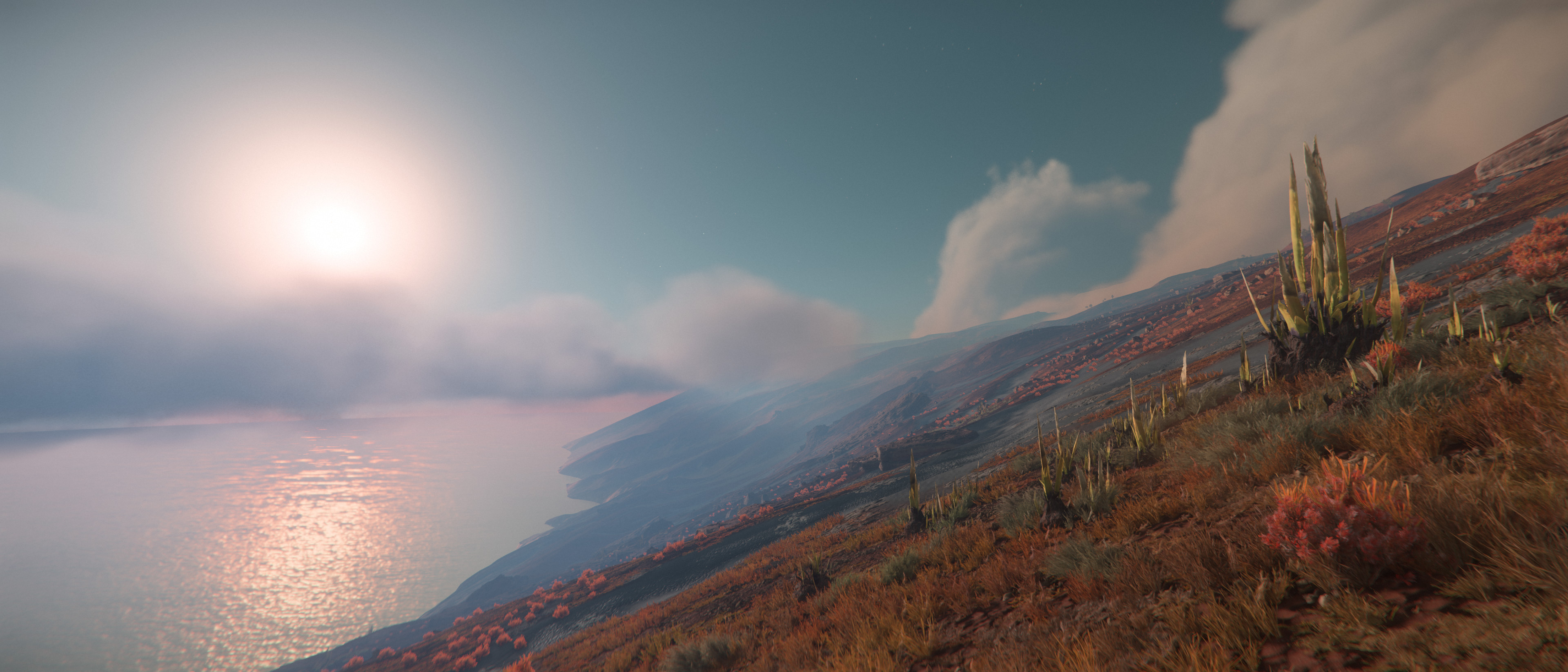
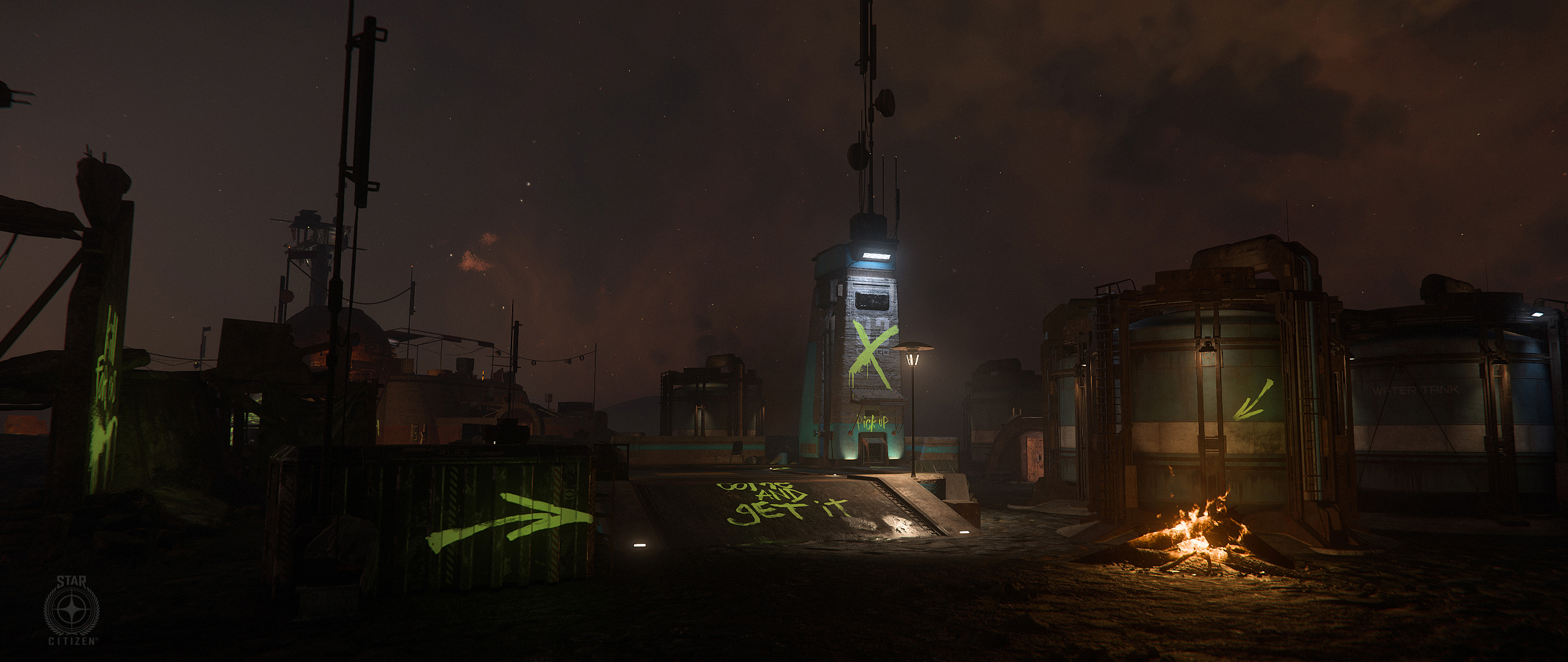
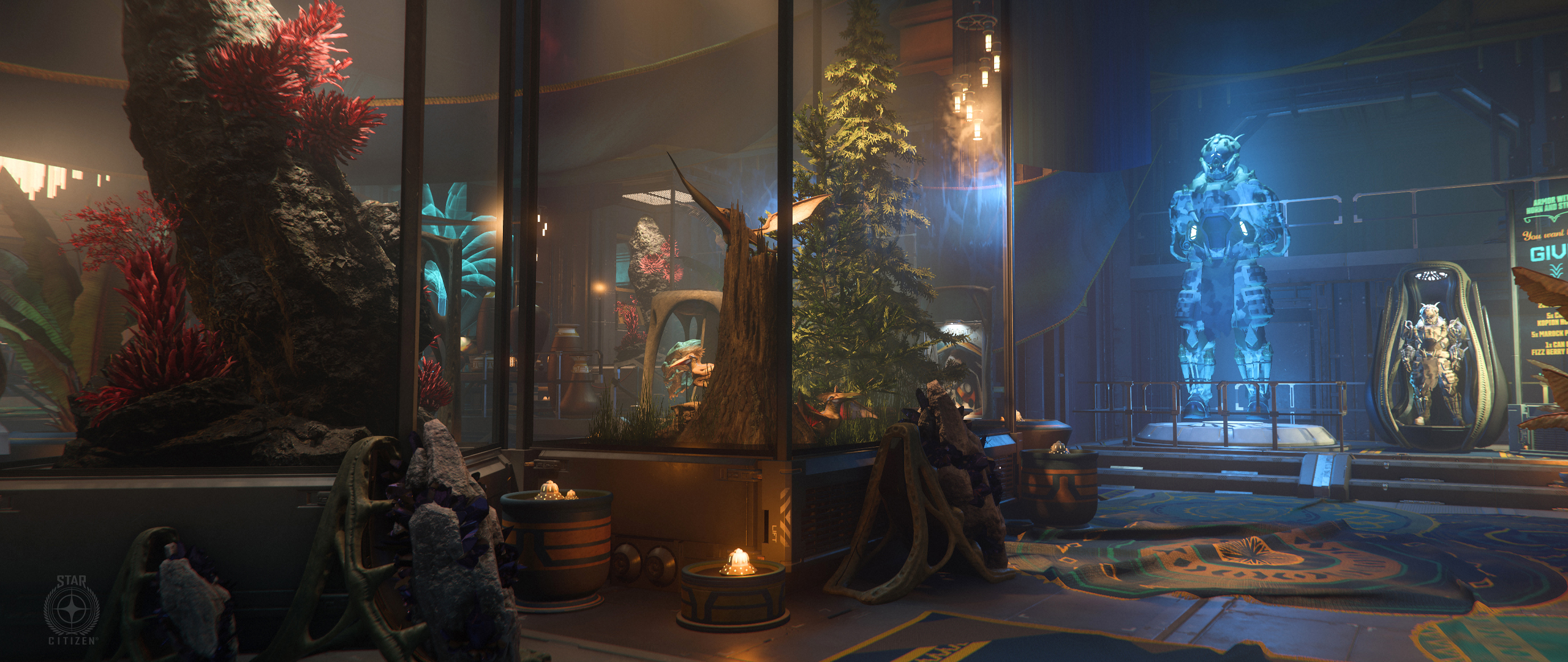
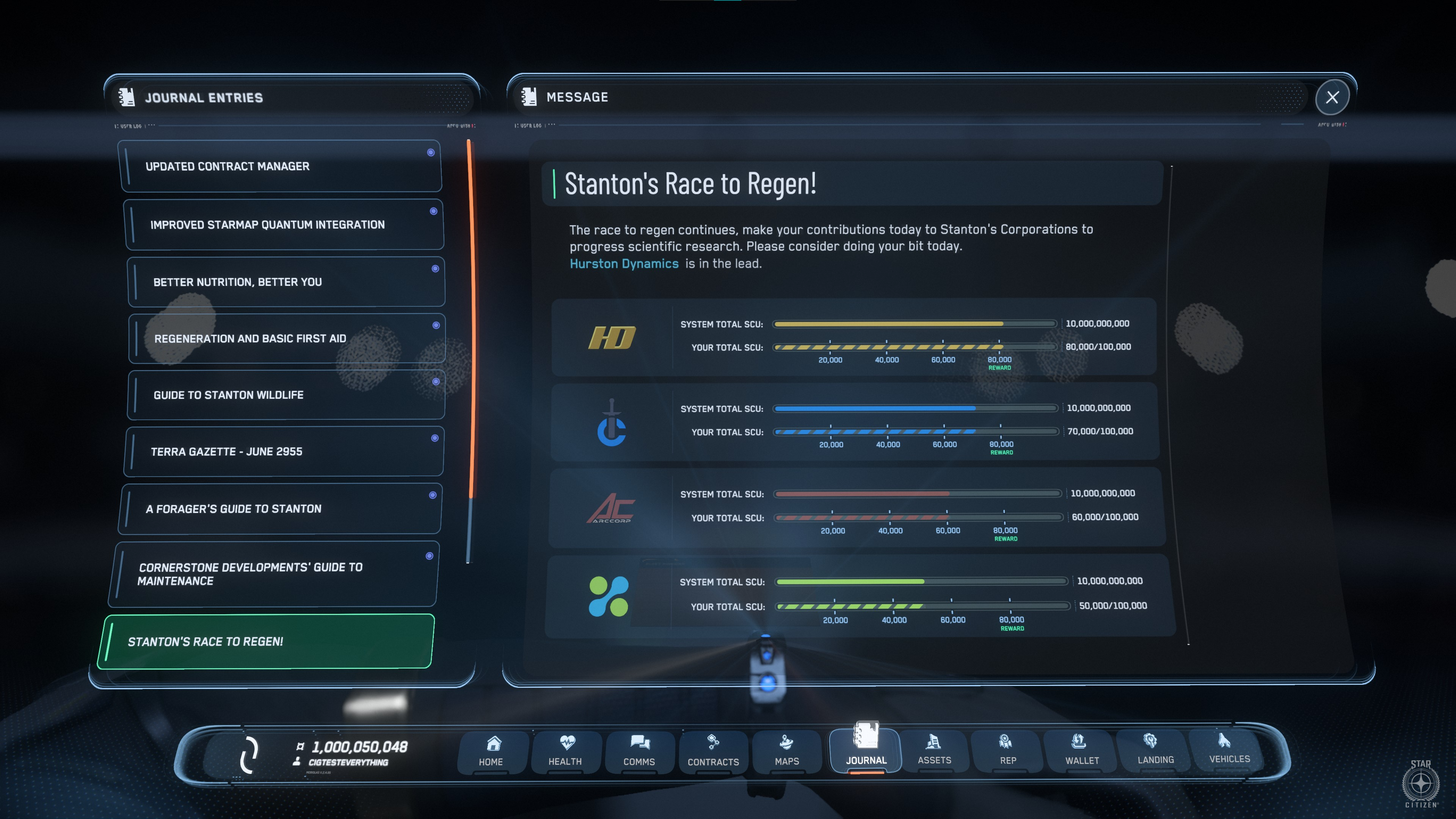
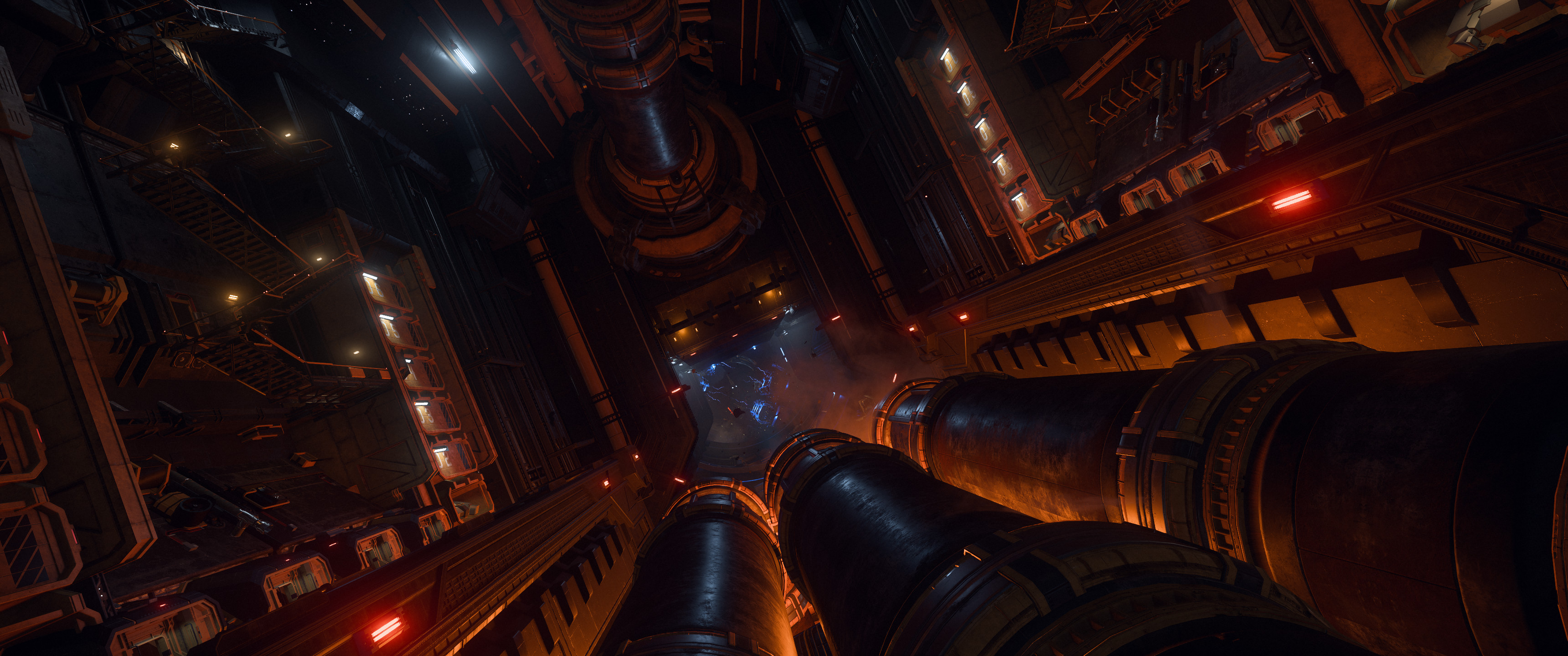
Metadata
- CIG ID
- 14690
- Channel
- Transmission
- Category
- Undefined
- Series
- Monthly Reports
- Comments
- 91
- Published
- 11 years ago (2015-05-02T00:00:00+00:00)