Squadron 42 Monthly Report: July 2019
Transmission Undefined Monthly ReportsContent
This is a cross-post of the report that was recently sent out via the monthly Squadron 42 newsletter. We’re publishing this a second time as a Comm-Link to make it easier for the community to reference back to. Attention Recruits,
What you are about to read is the latest information on the continuing development of Squadron 42 (SCI des: SQ42).
After extensive investigation, we’ve obtained information regarding AI fire discipline, physical combat, asteroid cluster progress, and more.
The information contained in this communication is extremely sensitive and it is of paramount importance that it does not fall into the wrong hands. Purge all records after reading
UEE Naval High Command
AI
July’s roundup starts with AI, who extended the first reactions worked on last month to be triggered by the actions of friendly AI characters. As a reminder, first reactions are part of combat behavior and are triggered by AI characters sensing the presence of an enemy. The first reaction is a precursor to real combat and includes specific animations, communications, and can lead the AI to investigate the source of suspicious noises or events. Progress was made on crucial upcoming features (that will also affect the PU): ‘Fire discipline’ influences the firing behavior of gunners and pilots – the idea being that surrounding events and actions alter the behavior between the extremes of ‘trigger happy’ and ‘parsimonious’. For target selection, the team added two new elements – ‘self-preservation’, which prioritizes attacking the most dangerous enemy combatant, and ‘defend ally’, which monitors friendly ships and AI and attacks players causing the most damage. AI security behavior has also been refined for security and interdiction missions to cover every event that could happen during a mission (of which there are many!).
Animation
Animation spent the month on melee and female-specific motion animations, ‘Spec Ops’ first reactions, and general useable animation. They also continued their ongoing work on story scenes and cinematic moments.
Art (Characters)
July saw great in-engine results on the hair pipeline and further work on tools to control hair grooming. Rigging for important characters was developed, as was texturing for costumes and uniforms. Going forward, the team will continue their texturing pass on heads and other outfits.
Art (Environment)
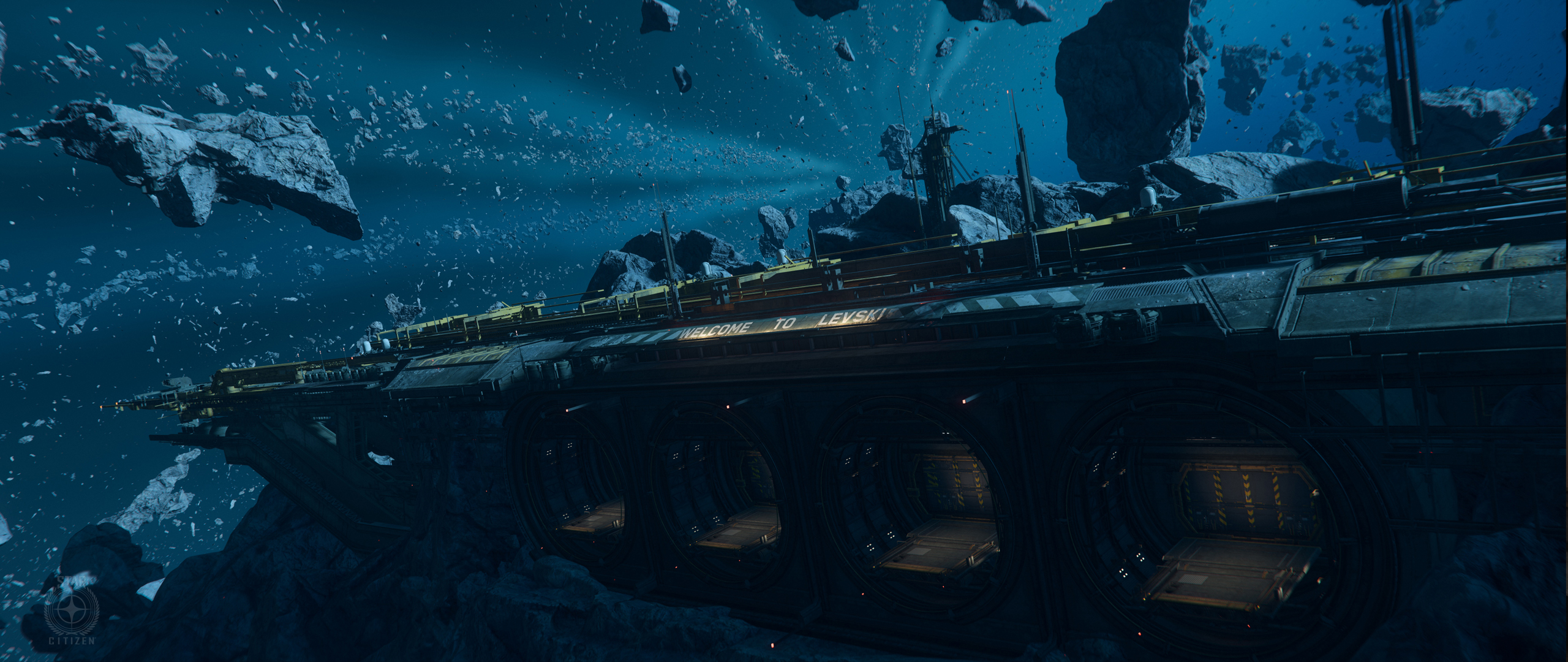
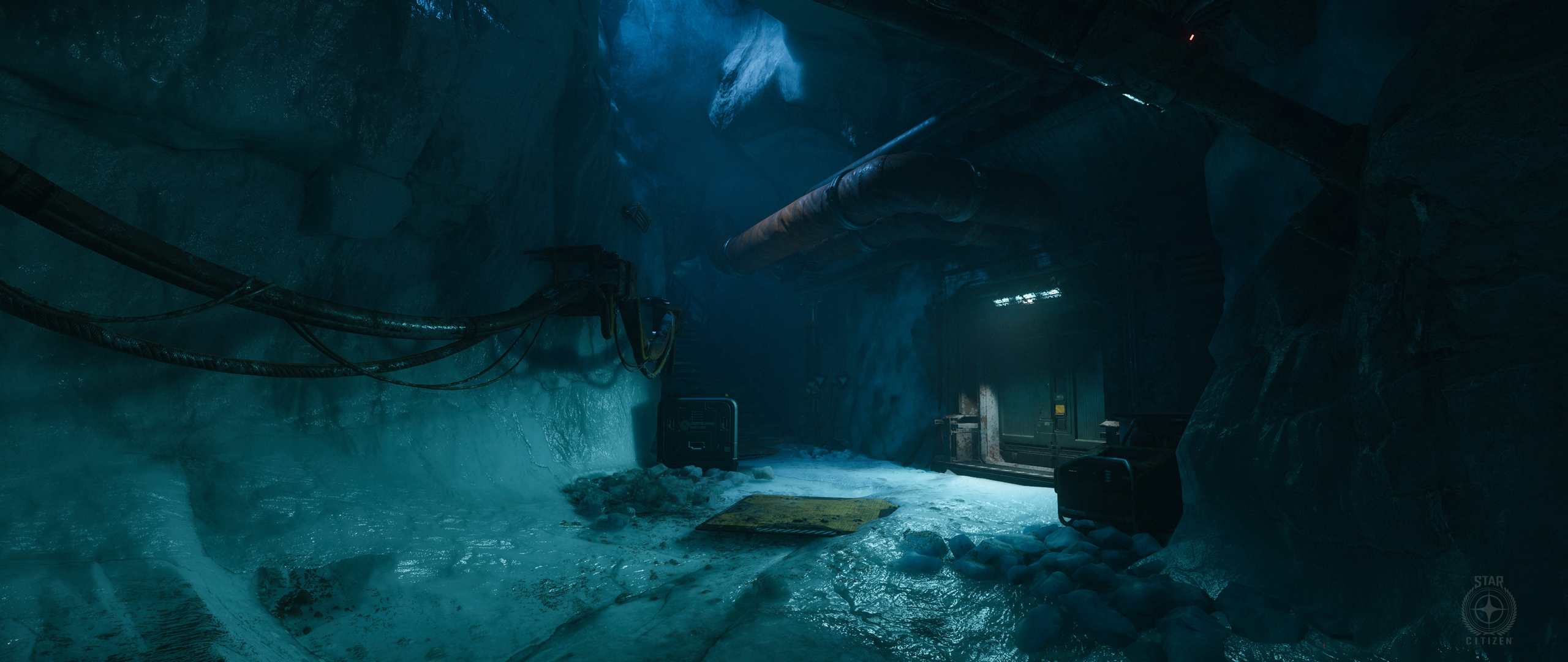
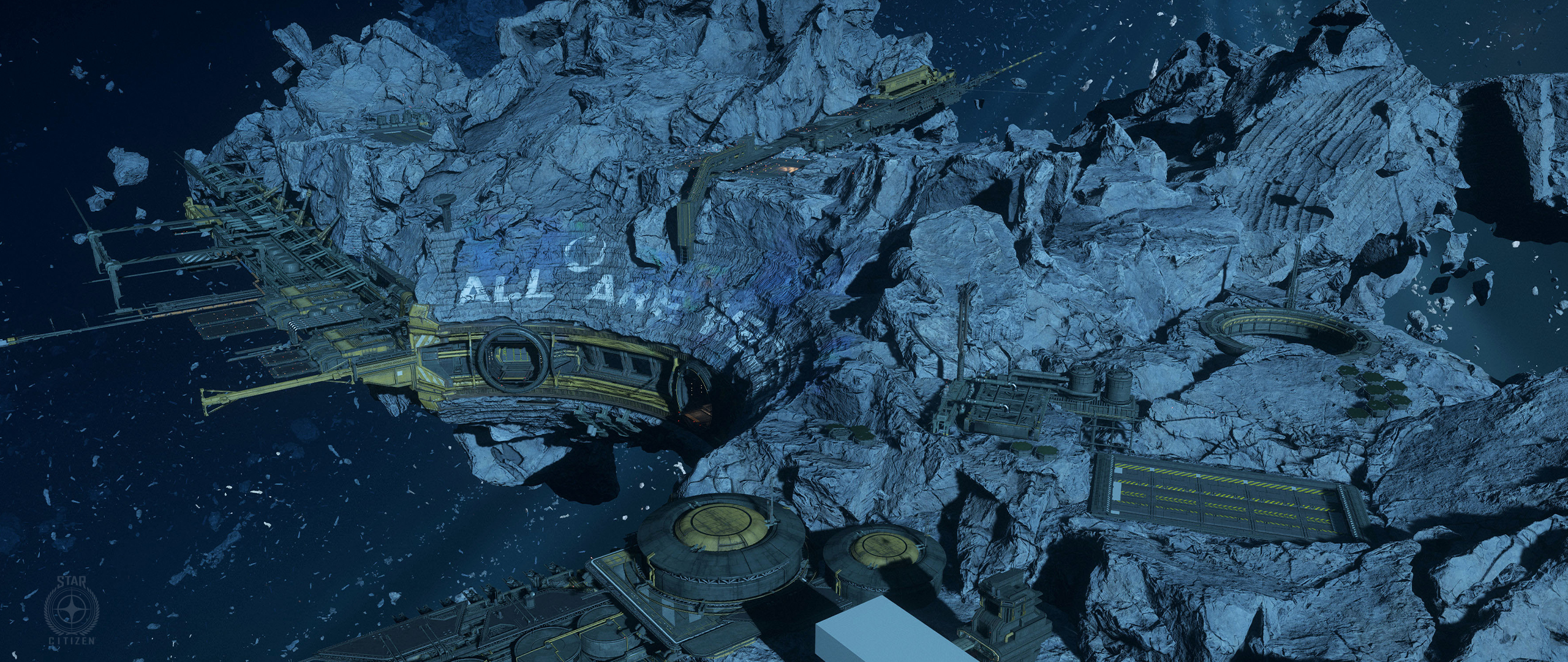
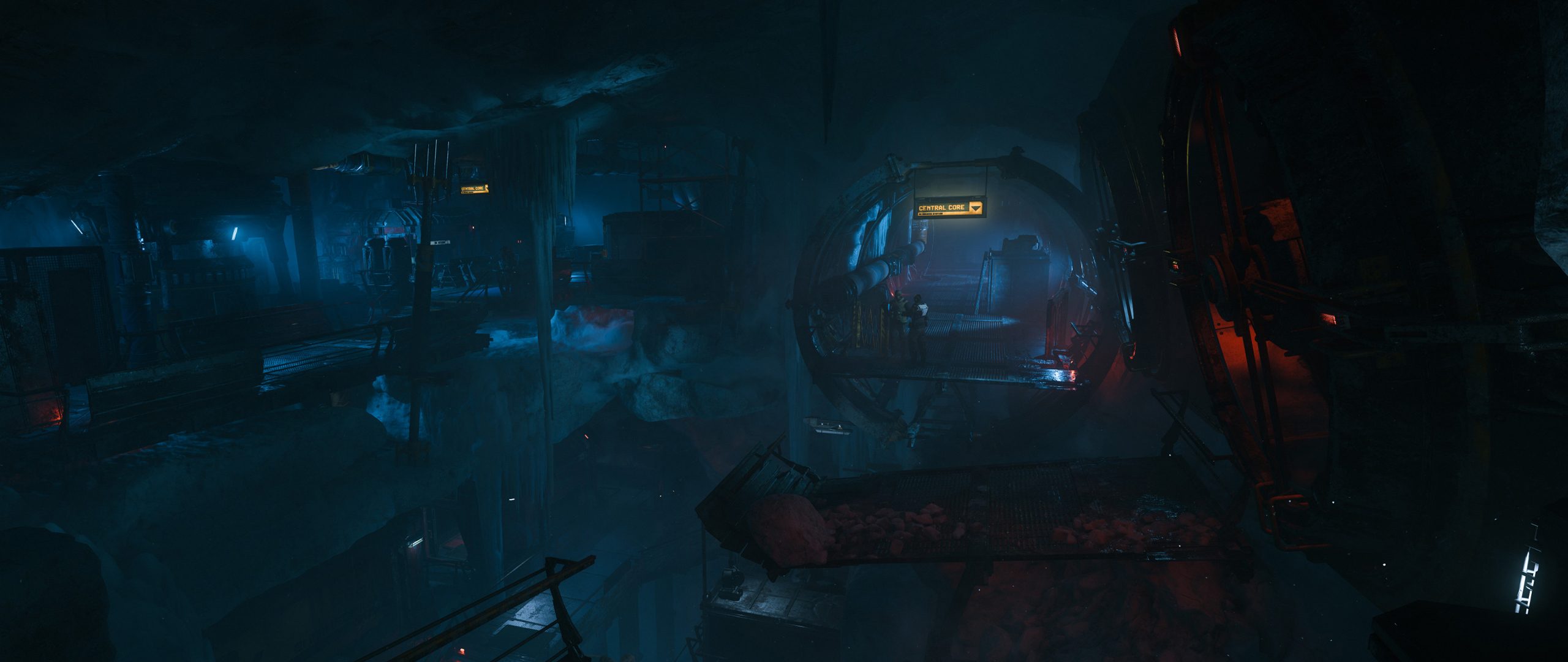
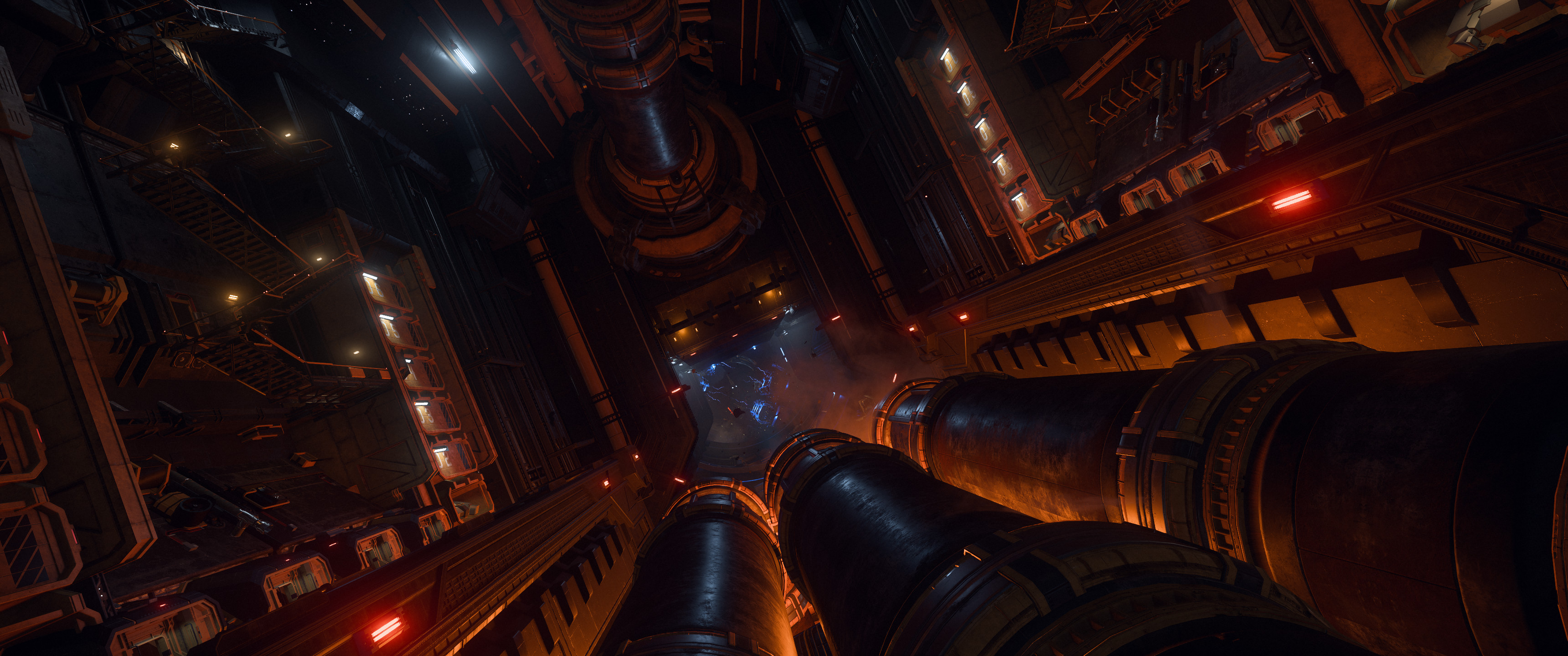
The first of the asteroid sets mentioned in last month’s update was completed and will serve approximately 30% of the game’s needs. Asteroids (and other assets) evolve as the campaign progresses, so the next step is to create the variations. Archon Station’s central hub received significant attention too, including early explorations of lighting and atmosphere. The aim is to have this social space feel as alive as possible and to accurately portray the fact thousands of people live and visit every day.
Development of the comma array exterior is coming to a close, with particular attention being given to how the player freely traverses the area while being “funneled” to locations that show of the scale and grandeur.
Gas cloud work continued too, with Design working out their modular set requirements for the basic traversal areas. On the art front, the team are merging this tech with some of the asteroid belts players come across in the campaign. The reason being that some of them have solar winds and need to have movement, affect ship flight characteristics, and so on.
Finally, some of the team began early work on one of the main planetary locations – a brutalist building with impressive scale.
Audio
Audio worked with SQ42’s creative leadership to develop and refine the audio approach to many of the chapters and gameplay elements. They also supported Narrative and Design by editing, polishing, and implementing all required dialogue assets.
Cinematics
The Cinematics Team’s July focus was mainly on ‘playable’ cinematics, such as conversations, briefings, or walk-and-talk scenes. This is due to new code and tech arriving last month that unblocks the team’s ability to fully implement these types of scenes (mainly the intro and outros). Continuing from last month, the team worked with new code and tools that enable blending in and out of mo-cap from locomotion. They’re already putting it to good use and bringing more scenes to the ‘implementation complete’ stage, which means a scene’s state machine is done, approved, and the animation editing for each fragment reflects that. Even small scenes often require pre-scene idles, intros, dialogue options, waiting idles, resolves, post-scene idles, and more, so reaching ‘implementation complete’ is an important milestone. However, the scene is not fully complete in this state, but is ‘functionally’ finished and can be played through as designed. The next stage is for Level Design to implement the scene into the mission flow and review, feedback, and polish.
Two large changes were also done in-code: the hero cast and ships received ‘Hero Global Unique IDs’, which enables the team to move away from a proxy placeholder entity workflow. They can now also create ‘child object container layers’ in the editor that can easily fly with a ship or zone without having to wait for client mode to verify it works. These changes allow, for example, a fistfight scene play out on top of a Gladius wing while the player is flying the ship. They also received new editor code that brings them closer to a WYSIWYG (what you see is what you get) workflow.
Engineering
July began with work on the inventory system. Alongside the physical inventory (items attached to your suit), players will get a container to stow resources and other smaller items. The animation engineers are also in very early development of the motion matching system, which is a technique that creates much more fluid transitions between animations and will add an extra layer of fidelity to characters. The Actor Feature Team continued iterating on unarmed melee combat, including looking into a heavy attack and creating windows of opportunity for punching, dodging, and blocking. To refine timing, they created a test level where they can have multiplayer melee fights (set in a bar of course).
The Engine Team worked on support for tri-mesh splitting to optimize collisions and intersection tests, continued work on geometry instancing, and optimized the application of networked states as part of the ongoing physics update. They also added raycaster support for collisions on overlapping zones. Recent optimizations to physics include making vehicles ‘go to sleep’ when landed, not updating ship physical entity if parts move slightly, not looping through all rigid entities during the ‘apply state from network’ part of the physics step, and introducing the first step of box pruning.
They also continued removing the global render state along with graphic and fidelity planning and prep and added support for libunwind on Linux for more readable callstacks when DGS crashes. They also continued support for SOCS, with entity stability improvements, remove/respawn single aggregates to memory, and general game code support.
For Rendering, they improved the anti-flicker heuristic for TSAA, which now uses the cumulative moving average for the first four frames to obtain faster convergence after history resets. They researched atmosphere artifacts at the horizon and made several major improvements. Some issues remain and will be fixed by a slightly different approach to atmosphere rendering that will unify the atmosphere, ground fog, and eventually clouds. Part of the research for this new approach involved implementing a ground truth solution for atmosphere light ‘in-scattering’ (single-scatter precise + multi-scatter approximation). For the procedural planet tool, they implemented a layout generation recorder for the designers that allows the visualization of collision issues in the layout of space stations and other locations.
Gameplay Story
The Gameplay Story Team got started on a large number of new scenes prioritized for the 3rd quarter of the year. Kick-offs, planning, and early animation work is currently on-going for many of these new scenes. They also continued to improve the setup for many existing scenes from chapter four with the Design Team to deliver additional idles and animations as required. The team are currently working through all quarter three scenes, checking that the track views are up to date, and creating idles that they anticipate will be required.
Graphics
Following last month’s summit on the new renderer design, the Graphics Team started drilling into the finer details of the design and created example code to help nail down the API. Once complete, the graphics programmers will start converting the rendering code, with the eventual goal of a vastly reduced CPU cost. This will also eventually pave the way for modern graphics APIs. Alongside this, the final gas cloud work continued, which mainly consists of implementing a faster GPU sun-shadow calculation and integrating it into the rest of the renderer.
Level Design
The Social Team continued with the implementation of narrative scenes, crew behaviors, and some of the persistent entities such as the weapons vendor, firing range, and air traffic controller. Level Design are still polishing the chapters that include traversal and exploration along with focusing on the combat experience. The Spaceflight Team are currently developing combat spaces with Art and the points of interest where quantum travel will be seen, with focus soon shifting from level layout to the player cockpit experience as more AI behaviors make it into the game.
Narrative
In addition to working with Production to plan out the team’s goals for the new quarter, Narrative continued generating content for the text needs of various missions, including first passes on mission objective markers. They also submitted the first pass of a new mission summary system (formatted as an after-action report) to help figure out what kind of stats and metrics the missions will keep track of. This will also factor in the reputation system, as these factors will help establish a player’s performance during the game. Finally, the team continued to review levels with Design to provide feedback about the narrative experience.
QA
Usables used primarily by Social AI (particularly for civilian setups) went through a rework and were tested by the embedded AI feature tester. This involved going into test levels and making sure the AI could navigate to the usables and use them according to their respective functionalities. They’re also anticipating that testing will be required for the new ship AI formations feature. This system is already being used to a degree in the PU, but will need further functionality and destructive testing for SQ42.
Tech Animation
Tech Animation saw several new additions to their pipeline that, in the long run, will make for improved character deformation. Planning was done for the quarter ahead and beyond to ensure they have an idea what requests will be coming in from dependent teams. Alongside preparation and planning, head rigging was further developed, new tools were delivered to make internal processes easier, and comm calls were improved. The team in Germany also supported Cinematics with bug fixes and provided several loadouts and prop rigs to help them finalize animations.
UI
The UI Team began concepting the UI for the ‘datapads’ various characters carry. They also finished the logos for the main UEE squadrons seen on military ships and uniforms.
VFX
VFX continued to work closely with the Art and Design teams on key locations, polished a large ship interior, and added effects to asteroids of varying scales. The VFX Tech Art Team (again with Art and Design) continued work on the gas cloud tools needed for The Coil. There are still a few minor issues being addressed, though everything is working in-engine as intended.
WE’LL SEE YOU NEXT MONTH…
Dies ist ein Querverweis auf den Bericht, der kürzlich über den monatlichen Squadron 42 Newsletter verschickt wurde. Wir veröffentlichen dies ein zweites Mal als Comm-Link, um es der Community zu erleichtern, auf die man zurückgreifen kann.
Achtung Rekruten,
Was Sie hier lesen werden, sind die neuesten Informationen über die Weiterentwicklung der Squadron 42 (SCI des: SQ42).
Nach eingehender Untersuchung haben wir Informationen über KI-Feuerdisziplin, physische Bekämpfung, Fortschritt der Asteroiden-Cluster und mehr erhalten.
Die in dieser Mitteilung enthaltenen Informationen sind äußerst sensibel, und es ist von größter Bedeutung, dass sie nicht in die falschen Hände geraten. Alle Datensätze nach dem Lesen löschen
UEE Naval Oberkommando
KI
Die Razzia im Juli beginnt mit der KI, die die ersten Reaktionen, an denen im vergangenen Monat gearbeitet wurde, erweitert hat, um sie durch die Aktionen von freundlichen KI-Charakteren auszulösen. Zur Erinnerung: Erste Reaktionen sind Teil des Kampfverhaltens und werden ausgelöst, wenn KI-Charaktere die Anwesenheit eines Feindes erkennen. Die erste Reaktion ist ein Vorläufer des realen Kampfes und beinhaltet spezifische Animationen, Kommunikation und kann die KI veranlassen, die Quelle verdächtiger Geräusche oder Ereignisse zu untersuchen. Es wurden Fortschritte bei wichtigen bevorstehenden Features erzielt (die auch die PU betreffen werden): "Feuerdisziplin" beeinflusst das Schussverhalten von Schützen und Piloten - mit der Idee, dass umliegende Ereignisse und Aktionen das Verhalten zwischen den Extremen von "trigger happy" und "sparsam" verändern. Für die Zielauswahl hat das Team zwei neue Elemente hinzugefügt - "Selbsterhaltung", die den Angriff auf den gefährlichsten gegnerischen Kämpfer priorisiert, und "Verbündeten verteidigen", der befreundete Schiffe und KI überwacht und Spieler angreift, die den größten Schaden verursachen. Das KI-Sicherheitsverhalten wurde auch für Sicherheits- und Verbotsmissionen weiterentwickelt, um jedes Ereignis abzudecken, das während einer Mission passieren könnte (von denen es viele gibt!).
Animation
Animation verbrachte den Monat mit Nahkampf- und frauenspezifischen Bewegungsanimationen, ersten Reaktionen von'Spec Ops' und allgemein verwendbaren Animationen. Sie setzten auch ihre kontinuierliche Arbeit an Geschichten und filmischen Momenten fort.
Kunst (Charaktere)
Im Juli gab es großartige Ergebnisse an der Haarpipeline und weitere Arbeiten an Werkzeugen zur Kontrolle der Haarpflege. Rigging für wichtige Charaktere wurde entwickelt, ebenso wie Texturierung für Kostüme und Uniformen. In Zukunft wird das Team seinen Texturierungspass auf Köpfen und anderen Outfits fortsetzen.
Kunst (Umwelt)
Das erste der im letzten Monat erwähnten Asteroiden-Sets wurde fertiggestellt und wird etwa 30% des Spielbedarfs decken. Asteroiden (und andere Vermögenswerte) entwickeln sich im Laufe der Kampagne, so dass der nächste Schritt darin besteht, die Varianten zu erstellen. Auch der zentrale Knotenpunkt der Archon Station erfuhr große Aufmerksamkeit, einschließlich früher Erkundungen von Licht und Atmosphäre. Ziel ist es, diesen sozialen Raum so lebendig wie möglich zu gestalten und die Tatsache, dass täglich Tausende von Menschen leben und besuchen, genau darzustellen.
Die Entwicklung der Komma-Array-Außenseite neigt sich dem Ende zu, wobei besonderes Augenmerk darauf gelegt wird, wie der Spieler das Gebiet frei durchquert und gleichzeitig an Orten, die die Größe und Größe zeigen, "kunnelig" wird.
Die Arbeiten an der Gaswolke wurden ebenfalls fortgesetzt, wobei Design ihre modularen Anforderungen an die grundlegenden Traversenbereiche ausarbeitete. Auf der Kunstseite verschmilzt das Team diese Technologie mit einigen der Asteroidengürtel, auf die Spieler in der Kampagne stoßen. Der Grund dafür ist, dass einige von ihnen Sonnenwinde haben und Bewegung benötigen, die Flugeigenschaften des Schiffes beeinflussen und so weiter.
Schließlich begannen einige Mitglieder des Teams mit der frühen Arbeit an einem der wichtigsten Planetenstandorte - einem brutalistischen Gebäude mit beeindruckendem Ausmaß.
Audio
Audio arbeitete mit der kreativen Leitung von SQ42 zusammen, um den Audioansatz für viele der Kapitel und Gameplay-Elemente zu entwickeln und zu verfeinern. Sie unterstützten auch Erzählung und Design, indem sie alle erforderlichen Dialogwerkzeuge bearbeiteten, polierten und implementierten.
Kinematiken
Der Fokus des Cinematics-Teams lag im Juli vor allem auf "spielbaren" Kinofilmen wie Gesprächen, Briefings oder Walk-And-Talk-Szenen. Dies ist auf den neuen Code und die neue Technologie zurückzuführen, die letzten Monat eingetroffen sind und die die Fähigkeit des Teams, diese Art von Szenen (hauptsächlich das Intro und die Outros) vollständig umzusetzen, freisetzen. In Fortführung des letzten Monats arbeitete das Team mit neuem Code und Tools, die es ermöglichen, sich in und aus der Mo-Cap von der Fortbewegung herauszuarbeiten. Sie setzen es bereits sinnvoll ein und bringen mehr Szenen in die Phase "Implementierung abgeschlossen", was bedeutet, dass die Zustandsmaschine einer Szene fertig ist, genehmigt wird, und die Animationsbearbeitung für jedes Fragment spiegelt dies wider. Selbst kleine Szenen erfordern oft vor der Szene liegende Idle, Intros, Dialogoptionen, wartende Idle, Resolutionen, Post-Szene Idle und mehr, so dass das Erreichen von "Implementation Complete" ein wichtiger Meilenstein ist. Die Szene ist in diesem Zustand jedoch nicht vollständig abgeschlossen, sondern "funktional" beendet und kann wie geplant durchgespielt werden. Der nächste Schritt ist, dass Level Design die Szene in den Missionsablauf integriert und überprüft, rückmeldet und poliert.
Zwei große Änderungen wurden auch im Code vorgenommen: Die Heldenbesetzung und die Schiffe erhielten "Hero Global Unique IDs", die es dem Team ermöglichen, sich von einem Workflow mit Proxy-Platzhalter-Entitäten zu lösen. Sie können nun auch "untergeordnete Objekt-Containerschichten" im Editor erstellen, die problemlos mit einem Schiff oder einer Zone fliegen können, ohne auf den Client-Modus warten zu müssen, um zu überprüfen, ob es funktioniert. Diese Änderungen ermöglichen es beispielsweise, dass eine Faustkampfszene auf einem Gladius-Flügel spielt, während der Spieler das Schiff fliegt. Sie erhielten auch einen neuen Editorcode, der sie näher an einen WYSIWYG-Workflow (What you see is what you get) heranführt.
Ingenieurwesen
Der Juli begann mit der Arbeit am Inventarsystem. Neben dem physischen Inventar (Gegenstände, die an deinem Anzug befestigt sind) erhalten die Spieler einen Container, in dem sie Ressourcen und andere kleinere Gegenstände verstauen können. Die Animationsingenieure befinden sich auch in einer sehr frühen Entwicklungsphase des Motion-Matching-Systems, das eine Technik ist, die viel fließendere Übergänge zwischen den Animationen erzeugt und den Charakteren eine zusätzliche Ebene der Treue verleiht. Das Actor Feature Team fuhr fort, im unbewaffneten Nahkampf zu wiederholen, einschließlich eines schweren Angriffs und der Schaffung von Gelegenheiten zum Schlagen, Ausweichen und Blockieren. Um das Timing zu verbessern, haben sie ein Testlevel erstellt, auf dem sie Nahkampfkämpfe im Mehrspieler-Modus durchführen können (natürlich in einer Bar).
Das Motorenteam arbeitete an der Unterstützung des Tri-Mesh-Splittings zur Optimierung von Kollisionen und Schnitttests, setzte die Arbeit an der Geometrieinstanzierung fort und optimierte die Anwendung von vernetzten Zuständen im Rahmen des laufenden Physik-Updates. Sie haben auch die Raycaster-Unterstützung für Kollisionen an überlappenden Zonen hinzugefügt. Zu den jüngsten Optimierungen in der Physik gehören das Einschlafen von Fahrzeugen nach der Landung, das Aktualisieren der physikalischen Einheit des Schiffes, wenn sich die Teile leicht bewegen, das Durchlaufen aller starren Einheiten während des Teils des Physik-Schritts "Zustand aus dem Netzwerk anwenden" und das Einleiten des ersten Schrittes des Boxenausschnitts.
Sie haben auch weiterhin den globalen Renderstatus sowie die Grafik- und Treueplanung und -vorbereitung entfernt und die Unterstützung für libunwind auf Linux für besser lesbare Callstacks nach DGS-Abstürzen hinzugefügt. Sie unterstützten auch weiterhin SOCS, mit Verbesserungen der Entity-Stabilität, dem Entfernen/Wiederherstellen einzelner Aggregate im Speicher und der allgemeinen Unterstützung von Spielcode.
Für das Rendering verbesserten sie die Anti-Flicker-Heuristik für TSAA, die nun den kumulativen gleitenden Durchschnitt für die ersten vier Bilder verwendet, um eine schnellere Konvergenz nach dem Zurücksetzen der Historie zu erreichen. Sie untersuchten Atmosphärenartefakte am Horizont und nahmen einige wichtige Verbesserungen vor. Einige Probleme bleiben bestehen und werden durch einen etwas anderen Ansatz bei der Darstellung der Atmosphäre behoben, der die Atmosphäre, den Bodennebel und schließlich die Wolken vereint. Ein Teil der Forschung für diesen neuen Ansatz bestand darin, eine Lösung für die Bodenwahrheit für die "In-Streuung" von Atmosphärenlicht zu implementieren (Einzelstreuung präzise + Mehrfachstreuung). Für das prozedurale Planetenwerkzeug implementierten sie einen Layoutgenerierungsrekorder für die Designer, der die Visualisierung von Kollisionsproblemen im Layout von Raumstationen und anderen Standorten ermöglicht.
Gameplay-Geschichte
Das Gameplay Story Team hat mit einer Vielzahl neuer Szenen begonnen, die für das dritte Quartal des Jahres priorisiert wurden. Für viele dieser neuen Szenen laufen derzeit Kick-offs, Planungen und frühe Animationsarbeiten. Sie verbesserten auch weiterhin das Setup für viele bestehende Szenen aus Kapitel vier mit dem Designteam, um bei Bedarf zusätzliche Idle und Animationen zu liefern. Das Team arbeitet derzeit alle Szenen des dritten Quartals durch, überprüft, ob die Track-Ansichten auf dem neuesten Stand sind und schafft Leerlauf, von dem sie erwarten, dass er benötigt wird.
Grafiken
Nach dem Gipfel über das neue Renderer-Design im vergangenen Monat begann das Grafik-Team, in die feineren Details des Designs zu bohren und erstellte Beispielcode, um die API zu verbessern. Nach Abschluss der Arbeiten werden die Grafikprogrammierer mit der Konvertierung des Rendering-Codes beginnen, mit dem Ziel, die CPU-Kosten erheblich zu senken. Dies wird auch den Weg für moderne Grafik-APIs ebnen. Daneben wurden die abschließenden Gaswolkenarbeiten fortgesetzt, die hauptsächlich darin bestehen, eine schnellere GPU-Sonnenschattenberechnung zu implementieren und in den Rest des Renderers zu integrieren.
Leveldesign
Das Social Team setzte die Implementierung von narrativen Szenen, Crewverhalten und einigen der hartnäckigen Einheiten wie Waffenhändler, Schießstand und Fluglotse fort. Das Leveldesign poliert noch immer die Kapitel, die Traversen und Erkundungen beinhalten, sowie die Konzentration auf die Kampferfahrung. Das Raumflugteam entwickelt derzeit Kampfräume mit Kunst und den Points of Interest, an denen Quantenreisen zu sehen sein werden, wobei sich der Fokus bald vom Level-Layout auf das Spieler-Cockpit-Erlebnis verlagert, da mehr KI-Verhalten es ins Spiel schafft.
Narrativ
Neben der Zusammenarbeit mit der Produktion, um die Ziele des Teams für das neue Quartal zu planen, generierte Narrative weiterhin Inhalte für den Textbedarf verschiedener Missionen, einschließlich der ersten Weitergabe von Missionszielmarkern. Sie reichten auch den ersten Durchlauf eines neuen Mission Summary Systems (formatiert als After-Action-Report) ein, um herauszufinden, welche Art von Statistiken und Metriken die Missionen verfolgen werden. Dies wird auch im Reputationssystem berücksichtigt, da diese Faktoren dazu beitragen, die Leistung eines Spielers während des Spiels zu ermitteln. Schließlich setzte das Team die Überprüfung der Ebenen mit Design fort, um Feedback über die erzählerische Erfahrung zu geben.
QA
Usables, die hauptsächlich von der Social AI (insbesondere für zivile Einrichtungen) verwendet werden, wurden überarbeitet und vom Embedded AI Feature Tester getestet. Dazu gehörte es, in die Testebenen zu gehen und sicherzustellen, dass die KI zu den Usables navigieren und diese entsprechend ihrer jeweiligen Funktionalität nutzen konnte. Sie gehen auch davon aus, dass Tests für das neue Feature der SchiffskI-Formationen erforderlich sein werden. Dieses System wird bereits in gewissem Maße in der PU eingesetzt, benötigt aber weitere Funktionalität und zerstörerische Prüfungen für SQ42.
Technische Animation
Tech Animation hat mehrere Neuzugänge in seiner Pipeline gesehen, die langfristig zu einer verbesserten Charakterverformung führen werden. Die Planung erfolgte für das kommende Quartal und darüber hinaus, um sicherzustellen, dass sie eine Vorstellung davon haben, welche Anfragen von abhängigen Teams eingehen werden. Neben der Vorbereitung und Planung wurde das Headrigging weiterentwickelt, neue Tools zur Vereinfachung der internen Prozesse geliefert und die Kommunikation verbessert. Das Team in Deutschland unterstützte Cinematics auch bei der Fehlerbehebung und stellte mehrere Loadouts und Requisitenrigs zur Verfügung, um ihnen bei der Fertigstellung von Animationen zu helfen.
UI
Das UI-Team begann mit der Konzeption der Benutzeroberfläche für die'Datenpakete', die verschiedene Zeichen tragen. Sie fertigten auch die Logos für die wichtigsten UEE-Geschwader, die auf Militärschiffen und Uniformen zu sehen waren.
VFX
VFX arbeitete weiterhin eng mit den Kunst- und Designteams an wichtigen Orten zusammen, polierte ein großes Schiffsinneres und fügte Asteroiden unterschiedlicher Größe zusätzliche Effekte hinzu. Das VFX Tech Art Team (wiederum mit Art and Design) arbeitete weiter an den Gas Cloud Tools, die für The Coil benötigt werden. Es werden noch einige kleinere Probleme angesprochen, obwohl alles im Motor wie vorgesehen funktioniert.
WIR SEHEN UNS NÄCHSTEN MONAT.....
This is a cross-post of the report that was recently sent out via the monthly Squadron 42 newsletter. We’re publishing this a second time as a Comm-Link to make it easier for the community to reference back to. Attention Recruits,
What you are about to read is the latest information on the continuing development of Squadron 42 (SCI des: SQ42).
After extensive investigation, we’ve obtained information regarding AI fire discipline, physical combat, asteroid cluster progress, and more.
The information contained in this communication is extremely sensitive and it is of paramount importance that it does not fall into the wrong hands. Purge all records after reading
UEE Naval High Command
AI
July’s roundup starts with AI, who extended the first reactions worked on last month to be triggered by the actions of friendly AI characters. As a reminder, first reactions are part of combat behavior and are triggered by AI characters sensing the presence of an enemy. The first reaction is a precursor to real combat and includes specific animations, communications, and can lead the AI to investigate the source of suspicious noises or events. Progress was made on crucial upcoming features (that will also affect the PU): ‘Fire discipline’ influences the firing behavior of gunners and pilots – the idea being that surrounding events and actions alter the behavior between the extremes of ‘trigger happy’ and ‘parsimonious’. For target selection, the team added two new elements – ‘self-preservation’, which prioritizes attacking the most dangerous enemy combatant, and ‘defend ally’, which monitors friendly ships and AI and attacks players causing the most damage. AI security behavior has also been refined for security and interdiction missions to cover every event that could happen during a mission (of which there are many!).
Animation
Animation spent the month on melee and female-specific motion animations, ‘Spec Ops’ first reactions, and general useable animation. They also continued their ongoing work on story scenes and cinematic moments.
Art (Characters)
July saw great in-engine results on the hair pipeline and further work on tools to control hair grooming. Rigging for important characters was developed, as was texturing for costumes and uniforms. Going forward, the team will continue their texturing pass on heads and other outfits.
Art (Environment)
The first of the asteroid sets mentioned in last month’s update was completed and will serve approximately 30% of the game’s needs. Asteroids (and other assets) evolve as the campaign progresses, so the next step is to create the variations. Archon Station’s central hub received significant attention too, including early explorations of lighting and atmosphere. The aim is to have this social space feel as alive as possible and to accurately portray the fact thousands of people live and visit every day.
Development of the comma array exterior is coming to a close, with particular attention being given to how the player freely traverses the area while being “funneled” to locations that show of the scale and grandeur.
Gas cloud work continued too, with Design working out their modular set requirements for the basic traversal areas. On the art front, the team are merging this tech with some of the asteroid belts players come across in the campaign. The reason being that some of them have solar winds and need to have movement, affect ship flight characteristics, and so on.
Finally, some of the team began early work on one of the main planetary locations – a brutalist building with impressive scale.
Audio
Audio worked with SQ42’s creative leadership to develop and refine the audio approach to many of the chapters and gameplay elements. They also supported Narrative and Design by editing, polishing, and implementing all required dialogue assets.
Cinematics
The Cinematics Team’s July focus was mainly on ‘playable’ cinematics, such as conversations, briefings, or walk-and-talk scenes. This is due to new code and tech arriving last month that unblocks the team’s ability to fully implement these types of scenes (mainly the intro and outros). Continuing from last month, the team worked with new code and tools that enable blending in and out of mo-cap from locomotion. They’re already putting it to good use and bringing more scenes to the ‘implementation complete’ stage, which means a scene’s state machine is done, approved, and the animation editing for each fragment reflects that. Even small scenes often require pre-scene idles, intros, dialogue options, waiting idles, resolves, post-scene idles, and more, so reaching ‘implementation complete’ is an important milestone. However, the scene is not fully complete in this state, but is ‘functionally’ finished and can be played through as designed. The next stage is for Level Design to implement the scene into the mission flow and review, feedback, and polish.
Two large changes were also done in-code: the hero cast and ships received ‘Hero Global Unique IDs’, which enables the team to move away from a proxy placeholder entity workflow. They can now also create ‘child object container layers’ in the editor that can easily fly with a ship or zone without having to wait for client mode to verify it works. These changes allow, for example, a fistfight scene play out on top of a Gladius wing while the player is flying the ship. They also received new editor code that brings them closer to a WYSIWYG (what you see is what you get) workflow.
Engineering
July began with work on the inventory system. Alongside the physical inventory (items attached to your suit), players will get a container to stow resources and other smaller items. The animation engineers are also in very early development of the motion matching system, which is a technique that creates much more fluid transitions between animations and will add an extra layer of fidelity to characters. The Actor Feature Team continued iterating on unarmed melee combat, including looking into a heavy attack and creating windows of opportunity for punching, dodging, and blocking. To refine timing, they created a test level where they can have multiplayer melee fights (set in a bar of course).
The Engine Team worked on support for tri-mesh splitting to optimize collisions and intersection tests, continued work on geometry instancing, and optimized the application of networked states as part of the ongoing physics update. They also added raycaster support for collisions on overlapping zones. Recent optimizations to physics include making vehicles ‘go to sleep’ when landed, not updating ship physical entity if parts move slightly, not looping through all rigid entities during the ‘apply state from network’ part of the physics step, and introducing the first step of box pruning.
They also continued removing the global render state along with graphic and fidelity planning and prep and added support for libunwind on Linux for more readable callstacks when DGS crashes. They also continued support for SOCS, with entity stability improvements, remove/respawn single aggregates to memory, and general game code support.
For Rendering, they improved the anti-flicker heuristic for TSAA, which now uses the cumulative moving average for the first four frames to obtain faster convergence after history resets. They researched atmosphere artifacts at the horizon and made several major improvements. Some issues remain and will be fixed by a slightly different approach to atmosphere rendering that will unify the atmosphere, ground fog, and eventually clouds. Part of the research for this new approach involved implementing a ground truth solution for atmosphere light ‘in-scattering’ (single-scatter precise + multi-scatter approximation). For the procedural planet tool, they implemented a layout generation recorder for the designers that allows the visualization of collision issues in the layout of space stations and other locations.
Gameplay Story
The Gameplay Story Team got started on a large number of new scenes prioritized for the 3rd quarter of the year. Kick-offs, planning, and early animation work is currently on-going for many of these new scenes. They also continued to improve the setup for many existing scenes from chapter four with the Design Team to deliver additional idles and animations as required. The team are currently working through all quarter three scenes, checking that the track views are up to date, and creating idles that they anticipate will be required.
Graphics
Following last month’s summit on the new renderer design, the Graphics Team started drilling into the finer details of the design and created example code to help nail down the API. Once complete, the graphics programmers will start converting the rendering code, with the eventual goal of a vastly reduced CPU cost. This will also eventually pave the way for modern graphics APIs. Alongside this, the final gas cloud work continued, which mainly consists of implementing a faster GPU sun-shadow calculation and integrating it into the rest of the renderer.
Level Design
The Social Team continued with the implementation of narrative scenes, crew behaviors, and some of the persistent entities such as the weapons vendor, firing range, and air traffic controller. Level Design are still polishing the chapters that include traversal and exploration along with focusing on the combat experience. The Spaceflight Team are currently developing combat spaces with Art and the points of interest where quantum travel will be seen, with focus soon shifting from level layout to the player cockpit experience as more AI behaviors make it into the game.
Narrative
In addition to working with Production to plan out the team’s goals for the new quarter, Narrative continued generating content for the text needs of various missions, including first passes on mission objective markers. They also submitted the first pass of a new mission summary system (formatted as an after-action report) to help figure out what kind of stats and metrics the missions will keep track of. This will also factor in the reputation system, as these factors will help establish a player’s performance during the game. Finally, the team continued to review levels with Design to provide feedback about the narrative experience.
QA
Usables used primarily by Social AI (particularly for civilian setups) went through a rework and were tested by the embedded AI feature tester. This involved going into test levels and making sure the AI could navigate to the usables and use them according to their respective functionalities. They’re also anticipating that testing will be required for the new ship AI formations feature. This system is already being used to a degree in the PU, but will need further functionality and destructive testing for SQ42.
Tech Animation
Tech Animation saw several new additions to their pipeline that, in the long run, will make for improved character deformation. Planning was done for the quarter ahead and beyond to ensure they have an idea what requests will be coming in from dependent teams. Alongside preparation and planning, head rigging was further developed, new tools were delivered to make internal processes easier, and comm calls were improved. The team in Germany also supported Cinematics with bug fixes and provided several loadouts and prop rigs to help them finalize animations.
UI
The UI Team began concepting the UI for the ‘datapads’ various characters carry. They also finished the logos for the main UEE squadrons seen on military ships and uniforms.
VFX
VFX continued to work closely with the Art and Design teams on key locations, polished a large ship interior, and added effects to asteroids of varying scales. The VFX Tech Art Team (again with Art and Design) continued work on the gas cloud tools needed for The Coil. There are still a few minor issues being addressed, though everything is working in-engine as intended.
WE’LL SEE YOU NEXT MONTH…
This is a cross-post of the report that was recently sent out via the monthly Squadron 42 newsletter. We’re publishing this a second time as a Comm-Link to make it easier for the community to reference back to. Attention Recruits,
What you are about to read is the latest information on the continuing development of Squadron 42 (SCI des: SQ42).
After extensive investigation, we’ve obtained information regarding AI fire discipline, physical combat, asteroid cluster progress, and more.
The information contained in this communication is extremely sensitive and it is of paramount importance that it does not fall into the wrong hands. Purge all records after reading
UEE Naval High Command
AI
July’s roundup starts with AI, who extended the first reactions worked on last month to be triggered by the actions of friendly AI characters. As a reminder, first reactions are part of combat behavior and are triggered by AI characters sensing the presence of an enemy. The first reaction is a precursor to real combat and includes specific animations, communications, and can lead the AI to investigate the source of suspicious noises or events. Progress was made on crucial upcoming features (that will also affect the PU): ‘Fire discipline’ influences the firing behavior of gunners and pilots – the idea being that surrounding events and actions alter the behavior between the extremes of ‘trigger happy’ and ‘parsimonious’. For target selection, the team added two new elements – ‘self-preservation’, which prioritizes attacking the most dangerous enemy combatant, and ‘defend ally’, which monitors friendly ships and AI and attacks players causing the most damage. AI security behavior has also been refined for security and interdiction missions to cover every event that could happen during a mission (of which there are many!).
Animation
Animation spent the month on melee and female-specific motion animations, ‘Spec Ops’ first reactions, and general useable animation. They also continued their ongoing work on story scenes and cinematic moments.
Art (Characters)
July saw great in-engine results on the hair pipeline and further work on tools to control hair grooming. Rigging for important characters was developed, as was texturing for costumes and uniforms. Going forward, the team will continue their texturing pass on heads and other outfits.
Art (Environment)
The first of the asteroid sets mentioned in last month’s update was completed and will serve approximately 30% of the game’s needs. Asteroids (and other assets) evolve as the campaign progresses, so the next step is to create the variations. Archon Station’s central hub received significant attention too, including early explorations of lighting and atmosphere. The aim is to have this social space feel as alive as possible and to accurately portray the fact thousands of people live and visit every day.
Development of the comma array exterior is coming to a close, with particular attention being given to how the player freely traverses the area while being “funneled” to locations that show of the scale and grandeur.
Gas cloud work continued too, with Design working out their modular set requirements for the basic traversal areas. On the art front, the team are merging this tech with some of the asteroid belts players come across in the campaign. The reason being that some of them have solar winds and need to have movement, affect ship flight characteristics, and so on.
Finally, some of the team began early work on one of the main planetary locations – a brutalist building with impressive scale.
Audio
Audio worked with SQ42’s creative leadership to develop and refine the audio approach to many of the chapters and gameplay elements. They also supported Narrative and Design by editing, polishing, and implementing all required dialogue assets.
Cinematics
The Cinematics Team’s July focus was mainly on ‘playable’ cinematics, such as conversations, briefings, or walk-and-talk scenes. This is due to new code and tech arriving last month that unblocks the team’s ability to fully implement these types of scenes (mainly the intro and outros). Continuing from last month, the team worked with new code and tools that enable blending in and out of mo-cap from locomotion. They’re already putting it to good use and bringing more scenes to the ‘implementation complete’ stage, which means a scene’s state machine is done, approved, and the animation editing for each fragment reflects that. Even small scenes often require pre-scene idles, intros, dialogue options, waiting idles, resolves, post-scene idles, and more, so reaching ‘implementation complete’ is an important milestone. However, the scene is not fully complete in this state, but is ‘functionally’ finished and can be played through as designed. The next stage is for Level Design to implement the scene into the mission flow and review, feedback, and polish.
Two large changes were also done in-code: the hero cast and ships received ‘Hero Global Unique IDs’, which enables the team to move away from a proxy placeholder entity workflow. They can now also create ‘child object container layers’ in the editor that can easily fly with a ship or zone without having to wait for client mode to verify it works. These changes allow, for example, a fistfight scene play out on top of a Gladius wing while the player is flying the ship. They also received new editor code that brings them closer to a WYSIWYG (what you see is what you get) workflow.
Engineering
July began with work on the inventory system. Alongside the physical inventory (items attached to your suit), players will get a container to stow resources and other smaller items. The animation engineers are also in very early development of the motion matching system, which is a technique that creates much more fluid transitions between animations and will add an extra layer of fidelity to characters. The Actor Feature Team continued iterating on unarmed melee combat, including looking into a heavy attack and creating windows of opportunity for punching, dodging, and blocking. To refine timing, they created a test level where they can have multiplayer melee fights (set in a bar of course).
The Engine Team worked on support for tri-mesh splitting to optimize collisions and intersection tests, continued work on geometry instancing, and optimized the application of networked states as part of the ongoing physics update. They also added raycaster support for collisions on overlapping zones. Recent optimizations to physics include making vehicles ‘go to sleep’ when landed, not updating ship physical entity if parts move slightly, not looping through all rigid entities during the ‘apply state from network’ part of the physics step, and introducing the first step of box pruning.
They also continued removing the global render state along with graphic and fidelity planning and prep and added support for libunwind on Linux for more readable callstacks when DGS crashes. They also continued support for SOCS, with entity stability improvements, remove/respawn single aggregates to memory, and general game code support.
For Rendering, they improved the anti-flicker heuristic for TSAA, which now uses the cumulative moving average for the first four frames to obtain faster convergence after history resets. They researched atmosphere artifacts at the horizon and made several major improvements. Some issues remain and will be fixed by a slightly different approach to atmosphere rendering that will unify the atmosphere, ground fog, and eventually clouds. Part of the research for this new approach involved implementing a ground truth solution for atmosphere light ‘in-scattering’ (single-scatter precise + multi-scatter approximation). For the procedural planet tool, they implemented a layout generation recorder for the designers that allows the visualization of collision issues in the layout of space stations and other locations.
Gameplay Story
The Gameplay Story Team got started on a large number of new scenes prioritized for the 3rd quarter of the year. Kick-offs, planning, and early animation work is currently on-going for many of these new scenes. They also continued to improve the setup for many existing scenes from chapter four with the Design Team to deliver additional idles and animations as required. The team are currently working through all quarter three scenes, checking that the track views are up to date, and creating idles that they anticipate will be required.
Graphics
Following last month’s summit on the new renderer design, the Graphics Team started drilling into the finer details of the design and created example code to help nail down the API. Once complete, the graphics programmers will start converting the rendering code, with the eventual goal of a vastly reduced CPU cost. This will also eventually pave the way for modern graphics APIs. Alongside this, the final gas cloud work continued, which mainly consists of implementing a faster GPU sun-shadow calculation and integrating it into the rest of the renderer.
Level Design
The Social Team continued with the implementation of narrative scenes, crew behaviors, and some of the persistent entities such as the weapons vendor, firing range, and air traffic controller. Level Design are still polishing the chapters that include traversal and exploration along with focusing on the combat experience. The Spaceflight Team are currently developing combat spaces with Art and the points of interest where quantum travel will be seen, with focus soon shifting from level layout to the player cockpit experience as more AI behaviors make it into the game.
Narrative
In addition to working with Production to plan out the team’s goals for the new quarter, Narrative continued generating content for the text needs of various missions, including first passes on mission objective markers. They also submitted the first pass of a new mission summary system (formatted as an after-action report) to help figure out what kind of stats and metrics the missions will keep track of. This will also factor in the reputation system, as these factors will help establish a player’s performance during the game. Finally, the team continued to review levels with Design to provide feedback about the narrative experience.
QA
Usables used primarily by Social AI (particularly for civilian setups) went through a rework and were tested by the embedded AI feature tester. This involved going into test levels and making sure the AI could navigate to the usables and use them according to their respective functionalities. They’re also anticipating that testing will be required for the new ship AI formations feature. This system is already being used to a degree in the PU, but will need further functionality and destructive testing for SQ42.
Tech Animation
Tech Animation saw several new additions to their pipeline that, in the long run, will make for improved character deformation. Planning was done for the quarter ahead and beyond to ensure they have an idea what requests will be coming in from dependent teams. Alongside preparation and planning, head rigging was further developed, new tools were delivered to make internal processes easier, and comm calls were improved. The team in Germany also supported Cinematics with bug fixes and provided several loadouts and prop rigs to help them finalize animations.
UI
The UI Team began concepting the UI for the ‘datapads’ various characters carry. They also finished the logos for the main UEE squadrons seen on military ships and uniforms.
VFX
VFX continued to work closely with the Art and Design teams on key locations, polished a large ship interior, and added effects to asteroids of varying scales. The VFX Tech Art Team (again with Art and Design) continued work on the gas cloud tools needed for The Coil. There are still a few minor issues being addressed, though everything is working in-engine as intended.
WE’LL SEE YOU NEXT MONTH…
Links
No links available.
Images
17


Metadata
- CIG ID
- 17187
- Channel
- Transmission
- Category
- Undefined
- Series
- Monthly Reports
- Comments
- 11
- Published
- 7 years ago (2019-08-14T00:00:00+00:00)