Whitley's Guide - Vulcan
Spectrum Dispatch Undefined News UpdateContent
This article originally appeared in Jump Point 7.12.
Aegis Dynamics Vulcan
INITIAL DEVELOPMENT
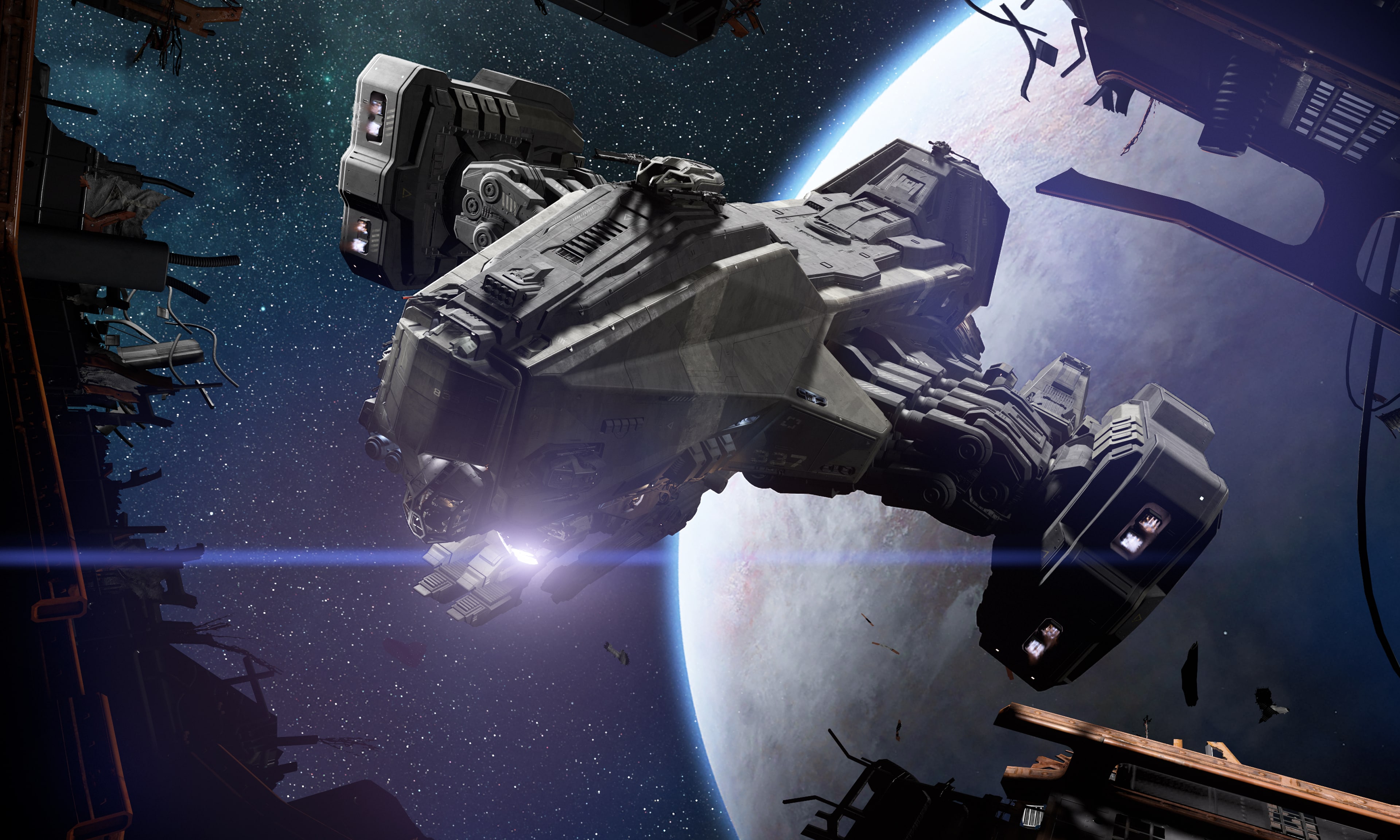
Like many Aegis Dynamics spacecraft, the Vulcan support ship has a long and storied history that stretches back several centuries to the height of the Messer era. In 2590, innovations in fuel refinement allowed ships to spend longer on the drift, so the UEEN requested proposals for a medium-sized support spacecraft with the flexibility to conduct both refueling and rearming operations. Given the military contracting process at the time, it was a foregone conclusion that Aegis would be awarded the project. Nevertheless, the Vulcan team opted to go beyond the military specification and develop what they referred to as a true ‘three R’ spacecraft: one capable of rearming, refueling, and repairing. Aegis’ designers reasoned that if they could deliver a ship capable of supporting smaller fighters and bombers (rapidly becoming a more important aspect of naval doctrine), they would have a chance at building something instrumental to the UEEN’s arsenal longer term.
Early prototypes would be completely different spacecraft compared to the models released three and a half centuries later. Early Vulcans lacked the BARD drones of the modern version, meaning that each of the three main processes had to be accomplished manually in a considerably more dangerous way. After a series of early accidents destroyed several Vulcans, engineers developed a process by which munitions were kept inert and then activated by remote once loaded. Early refueling using the Vulcan platform was a more difficult proposition. Spacecraft were required to maneuver extremely close and connect via external probe for the duration of fueling. Unlike with munitions, there was no option to make quantum fuel inert; crews were keenly aware of the increased danger during refueling. In ideal situations, refueling was done at a full stop. However, this was often not possible under combat conditions, earning Vulcan crews the genuine respect of fighter and bomber squads. However, repair was a comparatively simple process, with the ship’s rear compartment allowing the storage of repair tools and supplies that could be easily accessed by crewmen in external maneuvering suits.
As was common of support spacecraft at the time, the early Vulcans were completely unarmed and featured limited armor. As advances in process and military strategy improved over the decades, the Vulcan’s defensive capabilities would be reworked significantly.
The resulting ship, formally launched in 2594, impressed the UEEN on its formal review, prompting them to order nearly four times the number stated in the original proposal. As the ship found its place in active service, Aegis prioritized future development to keep it from becoming obsolete. Changes to the Vulcan platform happened rapidly as the company adapted to battlefield reports and worked to integrate the latest technology. Within a decade, the simple but dangerous ‘workshop’ concept for repair operations had been replaced with a formalized process using manipulator arms, while training for in-flight refueling had improved and significantly reduced casualties. Changes to all three of the Vulcan’s processes would occur regularly, supported by Aegis at every turn. The modern Vulcan took shape in 2895 with the adoption of Saga Datasystems BARD drones that standardized the ship’s support functions and significantly reduced danger. By using the soon-to-be industry standard drones instead of developing their own, the overall cost-per-unit of the Vulcan was reduced and Aegis entered into a strategically important relationship with an up-and-coming technology company.
THE VULCAN AT WAR
The Vulcan was first bloodied in 2603 during the early battles of the Second Tevarin War. By the start of the conflict, the spacecraft had been part of the UEEN inventory for almost ten years. There it had proven its worth in peacetime, supporting and expanding the range of convoys and patrols. Its first combat missions, however, did not go well. Tevarin forces quickly realized that they could reduce UEE effectiveness by targeting the slow and under-defended support ships. For the first six months of the war, Vulcan losses were significantly heavier than anticipated and a number of strike missions failed when returning bombers were unable to refuel and were destroyed by Tevarin fighters. These problems were solved by both manufacturing and doctrinal changes. Aegis developed a battlefield upgrade for early Vulcans that improved armor and added a defensive turret; changes that would speak to the eventual rework of the ship. The military itself adapted the ship’s role by operating Vulcans in groups of three: one for repair, one for rearming, and one for refueling. These trios were then assigned escort fighters, defending the ships when they came under attack and using their services in downtime.
The Vulcan saw no such problems when first pitted against the Vanduul. In early battles, the Vanduul seemed to have limited interest in targeting support ships at all, instead focusing on engaging fighters and taking others as scrap or prizes. Continued advances to the platform allowed the ships that first battled the Vanduul to be much more effective, both at their core roles and in defending themselves. With drones improving the ‘three Rs’, Vulcans were pressed into service in greater numbers than ever before, both in their traditional roles and as fleet support, with multiple Vulcans often assigned to closely follow destroyers and cruiser squadrons. In recent years, the UEEN has taken to deploying what they refer to as ‘ranged strike groups’ in an attempt to relieve pressure from the Vanduul. These strike groups consist of base-launched fighters and bombers supported by modern Vulcans to significantly extend their range and striking power, allowing them to deploy into enemy held territory to conduct raids. The strategy was developed around the idea of responding in kind to Vanduul anti-commerce raids and seems to be proving effective.
THE VULCAN AT PEACE
The Vulcan expanded beyond its original military role quickly due to the simplicity of the original design. Without military-grade weapons or advanced technologies like drones, the UEE saw little reason in preventing the sale of the design to corporate and private users. This gave the Vulcan its second life as a civilian support ship. Initial marketing was aimed at large corporations operating their own convoys that required support ships to operate safely. Aegis sold civilianized Vulcans in great numbers and, within five years, the design was a staple of well-trodden trade routes.
What Aegis could not have predicted was the ship’s ensuing popularity with so-called ‘wayfarers’. Initially started as an alliance between three hobbyist flying clubs in the late 29th century, wayfarer groups had become a kind of all-for-one do-gooder’s organization supporting independent spacecraft owners. The Vulcan provided exactly what they had been lacking: a uniform flagship capable of providing the kind of assistance they had previously been doggedly adapting civilian spacecraft to offer. Today, you can find these versatile and durable ships in most systems, whether they’re attached to companies, orgs, or as independent service providers.
Dieser Artikel erschien ursprünglich in Jump Point 7.12.
Aegis Dynamics Vulcan
URSPRÜNGLICHE ENTWICKLUNG
Wie viele andere Raumschiffe von Aegis Dynamics hat auch das Unterstützungsschiff Vulcan eine lange Geschichte, die mehrere Jahrhunderte bis zum Höhepunkt der Messer-Ära zurückreicht. Im Jahr 2590 ermöglichten Innovationen in der Treibstoffveredelung, dass Schiffe länger unterwegs sein konnten. Daher forderte die UEEN Vorschläge für ein mittelgroßes Unterstützungsraumschiff an, das sowohl Betankungs- als auch Wiederaufrüstungsoperationen durchführen konnte. In Anbetracht des damaligen militärischen Vergabeverfahrens war es eine ausgemachte Sache, dass Aegis den Zuschlag für das Projekt erhalten würde. Dennoch entschied sich das Vulcan-Team, über die militärische Spezifikation hinauszugehen und ein echtes "Drei-R"-Raumschiff zu entwickeln: ein Raumschiff, das sowohl aufrüsten als auch auftanken und reparieren kann. Die Konstrukteure von Aegis waren der Meinung, dass sie mit einem Schiff, das in der Lage ist, kleinere Jäger und Bomber zu unterstützen (ein Aspekt, der in der Marinedoktrin immer wichtiger wird), die Chance hätten, langfristig etwas zu bauen, das für das Arsenal der UEEN von Bedeutung wäre.
Die frühen Prototypen waren ganz andere Raumschiffe als die Modelle, die dreieinhalb Jahrhunderte später auf den Markt kamen. Den frühen Vulkaniern fehlten die BARD-Drohnen der modernen Version, was bedeutete, dass jeder der drei Hauptprozesse auf eine wesentlich gefährlichere Weise von Hand ausgeführt werden musste. Nachdem eine Reihe von frühen Unfällen mehrere Vulkanier zerstört hatte, entwickelten die Ingenieure ein Verfahren, mit dem die Munition inaktiv gehalten und nach dem Laden per Fernbedienung aktiviert werden konnte. Die frühe Betankung mit der Vulcan-Plattform war ein schwierigeres Unterfangen. Die Raumfahrzeuge mussten extrem nah manövrieren und für die Dauer der Betankung mit einer externen Sonde verbunden werden. Anders als bei der Munition gab es keine Möglichkeit, den Quantentreibstoff zu inertisieren; die Besatzungen waren sich der erhöhten Gefahr beim Betanken sehr bewusst. Im Idealfall wurde der Treibstoff bei einer Vollbremsung getankt. Unter Kampfbedingungen war dies jedoch oft nicht möglich, was den Vulcan-Besatzungen den Respekt der Jäger- und Bomberstaffeln einbrachte. Die Reparaturen waren jedoch vergleichsweise einfach, denn im hinteren Bereich des Schiffes konnten Reparaturwerkzeuge und Vorräte gelagert werden, die für die Besatzungsmitglieder in den äußeren Manöveranzügen leicht zugänglich waren.
Wie bei Unterstützungsraumschiffen zu dieser Zeit üblich, waren die frühen Vulkanier völlig unbewaffnet und hatten nur eine geringe Panzerung. Mit den Fortschritten in der Entwicklung von Verfahren und militärischen Strategien wurden die Verteidigungsfähigkeiten der Vulkanier im Laufe der Jahrzehnte erheblich überarbeitet.
Das daraus resultierende Schiff, das 2594 offiziell vom Stapel lief, beeindruckte die UEEN bei ihrer offiziellen Überprüfung und veranlasste sie, fast viermal so viele Schiffe zu bestellen wie im ursprünglichen Vorschlag vorgesehen. Während das Schiff seinen Platz im aktiven Dienst fand, setzte Aegis Prioritäten bei der zukünftigen Entwicklung, um zu verhindern, dass es veraltet. Änderungen an der Vulcan-Plattform erfolgten schnell, da sich das Unternehmen an die Berichte der Gefechtsfelder anpasste und daran arbeitete, die neueste Technologie zu integrieren. Innerhalb eines Jahrzehnts wurde das einfache, aber gefährliche "Werkstatt"-Konzept für Reparaturarbeiten durch ein formalisiertes Verfahren mit Manipulatorarmen ersetzt, während die Ausbildung für das Betanken während des Fluges verbessert und die Zahl der Opfer erheblich reduziert wurde. An allen drei Prozessen der Vulcan wurden regelmäßig Änderungen vorgenommen, die von Aegis auf Schritt und Tritt unterstützt wurden. Die moderne Vulcan nahm 2895 mit der Einführung der BARD-Drohnen von Saga Datasystems Gestalt an, die die Unterstützungsfunktionen des Schiffes standardisierten und die Gefahren erheblich reduzierten. Durch den Einsatz der bald zum Industriestandard werdenden Drohnen, anstatt eigene zu entwickeln, wurden die Gesamtkosten pro Einheit der Vulcan gesenkt und Aegis ging eine strategisch wichtige Beziehung mit einem aufstrebenden Technologieunternehmen ein.
DIE VULCAN IM KRIEG
Die Vulcan wurde erstmals 2603 während der ersten Schlachten des Zweiten Tevarin-Krieges eingesetzt. Zu Beginn des Konflikts gehörte das Raumschiff bereits seit fast zehn Jahren zum Inventar der UEEN. Dort hatte es sich in Friedenszeiten bewährt, indem es die Reichweite von Konvois und Patrouillen unterstützte und erweiterte. Seine ersten Kampfeinsätze verliefen jedoch nicht gut. Die tevarinischen Streitkräfte erkannten schnell, dass sie die Effektivität der UEE verringern konnten, indem sie die langsamen und schlecht verteidigten Hilfsschiffe ins Visier nahmen. In den ersten sechs Monaten des Krieges waren die Verluste der Vulcan deutlich höher als erwartet und eine Reihe von Einsätzen scheiterte, weil die zurückkehrenden Bomber nicht auftanken konnten und von Tevarin-Jägern zerstört wurden. Diese Probleme wurden sowohl durch die Herstellung als auch durch Änderungen der Doktrin gelöst. Aegis entwickelte ein Gefechtsfeld-Upgrade für frühe Vulkanier, das die Panzerung verbesserte und einen Verteidigungsturm hinzufügte; Änderungen, die für die spätere Überarbeitung des Schiffs sprechen sollten. Das Militär selbst passte die Rolle des Schiffes an, indem es die Vulkanier in Dreiergruppen einsetzte: eine zur Reparatur, eine zum Aufrüsten und eine zum Auftanken. Diesen Trios wurden dann Geleitjäger zugeteilt, die die Schiffe bei Angriffen verteidigten und ihre Dienste in den Ausfallzeiten in Anspruch nahmen.
Die Vulcan hatte keine solchen Probleme, als sie zum ersten Mal gegen die Vanduul antrat. In den ersten Gefechten schienen die Vanduul nur wenig Interesse daran zu haben, Unterstützungsschiffe anzugreifen, sondern konzentrierten sich darauf, Jäger anzugreifen und andere als Schrott oder Beute zu nehmen. Die kontinuierliche Weiterentwicklung der Plattform ermöglichte es den Schiffen, die zuerst gegen die Vanduul kämpften, viel effektiver zu sein, sowohl in ihren Kernaufgaben als auch in ihrer Verteidigung. Da Drohnen die "drei Rs" verbesserten, wurden Vulkanier in größerer Zahl als je zuvor eingesetzt, sowohl in ihrer traditionellen Rolle als auch als Flottenunterstützung, wobei mehrere Vulkanier oft Zerstörern und Kreuzergeschwadern dicht auf den Fersen waren. In den letzten Jahren sind die UEEN dazu übergegangen, so genannte "Fernkampfgruppen" einzusetzen, um den Druck der Vanduul zu verringern. Diese Angriffsgruppen bestehen aus basisgestützten Jägern und Bombern, die von modernen Vulkaniern unterstützt werden, um ihre Reichweite und Schlagkraft deutlich zu erhöhen und in feindlich besetzte Gebiete vorzudringen. Die Strategie wurde mit dem Ziel entwickelt, auf die Angriffe der Vanduul gegen den Handel zu reagieren, und scheint sich zu bewähren.
DER VULKANIER IM FRIEDEN
Die Vulkanier haben sich aufgrund ihrer einfachen Bauweise schnell über ihre ursprüngliche militärische Rolle hinaus entwickelt. Ohne militärische Waffen oder fortschrittliche Technologien wie Drohnen sah die UEE wenig Grund, den Verkauf des Designs an Unternehmen und private Nutzer zu verhindern. So bekam die Vulcan ihr zweites Leben als ziviles Hilfsschiff. Die anfängliche Vermarktung richtete sich an große Unternehmen, die ihre eigenen Konvois betrieben und für den sicheren Betrieb Unterstützungsschiffe benötigten. Aegis verkaufte zivilisierte Vulkanschiffe in großer Zahl und innerhalb von fünf Jahren war die Konstruktion ein fester Bestandteil ausgetretener Handelsrouten.
Was Aegis nicht vorhersehen konnte, war die anschließende Beliebtheit des Schiffes bei den sogenannten "Wanderern". Ursprünglich als Zusammenschluss dreier Hobby-Fliegerclubs im späten 29. Jahrhundert gegründet, hatten sich die Wanderer-Gruppen zu einer Art Weltverbesserer-Organisation entwickelt, die unabhängige Raumschiffbesitzer unterstützt. Die Vulcan bot genau das, was ihnen gefehlt hatte: ein einheitliches Flaggschiff, das die Art von Unterstützung bieten konnte, für die sie zuvor hartnäckig zivile Raumschiffe umgebaut hatten. Heute findest du diese vielseitigen und robusten Schiffe in den meisten Systemen, egal ob sie Unternehmen, Orgs oder unabhängigen Dienstleistern angeschlossen sind.
This article originally appeared in Jump Point 7.12.
Aegis Dynamics Vulcan
INITIAL DEVELOPMENT
Like many Aegis Dynamics spacecraft, the Vulcan support ship has a long and storied history that stretches back several centuries to the height of the Messer era. In 2590, innovations in fuel refinement allowed ships to spend longer on the drift, so the UEEN requested proposals for a medium-sized support spacecraft with the flexibility to conduct both refueling and rearming operations. Given the military contracting process at the time, it was a foregone conclusion that Aegis would be awarded the project. Nevertheless, the Vulcan team opted to go beyond the military specification and develop what they referred to as a true ‘three R’ spacecraft: one capable of rearming, refueling, and repairing. Aegis’ designers reasoned that if they could deliver a ship capable of supporting smaller fighters and bombers (rapidly becoming a more important aspect of naval doctrine), they would have a chance at building something instrumental to the UEEN’s arsenal longer term.
Early prototypes would be completely different spacecraft compared to the models released three and a half centuries later. Early Vulcans lacked the BARD drones of the modern version, meaning that each of the three main processes had to be accomplished manually in a considerably more dangerous way. After a series of early accidents destroyed several Vulcans, engineers developed a process by which munitions were kept inert and then activated by remote once loaded. Early refueling using the Vulcan platform was a more difficult proposition. Spacecraft were required to maneuver extremely close and connect via external probe for the duration of fueling. Unlike with munitions, there was no option to make quantum fuel inert; crews were keenly aware of the increased danger during refueling. In ideal situations, refueling was done at a full stop. However, this was often not possible under combat conditions, earning Vulcan crews the genuine respect of fighter and bomber squads. However, repair was a comparatively simple process, with the ship’s rear compartment allowing the storage of repair tools and supplies that could be easily accessed by crewmen in external maneuvering suits.
As was common of support spacecraft at the time, the early Vulcans were completely unarmed and featured limited armor. As advances in process and military strategy improved over the decades, the Vulcan’s defensive capabilities would be reworked significantly.
The resulting ship, formally launched in 2594, impressed the UEEN on its formal review, prompting them to order nearly four times the number stated in the original proposal. As the ship found its place in active service, Aegis prioritized future development to keep it from becoming obsolete. Changes to the Vulcan platform happened rapidly as the company adapted to battlefield reports and worked to integrate the latest technology. Within a decade, the simple but dangerous ‘workshop’ concept for repair operations had been replaced with a formalized process using manipulator arms, while training for in-flight refueling had improved and significantly reduced casualties. Changes to all three of the Vulcan’s processes would occur regularly, supported by Aegis at every turn. The modern Vulcan took shape in 2895 with the adoption of Saga Datasystems BARD drones that standardized the ship’s support functions and significantly reduced danger. By using the soon-to-be industry standard drones instead of developing their own, the overall cost-per-unit of the Vulcan was reduced and Aegis entered into a strategically important relationship with an up-and-coming technology company.
THE VULCAN AT WAR
The Vulcan was first bloodied in 2603 during the early battles of the Second Tevarin War. By the start of the conflict, the spacecraft had been part of the UEEN inventory for almost ten years. There it had proven its worth in peacetime, supporting and expanding the range of convoys and patrols. Its first combat missions, however, did not go well. Tevarin forces quickly realized that they could reduce UEE effectiveness by targeting the slow and under-defended support ships. For the first six months of the war, Vulcan losses were significantly heavier than anticipated and a number of strike missions failed when returning bombers were unable to refuel and were destroyed by Tevarin fighters. These problems were solved by both manufacturing and doctrinal changes. Aegis developed a battlefield upgrade for early Vulcans that improved armor and added a defensive turret; changes that would speak to the eventual rework of the ship. The military itself adapted the ship’s role by operating Vulcans in groups of three: one for repair, one for rearming, and one for refueling. These trios were then assigned escort fighters, defending the ships when they came under attack and using their services in downtime.
The Vulcan saw no such problems when first pitted against the Vanduul. In early battles, the Vanduul seemed to have limited interest in targeting support ships at all, instead focusing on engaging fighters and taking others as scrap or prizes. Continued advances to the platform allowed the ships that first battled the Vanduul to be much more effective, both at their core roles and in defending themselves. With drones improving the ‘three Rs’, Vulcans were pressed into service in greater numbers than ever before, both in their traditional roles and as fleet support, with multiple Vulcans often assigned to closely follow destroyers and cruiser squadrons. In recent years, the UEEN has taken to deploying what they refer to as ‘ranged strike groups’ in an attempt to relieve pressure from the Vanduul. These strike groups consist of base-launched fighters and bombers supported by modern Vulcans to significantly extend their range and striking power, allowing them to deploy into enemy held territory to conduct raids. The strategy was developed around the idea of responding in kind to Vanduul anti-commerce raids and seems to be proving effective.
THE VULCAN AT PEACE
The Vulcan expanded beyond its original military role quickly due to the simplicity of the original design. Without military-grade weapons or advanced technologies like drones, the UEE saw little reason in preventing the sale of the design to corporate and private users. This gave the Vulcan its second life as a civilian support ship. Initial marketing was aimed at large corporations operating their own convoys that required support ships to operate safely. Aegis sold civilianized Vulcans in great numbers and, within five years, the design was a staple of well-trodden trade routes.
What Aegis could not have predicted was the ship’s ensuing popularity with so-called ‘wayfarers’. Initially started as an alliance between three hobbyist flying clubs in the late 29th century, wayfarer groups had become a kind of all-for-one do-gooder’s organization supporting independent spacecraft owners. The Vulcan provided exactly what they had been lacking: a uniform flagship capable of providing the kind of assistance they had previously been doggedly adapting civilian spacecraft to offer. Today, you can find these versatile and durable ships in most systems, whether they’re attached to companies, orgs, or as independent service providers.
This article originally appeared in Jump Point 7.12.
Aegis Dynamics Vulcan
INITIAL DEVELOPMENT
Like many Aegis Dynamics spacecraft, the Vulcan support ship has a long and storied history that stretches back several centuries to the height of the Messer era. In 2590, innovations in fuel refinement allowed ships to spend longer on the drift, so the UEEN requested proposals for a medium-sized support spacecraft with the flexibility to conduct both refueling and rearming operations. Given the military contracting process at the time, it was a foregone conclusion that Aegis would be awarded the project. Nevertheless, the Vulcan team opted to go beyond the military specification and develop what they referred to as a true ‘three R’ spacecraft: one capable of rearming, refueling, and repairing. Aegis’ designers reasoned that if they could deliver a ship capable of supporting smaller fighters and bombers (rapidly becoming a more important aspect of naval doctrine), they would have a chance at building something instrumental to the UEEN’s arsenal longer term.
Early prototypes would be completely different spacecraft compared to the models released three and a half centuries later. Early Vulcans lacked the BARD drones of the modern version, meaning that each of the three main processes had to be accomplished manually in a considerably more dangerous way. After a series of early accidents destroyed several Vulcans, engineers developed a process by which munitions were kept inert and then activated by remote once loaded. Early refueling using the Vulcan platform was a more difficult proposition. Spacecraft were required to maneuver extremely close and connect via external probe for the duration of fueling. Unlike with munitions, there was no option to make quantum fuel inert; crews were keenly aware of the increased danger during refueling. In ideal situations, refueling was done at a full stop. However, this was often not possible under combat conditions, earning Vulcan crews the genuine respect of fighter and bomber squads. However, repair was a comparatively simple process, with the ship’s rear compartment allowing the storage of repair tools and supplies that could be easily accessed by crewmen in external maneuvering suits.
As was common of support spacecraft at the time, the early Vulcans were completely unarmed and featured limited armor. As advances in process and military strategy improved over the decades, the Vulcan’s defensive capabilities would be reworked significantly.
The resulting ship, formally launched in 2594, impressed the UEEN on its formal review, prompting them to order nearly four times the number stated in the original proposal. As the ship found its place in active service, Aegis prioritized future development to keep it from becoming obsolete. Changes to the Vulcan platform happened rapidly as the company adapted to battlefield reports and worked to integrate the latest technology. Within a decade, the simple but dangerous ‘workshop’ concept for repair operations had been replaced with a formalized process using manipulator arms, while training for in-flight refueling had improved and significantly reduced casualties. Changes to all three of the Vulcan’s processes would occur regularly, supported by Aegis at every turn. The modern Vulcan took shape in 2895 with the adoption of Saga Datasystems BARD drones that standardized the ship’s support functions and significantly reduced danger. By using the soon-to-be industry standard drones instead of developing their own, the overall cost-per-unit of the Vulcan was reduced and Aegis entered into a strategically important relationship with an up-and-coming technology company.
THE VULCAN AT WAR
The Vulcan was first bloodied in 2603 during the early battles of the Second Tevarin War. By the start of the conflict, the spacecraft had been part of the UEEN inventory for almost ten years. There it had proven its worth in peacetime, supporting and expanding the range of convoys and patrols. Its first combat missions, however, did not go well. Tevarin forces quickly realized that they could reduce UEE effectiveness by targeting the slow and under-defended support ships. For the first six months of the war, Vulcan losses were significantly heavier than anticipated and a number of strike missions failed when returning bombers were unable to refuel and were destroyed by Tevarin fighters. These problems were solved by both manufacturing and doctrinal changes. Aegis developed a battlefield upgrade for early Vulcans that improved armor and added a defensive turret; changes that would speak to the eventual rework of the ship. The military itself adapted the ship’s role by operating Vulcans in groups of three: one for repair, one for rearming, and one for refueling. These trios were then assigned escort fighters, defending the ships when they came under attack and using their services in downtime.
The Vulcan saw no such problems when first pitted against the Vanduul. In early battles, the Vanduul seemed to have limited interest in targeting support ships at all, instead focusing on engaging fighters and taking others as scrap or prizes. Continued advances to the platform allowed the ships that first battled the Vanduul to be much more effective, both at their core roles and in defending themselves. With drones improving the ‘three Rs’, Vulcans were pressed into service in greater numbers than ever before, both in their traditional roles and as fleet support, with multiple Vulcans often assigned to closely follow destroyers and cruiser squadrons. In recent years, the UEEN has taken to deploying what they refer to as ‘ranged strike groups’ in an attempt to relieve pressure from the Vanduul. These strike groups consist of base-launched fighters and bombers supported by modern Vulcans to significantly extend their range and striking power, allowing them to deploy into enemy held territory to conduct raids. The strategy was developed around the idea of responding in kind to Vanduul anti-commerce raids and seems to be proving effective.
THE VULCAN AT PEACE
The Vulcan expanded beyond its original military role quickly due to the simplicity of the original design. Without military-grade weapons or advanced technologies like drones, the UEE saw little reason in preventing the sale of the design to corporate and private users. This gave the Vulcan its second life as a civilian support ship. Initial marketing was aimed at large corporations operating their own convoys that required support ships to operate safely. Aegis sold civilianized Vulcans in great numbers and, within five years, the design was a staple of well-trodden trade routes.
What Aegis could not have predicted was the ship’s ensuing popularity with so-called ‘wayfarers’. Initially started as an alliance between three hobbyist flying clubs in the late 29th century, wayfarer groups had become a kind of all-for-one do-gooder’s organization supporting independent spacecraft owners. The Vulcan provided exactly what they had been lacking: a uniform flagship capable of providing the kind of assistance they had previously been doggedly adapting civilian spacecraft to offer. Today, you can find these versatile and durable ships in most systems, whether they’re attached to companies, orgs, or as independent service providers.
Links
No links available.


Metadata
- CIG ID
- 20052
- Channel
- Spectrum Dispatch
- Category
- Undefined
- Series
- News Update
- Comments
- 28
- Published
- 2 years ago (2024-07-09T00:00:00+00:00)